CATERPILLAR INC
10-Ks and 10-Qs
|
|
|
|
|
|
|
|
|
|
|
|
|
|
|
|
|
|
|
|
|
|
|
|
|
|
|
|
|
|
|
|
|
|
|
|
|
|
|
|
|
|
|
|
|
|
|
|
|
|
|
|
|
|
|
|
|
|
|
UNITED STATES
SECURITIES AND EXCHANGE COMMISSION
Washington, D.C. 20549

FORM 10-Q
[X] QUARTERLY REPORT PURSUANT TO SECTION 13 OR 15(d) OF THE SECURITIES EXCHANGE ACT OF 1934
For the quarterly period ended
June 30, 2014
OR
[ ] TRANSITION REPORT PURSUANT TO SECTION 13 OR 15(d) OF THE SECURITIES EXCHANGE ACT OF 1934
For the transition period from to
Commission File Number: 1-768
CATERPILLAR INC.
(Exact name of registrant as specified in its charter)
|
Delaware
(State or other jurisdiction of incorporation)
|
|
37-0602744
(IRS Employer I.D. No.)
|
|
100 NE Adams Street, Peoria, Illinois
(Address of principal executive offices)
|
|
61629
(Zip Code)
|
Registrant’s telephone number, including area code:
(309) 675-1000
Indicate by check mark whether the registrant (1) has filed all reports required to be filed by Section 13 or 15(d) of the Securities Exchange Act of 1934 during the preceding 12 months (or for such shorter period that the registrant was required to file such reports), and (2) has been subject to such filing requirements for the past 90 days. Yes
x
No
¨
Indicate by check mark whether the registrant has submitted electronically and posted on its corporate Web site, if any, every Interactive Data File required to be submitted and posted pursuant to Rule 405 of Regulation S-T (§232.405 of this chapter) during the preceding 12 months (or for such shorter period that the registrant was required to submit and post such files). Yes
x
No
¨
Indicate by check mark whether the registrant is a large accelerated filer, an accelerated filer, a non-accelerated filer, or a smaller reporting company. See definitions of “large accelerated filer”, “accelerated filer” and “smaller reporting company” in Rule 12b-2 of the Exchange Act. (Check one):
|
Large accelerated filer
|
x
|
Accelerated filer
|
o
|
|
Non-accelerated filer
|
o
|
Smaller reporting company
|
o
|
Indicate by check mark whether the registrant is a shell company (as defined in Rule 12b-2 of the Exchange Act). Yes
o
No
x
At
June 30, 2014
,
627,846,602
shares of common stock of the registrant were outstanding.
Table of Contents
|
|
||
|
|
|
|
|
|
||
|
Item 3.
|
Defaults Upon Senior Securities
|
*
|
|
Item 4.
|
Mine Safety Disclosures
|
*
|
|
Item 5.
|
Other Information
|
*
|
* Item omitted because no answer is called for or item is not applicable.
2
Caterpillar Inc.
(Unaudited)
(Dollars in millions except per share data)
|
|
Three Months Ended
June 30, |
||||||
|
|
2014
|
2013
|
|||||
|
Sales and revenues:
|
|
|
|||||
|
Sales of Machinery, Energy & Transportation
|
$
|
13,391
|
|
$
|
13,886
|
|
|
|
Revenues of Financial Products
|
759
|
|
735
|
|
|||
|
Total sales and revenues
|
14,150
|
|
14,621
|
|
|||
|
Operating costs:
|
|
|
|
|
|||
|
Cost of goods sold
|
10,197
|
|
10,773
|
|
|||
|
Selling, general and administrative expenses
|
1,437
|
|
1,421
|
|
|||
|
Research and development expenses
|
516
|
|
548
|
|
|||
|
Interest expense of Financial Products
|
153
|
|
185
|
|
|||
|
Other operating (income) expenses
|
372
|
|
137
|
|
|||
|
Total operating costs
|
12,675
|
|
13,064
|
|
|||
|
Operating profit
|
1,475
|
|
1,557
|
|
|||
|
Interest expense excluding Financial Products
|
120
|
|
120
|
|
|||
|
Other income (expense)
|
65
|
|
(84
|
)
|
|||
|
Consolidated profit before taxes
|
1,420
|
|
1,353
|
|
|||
|
Provision (benefit) for income taxes
|
419
|
|
387
|
|
|||
|
Profit of consolidated companies
|
1,001
|
|
966
|
|
|||
|
Equity in profit (loss) of unconsolidated affiliated companies
|
1
|
|
(1
|
)
|
|||
|
Profit of consolidated and affiliated companies
|
1,002
|
|
965
|
|
|||
|
Less: Profit (loss) attributable to noncontrolling interests
|
3
|
|
5
|
|
|||
|
Profit
1
|
$
|
999
|
|
$
|
960
|
|
|
|
Profit per common share
|
$
|
1.60
|
|
$
|
1.48
|
|
|
|
Profit per common share – diluted
2
|
$
|
1.57
|
|
$
|
1.45
|
|
|
|
Weighted-average common shares outstanding (millions)
|
|
|
|
|
|||
|
– Basic
|
626.3
|
|
649.9
|
|
|||
|
– Diluted
2
|
638.3
|
|
662.7
|
|
|||
|
Cash dividends declared per common share
|
$
|
1.30
|
|
$
|
1.12
|
|
|
1
Profit attributable to common stockholders.
2
Diluted by assumed exercise of stock-based compensation awards using the treasury stock method.
See accompanying notes to Consolidated Financial Statements.
3
Caterpillar Inc
.
Consolidated Statement of Comprehensive Income
(Unaudited)
(Dollars in millions)
|
|
Three Months Ended
June 30, |
||||||
|
|
2014
|
2013
|
|||||
|
Profit of consolidated and affiliated companies
|
$
|
1,002
|
|
$
|
965
|
|
|
|
Other comprehensive income (loss), net of tax:
|
|||||||
|
Foreign currency translation, net of tax (provision)/benefit of: 2014 - $(8); 2013 - $29
|
28
|
|
(180
|
)
|
|||
|
Pension and other postretirement benefits:
|
|
||||||
|
Current year actuarial gain (loss), net of tax (provision)/benefit of: 2014 - $(5); 2013 - $(6)
|
10
|
|
12
|
|
|||
|
Amortization of actuarial (gain) loss, net of tax (provision)/benefit of: 2014 - $(44); 2013 - $(67)
|
86
|
|
130
|
|
|||
|
Current year prior service credit (cost), net of tax (provision)/benefit of: 2014 - $0; 2013 - $0
|
1
|
|
—
|
|
|||
|
Amortization of prior service (credit) cost, net of tax (provision)/benefit of: 2014 - $4; 2013 - $4
|
(6
|
)
|
(9
|
)
|
|||
|
Derivative financial instruments:
|
|||||||
|
Gains (losses) deferred, net of tax (provision)/benefit of: 2014 - $6; 2013 - $(5)
|
(11
|
)
|
7
|
|
|||
|
(Gains) losses reclassified to earnings, net of tax (provision)/benefit of: 2014 - $3; 2013 - $(12)
|
(5
|
)
|
22
|
|
|||
|
Available-for-sale securities:
|
|||||||
|
Gains (losses) deferred, net of tax (provision)/benefit of: 2014 - $(8); 2013 - $6
|
15
|
|
(10
|
)
|
|||
|
(Gains) losses reclassified to earnings, net of tax (provision)/benefit of: 2014 - $0; 2013 - $0
|
—
|
|
1
|
|
|||
|
Total other comprehensive income (loss), net of tax
|
118
|
|
(27
|
)
|
|||
|
Comprehensive income
|
1,120
|
|
938
|
|
|||
|
Less: comprehensive income attributable to the noncontrolling interests
|
(3
|
)
|
(7
|
)
|
|||
|
Comprehensive income attributable to stockholders
|
$
|
1,117
|
|
$
|
931
|
|
|
See accompanying notes to Consolidated Financial Statements.
4
Caterpillar Inc.
Consolidated Statement of Results of Operations
(Unaudited)
(Dollars in millions except per share data)
|
|
Six Months Ended
June 30, |
||||||
|
|
2014
|
2013
|
|||||
|
Sales and revenues:
|
|
|
|||||
|
Sales of Machinery, Energy & Transportation
|
$
|
25,884
|
|
$
|
26,370
|
|
|
|
Revenues of Financial Products
|
1,507
|
|
1,461
|
|
|||
|
Total sales and revenues
|
27,391
|
|
27,831
|
|
|||
|
Operating costs:
|
|
|
|
|
|||
|
Cost of goods sold
|
19,634
|
|
20,412
|
|
|||
|
Selling, general and administrative expenses
|
2,729
|
|
2,811
|
|
|||
|
Research and development expenses
|
1,024
|
|
1,110
|
|
|||
|
Interest expense of Financial Products
|
313
|
|
374
|
|
|||
|
Other operating (income) expenses
|
818
|
|
349
|
|
|||
|
Total operating costs
|
24,518
|
|
25,056
|
|
|||
|
Operating profit
|
2,873
|
|
2,775
|
|
|||
|
Interest expense excluding Financial Products
|
230
|
|
240
|
|
|||
|
Other income (expense)
|
119
|
|
(55
|
)
|
|||
|
Consolidated profit before taxes
|
2,762
|
|
2,480
|
|
|||
|
Provision (benefit) for income taxes
|
837
|
|
633
|
|
|||
|
Profit of consolidated companies
|
1,925
|
|
1,847
|
|
|||
|
Equity in profit (loss) of unconsolidated affiliated companies
|
2
|
|
—
|
|
|||
|
Profit of consolidated and affiliated companies
|
1,927
|
|
1,847
|
|
|||
|
Less: Profit (loss) attributable to noncontrolling interests
|
6
|
|
7
|
|
|||
|
Profit
1
|
$
|
1,921
|
|
$
|
1,840
|
|
|
|
Profit per common share
|
$
|
3.06
|
|
$
|
2.82
|
|
|
|
Profit per common share – diluted
2
|
$
|
3.00
|
|
$
|
2.76
|
|
|
|
Weighted-average common shares outstanding (millions)
|
|
|
|||||
|
– Basic
|
626.8
|
|
652.4
|
|
|||
|
– Diluted
2
|
639.3
|
|
666.6
|
|
|||
|
Cash dividends declared per common share
|
$
|
1.30
|
|
$
|
1.12
|
|
|
1
Profit attributable to common stockholders.
2
Diluted by assumed exercise of stock-based compensation awards using the treasury stock method.
See accompanying notes to Consolidated Financial Statements.
5
Caterpillar Inc
.
Consolidated Statement of Comprehensive Income
(Unaudited)
(Dollars in millions)
|
|
Six Months Ended
June 30, |
||||||
|
|
2014
|
2013
|
|||||
|
Profit of consolidated and affiliated companies
|
$
|
1,927
|
|
$
|
1,847
|
|
|
|
Other comprehensive income (loss), net of tax:
|
|||||||
|
Foreign currency translation, net of tax (provision)/benefit of: 2014 - $(8); 2013 - $8
|
67
|
|
(546
|
)
|
|||
|
Pension and other postretirement benefits:
|
|||||||
|
Current year actuarial gain (loss), net of tax (provision)/benefit of: 2014 - $(5); 2013 - $(16)
|
10
|
|
27
|
|
|||
|
Amortization of actuarial (gain) loss, net of tax (provision)/benefit of: 2014 - $(88); 2013 - $(134)
|
172
|
|
259
|
|
|||
|
Current year prior service credit (cost), net of tax (provision)/benefit of: 2014 - $0; 2013 - $0
|
1
|
|
—
|
|
|||
|
Amortization of prior service (credit) cost, net of tax (provision)/benefit of: 2014 - $7; 2013 - $9
|
(12
|
)
|
(18
|
)
|
|||
|
Amortization of transition (asset) obligation, net of tax (provision)/benefit of: 2014 - $0; 2013 - $0
|
—
|
|
1
|
|
|||
|
Derivative financial instruments:
|
|||||||
|
Gains (losses) deferred, net of tax (provision)/benefit of: 2014 - $16; 2013 - $13
|
(27
|
)
|
(24
|
)
|
|||
|
(Gains) losses reclassified to earnings, net of tax (provision)/benefit of: 2014 - $6; 2013 - $(19)
|
(10
|
)
|
33
|
|
|||
|
Available-for-sale securities:
|
|||||||
|
Gains (losses) deferred, net of tax (provision)/benefit of: 2014 - $(11); 2013 - $(2)
|
23
|
|
5
|
|
|||
|
(Gains) losses reclassified to earnings, net of tax (provision)/benefit of: 2014 - $4; 2013 - $0
|
(10
|
)
|
—
|
|
|||
|
Total other comprehensive income (loss), net of tax
|
214
|
|
(263
|
)
|
|||
|
Comprehensive income
|
2,141
|
|
1,584
|
|
|||
|
Less: comprehensive income attributable to the noncontrolling interests
|
(5
|
)
|
(9
|
)
|
|||
|
Comprehensive income attributable to stockholders
|
$
|
2,136
|
|
$
|
1,575
|
|
|
See accompanying notes to Consolidated Financial Statements.
6
Caterpillar Inc
.
(Unaudited)
(Dollars in millions)
|
|
June 30,
2014 |
December 31,
2013 |
|||||
|
Assets
|
|
|
|||||
|
Current assets:
|
|
|
|
|
|||
|
Cash and short-term investments
|
$
|
7,927
|
|
$
|
6,081
|
|
|
|
Receivables – trade and other
|
8,057
|
|
8,413
|
|
|||
|
Receivables – finance
|
9,467
|
|
8,763
|
|
|||
|
Deferred and refundable income taxes
|
1,463
|
|
1,553
|
|
|||
|
Prepaid expenses and other current assets
|
1,307
|
|
900
|
|
|||
|
Inventories
|
13,055
|
|
12,625
|
|
|||
|
Total current assets
|
41,276
|
|
38,335
|
|
|||
|
Property, plant and equipment – net
|
16,690
|
|
17,075
|
|
|||
|
Long-term receivables – trade and other
|
1,548
|
|
1,397
|
|
|||
|
Long-term receivables – finance
|
15,118
|
|
14,926
|
|
|||
|
Investments in unconsolidated affiliated companies
|
259
|
|
272
|
|
|||
|
Noncurrent deferred and refundable income taxes
|
737
|
|
594
|
|
|||
|
Intangible assets
|
3,398
|
|
3,596
|
|
|||
|
Goodwill
|
6,969
|
|
6,956
|
|
|||
|
Other assets
|
1,832
|
|
1,745
|
|
|||
|
Total assets
|
$
|
87,827
|
|
$
|
84,896
|
|
|
|
Liabilities
|
|
|
|
|
|||
|
Current liabilities:
|
|
|
|
|
|||
|
Short-term borrowings:
|
|
|
|
|
|||
|
Machinery, Energy & Transportation
|
$
|
20
|
|
$
|
16
|
|
|
|
Financial Products
|
5,534
|
|
3,663
|
|
|||
|
Accounts payable
|
6,860
|
|
6,560
|
|
|||
|
Accrued expenses
|
3,473
|
|
3,493
|
|
|||
|
Accrued wages, salaries and employee benefits
|
1,910
|
|
1,622
|
|
|||
|
Customer advances
|
2,344
|
|
2,360
|
|
|||
|
Dividends payable
|
439
|
|
382
|
|
|||
|
Other current liabilities
|
1,779
|
|
1,849
|
|
|||
|
Long-term debt due within one year:
|
|
|
|
|
|||
|
Machinery, Energy & Transportation
|
509
|
|
760
|
|
|||
|
Financial Products
|
6,873
|
|
6,592
|
|
|||
|
Total current liabilities
|
29,741
|
|
27,297
|
|
|||
|
Long-term debt due after one year:
|
|
|
|
|
|||
|
Machinery, Energy & Transportation
|
9,495
|
|
7,999
|
|
|||
|
Financial Products
|
17,812
|
|
18,720
|
|
|||
|
Liability for postemployment benefits
|
6,597
|
|
6,973
|
|
|||
|
Other liabilities
|
3,259
|
|
3,029
|
|
|||
|
Total liabilities
|
66,904
|
|
64,018
|
|
|||
|
Commitments and contingencies (Notes 10 and 13)
|
|
|
|
|
|||
|
Stockholders’ equity
|
|
|
|
|
|||
|
Common stock of $1.00 par value:
|
|
|
|
|
|||
|
Authorized shares: 2,000,000,000
Issued shares: (6/30/14 and 12/31/13 – 814,894,624) at paid-in amount |
4,890
|
|
4,709
|
|
|||
|
Treasury stock (6/30/14 – 187,048,022 shares; 12/31/13 – 177,072,282 shares) at cost
|
(13,312
|
)
|
(11,854
|
)
|
|||
|
Profit employed in the business
|
32,961
|
|
31,854
|
|
|||
|
Accumulated other comprehensive income (loss)
|
(3,683
|
)
|
(3,898
|
)
|
|||
|
Noncontrolling interests
|
67
|
|
67
|
|
|||
|
Total stockholders’ equity
|
20,923
|
|
20,878
|
|
|||
|
Total liabilities and stockholders’ equity
|
$
|
87,827
|
|
$
|
84,896
|
|
|
See accompanying notes to Consolidated Financial Statements.
7
Caterpillar Inc.
Consolidated Statement of Changes in Stockholders’ Equity
(Unaudited)
(Dollars in millions)
|
|
Common
stock
|
Treasury
stock
|
Profit
employed
in the
business
|
Accumulated
other
comprehensive
income (loss)
|
Noncontrolling
interests
|
Total
|
|||||||||||||||||
|
Six Months Ended June 30, 2013
|
|
|
|
|
|
|
|||||||||||||||||
|
Balance at December 31, 2012
|
$
|
4,481
|
|
$
|
(10,074
|
)
|
$
|
29,558
|
|
$
|
(6,433
|
)
|
$
|
50
|
|
$
|
17,582
|
|
|||||
|
Profit of consolidated and affiliated companies
|
—
|
|
—
|
|
1,840
|
|
—
|
|
7
|
|
1,847
|
|
|||||||||||
|
Foreign currency translation, net of tax
|
—
|
|
—
|
|
—
|
|
(548
|
)
|
2
|
|
(546
|
)
|
|||||||||||
|
Pension and other postretirement benefits, net of tax
|
—
|
|
—
|
|
—
|
|
269
|
|
—
|
|
269
|
|
|||||||||||
|
Derivative financial instruments, net of tax
|
—
|
|
—
|
|
—
|
|
9
|
|
—
|
|
9
|
|
|||||||||||
|
Available-for-sale securities, net of tax
|
—
|
|
—
|
|
—
|
|
5
|
|
—
|
|
5
|
|
|||||||||||
|
Change in ownership from noncontrolling interests
|
(6
|
)
|
—
|
|
—
|
|
—
|
|
6
|
|
—
|
|
|||||||||||
|
Dividends declared
|
—
|
|
—
|
|
(730
|
)
|
—
|
|
—
|
|
(730
|
)
|
|||||||||||
|
Distribution to noncontrolling interests
|
—
|
|
—
|
|
—
|
|
—
|
|
(8
|
)
|
(8
|
)
|
|||||||||||
|
Common shares issued from treasury stock for stock-based compensation: 4,108,681
|
(78
|
)
|
134
|
|
—
|
|
—
|
|
—
|
|
56
|
|
|||||||||||
|
Stock-based compensation expense
|
132
|
|
—
|
|
—
|
|
—
|
|
—
|
|
132
|
|
|||||||||||
|
Net excess tax benefits from stock-based compensation
|
62
|
|
—
|
|
—
|
|
—
|
|
—
|
|
62
|
|
|||||||||||
|
Common shares repurchased: 11,542,106
1
|
—
|
|
(1,000
|
)
|
—
|
|
—
|
|
—
|
|
(1,000
|
)
|
|||||||||||
|
Balance at June 30, 2013
|
$
|
4,591
|
|
$
|
(10,940
|
)
|
$
|
30,668
|
|
$
|
(6,698
|
)
|
$
|
57
|
|
$
|
17,678
|
|
|||||
|
Six Months Ended June 30, 2014
|
|
|
|
|
|
|
|
|
|
|
|
|
|||||||||||
|
Balance at December 31, 2013
|
$
|
4,709
|
|
$
|
(11,854
|
)
|
$
|
31,854
|
|
$
|
(3,898
|
)
|
$
|
67
|
|
$
|
20,878
|
|
|||||
|
Profit of consolidated and affiliated companies
|
—
|
|
—
|
|
1,921
|
|
—
|
|
6
|
|
1,927
|
|
|||||||||||
|
Foreign currency translation, net of tax
|
—
|
|
—
|
|
—
|
|
68
|
|
(1
|
)
|
67
|
|
|||||||||||
|
Pension and other postretirement benefits, net of tax
|
—
|
|
—
|
|
—
|
|
171
|
|
—
|
|
171
|
|
|||||||||||
|
Derivative financial instruments, net of tax
|
—
|
|
—
|
|
—
|
|
(37
|
)
|
—
|
|
(37
|
)
|
|||||||||||
|
Available-for-sale securities, net of tax
|
—
|
|
—
|
|
—
|
|
13
|
|
—
|
|
13
|
|
|||||||||||
|
Change in ownership from noncontrolling interests
|
—
|
|
—
|
|
—
|
|
—
|
|
2
|
|
2
|
|
|||||||||||
|
Dividends declared
|
—
|
|
—
|
|
(814
|
)
|
—
|
|
—
|
|
(814
|
)
|
|||||||||||
|
Distribution to noncontrolling interests
|
—
|
|
—
|
|
—
|
|
—
|
|
(7
|
)
|
(7
|
)
|
|||||||||||
|
Common shares issued from treasury stock for stock-based compensation: 8,134,995
|
(86
|
)
|
280
|
|
—
|
|
—
|
|
—
|
|
194
|
|
|||||||||||
|
Stock-based compensation expense
|
137
|
|
—
|
|
—
|
|
—
|
|
—
|
|
137
|
|
|||||||||||
|
Net excess tax benefits from stock-based compensation
|
130
|
|
—
|
|
—
|
|
—
|
|
—
|
|
130
|
|
|||||||||||
|
Common shares repurchased: 18,110,735
1
|
—
|
|
(1,738
|
)
|
—
|
|
—
|
|
—
|
|
(1,738
|
)
|
|||||||||||
|
Balance at June 30, 2014
|
$
|
4,890
|
|
$
|
(13,312
|
)
|
$
|
32,961
|
|
$
|
(3,683
|
)
|
$
|
67
|
|
$
|
20,923
|
|
|||||
|
1
|
See Note 11 regarding shares repurchased.
|
See accompanying notes to Consolidated Financial Statements.
8
Caterpillar Inc.
(Unaudited)
(Millions of dollars)
|
|
Six Months Ended
June 30, |
||||||
|
|
2014
|
2013
|
|||||
|
Cash flow from operating activities:
|
|
|
|||||
|
Profit of consolidated and affiliated companies
|
$
|
1,927
|
|
$
|
1,847
|
|
|
|
Adjustments for non-cash items:
|
|
|
|
|
|||
|
Depreciation and amortization
|
1,570
|
|
1,484
|
|
|||
|
Other
|
240
|
|
236
|
|
|||
|
Changes in assets and liabilities, net of acquisitions and divestitures:
|
|
|
|
|
|||
|
Receivables – trade and other
|
138
|
|
231
|
|
|||
|
Inventories
|
(439
|
)
|
1,364
|
|
|||
|
Accounts payable
|
551
|
|
305
|
|
|||
|
Accrued expenses
|
7
|
|
(129
|
)
|
|||
|
Accrued wages, salaries and employee benefits
|
283
|
|
(580
|
)
|
|||
|
Customer advances
|
(14
|
)
|
(95
|
)
|
|||
|
Other assets – net
|
(105
|
)
|
(100
|
)
|
|||
|
Other liabilities – net
|
(24
|
)
|
30
|
|
|||
|
Net cash provided by (used for) operating activities
|
4,134
|
|
4,593
|
|
|||
|
Cash flow from investing activities:
|
|
|
|
|
|||
|
Capital expenditures – excluding equipment leased to others
|
(710
|
)
|
(1,387
|
)
|
|||
|
Expenditures for equipment leased to others
|
(825
|
)
|
(810
|
)
|
|||
|
Proceeds from disposals of leased assets and property, plant and equipment
|
442
|
|
358
|
|
|||
|
Additions to finance receivables
|
(5,760
|
)
|
(5,544
|
)
|
|||
|
Collections of finance receivables
|
4,719
|
|
4,548
|
|
|||
|
Proceeds from sale of finance receivables
|
104
|
|
89
|
|
|||
|
Investments and acquisitions (net of cash acquired)
|
(15
|
)
|
(26
|
)
|
|||
|
Proceeds from sale of businesses and investments (net of cash sold)
|
139
|
|
100
|
|
|||
|
Proceeds from sale of securities
|
222
|
|
207
|
|
|||
|
Investments in securities
|
(673
|
)
|
(267
|
)
|
|||
|
Other – net
|
(25
|
)
|
(68
|
)
|
|||
|
Net cash provided by (used for) investing activities
|
(2,382
|
)
|
(2,800
|
)
|
|||
|
Cash flow from financing activities:
|
|
|
|
|
|||
|
Dividends paid
|
(757
|
)
|
(342
|
)
|
|||
|
Distribution to noncontrolling interests
|
(7
|
)
|
(8
|
)
|
|||
|
Contribution from noncontrolling interests
|
2
|
|
—
|
|
|||
|
Common stock issued, including treasury shares reissued
|
194
|
|
56
|
|
|||
|
Treasury shares purchased
|
(1,738
|
)
|
(1,000
|
)
|
|||
|
Excess tax benefit from stock-based compensation
|
131
|
|
62
|
|
|||
|
Proceeds from debt issued (original maturities greater than three months):
|
|
|
|
|
|||
|
Machinery, Energy & Transportation
|
1,990
|
|
119
|
|
|||
|
Financial Products
|
4,961
|
|
5,067
|
|
|||
|
Payments on debt (original maturities greater than three months):
|
|
|
|
|
|||
|
Machinery, Energy & Transportation
|
(770
|
)
|
(1,003
|
)
|
|||
|
Financial Products
|
(5,574
|
)
|
(5,300
|
)
|
|||
|
Short-term borrowings – net (original maturities three months or less)
|
1,749
|
|
1,217
|
|
|||
|
Net cash provided by (used for) financing activities
|
181
|
|
(1,132
|
)
|
|||
|
Effect of exchange rate changes on cash
|
(87
|
)
|
(41
|
)
|
|||
|
Increase (decrease) in cash and short-term investments
|
1,846
|
|
620
|
|
|||
|
Cash and short-term investments at beginning of period
|
6,081
|
|
5,490
|
|
|||
|
Cash and short-term investments at end of period
|
$
|
7,927
|
|
$
|
6,110
|
|
|
All short-term investments, which consist primarily of highly liquid investments with original maturities of three months or less, are considered to be cash equivalents
.
See accompanying notes to Consolidated Financial Statements.
9
NOTES TO CONSOLIDATED FINANCIAL STATEMENTS
(Unaudited)
|
1.
|
A. Basis of Presentation
|
In the opinion of management, the accompanying financial statements include all adjustments, consisting only of normal recurring adjustments, necessary for a fair statement of (a) the consolidated results of operations for the
three and six
month periods ended
June 30, 2014
and
2013
, (b) the consolidated comprehensive income for the
three and six
month periods ended
June 30, 2014
and
2013
, (c) the consolidated financial position at
June 30, 2014
and
December 31, 2013
, (d) the consolidated changes in stockholders’ equity for the
six
month periods ended
June 30, 2014
and
2013
, and (e) the consolidated cash flow for the
six
month periods ended
June 30, 2014
and
2013
. The financial statements have been prepared in conformity with generally accepted accounting principles in the United States of America (U.S. GAAP) and pursuant to the rules and regulations of the Securities and Exchange Commission. Certain amounts for prior periods have been reclassified to conform to the current period financial statement presentation.
We have revised previously reported amounts on the Consolidated Statement of Cash Flow for the six months ended June 30, 2013 to correct for customer advances invoiced but not yet paid and to correct for certain non-cash transactions impacting Receivables - trade and other and Accounts payable. Although these revisions did not impact Net cash provided by operating activities, cash provided by Receivables - trade and other decreased by
$200 million
, cash provided by Accounts payable increased by
$83 million
and cash used for Customer advances decreased by
$117 million
from the amounts previously reported for the six month period ended June 30, 2013. Management has concluded that the impact was not material to any period presented.
Interim results are not necessarily indicative of results for a full year. The information included in this Form 10-Q should be read in conjunction with the audited financial statements and notes thereto included in our Company’s annual report on Form 10-K for the year ended
December 31, 2013
(
2013
Form 10-K).
The
December 31, 2013
financial position data included herein is derived from the audited consolidated financial statements included in the
2013
Form 10-K but does not include all disclosures required by U.S. GAAP.
B. Nature of Operations
Information in our financial statements and related commentary are presented in the following categories:
Machinery, Energy & Transportation
– Represents the aggregate total of Construction Industries, Resource Industries, Energy & Transportation, and All Other operating segments and related corporate items and eliminations.
Financial Products
– Primarily includes the company’s Financial Products Segment. This category includes Caterpillar Financial Services Corporation (Cat Financial), Caterpillar Financial Insurance Services (Insurance Services) and their respective subsidiaries.
2.
New Accounting Guidance
Joint and several liability arrangements –
In February 2013,
the Financial Accounting Standards Board (FASB) issued accounting guidance on the recognition, measurement and disclosure of obligations resulting from joint and several liability arrangements. The guidance requires an entity to measure obligations resulting from joint and several liability arrangements for which the total amount of the obligation within the scope of this guidance is fixed at the reporting date, as the sum of the amount the reporting entity agreed to pay on the basis of its arrangement among its co-obligors and any additional amount the reporting entity expects to pay on behalf of its co-obligors. The entity is also required to disclose the nature and amount of the obligation as well as any other information about those obligations. This guidance was effective January 1, 2014, with retrospective application required. The guidance did not have a material impact on our financial statements.
Parent's accounting for the cumulative translation adjustment upon derecognition of certain subsidiaries or groups of assets within a foreign entity or of an investment in a foreign entity –
In March 2013, the FASB issued accounting guidance on the parent's accounting for the cumulative translation adjustment (CTA) upon derecognition of certain subsidiaries or groups of assets within a foreign entity or of an investment in a foreign entity. The new standard clarifies existing guidance regarding when the CTA should be released into earnings upon various deconsolidation and consolidation
10
transactions. This guidance was effective January 1, 2014. The guidance did not have a material impact on our financial statements.
Presentation of an unrecognized tax benefit when a net operating loss carryforward, a similar tax loss, or a tax credit carryforward exists –
In July 2013, the FASB issued accounting guidance on the financial statement presentation of an unrecognized tax benefit when a net operating loss carryforward, a similar tax loss, or a tax credit carryforward exists. The guidance requires an unrecognized tax benefit, or a portion of an unrecognized tax benefit, to be presented as a reduction to a deferred tax asset for a net operating loss carryforward, a similar tax loss, or a tax credit carryforward in the financial statements if available under the applicable tax jurisdiction. The guidance was effective January 1, 2014. The guidance did not have a material impact on our financial statements.
Reporting discontinued operations and disclosures of disposals of components of an entity –
In April 2014, the FASB
issued accounting guidance for determining which disposals can be presented as discontinued operations and modifies related disclosure requirements. The guidance defines a discontinued operation as a disposal of a component or group of components that is disposed of or is classified as held for sale and represents a strategic shift that has (or will have) a major effect on an entity's operations and financial results. This guidance is effective January 1, 2015. We do not expect the adoption to have a material impact on our financial statements.
Revenue recognition –
In May 2014, the FASB issued new revenue recognition guidance to provide a single, comprehensive revenue recognition model for all contracts with customers. Under the new guidance, an entity will recognize revenue to depict the transfer of promised goods or services to customers at an amount that the entity expects to be entitled to in exchange for those goods or services. A five step model has been introduced for an entity to apply when recognizing revenue. The new guidance also includes enhanced disclosure requirements, and is effective January 1, 2017. Entities have the option to apply the new guidance under a retrospective approach to each prior reporting period presented, or a modified retrospective approach with the cumulative effect of initially applying the new guidance recognized at the date of initial application within the Consolidated Statement of Changes in Stockholders' Equity. We are in the process of evaluating the application and implementation of the new guidance.
3.
Stock-Based Compensation
Accounting for stock-based compensation requires that the cost resulting from all stock-based payments be recognized in the financial statements based on the grant date fair value of the award. Stock-based compensation primarily consists of stock options, restricted stock units (RSUs) and stock-settled stock appreciation rights (SARs). We recognized pretax stock-based compensation cost in the amount of
$84 million
and
$137 million
for the
three and six
months ended
June 30, 2014
, respectively; and
$83 million
and
$132 million
for the
three and six
months ended and
June 30, 2013
, respectively.
The following table illustrates the type and fair value of the stock-based compensation awards granted during the
six
month periods ended
June 30, 2014
and
2013
, respectively:
|
|
2014
|
2013
|
|||||||||||
|
|
Shares Granted
|
Fair Value
Per Award
|
Shares Granted
|
Fair Value
Per Award
|
|||||||||
|
Stock options
|
4,448,218
|
|
$
|
29.52
|
|
4,276,060
|
|
$
|
28.34
|
|
|||
|
RSUs
|
1,429,512
|
|
$
|
89.18
|
|
1,614,870
|
|
$
|
84.05
|
|
|||
The stock price on the date of grant was
$96.31
and
$89.75
for
2014
and
2013
, respectively.
The following table provides the assumptions used in determining the fair value of the stock-based awards for the
six
month periods ended
June 30, 2014
and
2013
, respectively:
11
|
|
Grant Year
|
||
|
|
2014
|
2013
|
|
|
Weighted-average dividend yield
|
2.15%
|
2.13%
|
|
|
Weighted-average volatility
|
28.2%
|
30.6%
|
|
|
Range of volatilities
|
18.4-36.2%
|
23.4-40.6%
|
|
|
Range of risk-free interest rates
|
0.12-2.60%
|
0.16-1.88%
|
|
|
Weighted-average expected lives
|
8 years
|
8 years
|
|
As of
June 30, 2014
, the total remaining unrecognized compensation cost related to nonvested stock-based compensation awards was
$308 million
, which will be amortized over the weighted-average remaining requisite service periods of approximately
2.1
years.
4.
Derivative Financial Instruments and Risk Management
Our earnings and cash flow are subject to fluctuations due to changes in foreign currency exchange rates, interest rates and commodity prices. Our Risk Management Policy (policy) allows for the use of derivative financial instruments to prudently manage foreign currency exchange rate, interest rate and commodity price exposures. Our policy specifies that derivatives are not to be used for speculative purposes. Derivatives that we use are primarily foreign currency forward, option, and cross currency contracts, interest rate swaps, and commodity forward and option contracts. Our derivative activities are subject to the management, direction and control of our senior financial officers. Risk management practices, including the use of financial derivative instruments, are presented to the Audit Committee of the Board of Directors at least annually.
All derivatives are recognized on the Consolidated Statement of Financial Position at their fair value. On the date the derivative contract is entered into, we designate the derivative as (1) a hedge of the fair value of a recognized asset or liability (fair value hedge), (2) a hedge of a forecasted transaction or the variability of cash flow to be paid (cash flow hedge), or (3) an undesignated instrument. Changes in the fair value of a derivative that is qualified, designated and highly effective as a fair value hedge, along with the gain or loss on the hedged recognized asset or liability that is attributable to the hedged risk, are recorded in current earnings. Changes in the fair value of a derivative that is qualified, designated and highly effective as a cash flow hedge are recorded in Accumulated other comprehensive income (loss) (AOCI), to the extent effective, on the Consolidated Statement of Financial Position until they are reclassified to earnings in the same period or periods during which the hedged transaction affects earnings. Changes in the fair value of undesignated derivative instruments and the ineffective portion of designated derivative instruments are reported in current earnings. Cash flow from designated derivative financial instruments are classified within the same category as the item being hedged on the Consolidated Statement of Cash Flow. Cash flow from undesignated derivative financial instruments are included in the investing category on the Consolidated Statement of Cash Flow.
We formally document all relationships between hedging instruments and hedged items, as well as the risk-management objective and strategy for undertaking various hedge transactions. This process includes linking all derivatives that are designated as fair value hedges to specific assets and liabilities on the Consolidated Statement of Financial Position and linking cash flow hedges to specific forecasted transactions or variability of cash flow.
We also formally assess, both at the hedge’s inception and on an ongoing basis, whether the designated derivatives that are used in hedging transactions are highly effective in offsetting changes in fair values or cash flow of hedged items. When a derivative is determined not to be highly effective as a hedge or the underlying hedged transaction is no longer probable, we discontinue hedge accounting prospectively, in accordance with the derecognition criteria for hedge accounting.
Foreign Currency Exchange Rate Risk
Foreign currency exchange rate movements create a degree of risk by affecting the U.S. dollar value of sales made and costs incurred in foreign currencies. Movements in foreign currency rates also affect our competitive position as these changes may affect business practices and/or pricing strategies of non-U.S.-based competitors. Additionally, we have balance sheet positions denominated in foreign currencies, thereby creating exposure to movements in exchange rates.
Our Machinery, Energy & Transportation operations purchase, manufacture and sell products in many locations around the world. As we have a diversified revenue and cost base, we manage our future foreign currency cash flow exposure on a net basis. We use foreign currency forward and option contracts to manage unmatched foreign currency cash inflow
12
and outflow. Our objective is to minimize the risk of exchange rate movements that would reduce the U.S. dollar value of our foreign currency cash flow. Our policy allows for managing anticipated foreign currency cash flow for up to
five
years.
We generally designate as cash flow hedges at inception of the contract any Australian dollar, Brazilian real, British pound, Canadian dollar, Chinese yuan, euro, Indian rupee, Japanese yen, Mexican peso, Singapore dollar or Swiss franc forward or option contracts that meet the requirements for hedge accounting and the maturity extends beyond the current quarter-end. Designation is performed on a specific exposure basis to support hedge accounting. The remainder of Machinery, Energy & Transportation foreign currency contracts are undesignated, including any hedges designed to protect our competitive exposure.
As of
June 30, 2014
,
$13 million
of deferred net gains, net of tax, included in equity (AOCI in the Consolidated Statement of Financial Position), are expected to be reclassified to current earnings (Other income (expense) in the Consolidated Statement of Results of Operations) over the next twelve months when earnings are affected by the hedged transactions. The actual amount recorded in Other income (expense) will vary based on exchange rates at the time the hedged transactions impact earnings.
In managing foreign currency risk for our Financial Products operations, our objective is to minimize earnings volatility resulting from conversion and the remeasurement of net foreign currency balance sheet positions, and future transactions denominated in foreign currencies. Our policy allows the use of foreign currency forward, option and cross currency contracts to offset the risk of currency mismatch between our receivables and debt, and exchange rate risk associated with future transactions denominated in foreign currencies. Substantially all such foreign currency forward, option and cross currency contracts are undesignated.
Interest Rate Risk
Interest rate movements create a degree of risk by affecting the amount of our interest payments and the value of our fixed-rate debt. Our practice is to use interest rate derivatives to manage our exposure to interest rate changes and, in some cases, lower the cost of borrowed funds.
Our Machinery, Energy & Transportation operations generally use fixed-rate debt as a source of funding. Our objective is to minimize the cost of borrowed funds. Our policy allows us to enter into fixed-to-floating interest rate swaps and forward rate agreements to meet that objective. We designate fixed-to-floating interest rate swaps as fair value hedges at inception of the contract, and we designate certain forward rate agreements as cash flow hedges at inception of the contract.
As of
June 30, 2014
,
$4 million
of deferred net losses, net of tax, included in equity (AOCI in the Consolidated Statement of Financial Position), related to Machinery, Energy & Transportation forward rate agreements
, are expected to be reclassified to current earnings
(Interest expense excluding Financial Products
in the Consolidated Statement of Results of Operations) over the next twelve months.
Financial Products operations has a match-funding policy that addresses interest rate risk by aligning the interest rate profile (fixed or floating rate) of Cat Financial’s debt portfolio with the interest rate profile of their receivables portfolio within predetermined ranges on an ongoing basis. In connection with that policy, we use interest rate derivative instruments to modify the debt structure to match assets within the receivables portfolio. This matched funding reduces the volatility of margins between interest-bearing assets and interest-bearing liabilities, regardless of which direction interest rates move.
Our policy allows us to use fixed-to-floating, floating-to-fixed, and floating-to-floating interest rate swaps to meet the match-funding objective. We designate fixed-to-floating interest rate swaps as fair value hedges to protect debt against changes in fair value due to changes in the benchmark interest rate. We designate most floating-to-fixed interest rate swaps as cash flow hedges to protect against the variability of cash flows due to changes in the benchmark interest rate.
As of
June 30, 2014
,
$4 million
of deferred net losses, net of tax, included in equity (AOCI in the Consolidated Statement of Financial Position), related to Financial Products floating-to-fixed interest rate swaps, are expected to be reclassified to current earnings (Interest expense of Financial Products in the Consolidated Statement of Results of Operations) over the next twelve months. The actual amount recorded in Interest expense of Financial Products will vary based on interest rates at the time the hedged transactions impact earnings.
13
We have, at certain times, liquidated fixed-to-floating and floating-to-fixed interest rate swaps at both Machinery, Energy & Transportation and Financial Products. The gains or losses associated with these swaps at the time of liquidation are amortized into earnings over the original term of the previously designated hedged item.
Commodity Price Risk
Commodity price movements create a degree of risk by affecting the price we must pay for certain raw material. Our policy is to use commodity forward and option contracts to manage the commodity risk and reduce the cost of purchased materials.
Our Machinery, Energy & Transportation operations purchase base and precious metals embedded in the components we purchase from suppliers. Our suppliers pass on to us price changes in the commodity portion of the component cost. In addition, we are subject to price changes on energy products such as natural gas and diesel fuel purchased for operational use.
Our objective is to minimize volatility in the price of these commodities. Our policy allows us to enter into commodity forward and option contracts to lock in the purchase price of a portion of these commodities within a
five
-year horizon. All such commodity forward and option contracts are undesignated.
The location and fair value of derivative instruments reported in the Consolidated Statement of Financial Position are as follows:
|
(Millions of dollars)
|
|
|
|
||||||
|
|
Consolidated Statement of Financial
|
Asset (Liability) Fair Value
|
|||||||
|
|
Position Location
|
June 30, 2014
|
December 31, 2013
|
||||||
|
Designated derivatives
|
|
|
|
||||||
|
Foreign exchange contracts
|
|
|
|
|
|
||||
|
Machinery, Energy & Transportation
|
Receivables – trade and other
|
$
|
34
|
|
$
|
54
|
|
||
|
Machinery, Energy & Transportation
|
Accrued expenses
|
(14
|
)
|
(39
|
)
|
||||
|
Interest rate contracts
|
|
|
|
||||||
|
Financial Products
|
Receivables – trade and other
|
17
|
|
7
|
|
||||
|
Financial Products
|
Long-term receivables – trade and other
|
84
|
|
115
|
|
||||
|
Financial Products
|
Accrued expenses
|
(8
|
)
|
(6
|
)
|
||||
|
|
|
$
|
113
|
|
$
|
131
|
|
||
|
Undesignated derivatives
|
|
|
|
|
|
||||
|
Foreign exchange contracts
|
|
|
|
|
|
||||
|
Machinery, Energy & Transportation
|
Receivables – trade and other
|
$
|
6
|
|
$
|
19
|
|
||
|
Machinery, Energy & Transportation
|
Accrued expenses
|
(4
|
)
|
(1
|
)
|
||||
|
Financial Products
|
Receivables – trade and other
|
4
|
|
7
|
|
||||
|
Financial Products
|
Long-term receivables – trade and other
|
5
|
|
9
|
|
||||
|
Financial Products
|
Accrued expenses
|
(5
|
)
|
(4
|
)
|
||||
|
Commodity contracts
|
|
|
|
||||||
|
Machinery, Energy & Transportation
|
Receivables – trade and other
|
3
|
|
—
|
|
||||
|
|
|
$
|
9
|
|
$
|
30
|
|
||
The total notional amounts of the derivative instruments are as follows:
|
(Millions of dollars)
|
||||||||
|
June 30, 2014
|
December 31, 2013
|
|||||||
|
Machinery, Energy & Transportation
|
$
|
2,767
|
|
$
|
3,565
|
|
||
|
Financial Products
|
$
|
5,974
|
|
$
|
6,743
|
|
||
14
The notional amounts of the derivative financial instruments do not represent amounts exchanged by the parties. The amounts exchanged by the parties are calculated by reference to the notional amounts and by other terms of the derivatives, such as foreign currency exchange rates, interest rates, or commodity prices.
The effect of derivatives designated as hedging instruments on the Consolidated Statement of Results of Operations is as follows:
|
Fair Value Hedges
(Millions of dollars)
|
|
|
|
||||||||||||||
|
|
|
Three Months Ended
June 30, 2014 |
Three Months Ended
June 30, 2013 |
||||||||||||||
|
|
Classification
|
Gains (Losses)
on Derivatives
|
Gains (Losses)
on Borrowings
|
Gains (Losses)
on Derivatives
|
Gains (Losses)
on Borrowings
|
||||||||||||
|
Interest rate contracts
|
|
|
|
|
|
|
|||||||||||
|
Financial Products
|
Other income (expense)
|
$
|
(6
|
)
|
$
|
8
|
|
$
|
(49
|
)
|
$
|
50
|
|
||||
|
|
|
$
|
(6
|
)
|
$
|
8
|
|
$
|
(49
|
)
|
$
|
50
|
|
||||
|
|
|
Six Months Ended
June 30, 2014 |
Six Months Ended
June 30, 2013 |
||||||||||||||
|
|
Classification
|
Gains (Losses)
on Derivatives
|
Gains (Losses)
on Borrowings
|
Gains (Losses)
on Derivatives
|
Gains (Losses)
on Borrowings
|
||||||||||||
|
Interest rate contracts
|
|
|
|
|
|
||||||||||||
|
Financial Products
|
Other income (expense)
|
$
|
(19
|
)
|
$
|
23
|
|
$
|
(78
|
)
|
$
|
80
|
|
||||
|
|
|
$
|
(19
|
)
|
$
|
23
|
|
$
|
(78
|
)
|
$
|
80
|
|
||||
15
|
Cash Flow Hedges
(Millions of dollars)
|
|
|
|
|
||||||||||
|
|
Three Months Ended June 30, 2014
|
|||||||||||||
|
|
|
Recognized in Earnings
|
||||||||||||
|
|
Amount of Gains
(Losses) Recognized
in AOCI
(Effective Portion)
|
Classification of
Gains (Losses)
|
Amount of
Gains (Losses)
Reclassified
from AOCI to
Earnings
|
Recognized
in Earnings
(Ineffective
Portion)
|
||||||||||
|
Foreign exchange contracts
|
|
|
|
|
|
|
|
|||||||
|
Machinery, Energy & Transportation
|
$
|
12
|
|
Other income (expense)
|
$
|
10
|
|
|
$
|
—
|
|
|||
|
Interest rate contracts
|
||||||||||||||
|
Machinery, Energy & Transportation
|
(26
|
)
|
Interest expense excluding Financial Products
|
(1
|
)
|
—
|
|
|||||||
|
Financial Products
|
(3
|
)
|
Interest expense of Financial Products
|
(1
|
)
|
—
|
|
|
||||||
|
|
$
|
(17
|
)
|
|
$
|
8
|
|
$
|
—
|
|
||||
|
|
Three Months Ended June 30, 2013
|
|||||||||||||
|
|
|
Recognized in Earnings
|
||||||||||||
|
|
Amount of Gains
(Losses) Recognized
in AOCI
(Effective Portion)
|
Classification of
Gains (Losses)
|
Amount of
Gains (Losses)
Reclassified
from AOCI to
Earnings
|
Recognized
in Earnings
(Ineffective
Portion)
|
||||||||||
|
Foreign exchange contracts
|
|
|
|
|
||||||||||
|
Machinery, Energy & Transportation
|
$
|
9
|
|
Other income (expense)
|
$
|
(31
|
)
|
|
$
|
—
|
|
|||
|
Interest rate contracts
|
|
|
|
|
|
|
|
|||||||
|
Machinery, Energy & Transportation
|
—
|
|
Other income (expense)
|
(1
|
)
|
—
|
|
|||||||
|
Financial Products
|
3
|
|
Interest expense of Financial Products
|
(2
|
)
|
—
|
|
|
||||||
|
|
$
|
12
|
|
|
$
|
(34
|
)
|
$
|
—
|
|
||||
|
|
Six Months Ended June 30, 2014
|
||||||||||||||
|
|
|
Recognized in Earnings
|
|||||||||||||
|
|
Amount of Gains
(Losses) Recognized
in AOCI
(Effective Portion)
|
Classification of
Gains (Losses)
|
Amount of
Gains (Losses)
Reclassified
from AOCI to
Earnings
|
Recognized
in Earnings
(Ineffective
Portion)
|
|||||||||||
|
Foreign exchange contracts
|
|
|
|
|
|||||||||||
|
Machinery, Energy & Transportation
|
$
|
25
|
|
Other income (expense)
|
$
|
20
|
|
|
$
|
—
|
|
||||
|
Interest rate contracts
|
|
|
|
|
|
||||||||||
|
Machinery, Energy & Transportation
|
(63
|
)
|
Interest expense excluding Financial Products
|
(2
|
)
|
—
|
|
||||||||
|
Financial Products
|
(5
|
)
|
Interest expense of Financial Products
|
(2
|
)
|
—
|
|
|
|||||||
|
|
$
|
(43
|
)
|
|
$
|
16
|
|
$
|
—
|
|
|||||
|
|
Six Months Ended June 30, 2013
|
||||||||||||||
|
|
|
Recognized in Earnings
|
|||||||||||||
|
|
Amount of Gains
(Losses) Recognized
in AOCI
(Effective Portion)
|
Classification of
Gains (Losses)
|
Amount of
Gains (Losses)
Reclassified
from AOCI to
Earnings
|
Recognized
in Earnings
(Ineffective
Portion)
|
|||||||||||
|
Foreign exchange contracts
|
|
|
|
|
|||||||||||
|
Machinery, Energy & Transportation
|
$
|
(40
|
)
|
Other income (expense)
|
$
|
(48
|
)
|
1
|
|
$
|
—
|
|
|||
|
Interest rate contracts
|
|
|
|
|
|
|
|
||||||||
|
Machinery, Energy & Transportation
|
—
|
|
Other income (expense)
|
(1
|
)
|
—
|
|
||||||||
|
Financial Products
|
3
|
|
Interest expense of Financial Products
|
(3
|
)
|
—
|
|
|
|||||||
|
|
$
|
(37
|
)
|
|
$
|
(52
|
)
|
$
|
—
|
|
|||||
|
1
|
Includes
$3 million
loss reclassified from AOCI to Other income (expense) in 2013 as certain derivatives were dedesignated as the related transactions are no longer probable to occur.
|
16
The effect of derivatives not designated as hedging instruments on the Consolidated Statement of Results of Operations is as follows:
|
(Millions of dollars)
|
|
|
|
||||||
|
|
Classification of Gains (Losses)
|
Three Months Ended
June 30, 2014 |
Three Months Ended
June 30, 2013 |
||||||
|
Foreign exchange contracts
|
|
|
|||||||
|
Machinery, Energy & Transportation
|
Other income (expense)
|
$
|
(2
|
)
|
$
|
12
|
|
||
|
Financial Products
|
Other income (expense)
|
(12
|
)
|
16
|
|
||||
|
Commodity contracts
|
|
|
|
||||||
|
Machinery, Energy & Transportation
|
Other income (expense)
|
4
|
|
(3
|
)
|
||||
|
|
|
$
|
(10
|
)
|
$
|
25
|
|
||
|
|
Classification of Gains (Losses)
|
Six Months Ended
June 30, 2014 |
Six Months Ended
June 30, 2013 |
||||||
|
Foreign exchange contracts
|
|
|
|||||||
|
Machinery, Energy & Transportation
|
Other income (expense)
|
$
|
9
|
|
$
|
(8
|
)
|
||
|
Financial Products
|
Other income (expense)
|
(17
|
)
|
1
|
|
||||
|
Commodity contracts
|
|
||||||||
|
Machinery, Energy & Transportation
|
Other income (expense)
|
3
|
|
(4
|
)
|
||||
|
|
|
$
|
(5
|
)
|
$
|
(11
|
)
|
||
We enter into International Swaps and Derivatives Association (ISDA) master netting agreements within Machinery, Energy & Transportation and Financial Products that permit the net settlement of amounts owed under their respective derivative contracts. Under these master netting agreements, net settlement generally permits the company or the counterparty to determine the net amount payable for contracts due on the same date and in the same currency for similar types of derivative transactions. The master netting agreements generally also provide for net settlement of all outstanding contracts with a counterparty in the case of an event of default or a termination event.
Collateral is generally not required of the counterparties or of our company under the master netting agreements. As of
June 30, 2014
and
December 31, 2013
, no cash collateral was received or pledged under the master netting agreements.
The effect of the net settlement provisions of the master netting agreements on our derivative balances upon an event of default or termination event is as follows:
17
|
June 30, 2014
|
Gross Amounts Not Offset in the Statement of Financial Position
|
|||||||||||||||||||||||
|
(Millions of dollars)
|
Gross Amount of Recognized Assets
|
Gross Amounts Offset in the Statement of Financial Position
|
Net Amount of Assets Presented in the Statement of Financial Position
|
Financial Instruments
|
Cash Collateral Received
|
Net Amount of Assets
|
||||||||||||||||||
|
Derivatives
|
||||||||||||||||||||||||
|
Machinery, Energy & Transportation
|
$
|
43
|
|
$
|
—
|
|
$
|
43
|
|
$
|
(18
|
)
|
$
|
—
|
|
$
|
25
|
|
||||||
|
Financial Products
|
110
|
|
—
|
|
110
|
|
(8
|
)
|
—
|
|
102
|
|
||||||||||||
|
Total
|
$
|
153
|
|
$
|
—
|
|
$
|
153
|
|
$
|
(26
|
)
|
$
|
—
|
|
$
|
127
|
|
||||||
|
June 30, 2014
|
Gross Amounts Not Offset in the Statement of Financial Position
|
|||||||||||||||||||||||
|
(Millions of dollars)
|
Gross Amount of Recognized Liabilities
|
Gross Amounts Offset in the Statement of Financial Position
|
Net Amount of Liabilities Presented in the Statement of Financial Position
|
Financial Instruments
|
Cash Collateral Pledged
|
Net Amount of Liabilities
|
||||||||||||||||||
|
Derivatives
|
||||||||||||||||||||||||
|
Machinery, Energy & Transportation
|
$
|
(18
|
)
|
$
|
—
|
|
$
|
(18
|
)
|
$
|
18
|
|
$
|
—
|
|
$
|
—
|
|
||||||
|
Financial Products
|
(13
|
)
|
—
|
|
(13
|
)
|
8
|
|
—
|
|
(5
|
)
|
||||||||||||
|
Total
|
$
|
(31
|
)
|
$
|
—
|
|
$
|
(31
|
)
|
$
|
26
|
|
$
|
—
|
|
$
|
(5
|
)
|
||||||
|
December 31, 2013
|
Gross Amounts Not Offset in the Statement of Financial Position
|
|||||||||||||||||||||||
|
(Millions of dollars)
|
Gross Amount of Recognized Assets
|
Gross Amounts Offset in the Statement of Financial Position
|
Net Amount of Assets Presented in the Statement of Financial Position
|
Financial Instruments
|
Cash Collateral Received
|
Net Amount of Assets
|
||||||||||||||||||
|
Derivatives
|
||||||||||||||||||||||||
|
Machinery, Energy & Transportation
|
$
|
73
|
|
$
|
—
|
|
$
|
73
|
|
$
|
(32
|
)
|
$
|
—
|
|
$
|
41
|
|
||||||
|
Financial Products
|
138
|
|
—
|
|
138
|
|
(9
|
)
|
—
|
|
129
|
|
||||||||||||
|
Total
|
$
|
211
|
|
$
|
—
|
|
$
|
211
|
|
$
|
(41
|
)
|
$
|
—
|
|
$
|
170
|
|
||||||
|
December 31, 2013
|
Gross Amounts Not Offset in the Statement of Financial Position
|
|||||||||||||||||||||||
|
(Millions of dollars)
|
Gross Amount of Recognized Liabilities
|
Gross Amounts Offset in the Statement of Financial Position
|
Net Amount of Liabilities Presented in the Statement of Financial Position
|
Financial Instruments
|
Cash Collateral Pledged
|
Net Amount of Liabilities
|
||||||||||||||||||
|
Derivatives
|
||||||||||||||||||||||||
|
Machinery, Energy & Transportation
|
$
|
(40
|
)
|
$
|
—
|
|
$
|
(40
|
)
|
$
|
32
|
|
$
|
—
|
|
$
|
(8
|
)
|
||||||
|
Financial Products
|
(10
|
)
|
—
|
|
(10
|
)
|
9
|
|
—
|
|
(1
|
)
|
||||||||||||
|
Total
|
$
|
(50
|
)
|
$
|
—
|
|
$
|
(50
|
)
|
$
|
41
|
|
$
|
—
|
|
$
|
(9
|
)
|
||||||
18
5.
Inventories
Inventories (principally using the last-in, first-out (LIFO) method) are comprised of the following:
|
(Millions of dollars)
|
June 30,
2014 |
December 31,
2013 |
|||||
|
Raw materials
|
$
|
3,115
|
|
$
|
2,966
|
|
|
|
Work-in-process
|
2,915
|
|
2,589
|
|
|||
|
Finished goods
|
6,734
|
|
6,785
|
|
|||
|
Supplies
|
291
|
|
285
|
|
|||
|
Total inventories
|
$
|
13,055
|
|
$
|
12,625
|
|
|
6.
Investments in Unconsolidated Affiliated Companies
Combined financial information of the unconsolidated affiliated companies accounted for by the equity method (generally on a lag of 3 months or less) was as follows:
|
Results of Operations of unconsolidated affiliated companies:
(Millions of dollars)
|
Three Months Ended
June 30, |
Six Months Ended
June 30, |
|||||||||||||
|
|
2014
|
2013
|
2014
|
2013
|
|||||||||||
|
Sales
|
$
|
410
|
|
$
|
309
|
|
$
|
800
|
|
$
|
567
|
|
|||
|
Cost of sales
|
316
|
|
233
|
|
617
|
|
438
|
|
|||||||
|
Gross profit
|
$
|
94
|
|
$
|
76
|
|
$
|
183
|
|
$
|
129
|
|
|||
|
Profit (loss)
|
$
|
4
|
|
$
|
(22
|
)
|
$
|
(10
|
)
|
$
|
(25
|
)
|
|||
|
Financial Position of unconsolidated affiliated companies:
(
Millions of dollars
)
|
June 30,
2014 |
December 31,
2013 |
|||||
|
Assets:
|
|
|
|
|
|||
|
Current assets
|
$
|
703
|
|
$
|
683
|
|
|
|
Property, plant and equipment – net
|
665
|
|
710
|
|
|||
|
Other assets
|
576
|
|
608
|
|
|||
|
|
1,944
|
|
2,001
|
|
|||
|
Liabilities:
|
|
|
|
|
|||
|
Current liabilities
|
469
|
|
437
|
|
|||
|
Long-term debt due after one year
|
897
|
|
900
|
|
|||
|
Other liabilities
|
219
|
|
262
|
|
|||
|
|
1,585
|
|
1,599
|
|
|||
|
Equity
|
$
|
359
|
|
$
|
402
|
|
|
|
Caterpillar’s investments in unconsolidated affiliated companies:
(Millions of dollars)
|
June 30,
2014 |
December 31,
2013 |
|||||
|
Investments in equity method companies
|
$
|
249
|
|
$
|
262
|
|
|
|
Plus: Investments in cost method companies
|
10
|
|
10
|
|
|||
|
Total investments in unconsolidated affiliated companies
|
$
|
259
|
|
$
|
272
|
|
|
19
7.
Intangible Assets and Goodwill
A. Intangible assets
Intangible assets are comprised of the following:
|
|
|
June 30, 2014
|
|||||||||||
|
(Millions of dollars)
|
Weighted
Amortizable
Life (Years)
|
Gross
Carrying
Amount
|
Accumulated
Amortization
|
Net
|
|||||||||
|
Customer relationships
|
15
|
$
|
2,615
|
|
$
|
(613
|
)
|
$
|
2,002
|
|
|||
|
Intellectual property
|
11
|
1,769
|
|
(517
|
)
|
1,252
|
|
||||||
|
Other
|
11
|
242
|
|
(116
|
)
|
126
|
|
||||||
|
Total finite-lived intangible assets
|
14
|
4,626
|
|
(1,246
|
)
|
3,380
|
|
||||||
|
Indefinite-lived intangible assets - In-process research & development
|
|
18
|
|
—
|
|
18
|
|
||||||
|
Total intangible assets
|
|
$
|
4,644
|
|
$
|
(1,246
|
)
|
$
|
3,398
|
|
|||
|
|
|
December 31, 2013
|
|||||||||||
|
Weighted
Amortizable
Life (Years)
|
Gross
Carrying
Amount
|
Accumulated
Amortization
|
Net
|
||||||||||
|
Customer relationships
|
15
|
$
|
2,653
|
|
$
|
(539
|
)
|
$
|
2,114
|
|
|||
|
Intellectual property
|
11
|
1,821
|
|
(495
|
)
|
1,326
|
|
||||||
|
Other
|
10
|
274
|
|
(136
|
)
|
138
|
|
||||||
|
Total finite-lived intangible assets
|
13
|
4,748
|
|
(1,170
|
)
|
3,578
|
|
||||||
|
Indefinite-lived intangible assets - In-process research & development
|
|
18
|
|
—
|
|
18
|
|
||||||
|
Total intangible assets
|
|
$
|
4,766
|
|
$
|
(1,170
|
)
|
$
|
3,596
|
|
|||
Gross customer relationship intangibles of
$24 million
and related accumulated amortization of
$5 million
were reclassified from Intangible assets to assets held for sale and/or divested during 2014, and are not included in the
June 30, 2014
balances in the table above. These transactions were related to the divestiture of portions of the Bucyrus distribution business. See Note 19 for additional information on divestitures and assets held for sale.
Amortization expense for the
three and six
months ended
June 30, 2014
was
$93 million
and
$185 million
, respectively. Amortization expense for the
three and six
months ended
June 30, 2013
was
$91 million
and
$185 million
, respectively. Amortization expense related to intangible assets is expected to be:
|
(Millions of dollars)
|
||||||||||
|
2014
|
2015
|
2016
|
2017
|
2018
|
Thereafter
|
|||||
|
$364
|
$356
|
$334
|
$332
|
$328
|
$1,869
|
|||||
B. Goodwill
We test goodwill for impairment annually and whenever events or circumstances make it more likely than not that an impairment may have occurred. We perform our annual goodwill impairment test as of October 1 and monitor for interim triggering events on an ongoing basis. Goodwill is reviewed for impairment utilizing a qualitative assessment or a two-step process. We have an option to make a qualitative assessment of a reporting unit's goodwill for impairment. If we choose to perform a qualitative assessment and determine the fair value more likely than not exceeds the carrying value, no further evaluation is necessary. For reporting units where we perform the two-step process, the first step requires us to compare the fair value of each reporting unit, which we primarily determine using an income approach based on the present value of discounted cash flows, to the respective carrying value, which includes goodwill. If the fair value of the reporting unit exceeds its carrying value, the goodwill is not considered impaired. If the carrying value is higher than the fair value, there is an indication that an impairment may exist and the second step is required. In step two, the implied fair value of goodwill is calculated as the excess of the fair value of a reporting unit over the fair values assigned to its assets and liabilities. If the implied fair value of goodwill is less than the carrying value of the reporting unit's goodwill,
20
the difference is recognized as an impairment loss.
No
goodwill for reporting units was impaired during the
three and six
months ended
June 30, 2014
or
2013
.
As discussed in Note 15, effective January 1, 2014, we revised our reportable segments in line with the changes to our organizational structure. Our reporting units did not significantly change as a result of the changes to our reportable segments. The segment information for 2013 has been retrospectively adjusted to conform to the 2014 presentation.
The changes in carrying amount of goodwill by reportable segment for the
six
months ended
June 30, 2014
were as follows:
|
(Millions of dollars)
|
|
|
|
|
||||||||||||||||
|
|
December 31,
2013 |
Acquisitions
|
Held for Sale and Business Divestitures
1
|
Other Adjustments
2
|
June 30,
2014 |
|||||||||||||||
|
Construction Industries
|
|
|
||||||||||||||||||
|
Goodwill
|
$
|
291
|
|
$
|
—
|
|
$
|
—
|
|
$
|
15
|
|
$
|
306
|
|
|||||
|
Resource Industries
|
||||||||||||||||||||
|
Goodwill
|
4,468
|
|
—
|
|
(10
|
)
|
2
|
|
4,460
|
|
||||||||||
|
Impairments
|
(580
|
)
|
—
|
|
—
|
|
—
|
|
(580
|
)
|
||||||||||
|
Net goodwill
|
3,888
|
|
—
|
|
(10
|
)
|
2
|
|
3,880
|
|
||||||||||
|
Energy & Transportation
|
||||||||||||||||||||
|
Goodwill
|
2,600
|
|
7
|
|
—
|
|
(1
|
)
|
2,606
|
|
||||||||||
|
All Other
3
|
||||||||||||||||||||
|
Goodwill
|
199
|
|
—
|
|
—
|
|
—
|
|
199
|
|
||||||||||
|
Impairments
|
(22
|
)
|
—
|
|
—
|
|
—
|
|
(22
|
)
|
||||||||||
|
Net goodwill
|
177
|
|
—
|
|
—
|
|
—
|
|
177
|
|
||||||||||
|
Consolidated total
|
||||||||||||||||||||
|
Goodwill
|
7,558
|
|
7
|
|
(10
|
)
|
16
|
|
7,571
|
|
||||||||||
|
Impairments
|
(602
|
)
|
—
|
|
—
|
|
—
|
|
(602
|
)
|
||||||||||
|
Net goodwill
|
$
|
6,956
|
|
$
|
7
|
|
$
|
(10
|
)
|
$
|
16
|
|
$
|
6,969
|
|
|||||
1
See Note 19 for additional details.
2
Other adjustments are comprised primarily of foreign currency translation.
3
Includes All Other operating segments (See Note 15).
8.
Available-For-Sale Securities
We have investments in certain debt and equity securities, primarily at Insurance Services, that have been classified as available-for-sale and recorded at fair value based upon quoted market prices. These investments are primarily included in Other assets in the Consolidated Statement of Financial Position. Unrealized gains and losses arising from the revaluation of available-for-sale securities are included, net of applicable deferred income taxes, in equity (Accumulated other comprehensive income (loss) in the Consolidated Statement of Financial Position). Realized gains and losses on sales of investments are generally determined using the FIFO (first-in, first-out) method for debt instruments and the specific identification method for equity securities. Realized gains and losses are included in Other income (expense) in the Consolidated Statement of Results of Operations.
21
|
|
June 30, 2014
|
December 31, 2013
|
|||||||||||||||||||||
|
(Millions of dollars)
|
Cost
Basis
|
Unrealized Pretax Net Gains
(Losses)
|
Fair
Value
|
Cost
Basis
|
Unrealized Pretax Net Gains
(Losses)
|
Fair
Value
|
|||||||||||||||||
|
Government debt
|
|
|
|
|
|
|
|||||||||||||||||
|
U.S. treasury bonds
|
$
|
10
|
|
$
|
—
|
|
$
|
10
|
|
$
|
10
|
|
$
|
—
|
|
$
|
10
|
|
|||||
|
Other U.S. and non-U.S. government bonds
|
103
|
|
1
|
|
104
|
|
119
|
|
1
|
|
120
|
|
|||||||||||
|
Corporate bonds
|
|
|
|
|
|
|
|
|
|
|
|||||||||||||
|
Corporate bonds
|
691
|
|
24
|
|
715
|
|
612
|
|
21
|
|
633
|
|
|||||||||||
|
Asset-backed securities
|
99
|
|
1
|
|
100
|
|
72
|
|
—
|
|
72
|
|
|||||||||||
|
Mortgage-backed debt securities
|
|
|
|
|
|
|
|||||||||||||||||
|
U.S. governmental agency
|
311
|
|
2
|
|
313
|
|
322
|
|
(1
|
)
|
321
|
|
|||||||||||
|
Residential
|
16
|
|
1
|
|
17
|
|
18
|
|
—
|
|
18
|
|
|||||||||||
|
Commercial
|
68
|
|
6
|
|
74
|
|
87
|
|
6
|
|
93
|
|
|||||||||||
|
Equity securities
|
|
|
|
|
|
|
|||||||||||||||||
|
Large capitalization value
|
169
|
|
88
|
|
257
|
|
173
|
|
81
|
|
254
|
|
|||||||||||
|
Smaller company growth
|
24
|
|
29
|
|
53
|
|
25
|
|
24
|
|
49
|
|
|||||||||||
|
Total
|
$
|
1,491
|
|
$
|
152
|
|
$
|
1,643
|
|
$
|
1,438
|
|
$
|
132
|
|
$
|
1,570
|
|
|||||
During the
three and six
months ended
June 30, 2014
, there were
no
charges for other-than-temporary declines in the market values of securities. During the
three and six
months ended
June 30, 2013
, charges for other-than-temporary declines in the market values of securities were
$1 million
. These charges were accounted for as realized losses and were included in Other income (expense) in the Consolidated Statement of Results of Operations. The cost basis for the impacted securities was adjusted to reflect these charges.
22
|
Investments in an unrealized loss position that are not other-than-temporarily impaired:
|
|||||||||||||||||||||||
|
|
June 30, 2014
|
||||||||||||||||||||||
|
|
Less than 12 months
1
|
12 months or more
1
|
Total
|
||||||||||||||||||||
|
(Millions of dollars)
|
Fair
Value
|
Unrealized
Losses
|
Fair
Value
|
Unrealized
Losses
|
Fair
Value
|
Unrealized
Losses
|
|||||||||||||||||
|
Corporate bonds
|
|
|
|
|
|
|
|||||||||||||||||
|
Asset-backed securities
|
$
|
6
|
|
$
|
—
|
|
$
|
17
|
|
$
|
1
|
|
$
|
23
|
|
$
|
1
|
|
|||||
|
Mortgage-backed debt securities
|
|||||||||||||||||||||||
|
U.S. governmental agency
|
30
|
|
—
|
|
147
|
|
3
|
|
177
|
|
3
|
|
|||||||||||
|
Equity securities
|
|||||||||||||||||||||||
|
Large capitalization value
|
10
|
|
1
|
|
1
|
|
—
|
|
11
|
|
1
|
|
|||||||||||
|
Total
|
$
|
46
|
|
$
|
1
|
|
$
|
165
|
|
$
|
4
|
|
$
|
211
|
|
$
|
5
|
|
|||||
|
|
December 31, 2013
|
||||||||||||||||||||||
|
|
Less than 12 months
1
|
12 months or more
1
|
Total
|
||||||||||||||||||||
|
(Millions of dollars)
|
Fair
Value
|
Unrealized
Losses
|
Fair
Value
|
Unrealized
Losses
|
Fair
Value
|
Unrealized
Losses
|
|||||||||||||||||
|
Corporate bonds
|
|
|
|
|
|
|
|||||||||||||||||
|
Corporate bonds
|
$
|
159
|
|
$
|
2
|
|
$
|
1
|
|
$
|
—
|
|
$
|
160
|
|
$
|
2
|
|
|||||
|
Asset-backed securities
|
6
|
|
—
|
|
20
|
|
1
|
|
26
|
|
1
|
|
|||||||||||
|
Mortgage-backed debt securities
|
|
|
|
|
|
|
|
|
|
|
|
|
|||||||||||
|
U.S. governmental agency
|
140
|
|
4
|
|
65
|
|
2
|
|
205
|
|
6
|
|
|||||||||||
|
Total
|
$
|
305
|
|
$
|
6
|
|
$
|
86
|
|
$
|
3
|
|
$
|
391
|
|
$
|
9
|
|
|||||
1
Indicates length of time that individual securities have been in a continuous unrealized loss position.
Corporate Bonds.
The unrealized losses on our investments in asset-backed securities relate to changes in interest rates and credit-related yield spreads since time of purchase. We do not intend to sell the investments and it is not likely that we will be required to sell the investments before recovery of their amortized cost basis. We do not consider these investments to be other-than-temporarily impaired as of
June 30, 2014
.
Equity Securities.
Insurance Services maintains a well-diversified equity portfolio consisting of two specific mandates: large capitalization value stocks and smaller company growth stocks. U.S. equity valuations were higher during the second quarter of 2014 on generally favorable economic data. The unrealized losses on our investments in equity securities relate to inherent risks of individual holdings and/or their respective sectors. We do not consider these investments to be other-than-temporarily impaired as of
June 30, 2014
.
The cost basis and fair value of the available-for-sale debt securities at
June 30, 2014
, by contractual maturity, is shown below. Expected maturities will differ from contractual maturities because borrowers may have the right to prepay and creditors may have the right to call obligations.
23
|
June 30, 2014
|
|||||||
|
(Millions of dollars)
|
Cost Basis
|
Fair Value
|
|||||
|
Due in one year or less
|
$
|
100
|
|
$
|
100
|
|
|
|
Due after one year through five years
|
718
|
|
743
|
|
|||
|
Due after five years through ten years
|
54
|
|
55
|
|
|||
|
Due after ten years
|
31
|
|
31
|
|
|||
|
U.S. governmental agency mortgage-backed securities
|
311
|
|
313
|
|
|||
|
Residential mortgage-backed securities
|
16
|
|
17
|
|
|||
|
Commercial mortgage-backed securities
|
68
|
|
74
|
|
|||
|
Total debt securities – available-for-sale
|
$
|
1,298
|
|
$
|
1,333
|
|
|
|
|
|
|
|||||
|
Sales of Securities:
|
|
|
|||||||||||||
|
|
Three Months Ended
June 30, |
Six Months Ended
June 30, |
|||||||||||||
|
(Millions of dollars)
|
2014
|
2013
|
2014
|
2013
|
|||||||||||
|
Proceeds from the sale of available-for-sale securities
|
$
|
107
|
|
$
|
109
|
|
$
|
222
|
|
$
|
207
|
|
|||
|
Gross gains from the sale of available-for-sale securities
|
$
|
—
|
|
$
|
1
|
|
$
|
14
|
|
$
|
2
|
|
|||
|
Gross losses from the sale of available-for-sale securities
|
$
|
—
|
|
$
|
1
|
|
$
|
—
|
|
$
|
1
|
|
|||
24
9.
Postretirement Benefits
A. Pension and postretirement benefit costs
|
(Millions of dollars)
|
U.S. Pension
Benefits
|
Non-U.S. Pension
Benefits
|
Other
Postretirement
Benefits
|
||||||||||||||||||||
|
|
June 30,
|
June 30,
|
June 30,
|
||||||||||||||||||||
|
|
2014
|
2013
|
2014
|
2013
|
2014
|
2013
|
|||||||||||||||||
|
For the three months ended:
|
|
|
|
|
|
|
|||||||||||||||||
|
Components of net periodic benefit cost:
|
|
|
|
|
|
|
|||||||||||||||||
|
Service cost
|
$
|
40
|
|
$
|
49
|
|
$
|
27
|
|
$
|
31
|
|
$
|
23
|
|
$
|
31
|
|
|||||
|
Interest cost
|
162
|
|
144
|
|
46
|
|
42
|
|
53
|
|
49
|
|
|||||||||||
|
Expected return on plan assets
1
|
(222
|
)
|
(208
|
)
|
(64
|
)
|
(58
|
)
|
(13
|
)
|
(14
|
)
|
|||||||||||
|
Amortization of:
|
|
|
|
|
|
|
|||||||||||||||||
|
Prior service cost (credit)
2
|
4
|
|
5
|
|
—
|
|
1
|
|
(14
|
)
|
(19
|
)
|
|||||||||||
|
Net actuarial loss (gain)
3
|
98
|
|
137
|
|
21
|
|
33
|
|
11
|
|
27
|
|
|||||||||||
|
Net periodic benefit cost
|
82
|
|
127
|
|
30
|
|
49
|
|
60
|
|
74
|
|
|||||||||||
|
Curtailments, settlements and special termination benefits
4
|
—
|
|
—
|
|
7
|
|
3
|
|
—
|
|
—
|
|
|||||||||||
|
Total cost included in operating profit
|
$
|
82
|
|
$
|
127
|
|
$
|
37
|
|
$
|
52
|
|
$
|
60
|
|
$
|
74
|
|
|||||
|
For the six months ended:
|
|||||||||||||||||||||||
|
Components of net periodic benefit cost:
|
|||||||||||||||||||||||
|
Service cost
|
$
|
79
|
|
$
|
98
|
|
$
|
55
|
|
$
|
62
|
|
$
|
43
|
|
$
|
55
|
|
|||||
|
Interest cost
|
324
|
|
289
|
|
92
|
|
85
|
|
106
|
|
98
|
|
|||||||||||
|
Expected return on plan assets
1
|
(443
|
)
|
(416
|
)
|
(129
|
)
|
(117
|
)
|
(26
|
)
|
(28
|
)
|
|||||||||||
|
Amortization of:
|
|
|
|
|
|
|
|||||||||||||||||
|
Transition obligation (asset)
|
—
|
|
—
|
|
—
|
|
—
|
|
—
|
|
1
|
|
|||||||||||
|
Prior service cost (credit)
2
|
8
|
|
9
|
|
—
|
|
1
|
|
(27
|
)
|
(37
|
)
|
|||||||||||
|
Net actuarial loss (gain)
3
|
196
|
|
273
|
|
43
|
|
66
|
|
21
|
|
54
|
|
|||||||||||
|
Net periodic benefit cost
|
164
|
|
253
|
|
61
|
|
97
|
|
117
|
|
143
|
|
|||||||||||
|
Curtailments, settlements and special termination benefits
4
|
—
|
|
—
|
|
7
|
|
3
|
|
—
|
|
—
|
|
|||||||||||
|
Total cost included in operating profit
|
$
|
164
|
|
$
|
253
|
|
$
|
68
|
|
$
|
100
|
|
$
|
117
|
|
$
|
143
|
|
|||||
|
Weighted-average assumptions used to determine net cost:
|
|||||||||||||||||||||||
|
Discount rate
|
4.6
|
%
|
3.7
|
%
|
4.1
|
%
|
3.7
|
%
|
4.6
|
%
|
3.7
|
%
|
|||||||||||
|
Expected rate of return on plan assets
|
7.8
|
%
|
7.8
|
%
|
6.9
|
%
|
6.7
|
%
|
7.8
|
%
|
7.8
|
%
|
|||||||||||
|
Rate of compensation increase
|
4.0
|
%
|
4.5
|
%
|
4.2
|
%
|
3.9
|
%
|
4.0
|
%
|
4.4
|
%
|
|||||||||||
|
1
|
Expected return on plan assets developed using calculated market-related value of plan assets which recognizes differences in expected and actual returns over a three-year period.
|
|
2
|
Prior service cost (credit) for both pension and other postretirement benefits are generally amortized using the straight-line method over the average remaining service period of active employees expected to receive benefits from the plan. For pension plans in which all or almost all of the plan's participants are inactive and other postretirement benefit plans in which all or almost all of the plan's participants are fully eligible for benefits under the plan, prior service cost (credit) are amortized using the straight-line method over the remaining life expectancy of those participants.
|
|
3
|
Net actuarial loss (gain) for pension and other postretirement benefit plans are generally amortized using the straight-line method over the average remaining service period of active employees expected to receive benefits from the plan. For plans in which all or almost all of the plan’s participants are inactive, net actuarial loss (gain) are amortized using the straight-line method over the remaining life expectancy of the inactive participants.
|
|
4
|
Curtailments, settlements and termination benefits were recognized in Other operating (income) expenses in the Consolidated Statement of Results of Operations.
|
We made
$108 million
and
$387 million
of contributions to our pension plans during the
three and six
months ended
June 30, 2014
, respectively. We currently anticipate full-year 2014 contributions of approximately
$510 million
, all of which are required. We made
$138 million
and
$280 million
of contributions to our pension plans during the
three and six
months ended
June 30, 2013
, respectively.
25
B. Defined contribution benefit costs
Total company costs related to our defined contribution plans were as follows:
|
|
Three Months Ended
June 30, |
Six Months Ended
June 30, |
|||||||||||||
|
(Millions of dollars)
|
2014
|
2013
|
2014
|
2013
|
|||||||||||
|
U.S. Plans
|
$
|
89
|
|
$
|
61
|
|
$
|
170
|
|
$
|
144
|
|
|||
|
Non-U.S. Plans
|
21
|
|
17
|
|
41
|
|
31
|
|
|||||||
|
|
$
|
110
|
|
$
|
78
|
|
$
|
211
|
|
$
|
175
|
|
|||
10.
Guarantees and Product Warranty
We have provided an indemnity to a third-party insurance company for potential losses related to performance bonds issued on behalf of Caterpillar dealers. The bonds are issued to insure governmental agencies against nonperformance by certain dealers. We also provided guarantees to a third-party related to the performance of contractual obligations by certain Caterpillar dealers. The guarantees cover potential financial losses incurred by the third-party resulting from the dealers’ nonperformance.
We provide loan guarantees to third-party lenders for financing associated with machinery purchased by customers. These guarantees have varying terms and are secured by the machinery. In addition, Cat Financial participates in standby letters of credit issued to third parties on behalf of their customers. These standby letters of credit have varying terms and beneficiaries and are secured by customer assets.
We have provided a guarantee to one of our customers in Brazil related to the performance of contractual obligations by a supplier consortium to which one of our Caterpillar subsidiaries is a member. The guarantees cover potential damages (some of them capped) incurred by the customer resulting from the supplier consortium’s non-performance. The guarantee will expire when the supplier consortium performs all its contractual obligations, which is expected to be completed in 2025.
We have provided guarantees to third-party lessors for certain properties leased by Cat Logistics Services, LLC, in which we sold a
65 percent
equity interest in the third quarter of 2012. The guarantees are for the possibility that the third party logistics business would default on real estate lease payments. The guarantees were granted at lease inception, which was prior to the divestiture, and generally will expire at the end of the lease terms.
No significant loss has been experienced or is anticipated under any of these guarantees. At
June 30, 2014
and
December 31, 2013
, the related liability was
$12 million
and
$13 million
, respectively. The maximum potential amount of future payments (undiscounted and without reduction for any amounts that may possibly be recovered under recourse or collateralized provisions) we could be required to make under the guarantees are as follows:
|
(Millions of dollars)
|
June 30,
2014 |
December 31,
2013 |
|||||
|
Caterpillar dealer guarantees
|
$
|
201
|
|
$
|
193
|
|
|
|
Customer guarantees
|
58
|
|
62
|
|
|||
|
Customer guarantees – supplier consortium
|
362
|
|
364
|
|
|||
|
Third party logistics business guarantees
|
140
|
|
151
|
|
|||
|
Other guarantees
|
34
|
|
35
|
|
|||
|
Total guarantees
|
$
|
795
|
|
$
|
805
|
|
|
Cat Financial provides guarantees to repurchase certain loans of Caterpillar dealers from a special-purpose corporation (SPC) that qualifies as a variable interest entity. The purpose of the SPC is to provide short-term working capital loans to Caterpillar dealers. This SPC issues commercial paper and uses the proceeds to fund its loan program. Cat Financial has a loan purchase agreement with the SPC that obligates Cat Financial to purchase certain loans that are not paid at maturity. Cat Financial receives a fee for providing this guarantee, which provides a source of liquidity for the SPC. Cat Financial is the primary beneficiary of the SPC as its guarantees result in Cat Financial having both the power to direct
26
the activities that most significantly impact the SPC’s economic performance and the obligation to absorb losses, and therefore Cat Financial has consolidated the financial statements of the SPC. As of
June 30, 2014
and
December 31, 2013
, the SPC’s assets of
$1,186 million
and
$1,005 million
, respectively, are primarily comprised of loans to dealers and the SPC’s liabilities of
$1,185 million
and
$1,005 million
, respectively, are primarily comprised of commercial paper. The assets of the SPC are not available to pay Cat Financial's creditors. Cat Financial may be obligated to perform under the guarantee if the SPC experiences losses. No loss has been experienced or is anticipated under this loan purchase agreement.
Our product warranty liability is determined by applying historical claim rate experience to the current field population and dealer inventory. Generally, historical claim rates are based on actual warranty experience for each product by machine model/engine size by customer or dealer location (inside or outside North America). Specific rates are developed for each product shipment month and are updated monthly based on actual warranty claim experience.
|
(Millions of dollars)
|
2014
|
||
|
Warranty liability, January 1
|
$
|
1,367
|
|
|
Reduction in liability (payments)
|
(530
|
)
|
|
|
Increase in liability (new warranties)
|
572
|
|
|
|
Warranty liability, June 30
|
$
|
1,409
|
|
|
|
|
|
|
|
(Millions of dollars)
|
2013
|
||
|
Warranty liability, January 1
|
$
|
1,477
|
|
|
Reduction in liability (payments)
|
(938
|
)
|
|
|
Increase in liability (new warranties)
|
828
|
|
|
|
Warranty liability, December 31
|
$
|
1,367
|
|
|
|
|
|
|
11.
Profit Per Share
|
Computations of profit per share:
|
Three Months Ended
June 30, |
Six Months Ended
June 30, |
|||||||||||||||
|
(Dollars in millions except per share data)
|
2014
|
2013
|
2014
|
2013
|
|||||||||||||
|
Profit for the period (A)
1
:
|
$
|
999
|
|
$
|
960
|
|
$
|
1,921
|
|
$
|
1,840
|
|
|||||
|
Determination of shares (in millions):
|
|
|
|||||||||||||||
|
Weighted-average number of common shares outstanding (B)
|
626.3
|
|
649.9
|
|
626.8
|
|
652.4
|
|
|||||||||
|
Shares issuable on exercise of stock awards, net of shares assumed to be purchased out of proceeds at average market price
|
12.0
|
|
12.8
|
|
12.5
|
|
14.2
|
|
|||||||||
|
Average common shares outstanding for fully diluted computation (C)
2
|
638.3
|
|
662.7
|
|
639.3
|
|
666.6
|
|
|||||||||
|
Profit per share of common stock:
|
|
|
|
|
|||||||||||||
|
Assuming no dilution (A/B)
|
$
|
1.60
|
|
$
|
1.48
|
|
$
|
3.06
|
|
$
|
2.82
|
|
|||||
|
Assuming full dilution (A/C)
2
|
$
|
1.57
|
|
$
|
1.45
|
|
$
|
3.00
|
|
$
|
2.76
|
|
|||||
|
Shares outstanding as of June 30 (in millions)
|
627.8
|
|
647.6
|
|
|||||||||||||
|
1
|
Profit attributable to common stockholders.
|
|
2
|
Diluted by assumed exercise of stock-based compensation awards using the treasury stock method.
|
SARs and stock options to purchase
7,513,187
and
10,343,160
common shares were outstanding for the
three and six
months ended
June 30, 2014
, respectively, which were not included in the computation of diluted earnings per share because the effect would have been anti-dilutive. For the
three and six
months ended
June 30, 2013
, there were outstanding SARs and stock options to purchase
10,350,280
and
10,256,295
common shares which were anti-dilutive.
In February 2007, the Board of Directors authorized the repurchase of
$7.5 billion
of Caterpillar common stock (the 2007 Authorization), and in December 2011, the 2007 Authorization was extended through December 2015. In April 2013, we
27
entered into a definitive agreement with Citibank, N.A. to purchase shares of our common stock under an accelerated stock repurchase transaction (April 2013 ASR Agreement), which was completed in June 2013. In accordance with the terms of the April 2013 ASR Agreement, a total of
11.5 million
shares of our common stock were repurchased at an aggregate cost to Caterpillar of
$1.0 billion
.
In January 2014, we completed the 2007 Authorization and entered into a definitive agreement with Citibank, N.A. to purchase shares of our common stock under an accelerated stock repurchase transaction (January 2014 ASR Agreement), which was completed in March 2014. In accordance with the terms of the January 2014 ASR Agreement, a total of approximately
18.1 million
shares of our common stock were repurchased at an aggregate cost to Caterpillar of approximately
$1.7 billion
.
In January 2014, the Board approved a new authorization to repurchase up to
$10 billion
of Caterpillar common stock, which will expire on December 31, 2018. In July 2014, we entered into definitive agreements with Société Générale to purchase shares of our common stock under accelerated stock repurchase transactions (July 2014 ASR Agreements). Pursuant to the terms of the July 2014 ASR Agreements, we have agreed to repurchase a total of
$2.5 billion
of our common stock from Société Générale, with an immediate delivery of approximately
22 million
shares. The final number of shares to be repurchased and the aggregate cost per share to Caterpillar will be based on Caterpillar's volume-weighted average stock price during the term of the transactions, which are expected to be completed in September 2014.
12.
Accumulated Other Comprehensive Income (Loss)
Comprehensive income and its components are presented in the Consolidated Statement of Comprehensive Income. Changes in Accumulated other comprehensive income (loss), net of tax, included in the Consolidated Statement of Changes in Stockholders’ Equity, consisted of the following:
|
(Millions of dollars)
|
Foreign currency translation
|
Pension and other postretirement benefits
|
Derivative financial instruments
|
Available-for-sale securities
|
Total
|
|||||||||||||||
|
Three Months Ended June 30, 2014
|
||||||||||||||||||||
|
Balance at March 31, 2014
|
$
|
216
|
|
$
|
(4,072
|
)
|
$
|
(26
|
)
|
$
|
81
|
|
$
|
(3,801
|
)
|
|||||
|
Other comprehensive income (loss) before reclassifications
|
28
|
|
11
|
|
(11
|
)
|
15
|
|
43
|
|
||||||||||
|
Amounts reclassified from accumulated other comprehensive (income) loss
|
—
|
|
80
|
|
(5
|
)
|
—
|
|
75
|
|
||||||||||
|
Other comprehensive income (loss)
|
28
|
|
91
|
|
(16
|
)
|
15
|
|
118
|
|
||||||||||
|
Balance at June 30, 2014
|
$
|
244
|
|
$
|
(3,981
|
)
|
$
|
(42
|
)
|
$
|
96
|
|
$
|
(3,683
|
)
|
|||||
|
Three Months Ended June 30, 2013
|
||||||||||||||||||||
|
Balance at March 31, 2013
|
$
|
90
|
|
$
|
(6,778
|
)
|
$
|
(62
|
)
|
$
|
81
|
|
$
|
(6,669
|
)
|
|||||
|
Other comprehensive income (loss) before reclassifications
|
(182
|
)
|
12
|
|
7
|
|
(10
|
)
|
(173
|
)
|
||||||||||
|
Amounts reclassified from accumulated other comprehensive (income) loss
|
—
|
|
121
|
|
22
|
|
1
|
|
144
|
|
||||||||||
|
Other comprehensive income (loss)
|
(182
|
)
|
133
|
|
29
|
|
(9
|
)
|
(29
|
)
|
||||||||||
|
Balance at June 30, 2013
|
$
|
(92
|
)
|
$
|
(6,645
|
)
|
$
|
(33
|
)
|
$
|
72
|
|
$
|
(6,698
|
)
|
|||||
28
|
(Millions of dollars)
|
Foreign currency translation
|
Pension and other postretirement benefits
|
Derivative financial instruments
|
Available-for-sale securities
|
Total
|
|||||||||||||||
|
Six Months Ended June 30, 2014
|
||||||||||||||||||||
|
Balance at December 31, 2013
|
$
|
176
|
|
$
|
(4,152
|
)
|
$
|
(5
|
)
|
$
|
83
|
|
$
|
(3,898
|
)
|
|||||
|
Other comprehensive income (loss) before reclassifications
|
68
|
|
11
|
|
(27
|
)
|
23
|
|
75
|
|
||||||||||
|
Amounts reclassified from accumulated other comprehensive (income) loss
|
—
|
|
160
|
|
(10
|
)
|
(10
|
)
|
140
|
|
||||||||||
|
Other comprehensive income (loss)
|
68
|
|
171
|
|
(37
|
)
|
13
|
|
215
|
|
||||||||||
|
Balance at June 30, 2014
|
$
|
244
|
|
$
|
(3,981
|
)
|
$
|
(42
|
)
|
$
|
96
|
|
$
|
(3,683
|
)
|
|||||
|
Six Months Ended June 30, 2013
|
||||||||||||||||||||
|
Balance at December 31, 2012
|
$
|
456
|
|
$
|
(6,914
|
)
|
$
|
(42
|
)
|
$
|
67
|
|
$
|
(6,433
|
)
|
|||||
|
Other comprehensive income (loss) before reclassifications
|
(548
|
)
|
27
|
|
(24
|
)
|
5
|
|
(540
|
)
|
||||||||||
|
Amounts reclassified from accumulated other comprehensive (income) loss
|
—
|
|
242
|
|
33
|
|
—
|
|
275
|
|
||||||||||
|
Other comprehensive income (loss)
|
(548
|
)
|
269
|
|
9
|
|
5
|
|
(265
|
)
|
||||||||||
|
Balance at June 30, 2013
|
$
|
(92
|
)
|
$
|
(6,645
|
)
|
$
|
(33
|
)
|
$
|
72
|
|
$
|
(6,698
|
)
|
|||||
The effect of the reclassifications out of Accumulated other comprehensive income (loss) on the Consolidated Statement of Results of Operations is as follows:
29
|
Three Months Ended June 30,
|
||||||||||
|
(Millions of dollars)
|
Classification of
income (expense)
|
2014
|
|
2013
|
||||||
|
Pension and other postretirement benefits:
|
||||||||||
|
Amortization of actuarial gain (loss)
|
Note 9
1
|
$
|
(130
|
)
|
$
|
(197
|
)
|
|||
|
Amortization of prior service credit (cost)
|
Note 9
1
|
10
|
|
13
|
|
|||||
|
Reclassifications before tax
|
(120
|
)
|
(184
|
)
|
||||||
|
Tax (provision) benefit
|
40
|
|
63
|
|
||||||
|
Reclassifications net of tax
|
$
|
(80
|
)
|
$
|
(121
|
)
|
||||
|
Derivative financial instruments:
|
||||||||||
|
Foreign exchange contracts
|
Other income (expense)
|
$
|
10
|
|
$
|
(31
|
)
|
|||
|
Interest rate contracts
|
Interest expense excluding Financial Products
|
(1
|
)
|
—
|
|
|||||
|
Interest rate contracts
|
Other income (expense)
|
—
|
|
(1
|
)
|
|||||
|
Interest rate contracts
|
Interest expense of Financial Products
|
(1
|
)
|
(2
|
)
|
|||||
|
Reclassifications before tax
|
8
|
|
(34
|
)
|
||||||
|
Tax (provision) benefit
|
(3
|
)
|
12
|
|
||||||
|
Reclassifications net of tax
|
$
|
5
|
|
$
|
(22
|
)
|
||||
|
Available-for-sale securities:
|
||||||||||
|
Realized gain (loss)
|
Other income (expense)
|
$
|
—
|
|
$
|
(1
|
)
|
|||
|
Tax (provision) benefit
|
—
|
|
—
|
|
||||||
|
Reclassifications net of tax
|
$
|
—
|
|
$
|
(1
|
)
|
||||
|
Total reclassifications from Accumulated other comprehensive income (loss)
|
$
|
(75
|
)
|
$
|
(144
|
)
|
||||
1
Amounts are included in the calculation of net periodic benefit cost. See Note 9 for additional information.
30
|
Six Months Ended June 30,
|
||||||||||
|
(Millions of dollars)
|
Classification of
income (expense)
|
2014
|
2013
|
|||||||
|
Pension and other postretirement benefits:
|
||||||||||
|
Amortization of actuarial gain (loss)
|
Note 9
1
|
$
|
(260
|
)
|
$
|
(393
|
)
|
|||
|
Amortization of prior service credit (cost)
|
Note 9
1
|
19
|
|
27
|
|
|||||
|
Amortization of transition asset (obligation)
|
Note 9
1
|
—
|
|
(1
|
)
|
|||||
|
Reclassifications before tax
|
(241
|
)
|
(367
|
)
|
||||||
|
Tax (provision) benefit
|
81
|
|
125
|
|
||||||
|
Reclassifications net of tax
|
$
|
(160
|
)
|
$
|
(242
|
)
|
||||
|
Derivative financial instruments:
|
||||||||||
|
Foreign exchange contracts
|
Other income (expense)
|
$
|
20
|
|
$
|
(48
|
)
|
|||
|
Interest rate contracts
|
Interest expense excluding Financial Products
|
(2
|
)
|
—
|
|
|||||
|
Interest rate contracts
|
Other income (expense)
|
—
|
|
(1
|
)
|
|||||
|
Interest rate contracts
|
Interest expense of Financial Products
|
(2
|
)
|
(3
|
)
|
|||||
|
Reclassifications before tax
|
16
|
|
(52
|
)
|
||||||
|
Tax (provision) benefit
|
(6
|
)
|
19
|
|
||||||
|
Reclassifications net of tax
|
$
|
10
|
|
$
|
(33
|
)
|
||||
|
Available-for-sale securities:
|
||||||||||
|
Realized gain (loss)
|
Other income (expense)
|
$
|
14
|
|
$
|
—
|
|
|||
|
Tax (provision) benefit
|
(4
|
)
|
—
|
|
||||||
|
Reclassifications net of tax
|
$
|
10
|
|
$
|
—
|
|
||||
|
Total reclassifications from Accumulated other comprehensive income (loss)
|
$
|
(140
|
)
|
$
|
(275
|
)
|
||||
|
1
Amounts are included in the calculation of net periodic benefit cost. See Note 9 for additional information.
|
||||||||||
13.
Environmental and Legal Matters
The company is regulated by federal, state and international environmental laws governing our use, transport and disposal of substances and control of emissions. In addition to governing our manufacturing and other operations, these laws often impact the development of our products, including, but not limited to, required compliance with air emissions standards applicable to internal combustion engines. We have made, and will continue to make, significant research and development and capital expenditures to comply with these emissions standards.
We are engaged in remedial activities at a number of locations, often with other companies, pursuant to federal and state laws. When it is probable we will pay remedial costs at a site, and those costs can be reasonably estimated, the investigation, remediation, and operating and maintenance costs are accrued against our earnings. Costs are accrued based on consideration of currently available data and information with respect to each individual site, including available technologies, current applicable laws and regulations, and prior remediation experience. Where no amount within a range of estimates is more likely, we accrue the minimum. Where multiple potentially responsible parties are involved, we consider our proportionate share of the probable costs. In formulating the estimate of probable costs, we do not consider amounts expected to be recovered from insurance companies or others. We reassess these accrued amounts on a quarterly basis. The amount recorded for environmental remediation is not material and is included in Accrued expenses in the Consolidated Statement of Financial Position. There is no more than a remote chance that a material amount for remedial activities at any individual site, or at all the sites in the aggregate, will be required.
31
On March 20, 2014, Brazil’s Administrative Council for Economic Defense (CADE) published a Technical Opinion which named
18
companies and over
100
individuals as defendants, including
two
subsidiaries of Caterpillar Inc., MGE - Equipamentos e Serviços Ferroviários Ltda. (MGE) and Caterpillar Brasil Ltda. The publication of the Technical Opinion opened CADE's official administrative investigation into allegations that the defendants participated in anticompetitive bid activity for the construction and maintenance of metro and train networks in Brazil. While companies cannot be held criminally liable for anticompetitive conduct in Brazil, criminal charges have been brought against one current and one former employee of MGE involving the same conduct alleged by CADE. The Company has responded to all requests for information from the authorities. The Company is unable to predict the outcome or reasonably estimate the potential loss; however, we currently believe that this matter will not have a material adverse effect on the Company's consolidated results of operation, financial position or liquidity.
On February 19, 2014, Progress Rail Services Corporation (Progress Rail), a wholly-owned subsidiary of Caterpillar Inc., received information from the California Air Resources Board (CARB) Enforcement Division indicating it is contemplating an enforcement proceeding with potential monetary sanctions in excess of
$100,000
in connection with a notice of violation received by Progress Rail on March 15, 2013 alleging violations of air emissions regulations applicable to compression ignition mobile cargo handling equipment operating at California ports or intermodal rail yards. Despite uncertainty regarding the applicability of these regulations, Progress Rail, in coordination with CARB, implemented certain corrective action measures. Progress Rail is cooperating with CARB to resolve this matter. The Company is unable to predict the outcome; however, we currently believe that this matter will not have a material adverse effect on the Company's consolidated results of operation, financial position or liquidity.
On October 24, 2013, Progress Rail received a grand jury subpoena from the U.S. District Court for the Central District of California. The subpoena requests documents and information from Progress Rail, United Industries Corporation, a wholly-owned subsidiary of Progress Rail, and Caterpillar Inc. relating to allegations that Progress Rail conducted improper or unnecessary railcar inspections and repairs and improperly disposed of parts, equipment, tools and other items. In connection with this subpoena, Progress Rail was informed by the U.S. Attorney for the Central District of California that it is a target of a criminal investigation into potential violations of environmental laws and alleged improper business practices. The Company is cooperating with the authorities. The Company is unable to predict the outcome or reasonably estimate the potential loss; however, we currently believe that this matter will not have a material adverse effect on the Company's consolidated results of operation, financial position or liquidity.
In addition, we are involved in other unresolved legal actions that arise in the normal course of business. The most prevalent of these unresolved actions involve disputes related to product design, manufacture and performance liability (including claimed asbestos and welding fumes exposure), contracts, employment issues, environmental matters or intellectual property rights. The aggregate range of reasonably possible losses in excess of accrued liabilities, if any, associated with these unresolved legal actions is not material. In some cases, we cannot reasonably estimate a range of loss because there is insufficient information regarding the matter. However, there is no more than a remote chance that any liability arising from these matters would be material. Although it is not possible to predict with certainty the outcome of these unresolved legal actions, we believe that these actions will not individually or in the aggregate have a material adverse effect on our consolidated results of operations, financial position or liquidity.
14.
Income Taxes
The provision for income taxes for the first six months of 2014 reflects an estimated annual effective tax rate of
29.5 percent
compared with
29 percent
for the first six months of
2013
, excluding the items discussed below. The increase from the full-year 2013 rate of
28.5 percent
is primarily due to the expiration of the U.S. research and development tax credit.
The provision for income taxes for the first six months of 2014 also includes a charge of
$55 million
to correct for an error which resulted in an understatement of tax liabilities for prior years. This error had the effect of overstating profit by
$27 million
and
$28 million
for the years ended December 31, 2013 and 2012, respectively. These amounts are not material to the financial statements of any affected period. This charge was offset by a
$33 million
benefit to reflect a settlement with the U.S. Internal Revenue Service (IRS) related to 1992 through 1994 which resulted in a
$16 million
benefit to remeasure previously unrecognized tax benefits and a
$17 million
benefit to adjust related interest, net of tax. The provision for income taxes for the first six months of 2013 also included a benefit of
$87 million
primarily related to the U.S. research and development tax credit that was retroactively extended for 2012.
32
It is reasonably possible that the amount of unrecognized tax benefits will change in the next 12 months. The IRS is currently examining our U.S. tax returns for 2007 to 2009 including the impact of a loss carryback to 2005. While we have not yet received a Revenue Agent's Report generally issued at the end of the field examination process, we have received Notices of Proposed Adjustment from the IRS relating to U.S. taxation of profits earned by one of our non-U.S. subsidiaries, Caterpillar SARL, from certain parts transactions and to the disallowance of foreign tax credits incurred in connection with unrelated financings. We disagree with these proposed adjustments, which the IRS did not propose in previous audits of U.S. tax returns in which the same tax positions were taken. To the extent that adjustments are assessed upon completion of the field examination relating to these matters, we would vigorously contest the adjustments in appeals. The completion of the field examination for this audit is expected in the next 12 months. In our major non-U.S. jurisdictions, tax years are typically subject to examination for
three
to
eight years
. In the opinion of management, the ultimate disposition of these matters will not have a material adverse effect on our consolidated financial position, liquidity or results of operations. Due to the uncertainty related to the timing and potential outcome of these matters, we cannot estimate the range of reasonably possible change in unrecognized tax benefits in the next 12 months.
15.
Segment Information
|
A.
|
Basis for segment information
|
Our Executive Office is comprised of
five
Group Presidents, a Senior Vice President, an Executive Vice President and a CEO. Group Presidents are accountable for a related set of end-to-end businesses that they manage. The Senior Vice President leads the Caterpillar Enterprise System Group, which was formed during the second quarter of 2013, and the Executive Vice President leads the Law and Public Policy Division. The CEO allocates resources and manages performance at the Group President level. As such, the CEO serves as our Chief Operating Decision Maker and operating segments are primarily based on the Group President reporting structure.
Three
of our operating segments, Construction Industries, Resource Industries and Energy & Transportation are led by Group Presidents.
One
operating segment, Financial Products, is led by a Group President who has responsibility for Corporate Services. Corporate Services is a cost center primarily responsible for the performance of certain support functions globally and to provide centralized services; it does not meet the definition of an operating segment.
One
Group President leads
three
smaller operating segments that are included in the All Other operating segments. The Caterpillar Enterprise System Group and Law and Public Policy Division are cost centers and do not meet the definition of an operating segment.
Effective January 1, 2014, responsibility for paving products, forestry products, industrial and waste products and tunnel boring equipment moved from Resource Industries to the All Other operating segments. The responsibility for select work tools was moved from Resource Industries to Construction Industries, and the responsibility for administration of
three
wholly-owned dealers in Japan moved from Construction Industries to the All Other operating segments. In addition, restructuring costs in 2013 were included in operating segments and are now a reconciling item between Segment profit and Consolidated profit before taxes. The segment information for 2013 has been retrospectively adjusted to conform to the 2014 presentation.
|
B.
|
Description of segments
|
We have
seven
operating segments, of which
four
are reportable segments. Following is a brief description of our reportable segments and the business activities included in the All Other operating segments:
Construction Industries
: A segment primarily responsible for supporting customers using machinery in infrastructure and building construction applications. Responsibilities include business strategy, product design, product management and development, manufacturing, marketing and sales and product support. The product portfolio includes backhoe loaders, small wheel loaders, small track-type tractors, skid steer loaders, multi-terrain loaders, mini excavators, compact wheel loaders, telehandlers, select work tools, small, medium and large track excavators, wheel excavators, medium wheel loaders, compact track loaders, medium track-type tractors, track-type loaders, motor graders and pipe layers. In addition, Construction Industries has responsibility for an integrated manufacturing cost center. Inter-segment sales are a source of revenue for this segment.
Resource Industries
:
A segment primarily responsible for supporting customers using machinery in mining and quarrying applications. Responsibilities include business strategy, product design, product management and development, manufacturing, marketing and sales and product support. The product portfolio includes large track-type tractors, large
33
mining trucks, hard rock vehicles, longwall miners, electric rope shovels, draglines, hydraulic shovels, drills, highwall miners, large wheel loaders, off-highway trucks, articulated trucks, wheel tractor scrapers, wheel dozers, select work tools, machinery components and electronics and control systems. Resource Industries also manages areas that provide services to other parts of the company, including integrated manufacturing and research and development. In addition, segment profit includes the impact from divestiture of portions of the Bucyrus distribution business. Inter-segment sales are a source of revenue for this segment.
Energy & Transportation
(formerly Power Systems): A segment primarily responsible for supporting customers using reciprocating engines, turbines, diesel-electric locomotives and related parts across industries serving power generation, industrial, oil and gas and transportation applications, including marine and rail-related businesses. Responsibilities include business strategy, product design, product management, development, manufacturing, marketing, sales and product support of turbines and turbine-related services, reciprocating engine powered generator sets, integrated systems used in the electric power generation industry, reciprocating engines and integrated systems and solutions for the marine and oil and gas industries; reciprocating engines supplied to the industrial industry as well as Caterpillar machinery; the business strategy, product design, product management, development, manufacturing, remanufacturing, leasing, and service of diesel-electric locomotives and components and other rail-related products and services. Inter-segment sales are a source of revenue for this segment.
Financial Products Segment
: Provides financing to customers and dealers for the purchase and lease of Caterpillar and other equipment, as well as some financing for Caterpillar sales to dealers. Financing plans include operating and finance leases, installment sale contracts, working capital loans and wholesale financing plans. The segment also provides various forms of insurance to customers and dealers to help support the purchase and lease of our equipment.
All Other operating segments
:
Primarily includes activities such as: the remanufacturing of Cat® engines and components and remanufacturing services for other companies as well as the business strategy, product management, development, manufacturing, marketing and product support of undercarriage, specialty products, hardened bar stock components and ground engaging tools primarily for Cat products, paving products, forestry products, industrial and waste products, and tunnel boring equipment; the product management, development, marketing, sales and product support of on-highway vocational trucks for North America; parts distribution; distribution services responsible for dealer development and administration including
three
wholly-owned dealers in Japan, dealer portfolio management and ensuring the most efficient and effective distribution of machines, engines and parts. Results for the All Other operating segments are included as a reconciling item between reportable segments and consolidated external reporting.
|
C.
|
Segment measurement and reconciliations
|
There are several methodology differences between our segment reporting and our external reporting. The following is a list of the more significant methodology differences:
|
•
|
Machinery, Energy & Transportation segment net assets generally include inventories, receivables, property, plant and equipment, goodwill, intangibles, accounts payable, and customer advances. Liabilities other than accounts payable and customer advances are generally managed at the corporate level and are not included in segment operations. Financial Products Segment assets generally include all categories of assets.
|
|
•
|
Segment inventories and cost of sales are valued using a current cost methodology.
|
|
•
|
Goodwill allocated to segments is amortized using a fixed amount based on a
20
year useful life. This methodology difference only impacts segment assets; no goodwill amortization expense is included in segment profit. In addition, only a portion of goodwill for certain acquisitions made in 2011 or later has been allocated to segments.
|
|
•
|
The present value of future lease payments for certain Machinery, Energy & Transportation operating leases is included in segment assets. The estimated financing component of the lease payments is excluded.
|
|
•
|
Currency exposures for Machinery, Energy & Transportation are generally managed at the corporate level and the effects of changes in exchange rates on results of operations within the year are not included in segment profit. The net difference created in the translation of revenues and costs between exchange rates used for U.S. GAAP reporting and exchange rates used for segment reporting are recorded as a methodology difference.
|
34
|
•
|
Postretirement benefit expenses are split; segments are generally responsible for service and prior service costs, with the remaining elements of net periodic benefit cost included as a methodology difference.
|
|
•
|
Machinery, Energy & Transportation segment profit is determined on a pretax basis and excludes interest expense, gains and losses on interest rate swaps and other income/expense items. Financial Products Segment profit is determined on a pretax basis and includes other income/expense items.
|
Reconciling items are created based on accounting differences between segment reporting and our consolidated external reporting. Please refer to
pages 37 to 43
for financial information regarding significant reconciling items. Most of our reconciling items are self-explanatory given the above explanations. For the reconciliation of profit, we have grouped the reconciling items as follows:
|
•
|
Corporate costs:
These costs are related to corporate requirements and strategies that are considered to be for the benefit of the entire organization.
|
|
•
|
Restructuring costs:
Primarily costs for employee severance and long-lived asset impairments. A table, Reconciliation of Restructuring Costs on
page 40
, has been included to illustrate how segment profit would have been impacted by the restructuring costs. See Note 20 for more information.
|
|
•
|
Methodology differences:
See previous discussion of significant accounting differences between segment reporting and consolidated external reporting.
|
|
•
|
Timing:
Timing differences in the recognition of costs between segment reporting and consolidated external reporting.
|
|
Reportable Segments
|
|||||||||||||||||||||||||||
|
Three Months Ended June 30,
|
|||||||||||||||||||||||||||
|
(Millions of dollars)
|
|||||||||||||||||||||||||||
|
|
2014
|
||||||||||||||||||||||||||
|
|
External
sales and
revenues
|
Inter-
segment
sales and
revenues
|
Total sales
and
revenues
|
Depreciation
and
amortization
|
Segment
profit
|
Segment
assets at
June 30
|
Capital
expenditures
|
||||||||||||||||||||
|
Construction Industries
|
$
|
5,407
|
|
$
|
56
|
|
$
|
5,463
|
|
$
|
131
|
|
$
|
674
|
|
$
|
6,430
|
|
$
|
79
|
|
||||||
|
Resource Industries
|
2,241
|
|
145
|
|
2,386
|
|
172
|
|
133
|
|
9,957
|
|
76
|
|
|||||||||||||
|
Energy & Transportation
|
5,175
|
|
586
|
|
5,761
|
|
159
|
|
1,009
|
|
8,561
|
|
95
|
|
|||||||||||||
|
Machinery, Energy & Transportation
|
$
|
12,823
|
|
$
|
787
|
|
$
|
13,610
|
|
$
|
462
|
|
$
|
1,816
|
|
$
|
24,948
|
|
$
|
250
|
|
||||||
|
Financial Products Segment
|
834
|
|
—
|
|
834
|
|
217
|
|
244
|
|
38,342
|
|
510
|
|
|||||||||||||
|
Total
|
$
|
13,657
|
|
$
|
787
|
|
$
|
14,444
|
|
$
|
679
|
|
$
|
2,060
|
|
$
|
63,290
|
|
$
|
760
|
|
||||||
|
|
2013
|
||||||||||||||||||||||||||
|
|
External
sales and
revenues
|
Inter-
segment
sales and
revenues
|
Total sales
and
revenues
|
Depreciation
and
amortization
|
Segment
profit
|
Segment
assets at
December 31
|
Capital
expenditures
|
||||||||||||||||||||
|
Construction Industries
|
$
|
4,875
|
|
$
|
91
|
|
$
|
4,966
|
|
$
|
121
|
|
$
|
368
|
|
$
|
7,607
|
|
$
|
124
|
|
||||||
|
Resource Industries
|
3,135
|
|
126
|
|
3,261
|
|
171
|
|
524
|
|
10,389
|
|
135
|
|
|||||||||||||
|
Energy & Transportation
|
5,263
|
|
461
|
|
5,724
|
|
156
|
|
953
|
|
8,492
|
|
161
|
|
|||||||||||||
|
Machinery, Energy & Transportation
|
$
|
13,273
|
|
$
|
678
|
|
$
|
13,951
|
|
$
|
448
|
|
$
|
1,845
|
|
$
|
26,488
|
|
$
|
420
|
|
||||||
|
Financial Products Segment
|
806
|
|
—
|
|
806
|
|
188
|
|
233
|
|
36,980
|
|
451
|
|
|||||||||||||
|
Total
|
$
|
14,079
|
|
$
|
678
|
|
$
|
14,757
|
|
$
|
636
|
|
$
|
2,078
|
|
$
|
63,468
|
|
$
|
871
|
|
||||||
35
|
Reportable Segments
|
|||||||||||||||||||||||||||
|
Six Months Ended June 30,
|
|||||||||||||||||||||||||||
|
(Millions of dollars)
|
|||||||||||||||||||||||||||
|
|
2014
|
||||||||||||||||||||||||||
|
|
External
sales and
revenues
|
Inter-
segment
sales and
revenues
|
Total sales
and
revenues
|
Depreciation
and
amortization
|
Segment
profit
|
Segment
assets at June 30 |
Capital
expenditures
|
||||||||||||||||||||
|
Construction Industries
|
$
|
10,471
|
|
$
|
131
|
|
$
|
10,602
|
|
$
|
265
|
|
$
|
1,362
|
|
$
|
6,430
|
|
$
|
143
|
|
||||||
|
Resource Industries
|
4,364
|
|
258
|
|
4,622
|
|
345
|
|
282
|
|
9,957
|
|
100
|
|
|||||||||||||
|
Energy & Transportation
|
9,951
|
|
1,136
|
|
11,087
|
|
315
|
|
1,836
|
|
8,561
|
|
171
|
|
|||||||||||||
|
Machinery, Energy & Transportation
|
$
|
24,786
|
|
$
|
1,525
|
|
$
|
26,311
|
|
$
|
925
|
|
$
|
3,480
|
|
$
|
24,948
|
|
$
|
414
|
|
||||||
|
Financial Products Segment
|
1,651
|
|
—
|
|
1,651
|
|
436
|
|
484
|
|
38,342
|
|
779
|
|
|||||||||||||
|
Total
|
$
|
26,437
|
|
$
|
1,525
|
|
$
|
27,962
|
|
$
|
1,361
|
|
$
|
3,964
|
|
$
|
63,290
|
|
$
|
1,193
|
|
||||||
|
|
2013
|
||||||||||||||||||||||||||
|
|
External
sales and
revenues
|
Inter-
segment
sales and
revenues
|
Total sales
and
revenues
|
Depreciation
and
amortization
|
Segment
profit
|
Segment
assets at
December 31
|
Capital
expenditures
|
||||||||||||||||||||
|
Construction Industries
|
$
|
9,094
|
|
$
|
190
|
|
$
|
9,284
|
|
$
|
236
|
|
$
|
596
|
|
$
|
7,607
|
|
$
|
224
|
|
||||||
|
Resource Industries
|
6,488
|
|
254
|
|
6,742
|
|
335
|
|
983
|
|
10,389
|
|
235
|
|
|||||||||||||
|
Energy & Transportation
|
9,668
|
|
857
|
|
10,525
|
|
307
|
|
1,544
|
|
8,492
|
|
265
|
|
|||||||||||||
|
Machinery, Energy & Transportation
|
$
|
25,250
|
|
$
|
1,301
|
|
$
|
26,551
|
|
$
|
878
|
|
$
|
3,123
|
|
$
|
26,488
|
|
$
|
724
|
|
||||||
|
Financial Products Segment
|
1,601
|
|
—
|
|
1,601
|
|
368
|
|
506
|
|
36,980
|
|
771
|
|
|||||||||||||
|
Total
|
$
|
26,851
|
|
$
|
1,301
|
|
$
|
28,152
|
|
$
|
1,246
|
|
$
|
3,629
|
|
$
|
63,468
|
|
$
|
1,495
|
|
||||||
36
|
Reconciliation of Sales and revenues:
|
|
|
|
|
|||||||||||
|
(Millions of dollars)
|
Machinery,
Energy &
Transportation
|
Financial
Products
|
Consolidating
Adjustments
|
Consolidated
Total
|
|||||||||||
|
Three Months Ended June 30, 2014
|
|
|
|
|
|||||||||||
|
Total external sales and revenues from reportable segments
|
$
|
12,823
|
|
$
|
834
|
|
$
|
—
|
|
$
|
13,657
|
|
|||
|
All Other operating segments
|
583
|
|
—
|
|
—
|
|
583
|
|
|||||||
|
Other
|
(15
|
)
|
17
|
|
(92
|
)
|
1
|
(90
|
)
|
||||||
|
Total sales and revenues
|
$
|
13,391
|
|
$
|
851
|
|
$
|
(92
|
)
|
$
|
14,150
|
|
|||
|
Three Months Ended June 30, 2013
|
|
|
|
|
|
|
|
|
|||||||
|
Total external sales and revenues from reportable segments
|
$
|
13,273
|
|
$
|
806
|
|
$
|
—
|
|
$
|
14,079
|
|
|||
|
All Other operating segments
|
624
|
|
—
|
|
—
|
|
624
|
|
|||||||
|
Other
|
(11
|
)
|
17
|
|
(88
|
)
|
1
|
(82
|
)
|
||||||
|
Total sales and revenues
|
$
|
13,886
|
|
$
|
823
|
|
$
|
(88
|
)
|
$
|
14,621
|
|
|||
|
1
Elimination of Financial Products revenues from Machinery, Energy & Transportation.
|
|||||||||||||||
|
Reconciliation of Sales and revenues:
|
|
|
|
|
|||||||||||
|
(Millions of dollars)
|
Machinery,
Energy &
Transportation
|
Financial
Products
|
Consolidating
Adjustments
|
Consolidated
Total
|
|||||||||||
|
Six Months Ended June 30, 2014
|
|
|
|
|
|||||||||||
|
Total external sales and revenues from reportable segments
|
$
|
24,786
|
|
$
|
1,651
|
|
$
|
—
|
|
$
|
26,437
|
|
|||
|
All Other operating segments
|
1,137
|
|
—
|
|
—
|
|
1,137
|
|
|||||||
|
Other
|
(39
|
)
|
31
|
|
(175
|
)
|
1
|
(183
|
)
|
||||||
|
Total sales and revenues
|
$
|
25,884
|
|
$
|
1,682
|
|
$
|
(175
|
)
|
$
|
27,391
|
|
|||
|
Six Months Ended June 30, 2013
|
|
|
|
|
|
|
|
|
|||||||
|
Total external sales and revenues from reportable segments
|
$
|
25,250
|
|
$
|
1,601
|
|
$
|
—
|
|
$
|
26,851
|
|
|||
|
All Other operating segments
|
1,141
|
|
—
|
|
—
|
|
1,141
|
|
|||||||
|
Other
|
(21
|
)
|
36
|
|
(176
|
)
|
1
|
(161
|
)
|
||||||
|
Total sales and revenues
|
$
|
26,370
|
|
$
|
1,637
|
|
$
|
(176
|
)
|
$
|
27,831
|
|
|||
|
1
Elimination of Financial Products revenues from Machinery, Energy & Transportation.
|
|||||||||||||||
37
|
Reconciliation of Consolidated profit before taxes:
|
|
|
|
||||||||
|
(Millions of dollars)
|
Machinery,
Energy &
Transportation
|
Financial
Products
|
Consolidated
Total
|
||||||||
|
Three Months Ended June 30, 2014
|
|
|
|
||||||||
|
Total profit from reportable segments
|
$
|
1,816
|
|
$
|
244
|
|
$
|
2,060
|
|
||
|
All Other operating segments
|
223
|
|
—
|
|
223
|
|
|||||
|
Cost centers
|
22
|
|
—
|
|
22
|
|
|||||
|
Corporate costs
|
(427
|
)
|
—
|
|
(427
|
)
|
|||||
|
Timing
|
(39
|
)
|
—
|
|
(39
|
)
|
|||||
|
Restructuring costs
|
(114
|
)
|
—
|
|
(114
|
)
|
|||||
|
Methodology differences:
|
|
|
|
|
|||||||
|
Inventory/cost of sales
|
9
|
|
—
|
|
9
|
|
|||||
|
Postretirement benefit expense
|
(118
|
)
|
—
|
|
(118
|
)
|
|||||
|
Financing costs
|
(123
|
)
|
—
|
|
(123
|
)
|
|||||
|
Equity in (profit) loss of unconsolidated affiliated companies
|
(1
|
)
|
—
|
|
(1
|
)
|
|||||
|
Currency
|
3
|
|
—
|
|
3
|
|
|||||
|
Other income/expense methodology differences
|
(71
|
)
|
—
|
|
(71
|
)
|
|||||
|
Other methodology differences
|
—
|
|
(4
|
)
|
(4
|
)
|
|||||
|
Total consolidated profit before taxes
|
$
|
1,180
|
|
$
|
240
|
|
$
|
1,420
|
|
||
|
Three Months Ended June 30, 2013
|
|
|
|
|
|
|
|||||
|
Total profit from reportable segments
|
$
|
1,845
|
|
$
|
233
|
|
$
|
2,078
|
|
||
|
All Other operating segments
|
208
|
|
—
|
|
208
|
|
|||||
|
Cost centers
|
17
|
|
—
|
|
17
|
|
|||||
|
Corporate costs
|
(390
|
)
|
—
|
|
(390
|
)
|
|||||
|
Timing
|
(60
|
)
|
—
|
|
(60
|
)
|
|||||
|
Restructuring costs
|
(28
|
)
|
—
|
|
(28
|
)
|
|||||
|
Methodology differences:
|
|
|
|||||||||
|
Inventory/cost of sales
|
(67
|
)
|
—
|
|
(67
|
)
|
|||||
|
Postretirement benefit expense
|
(166
|
)
|
—
|
|
(166
|
)
|
|||||
|
Financing costs
|
(117
|
)
|
—
|
|
(117
|
)
|
|||||
|
Equity in (profit) loss of unconsolidated affiliated companies
|
1
|
|
—
|
|
1
|
|
|||||
|
Currency
|
(54
|
)
|
—
|
|
(54
|
)
|
|||||
|
Other income/expense methodology differences
|
(68
|
)
|
—
|
|
(68
|
)
|
|||||
|
Other methodology differences
|
2
|
|
(3
|
)
|
(1
|
)
|
|||||
|
Total consolidated profit before taxes
|
$
|
1,123
|
|
$
|
230
|
|
$
|
1,353
|
|
||
38
|
Reconciliation of Consolidated profit before taxes:
|
|
|
|
||||||||
|
(Millions of dollars)
|
Machinery,
Energy &
Transportation
|
Financial
Products
|
Consolidated
Total
|
||||||||
|
Six Months Ended June 30, 2014
|
|
|
|
||||||||
|
Total profit from reportable segments
|
$
|
3,480
|
|
$
|
484
|
|
$
|
3,964
|
|
||
|
All Other operating segments
|
458
|
|
—
|
|
458
|
|
|||||
|
Cost centers
|
74
|
|
—
|
|
74
|
|
|||||
|
Corporate costs
|
(793
|
)
|
—
|
|
(793
|
)
|
|||||
|
Timing
|
(80
|
)
|
—
|
|
(80
|
)
|
|||||
|
Restructuring costs
|
(263
|
)
|
—
|
|
(263
|
)
|
|||||
|
Methodology differences:
|
|
|
|||||||||
|
Inventory/cost of sales
|
23
|
|
—
|
|
23
|
|
|||||
|
Postretirement benefit expense
|
(220
|
)
|
—
|
|
(220
|
)
|
|||||
|
Financing costs
|
(237
|
)
|
—
|
|
(237
|
)
|
|||||
|
Equity in (profit) loss of unconsolidated affiliated companies
|
(2
|
)
|
—
|
|
(2
|
)
|
|||||
|
Currency
|
(23
|
)
|
—
|
|
(23
|
)
|
|||||
|
Other income/expense methodology differences
|
(131
|
)
|
—
|
|
(131
|
)
|
|||||
|
Other methodology differences
|
(4
|
)
|
(4
|
)
|
(8
|
)
|
|||||
|
Total consolidated profit before taxes
|
$
|
2,282
|
|
$
|
480
|
|
$
|
2,762
|
|
||
|
Six Months Ended June 30, 2013
|
|
|
|
|
|
|
|||||
|
Total profit from reportable segments
|
$
|
3,123
|
|
$
|
506
|
|
$
|
3,629
|
|
||
|
All Other operating segments
|
413
|
|
—
|
|
413
|
|
|||||
|
Cost centers
|
57
|
|
—
|
|
57
|
|
|||||
|
Corporate costs
|
(740
|
)
|
—
|
|
(740
|
)
|
|||||
|
Timing
|
(6
|
)
|
—
|
|
(6
|
)
|
|||||
|
Restructuring costs
|
(35
|
)
|
—
|
|
(35
|
)
|
|||||
|
Methodology differences:
|
|||||||||||
|
Inventory/cost of sales
|
(103
|
)
|
—
|
|
(103
|
)
|
|||||
|
Postretirement benefit expense
|
(331
|
)
|
—
|
|
(331
|
)
|
|||||
|
Financing costs
|
(241
|
)
|
—
|
|
(241
|
)
|
|||||
|
Currency
|
(39
|
)
|
—
|
|
(39
|
)
|
|||||
|
Other income/expense methodology differences
|
(120
|
)
|
—
|
|
(120
|
)
|
|||||
|
Other methodology differences
|
(18
|
)
|
14
|
|
(4
|
)
|
|||||
|
Total consolidated profit before taxes
|
$
|
1,960
|
|
$
|
520
|
|
$
|
2,480
|
|
||
39
Reconciliation of Restructuring costs:
As noted above, restructuring costs are a reconciling item between Segment profit and Consolidated profit before taxes. Had we included the amounts in the segments' results, the profit would have been as shown below:
|
Reconciliation of Restructuring costs:
|
||||||||||||
|
(Millions of dollars)
|
Segment
profit
|
Restructuring costs
|
Segment profit with
restructuring costs
|
|||||||||
|
Three Months Ended June 30, 2014
|
||||||||||||
|
Construction Industries
|
$
|
674
|
|
$
|
(96
|
)
|
$
|
578
|
|
|||
|
Resource Industries
|
133
|
|
(10
|
)
|
123
|
|
||||||
|
Energy & Transportation
|
1,009
|
|
(3
|
)
|
1,006
|
|
||||||
|
Financial Products Segment
|
244
|
|
—
|
|
244
|
|
||||||
|
All Other operating segments
|
223
|
|
(2
|
)
|
221
|
|
||||||
|
Total
|
$
|
2,283
|
|
$
|
(111
|
)
|
$
|
2,172
|
|
|||
|
Three Months Ended June 30, 2013
|
||||||||||||
|
Construction Industries
|
$
|
368
|
|
$
|
(1
|
)
|
$
|
367
|
|
|||
|
Resource Industries
|
524
|
|
(7
|
)
|
517
|
|
||||||
|
Energy & Transportation
|
953
|
|
(4
|
)
|
949
|
|
||||||
|
Financial Products Segment
|
233
|
|
—
|
|
233
|
|
||||||
|
All Other operating segments
|
208
|
|
(14
|
)
|
194
|
|
||||||
|
Total
|
$
|
2,286
|
|
$
|
(26
|
)
|
$
|
2,260
|
|
|||
|
Reconciliation of Restructuring costs:
|
||||||||||||
|
(Millions of dollars)
|
Segment
profit
|
Restructuring costs
|
Segment profit with
restructuring costs
|
|||||||||
|
Six Months Ended June 30, 2014
|
||||||||||||
|
Construction Industries
|
$
|
1,362
|
|
$
|
(227
|
)
|
$
|
1,135
|
|
|||
|
Resource Industries
|
282
|
|
(21
|
)
|
261
|
|
||||||
|
Energy & Transportation
|
1,836
|
|
(6
|
)
|
1,830
|
|
||||||
|
Financial Products Segment
|
484
|
|
—
|
|
484
|
|
||||||
|
All Other operating segments
|
458
|
|
(6
|
)
|
452
|
|
||||||
|
Total
|
$
|
4,422
|
|
$
|
(260
|
)
|
$
|
4,162
|
|
|||
|
Six Months Ended June 30, 2013
|
||||||||||||
|
Construction Industries
|
$
|
596
|
|
$
|
(3
|
)
|
$
|
593
|
|
|||
|
Resource Industries
|
983
|
|
(9
|
)
|
974
|
|
||||||
|
Energy & Transportation
|
1,544
|
|
(6
|
)
|
1,538
|
|
||||||
|
Financial Products Segment
|
506
|
|
—
|
|
506
|
|
||||||
|
All Other operating segments
|
413
|
|
(15
|
)
|
398
|
|
||||||
|
Total
|
$
|
4,042
|
|
$
|
(33
|
)
|
$
|
4,009
|
|
|||
40
|
Reconciliation of Assets:
|
|
|
|
|
|||||||||||
|
(Millions of dollars)
|
Machinery,
Energy &
Transportation
|
Financial
Products
|
Consolidating
Adjustments
|
Consolidated
Total
|
|||||||||||
|
June 30, 2014
|
|
|
|
|
|||||||||||
|
Total assets from reportable segments
|
$
|
24,948
|
|
$
|
38,342
|
|
$
|
—
|
|
$
|
63,290
|
|
|||
|
All Other operating segments
|
2,709
|
|
—
|
|
—
|
|
2,709
|
|
|||||||
|
Items not included in segment assets:
|
|
|
|
|
|
|
|
|
|||||||
|
Cash and short-term investments
|
6,615
|
|
—
|
|
—
|
|
6,615
|
|
|||||||
|
Intercompany receivables
|
1,187
|
|
—
|
|
(1,187
|
)
|
—
|
|
|||||||
|
Investment in Financial Products
|
4,934
|
|
—
|
|
(4,934
|
)
|
—
|
|
|||||||
|
Deferred income taxes
|
2,533
|
|
—
|
|
(475
|
)
|
2,058
|
|
|||||||
|
Goodwill and intangible assets
|
3,878
|
|
—
|
|
—
|
|
3,878
|
|
|||||||
|
Property, plant and equipment – net and other assets
|
1,665
|
|
—
|
|
—
|
|
1,665
|
|
|||||||
|
Operating lease methodology difference
|
(209
|
)
|
—
|
|
—
|
|
(209
|
)
|
|||||||
|
Liabilities included in segment assets
|
10,551
|
|
—
|
|
—
|
|
10,551
|
|
|||||||
|
Inventory methodology differences
|
(2,461
|
)
|
—
|
|
—
|
|
(2,461
|
)
|
|||||||
|
Other
|
(130
|
)
|
(68
|
)
|
(71
|
)
|
(269
|
)
|
|||||||
|
Total assets
|
$
|
56,220
|
|
$
|
38,274
|
|
$
|
(6,667
|
)
|
$
|
87,827
|
|
|||
|
December 31, 2013
|
|
|
|
|
|
|
|
|
|||||||
|
Total assets from reportable segments
|
$
|
26,488
|
|
$
|
36,980
|
|
$
|
—
|
|
$
|
63,468
|
|
|||
|
All Other operating segments
|
2,973
|
|
—
|
|
—
|
|
2,973
|
|
|||||||
|
Items not included in segment assets:
|
|
|
|
|
|
|
|
|
|||||||
|
Cash and short-term investments
|
4,597
|
|
—
|
|
—
|
|
4,597
|
|
|||||||
|
Intercompany receivables
|
1,219
|
|
—
|
|
(1,219
|
)
|
—
|
|
|||||||
|
Investment in Financial Products
|
4,798
|
|
—
|
|
(4,798
|
)
|
—
|
|
|||||||
|
Deferred income taxes
|
2,541
|
|
—
|
|
(525
|
)
|
2,016
|
|
|||||||
|
Goodwill and intangible assets
|
3,582
|
|
—
|
|
—
|
|
3,582
|
|
|||||||
|
Property, plant and equipment – net and other assets
|
1,175
|
|
—
|
|
—
|
|
1,175
|
|
|||||||
|
Operating lease methodology difference
|
(273
|
)
|
—
|
|
—
|
|
(273
|
)
|
|||||||
|
Liabilities included in segment assets
|
10,357
|
|
—
|
|
—
|
|
10,357
|
|
|||||||
|
Inventory methodology differences
|
(2,539
|
)
|
—
|
|
—
|
|
(2,539
|
)
|
|||||||
|
Other
|
(214
|
)
|
(135
|
)
|
(111
|
)
|
(460
|
)
|
|||||||
|
Total assets
|
$
|
54,704
|
|
$
|
36,845
|
|
$
|
(6,653
|
)
|
$
|
84,896
|
|
|||
41
|
Reconciliations of Depreciation and amortization:
|
|
|
|
||||||||
|
(Millions of dollars)
|
Machinery,
Energy &
Transportation
|
Financial
Products
|
Consolidated
Total
|
||||||||
|
Three Months Ended June 30, 2014
|
|
|
|
||||||||
|
Total depreciation and amortization from reportable segments
|
$
|
462
|
|
$
|
217
|
|
$
|
679
|
|
||
|
Items not included in segment depreciation and amortization:
|
|
|
|
|
|
|
|||||
|
All Other operating segments
|
73
|
|
—
|
|
73
|
|
|||||
|
Cost centers
|
38
|
|
—
|
|
38
|
|
|||||
|
Other
|
(7
|
)
|
6
|
|
(1
|
)
|
|||||
|
Total depreciation and amortization
|
$
|
566
|
|
$
|
223
|
|
$
|
789
|
|
||
|
Three Months Ended June 30, 2013
|
|
|
|
|
|
|
|||||
|
Total depreciation and amortization from reportable segments
|
$
|
448
|
|
$
|
188
|
|
$
|
636
|
|
||
|
Items not included in segment depreciation and amortization:
|
|
|
|
|
|
|
|||||
|
All Other operating segments
|
76
|
|
—
|
|
76
|
|
|||||
|
Cost centers
|
37
|
|
—
|
|
37
|
|
|||||
|
Other
|
5
|
|
7
|
|
12
|
|
|||||
|
Total depreciation and amortization
|
$
|
566
|
|
$
|
195
|
|
$
|
761
|
|
||
|
Reconciliations of Depreciation and amortization:
|
|
|
|
||||||||
|
(Millions of dollars)
|
Machinery,
Energy &
Transportation
|
Financial
Products
|
Consolidated
Total
|
||||||||
|
Six Months Ended June 30, 2014
|
|
|
|
||||||||
|
Total depreciation and amortization from reportable segments
|
$
|
925
|
|
$
|
436
|
|
$
|
1,361
|
|
||
|
Items not included in segment depreciation and amortization:
|
|
|
|||||||||
|
All Other operating segments
|
139
|
|
—
|
|
139
|
|
|||||
|
Cost centers
|
75
|
|
—
|
|
75
|
|
|||||
|
Other
|
(17
|
)
|
12
|
|
(5
|
)
|
|||||
|
Total depreciation and amortization
|
$
|
1,122
|
|
$
|
448
|
|
$
|
1,570
|
|
||
|
Six Months Ended June 30, 2013
|
|
|
|
|
|
|
|||||
|
Total depreciation and amortization from reportable segments
|
$
|
878
|
|
$
|
368
|
|
$
|
1,246
|
|
||
|
Items not included in segment depreciation and amortization:
|
|
|
|||||||||
|
All Other operating segments
|
155
|
|
—
|
|
155
|
|
|||||
|
Cost centers
|
73
|
|
—
|
|
73
|
|
|||||
|
Other
|
(2
|
)
|
12
|
|
10
|
|
|||||
|
Total depreciation and amortization
|
$
|
1,104
|
|
$
|
380
|
|
$
|
1,484
|
|
||
42
|
Reconciliations of Capital expenditures:
|
|
|
|
|
|||||||||||
|
(Millions of dollars)
|
Machinery,
Energy &
Transportation
|
Financial
Products
|
Consolidating
Adjustments
|
Consolidated
Total
|
|||||||||||
|
Three Months Ended June 30, 2014
|
|
|
|
|
|
|
|
|
|||||||
|
Total capital expenditures from reportable segments
|
$
|
250
|
|
$
|
510
|
|
$
|
—
|
|
$
|
760
|
|
|||
|
Items not included in segment capital expenditures:
|
|
|
|
|
|
|
|
|
|||||||
|
All Other operating segments
|
56
|
|
—
|
|
—
|
|
56
|
|
|||||||
|
Cost centers
|
28
|
|
—
|
|
—
|
|
28
|
|
|||||||
|
Timing
|
(38
|
)
|
—
|
|
—
|
|
(38
|
)
|
|||||||
|
Other
|
(27
|
)
|
28
|
|
(11
|
)
|
(10
|
)
|
|||||||
|
Total capital expenditures
|
$
|
269
|
|
$
|
538
|
|
$
|
(11
|
)
|
$
|
796
|
|
|||
|
Three Months Ended June 30, 2013
|
|
|
|
|
|
|
|
|
|||||||
|
Total capital expenditures from reportable segments
|
$
|
420
|
|
$
|
451
|
|
$
|
—
|
|
$
|
871
|
|
|||
|
Items not included in segment capital expenditures:
|
|
|
|
|
|
|
|
|
|||||||
|
All Other operating segments
|
87
|
|
—
|
|
—
|
|
87
|
|
|||||||
|
Cost centers
|
51
|
|
—
|
|
—
|
|
51
|
|
|||||||
|
Timing
|
(8
|
)
|
—
|
|
—
|
|
(8
|
)
|
|||||||
|
Other
|
(50
|
)
|
32
|
|
(18
|
)
|
(36
|
)
|
|||||||
|
Total capital expenditures
|
$
|
500
|
|
$
|
483
|
|
$
|
(18
|
)
|
$
|
965
|
|
|||
|
Reconciliations of Capital expenditures:
|
|
|
|
|
|||||||||||
|
(Millions of dollars)
|
Machinery,
Energy &
Transportation
|
Financial
Products
|
Consolidating
Adjustments
|
Consolidated
Total
|
|||||||||||
|
Six Months Ended June 30, 2014
|
|
|
|
|
|
|
|
|
|||||||
|
Total capital expenditures from reportable segments
|
$
|
414
|
|
$
|
779
|
|
$
|
—
|
|
$
|
1,193
|
|
|||
|
Items not included in segment capital expenditures:
|
|
|
|
|
|||||||||||
|
All Other operating segments
|
94
|
|
—
|
|
—
|
|
94
|
|
|||||||
|
Cost centers
|
49
|
|
—
|
|
—
|
|
49
|
|
|||||||
|
Timing
|
229
|
|
—
|
|
—
|
|
229
|
|
|||||||
|
Other
|
(48
|
)
|
52
|
|
(34
|
)
|
(30
|
)
|
|||||||
|
Total capital expenditures
|
$
|
738
|
|
$
|
831
|
|
$
|
(34
|
)
|
$
|
1,535
|
|
|||
|
Six Months Ended June 30, 2013
|
|
|
|
|
|
|
|
|
|||||||
|
Total capital expenditures from reportable segments
|
$
|
724
|
|
$
|
771
|
|
$
|
—
|
|
$
|
1,495
|
|
|||
|
Items not included in segment capital expenditures:
|
|
|
|
|
|||||||||||
|
All Other operating segments
|
151
|
|
—
|
|
—
|
|
151
|
|
|||||||
|
Cost centers
|
86
|
|
—
|
|
—
|
|
86
|
|
|||||||
|
Timing
|
526
|
|
—
|
|
—
|
|
526
|
|
|||||||
|
Other
|
(74
|
)
|
48
|
|
(35
|
)
|
(61
|
)
|
|||||||
|
Total capital expenditures
|
$
|
1,413
|
|
$
|
819
|
|
$
|
(35
|
)
|
$
|
2,197
|
|
|||
43
16.
Cat Financial Financing Activities
Credit quality of financing receivables and allowance for credit losses
Cat Financial applies a systematic methodology to determine the allowance for credit losses for finance receivables. Based upon Cat Financial’s analysis of credit losses and risk factors, portfolio segments are as follows:
|
•
|
Customer – Finance receivables with retail customers.
|
|
•
|
Dealer – Finance receivables with Caterpillar dealers.
|
Cat Financial further evaluates portfolio segments by the class of finance receivables, which is defined as a level of information (below a portfolio segment) in which the finance receivables have the same initial measurement attribute and a similar method for assessing and monitoring credit risk. Typically, Cat Financial’s finance receivables within a geographic area have similar credit risk profiles and methods for assessing and monitoring credit risk. Cat Financial’s classes, which align with management reporting for credit losses, are as follows:
|
•
|
North America – Finance receivables originated in the United States or Canada.
|
|
•
|
Europe – Finance receivables originated in Europe, Africa, Middle East and the Commonwealth of Independent States.
|
|
•
|
Asia Pacific – Finance receivables originated in Australia, New Zealand, China, Japan, South Korea and Southeast Asia.
|
|
•
|
Mining – Finance receivables related to large mining customers worldwide.
|
|
•
|
Latin America – Finance receivables originated in Central and South American countries and Mexico.
|
|
•
|
Caterpillar Power Finance – Finance receivables related to marine vessels with Caterpillar engines worldwide and Caterpillar electrical power generation, gas compression and co-generation systems and non-Caterpillar equipment that is powered by these systems worldwide.
|
Impaired loans and finance leases
For all classes, a loan or finance lease is considered impaired, based on current information and events, if it is probable that Cat Financial will be unable to collect all amounts due according to the contractual terms of the loan or finance lease. Loans and finance leases reviewed for impairment include loans and finance leases that are past due, non-performing or in bankruptcy. Recognition of income is suspended and the loan or finance lease is placed on non-accrual status when management determines that collection of future income is not probable (generally after
120 days
past due except in locations where local regulatory requirements dictate a different method, or in instances in which relevant information is known that warrants placing the loan or finance lease on non-accrual status). Accrual is resumed, and previously suspended income is recognized, when the loan or finance lease becomes contractually current and/or collection doubts are removed. Cash receipts on impaired loans or finance leases are recorded against the receivable and then to any unrecognized income.
There were
no
impaired loans or finance leases as of
June 30, 2014
or
December 31, 2013
, for the Dealer portfolio segment. The average recorded investment for impaired loans and finance leases for the Dealer portfolio segment was
zero
for the
three and six
months ended
June 30, 2014
and
2013
.
Individually impaired loans and finance leases for the Customer portfolio segment were as follows:
44
|
June 30, 2014
|
December 31, 2013
|
||||||||||||||||||||||
|
(Millions of dollars)
|
Recorded
Investment
|
Unpaid
Principal
Balance
|
Related
Allowance
|
Recorded
Investment
|
Unpaid
Principal
Balance
|
Related
Allowance
|
|||||||||||||||||
|
Impaired Loans and Finance Leases With No Allowance Recorded
|
|
|
|
|
|
|
|
|
|
|
|
|
|||||||||||
|
Customer
|
|
|
|
|
|
|
|
|
|
|
|
|
|||||||||||
|
North America
|
$
|
20
|
|
$
|
20
|
|
$
|
—
|
|
$
|
23
|
|
$
|
22
|
|
$
|
—
|
|
|||||
|
Europe
|
46
|
|
46
|
|
—
|
|
48
|
|
47
|
|
—
|
|
|||||||||||
|
Asia Pacific
|
—
|
|
—
|
|
—
|
|
7
|
|
7
|
|
—
|
|
|||||||||||
|
Mining
|
42
|
|
42
|
|
—
|
|
134
|
|
134
|
|
—
|
|
|||||||||||
|
Latin America
|
38
|
|
38
|
|
—
|
|
11
|
|
11
|
|
—
|
|
|||||||||||
|
Caterpillar Power Finance
|
150
|
|
149
|
|
—
|
|
223
|
|
222
|
|
—
|
|
|||||||||||
|
Total
|
$
|
296
|
|
$
|
295
|
|
$
|
—
|
|
$
|
446
|
|
$
|
443
|
|
$
|
—
|
|
|||||
|
Impaired Loans and Finance Leases With An Allowance Recorded
|
|
|
|
|
|
|
|
|
|
|
|
|
|||||||||||
|
Customer
|
|
|
|
|
|
|
|
|
|
|
|
|
|||||||||||
|
North America
|
$
|
15
|
|
$
|
15
|
|
$
|
7
|
|
$
|
13
|
|
$
|
13
|
|
$
|
4
|
|
|||||
|
Europe
|
14
|
|
14
|
|
5
|
|
20
|
|
19
|
|
7
|
|
|||||||||||
|
Asia Pacific
|
17
|
|
17
|
|
4
|
|
16
|
|
16
|
|
2
|
|
|||||||||||
|
Mining
|
114
|
|
114
|
|
11
|
|
—
|
|
—
|
|
—
|
|
|||||||||||
|
Latin America
|
10
|
|
10
|
|
3
|
|
23
|
|
23
|
|
6
|
|
|||||||||||
|
Caterpillar Power Finance
|
89
|
|
88
|
|
24
|
|
110
|
|
106
|
|
51
|
|
|||||||||||
|
Total
|
$
|
259
|
|
$
|
258
|
|
$
|
54
|
|
$
|
182
|
|
$
|
177
|
|
$
|
70
|
|
|||||
|
Total Impaired Loans and Finance Leases
|
|
|
|
|
|
|
|
|
|
|
|
|
|||||||||||
|
Customer
|
|
|
|
|
|
|
|
|
|
|
|
|
|||||||||||
|
North America
|
$
|
35
|
|
$
|
35
|
|
$
|
7
|
|
$
|
36
|
|
$
|
35
|
|
|
$
|
4
|
|
||||
|
Europe
|
60
|
|
60
|
|
5
|
|
68
|
|
66
|
|
|
7
|
|
||||||||||
|
Asia Pacific
|
17
|
|
17
|
|
4
|
|
23
|
|
23
|
|
|
2
|
|
||||||||||
|
Mining
|
156
|
|
156
|
|
11
|
|
134
|
|
134
|
|
—
|
|
|||||||||||
|
Latin America
|
48
|
|
48
|
|
3
|
|
34
|
|
34
|
|
|
6
|
|
||||||||||
|
Caterpillar Power Finance
|
239
|
|
237
|
|
24
|
|
333
|
|
328
|
|
|
51
|
|
||||||||||
|
Total
|
$
|
555
|
|
$
|
553
|
|
$
|
54
|
|
$
|
628
|
|
$
|
620
|
|
$
|
70
|
|
|||||
45
|
|
Three Months Ended
June 30, 2014 |
Three Months Ended
June 30, 2013 |
|||||||||||||
|
(Millions of dollars)
|
Average Recorded
Investment
|
Interest Income
Recognized
|
Average Recorded
Investment
|
Interest Income
Recognized
|
|||||||||||
|
Impaired Loans and Finance Leases With No Allowance Recorded
|
|
|
|
|
|
|
|
|
|||||||
|
Customer
|
|
|
|
|
|
|
|
|
|||||||
|
North America
|
$
|
22
|
|
$
|
—
|
|
$
|
28
|
|
$
|
2
|
|
|||
|
Europe
|
47
|
|
—
|
|
45
|
|
—
|
|
|||||||
|
Asia Pacific
|
4
|
|
—
|
|
5
|
|
—
|
|
|||||||
|
Mining
|
87
|
|
1
|
|
4
|
|
—
|
|
|||||||
|
Latin America
|
37
|
|
—
|
|
9
|
|
—
|
|
|||||||
|
Caterpillar Power Finance
|
162
|
|
1
|
|
287
|
|
1
|
|
|||||||
|
Total
|
$
|
359
|
|
$
|
2
|
|
$
|
378
|
|
$
|
3
|
|
|||
|
Impaired Loans and Finance Leases With An Allowance Recorded
|
|
|
|
|
|
|
|
|
|||||||
|
Customer
|
|
|
|
|
|
|
|
|
|||||||
|
North America
|
$
|
13
|
|
$
|
—
|
|
$
|
17
|
|
$
|
—
|
|
|||
|
Europe
|
16
|
|
—
|
|
21
|
|
—
|
|
|||||||
|
Asia Pacific
|
13
|
|
1
|
|
16
|
|
—
|
|
|||||||
|
Mining
|
73
|
|
2
|
|
2
|
|
—
|
|
|||||||
|
Latin America
|
17
|
|
—
|
|
41
|
|
—
|
|
|||||||
|
Caterpillar Power Finance
|
63
|
|
—
|
|
151
|
|
—
|
|
|||||||
|
Total
|
$
|
195
|
|
$
|
3
|
|
$
|
248
|
|
$
|
—
|
|
|||
|
Total Impaired Loans and Finance Leases
|
|
|
|
|
|
|
|
|
|||||||
|
Customer
|
|
|
|
|
|
|
|
|
|||||||
|
North America
|
$
|
35
|
|
$
|
—
|
|
$
|
45
|
|
$
|
2
|
|
|||
|
Europe
|
63
|
|
—
|
|
66
|
|
—
|
|
|||||||
|
Asia Pacific
|
17
|
|
1
|
|
21
|
|
—
|
|
|||||||
|
Mining
|
160
|
|
3
|
|
6
|
|
—
|
|
|||||||
|
Latin America
|
54
|
|
—
|
|
50
|
|
—
|
|
|||||||
|
Caterpillar Power Finance
|
225
|
|
1
|
|
438
|
|
1
|
|
|||||||
|
Total
|
$
|
554
|
|
$
|
5
|
|
$
|
626
|
|
$
|
3
|
|
|||
46
|
|
Six Months Ended
June 30, 2014 |
Six Months Ended
June 30, 2013 |
|||||||||||||
|
(Millions of dollars)
|
Average Recorded
Investment
|
Interest Income
Recognized
|
Average Recorded
Investment
|
Interest Income
Recognized
|
|||||||||||
|
Impaired Loans and Finance Leases With No Allowance Recorded
|
|
|
|
|
|
|
|
|
|||||||
|
Customer
|
|
|
|
|
|
|
|
|
|||||||
|
North America
|
$
|
23
|
|
$
|
1
|
|
$
|
28
|
|
$
|
3
|
|
|||
|
Europe
|
47
|
|
—
|
|
45
|
|
—
|
|
|||||||
|
Asia Pacific
|
5
|
|
—
|
|
5
|
|
—
|
|
|||||||
|
Mining
|
107
|
|
3
|
|
3
|
|
—
|
|
|||||||
|
Latin America
|
26
|
|
—
|
|
9
|
|
—
|
|
|||||||
|
Caterpillar Power Finance
|
188
|
|
3
|
|
286
|
|
1
|
|
|||||||
|
Total
|
$
|
396
|
|
$
|
7
|
|
$
|
376
|
|
$
|
4
|
|
|||
|
Impaired Loans and Finance Leases With An Allowance Recorded
|
|
|
|
|
|
|
|
|
|||||||
|
Customer
|
|
|
|
|
|
|
|
|
|||||||
|
North America
|
$
|
11
|
|
$
|
—
|
|
$
|
20
|
|
$
|
—
|
|
|||
|
Europe
|
18
|
|
—
|
|
24
|
|
1
|
|
|||||||
|
Asia Pacific
|
14
|
|
1
|
|
17
|
|
1
|
|
|||||||
|
Mining
|
51
|
|
2
|
|
1
|
|
—
|
|
|||||||
|
Latin America
|
20
|
|
—
|
|
38
|
|
1
|
|
|||||||
|
Caterpillar Power Finance
|
75
|
|
1
|
|
139
|
|
—
|
|
|||||||
|
Total
|
$
|
189
|
|
$
|
4
|
|
$
|
239
|
|
$
|
3
|
|
|||
|
Total Impaired Loans and Finance Leases
|
|
|
|
|
|
|
|
|
|||||||
|
Customer
|
|
|
|
|
|
|
|
|
|||||||
|
North America
|
$
|
34
|
|
$
|
1
|
|
$
|
48
|
|
$
|
3
|
|
|||
|
Europe
|
65
|
|
—
|
|
69
|
|
1
|
|
|||||||
|
Asia Pacific
|
19
|
|
1
|
|
22
|
|
1
|
|
|||||||
|
Mining
|
158
|
|
5
|
|
4
|
|
—
|
|
|||||||
|
Latin America
|
46
|
|
—
|
|
47
|
|
1
|
|
|||||||
|
Caterpillar Power Finance
|
263
|
|
4
|
|
425
|
|
1
|
|
|||||||
|
Total
|
$
|
585
|
|
$
|
11
|
|
$
|
615
|
|
$
|
7
|
|
|||
Non-accrual and past due loans and finance leases
For all classes, Cat Financial considers a loan or finance lease past due if any portion of a contractual payment is due and unpaid for more than
30 days
. Recognition of income is suspended and the loan or finance lease is placed on non-accrual status when management determines that collection of future income is not probable (generally after
120 days
past due except in locations where local regulatory requirements dictate a different method, or in instances in which relevant information is known that warrants placing the loan or finance lease on non-accrual status). Accrual is resumed, and previously suspended income is recognized, when the loan or finance lease becomes contractually current and/or collection doubts are removed.
As of
June 30, 2014
and
December 31, 2013
, there were
no
loans or finance leases on non-accrual status for the Dealer portfolio segment.
The investment in customer loans and finance leases on non-accrual status was as follows:
47
|
(Millions of dollars)
|
|
|
|||||
|
|
June 30, 2014
|
December 31, 2013
|
|||||
|
Customer
|
|
|
|
|
|||
|
North America
|
$
|
27
|
|
$
|
26
|
|
|
|
Europe
|
30
|
|
28
|
|
|||
|
Asia Pacific
|
80
|
|
50
|
|
|||
|
Mining
|
26
|
|
23
|
|
|||
|
Latin America
|
192
|
|
179
|
|
|||
|
Caterpillar Power Finance
|
118
|
|
119
|
|
|||
|
Total
|
$
|
473
|
|
$
|
425
|
|
|
Aging related to loans and finance leases was as follows:
|
(Millions of dollars)
|
|
|
|
|
|
|
|
||||||||||||||||||||
|
|
June 30, 2014
|
||||||||||||||||||||||||||
|
|
31-60
Days
Past Due
|
61-90
Days
Past Due
|
91+
Days
Past Due
|
Total Past
Due
|
Current
|
Total
Finance
Receivables
|
91+ Still
Accruing
|
||||||||||||||||||||
|
Customer
|
|
|
|
|
|
|
|
|
|
|
|
|
|
|
|||||||||||||
|
North America
|
$
|
34
|
|
$
|
9
|
|
$
|
31
|
|
$
|
74
|
|
$
|
6,865
|
|
$
|
6,939
|
|
$
|
5
|
|
||||||
|
Europe
|
45
|
|
25
|
|
35
|
|
105
|
|
2,860
|
|
2,965
|
|
10
|
|
|||||||||||||
|
Asia Pacific
|
67
|
|
33
|
|
94
|
|
194
|
|
2,699
|
|
2,893
|
|
16
|
|
|||||||||||||
|
Mining
|
4
|
|
—
|
|
12
|
|
16
|
|
2,119
|
|
2,135
|
|
—
|
|
|||||||||||||
|
Latin America
|
68
|
|
46
|
|
164
|
|
278
|
|
2,692
|
|
2,970
|
|
2
|
|
|||||||||||||
|
Caterpillar Power Finance
|
13
|
|
—
|
|
130
|
|
143
|
|
3,045
|
|
3,188
|
|
17
|
|
|||||||||||||
|
Dealer
|
|
|
|
|
|
|
|
|
|
|
|
|
|
|
|||||||||||||
|
North America
|
—
|
|
—
|
|
—
|
|
—
|
|
2,411
|
|
2,411
|
|
—
|
|
|||||||||||||
|
Europe
|
—
|
|
—
|
|
—
|
|
—
|
|
150
|
|
150
|
|
—
|
|
|||||||||||||
|
Asia Pacific
|
—
|
|
—
|
|
—
|
|
—
|
|
626
|
|
626
|
|
—
|
|
|||||||||||||
|
Latin America
|
—
|
|
—
|
|
—
|
|
—
|
|
689
|
|
689
|
|
—
|
|
|||||||||||||
|
Total
|
$
|
231
|
|
$
|
113
|
|
$
|
466
|
|
$
|
810
|
|
$
|
24,156
|
|
$
|
24,966
|
|
$
|
50
|
|
||||||
|
(Millions of dollars)
|
|
|
|
|
|
|
|
||||||||||||||||||||
|
|
December 31, 2013
|
||||||||||||||||||||||||||
|
|
31-60
Days
Past Due
|
61-90
Days
Past Due
|
91+
Days
Past Due
|
Total Past
Due
|
Current
|
Total
Finance
Receivables
|
91+ Still
Accruing
|
||||||||||||||||||||
|
Customer
|
|
|
|
|
|
|
|
|
|
|
|
|
|
|
|||||||||||||
|
North America
|
$
|
37
|
|
$
|
12
|
|
$
|
24
|
|
$
|
73
|
|
$
|
6,508
|
|
$
|
6,581
|
|
$
|
—
|
|
||||||
|
Europe
|
26
|
|
15
|
|
29
|
|
70
|
|
2,805
|
|
2,875
|
|
6
|
|
|||||||||||||
|
Asia Pacific
|
54
|
|
23
|
|
59
|
|
136
|
|
2,752
|
|
2,888
|
|
11
|
|
|||||||||||||
|
Mining
|
3
|
|
—
|
|
12
|
|
15
|
|
2,128
|
|
2,143
|
|
—
|
|
|||||||||||||
|
Latin America
|
54
|
|
25
|
|
165
|
|
244
|
|
2,474
|
|
2,718
|
|
5
|
|
|||||||||||||
|
Caterpillar Power Finance
|
55
|
|
30
|
|
60
|
|
145
|
|
2,946
|
|
3,091
|
|
—
|
|
|||||||||||||
|
Dealer
|
|
|
|
|
|
|
|
|
|
|
|
|
|
|
|||||||||||||
|
North America
|
—
|
|
—
|
|
—
|
|
—
|
|
2,283
|
|
2,283
|
|
—
|
|
|||||||||||||
|
Europe
|
—
|
|
—
|
|
—
|
|
—
|
|
150
|
|
150
|
|
—
|
|
|||||||||||||
|
Asia Pacific
|
—
|
|
—
|
|
—
|
|
—
|
|
583
|
|
583
|
|
—
|
|
|||||||||||||
|
Mining
|
—
|
|
—
|
|
—
|
|
—
|
|
1
|
|
1
|
|
—
|
|
|||||||||||||
|
Latin America
|
—
|
|
—
|
|
—
|
|
—
|
|
748
|
|
748
|
|
—
|
|
|||||||||||||
|
Total
|
$
|
229
|
|
$
|
105
|
|
$
|
349
|
|
$
|
683
|
|
$
|
23,378
|
|
$
|
24,061
|
|
$
|
22
|
|
||||||
48
Allowance for credit loss activity
An analysis of the allowance for credit losses was as follows:
|
(Millions of dollars)
|
|
|
|
||||||||
|
|
June 30, 2014
|
||||||||||
|
Allowance for Credit Losses:
|
Customer
|
Dealer
|
Total
|
||||||||
|
Balance at beginning of year
|
$
|
365
|
|
$
|
10
|
|
$
|
375
|
|
||
|
Receivables written off
|
(83
|
)
|
—
|
|
(83
|
)
|
|||||
|
Recoveries on receivables previously written off
|
26
|
|
—
|
|
26
|
|
|||||
|
Provision for credit losses
|
67
|
|
—
|
|
67
|
|
|||||
|
Other
|
(1
|
)
|
—
|
|
(1
|
)
|
|||||
|
Balance at end of period
|
$
|
374
|
|
$
|
10
|
|
$
|
384
|
|
||
|
|
|
|
|
|
|
||||||
|
Individually evaluated for impairment
|
$
|
54
|
|
$
|
—
|
|
$
|
54
|
|
||
|
Collectively evaluated for impairment
|
320
|
|
10
|
|
330
|
|
|||||
|
Ending Balance
|
$
|
374
|
|
$
|
10
|
|
$
|
384
|
|
||
|
Recorded Investment in Finance Receivables:
|
|
|
|
|
|
|
|||||
|
Individually evaluated for impairment
|
$
|
555
|
|
$
|
—
|
|
$
|
555
|
|
||
|
Collectively evaluated for impairment
|
20,535
|
|
3,876
|
|
24,411
|
|
|||||
|
Ending Balance
|
$
|
21,090
|
|
$
|
3,876
|
|
$
|
24,966
|
|
||
|
(Millions of dollars)
|
|
|
|
||||||||
|
|
December 31, 2013
|
||||||||||
|
Allowance for Credit Losses:
|
Customer
|
Dealer
|
Total
|
||||||||
|
Balance at beginning of year
|
$
|
414
|
|
$
|
9
|
|
$
|
423
|
|
||
|
Receivables written off
|
(179
|
)
|
—
|
|
(179
|
)
|
|||||
|
Recoveries on receivables previously written off
|
56
|
|
—
|
|
56
|
|
|||||
|
Provision for credit losses
|
83
|
|
1
|
|
84
|
|
|||||
|
Other
|
(9
|
)
|
—
|
|
(9
|
)
|
|||||
|
Balance at end of year
|
$
|
365
|
|
$
|
10
|
|
$
|
375
|
|
||
|
Individually evaluated for impairment
|
$
|
70
|
|
$
|
—
|
|
$
|
70
|
|
||
|
Collectively evaluated for impairment
|
295
|
|
10
|
|
305
|
|
|||||
|
Ending Balance
|
$
|
365
|
|
$
|
10
|
|
$
|
375
|
|
||
|
Recorded Investment in Finance Receivables:
|
|
|
|
|
|
|
|||||
|
Individually evaluated for impairment
|
$
|
628
|
|
$
|
—
|
|
$
|
628
|
|
||
|
Collectively evaluated for impairment
|
19,668
|
|
3,765
|
|
23,433
|
|
|||||
|
Ending Balance
|
$
|
20,296
|
|
$
|
3,765
|
|
$
|
24,061
|
|
||
Credit quality of finance receivables
The credit quality of finance receivables is reviewed on a monthly basis. Credit quality indicators include performing and non-performing. Non-performing is defined as finance receivables currently over
120 days
past due and/or on non-accrual status or in bankruptcy. Finance receivables not meeting the criteria listed above are considered performing. Non-performing receivables have the highest probability for credit loss. The allowance for credit losses attributable to non-performing receivables is based on the most probable source of repayment, which is normally the liquidation of collateral. In determining collateral value, Cat Financial estimates the current fair market value of the collateral less selling costs. In addition, Cat Financial considers credit enhancements such as additional collateral and contractual third-party guarantees in determining the allowance for credit losses attributable to non-performing receivables.
The recorded investment in performing and non-performing finance receivables was as follows:
49
|
(Millions of dollars)
|
|||||||||||||||||||||||
|
|
June 30, 2014
|
December 31, 2013
|
|||||||||||||||||||||
|
|
Customer
|
Dealer
|
Total
|
Customer
|
Dealer
|
Total
|
|||||||||||||||||
|
Performing
|
|
|
|
|
|
|
|
|
|
|
|
|
|||||||||||
|
North America
|
$
|
6,912
|
|
$
|
2,411
|
|
$
|
9,323
|
|
$
|
6,555
|
|
$
|
2,283
|
|
$
|
8,838
|
|
|||||
|
Europe
|
2,935
|
|
150
|
|
3,085
|
|
2,847
|
|
150
|
|
2,997
|
|
|||||||||||
|
Asia Pacific
|
2,813
|
|
626
|
|
3,439
|
|
2,838
|
|
583
|
|
3,421
|
|
|||||||||||
|
Mining
|
2,109
|
|
—
|
|
2,109
|
|
2,120
|
|
1
|
|
2,121
|
|
|||||||||||
|
Latin America
|
2,778
|
|
689
|
|
3,467
|
|
2,539
|
|
748
|
|
3,287
|
|
|||||||||||
|
Caterpillar Power Finance
|
3,070
|
|
—
|
|
3,070
|
|
2,972
|
|
—
|
|
2,972
|
|
|||||||||||
|
Total Performing
|
$
|
20,617
|
|
$
|
3,876
|
|
$
|
24,493
|
|
$
|
19,871
|
|
$
|
3,765
|
|
$
|
23,636
|
|
|||||
|
Non-Performing
|
|
|
|
|
|
|
|
|
|
|
|
|
|||||||||||
|
North America
|
$
|
27
|
|
$
|
—
|
|
$
|
27
|
|
$
|
26
|
|
$
|
—
|
|
$
|
26
|
|
|||||
|
Europe
|
30
|
|
—
|
|
30
|
|
28
|
|
—
|
|
28
|
|
|||||||||||
|
Asia Pacific
|
80
|
|
—
|
|
80
|
|
50
|
|
—
|
|
50
|
|
|||||||||||
|
Mining
|
26
|
|
—
|
|
26
|
|
23
|
|
—
|
|
23
|
|
|||||||||||
|
Latin America
|
192
|
|
—
|
|
192
|
|
179
|
|
—
|
|
179
|
|
|||||||||||
|
Caterpillar Power Finance
|
118
|
|
—
|
|
118
|
|
119
|
|
—
|
|
119
|
|
|||||||||||
|
Total Non-Performing
|
$
|
473
|
|
$
|
—
|
|
$
|
473
|
|
$
|
425
|
|
$
|
—
|
|
$
|
425
|
|
|||||
|
Performing & Non-Performing
|
|
|
|
|
|
|
|
|
|
|
|
|
|||||||||||
|
North America
|
$
|
6,939
|
|
$
|
2,411
|
|
$
|
9,350
|
|
$
|
6,581
|
|
$
|
2,283
|
|
$
|
8,864
|
|
|||||
|
Europe
|
2,965
|
|
150
|
|
3,115
|
|
2,875
|
|
150
|
|
3,025
|
|
|||||||||||
|
Asia Pacific
|
2,893
|
|
626
|
|
3,519
|
|
2,888
|
|
583
|
|
3,471
|
|
|||||||||||
|
Mining
|
2,135
|
|
—
|
|
2,135
|
|
2,143
|
|
1
|
|
2,144
|
|
|||||||||||
|
Latin America
|
2,970
|
|
689
|
|
3,659
|
|
2,718
|
|
748
|
|
3,466
|
|
|||||||||||
|
Caterpillar Power Finance
|
3,188
|
|
—
|
|
3,188
|
|
3,091
|
|
—
|
|
3,091
|
|
|||||||||||
|
Total
|
$
|
21,090
|
|
$
|
3,876
|
|
$
|
24,966
|
|
$
|
20,296
|
|
$
|
3,765
|
|
$
|
24,061
|
|
|||||
Troubled Debt Restructurings
A restructuring of a loan or finance lease receivable constitutes a troubled debt restructuring (TDR) when the lender grants a concession it would not otherwise consider to a borrower experiencing financial difficulties. Concessions granted may include extended contract maturities, inclusion of interest only periods, below market interest rates, extended skip payment periods and reduction of principal and/or accrued interest.
TDRs are reviewed along with other receivables as part of management’s ongoing evaluation of the adequacy of the allowance for credit losses. The allowance for credit losses attributable to TDRs is based on the most probable source of repayment, which is normally the liquidation of collateral. In determining collateral value, Cat Financial estimates the current fair market value of the collateral less selling costs. In addition, Cat Financial considers credit enhancements such as additional collateral and contractual third-party guarantees in determining the allowance for credit losses attributable to TDRs.
There were
no
loans or finance lease receivables modified as TDRs during the
three and six
months ended
June 30, 2014
or
2013
for the Dealer portfolio segment.
Loan and finance lease receivables in the Customer portfolio segment modified as TDRs during the
three and six
months ended
June 30, 2014
and
2013
, were as follows:
50
|
(Dollars in millions)
|
|
|
|
|||||||||||||||||||
|
|
Three Months Ended June 30, 2014
|
Three Months Ended June 30, 2013
|
||||||||||||||||||||
|
|
Number
of
Contracts
|
Pre-TDR
Outstanding
Recorded
Investment
|
Post-TDR
Outstanding
Recorded
Investment
|
Number
of
Contracts
|
Pre-TDR
Outstanding
Recorded
Investment
|
Post-TDR
Outstanding
Recorded
Investment
|
||||||||||||||||
|
Customer
|
|
|
|
|
|
|
|
|
|
|
||||||||||||
|
North America
|
1
|
|
$
|
—
|
|
$
|
—
|
|
22
|
|
$
|
2
|
|
$
|
3
|
|
||||||
|
Europe
|
5
|
|
2
|
|
2
|
|
8
|
|
1
|
|
1
|
|
||||||||||
|
Mining
|
1
|
|
32
|
|
23
|
|
—
|
|
—
|
|
—
|
|
||||||||||
|
Latin America
|
1
|
|
—
|
|
—
|
|
6
|
|
1
|
|
1
|
|
||||||||||
|
Caterpillar Power Finance
1
|
5
|
|
35
|
|
34
|
|
—
|
|
—
|
|
—
|
|
||||||||||
|
Total
2
|
13
|
|
$
|
69
|
|
$
|
59
|
|
36
|
|
$
|
4
|
|
$
|
5
|
|
||||||
|
|
Six Months Ended June 30, 2014
|
Six Months Ended June 30, 2013
|
||||||||||||||||||||
|
|
Number
of
Contracts
|
Pre-TDR
Outstanding
Recorded
Investment
|
Post-TDR
Outstanding
Recorded
Investment
|
Number
of
Contracts
|
Pre-TDR
Outstanding
Recorded
Investment
|
Post-TDR
Outstanding
Recorded
Investment
|
||||||||||||||||
|
Customer
|
|
|
|
|
|
|
|
|
|
|
||||||||||||
|
North America
|
4
|
|
$
|
2
|
|
$
|
2
|
|
32
|
|
$
|
4
|
|
$
|
5
|
|
||||||
|
Europe
|
8
|
|
7
|
|
7
|
|
8
|
|
1
|
|
1
|
|
||||||||||
|
Mining
|
2
|
|
43
|
|
33
|
|
—
|
|
—
|
|
—
|
|
||||||||||
|
Latin America
|
2
|
|
29
|
|
28
|
|
6
|
|
1
|
|
1
|
|
||||||||||
|
Caterpillar Power Finance
1
|
6
|
|
36
|
|
35
|
|
4
|
|
36
|
|
37
|
|
||||||||||
|
Total
2
|
22
|
|
$
|
117
|
|
$
|
105
|
|
50
|
|
$
|
42
|
|
$
|
44
|
|
||||||
|
1
|
During the
three and six
months ended
June 30, 2014
, there were
no
additional funds subsequently loaned to a borrower whose terms had been modified in a TDR. During the
three and six
months ended
June 30, 2013
,
$7 million
and
$12 million
, respectively, of additional funds were subsequently loaned to a borrower whose terms had been modified in a TDR. The
$7 million
and
$12 million
of additional funds are not reflected in the table above as no incremental modifications have been made with the borrower during the period presented. At
June 30, 2014
, remaining commitments to lend additional funds to a borrower whose terms have been modified in a TDR were
$2 million
.
|
|
2
|
Modifications include extended contract maturities, inclusion of interest only periods, below market interest rates, extended skip payment periods and reduction of principal and/or accrued interest.
|
TDRs in the Customer portfolio segment with a payment default during the
three and six
months ended
June 30, 2014
and
2013
, which had been modified within twelve months prior to the default date, were as follows:
|
(Dollars in millions)
|
Three Months Ended June 30, 2014
|
Three Months Ended June 30, 2013
|
|||||||||||
|
|
Number of
Contracts
|
Post-TDR
Recorded
Investment
|
Number of
Contracts
|
Post-TDR
Recorded
Investment
|
|||||||||
|
Customer
|
|
|
|
|
|||||||||
|
North America
|
—
|
|
$
|
—
|
|
5
|
|
$
|
1
|
|
|||
|
Total
|
—
|
|
$
|
—
|
|
5
|
|
$
|
1
|
|
|||
|
Six Months Ended June 30, 2014
|
Six Months Ended June 30, 2013
|
||||||||||||
|
|
Number of
Contracts
|
Post-TDR
Recorded
Investment
|
Number of
Contracts
|
Post-TDR
Recorded
Investment
|
|||||||||
|
Customer
|
|
|
|
|
|||||||||
|
North America
|
7
|
|
$
|
1
|
|
13
|
|
$
|
3
|
|
|||
|
Europe
|
7
|
|
1
|
|
—
|
|
—
|
|
|||||
|
Caterpillar Power Finance
|
—
|
|
—
|
|
2
|
|
3
|
|
|||||
|
Total
|
14
|
|
$
|
2
|
|
15
|
|
$
|
6
|
|
|||
51
17.
Fair Value Measurements
A.
Fair value measurements
The guidance on fair value measurements defines fair value as the exchange price that would be received for an asset or paid to transfer a liability (an exit price) in the principal or most advantageous market for the asset or liability in an orderly transaction between market participants. This guidance also specifies a fair value hierarchy based upon the observability of inputs used in valuation techniques. Observable inputs (highest level) reflect market data obtained from independent sources, while unobservable inputs (lowest level) reflect internally developed market assumptions. In accordance with this guidance, fair value measurements are classified under the following hierarchy:
|
•
|
Level 1
–
Quoted prices for identical instruments in active markets.
|
|
•
|
Level 2
– Quoted prices for similar instruments in active markets; quoted prices for identical or similar instruments in markets that are not active; and model-derived valuations in which all significant inputs or significant value-drivers are observable in active markets.
|
|
•
|
Level 3
– Model-derived valuations in which one or more significant inputs or significant value-drivers are unobservable.
|
When available, we use quoted market prices to determine fair value, and we classify such measurements within Level 1. In some cases where market prices are not available, we make use of observable market based inputs to calculate fair value, in which case the measurements are classified within Level 2. If quoted or observable market prices are not available, fair value is based upon internally developed models that use, where possible, current market-based parameters such as interest rates, yield curves and currency rates. These measurements are classified within Level 3.
Fair value measurements are classified according to the lowest level input or value-driver that is significant to the valuation. A measurement may therefore be classified within Level 3 even though there may be significant inputs that are readily observable.
Fair value measurement includes the consideration of nonperformance risk. Nonperformance risk refers to the risk that an obligation (either by a counterparty or Caterpillar) will not be fulfilled. For financial assets traded in an active market (Level 1 and certain Level 2), the nonperformance risk is included in the market price. For certain other financial assets and liabilities (certain Level 2 and Level 3), our fair value calculations have been adjusted accordingly.
Available-for-sale securities
Our available-for-sale securities, primarily at Insurance Services, include a mix of equity and debt instruments (see Note 8 for additional information). Fair values for our U.S. treasury bonds and equity securities are based upon valuations for identical instruments in active markets. Fair values for other government bonds, corporate bonds and mortgage-backed debt securities are based upon models that take into consideration such market-based factors as recent sales, risk-free yield curves and prices of similarly rated bonds.
Derivative financial instruments
The fair value of interest rate swap derivatives is primarily based on models that utilize the appropriate market-based forward swap curves and zero-coupon interest rates to determine discounted cash flows. The fair value of foreign currency and commodity forward, option and cross currency contracts is based on a valuation model that discounts cash flows resulting from the differential between the contract price and the market-based forward rate.
Guarantees
The fair value of guarantees is based upon our estimate of the premium a market participant would require to issue the same guarantee in a stand-alone arms-length transaction with an unrelated party. If quoted or observable market prices are not available, fair value is based upon internally developed models that utilize current market-based assumptions.
Assets and liabilities measured on a recurring basis at fair value, primarily related to Financial Products, included in our Consolidated Statement of Financial Position as of
June 30, 2014
and
December 31, 2013
are summarized below:
52
|
(Millions of dollars)
|
June 30, 2014
|
||||||||||||||
|
|
Level 1
|
Level 2
|
Level 3
|
Total
Assets / Liabilities,
at Fair Value
|
|||||||||||
|
Assets
|
|
|
|
|
|
|
|
|
|||||||
|
Available-for-sale securities
|
|
|
|
|
|
|
|
|
|||||||
|
Government debt
|
|
|
|
|
|
|
|
|
|||||||
|
U.S. treasury bonds
|
$
|
10
|
|
$
|
—
|
|
$
|
—
|
|
$
|
10
|
|
|||
|
Other U.S. and non-U.S. government bonds
|
—
|
|
104
|
|
—
|
|
104
|
|
|||||||
|
Corporate bonds
|
|
|
|
|
|
|
|
|
|||||||
|
Corporate bonds
|
—
|
|
715
|
|
—
|
|
715
|
|
|||||||
|
Asset-backed securities
|
—
|
|
100
|
|
—
|
|
100
|
|
|||||||
|
Mortgage-backed debt securities
|
|
|
|
|
|
|
|
|
|||||||
|
U.S. governmental agency
|
—
|
|
313
|
|
—
|
|
313
|
|
|||||||
|
Residential
|
—
|
|
17
|
|
—
|
|
17
|
|
|||||||
|
Commercial
|
—
|
|
74
|
|
—
|
|
74
|
|
|||||||
|
Equity securities
|
|
|
|
|
|
|
|
|
|||||||
|
Large capitalization value
|
257
|
|
—
|
|
—
|
|
257
|
|
|||||||
|
Smaller company growth
|
53
|
|
—
|
|
—
|
|
53
|
|
|||||||
|
Total available-for-sale securities
|
320
|
|
1,323
|
|
—
|
|
1,643
|
|
|||||||
|
Derivative financial instruments, net
|
—
|
|
122
|
|
—
|
|
122
|
|
|||||||
|
Total Assets
|
$
|
320
|
|
$
|
1,445
|
|
$
|
—
|
|
$
|
1,765
|
|
|||
|
Liabilities
|
|
|
|
|
|
|
|
|
|||||||
|
Guarantees
|
$
|
—
|
|
$
|
—
|
|
$
|
12
|
|
$
|
12
|
|
|||
|
Total Liabilities
|
$
|
—
|
|
$
|
—
|
|
$
|
12
|
|
$
|
12
|
|
|||
|
(Millions of dollars)
|
December 31, 2013
|
||||||||||||||
|
|
Level 1
|
Level 2
|
Level 3
|
Total
Assets / Liabilities,
at Fair Value
|
|||||||||||
|
Assets
|
|
|
|
|
|
|
|
|
|||||||
|
Available-for-sale securities
|
|
|
|
|
|
|
|
|
|||||||
|
Government debt
|
|
|
|
|
|
|
|
|
|||||||
|
U.S. treasury bonds
|
$
|
10
|
|
$
|
—
|
|
$
|
—
|
|
$
|
10
|
|
|||
|
Other U.S. and non-U.S. government bonds
|
—
|
|
120
|
|
—
|
|
120
|
|
|||||||
|
Corporate bonds
|
|
|
|
|
|
|
|
|
|||||||
|
Corporate bonds
|
—
|
|
633
|
|
—
|
|
633
|
|
|||||||
|
Asset-backed securities
|
—
|
|
72
|
|
—
|
|
72
|
|
|||||||
|
Mortgage-backed debt securities
|
|
|
|
|
|
|
|
|
|||||||
|
U.S. governmental agency
|
—
|
|
321
|
|
—
|
|
321
|
|
|||||||
|
Residential
|
—
|
|
18
|
|
—
|
|
18
|
|
|||||||
|
Commercial
|
—
|
|
93
|
|
—
|
|
93
|
|
|||||||
|
Equity securities
|
|
|
|
|
|
|
|
|
|||||||
|
Large capitalization value
|
254
|
|
—
|
|
—
|
|
254
|
|
|||||||
|
Smaller company growth
|
49
|
|
—
|
|
—
|
|
49
|
|
|||||||
|
Total available-for-sale securities
|
313
|
|
1,257
|
|
—
|
|
1,570
|
|
|||||||
|
Derivative financial instruments, net
|
—
|
|
161
|
|
—
|
|
161
|
|
|||||||
|
Total Assets
|
$
|
313
|
|
$
|
1,418
|
|
$
|
—
|
|
$
|
1,731
|
|
|||
|
Liabilities
|
|
|
|
|
|
|
|
|
|||||||
|
Guarantees
|
$
|
—
|
|
$
|
—
|
|
$
|
13
|
|
$
|
13
|
|
|||
|
Total Liabilities
|
$
|
—
|
|
$
|
—
|
|
$
|
13
|
|
$
|
13
|
|
|||
53
Below are roll-forwards of liabilities measured at fair value using Level 3 inputs for the
six
months ended
June 30, 2014
and
2013
. These instruments were valued using pricing models that, in management’s judgment, reflect the assumptions of a marketplace participant.
|
(Millions of dollars)
|
Guarantees
|
|||
|
Balance at December 31, 2013
|
$
|
13
|
|
|
|
Issuance of guarantees
|
—
|
|
||
|
Expiration of guarantees
|
(1
|
)
|
||
|
Balance at June 30, 2014
|
$
|
12
|
|
|
|
Balance at December 31, 2012
|
$
|
14
|
|
|
|
Issuance of guarantees
|
6
|
|
||
|
Expiration of guarantees
|
(6
|
)
|
||
|
Balance at June 30, 2013
|
$
|
14
|
|
|
In addition to the amounts above, Cat Financial impaired loans are subject to measurement at fair value on a nonrecurring basis. A loan is considered impaired when management determines that collection of contractual amounts due is not probable. In these cases, an allowance for credit losses may be established based primarily on the fair value of associated collateral. As the collateral’s fair value is based on observable market prices and/or current appraised values, the impaired loans are classified as Level 2 measurements. Cat Financial had impaired loans with a fair value of
$179 million
and
$81 million
as of
June 30, 2014
and
December 31, 2013
, respectively.
B.
Fair values of financial instruments
In addition to the methods and assumptions we use to record the fair value of financial instruments as discussed in the Fair value measurements section above, we used the following methods and assumptions to estimate the fair value of our financial instruments:
Cash and short-term investments
Carrying amount approximated fair value.
Restricted cash and short-term investments
Carrying amount approximated fair value. Restricted cash and short-term investments are included in Prepaid expenses and other current assets in the Consolidated Statement of Financial Position.
Finance receivables
Fair value was estimated by discounting the future cash flows using current rates, representative of receivables with similar remaining maturities.
Wholesale inventory receivables
Fair value was estimated by discounting the future cash flows using current rates, representative of receivables with similar remaining maturities.
Short-term borrowings
Carrying amount approximated fair value.
Long-term debt
Fair value for fixed and floating rate debt was estimated based on quoted market prices.
Please refer to the table below for the fair values of our financial instruments.
54
|
Fair Value of Financial Instruments
|
||||||||||||||||||||
|
|
June 30, 2014
|
December 31, 2013
|
|
|||||||||||||||||
|
(Millions of dollars)
|
Carrying
Amount
|
Fair
Value
|
Carrying
Amount
|
Fair
Value
|
Fair Value Levels
|
Reference
|
||||||||||||||
|
Assets
|
|
|
|
|
|
|
|
|
|
|||||||||||
|
Cash and short-term investments
|
$
|
7,927
|
|
$
|
7,927
|
|
$
|
6,081
|
|
$
|
6,081
|
|
1
|
|
||||||
|
Restricted cash and short-term investments
|
505
|
|
1
|
505
|
|
1
|
53
|
|
53
|
|
1
|
|
||||||||
|
Available-for-sale securities
|
1,643
|
|
1,643
|
|
1,570
|
|
1,570
|
|
1 & 2
|
Note 8
|
||||||||||
|
Finance receivables – net (excluding finance leases
2
)
|
16,714
|
|
16,495
|
|
16,049
|
|
15,913
|
|
2
|
Note 16
|
||||||||||
|
Wholesale inventory receivables – net (excluding finance leases
2
)
|
1,686
|
|
1,603
|
|
1,529
|
|
1,467
|
|
2
|
Note 16
|
||||||||||
|
Foreign currency contracts – net
|
26
|
|
26
|
|
45
|
|
45
|
|
2
|
Note 4
|
||||||||||
|
Interest rate swaps – net
|
93
|
|
93
|
|
116
|
|
116
|
|
2
|
Note 4
|
||||||||||
|
Commodity contracts – net
|
3
|
|
3
|
|
—
|
|
—
|
|
2
|
Note 4
|
||||||||||
|
|
||||||||||||||||||||
|
Liabilities
|
|
|
|
|
|
|
|
|
|
|||||||||||
|
Short-term borrowings
|
5,554
|
|
5,554
|
|
3,679
|
|
3,679
|
|
1
|
|
||||||||||
|
Long-term debt (including amounts due within one year)
|
|
|
|
|
|
|
|
|
|
|||||||||||
|
Machinery, Energy & Transportation
|
10,004
|
|
11,611
|
|
8,759
|
|
9,905
|
|
2
|
|
||||||||||
|
Financial Products
|
24,685
|
|
25,327
|
|
25,312
|
|
25,849
|
|
2
|
|
||||||||||
|
Guarantees
|
12
|
|
12
|
|
13
|
|
13
|
|
3
|
Note 10
|
||||||||||
|
1
|
Includes short-term investments of
$410 million
invested in during the second quarter of 2014, which mature in the fourth quarter of 2014.
|
|
2
|
Total excluded items have a net carrying value at
June 30, 2014
and
December 31, 2013
of
$8,331 million
and
$8,053 million
, respectively.
|
|
18.
|
Acquisitions
|
ERA Mining Machinery Limited (Siwei)
During the second quarter of 2012, Caterpillar, through its wholly-owned subsidiary Caterpillar (Luxembourg) Investment Co. S.A. (CAT Lux), completed a tender offer to acquire the issued shares of ERA Mining Machinery Limited (Siwei), including its wholly-owned subsidiary Zhengzhou Siwei Mechanical Manufacturing Co., Ltd. In the fourth quarter of 2013, Siwei was renamed Caterpillar (Zhengzhou) Ltd. The tender offer allowed Siwei shareholders to choose between
two
types of consideration in exchange for their shares. The alternatives were either cash consideration or a loan note issued by CAT Lux to the former shareholders of Siwei. Approximately
4 billion
Siwei shares were tendered for the cash alternative and approximately
1.6 billion
Siwei shares were tendered for the loan note alternative.
In May 2013, Caterpillar and its wholly-owned subsidiaries CAT Lux and Siwei entered into a settlement agreement with
two
former directors of Siwei and
two
other parties with an interest in the settlement, including Mining Machinery Limited (MML). The agreement settles the dispute between the parties which arose from Caterpillar's determination that Siwei senior managers had engaged in accounting misconduct for several years prior to Caterpillar's announcement of the completion of its tender offer for Siwei in the second quarter of 2012.
Under the terms of the settlement agreement, the parties agreed that (i) the loan notes issued by CAT Lux (and guaranteed by Caterpillar) as a portion of the Siwei purchase price and held by MML and (ii) loans made by the
two
former Siwei directors to Siwei prior to its acquisition by Caterpillar would all be canceled and discharged in exchange for payments by CAT Lux to MML and the
two
former directors in an aggregate amount of approximately
$30 million
. As of the settlement in May 2013, the loan notes had a book value of approximately
$152 million
and the obligation related to the loans by the
two
former directors was approximately
$13 million
. The settlement agreement contains a mutual release and discharge of the parties' respective claims with respect to the dispute and contains an agreement by Caterpillar and CAT Lux not to pursue any such claims against either the auditors or former directors of Siwei. The settlement and discharge of the loan obligations resulted in the recognition of a gain of approximately
$135 million
reported in Other
55
operating (income) expenses in the Consolidated Statement of Results of Operations and is included in the Resource Industries segment.
19.
Divestitures and Assets Held for Sale
Bucyrus Distribution Business Divestiture
In conjunction with our acquisition of Bucyrus in July 2011, we announced our intention to sell the Bucyrus distribution business to Caterpillar dealers that support mining customers around the world in a series of individual transactions. Bucyrus predominantly employed a direct to end customer model to sell and support products. The intention is for all Bucyrus products to be sold and serviced by Caterpillar dealers, consistent with our long-held distribution strategy. These transitions are occurring in phases based on the mining business opportunity within each dealer territory.
As portions of the Bucyrus distribution business are sold or classified as held for sale, they will not qualify as discontinued operations because Caterpillar expects significant continuing direct cash flows from the Caterpillar dealers after the divestitures. The gain or loss on disposal, along with the continuing operations of these disposal groups, will be reported in the Resource Industries segment. Goodwill will be allocated to each disposal group using the relative fair value method. The value of the customer relationship intangibles related to each portion of the Bucyrus distribution business to be sold will be included in the disposal groups. The disposal groups will be recorded at the lower of their carrying value or fair value less cost to sell. In the second quarter of 2014, we recorded an impairment charge of
$4 million
related to disposal groups being sold to Caterpillar dealers. Fair value was determined based upon the negotiated sales price. The impairment was recorded in Other operating (income) expenses and included in the Resource Industries segment. The portions of the distribution business that were sold were not material to our results of operations, financial position or cash flow.
We completed
three
sale transactions during the first quarter of 2014 and
fifteen
during the second quarter of 2014 whereby portions of the Bucyrus distribution business were sold to Caterpillar dealers for an aggregate price of
$157 million
. For the first half of 2014, after-tax profit was unfavorably impacted by
$17 million
as a result of the Bucyrus distribution divestiture activities. This is comprised of
$18 million
of income related to the sales transactions, a net unfavorable adjustment of
$8 million
related to prior sale transactions (both included in Other operating (income) expenses), costs incurred related to the Bucyrus distribution divestiture activities of
$20 million
(included in Selling, general and administrative expenses) and income tax of
$7 million
.
Assets sold in the first half of 2014 primarily consisted of customer relationship intangibles of
$62 million
, allocated goodwill of
$56 million
and inventory of
$12 million
related to the divested portions of the Bucyrus distribution business.
As of
June 30, 2014
,
one
divestiture transaction was classified as held for sale and is expected to close in 2014. Current assets held for sale were included in Prepaid expenses and other current assets and non-current assets held for sale were included in Other assets in the Consolidated Statement of Financial Position.
The major classes of assets held for sale for a portion of the Bucyrus distribution business were as follows:
|
(Millions of dollars)
|
June 30,
2014 |
December 31,
2013 |
|||||
|
Inventories
|
$
|
5
|
|
$
|
14
|
|
|
|
Current assets
|
$
|
5
|
|
$
|
14
|
|
|
|
Property, plant and equipment – net
|
$
|
4
|
|
$
|
5
|
|
|
|
Intangible assets
|
1
|
|
44
|
|
|||
|
Goodwill
|
1
|
|
45
|
|
|||
|
Non-current assets
|
$
|
6
|
|
$
|
94
|
|
|
20.
Restructuring Costs
For the
three and six
months ended
June 30, 2014
, we recognized
$114 million
and
$263 million
, respectively, of restructuring costs in Other operating (income) expenses in the Consolidated Statement of Results of Operations, which included
$107 million
of employee separation costs and
$7 million
of long-lived asset impairments and other restructuring costs for the three months ended June 30, 2014 and
$249 million
of employee separation costs and
$14 million
of long-
56
lived asset impairments and other restructuring costs for the six months ended June 30, 2014. The restructuring costs in 2014 were primarily related to a reduction in workforce at our Gosselies, Belgium facility. For the
three and six
months ended
June 30, 2013
, we recognized
$28 million
and
$35 million
, respectively, of restructuring costs, which included
$16 million
of employee separation costs and
$12 million
of long-lived asset impairments for the three months ended June 30, 2013 and
$23 million
of employee separation costs and
$12 million
of long-lived asset impairments for the six months ended June 30, 2013. For the first six months of 2013, costs primarily related to separation programs in North America and Europe.
Restructuring costs for the year ended December 31,
2013
were
$200 million
and were recognized in Other operating (income) expenses in the Consolidated Statement of Results of Operations. The 2013 restructuring costs included
$151 million
of employee separation costs,
$41 million
of long-lived asset impairments and
$8 million
of other restructuring costs. The most significant charges in 2013 were for the restructuring of management and support functions and the closure or downsizing of several facilities related to our mining business.
Restructuring costs are a reconciling item between Segment profit and Consolidated profit before taxes. See Note 15 for more information.
Our accounting for separations was dependent upon how the particular program was designed. For voluntary programs, eligible separation costs were recognized at the time of employee acceptance. For involuntary programs, eligible costs were recognized when management had approved the program, the affected employees had been properly notified and the costs were estimable.
The following table summarizes the
2013
and
2014
employee separation activity:
|
(Millions of dollars)
|
||||
|
Total
|
||||
|
Liability balance at December 31, 2012
|
$
|
29
|
|
|
|
Increase in liability (separation charges)
|
151
|
|
||
|
Reduction in liability (payments and other adjustments)
|
(91
|
)
|
||
|
Liability balance at December 31, 2013
|
$
|
89
|
|
|
|
Increase in liability (separation charges)
|
249
|
|
||
|
Reduction in liability (payments and other adjustments)
|
(114
|
)
|
||
|
Liability balance at June 30, 2014
|
$
|
224
|
|
|
The remaining liability balances as of
June 30, 2014
represent costs for employees who have not yet separated from the Company or whose full severance has not yet been paid. The majority of these remaining costs are expected to be paid in
2014
.
In December 2013, we announced a restructuring plan for our Gosselies, Belgium facility. This restructuring plan is designed to improve the competitiveness of our European manufacturing footprint and achieve competitiveness in our European operations by refocusing our current Gosselies operations on final machine assembly, test and paint with limited component and fabrication operations. This action will include reshaping our supply base for more efficient sourcing, improving factory efficiencies and workforce reductions and was approved by the Belgian Minister of Employment in February 2014. We estimate the total employee cash separation costs to be about
$300 million
before tax, which represents substantially all of the restructuring costs to be incurred under the restructuring plan. We expect to recognize substantially all of these separation-related charges throughout 2014. For the
three and six
months ended
June 30, 2014
, we recognized
$87 million
and
$215 million
, respectively, of employee separation costs relating to this restructuring plan. The majority of these costs will be paid throughout the remainder of 2014.
57
21.
Subsequent Event
In July 2014, we entered into definitive agreements with Société Générale to purchase shares of our common stock under accelerated stock repurchase transactions (July 2014 ASR Agreements). Pursuant to the terms of the July 2014 ASR Agreements, we have agreed to repurchase a total of
$2.5 billion
of our common stock from Société Générale, with an immediate delivery of approximately
22 million
shares. The final number of shares to be repurchased and the aggregate cost per share to Caterpillar will be based on Caterpillar's volume-weighted average stock price during the term of the transactions, which are expected to be completed in September 2014.
58
Overview
Second-quarter 2014 sales and revenues were $14.150 billion, a 3 percent decrease from second-quarter 2013 sales and revenues of $14.621 billion. Profit per share for the second quarter of 2014 was $1.57, an 8 percent increase from second-quarter 2013 profit per share of $1.45. Profit was $999 million in the quarter, an increase of 4 percent from $960 million in the second quarter of 2013.
Sales and revenues for the six months ended June 30, 2014 were $27.391 billion, down $440 million, or 2 percent, from $27.831 billion for the six months ended June 30, 2013. Profit per share for the six months ended June 30, 2014 was $3.00, a 9 percent increase from the six months ended June 30, 2013 profit per share of $2.76. Profit was $1.921 billion in the six months ended June 30, 2014, an increase of 4 percent from $1.840 billion for the six months ended June 30, 2013.
Highlights for the second quarter of 2014 include:
|
▪
|
Second-quarter sales and revenues were $14.150 billion, compared with $14.621 billion in the second quarter of 2013. Decreases in
Resource Industries
’ sales were partially offset by increases in
Construction Industries
’ sales.
Energy & Transportation
’s sales and Financial Products’ revenues were about flat.
|
|
▪
|
Restructuring costs
were $114 million in the second quarter of 2014 with an after-tax impact of $0.12 per share.
|
|
▪
|
Profit per share was $1.57 in the second quarter of 2014 and excluding restructuring costs of $0.12 per share was $1.69 per share. Profit in the second quarter of 2013 was $1.45 per share.
|
|
▪
|
Machinery, Energy & Transportation (ME&T)
operating cash flow was $2.064 billion in the second quarter of 2014, compared with $3.049 billion in the second quarter of 2013.
|
|
▪
|
ME&T
debt-to-capital ratio
was 32.5 percent compared with 29.7 percent at the end of 2013.
|
|
▪
|
Caterpillar announced its intention to repurchase $2.5 billion of Caterpillar common stock during the third quarter of 2014. This repurchase is part of the $10 billion stock repurchase authorization previously approved by the Board of Directors in the first quarter of 2014.
|
Highlights for the six months ended June 30, 2014 include:
|
▪
|
Sales and revenues for the six months ended June 30, 2014 were $27.391 billion, compared with $27.831 billion for the six months ended June 30, 2013. Sales decreases in Resource Industries were nearly offset by increases in Construction Industries and Energy & Transportation. Financial Products’ revenues were about flat.
|
|
▪
|
Restructuring costs were $263 million for the six months ended June 30, 2014 with an after-tax impact of $0.30 per share.
|
|
▪
|
Profit per share was $3.00 for the six months ended June 30, 2014 and excluding restructuring costs of $0.30 per share was $3.30 per share. Profit per share was $2.76 for the six months ended June 30, 2013.
|
|
▪
|
ME&T operating cash flow was $3.942 billion for the six months ended June 30, 2014, compared with $4.138 billion for the six months ended June 30, 2013.
|
Notes:
|
•
|
Glossary of terms is included on pages 72-74; first occurrence of terms shown in bold italics.
|
|
•
|
Information on non-GAAP financial measures is included on page 83.
|
59
Consolidated Results of Operations
THREE MONTHS ENDED
JUNE 30, 2014
COMPARED WITH THREE MONTHS ENDED
JUNE 30, 2013
CONSOLIDATED SALES AND REVENUES
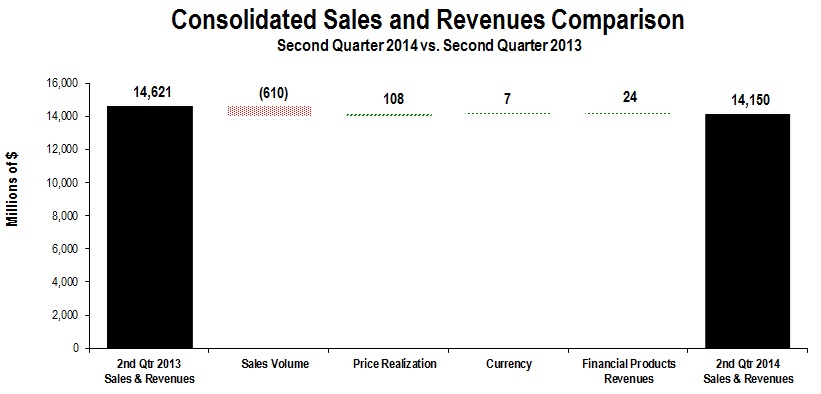
The chart above graphically illustrates reasons for the change in Consolidated Sales and Revenues between the
second
quarter of
2013
(at left) and the
second
quarter of
2014
(at right). Items favorably impacting sales and revenues appear as upward stair steps with the corresponding dollar amounts above each bar, while items negatively impacting sales and revenues appear as downward stair steps with dollar amounts reflected in parentheses above each bar. Caterpillar management utilizes these charts internally to visually communicate with the company's Board of Directors and employees.
Sales and Revenues
Total sales and revenues were $14.150 billion in the second quarter of 2014, down $471 million or 3 percent from the second quarter of 2013.
When reviewing the change in sales and revenues, we focus on the following perspectives:
|
•
|
Reasons for the change:
Sales volume
decreased $610 million primarily due to lower volume in Resource Industries, partially offset by higher volume in Construction Industries. The sales volume decrease was partially offset by favorable
price realization
.
|
The volume decrease was primarily the result of lower end-user demand for mining equipment in Resource Industries, as customers are continuing to reduce their capital expenditures. This decrease was partially offset by the favorable impact of changes in dealer machine and engine inventories, as dealers reduced inventories about $500 million in the second quarter of 2014 compared to a decrease of more than $1 billion in the second quarter of 2013. Dealers are independent, and there could be many reasons for changes in their inventory levels. In general, dealers adjust inventory based on their expectations of future demand and product delivery times. We expect that dealers will continue to decrease inventories for both construction and mining equipment in the third and fourth quarters of 2014, as dealers are satisfying more demand from inventory. Dealers’ demand expectations take into account seasonal changes, macroeconomic conditions and other factors. Delivery times can vary based on availability of product from Caterpillar factories and product distribution centers.
Aftermarket parts sales were about flat with the second quarter of 2013.
|
•
|
Sales by geographic region: Sales declines in Asia/Pacific and
Latin America
were partially offset by an increase in North America. Asia/Pacific sales declined 14 percent as a result of weak mining sales across the region, timing of large Energy & Transportation projects and a slowing construction equipment industry in China. Sales decreased in Latin America 16 percent, primarily due to lower end-user demand for mining equipment. In North America, sales increased 6 percent, primarily due to improving demand for construction equipment in the United States. Sales into
EAME
were about flat as lower end-user demand was about offset by the absence of unfavorable changes in dealer inventory during the second quarter of 2013. While EAME sales were about flat, the impact from strengthening economic conditions in Europe was about offset by sales declines
|
60
in the CIS and Africa/Middle East. We believe the sales declines in the CIS were due to the effects of ongoing political unrest on economic activity in the region, and the declines in Africa/Middle East were primarily due to lower mining sales.
|
•
|
Sales by segment: Sales decreases in Resource Industries were partially offset by increases in Construction Industries’ sales. Resource Industries’ sales decreased 29 percent, primarily due to lower end-user demand for mining equipment. Construction Industries’ sales increased 11 percent, primarily due to the favorable impact of changes in dealer inventories and increases in dealer deliveries to end users. Energy & Transportation’s sales and
Financial Products segment
revenues were about flat.
|
CONSOLIDATED OPERATING PROFIT
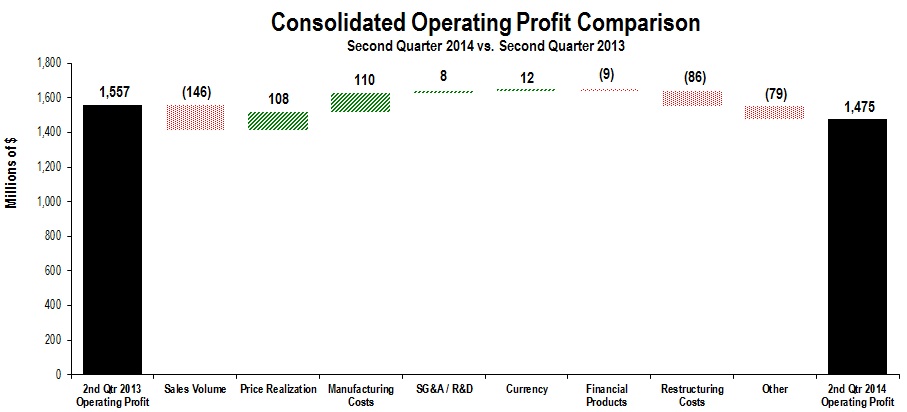
The chart above graphically illustrates reasons for the change in Consolidated Operating Profit between the
second
quarter of
2013
(at left) and the
second
quarter of
2014
(at right). Items favorably impacting operating profit
appear as upward stair steps with the corresponding dollar amounts above each bar, while items negatively impacting operating profit appear as downward stair steps with dollar amounts reflected in parentheses above each bar. Caterpillar management utilizes these charts internally to visually communicate with the company's Board of Directors and employees. The bar entitled Other includes
consolidating adjustments
and
Machinery, Energy & Transportation other operating (income) expenses
.
Operating profit for the second quarter of 2014 was $1.475 billion, down $82 million or 5 percent from the second quarter of 2013. Restructuring costs in the second quarter of 2014 were $114 million compared with $28 million in the second quarter of 2013, an increase of $86 million. The second quarter of 2014 restructuring costs were primarily related to a reduction in workforce at our Gosselies, Belgium, facility. Excluding restructuring costs, operating profit was about flat as lower sales volume and the absence of a $135 million gain related to a settlement with previous owners of
Caterpillar (Zhengzhou) Ltd.
were about offset by lower
manufacturing costs
and favorable price realization.
Manufacturing costs decreased $110 million. The improvement was primarily due to favorable changes in cost absorption as inventory decreased significantly in the second quarter of 2013 compared with a modest increase in the second quarter of 2014. Material costs were also favorable. These items were partially offset by higher period manufacturing costs and increased warranty expense. The increase in period manufacturing costs was primarily driven by higher incentive compensation expense. SG&A and R&D expenses were about flat despite an increase in incentive compensation expense.
The second-quarter short-term incentive compensation expense related to 2014 was about $360 million, and we expect the full-year expense will be about $1.2 billion. Short-term incentive compensation expense in the second quarter of 2013 was about $125 million, and the full-year 2013 was about $545 million. Short-term incentive compensation expense is directly related to financial and operational performance measured against targets set annually.
Other Profit/Loss Items
|
•
|
Other income/expense
was income of $65 million compared with expense of $84 million in the second quarter of 2013. The change was primarily due to the favorable net impact from
currency
translation and hedging gains and losses. Translation and hedging losses in the second quarter of 2013 totaled $134 million. In the second quarter of 2014, translation and hedging gains were $17 million.
|
61
|
•
|
The provision for income taxes
in the second quarter of 2014 reflects an estimated annual tax rate of 29.5 percent compared with 29 percent for the second quarter of 2013. The increase from the full-year 2013 rate of 28.5 percent is primarily due to the expiration of the U.S. research and development tax credit.
|
Segment Information
|
Sales and Revenues by Geographic Region
|
|
(Millions of dollars)
|
Total
|
%
Change
|
North
America
|
%
Change
|
Latin
America
|
%
Change
|
EAME
|
%
Change
|
Asia/
Pacific
|
%
Change
|
||||||||||||||||||||||||
|
Second Quarter 2014
|
|
|
|
|
|
|
|
|
|
|
|
|
|
|
|
|
|
|
|
|
||||||||||||||
|
Construction Industries
1
|
$
|
5,407
|
|
11
|
%
|
$
|
2,402
|
|
20
|
%
|
$
|
711
|
|
1
|
%
|
$
|
1,192
|
|
14
|
%
|
$
|
1,102
|
|
(2
|
)%
|
|||||||||
|
Resource Industries
2
|
2,241
|
|
(29
|
)%
|
866
|
|
(9
|
)%
|
342
|
|
(40
|
)%
|
523
|
|
(35
|
)%
|
510
|
|
(37
|
)%
|
||||||||||||||
|
Energy & Transportation
3
|
5,175
|
|
(2
|
)%
|
2,259
|
|
2
|
%
|
470
|
|
(17
|
)%
|
1,406
|
|
4
|
%
|
1,040
|
|
(8
|
)%
|
||||||||||||||
|
All Other Segments
4
|
583
|
|
(7
|
)%
|
369
|
|
—
|
%
|
71
|
|
13
|
%
|
83
|
|
(26
|
)%
|
60
|
|
(25
|
)%
|
||||||||||||||
|
Corporate Items and Eliminations
|
(15
|
)
|
—
|
|
(15
|
)
|
1
|
|
(2
|
)
|
1
|
|
||||||||||||||||||||||
|
Machinery, Energy & Transportation Sales
|
13,391
|
|
(4
|
)%
|
5,881
|
|
6
|
%
|
1,595
|
|
(16
|
)%
|
3,202
|
|
(3
|
)%
|
2,713
|
|
(14
|
)%
|
||||||||||||||
|
Financial Products Segment
|
834
|
|
3
|
%
|
448
|
|
7
|
%
|
117
|
|
7
|
%
|
121
|
|
1
|
%
|
148
|
|
(7
|
)%
|
||||||||||||||
|
Corporate Items and Eliminations
|
(75
|
)
|
(41
|
)
|
(13
|
)
|
(8
|
)
|
(13
|
)
|
||||||||||||||||||||||||
|
Financial Products Revenues
|
759
|
|
3
|
%
|
407
|
|
8
|
%
|
104
|
|
5
|
%
|
113
|
|
1
|
%
|
135
|
|
(8
|
)%
|
||||||||||||||
|
Consolidated Sales and Revenues
|
$
|
14,150
|
|
(3
|
)%
|
$
|
6,288
|
|
7
|
%
|
$
|
1,699
|
|
(15
|
)%
|
$
|
3,315
|
|
(3
|
)%
|
$
|
2,848
|
|
(13
|
)%
|
|||||||||
|
Second Quarter 2013
|
|
|
|
|
|
|
|
|
|
|
|
|
|
|
|
|
|
|
|
|
||||||||||||||
|
Construction Industries
1
|
$
|
4,875
|
|
$
|
2,008
|
|
$
|
701
|
|
$
|
1,045
|
|
$
|
1,121
|
|
|
|
|||||||||||||||||
|
Resource Industries
2
|
3,135
|
|
948
|
|
573
|
|
802
|
|
812
|
|
|
|
||||||||||||||||||||||
|
Energy & Transportation
3
|
5,263
|
|
2,215
|
|
568
|
|
1,352
|
|
1,128
|
|
|
|
||||||||||||||||||||||
|
All Other Segments
4
|
624
|
|
369
|
|
63
|
|
112
|
|
80
|
|
|
|
||||||||||||||||||||||
|
Corporate Items and Eliminations
|
(11
|
)
|
(14
|
)
|
1
|
|
1
|
|
1
|
|
||||||||||||||||||||||||
|
Machinery, Energy & Transportation Sales
|
13,886
|
|
|
|
5,526
|
|
|
|
1,906
|
|
|
|
3,312
|
|
|
|
3,142
|
|
|
|
||||||||||||||
|
Financial Products Segment
|
806
|
|
418
|
|
109
|
|
120
|
|
159
|
|
|
|
||||||||||||||||||||||
|
Corporate Items and Eliminations
|
(71
|
)
|
(41
|
)
|
(10
|
)
|
(8
|
)
|
(12
|
)
|
|
|
||||||||||||||||||||||
|
Financial Products Revenues
|
735
|
|
|
|
377
|
|
|
|
99
|
|
|
|
112
|
|
|
|
147
|
|
|
|
||||||||||||||
|
Consolidated Sales and Revenues
|
$
|
14,621
|
|
|
|
$
|
5,903
|
|
|
|
$
|
2,005
|
|
|
|
$
|
3,424
|
|
|
|
$
|
3,289
|
|
|
|
|||||||||
|
1
|
Does not include inter-segment sales of $56 million and $91 million in
second
quarter
2014
and
2013
, respectively.
|
|
2
|
Does not include inter-segment sales of $145 million and $126 million in
second
quarter
2014
and
2013
, respectively.
|
|
3
|
Does not include inter-segment sales of $586 million and $461 million in
second
quarter
2014
and
2013
, respectively.
|
|
4
|
Does not include inter-segment sales of $890 million and $830 million in
second
quarter
2014
and
2013
, respectively.
|
62
|
Sales and Revenues by Segment
|
||||||||||||||||||||||||||||||
|
(Millions of dollars)
|
Second Quarter 2013
|
Sales
Volume
|
Price
Realization
|
Currency
|
Other
|
Second Quarter 2014
|
$
Change
|
%
Change
|
||||||||||||||||||||||
|
Construction Industries
|
$
|
4,875
|
|
$
|
511
|
|
$
|
58
|
|
$
|
(37
|
)
|
$
|
—
|
|
$
|
5,407
|
|
$
|
532
|
|
11
|
%
|
|||||||
|
Resource Industries
|
3,135
|
|
(875
|
)
|
(15
|
)
|
(4
|
)
|
—
|
|
2,241
|
|
(894
|
)
|
(29
|
)%
|
||||||||||||||
|
Energy & Transportation
|
5,263
|
|
(186
|
)
|
48
|
|
50
|
|
—
|
|
5,175
|
|
(88
|
)
|
(2
|
)%
|
||||||||||||||
|
All Other Segments
|
624
|
|
(55
|
)
|
14
|
|
—
|
|
—
|
|
583
|
|
(41
|
)
|
(7
|
)%
|
||||||||||||||
|
Corporate Items and Eliminations
|
(11
|
)
|
(5
|
)
|
3
|
|
(2
|
)
|
—
|
|
(15
|
)
|
(4
|
)
|
|
|
||||||||||||||
|
Machinery, Energy & Transportation Sales
|
13,886
|
|
(610
|
)
|
108
|
|
7
|
|
—
|
|
13,391
|
|
(495
|
)
|
(4
|
)%
|
||||||||||||||
|
Financial Products Segment
|
806
|
|
—
|
|
—
|
|
—
|
|
28
|
|
834
|
|
28
|
|
3
|
%
|
||||||||||||||
|
Corporate Items and Eliminations
|
(71
|
)
|
—
|
|
—
|
|
—
|
|
(4
|
)
|
(75
|
)
|
(4
|
)
|
|
|
||||||||||||||
|
Financial Products Revenues
|
735
|
|
—
|
|
—
|
|
—
|
|
24
|
|
759
|
|
24
|
|
3
|
%
|
||||||||||||||
|
Consolidated Sales and Revenues
|
$
|
14,621
|
|
$
|
(610
|
)
|
$
|
108
|
|
$
|
7
|
|
$
|
24
|
|
$
|
14,150
|
|
$
|
(471
|
)
|
(3
|
)%
|
|||||||
|
Operating Profit by Segment
|
||||||||||||||
|
(Millions of dollars)
|
Second Quarter 2014
|
Second Quarter 2013
|
$
Change
|
%
Change
|
||||||||||
|
Construction Industries
|
$
|
674
|
|
$
|
368
|
|
$
|
306
|
|
83
|
%
|
|||
|
Resource Industries
|
133
|
|
524
|
|
(391
|
)
|
(75
|
)%
|
||||||
|
Energy & Transportation
|
1,009
|
|
953
|
|
56
|
|
6
|
%
|
||||||
|
All Other Segments
|
223
|
|
208
|
|
15
|
|
7
|
%
|
||||||
|
Corporate Items and Eliminations
|
(722
|
)
|
(666
|
)
|
(56
|
)
|
|
|
||||||
|
Machinery, Energy & Transportation
|
1,317
|
|
1,387
|
|
(70
|
)
|
(5
|
)%
|
||||||
|
Financial Products Segment
|
244
|
|
233
|
|
11
|
|
5
|
%
|
||||||
|
Corporate Items and Eliminations
|
(12
|
)
|
8
|
|
(20
|
)
|
|
|
||||||
|
Financial Products
|
232
|
|
241
|
|
(9
|
)
|
(4
|
)%
|
||||||
|
Consolidating Adjustments
|
(74
|
)
|
(71
|
)
|
(3
|
)
|
|
|
||||||
|
Consolidated Operating Profit
|
$
|
1,475
|
|
$
|
1,557
|
|
$
|
(82
|
)
|
(5
|
)%
|
|||
Construction Industries
Construction Industries’ sales were $5.407 billion in the second quarter of 2014, an increase of $532 million, or 11 percent, from the second quarter of 2013. The sales increase was primarily due to higher sales volume in North America. Price realization was also favorable. Sales of new equipment increased, and sales of aftermarket parts were about flat.
|
•
|
The sales volume increase was primarily related to favorable changes in dealer inventories as dealers lowered their inventories more significantly in the second quarter of 2013 than in the second quarter of 2014. Generally, dealer inventories decline in the second quarter due to seasonal selling patterns. Additionally, dealer deliveries to end users increased primarily due to higher demand in North America, partially offset by lower demand in Asia/Pacific.
|
Sales increased in North America and EAME and were about flat in Latin America and Asia/Pacific.
|
•
|
In North America, the sales increase was primarily due to higher dealer deliveries to end users resulting from an increase in construction-related spending in the United States. Although still below the 2006 peak, construction-related sales are improving in the United States.
|
|
•
|
In EAME, higher sales were primarily due to favorable changes in dealer inventories as dealers increased inventory in the second quarter of 2014 and decreased inventory in the second quarter of 2013.
|
|
•
|
In Asia/Pacific, sales were about flat as lower deliveries to end users due to weaker economic conditions across the region were about offset by the favorable impact of changes in dealer inventories.
|
Construction Industries’ profit was $674 million in the second quarter of 2014, compared with $368 million in the second quarter of 2013. The increase in profit was primarily due to higher sales volume, the favorable impact of currency, improved price realization and lower manufacturing costs.
63
Manufacturing costs improved primarily due to lower material costs and favorable changes in cost absorption resulting from a significantly larger decrease in inventory during the second quarter of 2013 than in the second quarter of 2014. These favorable impacts were partially offset by increased depreciation and incentive compensation expense.
SG&A and R&D expenses were about flat despite the increase in sales volume and higher incentive compensation expense.
Resource Industries
Resource Industries’ sales were $2.241 billion in the second quarter of 2014, a decrease of $894 million, or 29 percent, from the second quarter of 2013. Sales declined in all geographic regions primarily due to lower end-user demand partially offset by the favorable impact of changes in dealer inventories. While dealers continued to reduce machine inventories worldwide during the second quarter of 2014, the reductions were much less significant than in the second quarter of 2013. Although prices of most mined commodities remained above investment thresholds, customers in all geographic regions have reduced spending across the mining industry. We believe that mining companies are increasing productivity at existing mines, rather than investing in expansions or new mine openings, which results in lower demand for our mining products. New orders for mining equipment continued to be weak in the quarter.
Aftermarket part sales declined in Asia/Pacific and EAME and were about flat in Latin America and North America. We believe some companies are continuing to delay maintenance and rebuild activities.
Resource Industries' sales in the second quarter of 2014 were up slightly for both new equipment and aftermarket parts compared to the first quarter of 2014. We have not yet seen signs that an upturn in mining is going to occur this year. The mining industry remains weak and quoting activity and order rates remain at low levels. While we have not seen evidence of an upturn in the industry, because of the low level of sales of new equipment, we believe the likelihood of a significant decline from current levels is limited.
Resource Industries’ profit was $133 million in the second quarter of 2014 compared with $524 million in the second quarter of 2013. The decrease was primarily the result of lower sales volume and the absence of a $135 million gain related to the settlement with previous owners of Caterpillar (Zhengzhou) Ltd., partially offset by an improvement in manufacturing costs.
The improvement in manufacturing costs was primarily driven by favorable changes in cost absorption as inventory remained about flat during the second quarter of 2014, compared with a decrease in inventory during the second quarter of 2013. Material costs were also favorable. These improvements were partially offset by increased warranty expense.
SG&A and R&D expenses were about flat as cost cutting measures offset higher incentive compensation expense.
Energy & Transportation
Energy & Transportation’s sales were $5.175 billion in the second quarter of 2014, about flat with the second quarter of 2013. Sales decreased slightly into power generation applications and were about flat for transportation, industrial and oil and gas applications. While overall sales were about flat, sales of aftermarket parts increased.
|
•
|
Power Generation
- Sales decreased in North America and EAME and were about flat in Latin America and Asia/Pacific. The decline in North America and EAME was due to lower end-user demand resulting primarily from the timing of large projects.
|
|
•
|
Oil and Gas
- Sales were about flat, as increases in North America and EAME were about offset by decreases in Asia/Pacific and Latin America. In North America, higher sales were primarily the result of increased demand for gas compression and well servicing. The increase in sales in EAME, as well as the declines in Asia/Pacific and Latin America, were primarily due to the timing of large turbine projects.
|
|
•
|
Industrial and Transportation
- Sales for both applications were about flat across all geographic regions.
|
Due to the large project nature of many of the Energy & Transportation end markets, the timing of these projects can vary causing volatility in our sales.
Energy & Transportation’s profit was $1.009 billion in the second quarter of 2014, compared with $953 million in the second quarter of 2013. The increase was primarily due to favorable price realization.
Manufacturing costs were about flat as the favorable impact of cost absorption and lower material costs were about offset by increased period manufacturing costs, including higher incentive compensation expense. The favorable impact of cost absorption resulted from an increase in inventory in the second quarter of 2014 compared to a decrease in inventory in the second quarter of 2013.
SG&A and R&D expenses were about flat as reduced program spending offset higher incentive compensation expense.
64
Financial Products Segment
Financial Products’ revenues were $834 million, an increase of $28 million, or 3 percent, from the second quarter of 2013. The increase was primarily due to the favorable impact from higher average
earning assets
in North America, EAME and Latin America, partially offset by a decrease in Asia/Pacific.
Financial Products’ profit was $244 million in the second quarter of 2014, compared with $233 million in the second quarter of 2013. The increase was primarily due to the absence of a $23 million currency loss in the second quarter of 2013 and a $17 million favorable impact from higher average earning assets. These increases were partially offset by the absence of $23 million in favorable reserve adjustments in the second quarter of 2013 at Insurance Services.
At the end of the second quarter of 2014, past dues at Cat Financial were 2.63 percent compared with 2.44 percent at the end of the first quarter of 2014, 2.37 percent at the end of 2013 and 2.64 percent at the end of the second quarter of 2013. The increase in past dues from the first quarter of 2014 and the end of 2013 reflects higher past dues in Cat Financial’s Latin American, Asia/Pacific, and European portfolios. Write-offs, net of recoveries, were $19 million for the second quarter of 2014, compared with $27 million for the second quarter of 2013.
As of June 30, 2014, Cat Financial's allowance for credit losses totaled $387 million, or 1.27 percent of net finance receivables, compared with $373 million or 1.25 percent of net finance receivables as of March 31, 2014 and $378 million or 1.30 percent of net finance receivables at year-end 2013. The allowance for credit losses as of June 30, 2013, was $422 million or 1.46 percent of net finance receivables.
Corporate Items and Eliminations
Expense for corporate items and eliminations was $734 million in the second quarter of 2014, an increase of $76 million from the second quarter of 2013. Corporate items and eliminations include: corporate-level expenses; restructuring costs; timing differences, as some expenses are reported in segment profit on a cash basis; retirement benefit costs other than service cost and currency differences for ME&T, as segment profit is reported using annual fixed exchange rates and inter-segment eliminations.
The increase in expense from the second quarter of 2013 was primarily due to restructuring costs and the unfavorable impact of currency. Segment profit for 2014 is based on fixed exchange rates set at the beginning of 2014, while segment profit for 2013 is based on fixed exchange rates set at the beginning of 2013. The difference in actual exchange rates compared with fixed exchange rates is included in corporate items and eliminations and is not reflected in segment profit. These unfavorable items were partially offset by other methodology differences and decreased retirement benefit costs.
65
SIX
MONTHS ENDED
JUNE 30, 2014
COMPARED WITH
SIX
MONTHS ENDED
JUNE 30, 2013
CONSOLIDATED SALES AND REVENUES
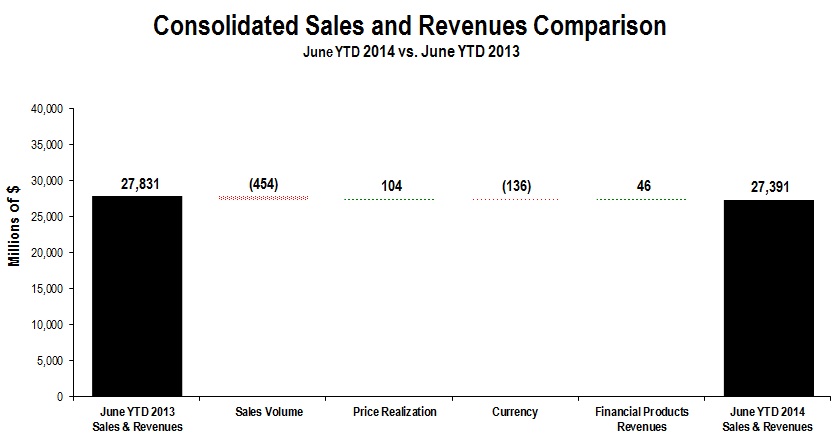
The chart above graphically illustrates reasons for the change in Consolidated Sales and Revenues between the
six
months ended
June 30, 2013
(at left) and the
six
months ended
June 30, 2014
(at right). Items favorably impacting sales and revenues appear as upward stair steps with the corresponding dollar amounts above each bar, while items negatively impacting sales and revenues appear as downward stair steps with dollar amounts reflected in parentheses above each bar. Caterpillar management utilizes these charts internally to visually communicate with the company's Board of Directors and employees.
Total sales and revenues were $27.391 billion in the six months ended June 30, 2014, down $440 million or 2 percent from the six months ended June 30, 2013. When reviewing the change in sales and revenues, we focus on the following perspectives:
|
•
|
Reasons for the change: Sales volume decreased $454 million due to lower volume in Resource Industries, partially offset by higher volume in Construction Industries and Energy & Transportation. In addition, currency was unfavorable $136 million primarily due to the Japanese yen and Brazilian real, partially offset by the euro. Sales in yen and real translated into fewer U.S. dollars while the euro translated into more U.S. dollars.
|
The volume decrease was primarily the result of lower end-user demand for mining equipment in Resource Industries, as customers are continuing to reduce their capital expenditures. This unfavorable impact was partially offset by the favorable impact of changes in dealer machine and engine inventories, as dealers increased inventories about $200 million in the six months ended June 30, 2014 compared to a decrease of nearly $2 billion in the six months ended June 30, 2013. We expect that dealers will decrease inventories for both construction and mining equipment in the third and fourth quarters of 2014, as dealers satisfy more demand from inventory. Dealers are independent, and there could be many reasons for changes in their inventory levels. In general, dealers adjust inventory based on their expectations of future demand and product delivery times. Dealers’ demand expectations take into account seasonal changes, macroeconomic conditions and other factors. Delivery times can vary based on availability of product from Caterpillar factories and product distribution centers.
Aftermarket parts sales were about flat as declines in Resource Industries were offset by increases in Energy & Transportation.
|
•
|
Sales by geographic region: Sales declines in Asia/Pacific and Latin America were about offset by sales increases in North America. In Asia/Pacific sales decreased 13 percent primarily due to lower end user demand for mining equipment partially offset by the favorable impact of changes in dealer inventories. Sales declined 16 percent in Latin America primarily due to lower end user demand for mining equipment. Sales increases in North America were primarily due to higher end user demand for construction and oil and gas equipment and the favorable impact of dealer inventory changes primarily related to Construction Industries.
|
Sales were about flat in EAME, as lower end user demand was about offset by the favorable impact of changes in dealer inventories. While sales in EAME were about flat, the impact from strengthening economic conditions in Europe primarily for Construction Industries was about offset by sales declines in the CIS and Africa/Middle East. We believe the sales declines
66
in the CIS were due to the effects of ongoing political unrest on economic activity in the region, and the declines in Africa/Middle East were primarily due to lower mining sales. The escalation of geo-political events in the region could negatively impact trade overall and the demand for our products.
|
•
|
Sales by segment: Sales decreases in Resource Industries were nearly offset by increases in Construction Industries and Energy & Transportation. Resource Industries’ sales declined 33 percent, resulting primarily from weaker demand for mining products, partially offset by the favorable impact of changes in dealer inventories. Construction Industries’ sales increased 15 percent primarily due to the favorable impact of changes in dealer inventories and increased end-user demand. Energy & Transportation’s sales were 3 percent higher. Financial Products segment revenues were about flat.
|
CONSOLIDATED OPERATING PROFIT
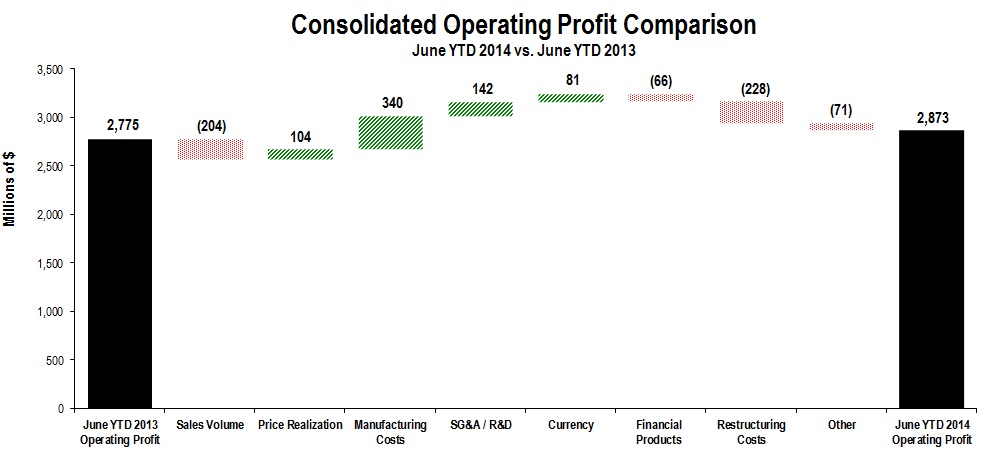
The chart above graphically illustrates reasons for the change in Consolidated Operating Profit between the
six
months ended
June 30, 2013
(at left) and the
six
months ended
June 30, 2014
(at right). Items favorably impacting operating profit
appear as upward stair steps with the corresponding dollar amounts above each bar, while items negatively impacting operating profit appear as downward stair steps with dollar amounts reflected in parentheses above each bar. Caterpillar management utilizes these charts internally to visually communicate with the company's Board of Directors and employees. The bar entitled Other includes consolidating adjustments and Machinery, Energy & Transportation other operating (income) expenses.
Operating profit for the six months ended June 30, 2014 was $2.873 billion, an increase of $98 million from the six months ended June 30, 2013. The increase was primarily the result of lower manufacturing costs, decreased SG&A and R&D expenses, improved price realization and the favorable impact of currency. These favorable impacts were partially offset by higher restructuring costs, lower sales volume and the absence of a gain related to a settlement with the previous owners of Caterpillar (Zhengzhou) Ltd
.
Manufacturing costs decreased $340 million. The improvement was primarily due to favorable changes in cost absorption resulting from an increase in inventory during the six months ended June 30, 2014 compared to a significant decrease in the six months ended June 30, 2013, favorable material costs and improved efficiencies. These favorable impacts were partially offset by increased incentive compensation and warranty expenses.
Decreases in SG&A and R&D expenses were primarily due to cost reduction measures, partially offset by higher incentive compensation expense.
The favorable impact of currency was mostly due to the Japanese yen. We have a sizeable manufacturing presence in Japan, and while some of this production is sold in Japan, we are a net exporter, and therefore, a weaker yen provides a benefit.
The unfavorable impact from restructuring costs of $228 million was primarily related to a reduction in workforce at our Gosselies, Belgium, facility.
Short-term incentive compensation expense related to the six months ended June 30, 2014 was about $620 million, compared with about $250 million in the six months ended June 30, 2013.
67
Other Profit/Loss Items
|
•
|
Other income/expense
was income of $119 million in the six months ended June 30, 2014 compared with expense of $55 million in the six months ended June 30, 2013. The change was primarily due to the favorable impact of currency translation and hedging gains and losses. Translation and hedging losses in the six months end June 30, 2013, totaled $158 million. In the six months ended June 30, 2014, translation and hedging gains were $14 million.
|
|
•
|
The provision for income taxes
for the first six months of 2014 reflects an estimated annual effective tax rate of 29.5 percent compared with 29 percent for the first six months of 2013, excluding the items discussed below. The increase from the full-year 2013 rate of 28.5 percent is primarily due to the expiration of the U.S. research and development tax credit.
|
The provision for income taxes for the first six months of 2014 also includes a charge of $22 million related to prior years’ taxes and interest. This compares to a benefit of $87 million for the first six months of 2013 primarily related to the U.S. research and development tax credit that was retroactively extended for 2012.
Segment Information
|
Sales and Revenues by Geographic Region
|
|
(Millions of dollars)
|
Total
|
%
Change
|
North
America
|
%
Change
|
Latin
America
|
%
Change
|
EAME
|
%
Change
|
Asia/
Pacific
|
%
Change
|
||||||||||||||||||||||||
|
Six Months Ended June 30, 2014
|
|
|
|
|
|
|
|
|
|
|
|
|
|
|
|
|
|
|
||||||||||||||||
|
Construction Industries
1
|
$
|
10,471
|
|
15
|
%
|
$
|
4,494
|
|
27
|
%
|
$
|
1,297
|
|
—
|
%
|
$
|
2,336
|
|
17
|
%
|
$
|
2,344
|
|
4
|
%
|
|||||||||
|
Resource Industries
2
|
4,364
|
|
(33
|
)%
|
1,591
|
|
(11
|
)%
|
744
|
|
(42
|
)%
|
1,055
|
|
(37
|
)%
|
974
|
|
(44
|
)%
|
||||||||||||||
|
Energy & Transportation
3
|
9,951
|
|
3
|
%
|
4,341
|
|
8
|
%
|
941
|
|
(5
|
)%
|
2,735
|
|
6
|
%
|
1,934
|
|
(6
|
)%
|
||||||||||||||
|
All Other Segments
4
|
1,137
|
|
—
|
%
|
706
|
|
—
|
%
|
126
|
|
13
|
%
|
186
|
|
(6
|
)%
|
119
|
|
(7
|
)%
|
||||||||||||||
|
Corporate Items and Eliminations
|
(39
|
)
|
(32
|
)
|
(1
|
)
|
(5
|
)
|
(1
|
)
|
||||||||||||||||||||||||
|
Machinery, Energy & Transportation Sales
|
25,884
|
|
(2
|
)%
|
11,100
|
|
11
|
%
|
3,107
|
|
(16
|
)%
|
6,307
|
|
(2
|
)%
|
5,370
|
|
(13
|
)%
|
||||||||||||||
|
Financial Products Segment
|
1,651
|
|
3
|
%
|
885
|
|
8
|
%
|
226
|
|
3
|
%
|
252
|
|
3
|
%
|
288
|
|
(9
|
)%
|
||||||||||||||
|
Corporate Items and Eliminations
|
(144
|
)
|
(80
|
)
|
(24
|
)
|
(14
|
)
|
(26
|
)
|
||||||||||||||||||||||||
|
Financial Products Revenues
|
1,507
|
|
3
|
%
|
805
|
|
8
|
%
|
202
|
|
—
|
%
|
238
|
|
3
|
%
|
262
|
|
(8
|
)%
|
||||||||||||||
|
Consolidated Sales and Revenues
|
$
|
27,391
|
|
(2
|
)%
|
$
|
11,905
|
|
10
|
%
|
$
|
3,309
|
|
(15
|
)%
|
$
|
6,545
|
|
(2
|
)%
|
$
|
5,632
|
|
(13
|
)%
|
|||||||||
|
Six Months Ended June 30, 2013
|
|
|
|
|
|
|
|
|
|
|
|
|
|
|
|
|
|
|
||||||||||||||||
|
Construction Industries
1
|
$
|
9,094
|
|
$
|
3,548
|
|
$
|
1,297
|
|
$
|
2,001
|
|
$
|
2,248
|
|
|
|
|||||||||||||||||
|
Resource Industries
2
|
6,488
|
|
1,787
|
|
1,290
|
|
1,669
|
|
1,742
|
|
|
|
||||||||||||||||||||||
|
Energy & Transportation
3
|
9,668
|
|
4,030
|
|
993
|
|
2,588
|
|
2,057
|
|
|
|
||||||||||||||||||||||
|
All Other Segments
4
|
1,141
|
|
704
|
|
112
|
|
197
|
|
128
|
|
|
|
||||||||||||||||||||||
|
Corporate Items and Eliminations
|
(21
|
)
|
(26
|
)
|
1
|
|
2
|
|
2
|
|
||||||||||||||||||||||||
|
Machinery, Energy & Transportation Sales
|
26,370
|
|
|
|
10,043
|
|
|
|
3,693
|
|
|
|
6,457
|
|
|
|
6,177
|
|
|
|
||||||||||||||
|
Financial Products Segment
|
1,601
|
|
821
|
|
219
|
|
245
|
|
316
|
|
|
|
||||||||||||||||||||||
|
Corporate Items and Eliminations
|
(140
|
)
|
(78
|
)
|
(16
|
)
|
(14
|
)
|
(32
|
)
|
|
|
||||||||||||||||||||||
|
Financial Products Revenues
|
1,461
|
|
|
|
743
|
|
|
|
203
|
|
|
|
231
|
|
|
|
284
|
|
|
|
||||||||||||||
|
Consolidated Sales and Revenues
|
$
|
27,831
|
|
|
|
$
|
10,786
|
|
|
|
$
|
3,896
|
|
|
|
$
|
6,688
|
|
|
|
$
|
6,461
|
|
|
|
|||||||||
|
1
|
Does not include inter-segment sales of $131 million and $190 million for the
six
months ended
June 30, 2014
and
2013
, respectively.
|
|
2
|
Does not include inter-segment sales of $258 million and $254 million for the
six
months ended
June 30, 2014
and
2013
, respectively.
|
|
3
|
Does not include inter-segment sales of $1,136 million and $857 million for the
six
months ended
June 30, 2014
and
2013
, respectively.
|
|
4
|
Does not include inter-segment sales of $1,722 million and $1,633 million for the
six
months ended
June 30, 2014
and
2013
, respectively.
|
68
|
Sales and Revenues by Segment
|
||||||||||||||||||||||||||||||
|
(Millions of dollars)
|
Six Months Ended June 30, 2013
|
Sales
Volume
|
Price
Realization
|
Currency
|
Other
|
Six Months Ended June 30, 2014
|
$
Change
|
%
Change
|
||||||||||||||||||||||
|
Construction Industries
|
$
|
9,094
|
|
$
|
1,493
|
|
$
|
41
|
|
$
|
(157
|
)
|
$
|
—
|
|
$
|
10,471
|
|
$
|
1,377
|
|
15
|
%
|
|||||||
|
Resource Industries
|
6,488
|
|
(2,065
|
)
|
(36
|
)
|
(23
|
)
|
—
|
|
4,364
|
|
(2,124
|
)
|
(33
|
)%
|
||||||||||||||
|
Energy & Transportation
|
9,668
|
|
155
|
|
80
|
|
48
|
|
—
|
|
9,951
|
|
283
|
|
3
|
%
|
||||||||||||||
|
All Other Segments
|
1,141
|
|
(18
|
)
|
17
|
|
(3
|
)
|
—
|
|
1,137
|
|
(4
|
)
|
—
|
%
|
||||||||||||||
|
Corporate Items and Eliminations
|
(21
|
)
|
(19
|
)
|
2
|
|
(1
|
)
|
—
|
|
(39
|
)
|
(18
|
)
|
|
|
||||||||||||||
|
Machinery, Energy & Transportation Sales
|
26,370
|
|
(454
|
)
|
104
|
|
(136
|
)
|
—
|
|
25,884
|
|
(486
|
)
|
(2
|
)%
|
||||||||||||||
|
Financial Products Segment
|
1,601
|
|
—
|
|
—
|
|
—
|
|
50
|
|
1,651
|
|
50
|
|
3
|
%
|
||||||||||||||
|
Corporate Items and Eliminations
|
(140
|
)
|
—
|
|
—
|
|
—
|
|
(4
|
)
|
(144
|
)
|
(4
|
)
|
|
|
||||||||||||||
|
Financial Products Revenues
|
1,461
|
|
—
|
|
—
|
|
—
|
|
46
|
|
1,507
|
|
46
|
|
3
|
%
|
||||||||||||||
|
Consolidated Sales and Revenues
|
$
|
27,831
|
|
$
|
(454
|
)
|
$
|
104
|
|
$
|
(136
|
)
|
$
|
46
|
|
$
|
27,391
|
|
$
|
(440
|
)
|
(2
|
)%
|
|||||||
|
Operating Profit by Segment
|
||||||||||||||
|
(Millions of dollars)
|
Six Months Ended
June 30, 2014 |
Six Months Ended
June 30, 2013 |
$
Change
|
%
Change
|
||||||||||
|
Construction Industries
|
$
|
1,362
|
|
$
|
596
|
|
$
|
766
|
|
129
|
%
|
|||
|
Resource Industries
|
282
|
|
983
|
|
(701
|
)
|
(71
|
)%
|
||||||
|
Energy & Transportation
|
1,836
|
|
1,544
|
|
292
|
|
19
|
%
|
||||||
|
All Other Segments
|
458
|
|
413
|
|
45
|
|
11
|
%
|
||||||
|
Corporate Items and Eliminations
|
(1,382
|
)
|
(1,146
|
)
|
(236
|
)
|
|
|
||||||
|
Machinery, Energy & Transportation
|
2,556
|
|
2,390
|
|
166
|
|
7
|
%
|
||||||
|
Financial Products Segment
|
484
|
|
506
|
|
(22
|
)
|
(4
|
)%
|
||||||
|
Corporate Items and Eliminations
|
(27
|
)
|
17
|
|
(44
|
)
|
|
|
||||||
|
Financial Products
|
457
|
|
523
|
|
(66
|
)
|
(13
|
)%
|
||||||
|
Consolidating Adjustments
|
(140
|
)
|
(138
|
)
|
(2
|
)
|
|
|
||||||
|
Consolidated Operating Profit
|
$
|
2,873
|
|
$
|
2,775
|
|
$
|
98
|
|
4
|
%
|
|||
Construction Industries
Construction Industries’ sales were $10.471 billion in the six months ended June 30, 2014, an increase of $1.377 billion, or 15 percent, from the six months ended June 30, 2013. The sales increase was primarily due to higher sales volume, partially offset by the unfavorable impact of currency. Sales of new equipment increased, and sales of aftermarket parts were about flat.
|
•
|
The increase in sales volume was primarily related to changes in dealer inventories. Dealer inventories increased in the six months ended June 30, 2014 compared to a decrease in the six months ended June 30, 2013. The remaining increase in sales volume was primarily due to increased deliveries to end users in North America.
|
|
•
|
The unfavorable currency impact was primarily from a weaker Japanese yen and Brazilian real, as sales in these currencies translated into fewer U.S. dollars.
|
Sales increased in all geographic regions except in Latin America, where they were about flat.
|
•
|
In North America, higher sales were primarily due to higher end-user demand resulting from an increase in construction-related spending in the United States. Although still below the 2006 peak, construction-related sales are improving in the United States. The remaining sales increase was primarily due to the impact of dealer inventory changes, as dealers increased inventory more in the six months ended June 30, 2014 than in the six months ended June 30, 2013.
|
|
•
|
In EAME, higher sales were primarily due to the impact of dealer inventory changes. Dealer machine inventory increased in the six months ended June 30, 2014 compared to a decrease in the six months ended June 30, 2013. In addition, dealer deliveries to end users in Europe increased due to strengthening economic conditions. These increases were partially offset
|
69
by lower dealer deliveries to end users in Africa/Middle East and the CIS. We believe the declines in these regions were due to the effects of ongoing political unrest on economic activity in the regions.
|
•
|
In Asia/Pacific, sales increased slightly primarily due to favorable changes in dealer inventories as the decrease in dealer inventories was less significant in the six months ended June 30, 2014 than in the six months ended June 30, 2013. These favorable impacts were partially offset by the unfavorable impact of currency primarily due to the Japanese yen.
|
|
•
|
While sales in Latin America were about flat, increases in end-user demand primarily related to large government orders in Brazil were about offset by an unfavorable impact of currency from the Brazilian real.
|
Construction Industries’ profit was $1.362 billion in the six months ended June 30, 2014, compared with $596 million in the six months ended June 30, 2013. The increase in profit was primarily due to higher sales volume, favorable manufacturing costs and the favorable impact of currency.
Manufacturing costs improved primarily due to favorable changes in cost absorption, material costs and efficiencies, partially offset by higher period manufacturing costs. Favorable changes in cost absorption resulted from a significantly larger decrease in inventory during the six months ended June 30, 2013 compared to the six months ended June 30, 2014. The improvement in efficiencies was primarily due to higher production volume. The increases in period manufacturing costs were primarily due to higher depreciation and incentive compensation expenses.
SG&A and R&D expenses were about flat despite the increase in sales volume and higher incentive compensation expense.
While margins on Construction Industries' sales in the six months ended June 30, 2014 were strong, lower margins are expected on Construction Industries' sales for the remainder of 2014 primarily due to lower sales volume primarily in developing countries such as China, the CIS and the Africa/Middle East region. The construction industry in China has softened since the end of the first quarter of 2014, and we expect it to continue to be weaker in the second half of 2014, negatively impacting the demand for our products. In addition, the political problems in the CIS and Africa/Middle East could negatively impact trade and the demand for our products.
Resource Industries
Resource Industries’ sales were $4.364 billion for the six months ended June 30, 2014, a decrease of $2.124 billion, or 33 percent, from the six months ended June 30, 2013 - nearly all from lower sales volume. The sales volume decline was primarily due to lower end-user demand across all geographic regions. Aftermarket part sales also declined, as we believe some companies are delaying maintenance and rebuild activities. These declines were partially offset by favorable changes in dealer machine inventory. While dealers continued to reduce machine inventories worldwide for the six months ended June 30, 2014, the reductions were much less significant than for the six months ended June 30, 2013. We expect that dealers will continue to decrease inventory in the third and fourth quarters of 2014 as dealers are satisfying more customer demand from inventory. Customer demand for mining equipment has not improved, and as a result, dealers need less inventory and are making reductions to align inventory with demand.
Although prices of most mined commodities remained above investment thresholds, customers in all geographic regions have reduced spending across the mining industry. We believe that mining companies are increasing productivity at existing mines, rather than investing in expansions or new mine openings, which results in lower demand for our mining products. New orders for mining equipment continued to be weak for the six months ended June 30, 2014.
Resource Industries' sales in the second quarter of 2014 were up slightly for both new equipment and aftermarket parts compared to the first quarter of 2014. We have not yet seen signs that an upturn in mining is going to occur this year. The mining industry remains weak and quoting activity and order rates remain at low levels. While we have not seen evidence of an upturn in the industry, because of the low level of sales of new equipment, we believe the likelihood of significant decline from current levels is limited.
Resource Industries’ profit was $282 million for the six months ended June 30, 2014 compared with $983 million for the six months ended June 30, 2013. The decrease was primarily the result of lower sales volume and the absence of a $135 million gain related to the settlement with previous owners of Caterpillar (Zhengzhou) Ltd., which was partially offset by an improvement in manufacturing costs and lower SG&A and R&D expenses.
The decrease in manufacturing costs was primarily driven by favorable changes in cost absorption resulting from an increase in inventory for the six months ended June 30, 2014, compared with a decrease in inventory for the six months ended June 30, 2013. Material costs were also favorable.
Despite increased incentive compensation expense, SG&A and R&D expenses were lower primarily due to cost cutting measures implemented in response to lower volumes, including decreased spending for new product introduction programs. In addition, bad debt expense was lower at Caterpillar (Zhengzhou) Ltd.
70
Energy & Transportation
Energy & Transportation’s sales were $9.951 billion for the six months ended June 30, 2014, an increase of $283 million, or 3 percent, from the six months ended June 30, 2013. The sales increase was primarily due to higher sales into oil and gas and industrial applications. Sales into transportation and power generation applications were about flat. Sales of aftermarket parts increased.
|
•
|
Oil and Gas
- The sales increase was primarily due to favorable changes in dealer inventories across all regions. Deliveries to end users were about flat as increases in North America and EAME were about offset by decreases in Asia/Pacific and Latin America. In North America, the increase in deliveries was primarily for well servicing and gas compression. The increase in sales in EAME, as well as the declines in Asia/Pacific and Latin America, were primarily due to the timing of large projects. Due to the large project nature of many of the Energy & Transportation end markets, the timing of these projects can vary causing volatility in our sales.
|
|
•
|
Industrial
- Sales into industrial applications increased in North America and Asia/Pacific and were about flat in EAME and Latin America. The increase in sales was primarily due to higher demand for engines used by original equipment manufacturers.
|
Energy & Transportation’s profit was $1.836 billion for the six months ended June 30, 2014 compared with $1.544 billion for the six months ended June 30, 2013. The increase was primarily due to higher sales volume, favorable price realization and lower manufacturing costs.
The decrease in manufacturing costs was primarily due to lower material costs and favorable changes in cost absorption resulting from a more significant increase in inventory for the six months ended June 30, 2014 than for the six months ended June 30, 2013. These favorable items were partially offset by increased incentive compensation expense.
SG&A and R&D expenses were about flat as reduced program spending offset higher incentive compensation expense.
Financial Products Segment
Financial Products’ revenues were $1.651 billion for the six months ended June 30, 2014, an increase of $50 million, or 3 percent, from the six months ended June 30, 2013. The increase was primarily due to the favorable impact from higher average earning
assets in North America and EAME, partially offset by decreases in Asia/Pacific and Latin America. The increase was partially offset by a decrease in Insurance Services’ revenue across all geographic regions except Latin America.
Financial Products’ profit was $484 million in the six months ended June 30, 2014, compared with $506 million in the six months ended June 30, 2013. The decrease was primarily due to the absence of $68 million in favorable reserve adjustments in the six months ended June 30, 2013 at Insurance Services and a $21 million increase in the provision for credit losses at Cat Financial. These decreases were partially offset by a $27 million favorable impact from higher average earning assets, the absence of a $23 million currency loss in the six months ended June 30, 2013 and an $18 million improvement on net yield on average earning assets.
Corporate Items and Eliminations
Expense for corporate items and eliminations was $1.409 billion in the six months ended June 30, 2014, an increase of $280 million from the six months ended June 30, 2013. Corporate items and eliminations include: corporate-level expenses; restructuring costs; timing differences, as some expenses are reported in segment profit on a cash basis; retirement benefit costs other than service cost; currency differences for ME&T, as segment profit is reported using annual fixed exchange rates and inter-segment eliminations.
The increase in expense from the six month ended June 30, 2013 was primarily due to restructuring costs and the unfavorable impact of currency. Segment profit for 2014 is based on fixed exchange rates set at the beginning of 2014, while segment profit for 2013 is based on fixed exchange rates set at the beginning of 2013. The difference in actual exchange rates compared with fixed exchange rates is included in corporate items and eliminations and is not reflected in segment profit. These unfavorable items were partially offset by decreased retirement benefit costs.
RESTRUCTURING COSTS
For the
three and six
months ended
June 30, 2014
, we recognized $114 million and $263 million, respectively, of restructuring costs, which included $107 million of employee separation costs and $7 million of long-lived asset impairments and other restructuring costs for the three months ended June 30, 2014 and $249 million of employee separation costs and $14 million of long-lived asset impairments and other restructuring costs for the six months ended June 30, 2014. The restructuring costs in 2014 were primarily related to a reduction in workforce at our Gosselies, Belgium facility. For the
three and six
months ended
June 30, 2013
, we recognized $28 million and $35 million, respectively, of restructuring costs, which included $16 million of employee separation costs and $12 million of long-lived asset impairments for the three months ended June 30, 2013 and $23 million of
71
employee separation costs and $12 million of long-lived asset impairments for the six months ended June 30, 2013. For the first six months of 2013, costs primarily related to separation programs in North America and Europe.
Restructuring costs for the year ended December 31,
2013
were $200 million and included
$151 million
of employee separation costs, $41 million of long-lived asset impairments and $8 million of other restructuring costs. The most significant charges in 2013 were for the restructuring of management and support functions and the closure or downsizing of several facilities related to our mining business.
Restructuring costs are a reconciling item between Segment profit and Consolidated profit before taxes.
The following table summarizes the
2013
and
2014
employee separation activity:
|
(Millions of dollars)
|
||||
|
Total
|
||||
|
Liability balance at December 31, 2012
|
$
|
29
|
|
|
|
Increase in liability (separation charges)
|
151
|
|
||
|
Reduction in liability (payments and other adjustments)
|
(91
|
)
|
||
|
Liability balance at December 31, 2013
|
$
|
89
|
|
|
|
Increase in liability (separation charges)
|
249
|
|
||
|
Reduction in liability (payments and other adjustments)
|
(114
|
)
|
||
|
Liability balance at June 30, 2014
|
$
|
224
|
|
|
The remaining liability balances as of
June 30, 2014
represent costs for employees who have not yet separated from the Company or whose full severance has not yet been paid. The majority of these remaining costs are expected to be paid in
2014
.
In December 2013, we announced a restructuring plan for our Gosselies, Belgium facility. This restructuring plan is designed to improve the competitiveness of our European manufacturing footprint and achieve competitiveness in our European operations by refocusing our current Gosselies operations on final machine assembly, test and paint with limited component and fabrication operations. This action will include reshaping our supply base for more efficient sourcing, improving factory efficiencies and workforce reductions and was approved by the Belgian Minister of Employment in February 2014. We estimate the total employee cash separation costs to be about $300 million before tax, which represents substantially all of the restructuring costs to be incurred under the restructuring plan. We expect to recognize substantially all of these separation-related charges throughout 2014. For the
three and six
months ended
June 30, 2014
, we recognized $87 million and $215 million, respectively, of employee separation costs relating to this restructuring plan. The majority of these costs will be paid throughout the remainder of 2014.
For the full year, we expect total restructuring costs of about $400 million, lower than our previous estimate of $400 to $500 million. We revised our estimate because we expect some of the costs related to 2014 restructuring activities will now be incurred in 2015. Excluding charges related to our Belgium facility, restructuring costs for 2014 are anticipated to be about $100 million and are for a wide range of actions across the company that are part of our ongoing efforts to optimize our cost structure and improve the efficiency of our operations.
GLOSSARY OF TERMS
|
1.
|
All Other Segments
- Primarily includes activities such as: the remanufacturing of Cat® engines and components and remanufacturing services for other companies as well as the business strategy, product management, development, manufacturing, marketing and product support of undercarriage, specialty products, hardened bar stock components and ground engaging tools primarily for Cat products, paving products, forestry products, industrial and waste products and tunnel boring equipment; the product management, development, marketing, sales and product support of on-highway vocational trucks for North America; parts distribution; distribution services responsible for dealer development and administration including three wholly-owned dealers in Japan, dealer portfolio management and ensuring the most efficient and effective distribution of machines, engines and parts.
|
|
2.
|
Caterpillar (Zhengzhou) Ltd.
- A wholly-owned subsidiary (formerly known as Siwei) which primarily designs, manufactures, sells and supports underground coal mining equipment in China and is included in our Resource Industries segment.
|
72
|
3.
|
Consolidating Adjustments
- Eliminations of transactions between Machinery, Energy & Transportation and Financial Products.
|
|
4.
|
Construction Industries
- A segment primarily responsible for supporting customers using machinery in infrastructure and building construction applications. Responsibilities include business strategy, product design, product management and development, manufacturing, marketing and sales and product support. The product portfolio includes backhoe loaders, small wheel loaders, small track-type tractors, skid steer loaders, multi-terrain loaders, mini excavators, compact wheel loaders, telehandlers, select work tools, small, medium and large track excavators, wheel excavators, medium wheel loaders, compact track loaders, medium track-type tractors, track-type loaders, motor graders and pipe layers. In addition, Construction Industries has responsibility for an integrated manufacturing cost center.
|
|
5.
|
Currency
- With respect to sales and revenues, currency represents the translation impact on sales resulting from changes in foreign currency exchange rates versus the U.S. dollar. With respect to operating profit, currency represents the net translation impact on sales and operating costs resulting from changes in foreign currency exchange rates versus the U.S. dollar. Currency includes the impact on sales and operating profit for the Machinery, Energy & Transportation lines of business only; currency impacts on Financial Products revenues and operating profit are included in the Financial Products portions of the respective analyses. With respect to other income/expense, currency represents the effects of forward and option contracts entered into by the company to reduce the risk of fluctuations in exchange rates (hedging) and the net effect of changes in foreign currency exchange rates on our foreign currency assets and liabilities for consolidated results (translation).
|
|
6.
|
Debt-to-Capital Ratio
- A key measure of Machinery, Energy & Transportation’s financial strength used by both management and our credit rating agencies. The metric is defined as Machinery, Energy & Transportation’s short-term borrowings, long-term debt due within one year and long-term debt due after one year (debt) divided by the sum of Machinery, Energy & Transportation’s debt and stockholders’ equity. Debt also includes Machinery, Energy & Transportation’s borrowings from Financial Products.
|
|
7.
|
EAME
- A geographic region including Europe, Africa, the Middle East and the Commonwealth of Independent States (CIS).
|
|
8.
|
Earning Assets
- Assets consisting primarily of total finance receivables net of unearned income, plus equipment on operating leases, less accumulated depreciation at Cat Financial.
|
|
9.
|
Energy & Transportation
(formerly Power Systems) - A segment primarily responsible for supporting customers using reciprocating engines, turbines, diesel-electric locomotives and related parts across industries serving power generation, industrial, oil and gas and transportation applications, including marine and rail-related businesses. Responsibilities include business strategy, product design, product management, development, manufacturing, marketing, sales and product support of turbines and turbine-related services, reciprocating engine powered generator sets, integrated systems used in the electric power generation industry, reciprocating engines and integrated systems and solutions for the marine and oil and gas industries; reciprocating engines supplied to the industrial industry as well as Caterpillar machinery; the business strategy, product design, product management, development, manufacturing, remanufacturing, leasing, and service of diesel-electric locomotives and components and other rail-related products and services.
|
|
10.
|
Financial Products Segment
-
Provides financing to customers and dealers for the purchase and lease of Caterpillar and other equipment, as well as some financing for Caterpillar sales to dealers. Financing plans include operating and finance leases, installment sale contracts, working capital loans and wholesale financing plans. The segment also provides various forms of insurance to customers and dealers to help support the purchase and lease of our equipment.
|
|
11.
|
Latin America
- Geographic region including Central and South American countries and Mexico.
|
|
12.
|
Machinery, Energy & Transportation (ME&T)
- Represents the aggregate total of Construction Industries, Resource Industries, Energy & Transportation and All Other Segments and related corporate items and eliminations.
|
|
13.
|
Machinery, Energy & Transportation Other Operating (Income) Expenses
- Comprised primarily of gains/losses on disposal of long-lived assets, gains/losses on divestitures, long-lived asset impairment charges and legal settlements. Restructuring costs, which are classified as other operating expenses on the Results of Operations, are presented separately on the Operating Profit Comparison.
|
|
14.
|
Manufacturing Costs
- Manufacturing costs exclude the impacts of currency and represent the volume-adjusted change for variable costs and the absolute dollar change for period manufacturing costs. Variable manufacturing costs are defined as
|
73
having a direct relationship with the volume of production. This includes material costs, direct labor and other costs that vary directly with production volume such as freight, power to operate machines and supplies that are consumed in the manufacturing process. Period manufacturing costs support production but are defined as generally not having a direct relationship to short-term changes in volume. Examples include machinery and equipment repair, depreciation on manufacturing assets, facility support, procurement, factory scheduling, manufacturing planning and operations management.
|
15.
|
Price Realization
- The impact of net price changes excluding currency and new product introductions. Consolidated price realization includes the impact of changes in the relative weighting of sales between geographic regions.
|
|
16.
|
Resource Industries
- A segment primarily responsible for supporting customers using machinery in mining and quarrying applications. Responsibilities include business strategy, product design, product management and development, manufacturing, marketing and sales and product support. The product portfolio includes large track-type tractors, large mining trucks, hard rock vehicles, longwall miners, electric rope shovels, draglines, hydraulic shovels, drills, highwall miners, large wheel loaders, off-highway trucks, articulated trucks, wheel tractor scrapers, wheel dozers, select work tools, machinery components and electronics and control systems. Resource Industries also manages areas that provide services to other parts of the company, including integrated manufacturing and research and development. In addition, segment profit includes the impact from divestiture of portions of the Bucyrus distribution business.
|
|
17.
|
Restructuring Costs
- Primarily costs for employee separation costs and long-lived asset impairments.
|
|
18.
|
Sales Volume
- With respect to sales and revenues, sales volume represents the impact of changes in the quantities sold for Machinery, Energy & Transportation as well as the incremental revenue impact of new product introductions, including emissions-related product updates. With respect to operating profit, sales volume represents the impact of changes in the quantities sold for Machinery, Energy & Transportation combined with product mix as well as the net operating profit impact of new product introductions, including emissions-related product updates. Product mix represents the net operating profit impact of changes in the relative weighting of Machinery, Energy & Transportation sales with respect to total sales.
|
LIQUIDITY AND CAPITAL RESOURCES
Sources of funds
We generate significant capital resources from operating activities, which are the primary source of funding for our Machinery, Energy & Transportation operations. Funding for these businesses is also available from commercial paper and long-term debt issuances. Financial Products' operations are funded primarily from commercial paper, term debt issuances and collections from the existing portfolio. Throughout the first half of
2014
, we experienced favorable liquidity conditions globally in both our Machinery, Energy & Transportation and Financial Products' operations. On a consolidated basis, we ended the first half of
2014
with $7.93 billion of cash, an increase of $1.85 billion from year-end
2013
. We intend to maintain a strong cash and liquidity position. Our cash balances are held in numerous locations throughout the world with approximately $5 billion held by our non-U.S. subsidiaries. Amounts held outside the United States are available for general corporate use and could be used in the United States without incurring significant additional U.S. taxes.
Consolidated operating cash flow for the first half of
2014
was $4.13 billion, down from $4.59 billion for the same period a year ago. The decrease was primarily due to changes in inventory. During the first half of 2014, inventory increased, while during the first half of 2013, inventory decreased significantly to align with demand levels. Partially offsetting the change in inventory was a slight increase in profit, which included higher accruals for short-term incentive compensation and restructuring costs during the first half of 2014. In addition, we experienced lower short-term incentive compensation payments in 2014 and favorable changes in accounts payable (primarily due to increased material purchases). See further discussion of operating cash flow under Machinery, Energy & Transportation and Financial Products.
Total debt as of
June 30, 2014
was $40.24 billion, an increase of $2.49 billion from year-end
2013
. Debt related to Machinery, Energy & Transportation increased $1.25 billion in the first half of 2014, primarily due to the issuance of $2.0 billion of long-term debt. On May 8, 2014, we issued $1.0 billion of 3.40% Senior Notes due 2024, $500 million of 4.30% Senior Notes due 2044, and $500 million of 4.75% Senior Notes due 2064. The Notes are unsecured obligations of Caterpillar and rank equally with all other unsecured senior indebtedness. This debt was issued for general corporate purposes and to repay certain indebtedness. Debt related to Financial Products increased $1.24 billion, reflecting increasing portfolio balances.
We have three global credit facilities with a syndicate of banks totaling $10.00 billion (Credit Facility) available in the aggregate to both Caterpillar and Cat Financial for general liquidity purposes. Based on management's allocation decision, which can be
74
revised from time to time, the portion of the Credit Facility available to Machinery, Energy & Transportation as of
June 30, 2014
was $2.75 billion. Our three Global Credit Facilities are:
|
•
|
The 364-day facility of $3.00 billion (of which $0.82 billion is available to Machinery, Energy & Transportation) expires in September 2014.
|
|
•
|
The 2010 four-year facility, as amended in September 2013, of $2.60 billion (of which $0.72 billion is available to Machinery, Energy & Transportation) expires in September 2016.
|
|
•
|
The 2011 five-year facility, as amended in September 2013, of $4.40 billion (of which $1.21 billion is available to Machinery, Energy & Transportation) expires in September 2018.
|
At
June 30, 2014
, Caterpillar's consolidated net worth was $24.90 billion, which was above the $9.00 billion required under the Credit Facility. The consolidated net worth is defined as the consolidated stockholders' equity including preferred stock but excluding the pension and other postretirement benefits balance within Accumulated other comprehensive income (loss).
At
June 30, 2014
, Cat Financial's covenant interest coverage ratio was 2.13 to 1. This is above the 1.15 to 1 minimum ratio calculated as (1) profit excluding income taxes, interest expense and net gain/(loss) from interest rate derivatives to (2) interest expense calculated at the end of each calendar quarter for the rolling four quarter period then most recently ended, required by the Credit Facility.
In addition, at
June 30, 2014
, Cat Financial's covenant leverage ratio was 7.83 to 1. This is below the maximum ratio of debt to net worth of 10 to 1, calculated (1) on a monthly basis as the average of the leverage ratios determined on the last day of each of the six preceding calendar months and (2) at each December 31, required by the Credit Facility.
In the event Caterpillar or Cat Financial does not meet one or more of their respective financial covenants under the Credit Facility in the future (and are unable to obtain a consent or waiver), the syndicate of banks may terminate the commitments allocated to the party that does not meet its covenants. Additionally, in such event, certain of Cat Financial's other lenders under other loan agreements where similar financial covenants or cross default provisions are applicable, may, at their election, choose to pursue remedies under those loan agreements, including accelerating the repayment of outstanding borrowings. At
June 30, 2014
, there were no borrowings under the Credit Facility.
Our total credit commitments and available credit as of
June 30, 2014
were:
|
|
June 30, 2014
|
||||||||||
|
(Millions of dollars)
|
Consolidated
|
Machinery,
Energy &
Transportation
|
Financial
Products
|
||||||||
|
Credit lines available:
|
|
|
|
|
|
|
|||||
|
Global credit facilities
|
$
|
10,000
|
|
$
|
2,750
|
|
$
|
7,250
|
|
||
|
Other external
|
4,910
|
|
234
|
|
4,676
|
|
|||||
|
Total credit lines available
|
14,910
|
|
2,984
|
|
11,926
|
|
|||||
|
Less: Commercial paper outstanding
|
(4,348
|
)
|
—
|
|
(4,348
|
)
|
|||||
|
Less: Utilized credit
|
(2,213
|
)
|
(20
|
)
|
(2,193
|
)
|
|||||
|
Available credit
|
$
|
8,349
|
|
$
|
2,964
|
|
$
|
5,385
|
|
||
The other external consolidated credit lines with banks as of
June 30, 2014
totaled $4.91 billion. These committed and uncommitted credit lines, which may be eligible for renewal at various future dates or have no specified expiration date, are used primarily by our subsidiaries for local funding requirements. Caterpillar or Cat Financial may guarantee subsidiary borrowings under these lines.
In the event that Caterpillar or Cat Financial, or any of their debt securities, experiences a credit rating downgrade, it would likely result in an increase in our borrowing costs and make access to certain credit markets more difficult. In the event economic conditions deteriorate such that access to debt markets becomes unavailable, our Machinery, Energy & Transportation's operations would rely on cash flow from operations, use of existing cash balances, borrowings from Cat Financial and access to our Credit Facility. Our Financial Products' operations would rely on cash flow from its existing portfolio, existing cash balances, access to our Credit Facility and other credit line facilities of Cat Financial and potential borrowings from Caterpillar. In addition, we maintain a support agreement with Cat Financial, which requires Caterpillar to remain the sole owner of Cat Financial and may,
75
under certain circumstances, require Caterpillar to make payments to Cat Financial should Cat Financial fail to maintain certain financial ratios.
Machinery, Energy & Transportation
Net cash provided by operating activities was $3.94 billion in the first half of
2014
, compared with $4.14 billion for the same period in
2013
. The decrease was primarily due to changes in inventory. During the first half of 2014, inventory increased, while during the first half of 2013, inventory decreased significantly to align with demand levels. Partially offsetting the change in inventory was a slight increase in profit, which included higher accruals for short-term incentive compensation and restructuring costs during the first half of 2014. In addition, we experienced lower short-term incentive compensation payments in 2014, favorable changes in accounts payable (primarily due to increased material purchases) and receivables, as well as an increase in dividends from Cat Financial.
Net cash used for investing activities in the first half of
2014
was $940 million, compared with $1.30 billion for the same period in
2013
. The change was primarily due to lower capital expenditures during the first half of 2014 compared to the same period a year ago, partially offset by investments in held-to-maturity securities during the first half of 2014.
Net cash used for financing activities in the first half of 2014 was $947 million, compared with $2.15 billion used in the first half of 2013. The change was primarily due to the issuance of long-term debt in May of 2014 and lower payments on debt during the first half of 2014 compared to the same period a year ago. Partially offsetting these items was a larger repurchase of Caterpillar common stock and higher dividend payments during the first half of 2014. The first quarter dividend payment for 2013 was accelerated into the fourth quarter of 2012.
Our priorities for the use of cash are to maintain a strong financial position in support of our credit rating, provide capital to support growth, appropriately fund employee benefit plans, pay dividends and repurchase common stock.
Strong financial position
–
A key measure of Machinery, Energy & Transportation's financial strength used by both management and our credit rating agencies is Machinery, Energy & Transportation's debt-to-capital ratio. Debt-to-capital is defined as short-term borrowings, long-term debt due within one year and long-term debt due after one year (debt) divided by the sum of debt and stockholders' equity. Debt also includes Machinery, Energy & Transportation borrowings from Financial Products. The debt-to-capital ratio for Machinery, Energy & Transportation was 32.5 percent at
June 30, 2014
, within our target range of 30 to 45 percent. The Machinery, Energy & Transportation's debt-to-capital ratio was 29.7 percent at
December 31, 2013
. The increase in the debt-to-capital ratio was primarily due to the debt issuance during the first half of 2014.
Capital to support growth
–
Capital expenditures were $738 million during the first half of
2014
, compared to $1.41 billion for the same period in
2013
. We expect capital expenditures for 2014 will be about $2 billion.
Appropriately funded employee benefit plans
–
We made $387 million of contributions to our pension plans during the first half of 2014. We currently anticipate full-year 2014 contributions of approximately $510 million, all of which are required. We made $280 million of contributions to our pension plans during the first half of 2013.
Paying dividends
–
Dividends paid totaled $757 million in the first half of
2014
, representing 60 cents per share. Each quarter, our Board of Directors reviews the company's dividend for the applicable quarter. The Board evaluates the financial condition of the company and considers the economic outlook, corporate cash flow, the company's liquidity needs, and the health and stability of global credit markets to determine whether to maintain or change the quarterly dividend. In June 2014, the Board announced a 17 percent increase in the dividend rate to 70 cents per share.
Common stock repurchases
–
In February 2007, the Board of Directors authorized the repurchase of $7.5 billion of Caterpillar common stock (the 2007 Authorization), and in December 2011, the 2007 Authorization was extended through December 2015. During the first quarter of 2014, we repurchased approximately $1.74 billion of Caterpillar common stock, completing the 2007 Authorization. In January 2014, the Board approved a new authorization to repurchase up to $10 billion of Caterpillar common stock, which will expire on December 31, 2018. Caterpillar's basic shares outstanding as of
June 30, 2014
were approximately 628 million.
In July 2014, we entered into definitive agreements with Société Générale to purchase shares of our common stock under accelerated stock repurchase transactions (July 2014 ASR Agreements). Pursuant to the terms of the July 2014 ASR Agreements, we have agreed to repurchase a total of $2.5 billion of our common stock from Société Générale, with an immediate delivery of approximately 22 million shares. The final number of shares to be repurchased and the aggregate
76
cost per share to Caterpillar will be based on Caterpillar's volume-weighted average stock price during the term of the transactions, which are expected to be completed in September 2014.
Financial Products
Financial Products' operating cash flow was $763 million in the first half of 2014, compared with $569 million for the same period a year ago. Net cash used for investing activities was $1.76 billion for the first half of 2014, compared with $1.48 billion for the same period in 2013. The change was primarily due to more net cash used for finance receivables due to increased growth in Cat Financial’s portfolio. Net cash provided by financing activities was $877 million for the first half of 2014, compared with $883 million for the same period in 2013.
CRITICAL ACCOUNTING POLICIES
The preparation of financial statements in conformity with generally accepted accounting principles requires management to make estimates and assumptions that affect reported amounts. The more significant estimates include: residual values for leased assets, fair values for goodwill impairment tests, impairment of available-for-sale securities, warranty liability, stock-based compensation, reserves for product liability and insurance losses, postretirement benefits, post-sale discounts, credit losses and income taxes. We have incorporated many years of data into the determination of each of these estimates and we have not historically experienced significant adjustments. These assumptions are reviewed at least annually with the Audit Committee of the Board of Directors. Following are the methods and assumptions used in determining our estimates and an indication of the risks inherent in each.
Residual values for leased assets
– The residual values for Cat Financial’s leased assets, which are based upon the estimated wholesale market value of leased equipment at the time of the expiration of the lease, are based on a careful analysis of historical wholesale market sales prices, projected forward on a level trend line without consideration for inflation or possible future pricing action. At the inception of the lease, residual values are derived from consideration of the following critical factors: market size and demand, any known significant market/product trends, total expected hours of usage, machine configuration, application, location, model changes, quantities and past re-marketing experience, third-party residual guarantees and contractual customer purchase options. Many of these factors are gathered in an application survey that is completed prior to quotation. The lease agreement also clearly defines applicable return conditions and remedies for non-compliance, to ensure that the leased equipment will be in good operating condition upon return. Model changes and updates, as well as market strength and product acceptance, are monitored and adjustments are made to residual values in accordance with the significance of any such changes. Remarketing sales staff works closely with customers and dealers to manage the sale of lease returns and the recovery of residual exposure.
During the term of the leases, residual amounts are monitored. If estimated market values reflect a non-temporary impairment due to economic factors, obsolescence or other adverse circumstances, the residuals are adjusted to the lower estimated values by a charge to earnings. For equipment on operating leases, the charge is recognized through depreciation expense. For finance leases, it is recognized through a reduction of finance revenue.
Fair values for goodwill impairment tests
– We test goodwill for impairment annually, at the reporting unit level, and whenever events or circumstances make it likely that an impairment may have occurred, such as a significant adverse change in the business climate or a decision to sell all or a portion of a reporting unit. We perform our annual goodwill impairment test as of October 1 and monitor for interim triggering events on an ongoing basis.
Goodwill is reviewed for impairment utilizing a qualitative assessment or a two-step process. We have an option to make a qualitative assessment of a reporting unit's goodwill for impairment. If we choose to perform a qualitative assessment and determine the fair value more likely than not exceeds the carrying value, no further evaluation is necessary. For reporting units where we perform the two-step process, the first step requires us to compare the fair value of each reporting unit, which we primarily determine using an income approach based on the present value of discounted cash flows, to the respective carrying value, which includes goodwill. If the fair value of the reporting unit exceeds its carrying value, the goodwill is not considered impaired. If the carrying value is higher than the fair value, there is an indication that an impairment may exist and the second step is required. In step two, the implied fair value of goodwill is calculated as the excess of the fair value of a reporting unit over the fair values assigned to its assets and liabilities. If the implied fair value of goodwill is less than the carrying value of the reporting unit's goodwill, the difference is recognized as an impairment loss.
The impairment test process requires valuation of the respective reporting unit, which we primarily determine using an income approach based on a discounted five year forecasted cash flow with a year-five residual value. The residual value is computed using the constant growth method, which values the forecasted cash flows in perpetuity. The income approach is supported by a reconciliation of our calculated fair value for Caterpillar to the company's market capitalization. The assumptions about future
77
cash flows and growth rates are based on each reporting unit's long-term forecast and are subject to review and approval by senior management. The discount rate is a risk-adjusted weighted average cost of capital, which we believe approximates the rate from a market participant's perspective. The estimated fair value could be impacted by changes in market conditions, interest rates, growth rates, tax rates, costs, pricing and capital expenditures.
A prolonged economic downturn resulting in lower long-term growth rates and reduced long-term profitability may reduce the fair value of our reporting units. Industry specific events or circumstances that have a negative impact to the valuation assumptions may also reduce the fair value of our reporting units. Should such events occur and it becomes more likely than not that a reporting unit's fair value has fallen below its carrying value, we will perform an interim goodwill impairment test(s), in addition to the annual impairment test. Future impairment tests may result in a goodwill impairment, depending on the outcome of both step one and step two of the impairment review process. A goodwill impairment would be reported as a non-cash charge to earnings.
Impairment of available-for-sale securities
–
Available-for-sale securities, primarily at Insurance Services, are reviewed at least quarterly to identify fair values below cost which may indicate that a security is impaired and should be written down to fair value.
For debt securities, once a security’s fair value is below cost we utilize data gathered by investment managers, external sources and internal research to monitor the performance of the security to determine whether an other-than-temporary impairment has occurred. These reviews, which include an analysis of whether it is more likely than not that we will be required to sell the security before its anticipated recovery, consist of both quantitative and qualitative analysis and require a degree of management judgment. Securities in a loss position are monitored and assessed at least quarterly based on severity and timing of loss and may be deemed other-than-temporarily impaired at any time. Once a security’s fair value has been 20 percent or more below its original cost for six consecutive months, the security will be other-than-temporarily impaired unless there are sufficient facts and circumstances supporting otherwise.
For equity securities in a loss position, determining whether a security is other-than-temporarily impaired requires an analysis of that security's historical sector return as well as the volatility of that return. This information is utilized to estimate a security’s future fair value and to assess whether the security has the ability to recover to its original cost over a reasonable period of time. Both historical annualized sector returns and the volatility of those returns are considered over a two year period to arrive at these estimates.
For both debt and equity securities, qualitative factors are also considered in determining whether a security is other-than-temporarily impaired. These include reviews of the following: significant changes in the regulatory, economic or technological environment of the investee, significant changes in the general market condition of either the geographic area or the industry in which the investee operates, and length of time and the extent to which the fair value has been less than cost. These qualitative factors are subjective and require a degree of management judgment.
Warranty liability
– At the time a sale is recognized, we record estimated future warranty costs. The warranty liability is determined by applying historical claim rate experience to the current field population and dealer inventory. Generally, historical claim rates are based on actual warranty experience for each product by machine model/engine size by customer or dealer location (inside or outside North America). Specific rates are developed for each product shipment month and are updated monthly based on actual warranty claim experience. Warranty costs may differ from those estimated if actual claim rates are higher or lower than our historical rates.
Stock-based compensation
– We use a lattice-based option-pricing model to calculate the fair value of our stock options and SARs. The calculation of the fair value of the awards using the lattice-based option-pricing model is affected by our stock price on the date of grant as well as assumptions regarding the following:
|
•
|
Volatility is a measure of the amount by which the stock price is expected to fluctuate each year during the expected term of the award and is based on historical Caterpillar stock price movement and current implied volatilities from traded options on Caterpillar stock. The implied volatilities from traded options are impacted by changes in market conditions. An increase in the volatility would result in an increase in our expense.
|
|
•
|
The expected term represents the period of time that awards granted are expected to be outstanding and is an output of the lattice-based option-pricing model. In determining the expected term of the award, future exercise and forfeiture patterns are estimated from Caterpillar employee historical exercise behavior. These patterns are also affected by the vesting conditions of the award. Changes in the future exercise behavior of employees or in the vesting period of the award could result in a change in the expected term. An increase in the expected term would result in an increase to our expense.
|
78
|
•
|
The weighted-average dividend yield is based on Caterpillar’s historical dividend yields. As holders of stock options and SARs do not receive dividend payments, this could result in employees retaining the award for a longer period of time if dividend yields decrease or exercising the award sooner if dividend yields increase. A decrease in the dividend yield would result in an increase in our expense.
|
|
•
|
The risk-free interest rate is based on the U.S. Treasury yield curve in effect at time of grant. As the risk-free interest rate increases, the expected term increases, resulting in an increase in our expense.
|
The fair value of our RSUs is determined by reducing the stock price on the date of grant by the present value of the estimated dividends to be paid during the vesting period. The estimated dividends are based on Caterpillar’s dividend yield at the time of grant. A decrease in the dividend yield would result in an increase in our expense.
Stock-based compensation expense recognized during the period is based on the value of the number of awards that are expected to vest. In determining the stock-based compensation expense to be recognized, a forfeiture rate is applied to the fair value of the award. This rate represents the number of awards that are expected to be forfeited prior to vesting and is based on Caterpillar employee historical behavior. Changes in the future behavior of employees could impact this rate. A decrease in this rate would result in an increase in our expense.
Product liability and insurance loss reserve
– We determine these reserves based upon reported claims in process of settlement and actuarial estimates for losses incurred but not reported. Loss reserves, including incurred but not reported reserves, are based on estimates and ultimate settlements may vary significantly from such estimates due to increased claims frequency or severity over historical levels.
Postretirement benefits
– Primary actuarial assumptions were determined as follows:
|
•
|
The U.S. expected long-term rate of return on plan assets is based on our estimate of long-term passive returns for equities and fixed income securities weighted by the allocation of our plan assets. Based on historical performance, we increase the passive returns due to our active management of the plan assets. A similar process is used to determine the rate for our non-U.S. pension plans. This rate is impacted by changes in general market conditions, but because it represents a long-term rate, it is not significantly impacted by short-term market swings. Changes in our allocation of plan assets would also impact this rate. For example, a shift to more fixed income securities would lower the rate. A decrease in the rate would increase our expense.
|
|
•
|
The assumed discount rate is used to discount future benefit obligations back to today’s dollars. The U.S. discount rate is based on a benefit cash flow-matching approach and represents the rate at which our benefit obligations could effectively be settled as of our measurement date, December 31. The benefit cash flow-matching approach involves analyzing Caterpillar’s projected cash flows against a high quality bond yield curve, calculated using a wide population of corporate Aa bonds available on the measurement date. The very highest and lowest yielding bonds (top and bottom 10 percent) are excluded from the analysis. A similar approach is used to determine the assumed discount rate for our most significant non-U.S. plans. This rate is sensitive to changes in interest rates. A decrease in the discount rate would increase our obligation and future expense.
|
|
•
|
The expected rate of compensation increase is used to develop benefit obligations using projected pay at retirement. It represents average long-term salary increases. This rate is influenced by our long-term compensation policies. An increase in the rate would increase our obligation and expense.
|
|
•
|
The assumed health care trend rate represents the rate at which health care costs are assumed to increase and is based on historical and expected experience. Changes in our projections of future health care costs due to general economic conditions and those specific to health care (e.g., technology driven cost changes) will impact this trend rate. An increase in the trend rate would increase our obligation and expense.
|
The effects of actual results differing from our assumptions and the effects of changing assumptions are considered actuarial gains or losses. Actuarial gains or losses are recorded in Accumulated other comprehensive income (loss). When the unamortized actuarial gains or losses for an individual plan exceed 10 percent of the higher of the projected benefit obligation or 10 percent of market-related value of plans assets at the beginning of the year, the excess is amortized as a component of net periodic benefit cost using the straight-line method. The amortization period is generally the average remaining service period of active employees expected to receive benefits from the plan. For plans in which all or almost all of the plan’s participants are inactive, actuarial gains or losses are amortized over the remaining life expectancy of the inactive participants.
Post-sale discount reserve
– We provide discounts to dealers through merchandising programs. We have numerous programs that are designed to promote the sale of our products. The most common dealer programs provide a discount when the dealer sells a product to a targeted end user. The amount of accrued post-sale discounts was $1.32 billion and $1.13 billion as of
June 30,
79
2014
and
December 31, 2013
, respectively. The reserve represents discounts that we expect to pay on previously sold units and is reviewed at least quarterly. The reserve is adjusted if discounts paid differ from those estimated. Historically, those adjustments have not been material.
Credit loss reserve
– The allowance for credit losses is an estimate of the losses inherent in our finance receivable portfolio and includes consideration of accounts that have been individually identified as impaired, as well as pools of finance receivables where it is probable that certain receivables in the pool are impaired but the individual accounts cannot yet be identified. In identifying and measuring impairment, management takes into consideration past loss experience, known and inherent risks in the portfolio, adverse situations that may affect the borrower’s ability to repay, estimated value of underlying collateral and current economic conditions. In estimating probable credit losses, we review accounts that are past due, non-performing, in bankruptcy or otherwise identified as at-risk for potential credit loss including accounts which have been modified. Accounts are identified as at-risk for potential credit loss using information available about the customer, such as financial statements, news reports and published credit ratings, as well as general information regarding industry trends and the economic environment in which our customers operate.
The allowance for credit losses attributable to specific accounts is based on the most probable source of repayment, which is normally the liquidation of collateral. In determining collateral value, we estimate the current fair market value of the collateral less selling costs. We also consider credit enhancements such as additional collateral and contractual third-party guarantees. The allowance for credit losses attributable to the remaining accounts not yet individually identified as impaired is estimated utilizing probabilities of default and the estimated loss given default. In addition, qualitative factors not able to be fully captured in previous analysis including industry trends, macroeconomic factors and model imprecision are considered in the evaluation of the adequacy of the allowance for credit losses. These qualitative factors are subjective and require a degree of management judgment.
While management believes it has exercised prudent judgment and applied reasonable assumptions, there can be no assurance that in the future, changes in economic conditions or other factors would not cause changes in the financial health of our customers. If the financial health of our customers deteriorates, the timing and level of payments received could be impacted and therefore, could result in a change to our estimated losses.
Income taxes
– We are subject to the income tax laws of the many jurisdictions in which we operate. These tax laws are complex, and the manner in which they apply to our facts is sometimes open to interpretation. In establishing the provision for income taxes, we must make judgments about the application of these inherently complex tax laws.
Despite our belief that our tax return positions are consistent with applicable tax laws, we believe that taxing authorities could challenge certain positions. Settlement of any challenge can result in no change, a complete disallowance, or some partial adjustment reached through negotiations or litigation. We record tax benefits for uncertain tax positions based upon management’s evaluation of the information available at the reporting date. To be recognized in the financial statements, a tax benefit must be at least more likely than not of being sustained based on technical merits. The benefit for positions meeting the recognition threshold is measured as the largest benefit more likely than not of being realized upon ultimate settlement with a taxing authority that has full knowledge of all relevant information. Significant judgment is required in making these determinations and adjustments to unrecognized tax benefits may be necessary to reflect actual taxes payable upon settlement. Adjustments related to positions impacting the effective tax rate affect the provision for income taxes. Adjustments related to positions impacting the timing of deductions impact deferred tax assets and liabilities.
Our income tax positions and analysis are based on currently enacted tax law. Future changes in tax law could significantly impact the provision for income taxes, the amount of taxes payable, and the deferred tax asset and liability balances. Deferred tax assets generally represent tax benefits for tax deductions or credits available in future tax returns. Certain estimates and assumptions are required to determine whether it is more likely than not that all or some portion of the benefit of a deferred tax asset will not be realized. In making this assessment, management analyzes and estimates the impact of future taxable income, reversing temporary differences and available prudent and feasible tax planning strategies. Should a change in facts or circumstances lead to a change in judgment about the ultimate realizability of a deferred tax asset, we record or adjust the related valuation allowance in the period that the change in facts and circumstances occurs, along with a corresponding increase or decrease in the provision for income taxes.
A provision for U.S. income taxes has not been recorded on undistributed profits of our non-U.S. subsidiaries that we have determined to be indefinitely reinvested outside the U.S. If management intentions or U.S. tax law changes in the future, there may be a significant negative impact on the provision for income taxes to record an incremental tax liability in the period the change occurs. A deferred tax asset is recognized only if we have definite plans to generate a U.S. tax benefit by repatriating earnings in the foreseeable future.
80
GLOBAL WORKFORCE
Caterpillar worldwide full-time employment was
115,292 at the
end of the
second
quarter of
2014
compared with 122,402 at the end of the
second
quarter of
2013
, a decrease of 7,110 full-time employees. The flexible workforce increased 370 for a total decrease in the global workforce of 6,740. The decrease was primarily the result of restructuring programs.
OTHER MATTERS
Environmental and Legal Matters
The company is regulated by federal, state and international environmental laws governing our use, transport and disposal of substances and control of emissions. In addition to governing our manufacturing and other operations, these laws often impact the development of our products, including, but not limited to, required compliance with air emissions standards applicable to internal combustion engines. We have made, and will continue to make, significant research and development and capital expenditures to comply with these emissions standards.
We are engaged in remedial activities at a number of locations, often with other companies, pursuant to federal and state laws. When it is probable we will pay remedial costs at a site, and those costs can be reasonably estimated, the investigation, remediation, and operating and maintenance costs are accrued against our earnings. Costs are accrued based on consideration of currently available data and information with respect to each individual site, including available technologies, current applicable laws and regulations, and prior remediation experience. Where no amount within a range of estimates is more likely, we accrue the minimum. Where multiple potentially responsible parties are involved, we consider our proportionate share of the probable costs. In formulating the estimate of probable costs, we do not consider amounts expected to be recovered from insurance companies or others. We reassess these accrued amounts on a quarterly basis. The amount recorded for environmental remediation is not material and is included in Accrued expenses. There is no more than a remote chance that a material amount for remedial activities at any individual site, or at all the sites in the aggregate, will be required.
On March 20, 2014, Brazil’s Administrative Council for Economic Defense (CADE) published a Technical Opinion which named 18 companies and over 100 individuals as defendants, including two subsidiaries of Caterpillar Inc., MGE - Equipamentos e Serviços Ferroviários Ltda. (MGE) and Caterpillar Brasil Ltda. The publication of the Technical Opinion opened CADE's official administrative investigation into allegations that the defendants participated in anticompetitive bid activity for the construction and maintenance of metro and train networks in Brazil. While companies cannot be held criminally liable for anticompetitive conduct in Brazil, criminal charges have been brought against one current and one former employee of MGE involving the same conduct alleged by CADE. The Company has responded to all requests for information from the authorities. The Company is unable to predict the outcome or reasonably estimate the potential loss; however, we currently believe that this matter will not have a material adverse effect on the Company's consolidated results of operation, financial position or liquidity.
On February 19, 2014, Progress Rail Services Corporation (Progress Rail), a wholly-owned subsidiary of Caterpillar Inc., received information from the California Air Resources Board (CARB) Enforcement Division indicating it is contemplating an enforcement proceeding with potential monetary sanctions in excess of $100,000 in connection with a notice of violation received by Progress Rail on March 15, 2013 alleging violations of air emissions regulations applicable to compression ignition mobile cargo handling equipment operating at California ports or intermodal rail yards. Despite uncertainty regarding the applicability of these regulations, Progress Rail, in coordination with CARB, implemented certain corrective action measures. Progress Rail is cooperating with CARB to resolve this matter. The Company is unable to predict the outcome; however, we currently believe that this matter will not have a material adverse effect on the Company's consolidated results of operation, financial position or liquidity.
On October 24, 2013, Progress Rail received a grand jury subpoena from the U.S. District Court for the Central District of California. The subpoena requests documents and information from Progress Rail, United Industries Corporation, a wholly-owned subsidiary of Progress Rail, and Caterpillar Inc. relating to allegations that Progress Rail conducted improper or unnecessary railcar inspections and repairs and improperly disposed of parts, equipment, tools and other items. In connection with this subpoena, Progress Rail was informed by the U.S. Attorney for the Central District of California that it is a target of a criminal investigation into potential violations of environmental laws and alleged improper business practices. The Company is cooperating with the authorities. The Company is unable to predict the outcome or reasonably estimate the potential loss; however, we currently believe that this matter will not have a material adverse effect on the Company's consolidated results of operation, financial position or liquidity.
In addition, we are involved in other unresolved legal actions that arise in the normal course of business. The most prevalent of these unresolved actions involve disputes related to product design, manufacture and performance liability (including claimed asbestos and welding fumes exposure), contracts, employment issues, environmental matters or intellectual property rights. The
81
aggregate range of reasonably possible losses in excess of accrued liabilities, if any, associated with these unresolved legal actions is not material. In some cases, we cannot reasonably estimate a range of loss because there is insufficient information regarding the matter. However, there is no more than a remote chance that any liability arising from these matters would be material. Although it is not possible to predict with certainty the outcome of these unresolved legal actions, we believe that these actions will not individually or in the aggregate have a material adverse effect on our consolidated results of operations, financial position or liquidity.
Retirement Benefits
We recognized pension expense of $119 million and $232 million for the
three and six
months ended
June 30, 2014
, as compared to $179 million and $353 million for the
three and six
months ended
June 30, 2013
. The decrease in expense for the three and six months ended June 30, 2014 is primarily due to lower amortization of net actuarial losses primarily due to higher discount rates at the end of 2013 compared to 2012. Accounting guidance on retirement benefits requires companies to discount future benefit obligations back to today’s dollars using a discount rate that is based on high-quality fixed income investments. A decrease in the discount rate increases the pension benefit obligation, while an increase in the discount rate decreases the pension benefit obligation. This increase or decrease in the pension benefit obligation is recognized in Accumulated other comprehensive income (loss) and subsequently amortized into earnings as an actuarial gain or loss. The guidance also requires companies to use an expected long-term rate of return on plan assets for computing current year pension expense. Differences between the actual and expected returns are also recognized in Accumulated other comprehensive income (loss) and subsequently amortized into earnings as actuarial gains and losses. As of
June 30, 2014
, total actuarial losses, recognized in Accumulated other comprehensive income (loss), related to pensions were $5.52 billion. The majority of the actuarial losses are due to changes in discount rates, losses from demographic assumptions over the past several years and plan asset losses.
Other postretirement benefit expense was $60 million and $117 million for the
three and six
months ended
June 30, 2014
, as compared to $74 million and $143 million for the
three and six
months ended
June 30, 2013
. The decrease in expense for the three and six months ended June 30, 2014 is primarily due to lower amortization of net actuarial losses primarily due to higher discount rates at the end of 2013 compared to 2012. Actuarial losses that were recognized in Accumulated other comprehensive income (loss) for other postretirement benefit plans were $0.64 billion at
June 30, 2014
. These losses mainly reflect the impact of discount rates, changes in our health care trend assumption, and plan asset losses, partially offset by gains from lower than expected health care costs.
Actuarial losses will be impacted in future periods by actual asset returns, actual health care inflation, discount rate changes, actual demographic experience and other factors that impact these expenses. These losses, reported in Accumulated other comprehensive income (loss), will generally be amortized as a component of net periodic benefit cost on a straight-line basis over the average remaining service period of active employees expected to receive benefits from the plan. For plans in which all or almost all of the plan’s participants are inactive, actuarial losses are amortized using the straight-line method over the remaining life expectancy of the inactive participants. At the end of 2013, the average remaining service period of active employees or life expectancy for inactive participants was 10 years for our U.S. pension plans, 13 years for non-U.S. pension plans and 9 years for other postretirement benefit plans. We expect our amortization of net actuarial losses to decrease approximately $260 million in 2014 as compared to 2013, primarily due to an increase in discount rates during 2013 and plan asset gains during 2013. We expect our total pension and other postretirement benefits expense to decrease approximately $290 million in 2014 which is primarily due to a decrease in amortization of net actuarial losses.
We made $108 million and $387 million of contributions to our pension plans during the
three and six
months ended
June 30, 2014
, respectively. We currently anticipate full-year 2014 contributions of approximately $510 million, all of which are required. We made $138 million and $280 million of contributions to our pension plans during the
three and six
months ended
June 30, 2013
, respectively.
Order Backlog
The dollar amount of backlog believed to be firm was approximately $19.3 billion at June 30, 2014 and March 31, 2014. Decreases in Resource Industries and Construction Industries were offset by increases in Energy & Transportation. The decline in Resource Industries reflects continuing weakness in mining and the decline in Construction Industries is impacted by seasonality and weakness in developing markets. The dollar amount of backlog believed to be firm was approximately $18.0 billion at December 31, 2013. Of the total backlog, approximately $3.2 billion at June 30, 2014 and March 31, 2014, and $3.0 billion at December 31, 2013 was not expected to be filled in the following twelve months.
82
NON-GAAP FINANCIAL MEASURES
The following definitions are provided for the non-GAAP financial measures used in this report. These non-GAAP financial measures have no standardized meaning prescribed by U.S. GAAP and therefore are unlikely to be comparable to the calculation of similar measures for other companies. Management does not intend these items to be considered in isolation or substituted for the related GAAP measures.
We anticipate incurring significant restructuring costs in 2014. We believe it is important to separately quantify the profit-per-share impact of restructuring costs in order for our results for the three and six months ended June 30, 2014 to be meaningful to our readers. Reconciliation of profit per share excluding restructuring costs to the most directly comparable GAAP measure, profit per share - diluted is as follows:
|
Three Months Ended
|
Six Months Ended
|
|||||||
|
June 30, 2014
|
June 30, 2014
|
|||||||
|
Profit per share - diluted
|
$
|
1.57
|
|
$
|
3.00
|
|
||
|
Per share restructuring costs
|
$
|
0.12
|
|
$
|
0.30
|
|
||
|
Profit per share excluding restructuring costs
|
$
|
1.69
|
|
$
|
3.30
|
|
||
Supplemental Consolidating Data
We are providing supplemental consolidating data for the purpose of additional analysis. The data has been grouped as follows:
Consolidated –
Caterpillar Inc. and its subsidiaries.
Machinery, Energy & Transportation –
Caterpillar defines Machinery, Energy & Transportation as it is presented in the supplemental data as Caterpillar Inc. and its subsidiaries with Financial Products accounted for on the equity basis. Machinery, Energy & Transportation information relates to the design, manufacture and marketing of our products. Financial Products information relates to the financing to customers and dealers for the purchase and lease of Caterpillar and other equipment. The nature of these businesses is different especially with regard to the financial position and cash flow items. Caterpillar management utilizes this presentation internally to highlight these differences. We also believe this presentation will assist readers in understanding our business.
Financial Products –
Our finance and insurance subsidiaries, primarily Cat Financial and Insurance Services.
Consolidating Adjustments –
Eliminations of transactions between Machinery, Energy & Transportation and Financial Products.
Pages 84 to 91 reconcile Machinery, Energy & Transportation with Financial Products on the equity basis to Caterpillar Inc. consolidated financial information.
83
Caterpillar Inc.
Supplemental Data for Results of Operations
For the
Three Months Ended June 30, 2014
(Unaudited)
(Millions of dollars)
|
|
|
Supplemental Consolidating Data
|
|||||||||||||||
|
|
Consolidated
|
Machinery,
Energy &
Transportation
1
|
Financial
Products
|
Consolidating
Adjustments
|
|||||||||||||
|
Sales and revenues:
|
|
|
|
|
|
|
|
|
|||||||||
|
Sales of Machinery, Energy & Transportation
|
$
|
13,391
|
|
$
|
13,391
|
|
$
|
—
|
|
$
|
—
|
|
|||||
|
Revenues of Financial Products
|
759
|
|
—
|
|
851
|
|
(92
|
)
|
2
|
|
|||||||
|
Total sales and revenues
|
14,150
|
|
13,391
|
|
851
|
|
(92
|
)
|
|||||||||
|
Operating costs:
|
|
|
|
|
|
|
|
|
|||||||||
|
Cost of goods sold
|
10,197
|
|
10,197
|
|
—
|
|
—
|
|
|||||||||
|
Selling, general and administrative expenses
|
1,437
|
|
1,284
|
|
159
|
|
(6
|
)
|
3
|
|
|||||||
|
Research and development expenses
|
516
|
|
516
|
|
—
|
|
—
|
|
|||||||||
|
Interest expense of Financial Products
|
153
|
|
—
|
|
155
|
|
(2
|
)
|
4
|
|
|||||||
|
Other operating (income) expenses
|
372
|
|
77
|
|
305
|
|
(10
|
)
|
3
|
|
|||||||
|
Total operating costs
|
12,675
|
|
12,074
|
|
619
|
|
(18
|
)
|
|||||||||
|
Operating profit
|
1,475
|
|
1,317
|
|
232
|
|
(74
|
)
|
|||||||||
|
Interest expense excluding Financial Products
|
120
|
|
131
|
|
—
|
|
(11
|
)
|
4
|
|
|||||||
|
Other income (expense)
|
65
|
|
(6
|
)
|
8
|
|
63
|
|
5
|
|
|||||||
|
Consolidated profit before taxes
|
1,420
|
|
1,180
|
|
240
|
|
—
|
|
|||||||||
|
Provision (benefit) for income taxes
|
419
|
|
349
|
|
70
|
|
—
|
|
|||||||||
|
Profit of consolidated companies
|
1,001
|
|
831
|
|
170
|
|
—
|
|
|||||||||
|
Equity in profit (loss) of unconsolidated affiliated companies
|
1
|
|
1
|
|
—
|
|
—
|
|
|||||||||
|
Equity in profit of Financial Products’ subsidiaries
|
—
|
|
168
|
|
—
|
|
(168
|
)
|
6
|
|
|||||||
|
Profit of consolidated and affiliated companies
|
1,002
|
|
1,000
|
|
170
|
|
(168
|
)
|
|||||||||
|
Less: Profit (loss) attributable to noncontrolling interests
|
3
|
|
1
|
|
2
|
|
—
|
|
|||||||||
|
Profit
7
|
$
|
999
|
|
$
|
999
|
|
$
|
168
|
|
$
|
(168
|
)
|
|||||
|
1
|
Represents Caterpillar Inc. and its subsidiaries with Financial Products accounted for on the equity basis.
|
|
2
|
Elimination of Financial Products’ revenues earned from Machinery, Energy & Transportation.
|
|
3
|
Elimination of net expenses recorded by Machinery, Energy & Transportation paid to Financial Products.
|
|
4
|
Elimination of interest expense recorded between Financial Products and Machinery, Energy & Transportation.
|
|
5
|
Elimination of discount recorded by Machinery, Energy & Transportation on receivables sold to Financial Products and of interest earned between Machinery, Energy & Transportation and Financial Products.
|
|
6
|
Elimination of Financial Products’ profit due to equity method of accounting.
|
|
7
|
Profit attributable to common stockholders.
|
84
Caterpillar Inc.
Supplemental Data for Results of Operations
For the
Six Months Ended June 30, 2014
(Unaudited)
(Millions of dollars)
|
|
|
Supplemental Consolidating Data
|
|||||||||||||||
|
|
Consolidated
|
Machinery,
Energy &
Transportation
1
|
Financial
Products
|
Consolidating
Adjustments
|
|||||||||||||
|
Sales and revenues:
|
|
|
|
|
|
|
|
|
|||||||||
|
Sales of Machinery, Energy & Transportation
|
$
|
25,884
|
|
$
|
25,884
|
|
$
|
—
|
|
$
|
—
|
|
|||||
|
Revenues of Financial Products
|
1,507
|
|
—
|
|
1,682
|
|
(175
|
)
|
2
|
|
|||||||
|
Total sales and revenues
|
27,391
|
|
25,884
|
|
1,682
|
|
(175
|
)
|
|||||||||
|
Operating costs:
|
|
|
|
|
|
|
|
|
|||||||||
|
Cost of goods sold
|
19,634
|
|
19,634
|
|
—
|
|
—
|
|
|||||||||
|
Selling, general and administrative expenses
|
2,729
|
|
2,439
|
|
305
|
|
(15
|
)
|
3
|
|
|||||||
|
Research and development expenses
|
1,024
|
|
1,024
|
|
—
|
|
—
|
|
|||||||||
|
Interest expense of Financial Products
|
313
|
|
—
|
|
317
|
|
(4
|
)
|
4
|
|
|||||||
|
Other operating (income) expenses
|
818
|
|
231
|
|
603
|
|
(16
|
)
|
3
|
|
|||||||
|
Total operating costs
|
24,518
|
|
23,328
|
|
1,225
|
|
(35
|
)
|
|||||||||
|
Operating profit
|
2,873
|
|
2,556
|
|
457
|
|
(140
|
)
|
|||||||||
|
Interest expense excluding Financial Products
|
230
|
|
251
|
|
—
|
|
(21
|
)
|
4
|
|
|||||||
|
Other income (expense)
|
119
|
|
(23
|
)
|
23
|
|
119
|
|
5
|
|
|||||||
|
Consolidated profit before taxes
|
2,762
|
|
2,282
|
|
480
|
|
—
|
|
|||||||||
|
Provision (benefit) for income taxes
|
837
|
|
699
|
|
138
|
|
—
|
|
|||||||||
|
Profit of consolidated companies
|
1,925
|
|
1,583
|
|
342
|
|
—
|
|
|||||||||
|
Equity in profit (loss) of unconsolidated affiliated companies
|
2
|
|
2
|
|
—
|
|
—
|
|
|||||||||
|
Equity in profit of Financial Products’ subsidiaries
|
—
|
|
337
|
|
—
|
|
(337
|
)
|
6
|
|
|||||||
|
Profit of consolidated and affiliated companies
|
1,927
|
|
1,922
|
|
342
|
|
(337
|
)
|
|||||||||
|
Less: Profit (loss) attributable to noncontrolling interests
|
6
|
|
1
|
|
5
|
|
—
|
|
|||||||||
|
Profit
7
|
$
|
1,921
|
|
$
|
1,921
|
|
$
|
337
|
|
$
|
(337
|
)
|
|||||
|
1
|
Represents Caterpillar Inc. and its subsidiaries with Financial Products accounted for on the equity basis.
|
|
2
|
Elimination of Financial Products’ revenues earned from Machinery, Energy & Transportation.
|
|
3
|
Elimination of net expenses recorded by Machinery, Energy & Transportation paid to Financial Products.
|
|
4
|
Elimination of interest expense recorded between Financial Products and Machinery, Energy & Transportation.
|
|
5
|
Elimination of discount recorded by Machinery, Energy & Transportation on receivables sold to Financial Products and of interest earned between Machinery, Energy & Transportation and Financial Products.
|
|
6
|
Elimination of Financial Products’ profit due to equity method of accounting.
|
|
7
|
Profit attributable to common stockholders.
|
85
Caterpillar Inc.
Supplemental Data for Results of Operations
For the
Three Months Ended June 30, 2013
(Unaudited)
(Millions of dollars)
|
|
|
Supplemental Consolidating Data
|
|||||||||||||||
|
|
Consolidated
|
Machinery,
Energy &
Transportation
1
|
Financial
Products
|
Consolidating
Adjustments
|
|||||||||||||
|
Sales and revenues:
|
|
|
|
|
|
|
|
|
|||||||||
|
Sales of Machinery, Energy & Transportation
|
$
|
13,886
|
|
$
|
13,886
|
|
$
|
—
|
|
$
|
—
|
|
|||||
|
Revenues of Financial Products
|
735
|
|
—
|
|
823
|
|
(88
|
)
|
2
|
|
|||||||
|
Total sales and revenues
|
14,621
|
|
13,886
|
|
823
|
|
(88
|
)
|
|||||||||
|
Operating costs:
|
|
|
|
|
|
|
|
|
|||||||||
|
Cost of goods sold
|
10,773
|
|
10,773
|
|
—
|
|
—
|
|
|||||||||
|
Selling, general and administrative expenses
|
1,421
|
|
1,278
|
|
150
|
|
(7
|
)
|
3
|
|
|||||||
|
Research and development expenses
|
548
|
|
548
|
|
—
|
|
—
|
|
|||||||||
|
Interest expense of Financial Products
|
185
|
|
—
|
|
187
|
|
(2
|
)
|
4
|
|
|||||||
|
Other operating (income) expenses
|
137
|
|
(100
|
)
|
245
|
|
(8
|
)
|
3
|
|
|||||||
|
Total operating costs
|
13,064
|
|
12,499
|
|
582
|
|
(17
|
)
|
|||||||||
|
Operating profit
|
1,557
|
|
1,387
|
|
241
|
|
(71
|
)
|
|||||||||
|
Interest expense excluding Financial Products
|
120
|
|
130
|
|
—
|
|
(10
|
)
|
4
|
|
|||||||
|
Other income (expense)
|
(84
|
)
|
(134
|
)
|
(11
|
)
|
61
|
|
5
|
|
|||||||
|
Consolidated profit before taxes
|
1,353
|
|
1,123
|
|
230
|
|
—
|
|
|||||||||
|
Provision (benefit) for income taxes
|
387
|
|
317
|
|
70
|
|
—
|
|
|||||||||
|
Profit of consolidated companies
|
966
|
|
806
|
|
160
|
|
—
|
|
|||||||||
|
Equity in profit (loss) of unconsolidated affiliated companies
|
(1
|
)
|
(1
|
)
|
—
|
|
—
|
|
|||||||||
|
Equity in profit of Financial Products’ subsidiaries
|
—
|
|
157
|
|
—
|
|
(157
|
)
|
6
|
|
|||||||
|
Profit of consolidated and affiliated companies
|
965
|
|
962
|
|
160
|
|
(157
|
)
|
|||||||||
|
Less: Profit (loss) attributable to noncontrolling interests
|
5
|
|
2
|
|
3
|
|
—
|
|
|||||||||
|
Profit
7
|
$
|
960
|
|
$
|
960
|
|
$
|
157
|
|
$
|
(157
|
)
|
|||||
|
1
|
Represents Caterpillar Inc. and its subsidiaries with Financial Products accounted for on the equity basis.
|
|
2
|
Elimination of Financial Products’ revenues earned from Machinery, Energy & Transportation.
|
|
3
|
Elimination of net expenses recorded by Machinery, Energy & Transportation paid to Financial Products.
|
|
4
|
Elimination of interest expense recorded between Financial Products and Machinery, Energy & Transportation.
|
|
5
|
Elimination of discount recorded by Machinery, Energy & Transportation on receivables sold to Financial Products and of interest earned between Machinery, Energy & Transportation and Financial Products.
|
|
6
|
Elimination of Financial Products’ profit due to equity method of accounting.
|
|
7
|
Profit attributable to common stockholders.
|
86
Caterpillar Inc.
Supplemental Data for Results of Operations
For the
Six Months Ended June 30, 2013
(Unaudited)
(Millions of dollars)
|
|
|
Supplemental Consolidating Data
|
|||||||||||||||
|
|
Consolidated
|
Machinery,
Energy &
Transportation
1
|
Financial
Products
|
Consolidating
Adjustments
|
|||||||||||||
|
Sales and revenues:
|
|
|
|
|
|
|
|
|
|||||||||
|
Sales of Machinery, Energy & Transportation
|
$
|
26,370
|
|
$
|
26,370
|
|
$
|
—
|
|
$
|
—
|
|
|||||
|
Revenues of Financial Products
|
1,461
|
|
—
|
|
1,637
|
|
(176
|
)
|
2
|
|
|||||||
|
Total sales and revenues
|
27,831
|
|
26,370
|
|
1,637
|
|
(176
|
)
|
|||||||||
|
Operating costs:
|
|
|
|
|
|
|
|
|
|||||||||
|
Cost of goods sold
|
20,412
|
|
20,412
|
|
—
|
|
—
|
|
|||||||||
|
Selling, general and administrative expenses
|
2,811
|
|
2,553
|
|
279
|
|
(21
|
)
|
3
|
|
|||||||
|
Research and development expenses
|
1,110
|
|
1,110
|
|
—
|
|
—
|
|
|||||||||
|
Interest expense of Financial Products
|
374
|
|
—
|
|
378
|
|
(4
|
)
|
4
|
|
|||||||
|
Other operating (income) expenses
|
349
|
|
(95
|
)
|
457
|
|
(13
|
)
|
3
|
|
|||||||
|
Total operating costs
|
25,056
|
|
23,980
|
|
1,114
|
|
(38
|
)
|
|||||||||
|
Operating profit
|
2,775
|
|
2,390
|
|
523
|
|
(138
|
)
|
|||||||||
|
Interest expense excluding Financial Products
|
240
|
|
261
|
|
—
|
|
(21
|
)
|
4
|
|
|||||||
|
Other income (expense)
|
(55
|
)
|
(169
|
)
|
(3
|
)
|
117
|
|
5
|
|
|||||||
|
Consolidated profit before taxes
|
2,480
|
|
1,960
|
|
520
|
|
—
|
|
|||||||||
|
Provision (benefit) for income taxes
|
633
|
|
485
|
|
148
|
|
—
|
|
|||||||||
|
Profit of consolidated companies
|
1,847
|
|
1,475
|
|
372
|
|
—
|
|
|||||||||
|
Equity in profit (loss) of unconsolidated affiliated companies
|
—
|
|
—
|
|
—
|
|
—
|
|
|||||||||
|
Equity in profit of Financial Products’ subsidiaries
|
—
|
|
366
|
|
—
|
|
(366
|
)
|
6
|
|
|||||||
|
Profit of consolidated and affiliated companies
|
1,847
|
|
1,841
|
|
372
|
|
(366
|
)
|
|||||||||
|
Less: Profit (loss) attributable to noncontrolling interests
|
7
|
|
1
|
|
6
|
|
—
|
|
|||||||||
|
Profit
7
|
$
|
1,840
|
|
$
|
1,840
|
|
$
|
366
|
|
$
|
(366
|
)
|
|||||
|
1
|
Represents Caterpillar Inc. and its subsidiaries with Financial Products accounted for on the equity basis.
|
|
2
|
Elimination of Financial Products’ revenues earned from Machinery, Energy & Transportation.
|
|
3
|
Elimination of net expenses recorded by Machinery, Energy & Transportation paid to Financial Products.
|
|
4
|
Elimination of interest expense recorded between Financial Products and Machinery, Energy & Transportation.
|
|
5
|
Elimination of discount recorded by Machinery, Energy & Transportation on receivables sold to Financial Products and of interest earned between Machinery, Energy & Transportation and Financial Products.
|
|
6
|
Elimination of Financial Products’ profit due to equity method of accounting.
|
|
7
|
Profit attributable to common stockholders.
|
87
Caterpillar Inc.
Supplemental Data for Financial Position
At
June 30, 2014
(Unaudited)
(Millions of dollars)
|
|
|
Supplemental Consolidating Data
|
||||||||||||||
|
|
Consolidated
|
Machinery,
Energy &
Transportation
1
|
Financial
Products
|
Consolidating
Adjustments
|
||||||||||||
|
Assets
|
|
|
|
|
||||||||||||
|
Current assets:
|
|
|
|
|
||||||||||||
|
Cash and short-term investments
|
$
|
7,927
|
|
$
|
6,615
|
|
$
|
1,312
|
|
$
|
—
|
|
||||
|
Receivables – trade and other
|
8,057
|
|
4,495
|
|
357
|
|
3,205
|
|
2,3
|
|||||||
|
Receivables – finance
|
9,467
|
|
—
|
|
13,884
|
|
(4,417
|
)
|
3
|
|||||||
|
Deferred and refundable income taxes
|
1,463
|
|
1,410
|
|
53
|
|
—
|
|
||||||||
|
Prepaid expenses and other current assets
|
1,307
|
|
830
|
|
490
|
|
(13
|
)
|
4
|
|||||||
|
Inventories
|
13,055
|
|
13,055
|
|
—
|
|
—
|
|
||||||||
|
Total current assets
|
41,276
|
|
26,405
|
|
16,096
|
|
(1,225
|
)
|
||||||||
|
Property, plant and equipment – net
|
16,690
|
|
12,578
|
|
4,112
|
|
—
|
|
||||||||
|
Long-term receivables – trade and other
|
1,548
|
|
212
|
|
277
|
|
1,059
|
|
2,3
|
|||||||
|
Long-term receivables – finance
|
15,118
|
|
—
|
|
16,210
|
|
(1,092
|
)
|
3
|
|||||||
|
Investments in unconsolidated affiliated companies
|
259
|
|
259
|
|
—
|
|
—
|
|
||||||||
|
Investments in Financial Products subsidiaries
|
—
|
|
4,934
|
|
—
|
|
(4,934
|
)
|
5
|
|||||||
|
Noncurrent deferred and refundable income taxes
|
737
|
|
1,119
|
|
93
|
|
(475
|
)
|
6
|
|||||||
|
Intangible assets
|
3,398
|
|
3,391
|
|
7
|
|
—
|
|
||||||||
|
Goodwill
|
6,969
|
|
6,952
|
|
17
|
|
—
|
|
||||||||
|
Other assets
|
1,832
|
|
370
|
|
1,462
|
|
—
|
|
||||||||
|
Total assets
|
$
|
87,827
|
|
$
|
56,220
|
|
$
|
38,274
|
|
$
|
(6,667
|
)
|
||||
|
Liabilities
|
|
|
|
|
|
|
|
|
||||||||
|
Current liabilities:
|
|
|
|
|
|
|
|
|
||||||||
|
Short-term borrowings
|
$
|
5,554
|
|
$
|
20
|
|
$
|
6,658
|
|
$
|
(1,124
|
)
|
7
|
|||
|
Accounts payable
|
6,860
|
|
6,759
|
|
190
|
|
(89
|
)
|
8
|
|||||||
|
Accrued expenses
|
3,473
|
|
3,212
|
|
274
|
|
(13
|
)
|
9
|
|||||||
|
Accrued wages, salaries and employee benefits
|
1,910
|
|
1,880
|
|
30
|
|
—
|
|
||||||||
|
Customer advances
|
2,344
|
|
2,344
|
|
—
|
|
—
|
|
||||||||
|
Dividends payable
|
439
|
|
439
|
|
—
|
|
—
|
|
||||||||
|
Other current liabilities
|
1,779
|
|
1,197
|
|
593
|
|
(11
|
)
|
6
|
|||||||
|
Long-term debt due within one year
|
7,382
|
|
509
|
|
6,873
|
|
—
|
|
||||||||
|
Total current liabilities
|
29,741
|
|
16,360
|
|
14,618
|
|
(1,237
|
)
|
||||||||
|
Long-term debt due after one year
|
27,307
|
|
9,528
|
|
17,812
|
|
(33
|
)
|
7
|
|||||||
|
Liability for postemployment benefits
|
6,597
|
|
6,597
|
|
—
|
|
—
|
|
||||||||
|
Other liabilities
|
3,259
|
|
2,812
|
|
910
|
|
(463
|
)
|
6
|
|||||||
|
Total liabilities
|
66,904
|
|
35,297
|
|
33,340
|
|
(1,733
|
)
|
||||||||
|
Commitments and contingencies
|
|
|
|
|
|
|
|
|
||||||||
|
Stockholders’ equity
|
|
|
|
|
|
|
|
|
||||||||
|
Common stock
|
4,890
|
|
4,890
|
|
906
|
|
(906
|
)
|
5
|
|||||||
|
Treasury stock
|
(13,312
|
)
|
(13,312
|
)
|
—
|
|
—
|
|
||||||||
|
Profit employed in the business
|
32,961
|
|
32,961
|
|
3,673
|
|
(3,673
|
)
|
5
|
|||||||
|
Accumulated other comprehensive income (loss)
|
(3,683
|
)
|
(3,683
|
)
|
228
|
|
(228
|
)
|
5
|
|||||||
|
Noncontrolling interests
|
67
|
|
67
|
|
127
|
|
(127
|
)
|
5
|
|||||||
|
Total stockholders’ equity
|
20,923
|
|
20,923
|
|
4,934
|
|
(4,934
|
)
|
||||||||
|
Total liabilities and stockholders’ equity
|
$
|
87,827
|
|
$
|
56,220
|
|
$
|
38,274
|
|
$
|
(6,667
|
)
|
||||
|
1
|
Represents Caterpillar Inc. and its subsidiaries with Financial Products accounted for on the equity basis.
|
|
2
|
Elimination of receivables between Machinery, Energy & Transportation and Financial Products.
|
|
3
|
Reclassification of Machinery, Energy & Transportation's trade receivables purchased by Financial Products and Financial Products’ wholesale inventory receivables.
|
|
4
|
Elimination of Machinery, Energy & Transportation's insurance premiums that are prepaid to Financial Products.
|
|
5
|
Elimination of Financial Products’ equity which is accounted for by Machinery, Energy & Transportation on the equity basis.
|
|
6
|
Reclassification reflecting required netting of deferred tax assets / liabilities by taxing jurisdiction.
|
|
7
|
Elimination of debt between Machinery, Energy & Transportation and Financial Products.
|
|
8
|
Elimination of payables between Machinery, Energy & Transportation and Financial Products.
|
|
9
|
Elimination of prepaid insurance in Financial Products’ accrued expenses.
|
88
Caterpillar Inc.
Supplemental Data for Financial Position
At
December 31, 2013
(Unaudited)
(Millions of dollars)
|
|
|
Supplemental Consolidating Data
|
||||||||||||||
|
|
Consolidated
|
Machinery,
Energy &
Transportation
1
|
Financial
Products
|
Consolidating
Adjustments
|
||||||||||||
|
Assets
|
|
|
|
|
||||||||||||
|
Current assets:
|
|
|
|
|
||||||||||||
|
Cash and short-term investments
|
$
|
6,081
|
|
$
|
4,597
|
|
$
|
1,484
|
|
$
|
—
|
|
||||
|
Receivables – trade and other
|
8,413
|
|
5,188
|
|
386
|
|
2,839
|
|
2,3
|
|||||||
|
Receivables – finance
|
8,763
|
|
—
|
|
12,886
|
|
(4,123
|
)
|
3
|
|||||||
|
Deferred and refundable income taxes
|
1,553
|
|
1,511
|
|
42
|
|
—
|
|
||||||||
|
Prepaid expenses and other current assets
|
900
|
|
417
|
|
496
|
|
(13
|
)
|
4
|
|||||||
|
Inventories
|
12,625
|
|
12,625
|
|
—
|
|
—
|
|
||||||||
|
Total current assets
|
38,335
|
|
24,338
|
|
15,294
|
|
(1,297
|
)
|
||||||||
|
Property, plant and equipment – net
|
17,075
|
|
13,078
|
|
3,997
|
|
—
|
|
||||||||
|
Long-term receivables – trade and other
|
1,397
|
|
224
|
|
292
|
|
881
|
|
2,3
|
|||||||
|
Long-term receivables – finance
|
14,926
|
|
—
|
|
15,840
|
|
(914
|
)
|
3
|
|||||||
|
Investments in unconsolidated affiliated companies
|
272
|
|
272
|
|
—
|
|
—
|
|
||||||||
|
Investments in Financial Products subsidiaries
|
—
|
|
4,798
|
|
—
|
|
(4,798
|
)
|
5
|
|||||||
|
Noncurrent deferred and refundable income taxes
|
594
|
|
1,027
|
|
92
|
|
(525
|
)
|
6
|
|||||||
|
Intangible assets
|
3,596
|
|
3,589
|
|
7
|
|
—
|
|
||||||||
|
Goodwill
|
6,956
|
|
6,939
|
|
17
|
|
—
|
|
||||||||
|
Other assets
|
1,745
|
|
439
|
|
1,306
|
|
—
|
|
||||||||
|
Total assets
|
$
|
84,896
|
|
$
|
54,704
|
|
$
|
36,845
|
|
$
|
(6,653
|
)
|
||||
|
Liabilities
|
|
|
|
|
|
|
|
|
||||||||
|
Current liabilities:
|
|
|
|
|
|
|
|
|
||||||||
|
Short-term borrowings
|
$
|
3,679
|
|
$
|
16
|
|
$
|
4,781
|
|
$
|
(1,118
|
)
|
7
|
|||
|
Accounts payable
|
6,560
|
|
6,516
|
|
209
|
|
(165
|
)
|
8
|
|||||||
|
Accrued expenses
|
3,493
|
|
3,165
|
|
341
|
|
(13
|
)
|
9
|
|||||||
|
Accrued wages, salaries and employee benefits
|
1,622
|
|
1,589
|
|
33
|
|
—
|
|
||||||||
|
Customer advances
|
2,360
|
|
2,360
|
|
—
|
|
—
|
|
||||||||
|
Dividends payable
|
382
|
|
382
|
|
—
|
|
—
|
|
||||||||
|
Other current liabilities
|
1,849
|
|
1,425
|
|
432
|
|
(8
|
)
|
6
|
|||||||
|
Long-term debt due within one year
|
7,352
|
|
760
|
|
6,592
|
|
—
|
|
||||||||
|
Total current liabilities
|
27,297
|
|
16,213
|
|
12,388
|
|
(1,304
|
)
|
||||||||
|
Long-term debt due after one year
|
26,719
|
|
8,033
|
|
18,720
|
|
(34
|
)
|
7
|
|||||||
|
Liability for postemployment benefits
|
6,973
|
|
6,973
|
|
—
|
|
—
|
|
||||||||
|
Other liabilities
|
3,029
|
|
2,607
|
|
939
|
|
(517
|
)
|
6
|
|||||||
|
Total liabilities
|
64,018
|
|
33,826
|
|
32,047
|
|
(1,855
|
)
|
||||||||
|
Commitments and contingencies
|
|
|
|
|
|
|
|
|
||||||||
|
Stockholders’ equity
|
|
|
|
|
|
|
|
|
||||||||
|
Common stock
|
4,709
|
|
4,709
|
|
906
|
|
(906
|
)
|
5
|
|||||||
|
Treasury stock
|
(11,854
|
)
|
(11,854
|
)
|
—
|
|
—
|
|
||||||||
|
Profit employed in the business
|
31,854
|
|
31,854
|
|
3,586
|
|
(3,586
|
)
|
5
|
|||||||
|
Accumulated other comprehensive income (loss)
|
(3,898
|
)
|
(3,898
|
)
|
183
|
|
(183
|
)
|
5
|
|||||||
|
Noncontrolling interests
|
67
|
|
67
|
|
123
|
|
(123
|
)
|
5
|
|||||||
|
Total stockholders’ equity
|
20,878
|
|
20,878
|
|
4,798
|
|
(4,798
|
)
|
||||||||
|
Total liabilities and stockholders’ equity
|
$
|
84,896
|
|
$
|
54,704
|
|
$
|
36,845
|
|
$
|
(6,653
|
)
|
||||
|
1
|
Represents Caterpillar Inc. and its subsidiaries with Financial Products accounted for on the equity basis.
|
|
2
|
Elimination of receivables between Machinery, Energy & Transportation and Financial Products.
|
|
3
|
Reclassification of Machinery, Energy & Transportation's trade receivables purchased by Financial Products and Financial Products’ wholesale inventory receivables.
|
|
4
|
Elimination of Machinery, Energy & Transportation's insurance premiums that are prepaid to Financial Products.
|
|
5
|
Elimination of Financial Products’ equity which is accounted for by Machinery, Energy & Transportation on the equity basis.
|
|
6
|
Reclassification reflecting required netting of deferred tax assets / liabilities by taxing jurisdiction.
|
|
7
|
Elimination of debt between Machinery, Energy & Transportation and Financial Products.
|
|
8
|
Elimination of payables between Machinery, Energy & Transportation and Financial Products.
|
|
9
|
Elimination of prepaid insurance in Financial Products’ accrued expenses.
|
89
Caterpillar Inc.
Supplemental Data for Cash Flow
For the
Six Months Ended June 30, 2014
(Unaudited)
(Millions of dollars)
|
|
|
Supplemental Consolidating Data
|
||||||||||||||
|
|
Consolidated
|
Machinery,
Energy &
Transportation
1
|
Financial
Products
|
Consolidating
Adjustments
|
||||||||||||
|
Cash flow from operating activities:
|
|
|
|
|
||||||||||||
|
Profit of consolidated and affiliated companies
|
$
|
1,927
|
|
$
|
1,922
|
|
$
|
342
|
|
$
|
(337
|
)
|
2
|
|||
|
Adjustments for non-cash items:
|
|
|
|
|
|
|
|
|
||||||||
|
Depreciation and amortization
|
1,570
|
|
1,122
|
|
448
|
|
—
|
|
||||||||
|
Undistributed profit of Financial Products
|
—
|
|
(87
|
)
|
—
|
|
87
|
|
3
|
|||||||
|
Other
|
240
|
|
199
|
|
(60
|
)
|
101
|
|
4
|
|||||||
|
Changes in assets and liabilities, net of acquisitions and divestitures:
|
|
|||||||||||||||
|
Receivables - trade and other
|
138
|
|
594
|
|
35
|
|
(491
|
)
|
4, 5
|
|||||||
|
Inventories
|
(439
|
)
|
(431
|
)
|
—
|
|
(8
|
)
|
4
|
|||||||
|
Accounts payable
|
551
|
|
544
|
|
(69
|
)
|
76
|
|
4
|
|||||||
|
Accrued expenses
|
7
|
|
81
|
|
(74
|
)
|
—
|
|
||||||||
|
Accrued wages, salaries and employee benefits
|
283
|
|
286
|
|
(3
|
)
|
—
|
|
||||||||
|
Customer advances
|
(14
|
)
|
(14
|
)
|
—
|
|
—
|
|
||||||||
|
Other assets – net
|
(105
|
)
|
(40
|
)
|
(15
|
)
|
(50
|
)
|
4
|
|||||||
|
Other liabilities – net
|
(24
|
)
|
(234
|
)
|
159
|
|
51
|
|
4
|
|||||||
|
Net cash provided by (used for) operating activities
|
4,134
|
|
3,942
|
|
763
|
|
(571
|
)
|
||||||||
|
Cash flow from investing activities:
|
|
|
|
|
|
|
|
|
||||||||
|
Capital expenditures - excluding equipment leased to others
|
(710
|
)
|
(707
|
)
|
(3
|
)
|
—
|
|
||||||||
|
Expenditures for equipment leased to others
|
(825
|
)
|
(31
|
)
|
(828
|
)
|
34
|
|
4
|
|||||||
|
Proceeds from disposals of leased assets and property, plant and equipment
|
442
|
|
48
|
|
398
|
|
(4
|
)
|
4
|
|||||||
|
Additions to finance receivables
|
(5,760
|
)
|
—
|
|
(7,223
|
)
|
1,463
|
|
5, 8
|
|||||||
|
Collections of finance receivables
|
4,719
|
|
—
|
|
5,994
|
|
(1,275
|
)
|
5
|
|||||||
|
Net intercompany purchased receivables
|
—
|
|
—
|
|
(109
|
)
|
109
|
|
5
|
|||||||
|
Proceeds from sale of finance receivables
|
104
|
|
—
|
|
107
|
|
(3
|
)
|
5
|
|||||||
|
Net intercompany borrowings
|
—
|
|
—
|
|
1
|
|
(1
|
)
|
6
|
|||||||
|
Investments and acquisitions (net of cash acquired)
|
(15
|
)
|
(15
|
)
|
—
|
|
—
|
|
||||||||
|
Proceeds from sale of businesses and investments (net of cash sold)
|
139
|
|
142
|
|
—
|
|
(3
|
)
|
8
|
|||||||
|
Proceeds from sale of securities
|
222
|
|
12
|
|
210
|
|
—
|
|
||||||||
|
Investments in securities
|
(673
|
)
|
(417
|
)
|
(256
|
)
|
—
|
|
||||||||
|
Other – net
|
(25
|
)
|
28
|
|
(53
|
)
|
—
|
|
||||||||
|
Net cash provided by (used for) investing activities
|
(2,382
|
)
|
(940
|
)
|
(1,762
|
)
|
320
|
|
||||||||
|
Cash flow from financing activities:
|
|
|
|
|
|
|
|
|
||||||||
|
Dividends paid
|
(757
|
)
|
(757
|
)
|
(250
|
)
|
250
|
|
7
|
|||||||
|
Distribution to noncontrolling interests
|
(7
|
)
|
(7
|
)
|
—
|
|
—
|
|
||||||||
|
Contribution from noncontrolling interests
|
2
|
|
2
|
|
—
|
|
—
|
|
||||||||
|
Common stock issued, including treasury shares reissued
|
194
|
|
194
|
|
—
|
|
—
|
|
||||||||
|
Treasury shares purchased
|
(1,738
|
)
|
(1,738
|
)
|
—
|
|
—
|
|
||||||||
|
Excess tax benefit from stock-based compensation
|
131
|
|
131
|
|
—
|
|
—
|
|
||||||||
|
Net intercompany borrowings
|
—
|
|
(1
|
)
|
—
|
|
1
|
|
6
|
|||||||
|
Proceeds from debt issued (original maturities greater than three months)
|
6,951
|
|
1,990
|
|
4,961
|
|
—
|
|
||||||||
|
Payments on debt (original maturities greater than three months)
|
(6,344
|
)
|
(770
|
)
|
(5,574
|
)
|
—
|
|
||||||||
|
Short-term borrowings – net (original maturities three months or less)
|
1,749
|
|
9
|
|
1,740
|
|
—
|
|
||||||||
|
Net cash provided by (used for) financing activities
|
181
|
|
(947
|
)
|
877
|
|
251
|
|
||||||||
|
Effect of exchange rate changes on cash
|
(87
|
)
|
(37
|
)
|
(50
|
)
|
—
|
|
||||||||
|
Increase (decrease) in cash and short-term investments
|
1,846
|
|
2,018
|
|
(172
|
)
|
—
|
|
||||||||
|
Cash and short-term investments at beginning of period
|
6,081
|
|
4,597
|
|
1,484
|
|
—
|
|
||||||||
|
Cash and short-term investments at end of period
|
$
|
7,927
|
|
$
|
6,615
|
|
$
|
1,312
|
|
$
|
—
|
|
||||
|
1
|
Represents Caterpillar Inc. and its subsidiaries with Financial Products accounted for on the equity basis.
|
|
2
|
Elimination of Financial Products’ profit after tax due to equity method of accounting.
|
|
3
|
Elimination of non-cash adjustment for the undistributed earnings from Financial Products.
|
|
4
|
Elimination of non-cash adjustments and changes in assets and liabilities related to consolidated reporting.
|
|
5
|
Reclassification of Financial Products' cash flow activity from investing to operating for receivables that arose from the sale of inventory.
|
|
6
|
Elimination of net proceeds and payments to/from Machinery, Energy & Transportation and Financial Products.
|
|
7
|
Elimination of dividend from Financial Products to Machinery, Energy & Transportation.
|
|
8
|
Elimination of proceeds received from Financial Products related to Machinery, Energy & Transportation’s sale of portions of the Bucyrus distribution business to Cat dealers.
|
90
Caterpillar Inc.
Supplemental Data for Cash Flow
For the
Six Months Ended June 30, 2013
(Unaudited)
(Millions of dollars)
|
|
|
Supplemental Consolidating Data
|
||||||||||||||
|
|
Consolidated
|
Machinery,
Energy &
Transportation
1
|
Financial
Products
|
Consolidating
Adjustments
|
||||||||||||
|
Cash flow from operating activities:
|
|
|
|
|
||||||||||||
|
Profit of consolidated and affiliated companies
|
$
|
1,847
|
|
$
|
1,841
|
|
$
|
372
|
|
$
|
(366
|
)
|
2
|
|||
|
Adjustments for non-cash items:
|
|
|
|
|
|
|
|
|
||||||||
|
Depreciation and amortization
|
1,484
|
|
1,104
|
|
380
|
|
—
|
|
||||||||
|
Undistributed profit of Financial Products
|
—
|
|
(266
|
)
|
—
|
|
266
|
|
3
|
|||||||
|
Other
|
236
|
|
140
|
|
(41
|
)
|
137
|
|
4
|
|||||||
|
Changes in assets and liabilities, net of acquisitions and divestitures:
|
|
|
|
|
|
|
|
|
||||||||
|
Receivables - trade and other
|
231
|
|
435
|
|
5
|
|
(209
|
)
|
4, 5
|
|||||||
|
Inventories
|
1,364
|
|
1,368
|
|
—
|
|
(4
|
)
|
4
|
|||||||
|
Accounts payable
|
305
|
|
287
|
|
(44
|
)
|
62
|
|
4
|
|||||||
|
Accrued expenses
|
(129
|
)
|
(47
|
)
|
(82
|
)
|
—
|
|
||||||||
|
Accrued wages, salaries and employee benefits
|
(580
|
)
|
(569
|
)
|
(11
|
)
|
—
|
|
||||||||
|
Customer advances
|
(95
|
)
|
(95
|
)
|
—
|
|
—
|
|
||||||||
|
Other assets – net
|
(100
|
)
|
(71
|
)
|
(2
|
)
|
(27
|
)
|
4
|
|||||||
|
Other liabilities – net
|
30
|
|
11
|
|
(8
|
)
|
27
|
|
4
|
|||||||
|
Net cash provided by (used for) operating activities
|
4,593
|
|
4,138
|
|
569
|
|
(114
|
)
|
||||||||
|
Cash flow from investing activities:
|
|
|
|
|
|
|
|
|
||||||||
|
Capital expenditures - excluding equipment leased to others
|
(1,387
|
)
|
(1,379
|
)
|
(8
|
)
|
—
|
|
||||||||
|
Expenditures for equipment leased to others
|
(810
|
)
|
(34
|
)
|
(811
|
)
|
35
|
|
4
|
|||||||
|
Proceeds from disposals of leased assets and property, plant and equipment
|
358
|
|
47
|
|
324
|
|
(13
|
)
|
4
|
|||||||
|
Additions to finance receivables
|
(5,544
|
)
|
—
|
|
(6,917
|
)
|
1,373
|
|
5, 8
|
|||||||
|
Collections of finance receivables
|
4,548
|
|
—
|
|
5,966
|
|
(1,418
|
)
|
5
|
|||||||
|
Net intercompany purchased receivables
|
—
|
|
—
|
|
(63
|
)
|
63
|
|
5
|
|||||||
|
Proceeds from sale of finance receivables
|
89
|
|
—
|
|
90
|
|
(1
|
)
|
5
|
|||||||
|
Net intercompany borrowings
|
—
|
|
—
|
|
35
|
|
(35
|
)
|
6
|
|||||||
|
Investments and acquisitions (net of cash acquired)
|
(26
|
)
|
(26
|
)
|
—
|
|
—
|
|
||||||||
|
Proceeds from sale of businesses and investments (net of cash sold)
|
100
|
|
125
|
|
—
|
|
(25
|
)
|
8
|
|||||||
|
Proceeds from sale of securities
|
207
|
|
14
|
|
193
|
|
—
|
|
||||||||
|
Investments in securities
|
(267
|
)
|
(11
|
)
|
(256
|
)
|
—
|
|
||||||||
|
Other – net
|
(68
|
)
|
(38
|
)
|
(30
|
)
|
—
|
|
||||||||
|
Net cash provided by (used for) investing activities
|
(2,800
|
)
|
(1,302
|
)
|
(1,477
|
)
|
(21
|
)
|
||||||||
|
Cash flow from financing activities:
|
|
|
|
|
|
|
|
|
||||||||
|
Dividends paid
|
(342
|
)
|
(342
|
)
|
(100
|
)
|
100
|
|
7
|
|||||||
|
Distribution to noncontrolling interests
|
(8
|
)
|
(8
|
)
|
—
|
|
—
|
|
||||||||
|
Common stock issued, including treasury shares reissued
|
56
|
|
56
|
|
—
|
|
—
|
|
||||||||
|
Treasury shares purchased
|
(1,000
|
)
|
(1,000
|
)
|
—
|
|
—
|
|
||||||||
|
Excess tax benefit from stock-based compensation
|
62
|
|
62
|
|
—
|
|
—
|
|
||||||||
|
Net intercompany borrowings
|
—
|
|
(35
|
)
|
—
|
|
35
|
|
6
|
|||||||
|
Proceeds from debt issued (original maturities greater than three months)
|
5,186
|
|
119
|
|
5,067
|
|
—
|
|
||||||||
|
Payments on debt (original maturities greater than three months)
|
(6,303
|
)
|
(1,003
|
)
|
(5,300
|
)
|
—
|
|
||||||||
|
Short-term borrowings – net (original maturities three months or less)
|
1,217
|
|
1
|
|
1,216
|
|
—
|
|
||||||||
|
Net cash provided by (used for) financing activities
|
(1,132
|
)
|
(2,150
|
)
|
883
|
|
135
|
|
||||||||
|
Effect of exchange rate changes on cash
|
(41
|
)
|
(18
|
)
|
(23
|
)
|
—
|
|
||||||||
|
Increase (decrease) in cash and short-term investments
|
620
|
|
668
|
|
(48
|
)
|
—
|
|
||||||||
|
Cash and short-term investments at beginning of period
|
5,490
|
|
3,306
|
|
2,184
|
|
—
|
|
||||||||
|
Cash and short-term investments at end of period
|
$
|
6,110
|
|
$
|
3,974
|
|
$
|
2,136
|
|
$
|
—
|
|
||||
|
1
|
Represents Caterpillar Inc. and its subsidiaries with Financial Products accounted for on the equity basis.
|
|
2
|
Elimination of Financial Products' profit after tax due to equity method of accounting.
|
|
3
|
Elimination of non-cash adjustment for the undistributed earnings from Financial Products.
|
|
4
|
Elimination of non-cash adjustments and changes in assets and liabilities related to consolidated reporting.
|
|
5
|
Reclassification of Financial Products' cash flow activity from investing to operating for receivables that arose from the sale of inventory.
|
|
6
|
Elimination of net proceeds and payments to/from Machinery, Energy & Transportation and Financial Products.
|
|
7
|
Elimination of dividend from Financial Products to Machinery, Energy & Transportation.
|
|
8
|
Elimination of proceeds received from Financial Products related to Machinery, Energy & Transportation’s sale of portions of the Bucyrus distribution business to Cat dealers.
|
91
Forward-looking Statements
Certain statements in this Form 10-Q relate to future events and expectations and are forward-looking statements within the meaning of the Private Securities Litigation Reform Act of 1995. Words such as “believe,” “estimate,” “will be,” “will,” “would,” “expect,” “anticipate,” “plan,” “project,” “intend,” “could,” “should” or other similar words or expressions often identify forward-looking statements. All statements other than statements of historical fact are forward-looking statements, including, without limitation, statements regarding our outlook, projections, forecasts or trend descriptions. These statements do not guarantee future performance, and we do not undertake to update our forward-looking statements.
Caterpillar’s actual results may differ materially from those described or implied in our forward-looking statements based on a number of factors, including, but not limited to: (i) global economic conditions and economic conditions in the industries we serve; (ii) government monetary or fiscal policies and infrastructure spending; (iii) commodity price changes, component price increases, fluctuations in demand for our products or significant shortages of component products; (iv) disruptions or volatility in global financial markets limiting our sources of liquidity or the liquidity of our customers, dealers and suppliers; (v) political and economic risks, commercial instability and events beyond our control in the countries in which we operate; (vi) failure to maintain our credit ratings and potential resulting increases to our cost of borrowing and adverse effects on our cost of funds, liquidity, competitive position and access to capital markets; (vii) our Financial Products segment’s risks associated with the financial services industry; (viii) changes in interest rates or market liquidity conditions; (ix) an increase in delinquencies, repossessions or net losses of Cat Financial’s customers; (x) new regulations or changes in financial services regulations; (xi) a failure to realize, or a delay in realizing, all of the anticipated benefits of our acquisitions, joint ventures or divestitures; (xii) international trade policies and their impact on demand for our products and our competitive position; (xiii) our ability to develop, produce and market quality products that meet our customers’ needs; (xiv) the impact of the highly competitive environment in which we operate on our sales and pricing; (xv) failure to realize all of the anticipated benefits from initiatives to increase our productivity, efficiency and cash flow and to reduce costs; (xvi) additional restructuring costs or a failure to realize anticipated savings or benefits from past or future cost reduction actions; (xvii) inventory management decisions and sourcing practices of our dealers and our OEM customers; (xviii) compliance with environmental laws and regulation; (xix) alleged or actual violations of trade or anti-corruption laws and regulations; (xx) additional tax expense or exposure; (xxi) currency fluctuations; (xxii) our or Cat Financial’s compliance with financial covenants; (xxiii) increased pension plan funding obligations; (xxiv) union disputes or other employee relations issues; (xxv) significant legal proceedings, claims, lawsuits or investigations; (xxvi) compliance requirements imposed if additional carbon emissions legislation and/or regulations are adopted; (xxvii) changes in accounting standards; (xxviii) failure or breach of IT security; (xxix) adverse effects of unexpected events including natural disasters; and (xxx) other factors described in more detail under “Item 1A. Risk Factors” in our Form 10-K filed with the SEC on February 18, 2014 for the year ended December 31, 2013, as well as those identified in this report under Part II. Item 1A.
The information required by this Item is incorporated by reference from Note 4 – “Derivative Financial Instruments and Risk Management” included in Part I, Item 1 and Management’s Discussion and Analysis included in Part I, Item 2 of this Form 10-Q.
Evaluation of disclosure controls and procedures
An evaluation was performed under the supervision and with the participation of the company’s management, including the Chief Executive Officer (CEO) and Chief Financial Officer (CFO), of the effectiveness of the design and operation of the company’s disclosure controls and procedures, as that term is defined in Rule 13a-15(e) under the Securities Exchange Act of 1934, as amended, as of the end of the period covered by this quarterly report. Based on that evaluation, the company’s management, including the CEO and CFO, concluded that the company’s disclosure controls and procedures are effective as of the end of the period covered by this quarterly report.
Changes in internal control over financial reporting
During the
second
quarter of 2014, there has been no change in the company's internal control over financial reporting that has materially affected, or is reasonably likely to materially affect, the company’s internal control over financial reporting.
92
The information required by this Item is incorporated by reference from Note 13 included in Part I, Item 1 of this Form 10-Q.
Increased information technology security threats and more sophisticated computer crime pose a risk to our systems, networks, products and services.
We rely upon information technology systems and networks, some of which are managed by third parties, in connection with a variety of business activities. Additionally, we collect and store data that is sensitive to Caterpillar. Operating these information technology systems and networks and processing and maintaining this data, in a secure manner, are critical to our business operations and strategy. Information technology security threats -- from user error to cybersecurity attacks designed to gain unauthorized access to our systems, networks and data -- are increasing in frequency and sophistication. Cybersecurity attacks may range from random attempts to coordinated and targeted attacks, including sophisticated computer crime and advanced threats. These threats pose a risk to the security of our systems and networks and the confidentiality, availability and integrity of our data. We have experienced cybersecurity attacks that have resulted in unauthorized parties gaining access to our information technology systems and networks, and we could in the future experience similar attacks. However, to date, no cybersecurity attack has had a material impact on our financial condition, results of operations or liquidity. While we actively manage information technology security risks within our control, there can be no assurance that such actions will be sufficient to mitigate all potential risks to our systems, networks and data. The potential consequences of a material cybersecurity attack include reputational damage, litigation with third parties, diminution in the value of our investment in research, development and engineering, and increased cybersecurity protection and remediation costs, which in turn could adversely affect our competitiveness and results of operations.
Issuer Purchases of Equity Securities
No shares were repurchased during the second quarter of 2014.
Other Purchases of Equity Securities
|
Period
|
Total Number
of Shares
Purchased
1
|
Average Price
Paid per Share
|
Total Number
of Shares Purchased
Under the Program
|
Approximate Dollar
Value of Shares that
may yet be Purchased
under the Program
|
|||||||
|
April 1-30, 2014
|
5,010
|
|
$
|
104.72
|
|
NA
|
NA
|
||||
|
May 1-31, 2014
|
17,276
|
|
$
|
104.13
|
|
NA
|
NA
|
||||
|
June 1-30, 2014
|
789
|
|
$
|
105.83
|
|
NA
|
NA
|
||||
|
Total
|
23,075
|
|
$
|
104.31
|
|
|
|
||||
|
1
|
Represents shares delivered back to issuer for the payment of taxes resulting from the vesting of restricted stock units and the exercise of stock options by employees and Directors.
|
Non-U.S. Employee Stock Purchase Plans
We have 28 employee stock purchase plans administered outside the United States for our non-U.S. employees. As of June 30, 2014, those plans had approximately 13,600 active participants in the aggregate. During the second quarter of 2014, approximately 445,000 shares of Caterpillar common stock or foreign denominated equivalents were distributed under the plans. Participants in some foreign plans have the option of receiving non-U.S. share certificates (foreign-denominated equivalents) in lieu of U.S. shares of Caterpillar common stock upon withdrawal from the plan. These equivalent certificates are tradable only on the local stock market and are included in our determination of shares outstanding.
Distributions of Caterpillar stock under the plans are exempt from registration under the Securities Act of 1933 (Act) pursuant to 17 CFR 230.903.
93
|
10.1
|
Caterpillar Inc. 2014 Long-Term Incentive Plan (incorporated by reference from Exhibit 10.1 to the Company's Current Report on Form 8-K filed June 12, 2014).
|
|
|
10.2
|
Caterpillar Inc. Executive Short-Term Incentive Plan (incorporated by reference from Exhibit 10.2 to the Company's Current Report on Form 8-K filed June 12, 2014).
|
|
|
11
|
Computations of Earnings per Share (included in Note 11 of this Form 10-Q filed for the quarter ended June 30, 2014).
|
|
|
31.1
|
Certification of Douglas R. Oberhelman, Chairman and Chief Executive Officer of Caterpillar Inc., as required pursuant to Section 302 of the Sarbanes-Oxley Act of 2002.
|
|
|
31.2
|
Certification of Bradley M. Halverson, Group President and Chief Financial Officer of Caterpillar Inc., as required pursuant to Section 302 of the Sarbanes-Oxley Act of 2002.
|
|
|
32
|
Certification of Douglas R. Oberhelman, Chairman and Chief Executive Officer of Caterpillar Inc. and Bradley M. Halverson, Group President and Chief Financial Officer of Caterpillar Inc., as required pursuant to Section 906 of the Sarbanes-Oxley Act of 2002.
|
|
|
101.INS
|
|
XBRL Instance Document
|
|
101.SCH
|
|
XBRL Taxonomy Extension Schema Document
|
|
101.CAL
|
|
XBRL Taxonomy Extension Calculation Linkbase Document
|
|
101.DEF
|
|
XBRL Taxonomy Extension Definition Linkbase Document
|
|
101.LAB
|
|
XBRL Taxonomy Extension Label Linkbase Document
|
|
101.PRE
|
|
XBRL Taxonomy Extension Presentation Linkbase Document
|
94
SIGNATURES
Pursuant to the requirements of the Securities Exchange Act of 1934, the Registrant has duly caused this report to be signed on its behalf by the undersigned thereunto duly authorized.
|
|
CATERPILLAR INC.
|
|
|
|
|
|
|
|
|
|
|
August 1, 2014
|
/s/Douglas R. Oberhelman
|
Chairman and Chief Executive Officer
|
|
|
(Douglas R. Oberhelman)
|
|
|
|
|
|
|
|
|
|
|
August 1, 2014
|
/s/Bradley M. Halverson
|
Group President and Chief Financial Officer
|
|
|
(Bradley M. Halverson)
|
|
|
|
|
|
|
|
|
|
|
August 1, 2014
|
/s/James B. Buda
|
Executive Vice President, Law and Public Policy
|
|
|
(James B. Buda)
|
|
|
|
|
|
|
|
|
|
|
August 1, 2014
|
/s/Jananne A. Copeland
|
Chief Accounting Officer
|
|
|
(Jananne A. Copeland)
|
|
95
EXHIBIT INDEX
|
Exhibit No.
|
Description
|
|
|
10.1
|
Caterpillar Inc. 2014 Long-Term Incentive Plan (incorporated by reference from Exhibit 10.1 to the Company's Current Report on Form 8-K filed June 12, 2014).
|
|
|
10.2
|
Caterpillar Inc. Executive Short-Term Incentive Plan (incorporated by reference from Exhibit 10.2 to the Company's Current Report on Form 8-K filed June 12, 2014).
|
|
|
11
|
Computations of Earnings per Share (included in Note 11 of this Form 10-Q filed for the quarter ended June 30, 2014).
|
|
|
31.1
|
Certification of Douglas R. Oberhelman, Chairman and Chief Executive Officer of Caterpillar Inc., as required pursuant to Section 302 of the Sarbanes-Oxley Act of 2002.
|
|
|
31.2
|
Certification of Bradley M. Halverson, Group President and Chief Financial Officer of Caterpillar Inc., as required pursuant to Section 302 of the Sarbanes-Oxley Act of 2002.
|
|
|
32
|
Certification of Douglas R. Oberhelman, Chairman and Chief Executive Officer of Caterpillar Inc. and Bradley M. Halverson, Group President and Chief Financial Officer of Caterpillar Inc., as required pursuant to Section 906 of the Sarbanes-Oxley Act of 2002.
|
|
|
101.INS
|
XBRL Instance Document
|
|
|
101.SCH
|
XBRL Taxonomy Extension Schema Document
|
|
|
101.CAL
|
XBRL Taxonomy Extension Calculation Linkbase Document
|
|
|
101.DEF
|
XBRL Taxonomy Extension Definition Linkbase Document
|
|
|
101.LAB
|
XBRL Taxonomy Extension Label Linkbase Document
|
|
|
101.PRE
|
XBRL Taxonomy Extension Presentation Linkbase Document
|
|
96
TABLE OF CONTENTS
Part I. Financial InformationItem 1. Financial StatementsItem 2. Management S Discussion and Analysis Of Financial Condition and Results Of OperationsItem 3. Quantitative and Qualitative Disclosures About Market RiskItem 4. Controls and ProceduresPart II. Other InformationItem 1. Legal ProceedingsItem 1A. Risk FactorsItem 2. Unregistered Sales Of Equity Securities and Use Of ProceedsItem 6. Exhibits