CRH 20-F DEF-14A Report Dec. 31, 2019 | Alphaminr
CRH PUBLIC LTD CO

CRH 20-F Report ended Dec. 31, 2019

20-F 1 d790396d20f.htm 20-F 20-F
Table of Contents

UNITED STATES

SECURITIES AND EXCHANGE COMMISSION

(Mark One) WASHINGTON, D.C. 20549

FORM 20-F

REGISTRATION STATEMENT PURSUANT TO SECTION 12(b) OR (g) OF THE SECURITIES EXCHANGE ACT OF 1934

OR

X    ANNUAL REPORT PURSUANT TO SECTION 13 OR 15(d) OF THE SECURITIES EXCHANGE ACT OF 1934

For the fiscal year ended: December 31, 2019

OR

TRANSITION REPORT PURSUANT TO SECTION 13 OR 15(d) OF THE SECURITIES EXCHANGE ACT OF 1934

For the transition period from     to

OR

SHELL COMPANY REPORT PURSUANT TO SECTION 13 OR 15(d) OF THE SECURITIES EXCHANGE ACT OF 1934

Date of event requiring this shell company report

Commission file number: 001-32846

CRH public limited company

(Exact name of Registrant as specified in its charter)

Republic of Ireland

(Jurisdiction of incorporation or organisation)

Stonemason’s Way, Rathfarnham, Dublin 16, Ireland

(Address of principal executive offices)

Senan Murphy

Tel: +353 1 404 1000

mail@crh.com

Stonemason’s Way, Rathfarnham, Dublin 16, Ireland

(Name, Telephone, Email and/or Facsimile number and Address of Company Contact Person)

Securities registered or to be registered pursuant to Section 12(b) of the Act.

Title of each class Trading symbol(s) Name of each exchange on which registered

CRH plc

Ordinary Shares/Income Shares of 0.34 each

New York Stock Exchange*

American Depositary Shares, each representing the right to receive one Ordinary Share CRH New York Stock Exchange
CRH America Inc.
5.750% Notes due 2021 guaranteed by CRH plc CRH/21 New York Stock Exchange

*

Not for trading but only in connection with the registration of American Depositary Shares, pursuant to the requirements of the Securities and Exchange Commission.

Securities registered or to be registered pursuant to Section 12(g) of the Act. None

Securities for which there is a reporting obligation pursuant to Section 15(d) of the Act. None

Indicate the number of outstanding shares of each of the issuer’s classes of capital or common stock as of the close of the period covered by the annual report.

Ordinary Shares/Income Shares of 0.34 each **

799,640,338

5% Cumulative Preference Shares of 1.27 each

50,000

7% ‘A’ Cumulative Preference Shares of 1.27 each

872,000

**

Each Income Share is tied to an Ordinary Share and may only be transferred or otherwise dealt with in conjunction with such Ordinary Share.

Indicate by check mark if the registrant is a well-known seasoned issuer, as defined in Rule 405 of the Securities Act. Yes X No

If this report is an annual or transition report, indicate by check mark if the registrant is not required to file reports pursuant to Section 13 or 15(d) of the Securities Exchange Act of 1934. Yes No X

Note – Checking the box above will not relieve any registrant required to file reports pursuant to Section 13 or 15(d) of the Securities Exchange Act of 1934 from their obligations under those Sections.

Indicate by check mark whether the registrant (1) has filed all reports required to be filed by Section 13 or 15(d) of the Securities Exchange Act of 1934 during the preceding 12 months (or for such shorter period that the registrant was required to file such reports), and (2) has been subject to such filing requirements for the past 90 days. Yes X No

Indicate by check mark whether the registrant has submitted electronically every Interactive Data File required to be submitted pursuant to Rule 405 of Regulation S-T (§232.405 of this chapter) during the preceding 12 months (or for such shorter period that the registrant was required to submit such files). Yes  X   No

Indicate by check mark whether the registrant is a large accelerated filer, an accelerated filer, a non-accelerated filer, or an emerging growth company. See definition of “large accelerated filer”, “accelerated filer”, and “emerging growth company” in Rule 12b-2 of the Exchange Act.

Large accelerated filer  X  Accelerated filer Non-accelerated filer Emerging Growth Company

If an emerging growth company that prepares its financial statements in accordance with U.S. GAAP, indicate by check mark if the registrant has elected not to use the extended transition period for complying with any new or revised financial accounting standards† provided pursuant to Section 13(a) of the Exchange Act

The term “new or revised financial accounting standard” refers to any update issued by the Financial Accounting Standards Board to its Accounting Standards Codification after April 5, 2012.

Indicate by check mark which basis of accounting the registrant has used to prepare the financial statements included in this filing:

U.S. GAAP International Financial Reporting Standards as issued by the Other
International Accounting Standards Board   X

If “Other” has been checked in response to the previous question, indicate by check mark which financial statement item the registrant has elected to follow. Item 17 Item 18

If this is an annual report, indicate by check mark whether the registrant is a shell company (as defined in Rule 12b-2 of the Exchange Act). Yes No X


Table of Contents

[THIS PAGE INTENTIONALLY LEFT BLANK]


Table of Contents

LOGO

2019 Annual Report

and Form 20-F


Table of Contents

LOGO

Contents

Overview Business Performance Financial Statements
CRH at a glance 2 Business Overview 32 Independent Auditor’s Reports 125
Chairman’s Introduction 4 Finance Director’s Review 33 Consolidated Income Statements 128
Strategy Review Segmental Reviews 40 Accounting Policies 133
Why Invest in Us 8 Governance Notes on Consolidated
Financial Statements

145

Our Executive Leadership 9 Board of Directors 56
Chief Executive’s Review 10 Corporate Governance Report 60 Supplementary
20-F Disclosures
Market Backdrop 12 Directors’ Remuneration Report 74 224
Strategy 14 Directors’ Report 102 Shareholder Information 248
Business Model 16 Other Information 260
Measuring Performance 18 Cross Reference to Form 20-F 267
Sustainability 20 Index 270
Risk Governance 26

Our Business

CRH is the leading building materials business in the world. Our global footprint spans

30 countries, employing c. 80,300 people at over 3,100 operating locations, serving

customers across the breadth of the building materials spectrum.

This document constitutes the Annual Report and Financial Statements in accordance with Irish and UK requirements and the Annual Report on Form 20-F in accordance with the US Securities Exchange Act of 1934, for CRH plc for the year ended 31 December 2019. A cross reference to Form 20-F requirements is included on page 267.

The Directors’ Statements (comprising the Statement of Directors’ Responsibilities, the Viability Statement and the Directors’ Compliance Statement on pages 104 to 106), the Principal Risks and Uncertainties (on pages 108 to 113), the Independent Auditor’s Report (on pages 116 to 124)

and the Parent Company financial statements of CRH plc (on pages 216 to 221) do not form part of CRH’s Annual Report on Form 20-F as filed with the Securities and Exchange Commission (SEC).

Forward-Looking Statements

This document contains forward-looking statements, which by their nature involve risk and uncertainty. Please see Disclaimer/Forward-Looking Statements on page 103 for more information about these statements and certain factors that may cause them to prove inaccurate.

View the Report on our website:

www.crh.com/investors/annual-reports/

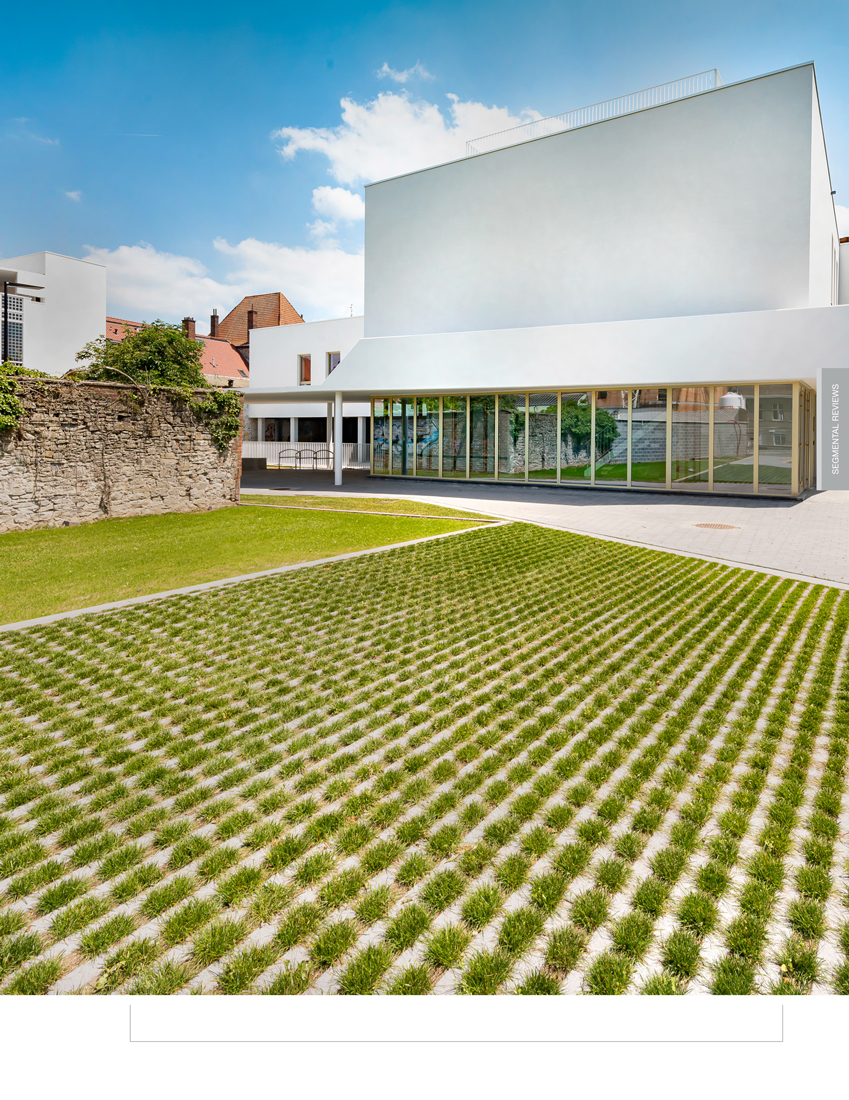
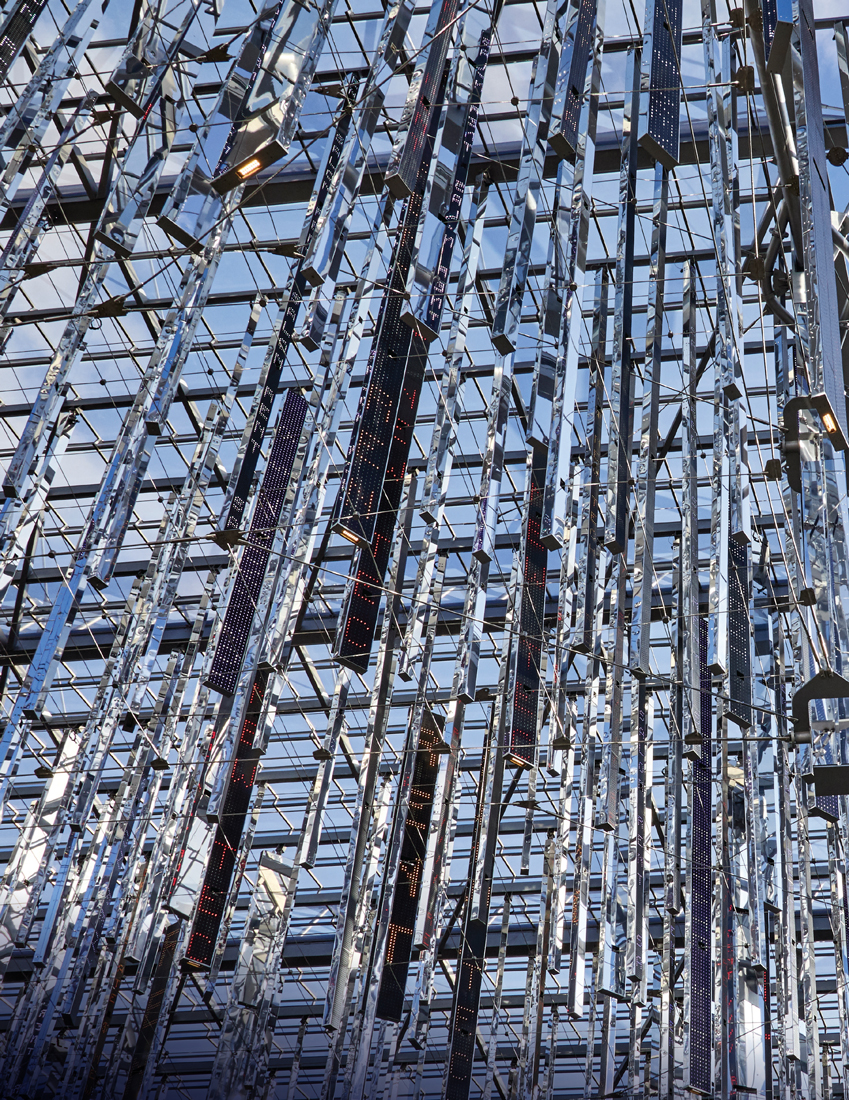
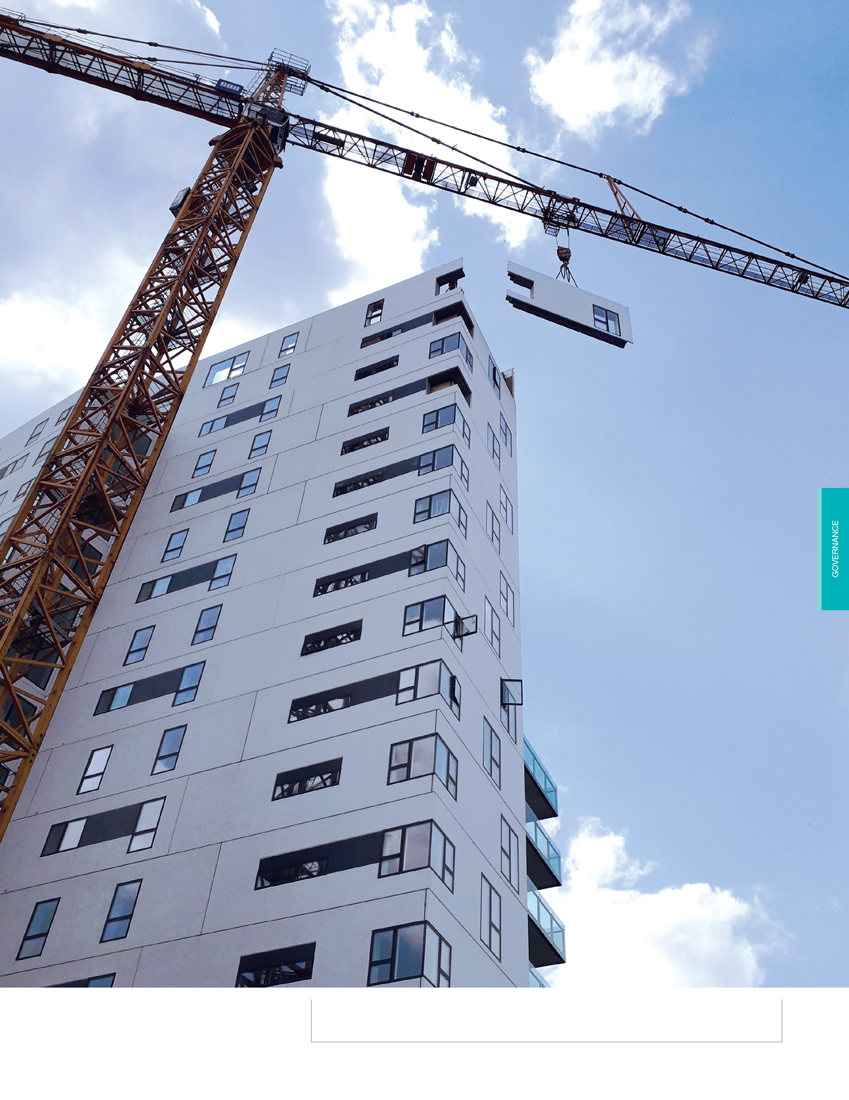
Ergon, part of CRH’s Europe Materials Division, supplied 10,300m² of hollow-core floor slabs and 289 concrete beams
and columns for the construction of a new 15,000m² plumbing and heating distribution centre in Merelbeke, Belgium.


Table of Contents

LOGO

CRH ANNUAL REPORT AND FORM 20-F I 2019

1

2019 Performance Highlights

During 2019 the Europe Distribution business was classified as discontinued operations under IFRS 5 Non-Current Assets Held for Sale and Discontinued Operations (refer to note 3 to the Consolidated Financial Statements for further information). Accordingly, all references to income statement data are on a continuing operations basis throughout the Overview, Strategy Review and Business Performance sections (pages 2 to 51), unless otherwise stated.

*  EBITDA is defined as earnings before interest, taxes, depreciation, amortisation, asset impairment charges, profit on disposals and the Group’s share of equity accounted investments’ profit after tax.

1. Details of how non-GAAP measures are calculated are set out on pages 225 to 228.


Table of Contents

LOGO

2

CRH ANNUAL REPORT AND FORM 20-F I 2019

CRH at a glance

Our global business operates
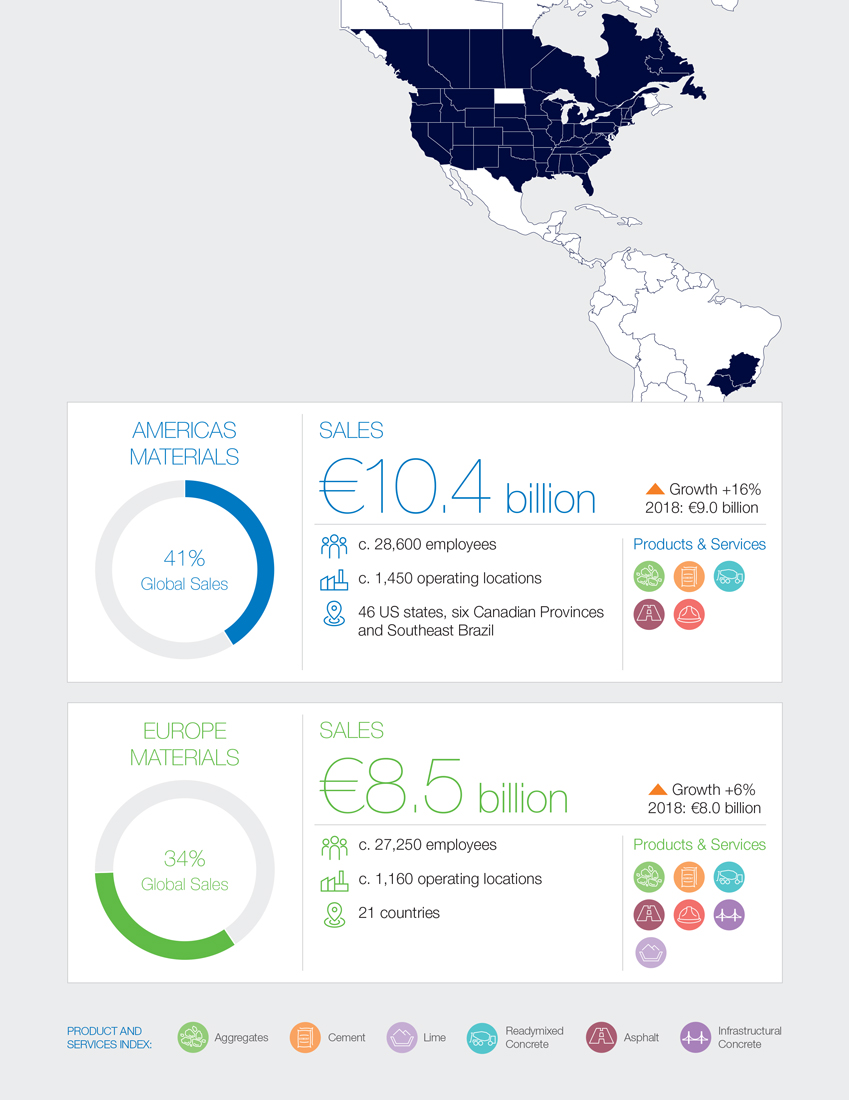
across three Divisions: Americas
Materials, Europe Materials and
Building Products.


Table of Contents

LOGO


Table of Contents

LOGO

I succeeded Nicky Hartery as Chairman on 1 January 2020. On behalf of the Board and my fellow shareholders, I would like to pay tribute to Nicky for his leadership and commitment in his seven and a half years as Chairman and to thank him for the advice and support which he has generously provided to me during the transition process. During Nicky’s tenure as Chairman, CRH’s market capitalisation increased from 11 billion to 28 billion. CRH also achieved significant profits in 2019 and is well set for further growth.

My Priorities

On taking over the role of Chairman my priorities are as follows:

Supporting the continued successful implementation of CRH’s strategy, which has been communicated previously and which is set out on pages 14 to 17 of the Strategy Review section;

Ensuring that your Board and Management continue to keep this strategy under review so that it remains appropriate in a constantly evolving external environment and enables long-term sustainable value creation;

Ensuring that the ongoing Board renewal process, which is discussed in the Nomination & Corporate Governance Committee Report on pages 68 to 70, is aligned with the strategic priorities of the business and that the Board is composed of Directors with the necessary qualities, capabilities, experience and dedication to

protect and promote your interests and those of other stakeholders in CRH;

Providing constructive challenge to, and support for, CRH’s committed, capable and dynamic management team, while at the same time having a robust succession planning process in place for senior executive roles;

Enabling a continued strong focus on safety, sustainability and CRH’s purpose and values for the benefit of our shareholders, our customers, employees, suppliers and wider stakeholders; and

Ongoing engagement with stakeholders, particularly shareholders, to ensure that their perspectives are understood.

2019 Performance

2019 was another year of strong delivery on a range of strategic and operational initiatives, whilst maintaining momentum for further value creation. We continued to reshape the portfolio through the divestment of our Europe Distribution business and our 50% interest in My Home Industries Limited (MHIL), a cement manufacturer based in India. These divestments were in line with our focus on reallocating capital to sectors, geographies and businesses more aligned with our current strategy and business model.

During the year there was also a continued focus on successfully integrating recent acquisitions, such as Ash Grove Cement

Company (Ash Grove), and rigorous attention to continually improving CRH’s operational performance and customer offerings with a comprehensive range of initiatives being implemented.

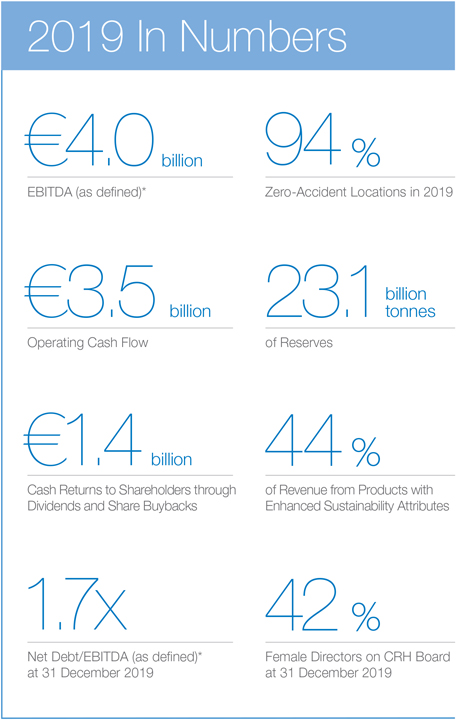
The reshaping of our portfolio in 2019, ongoing business improvement programmes and trading performance in the year led to operating cash generation of 3.5 billion in 2019, of which 1.2 billion was deployed on maintenance and expansionary/development capital expenditure, 0.7 billion on acquisitions and 1.4 billion was distributed to shareholders via dividends and share buybacks. At the same time, CRH’s balance sheet strength was enhanced resulting in a Net Debt/EBITDA (as defined)* 2 ratio of 1.7x at the year end.

Reflecting the strong performance in 2019, CRH’s robust financial position and our confidence for future sustainable growth, your Board is recommending that a final dividend of 63.0c per share be paid, subject to shareholder approval at the Annual General Meeting (AGM). If approved, this would represent a 15% increase in the full year dividend to 83.0c.

The Environment

Following the announcement of my appointment as Chairman Designate in September 2019, I met with a number of shareholders representing c. 30% of CRH’s share capital. One of the principal themes in those meetings was investors’ keen interest in understanding CRH’s approach

*

EBITDA is defined as earnings before interest, taxes, depreciation, amortisation, asset impairment charges, profit on disposals and the Group’s share of equity accounted investments’ profit after tax.

1.

See cautionary statement regarding forward-looking statements on page 103.

2.

Net Debt/EBITDA (as defined)* is a non-GAAP measure as defined on page 227. The GAAP figures that are most directly comparable to the components of Net Debt/EBITDA (as defined)* include: interest-bearing loans and borrowings (2019: 9,014 million; 2018: 9,316 million) and profit after tax (2019: 1,638 million; 2018: 1,345 million). In line with the purpose of the metric, as set out on page 228, to “assess the Company’s level of indebtedness relative to its profitability and cash-generating capabilities”, the 2019 calculation is based on a continuing operations basis. For 2018, the Group net debt position includes debt related to operations discontinued in 2019 and therefore for comparability purposes the 2018 calculation uses EBITDA (as defined)* from continuing and discontinued operations.


Table of Contents

CRH ANNUAL REPORT AND FORM 20-F I 2019

5

to environmental matters. In 2018, the Board created a new Safety, Environment and Social Responsibility (SESR) Committee. The operation of this Committee and its work in 2019 on environmental sustainability is highlighted in the Corporate Governance Report on pages 60 to 63.

In addition, the excellent work of our sustainability team in this area is outlined in detail on pages 20 to 25.

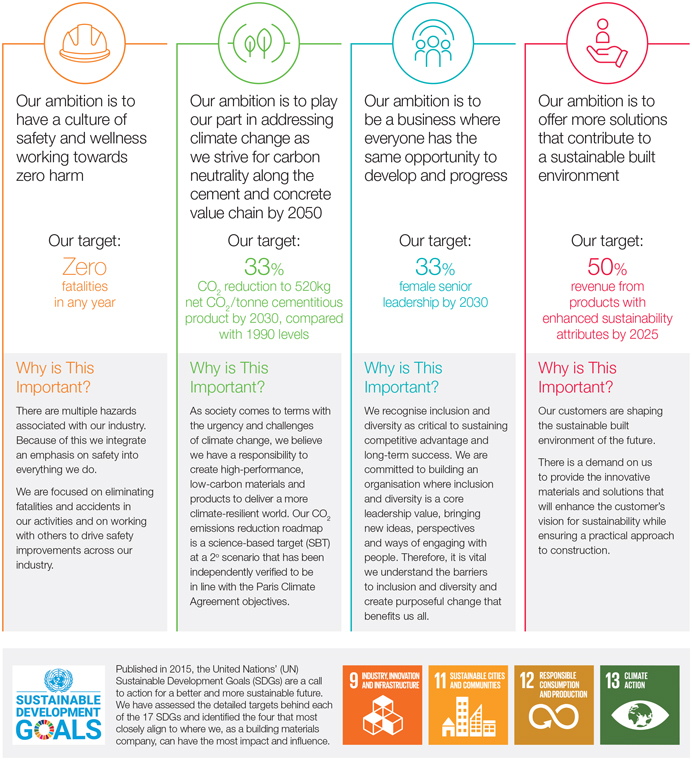
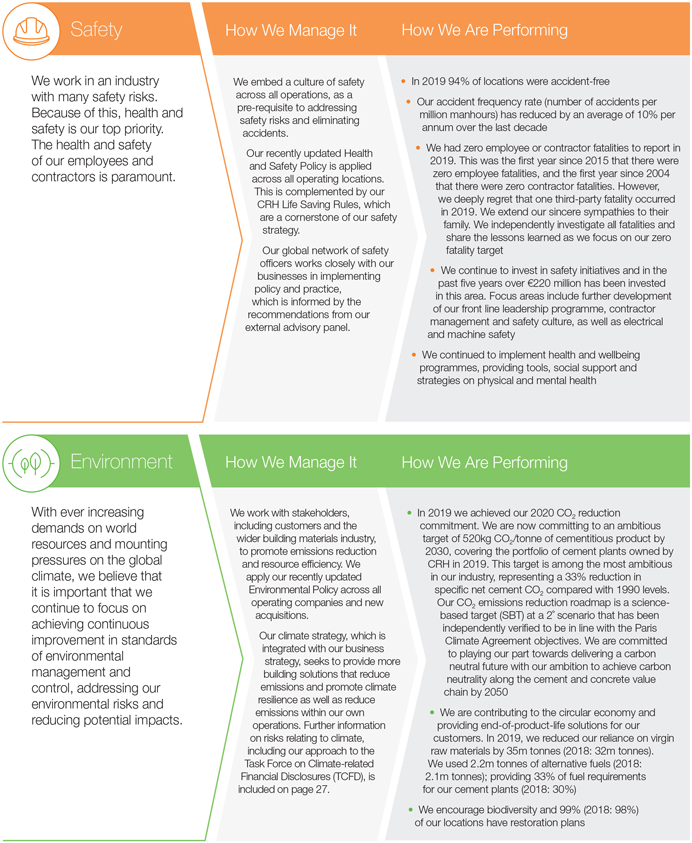
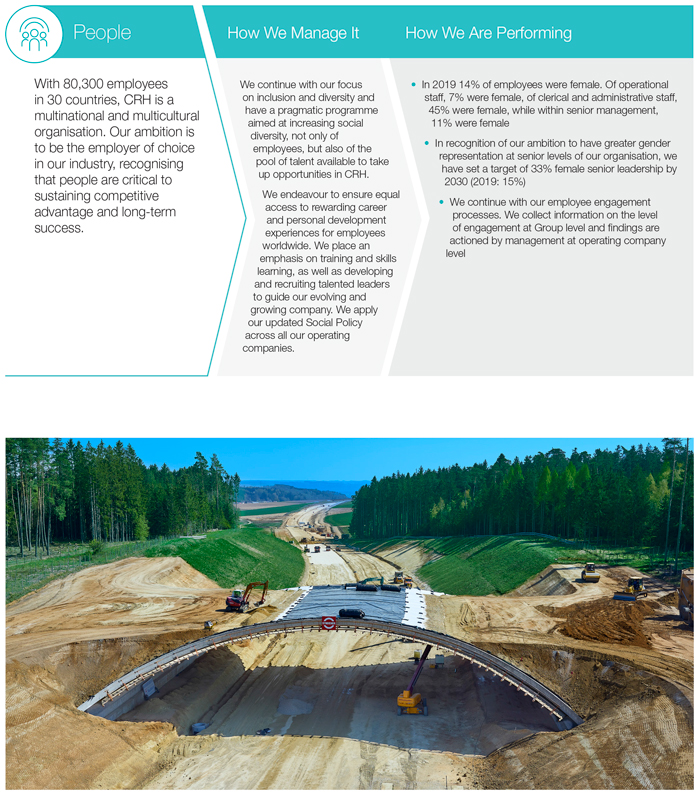
CRH is on track to achieve a range of targets underpinning its sustainability performance by year-end 2020. The Group has already achieved its target to reduce specific CO 2 emissions by 25% compared to 1990 levels. Utilising our own experience, expert advice and relevant external benchmarks, further ambitious targets and goals have been set for 2030 and will be overseen by the Board and the SESR Committee. Further details in relation to these stretch targets are set out on page 21.

Your Board

Henk Rottinghuis and Pat Kennedy, who joined the Board in 2014 and 2015 respectively, are not seeking re-election and will be stepping down from the Board at the conclusion of the 2020 AGM. The Company and Board are grateful to Henk and Pat for their significant contributions and exemplary service during a period of transformational change for CRH.

During 2019, Johan Karlström and Shaun Kelly joined your Board. Johan’s most recent executive role was as Chief Executive Officer of Skanska AB, the international construction company, whilst Shaun was until September 2019 Chief Operating Officer of KPMG International, based in the United States (US). Both Johan and Shaun bring very strong skill sets and relevant global experience to complement the Board and support the Group.

CRH Employees

The significant profit which CRH achieved in 2019 reflects the skills, initiative, qualities and commitment of CRH’s employees, led by our Chief Executive, Albert Manifold. Your Board is grateful to Albert and his colleagues for all of their contributions and their relentless drive to continue to deliver sustainable value.

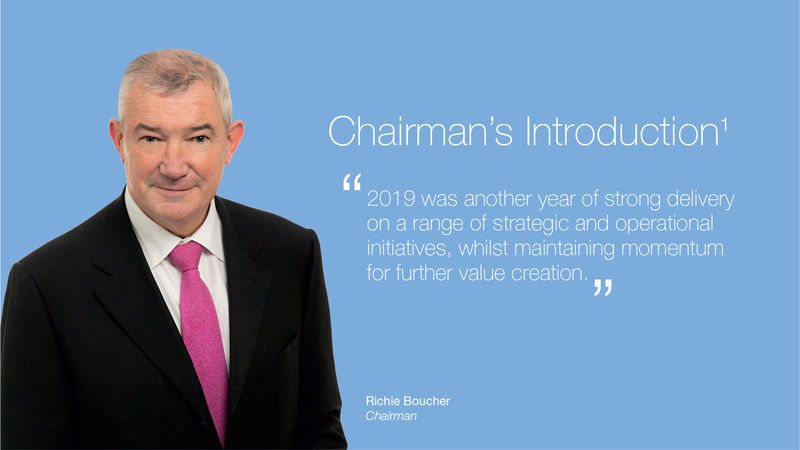
Richie Boucher

Chairman

27 February 2020

LOGO

*

EBITDA is defined as earnings before interest, taxes, depreciation, amortisation, asset impairment charges, profit on disposals and the Group’s share of equity accounted investments’ profit after tax.

LOGO


Table of Contents

LOGO

Inclusion and diversity is an important focus area for all CRH operating companies. Staker Parson Materials
& Construction, part of CRH’s Americas Materials Division, supports an inclusive and diverse environment
at its operations in Ogden, Utah, where it employs 300 people.


Table of Contents


Table of Contents
8

CRH ANNUAL REPORT AND FORM 20-F I 2019

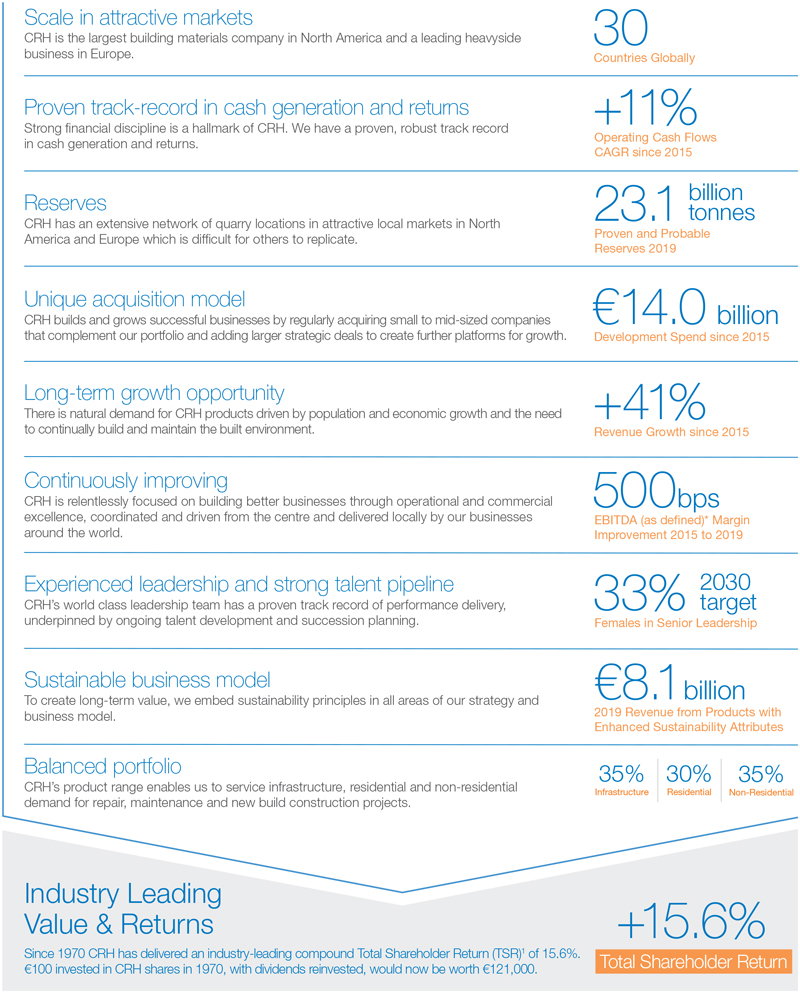
Why Invest in Us

LOGO

*

EBITDA is defined as earnings before interest, taxes, depreciation, amortisation, asset impairment charges, profit on disposals and the Group’s share of equity accounted investments’ profit after tax.

1.

TSR represents the total accumulated value delivered to shareholders (via gross dividends reinvested and share appreciation).


Table of Contents

CRH ANNUAL REPORT AND FORM 20-F I 2019

9

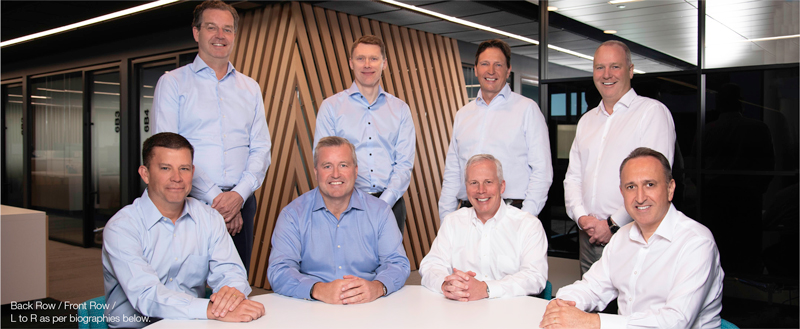
Our Executive Leadership

LOGO

Edwin Bouwman

Chief Human Resources Officer

Edwin joined CRH in 2009 as CFO of our Products and Distribution businesses in Europe and later as CFO Europe. Edwin became a member of CRH’s global leadership team in 2014, was appointed Chief Administrative Officer in 2018 and in August 2019 took on the role of Chief Human Resources Officer. Prior to joining CRH, Edwin’s career included a number of senior leadership roles in multi-operating company, multi-country environments (such as Royal Dutch Shell), and later as CFO and Board Member for Roto Smeets Group, a listed company in the Netherlands.

Qualifications: Drs. Economics.

Senan Murphy

Group Finance Director

Appointed to the Board:

January 2016

Senan has over 30 years’ experience in international business across financial services, banking and renewable energy. He joined CRH from Bank of Ireland Group plc where he was the Chief Operating Officer and a member of the Group’s Executive Committee. He previously held positions as Chief Operating Officer and Finance Director at Ulster Bank, Chief Financial Officer at Airtricity and numerous senior financial roles in GE, both in Ireland and the US.

Qualifications: BComm, FCA.

Onne van der Weijde

President, Europe Materials

Onne joined CRH in January 2018 as Chief Operating Officer for our Europe Materials Division and was appointed Divisional President in July 2018 with responsibility for our cement, lime, asphalt, aggregates and concrete operations in mainland Europe and in Asia. Onne has extensive cement industry experience, having worked across four continents, including roles as the CEO of Dangote Cement in Nigeria and CEO of Ambuja Cements Ltd. in India, prior to joining CRH.

Qualifications: Bachelor of Economics and Accounting, MBA.

Jim Mintern

Executive Vice President, Chief of Staff to the Chief Executive

Jim has over 30 years’ experience in the building materials industry, nearly 20 years of which have been with CRH. Jim joined CRH as Finance Director for Roadstone and since then has held a number of positions across the Group, including Managing Director of each of the Western and Eastern regions of our Europe Materials Division and prior to that as Country Manager for Ireland. Working closely with Divisional and operational leadership, Jim has oversight of our Performance, Group Technical Services, and Safety activities.

Qualifications: BComm, FCA.

Randy Lake

President, Americas Materials

Randy joined CRH in the Americas in 1996 and has held several senior operating positions across multiple CRH businesses, initially in Architectural Products, then in Materials. In 2008 he was appointed President of our Americas Materials Performance group, and prior to his current role he led the launch of our Building Solutions business. Randy is actively involved in the Materials industry in North America and served as Chairman of the US National Stone, Sand & Gravel Association in 2018.

Qualifications: BS (Business Administration), MBA.

Albert Manifold

Group Chief Executive

Appointed to the Board:

January 2009

Albert was appointed a CRH Board Director in January 2009. He joined CRH in 1998. Prior to this, he was Chief Operating Officer of a private equity group. While at CRH he has held a variety of senior positions, including Finance Director of the Europe Materials Division, Group Development Director and Managing Director of Europe Materials. He became Chief Operating Officer in January 2009 and was appointed Group Chief Executive with effect from 1 January 2014.

Qualifications: FCPA, MBA, MBS.

Keith Haas

President, Building Products

Keith began his business career as an engineer at Amoco Chemical Company and joined CRH’s North American business in 1995. While at CRH, he has served in a number of business development and executive leadership roles, including President of our Architectural Products Group and subsequently President of our Americas Products Division between 2012 and 2018. Keith is also on the Board of Directors of the National Association of Manufacturers in the US.

Qualifications: BE (Mechanical), MBA.

David Dillon

President, Global Strategy & Business Development

David joined CRH in 1998 in the US, where he was Controller of the Americas Materials Division. He returned to Europe in 2003, initially as Development Manager for the Europe Materials Division. He has since held a number of senior operational and leadership roles across the Group, including Country Manager Finland in the Europe Materials Division and Managing Director Europe Lightside. He was Divisional President of Europe Lightside & Distribution until the end of 2018. Prior to joining CRH he held various financial roles in the airline industry.

Qualifications: BComm, FCA.

\ LOGO


Table of Contents

LOGO

As the leading building materials business in the world, CRH has a long and proven track record of consistently delivering for our shareholders through the cycle. Our ability to do so is underpinned by three core principles: improving performance, growing our business and creating value. Our relentless focus on these principles supports the continuous delivery of superior margins, returns and cash for our shareholders.

Our strong performance in 2019, with significant profit growth and positive momentum across our business, has been made possible by the strategic reshaping of CRH over recent years.

In 2019 we significantly reshaped our business into three Divisions: Americas Materials, Europe Materials and a new global Building Products Division, ensuring CRH is better positioned to meet the changing needs of construction.

We also continued our focus on refining and reshaping our portfolio to position our business for higher growth and more sustainable returns. CRH generated 2.1 billion of proceeds from divestments in the year (2018: 3.0 billion) which included 1.6 billion from the divestment of our Europe Distribution business at an attractive valuation.

Our new structure provides us with a narrower and deeper focus, enabling us to better leverage our global scale and drive value above and beyond the sum of our individual businesses.

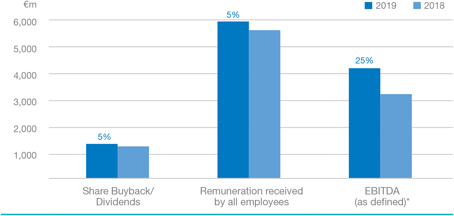
Our ongoing strong cash generation capabilities and balance sheet strength gives us significant optionality, facilitating the return of 1.4 billion (2018: 1.3 billion) of cash to shareholders in 2019 through dividends and our share buyback programme. We invested 1.9 billion (2018: 4.7 billion) in our business through bolt-on acquisitions ( 0.7 billion) and capital investment ( 1.2 billion), as well as significantly reducing our year-end Net Debt/EBITDA (as defined)* to 1.7x (2018: 2.1x).

We saw further benefits from our ongoing focus on continuous margin improvement, particularly in the second half of the year. The business achieved an EBITDA (as defined)* margin expansion of 230 basis points from continuing and discontinued operations during the year and we expect further progress in 2020.

Performance Highlights

Revenue from continuing and discontinued operations increased by 6% to 28.3 billion (2018: 26.8 billion) driven by positive underlying construction demand and a favourable pricing environment in our core markets in Europe and North America.

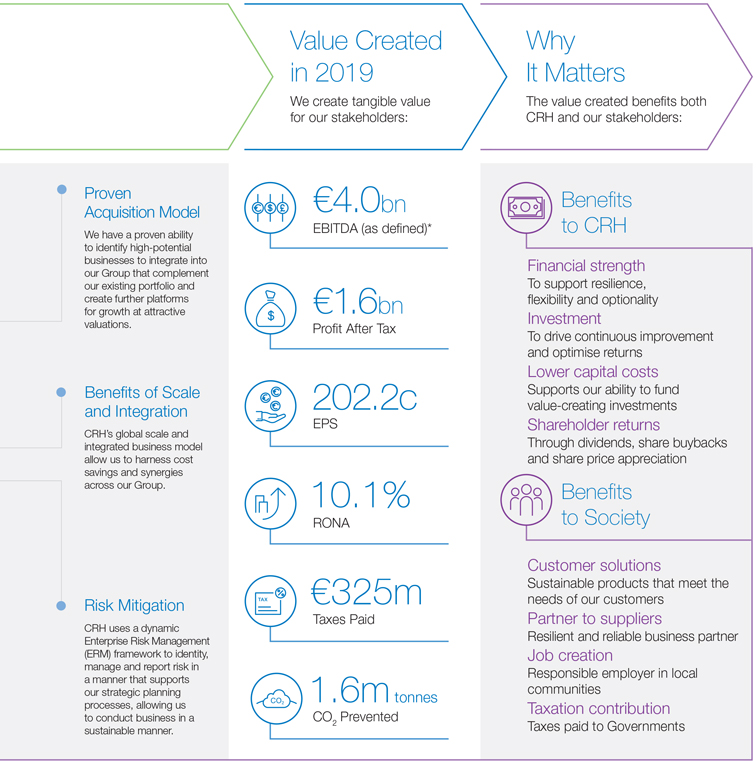
EBITDA (as defined)* from continuing and discontinued operations was ahead of 2018, increasing by 25% to 4.2 billion (2018: 3.4 billion). Reported profit after tax was 1.9 billion (2018: 2.5 billion), reflecting a further year of progress for the Group given the prior year included an after-tax gain of 1.1 billion on certain divestment activity.

Continuous business improvement and good commercial management resulted in improved returns. Return on Net Assets (RONA) 2 for the year was 10.1% (2018: 9.6%).

Earnings per share (EPS) for the year advanced 25% to 202.2c (2018: 161.2c) and the Board has proposed to increase the dividend to 83.0c per share, an increase of 15% on the previous year’s level of 72.0c per share.

Operational Highlights

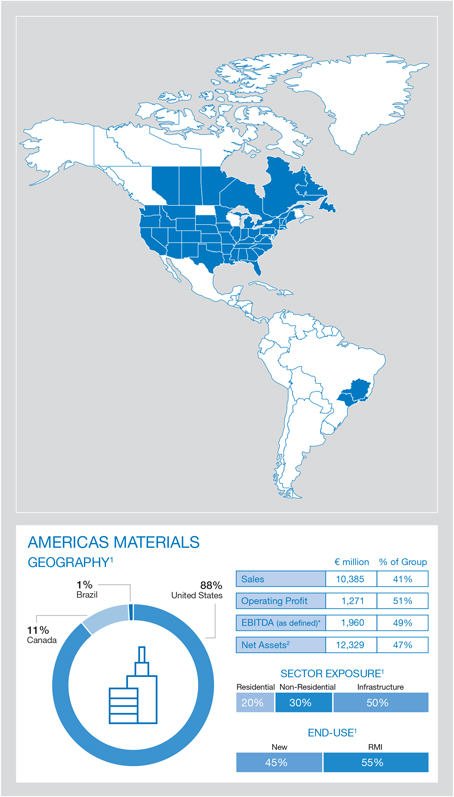
Supported by a positive economic backdrop in the US, our businesses experienced good momentum in underlying construction activity. Sales in our Americas Materials Division increased by 16% to 10.4 billion (2018: 9.0 billion) and EBITDA (as defined)* increased by 31% to 2.0 billion (2018: 1.5 billion).

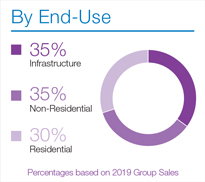
The Division has good exposure to the infrastructure, residential and non-residential sectors and performed well across key markets despite increased raw material costs. Weather-related headwinds experienced in the first half of the year were offset by a good performance in the second half of the year, driven by volumes improvement, commercial and operational initiatives and pricing progress.

Our US cement operations performed well in 2019 with strong price realisation across major markets and good synergy delivery. The integration of Ash Grove is now complete and the business is performing well.

In Europe, despite higher input costs, Western European markets performed well.

*

EBITDA is defined as earnings before interest, taxes, depreciation, amortisation, asset impairment charges, profit on disposals and the Group’s share of equity accounted investments’ profit after tax.

1.

See cautionary statement regarding forward-looking statements on page 103.

2.

RONA is a non-GAAP measure as defined on page 226. The GAAP figures that are most directly comparable to the components of RONA include: Group operating profit (2019: 2,494 million; 2018: 2,071 million), total assets and total liabilities, respectively (2019: 37,310 million and 19,830 million respectively; 2018: 35,173 million and 18,619 million respectively). Details of how non-GAAP measures are calculated are set out on pages 225 to 228.


Table of Contents

CRH ANNUAL REPORT AND FORM 20-F I 2019

11

Eastern Europe benefited from higher levels of growth, particularly in new build activity. Construction activity in the United Kingdom (UK) declined amidst Brexit-related uncertainty.

Overall, our Europe Materials Division experienced a positive year with sales increasing by 6% to 8.5 billion (2018: 8.0 billion). Price increases and a strong contribution from performance improvement initiatives implemented across the Division supported an increase of 15% in EBITDA (as defined)* to 1.1 billion (2018: 0.9 billion).

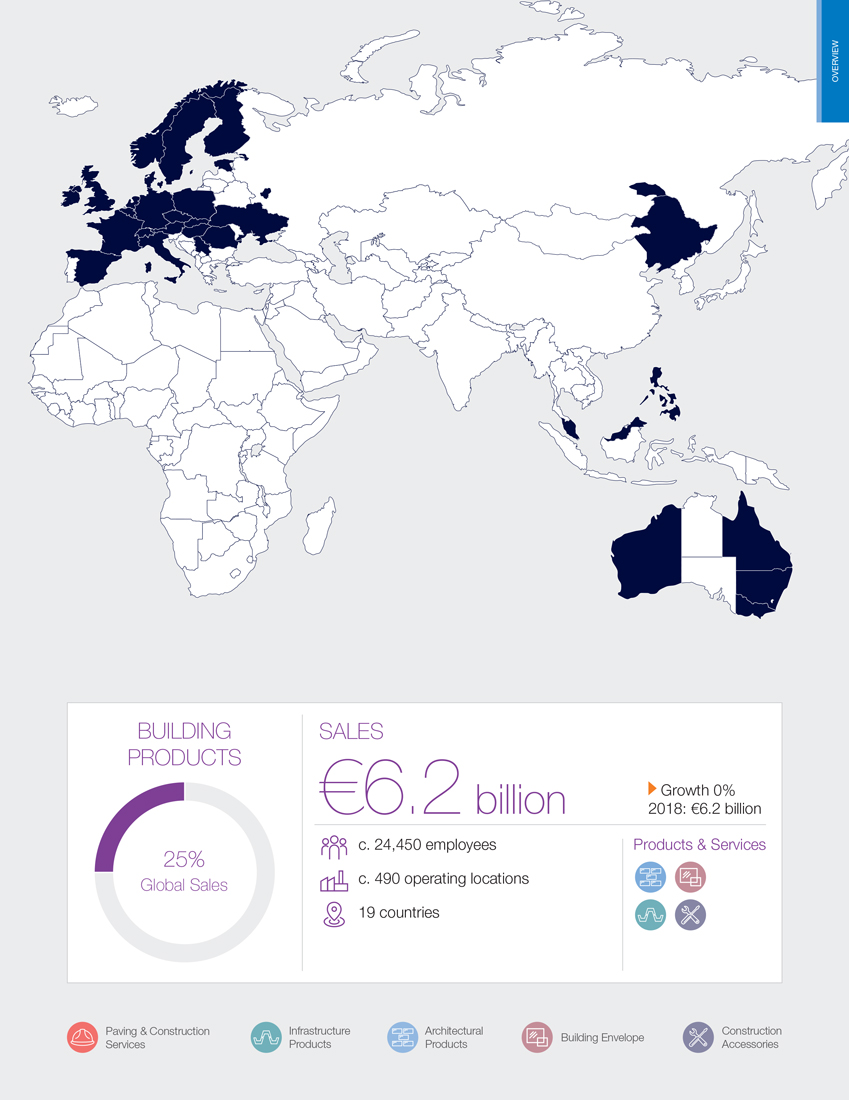
Against a solid demand backdrop in both North America and Europe, as well as a focus on commercial excellence, our newly established Building Products Division reported sales of 6.2 billion (2018: 6.2 billion), 2% ahead on a like-for-like 1 basis.

With an emphasis on continuous business improvement across the Division, we saw positive performances across all four product groups which supported an increase of 22% in EBITDA (as defined)* to 1.0 billion (2018: 0.8 billion).

Portfolio Management and Capital Allocation

Ongoing portfolio management is an embedded practice at CRH which allows us to reallocate capital to higher growth markets where we see greater value-creation opportunities.

The acquisition of Ash Grove for 2.9 billion in 2018 strengthened our footprint in high growth regions of the US and provided a platform for future bolt-on activity. Our focus in 2019 was on integrating Ash Grove into our existing operations while continuing to leverage synergies and drive value for our shareholders.

Bolt-on acquisitions are a fundamental part of CRH’s growth strategy, generating above average returns and complementing the organic growth within our business. We completed 62 small and medium sized bolt-on deals for 0.7 billion in 2019 (2018: 0.7 billion) at attractive valuations.

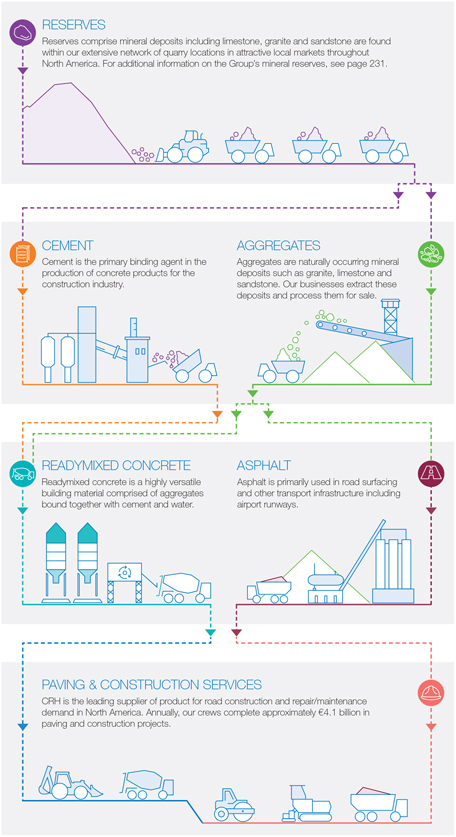
Our vertically integrated business model ensures that these deals enable us to provide a full range of products and services to our customers, while offering significant synergy potential, delivering operational efficiencies and driving value through the supply chain.

The majority of our divestment activity in 2019 related to the sale of our Europe Distribution business in October for 1.6 billion. In addition, we also completed the divestment of our European Shutters & Awnings business for 0.3 billion and our Perimeter Protection business for 0.1 billion. In December we divested our share of MHIL, our Indian joint venture, for a total deferred consideration of 0.3 billion.

Future Focus

We continue to actively invest in and allocate capital to initiatives which improve our existing businesses, including investment in capacity upgrades and efficiency improvements.

The further refinement of our portfolio in 2019, in addition to the establishment of our new Building Products Division has resulted in a narrower, deeper and more focused Group and together with ongoing performance improvement initiatives across our businesses, positively positions CRH to capitalise on opportunities as they arise in the future. Management is focused on using every lever available to create further value for our shareholders in 2020 and beyond.

Building a Sustainable Future

CRH is a global leader in sustainable building materials and has a long history of producing high-performing, climate-friendly materials and products which play an important role in shaping a more sustainable built environment. This includes our concrete which is among the most sustainable building materials in existence when evaluated on a full life-cycle basis. Concrete is fundamental to human development and will continue to shape the world we live in for generations to come.

As part of our longstanding focus on improving the environmental performance of our materials and products we have committed to further reducing the CO 2 intensity of our cement to 520kg CO 2 /tonne of cementitious product by 2030. This represents a 33% reduction in specific net CO 2 emissions compared with 1990 levels and covers the portfolio of cement plants owned by CRH in 2019. In addition, the Group has set an ambition to achieve carbon neutrality along the cement and concrete value chain by 2050 and we are committed to playing our part in delivering a carbon neutral future.

We are also committed to partnering with our customers to deliver sustainable solutions and have set a target of generating 50% of all product revenue from products with enhanced sustainability attributes by 2025. These are products which incorporate recycled materials, use alternative fuels or energy sources, have sustainability end-use, or a lower carbon footprint.

See page 21 for full details of CRH’s 2030 sustainability targets.

Safety

At all of our sites, the number one priority is the safety of our people and our approach to workplace safety is uncompromising. I am pleased to report that in 2019, 94% of our locations were accident-free. We deeply regret that there was one third-party fatality during the year which underlines the need for us to do even more to ensure the safety of anyone coming into contact with our operations. We are determined to continue to do all we can to achieve our target of zero harm at our operations.

Outlook

In our Americas Materials Division, supported by continuing favourable economic conditions, we expect growth in the US residential and non-residential market sectors with positive momentum in infrastructure activity, underpinned by state and federal funding.

In our Europe Materials Division, we anticipate positive construction demand in key markets with steady progress in Western Europe and good growth in Eastern Europe. While Brexit has created uncertainty in the UK construction market, we expect some stabilisation in 2020.

Against a positive backdrop in North America and Europe, we expect further growth in Building Products aided by ongoing commercial and operational performance initiatives.

For the Group overall, with a continued focus on portfolio refinement, margin expansion, cash generation and enhanced returns for shareholders, we believe that 2020 will be a year of further progress.

Albert Manifold

Chief Executive

27 February 2020

*

EBITDA is defined as earnings before interest, taxes, depreciation, amortisation, asset impairment charges, profit on disposals and the Group’s share of equity accounted investments’ profit after tax.

1.

Details of how non-GAAP measures are calculated are set out on pages 225 to 228.

LOGO


Table of Contents

12

CRH ANNUAL REPORT AND FORM 20-F I 2019

Market Backdrop

There is a natural demand for CRH’s materials and products which is driven by population and economic growth and the need to continually build and maintain the built environment.

CRH manufactures and supplies a range of building materials, products and innovative solutions for the construction industry.

From primary materials that we extract, process and supply, to products that are highly engineered and high-value added, CRH is uniquely positioned to address evolving trends in global construction markets.

Our products can be found throughout the built environment in a wide range of construction projects from major public infrastructure to commercial buildings and residential structures.

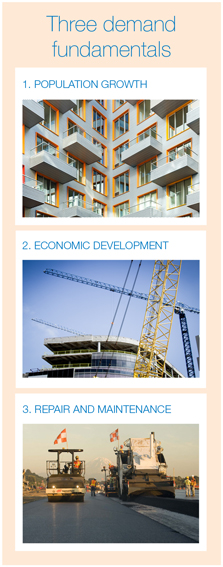
Demand for CRH’s materials and products is driven by three primary demand fundamentals: population growth, economic development and the need to continually repair and maintain the built environment.

Population Growth

Our materials and products are an essential enabler of the built environment around the world. This means there is a natural market for our products wherever there is growth in population and the associated construction demand can be expected to drive day-to-day organic growth for our businesses.

Economic Development

There is a strong correlation between population growth and economic growth in developed markets around the world. In addition, economic development and growth drives investment in residential, infrastructure and commercial projects from the houses, roads, bridges, ports and airports that serve our growing cities to office blocks, retail centres and industrial and leisure complexes.

Ongoing Repair and Maintenance

There is a recurring need to continually repair and maintain the existing built environment as structures age over time.

At CRH we aim to have a portfolio which is appropriately exposed to each of these primary demand fundamentals, thereby ensuring we benefit from growth and value-creation opportunities associated with each.

Future Trends in Construction

In addition to the primary market fundamentals driving our business today, CRH also monitors the trends shaping the nature of construction in the future. These include increasing urbanisation and the growth of cities, demand for more sustainable forms of construction and the influence of technology and digitisation. Adapting our business to the opportunities and challenges created by these trends is a constant focus for CRH and an important factor in how we allocate our resources.

LOGO

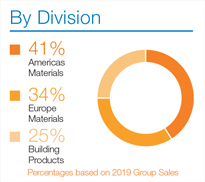
Our Balanced

Portfolio

Building a balanced portfolio is a core constituent of our strategy and helps to insulate our business from the impact of cyclical fluctuations in any one of our markets.

LOGO

LOGO

LOGO


Table of Contents

CRH ANNUAL REPORT AND FORM 20-F I 2019

13

Market Development

Where appropriate, CRH operates a vertically integrated business model. Organic growth is complemented by identifying suitable businesses which can be acquired and integrated into CRH through bolt-on acquisitions.

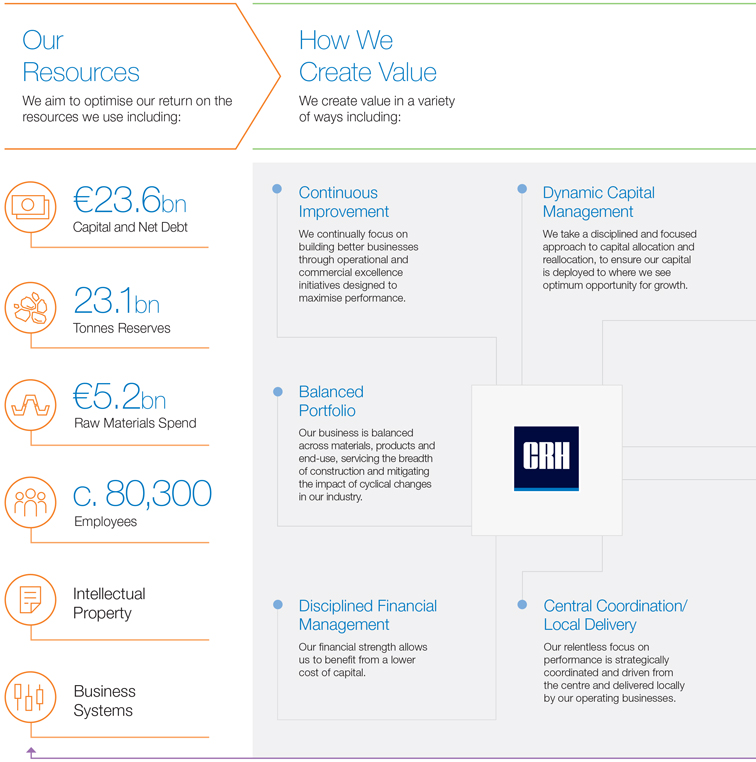
Backed by a reserves network (23.1 billion tonnes) that is difficult to replicate and strong leadership positions in local markets, our materials businesses are well positioned to capitalise on value creating opportunities for consolidation and expansion of existing operations.

Our biggest market, the US, is largely unconsolidated. For example the top ten aggregates businesses account for less than one third of production. Fragmentation across the industry creates opportunities for consolidation through acquisitions which provide the potential to drive further growth and value creation for our shareholders.

North America

In North America, which includes the world’s largest economy, the US, CRH is the largest building materials business. Growth in North America is underpinned by solid fundamentals and positive demographics with the population growing by 30 million people every decade, driving associated construction growth.

In recent years we have reshaped and redirected our businesses in the US to increase our exposure to positive demand fundamentals in the southern and western areas of the country.

Europe

In Europe, where the European Union (EU) is the largest economic bloc in the world, CRH is a leading heavyside building materials business. In Western Europe, there is an attractive mix of stable developed markets which continue to deliver. In Eastern Europe higher growth markets offer opportunities for growth through acquisition activity.

Other Markets

CRH is a leading building products business globally. This business produces high-value-added, highly engineered products that can be economically transported longer-distances, opening up important export markets for CRH beyond our core geographic footprint.

Introducing Building Products

LOGO

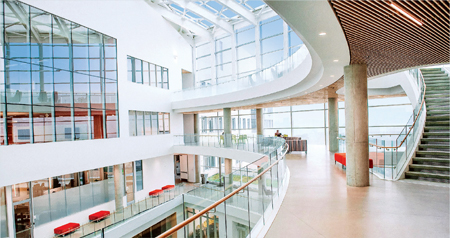
Oldcastle BuildingEnvelope ® , part of CRH’s Building Products Division, supplied skylight and architectural glass for the Leadership in Energy and Environmental Design (LEED © ) gold-certified Tepper School of Business at Carnegie Mellon University in Pittsburgh. The products were critical to achieve the thermal performance needed for the building’s LEED © certification.

The nature of construction is changing as the industry evolves to meet the demands of economic growth, shifting demographics and sustainable development. Labour constraints mean that businesses need to adapt and bring products to market that ease and speed up the pace of construction while an increasing demand for more sustainable, integrated and value-added solutions is driving innovation, productivity and technological advancement across the industry.

As a leading supplier of building products globally, CRH is at the forefront of that change. Our businesses manufacture, supply and deliver a wide range of high quality, value-added, innovative products and solutions needed to shape and enhance the built environment for modern communities.

Recognising the changing needs of construction and the impact of those changes on demand for our products, CRH has established a new Building Products Division to bring together related products businesses across Europe, North America and Asia Pacific into one global platform, providing greater alignment on strategies for performance improvement, development and growth.

By establishing a single Division built upon clusters of excellence across Architectural Products, Building Envelope, Infrastructure Products and Construction Accessories, we can leverage our scale and network capabilities to build upon our well-established positions in existing markets and across our core product groups.

The new Division will also increase vertical integration and collaboration opportunities not only within the Division itself but also with our materials businesses in Europe and North America.

A key feature of the Division is its exposure to attractive end-use markets offering higher growth prospects and balance through the cycle, while the lower capital intensity of these businesses delivers superior returns and good cash conversion.

The Building Products Division is well positioned to adapt and grow as markets continue to evolve.

LOGO


Table of Contents

14

CRH ANNUAL REPORT AND FORM 20-F I 2019

Strategy

Targeting superior growth and returns

CRH is the leading building materials business in the world. Our focus is on creating long-term value and delivering superior returns for our shareholders.

OUR STRATEGY

Our strategy is to grow and improve our business in a sustainable and responsible way, through a relentless focus on performance improvement, focused growth and value creation for the benefit of all our stakeholders.

FOUR PILLARS

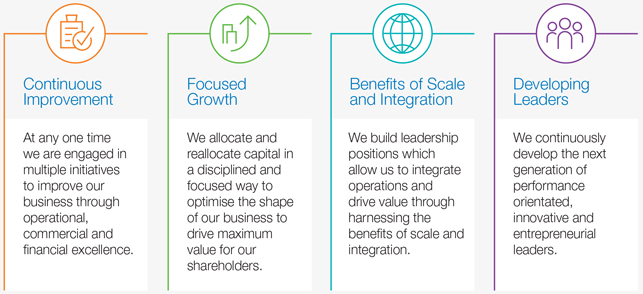
CRH’s strategy is underpinned by four strategic objectives, which drive our ability to generate superior margins, returns and cash on a continuous basis.

DRIVING PERFORMANCE, GROWTH AND VALUE

LOGO

TAKING A RESPONSIBLE AND SUSTAINABLE APPROACH

In executing our strategy, CRH is at all times focused on ensuring every lever we utilise to create value for our shareholders is done so in a disciplined, responsible and sustainable manner, thereby mitigating potential risks.


Table of Contents

CRH ANNUAL REPORT AND FORM 20-F I 2019

15

LOGO

*  EBITDA is defined as earnings before interest, taxes, depreciation, amortisation, asset impairment charges, profit on disposals and the Group’s share of equity accounted investments’ profit after tax.

LOGO


Table of Contents

16

CRH ANNUAL REPORT AND FORM 20-F I 2019

Business Model

How we create value and growth

CRH’s vertically integrated business model benefits from the efficient allocation of capital and continuous business improvements across the Group.

LOGO


Table of Contents

CRH ANNUAL REPORT AND FORM 20-F I 2019

17

LOGO

*  EBITDA is defined as earnings before interest, taxes, depreciation, amortisation, asset impairment charges, profit on disposals and the Group’s share of equity accounted investments’ profit after tax.

LOGO


Table of Contents

18

CRH ANNUAL REPORT AND FORM 20-F I 2019

Measuring Performance

CRH uses a number of financial and non-financial Key Performance Indicators (KPIs) to measure performance across our business. KPIs are a consistent feature of how we operate and fundamental to how we track progress towards achieving our strategic objectives.

Sustainability Performance

We believe sustainability and corporate social responsibility are fundamental to CRH being the leading building materials business in the world. We understand that a strong sustainability performance is a key driver in a competitive market and can lead to increased business opportunities. To drive transparency and progress, we are committed to reporting on the breadth of our sustainability performance. A selection of KPIs relating to three of our sustainability priority areas are below:

LOGO

1.

CO 2 emissions subject to final verification under the European Union Emissions Trading Scheme (EU ETS). CO 2 emissions data includes Scope 1 (2019: 33.9m tonnes, 2018: 35.4m tonnes, 2017: 25.6m tonnes) and Scope 2 (2019: 2.6m tonnes, 2018: 2.7m tonnes, 2017: 2.6m tonnes) emissions. Scope 1 and Scope 2 emissions are as defined by the World Resources Institute Greenhouse Gas Protocol.

2.

We are highlighting the percentage of females in the senior management cohort as a KPI. Please refer to page 23 for further information on inclusion and diversity, including additional indicators.


Table of Contents

CRH ANNUAL REPORT AND FORM 20-F I 2019

19

Financial Performance

As part of our strategic focus on continuous improvement, CRH uses financial KPIs to measure our progress and foster positive performance behaviour. A selection of KPIs relating to four of our financial priority areas are below:

LOGO

*

EBITDA is defined as earnings before interest, taxes, depreciation, amortisation, asset impairment charges, profit on disposals and the Group’s share of equity accounted investments’ profit after tax.

1.

EBITDA (as defined)* Net Interest Cover is a non-GAAP measure as defined on page 227. The GAAP figures that are most directly comparable to the components of EBITDA (as defined)* Net Interest Cover include: profit after tax: 1,638 million (2018: 1,345 million), finance costs: 346 million (2018: 339 million) and finance income: 20 million (2018: 34 million). Details of how non-GAAP measures are calculated are set out on pages 225 to 228.

LOGO


Table of Contents

20

CRH ANNUAL REPORT AND FORM 20-F I 2019

Sustainability

Delivering long-term value

Developing a more sustainable built environment is one of the biggest contributions we can make to society. Our ambition is to continue to drive improvement and growth across all areas of sustainability, creating financial and non-financial value.

How We View Sustainability

We aim to positively contribute to society through the delivery of materials and products that enhance the sustainability of structures and consider the needs of our communities. We believe that meeting these needs in a manner that respects sustainability principles and addresses potentially negative impacts will create lasting value for all our stakeholders, including investors, customers, employees, partners, suppliers and local communities. Sustainability is fundamental to achieving our vision and is embedded in our business strategy and approach.

How We Create Sustainable Value

Our objective is to create sustainable value by providing industry-leading products and solutions to meet the construction needs of our customers around the world. By considering the full life-cycle of our products and innovating to drive more sustainable outcomes in the built environment, we aim to have a positive impact on wider society and the environment while increasing our ability to drive profits and long-term value.

As well as being beneficial for our business, these ambitions also have an outward focus.

Our actions are intended to contribute to the delivery of key initiatives, such as the UN Sustainable Development Goals (SDGs) and the Paris Climate Agreement.

CRH is ranked among sector leaders by leading Environmental, Social and Governance (ESG) rating agencies. We are a constituent member of indices including the FTSE4Good Index, the STOXX ® Global ESG Leaders Index and the Dow Jones Sustainability Index as well as a long-term participant in CDP (formerly Carbon Disclosure Project). In addition, many of our operating companies have achieved awards for excellence in sustainability.

How We Manage Sustainability

We take a risk-based, collaborative and strategic approach to responding to global trends in ESG areas including climate change, urbanisation, resource scarcity, demographic changes and technological advancements. We regularly review our non-financial policies and these were updated in 2019.

Risks related to sustainability are recognised in our ERM Framework, described on pages 26 and 27, and details of sustainability risks are included on pages 110 and 111. Our non-financial due diligence processes are well established, and we made no material changes to these in 2019.

Our key sustainability priorities are determined through a range of internal and external processes to identify the ESG issues that are most relevant to our business, society and key stakeholders. These include annual sustainability reporting by our businesses to Group, review of issues raised through ERM processes and regular formal materiality assessment reviews. In 2019, we completed a formal materiality assessment review, the outcome of which will inform our reporting and our evolving approach.

How We Report on Our Performance

We are committed to reporting on the breadth of our sustainability performance and to publishing performance indicators, ambitions and outcomes in key sustainability areas. We publish an annual independently-assured Sustainability Report, which is prepared in line with the Global Reporting Initiative Standards and available on www.crh.com. The 2019 Sustainability Report will be published in March 2020. Key performance indicators on sustainability are included on page 18 and throughout this section.

LOGO


Table of Contents

CRH ANNUAL REPORT AND FORM 20-F I 2019

21

CRH 2030 ambitions

To ensure that we continue to create sustainable value, we have set ambitious targets that are aligned to the issues of most importance to our businesses and stakeholders. These ambitions represent the areas in which we believe we can effect the most change.

LOGO

LOGO


Table of Contents

22

CRH ANNUAL REPORT AND FORM 20-F I 2019

Sustainability - continued

Managing our key priority areas

LOGO


Table of Contents

CRH ANNUAL REPORT AND FORM 20-F I 2019

23

LOGO

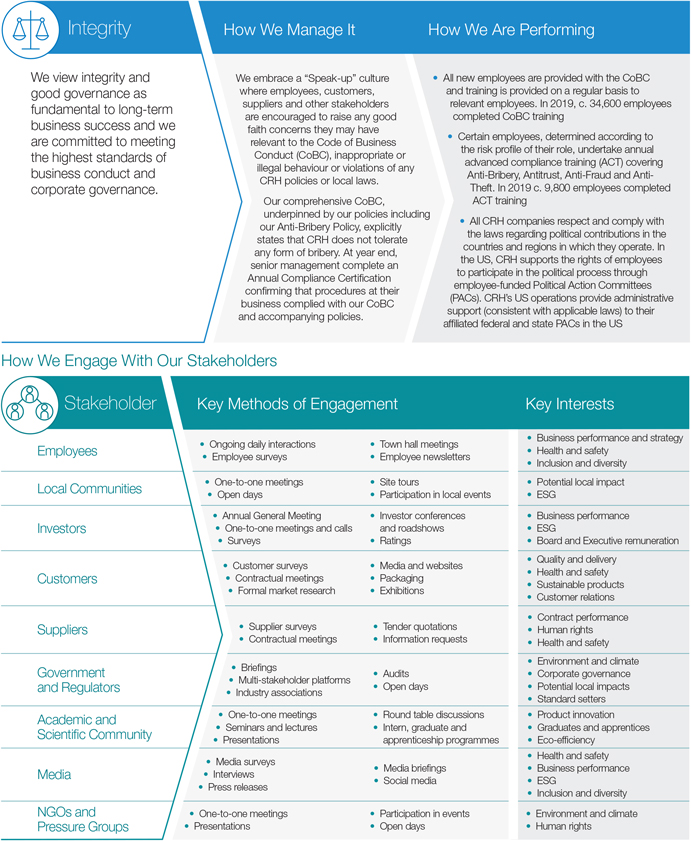
OPTERRA, part of CRH’s Europe Materials Division, supplied concrete for this ‘green bridge’ on the Bundesstraße motorway project in Southern Bavaria, Germany. The project, which runs through a forest area, includes a new motorway as well as 14 additional structures. The green bridge, completed in May 2019, will enable wildlife to cross the busy motorway, thus reducing the impact of the project on the area’s biodiversity.

LOGO


Table of Contents

24

CRH ANNUAL REPORT AND FORM 20-F I 2019

Sustainability - continued

LOGO


Table of Contents

CRH ANNUAL REPORT AND FORM 20-F I 2019

25

LOGO

LOGO


Table of Contents

26

CRH ANNUAL REPORT AND FORM 20-F I 2019

Risk Governance

Effective risk governance supports the realisation of our strategic objectives and the continued success of our business. Our ERM framework is a core component of our performance orientated culture, with leadership guided by a clear line of sight on risks and opportunities across the strategic planning horizon. Embedding ERM into our business processes creates an environment where leaders take a disciplined and focused view on risks to inform and hone our strategy.

Adding Value to Decision-Making

ERM in CRH is a forward-looking, strategy-centric approach to managing the risks inherent in decision-making. It is a tool readily employed by the Board and the wider business leadership, firstly, when considering and setting strategic objectives, and secondly, during strategic execution to ensure we are dynamic and responsive to threats and opportunities for the Group.

Risk informed strategic planning is fundamentally important to successfully address the myriad of challenges we face in our relentless focus on value creation. We are becoming a narrower, deeper, more focused Group and strategic decisions, such as the divestment of our Europe Distribution business, are comprehensively analysed with a risk lens during consideration and execution.

As the leading building materials business in the world we hold ourselves to stringent standards, governed by our robust ERM framework. Our framework allows us to add new depth to our understanding of our customers and markets, so we can buy better, run our assets better and sell better than anyone else. It also gives us insight to strengthen our existing platforms and confidence to step into new markets.

LOGO

ERM Framework

Our framework, embedded across the Group, ensures a standardised, global system of identification, management and reporting of risks and sets out a structured and consistent approach to threats and opportunities throughout all our operations.

We employ the Three Lines of Defence governance model to support the Board in its responsibilities for risk management. Clarity of ownership and responsibility is pervasive throughout the Group, supported by a robust governance structure.

Our risk framework is reinforced by integrated processes which harness the collective risk intelligence of the Group. The maturity of our risk structures has integrated our bottom, middle and top line perspectives, ensuring transparency of threats, opportunities and controls in the context of individually and collectively held strategic objectives.

Integrated Risk Process

Given the dynamic nature of risk and the evolutionary nature of ERM, the framework operates as a business process at all levels of the Group. Integration with strategy and performance agendas, in addition to ongoing management processes, ensures a robust and effective risk environment assisting in maximising the performance of our businesses.

Uncertainties that present themselves as downside risks are assessed in line with the Group’s risk appetite and those which present themselves as opportunities are sufficiently explored and captured, where possible.

To reflect the Group’s diverse risk landscape and thoroughly understand potential risks that may materialise over the coming years, the Group Risk function facilitates risk workshops and Risk Committee meetings, supplemented, for example, by seminars and regional risk champion forums.

LOGO

At CRH we believe

we realise reward

when we manage

risk effectively.

LOGO


Table of Contents

CRH ANNUAL REPORT AND FORM 20-F I 2019

27

2019 Highlights

LOGO

Risk Committee LOGO Risk Strategy LOGO Risk Oversight LOGO Risk Champion Network

Robust schedule with executive representation, fostering wide-ranging discussion and informing strategy.

The Risk Committee provides oversight, leadership and challenge to the processes in place across the Group to identify, assess and manage risks inherent in strategic decision-making and execution.

Redefined five year risk strategy setting a roadmap for improvement in risk management frameworks, principles and practices.

Five key themes have been identified to achieve our targeted maturity, bringing risk closer to our businesses, improving risk governance and delivering value creation.

c. 3,000 risks being managed through our global ERM framework, enabling full visibility, capability and execution of strategy.

Our bottom-up reporting process garners comprehensive risk insights to ensure appropriate execution of risk management and that opportunities to leverage scale are identified and acted upon.

c. 90 Risk Champions appointed at all levels of the Group to support and coordinate risk management activities.

Our networks enhance the maturity of the ERM framework locally and globally by sharing risk profiles, mitigation strategies and best practice from around the Group. Physical forums and virtual tools ensure robust supports for this cooperative community.

Risk Governance Framework

LOGO

Climate-related Disclosures

With our global presence and industry leadership positions, we are very aware of our role in maintaining sustainability principles while we fulfil the needs of each communities’ stakeholders. We welcome the development of recommendations for improving climate-related disclosures and an increasing focus from both regulators and shareholders on our non-financial performance. As a Group we will continue to be diligent in ensuring transparency and responsiveness to climate-related risks and opportunities.

CRH is participating in a World Business Council for Sustainable Development (WBCSD) and Task Force on Climate- related Financial Disclosures (TCFD) convened “Preparer Forum” for the construction sector to review current levels of disclosure and develop guidelines for the sector with respect to TCFD reporting.

We take a risk-based, collaborative and strategic approach to responding to climate change. The identification, assessment and effective management of climate-related risks and opportunities are fully embedded in our dynamic risk management process and our Climate Change and Policy Principal Risk is described in detail on pages 110 and 236.

We are committed to reporting on the breadth of our sustainability performance and to publishing performance indicators, ambitions and outcomes in key sustainability areas. We publish an annual independently-assured Sustainability Report, which is prepared in line with the Global Reporting Initiative Standards and available on www.crh.com.

LOGO


Table of Contents

28

CRH ANNUAL REPORT AND FORM 20-F I 2019

Risk Governance - continued

LOGO


Table of Contents

CRH ANNUAL REPORT AND FORM 20-F I 2019

29

[THIS PAGE INTENTIONALLY LEFT BLANK]


Table of Contents

LOGO

The Joliette cement plant in Quebec, Canada, part of CRH’s Americas Materials Division, supplies more than ten types of cement to customers across Canada and the Northeastern US. The plant has 180 employees and has been in operation for more than 50 years. It is a pioneer in the use of Alternative Fuels and Raw Material (AFR) in the cement production process, with more than 30% of fossil fuels replaced by alternative fuels.


Table of Contents


Table of Contents

32

CRH ANNUAL REPORT AND FORM 20-F I 2019

Business Overview

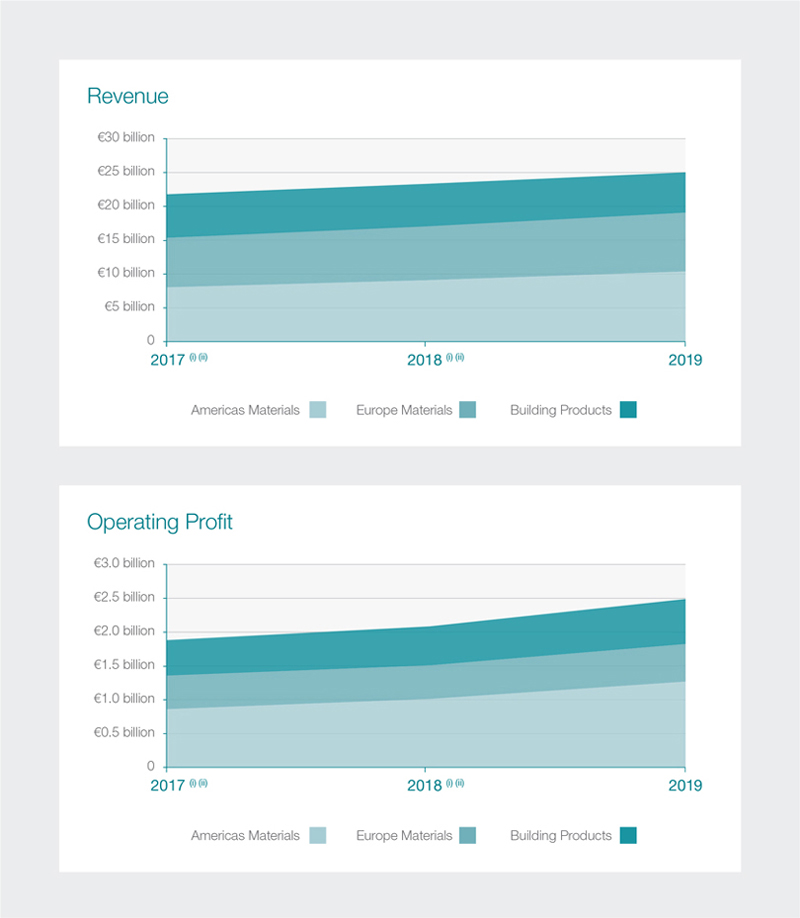
An overview of Group revenue and operating profit for each of the reporting segments for 2017, 2018 and 2019 is as follows:

LOGO

(i)

As set out in note 2 to the Consolidated Financial Statements on page 147 the Group has three reporting segments; Americas Materials, Europe Materials and Building Products. Comparative segment amounts for 2017 and 2018 have been restated where required to reflect the new format for segmentation.

(ii)

During 2019 the Europe Distribution business was classified as discontinued operations. Comparative amounts for 2017 and 2018 have been restated.


Table of Contents

LOGO

2019 was another year of growth for CRH, supported by a positive demand backdrop in the Americas and in key regions in Europe. With good contributions from acquisitions and tailwinds from currency exchange movements, sales of 28.3 billion from continuing and discontinued operations for the period were 6% ahead of 2018.

Year-end net debt of 6.7 billion

(2018: 7.0 billion) was reflective of our strong operating cash generation and continued portfolio refinement with net disposal proceeds after acquisition spend of 1.4 billion (2018 outflow: 0.6 billion) offset by total distributions to shareholders of 1.4 billion (2018: 1.3 billion). Net Debt/EBITDA (as defined)* was 1.7x (2018: 2.1x).

Key Components of 2019 Performance

Economic growth continued in the US in 2019, with improvements in the infrastructure sector and solid fundamentals in key residential and non-residential markets. Headwinds driven by flooding and wet weather in the first half of the year were offset by a stronger second half and like-for-like sales in Americas Materials for the full year increased 4% over 2018.

In Europe Materials, organic sales were 5% ahead due to good activity in key markets and pricing progress across all product lines. Performance was positive for our businesses in Eastern and Western Europe, which

offset challenging trading conditions in the UK as construction activity declined amidst Brexit-related uncertainty.

Building Products saw continued improvements in 2019 reflecting a positive demand and pricing backdrop and like-for-like sales were 2% ahead of 2018. Underlying trends in residential and non-residential activity were positive in the West Coast and Southern regions of the US and our main markets in Europe also experienced good demand.

Our Europe Distribution business was divested at the end of October 2019 and was classified as discontinued operations for reporting purposes. The business experienced continued demand in mainland Europe aided by milder weather conditions, partly offset by challenges in Switzerland.

EBITDA (as defined)* from continuing and discontinued operations of 4.2 billion was 25% ahead of 2018 (2018: 3.4 billion) with the benefit of solid underlying growth, continued focus on operational and commercial performance, margin-enhancing acquisition activity and the impact of IFRS 16 Leases 2 . Reported profit after tax was 0.6 billion behind 2018 at 1.9 billion (2018: 2.5 billion), as the prior year’s profit after tax was augmented by the 1.1 billion after tax profit on disposal on the sale of our Americas Distribution business.

The euro weakened against most major currencies during 2019 resulting in the average euro/US Dollar rate strengthening from 1.1810 in 2018 to 1.1195 in 2019 and the Pound Sterling strengthening from an average 0.8847 in 2018 to 0.8778 in 2019. Overall currency movements resulted in a favourable net foreign currency translation impact on our results as shown on the table on page 34. The average and year-end 2019 exchange rates of the major currencies impacting on the Group are set out on page 144.

Change in Reporting Currency to US Dollar

Within our current portfolio of businesses, our euro denominated earnings, while sizeable, are a relatively lower proportion of overall earnings. To reduce the potential for foreign exchange volatility in our future reported earnings, the Group has decided to change its reporting currency to US Dollar effective from 1 January 2020.

*  EBITDA is defined as earnings before interest, taxes, depreciation, amortisation, asset impairment charges, profit on disposals and the Group’s share of equity accounted investments’ profit after tax.

1. See cautionary statement regarding forward-looking statements on page 103.

2. The impact of IFRS 16 Leases on EBITDA (as defined)* is 378 million from continuing and discontinued operations.

LOGO


Table of Contents

34

CRH ANNUAL REPORT AND FORM 20-F I 2019

Finance Director’s Review 2019 - continued

Key Components of 2019 Performance

million Sales
revenue
EBITDA
(as defined)*
Operating
profit
Loss on
disposals
Finance
costs (net)
Assoc. and
JV PAT (i)
Pre-tax
profit
2018 23,241 3,216 2,071 (27 ) (351 ) 48 1,741
Exchange effects 764 127 91 1 (12 ) 2 82
2018 at 2019 rates 24,005 3,343 2,162 (26 ) (363 ) 50 1,823
Incremental impact in 2019 of:
- 2018/2019 acquisitions 923 164 70 - (44 ) - 26
- 2018/2019 divestments (629 ) (52 ) (18 ) 34 2 - 18
- Leases (ii) - 311 40 - (62 ) - (22 )
- Organic 830 234 240 (9 ) 29 10 270
2019 25,129 4,000 2,494 (1 ) (438 ) 60 2,115
% Total change 8 % 24 % 20 % 21 %
% Organic change 3 % 7 % 11 % 15 %

(i)

CRH’s share of after-tax profits of joint ventures and associated undertakings.

(ii)

Excludes the impact of IFRS 16 Leases on discontinued operations which is 67 million on EBITDA (as defined)*, 4 million on operating profit and 7 million on finance costs.

Liquidity and Capital Resources - 2019 compared with 2018

The comments that follow refer to the major components of the Group’s cash flows for 2019 and 2018 as shown in the Consolidated Statement of Cash Flows on page 132.

Throughout 2019, the Group remained focused on cash management, targeting working capital in particular. Management delivered a net working capital outflow of 64 million (2018: 463 million), and together with 2019’s improved profitability and the positive impact of the non-reoccurrence of cash outflows related to the Americas Distribution discontinued operation (primarily the tax paid on the profit on disposal) the Group’s operating cash flow increased to 3.5 billion (2018: 1.9 billion).

Working capital was 2.1 billion at year end (2018: 2.5 billion) representing 8.5% of continuing sales (2018: 9.4% on a continuing and discontinued basis). CRH believes that its current working capital is sufficient for the Group’s present requirements.

Focused investment in property, plant and equipment in markets and businesses with increased demand backdrop and efficiency requirements, resulted in higher cash outflows of 1.2 billion (2018: 1.1 billion), with spend in 2019 representing 102% of depreciation on owned assets (2018: 105%).

Reflective of the ongoing strategy of active portfolio management, the Group invested 0.7 billion on 62 transactions (2018: 3.6 billion) which was financed by divestment and disposal proceeds of 2.1 billion (net of cash disposed and deferred proceeds) (2018: 3.0 billion).

The Group continued its share buyback programme and, in 2019, 27.4 million (2018: 27.9 million) ordinary shares were repurchased on the London Stock Exchange (LSE) and Euronext Dublin for a total consideration of 0.8 billion (2018: 0.8 billion), at an average price of 28.87 (2018: 28.24) per share. The Group announced a further 0.2 billion tranche of the share buyback programme on 7 January 2020 to be completed no later than 31 March 2020. These buybacks, together with cash dividend

payments of 0.6 billion (2018: 0.5 billion), reflect the Group’s continued commitment to returning excess cash to shareholders.

Year-end interest-bearing loans and borrowings decreased by 0.3 billion to 9.0 billion (2018: 9.3 billion). At year end, the weaker euro against the US Dollar had a negative translation impact on net debt.

Reflecting all these movements, net debt of 6.7 billion at 31 December 2019 was 0.3 billion lower than year-end 2018 ( 7.0 billion). The Group is in a good financial position. It is well funded and Net Interest Cover (EBITDA (as defined)*/net debt related interest costs) is 12.3x (2018: 10.5x).

The Group ended 2019 with total liquidity of 7.4 billion, comprising 3.8 billion of cash and cash equivalents on hand and 3.6 billion of undrawn committed facilities which are available until 2024. At year end, the Group had sufficient cash balances to meet all maturing debt obligations (including leases) for the next four years and the weighted average maturity of the remaining term debt was

11.6 years.

*

EBITDA is defined as earnings before interest, taxes, depreciation, amortisation, asset impairment charges, profit on disposals and the Group’s share of equity accounted investments’ profit after tax.


Table of Contents

CRH ANNUAL REPORT AND FORM 20-F I 2019

35

In April 2019, the Group successfully carried out an amendment and extension of its 3.5 billion revolving credit facility.

The Group also has a US$2 billion US Dollar Commercial Paper Programme and a 1.5 billion Euro Commercial Paper Programme of which there were no outstanding issued notes at year end. The purpose of these programmes is to provide short-term liquidity at attractive terms.

Contractual obligations and Off-Balance Sheet arrangements are disclosed on page 229 of this Annual Report and Form 20-F.

Segmental Reviews

The sections on pages 38 to 51 outline the scale of CRH’s continuing operations in 2019 and provide a more detailed review of performance in each of CRH’s reporting segments. A review of the discontinued operations, Europe Distribution, is also included on pages 49 and 52 for information.

Development Review

2019

Demonstrating CRH’s strategy of active portfolio management, the Group invested 0.7 billion in 62 acquisition/investment transactions in 2019 (including deferred and contingent consideration in respect of prior year acquisitions).

The Building Products Division completed a total of 16 bolt-on acquisitions at a cost of c. 460 million. Four of these acquisitions were completed in Europe and one in Australia at a cost of 65 million, while the remaining 11 were completed in North America for consideration of c. 395 million. One of the largest acquisitions in 2019 was the November acquisition of Torrent Resources, Inc. for c. 75 million. This acquisition strengthens CRH’s storm water and water management presence in Western US and offers significant commercial and operational synergy potential to our Infrastructure Products business.

The Americas Materials Division completed 27 bolt-on acquisitions and two investments at a cost of c. 210 million, the majority of which were designed to bolster our operational footprint through the addition of c. 260 million tonnes of mineral reserves. The most significant acquisition in Americas Materials was that of Windsor Rock Products for c. 30 million. Windsor Rock

Products is a strong fit with our existing operations in Oregon and adds c. 25 million tonnes of reserves to our portfolio.

The Europe Materials Division completed 15 bolt-on acquisitions and two investments at a cost of c. 55 million.

On the divestment front, the Group completed 11 transactions and realised business and asset disposal proceeds of 2.1 billion. The majority of divestment proceeds related to the divestment of the Europe Distribution business in October 2019 for a final agreed consideration of 1.6 billion. Other transactions in 2019 included the divestment of the European Shutters & Awnings business for a total consideration of 0.3 billion in June, the divestment of the Perimeter Protection business in Europe in September 2019 for 0.1 billion together with seven smaller business divestments completed in the US and UK.

On 31 December 2019, the Group divested of its share of the Indian joint venture, MHIL, for a total deferred consideration of

0.3 billion.

In addition to these business divestments, the Group realised proceeds of 0.1 billion from the disposal of surplus property, plant and equipment.

LOGO


Table of Contents

36

CRH ANNUAL REPORT AND FORM 20-F I 2019

Finance Director’s Review 2018

The overall trading environment for the Group in 2018 was positive with good demand and favourable market fundamentals in the Americas coupled with positive underlying momentum in Europe; both experienced against a backdrop of energy-related input cost inflation and significant weather disruption throughout 2018. The Group continued to focus on cash generation and appropriate deployment of capital. Operating cash flow for 2018 amounted to 1.9 billion (2017: 2.2 billion) impacted by the tax paid on the divestment of Americas Distribution. Year-end 2018 net debt finished under 7.0 billion (2017: 5.8 billion) after acquisition spend net of disposal proceeds of 0.6 billion (2017: 1.7 billion) and total distributions to shareholders of 1.3 billion (2017: 0.5 billion).

Key Components of 2018 Performance

The overall sales movement in 2018 was a combination of the performance of each of the individual segments as noted below.

Despite harsh winter weather conditions experienced in the early months and record levels of rainfall during 2018, our Americas Materials’ operations benefited from a positive macroeconomic backdrop and good underlying

demand in the US. An organic sales increase of 4% was supported by growth across all sectors in our markets.

Organic sales were up 5% in Europe Materials, with a positive performance for our operations in Ireland, the Benelux, Denmark and Poland partly offset by more challenging trading conditions in the UK, due to continued Brexit uncertainty. The Philippine economy continued to perform amidst inflationary pressures. However, the resultant volume and price progress was more than offset by cost increases, particularly in energy.

Building Products saw growth in the US along the West Coast and in parts of the South, due to good residential and non-residential construction, partly offset by softness in some Northern US regions. With organic sales 3% ahead of 2017, it was a year of progress for the Division further boosted by acquisitions in all of the product groups.

Europe Distribution, which was classified as discontinued operations for reporting purposes, had a mixed performance with positive momentum in the Netherlands, partly offset by first half challenges in Switzerland and Belgium.

EBITDA (as defined)* for 2018 amounted to 3.2 billion, a 10% increase on 2017 (2017: 2.9 billion) as the benefit from acquisitions and underlying growth was partly offset by energy-related input cost inflation. Reported profit after tax was 0.6 billion ahead of 2017 at 2.5 billion (2017: 1.9 billion), with 2018 profit augmented by the profit on disposal of our Americas Distribution business partly offset by two non-recurring one-off items in 2017; a past service credit due to changes in a Swiss pension scheme and a 440 million reduction in the Group’s net deferred tax liabilities1 due to changes in tax legislation in the US.

The euro strengthened against most major currencies during 2018 resulting in the average euro/US Dollar rate weakening from 1.1297 in 2017 to 1.1810 in 2018 and the Pound Sterling weakening from an average 0.8767 in 2017 to 0.8847 in 2018. Overall currency movements resulted in an unfavourable net foreign currency translation impact on our results as shown in the table below. The average and year-end 2018 exchange rates of the major currencies which impacted on the Group are set out on page 144.

Key Components of 2018 Performance

million Sales
revenue
EBITDA
(as defined)*
Operating
profit
(Loss)/profit
on disposals
Finance
costs (net)
Assoc. and
JV PAT (i)
Pre-tax
profit
2017 21,653 2,930 1,927 54 (348) 52 1,685
Exchange effects (644) (98) (67) (2) 9 (2) (62)
2017 at 2018 rates 21,009 2,832 1,860 52 (339) 50 1,623
Incremental impact in 2018 of:
- 2017/2018 acquisitions 1,746 355 225 - (57) - 168
- 2017/2018 divestments (348) (36) (26) (72) 2 - (96)
- Swiss pension past service credit (ii) - (20) (20) - - - (20)
- Early bond redemption - - - - 17 - 17
- Organic 834 85 32 (7) 26 (2) 49
2018 23,241 3,216 2,071 (27) (351) 48 1,741
% Total change 7% 10% 7% 3%
% Organic change 4% 3% 2% 3%

(i)

CRH’s share of after-tax profits of joint ventures and associated undertakings.

(ii)

2018 included the impact of the non-reoccurrence of a one-off past service credit of 81 million in 2017 due to Swiss pension plan amendments, 20 million classified as continuing operations with the remaining 61 million classified as discontinued operations.

*

EBITDA is defined as earnings before interest, taxes, depreciation, amortisation, asset impairment charges, profit on disposals and the Group’s share of equity accounted investments’ profit after tax.

1.

Net deferred tax liabilities of 447 million is stated on a continuing ( 440 million) and discontinued ( 7 million) basis.


Table of Contents

CRH ANNUAL REPORT AND FORM 20-F I 2019

37

Liquidity and Capital Resources - 2018 compared with 2017

The comments that follow refer to the major components of the Group’s cash flows for 2018 and 2017 as shown in the Consolidated Statement of Cash Flows on page 132.

The Group maintained its focus on cash management in 2018. Operating cash flow in 2018 was 1.9 billion (2017: 2.2 billion) which included cash outflows of 469 million related to the Americas Distribution discontinued operation, primarily the tax paid on the profit on disposal. Net working capital outflow for 2018 of 463 million (2017: 209 million outflow) reflected trends in overall sales, seasonal weather patterns and the impact of acquisitions.

Focused spending on property, plant and equipment in markets and businesses with increased demand backdrop and efficiency requirements, resulted in higher cash outflows of 1.1 billion (2017: 1.0 billion).

During 2018 the Group spent 3.6 billion on 46 transactions (2017: 1.9 billion) which was partly financed by divestment and disposal proceeds of 3.0 billion (net of cash disposed and deferred proceeds) (2017: 222 million).

Between 2 May and 31 December 2018, 27.9 million ordinary shares were repurchased on the LSE and Euronext Dublin for a total of 789 million, at an average price of 28.24 per share. This buyback, together with cash dividend payments of 533 million in 2018 (2017: 477 million) reflected the Group’s continued focus on returns to shareholders. Net proceeds from share issues in 2018 was 11 million (2017: 42 million).

Year-end 2018 interest-bearing loans and borrowings increased by 1.3 billion to 9.3 billion (2017: 8.0 billion). At year end 2018, the weaker euro against the US Dollar had a negative translation impact on net debt.

Development Review

2018

2017

In 2018, the Group spent a total of c. 3.6 billion (including deferred and contingent consideration in respect of prior year acquisitions) on 46 acquisition/investment transactions. On the divestment front, the Group realised business and asset disposal proceeds of c. 3.0 billion.

The most significant acquisition in 2018 was the June acquisition of Ash Grove, which gave CRH a market leadership position in the North America cement market, allowing for greater vertical integration with our existing aggregates, asphalt and readymixed concrete businesses. In addition to the acquisition of Ash Grove, our Americas Materials Division completed 23 bolt-on acquisitions and one investment throughout the US and Canada for consideration of c. 370 million.

Our Europe Materials Division completed ten acquisitions across the UK, Ireland and France, and one investment in Poland for a total spend of c. 60 million. Our Building Products Division completed an acquisition in the UK, Germany, Belgium and Australia, in addition to six bolt-on acquisitions in the US at a total cost of c. 220 million. The acquisitions of Coral Industries and SIGCO extended Building Envelope’s geographic footprint and product offerings in the Southeast and Northeast US, respectively. Similarly, the Concrete Specialties acquisition and the Ash Grove packaging division added geographic exposure to Central US markets.

The majority of divestment proceeds related to the divestment of our Americas Distribution business in January 2018 for a final agreed consideration of c. 2.4 billion. In July 2018, the Group completed the divestment of our DIY business in the Netherlands and Belgium, together with certain related property assets, for total consideration of c. 0.5 billion. A further 18 smaller business divestments were completed across all segments demonstrating our continued focus on portfolio management. In addition to these business divestments, the Group realised proceeds of c. 0.1 billion from the disposal of surplus property, plant and equipment.

In 2017, the Group spent a total of 1.9 billion (including deferred and contingent consideration in respect of prior year acquisitions) on 34 acquisition/investment transactions. The Group realised business and asset disposal proceeds of 0.2 billion.

Our Americas Materials Division completed the largest 2017 acquisition at the end of November with the acquisition of Suwannee American Cement together with certain other materials assets in Florida. The total assets acquired consisted of a 1 million tonne cement plant in North Central Florida, 18 readymixed concrete plants, an aggregates quarry, two block plants and nine gunite facilities. The Americas Materials Division also completed 12 further bolt-on acquisitions, including two in Canada, adding c. 2.5 billion tonnes of additional aggregates reserves resulting in a total spend of c. 1.1 billion in 2017.

Our Europe Materials Division spent c. 0.6 billion on eight acquisitions and one investment, including the largest acquisition in Europe of the Fels lime business which was acquired at the end of October 2017. Fels’ assets included significant high-quality limestone reserves and 11 production locations; nine in Germany and one in both the Czech Republic and Russia.

The Building Products Division completed eight acquisitions and one investment in the US in addition to two acquisitions and one investment in Europe in 2017 at a total cost of c. 0.2 billion.

Business divestments during 2017, all in Europe Materials, generated net proceeds of c. 85 million. The remaining clay products businesses in Europe (Belgium, Germany, Netherlands and Poland) were divested and the Division also sold its civil prefabricated concrete businesses in the Benelux, along with seven other small non-core businesses. In addition to these business divestments, the Group realised proceeds of c. 0.1 billion from the disposal of surplus property, plant and equipment.

LOGO


Table of Contents

LOGO

Roadstone, part of CRH’s Europe Materials Division, developed over 4,500m³ of high-strength concrete for The Rose Fitzgerald Kennedy Bridge in Ireland, which opened in January 2020. The three-tower, 887m extrados bridge is the longest of its type in the world. Extending more than 230m over the River Barrow, and with a 36-metre clearance, it provides vital connectivity for surrounding communities and for shipping navigation to the Port of New Ross.


Table of Contents


Table of Contents

40

CRH ANNUAL REPORT AND FORM 20-F I 2019

Americas Materials

LOGO

CRH’s Americas Materials Division is the leading building materials business in North America with operations in 46 US states, six Canadian provinces and three Brazilian states.

What We Do

Our Americas Materials Division is a vertically integrated supplier of building materials used widely in construction projects throughout North America. Typically, these materials are resource-backed in mineral deposits found within our extensive network of quarry locations where they are processed for supply as aggregates, asphalt, cement and readymixed concrete.

Our operating companies across North America supply these materials to customers including national, regional and local governments, contractors, homebuilders, homeowners and sub-contractors, for use in a broad range of construction projects including major public infrastructure, commercial buildings and residential structures.

Over several decades CRH has built up market leading positions throughout North America in aggregates and readymixed concrete while currently being the largest producer of asphalt. CRH is also a leading producer of cement in North America with operations across Florida, Texas, the Midwest and Western US, and Canada.

In addition, the Division is a leading supplier to highway construction projects in the US and a significant proportion of our business is awarded by public tender for federal, provincial, state and local government authority road and infrastructure projects.

How We Create Value

Our Americas Materials businesses have established strong relationships with customers in local markets and a deep market knowledge that drives performance. This focus on operational excellence at the local level is supported by strategic oversight provided through a lean centre which allows CRH to leverage talent, procurement synergies, cost management and operational excellence.

*

EBITDA is defined as earnings before interest, taxes, depreciation, amortisation, asset impairment charges, profit on disposals and the Group’s share of equity accounted investments’ profit after tax.

1.

Geography, sector exposure and end-use balance are based on sales.

2.

Net Assets at 31 December 2019 comprise segment assets less segment liabilities excluding lease liabilities as defined on page 226.

3.

Throughout this document annualised volumes have been used which reflect the full-year impact of development activity during the year and may vary from actual volumes sold.


Table of Contents

CRH ANNUAL REPORT AND FORM 20-F I 2019

41

Our vertically integrated business model helps us capture value at multiple points along the value chain. Selling materials internally to other CRH businesses helps us drive company-wide growth and efficiency while ensuring that we are maximising the use of our assets.

Materials produced by our aggregates and cement businesses for example are purchased by our downstream materials businesses for products such as readymixed concrete and asphalt. This focus on vertical integration is embedded in our development strategy and we typically concentrate our acquisition activity on businesses which can be quickly integrated within our existing network.

The US building materials sector is largely unconsolidated; the top ten aggregates businesses account for less than one third of production. Backed by a reserves network that is very difficult to replicate and strong leadership positions in local markets, our materials businesses are well positioned to capitalise on value creating opportunities for consolidation and expansion of existing integrated operations.

The recent expansion of the Division’s footprint in the North American cement market for example allows for greater integration with our existing aggregates and readymixed concrete businesses. It also increases our exposure to the high growth states in the Southern and Western US where there is high population growth and demand for our materials.

How We Structure our Operations

Our Americas Materials Division operates across three countries (the US, Canada and Brazil). The Division has a network of close to 1,450 operating locations and employs approximately 28,600 people across 46 US states, six Canadian provinces and three Brazilian states.

Annualised Sales Volumes 3 : Aggregates: 192.2m tonnes; Cement: 15.0m tonnes; Readymixed Concrete: 13.2m m 3 ; Asphalt: 45.5m tonnes

Our Vertically Integrated Business

LOGO

LOGO


Table of Contents

42

CRH ANNUAL REPORT AND FORM 20-F I 2019

Operations Review - Americas Materials

Prior Year 2018

Results Analysis of change

million

2017

Exchange

Acquisitions

Divestments

Organic

2018

% change

Sales revenue 7,970 -356 +1,026 -26 +337 8,951 12%
EBITDA (as defined)* 1,270 -56 +267 -12 +24 1,493 18%
Operating profit 858 -37 +176 -9 +21 1,009 18%
EBITDA (as defined)*/sales 15.9% 16.7%
Operating profit/sales 10.8% 11.3%

Following significant development activity in 2018 and the latter half of 2017, Americas Materials operating profit was 1.0 billion in 2018, 18% ahead of 2017. Organic sales were 4% ahead of 2017, while organic operating profit grew 3% as the Division experienced pricing progress, with improvements across all products. However, margins were impacted by poor weather in key markets and ongoing cost inflation, with notable increases in bitumen, a key input in asphalt production, and energy costs, including diesel and gasoline.

Continued economic growth in the US residential, non-residential and infrastructure sectors drove underlying demand. Canada had moderate GDP growth in 2018, with solid jobs growth. The economy lost some momentum in the second half of 2018 due to a slowdown in business and government spending.

Continued political uncertainty in Brazil, particularly in relation to the presidential elections as well as a truck drivers strike, impacted the Brazilian economy during 2018. The weakness in the construction market continued.

Together with the Ash Grove acquisition, Americas Materials spent 3.3 billion in 2018 on 24 bolt-on transactions, adding c. 1.6 billion tonnes of reserves to the business.

Building Materials

Total aggregates volumes including acquisitions increased 8% in 2018, with the impact of inclement weather impacting like-for-like volumes, which were 1% ahead. Average prices increased 3% on a like-for-like basis and 2% overall compared with 2017, however margins were under pressure due to increased input costs.

With a later start to paving projects across some key regions and further weather-related delays experienced in the third quarter in the North and Central divisions, like-for-like asphalt volumes

were down 3% with total volumes down 2%. Like-for-like prices improved 10%, but higher bitumen costs negatively impacted margins.

Total readymixed concrete volumes were 29% ahead of 2017 due to acquisition activity, and prices improved 3%. Like-for-like volumes were impacted by the unfavourable weather, though margins improved as management continued to focus on operational performance.

Overall paving and construction services revenue for 2018 increased 6% and like-for-like revenue was up 4%, mainly driven by the South division, which benefited from a good paving season that extended into the last quarter of 2018. Input cost pressure, particularly in raw materials and energy, negatively impacted overall margins in 2018.

Regional Performance

Like-for-like sales in the North division increased 4%, mainly due to improved US aggregates volumes and prices, as well as greater construction sales. Adverse weather however impacted volumes across all businesses in Canada. This together with increased input costs resulted in operating profit finishing behind 2017.

Like-for-like South division sales increased 11%, benefiting from increased construction activity with several new projects undertaken in key states. Volumes and price increases across all products resulted in a strong operating profit performance in 2018.

With record levels of rainfall and flooding in the Central division, like-for-like sales decreased 4%. Reduced volumes and margin pressure resulted in operating profit finishing behind 2017.

With strong pricing across all products and volumes growth aided by acquisitions, West division sales increased 12% during 2018. Although delayed funding in certain states impacted like-for-like aggregates and asphalt volumes, operating profit was ahead of 2017.

Cement

The acquisition of Ash Grove in June 2018 gave CRH a market leadership position in the North American cement market, and including the partial year of ownership with our operations in Florida, Canada and Brazil, resulted in total cement volumes in 2018 of over ten million tonnes.

Our US cement operations delivered higher volumes in 2018 primarily due to the acquisition of Ash Grove and a full year of ownership of the Suwannee American Cement business. Strong price realisation across our major markets and synergies with CRH’s heritage businesses contributed good operating profits in 2018. Integration of the Ash Grove business progressed well and the business performed in line with expectations.

Cement volumes and prices in Canada were behind 2017 due to the exit of the Maritimes market and competitive cement market conditions. The business continued to optimise its terminal network and to further penetrate US markets.

CRH Brazil cement volumes were stable, in line with consumption trends in the Southeast region. Selling price increases were achieved in a higher input cost environment.

*

EBITDA is defined as earnings before interest, taxes, depreciation, amortisation, asset impairment charges, profit on disposals and the Group’s share of equity accounted investments’ profit after tax.


Table of Contents

CRH ANNUAL REPORT AND FORM 20-F I 2019

43

Current Year 2019

Results Analysis of change

million

2018

Exchange

Acquisitions

Divestments

Leases

Organic

2019

% change

Sales revenue 8,951 +460 +657 -26 - +343 10,385 16%
EBITDA (as defined)* 1,493 +84 +135 -5 +98 +155 1,960 31%
Operating profit 1,009 +60 +61 -4 +9 +136 1,271 26%
EBITDA (as defined)*/sales 16.7% 18.9%
Operating profit/sales 11.3% 12.2%

2019 was a strong year for Americas Materials, generating operating profit of 1.3 billion, 26% ahead of 2018. Headwinds driven by wet weather and increased raw materials costs in the first half of the year were offset by a stronger second-half performance reflecting increased volumes, positive pricing and reduced operating expenses. Organic sales were 4% ahead of 2018, while organic operating profit grew 13%.

Economic activity in the US remained favourable during 2019 with the infrastructure sector supported by the FAST Act as well as a significant number of local and state funded transportation projects. The Canadian market experienced growth during the year and economic expansion is expected to continue at a moderate pace.

Americas Materials completed 29 acquisitions/ investments in 2019 at a cost of c. 210 million, strengthening its operational footprint through the addition of c. 260 million tonnes of mineral reserves.

Building Materials

Total aggregates volumes benefited from acquisitions and finished 5% ahead of prior year, while like-for-like volumes were 1% ahead as a strong performance in the West was partly offset by a focused reduction in lower margin contracts in the South division. Average prices increased 5% on a like-for-like basis and 4% overall compared with 2018 and margins were maintained against a backdrop of increased input costs.

Like-for-like and total asphalt volumes were 1% behind 2018 as flooding and tropical storms negatively impacted our Central and South divisions, partly offset by strong demand in the North. Like-for-like prices improved 5%, more than offsetting higher input costs and resulted in strong margin expansion.

Total readymixed concrete volumes were 9% ahead of 2018 and prices improved 4%. Like-for-like volumes were 2% ahead as poor weather in the first half of the year for Central and West was offset by strong volumes in the South division. Readymixed concrete margins were impacted by increased input costs.

Total paving and construction services revenues were 3% ahead, 2% on a like-for-like basis, as overall margins improved driven by favourable regional mix and increased higher margin work in the South and West divisions, partly offset by challenging first-half weather in Canada.

Regional Performance

The North division comprises operations in 13 states, with key operations in Ohio, New York, New Jersey and Michigan. Total sales in the North division increased 5% primarily due to favourable volumes and prices across our product range, as well as greater construction revenue. This improved revenue coupled with strong cost control resulted in a good operating profit performance.

The South division comprises operations in 12 states with key operations in Florida, West Virginia and North Carolina. Total sales in the division increased 1% with improved pricing in all products largely offset by lower construction revenue due to the timing of major projects in key states. Strong pricing together with focused management of operating expenses resulted in a solid operating profit performance.

The Central division has operations in ten states, with key operations in Texas, Arkansas and Kansas. Weather challenges continued in the division with flooding and record levels of rainfall in the first half of the year; however, a strong performance later in the year and contributions from acquisitions helped drive a total sales increase of 20%, 7% ahead on a like-for-like basis. Like-for-like operating profit finished ahead

of prior year as weather challenges were offset by favourable second-half volumes and pricing.

The West division has operations in ten states with key operations in Utah, Idaho, Washington and Colorado. Strong pricing across all products and volumes growth in aggregates and readymixed concrete supported the West division’s total sales increase of 5%, 2% on a like-for-like basis. Despite challenges from weather and higher input costs, mainly bitumen and labour, favourable pricing across all products and tight cost control resulted in operating profit well ahead of 2018.

Cement

Like-for-like sales volumes in our US operations were ahead in 2019. Despite adverse weather, strong price realisation across major markets and good synergy delivery supported robust operating profits. The integration of Ash Grove is now complete and the business is performing well.

Despite poor weather conditions in the first half of the year, cement volumes and prices in Canada were ahead of 2018, driven by solid market conditions.

Cement consumption in Southeast Brazil improved in 2019 enabling CRH to achieve volumes growth supported by a consistent focus on key customer segments. A strong emphasis on logistics optimisation and price realisation drove improved performance.

*

EBITDA is defined as earnings before interest, taxes, depreciation, amortisation, asset impairment charges, profit on disposals and the Group’s share of equity accounted investments’ profit after tax.

LOGO


Table of Contents

44

CRH ANNUAL REPORT AND FORM 20-F I 2019

Europe Materials

LOGO

With market leading positions across a broad geographic footprint and a highly integrated portfolio of businesses, our Europe Materials Division is a leading heavyside materials business in Europe.

What We Do

Our Europe Materials Division manufactures and supplies a broad range of materials for use in construction projects including aggregates, cement, lime, asphalt, readymixed concrete and concrete products.

This vertically integrated business is founded in resource-backed assets engaged in the production and supply of cement and aggregates along with downstream material products such as readymixed concrete, concrete products and asphalt.

These materials are used extensively in a wide range of construction applications from major public infrastructure projects to commercial buildings and residential structures.

Our businesses are established players in local markets and have long-standing relationships with customers which typically range from national, regional and local governments, to building contractors and other construction product and service providers.

With an extensive network in the strong and stable markets of Western Europe, a strong footprint in growing Eastern European markets and an attractive position in Asia, the Division is geographically balanced and has broad exposure to residential, non-residential and infrastructure sectors.

We have leading positions and a broad range of well-established brands in most markets across Western Europe, from Ireland and the UK to France, Germany, Denmark, Finland, Switzerland and Benelux. In Eastern Europe, we have built up a strong portfolio of businesses across eight different countries. While cement is our core product in these Eastern European markets, we have also developed strong positions in the lime, readymixed concrete, precast and aggregates sectors in recent years.

*

EBITDA is defined as earnings before interest, taxes, depreciation, amortisation, asset impairment charges, profit on disposals and the Group’s share of equity accounted investments’ profit after tax.

1.

Geography, sector exposure and end-use balance are based on sales.

2.

Net Assets at 31 December 2019 comprise segment assets less segment liabilities excluding lease liabilities as defined on page 226.

3.

Throughout this document annualised volumes have been used which reflect the full-year impact of development activity during the year and may vary from actual volumes sold.


Table of Contents

CRH ANNUAL REPORT AND FORM 20-F I 2019

45

In 2019, the Division was reorganised to include Asia, which comprises cement operations in the Philippines where we are the second biggest producer, along with an equity-accounted investment in Northeast China.

How We Create Value

Value creation is an area of continuous focus for our Europe Materials Division and we place great emphasis on performance improvement initiatives and collaboration across the Division.

In addition to understanding and meeting the unique needs of local customers, our deep market knowledge drives performance and our extensive network allows us to leverage talent, synergies for procurement, cost and logistics management and drive both commercial and operational excellence.

Our vertically integrated business model means that we can maximise the use of our assets through a combination of self-supply to our downstream operations as well as sales to our customers. With a strong pipeline of opportunities across regions, our development strategy is focused on identifying and integrating bolt-on acquisitions for synergies, reserves and further vertical integration, in addition to opportunities to extend and strengthen existing regional positions.

We have a strong track record in adding businesses for vertical integration and to strengthen regional positions, ensuring we are competitive in all individual product lines and our combined business delivers a stronger return on assets and generates more cash.

How We Structure Our Operations

Our Europe Materials Division spans 19 countries in Europe and two in Asia and is organised across five operational clusters (Tarmac (UK), Europe North, Europe West, Europe East and Asia).

Europe Materials employs approximately 27,250 people at over 1,160 locations. A further 5,650 people are employed in our equity accounted investment in China.

Annualised Sales Volumes 3 : Aggregates: 115.0m tonnes; Cement: 33.5m tonnes; Readymixed Concrete: 18.1m m 3 ; Asphalt: 11.6m tonnes; Lime: 7.4m tonnes; Concrete Products: 6.7m tonnes

Where Our Products Are Used

LOGO

LOGO


Table of Contents

46

CRH ANNUAL REPORT AND FORM 20-F I 2019

Operations Review - Europe Materials

Prior Year 2018

Results Analysis of change

million

2017

Exchange

Acquisitions

Divestments

Pension Credit 1

Organic

2018

% change

Sales revenue 7,338 -90 +511 -53 - +336 8,042 10%
EBITDA (as defined)* 891 -16 +65 -1 -20 +17 936 5%
Operating profit 493 -10 +36 - -20 -12 487 -1%
EBITDA (as defined)*/sales 12.1% 11.6%
Operating profit/sales 6.7% 6.1%

1 Swiss pension plan service credit of €20 million in 2017

The 2018 trading performance for the Europe Materials Division was mixed with positive results in our operations in Ireland, the Benelux, Denmark and Poland, with more challenging trading conditions in the Philippines and UK. The year-on-year organic sales growth reflected continued price progression, however cost inflation, which was a feature across all markets resulted in a decrease in operating profit.

Tarmac (UK)

Despite challenging weather conditions earlier in 2018 and ongoing political and economic uncertainty as to the impact on construction activity following the Brexit vote, sales in our Tarmac business were ahead of 2017, underpinned by growth in contracting sales and more modest growth in other materials. Overall, operating profit was behind compared with 2017 as continued progress on performance improvement measures was offset by increased input costs and a challenging market environment.

Europe North

A positive performance in the UK lime business as a result of strong environmental volumes partially offset the decline in cement volumes, resulting in overall UK sales and operating profit being behind 2017. In Ireland, sales and operating profit were ahead of 2017 mainly due to the continued market recovery, particularly in the Dublin region. Volumes increased and positive pricing trends were evident across key products, offsetting increased input costs, particularly energy.

Although cement and readymixed concrete volumes in Finland were slightly behind in 2018, aggregates volumes were higher, positively impacted by project activity. The concrete products business also performed well due to good market demand, particularly residential, and overall sales and operating profit finished ahead of 2017.

Europe West

Sales and operating profit in France benefited from favourable trading conditions, as good underlying demand resulted in increased volumes and a positive pricing environment for key products, with the exception of the precast concrete business, which was impacted by project delays. Sales in the Benelux were ahead of 2017, as a positive contribution from the structural businesses reflected good demand in the residential sector, together with improved readymixed concrete pricing. Operating profit finished ahead of 2017, benefiting from good underlying market demand and one-off income.

In Denmark, sales and operating profit finished ahead of 2017, as the business benefited from good underlying demand and progress in pricing achieved during 2018. In Spain, results advanced on 2017, with improved pricing in cement and readymixed concrete partly offset by lower cement volumes, due to severe weather at the beginning of 2018 and the conclusion of a major project during 2018.

Despite a significant increase in cement volumes in Switzerland, benefiting from solid construction growth, sales and operating profit were behind 2017 due to a decline in cement and readymixed concrete prices, reflecting strong competition. In Germany, improved cement pricing as well as the contribution of our lime business Fels, resulted in sales and operating profit ahead of 2017.

Europe East

Trading in Poland was ahead of 2017 with good performance in all businesses. Healthy volumes were supported by the economy and the construction sector, which continued to grow at high rates. In addition, good price development was achieved across all activities in a competitive market, contributing to the positive performance in 2018. In Ukraine, pricing improved in all businesses in 2018 resulting in organic sales finishing ahead year-on-year, however cement volumes declined due to increased market

capacity and unfavourable weather conditions during the first quarter, which combined with cost inflation and logistical constraints resulted in operating profit being behind 2017. Continued solid economic and construction growth in 2018 contributed to improved sales in Hungary and Slovakia. Despite increasing input costs, operating profit was ahead of 2017, mainly as a result of higher volumes across the businesses.

In Serbia, cement and readymixed concrete volumes increased compared to 2017 and overall sales and operating profit were ahead, supported by performance improvement initiatives. In Romania, after a slow start to 2018, affected by very poor weather conditions, cement volumes recovered and were ahead of 2017. In addition good pricing and margin progression contributed to sales and operating profit growth.

Asia

Against a backdrop of strong domestic demand and accelerated government infrastructure spending, the Philippine economy continued to perform despite inflationary pressures and tighter global financial conditions. Organic revenue performance advanced due to positive prices and ongoing demand from all segments. However, notwithstanding this, operating profit was significantly behind 2017 primarily due to higher fuel and power costs, which were only partially offset by continued commercial excellence and operational performance initiatives.

Cement demand remained subdued in Northeast China. Price increases partially offset lower volumes and increased coal prices, however Yatai Building Materials’ 2018 performance was lower than 2017. Strong growth in MHIL volumes in India was driven mainly by a sustained pick up in infrastructure spend in Andhra Pradesh and Telangana. However, prices continued to be under pressure due to competition and large institutional sales. Increased fuel prices were exacerbated by adverse foreign exchange rates. As a result, MHIL ended 2018 with operating profit lower than 2017.

*

EBITDA is defined as earnings before interest, taxes, depreciation, amortisation, asset impairment charges, profit on disposals and the Group’s share of equity accounted investments’ profit after tax.


Table of Contents

CRH ANNUAL REPORT AND FORM 20-F I 2019

47

Current Year 2019

Results Analysis of change

million

2018

Exchange

Acquisitions

Divestments

Leases

Organic

2019

% change

Sales revenue 8,042 +70 +35 -27 - +374 8,494 6%
EBITDA (as defined)* 936 +10 +2 +1 +113 +17 1,079 15%
Operating profit 487 +6 -1 +2 +16 +45 555 14%
EBITDA (as defined)*/sales 11.6% 12.7%
Operating profit/sales 6.1% 6.5%

Overall Europe Materials experienced a positive year with good sales growth and particularly strong performances in Eastern Europe, the Philippines, France and Ireland. Operating profit was ahead of 2018 as price increases and a good contribution from performance improvement initiatives offset higher input costs and the impact of more challenging trading conditions in the UK.

Tarmac (UK)

Ongoing political and economic uncertainty as a result of Brexit negatively impacted Tarmac’s trading environment as volumes in our aggregates and asphalt businesses finished lower than 2018. Operating profit declined as progress from performance improvement initiatives was offset by challenging market conditions and input cost inflation.

Europe North

Sales and operating profit in our UK cement and lime business were behind 2018 as Brexit uncertainty impacted activity levels. In Ireland, sales and operating profit were well ahead of 2018 as the business benefited from continued market growth, underpinned by strong demand and some large projects in the Dublin region. Good volumes and price growth for all key products was achieved.

Sales and operating profit in Finland were behind 2018 impacted by reduced demand in the residential and infrastructure sectors. Lower cement and readymixed concrete volumes were partly offset by project-related aggregates sales growth.

Europe West

Sales and operating profit in France benefited from favourable trading conditions as good underlying demand in the non-residential and civil engineering sectors resulted in volumes growth and a positive pricing environment for key

products. Ongoing performance improvement initiatives and cost savings also positively impacted profitability. Sales in the Benelux were ahead of 2018, with a positive contribution from our Dutch precast businesses reflecting good demand in the residential sector, while improved readymixed concrete pricing was partly offset by weaker volumes in the Belgian precast business. Excluding the impact of one-off income in 2018, operating profit finished ahead of prior year.

In Denmark, sales were ahead of 2018, as the business benefited from good demand aided by additional production capacity together with progress in pricing. Operating profit finished broadly in line with prior year impacted by the non-recurrence of one-off income in 2018. In Spain, increased demand resulted in improved readymixed concrete volumes and prices and despite lower cement volumes, sales and operating profit finished ahead of 2018.

Lower cement and readymixed concrete volumes resulted in lower sales for Switzerland; however, operating profit benefited from cost savings and good delivery of performance initiatives. In Germany, sales were marginally ahead of 2018 while operating profit was behind as cement pricing progress was offset by lower volumes in our lime business.

Europe East

Trading in Poland was strong with a good overall performance for 2019. Robust cement volumes and positive pricing supported by cost savings initiatives resulted in operating profit ahead of 2018. In Ukraine, continued growth in cement volumes reflected good market demand. Strong price progression was partly offset by slightly higher input costs and sales and operating profit finished ahead of 2018.

Stable economic and construction growth in 2019 contributed to improved sales in Hungary and Slovakia. Operating profit was ahead of 2018, mainly as a result of advances in pricing, cost optimisation and savings initiatives across the businesses. In Serbia, sales and operating profit were ahead of 2018 with higher cement volumes driven by continued strong construction activity, pricing progress and cost benefits of enhanced production facilities. In Romania, results were ahead of 2018 due to improved pricing combined with stronger volumes in cement and readymixed concrete.

Asia

Domestic demand for cement in the Philippines remained strong; however, delays in government infrastructure spending impacted cement volumes. While overall sales were in line with prior year, advances in pricing, performance improvement initiatives and cost savings resulted in operating profit well ahead of 2018.

CRH’s operations include a 26% stake in Yatai Building Materials in North Eastern China. Strong volumes growth was only partly offset by lower prices, driven by intense local competition and lower margins on exports, resulting in higher operating profit than prior year.

On 31 December 2019, the Group divested of its share of the Indian joint venture, MHIL, for a total deferred consideration of 0.3 billion. During the year, reduced demand in housing negatively impacted cement demand in MHIL’s key markets in Andhra Pradesh and Telangana; despite this, operating profit was ahead of prior year as pricing improved.

*

EBITDA is defined as earnings before interest, taxes, depreciation, amortisation, asset impairment charges, profit on disposals and the Group’s share of equity accounted investments’ profit after tax.

LOGO


Table of Contents

48

CRH ANNUAL REPORT AND FORM 20-F I 2019

Building Products

LOGO

LOGO

CRH’s Building Products Division is a leading manufacturer and supplier of highly engineered and high value-added building products in 19 countries around the world.

What We Do

Building Products is a new Division established by CRH in 2019 as part of our strategy to create a more simplified and focused business which is better positioned to exploit opportunities presented by economic development, changing demographics, sustainability and other evolving trends in construction markets globally.

The Division brings together related products businesses in Europe, North America and Asia Pacific across four strategic product groups for growth: Architectural Products, Building Envelope, Infrastructure Products and Construction Accessories.

These businesses are leading suppliers of a wide range of high quality, value-added, innovative building products and solutions, spanning multiple construction applications from residential and commercial structures to public spaces and infrastructure.

Typically, they involve a high focus on understanding the needs of our customer, more process and product innovation and a portfolio of products that is exportable to a range of markets globally.

From the glazing systems that hold glass in place, to the masonry supports that keep walls standing, our products play a vital role in completing construction projects big and small. They include the products that house the electronics that keep roads moving and connect water and electricity to homes, offices and factories. We supply the pavers, blocks and patio products used to create outdoor living spaces and pave city centres.

Bringing these related products together under one Division provides important opportunities to better leverage our scale, capabilities and people to bring more consistent focus on value.

How We Create Value

Establishing a single Building Products Division enables us to place a consistent focus on value creation and drive sustainable growth. The Division is organised around similar product groups designed to leverage scale, drive strategy and performance excellence and advance our digital and innovation capabilities globally.

*

EBITDA is defined as earnings before interest, taxes, depreciation, amortisation, asset impairment charges, profit on disposals and the Group’s share of equity accounted investments’ profit after tax.

1.

Products, sector exposure and end-use balance are based on sales.

2.

Net Assets at 31 December 2019 comprise segment assets less segment liabilities excluding lease liabilities as defined on page 226.


Table of Contents

CRH ANNUAL REPORT AND FORM 20-F I 2019

49

Creating Value Through Our Global Scale

Our businesses have deep technical expertise and the ability to customise solutions with international market reach. With leadership positions in high growth segments, our strategy is to build and grow scalable businesses, balanced across products, geographies and end-use sectors, increasing the penetration of our range of value-added products and creating competitive advantage through strong customer relationships, brand leadership and service.

Our development focus aims to deepen our position in existing business product groups and to broaden our differentiated product portfolio through new growth platforms that are exposed to global megatrends. By operating as one global Building Products Division we can adapt and grow as our markets continue to evolve.

How We Structure Our Operations

Our Building Products Division is structured around four core product groups: Architectural Products, Building Envelope, Infrastructure Products and Construction Accessories.

The Division employs approximately 24,450 people at over 490 locations across 19 countries.

LOGO

Building Products

(Discontinued Operations)

CRH’s Europe Distribution businesses supplied building materials to professional builders, specialist heating and plumbing contractors, and DIY customers through a network of trusted local and regional brands across a number of mature markets in Western Europe.

In July 2019, following a comprehensive strategic review, the Group entered into a sales agreement to divest of its Europe Distribution business. The transaction closed on 31 October 2019. In accordance with IFRS 5 Non-Current Assets Held for Sale and Discontinued Operations , the business is reported as discontinued operations for 2019 (see note 3 to the Consolidated Financial Statements). Europe Distribution consisted of three primary business areas: German DIY (Do-It-Yourself), General Builders Merchants (GBM) and Sanitary, Heating and Plumbing (SHAP).

LOGO


Table of Contents

50

CRH ANNUAL REPORT AND FORM 20-F I 2019

Operations Review - Building Products

Prior Year 2018 (Continuing Operations)

Results Analysis of change
million 2017 Exchange Acquisitions Divestments Organic 2018 % change

Sales revenue

6,345 -198 +209 -269 +161 6,248 -2%

EBITDA (as defined)*

769 -26 +23 -23 +44 787 2%

Operating profit

576 -20 +13 -17 +23 575 -

EBITDA (as defined)*/sales

12.1% 12.6%

Operating profit/sales

9.1% 9.2%

The commentary below excludes the trading performance of Europe Distribution which, following its divestment, has been classified as a discontinued operation. Its trading performance is detailed on page 52.

Following the disposal of Europe’s DIY business in Benelux, Building Products sales declined 2% in 2018. However, the Division experienced underlying growth, with organic sales 3% ahead of 2017. Targeted price increases, operational efficiencies, procurement initiatives and overhead cost reductions all helped deliver improved margins despite cost increases in raw materials, labour, and logistics. Operating profit increased by 4% on an organic basis as a result of the improved sales performance and a continued focus on cost optimisation and margin enhancement.

Construction activity in the US benefited from the improved macroeconomic backdrop; however, US volumes were impacted by bad winter and wet fall weather, continued supply-side factors such as labour and construction cost inflation, and competitive markets. Growth was seen along the West Coast of the US and in parts of the South due to good residential and non-residential construction activity, partly offset by softness in Canada and parts of the Northern US, due to weather and slower growth markets.

The Netherlands saw a significant improvement in performance as the economy expanded. Activity levels in Australia were good and the Polish market also benefited from a strong increase in demand. Sales in the key markets of Germany and the UK remained stable, where the UK incurred some headwinds on profitability driven by the under-performance of the now divested Plaka UK business and a changing customer mix.

Architectural Products

In North America, Architectural Products saw modest sales growth in 2018, benefiting from healthy residential RMI demand, but volumes were limited by adverse weather, as well as contract labour shortages. Demand for most products was particularly strong along the West Coast, which together with commercial initiatives, drove a small

increase in like-for-like sales compared with 2017. Overall, the business saw solid operating profit growth due to acquisition results and cost reduction initiatives, which more than offset the unfavourable impacts from rising logistics and input costs.

As a result of a favourable economic environment in certain key markets, sales and operating profit in Europe finished ahead of 2017. In Poland, operations experienced strong demand and an improvement in performance, through increased sales of higher margin products and overall price improvement. Despite the disruptive weather conditions early in 2018, sales in the German business finished ahead of 2017, however, operational challenges and an unfavourable sales mix resulted in operating profit below 2017. The French business was divested in November. The Benelux operations benefited from higher demand in public markets.

The Shutters & Awnings business recorded a 1% increase in sales compared with 2017, whilst operating profit remained flat. Operations in the Netherlands were assisted by a positive economic environment, supported by favourable weather conditions, while a focus on improvement initiatives and an increased online presence in the UK business resulted in sales and margin growth. Our German businesses were impacted by lower margins due to increased input and labour costs in a more competitive environment.

Building Envelope

Non-residential building activity in 2018 was muted by higher building materials costs, increasingly tight skilled labour markets and higher interest rates. Building Envelope saw relatively flat organic revenue in 2018 because of a strategic shift away from larger projects. However, increased operating profits were achieved due to improved trading results at its metals and glazing hardware businesses and the inclusion of acquisition results, which more than offset the effects of higher labour and raw material costs.

Infrastructure Products

Sales growth in North America advanced in 2018 due to good demand for both private construction and public infrastructure, particularly in the

Southeast, West and Mountain states of the US. Our Infrastructure Products business recorded significantly increased operating profits, due to reductions in fixed overheads, better operational execution, and good acquisition performance. Infrastructure Products was also able to pass on price increases to offset input cost inflation, and the business saw backlog growth in 2018.

Network Access Products had another year of growth in sales and operating profit. The Australian business experienced growth driven by a robust construction market. The French market also saw improvements, while the underlying performance in the UK was behind 2017 due to a change in customer mix, which was partly offset by an acquisition in the second quarter of 2018.

The Perimeter Protection business showed a solid increase in sales and operating profit. In the permanent fencing business, performance was driven by the Netherlands, which benefited from the strong economy, while improvement in the mobile fencing business was driven by strong trading across most of our key markets.

Construction Accessories

It was another year of solid organic sales and operating profit growth, primarily driven by improvements in Western European markets. In Germany, labour shortages on building sites and resulting project delays impacted overall performance. Excluding the divested Plaka business, trade in our UK business saw growth. The Australian business benefited from demand in the high-rise residential market and was boosted by an acquisition earlier in 2018. The export market remained important but challenging due to further project delays, however performance in the Chinese and US markets improved.

DIY

While DIY sales in the Benelux were down on a like-for-like basis driven by the ongoing trend towards online sales, focus on operational productivity resulted in improved underlying profits. The business was divested in July 2018.

*

EBITDA is defined as earnings before interest, taxes, depreciation, amortisation, asset impairment charges, profit on disposals and the Group’s share of equity accounted investments’ profit after tax.


Table of Contents

CRH ANNUAL REPORT AND FORM 20-F I 2019

51

Current Year 2019

Results Analysis of change
million 2018 Exchange Acquisitions Divestments Leases Organic 2019 % change

Sales revenue

6,248 +234 +231 -576 - +113 6,250 -

EBITDA (as defined)*

787 +33 +27 -48 +100 +62 961 22%

Operating profit

575 +25 +10 -16 +15 +59 668 16%

EBITDA (as defined)*/sales

12.6% 15.4%

Operating profit/sales

9.2% 10.7%

The table above and commentary below exclude the trading performance of Europe Distribution which, following its divestment, has been classified as a discontinued operation. Its trading performance is detailed on page 52.

Building Products saw continued organic growth in 2019, with sales 2% ahead of 2018, while operating profit increased organically by 10% as a result of increased sales and continued emphasis on margin optimisation. Initiatives, which included production efficiencies, commercial excellence, procurement savings and overhead cost control also helped to deliver improved margins.

Solid macroeconomic conditions in the US continued to provide a positive backdrop for construction demand. Volumes growth, especially new residential construction activity, was limited by higher interest rates entering 2019, as well as continued supply-side factors such as labour availability and construction cost inflation. Similar to prior years, growth primarily occurred along the West Coast, Southeast and South Central US due to good non-residential construction activity and positive residential RMI demand.

In Europe, markets in the Netherlands and Poland continued to benefit from good demand. Despite Brexit uncertainties, our businesses in the UK showed resilience with solid performances in the residential and telecoms sectors. Results in Germany were impacted by slower markets and increased competition.

2019 saw further refinement of the portfolio, including the divestment of Europe Distribution, the Shutters & Awnings and Perimeter Protection businesses in Europe, together with 16 bolt-on acquisitions, primarily at our Infrastructure and Architectural Products businesses.

Architectural Products

Architectural Products in North America experienced good sales growth, capitalising on solid residential RMI demand and favourable weather in most markets, especially in Eastern US. Product mix optimisation and targeted selling prices helped to recover input cost inflation

in most markets, but trading was partly offset by challenging market conditions in Canada. Overall, the business delivered strong operating profit growth, bolstered by operating efficiencies, contributions from recent acquisitions and cost reduction initiatives.

The European businesses recorded strong sales and profits in the first half of 2019, supported by good weather, operational improvements and selling price advancement. Demand slowed during the second-half in Western Europe, with wet weather being a contributory factor. Overall sales and profits for the year were mixed, with a strong performance in Poland partly offset by some softness in Western Europe.

The Shutters & Awnings business, which was divested in June, recorded results similar to the comparable period in the prior year, with the positive impact of more benign weather conditions in the first half of the year offset by increased competition in Germany.

Building Envelope

Building Envelope saw like-for-like sales growth driven by good demand and increased selling prices in our C.R. Laurence and aluminium glazing businesses. Sales growth was limited by competitive markets in the fabricated glass business. In addition to revenue growth, higher operating profits were achieved due to more stable aluminium input costs, a strategic shift away from larger lower margin projects and focus on self-help initiatives.

Infrastructure Products

Our Infrastructure Products business in North America recorded healthy sales growth in 2019 due to good demand for both private construction and public infrastructure, particularly in the Southeast and West regions of the US. Building on progress from the prior year, Infrastructure Products was successful at delivering price increases in excess of input cost inflation. The business recorded significantly increased operating profit due to improved operational

efficiencies, commercial initiatives and overhead cost control. The business also experienced another year of backlog growth in 2019.

Our European and Australian business (formerly Network Access Products) delivered another year of solid growth. Performance in Europe was well ahead of the prior year due to increased sales to the telecom and rail sectors. However, Australian sales were below prior year due to challenging market conditions in the telecom sector. Overall operating profit finished ahead of 2018.

The Perimeter Protection business was divested in September. Compared with the same period in 2018, the business recorded lower sales while operating profits advanced due to cost improvements.

Construction Accessories

The US business achieved strong organic sales and operating profit growth due to increased volumes and prices against the backdrop of a solid US non-residential market. The Construction Accessories business in Europe recorded a 4% increase in like-for-like sales compared with prior year, along with higher operating profit, driven by commercial excellence initiatives and positive market trends in certain geographies. Revenue growth was driven by the UK, France, the Netherlands and Switzerland. Our German business was impacted by increased competition and market uncertainty during the second half of the year.

*

EBITDA is defined as earnings before interest, taxes, depreciation, amortisation, asset impairment charges, profit on disposals and the Group’s share of equity accounted investments’ profit after tax.

LOGO


Table of Contents

52

CRH ANNUAL REPORT AND FORM 20-F I 2019

Operations Review - Building Products

(Discontinued Operations)

Current Year 2019

The commentary below refers to the trading results of Europe Distribution for the first ten months of 2019 prior to its divestment on 31 October 2019.

Europe Distribution experienced modest sales and profit growth during 2019 but with mixed performances across the businesses. Overall sales were slightly ahead with a strong contribution from the GBM business in Germany, which benefited from increased end-user demand. In addition, the SHAP businesses in Germany and Belgium continued to gain market share in consolidating markets. These positive developments were partly offset by difficult market conditions in Switzerland and slowing residential demand in the Netherlands.

General Builders Merchants

The GBM business showed 2% sales growth in the first ten months of 2019, with stable operating profit. Despite slowing residential demand in the Netherlands, overall sales in the Dutch business were marginally ahead of 2018 and, with continued focus on performance improvement projects, operating profit was also ahead.

The German business showed sales growth against an improving RMI market backdrop; however, with an increasing portion of demand coming from lower margin direct sales, margins were under pressure which resulted in operating profit being slightly behind. Market conditions in Switzerland remained challenging as increased competition on trade margins more than offset stabilising demand. The French business benefited from an improving residential sector while sales in the Austrian business declined due to market pressure in all channels; however, operating profit improved due to continued focus on our cost base.

Sanitary, Heating & Plumbing

Continued sales growth from additional pick-up locations and further investments in showrooms led to market share improvement in our German and Belgian SHAP businesses. Operating profit was ahead, benefiting from increased volumes together with operational improvement and procurement initiatives, partly offset by declining results in Switzerland.

DIY

The substantial part of our European DIY footprint was disposed in July 2018. The remaining business, part of our overall German Distribution operations, was divested with the wider Europe Distribution business in October. Results in 2019 prior to disposal were positive with like-for-like sales ahead of 2018 for the ten months to October.

Prior Year 2018

Europe Distribution realised modest like-for-like sales growth in 2018, excluding the change in treatment of certain direct sales. This increase was driven mainly by our GBM business, with ongoing positive momentum in the Netherlands, particularly in residential construction activity. Furthermore, our SHAP business in Germany continued to gain market share in a relatively flat market. These positive developments were partly offset by challenging market conditions in a competitive environment across our Swiss business, particularly in the first half of 2018. Operating profit was further impacted by the non-recurrence of the one-off Swiss pension scheme credit in 2018.

General Builders Merchants

Our GBM business realised solid like-for-like sales, excluding the change in treatment of certain direct sales, and improved like-for-like operating profit. Positive market conditions and performance improvement initiatives led to continued growth of operating profit in the Netherlands, while sales and profit growth in Germany was partly attributable to 2017 acquisitions. Underlying sales in Switzerland were marginally behind 2017, with the residential market remaining challenging due to a tendency towards multi-family homes, which contributed to lower margin levels. Our businesses in France and Austria were impacted by adverse weather in the beginning of 2018 and increased competition from new entrants.

Sanitary, Heating and Plumbing

Our SHAP business in Germany continued to realise growth and gained further market share, benefiting from additional pick-up locations and showrooms. Our Belgian business faced some challenges in a somewhat slower market, which negatively impacted results. Sales and profit at our business in Switzerland were below 2017, due to continued challenges in the residential market and increased competition.

Our SHAP business completed acquisitions in Germany and Belgium in the second half of 2018. These bolt-on acquisitions had a modest impact on sales and operating profit in 2018.

DIY

In Germany, our DIY business recovered from the inclement weather conditions in the beginning of 2018 and realised stable sales and profit levels.


Table of Contents

LOGO

Stradus, part of CRH’s Building Products Division, supplied c.1,000 Hydro Lineo XL grass tiles to pave the surroundings of an office complex in Doornik, Belgium. The lattice structure allows water to slowly drain away, keeping the surface free from water while not overloading drainage systems.


Table of Contents

LOGO

HALFEN, part of CRH’s Building Products Division, supplied 200 panel anchors to affix the facade of

the new Pavilion 6 of the Paris Expo Porte de Versailles exhibition centre. The centre, which is Europe’s

largest conference venue, welcomes more than 7.5 million visitors and hosts 200 events each year.


Table of Contents


Table of Contents

LOGO

Board of Directors

Richie

Boucher

Albert

Manifold

Senan

Murphy

Chairman

Chief Executive

Group Finance Director

Appointed to the Board: March 2018

Appointed to the Board: January 2009

Appointed to the Board: January 2016

Nationality: Irish Age: 61

Nationality: Irish Age: 57

Nationality: Irish Age: 51

Committee membership:

Committee membership:

Committee membership:

Skills and experience:

Richie has extensive experience in all aspects of financial services and was Chief Executive of Bank of Ireland Group plc between February 2009 and October 2017. He also held a number of key senior management roles within Bank of Ireland, Royal Bank of Scotland and Ulster Bank. He is a past President of the Institute of Banking in Ireland and of the Irish Banking Federation.

Qualifications: Bachelor of Arts (Economics) from Trinity College, Dublin; Fellow of the Institute of Banking in Ireland.

External appointments:

Listed: Director of Kennedy-Wilson Holdings, Inc., a global real estate investment company, and Eurobank Ergasias S.A., a bank based in Athens, Greece which has operations in Greece and several other European counties.

Non-listed: Not applicable.

Skills and experience:

Albert joined CRH in 1998. Prior to joining CRH, he was Chief Operating Officer with a private equity group. While at CRH he has held a variety of senior positions, including Finance Director of the Europe Materials Division, Group Development Director and Managing Director of Europe Materials. He became Chief Operating Officer in January 2009 and was appointed Group Chief Executive with effect from 1 January 2014.

Qualifications: FCPA, MBA, MBS.

External appointments:

Listed: Non-executive Director of LyondellBasell Industries N.V., one of the largest plastics, chemicals and refining companies in the world.

Non-listed: Not applicable.

Skills and experience:

Senan has extensive experience in international business across financial services, banking and renewable energy. He joined CRH from Bank of Ireland Group plc where he was the Chief Operating Officer and a member of the Group’s Executive Committee. He previously held positions as Chief Operating Officer and Finance Director at Ulster Bank, Chief Financial Officer at Airtricity and numerous senior financial roles in GE, both in Ireland and the US.

Qualifications: Fellow of Chartered Accountants Ireland. Senan also holds a Bachelor of Commerce and Diploma in Professional Accounting from University College Dublin.

External appointments:

Listed: Not applicable.

Non-listed: Not applicable.


Table of Contents

LOGO

Gillian L.

Platt

Johan

Karlström

Shaun

Kelly

Senior Independent Director

Non-executive Director

Non-executive Director

Appointed to the Board: January 2017

Appointed to the Board: September 2019

Appointed to the Board: December 2019

Nationality: Canadian Age: 66

Nationality: Swedish Age: 63

Nationality: Dual United States and Irish

Committee membership:

Committee membership:

Age: 60 Committee membership:

Skills and experience:

During the course of her executive career, Gillian has held a number of senior leadership positions in a variety of industries, geographies and roles including human resources, corporate affairs and strategy. Most recently she was Executive Vice President and Chief Human Resources Officer at Finning International, Inc. (the world’s largest Caterpillar equipment dealer) with global responsibility for human resources, talent development and communications. She previously held senior executive roles at Aviva, the multinational insurance company, as Executive Vice President Human Resources and Executive Vice President Strategy and Corporate Development.

Qualifications: Bachelor of Arts from the University of Western Ontario and a Masters of Education from the University of Toronto.

External appointments:

Listed: Non-executive Director and Chair of the Management Resources & Compensation Committee of Interfor Corporation, a Canadian listed company, which is one of the world’s largest providers of lumber.

Non-listed: Not applicable.

Skills and experience:

Johan was President and Chief Executive Officer of Skanska AB, a leading multinational construction and project development company until 2017. Over a thirty-year career with Skanska, he held a variety of leadership roles in Europe and America, before becoming President and Chief Executive in 2008. He also served as President and Chief Executive Officer of BPA (now Bravida), a listed mechanical and installation group from 1996 to 2000.

Qualifications: Masters degree in Engineering from the KTH Royal Institute of Technology, Sweden.

External appointments:

Listed: Non-executive Director of Sandvik AB.

Non-listed: Not applicable.

Skills and experience:

Shaun was until September 2019, the Global Chief Operating Officer of KPMG International, where he was responsible for the execution of the firm’s global strategy and for the delivery of various global initiatives. Over a thirty-year career with KPMG, the majority of which was spent in the US, he held a variety of senior leadership positions, including Partner in Charge, US Transaction Services (2001-2005), Vice Chair and Head of US Tax (2005 to 2010) and Vice Chair Operations and Chief Operating Officer Americas (2010 to 2015), before his appointment as Global Chief Operating Officer in 2015.

Qualifications: Fellow of Chartered Accountants Ireland and a US Certified Public Accountant. Shaun also holds a Bachelor of Commerce and Diploma in Professional Accounting from University College Dublin and an honorary doctorate from Queen’s University Belfast.

External appointments:

Listed: Not applicable.

Non-listed: Shaun holds a number of non-profit board memberships.

*Audit Committee Financial Expert as determined by the Board.


Table of Contents

LOGO

Board of Directors - continued

Patrick J.

Kennedy

Heather Ann

McSharry

Mary K.

Rhinehart

Non-executive Director

Non-executive Director

Non-executive Director

Appointed to the Board: January 2015

Appointed to the Board: February 2012

Appointed to the Board: October 2018

Nationality: Irish Age: 66

Nationality: Irish Age: 58

Nationality: United States Age: 61

Committee membership:

Committee membership:

Committee membership:

Skills and experience:

Pat was Chairman of the Executive Board of Directors of SHV Holdings (SHV), a large family-owned Dutch multinational company with a diverse portfolio of businesses, including the production and distribution of energy, the provision of industrial services, heavy lifting and transport solutions, cash and carry wholesale and the provision of private equity. During a 32 year career with SHV, he held various leadership roles across SHV’s diverse portfolio of businesses, while living in various parts of the world, and was a member of the Executive Board of SHV from 2001, before becoming Executive Chairman in 2006. He retired from SHV in mid-2014.

Qualifications: BComm, MBS.

External appointments:

Listed: Not applicable.

Non-listed: Member of the Supervisory Board of SHV Holdings N.V.

Skills and experience:

Heather Ann is a former Managing Director Ireland of Reckitt Benckiser and Boots Healthcare and was previously a non-executive Director of Bank of Ireland plc and IDA Ireland.

Qualifications: BComm, MBS.

External appointments:

Listed: Non-executive Director of Greencore Group plc, Jazz Pharmaceuticals plc and Uniphar Group plc.

Non-listed: Director of the Institute of Directors in Ireland.

Skills and experience:

Mary is Chairman, Chief Executive Officer and President of Johns Manville Corporation, a Berkshire Hathaway company, which is a leading global manufacturer of premium-quality building products and engineered specialty materials. Over nearly 40 years with Johns Manville she has held a wide range of global leadership roles, encompassing responsibility for business management and strategic business development and was also Chief Financial Officer. Mary was until recently a non-executive Director of Ply Gem Holdings Inc., a leader in exterior building products in North America, and lead Director of CoBiz Financial Inc.

Qualifications: Bachelor’s degree in Finance from the University of Colorado; MBA from the University of Denver.

External appointments:

Listed: Not applicable.

Non-listed: Chairman, Chief Executive Officer and President of Johns Manville Corporation and member of the Board of Trustees of the University of Denver.

*Audit Committee Financial Expert as determined by the Board.


Table of Contents

LOGO

Lucinda J.

Riches

Henk Th.

Rottinghuis

Siobhán

Talbot

Non-executive Director

Non-executive Director

Non-executive Director

Appointed to the Board: March 2015

Appointed to the Board: February 2014

Appointed to the Board: December 2018

Nationality: British Age: 58

Nationality: Dutch Age: 64

Nationality: Irish Age: 56

Committee membership:

Committee membership:

Committee membership:

Skills and experience:

Lucinda spent the majority of her career in investment banking, including 21 years in UBS Investment Bank and its predecessor firms where she worked until 2007. She held senior management positions in the UK and the US, including Global Head and Chairman of UBS’ Equity Capital Markets Group and Vice Chairman of the Investment Banking Division.

Qualifications: Masters in Philosophy, Politics and Economics and a Masters in Political Science.

External appointments:

Listed: Non-executive Director of Ashtead Group plc, Greencoat UK Wind plc and ICG Enterprise Trust plc.

Non-listed: Non-executive Director of the British Standards Institution.

Skills and experience:

Henk has a background in distribution, wholesale and logistics. Until 2010, he was Chief Executive Officer at Pon Holdings B.V., a large, privately held international company which is focused on the supply and distribution of passenger cars and trucks, and equipment for the construction and marine sectors. He was also a member of the Supervisory Boards of the Royal Bank of Scotland N.V., the food-retail group Detailresult Groep, the retail group Blokker Holding B.V. and Chairman of the Supervisory Board of Stork Technical Services B.V.

Qualifications: Masters degree in Dutch Law; PMD Harvard Business School.

External appointments:

Listed: Not applicable.

Non-listed: Chairman of Koole Terminals B.V. Henk also holds several non-profit board memberships.

Skills and experience:

Siobhán is Group Managing Director of Glanbia plc, a global nutrition company with operations in 32 countries, a position she has held since 2013. She has been a member of the Glanbia Board since 2009 and was previously Finance Director, a role which encompassed responsibility for Glanbia’s strategic planning. Prior to joining Glanbia, she worked with PricewaterhouseCoopers in Dublin and Sydney.

Qualifications: Fellow of Chartered Accountants Ireland; Bachelor of Commerce; Diploma in Professional Accounting from University College Dublin.

External appointments:

Listed: Group Managing Director of Glanbia plc.

Non-listed: Director of the Irish Business Employers Confederation (IBEC).

*Audit Committee Financial Expert as determined by the Board.


Table of Contents

LOGO

Chairman’s Overview

The Corporate Governance report contains details of CRH’s governance structures and highlights areas of focus for the Board and its Committees during 2019. In keeping with prior years, details of CRH’s general governance practices are available in the governance appendix on CRH’s website, www.crh.com (the ‘Governance Appendix’) 1 . CRH implemented the 2018 UK Corporate Governance Code (the ‘2018 Code’) and this Report explains how the principles of the 2018 Code have been applied. A copy of the 2018 Code can be obtained from the Financial Reporting Council’s website, www.frc.org.uk.

Shareholder Engagement

As Chairman, a core part of my role is shareholder engagement. Therefore, following the announcement of my appointment as Chairman Designate in September 2019, I contacted CRH’s largest shareholders, representing over 50% of CRH’s issued share capital, offering to meet with them. In addition to an initial introduction, the purpose was to set out my thinking in relation to the main areas of focus for the Board and, equally importantly, to gain an understanding of their perspectives on CRH. I very much appreciate that a significant number of shareholders, representing around 30% of the shares in issue, gave freely of their time for this engagement.

The priority areas of Board focus that I discussed with shareholders in those meetings are set out in my introduction to this Annual Report and Form 20-F on page 4.

The feedback I received was consistent in a number of respects, with support for CRH’s strategy and a widespread view that CRH had a strong and effective management team led by our Chief Executive, Albert Manifold, alongside a recognition of the importance of having succession plans in place for key executive roles. Shareholders also expressed a range of views on topics such as the optimal approach to capital allocation, the Group’s organisation structure and portfolio, and CRH’s remuneration structures. There was a good understanding of the Board’s approach to sustainability, and I was particularly pleased to hear that shareholders were very complimentary in respect of our approach to this critical area and positive regarding the opportunities for CRH to differentiate itself from other companies in the sector. The detailed feedback from the meetings has been considered by the Board and relevant Committees.

Safety, Environment and Social Responsibility Committee

In last year’s Corporate Governance Report, Nicky Hartery reported that the Board had set up a new permanent Committee, the Safety, Environment & Social Responsibility (SESR) Committee, to ensure that sufficient time, energy and focus was allocated to these strategically important matters. A detailed summary of the principal topics considered by the Committee in 2019 is set out in table 1.

During 2019, the Board and the SESR Committee monitored developments in the area of safety, including considering reports on the background to (and learnings from) serious accidents, the implementation of recommendations from an external advisory panel, the rollout of CRH’s frontline leadership programme, the implementation of policies in relation to contractor management and energy isolation and the ongoing work to reinforce roles, responsibilities and expectations in the area of safety. Further details on the Group’s approach to safety, and our ongoing objective of zero fatalities and ambition of zero harm at every location across our business, are set out in the Sustainability section on pages 20 to 25.

Given that the topic of sustainability has become a key element of shareholder and wider stakeholder engagement, and the increased focus on workforce engagement and corporate purpose following the introduction of the 2018 Code, the section below highlights some of the important initiatives in these areas that fall under the remit of the SESR Committee. The various ways in which CRH engages with its stakeholders is summarised in the Sustainability section on page 25. Feedback from stakeholder engagement is reported to, and carefully considered by, the Board.

Sustainability

The Board believes that sustainability and corporate social responsibility are fundamental to CRH being the leading building materials business in the world. CRH is ranked amongst industry leaders by ESG rating agencies.

1.

The Governance Appendix is published in conjunction with the Directors’ Report in compliance with Section 1373 of the Companies Act 2014. For the purposes of Section 1373(2) of the Companies Act 2014, the Governance Appendix and the risk management disclosures on pages 26 to 29 and 108 to 113 form part of, and are incorporated by reference into, this Corporate Governance Report.

The primary (premium) listing of CRH plc is on the LSE, with the listing on Euronext Dublin characterised as secondary. For this reason, CRH plc is not subject to the same ongoing listing requirements as would apply to an Irish company with a primary listing on Euronext Dublin. For further information, shareholders should consult their financial adviser. Further details on the Group’s listing arrangements, including its premium listing on the LSE, are set out on page 72.


Table of Contents

CRH ANNUAL REPORT AND FORM 20-F I 2019

61

In addition, many of our operating companies have been recognised for excellence in this area. Our 2030 sustainability targets, which have recently been agreed, are set out on page 21 in the Sustainability section.

I am pleased to report that we have achieved one year ahead of time our 2020 target of a 25% reduction in specific net CO 2 cement plant emissions, compared with 1990 levels. Looking forward, our stretching and industry leading 2030 CO 2 reduction targets have been independently verified to be in line with the Paris Climate Agreement.

Our Chief Executive, Albert Manifold was the inaugural president of the Global Cement & Concrete Association (GCCA). Sustainable development of our industry is at the core of the GCCA’s work. We strongly believe that collaboration like this, both within and outside of our industry, is key to addressing global construction challenges and sustainable development goals while ensuring the value of concrete as a sustainable construction material is recognised.

Inclusion & Diversity

CRH’s inclusion and diversity (I&D) vision is set out in table 4 on page 62. The SESR Committee is responsible for working with management, and monitoring progress, in relation to I&D below Board level. The approach to I&D is based on four initial workstreams:

Communication;

Education & Awareness;

People & Practices; and

Data & Measures

and includes the development of programmes to address unconscious bias, toolkits to supplement recruitment guidelines, best practices and KPIs. The Committee receives regular reports on progress towards each priority objective on the I&D roadmap.

Workforce Engagement

The Board has designated the SESR Committee with responsibility for stakeholder engagement, including with the workforce. Given the footprint of CRH with c. 80,300 employees in 30 countries, we believe this is the best and most effective way of ensuring that the views of employees are understood and are taken into consideration in our decision-making process.

LOGO


Table of Contents

62

CRH ANNUAL REPORT AND FORM 20-F I 2019

Corporate Governance Report - continued

To facilitate its work in this area, which will evolve over time, the Committee has identified a number of key areas for regular updates and reporting.

The SESR Committee has also commenced a number of important initiatives:

In addition to the interaction Board members have with employees during visits to operations in Europe and the US, the Committee utilised the opportunity during a Board visit to operations in Spain to pilot a session with employees in an open forum to discuss their views of CRH. The conversation focussed on the importance of safety, training and development, I&D, the environment and engaging with the community. It is intended that there will be similar engagements in other countries or regions to focus on themes relevant to employees, and on culture and values in particular;
A workforce engagement project team, made up of a cross section of employees from across our global business, has been established under the Chief Executive’s sponsorship. This is a key initiative as only a small number of such projects operate globally each year to address critical business issues or opportunities. The team has been tasked with recommending priorities and developing an implementation plan. The outputs will be reported to the SESR Committee; and

During 2020, members of the SESR Committee will have opportunities to attend employee development programmes, forums, conferences and other events in their local regions.

Additional information on training provided to employees on the CoBC and relevant compliance policies and on the role of Internal Audit in investigating material matters raised by employees, is set out on page 72.

Corporate Purpose

CRH’s purpose is expressed in our values, set out in table 3 below, and is delivered through our strategy, which is summarised on page 14. It encompasses many different aspects, ranging from propositions for investors, employees, suppliers and customers, to the sustainable operations of our companies and the products we manufacture. Connected to all of these elements, and to the articulation of CRH’s purpose, is CRH’s brand. The SESR Committee is currently working with management on a project to connect these different but complementary concepts. The aim is to set out CRH’s purpose in a way that captures our aspirations beyond financial returns, communicates the unique nature of CRH, inspires our people, guides our actions, is true to our culture and underpins our dialogue with our stakeholders. In addition, the work on corporate

Our Values Table 3

LOGO


Table of Contents

CRH ANNUAL REPORT AND FORM 20-F I 2019

63

purpose, together with CRH’s approach to I&D and employee engagement, will further facilitate the Board’s assessment of the alignment of CRH’s purpose, values and strategy with our culture.

Re-election of Directors

I have evaluated the performance of each Director standing for re-election and am satisfied that each Director is committed to their role, provides constructive challenge and devotes sufficient time and energy to contribute effectively to the performance of the Board.

Table 11 on page 69 provides a summary of competencies, important to the long-term success of the Group, that each Director seeking re-election at the 2020 AGM brings to the Board. Their full biographies are set out on pages 56 to 59. I recommend that shareholders vote in favour of the re-appointment of each Director going forward for re-election at the 2020 AGM.

Conclusion

The Board is committed to ensuring that CRH is an industry leader in areas such as CO 2 emissions reduction and to making the investments in technology and knowledge required to achieve this. We are also committed to continuing our focus on safety, I&D and stakeholder engagement and on the alignment of CRH’s purpose, values and culture. I strongly believe that CRH is well positioned to meet our challenges and to grasp strategic opportunities for the benefit of our shareholders and stakeholders.

Richie Boucher

Chairman

27 February 2020

LOGO

The Board met on six occasions during 2019. This included site visits to Cementos Lemona S.A. in Spain and Tilcon New York Inc in the US. Such visits are an important opportunity for the Board to meet and interact with management and employees at our operating businesses as well as in our central support functions.

LOGO


Table of Contents

LOGO

Chairman’s Overview

I was appointed to the Board and as Chairman of the Audit Committee in December 2019. I would like to thank Bill Teuber, who chaired the Committee from February 2018 until June 2019 and Heather Ann McSharry who acted as Interim Audit Committee Chair until my appointment and with whom I have worked closely since my appointment.

On behalf of the Committee, I am pleased to introduce the Audit Committee Report for the year ended 31 December 2019. The purpose of this report is to provide shareholders with an insight into the workings of, and principal matters considered by, the Committee in 2019. General details in relation to the roles and responsibilities of the Committee, its operation and the policies applied by it, can be found in the Governance Appendix.

Table 5 outlines the key areas that the Committee focused on in 2019.

Audit Committee Membership

The Committee currently consists of seven non-executive Directors considered by the Board to be independent1. The biographical details of each member are set out on pages 57 to 59. Together, the members of the Committee bring a broad range of relevant experience and expertise from a variety of industries which is vital in supporting effective governance. Mary Rhinehart, Siobhán Talbot and I have been designated by the Board as the Committee’s financial experts and meet the specific requirements for recent and relevant financial experience, as set out in the 2018 Code.

External Auditors

Change of External Auditors

A key focus for the Committee for 2019 was monitoring the plans and progress in relation to the transition of the external audit from EY to Deloitte with effect from the financial year commencing 1 January 2020.

During 2019, we had regular discussions and interactions with management, EY and Deloitte on the status of work being undertaken across the Group to ensure that Deloitte are well prepared for their engagement as external auditors. Briefly, the audit transition work has included the following:

Meetings across the Group between management, Deloitte and EY, in order to increase Deloitte’s knowledge and understanding of CRH;

Deloitte completing a review of EY’s working papers in respect of the 2018 year-end audit (Deloitte will also review, in due course, the relevant papers from the 2019 year-end audit); and

Regular updates and reports from management to the Committee on the status of the transition process and activities, including the work to monitor the termination of services previously provided by Deloitte, which will be prohibited when Deloitte become CRH’s external auditor. Deloitte has confirmed to the Committee that it has achieved the relevant independence status.

On behalf of the Committee and the wider Board, I would like to take this opportunity to thank EY for their professional approach over the years, and for their ongoing engagement during the transition period.

Effectiveness

The Committee, on behalf of the Board, is responsible for the relationship with the external auditors and for monitoring the effectiveness and quality of the external audit process. The Committee’s primary means of assessing the effectiveness of the external audit process is by monitoring performance against the agreed audit plan. In addition, we consider the experience and knowledge of the external audit team and the results of post-audit interviews with management and the Audit Committee Chairman. These annual procedures are supplemented by periodic formal reviews of the performance of the external auditor.

Further details in relation to the external auditors, including information on how auditor objectivity and independence are maintained, are included in Section 2 of the Governance Appendix.

All of the above procedures indicated a high level of satisfaction with the services provided by EY to CRH during 2019.

Non-audit Fees

In order to ensure auditor independence and objectivity, the Committee has a policy governing the provision of audit and non-audit services by the external auditor.

In 2019, EY provided a number of audit services, including Sarbanes-Oxley Section 404 attestation 2 , and non-audit services, including due diligence services associated with proposed acquisitions and disposals. EY was also engaged during 2019 in a number of jurisdictions in which the Group operates to provide help with local tax compliance, advice on taxation laws and other

1.

The Board has determined that all of the non-executive Directors on the Audit Committee are independent according to the requirements of Rule 10A.3 of the rules of the Securities and Exchange Commission (SEC) and Provision 10 of the 2018 Code.

2.

A copy of Section 404 of the Sarbanes Oxley Act 2002 can be obtained from the SEC’s website, www.sec.gov.


Table of Contents

CRH ANNUAL REPORT AND FORM 20-F I 2019

65

Key Areas of Focus in 2019 Table 5

LOGO

LOGO


Table of Contents

66

CRH ANNUAL REPORT AND FORM 20-F I 2019

Audit Committee Report - continued

Areas Identified for Focus during the 2019 External Audit Planning Process Table 6

LOGO


Table of Contents

CRH ANNUAL REPORT AND FORM 20-F I 2019

67

related matters; assignments which typically involve relatively low fees. The Committee is satisfied that the external auditors’ knowledge of the Group was an important factor in choosing them to provide these services. The Committee is also satisfied that the fees paid to EY for non-audit work in 2019, which amounted to 1.1 million and represented 6% of the total fees for the year, did not compromise their independence or objectivity. Details of the amounts paid to the external auditors during the year for audit and other services are set out in note 5 to the Consolidated Financial Statements on page 153 (see also table 7 on page 66). Further details in relation to the Group’s policy regarding non-audit fees are set out in Section 2 of the Governance Appendix.

Internal Audit Effectiveness

In December 2018, the Committee received and approved the Internal Audit Charter and audit plan for 2019. During the year, the Committee received regular updates from the Head of Internal Audit outlining the principal findings from the work of Internal Audit and management’s responses thereto.

External Quality Assessments of Internal Audit are conducted periodically to ensure that the Internal Audit function continues to work efficiently and effectively and in compliance with good practice standards.

Audit Committee Effectiveness and Priorities for 2020

During 2019, the Committee and the Board reviewed the operation, performance and effectiveness of the Committee and I am pleased to confirm that the Committee continues to operate effectively. I would like to thank my fellow Committee members for their commitment and input to the work of the Committee during 2019.

Looking ahead to 2020, the Committee will continue to focus on external audit planning, and specifically the change of external auditors from EY to Deloitte, together with the key ongoing areas outlined in table 5 page 65.

Shaun Kelly

Chairman of Audit Committee

27 February 2020

LOGO

In 2019 our Americas Materials Division launched a communications campaign to celebrate the people and teams across the Division that collectively make it successful. The campaign featured six employees and their families in a three-part video series, and profiled this Environmental Health & Safety (EHS) Coordinator from ICON Materials in Auburn, Washington, who has been with the company for over 30 years.

LOGO


Table of Contents

LOGO

Chairman’s Overview

Following my appointment as CRH Chairman, the Board appointed me as Chairman of the Nomination & Corporate Governance Committee with effect from 1 January 2020 and I am pleased to present the report of the Committee for the year ended 31 December 2019. The report outlines the main areas of focus of the Committee in the past year and the areas of priority going forward.

The Board has designated responsibility to the SESR Committee for working with management and monitoring improvements in I&D below Board level. The SESR Committee’s work in this area is summarised on pages 60 to 63.

Committee Membership

The Committee currently consists of five non-executive Directors, considered by the Board to be independent. The biographical details of each member are set out on pages 56 to 58. The Chief Executive normally attends meetings of the Committee.

Board Composition & Renewal

Renewal of the CRH Board is an ongoing and dynamic process, with the focus of the Committee being on ensuring that the Board includes a diverse group of individuals based on a broad set of factors and that renewal is aligned with CRH’s strategy and the needs of the business.

During 2019, the Committee recommended to the Board that the following be appointed as non-executive Directors:

Johan Karlström (September 2019); and

Shaun Kelly (December 2019)

Johan Karlström was President and Chief Executive Officer of Skanska AB, a leading multinational construction and project development company until 2017. Over a thirty-year career with Skanska, he held a variety of leadership roles in Europe and America, before becoming President and Chief Executive in 2008. His background and his knowledge of our industry will be an important addition to the collective skills and experience of the Board.

Shaun Kelly was, until September 2019, the Global Chief Operating Officer of KPMG International, where he was responsible for the execution of the firm’s global strategy and for the delivery of various global initiatives. Over a thirty-year career with KPMG, the majority of which was spent in the US, he held a variety of senior leadership positions. Through his career with KPMG, Shaun has extensive knowledge and experience in auditing, financial reporting, strategic development and operational management.

Following a recommendation from the Committee the Board asked Gillian Platt, who has completed her initial three-year term as a non-executive Director, to serve a second term.

At the conclusion of the 2020 AGM, Pat Kennedy and Henk Rottinghuis will retire from the Board. In addition to Nicky Hartery, who retired at year end, during 2019 Don McGovern and Bill Teuber stepped down from the Board. I would like to thank each of them for their service and commitment to CRH.

Going forward, ensuring that the Board continues to have the requisite skills to support the Company’s strategy will be a priority for my tenure as Chairman. A particular area of focus for renewal in the next two to three years will be on

further enhancing the Board’s expertise through having additional colleagues, from diverse backgrounds, join the Board who have extensive experience of capital intensive businesses with similar activities in North America or Europe.

As shown in table 9, the Board is balanced in terms of tenure with five non-executive Directors in their first term of three years; four in their second term and one undertaking a third term of three years.

The Committee uses the services of external search agents for Board searches. The agencies used for the appointments of Johan Karlström and Shaun Kelly were Egon Zehnder and Leaders Mores. Neither firm has any other connection with CRH other than, in the case of Egon Zehnder, the provision of executive recruitment services from time to time and in connection with the Chairman succession process outlined below.

Chairman Succession

Nicky Hartery retired as Chairman on

31 December 2019. The process which resulted in my appointment as Chairman was led by Gillian Platt, Senior Independent Director, who chaired the Nomination & Corporate Governance Committee and the Board when Chairman succession was being dealt with. As part of that process, a specification for the role of Chairman was developed by the Board and both internal and external candidates were considered. Gillian met with a number of shareholders prior to the Board’s decision on the next Chairman to hear their views on the process and the key attributes required for the role. Their feedback was considered by the Committee and the Board.


Table of Contents

CRH ANNUAL REPORT AND FORM 20-F I 2019

69

Board of Directors

Summary of Board Changes - 2019/2020

Table 8

Retirement/Resignation:

Appointments: Renewal of Three Year Terms: Not seeking re-election at 2020 AGM:

Don McGovern - April 2019

Johan Karlström - September 2019 Gillian Platt - February 2020 Patrick Kennedy - April 2020

Bill Teuber - June 2019

Shaun Kelly - December 2019 Henk Rottinghuis - April 2020

Nicky Hartery - December 2019

Membership of the CRH Board (as at 31 December 2019)

Table 9

Independence

(determined by CRH Board annually)

Tenure of Non-executive

Directors

Geographical Spread

(by residency)

LOGO LOGO LOGO

Gender Diversity - % of Female Directors (as at 31 December)

Table 10

LOGO

Summary of Director Competencies

Table 11

Accounting,

Internal

Control &

Financial

Expertise

Financial

Services

Governance

Industry

Expertise

IT & Cyber

Security

M&A,

Private

Equity,

Emerging

Markets

Org change,

succession

planning, talent

management

Remuneration

Safety &

Sustainability

Strategy
R. Boucher LOGO LOGO LOGO LOGO LOGO LOGO
J. Karlström LOGO LOGO LOGO LOGO
S. Kelly LOGO LOGO LOGO LOGO LOGO LOGO
P.J. Kennedy LOGO LOGO LOGO
H.A. McSharry LOGO LOGO LOGO
A. Manifold LOGO LOGO LOGO LOGO LOGO
S. Murphy LOGO LOGO LOGO LOGO LOGO LOGO LOGO
G.L. Platt LOGO LOGO LOGO LOGO LOGO
M.K. Rhinehart LOGO LOGO LOGO LOGO LOGO LOGO
L.J. Riches LOGO LOGO LOGO LOGO LOGO
H.Th. Rottinghuis LOGO LOGO LOGO LOGO LOGO
S. Talbot LOGO LOGO LOGO LOGO

LOGO


Table of Contents

70

CRH ANNUAL REPORT AND FORM 20-F I 2019

Nomination Committee Report - continued

Inclusion and Diversity

Inclusion and diversity are key factors in the specifications given to search agents when developing long and short lists of candidates for consideration by the Committee. The percentage of women directors has increased from 15% in 2013 to 42% at 31 December 2019 and will be 50% at the conclusion of the 2020 AGM. In addition to gender, the Board’s focus on diversity includes social and ethnic backgrounds, business and geographic experience, as well as cognitive and personal strengths. This objective is embedded in the Board’s policy on diversity which is set out on pages 71 and 72.

Committee Composition

During the year, the Committee considered and made recommendations to the Board regarding changes to the composition of the Board’s Committees. On the recommendation of the Committee, Shaun Kelly was appointed as permanent Audit Committee Chairman on his appointment to the Board. Heather Ann McSharry acted as interim Audit Committee Chair in the period between Bill Teuber’s resignation from the Board and Shaun’s appointment. Heather Ann McSharry has succeeded me as Chairman of the Remuneration Committee. She was a member of the Remuneration Committee for a number of years prior to her appointment as the CRH Remuneration Committee Chairman.

The current committee memberships of each Director are set out on pages 56 to 59.

Senior Executive Succession

The area of senior executive succession is a priority for the Board. An external agency is currently working with the management team and provides updates to the Board on assessment and development programmes for c. 100 CRH individuals, with the objective of ensuring maximum flexibility when considering appointments for key roles. Consideration of the benefits of the recruitment of external hires to complement and enhance our management teams is an important component of CRH’s strategy to ensure the Company has a management team of the highest calibre and quality. In addition, the Nomination & Corporate Governance Committee is leading, on behalf of the Board, a related process in relation specifically to senior executive succession. The overall approach of the Committee is to consider succession planning over short, medium and long term timelines.

Board Effectiveness

As reported in the 2018 Annual Report and Form 20-F, the most recent external evaluation of the effectiveness of the Board and its Committees was carried out by Independent Audit, which met Board members, the Head of Internal Audit, the Company Secretary and a number of the senior executive management team in one-to-one interviews. During 2019, as part of the annual internal Board evaluation, the Senior Independent Director undertook an internal Board evaluation review which built upon the priorities identified as part of the Independent Audit review, reinforced the areas of focus for future Board renewal outlined above, and identified ways to further enhance the strategic planning process and the efficient workings of the Board.

Additional Directorships

The Chief Executive, Albert Manifold, was appointed as a non-executive Director of LyondellBasell Industries N.V., one of the world’s largest plastics, chemicals and refining companies in April 2019. Prior to him accepting the position he discussed the requirements of the role with the Nomination & Corporate Governance Committee and the Board. The Committee and the Board were satisfied that this external position would not have an adverse impact on his responsibilities as CRH Chief Executive and was of the view that the additional perspectives obtained would be beneficial to him and to the Company.

The Board also considered the appointments of Heather Ann McSharry and Lucinda Riches as non-executive Directors of Uniphar Group plc and Greencoat UK Wind plc, respectively, during 2019 and was satisfied that the responsibilities resulting from these new positions would not adversely impact on their time commitment to CRH.

Corporate Governance

The Committee is responsible for reviewing the independence of Board members and has recommended to the Board that all of the non-executive directors be deemed to be independent. The Committee also monitors developments in best practice in relation to corporate governance and makes recommendations to the Board in relation to changes and enhancements to current procedures. Each year the Chairman, Senior Independent Director and Remuneration Committee undertake an extensive engagement with shareholders prior to the AGM to hear their views on AGM proposals and on governance topics of interest to shareholders. In 2019, shareholders representing 20% of the share register took up the offer of a meeting. The Committee and the Board considered the feedback from these sessions and from other shareholder interactions during the year.

Richie Boucher

Chairman of the Nomination

& Corporate Governance Committee

27 February 2020


Table of Contents

CRH ANNUAL REPORT AND FORM 20-F I 2019

71

Board of Directors

Membership Structure of the Board

We consider the current size and composition of the Board to be within a range which is appropriate. The spread of nationalities of the Directors reflects the geographical reach of the Group and we consider that the Board as a whole has the appropriate blend of skills, knowledge and experience, from a wide range of industries, regions and backgrounds, necessary to lead the Group. Section 1 of the Governance Appendix on the CRH website (www.crh.com) contains further details on the Board’s structures and the Board’s policies with regard to the appointment and retirement of Directors.

Role and Responsibilities

The Board is responsible for the leadership, oversight, control, development and long-term success of the Group. It is also responsible for instilling the appropriate culture, values and behaviour throughout the organisation. There is a formal schedule of matters reserved to the Board for consideration and decision. This includes the matters set out in table 12.

The Group’s strategy, which is regularly reviewed by the Board, and business model are summarised on pages 14 to 17.

Matters Reserved
to the Board

Table 12

Appointment of Directors

Strategic plans for the Group

Annual budget

Major acquisitions and disposals

Significant capital expenditure

Approval of full-year results and the Annual Report and Form 20-F

Approval of the interim results

The Board has delegated some of its responsibilities to Committees of the Board. While responsibility for monitoring the effectiveness of the Group’s risk management and internal control systems has been delegated to the Audit Committee 1 , the Board retains ultimate responsibility for determining the Group’s risk appetite and tolerance, and annually considers a report in relation to the monitoring, controlling and reporting of identified risks and uncertainties. In addition, the Board receives regular reports from the Chairman of the Audit Committee in relation to the work of that Committee in the area of risk management. Individual Directors may seek independent professional advice, at the expense of the Company, in the furtherance of their duties as a Director. The Group has a Directors’ and Officers’ liability insurance policy in place.

Independence of Directors

The Nomination & Corporate Governance Committee has reviewed the interests of each Director and the Board has determined that each non-executive Director remains independent.

Chairman

Richie Boucher was appointed Chairman of the Group with effect from 1 January 2020. On his appointment as Chairman, he met the independence criteria set out in the 2018 Code. Although he holds other directorships, the Board has satisfied itself that these do not adversely impact on his role as Chairman.

Policy on Diversity

We are committed to ensuring that the Board is sufficiently diverse and appropriately balanced. In its work in the area of Board renewal and succession planning, the Nomination & Corporate Governance Committee looks at the following four criteria when considering non-executive Director roles:

international business experience, particularly in the regions in which the Group operates or into which it intends to expand;

Attendance at Meetings during the year ended 31 December 2019

Table 13

Name Board Acquisitions Audit Finance Nomination (i) Remuneration SESR (ii)
Total Attended Total Attended Total Attended Total Attended Total Attended Total Attended Total Attended
R. Boucher 6 6 7 7 - - 4 4 - - 6 6 - -
J. Karlström (iii) 2 2 - - 1 1 - - - - 1 1 1 1
S. Kelly (iv) 1 1 - - 1 1 - - - - - - - -
N. Hartery 6 6 7 7 - - 4 4 13 13 - - 5 5
P.J. Kennedy 6 6 - - - - - - 13 12 6 6 5 5
D.A. McGovern, Jr. (v) 1 1 - - 1 1 - - 5 5 2 2 - -
H.A. McSharry 6 6 - - 6 6 - - 13 13 6 5 - -
A. Manifold 6 6 7 7 - - - - - - - - 5 5
S. Murphy 6 6 7 6 - - 4 4 - - - - - -
G.L. Platt 6 6 - - - - - - 13 13 6 6 5 5
M.K. Rhinehart 6 6 - - 5 5 - - 11 11 - - 4 3
L.J. Riches 6 6 7 7 6 6 4 4 - - - - - -
H. Th. Rottinghuis 6 6 7 6 6 6 - - - - - - 5 5
S. Talbot 6 5 6 6 3 3 3 3 - - - - 2 2
W.J. Teuber, Jr. (vi) 3 2 - - 1 1 1 1 - - - - - -

(i) Nomination & Corporate Governance Committee. (v) Retired April 2019.
(ii) Safety, Environment & Social Responsibility Committee. (vi) Resigned June 2019.
(iii) Appointed September 2019.
(iv) Appointed December 2019.

1. In accordance with Section 167(7) of the Companies Act 2014.

LOGO


Table of Contents

72

CRH ANNUAL REPORT AND FORM 20-F I 2019

skills, knowledge and expertise (including education or professional background) in areas relevant to the operation of the Board;

diversity in all aspects, including nationality, gender, social and ethnic backgrounds, cognitive and personal strengths; and

the need for an appropriately sized Board

During the ongoing process of Board renewal, each, or a combination, of these factors can take priority. To date, the Board has not set any policy regarding age. The ages of the Directors range from 51 to 66, which the Nomination & Corporate Governance Committee believes is appropriate at the current time.

Committees

The Board has established six permanent Committees to assist in the execution of its responsibilities. The current permanent Committees are:

Acquisitions;

Audit;

Finance;

Nomination & Corporate Governance;

Remuneration; and

Safety, Environment & Social Responsibility

Ad-hoc Committees are formed from time to time to deal with specific matters.

Each of the permanent Committees has Terms of Reference 1 , under which authority is delegated to them by the Board. The Chairman of each Committee reports to the Board on its deliberations and minutes of all Committee meetings are circulated to all Directors. The Chairmen of the Committees attend the AGM and are available to answer questions from shareholders.

Each of the Committees has reviewed their respective Terms of Reference. The Terms of Reference of each Committee are available on the CRH website, www.crh.com.

Substantial Holdings

The Company is not owned or controlled directly or indirectly by any government or by any corporation or by any other natural or legal person severally or jointly. The major shareholders do not have any special voting rights. Details of the substantial holdings as at 31 December 2019 are provided in table 14 below. The Company has not been advised of any changes in holdings since 31 December 2019.

Stock Exchange Listings

CRH, which is incorporated in Ireland and subject to Irish company law, has a premium listing on the London Stock Exchange (LSE), a secondary listing on Euronext Dublin (formerly the Irish Stock Exchange) and its American Depositary Shares are listed on the New York Stock Exchange (NYSE).

Legal and Compliance

CRH’s Legal and Compliance programmes support the Group in operating sustainably and consistently with its values. CRH’s Legal and Compliance team provides advice, guidance and support to executive and operational management and works closely with them to provide training to our employees. Legal and Compliance provides support on a range of matters including establishing policies and procedures, providing compliance training and communications, providing legal advice on compliance and business issues, monitoring and investigating Hotline calls,

competition/antitrust law, and ensuring the Group is informed of any changes to regulation and/or reporting requirements. During 2019, Legal and Compliance priorities included antitrust/competition law, international trade compliance, Hotline awareness and policy refresh.

Code of Business Conduct

The foundation of Legal and Compliance programmes is the Code of Business Conduct (CoBC) and supporting policies, which sets out our standards of legal, honest and ethical behaviour. The CoBC complies with the applicable code of ethics regulations of the SEC arising from the Sarbanes-Oxley Act and it also reinforces the fundamental CRH principle that “there is never a good business reason to do the wrong thing.” The CoBC is applicable to all employees of the CRH Group, including the Chief Executive and senior financial officers. A detailed review and benchmarking exercise has resulted in recommendations for refresh and the CoBC will be updated in the first half of 2020.

CRH’s Internal Audit function works side-by-side with Legal and Compliance in monitoring compliance with the CoBC and supporting policies, and in providing an integrated approach to assurance. This cross-functional collaboration supports CRH’s goal: to ensure CRH leads with integrity.

Awareness and Training

In line with our commitment to maintain high ethical business conduct standards, the CoBC and Advanced Compliance Training (which includes Anti-bribery, Anti-fraud, Anti-theft and Competition/Antitrust topics) e-Learning modules were enhanced to include both a first time and refresher element to the programme in 23 languages.

Substantial Holdings

Table 14

As at 31 December 2019, the Company had received notification of the following interests in its Ordinary Share capital, which were equal to, or in excess of, 3%:

31 December 2019 31 December 2018 31 December 2017
Name

Holding/

Voting Rights

% at

year end

Holding/

Voting Rights

% at

year end

Holding/

Voting Rights

% at

year end

BlackRock, Inc. (i) 53,813,273 6.82 65,387,207 8.01 75,119,286 8.95
Standard Life Aberdeen plc. Holding below 3% Holding below 3% 25,643,747 3.05
UBS AG 26,380,604 3.34 26,380,604 3.23 26,380,604 3.16

(i)

BlackRock, Inc. has advised that its interests in CRH shares arise by reason of discretionary investment management arrangements entered into by it or its subsidiaries.

1.

The Terms of Reference of these Committees comply fully with the 2018 Code; CRH considers that the Terms of Reference are generally responsive to the relevant NYSE rules, but may not address all aspects of these rules.


Table of Contents

CRH ANNUAL REPORT AND FORM 20-F I 2019

73

CRH Hotline

CRH engages an external service provider to administer an independent 24/7 multi-lingual confidential “Hotline” facility. The CRH Hotline allows employees, customers, suppliers and or other external stakeholders to raise good faith concerns that may be relevant to the CoBC, inappropriate or illegal behaviour or violations of any CRH policies or local laws. All concerns are handled discreetly and are professionally investigated with appropriate actions taken based on investigation findings. CRH is committed to creating an atmosphere where employees feel empowered to speak up when they have good faith concerns. Retaliation or reprisals are not tolerated at CRH.

Communications with Shareholders

Communications with shareholders are given high priority and the Group devotes considerable time and resources each year to shareholder engagement. We recognise the importance of effective dialogue as an integral element of good corporate governance. The Investor Relations team, together with the Chief Executive, Finance Director and other senior executives, regularly meet with institutional shareholders (each year covering over 60% of the shareholder base). Detailed reports on the issues covered in those meetings and the views of shareholders are circulated to the Board after each group of meetings. Table 16 provides a brief outline of the nature of the activities undertaken by our Investor Relations team.

In addition to the above, major acquisitions and disposals are notified to the Stock Exchanges in accordance with the requirements of the Listing Rules and development updates, giving details of other acquisitions or disposals completed and major capital expenditure projects, are issued periodically.

During 2019, the former Chairman, Senior Independent Director and Company Secretary again participated in a number of meetings with some of the Group’s major shareholders, in advance of the 2019 AGM. Also, as outlined on page 60, Mr Boucher met with a significant portion of the Group’s shareholders following his appointment as Chairman designate. There was also continued engagement with the Group’s major shareholders on remuneration matters.

US Listing - Additional Information Table 15

Additional details in relation to CRH’s general corporate governance practices are set out in the Governance Appendix, which has been filed as an exhibit to the Annual Report on Form 20-F as filed with the SEC. For the purposes of the Annual Report on Form 20-F, the Governance Appendix, and in particular the following sections thereof, are incorporated by reference herein:

Section 1 – Frequently Asked Questions

Page 3: For what period are non-executive Directors appointed?

Page 5: What are the requirements regarding the retirement and re-election of Directors?

Section 2 - Operation of the Board’s Committees

Page 6: Audit Committee: Role and Responsibilities

Page 6: Audit Committee: Meetings

Page 8: Audit Committee: Non-audit Fees

Details of the executive Directors’ service contracts and the policy for loss of office are set out on page 81 of the 2018 Annual Report and Form 20-F.

Investor Relations Activities Table 16

Formal Announcements: including the release of the annual and interim results and the issuance of trading statements. These announcements are typically accompanied by presentations and webcasts or conference calls

Investor Roadshows: typically held following the release of formal announcements, provide an opportunity for the management team to meet existing and/or potential investors in a concentrated set of meetings

Industry Conferences: attendance at key sector and investor conferences affords members of the senior management team the opportunity to engage with key investors and analysts

Investor Briefings: in addition to regular contact with investors and analysts during the year, the Company periodically holds capital market days, which include presentations on various aspects of CRH’s operations and strategy and provides an opportunity for investors and analysts to meet with CRH’s wider management team

Media Briefings: each year, the Company provides media briefings on numerous issues

The following are available on www.crh.com Table 17
Corporate Governance

Investors

Governance Appendix

Directors’ Remuneration Policy

Terms of Reference of the Acquisitions, Audit, Finance, Nomination & Corporate Governance, Remuneration and Safety, Environment & Social Responsibility Committees

Memorandum and Articles of Association of the Company

Pre-approval policy for non-audit services provided by the auditors

Compliance & Ethics statement, Code of Business Conduct and Hotline contact numbers

Annual and Interim Reports, the Annual Report and Form 20-F (separate documents up to 2015) and the annual Sustainability Report

News releases

Webcast recordings of results briefings

General Meeting dates, notices, shareholder circulars, presentations and poll results

Answers to Frequently Asked Questions, including questions regarding dividends and shareholder rights in respect of general meetings

LOGO


Table of Contents

LOGO

Chair’s Overview

Introduction

I succeeded Richie Boucher as Committee Chair in January 2020 following his appointment as Group Chairman. On behalf of the Remuneration Committee, I am pleased to introduce the Directors’ Remuneration Report (the ‘Report’) for the year ended 31 December 2019. Similar to prior years, the Report is split into three sections:

this Chair’s Statement (pages 74 to 78), which sets out:

the Committee’s approach to setting remuneration; and

a high-level summary of the Group’s performance in 2019, related remuneration outcomes and the way in which we intend to implement remuneration in 2020

a summary of the Directors’ Remuneration Policy (the ‘Policy’) (pages 80 to 86), which was approved by shareholders at the 2019 AGM and is available at www.crh.com; and

the Annual Report on Remuneration (pages 88 to 100), which sets out in detail the remuneration paid to Directors in respect of 2019 and how the Policy will operate for 2020.

Committee’s Approach to Remuneration

The key principles underpinning the Committee’s approach to remuneration are that remuneration should be set at a level that:

is fair and balanced;

is market competitive, enabling the Company to recruit and retain talented executives;

incentivises executives in a way that focuses on delivering the Company’s strategic objectives; and

aligns the interests of the executive team with those of shareholders

The Committee also seeks to ensure that updates to the Policy take into account the views of shareholders and evolving best practice.

The Board and the Committee are regularly updated on the perspectives of our employees and take these perspectives into account when making remuneration decisions. Further details in relation to workforce engagement on remuneration matters are set out on page 96.

The Committee also has oversight of remuneration policy across the Group and endeavours to keep the principles and structure of remuneration consistent in so far as is possible given CRH’s international footprint.

Generally speaking, total remuneration is more variable (and, in particular, weighted towards

long-term performance) for roles with greater levels of responsibility and scope.

In setting the remuneration policy and practices for executive Directors, the Committee also takes into consideration the six pillars outlined in the 2018 Code; clarity, simplicity, risk, predictability, proportionality and alignment to culture, and is satisfied that the Policy addresses each of these areas.

2019 Performance

2019 was a year of significant profit growth and positive momentum across our businesses, with EBITDA (as defined)* from continuing and discontinued operations of 4.2 billion (+25%). A total of 0.8 billion was returned to shareholders via the ongoing share repurchase programme while the full year dividend per share was increased by 15%. At the same time, CRH’s balance sheet strength was enhanced with the ratio of Net Debt to EBITDA (as defined)* of 1.7x as at 31 December 2019 (2018: 2.1x).

Incentive Outcomes for 2019

The Group’s strong performance in 2019 is reflected in the executive Directors’ remuneration for 2019, which is summarised on table 22 on page 79 and set out in detail on pages 88 to 100.

*

EBITDA is defined as earnings before interest, taxes, depreciation, amortisation, asset impairment charges, profit on disposals and the Group’s share of equity accounted investments’ profit after tax.


Table of Contents

CRH ANNUAL REPORT AND FORM 20-F I 2019

75

LOGO

Summary of Key Decisions Activities Table 18

LOGO

LOGO


Table of Contents

76

CRH ANNUAL REPORT AND FORM 20-F I 2019

Chair’s Overview - continued

Executive Directors’ Remuneration Summary

2019 Remuneration Snapshot (full details of 2019 remuneration are set out in table 22 on page 79) Table 19
Fixed Performance Related Variable Remuneration
Director Salary

Annual Bonus

(% of Max)

2017 PSP Award (i) (% of Max)
Albert Manifold 1,522,500 86% 70.7%
Senan Murphy 794,500 86% 70.7%

(i)  The awards, for which performance was measured over the three-year period to end 2019, will vest at 70.7% in 2022 following the completion of a two-year holding period. Further details in relation to the estimated value of the awards, split between the value created for performance and the value created through share price growth, are included in table 22 on page 79. The market value per share on the date of award (in March 2017) was 30.97.

2020 Remuneration Snapshot Table 20
Director Salary

Max. Annual Bonus

(% of salary)

Metrics for 2020 Bonus Award

2020 PSP Award

(% of Salary)

Metrics for 2020 PSP Award
Albert Manifold 1,564,400 (+2.75%) 225%

EPS (25%)

RONA (25%)

365%

Cashflow (50%)

TSR (25%)

Senan Murphy 816,350 (+2.75%) 150%

Operating Cashflow (30%)

Personal Strategic (20%)

225% RONA (25%)
Alignment of Executive Remuneration with Strategy Table 21

Performance Measure

Annual Bonus

PSP

Reason for Selection

EPS

EPS is a key measure of the underlying profitability

Cash Flow

Operating cashflow is a key measure of CRH’s ability to generate cash to fund organic and acquisitive growth and provide returns to our shareholders via dividends and share buybacks

RONA

RONA is a key measure of CRH’s ability to create value through excellence in operational performance

TSR

TSR is a key measure of CRH’s returns to shareholders through the cycle

Personal Strategic Objectives

Personal strategic objectives enable a focus on specific factors aligned with CRH’s short and medium-term strategic objectives that promote long-term performance


Table of Contents

CRH ANNUAL REPORT AND FORM 20-F I 2019

77

Incentive Outcomes for 2019 - continued

In respect of 2019, the Committee determined that, based on the achievement of performance targets, the annual bonus plan should pay out at 86% of the maximum opportunity for the Chief Executive and the Finance Director. Further details in relation to the annual bonus plan, including the relevant targets on which the 2019 plan was based, are set out on page 88. The Committee also determined that 70.7% of the maximum awards made in 2017 under the PSP will vest, based on the achievement of relevant performance criteria for the period 2017-2019. Further details in relation to the 2017 Awards, including details of the applicable targets and performance for each of the components of the 2017 Awards, are set out on page 90.

In assessing performance against the relevant metrics for the annual bonus plan and PSP, consistent with prior years we excluded certain non-recurring ‘one-off’ items.

Following consideration of the financial performance referred to above, and the Company’s underlying performance, the Remuneration Committee did not exercise any discretion over the incentive outcomes for 2019 and is satisfied that the outcomes are appropriate and balanced.

Alignment between Pay, Performance and Strategy

The Committee is satisfied that there was a strong alignment between the pay outcomes outlined above and the execution of our value creation strategy and the achievement of strategic objectives. The connections between the metrics used by the Committee to incentivise management and CRH’s strategy are summarised in table 21.

Approach to Remuneration from 2020

Pensions

In 2019, CRH’s Remuneration Policy was updated to the effect that pension-related contributions/allowances for newly hired executive Directors will be in line with the general practice for new recruits, across the workforce, in the individual’s home jurisdiction or, if applicable, the jurisdiction in which the individual is to be based in their executive Director role. For example, in Ireland and the UK such contributions range from 8% to 12% of base salary depending on the rules of the

relevant scheme. There was a recognition at the time, in our discussions with shareholders prior to the 2019 AGM, that addressing this issue for new hires was more achievable than seeking to change the contracts for incumbent executive Directors, although we committed to keeping the matter under review.

Since the 2019 AGM, there has been an evolution in investor views on the issue of pension contributions/allowances for incumbent executives. The Chief Executive has considered the matter and has voluntarily offered to reduce the monetary value of the pension contribution/allowance to which he is contractually entitled by 10% per annum in 2020 and 2021, with a further reduction such that his pension allowance will be below 25% of salary in January 2022. His pension entitlement will cease in August 2022 when he reaches age 60. The Finance Director’s pension contribution is currently 25% of salary. Taking into account his continued strong performance and the positioning of his total remuneration, which is lower quartile compared to the FTSE 50 excluding financial services companies which CRH uses for benchmarking purposes, the Committee was of the view that a change to his pension contribution would not be fair and balanced in the circumstances. Nevertheless, having considered the matter, the Finance Director has voluntarily offered to permanently cap his entitlement at the monetary level due in respect of 2020. The Committee has accepted the Chief Executive’s and Finance Director’s waiver of their contractual entitlements and welcomes their positive initiative in this regard.

Post-employment shareholdings

The 2018 Code requires companies to develop policies for post-employment shareholding requirements. Prior to the 2019 AGM, we discussed with shareholders the Committee’s view that the current holding period on our vested PSP awards provides a considerable de facto post-employment shareholding requirement as it continues to apply post-cessation of employment.

Since then investor views on approaches to post-employment shareholdings for executive Directors have also evolved. Having considered the matter in detail, we have decided to introduce a new requirement whereby the Chief Executive will be required to hold shares equivalent to two times salary for a period of two years post-employment. Until the two times limit is achieved, commencing in 2020, Deferred Share or PSP awards which vest

will be transferred on a net of tax basis to a third party to be held in trust for Mr. Manifold’s benefit. The shares will be held in trust on a rolling basis, until his employment ceases and a subsequent two-year period has elapsed. The Committee will retain discretion on a case by case basis to release these shares in exceptional circumstances. A similar structure will apply to the Finance Director, except that the requirement in his case will be one times salary.

2020 Remuneration

Salary

For 2020, Mr. Manifold and Mr. Murphy will each receive a 2.75% increase, which is broadly in line with average workforce increases in CRH’s core countries.

Annual Bonus

The structure and metrics for the 2020 annual bonus are unchanged from 2019, and are set out in table 20 on page 76. The targets will be disclosed in the 2020 Annual Report and Form

20-F.

Pensions

As outlined above, the monetary value of the pension contribution/allowance for Mr. Manifold will be reduced by 10% in 2020 such that his allowance will be c. 600,000 (2019: 667,000) and the contributions/allowance for Mr. Murphy will be capped permanently at 204,000 (25% of his 2020 salary).

Performance Share Plan

In 2019, the Committee introduced RONA as a metric in the long-term PSP, to reflect a strong desire amongst shareholders for the introduction of a returns measure. A range of views had been expressed regarding the form of returns measure to be used. The Committee chose RONA as it is the metric used in the business and the measure that the management team communicate to shareholders. Following the 2019 AGM, we received feedback from a small number of shareholders that they would prefer an alternative returns measure. The Committee has also considered this matter further. Recognising that there are arguments in favour of other methodologies, the Committee continues to strongly believe that RONA is the most appropriate measure in an incentive context and has decided to retain it as the returns metric for PSP awards in 2020.

LOGO


Table of Contents

78

CRH ANNUAL REPORT AND FORM 20-F I 2019

Chair’s Overview - continued

The Committee has also considered feedback from some shareholders on the peer group used to measure TSR performance in relation to whether consideration should be given to the introduction of certain companies, that compete in individual markets in which CRH operates but do not operate internationally, into the peer group. Other shareholders asked whether the relatively small market capitalisation of some companies in the peer group could unduly influence the performance outcome. The Committee has considered these views. It is satisfied that the existing peer group achieves a robust measurement of TSR performance against industry peers that have similar geographic exposure to CRH. In addition, the peer group is weighted by market capitalisation to reduce the influence of smaller companies. Therefore, it is proposed to retain the existing peer group for PSP awards in 2020. However, shareholder views will be kept under review for future awards.

In engagement with shareholders and wider stakeholders on sustainability matters, the potential for introducing an environmental target into the PSP was raised. As outlined in the Sustainability section on page 21, the Board has set a series of ambitious environmental targets which are in line with the Paris Climate Agreement. However, given the very long-term nature of those sustainability targets, the Committee determined that it was not currently feasible to develop robust, measurable and stretching performance targets on an annual or three-year performance cycle at this time. However, this will be kept under review going forward.

Further details in relation to the structure, metrics and targets for the PSP awards to be made in 2020 are set out in table 39 on page 96.

Non-executive Directors

No changes are proposed to the fees paid to the Chairman or the non-executive Directors in 2020. Details of the fees currently payable are set out in table 37 on page 95.

LOGO

Tarmac, part of CRH’s Europe Materials Division, was responsible for resurfacing the world-famous racetrack at Silverstone, home of the British Grand Prix, where Lewis Hamilton clinched a record sixth British Grand Prix victory in 2019. The surface was designed specifically to withstand the extremes of braking and cornering generated by high-performance racing cars and motorbikes. Tarmac used cutting-edge technology and processes to complete the project, including the first use of 3D GPS-guided asphalt planing in the UK as well as state-of-the-art BPO ASPHALT management system software.

Conclusion

The Committee believes that the remuneration paid to the executive Directors in respect of 2019 is appropriate and is well aligned with the performance of the Company and the value delivered for shareholders. We hope to receive your support for the Annual Report on Remuneration at the 2020 AGM.

Heather Ann McSharry

Chair of the Remuneration Committee

27 February 2020


Table of Contents

CRH ANNUAL REPORT AND FORM 20-F I 2019

79

Individual Executive Remuneration for the year ended 31 December 2019 (Audited) Table 22
Albert Manifold Senan Murphy
2019 2018 2017 2019 2018 2017
Fixed Pay 000 000 000 000 000 000
Basic Salary (i) 1,523 1,485 1,442 794 775 706
Benefits (ii) 43 55 35 27 25 25
Retirement Benefit Expense (iii) 667 684 677 199 194 176
Total Fixed Pay 2,233 2,224 2,154 1,020 994 907
Performance-related Pay
Annual Bonus (iv):
Cash Element 1,964 2,042 2,338 683 710 762
Deferred Shares 982 681 779 342 237 254
Total Annual Bonus 2,946 2,723 3,117 1,025 947 1,016
Long-term Incentives (v):
Performance Share Plan
- value delivered through performance 3,834 3,238 2,720 1,028 792 -
- value delivered through share price growth 298 45 668 80 11 -
Total Long-term Incentives 4,132 3,283 3,388 1,108 803 -
Total Performance-related Pay 7,078 6,006 6,505 2,133 1,750 1,016
Total Single Figure 9,311 8,230 8,659 3,153 2,744 1,923
(fixed and performance-related)

(i) Basic Salary.

(ii) Benefits: For executive Directors these relate principally to the use of company cars, medical insurance and life assurance and, where relevant, the value of the non-taxable discount on the grant of options under the Group’s 2010 SAYE Scheme.

(iii) Retirement Benefit Expense: As noted on page 94, Albert Manifold receives a supplementary taxable non-pensionable cash allowance, in lieu of prospective pension benefits foregone. This allowance is similar in value to the reduction in the Company’s liability represented by the pension benefit foregone. It is calculated based on actuarial advice as the equivalent of the reduction in the Company’s liability to Mr. Manifold and spread over the term to retirement as annual compensation allowances. Senan Murphy receives a taxable non-pensionable cash supplement equivalent to 25% of his annual base salary in lieu of a pension contribution.

(iv) Annual Bonus Plan: Under the executive Directors’ Annual Bonus Plan for 2019, a bonus was payable for meeting clearly defined and stretch targets and strategic goals. The structure of the 2019 Plan, together with details of the performance against targets and payouts in respect of 2019, are set out on pages 88 and 89. A third of the 2019 bonuses to be paid to executive Directors will be deferred into shares for a period of three years, with no additional performance conditions. For 2018 and 2017 bonuses, 25% of executive Directors’ bonuses were paid in Deferred Shares, vesting after three years, with no additional performance conditions.

(v) Long-term Incentives: In February 2020, the Remuneration Committee determined that 70.7% of the maximum PSP awards made in 2017 will vest, based on performance. The awards are subject to a further two-year holding period and will vest in 2022. For the purposes of this table, the values of these awards have been estimated using a share price of 33.38, being the three-month average share price to 31 December 2019, as the share price on the date of vesting is not yet known. Amounts in the long-term incentive column for 2018 reflect the value of long-term incentive awards with a performance period ending in 2018 (i.e. the PSP awards granted in 2016), which the Remuneration Committee determined in February 2019 had met the applicable performance targets. The awards are scheduled to vest in 2021 following the completion of a two-year holding period. For the purposes of this table, the value of these awards have been estimated using a share price of 24.90, being the three-month average share price to 31 December 2018. Amounts in the long-term incentive column for 2017 reflect the value of long-term incentive awards with a performance period ending in 2017 (i.e. the PSP awards granted in 2015), which the Remuneration Committee determined in February 2018 had met the applicable performance targets. The awards are scheduled to vest in 2020 following the completion of a two-year holding period. For the purposes of this table, the value of these awards have been estimated using a share price of 30.42, being the three-month average share price to 31 December 2017.

LOGO


Table of Contents

80

CRH ANNUAL REPORT AND FORM 20-F I 2019

Remuneration Policy Summary

2019 Directors’

Remuneration Policy

The Remuneration Committee’s aim is to make sure that CRH’s pay structures are fair, responsible and competitive, in order that CRH can attract and retain staff of the calibre necessary for it to compete in all of its markets.

CRH’s Remuneration Policy, which was approved by shareholders at the 2019 AGM is available on the Group’s website, www.crh.com, and was included in full in the 2018 Annual Report and Form 20-F. As the Company is not seeking shareholder approval for any revision of the Policy in 2019, the full text of the Policy has not been reproduced in this report. The following paragraphs and tables 23 to 27 on pages 81 and 86 provide a summary of key elements of the Policy. The Policy is consistent with that shown last year, save the changes to the performance scenario charts, the addition of post-exit shareholding guidelines and the update to the Finance Director’s service contract.

The Group’s remuneration structures are designed to drive performance and link reward to the responsibilities and individual contribution of executives, while at the same time reflecting the risk policies of the Group. It is our policy to grant participation in the Group’s performance-related plans to key management to encourage alignment with shareholders’ interests and to create a community of common interest among different regions and nationalities.

In setting remuneration levels, the Remuneration Committee takes into consideration the remuneration practices of other international companies of similar size and scope and trends in executive remuneration generally, in each of the regions in which the Company operates. The Remuneration Committee is cognisant that the pending legislation resulting from the updated Shareholder Rights Directive will introduce new provisions in relation to remuneration, which the Committee will consider in due course.

CRH’s Approach to Remuneration

The purpose of the Policy is to:

LOGO


Table of Contents

CRH ANNUAL REPORT AND FORM 20-F I 2019

81

Future Policy Table

The purpose, operation and opportunity for the five components of executive Directors’ remuneration are summarised in table 23 below. Further details and explanatory notes are included in the full Policy, a copy of which is available on the Group’s website, www.crh.com. The components of remuneration comprise three fixed elements: basic salary, pension and benefits, and two variable elements: annual bonus and PSP. Details regarding the implementation of the Policy in 2019 can be found on pages 88 to 100 of the Annual Report on Remuneration.

Policy Table

Table 23

Element

Fixed Base Salary Fixed Pension

Purpose

and link to

strategy

Competitive salaries help to attract and retain staff with the experience and knowledge required to enable the Group to compete in its markets

Pension arrangements provide competitive and appropriate retirement plans

Given the long-term nature of the business, pension is an important part of the remuneration package to support creation of value and succession planning

Operation

Base salaries are set by the Committee taking into account:

the size and scope of the executive Director’s role and responsibilities;

the individual’s skills, experience and performance;

salary levels at FTSE listed companies of a similar size and complexity to CRH and other international construction and building materials companies; and

pay and conditions elsewhere in the Group

Base salary is normally reviewed annually with changes generally effective on 1 January, although the Committee may make an out-of-cycle increase if it considers it to be appropriate

Irish-based executive Directors may participate in a contributory defined benefit scheme or, if they joined the Group after 1 January 2012, in a defined contribution scheme as the defined benefit scheme which the Directors participate in is closed to new entrants

For new appointments to the Board the Committee may determine that alternative pension provisions will operate (for example a cash contribution). When determining pension arrangements for new appointments the Committee will give regard to existing entitlements, the cost of the arrangements, market practice and the pension arrangements received elsewhere in the Group. Pension contribution rates for any newly hired executive Directors will not exceed the norm for pension related contributions/allowances for new recruits, across the general workforce, in the individual’s home jurisdiction or, if applicable, the jurisdiction in which the individual is to be based in their executive Director role

Maximum opportunity

Base salaries are set at a level which the Committee considers to be appropriate taking into consideration the factors outlined in the “operation” section above

While there is no maximum base salary, normally increases will be in line with the typical level of increase awarded to other employees in the Group but may be higher in certain circumstances. These circumstances may include:

Where a new executive Director has been appointed at a lower salary, higher increases may be awarded over an initial period as the executive Director gains in experience and the salary is moved to what the Committee considers is an appropriate positioning;

Where there has been a significant increase in the scope or responsibility of an executive Director’s role or where an individual has been internally promoted, higher salary increases may be awarded; and

Where a larger increase is considered necessary to reflect significant changes in market practice

The entitlement of individuals participating in defined contribution schemes reflects the accumulated individual and matching company contributions paid into the schemes. At present no Ireland-based executive Directors are members of a defined contribution scheme

In relation to Mr. Manifold, who joined the Group prior to 31 December 2011, the defined benefit pension is provided through an Irish-revenue approved retirement benefit scheme (the ‘Scheme’). Accrued benefits for service to 31 December 2011 are based on pensionable salary and years of service as at that date (annual accrual of 1/60 th ), with this tranche being revalued annually at the Consumer Price Index subject to a 5% ceiling. For service subsequent to that date a career-average revalued earnings system was introduced with each year of service being subject to annual revaluation on the same basis as outlined above. Mr. Manifold has elected to cease accruing pension benefits and to receive a supplementary taxable non-pensionable cash allowance in lieu of pension benefits foregone as a result of the pension cap (see page 94 for more details). This allowance is similar in value to the reduction in the Company’s liability represented by the pension benefit foregone. Whilst there is no absolute maximum to the quantum of these payments they are calculated based on actuarial advice as the equivalent of the reduction in the liability the Company would otherwise have had under the Scheme in respect of Mr. Manifold’s benefits and spread over the term to retirement as annual compensation allowances

Performance Measure

Not applicable

Not applicable

LOGO


Table of Contents

82

CRH ANNUAL REPORT AND FORM 20-F I 2019

Remuneration Policy Summary - continued

Policy Table

Table 23 - continued

Element

Fixed Benefits

Purpose and link to strategy

To provide a market competitive level of benefits for executive Directors

Operation

The Committee’s policy is to set benefit provision at an appropriate market competitive level taking into account market practice, the level of benefits provided for other employees in the Group, the individual’s home jurisdiction and the jurisdiction in which the individual is based

Employment-related benefits include the use of company cars (or a car allowance), medical insurance for the executive Director and his/ her family and life assurance

In the event that the Chief Executive falls ill or is injured in such a way as which would constitute ill-health or disablement so that the Chief Executive could not work for a period of more than six months, in lieu of the early ill-health retirement provisions in the pension scheme which would otherwise operate in such cases, he shall be entitled to receive a disability salary of 1,000,000 per annum. Such payment would cease when the Chief Executive reaches age 60, returns to work or if the service agreement is terminated

Benefits may also be provided in relation to legal fees incurred in respect of agreeing service contracts, or similar agreements (for which the Company may settle any tax incurred by the executive Director) and a gift on retirement

The Committee may remove benefits that executive Directors receive or introduce other benefits if it is considered appropriate to do so. The Company may also pay the tax due on benefits if it considers that it is appropriate to do so

All-employee share schemes - executive Directors are eligible to participate in the Company’s all-employee share schemes on the same terms as other employees. Executive Directors may also receive other benefits which are available to employees generally

Re-location policy - where executive Directors are required to re-locate to take up their role, the Committee may determine that they should receive appropriate re-location and ongoing expatriate benefits. The level of such benefits would be determined based on individual circumstances taking into account typical market practice

Maximum opportunity

The level of benefit provided will depend on the cost of providing individual items and the individual’s circumstances, and therefore the Committee has not set a maximum level of benefits

Performance Measure

Not applicable


Table of Contents

CRH ANNUAL REPORT AND FORM 20-F I 2019

83

Policy Table

Table 23 - continued

Element

Performance-related pay -

Annual Bonus

Performance-related pay -

Performance Share Plan

Purpose

and link to

strategy

The Annual Performance-related Incentive Plan (the “Plan”) is designed to reward the creation of shareholder value through operational excellence and organic and acquisitive growth. The Plan incentivises executive Directors to deliver Group and individual goals that support long-term value creation

A deferred element of the Plan links the value of executive Directors’ reward with the long-term performance of the CRH share price and aligns the interests of executive Directors with shareholders’ interest

“Malus” and clawback provisions enable the Company to mitigate risk

The purpose of the 2014 Plan is to align the interest of key management across different regions and nationalities with those of shareholders through an interest in CRH shares and by incentivising the achievement of long-term performance goals

“Malus” and clawback provisions enable the Company to mitigate risk

Operation

The Annual Performance-related Incentive Plan rewards executive Directors for meeting Company performance goals over a financial year of the Company. Targets are set annually by the Committee

The annual bonus is paid in a mix of cash and shares (structured as a deferred share award)

For 2020:

66.7% of the bonus will be paid in cash; and

33.3% will be paid in shares

In future years, the Committee may determine that a different balance between cash and shares is appropriate and adjust the relevant payments accordingly

When assessing performance and determining bonus payouts the Committee also considers the underlying financial performance of the business to ensure it is consistent with the overall award level

The deferred element of the bonus will be structured as a conditional share award or nil-cost option and will normally vest after three years from grant (or a different period determined by the Committee). Deferred share awards may be settled in cash

Dividend equivalents may be paid on deferred share awards in respect of dividends paid during the vesting period. These payments may be made in cash or shares and may assume the reinvestment of dividends on a cumulative basis

For deferred awards, “malus” provisions apply. Cash bonus payments are subject to clawback of the net amount paid for a period of three years from payment

Awards (in the form of conditional share awards or nil-cost options) normally vest based on performance over a period of not less than three years. Awards may also be settled in cash

Awards are normally subject to an additional holding period ending on the fifth anniversary of the grant date (or another date determined by the Committee)

Dividend equivalents may be paid on PSP awards that vest in respect of dividends paid during the vesting period until the end of the holding period. These payments may be made in cash or shares and may assume reinvestment on a cumulative basis

“Malus” and clawback provisions (as set out in the rules of the 2014 Plan) will apply to awards

Maximum opportunity

Maximum annual opportunity of 225% of base salary

For 2020, the intended maximum award levels are:

225% of base salary for the Chief Executive; and

150% of base salary for the Finance Director

Maximum annual opportunity of up to 365% of base salary

For 2020, the intended award levels are:

365% of base salary for the Chief Executive; and

225% of base salary for the Finance Director

Performance Measure

The performance-related incentive plan is based on achieving clearly defined and stretching annual targets and strategic goals set by the Committee each year based on key business priorities

The performance metrics used are a mix of financial targets including return goals and personal/strategic objectives generally. Currently 80% of the bonus is based on financial performance measures

The Committee may vary the weightings of measures but no less than 50% shall be based on financial performance measures

A portion of the bonus metrics for any Director may be linked to his/ her specific area of responsibility

Up to 50% of the maximum bonus will be paid for achieving target levels of performance

Awards to be granted in 2020 will vest based on cumulative cash flow (50%), a relative TSR test compared to a tailored group of key peers (25%) and RONA (25%)

For threshold levels of performance, 25% of the award vests

Where applicable, when determining vesting under the PSP the Committee reviews whether the TSR performance has been impacted by unusual events and whether it therefore, reflects the underlying performance of the business

The Committee may adjust the weightings of the measures at the start of each cycle, with no measure’s weighting falling below 25%

The Committee may amend the performance conditions if an event occurs that causes it to consider that an amended performance condition would be more appropriate and would not be materially less difficult to satisfy

LOGO


Table of Contents

84

CRH ANNUAL REPORT AND FORM 20-F I 2019

Remuneration Policy Summary - continued

Remuneration Outcomes in

different Performance Scenarios

Remuneration at CRH consists of fixed pay (salary, pension and benefits), short-term variable pay and long-term variable pay. A significant portion of executive Directors’ remuneration is linked to the delivery of key business goals over the short and long-term and the creation of shareholder value.

Table 26 shows hypothetical values of the remuneration package for executive Directors under four assumed performance scenarios.

No share price growth or the payment of dividend equivalents has been assumed in these scenarios, with the exception of the maximum +50% share price growth scenario. Potential benefits under all-employee share schemes have not been included.

Remuneration Outcomes in different Performance Scenarios Table 24

Performance Scenario Payout Level

Minimum

Fixed pay (see table 25 for each executive Director)

No bonus payout

No vesting under the Performance Share Plan

On-target performance

Fixed pay (see table 25 for each executive Director)

50% annual bonus payout (112.5% of salary for the Chief Executive and 75% for the Finance Director)

25% vesting under the Performance Share Plan (91.25% of salary for the Chief Executive and 56.25% for the Finance Director)

Maximum performance

((i) at constant share prices;

and (ii) assuming a 50%

increase in share prices)

Fixed pay (see table 25 for each executive Director)

100% annual bonus payout (225% of salary for the Chief Executive and 150% of salary for the Finance Director)

100% Performance Share Plan vesting (365% of salary for the Chief Executive and 225% for the Finance Director)

Hypothetical Remuneration Values

Table 25
Salary
With effect from
1 January 2020

Benefits

Level paid
in 2019  (i)

Estimated
Pension (ii)
Total
Fixed Pay
Chief Executive (Albert Manifold) 1,564,400 43,000 600,000 2,207,400
Finance Director (Senan Murphy) 816,350 27,000 204,000 1,047,350

(i)   Based on 2019 expenses.

(ii)  See page 77 for details in relation to retirement benefit arrangements.

Performance-related Remuneration Outcomes

Table 26

LOGO


Table of Contents

CRH ANNUAL REPORT AND FORM 20-F I 2019

85

Remuneration Arrangements Throughout the Group

CRH operates significant operations in over 3,100 locations in 30 countries with c. 80,300 employees across the globe. Remuneration arrangements throughout the organisation, therefore, differ depending on the specific role being undertaken, the level of seniority and responsibilities, the location of the role and local market practice. However, remuneration arrangements are designed based on a common set of principles: that reward should be set at a level which is appropriate to retain and motivate individuals of the necessary calibre to fulfil the roles without paying more than is considered necessary. The reward framework is designed to incentivise employees to deliver the requirements of their roles and add value for shareholders.

The Group operates share participation plans and savings-related share option schemes for eligible employees, including executive Directors, in all regions where the regulations permit the operation of such plans.

Service Contracts

As part of a review and harmonisation of executive service contracts generally in 2018, we identified an anomaly in the Finance Director’s service contract whereby the notice period from the company is six months but the restriction on termination of employment provisions in the contract was for a period of up to 12 months. An addendum to the Finance Director’s service contract has since been executed amending the notice periods to 12 months in each case.

Shareholding Guideline for Executive Directors

Executive Directors are required to build up (and maintain) a minimum holding in CRH shares. The shareholding guidelines for the Chief Executive and Finance Director are 3.5x basic salary and 2.0x basic salary respectively, with the guidelines to be achieved by 31 December 2023 and 31 December 2022, respectively.

For the purposes of determining the number of shares held by the executive Directors, the relevant calculation will include shares beneficially owned by the executive Directors, annual bonus awards which are deferred into shares for three years and PSP awards that have met the performance criteria but are subject to a two-year holding period prior to release. The deferred share awards and PSP awards subject to a two-year hold period are not subject to any further performance criteria other than continued employment with the Group.

In the event that the shareholding guidelines are not met by the applicable deadlines, the Remuneration Committee will consider what action to take at that time.

Post-employment Holding Requirements

As outlined in the Chair’s Overview on page 77, the Remuneration Committee has decided to introduce a requirement whereby the Chief Executive will be required to hold shares equivalent to two times salary for a period of two years post-employment. Accordingly, commencing in 2020, until the two times limit is achieved, any Deferred Share or PSP awards which vest will be transferred on a net of tax basis to a third party to be held in trust for the Chief Executive’s benefit. The shares will be held in Trust on a rolling basis, until his employment ceases and a subsequent two year period has elapsed. A similar structure will apply to the Finance Director, except that the requirement in his case will be one times salary.

LOGO


Table of Contents

86

CRH ANNUAL REPORT AND FORM 20-F I 2019

Remuneration Policy Summary - continued

Remuneration Policy for Non-Executive Directors Table 27

LOGO


Table of Contents

LOGO

CRH is a leading provider of structural concrete to the Danish market. In 2019, CRH Denmark, part of our Europe Materials Division, supplied 15,000m² of materials to the ‘Karré 31’ project in the town of Holbaek, north-east of Copenhagen. Products included hollow-core floor slabs, walls and facades for the 17-story apartment building.


Table of Contents

88

CRH ANNUAL REPORT AND FORM 20-F I 2019

Annual Report on Remuneration

The Remuneration Committee

The Remuneration Committee consists of five non-executive Directors considered by the Board to be independent. They bring the range of experience of large organisations and public companies, including experience in the area of senior executive remuneration, to enable the Committee to fulfil its role. Their biographical details are set out on pages 56 to 59. A schedule of attendance at Committee meetings is set out in table 13 on page 71.

The main focus of the Committee is to:

determine and agree with the Board the Group’s policy on executive remuneration;

seek shareholder approval for the Directors’ Remuneration Policy at least every three years;

ensure that CRH’s remuneration structures are fair and responsible; and

consider and approve salaries and other terms of the remuneration packages for the executive Directors and the fee for the Chairman

In addition, the Committee:

recommends and monitors the level and structure of remuneration for the executive Directors and senior management; and

oversees the preparation of this Directors’ Remuneration Report

In considering remuneration levels for executive Directors particularly, the Committee takes into account remuneration trends across the CRH Group, which has a diverse range of operations in 30 countries, in geographic regions which are often at different stages in the economic cycle. Annually, the Chairman of the Remuneration Committee reviews with the Audit Committee the Group’s remuneration structures from a risk perspective.

Remuneration Received by Executive Directors in Respect of 2019

Details of individual remuneration for executive Directors for the year ended 31 December 2019, including explanatory notes, are given in table 22 on page 79. Details of Directors’ remuneration charged against profit in the year are given in table 46 on page 100.

2019 Annual Bonus Plan

CRH’s Annual Bonus Plan for 2019 was based on a combination of financial targets and personal/strategic goals. The metrics for target payout, which is up to a maximum of 50% of the total annual bonus opportunity, are based on achieving the budget set by the Board in respect of each metric. The threshold level for bonus payouts is for the achievement of 92% of budget, whereas maximum payout is achieved for stretch performance of between 105% of budget for EPS and Cash Flow and 108% of budget for RONA. The relative weighting of the components of the 2019 plan, together with details of the applicable targets and performance for each measure is given in table 28 on page 89.

When setting the targets for the annual bonus plan, the Committee makes assumptions regarding exchange rates and development activity. The Committee also compares the proposed targets to the outturn for the previous year to ensure that the targets are sufficiently stretching. In this regard, it is important to note that the metrics in the plan are influenced by the economic cycle and other factors, such as ongoing portfolio management. For example, the RONA target for 2019 was less than the 2018 outturn primarily due to the impact of the Group’s acquisition of Ash Grove Cement as such long term value-creating acquisitions are generally returns dilutive in the initial years post acquisition.

When reviewing performance against the bonus plan, the Committee typically makes a number of routine adjustments to the financial targets, for example, to reflect actual exchange rates, major development activity and actual share buyback activity during the year. For the 2019 bonus plan, the financial targets were also adjusted to reflect the impact of the implementation of IFRS16 Leases. When assessing the outturn for 2019, the Committee excluded exceptional items which were one-off in nature and are not expected to recur. This had the impact of reducing the formulaic outcome for the financial element under the 2019 bonus plan.

Details of each executive Director’s personal and strategic objectives and their achievement against these objectives are set out in table 29 on page 89.

Overall, the combination of the performance by the Group in 2019 and the achievement against personal and strategic objectives translated to annual bonus payouts of 86% of the maximum opportunity for Albert Manifold and Senan Murphy, with total bonus payments of 194% of salary and 129% of salary respectively.

In accordance with the Policy, 33% of the bonus amounts for Albert Manifold and Senan Murphy will be deferred into shares for a period of three years. Deferred Share awards are not subject to any additional performance conditions during the deferral period and are adjusted for dividend equivalents based on dividends paid by CRH. Annual bonus awards are subject to recovery provisions for three years from the date of payment (cash awards) or grant (deferred awards).


Table of Contents

CRH ANNUAL REPORT AND FORM 20-F I 2019

89

Annual Bonus 2019

2019 Plan - Achievement Table 28
2019 Targets - Performance needed for payout at (i)
Measure Weighting
(% of total bonus)
Threshold Target (ii) Maximum

2019
Performance
Achieved (iii)

Percentage of
Maximum Awarded
CRH EPS 25% 183c 199c 209c 205c 20.5%
CRH Cash Flow (iv) 30% 2,553m 2,775m 2,914m 3,050m 30.0%
CRH RONA (iv) 25% 8.0% 8.7% 9.4% 9.1% 18.5%
Personal/Strategic 20% See table 29 17.0%
Total 100% 86.0%

(i)   0% of each element is earned at threshold, 50% at target and 100% at maximum, with a straight-line payout schedule between these points.

(ii)  Targets have been adjusted to reflect actual exchange rates, the actual timing of development activity, the impact of the share buyback programme and the impact of the implementation of IFRS 16 Leases.

(iii)  The outturn achieved for 2019 excludes exceptional items which were one-off in nature and not expected to recur.

(iv)  For the purposes of the annual bonus plan, operating cash flow and RONA have been defined as reported internally. For cash flow the figure differs from the net cash inflow from operating activities reported in the Consolidated Statement of Cash Flows, primarily because it is calculated after deducting cash outflows on the purchase of property, plant and equipment (PP&E), net proceeds from the disposal of PP&E, and before deducting interest and tax payments. Similarly, RONA as reported internally differs from the RONA reported in the Non-GAAP Performance Measures in this report as it reflects seasonality and the timing impact of development activity.

2019 Plan - Personal/Strategic Achievement Table 29
Directors

Weighting

(% of total bonus)

Achievements

Percentage of

Maximum Awarded

Safety: Supporting the launch of a safety front-line leadership programme and the implementation of recommendations from a review by an external advisory panel of experts, including updating policies and guidelines for contractor management, energy isolation and consequence management.
Performance: Continued monitoring, assessment and challenge of performance improvement across the business.
Albert Manifold 20%

Group Leadership Team (GLT): Continued development of the GLT as a functioning executive leadership team for CRH, including, working with the team to provide effective management succession for senior roles across the Group.

17.0%
Strategy: Continued assessment of the strategic alternatives for the Group in discussion with the Board and senior management and ensuring that the organisation structure of CRH is aligned with its future strategy.
Safety: Supporting the launch of a safety front-line leadership programme and the implementation of recommendations from a review by an external advisory panel of experts, including updating policies and guidelines for contractor management, energy isolation and consequence management.
Senan Murphy 20% Performance: Continued monitoring, assessment and challenge of performance improvement across the business. 17.0%
Talent Management: Development of new processes and procedures to aid career pathing, talent review and talent development in order to meet the longer term CRH leadership needs.
Leadership and Strategy: Working across all business and functional areas to facilitate, develop and progress CRH strategy and other key cross CRH priorities.

LOGO


Table of Contents

90

CRH ANNUAL REPORT AND FORM 20-F I 2019

Annual Report on Remuneration - continued

Long-term Incentives

Performance Share Plan - 2017 awards

In 2017, the executive Directors were granted conditional awards under the 2014 PSP. The awards were based on TSR (50% of the award) – 25% against a tailored group of key peers (see table 30 below) and 25% against the FTSE All-World Construction & Materials Index – and Cumulative Cash Flow (50% of the award), and performance was measured over the three-year period 1 January 2017 to 31 December 2019. In respect of the TSR element, CRH’s TSR over the period of 15.6% ranked between the 50th and 75th percentile as compared with the tailored peer group, but was below the TSR of the FTSE All-World Construction & Materials Index. Accordingly, 20.7% out of 50% will vest for the TSR element. In respect of the cumulative cash flow element, actual outturn over the period was 4.5 billion, which exceeded the stretch target of 3.7 billion, resulting in 100% vesting for the cash flow element.

The Committee considers that the vesting outcome is reflective of the Company’s underlying performance over the performance period. In particular, the Committee considered RONA performance since 2017 as an underpin to the TSR component. As the RONA target in each of the annual bonus plans for 2017, 2018 and 2019 was met, the Committee determined that the TSR vesting outcome was appropriate and did not need to be adjusted. In accordance with the Policy, the 2017 awards to executive Directors will vest in 2022 on completion of an additional two-year holding period. Vested awards will be adjusted for dividend equivalents based on dividends in the period from grant to the date of vesting in 2022. Table 31 on page 91 sets out details of the relevant targets. Table 32 on page 91 sets out details of the awards.

Performance Share Plan - 2019 awards

During 2019, awards under the 2014 PSP were made to the executive Directors, details of which are summarised in table 34. 50% of each award granted in 2019 is subject to a cumulative cash flow metric. The definition of cash flow is the net increase/decrease in cash and cash equivalents adjusted to exclude:

dividends to shareholders;

acquisition/investment expenditure;

proceeds from divestments;

share issues (scrip dividend, share options, other);

financing cash flows (new loans/repayments);

back funding pension schemes; and

foreign exchange translation

The Remuneration Committee considers that it is appropriate to make these adjustments in order to remove items that do not reflect the quality of management’s operational performance, or are largely outside of the Company’s control. The Remuneration Committee will also consider whether any adjustments are required to cash flows, for example, as a result of significant acquisitions completed during the performance period or a significant underspend or delay in budgeted capital expenditure, both ordinary and extraordinary.

25% of each award is subject to a TSR metric, with performance being measured against a tailored peer group (see table 30 below). The remaining 25% of each award is subject to a RONA metric, a key measure used by management to assess investment opportunities and to run the business.

Performance for the awards made in 2019 will be assessed over the three-year period to

31 December 2021. Details of the performance targets are set out in table 33.

Awards, to the extent that they vest, will be adjusted for dividend equivalents based on dividends in the period from grant to the date of vesting in 2023. “Malus” and clawback provisions apply to the awards.

Other Employee Share Plans

Executive Directors are eligible to participate in the 2010 Savings-related Option Scheme (Republic of Ireland) (the ‘2010 SAYE Scheme’) and in the Group’s Irish Revenue approved Share Participation Scheme (the ‘Participation Scheme’).

The 2010 SAYE Scheme is an Irish Revenue approved plan open to all Irish employees. Participants may save up to 500 a month from their net salaries for a fixed term of three or five years and at the end of the savings period they have the option to buy CRH shares at a discount of up to 15% of the market price on the date of invitation of each savings contract. Details of the outstanding awards of executive Directors under the 2010 SAYE Scheme are set out in table 35 on pages 92 and 93.

The Participation Scheme is an Irish Revenue approved plan and is open to all employees in Ireland. Grants can be made to participants up to a maximum of 12,700 annually in CRH shares. Albert Manifold and Senan Murphy participated in the Participation Scheme in 2019.

Peer Group for Performance Share Plan Awards (i) Table 30
ACS Cemex Saint Gobain Vicat
Boral Heidelberg Cement Skanska Vinci
Buzzi Unicem LafargeHolcim Titan Cement Wienerberger

(i)   For the purposes of the PSP awards made in 2017 and 2018, the peer group also includes Braas Monier and Rockwool


Table of Contents

CRH ANNUAL REPORT AND FORM 20-F I 2019

91

Long-term Incentives - Performance Share Plan Awards

2017 Award Metrics

Table 31

LOGO

(i) For the purposes of the PSP, operating cash flow is defined as reported internally. The figure differs from the net cash inflow from operating activities reported in the Consolidated Statement of Cash Flows, primarily because it is calculated after deducting cash outflows on the purchase of property, plant and equipment (PP&E), net proceeds from the disposal of PP&E, and before deducting interest and tax payments.

(ii)   The methodology for calculating TSR assumes all dividends are reinvested on the ex-dividend date at the closing share price on that day; the open and close price is based on the three-month average closing price on the last day before the start of the performance period and the final day of the performance period respectively.

(iii)  For the purposes of the 2017 Award, TSR performance was above the median against the tailored peer group (see table 30 on page 90) and below the FTSE All-World Construction & Materials Index. TSR performance was subject to a RONA underpin (see page 90). The cumulative cash flow for the three years to end 31 December 2019 was 4.5 billion.

2017 Award Vesting Details

Table 32

Executive Director

Interests Held

Vesting Outcome
(% of max)

Interests
Due to Vest

Date of Vesting

Assumed
Share Price (i)

Estimated
Value

Albert Manifold 175,095 70.7% 123,792 March 2022 33.38 4,132,182
Senan Murphy 46,954 70.7% 33,196 March 2022 33.38 1,108,098

(i)  As the share price on the date of vesting is not yet known, for the purposes of this table, the value of these awards, which were subject to a three-year performance period ending in 2019, has been estimated using a share price of 33.38, being the three-month average share price to 31 December 2019.

2019 Award Metrics

Table 33
LOGO

(i)  and (ii) see footnotes to table 31 above.

(iii)  RONA is also defined as reported internally and differs from the RONA reported in the Non-GAAP Performance Measures in this report as it excludes one-off items and reflects seasonality and timing impact of development activity.

2019 Award - Grant Details

Table 34

Executive Director Date of Grant Number of Shares

Market Price on which Award was Based

Face Value at Date

of Award

Face Value at Date of Award (% of salary)

Albert Manifold 7 May 2019 186,106 29.86 5,557,125 365%
Senan Murphy 7 May 2019 59,867 29.86 1,787,628 225%

LOGO


Table of Contents

92

CRH ANNUAL REPORT AND FORM 20-F I 2019

Annual Report on Remuneration - continued

Summary of Outstanding Share Incentive Awards (Audited)

Year of
Award
Performance Period Release
Date
Market Value at
Date of Award
Exercise
Price
Balance at 31
December 2018
Albert Manifold
Annual Bonus Plan (Deferred Share Awards) (i) 2016 01/01/15-31/12/2015 2019 25.60 n/a 18,900
2017 01/01/16-31/12/2016 2020 30.97 n/a 25,007
2018 01/01/17-31/12/2017 2021 30.42 n/a 25,619
2019 01/01/18-31/12/2018 2022 24.90 n/a -
2014 Performance Share Plan (ii) 2014 01/01/14-31/12/2016 2019 20.49 n/a 142,900
2015 01/01/15-31/12/2017 2020 24.42 n/a 103,934
2016 01/01/16-31/12/2018 2021 24.56 n/a 208,104
2017 01/01/17-31/12/2019 2022 32.24 n/a 163,254
2018 01/01/18-31/12/2020 2023 27.62 n/a 196,278
2019 01/01/19-31/12/2021 2024 29.86 n/a -
2010 Savings-Related Share Option Scheme 2018 n/a 2023 n/a 23.39 1,293
Senan Murphy
Annual Bonus Plan (Deferred Share Awards) (i) 2017 01/01/16-31/12/2016 2020 30.97 n/a 7,316
2018 01/01/17-31/12/2017 2021 30.42 n/a 8,352
2019 01/01/18-31/12/2018 2022 24.90 n/a -
2014 Performance Share Plan (i) 2016 01/01/16-31/12/2018 2021 24.56 n/a 50,906
2017 01/01/17-31/12/2019 2022 32.24 n/a 43,779
2018 01/01/18-31/12/2020 2023 27.62 n/a 63,134
2019 01/01/19-31/12/2021 2024 29.86 n/a -

The market price of the Company’s shares at 31 December 2019 was 35.67 and the range during 2019 was 22.89 to 36.25.

(i)

The Remuneration Committee has determined that dividend equivalents should accrue on awards under the Annual Bonus Plan. Such dividend equivalents will be released to participants on the date of release of the Deferred Shares.

(ii)

The Remuneration Committee has determined that dividend equivalents should accrue on awards under the 2014 Performance Share Plan. Subject to satisfaction of the applicable performance criteria, such dividend equivalents will be released to participants in the form of additional shares on vesting.


Table of Contents

CRH ANNUAL REPORT AND FORM 20-F I 2019

93

Table 35

Granted

in 2019

Released

in 2019

Exercised

in 2019

Lapsed

in 2019

Balance at 31
December 2019
Dividends Awarded
& Released
Market Value on Date
of Exercise/Released
- 18,900 - - - 1,351 28.04
- - - - 25,007 - -
- - - - 25,619 - -
27,337 - - - 27,337 -
- 142,900 - - - 19,007 28.04
- - - - 103,934 - -
- - - 85,052 123,052 - -
- - - - 163,254 - -
- - - - 196,278 - -
186,106 - - - 186,106 - -
- - - - 1,293 - -
- - - - 7,316 - -
- - - - 8,352 - -
9,510 - - - 9,510 - -
- - - 20,805 30,101 - -
- - - - 43,779 - -
- - - 63,134 - -
59,867 - - 59,867 - -

LOGO


Table of Contents

94

CRH ANNUAL REPORT AND FORM 20-F I 2019

Annual Report on Remuneration - continued

Retirement Benefit Expense

Albert Manifold is a participant in a contributory defined benefit plan which is based on an accrual rate of 1/60th of salary 1 for each year of pensionable service and is designed to provide two-thirds of career average salary at retirement for full service. Albert Manifold will become entitled to a deferred pension, payable from Normal Retirement Age, if he leaves service prior to Normal Retirement Age. The Finance Act 2006 established a cap on pension provisions by introducing a penalty tax charge on pension assets in excess of the higher of 5.4 million (in the Finance Act 2011, this threshold was reduced to 2.3 million and reduced further to 2 million by the Finance (No. 2) Act 2013) or the value of individual accrued pension entitlements as at 7 December 2005.

As a result of these legislative changes, the Remuneration Committee decided that executive Directors should have the option of continuing to accrue pension benefits as previously, or of choosing an alternative arrangement - by accepting pension benefits limited by the cap - with a similar overall cost to the Group. Albert Manifold has opted for an arrangement whereby his pension is capped in line with the provisions of the Finance Act 2006 and receives a supplementary taxable non-pensionable cash supplement in lieu of pension benefits foregone. There was, therefore, no additional accrual in 2019. The cash pension supplement for 2019 is detailed in table 36 below. This supplement is similar in value to the reduction in the Company’s liability represented by the pension benefits foregone. It is calculated based on actuarial advice as the equivalent of the reduction in

the Company’s liability to Mr. Manifold and spread over the term to retirement as annual compensation allowances.

The contributory defined benefit plan in which Albert Manifold participates closed to new entrants at the end of 2011.

Senan Murphy receives a taxable non-pensionable cash supplement equivalent to 25% of his annual base salary in lieu of a pension contribution.

Details regarding the pension entitlements of Albert Manifold are set out in table 36 below. Details of the pension arrangements that will apply for 2020 are set out on page 77.

Shareholding Guideline for Executive Directors

Pursuant to the Policy, executive Directors are required to build up (and maintain) a minimum holding in CRH shares. The current shareholding guideline for the Chief Executive is 3.5x basic salary and 2.0x basic salary for the Finance Director, to be achieved by 31 December 2023 and 31 December 2022 respectively.

The current shareholdings of executive Directors as a multiple of basic salary are shown in table 45 on page 99. The table includes, for illustrative purposes, shares beneficially owned by the executive Directors as at 27 February 2020, the estimated after tax vesting of PSP awards subject to a two-year hold period only, which will be released in 2020 and 2021 respectively, and the estimated after tax vesting of Deferred Share awards granted in respect of 2017, 2018 and 2019, as appropriate.

Non-executive Directors

The remuneration of non-executive Directors is determined by the Board of Directors. The fees were increased in 2019 (see table 37 for details of the current fees). Details of the remuneration paid to non-executive Directors in 2019 are set out in table 38.

Proposed Implementation of Remuneration in 2020

Basic Salary and Benefits

Details of the executive Directors’ salaries for 2020 compared with 2019 are set out in the Committee Chair’s Overview on page 76. These increases are within the range of the average workforce increases in CRH’s core countries (2.5% to 3%).

Executive Directors will receive benefits in line with the 2019 Policy in 2020. The level of benefits provided will depend on the cost of providing individual items and the individual circumstances.

Retirement Benefit Expense

As outlined in the Chair’s Overview on page 77, the monetary value of pension contribution/ allowance for Mr. Manifold will be reduced by 10% in 2020 such that his allowance will be c. 600,000 (2019: 667,000) and the contribution/allowance for Mr. Murphy will be capped permanently at 204,000 (25% of his 2020 salary).

2020 Annual Bonus Plan

The Remuneration Committee has determined that the 2020 Annual Bonus Plan will be operated broadly in line with the 2019 Annual Bonus Plan. 80% of the bonus will be based on financial targets and the remaining 20% on individual objectives aligned to key strategic areas for each executive Director.

Pension Entitlements - Defined Benefit (Audited)

Table 36

Executive Director

Increase in accrued personal pension
during 2019 (i)

000

Transfer value of increase in dependants
pension (i)

000

Total accrued
personal pension at year end (ii)
000
Albert Manifold - 122 273

(i)

As noted above, the pension of Albert Manifold has been capped in line with the provisions of the Irish Finance Acts. However, dependants’ pensions continue to accrue resulting in Greenbury transfer values which have been calculated on the basis of actuarial advice. These amounts do not represent sums paid out or due in 2019 in the event of Mr. Manifold leaving service.

(ii)

The accrued pensions shown are those which would be payable annually from normal retirement date.

1.  Salary is defined as basic annual salary and excludes any fluctuating emoluments.


Table of Contents

CRH ANNUAL REPORT AND FORM 20-F I 2019

95

Non-executive Directors

Fee Structure

Table 37
Role
Group Chairman (including non-executive Director salary and fees for Committee work) 630,000
Basic non-executive Director fee 88,000
Committee fee 32,000
Additional fees
Senior Independent Director 25,000
Remuneration Committee Chair 30,000
Audit Committee Chairman 39,000
Fee for Europe-based non-executive Directors 15,000
Fee for US-based non-executive Directors 30,000

Individual Remuneration for the year ended 31 December 2019 (Audited)

Table 38
Basic fees (i) Benefits (ii) Other fees (iii) Total
000 000 000 000
2019 2018 2019 2018 2019 2018 2019 2018 2017
Non-executive Directors
R. Boucher (iv) 88 65 - - 77 34 165 99 -
N. Hartery 88 78 7 1 557 512 652 591 591
J. Karlström (v) 23 - - - 13 - 36 - -
S. Kelly (vi) 7 - - - 8 - 15 - -
P.J. Kennedy 88 78 - - 47 42 135 120 120
D.A. McGovern Jr. (vii) 28 78 - - 20 86 48 164 174
H.A. McSharry 88 78 - - 63 42 151 120 120
G.L. Platt 88 78 - - 87 63 175 141 131
M.K. Rhinehart (vii) 88 20 - - 62 7 150 27 -
L.J. Riches 88 78 - - 47 42 135 120 120
H.Th. Rottinghuis 88 78 - - 47 42 135 120 120
S. Talbot (ix) 88 7 2 - 47 1 137 8 -
W.J. Teuber, Jr. (x) 44 78 - - 51 90 95 168 135

894

716

9

1

1,126

961

2,029

1,678

1,511

(i)

Further information in relation to the non-executive Director fee structure are set out in table 37 above.

(ii)

Benefits: Reflects the reimbursement of taxable travel expenses.

(iii)

Other Fees: Includes fees for Chairman, Board Committee work and travel allowances for non-executive Directors based outside of Ireland.

(iv)

Richie Boucher became a Director on 1 March 2018.

(v)

Johan Karlström became a Director on 25 September 2019.

(vi)

Shaun Kelly became a Director on 3 December 2019.

(vii)

Don McGovern retired as a Director on 25 April 2019.

(viii)

Mary Rhinehart became a Director on 1 October 2018.

(ix)

Siobhan Talbot became a Director on 1 December 2018.

(x)

Bill Teuber resigned as a Director on 25 June 2019.

LOGO


Table of Contents

96

CRH ANNUAL REPORT AND FORM 20-F I 2019

Annual Report on Remuneration - continued

2020 Performance Share Plan Awards

For the 2020 PSP awards, awards will be assessed over the three-year period to 31 December 2022. The metrics, weightings and opportunity for the 2020 PSP awards are summarised in table 39 below. The Committee believes that the targets are robust and stretching, with a significant increase in the level of stretch required for the cashflow and RONA metrics compared to 2019.

Fees Paid to Former Directors

The 2013 Large and Medium-sized Companies and Groups (Accounts and Reports) (Amendment Regulations) Regulations in the UK, require disclosure of payments to former Directors in certain circumstances. No payments have been made to individual former Directors in those circumstances which exceed the de minimis threshold of 20,000 per annum set by the Remuneration Committee.

Executives’ External Appointments

The executive Directors may accept external appointments with the prior approval of the Board provided that such appointments do not prejudice the individual’s ability to fulfil their duties at the Group. Whether any related fees are retained by the individual or remitted to the Group is considered on a case-by-case basis.

Total Shareholder Return

The value at 31 December 2019 of 100 invested in CRH in 2009, compared with the value of 100 invested in the Eurofirst 300 Index and the FTSE100 Index (which CRH joined in December 2011) is shown in table 40 on page 97.

TSR performance has been compared against the FTSE100 and the Eurofirst 300 as these are broad general market indices of which CRH is a constituent.

The Committee, therefore, considers that they

offer a reasonable comparison for performance.

Compound TSR since the formation of the Group in 1970 (assuming the reinvestment of dividends) is 15.6%.

Workforce Engagement

Engagement of our workforce is at the heart of what we do at CRH. The proximity of our senior leaders to daily operations across CRH is a key reason for the Company’s continued success and growth. The Company operates an annual talent and performance review process, where colleagues and their managers work together to review performance and set annual goals. The outcome of the review process is closely aligned to remuneration, both in terms of any increase in base salary for the next year, and any variable remuneration component.

In order to guide our leaders’ discussions with employees across the group on remuneration structures, there is a reward policy section, which is based on the principles of remuneration applied by the Remuneration Committee and remuneration policy approved by shareholders, in policy documents issued to the managing directors of our operating companies.

The SESR Committee has taken formal responsibility for workforce engagement. Its work in this area, which will evolve over time, is explained further in the Chairman’s Overview on pages 60 to 63. Remuneration Committee members are kept up-to-date on the workings of the SESR Committee and the feedback it receives from employees on all matters including remuneration.

Remuneration Paid to Chief Executive 2010 – 2019

Table 41 shows the total remuneration paid to the Chief Executive in the period 2010 to 2019 inclusive and shows bonuses and vested long-term incentive awards as a percentage

of the maximum bonus and award that could have been received in respect of each year. Albert Manifold succeeded Myles Lee as Chief Executive in January 2014.

Excluding the impact of vested share-based awards and the non-taxable benefit associated with participation in the Group’s Savings-related Share Option Scheme, the percentage change in the Chief Executive’s salary, benefits and bonus between 2018 and 2019 was as follows:

Salary +2.5%

Benefits -22%

Bonus +8%

The combined percentage change was 6%. There was a 5% increase in the total average employment costs in respect of employees in the Group as a whole between 2018 and 2019.

Chief Executive Pay Ratio

Table 42 sets out the ratio of Chief Executive’s total pay in 2019 in comparison to the 25th, 50th and 75th percentile remuneration received by the Group’s UK employees in 2019.

Total remuneration for the lower quartile, median and upper quartile employees were determined using the ‘single figure’ methodology. This methodology was chosen as it provides a like-for-like comparison between the Chief Executive and other employees.

For practical reasons (primarily relating to the number of employing entities and employees covered by this analysis), the ranking of employees to identify the three individuals representing 25th (P25), 50th (P50) and 75th (P75) percentile was conducted in November 2019. Given the timing, for the purpose of the ranking exercise, total remuneration was defined as the sum of base salary, employer pension contributions and other taxable benefits for the period 1 January to 31 October 2019, and 2018 incentive

Performance Share Plan Metrics – 2020 Awards

Table 39

LOGO LOGO LOGO

(i), (ii), (iii) See Table 33 on page 91.


Table of Contents

CRH ANNUAL REPORT AND FORM 20-F I 2019

97

values. All elements of remuneration were calculated on a full-time and full-year equivalent basis. In January 2020, total remuneration was recalculated for the three employees representing P25, P50 and P75 using the same single figure methodology used to report the Chief Executive’s remuneration.

The Committee has considered the pay data for the three individuals identified and believes that it fairly reflects pay at the relevant quartiles amongst the UK employee population. Each of the three individuals identified was a full-time employee during the year and none received an exceptional incentive award which

would otherwise inflate their pay figures. No adjustments or assumptions were made by the Committee, with the total remuneration of these employees calculated in accordance with the methodology used to calculate the single figure of the Chief Executive.

With this being the first year of being expected to publish a Chief Executive’s pay ratio, there is no comparative data against which to compare the pay ratios detailed below. Going forward, the Committee will monitor both the absolute remuneration ratios and the trend over time, and seek to understand the underlying drivers of these. In light of the expectation

that the total remuneration pay ratio will be volatile over time (driven in large part by the upweighting in the Chief Executive’s package of variable, performance-based remuneration), the Committee has also elected to calculate and disclose the pay ratio for base salary alone. In line with the Committee’s policy that executive Directors’ base salaries will normally increase in line with the typical level of increase awarded to other employees in the Group, it is anticipated that this ratio will be more stable – and representative of relative changes in fixed pay over time.

TSR Performance (2009-2019)

Table 40

LOGO

Chief Executive’s Remuneration

Remuneration 2009 to 2019 inclusive

Table 41
2010 2011 2012 2013 2014 2015 2016 2017 2018 2019
Single figure Remuneration ( m) (i) 2.6m 2.9m 2.5m 4.2m 4.3m 5.4m 9.9m 8.7m 8.2m 9.3m
Annual Bonus (% of max) 21% 39% 28% 30% 100% 100% 98% 96% 81% 86%
Long-term incentive award vesting (% of max) 46% 17% 0% PSP: 49%

LTIP: 34%

PSP: 0%

Options: 75%

PSP: 78%

Options: 37%

100% 79% 59% 71%

(i)  Single figure remuneration comprises the total fixed pay, annual bonus and the value of long-term incentives vesting in respect of each year.

Pay Ratio

Table 42

Financial Year Calculation
Method
P25
(lower quartile)
P50
(median)
P75
(upper quartile)
Chief Executive

2019

C

Total remuneration pay ratio 289:1 207:1 158:1

Total remuneration ( )

32,200 44,900 58.900 9,311,400
Base salary pay ratio 53:1 36:1 31:1

Base salary ( )

28,500 42,400 49,900 1,522,500

LOGO


Table of Contents

98

CRH ANNUAL REPORT AND FORM 20-F I 2019

Annual Report on Remuneration - continued

Relative Importance of Spend on Pay

Table 43 sets out the amount paid by the Group in remuneration to employees compared to the amount returned to shareholders as part of the share repurchase programme and dividend distributions made to shareholders in 2018 and 2019. We have also shown the change in EBITDA (as defined)* performance year-on-year to provide an indication of the change in profit performance.

Advisers to the Remuneration Committee

During 2019, the Committee carried out a review of our external remuneration consultant arrangements and, following the completion of this process, Mercer Kepler were reappointed as the Committee’s independent remuneration consultants. The Committee has satisfied itself that the advice provided by Mercer Kepler is robust and independent and that the Mercer Kepler engagement partner and team that provide remuneration advice to the Committee do not have connections with CRH plc that may impair their independence.

Mercer Kepler are signatories to the Voluntary Code of Conduct in relation to executive remuneration consulting in the UK. During 2019, Mercer Kepler provided the following remuneration services:

research and advice regarding remuneration trends, best practice and remuneration levels for executive and non-executive Directors in companies of similar size and complexity;

advice in relation to remuneration matters generally; and

attendance at Committee meetings, when required

In 2019, Mercer Kepler’s parent, the MMC Group, provided pensions advice and related services to the Company. In 2019, the total fees paid to Mercer Kepler were Stg£63,110.

2019 Annual General Meeting

The voting outcome in respect of the remuneration-related votes at the 2019 AGM is set out in table 47 on page 100.

On behalf of the Board

Heather Ann McSharry

Chair of Remuneration Committee

27 February 2020

Relative Importance of Spend on Pay Table 43

LOGO

* EBITDA is defined as earnings before interest, taxes, depreciation, amortisation, asset impairment charges, profit on disposals and the Group’s share of equity accounted investments’ profit after tax.


Table of Contents

CRH ANNUAL REPORT AND FORM 20-F I 2019

99

Shareholdings of Directors and Company Secretary

Table 44

Beneficially Owned (i)

Name 31 December 2019 31 December 2018
Executive Directors
A. Manifold (ii) 1,297 21,310
S. Murphy (ii) 1,970 1,520
Non-executive Directors
R. Boucher 13,800 1,790
J. Karlström 2,000 (iii)
S. Kelly (v) 1,000 (iv)
P.J. Kennedy 2,000 2,000
H.A. McSharry 4,170 4,170
G.L. Platt 1,059 1,038
M.K. Rhinehart (v) 1,000 1,000
L.J. Riches 5,000 5,000
H.Th. Rottinghuis 1,000 1,000
S. Talbot 1,550 1,550
Company Secretary
N. Colgan 11,365 10,915
Total 47,211 51,293

(i)  Excludes awards of Deferred Shares, details of which are disclosed on pages 92 and 93. The Directors and Company Secretary do not have any special voting rights.

(ii)   The total interests of the executive Directors, using the methodology set out in the Shareholding Guideline section on page 94, are illustrated in table 45 below.

(iii)  Appointed with effect from 25 September 2019.

(iv)  Appointed with effect from 3 December 2019

(v)   Holdings in the form of American Depositary Receipts (ADRs).

Executive Director Shareholdings as a % of 2020 Base Salary (i)

Table 45
LOGO

(i)

For the purposes of this table, the interests have been valued using the three-month average share price to 31 December 2019 ( 33.38).

LOGO


Table of Contents

100

CRH ANNUAL REPORT AND FORM 20-F I 2019

Annual Report on Remuneration - continued

Details of Remuneration Charged against Profit in 2019

Directors’ Remuneration (i) (Audited)

Table 46
2019 2018 2017
000 000 000
Executive Directors
Basic Salary 2,317 2,260 2,618
Performance-related Incentive Plan
- cash element 2,647 2,752 3,734
- deferred shares element 1,324 918 1,033
Retirement Benefits Expense 866 878 988
Benefits 70 80 78
Total executive Directors’ remuneration 7,224 6,888 8,451
Average number of executive Directors 2.00 2.00 2.67
Non-executive Directors
Fees 894 716 702
Other remuneration 1,124 961 967
Benefits 9 1 1
Total non-executive Directors’ remuneration 2,029 1,678 1,670
Average number of non-executive Directors 10.16 9.16 9.00
Payments to former Directors (ii) 9 14 9
Total Directors’ remuneration 9,262 8,580 10,130

(i)  See analysis of 2019 remuneration by individual in tables 22 and 38 on pages 79 and 95 respectively.

(ii)   Consulting and other amounts paid to a number of former Directors.

Remuneration Related Votes 2019

Table 47
Year of
AGM
%
in Favour
%
Against
No. of
Votes Withheld
Total No. of Votes Cast
(incl. Votes Withheld)
% of Issued Share
Capital Voted
Directors’ Remuneration Report (“Say on Pay”) 2019 84.52 15.48 6,358,488 496,833,132 61.43
Directors’ Remuneration Policy Report 2019 86.73 13.27 4,846,043 496,827,532 61.43


Table of Contents

LOGO

Part of CRH’s Americas Materials Division and in operation since January 2005, Texas Materials’ plant at Seward Junction, located in the Greater Austin metropolitan area, includes a rail terminal to facilitate delivery of aggregates from the company’s nearby quarry in Marble Falls. The rail terminal was expanded in 2016 to help meet strong demand in what is the fastest growing large city in the US.


Table of Contents

102

CRH ANNUAL REPORT AND FORM 20-F I 2019

Directors’ Report

The Directors submit their report and the audited Consolidated Financial Statements for the year ended 31 December 2019.

Principal Activity, Results for the Year and Review of Business

CRH is a leading global diversified building materials business in the world, employing c. 80,300 people at 3,100 locations worldwide. We manufacture and supply a diverse range of superior building materials and products for use in the construction and maintenance of infrastructure, housing and commercial projects. Our materials and products are used extensively, in construction projects of all sizes, all across the world. The Group has over 1,000 subsidiary, joint venture and associate undertakings; the principal ones as at 31 December 2019 are listed on pages 260 to 264.

The Group’s strategy, business model and development activity are summarised on pages 8 to 29 and 32 to 52 and are deemed to be incorporated in this part of the Directors’ Report.

As set out in the Consolidated Income Statement on page 128, the Group reported a profit before tax for the year of 2.1 billion from continuing operations. Comprehensive reviews of the financial and operating performance of the Group during 2019 are set out in the Business Performance section on pages 32 to 52; key financial performance indicators are set out on pages 18 and 19.

The treasury policy and objectives of the Group are set out in detail in note 24 to the Consolidated Financial Statements.

During the year ended 31 December 2019, 27,357,116 million ordinary shares were repurchased on the London Stock Exchange

and Euronext Dublin for a total of 0.8 billion, at an average price of 28.87 per share. On

7 January 2020, the Group announced its intention to repurchase ordinary shares on CRH’s behalf for a maximum consideration of 200 million (the “Buyback”). The Buyback commenced on 7 January 2020 and will end no later than 31 March 2020. Further details in relation to the buyback programme and the Company’s profits available for distribution are set on pages 105 and 221 respectively.

Dividend

CRH’s capital allocation policy reflects the Group’s strategy of generating industry leading returns through value-accretive allocation of capital while delivering long-term dividend growth for shareholders.

The Board continues to believe that a progressive dividend policy is appropriate for the Group and further to the 6% dividend increase in 2018, an interim dividend of 20.0c (2018: 19.6c) per share was paid in September 2019. The Board is recommending a final dividend of 63.0c per share. This would give a total dividend of 83.0c for the year (2018: 72.0c), an increase of 15% over last year. The earnings per share for the year were 240.7c, representing a cover of 2.9x the proposed dividend for the year while continuing operations earnings per share for the year were 202.2c, representing a cover of 2.4x the proposed dividend for 2019.

It is proposed to pay the final dividend on 28 April 2020 to shareholders registered at the close of business on 13 March 2020. In connection with the share buyback programme, CRH announced the suspension of the scrip dividend scheme on 2 May 2018. Therefore the final dividend will be

paid wholly in cash.

While the Board continues to believe that a progressive dividend policy is appropriate for the Group, our target is to build dividend cover to 3.0x before one-off items over the medium-term and accordingly, any dividend increases in coming years will continue to lag increases in earnings per share.

2020 Outlook

The 2020 outlook set out in the Chief Executive’s Review on page 11 is deemed to be incorporated in this part of the Directors’ Report.

Non-Financial Reporting

The European Union (Disclosure of Non-Financial and Diversity Information by certain large undertakings and groups) Regulations 2017 (the ‘Non-Financial Regulations’) require CRH to provide certain non-financial information to investors and other stakeholders necessary to provide them with an

Non-Financial Reporting

Table 48

Reporting Requirement Relevant Policies (i) Location of Information (ii) Pages
Environmental and Climate Related Matters Environmental Policy Sustainability and Risk Governance 20 to 29
Social & Employee Matters Health & Safety Policy, Social Policy Sustainability 20 to 25
Human Rights Social Policy, Code of Business Conduct Sustainability 20 to 25
Anti-bribery & Corruption Code of Business Conduct Sustainability 20 to 25
Business Model Business Model 16 to 17
Non-financial KPIs Managing Performance 18 to 19
Principal Risks Risk Governance 26 to 29

(i)

Policies are available on CRH’s website, www.crh.com.

(ii)

The referenced sections are deemed to be incorporated within this Directors’ Report.


Table of Contents

CRH ANNUAL REPORT AND FORM 20-F I 2019

103

Regulatory Information 1

Table 49

Companies

Act 2014

For the purpose of Section 1373, the Corporate Governance Report on pages 60 to 73, together with the Governance Appendix located on the CRH website (www.crh.com), which contains the information required by Section 1373(2) of the Companies Act 2014 and the risk management disclosures on pages 26 to 29 and 108 to 113, are deemed to be incorporated in the Directors’ Report and form part of the corporate governance statement required by Section 1373 of the Companies Act. Details of the Company’s employee share schemes and capital structure can be found in notes 9 and 31 to the Consolidated Financial Statements on pages 156 to 158 and 198 to 200 respectively.

2006

Takeover

Regulations

For the purpose of Regulation 21 of Statutory Instrument 255/2006 European Communities (Takeover Bids (Directive 2004/25/EC)) Regulations 2006, the rules relating to the appointment and replacement of Directors are summarised in the Governance Appendix. The Chief Executive and the Finance Director have entered into service contracts, the principal terms of which are summarised in the 2019 Directors’ Remuneration Policy which is available on the CRH website (www.crh.com) and are deemed to be incorporated in this part of the Directors’ Report. The Company’s Memorandum and Articles of Association, which are available on the CRH website, are also deemed to be incorporated in this part of the Directors’ Report. The Group has certain banking facilities and bond issues outstanding which may require repayment in the event that a change in control occurs with respect to the Company. In addition, the Company’s Share Option Schemes and Performance Share Plan contain change of control provisions which can allow for the acceleration of the exercisability of share options and the vesting of share awards in the event that a change of control occurs with respect to the Company.

2007

Transparency

Regulations

For the purpose of Statutory Instrument 277/2007 Transparency (Directive 2004/109/EC) Regulations 2007, the following sections of this Annual Report and Form 20-F are deemed to be incorporated into this part of the Directors’ Report 2 : the Chairman’s Introduction on pages 4 and 5, the Strategy Review section on pages 8 to 29, the Principal Risks and Uncertainties section on pages 108 to 113, the Business Performance section on pages 32 to 52, the information on inclusion and diversity on pages 70 to 72, the details of earnings per Ordinary Share in note 14 to the Consolidated Financial Statements, the details of derivative financial instruments in note 27, the details of the reissue of Treasury Shares in note 31 and the details of employees in note 7.

Disclaimer/

Forward-

Looking

Statements

In order to utilise the “Safe Harbor” provisions of the US Private Securities Litigation Reform Act of 1995, CRH plc (the ‘Company’), and its subsidiaries (collectively, ‘CRH’ or the ‘Group’) is providing the following cautionary statement.

This document contains certain statements that are, or may be deemed to be forward-looking statements with respect to the financial condition, results of operations, business, viability and future performance of CRH and certain of the plans and objectives of CRH including but not limited to the statements under: “Overview – Chairman’s Introduction”; “Strategy Review – Chief Executive’s Review – Outlook”; “Strategy Review” regarding the Group’s strategy for future growth and delivery; “Strategy Review – Measuring Performance” with regard to our focus for 2020; “Strategy Review – Sustainability” with regard to our strategies for our sustainability priorities;“Business Performance – Finance Director’s Review” with respect to our belief that the Group has sufficient resources to meet its debt obligations and capital and other expenditure requirements in 2020; “Business Performance” with respect to our expectations regarding economic activity and fiscal developments in our operating regions; and our expectations for the residential, non-residential and infrastructure markets; the statements relating to our strategies for individual segments and business lines in the section entitled “Segmental Reviews”; “Governance – Directors’ Remuneration Report” with regard to growth forecasts for the coming years; and “Governance – Principal Risks and Uncertainties” with respect to the potential impact and evolving nature of risk as well as the direction risk may be trending.

These forward-looking statements may generally, but not always, be identified by the use of words such as “will”, “anticipates”, “should”, “could”, “would”, “targets”, “aims”, “may”, “continues”, “expects”, “is expected to”, “estimates”, “believes”, “intends” or similar expressions. These forward-looking statements include all matters that are not historical facts or matters of fact at the time of this document.

By their nature, forward-looking statements involve risk and uncertainty because they relate to events and depend on circumstances that may or may not occur in the future and reflect the Company’s current expectations and assumptions as to such future events and circumstances that may not prove accurate. A number of material factors could cause actual results and developments to differ materially from those expressed or implied by these forward-looking statements, certain of which are beyond our control and which include, among other things: economic and financial conditions generally in various countries and regions where we operate; the pace of growth in the overall construction and building materials sector; demand for infrastructure, residential and non-residential construction in our geographic markets; increased competition and its impact on prices; increases in energy and/or raw materials costs; adverse changes to laws and regulations; approval or allocation of funding for infrastructure programmes; adverse political developments in various countries and regions; failure to complete or successfully integrate acquisitions; and the specific factors identified in the discussions accompanying such forward-looking statements and in the Principal Risks and Uncertainties included on pages 108 to 113 of the Directors’ Report and in the Risk Factors included on pages 233 to 241 of this Annual Report and Form 20-F. You are cautioned not to place undue reliance on any forward-looking statements. These forward-looking statements are made as of the date of this Directors’ Report. The Company expressly disclaims any obligation or undertaking to publicly update or revise these forward-looking statements other than as required by applicable law.

The forward-looking statements in this Annual Report and Form 20-F do not constitute reports or statements published in compliance with any of Regulations 4 to 8 and 26 of the Transparency (Directive 2004/109/EC) Regulations 2007.

Location of Information required pursuant to Listing Rule 9.8.4C

Table 50
Listing Rule

Information to be included (i):

LR 9.8.4 (12)

and (13)

Waivers of Dividends Disclosure: The Trustees of the Employee Benefit Trust have elected to waive dividends in respect of certain holdings of CRH shares. See page 200 to the Consolidated Financial Statements.

(i)

No information is required to be disclosed in respect of Listing Rules 9.8.4 (1), (2), (4), (5), (6), (7), (8), (9), (10), (11) and (14).

1.

This table contains information which is required to be provided for regulatory purposes.

2.

For the purposes of the Company’s Annual Report on Form 20-F as filed with the SEC, the Sustainability Report, and any reference thereto, is explicitly excluded from this Directors’ Report.

LOGO


Table of Contents

104

CRH ANNUAL REPORT AND FORM 20-F I 2019

Directors’ Report - continued

understanding of the Company’s development, performance, position and impact of its activity. Table 48 on page 102 provides more details on the information required to be provided by the Non-Financial Regulations and where this information has been provided in this Annual Report and Form 20-F.

Going Concern

The time period that the Directors have considered in evaluating the appropriateness of the going concern basis in preparing the financial statements for 2019 is a period of at least twelve months from the date of approval of these financial statements (the ‘period of assessment’).

The Group’s business activities, together with the factors likely to affect its future development, performance and position are set out in the Strategy Review and in this report on pages 8 to 29 and pages 108 to 113. The financial position of the Group, its cash flows, liquidity position and borrowing facilities are described in the Business Performance Review on pages 32 to 52. In addition, notes 23 to 27 to the Consolidated Financial Statements include the Group’s objectives, policies and processes for managing its capital; its financial risk management objectives; details of its financial instruments and hedging activities; and its exposures to credit, currency and liquidity risks.

The Group has considerable financial resources and a large number of customers and suppliers across different geographic areas and industries. In addition, the local nature of building materials means that the Group’s products are not usually shipped cross-border.

Having assessed the relevant business risks, the Directors believe that the Group is well-placed to manage these risks successfully and they have a reasonable expectation that CRH plc, and the Group as a whole, has adequate resources to continue in operational existence for the period of assessment with no material uncertainties. For this reason, the Directors continue to adopt the going concern basis in preparing the Consolidated Financial Statements.

Risk Management

and Internal Control 1

The Directors confirm that, in addition to the monitoring carried out by the Audit Committee under its Terms of Reference, they have reviewed the effectiveness of the Group’s risk management and internal control systems up to and including the date of approval of the financial statements. This review had regard to all material controls, including financial, operational and compliance controls that could affect the Group’s business.

Directors’ Remuneration Report

Resolution 3 to be proposed at the 2020 AGM deals with the 2019 Directors’ Remuneration Report (excluding the Remuneration Policy Section), as set out on pages 74 to 100, which the Board has again decided to present to shareholders for the purposes of a non-binding advisory vote. This is in line with international best practice.

Changes to the Board of Directors

Mr. D.A. McGovern, Jr. retired from the Board with effect from 25 April 2019;

Mr. W.J. Teuber resigned from the Board with effect from 25 June 2019;
Mr. J. Karlström was appointed to the Board with effect from 25 September 2019;

Mr. S. Kelly was appointed to the Board with effect from 3 December 2019; and

Mr. N. Hartery retired from the Board with effect from 31 December 2019

Under the Company’s Articles of Association, co-opted Directors are required to submit themselves to shareholders for election at the AGM following their appointment and all Directors are required to submit themselves for re-election at intervals of not more than three years. However, in accordance with the provisions contained in the UK Corporate Governance Code, the Board has decided that all Directors eligible for re-election should retire at each AGM and offer themselves for re-election.

Auditors

As required under Section 381(1)(b) of the Companies Act 2014, the AGM agenda includes a resolution authorising the Directors to fix the remuneration of the auditors.

Section 383 of the Companies Act 2014 provides for the automatic re-appointment of the auditor of an Irish company at a company’s AGM, unless the auditor has given notice in writing of his unwillingness to be re-appointed or a resolution has been passed at that meeting appointing someone else or providing expressly that the incumbent auditor shall not be re-appointed.

As outlined in the Audit Committee Report on pages 64 and 67, following a comprehensive and competitive tender process in 2018, the Board has selected Deloitte to replace Ernst & Young as the Company’s auditor with effect from the 2020 financial year. An ordinary resolution confirming the appointing of Deloitte will be proposed at the 2020 AGM (Resolution 6).

Authority to Allot Shares

The Directors require the authority of the shareholders to allot any unissued Ordinary Share capital of the Company. Accordingly, an ordinary resolution will be proposed at the 2020 AGM (Resolution 7) to renew the annual authority for that purpose. The authority will be for an amount which represents just under 50% of the issued Ordinary Share capital as at 27 February 2020. Any allotment exceeding 33% of the issued Ordinary Share capital will only be made pursuant to a pre-emptive issue and no issue of shares will be made which could effectively alter control of the Company without prior approval of the Company in General Meeting.

1.

For more information in relation to the Group’s risk management and internal control systems, please see the Risk Management and Internal Control section in the Supplementary 20-F Disclosures section on page 242.


Table of Contents

CRH ANNUAL REPORT AND FORM 20-F I 2019

105

The Directors have no present intention of making any issue of shares, other than in connection with the Group’s share incentive plans and, if applicable, scrip dividend scheme. If approved, this authority will expire on the earlier of the date of the AGM in 2021 or 22 July 2021.

Disapplication of Pre-emption Rights

Resolutions 8 and 9 are special resolutions which, if approved by shareholders, will renew the annual authorities of the Directors to disapply statutory pre-emption rights in relation to allotments of Ordinary Shares for cash in certain circumstances.

Resolution 8 will, if approved, authorise the Directors to allot Ordinary Shares on a non-pre-emptive basis and for cash (otherwise than in connection with a rights issue or similar pre-emptive issue) up to a maximum nominal value of 13,593,000. This amount represents approximately 5% of the issued Ordinary Share capital as at 27 February 2020, being the latest practicable date prior to publication of this document. Resolution 8 will also allow the Directors to disapply pre-emption rights in order to accommodate any regulatory restrictions in certain jurisdictions where the Company might otherwise wish to undertake a pre-emptive issue.

Resolution 9 will, if approved, afford the Directors with an additional power to allot Ordinary Shares on a non-pre-emptive basis and for cash up to a further 5% of the issued share capital as at 27 February 2020. The power conferred by Resolution 9 can be used only in connection with an acquisition or a specified capital investment which is announced contemporaneously with the issue, or which has taken place in the preceding six-month period and is disclosed in the announcement of the issue.

The 5% limits in Resolutions 8 and 9 include any Treasury Shares reissued by the Company during the same period.

The Directors confirm that in respect of Resolutions 8 and 9, they intend to follow the Statement of Principles updated by the Pre-Emption Group in that allotments of shares for cash and the reissue of Treasury Shares on a non-pre-emptive basis (other than for an open offer or rights issue to Ordinary Shareholders, the operation of CRH’s employee share schemes or in connection with an acquisition or specified capital investment) will

not exceed 7.5% of the issued Ordinary Share capital within a rolling three-year period without prior consultation with shareholders.

Transactions in Own Shares

Under the share buyback programme, a total of 27,357,116 Ordinary/Income Shares, equivalent to 3.42% of the Company’s issued share capital were repurchased during 2019, at an average price of 28.87 per share. 43,750,000 Ordinary/Income Shares, equivalent to 5.18% of the Company’s issued share capital were cancelled on 16 December 2019. As at 27 February 2020, 14,784,464 shares were held as Treasury Shares, equivalent to 1.88% of the Ordinary Shares in issue (excluding Treasury Shares) (2019: 32,063,844 shares).

During 2019, 1,147,149 (2018: 403,933) Treasury Shares were reissued under the Group’s employees’ share schemes.

A special resolution will be proposed at the 2020 AGM (Resolution 10) to renew the authority of the Company, or any of its subsidiaries, to purchase up to 10% of the Company’s Ordinary/Income Shares in issue at the date of the AGM.

If approved, the minimum price which may be paid for shares purchased by the Company shall not be less than the nominal value of the shares and the maximum price will be 105% of the higher of the last independent trade in the Company’s shares (or current independent bid, if higher) and the average market price of such shares over the preceding five days. A special resolution (Resolution 11) will also be proposed for the purpose of renewing the authority to set the maximum and minimum prices at which Treasury Shares (effectively shares purchased and not cancelled) may be reissued off-market by the Company. If granted, both of these authorities will expire on the earlier of the date of the AGM in 2021 or 22 July 2021. As at 27 February 2020, options to subscribe for a total of 1,769,860 Ordinary/Income Shares are outstanding, representing 0.23% of the issued Ordinary/Income Share capital (excluding Treasury Shares). If the authority to purchase Ordinary/lncome Shares was used in full, the options would represent 0.25% of the remaining shares in issue.

The ongoing share buyback programme is scheduled to expire on 31 March 2020. While no decision has been made to extend

the programme, the Board believes that the Company should retain the ability to buyback its own shares so that it can be used in the best interests of shareholders generally.

Authority to Offer Scrip Dividends

The scrip dividend scheme was suspended during 2018 in connection with the buyback programme. The buyback programme was expected to be for a period of up to 12 months when the suspension of the scrip dividend programme was announced. No decision has yet been taken on whether the scrip dividend scheme will be re-introduced. However, to provide flexibility should a decision be made to re-introduce the scheme, an ordinary resolution is being proposed to renew the Directors’ authority to make scrip dividend offers. Unless renewed at the AGM in 2021, this authority shall expire at the close of business on 22 July 2021.

Annual General Meeting

The Notice of Meeting for the 2020 AGM is available on the CRH website (www.crh.com) and is expected to be posted to shareholders on 25 March 2020.

LOGO


Table of Contents

106

CRH ANNUAL REPORT AND FORM 20-F I 2019

Directors’ Report - continued

On behalf of the Board,

R. Boucher, A. Manifold

Directors

27 February 2020


Table of Contents

LOGO

In July 2019, OPTERRA, part of CRH’s Europe Materials Division and one of the leading cement producers in Germany, officially inaugurated a new exhaust gas purification system at its Karsdorf cement plant near Leipzig. The new filter technology, which includes a state-of-the-art AUTONOX ® Low Dust System installed on the existing kilns, enables the factory to comply with new limits for dust, ammonia and nitrogen oxide emissions.


Table of Contents

108

CRH ANNUAL REPORT AND FORM 20-F I 2019

[THIS PAGE INTENTIONALLY LEFT BLANK]


Table of Contents

CRH ANNUAL REPORT AND FORM 20-F I 2019

109

[THIS PAGE INTENTIONALLY LEFT BLANK]


Table of Contents

110

CRH ANNUAL REPORT AND FORM 20-F I 2019

[THIS PAGE INTENTIONALLY LEFT BLANK]


Table of Contents

CRH ANNUAL REPORT AND FORM 20-F I 2019

111

[THIS PAGE INTENTIONALLY LEFT BLANK]


Table of Contents

112

CRH ANNUAL REPORT AND FORM 20-F I 2019

[THIS PAGE INTENTIONALLY LEFT BLANK]


Table of Contents

CRH ANNUAL REPORT AND FORM 20-F I 2019

113

[THIS PAGE INTENTIONALLY LEFT BLANK]


Table of Contents

LOGO

Oldcastle Infrastructure, part of CRH’s Building Products Division, is supplying 2.1 miles of pre-fabricated concrete

box culverts to a storm water drainage project in downtown Tampa, Florida. The project will reduce flooding and

provide enhanced safety for pedestrians and vehicles. Construction is expected to be completed in 2021.


Table of Contents


Table of Contents

116

CRH ANNUAL REPORT AND FORM 20-F | 2019

[THIS PAGE INTENTIONALLY LEFT BLANK]


Table of Contents

CRH ANNUAL REPORT AND FORM 20-F | 2019

117

[THIS PAGE INTENTIONALLY LEFT BLANK]

LOGO


Table of Contents

118

CRH ANNUAL REPORT AND FORM 20-F | 2019

[THIS PAGE INTENTIONALLY LEFT BLANK]


Table of Contents

CRH ANNUAL REPORT AND FORM 20-F | 2019

119

[THIS PAGE INTENTIONALLY LEFT BLANK]

LOGO


Table of Contents

120

CRH ANNUAL REPORT AND FORM 20-F | 2019

[THIS PAGE INTENTIONALLY LEFT BLANK]


Table of Contents

CRH ANNUAL REPORT AND FORM 20-F | 2019

121

[THIS PAGE INTENTIONALLY LEFT BLANK]

LOGO


Table of Contents

122

CRH ANNUAL REPORT AND FORM 20-F | 2019

[THIS PAGE INTENTIONALLY LEFT BLANK]


Table of Contents

CRH ANNUAL REPORT AND FORM 20-F | 2019

123

[THIS PAGE INTENTIONALLY LEFT BLANK]

LOGO


Table of Contents

124

CRH ANNUAL REPORT AND FORM 20-F | 2019

[THIS PAGE INTENTIONALLY LEFT BLANK]


Table of Contents

CRH ANNUAL REPORT AND FORM 20-F | 2019

125

Independent Auditor’s US Reports

REPORT OF INDEPENDENT REGISTERED PUBLIC ACCOUNTING FIRM

To the Shareholders and the Board of Directors of CRH public limited company (CRH plc):

Opinion on the Financial Statements

We have audited the accompanying Consolidated Balance Sheets of CRH plc (‘the Company’) as of 31 December 2019 and 2018, the related Consolidated Income Statements and Consolidated Statements of Comprehensive Income, Changes in Equity and Cash Flows for each of the three years in the period ended 31 December 2019, and the related notes (collectively referred to as the ‘financial statements’). In our opinion, the financial statements present fairly, in all material respects, the consolidated financial position of the Company at 31 December 2019 and 2018, and the consolidated results of its operations and its cash flows for each of the three years in the period ended 31 December 2019, in conformity with International Financial Reporting Standards as issued by the International Accounting Standards Board.

We also have audited, in accordance with the standards of the Public Company Accounting Oversight Board (United States) (PCAOB), the Company’s internal control over financial reporting as of 31 December 2019, based on criteria established in Internal Control-Integrated Framework issued by the Committee of Sponsoring Organisations of the Treadway Commission (2013 Framework) and our report dated 27 February 2020 expressed an unqualified opinion thereon.

Adoption of New Accounting Standard

As discussed in the Accounting Policies to the financial statements, the Company changed its method of accounting for leases in 2019 due to the adoption of IFRS 16 Leases .

Basis for Opinion

These financial statements are the responsibility of the Company’s management. Our responsibility is to express an opinion on the Company’s financial statements based on our audits. We are a public accounting firm registered with the PCAOB and are required to be independent with respect to the Company in accordance with the US federal securities laws and the applicable rules and regulations of the Securities and Exchange Commission and the PCAOB.

We conducted our audits in accordance with the standards of the PCAOB. Those standards require that we plan and perform the audit to obtain reasonable assurance about whether the financial statements are free of material misstatement, whether due to error or fraud. Our audits included performing procedures to assess the risks of material misstatement of the financial statements, whether due to error or fraud, and performing procedures that respond to those risks. Such procedures included examining, on a test basis, evidence regarding the amounts and disclosures in the financial statements. Our audits also included evaluating the accounting principles used and significant estimates made by management, as well as evaluating the overall presentation of the financial statements. We believe that our audits provide a reasonable basis for our opinion.

Critical Audit Matters

The critical audit matters communicated below are matters arising from the current period audit of the financial statements that were communicated or required to be communicated to the Audit Committee and that: (1) relate to accounts or disclosures that are material to the financial statements and (2) involved our especially challenging, subjective, or complex judgements. The communication of critical audit matters does not alter in any way our opinion on the financial statements, taken as a whole, and we are not, by communicating the critical audit matters below, providing separate opinions on the critical audit matters or on the accounts or disclosures to which they relate.

Assessment of the carrying value of goodwill

Description of the Matter

At 31 December 2019, the Company’s carrying value of goodwill was 8.1 billion. As discussed in note 16 of the financial statements, goodwill is subject to impairment testing on an annual basis and at any time during the year if an indicator of impairment exists. The Company’s Goodwill acquired through business combination activity has been allocated to cash-generating units (CGUs). The recoverable amount of the CGUs is determined based on a value-in-use computation.
Auditing management’s annual goodwill impairment test is complex and judgemental due to the significant estimation required in determining the fair value of each CGU especially where an indicator of impairment exists. In particular, judgemental aspects include assumptions of future profitability, revenue growth, margins and forecast cash flows, and the selection of appropriate discount rates.

How We Addressed the Matter in Our Audit

We obtained an understanding, evaluated the design and tested the operating effectiveness of controls over the Company’s goodwill impairment review process. For example, we tested controls over the Company’s review of significant assumptions, including future profitability, revenue growth, margins and forecast cash flows, and the selection of appropriate discount rates, among others.
To test the estimated fair value of the Company’s CGUs where indicators of impairment existed, we performed audit procedures that included, among others, assessing fair values methodologies and testing the significant assumptions discussed above and the underlying data used by the Company in its analysis. We compared the significant assumptions used by management to external economic forecasts and construction activity measures, the Company’s historical results, and evaluated whether changes in the Company’s business would affect the significant assumptions. We assessed the historical accuracy of management’s

LOGO


Table of Contents

126

CRH ANNUAL REPORT AND FORM 20-F | 2019

Independent Auditor’s US Reports - continued

estimates and performed sensitivity analysis of significant assumptions to evaluate the change in the fair value of the CGUs resulting from changes in these assumptions. We involved valuation specialists to assist in our evaluation of the valuation methodology and comparison of key inputs to external market data (principally risk-free rates, country risk premium and inflation rates) used by management in calculating discount rates.
We also evaluated management’s disclosures in respect of impairment testing.
Assessment of the carrying value of property, plant and equipment and financial assets

Description of the Matter

At 31 December 2019, the Company’s carrying value of property, plant and equipment (PP&E) and financial assets was 17.4 billion and 0.7 billion respectively. As discussed in notes 15 and 17 of the financial statements, the carrying values of PP&E and financial assets are reviewed for indicators of impairment at each reporting date and are subject to impairment testing when events or changes in circumstances indicate that the carrying values may not be recoverable. For an asset that does not generate largely independent cash inflows, the recoverable amount is determined by reference to the CGU to which the asset belongs.
Auditing management’s impairment test is complex and judgemental due to the significant estimation required in determining the fair value of the CGUs. In particular,judgemental aspects include assumptions of future profitability, revenue growth, margins and forecast cash flows, and the selection of appropriate discount rates.

How We Addressed the Matter in Our Audit

We obtained an understanding, evaluated the design and tested the operating effectiveness of controls over the Company’s impairment review process. For example, we tested controls over the Company’s review of significant assumptions, including future profitability, revenue growth, margins and forecast cash flows, and the selection of appropriate discount rates, among others.
To test the estimated fair value of the Company CGUs where indicators of impairment existed, we performed audit procedures that included, among others, evaluation of the internal and external indicators of impairment used within the Company’s assessment, assessing fair values methodologies and testing the significant assumptions discussed above and the underlying data used by the Company in its analysis. We compared the significant assumptions used by management to external economic forecasts and construction activity measures, the Company’s historical results, and evaluated whether changes in the Company’s business would affect the significant assumptions. We assessed the historical accuracy of management’s estimates and performed sensitivity analysis of significant assumptions to evaluate the change in the fair value of the reporting units resulting from changes in these assumptions. We involved valuation specialists to assist in our evaluation of the valuation methodology and comparison of key inputs to external market data (principally risk-free rates, country risk premium and inflation rates) used by management in calculating discount rates.
Revenue recognition for construction contracts

Description of the Matter

At 31 December 2019, the Company’s revenue for construction contracts was 5.9 billion. As discussed in note 1 of the financial statements, revenue yet to be recognised from fixed-price long-term construction contracts, primarily within the Europe Materials and Americas Materials businesses, amounted to 1.9 billion at 31 December 2019. The majority of the Company’s construction contracts have a maturity within one year.
Auditing management’s revenue recognition for construction contracts is complex and judgemental as such recognition is materially affected by changes in assumptions regarding the determination of the stage of completion, the timing of revenue recognition and the calculation under the percentage-of-completion method. In particular, judgemental aspects include assumptions of the estimated materials, hours, and other costs required to fulfil contractual performance obligations.

How We Addressed the Matter in Our Audit

We obtained an understanding, evaluated the design and tested the operating effectiveness of controls over the Company’s revenue recognition for construction contracts process. For example, we tested controls over the Company’s process for evaluating the estimated contract value, estimated and actual costs upon completion, including the estimation of units of measurement, and the amount of profit or loss to be recognised in accordance with IFRS 15.
To test the revenue recognised by the Company, we performed audit procedures that included, among others, testing a sample of contracts and evaluating the original executed contract including any change orders. For these contracts, we tested key components of the cost to complete estimates and actual costs to date, including vouching materials, hours, and subcontractor costs to source documentation, and conducted interviews with and inspected questionnaires prepared by project personnel. We recalculated revenues recognised and assessed compliance with IFRS 15. In addition, our audit procedures included performing a retrospective review of estimated profit and costs to complete and enquiring of key personnel regarding adjustments for job costing and potential contract losses.

ERNST & YOUNG

We have served as the Company’s auditor since 1988.

Dublin, Ireland

27 February 2020


Table of Contents

CRH ANNUAL REPORT AND FORM 20-F | 2019

127

REPORT OF INDEPENDENT REGISTERED PUBLIC ACCOUNTING FIRM

To the Shareholders and the Board of Directors of CRH public limited company (CRH plc):

Opinion on Internal Control over Financial Reporting

We have audited CRH plc’s internal control over financial reporting as of 31 December 2019, based on criteria established in Internal Control-Integrated Framework issued by the Committee of Sponsoring Organisations of the Treadway Commission (2013 Framework) (the ‘COSO criteria’). In our opinion, CRH plc (‘the Company’) maintained, in all material respects, effective internal control over financial reporting as of 31 December 2019, based on the COSO criteria.

As indicated in the accompanying Management’s Report on Internal Control over Financial Reporting, management’s assessment of and conclusion on the effectiveness of internal control over financial reporting did not include the internal controls of business combinations during the year ended 31 December 2019, which are included in the 2019 Consolidated Financial Statements of the Company and constituted 1.5% and 2.3% of total and net assets, respectively, as of 31 December 2019 and 0.8% and 0.1% of revenue and group profit, respectively, for the year then ended. Our audit of internal control over financial reporting of the Company also did not include an evaluation of the internal control over financial reporting of business combinations completed during the year ended 31 December 2019.

We also have audited, in accordance with the standards of the Public Company Accounting Oversight Board (United States) (PCAOB), the Consolidated Balance Sheets of CRH plc as of 31 December 2019 and 2018, the related Consolidated Income Statements and Consolidated Statements of Comprehensive Income, Changes in Equity and Cash Flows for each of the three years in the period ended 31 December 2019, and the related notes (collectively referred to as the “financial statements”) of the Company and our report dated 27 February 2020 expressed an unqualified opinion thereon.

Basis for Opinion

The Company’s management is responsible for maintaining effective internal control over financial reporting and for its assessment of the effectiveness of internal control over financial reporting included in the accompanying Management’s Report on Internal Control over Financial Reporting. Our responsibility is to express an opinion on the Company’s internal control over financial reporting based on our audit. We are a public accounting firm registered with the PCAOB and are required to be independent with respect to the Company in accordance with the US federal securities laws and the applicable rules and regulations of the Securities and Exchange Commission and the PCAOB.

We conducted our audit in accordance with the standards of the PCAOB. Those standards require that we plan and perform the audit to obtain reasonable assurance about whether effective internal control over financial reporting was maintained in all material respects.

Our audit included obtaining an understanding of internal control over financial reporting, assessing the risk that a material weakness exists, testing and evaluating the design and operating effectiveness of internal control based on the assessed risk, and performing such other procedures as we considered necessary in the circumstances. We believe that our audit provides a reasonable basis for our opinion.

Definition and Limitations of Internal Control over Financial Reporting

A company’s internal control over financial reporting is a process designed to provide reasonable assurance regarding the reliability of financial reporting and the preparation of financial statements for external purposes in accordance with generally accepted accounting principles. A company’s internal control over financial reporting includes those policies and procedures that (1) pertain to the maintenance of records that, in reasonable detail, accurately and fairly reflect the transactions and dispositions of the assets of the company; (2) provide reasonable assurance that transactions are recorded as necessary to permit preparation of financial statements in accordance with generally accepted accounting principles, and that receipts and expenditures of the company are being made only in accordance with authorisations of management and directors of the company; and (3) provide reasonable assurance regarding prevention or timely detection of unauthorised acquisition, use, or disposition of the Company’s assets that could have a material effect on the financial statements.

Because of its inherent limitations, internal control over financial reporting may not prevent or detect misstatements. Also, projections of any evaluation of effectiveness to future periods are subject to the risk that controls may become inadequate because of changes in conditions, or that the degree of compliance with the policies or procedures may deteriorate.

ERNST & YOUNG

Dublin, Ireland

27 February 2020

LOGO


Table of Contents

128

CRH ANNUAL REPORT AND FORM 20-F | 2019

Consolidated Income Statement

for the financial year ended 31 December 2019

2019

m

Restated (i)
2018

m

Restated (i)
2017

m

Notes

1,2

Revenue

25,129 23,241 21,653

4

Cost of sales

(16,846) (15,572) (14,275)

Gross profit

8,283 7,669 7,378

4

Operating costs

(5,789) (5,598) (5,451)

2,5,7,8

Group operating profit

2,494 2,071 1,927

2,6

(Loss)/profit on disposals

(1) (27) 54

Profit before finance costs

2,493 2,044 1,981

10

Finance costs

(346) (339) (301)

10

Finance income

20 34 12

10

Other financial expense

(112) (46) (59)

11

Share of equity accounted investments’ profit

60 48 52

2

Profit before tax from continuing operations

2,115 1,741 1,685

12

Income tax expense

(477) (396) (12)
Group profit for the financial year from continuing operations 1,638 1,345 1,673

3

Profit after tax for the financial year from discontinued operations 310 1,176 246
Group profit for the financial year 1,948 2,521 1,919

Profit attributable to:

Equity holders of the Company

From continuing operations

1,620 1,342 1,650

From discontinued operations

309 1,175 245

Non-controlling interests

From continuing operations

18 3 23

From discontinued operations

1 1 1

Group profit for the financial year

1,948 2,521 1,919

14

Basic earnings per Ordinary Share

240.7c 302.4c 226.8c

14

Diluted earnings per Ordinary Share

238.8c 300.9c 225.4c

14

Basic earnings per Ordinary Share from continuing operations 202.2c 161.2c 197.4c

14

Diluted earnings per Ordinary Share from continuing operations 200.6c 160.4c 196.2c

(i)

Restated to show the results of our former Europe Distribution segment in discontinued operations. See note 3 for further details.


Table of Contents

CRH ANNUAL REPORT AND FORM 20-F | 2019

129

Consolidated Statement of Comprehensive Income

for the financial year ended 31 December 2019

2019

m

2018

m

2017

m

Notes

Group profit for the financial year

1,948 2,521 1,919

Other comprehensive income

Items that may be reclassified to profit or loss in subsequent years:

Currency translation effects

343 276 (1,076)

27

Gains/(losses) relating to cash flow hedges

24 (40) 8

12

Tax relating to cash flow hedges

(3) 5 -
364 241 (1,068)

Items that will not be reclassified to profit or loss in subsequent years:

30

Remeasurement of retirement benefit obligations

(17) 10 114

12

Tax relating to retirement benefit obligations

(3) (1) (33)
(20) 9 81

Total other comprehensive income for the financial year

344 250 (987)

Total comprehensive income for the financial year

2,292 2,771 932

Attributable to:

Equity holders of the Company

2,249 2,768 969

Non-controlling interests

43 3 (37)

Total comprehensive income for the financial year

2,292 2,771 932

LOGO


Table of Contents

130

CRH ANNUAL REPORT AND FORM 20-F | 2019

Consolidated Balance Sheet

as at 31 December 2019

2019

m

2018

m

Notes

ASSETS

Non-current assets

15

Property, plant and equipment

17,424 15,761

16

Intangible assets

8,434 8,433

17

Investments accounted for using the equity method

690 1,163

17

Other financial assets

12 23

19

Other receivables

317 181

27

Derivative financial instruments

76 30

29

Deferred income tax assets

67 71

Total non-current assets

27,020 25,662

Current assets

18

Inventories

2,742 3,061

19

Trade and other receivables

3,767 4,074

Current income tax recoverable

20 15

27

Derivative financial instruments

6 15

25

Cash and cash equivalents

3,755 2,346

Total current assets

10,290 9,511

Total assets

37,310 35,173

EQUITY

Capital and reserves attributable to the Company’s equity holders

31

Equity share capital

272 287

31

Preference share capital

1 1

31

Share premium account

6,534 6,534

31

Treasury Shares and own shares

(325) (792)

Other reserves

326 296

Foreign currency translation reserve

210 (109)

Retained income

9,922 9,812

Capital and reserves attributable to the Company’s equity holders

16,940 16,029

33

Non-controlling interests

540 525

Total equity

17,480 16,554

LIABILITIES

Non-current liabilities

22

Lease liabilities

1,240 -

26

Interest-bearing loans and borrowings

8,199 8,698

27

Derivative financial instruments

1 18

29

Deferred income tax liabilities

2,338 2,209

20

Other payables

485 472

30

Retirement benefit obligations

427 424

28

Provisions for liabilities

760 719

Total non-current liabilities

13,450 12,540

Current liabilities

22

Lease liabilities

271 -

20

Trade and other payables

4,376 4,609

Current income tax liabilities

503 443

26

Interest-bearing loans and borrowings

815 618

27

Derivative financial instruments

16 41

28

Provisions for liabilities

399 368

Total current liabilities

6,380 6,079

Total liabilities

19,830 18,619

Total equity and liabilities

37,310 35,173

R. Boucher, A. Manifold, Directors


Table of Contents

CRH ANNUAL REPORT AND FORM 20-F | 2019

131

Consolidated Statement of Changes in Equity

for the financial year ended 31 December 2019

Attributable to the equity holders of the Company
Issued
share
capital
m
Share
premium
account
m
Treasury
Shares/
own  shares
m
Other
reserves
m
Foreign
currency
translation
reserve
m
Retained
income
m
Non-
controlling
interests
m
Total
equity
m
Notes

At 1 January 2019

288 6,534 (792) 296 (109) 9,812 525 16,554

Group profit for the financial year

- - - - - 1,929 19 1,948

Other comprehensive income

- - - - 319 1 24 344

Total comprehensive income

- - - - 319 1,930 43 2,292
9

Share-based payment expense

- - - 77 - - - 77
31

Shares acquired by CRH plc (Treasury Shares)

- - (791) - - - - (791)
31

Treasury Shares/own shares reissued

- - 35 - - (35) - -
31

Shares acquired by Employee Benefit Trust (own shares)

- - (61) - - - - (61)
31

Shares distributed under the Performance Share Plan Awards

- - 62 (62) - - - -
31

Cancellation of Treasury Shares

(15) - 1,222 15 - (1,222) - -
12

Tax relating to share-based payment expense

- - - - - 9 - 9

Share option exercises

- - - - - 20 - 20
13

Dividends

- - - - - (584) (10) (594)
3

Disposal of non-controlling interests

- - - - - - (8) (8)
32

Non-controlling interests arising on acquisition of subsidiaries

- - - - - - 1 1

Transactions involving non-controlling interests

- - - - - (8) (11) (19)

At 31 December 2019

273 6,534 (325) 326 210 9,922 540 17,480

for the financial year ended 31 December 2018

At 1 January 2018

287 6,417 (15) 285 (386) 7,903 486 14,977

Group profit for the financial year

- - - - - 2,517 4 2,521

Other comprehensive income

- - - - 277 (26) (1) 250

Total comprehensive income

- - - - 277 2,491 3 2,771
31

Issue of share capital (net of expenses)

- 62 - - - - - 62
9

Share-based payment expense

- - - 67 - - - 67
31

Shares acquired by CRH plc (Treasury Shares)

- - (789) - - - - (789)
31

Treasury Shares/own shares reissued

- - 15 - - (15) - -
31

Shares acquired by Employee Benefit Trust (own shares)

- - (3) - - - - (3)
31

Shares distributed under the Performance Share Plan Awards

1 55 - (56) - - - -
12

Tax relating to share-based payment expense

- - - - - (2) - (2)

Share option exercises

- - - - - 7 - 7
13

Dividends (including shares issued in lieu of dividends)

- - - - - (572) (12) (584)
32

Non-controlling interests arising on acquisition of subsidiaries

- - - - - - 48 48

At 31 December 2018

288 6,534 (792) 296 (109) 9,812 525 16,554

for the financial year ended 31 December 2017

At 1 January 2017

285 6,237 (14) 286 629 6,472 548 14,443

Group profit for the financial year

- - - - - 1,895 24 1,919

Other comprehensive income

- - - - (1,015) 89 (61) (987)

Total comprehensive income

- - - - (1,015) 1,984 (37) 932

Issue of share capital (net of expenses)

1 118 - - - - - 119

Share-based payment expense

- - - 62 - - - 62

Treasury Shares/own shares reissued

- - 2 - - (2) - -

Shares acquired by Employee Benefit Trust (own shares)

- - (3) - - - - (3)

Shares distributed under the Performance Share Plan Awards

1 62 - (63) - - - -
12

Tax relating to share-based payment expense

- - - - - (5) - (5)
13

Dividends (including shares issued in lieu of dividends)

- - - - - (546) (8) (554)
32

Non-controlling interests arising on acquisition of subsidiaries

- - - - - - 20 20

Transactions involving non-controlling interests

- - - - - - (37) (37)

At 31 December 2017

287 6,417 (15) 285 (386) 7,903 486 14,977

LOGO


Table of Contents

132

CRH ANNUAL REPORT AND FORM 20-F | 2019

Consolidated Statement of Cash Flows

for the financial year ended 31 December 2019

2019

m

2018

m

2017

m

Notes

Cash flows from operating activities

Profit before tax from continuing operations

2,115 1,741 1,685

3

Profit before tax from discontinued operations

333 1,679 328

Profit before tax

2,448 3,420 2,013

10

Finance costs (net)

445 351 349

11

Share of equity accounted investments’ profit

(72) (60) (65)

6

Profit on disposals

(226) (1,539) (59)

Group operating profit

2,595 2,172 2,238

15,22

Depreciation charge

1,538 1,071 1,006

16

Amortisation of intangible assets

59 61 66

15,16

Impairment charge

8 56 -

9

Share-based payment expense

77 67 65

Other (primarily pension payments)

(3) (67) (186)

21

Net movement on working capital and provisions

(64) (463) (209)

Cash generated from operations

4,210 2,897 2,980

Interest paid (including leases) (i)

(419) (335) (317)

Corporation tax paid

(325) (663) (474)

Net cash inflow from operating activities

3,466 1,899 2,189

Cash flows from investing activities

6

Proceeds from disposals (net of cash disposed and deferred proceeds)

2,096 3,009 222

Interest received

20 34 11

17

Dividends received from equity accounted investments

35 48 31

15

Purchase of property, plant and equipment

(1,229) (1,121) (1,044)

32

Acquisition of subsidiaries (net of cash acquired)

(650) (3,505) (1,841)

17

Other investments and advances

(29) (2) (11)

21

Deferred and contingent acquisition consideration paid

(48) (55) (53)

Net cash inflow/(outflow) from investing activities

195 (1,592) (2,685)

Cash flows from financing activities

31

Proceeds from issue of shares (net)

- 11 42

Proceeds from exercise of share options

20 7 -

Transactions involving non-controlling interests

(19) - (37)

23

Increase in interest-bearing loans and borrowings

91 1,434 1,010

23

Net cash flow arising from derivative financial instruments

(36) 6 169

10

Premium paid on early debt redemption

- - (18)

23

Repayment of interest-bearing loans, borrowings and finance leases (ii)

(572) (246) (343)

22

Repayment of lease liabilities (iii)

(317) - -

31

Treasury Shares/own shares purchased

(852) (792) (3)

13

Dividends paid to equity holders of the Company

(584) (521) (469)

13

Dividends paid to non-controlling interests

(10) (12) (8)

Net cash (outflow)/inflow from financing activities

(2,279) (113) 343

Increase/(decrease) in cash and cash equivalents

1,382 194 (153)

Reconciliation of opening to closing cash and cash equivalents

Cash and cash equivalents at 1 January

2,346 2,135 2,449

Translation adjustment

27 17 (161)

Increase/(decrease) in cash and cash equivalents

1,382 194 (153)

25

Cash and cash equivalents at 31 December

3,755 2,346 2,135

(i)

Leases include finance leases previously capitalised under IAS 17 Leases in 2018 and 2017 and all capitalised leases included as lease liabilities under IFRS 16 Leases in 2019.

(ii)

Finance leases as previously capitalised under IAS 17 in 2018 and 2017.

(iii)

Repayment of lease liabilities capitalised under IFRS 16 in 2019 amounted to 386 million, of which 69 million related to interest paid which is presented in cash flows from operating activities.


Table of Contents

CRH ANNUAL REPORT AND FORM 20-F | 2019

133

Accounting Policies

(including key accounting estimates and assumptions)

This document constitutes both the Annual Report and the Financial Statements in accordance with the Irish and UK requirements, and the Annual Report on Form 20-F in accordance with the US Securities Exchange Act of 1934.

Basis of Preparation

The Consolidated Financial Statements of CRH plc have been prepared in accordance with International Financial Reporting Standards (IFRS) as adopted by the International Accounting Standards Board.

CRH plc, the Parent Company, is a publicly traded limited company incorporated and domiciled in the Republic of Ireland.

The Consolidated Financial Statements, which are presented in euro millions, have been prepared under the historical cost convention as modified by the measurement at fair value of share-based payments, retirement benefit obligations and certain financial assets and liabilities including derivative financial instruments.

The accounting policies set out below have been applied consistently by all of the Group’s subsidiaries, joint ventures and associates to all periods presented in the Consolidated Financial Statements.

In accordance with Section 304 of the Companies Act 2014, the Company is availing of the exemption from presenting its individual profit and loss account to the Annual General Meeting and from filing it with the Registrar of Companies.

Adoption of IFRS and International Financial Reporting Interpretations Committee (IFRIC) interpretations

The following new standards, interpretations and standard amendments became effective for the Group as of 1 January 2019:

IFRS 16 Leases

IFRIC 23 Uncertainty over Income Tax Treatments

Amendments to IFRS 9 Financial Instruments

Amendments to IAS 19 Employee Benefits

Amendments to IAS 28 Investments in Associates and Joint Ventures

Annual Improvements 2015 – 2017 Cycle

The new standards, interpretations and standard amendments did not result in a material impact on the Group’s results, with the exception of IFRS 16 which is detailed below.

IFRS 16 Leases

IFRS 16 replaces IAS 17 Leases . CRH adopted IFRS 16 by applying the modified retrospective approach on the transition date of 1 January 2019. The Group applied the recognition exemption for both short-term leases and leases of low-value assets. The Group did not avail of the practical expedient not to separate non-lease components from lease components or the practical expedient allowing leases previously classified as operating leases and ending within 12 months of the date of transition, to be accounted for as short-term leases. The right-of-use asset has been calculated as the lease liability at 1 January 2019 adjusted for any prepayments, accruals and onerous lease provisions with no adjustment to opening retained earnings. The Group relied on its assessment of whether leases are onerous applying IAS 37 Provisions, Contingent Liabilities and Contingent Assets immediately before the date of initial application as an alternative to performing an impairment review.

The adoption of IFRS 16 had a material impact on the Group’s Consolidated Financial Statements and certain key financial metrics, which is quantified and further explained in the table overleaf.

LOGO


Table of Contents

134

CRH ANNUAL REPORT AND FORM 20-F | 2019

Accounting Policies - continued

Primary statement line item / financial metric

As at 1 January 2019
m

Consolidated Balance Sheet

Property, plant and equipment (i) (ii)

+1,939
Lease liabilities; net debt (i) (ii) +1,954
For the year ended
31 December 2019

m

Consolidated Income Statement

Depreciation (i)

+334

Finance costs

+69

EPS (i) (iii)

-3c
Consolidated Statement of Cash Flows

Net cash flow from operating activities

+317
Net cash flow from financing activities -317

(i)

The operating profit and depreciation impact of IFRS 16 on discontinued operations included above are + 4 million and + 63 million respectively for the year ended 31 December 2019. The right-of-use asset and discounted lease liability related to discontinued operations are 398 million as at 1 January 2019.

(ii)

The impact of the adoption of IFRS 16 on property, plant and equipment and net debt is net of existing finance leases ( 23 million at 31 December 2018) which have been recorded as part of the right-of-use assets and lease liabilities at their previous carrying amounts on 1 January 2019.

(iii)

The impact of the adoption of IFRS 16 on operating profit for the year ended 31 December 2019 is 0.05 billion and has been calculated based only on the portfolio of leases which existed at 1 January 2019.

Income Statement

Cost of sales and operating costs (excluding depreciation) have decreased, as the Group previously recognised operating lease expenses in either cost of sales or operating costs (depending on the nature of the relevant operations and of the lease). The Group’s operating lease expense for the year ended 31 December 2018 from continuing operations was 533 million (2017: 513 million). Payments for leases which meet the recognition exemption criteria and certain other lease payments which do not meet the criteria for capitalisation (excluding depreciation) have been recorded as an expense within cost

of sales and operating costs. Due to business seasonality, certain assets are leased on a short-term basis (i.e. 12 months or less) to deal with peak demand. Accordingly, a portion of costs previously classified as operating lease expenses have not been capitalised on the Group’s Consolidated Balance Sheet and continue to be expensed in the Group’s Consolidated Income Statement (see note 22).

Depreciation and finance costs have increased due to the capitalisation of a right-of-use asset under IFRS 16 which is depreciated over the term of the lease with an associated finance cost applied annually to the lease liability.

Balance Sheet

The Group has identified the minimum lease payments outstanding (including payments for renewal options which are reasonably certain to be exercised) and has applied the appropriate discount rate to calculate the present value of the lease liability and right-of-use asset recognised on the Consolidated Balance Sheet. The discount rates applied were arrived at using a methodology to calculate the incremental borrowing rates across the Group. The weighted average incremental borrowing rate applied to lease liabilities on the balance sheet was 3.95% at 1 January 2019.

A reconciliation of the operating lease commitment previously reported under IAS 17 to the discounted lease liability as at 1 January 2019 under IFRS 16 is as follows:

As at 1 January 2019
m

Operating lease commitment under IAS 17

1,911

Lease extensions beyond break date

632

Leases that are cancellable at any time

35

Existing IAS 17 finance leases (i)

23

Other lease payments not included in discounted lease liability under IFRS 16 (ii)

(108)

Undiscounted lease liability under IFRS 16

2,493

Less impact of discounting

(516)

Discounted lease liability under IFRS 16

1,977

(i)

Existing IAS 17 finance leases are presented at discounted amounts as the impact of discounting on these leases is not considered material.

(ii)

Other lease payments not included in the discounted lease liability under IFRS 16 include payments related to short-term and low-value leases which were included in the operating lease commitment under IAS 17 but are exempt from capitalisation under IFRS 16.


Table of Contents

CRH ANNUAL REPORT AND FORM 20-F | 2019

135

IFRS and IFRIC interpretations being adopted in subsequent years

IFRS 17 Insurance Contracts

In May 2017, the IASB issued IFRS 17. It is expected to be effective for reporting periods beginning on or after 1 January 2022, with presentation of comparative figures required. The Group is currently evaluating the impact of this standard on future periods.

IFRS 3 Business Combinations

In October 2018, the IASB issued amendments to IFRS 3, regarding the definition of a business. The amendments clarify that the process required to meet the definition of a business (together with inputs to create outputs) must be substantive; and, that the inputs and process must together significantly contribute to creating outputs. The definition of outputs has been narrowed to focus on goods and services provided to customers and other income from ordinary activities. In addition, the amendments indicate that an acquisition of primarily a single asset or group of similar assets is unlikely to meet the definition of a business. The amendments will be applied prospectively for business combinations and asset acquisitions occurring on or after 1 January 2020. The Group is finalising its review of the impact of this amendment, but does not expect the clarification to have a material impact on the value of acquisitions or additions to property, plant and equipment.

Disclosure Initiative – Definition of Material (Amendments to IAS 1 and IAS 8)

In October 2018, the IASB issued Definition of Material (Amendments to IAS 1 Presentation of Financial Statements and IAS 8 Accounting Policies, Changes in Accounting Estimates and Errors ), which will be applied prospectively from 1 January 2020. The amendments clarify and align the definition of “material” to the definition used in the Conceptual Framework and other IFRS standards. Information is now considered material if omitting, misstating or obscuring it could reasonably be expected to influence decisions that the primary users of general purpose financial statements make on the basis of those financial statements, which provide financial information about a specific reporting entity. This amendment is not expected to have an impact on the Group.

Interest Rate Benchmark Reform – Amendments to IFRS 9, IAS 39 and IFRS 7

In September 2019, the IASB issued amendments to IFRS 9, IAS 39 Financial Instruments: Recognition and Measurement and IFRS 7 Financial Instruments: Disclosures , which concludes phase one of its work to respond to the effects of Interbank Offered Rates (IBOR) reform on financial reporting.

The amendments provide mandatory temporary reliefs which enable hedge accounting to continue during the period of uncertainty before the replacement of an existing interest rate benchmark with an alternative nearly risk-free interest rate (an RFR). To the extent that a hedging instrument is altered so that its cash flows are based on an RFR, but the hedged item is still based on IBOR (or vice versa), there is no relief from measuring and recording any ineffectiveness that arises due to differences in their changes in fair value. The amendments are effective from 1 January 2020 and must be applied retrospectively. However, any hedge relationships that have previously been de-designated cannot be reinstated upon application, nor can any hedge relationships be designated with the benefit of hindsight. The Group is currently evaluating the impact of this amendment, but does not expect the amendment to have a material impact.

There are no other IFRS or IFRIC interpretations that are effective subsequent to the CRH 2019 financial year-end that would have a material impact on the results or financial position of the Group.

Key Accounting Policies which involve Estimates, Assumptions and Judgements

The preparation of the Consolidated Financial Statements in accordance with IFRS requires management to make certain estimates, assumptions and judgements that affect the application of accounting policies and the reported amounts of assets, liabilities, income and expenses. Management believes that the estimates, assumptions and judgements upon which it relies are reasonable based on the information available to it at the time that those estimates, assumptions and judgements are made. In some cases, the accounting treatment of a particular transaction is specifically dictated by IFRS and does not require management’s judgement in its application.

Management considers that their use of estimates, assumptions and judgements in the application of the Group’s accounting policies are inter-related and therefore discuss them together below.

Estimates and underlying assumptions are reviewed on an ongoing basis. Changes in accounting estimates may be necessary if there are changes in the circumstances or experiences on which the estimate was based or as a result of new information.

The critical accounting policies which involve significant estimates, assumptions or judgements, the actual outcome of which could have a material impact on the Group’s results and financial position outlined below, are as follows:

Impairment of goodwill – Note 16

In the year in which a business combination is effected and where some or all of the goodwill allocated to a particular cash-generating unit arose in respect of that combination, the cash-generating unit is tested for impairment prior to the end of the relevant annual period.

Goodwill is subject to impairment testing on an annual basis and at any time during the year if an indicator of impairment is considered to exist.

Where the carrying value exceeds the estimated recoverable amount (being the greater of fair value less costs of disposal and value-in-use), an impairment loss is recognised by writing down goodwill to its recoverable amount. In assessing value-in-use, the estimated future cash flows are discounted to their present value using a pre-tax discount rate that reflects current market assessments of the time value of money and the risks specific to the asset for which the future cash flow estimates have not been adjusted. The estimates of future cash flows exclude cash inflows or outflows attributable to financing activities and income tax. The recoverable amount of goodwill is determined by reference to the cash-generating unit to which the goodwill has been allocated. Impairment losses arising in respect of goodwill are not reversed once recognised.

Goodwill relating to associates and joint ventures is included in the carrying amount of the investment and is neither amortised nor individually tested for impairment. Where indicators of impairment of an investment arise in accordance with the requirements of IFRS 9, the carrying amount is tested for impairment by comparing its recoverable amount with its carrying amount.

LOGO


Table of Contents

136

CRH ANNUAL REPORT AND FORM 20-F | 2019

Accounting Policies - continued

The impairment testing process requires management to make significant judgements and estimates regarding the future cash flows expected to be generated by cash-generating units to which goodwill has been allocated. Future cash flows relating to the eventual disposal of these cash-generating units and other factors may also be relevant to determine the fair value of goodwill. Management periodically evaluates and updates the estimates based on the conditions which influence these variables. A detailed discussion of the impairment methodology applied and key assumptions used by the Group in the context of goodwill is provided in note 16 to the Consolidated Financial Statements.

The assumptions and conditions for determining impairments of goodwill reflect management’s best assumptions and estimates, but these items involve inherent uncertainties described above, many of which are not under management’s control. As a result, the accounting for such items could result in different estimates or amounts if management used different assumptions or if different conditions occur in future accounting periods.

Retirement benefit obligations – Note 30

Costs arising in respect of the Group’s defined contribution pension schemes are charged to the Consolidated Income Statement in the period in which they are incurred. The Group has no legal or constructive obligation to pay further contributions in the event that the fund does not hold sufficient assets to meet its benefit commitments.

The liabilities and costs associated with the Group’s defined benefit pension schemes (both funded and unfunded) are assessed either on the basis of the attained age, the projected unit credit, the current unit credit or the aggregate cost methods by professionally qualified actuaries and are arrived at using actuarial assumptions based on market expectations at the balance sheet date. The discount rates employed in determining the present value of the schemes’ liabilities are determined by reference to market yields at the balance sheet date on high-quality corporate bonds of a currency and term consistent with the currency and term of the associated post-employment benefit obligations.

The net surplus or deficit arising on the Group’s defined benefit pension schemes, together with the liabilities associated with the unfunded schemes, are shown either within non-current assets or non-current liabilities in the

Consolidated Balance Sheet. The deferred tax impact of pension scheme surpluses and deficits is disclosed separately within deferred tax assets or liabilities as appropriate. Remeasurements, comprising actuarial gains and losses and the return on plan assets (excluding net interest), are recognised immediately in the Consolidated Balance Sheet with a corresponding debit or credit to retained earnings through other comprehensive income in the period in which they occur. Remeasurements are not reclassified to profit or loss in subsequent periods.

The defined benefit pension asset or liability in the Consolidated Balance Sheet comprises the total for each plan of the present value of the defined benefit obligation less the fair value of plan assets out of which the obligations are to be settled directly. Plan assets are assets that are held by a long-term employee benefit fund or qualifying insurance policies. Fair value is based on market price information and, in the case of published quoted securities; it is the published bid price. The value of any defined benefit asset is limited to the present value of any economic benefits available in the form of refunds from the plan and reductions in the future contributions to the plan.

The Group’s obligation in respect of post-employment healthcare and life assurance benefits represents the amount of future benefit that employees have earned in return for service in the current and prior periods. The obligation is computed on the basis of the projected unit credit method and is discounted to present value using a discount rate equating to the market yield at the balance sheet date on high-quality corporate bonds of a currency and term consistent with the currency and estimated term of the post-employment obligations.

Assumptions

The assumptions underlying the actuarial valuations (including discount rates, rates of increase in future compensation levels, mortality rates and healthcare cost trends), from which the amounts recognised in the Consolidated Financial Statements are determined, are updated annually based on current economic conditions and for any relevant changes to the terms and conditions of the pension and post-retirement plans. These assumptions can be affected by (i) for the discount rate, changes in the rates of return on high-quality corporate bonds; (ii) for future compensation levels, future labour market conditions and (iii) for healthcare cost trend rates, the rate of medical cost inflation in the relevant regions. The weighted average actuarial assumptions used and sensitivity analysis in relation to the significant assumptions employed in the determination of

pension and other post-retirement liabilities are contained in note 30 to the Consolidated Financial Statements.

Whilst management believes that the assumptions used are appropriate, differences in actual experience or changes in assumptions may affect the obligations and expenses recognised in future accounting periods. The assets and liabilities of defined benefit pension schemes may exhibit significant period-on-period volatility attributable primarily to changes in bond yields and longevity. In addition to future service contributions, significant cash contributions may be required to remediate past service deficits. A sensitivity analysis of the change in these assumptions is provided in note 30.

Provisions for liabilities – Note 28

A provision is recognised when the Group has a present obligation (either legal or constructive) as a result of a past event, it is probable that a transfer of economic benefits will be required to settle the obligation and a reliable estimate can be made of the amount of the obligation. Where the Group anticipates that a provision will be reimbursed, the reimbursement is recognised as a separate asset only when it is virtually certain that the reimbursement will arise. The expense relating to any provision is presented in the Consolidated Income Statement net of any reimbursement. Provisions are measured at the present value of the expenditures expected to be required to settle the obligation. The increase in the provision due to the passage of time is recognised as an interest expense. Contingent liabilities arising on business combinations are recognised as provisions if the contingent liability can be reliably measured at its acquisition date fair value. Provisions are not recognised for future operating losses. Management is not aware of any potential changes to key assumptions that have a significant risk of causing a material adjustment to the carrying value of provisions within the next financial year; however due to the nature of some of our provisions, estimates may depend on the outcome of future events and need to be revised as circumstances change in future accounting periods. Refer to note 28 for the expected timing of outflows by provisions category.


Table of Contents

CRH ANNUAL REPORT AND FORM 20-F | 2019

137

Environmental and remediation provisions

The measurement of environmental and remediation provisions is based on an evaluation of currently available facts with respect to each individual site and considers factors such as existing technology, currently enacted laws and regulations and prior experience in remediation of sites. Inherent uncertainties exist in such evaluations primarily due to unknown conditions, changing governmental regulations and legal standards regarding liability, the protracted length of the clean-up periods and evolving technologies. The environmental and remediation liabilities provided for in the Consolidated Financial Statements reflect the judgement applied by management in respect of information available at the time of determining the liability and are adjusted periodically as remediation efforts progress or as additional technical or legal information becomes available. Due to the inherent uncertainties described above, many of which are not under management’s control, actual costs and cash outflows could differ if management used different assumptions or if different conditions occur in future accounting periods.

Legal contingencies

The status of each significant claim and legal proceeding in which the Group is involved is reviewed by management on a periodic basis and the Group’s potential financial exposure is assessed. If the potential loss from any claim or legal proceeding is considered probable, and the amount can be reliably estimated, a liability is recognised for the estimated loss. Because of the uncertainties inherent in such matters, the related provisions are based on the best information available at the time; the issues taken into account by management and factored into the assessment of legal contingencies include, as applicable, the status of settlement negotiations, interpretations of contractual obligations, prior experience with similar contingencies/claims, the availability of insurance to protect against the downside exposure and advice obtained from legal counsel and other third parties. As additional information becomes available on pending claims, the potential liability is reassessed and revisions are made to the amounts accrued where appropriate. Such revisions in the judgements and estimates of the potential liabilities could have an impact on the results of operations and financial position of the Group in future accounting periods.

Insurance provisions

Insurance provisions are subject to actuarial valuation and are based on actuarial triangulations which are extrapolated from historical claims experience. These provisions include claims which are classified as “incurred but not reported”, the status of which are reviewed periodically by management, in conjunction with appropriately qualified advisors. Changes in actuarial methodologies and assumptions, along with the receipt of new information, could have an impact on the financial position of the Group through recognition of additional, or release of, provisions in future accounting periods.

Taxation – current and deferred – Notes 12 and 29

Current tax represents the expected tax payable (or recoverable) on the taxable profit for the year using tax rates enacted for the period. Any interest or penalties arising are included within current tax. Where items are accounted for outside of profit or loss, the related income tax is recognised either in other comprehensive income or directly in equity as appropriate.

Deferred tax is recognised using the liability method on temporary differences arising at the balance sheet date between the tax bases of assets and liabilities and their carrying amounts in the Consolidated Financial Statements. However, deferred tax liabilities are not recognised if they arise from the initial recognition of goodwill. In addition, deferred income tax is not accounted for if it arises from initial recognition of an asset or liability in a transaction other than a business combination that, at the time of the transaction, affects neither accounting nor taxable profit or loss. For the most part, no provision has been made for temporary differences applicable to investments in subsidiaries and joint ventures as the Group is in a position to control the timing of reversal of the temporary differences and it is probable that the temporary differences will not reverse in the foreseeable future. However, a temporary difference has been recognised to the extent that specific assets have been identified for sale or where there is a specific intention to unwind the temporary difference in the foreseeable future. Due to the absence of control in the context of associates (significant influence only), deferred tax liabilities are recognised where appropriate in respect of CRH’s investments in these entities on the basis that the exercise of significant influence would not necessarily prevent earnings being remitted by other shareholders in the undertaking.

Deferred tax is determined using tax rates (and laws) that have been enacted or substantively enacted by the balance sheet date and are expected to apply when the related deferred income tax asset is realised or the deferred income tax liability is settled. Deferred tax assets and liabilities are not subject to discounting. Deferred tax assets are recognised in respect of all deductible temporary differences, carry-forward of unused tax credits and unused tax losses to the extent that it is probable that taxable profits will be available against which the temporary differences can be utilised. The carrying amounts of deferred tax assets are subject to review at each balance sheet date and are reduced to the extent that future taxable profits are considered to be inadequate to allow all or part of any deferred tax asset to be utilised.

The Group’s income tax charge is based on reported profit and enacted statutory tax rates, which reflect various allowances and reliefs and tax planning opportunities available to the Group in the multiple tax jurisdictions in which it operates. The determination of the Group’s provision for income tax requires certain judgements and estimates in relation to matters where the ultimate tax outcome may not be certain. The recognition or non-recognition of deferred tax assets as appropriate also requires judgement as it involves an assessment of the future recoverability of those assets. In addition, the Group is subject to tax audits which can involve complex issues that could require extended periods to conclude, the resolution of which is often not within the control of the Group. Although management believes that the estimates included in the Consolidated Financial Statements and its tax return positions are reasonable, there is no certainty that the final outcome of these matters will not be different than that which is reflected in the Group’s historical income tax provisions and accruals. Whilst it is possible, the Group does not currently anticipate that any such differences could have a material impact on the income tax provision and profit for the period in which such a determination is made nor does it expect any significant impact on its financial position in the near term. This is based on the Group’s knowledge and experience, as well as the profile of the individual components which have been reflected in the current tax liability, the status of the tax audits, enquiries and negotiations in progress at each year-end, previous claims and any factors specific to the relevant tax environments.

LOGO


Table of Contents

138

CRH ANNUAL REPORT AND FORM 20-F | 2019

Accounting Policies - continued

Other Significant Accounting Policies

Basis of consolidation

The Consolidated Financial Statements include the financial statements of the Parent Company and all subsidiaries, joint ventures and associates, drawn up to 31 December each year. The financial year-ends of the Group’s subsidiaries, joint ventures and associates are co-terminous.

Subsidiaries

Subsidiaries are all entities over which the Group has control. The Group controls an entity when the Group is exposed to, or has rights to, variable returns from its involvement with the entity and has the ability to affect those returns through its power over the entity. Subsidiaries are fully consolidated from the date on which control is transferred to the Group. They are deconsolidated from the date that control ceases. A change in the ownership interest of a subsidiary without a change in control is accounted for as an equity transaction.

When the Group holds less than the majority of voting rights, other facts and circumstances including contractual arrangements that give the Group power over the investee may result in the Group controlling the investee. The Group reassesses whether it controls an investee if, and when, facts and circumstances indicate that there are changes to the elements evidencing control.

Non-controlling interests represent the portion of the equity of a subsidiary not attributable either directly or indirectly to the Parent Company and are presented separately in the Consolidated Income Statement and within equity in the Consolidated Balance Sheet, distinguished from Parent Company shareholders’ equity. Acquisitions of non-controlling interests are accounted for as transactions with equity holders in their capacity as equity holders and therefore no goodwill is recognised as a result of such transactions. On an acquisition by acquisition basis, the Group recognises any non-controlling interest in the acquiree either at fair value or at the non-controlling interest’s proportionate share of the acquiree’s net assets.

Investments in associates and joint ventures – Notes 11 and 17

An associate is an entity over which the Group has significant influence. Significant influence is the power to participate in the financial and

operating policy decisions of an entity, but is not control or joint control over those policies.

A joint venture is a type of joint arrangement whereby the parties that have joint control of the arrangement have rights to the net assets of the joint venture. Joint control is the contractually agreed sharing of control of the arrangement, which exists only when decisions about the relevant activities require unanimous consent of the parties sharing control.

The Group’s investments in its associates and joint ventures are accounted for using the equity method from the date significant influence/joint control is deemed to arise until the date on which significant influence/joint control ceases to exist or when the interest becomes classified as an asset held for sale.

The Consolidated Income Statement reflects the Group’s share of profit after tax of the related associates and joint ventures. Investments in associates and joint ventures are carried in the Consolidated Balance Sheet at cost adjusted in respect of post-acquisition changes in the Group’s share of net assets, less any impairment in value. Loans advanced to equity accounted investments that have the characteristics of equity financing are also included in the investment held on the Consolidated Balance Sheet. If necessary, impairment losses on the carrying amount of an investment are reported within the Group’s share of equity accounted investments’ results in the Consolidated Income Statement. If the Group’s share of losses exceeds the carrying amount of an associate or joint venture, the carrying amount is reduced to nil and recognition of further losses is discontinued except to the extent that the Group has incurred obligations in respect of the associate or joint venture.

Joint operations

A joint operation is a type of joint arrangement whereby the parties that have joint control of the arrangement have rights to the assets and obligations for the liabilities, relating to the arrangement.

The Group’s investments in its joint operations are accounted for by recognising its assets and its liabilities, including its share of any assets or liabilities held jointly; its share of the revenue from the sale of the output by the joint operation; and its expenses, including its share of any expenses incurred jointly.

Revenue recognition – Note 1

The Group recognises revenue in the amount of the price expected to be received for goods and services supplied at a point in time or over time, as contractual performance obligations are fulfilled and control of goods and services passes to the customer. It excludes trade discounts and value-added tax/sales tax.

Revenue derived from sale of goods (sources other than construction contracts)

The Group manufactures and distributes a diverse range of building materials and products. Whilst there are a number of different activities across the Group; recognition of revenue from the sale of goods is similar; being at the point in time when control is deemed to pass to the customer upon leaving a CRH premises or upon delivery to a customer depending on the terms of the sale. Contracts do not contain multiple performance obligations (as defined by IFRS 15 Revenue from Contracts with Customers ).

Across the Group, goods are often sold with discounts or rebates based on cumulative sales over a period. This variable consideration is only recognised when it is highly probable that it will not be subsequently reversed and is recognised using the most likely amount or expected value methods, depending on the individual contract terms. In the application of appropriate revenue recognition, judgement is exercised by management in the determination of the likelihood and quantum of such items based on experience and historical trading patterns.

The Group is deemed to be a principal to an arrangement when it controls a promised good or service before transferring them to a customer; and accordingly recognises revenue on a gross basis. Where the Group is determined to be an agent to a transaction, based on the principal of control; the net amount retained after the deduction of any costs to the principal is recognised as revenue.

Within the non-construction contract businesses no element of financing is deemed present as transactions are all made with average credit terms (usually 90 days), consistent with market practice.


Table of Contents

CRH ANNUAL REPORT AND FORM 20-F | 2019

139

Revenue derived from construction contracts

The Group enters into a number of construction contracts, to complete large construction projects. Contracts usually commence and complete within one financial period and are generally fixed price.

The Group typically recognises revenue within its construction contract businesses over time, as it performs its obligations. Management believe this best reflects the transfer of control to the customer by providing a faithful depiction of primarily the enhancement of a customer controlled asset or the construction of an asset with no alternative use. The percentage-of-completion method is used to recognise revenue when the outcome of a contract can be estimated reliably. The percentage-of-completion is calculated using an input method and based on the proportion of contract costs incurred at the balance sheet date relative to the total estimated costs of the contract. In all of our construction contract arrangements the Group has an enforceable right to payment for work and performance obligations completed to date.

Some of the Group’s construction contracts may contain forms of variable consideration that can either increase or decrease the transaction price. Variable consideration is estimated based on the most likely amount or expected value methods (depending on the contract terms) and the transaction price is adjusted to the extent it is probable that a significant reversal of revenue recognised will not occur.

In some instances a customer can be billed and revenue recognised in the period subsequent to the contracted work being completed when items such as variable consideration are agreed with the customer.

Recognition of contract assets and liabilities

In our construction contract businesses, amounts are billed as work progresses in accordance with pre-agreed contractual terms. When a performance obligation is satisfied but a customer has not yet been billed this is recognised as a contract asset (unbilled revenue) and included within Trade and Other Receivables (note 19). Retentions are also a common feature of construction contracts and are recognised as a contract asset within Trade and Other Receivables when we have a right to consideration in exchange for the completion of the contract. Retentions are consistent with industry norms and the purpose of these is not to provide a form of financing. Apart from retentions, the Group does not have any

construction contracts where the period between the transfer of the promised goods to the customer and payment by the customer exceeds one year. As a consequence, the Group applies the practical expedient in IFRS 15 and does not adjust any of its transaction prices for the time value of money.

When consideration is received in advance of work being performed, or we have billed an amount to a customer that is in excess of revenue recognised on the contract; this is recognised as a contract liability within Trade and Other Payables (note 20); and the revenue is generally recognised in the subsequent period when the right to recognise revenue has been determined. As a result, advance payments received for construction contract arrangements are not considered a significant form of financing.

Cumulative costs incurred, net of amounts transferred to cost of sales, after deducting onerous provisions, provisions for contingencies and payments on account not matched with revenue, are included as construction contract balances in inventories (note 18). Cost includes all expenditure directly related to specific projects and an allocation of fixed and variable overheads incurred in the Group’s contract activities based on normal operating capacity. The Group’s contracts generally are for a duration of less than one year and therefore the Group does not capitalise incremental contract costs; instead expensing as incurred, as permitted by the practical expedient under IFRS 15.

Onerous contracts and warranties

When a contract is identified as being onerous (i.e. its unavoidable cost exceeds the economic benefit of the contract), a provision is created; being the lower of costs to complete the contract and the cost of exiting the contract. The Group recognises a provision for assurance-type (standard) warranties offered across the Group under its terms and conditions in accordance with IAS 37 . The Group provides assurance-type warranties for general repairs and does not typically provide service-type (extended) warranties.

Segment reporting – Note 2

Operating segments are reported in a manner consistent with the internal organisational and management structure and the internal reporting information provided to the Chief Operating Decision Maker who is responsible for allocating resources and assessing performance of the operating segments.

Assets and liabilities held for sale – Note 3

Non-current assets and disposal groups classified as held for sale are measured at the lower of carrying amount and fair value less costs to sell.

Non-current assets and disposal groups are classified as held for sale if their carrying amounts will be recovered through a sale transaction rather than through continuing use. This condition is regarded as met only when the sale is highly probable and the asset or disposal group is available for immediate sale in its present condition subject only to terms that are usual and customary for sales of such assets. Management must be committed to the sale, which should be expected to qualify for recognition as a completed sale within 12 months from the date of classification as held for sale.

Property, plant and equipment and intangible assets are not depreciated or amortised once classified as held for sale. The Group ceases to use the equity method of accounting from the date on which an interest in a joint venture or associate becomes held for sale. Non-current assets classified as held for sale and liabilities directly associated with those assets are presented separately as current items in the Consolidated Balance Sheet.

Discontinued operations – Note 3

Discontinued operations are reported when a component of the Group, that represents a separate major line of business or geographical area of operation, has been disposed of, or when a sale is highly probable; and its operations and cash flows can be clearly distinguished, operationally and for financial reporting purposes, from the rest of the Group and is classified as held for sale or has been disposed of. The Group classifies a non-current asset or disposal group as held for disposal if its carrying value will be recovered through a sales transaction or distribution to shareholders rather than continuing use.

In the Consolidated Income Statement, discontinued operations are excluded from the results of continuing operations and are presented as a single amount as profit or loss after tax from discontinued operations. Corresponding notes to the Consolidated Income Statement exclude amounts for discontinued operations, unless stated otherwise.

LOGO


Table of Contents

140

CRH ANNUAL REPORT AND FORM 20-F | 2019

Accounting Policies - continued

Share-based payments – Note 9

The Group operates a number of equity-settled share-based payment plans. Its policy in relation to the granting of share options and awards under these plans, together with the nature of the underlying market and non-market performance and other vesting conditions, are addressed in the Directors’ Remuneration Report on page 74. The Group has no material exposure in respect of cash-settled share-based payment transactions and share-based payment transactions with cash alternatives.

Awards under the Performance Share Plans

25% of the awards under the 2014 Performance Share Plan are subject to a TSR (and hence market-based) vesting condition measured against a tailored sector peer group (2018 and 2017: 50%; with 25% being measured against a tailored sector peer group and 25% against the FTSE All-World Construction & Materials Index). Accordingly, the fair value assigned to the related equity instruments at the grant date is derived using a Monte Carlo simulation technique to model the combination of market-based and non-market-based performance conditions in the plan; and is adjusted to reflect the anticipated likelihood as at the grant date of achieving the vesting condition. Awards are treated as vesting irrespective of whether or not the market condition is satisfied, provided that all other performance and/or service conditions are satisfied.

In 2019 a new RONA metric of 25% was introduced for awards made in 2019. The remaining 50% of awards granted under the 2014 Performance Share Plan are subject to a cumulative cash flow target (non-market-based) vesting condition. The fair value of the awards is calculated as the market price of the shares at the date of grant. No expense is recognised for awards that do not ultimately vest. At the balance sheet date the estimate of the level of vesting is reviewed and any adjustment necessary is recognised in the Consolidated Income Statement.

If awards which vest under the 2014 Performance Share Plan are allotted to an Employee Benefit Trust, an increase in nominal share capital and share premium are recognised accordingly on allotment.

Savings-related Share Option Scheme

The fair values assigned to options under the Savings-related Share Option Scheme are derived in accordance with the trinomial valuation methodology on the basis that the services to be rendered by employees as consideration for the granting of share options will be received over the vesting period, which is assessed as at the grant date.

The cost is recognised, together with a corresponding increase in equity, over the period in which the performance and/or service conditions are fulfilled. The cumulative expense recognised at each reporting date until the vesting date reflects the extent to which the vesting period has expired and the Group’s best estimate of the number of equity instruments that will ultimately vest. The Consolidated Income Statement expense/credit for a period represents the movement in cumulative expense recognised at the beginning and end of that period. The cumulative charge to the Consolidated Income Statement is reversed only where an employee in receipt of share options leaves service prior to completion of the expected vesting period and those options forfeit in consequence.

Where an award is cancelled, it is treated as if it is vested on the date of cancellation, and any expense not yet recognised for the award is recognised immediately. This includes any award where non-vesting conditions within the control of either the Company or the employee are not met. All cancellations of awards are treated equally.

The proceeds received net of any directly attributable transaction costs are credited to share capital (nominal value) and share premium when the options are exercised.

The dilutive effect of outstanding options is reflected as additional share dilution in the determination of diluted earnings per share.

Property, plant and equipment – Note 15

The carrying value of property, plant and equipment (excluding leased right-of-use assets) of 15,954 million at 31 December 2019 represents 43% of total assets at that date. Property, plant and equipment are stated at cost less any accumulated depreciation and any accumulated impairments except for certain items that had been revalued to fair value prior to the date of transition to IFRS (1 January 2004).

Repair and maintenance expenditure is included in an asset’s carrying amount or recognised as a separate asset, as appropriate, only when it is probable that future economic benefits associated with the item will flow to the Group and the cost of the item can be measured reliably. All other repair and maintenance expenditure is charged to the Consolidated Income Statement during the financial period in which it is incurred.

Borrowing costs incurred in the construction of major assets which take a substantial period of time to complete are capitalised in the financial period in which they are incurred.

In the application of the Group’s accounting policy, judgement is exercised by management in the determination of residual values and useful lives. Depreciation and depletion is calculated to write off the book value of each item of property, plant and equipment over its useful economic life on a straight-line basis at the following rates:

Land and buildings

The book value of mineral-bearing land, less an estimate of its residual value, is depleted over the period of the mineral extraction in the proportion which production for the year bears to the latest estimates of proven and probable mineral reserves. Land, other than mineral-bearing land, is not depreciated. In general, buildings are depreciated at 2.5% per annum (p.a.).

Plant and machinery

These are depreciated at rates ranging from 3.3% p.a. to 20% p.a. depending on the type of asset. Plant and machinery includes transport which is, on average, depreciated at 20% p.a.

Depreciation methods, useful lives and residual values are reviewed at each financial year-end. Changes in the expected useful life or the expected pattern of consumption of future economic benefits embodied in the asset are accounted for by changing the depreciation period or method as appropriate on a prospective basis.

Impairment of property, plant and equipment

The carrying values of items of property, plant and equipment are reviewed for indicators of impairment at each reporting date and are subject to impairment testing when events or changes in circumstances indicate that the carrying values may not be recoverable.


Table of Contents

CRH ANNUAL REPORT AND FORM 20-F | 2019

141

Property, plant and equipment assets are reviewed for potential impairment by applying a series of external and internal indicators specific to the assets under consideration; these indicators encompass macroeconomic issues including the inherent cyclicality of the building materials sector, actual obsolescence or physical damage, a deterioration in forecast performance in the internal reporting cycle and restructuring and rationalisation programmes.

Similar to the process for goodwill, where the carrying value exceeds the estimated recoverable amount (being the greater of fair value less costs of disposal and value-in-use), an impairment loss is recognised by writing down the assets to their recoverable amount. In assessing value-in-use, the estimated future cash flows are discounted to their present value using a pre-tax discount rate that reflects current market assessments of the time value of money and the risks specific to the asset for which the future cash flow estimates have not been adjusted. The estimates of future cash flows exclude cash inflows or outflows attributable to financing activities and income tax. For an asset that does not generate largely independent cash inflows, the recoverable amount is determined by reference to the cash-generating unit to which the asset belongs.

Business combinations – Note 32

The Group applies the acquisition method in accounting for business combinations. The cost of an acquisition is measured as the aggregate of the consideration transferred (excluding amounts relating to the settlement of pre-existing relationships), the amount of any non-controlling interest in the acquiree and, in a business combination achieved in stages, the acquisition-date fair value of the acquirer’s previously-held equity interest in the acquiree. Transaction costs that the Group incurs in connection with a business combination are expensed as incurred.

To the extent that settlement of all or any part of consideration for a business combination is deferred, the fair value of the deferred component is determined through discounting the amounts payable to their present value at the date of exchange. The discount component is unwound as an interest charge in the Consolidated Income Statement over the life of the obligation. Any contingent consideration is recognised at fair value at the acquisition date and included in the cost of the acquisition. The fair value of contingent consideration at acquisition date is arrived at through discounting the expected payment (based on scenario modelling) to present value. In general,

in order for contingent consideration to become payable, pre-defined profit and/or profit/net asset ratios must be exceeded. Subsequent changes to the fair value of the contingent consideration will be recognised in profit or loss unless the contingent consideration is classified as equity, in which case it is not remeasured and settlement is accounted for within equity.

The assets and liabilities arising on business combination activity are measured at their acquisition-date fair values. Contingent liabilities assumed in business combination activity are recognised as of the acquisition date, where such contingent liabilities are present obligations arising from past events and their fair value can be measured reliably. In the case of a business combination achieved in stages, the acquisition-date fair value of the acquirer’s previously-held equity interest in the acquiree is remeasured to fair value as at the acquisition date through profit or loss. When the initial accounting for a business combination is determined provisionally, any adjustments to the provisional values allocated to the consideration, identifiable assets or liabilities (and contingent liabilities, if relevant) are made within the measurement period, a period of no more than one year from the acquisition date.

Goodwill – Note 16

Goodwill arising on a business combination is initially measured at cost, being the excess of the cost of an acquisition over the fair value of the net identifiable assets and liabilities assumed at the date of acquisition and relates to the future economic benefits arising from assets which are not capable of being individually identified and separately recognised. Following initial recognition, goodwill is measured at cost less any accumulated impairment losses. If the cost of the acquisition is lower than the fair value of the net assets of the subsidiary acquired, the identification and measurement of the related assets and liabilities and contingent liabilities are revisited and the cost is reassessed with any remaining balance recognised immediately in the Consolidated Income Statement.

The carrying amount of goodwill in respect of associates and joint ventures is included in investments accounted for using the equity method (i.e. within financial assets) in the Consolidated Balance Sheet.

Where a subsidiary is disposed of or terminated through closure, the carrying value of any goodwill of that subsidiary is included in the determination of the net profit or loss on disposal/termination.

Intangible assets (other than goodwill) arising on business combinations – Note 16

An intangible asset is capitalised separately from goodwill as part of a business combination at cost (fair value at date of acquisition).

Subsequent to initial recognition, intangible assets are carried at cost less any accumulated amortisation and any accumulated impairment losses. The carrying values of definite-lived intangible assets (the Group does not currently have any indefinite-lived intangible assets other than goodwill) are reviewed for indicators of impairment at each reporting date and are subject to impairment testing when events or changes in circumstances indicate that the carrying values may not be recoverable.

Intangible assets are amortised on a straight-line basis. In general, definite-lived intangible assets are amortised over periods ranging from one to ten years, depending on the nature of the intangible asset.

Amortisation periods, useful lives, expected patterns of consumption and residual values are reviewed at each financial year-end. Changes in the expected useful life or the expected pattern of consumption of future economic benefits embodied in the asset are accounted for by changing the amortisation period or method as appropriate on a prospective basis.

Leases – Notes 15 and 22

The Group enters into leases for a range of assets, principally relating to property. These property leases have varying terms, renewal rights and escalation clauses, including periodic rent reviews linked with a consumer price index and/or other indices. The Group also leases plant and machinery, vehicles and equipment. The terms and conditions of these leases do not impose significant financial restrictions on the Group.

A contract contains a lease if it is enforceable and conveys the right to control the use of a specified asset for a period of time in exchange for consideration, which is assessed at inception. A right-of-use asset and lease liability are recognised at the commencement date for contracts containing a lease, with the exception of leases with a term of 12 months or less which do not contain a purchase option, leases where the underlying asset is of low value and leases with associated payments that vary directly in line with usage or sales. The commencement date is the date at which the asset is made available for use by the Group.

LOGO


Table of Contents

142

CRH ANNUAL REPORT AND FORM 20-F | 2019

Accounting Policies - continued

The lease liability is initially measured at the present value of the future minimum lease payments, discounted using the incremental borrowing rate or the interest rate implicit in the lease, if this is readily determinable, over the remaining lease term. Lease payments include fixed payments less any lease incentives receivable, variable payments that are dependent on a rate or index known at the commencement date, amounts expected to be paid under residual value guarantees and any payments for an optional renewal period and purchase and termination option payments, if the Group is reasonably certain to exercise those options. The lease term is the non-cancellable period of the lease adjusted for any renewal or termination options which are reasonably certain to be exercised. Variable lease payments that do not depend on an index or a rate and rentals relating to low value or short-term leases are recognised as an expense in the period in which they are incurred. Management applies judgement in determining whether it is reasonably certain that a renewal, termination or purchase option will be exercised.

Incremental borrowing rates are calculated using a portfolio approach, based on the risk profile of the entity holding the lease and the term and currency of the lease.

After initial recognition, the lease liability is measured at amortised cost using the effective interest method. It is remeasured when there is a change in future minimum lease payments or when the Group changes its assessment of whether it is reasonably certain to exercise an option within the contract. A corresponding adjustment is made to the carrying amount of the right-of-use asset.

The right-of-use asset is initially measured at cost, which comprises the lease liability adjusted for any payments made at or before the commencement date, initial direct costs incurred, lease incentives received and an estimate of the cost to dismantle or restore the underlying asset or the site on which it is located at the end of the lease term. The right-of-use asset is depreciated over the lease term or, where a purchase option is reasonably certain to be exercised, over the useful economic life of the asset in line with depreciation rates for owned property, plant and equipment. The right-of-use asset is tested periodically for impairment if an impairment indicator is considered to exist.

Non-lease components in a contract such as maintenance and other service charges are separated from minimum lease payments and are expensed as incurred.

Regarding the comparatives, leases where the lessor retains substantially all the risks and

rewards of ownership are classified as operating leases. Operating lease rentals are charged to the Consolidated Income Statement on a straight-line basis over the lease term.

Inventories – Note 18

Inventories are stated at the lower of cost and net realisable value. Cost is based on the first-in/first-out principle (and weighted average, where appropriate) and includes all expenditure incurred in acquiring the inventories and bringing them to their present location and condition. Raw materials are valued on the basis of purchase cost on a first-in/first-out basis. In the case of finished goods and work-in-progress, cost includes direct materials, direct labour and attributable overheads based on normal operating capacity and excludes borrowing costs.

Net realisable value is the estimated proceeds of sale less all further costs to completion, and less all costs to be incurred in marketing, selling and distribution. Estimates of net realisable value are based on the most reliable evidence available at the time the estimates are made, taking into consideration fluctuations of price or cost directly relating to events occurring after the end of the period, the likelihood of short-term changes in buyer preferences, product obsolescence or perishability (all of which are generally low given the nature of the Group’s products) and the purpose for which the inventory is held. Materials and other supplies held for use in the production of inventories are not written down below cost if the finished goods, in which they will be incorporated, are expected to be sold at or above cost.

Cash and cash equivalents – Note 25

Cash and cash equivalents comprise cash balances held for the purpose of meeting short-term cash commitments and investments which are readily convertible to a known amount of cash and are subject to an insignificant risk of change in value. Bank overdrafts are included within current interest-bearing loans and borrowings in the Consolidated Balance Sheet. Where the overdrafts are repayable on demand and form an integral part of cash management, they are netted against cash and cash equivalents for the purposes of the Consolidated Statement of Cash Flows.

Interest-bearing loans and borrowings – Note 26

All loans and borrowings are initially recorded at the fair value of the consideration received net of directly attributable transaction costs.

Subsequent to initial recognition, current and non-current interest-bearing loans and borrowings are, in general, measured at amortised cost employing the effective interest methodology. Fixed rate term loans, which have been hedged to floating rates (using interest rate swaps), are measured at amortised cost adjusted for changes in value attributable to the hedged risks arising from changes in underlying market interest rates. The computation of amortised cost includes any issue costs and any discount or premium materialising on settlement.

Gains and losses are recognised in the Consolidated Income Statement through amortisation on the basis of the period of the loans and borrowings.

Borrowing costs arising on financial instruments are recognised as an expense in the period in which they are incurred (unless capitalised as part of the cost of property, plant and equipment).

Derivative financial instruments and hedging practices – Note 27

In order to manage interest rate, foreign currency and commodity risks and to realise the desired currency profile of borrowings, the Group employs derivative financial instruments (principally interest rate swaps, currency swaps and forward foreign exchange contracts). Derivative financial instruments are recognised initially at fair value on the date on which a derivative contract is entered into and are subsequently remeasured at fair value. The carrying value of derivatives is fair value based on discounted future cash flows and adjusted for counterparty risk. Future floating rate cash flows are estimated based on future interest rates (from observable yield curves at the end of the reporting period). Fixed and floating rate cash flows are discounted at future interest rates and translated at period-end foreign exchange rates. Short dated forward foreign exchange contracts are used to hedge the spot price risk on currency exposures. The forward price elements to these contracts are immaterial and accounted for in the Consolidated Income Statement.

At the inception of a derivative transaction, the Group documents the relationship between the hedged item and the hedging instrument together with its risk management objective and the strategy underlying the proposed transaction. The Group also documents its assessment, both at the inception of the hedging relationship and subsequently on an ongoing basis, of the effectiveness of the hedging instrument in offsetting movements in


Table of Contents

CRH ANNUAL REPORT AND FORM 20-F | 2019

143

the fair values or cash flows of the hedged items. Where derivatives do not fulfil the criteria for hedge accounting, changes in fair values are reported in the Consolidated Income Statement and Consolidated Balance Sheet.

Fair value and cash flow hedges

The Group uses fair value hedges and cash flow hedges in its treasury activities. For the purposes of hedge accounting, hedges are classified either as fair value hedges (which entail hedging the exposure to movements in the fair value of a recognised asset or liability or an unrecognised firm commitment that could affect profit or loss) or cash flow hedges (which hedge exposure to fluctuations in future cash flows derived from a particular risk associated with a recognised asset or liability, or a highly probable forecast transaction that could affect profit or loss).

Where the conditions for hedge accounting are satisfied and the hedging instrument concerned is classified as a fair value hedge, any gain or loss stemming from the remeasurement of the hedging instrument to fair value is reported in the Consolidated Income Statement. In addition, any gain or loss on the hedged item which is attributable to the hedged risk is adjusted against the carrying amount of the hedged item and reflected in the Consolidated Income Statement. Where the adjustment is to the carrying amount of a hedged interest-bearing financial instrument, the adjustment is amortised to the Consolidated Income Statement with the objective of achieving full amortisation by maturity.

Where a derivative financial instrument is designated as a hedge of the variability in cash flows of a recognised asset or liability or a highly probable forecast transaction that could affect profit or loss, the effective part of any gain or loss on the derivative financial instrument is recognised as other comprehensive income, net of the income tax effect, with the ineffective portion being reported in the Consolidated Income Statement. The associated gains or losses that had previously been recognised as other comprehensive income are transferred to the Consolidated Income Statement contemporaneously with the materialisation of the hedged transaction. Any gain or loss arising in respect of changes in the time value of the derivative financial instrument is excluded from the measurement of hedge effectiveness and is recognised immediately in the Consolidated Income Statement.

Hedge accounting is discontinued when the hedging instrument expires or is sold, terminated or exercised, or no longer qualifies for hedge accounting. At that point in time, any cumulative gain or loss on the hedging instrument recognised as other comprehensive income remains there until the forecast transaction occurs. If a hedged transaction is no longer anticipated to occur, the net cumulative gain or loss previously recognised as other comprehensive income is transferred to the Consolidated Income Statement in the period.

Net investment hedges

Where foreign currency borrowings provide a hedge against a net investment in a foreign operation, and the hedge is deemed to be effective, foreign exchange differences are taken directly to a foreign currency translation reserve. The ineffective portion of any gain or loss on the hedging instrument is recognised immediately in the Consolidated Income Statement. Cumulative gains and losses remain in equity until disposal of the net investment in the foreign operation at which point the related differences are transferred to the Consolidated Income Statement as part of the overall gain or loss on sale.

Share capital and dividends – Notes 31 and 13

Treasury Shares and own shares

Ordinary Shares acquired by the Parent Company or purchased by the Employee Benefit Trust on behalf of the Parent Company under the terms of the Performance Share Plans and the Restricted Share Plan are deducted from equity and presented on the face of the Consolidated Balance Sheet. No gain or loss is recognised in profit or loss on the purchase, sale, issue or cancellation of the Parent Company’s Ordinary Shares.

Dividends

Dividends on Ordinary Shares are recognised as a liability in the Consolidated Financial Statements in the period in which they are declared by the Parent Company.

Foreign currency translation

Items included in the financial statements of each of the Group’s entities are measured using the currency of the primary economic environment in which the entity operates (the functional currency). The Consolidated Financial Statements are presented in euro, which is the presentation currency of the Group and the functional currency of the Parent Company.

Transactions in foreign currencies are recorded at the rate ruling at the date of the transaction. Monetary assets and liabilities denominated in foreign currencies are retranslated at the rate of exchange ruling at the balance sheet date. All currency translation differences are taken to the Consolidated Income Statement with the exception of all monetary items that provide an effective hedge for a net investment in a foreign operation. These are recognised in other comprehensive income until the disposal of the net investment, at which time they are recognised in the Consolidated Income Statement.

Results and cash flows of subsidiaries, joint ventures and associates with non-euro functional currencies have been translated into euro at average exchange rates for the year, and the related balance sheets have been translated at the rates of exchange ruling at the balance sheet date. Adjustments arising on translation of the results and net assets of non-euro subsidiaries, joint ventures, associates and joint operations are recognised in a separate translation reserve within equity, net of differences on related currency borrowings. All other translation differences are taken to the Consolidated Income Statement. Goodwill and fair value adjustments arising on acquisition of a foreign operation are regarded as assets and liabilities of the foreign operation and are translated accordingly.

LOGO


Table of Contents

144

CRH ANNUAL REPORT AND FORM 20-F | 2019

Accounting Policies - continued

The principal exchange rates used for the translation of results, cash flows and balance sheets into euro were as follows:

Average Year-end
euro 1 = 2019 2018 2017 2019 2018

Brazilian Real

4.4134 4.3085 3.6054 4.5157 4.4440

Canadian Dollar

1.4855 1.5294 1.4647 1.4598 1.5605

Chinese Renminbi

7.7355 7.8081 7.6290 7.8205 7.8751

Hungarian Forint

325.2967 318.8897 309.1933 330.5300 320.9800

Indian Rupee

78.8361 80.7332 73.5324 80.1870 79.7298

Philippine Peso

57.9851 62.2101 56.9734 56.9000 60.1130

Polish Zloty

4.2976 4.2615 4.2570 4.2568 4.3014

Pound Sterling

0.8778 0.8847 0.8767 0.8508 0.8945

Romanian Leu

4.7453 4.6540 4.5688 4.7830 4.6635

Serbian Dinar

117.8377 118.2302 121.3232 117.8237 118.3157

Swiss Franc

1.1124 1.1550 1.1117 1.0854 1.1269

Ukrainian Hryvnia

28.8881 32.0987 30.0341 26.7377 31.6900

US Dollar

1.1195 1.1810 1.1297 1.1234 1.1450


Table of Contents

CRH ANNUAL REPORT AND FORM 20-F | 2019

145

Notes on Consolidated Financial Statements

1.  Revenue

CRH is a leading global diversified building materials group which manufactures and supplies a diverse range of superior building materials and products for use in the construction and maintenance of infrastructure, housing and commercial products. Our materials and products are used extensively, in construction projects of all sizes, all across the world.

As discussed in more detail in note 2, the Group has three operating segments (as identified under IFRS 8 Operating Segments ) from 1 January 2019; generating revenue through the following activities:

Americas Materials businesses are predominantly engaged in the production and sale of aggregates, asphalt, cement and readymixed concrete products and provide asphalt paving services in the US and Canada. This segment also includes the Group’s cement operations in Brazil.

Europe Materials businesses are predominantly engaged in the manufacture and supply of cement, lime, aggregates, readymixed and precast concrete and asphalt products. The segment comprises businesses operating in 21 countries across Western, Central and Eastern Europe as well as the Philippines in Asia.

Our Building Products segment includes businesses operating across a portfolio of building product related platforms including infrastructure, construction accessories, Building Envelope, architectural products and, up to their disposal in 2019, perimeter protection and shutters & awnings. This segment also included our Do-It-Yourself (DIY) businesses in Belgium and the Netherlands which were disposed of in 2018. The segment comprises businesses operating in 19 countries primarily in the US, Canada and Western Europe.

The divestment of our Europe Distribution business (excluding DIY Benelux), formerly part of the Building Products segment, was completed in 2019. As a result, it has been classified as discontinued operations in the current year; its performance in this year and comparative years is therefore part of discontinued operations. As referenced above, DIY Benelux was separately divested in 2018 and therefore its performance up to the date of divestment is shown as part of continuing operations in 2018 and 2017.

As a result of the more simplified operating structure implemented on 1 January 2019, the classification of reported revenue into the principal activities and products below has been

amended to better reflect the basis on which management now reviews its businesses. Accordingly, the revenue formerly disaggregated across perimeter protection, shutters & awnings, network access products, architectural and precast products has now been reorganised and presented in two new categories: architectural products and infrastructure products. Comparative amounts for 2018 have been restated where necessary to reflect the new format for disaggregation of revenue.

A. Disaggregated revenue

In the following tables, revenue is disaggregated by primary geographic market and by principal activities and products. Due to the diversified nature of the Group, the basis on which management reviews its businesses varies across the Group. Geography is the primary basis for the Americas Materials and Europe Materials businesses; while activities and products are used for the Building Products businesses.

Revenue from external customers (as defined in IFRS 8) attributable to the country of domicile and all foreign countries of operation greater than 10% are included below. Further operating segment disclosures are set out in note 2.

Year ended 31 December
Americas
Materials
2019
Europe
Materials
2019
Building
Products
2019
Total
2019
Americas
Materials
2018
Europe
Materials
2018
Building
Products
2018
Total
2018
Total
2017
Primary geographic markets m m m m m m m m m

Continuing operations

Republic of Ireland (country of domicile)

- 585 - 585 - 468 - 468 435

United Kingdom

- 3,107 217 3,324 - 3,045 223 3,268 3,023

Rest of Europe (i)

- 4,328 1,038 5,366 - 4,098 1,469 5,567 5,370

United States

9,207 - 4,543 13,750 7,896 - 4,065 11,961 10,844

Rest of World (ii)

1,178 474 452 2,104 1,055 431 491 1,977 1,981

Total Group from continuing operations

10,385 8,494 6,250 25,129 8,951 8,042 6,248 23,241 21,653

Discontinued operations

United States - Americas Distribution

- 7 2,343

Rest of Europe (i) - Europe Distribution

3,177 3,549 3,567

Total Group

28,306 26,797 27,563

(i)

The Rest of Europe principally includes Austria, Belgium, Czech Republic, Denmark, Finland, France, Germany, Hungary, Luxembourg, Netherlands, Poland, Romania, Serbia, Slovakia, Spain, Sweden, Switzerland and Ukraine.

(ii)

The Rest of World principally includes Australia, Brazil, Canada and the Philippines.

LOGO


Table of Contents

146

CRH ANNUAL REPORT AND FORM 20-F | 2019

1.  Revenue - continued

Year ended 31 December

Americas
Materials (iii)
2019
Europe
Materials (iii)
2019
Building
Products
2019
Total
2019
Americas
Materials (iii)
2018
Europe
Materials (iii)
2018
Building
Products
2018
Total
2018
Principal activities and products m m m m m m m m

Continuing operations

Cement, lime and cement products

1,222 2,646 - 3,868 810 2,506 - 3,316

Aggregates, asphalt and readymixed products

5,046 3,061 - 8,107 4,330 2,919 - 7,249

Construction contract activities*

4,117 1,609 165 5,891 3,811 1,542 240 5,593

Architectural products

- 955 2,664 3,619 - 903 2,597 3,500

Infrastructure products

- 223 1,239 1,462 - 172 1,080 1,252

Construction accessories

- - 590 590 - - 593 593
Architectural glass and glazing systems and wholesale hardware distribution - - 1,592 1,592 - - 1,431 1,431

DIY

- - - - - - 307 307

Total Group from continuing operations

10,385 8,494 6,250 25,129 8,951 8,042 6,248 23,241

Discontinued operations

Exterior and interior products - Americas Distribution - 7
General Builders Merchants, DIY Germany and Sanitary, Heating & Plumbing - Europe Distribution 3,177 3,549

Total Group

28,306 26,797

(iii)

Americas Materials and Europe Materials both operate vertically integrated businesses, which are founded in resource-backed cement and aggregates assets and which support the manufacture and supply of aggregates, asphalt, cement, readymixed and precast concrete and landscaping products. Accordingly, for the purpose of disaggregation of revenue we have included certain products together, as this is how management review and evaluate this business line.

There are no material dependencies or concentrations of individual customers which would warrant disclosure under IFRS 8. The individual entities within the Group have a large number of customers spread across various activities, end-uses and geographies.

Revenue derived through the supply of services and intersegment revenue are not material to the Group. The transfer pricing policy implemented by the Group between operating segments and across its constituent entities is described in note 34. In addition, due to the nature of building materials, which have a low value-to-weight ratio, the Group’s revenue streams include a low level of cross-border transactions.

B. Contract balances

For information on the Group’s construction contract balances refer to notes 18, 19 and 20. Movements in our net contract balances are not considered significant and are primarily driven by the timing of billing work-in-progress within our construction contract businesses.

C. Unsatisfied long-term construction contracts and other performance obligations

Revenue yet to be recognised from fixed-price long-term construction contracts, primarily within our Americas Materials and Europe Materials businesses, amounted to 1,867 million at 31 December 2019

(2018: 1,848 million). The Group has applied the practical expedient of IFRS 15 Revenue from Contracts with Customers whereby revenue yet to be recognised on contracts that had an original expected duration of less than one year is not disclosed. The majority of open contracts at 31 December 2019 will close and revenue will be recognised within 12 months of the balance sheet date.

* Revenue principally recognised over time. Construction contracts are generally completed within the same financial reporting year.


Table of Contents

CRH ANNUAL REPORT AND FORM 20-F | 2019

147

2.  Segment Information

Effective 1 January 2019 the Group implemented a simplified new structure reducing its operating segments from six to three: Americas Materials, Europe Materials (formerly Europe Heavyside and Asia), and a new Building Products segment. The Building Products segment brings together our former Americas Products, Europe Lightside and, up to its disposal, Europe Distribution segments. Comparative segment amounts for 2018 and 2017 have been restated where necessary to reflect the new format for segmentation. The segments reflect the Group’s organisational structure and the nature of the financial information reported to and assessed by the Group Chief Executive and Finance Director, who are together determined to fulfil the role of Chief Operating Decision Maker (as defined in IFRS 8). No operating segments have been aggregated to form these reportable segments.

The principal factors employed in the identification of the three segments reflected in this note include:

the Group’s organisational structure in 2019 (during 2019 each divisional President fulfilled the role of “segment manager” as outlined in IFRS 8);

the nature of the reporting lines to the Chief Operating Decision Maker (as defined in IFRS 8);

the structure of internal reporting documentation such as management accounts and budgets; and

the degree of homogeneity of products and services within each of the segments from which revenue is derived

The Chief Operating Decision Maker monitors the operating results of segments separately in order to allocate resources between segments and to assess performance. Segment performance is predominantly evaluated based on operating profit. As performance is also evaluated using operating profit before depreciation, amortisation and impairment (EBITDA (as defined)*), supplemental information based on EBITDA (as defined)* is provided overleaf. Given that net finance costs and income tax are managed on a centralised basis, these items are not allocated between operating segments for the purposes of the information presented to the Chief Operating Decision Maker and are accordingly omitted from the detailed segmental analysis overleaf. There are no asymmetrical allocations to reporting segments which would require disclosure.

LOGO

*   EBITDA is defined as earnings before interest, taxes, depreciation, amortisation, asset impairment charges, profit on disposals and the Group’s share of equity accounted investments’ profit after tax.


Table of Contents

148

CRH ANNUAL REPORT AND FORM 20-F | 2019

2.  Segment Information - continued

A. Operating segments disclosures - Consolidated Income Statement data

Year ended 31 December
Revenue Group EBITDA
(as defined)*
Depreciation,
amortisation and
impairment
Group
operating profit
2019
m
2018
m
2017
m
2019
m
2018
m
2017
m
2019
m
2018
m
2017
m
2019
m
2018
m
2017
m

Continuing operations

Americas Materials

10,385 8,951 7,970 1,960 1,493 1,270 689 484 412 1,271 1,009 858

Europe Materials

8,494 8,042 7,338 1,079 936 891 524 449 398 555 487 493

Building Products

6,250 6,248 6,345 961 787 769 293 212 193 668 575 576

Total Group from continuing operations

25,129 23,241 21,653 4,000 3,216 2,930 1,506 1,145 1,003 2,494 2,071 1,927

Discontinued operations

Americas Distribution

- 7 2,343 - (5) 164 - - 21 - (5) 143

Europe Distribution

3,177 3,549 3,567 200 149 216 99 43 48 101 106 168

Total Group

28,306 26,797 27,563 4,200 3,360 3,310 1,605 1,188 1,072 2,595 2,172 2,238

Group operating profit from continuing operations

2,494 2,071 1,927

(Loss)/profit on disposals (i)

(1) (27) 54

Finance costs less income

(326) (305) (289)

Other financial expense

(112) (46) (59)

Share of equity accounted investments’ profit (ii)

60 48 52

Profit before tax from continuing operations

2,115 1,741 1,685

(i) (Loss)/profit on
disposals
(note 6)
(ii) Share of equity
accounted investments’
profit (note 11)

Americas Materials

2 44 29 38 25 32

Europe Materials

(131) 7 19 13 18 18

Building Products

128 (78) 6 9 5 2

Total Group from continuing operations

(1) (27) 54 60 48 52

*   EBITDA is defined as earnings before interest, taxes, depreciation, amortisation, asset impairment charges, profit on disposals and the Group’s share of equity accounted investments’ profit after tax.


Table of Contents

CRH ANNUAL REPORT AND FORM 20-F | 2019

149

B. Operating segments disclosures - Consolidated Balance Sheet data

As at 31 December
Total assets Total liabilities

2019

m

2018

m

2019

m

2018

m

Americas Materials

14,608 13,798 2,642 2,063

Europe Materials

11,669 10,509 3,441 2,787

Building Products

6,407 7,203 1,875 1,742

Total Group

32,684 31,510 7,958 6,592

Reconciliation to total assets as reported in the Consolidated Balance Sheet:

Investments accounted for using the equity method

690 1,163

Other financial assets

12 23

Derivative financial instruments (current and non-current)

82 45

Income tax assets (current and deferred)

87 86

Cash and cash equivalents

3,755 2,346

Total assets as reported in the Consolidated Balance Sheet

37,310 35,173

Reconciliation to total liabilities as reported in the Consolidated Balance Sheet:

Interest-bearing loans and borrowings (current and non-current)

9,014 9,316

Derivative financial instruments (current and non-current)

17 59

Income tax liabilities (current and deferred)

2,841 2,652

Total liabilities as reported in the Consolidated Balance Sheet

19,830 18,619

C. Operating segments disclosures - other items

Additions to non-current assets

Year ended 31 December

Property, plant and

equipment (note 15, 22)

Financial assets

(note 17)

Total Group

2019

m

2018

m

2017

m

2019

m

2018

m

2017

m

2019

m

2018

m

2017

m

Continuing operations

Americas Materials (i)

671 429 375 27 2 5 698 431 380

Europe Materials

491 453 404 1 - - 492 453 404

Building Products

315 209 207 - - 6 315 209 213
Total Group from continuing operations 1,477 1,091 986 28 2 11 1,505 1,093 997

Discontinued operations

Americas Distribution

- - 29 - - - - - 29

Europe Distribution

- 30 29 1 - - 1 30 29

Total Group

1,477 1,121 1,044 29 2 11 1,506 1,123 1,055

(i)

Additions to property, plant and equipment include 86 million relating to leased mineral reserves which fall outside the scope of IFRS 16.

LOGO


Table of Contents

150

CRH ANNUAL REPORT AND FORM 20-F | 2019

2.  Segment Information - continued

D. Information about geographical areas

The non-current assets (as defined in IFRS 8) attributable to the country of domicile and all foreign countries of operation, for which revenue exceeds 10% of total external Group revenue, are set out below.

As at 31 December
Non-current assets*
2019 2018
m m

Republic of Ireland (country of domicile)

506 495

United Kingdom

2,772 2,461

United States

14,259 12,925

Other

9,011 9,476

Total Group

26,548 25,357

3.  Assets Held for Sale and Discontinued Operations

A. Profit on disposal of discontinued operations

In October 2019, the Group completed the divestment of its Europe Distribution business, formerly part of our Building Products segment. With the exception of our Europe Distribution business, no other businesses divested in 2019 are considered to be either separate major lines of business or geographical areas of operation and therefore do not constitute discontinued operations as defined in IFRS 5 Non-Current Assets Held for Sale and Discontinued Operations .

In January 2018, the Group completed the divestment of its 100% holding in Allied Building Products, the trading name of our former Americas Distribution segment, which was considered a discontinued operation in 2018 and was classified accordingly.

Assets and liabilities that met the IFRS 5 criteria at 31 December 2019 have not been separately disclosed as held for sale as they were not considered material in the context of the Group.

The table overleaf sets out the proceeds and related profit recognised on divestment which is included in profit after tax for the financial year from discontinued operations.

* Non-current assets comprise property, plant and equipment, intangible assets and investments accounted for using the equity method.


Table of Contents

CRH ANNUAL REPORT AND FORM 20-F | 2019

151

2019

m

2018

m

Assets/(liabilities) disposed of at net carrying amount:

- non-current assets

1,309 472

- cash and cash equivalents

100 18

- working capital and provisions

596 367

- current tax

2 -

- lease liabilities

(367) -

- deferred tax

(28) (14)

- retirement benefit obligations

(42) -

- non-controlling interests

(8) -

Net assets disposed

1,562 843

Reclassification of currency translation effects on disposal

(123) (27)

Total

1,439 816

Proceeds from disposal (net of disposal costs)

1,663 2,379

Profit on disposal from discontinued operations

224 1,563

Net cash inflow arising on disposal

Proceeds from disposal from discontinued operations

1,663 2,379

Less: cash and cash equivalents disposed

(100) (18)

Total

1,563 2,361

B. Results of discontinued operations

The results of the discontinued operations included in the Group profit for the financial year are set out as follows:

2019

m

2018

m

2017

m

Revenue

3,177 3,556 5,910

EBITDA (as defined)*

200 144 380

Depreciation

(96) (41) (55)

Amortisation

(2) (2) (14)

Impairment

(1) - -

Operating profit

101 101 311

Profit on disposals

227 1,566 5

Profit before finance costs

328 1,667 316

Finance costs

(7) - (1)

Share of equity accounted investments’ profit

12 12 13

Profit before tax

333 1,679 328

Attributable income tax expense

(23) (503) (82)

Profit after tax for the financial year from discontinued operations

310 1,176 246

Profit attributable to:

Equity holders of the Company

309 1,175 245

Non-controlling interests

1 1 1

Profit for the financial year from discontinued operations

310 1,176 246

Basic earnings per Ordinary Share from discontinued operations

38.5c 141.2c 29.4c

Diluted earnings per Ordinary Share from discontinued operations

38.2c 140.5c 29.2c

Cash flows from discontinued operations

Net cash inflow/(outflow) from operating activities (i)

32 (367) 204

Net cash inflow/(outflow) from investing activities (ii)

1,542 2,339 (75)

Net cash outflow from financing activities

(71) (19) (13)

Net cash inflow

1,503 1,953 116

(i)

Includes the corporation tax paid on the sale of discontinued operations.

(ii)

Includes the proceeds from the sale of discontinued operations.

LOGO

* EBITDA is defined as earnings before interest, taxes, depreciation, amortisation, asset impairment charges, profit on disposals and the Group’s share of equity accounted investments’ profit after tax.


Table of Contents

152

CRH ANNUAL REPORT AND FORM 20-F | 2019

4.  Cost Analysis

Continuing operations

2019

m

2018

m

2017

m

Cost of sales analysis

Raw materials and goods for resale

5,216 5,058 4,785

Employment costs (note 7)

3,467 3,155 2,869

Energy conversion costs

1,307 1,222 1,004

Repairs and maintenance

980 882 811

Depreciation, amortisation and impairment (i)

1,225 939 830

Change in inventory

(62) (179) (117)

Other production expenses (primarily sub-contractor costs)

4,713 4,495 4,093

Total

16,846 15,572 14,275

Operating costs analysis

Selling and distribution costs

4,062 3,822 3,561

Administrative expenses

1,727 1,776 1,890

Total

5,789 5,598 5,451

(i)   Depreciation, amortisation and impairment analysis

Cost of sales Operating costs Total

2019

m

2018

m

2017

m

2019

m

2018

m

2017

m

2019

m

2018

m

2017

m

Depreciation and depletion (note 15, 22)

1,219 903 830 223 127 121 1,442 1,030 951

Amortisation of intangible assets (note 16)

- - - 57 59 52 57 59 52

Impairment of property, plant and equipment (note 15)

6 36 - 1 - - 7 36 -

Impairment of intangible assets (note 16)

- - - - 20 - - 20 -

Total

1,225 939 830 281 206 173 1,506 1,145 1,003


Table of Contents

CRH ANNUAL REPORT AND FORM 20-F | 2019

153

5.  Auditor’s Remuneration

Continuing operations

In accordance with statutory requirements in Ireland, fees for professional services provided by the Group’s independent auditor in respect of each of the following categories were:

EY Ireland

(statutory auditor)

EY

(network firms)

Total

2019

m

2018

m

2017

m

2019

m

2018

m

2017

m

2019

m

2018

m

2017

m

Audit fees (i) (ii)

4 4 4 14 14 14 18 18 18

Other audit-related assurance fees (iii) (iv)

- - - - 1 1 - 1 1

Tax advisory services (iv)

- - - 1 - 1 1 - 1

Total

4 4 4 15 15 16 19 19 20

(i)

Audit of the Group accounts includes audit of internal controls over financial reporting and parent and subsidiary statutory audit fees, but excludes 2 million (2018: 2 million; 2017: 2 million) paid to auditors other than EY.

(ii)

Audit fees including discontinued operations amounted to 18 million (2018: 19 million; 2017: 20 million).

(iii)

Other assurance services includes attestation and due diligence services that are closely related to the performance of the audit.

(iv)

Other audit-related assurance fees and tax advisory services including discontinued operations amounted to nil million and 1 million respectively (2018: 1 million and nil million respectively; 2017: 1 million and 1 million respectively).

There were no other fees for services provided by the Group’s independent auditor (2018: nil million; 2017: nil million).

LOGO


Table of Contents

154

CRH ANNUAL REPORT AND FORM 20-F | 2019

6.  Business and Non-Current Asset Disposals

Business disposals Disposal of other
non-current assets

Total

2019
m
2018
m
2017
m
2019
m
2018
m
2017
m
2019
m
2018
m
2017
m

Continuing operations

Assets/(liabilities) disposed of at net carrying amount:

- non-current assets

596 622 47 140 56 78 736 678 125

- cash and cash equivalents

45 60 11 - - - 45 60 11

- working capital and provisions

83 132 29 - - - 83 132 29

- current tax

(1) (2) - - - - (1) (2) -

- lease liabilities

(48) - - (29) - - (77) - -

- deferred tax

(3) (2) 2 - - - (3) (2) 2

- retirement benefit obligations

(2) (6) - - - - (2) (6) -

Net assets disposed

670 804 89 111 56 78 781 860 167
Reclassification of currency translation effects on disposal 66 15 9 - - - 66 15 9

Total

736 819 98 111 56 78 847 875 176

Proceeds from disposals (net of disposal costs)

699 697 99 147 100 131 846 797 230

Asset exchange (note 32)

- 12 - - - - - 12 -

Profit on step acquisition (note 32)

- 39 - - - - - 39 -
(Loss)/profit on disposals from continuing operations (37) (71) 1 36 44 53 (1) (27) 54

Discontinued operations

Profit on disposals from discontinued operations (note 3) 224 1,563 - 3 3 5 227 1,566 5

Total Group profit on disposals

187 1,492 1 39 47 58 226 1,539 59

Net cash inflow arising on disposal

Continuing operations

Proceeds from disposals from continuing operations 699 697 99 147 100 131 846 797 230

Less: cash and cash equivalents disposed

(45) (60) (11) - - - (45) (60) (11)
Less: deferred proceeds arising on disposal (note 21) (i) (269) (10) (3) - - - (269) (10) (3)
Less: investment and loan to associate in lieu of cash proceeds (note 17) (ii) - (85) - - - - - (85) -
Net cash inflow arising on disposal from continuing operations 385 542 85 147 100 131 532 642 216

Discontinued operations

Net cash inflow arising on disposal from discontinued operations (note 3) 1,563 2,361 - 1 6 6 1,564 2,367 6

Total Group net cash inflow arising on disposal

1,948 2,903 85 148 106 137 2,096 3,009 222

(i)

On 31 December, CRH completed the sale of the Group’s 50% stake in its joint venture in India, MHIL for deferred proceeds of 0.3 billion which will be received in several agreed tranches.

For the purposes of compliance with Indian law requirements, CRH is obliged to retain a minority shareholding and associated minority board representation in MHIL both of which will further reduce as the tranches are completed. The Group no longer has any rights to share in the profit/loss of MHIL or to receive any dividends. CRH has determined that MHIL has ceased to be a joint venture or an associate as the Group is no longer exposed to variability of returns from the performance of MHIL and does not have significant influence (as defined under IAS 28 Interests in Associates and Joint Ventures ) over MHIL. With the other partners acting in concert to exercise control, CRH effectively retains only protective voting rights in defined limited circumstances. Accordingly, the Group has discontinued the use of the equity method of accounting for its interest in MHIL from 31 December 2019. The fair value of the retained interest in MHIL is recorded as a financial asset within Other Receivables as it represents a contractual right to receive cash.

(ii)

In 2018, as part of the divestment of our DIY business in Belgium and the Netherlands (see note 16 and note 17 for further details) we acquired an equity stake of 22.78% in, and advanced a loan of 50 million to the purchaser, Intergamma, which was repaid in 2019.


Table of Contents

CRH ANNUAL REPORT AND FORM 20-F | 2019

155

7.  Employment

Continuing operations

The average number of employees is as follows:

Year ended 31 December
2019 2018 2017

Americas Materials

28,576 27,272 24,077

Europe Materials

27,238 27,218 25,832

Building Products

24,437 26,399 26,927

Total Group

80,251 80,889 76,836

The average number of employees including discontinued operations was 86,951 (2018: 89,831; 2017: 89,213).

Employment costs charged in the Consolidated Income Statement are analysed as follows:

2019

m

2018

m

2017

m

Wages and salaries

4,112 3,841 3,629

Social welfare costs

423 407 397

Redundancy, healthcare and other employment benefit costs

584 540 506

Share-based payment expense (note 9)

74 65 58

Total retirement benefits expense (note 30)

304 268 264

Total (i)

5,497 5,121 4,854

Total charge analysed between:

Cost of sales

3,467 3,155 2,869

Operating costs

2,017 1,956 1,975

Finance costs (net) - applicable to retirement benefit obligations (note 10)

13 10 10

Total (i)

5,497 5,121 4,854

(i)

Employment costs including discontinued operations are analysed as follows:

Wages and salaries

4,455 4,226 4,221

Social welfare costs

486 478 483

Redundancy, healthcare and other employment benefit costs

605 581 576

Share-based payment expense (note 9)

77 67 65

Total retirement benefits expense (note 30)

329 296 243

Total

5,952 5,648 5,588

8.  Directors’ Emoluments and Interests

Directors’ emoluments (which are included in administrative expenses in note 4) and interests are presented in the Directors’

Remuneration Report on pages 74 to 100.

LOGO


Table of Contents

156

CRH ANNUAL REPORT AND FORM 20-F | 2019

9.  Share-based Payment Expense

Continuing operations

2019

m

2018

m

2017

m

Performance Share Plans and Restricted Share Plan expense

71 62 55

Share option expense

3 3 3

Total share-based payment expense (i)

74 65 58

(i)

The total share-based payment expense including discontinued operations amounted to 77 million (2018: 67 million; 2017: 65 million).

Share-based payment expense relates primarily to awards granted under the 2014 Performance Share Plan and the Group’s Savings-related Share Option Schemes. The expense, which also includes charges in relation to the 2013 Restricted Share Plan, is reflected in operating costs in the Consolidated Income Statement.

2014 Performance Share Plan

The structure of the 2014 Performance Share Plan is set out in the  Directors’ Remuneration Report on page 90. An expense of 70 million was recognised in 2019 (2018: 61 million; 2017: 54 million).

Details of awards granted under the 2014 Performance Share Plan

Number of shares
Share price at
date of award

Period to earliest

release date

Initial

award (i)

Net outstanding at
31 December 2019

Granted in 2019

29.44 3 years 3,688,027 3,578,105

Granted in 2018

28.32 3 years 3,863,433 3,610,323

Granted in 2017

33.21 3 years 3,342,900 2,818,931

(i)

Numbers represent the initial awards including those granted to employees of Europe Distribution in 2019, 2018 and 2017 and Allied Building Products in 2017. The Remuneration Committee has determined that dividend equivalents will accrue on awards under the 2014 Performance Share Plan. Subject to satisfaction of the applicable performance criteria, such dividend equivalents will be released to participants in the form of additional shares on vesting.

25% of each award made in 2019 is subject to TSR performance measured against a tailored peer group; 25% is subject to a new RONA metric introduced in 2019; with the remaining 50% subject to a cumulative cashflow metric (2018 and 2017: 50% of each award is subject to a TSR measure, with 25% being measured against a tailored sector peer group and 25% against the FTSE All-World Construction & Materials Index. The other 50% of each award is subject to a cumulative cashflow metric). Further details are set out on page 90 in the Directors’ Remuneration Report.

The fair values assigned to the portion of awards which are subject to TSR performance against peers and, in the case of 2018 and 2017, the index, was 18.59 (2018: 13.52 and 13.18 respectively; 2017: 17.43 and 14.99 respectively). The fair value of these awards was calculated using a TSR pricing model taking account of peer group TSR, volatilities and correlations together with the following assumptions:

2019 2018 2017

Risk-free interest rate (%)

(0.37) (0.43) (0.40)

Expected volatility (%)

23.2 27.4 30.1

The expected volatility was determined using a historical sample of daily CRH share prices.

The fair value of (i) the portion of awards subject to cash flow performance; (ii) from 2019, the portion of awards subject to a RONA metric; and (iii) the awards with no performance conditions (which are subject to a one or three-year service period) was 29.44 (2018: 28.32; 2017: 33.21). The fair value was calculated using the closing CRH share price at the date the award was granted.


Table of Contents

CRH ANNUAL REPORT AND FORM 20-F | 2019

157

Share Option Schemes

The 2010 Share Option Scheme was replaced in 2014 by the 2014 Performance Share Plan, and accordingly no options have been granted since 2013.

Details of movement and options outstanding under Share Option Schemes (excluding Savings-related Share Option Schemes)

Weighted average
exercise price
Number of
options
Weighted average
exercise price
Number of
options
Weighted average
exercise price
Number of
options
2019 2018 2017

Outstanding at beginning of year

16.48 800,770 17.96 1,441,779 21.51 2,997,495

Exercised (i)

16.65 (520,115) 19.82 (634,994) 24.85 (1,462,863)

Lapsed

16.19 (2,306) 17.36 (6,015) 24.14 (92,853)

Outstanding at end of year (ii)

16.19 278,349 16.48 800,770 17.96 1,441,779

Exercisable at end of year

16.19 278,349 16.48 800,770 17.96 1,441,779

(i)

The weighted average share price at the date of exercise of these options was 29.10 (2018: 27.90; 2017: 32.24).

(ii)

All options granted have a life of ten years.

2019 2018 2017
Weighted average remaining contractual life for the share options outstanding at 31 December (years) 3.30 2.57 2.53

euro-denominated options outstanding at end of year (number)

278,349 796,850 1,436,115

Range of exercise prices ( )

16.19 16.19-17.30 16.19-21.52

Pound Sterling-denominated options outstanding at end of year (number)

- 3,920 5,664

Range of exercise prices (Stg£)

- 15.30 15.30-17.19

2010 Savings-related Share Option Schemes

The Group operates Savings-related Share Option Schemes. Participants may save up to 500/Stg£500 per month from their net salaries for a fixed term of three or five years and at the end of the savings period they have the option to buy CRH shares at a discount of up to 15% of the market price on the date of invitation of each savings contract.

Details of options granted under the Savings-related Share Option Schemes

Weighted average
exercise price
Number of
options
Weighted average
exercise price
Number of
options
Weighted average
exercise price
Number of
options
2019 2018 2017

Outstanding at beginning of year

22.15/Stg£18.74 1,686,176 21.50/Stg£18.05 1,556,299 18.63/Stg£15.92 1,402,174

Exercised (i)

19.09/Stg£16.20 (627,034) 19.00/Stg£15.26 (161,950) 15.73/Stg£14.27 (126,472)

Lapsed

23.49/Stg£20.85 (207,070) 24.62/Stg£20.75 (209,264) 21.42/Stg£18.22 (123,455)

Granted (ii)

24.24/Stg£20.11 656,790 23.39/Stg£20.83 501,091 27.86/Stg£24.51 404,052

Outstanding at end of year

23.67/Stg£20.17 1,508,862 22.15/Stg£18.74 1,686,176 21.50/Stg£18.05 1,556,299

Exercisable at end of year

18.88/Stg£15.89 13,065 18.75/Stg£15.54 14,059 15.89/n/a 15,890

(i)

The weighted average share price at the date of exercise of these options was 28.52 (2018: 29.54; 2017: 31.14).

(ii)

Pursuant to the 2010 Savings-related Share Option Schemes operated by the Group, employees were granted options over 656,790 of CRH plc’s Ordinary Shares (556,493 options granted in April 2019 and 100,297 options in May 2019) (2018: 501,091 share options in April 2018; 2017: 404,052 share options in March 2017). This figure comprises options over 518,944 (2018: 379,253; 2017: 304,492) shares and 137,846 (2018: 121,838; 2017: 99,560) shares which are normally exercisable within a period of six months after the third or the fifth anniversary of the contract, whichever is applicable. The exercise price at which the options are granted under the scheme represents a discount of 15% to the market price on the date of invitation of each savings contract.

LOGO


Table of Contents

158

CRH ANNUAL REPORT AND FORM 20-F | 2019

9.  Share-based Payment Expense - continued

Continuing operations

2019 2018 2017
Weighted average remaining contractual life for the share options outstanding at 31 December (years) 1.87 1.50 1.90

euro-denominated options outstanding at end of year (number)

290,627 304,713 304,963

Range of exercise prices ( )

17.67-27.86 14.15-27.86 13.64-27.86
Pound Sterling-denominated options outstanding at end of year (number) 1,218,235 1,381,463 1,251,336

Range of exercise prices (Stg£)

14.94-24.51 14.94-24.51 12.22-24.51

The weighted fair values assigned to options issued under the Savings-related Share Option Schemes, which were computed in accordance with the trinomial valuation methodology, were as follows:

3-year 5-year

Granted in 2019 (April)

7.55 7.98

Granted in 2019 (May)

6.67 7.19

Granted in 2018

5.38 5.88

Granted in 2017

5.97 6.49

The fair value of these options were determined using the following assumptions:

2019 2018 2017
3-year 5-year 3-year 5-year 3-year 5-year
April May April May April April March March

Weighted average exercise price ( )

23.30 24.24 23.30 24.24 23.39 23.39 27.86 27.86

Risk free interest rate (%)

(0.56) (0.58) (0.40) (0.41) (0.44) (0.06) (0.72) (0.45)

Expected dividend payments over the expected life ( )

2.34 2.34 4.06 4.06 2.21 3.83 2.07 3.55

Expected volatility (%)

19.6 20.0 21.1 21.3 20.0 20.5 20.9 20.6

Expected life in years

3 3 5 5 3 5 3 5

The expected volatility was determined using a historical sample of 37 month-end CRH share prices in respect of the three-year savings-related share options and 61 month-end share prices in respect of the five-year savings-related share options. The expected lives of the options are based on historical data and are therefore not necessarily indicative of exercise patterns that may materialise.

Other than the assumptions listed above, no other features of options grants were factored into the determination of fair value.

The terms of the options issued under the Savings-related Share Option Schemes do not contain any market conditions within the meaning of IFRS 2 Share-based Payment.


Table of Contents

CRH ANNUAL REPORT AND FORM 20-F | 2019

159

10.  Finance Costs and Finance Income

Continuing operations

2019

m

2018

m

2017

m

Finance costs

Interest payable on borrowings

333 335 300

Net cost on interest rate and currency swaps

14 7 2

Mark-to-market of derivatives and related fixed rate debt:

- interest rate swaps (i)

(64) 12 16

- currency swaps and forward contracts

2 (4) -

- fixed rate debt (i)

61 (16) (23)

Net loss on interest rate swaps not designated as hedges

- 5 6

Net finance cost on gross debt including related derivatives

346 339 301

Finance income

Interest receivable on loans to joint ventures and associates

(5) (4) (5)

Interest receivable on cash and cash equivalents and other

(15) (30) (7)

Finance income

(20) (34) (12)

Finance costs less income

326 305 289

Other financial expense

Premium paid on early debt redemption

- - 18

Unwinding of discount element of lease liabilities (note 22)

62 - -
Unwinding of discount element of provisions for liabilities (note 28) 22 21 24
Unwinding of discount applicable to deferred and contingent acquisition
consideration and divestment proceeds
15 15 7

Pension-related finance cost (net) (note 30)

13 10 10

Total

112 46 59

Total net finance costs (ii)

438 351 348

(i)

The Group uses interest rate swaps to convert fixed rate debt to floating rate. Fixed rate debt, which has been converted to floating rate through the use of interest rate swaps, is stated in the Consolidated Balance Sheet at adjusted value to reflect movements in underlying fixed rates. The movement on this adjustment, together with the offsetting movement in the fair value of the related interest rate swaps, is included in finance costs in each reporting period.

(ii)

Net finance costs for 2019 including discontinued operations amounted to 445 million (2018: 351 million; 2017: 349 million).

LOGO


Table of Contents

160

CRH ANNUAL REPORT AND FORM 20-F | 2019

11.  Share of Equity Accounted Investments’ Profit

Continuing operations

The Group’s share of joint ventures’ and associates’ profit after tax is equity accounted and is presented as a single line item in the Consolidated Income Statement; it is analysed as follows between the principal Consolidated Income Statement captions:

Joint Ventures Associates Total

2019

m

2018

m

2017

m

2019

m

2018

m

2017

m

2019

m

2018

m

2017

m

Group share of:

Revenue

634 603 517 615 603 534 1,249 1,206 1,051

EBITDA (as defined)*

70 51 71 68 63 58 138 114 129

Depreciation and amortisation

(24) (22) (27) (35) (34) (33) (59) (56) (60)

Operating profit

46 29 44 33 29 25 79 58 69

Profit on disposals

- - - - 3 - - 3 -

Profit before finance costs

46 29 44 33 32 25 79 61 69

Finance costs (net)

- 1 (1) (12) (9) (9) (12) (8) (10)

Profit before tax

46 30 43 21 23 16 67 53 59

Income tax expense

(5) (1) (4) (2) (4) (3) (7) (5) (7)

Profit after tax (i)

41 29 39 19 19 13 60 48 52

An analysis of the profit after tax by operating segment is presented in note 2. The aggregated balance sheet data (analysed between current and non-current assets and liabilities) in respect of the Group’s investment in joint ventures and associates is presented in note 17.

(i)

Share of profit after tax for 2019 including discontinued operations amounted to 72 million (2018: 60 million; 2017: 65 million).

12. Income Tax Expense

Continuing operations

Recognised within the Consolidated Income Statement

2019

m

2018

m

2017

m

(a) Current tax

Republic of Ireland

17 10 9

Overseas

345 279 275

Total current tax expense

362 289 284

(b) Deferred tax

Origination and reversal of temporary differences:

Retirement benefit obligations

(1) 4 6

Share-based payment expense

(5) 4 (4)

Derivative financial instruments

2 (1) 2
Other items (2017 includes deferred tax credit associated with the
“Tax Cuts and Jobs Act”)
119 100 (276)

Total deferred tax expense/(income)

115 107 (272)

Income tax reported in the Consolidated Income Statement

477 396 12

* EBITDA is defined as earnings before interest, taxes, depreciation, amortisation, asset impairment charges and profit on disposals.


Table of Contents

CRH ANNUAL REPORT AND FORM 20-F | 2019

161

2019

m

2018

m

2017

m

Recognised outside the Consolidated Income Statement

(a) Within the Consolidated Statement of Comprehensive Income:

Deferred tax - retirement benefit obligations

(3) (1) (33)

Deferred tax - cash flow hedges

(3) 5 -
(6) 4 (33)

(b) Within the Consolidated Statement of Changes in Equity:

Current tax

Current tax - share option exercises

4 2 2

Deferred tax

Deferred tax - share-based payment expense

5 (4) (7)
9 (2) (5)

Income tax recognised outside the Consolidated Income Statement

3 2 (38)

Reconciliation of applicable tax rate to effective tax rate

Profit before tax ( m)

2,115 1,741 1,685

Tax charge expressed as a percentage of profit before tax (effective tax rate):

- current tax expense only

17.1% 16.6% 16.9%

- total income tax expense (current and deferred)

22.6% 22.7% 0.7%

The following table reconciles the applicable Republic of Ireland statutory tax rate to the effective tax rate (current and deferred) of the Group:

% of profit before tax

Irish corporation tax rate

12.5 12.5 12.5

Higher tax rates on overseas earnings

12.1 11.6 16.3

Deferred tax credit relating to the enactment of the “Tax Cuts and Jobs Act”

- - (26.1)

Other items (primarily comprising items not chargeable to tax/expenses not deductible for tax)

(2.0) (1.4) (2.0)

Total effective tax rate

22.6 22.7 0.7

Other disclosures

Effective tax rate

The 2019 effective tax rate is 22.6% (2018: 22.7%; 2017: 0.7%). The 2017 reported tax charge included a non-cash deferred tax credit of 440 million related to the enactment of the “Tax Cuts and Jobs Act” in the US. The 2017 effective tax rate excluding the impact of this exceptional deferred tax credit was 26.8%.

The tax charge associated with discontinued operations is recognised separately in “Profit after tax for the financial year from discontinued operations”. See note 3 for further details.

Changes in tax rates

The total tax charge in future periods will be affected by any changes to the tax rates in force in the countries in which the Group operates.

Excess of capital allowances over depreciation

The current tax charge will also be impacted by changes in the excess of tax depreciation (capital allowances) over accounting depreciation. Based on current capital investment plans, the Group expects to continue to be in a position to claim capital allowances in excess of depreciation in future years.

Investments in subsidiaries

Given management’s intention not to unwind temporary differences in respect of its investment in subsidiaries or tax exemptions and credits being available in the majority of jurisdictions in which the Group operates, the aggregate amount of deferred tax liabilities on temporary differences which have not been recognised would be immaterial.

Proposed dividends

There are no income tax consequences for the Company in respect of dividends proposed prior to issuance of the Consolidated Financial Statements and for which a liability has not been recognised.

LOGO


Table of Contents

162

CRH ANNUAL REPORT AND FORM 20-F | 2019

13.  Dividends

The dividends paid and proposed in respect of each class of share capital are as follows:

2019

m

2018

m

2017

m

Dividends to shareholders

Preference

5% Cumulative Preference Shares 3,175 (2018: 3,175; 2017: 3,175)

- - -

7% ‘A’ Cumulative Preference Shares 77,521 (2018: 77,521; 2017: 77,521)

- - -

Equity

Final - paid 52.40c per Ordinary Share (2018: 48.80c; 2017: 46.20c)

425 409 386

Interim - paid 20.00c per Ordinary Share (2018: 19.60c; 2017: 19.20c)

159 163 160

Total

584 572 546

Reconciliation to Consolidated Statement of Cash Flows

Dividends to shareholders

584 572 546

Less: issue of scrip shares in lieu of cash dividends (note 31)

- (51) (77)

Dividends paid to equity holders of the Company

584 521 469

Dividends paid by subsidiaries to non-controlling interests

10 12 8

Total dividends paid

594 533 477

Dividends proposed (memorandum disclosure)

Equity

Final 2019 - proposed 63.00c per Ordinary Share (2018: 52.40c; 2017: 48.80c)

495 425 409


Table of Contents

CRH ANNUAL REPORT AND FORM 20-F | 2019

163

14.  Earnings per Ordinary Share

The computation of basic and diluted earnings per Ordinary Share is set out below:

2019

m

2018

m

2017

m

Numerator computations

Group profit for the financial year

1,948 2,521 1,919

Profit attributable to non-controlling interests

(19) (4) (24)

Profit attributable to equity holders of the Company

1,929 2,517 1,895

Preference dividends

- - -
Profit attributable to ordinary equity holders of the Company - numerator for basic/diluted
earnings per Ordinary Share
1,929 2,517 1,895
Profit after tax for the financial year from discontinued operations - attributable to equity holders
of the Company
309 1,175 245
Profit attributable to ordinary equity holders of the Company - numerator for basic/diluted
earnings per Ordinary Share from continuing operations
1,620 1,342 1,650

Denominator computations

Weighted average number of Ordinary Shares (millions) outstanding for the year (i) 801.3 832.4 835.6
Effect of dilutive potential Ordinary Shares (employee share options) (millions) (i) (ii) 6.4 4.2 5.2

Denominator for diluted earnings per Ordinary Share

807.7 836.6 840.8

Basic earnings per Ordinary Share

240.7c 302.4c 226.8c

Diluted earnings per Ordinary Share

238.8c 300.9c 225.4c

Basic earnings per Ordinary Share from continuing operations

202.2c 161.2c 197.4c

Diluted earnings per Ordinary Share from continuing operations

200.6c 160.4c 196.2c

(i)

The weighted average number of Ordinary Shares included in the computation of basic and diluted earnings per Ordinary Share has been adjusted to exclude shares held by the Employee Benefit Trust and Ordinary Shares repurchased and held by the Company (CRH plc) as Treasury Shares given that these shares do not rank for dividend. The number of Ordinary Shares so held at the balance sheet date is detailed in note 31.

(ii)

Contingently issuable Ordinary Shares (totalling 3,618,278 at 31 December 2019, 7,274,916 at 31 December 2018 and 5,710,247 at 31 December 2017) are excluded from the computation of diluted earnings per Ordinary Share where the conditions governing exercisability have not been satisfied as at the end of the reporting period or they are antidilutive for the periods presented.

LOGO


Table of Contents

164

CRH ANNUAL REPORT AND FORM 20-F | 2019

15.  Property, Plant and Equipment

Land and

buildings (i)

m

Plant and

machinery

m

Assets in

course of

construction

m

Total

m

At 31 December 2019

Cost/deemed cost

9,189 16,283 674 26,146

Accumulated depreciation (and impairment charges)

(2,322) (7,835) (35) (10,192)

Net carrying amount

6,867 8,448 639 15,954

At 1 January 2019, net carrying amount

6,972 8,196 593 15,761

Effect of adopting IFRS 16

(7) (20) 4 (23)

Translation adjustment

155 203 19 377

Reclassifications

101 446 (547) -

Transfer (to)/from leased assets (note 22)

(5) 17 - 12

Additions at cost

72 590 567 1,229

Additions to leased mineral reserves (note 21) (ii)

86 - - 86

Arising on acquisition (note 32)

152 94 7 253

Disposals at net carrying amount

(405) (120) (4) (529)

Depreciation charge for year (iii)

(251) (953) - (1,204)

Impairment charge for year (iv)

(3) (5) - (8)

At 31 December 2019, net carrying amount

6,867 8,448 639 15,954

Land and

buildings

m

Plant and

machinery

m

Other

m

Leased right-of-use assets (v)

At 31 December 2019, net carrying amount (note 22)

1,086 337 47 1,470

Total property, plant and equipment

17,424
The equivalent disclosure for the prior year is as follows:

Land and

buildings (i)

m

Plant and

machinery

m

Assets in

course of

construction

m

Total

m

At 31 December 2018

Cost/deemed cost

9,335 15,535 629 25,499

Accumulated depreciation (and impairment charges)

(2,363) (7,339) (36) (9,738)

Net carrying amount

6,972 8,196 593 15,761

At 1 January 2018, net carrying amount

6,224 6,319 551 13,094

Reclassified from held for sale

22 79 3 104

Translation adjustment

139 112 8 259

Reclassifications

71 386 (457) -

Additions at cost

74 541 506 1,121

Arising on acquisition (note 32)

832 1,759 23 2,614

Disposals at net carrying amount

(158) (161) (5) (324)

Depreciation charge for year (iii)

(232) (839) - (1,071)

Impairment charge for year (iv)

- - (36) (36)

At 31 December 2018, net carrying amount

6,972 8,196 593 15,761

At 1 January 2018

Cost/deemed cost

8,472 13,157 551 22,180

Accumulated depreciation (and impairment charges)

(2,248) (6,838) - (9,086)

Net carrying amount

6,224 6,319 551 13,094


Table of Contents

CRH ANNUAL REPORT AND FORM 20-F | 2019

165

(i)

The carrying value of mineral-bearing land included in the land and buildings category on page 164 amounted to 3,272 million at the balance sheet date (2018: 3,112 million).

(ii)

Relates to leased mineral reserves which fall outside the scope of IFRS 16.

(iii)

The depreciation charge for the year includes 33 million (2018: 41 million; 2017: 55 million) relating to discontinued operations.

(iv)

The impairment charge of 8 million (2018: 36 million; 2017: nil million) principally relates to the write-down of property, plant and equipment in Americas Materials and Europe Materials. The charge includes 1 million (2018: nil million; 2017: nil million) relating to discontinued operations.

(v)

See note 22 for more detailed information on right-of-use assets and lease liabilities of the Group under IFRS 16.

Future purchase commitments for property, plant and equipment

2019

m

2018 (vi)

m

Contracted for but not provided in the financial statements

373 449

Authorised by the Directors but not contracted for

355 366

(vi)

Includes contracted for but not provided for and authorised but not contracted for commitments of 22 million and 6 million respectively relating to discontinued operations.

LOGO


Table of Contents

166

CRH ANNUAL REPORT AND FORM 20-F | 2019

16.  Intangible Assets

Other intangible assets

Goodwill

m

Marketing-
related

m

Customer-
related (i)

m

Contract-

based

m

Total

m

At 31 December 2019

Cost/deemed cost

8,378 148 512 77 9,115

Accumulated amortisation (and impairment charges)

(284) (64) (276) (57) (681)

Net carrying amount

8,094 84 236 20 8,434

At 1 January 2019, net carrying amount

8,116 76 217 24 8,433

Translation adjustment

203 1 4 1 209

Arising on acquisition (note 32)

278 17 75 - 370

Disposals

(503) (1) (15) - (519)

Amortisation charge for year (ii)

- (9) (45) (5) (59)

At 31 December 2019, net carrying amount

8,094 84 236 20 8,434

The equivalent disclosure for the prior year is as follows:

At 31 December 2018

Cost/deemed cost

8,400 138 592 79 9,209

Accumulated amortisation (and impairment charges)

(284) (62) (375) (55) (776)

Net carrying amount

8,116 76 217 24 8,433

At 1 January 2018, net carrying amount

6,905 75 204 30 7,214

Reclassified from held for sale

363 - 8 1 372

Translation adjustment

137 3 8 1 149

Reclassifications

- - (2) 2 -

Arising on acquisition (note 32)

1,504 6 51 1 1,562

Disposals

(773) - (9) (1) (783)

Amortisation charge for year (ii)

- (8) (43) (10) (61)

Impairment charge for year (iii)

(20) - - - (20)

At 31 December 2018, net carrying amount

8,116 76 217 24 8,433

At 1 January 2018

Cost/deemed cost

7,198 129 535 80 7,942

Accumulated amortisation (and impairment charges)

(293) (54) (331) (50) (728)

Net carrying amount

6,905 75 204 30 7,214

(i)

The customer-related intangible assets relate predominantly to non-contractual customer relationships.

(ii)

The amortisation charge for the year includes 2 million (2018: 2 million; 2017: 14 million) in respect of discontinued operations, which primarily relates to customer-related intangible assets.

(iii)

In July 2018, the Group divested of its DIY business in the Netherlands and Belgium, together with certain related property assets, which formed part of the former Europe Distribution segment, for total consideration of 0.5 billion. The decision to divest resulted in the recognition of an impairment charge of 20 million. The recoverable amount, at the date of impairment, was based on fair value less costs of disposal. The fair value was determined using Level 2 inputs in accordance with the fair value hierarchy, as a market price was agreed and paid.


Table of Contents

CRH ANNUAL REPORT AND FORM 20-F | 2019

167

Annual goodwill testing

The net book value of goodwill capitalised under previous GAAP (Irish GAAP) as at the transition date to IFRS (1 January 2004) has been treated as deemed cost. Goodwill arising on acquisition since that date is capitalised at cost.

Cash-generating units

Goodwill acquired through business combination activity has been allocated to

cash-generating units (CGUs) that are expected to benefit from synergies in that combination. The CGUs represent the lowest level within the Group at which the associated goodwill is monitored for internal management purposes, and are not larger than the operating segments

determined in accordance with IFRS 8. A total of 25 (2018: 26) CGUs have been identified and these are analysed between the three business segments below. All businesses within the

various CGUs exhibit similar and/or consistent profit margin and asset intensity characteristics. Assets, liabilities, deferred tax and goodwill have been assigned to the CGUs on a reasonable and consistent basis.

Cash-generating  units Goodwill
2019 2018

2019

m

2018

m

Americas Materials

7 7 3,558 3,441

Europe Materials

16 16 2,354 2,280

Building Products

2 3 2,182 2,395

Total Group

25 26 8,094 8,116

Impairment testing methodology and results

Goodwill is subject to impairment testing on an annual basis. The recoverable amount of 25 CGUs is determined based on a value-in-use computation, using Level 3 inputs in accordance with the fair value hierarchy.

The cash flow forecasts are primarily based on a five-year strategic plan document formally approved by the Board of Directors and specifically exclude the impact of future development activity. These cash flows are projected forward for an additional five years to determine the basis for an annuity-based terminal value, calculated on the same basis as the Group’s acquisition modelling methodology. As in prior years, the terminal value is based on a 20-year annuity, with the exception of certain long-lived cement assets, where an assumption of a 30-year annuity has been used. Projected cash flows beyond the initial evaluation period have been extrapolated using real growth rates

ranging from 1.3% to 1.8% in the Americas, 0.7% to 2.0% in Europe and 3.1% in Asia. Such real growth rates do not exceed the long-term average growth rates for the countries in which each CGU operates. The value-in-use represents the present value of the future cash flows, including the terminal value, discounted at a rate appropriate to each CGU. The real pre-tax discount rates used range from 6.6% to 8.7% (2018: 7.0% to 9.2%); these rates are in line with the Group’s estimated weighted average cost of capital, arrived at using the Capital Asset Pricing Model.

The 2019 annual goodwill impairment testing process has resulted in no intangible asset impairments. The 2018 annual goodwill impairment testing process resulted in an impairment of 20 million being recorded in respect of one CGU in our Building Products segment.

Key sources of estimation uncertainty

The cash flows have been arrived at taking account of the Group’s strong financial position, its established history of earnings and cash flow generation and the nature of the building materials industry, where product obsolescence is very low. However, expected future cash flows are inherently uncertain and are therefore liable to material change over time. The key assumptions employed in arriving at the estimates of future cash flows factored into impairment testing are subjective and include projected EBITDA (as defined)* margins, net cash flows, discount rates used and the duration of the discounted cash flow model.

Significant under-performance in any of CRH’s major CGUs may give rise to a material write-down of goodwill which would have a substantial impact on the Group’s income and equity, however given the excess headroom on the models the likelihood of this happening is not considered a realistic possibility.

LOGO

*   EBITDA is defined as earnings before interest, taxes, depreciation, amortisation, asset impairment charges, profit on disposals and the Group’s share of equity accounted investments’ profit after tax.


Table of Contents

168

CRH ANNUAL REPORT AND FORM 20-F | 2019

16.  Intangible Assets - continued

Significant goodwill amounts

The goodwill allocated to the Americas Cement (Americas Materials segment) and the Americas Building Products (Building Products segment) CGUs account for

between 18% and 23% of the total carrying amount shown on page 166. The goodwill allocated to each of the remaining CGUs is less than 10% of the total carrying value in all

other cases. The additional disclosures required for the two CGUs with significant goodwill are as follows:

Americas
Cement

Americas
Building Products

2019 2018 2019 2018

Goodwill allocated to the cash-generating unit at balance sheet date

1,450m 1,412m 1,883m 1,655m

Discount rate applied to the cash flow projections (real pre-tax)

7.6% 8.2% 8.4% 9.1%

Average EBITDA (as defined)* margin over the initial 5-year period

39.1% 37.9% 18.3% 15.3%

Value-in-use (present value of future cash flows)

7,031m 5,579m 8,560m 6,753m

Excess of value-in-use over carrying amount

3,529m 2,594m 4,938m 3,412m

The key assumptions and methodology used in respect of these two CGUs are consistent with those described above. The values applied to each of the key estimates and assumptions are specific to the individual CGUs and were derived from a combination of internal and external factors based on historical experience and took into account the cash flows specifically associated with these businesses. The cash flows and annuity-based terminal value were projected in line with the methodology disclosed above.

The Americas Cement and Americas Building Products CGUs are not included in the CGUs referred to in the ‘Sensitivity analysis’ section below. Given the magnitude of the excess of value-in-use over carrying amount, and our belief that the key assumptions are reasonable, management believes that it is not reasonably possible that there would be a change in the key assumptions such that the carrying amount would exceed the value-in-use. Consequently no further disclosures relating to sensitivity of the value-in-use computations for the Americas Cement or Americas Building Products CGUs are considered to be warranted.

Sensitivity analysis

Sensitivity analysis has been performed and results in additional disclosures in respect of one of the total 25 CGUs. The key assumptions, methodology used and values applied to each of the key assumptions for this CGU are in line with those outlined above (a 30-year annuity period has been used). The CGU had goodwill of 459 million at the date of testing. The table below identifies the amounts by which each of the following assumptions may either decline or increase to arrive at a zero excess of the present value of future cash flows over the book value of net assets in the CGU selected for sensitivity analysis disclosures:

One cash-generating unit

Reduction in EBITDA (as defined)* margin

2.2 percentage points

Reduction in profit before tax

15.7%

Reduction in net cash flow

14.4%

Increase in pre-tax discount rate

1.3 percentage points

The average EBITDA (as defined)* margin for this CGU over the initial five-year period was 20.2%. The value-in-use (being the present

value of the future net cash flows) was 1,379 million and the carrying amount was 1,176 million, resulting in an excess of

value-in-use over carrying amount of 203 million.

*   EBITDA is defined as earnings before interest, taxes, depreciation, amortisation, asset impairment charges, profit on disposals and the Group’s share of equity accounted investments’ profit after tax.


Table of Contents

CRH ANNUAL REPORT AND FORM 20-F | 2019

169

17.  Financial Assets

Investments accounted for
using the equity method
(i.e. joint ventures and associates)
Share of net
assets
m
Loans
m
Total
m
Other
m

At 1 January 2019

1,102 61 1,163 23

Translation adjustment

3 - 3 1

Investments and advances

12 15 27 2

Disposals and repayments

(489) (51) (540) (14)

Share of profit after tax (i)

72 - 72 -

Dividends received

(35) - (35) -

At 31 December 2019

665 25 690 12

The equivalent disclosure for the prior year is as follows:

At 1 January 2018

1,123 125 1,248 25

Translation adjustment

(18) (3) (21) -

Investments and advances

1 1 2 -

Investment and loan to associate in lieu of cash proceeds

35 50 85 -

Joint ventures becoming subsidiaries (note 32)

(13) (107) (120) -

Disposals and repayments

(39) (5) (44) (2)

Arising on acquisition (note 32)

1 - 1 -

Share of profit after tax (i)

60 - 60 -

Dividends received

(48) - (48) -

At 31 December 2018

1,102 61 1,163 23

(i)

Share of profit after tax includes 12 million (2018: 12 million) relating to discontinued operations.

Summarised financial information for the Group’s investment in joint ventures and associates which are accounted for using the equity method is as follows:

Joint Ventures Associates Total
2019
m
2018
m
2019
m
2018
m
2019
m
2018
m

Non-current assets

246 711 686 775 932 1,486

Current assets

276 220 389 468 665 688

Non-current liabilities

(164) (331) (91) (115) (255) (446)

Current liabilities

(254) (140) (423) (486) (677) (626)

Net assets

104 460 561 642 665 1,102

A listing of the principal equity accounted investments is contained on page 264.

LOGO


Table of Contents

170

CRH ANNUAL REPORT AND FORM 20-F | 2019

18.  Inventories

2019
m
2018
m

Raw materials

1,142 1,149

Work-in-progress (i)

128 109

Finished goods

1,472 1,803

Total inventories at the lower of cost and net realisable value

2,742 3,061

(i)

Work-in-progress includes 2 million (2018: 3 million) in respect of the cumulative costs incurred, net of amounts transferred to cost of sales under percentage-of-completion accounting, for construction contracts in progress at the balance sheet date.

An analysis of the Group’s cost of sales expense is provided in note 4 to the financial statements.

Write-downs of inventories recognised as an expense within cost of sales for continuing operations amounted to 8 million (2018: 10 million; 2017: 23 million).

19.  Trade and Other Receivables

2019

m

2018

m

Current

Trade receivables

2,387 2,761

Amounts receivable in respect of construction contracts (i)

914 878

Total trade receivables, gross

3,301 3,639

Loss allowance

(118) (133)

Total trade receivables, net

3,183 3,506

Amounts receivable from equity accounted investments

8 9

Prepayments and other receivables

576 559

Total

3,767 4,074

Non-current

Other receivables

317 181

(i)

Includes unbilled revenue and retentions held by customers in respect of construction contracts at the balance sheet date amounting to 247 million and 183 million respectively (2018: 245 million and 168 million respectively).

Trade and other receivables are measured at amortised cost (less any loss allowance) as the Group’s business model is to “hold to collect” contractual cash flows, and the cash flows arising from trade and other receivables are solely payments of principal and interest.


Table of Contents

CRH ANNUAL REPORT AND FORM 20-F | 2019

171

Valuation and qualifying accounts (loss allowance)

The movements in the loss allowance for receivables during the financial year were as follows:

2019

m

2018

m

2017

m

At 1 January

133 131 152

Reclassified from/(as) held for sale

- 6 (6)

Translation adjustment

2 - (7)

Provided during year

45 35 32

Disposed of during year

(30) (3) -

Written off during year

(26) (30) (36)

Arising on acquisition (note 32)

1 6 3

Recovered during year

(7) (12) (7)

At 31 December

118 133 131

Given the common profile of CRH’s customers, how customer credit risk is managed at appropriate group locations, and the breadth and scale of its international operations, a disclosure of concentrations of credit risk by segment best enables users of financial statements to assess CRH’s credit risk exposure. The following table sets out the gross carrying value of trade receivables and loss allowance by segment:


Gross carrying value of

trade receivables


Loss

allowance


2019
m


2018
m


2017
m


2019
m


2018
m


2017
m

Americas Materials

1,353 1,322 1,054 27 19 17

Europe Materials

1,228 1,168 1,105 70 64 70

Building Products (i)

720 1,149 1,070 21 50 44

Total Group

3,301 3,639 3,229 118 133 131

(i)

Analysis of Building Products segment by geographic location:


2019
m


2018
m


2017
m


2019
m


2018
m


2017
m

Americas

589 566 495 16 15 10

Europe

131 583 575 5 35 34

Total

720 1,149 1,070 21 50 44

Customer credit risk is managed according to established policies, procedures and controls. Customer credit quality is assessed in line with strict credit rating criteria and credit limits are established where appropriate. Outstanding customer balances are regularly monitored and a review for indicators of impairment (evidence of financial difficulty of the customer, payment default, breach of contract etc.) is carried out at each reporting date. Significant balances are reviewed individually while smaller balances are grouped and assessed collectively. Receivables balances are in general unsecured and non-interest-bearing. The trade receivables balances disclosed above comprise a large

number of customers spread across the Group’s activities and geographies with balances classified as “neither past due nor impaired” representing 65% of the total trade receivables balance at the balance sheet date (2018: 64%). There have been no significant changes to the Group’s credit risk parameters or to the composition of the Group’s trade receivables portfolio during the financial year.

The Group applies the simplified approach to providing for expected credit losses (ECL) permitted by IFRS 9 Financial Instruments , which requires expected lifetime losses to be recognised from initial recognition of the receivables. Receivables such as those which

relate to bonded government contracts and receivables which fall under credit insurance are considered low risk and would not attract a material ECL. Given the positive economic outlook (e.g. forecast Gross Domestic Product) for the next 12 months in the majority of the economies in which we operate we consider that our ECL adequately represents the risk of default on our receivable balances.

Trade receivables are written off when there is no reasonable expectation of recovery, such as a debtor failing to engage in a repayment plan with the company. Where recoveries are made, these are recognised in the Consolidated Income Statement.

LOGO


Table of Contents

172

CRH ANNUAL REPORT AND FORM 20-F | 2019

19.  Trade and Other Receivables - continued

Aged analysis

The aged analysis of trade receivables and amounts receivable in respect of construction contracts at the balance sheet date was as follows:

2019

m

2018

m

Neither past due nor impaired

2,140 2,319

Past due but not impaired:

- less than 60 days

770 922

- 60 days or greater but less than 120 days

186 169

- 120 days or greater

87 96

Impaired (partial or full provision)

118 133

Total

3,301 3,639

Trade receivables and amounts receivable in respect of construction contracts are in general receivable within 90 days of the balance sheet date.


Table of Contents

CRH ANNUAL REPORT AND FORM 20-F | 2019

173

20.  Trade and Other Payables

2019
m
2018
m

Current

Trade payables

2,202 2,453

Construction contract-related payables (i)

229 218

Deferred and contingent acquisition consideration (ii)

45 48

Accruals and other payables

1,897 1,887

Amounts payable to equity accounted investments

3 3

Total

4,376 4,609

Non-current

Other payables

195 181

Deferred and contingent acquisition consideration (ii)

290 291

Total

485 472

(i)

Construction contract-related payables include billings in excess of revenue, together with advances received from customers in respect of work to be performed under construction contracts and foreseeable losses thereon. 174 million was recognised in the Consolidated Income Statement during 2019 which was included in the contract-related payables balance at 31 December 2018.

Other than deferred and contingent consideration, the carrying amounts of trade and other payables approximate their fair value largely due to the short-term maturities and nature of these instruments.

(ii)

The fair value of total contingent consideration is 248 million (2018: 220 million) (Level 3 input in the fair value hierarchy), and deferred consideration is 87 million (2018: 119 million). On an undiscounted basis, the corresponding future payments relating to contingent consideration, for which the Group may be liable, ranges from 267 million to 410 million. This is based on a range of estimated potential outcomes of the expected payment amounts. The movement in deferred and contingent consideration during the financial year was as follows:

2019
m
2018
m

At 1 January

339 265

Reclassified from held for sale

- 2

Translation adjustment

6 19

Arising on acquisitions and investments during year (note 32)

18 103

Changes in estimate

5 (8)

Disposals

(4) (2)

Paid during year

(48) (55)

Discount unwinding

19 15

At 31 December

335 339

LOGO


Table of Contents

174

CRH ANNUAL REPORT AND FORM 20-F | 2019

21. Movement in Working Capital and Provisions for Liabilities

Inventories
m

Trade and

other
receivables
m

Trade  and
other
payables
m
Provisions
for
liabilities
m

Total

m

At 1 January 2019

3,061 4,255 (5,081) (1,087) 1,148

Effect of adopting IFRS 16

- 3 11 1 15

Translation adjustment

64 94 (107) (17) 34

Arising on acquisition (note 32)

58 66 (73) (6) 45

Disposals

(520) (669) 510 - (679)

Deferred and contingent acquisition consideration:

- arising on acquisitions during year (note 32)

- - (18) - (18)

- paid during year

- - 48 - 48

Deferred proceeds arising on disposals during year

- 269 - - 269

Interest accruals and discount unwinding

- (11) (1) (22) (34)

Additions to leased mineral reserves

- - (86) - (86)

Increase/(decrease) in working capital and provisions for liabilities

79 77 (64) (28) 64

At 31 December 2019

2,742 4,084 (4,861) (1,159) 806

The equivalent disclosure for the prior years is as follows:

At 1 January 2018

2,715 3,786 (4,760) (1,064) 677

Reclassified from held for sale

266 334 (306) - 294

Translation adjustment

52 57 (71) (10) 28

Arising on acquisition (note 32)

255 318 (224) (84) 265

Disposals

(405) (390) 293 3 (499)

Deferred and contingent acquisition consideration:

- arising on acquisitions during year (note 32)

- - (103) - (103)

- paid during year

- - 55 - 55

Deferred proceeds arising on disposals during year

- 10 - - 10

Interest accruals and discount unwinding

- - (21) (21) (42)

Increase in working capital and provisions for liabilities

178 140 56 89 463

At 31 December 2018

3,061 4,255 (5,081) (1,087) 1,148

At 1 January 2017

2,939 4,191 (5,276) (1,060) 794

Translation adjustment

(218) (286) 348 72 (84)

Arising on acquisition (note 32)

114 129 (149) (49) 45

Disposals

(34) (16) 20 1 (29)

Deferred and contingent acquisition consideration:

- arising on acquisitions during year (note 32)

- - (45) - (45)

- paid during year

- - 53 - 53

Deferred proceeds arising on disposals during year

- 3 - - 3

Interest accruals and discount unwinding

- 1 - (24) (23)

Reclassification

(3) (14) 65 - 48

Increase/(decrease) in working capital and provisions for liabilities

183 112 (82) (4) 209

Reclassified as held for sale

(266) (334) 306 - (294)

At 31 December 2017

2,715 3,786 (4,760) (1,064) 677


Table of Contents

CRH ANNUAL REPORT AND FORM 20-F | 2019

175

22.  Leases

A. IFRS 16 Leases disclosures

Leased right-of-use assets

Land and
buildings

m

Plant and
machinery
m

Other

m

Total

m

At 31 December 2019

Cost

1,205 453 67 1,725

Accumulated depreciation

(119) (116) (20) (255)

Net carrying amount

1,086 337 47 1,470

At 1 January 2019, net carrying amount

- - - -

Effect of adopting IFRS 16

1,478 424 60 1,962

Translation adjustment

27 12 - 39

Transfer from/(to) owned assets

5 (17) - (12)

Additions at cost

47 87 28 162

Arising on acquisition (note 32)

63 3 - 66

Disposals at net carrying amount

(384) (47) (15) (446)

Adjustment as a result of remeasurement of lease liability

22 8 3 33

Depreciation charge for year (i)

(172) (133) (29) (334)

At 31 December 2019, net carrying amount

1,086 337 47 1,470

Lease liabilities

At 1 January 2019

- - - -

Effect of adopting IFRS 16

1,493 425 59 1,977

Translation adjustment

29 10 - 39

Addition of right-of-use assets

47 87 28 162

Arising on acquisition (note 32)

63 1 - 64

Disposals

(386) (46) (15) (447)

Remeasurements

22 8 3 33

Payments

(198) (157) (31) (386)

Discount unwinding (ii)

55 12 2 69

At 31 December 2019

1,125 340 46 1,511

(i)

The depreciation charge for the year includes 63 million relating to discontinued operations.

(ii)

Includes 7 million relating to discontinued operations.

The table below shows a maturity analysis of the discounted and undiscounted lease liability arising from the Group’s leasing activities. The projections are based on the foreign exchange rates applying at the end of the relevant financial year and on interest rates (discounted projections only) applicable to the lease portfolio.

As at 31 December 2019
Discounted
m
Undiscounted
m

Within one year

271 275

Between one and two years

219 231

Between two and three years

174 193

Between three and four years

136 158

Between four and five years

112 135

After five years

599 1,046

Total

1,511 2,038

LOGO


Table of Contents

176

CRH ANNUAL REPORT AND FORM 20-F | 2019

22.  Leases - continued

The Group avails of the exemption from capitalising lease costs for short-term leases and low-value assets where the relevant criteria are met. Variable lease payments directly linked to sales or usage are also expensed as incurred. The following lease costs have been charged to the Consolidated Income Statement as incurred:

Continuing operations

2019

m

Short-term leases

171

Lease of low-value assets

7

Variable lease payments not included in the lease liability

90

Total

268

Total cash outflow for lease payments

654

Lease commitments for short-term leases are similar to the portfolio of short-term leases for which the costs, as above, were expensed to the Consolidated Income Statement. The effect of excluding future cash outflows arising from variable lease payments, termination options, residual value guarantees and leases not yet commenced from lease liabilities was not material for the Group. The potential undiscounted future cash outflows arising from the exercise of renewal options that are not expected to be exercised (and are therefore not included in the lease term) are as follows:

As at
31 December
2019
m

Within one year

2

Between one and two years

3

Between two and three years

4

Between three and four years

6

Between four and five years

7

After five years

483

Total

505

Income from subleasing and gains/losses on sale and leaseback transactions were not material for the Group.

B. IAS 17 Leases disclosures

Operating lease rentals charged to the Consolidated Income Statement for the years ended 31 December 2018 and 31 December 2017 under IAS 17 were as follows:

2018

m

2017

m

Continuing operations

Hire of plant and machinery

308 279

Land and buildings

174 188

Other operating leases

51 46

Total

533 513

Lease commitments were provided for up to the earliest break clause in the lease.

As at
31 December
2018
m

Within one year

353

After one year but not more than five years

769

More than five years

789

Total

1,911

The commitments above include 408 million of operating lease commitments relating to discontinued operations in 2018.


Table of Contents

CRH ANNUAL REPORT AND FORM 20-F | 2019

177

23.  Analysis of Net Debt

Components of net debt

Net debt is a non-GAAP measure which we provide to investors as we believe they find it useful. Net debt comprises lease liabilities under IFRS 16, cash and cash equivalents, derivative financial instrument assets and liabilities and interest-bearing loans and borrowings and enables investors to see the economic effects of these in total (see note 24 for details of the capital and risk management policies employed by the Group). Net debt is commonly used in computations such as net debt as a % of total equity and net debt as a % of market capitalisation.

As at 31 December 2019 As at 31 December 2018

Fair value*

m

Book value

m

Fair value*

m

Book value

m

Lease liabilities under IFRS 16 (note 22) (i)

(1,511) (1,511) - -

Interest-bearing loans and borrowings (note 26) (ii)

(9,572) (9,014) (9,223) (9,316)

Derivative financial instruments (net) (note 27)

65 65 (14) (14)

Cash and cash equivalents (note 25)

3,755 3,755 2,346 2,346

Group net debt

(7,263) (6,705) (6,891) (6,984)

Reconciliation of opening to closing net debt

2019

m

2018

m

2017

m

At 1 January

(6,984) (5,796) (5,297)

Movement in year

Effect of adopting IFRS 16

(1,954) - -

Debt, including lease liabilities, in acquired companies (note 32)

(73) (74) (12)

Debt, including lease liabilities, in disposed companies

415 - -

Increase in interest-bearing loans and borrowings

(91) (1,434) (1,010)

Net increase in lease liabilities under IFRS 16 (i)

(163) - -

Net cash flow arising from derivative financial instruments

36 (6) (169)

Repayment of interest-bearing loans, borrowings and finance leases (ii)

572 246 343

Repayment of lease liabilities under IFRS 16 (i)

317 - -

Mark-to-market adjustment

25 2 9

Translation adjustment on financing activities

(214) (133) 654

Increase in liabilities from financing activities

(1,130) (1,399 ) (185 )

Translation adjustment on cash and cash equivalents

27 17 (161 )

Increase/(decrease) in cash and cash equivalents

1,382 194 (153 )

At 31 December

(6,705) (6,984) (5,796)

Notes

(i) and (ii) are set out overleaf.

LOGO

*  All interest-bearing loans and borrowings are Level 2 fair value measurements.


Table of Contents

178

CRH ANNUAL REPORT AND FORM 20-F | 2019

23.  Analysis of Net Debt - continued

The following table shows the effective interest rates on period-end fixed, gross and net debt:

As at 31 December 2019 As at 31 December 2018
m Interest
rate

Weighted

average

fixed period

Years

m Interest
rate

Weighted

average

fixed period

Years

Interest-bearing loans and borrowings nominal - fixed rate (iii)

(8,743) (9,107)

Derivative financial instruments - fixed rate

1,599 1,726

Net fixed rate debt including derivatives

(7,144) 3.4% 9.2 (7,381) 3.5% 9.8

Interest-bearing loans and borrowings nominal - floating rate (iv)

(158) (157)

Adjustment of debt from nominal to book value (iii)

(113) (52)

Derivative financial instruments - currency floating rate

(1,534) (1,740)
Gross debt including derivative financial instruments, excluding lease liabilities (8,949) 3.3% (9,330) 3.6%

Lease liabilities - fixed rate

(1,511) -
Gross debt including derivative financial instruments, including lease liabilities (10,460) (9,330)

Cash and cash equivalents - floating rate (note 25)

3,755 2,346

Group net debt

(6,705) (6,984)

(i)

All leases capitalised under IFRS 16 have been included as lease liabilities in 2019.

(ii)

Interest-bearing loans and borrowings in 2018 include finance leases previously capitalised under IAS 17.

(iii)

Of the Group’s nominal fixed rate debt at 31 December 2019, 1,599 million (2018: 1,726 million) is hedged to floating rate using interest rate swaps.

(iv)

Floating rate debt comprises bank borrowings bearing interest at rates set in advance for periods ranging from overnight to less than one year largely by reference to inter-bank interest rates.


Table of Contents

CRH ANNUAL REPORT AND FORM 20-F | 2019

179

Currency profile

The currency profile of the Group’s net debt and net worth (capital and reserves attributable to the Company’s equity holders) as at 31 December 2019 and 31 December 2018 is as follows:

euro
m

US
Dollar
m

Pound
Sterling
m

Canadian

Dollar

m

Philippine

Peso

m

Polish
Zloty
m
Swiss
Franc
m
Other (i)
m
Total
m

Lease liabilities under IFRS 16 (note 22) (ii)

(255) (752) (223) (151) (11) (27) (48) (44) (1,511)

Cash and cash equivalents (note 25)

1,935 863 238 175 34 105 168 237 3,755

Interest-bearing loans and borrowings (note 26)

(3,310) (4,444) (469) (9) (439) - (303) (40) (9,014)

Derivative financial instruments (net) (note 27)

1,438 93 (391) (676) (38) (150) - (211) 65
Net debt by major currency including derivative financial instruments (192) (4,240) (845) (661) (454) (72) (183) (58) (6,705)
Non-debt assets and liabilities analysed as follows:

Non-current assets

4,242 14,340 2,783 1,741 1,507 331 459 1,541 26,944

Current assets

1,256 3,315 788 499 150 138 71 312 6,529

Non-current liabilities

(672) (2,417) (314) (205) (150) (19) (121) (112) (4,010)

Current liabilities

(1,442) (1,995) (837) (320) (183) (147) (77) (277) (5,278)

Non-controlling interests

(48) (50) - - (414) - (6) (22) (540)
Capital and reserves attributable to the Company’s equity holders 3,144 8,953 1,575 1,054 456 231 143 1,384 16,940

The equivalent disclosure for the prior year is as follows:

Cash and cash equivalents (note 25)

1,077 646 214 69 13 90 81 156 2,346

Interest-bearing loans and borrowings (note 26)

(3,824) (4,332) (495) (2) (354) - (302) (7) (9,316)

Derivative financial instruments (net) (note 27)

1,826 (399) (340) (440) (60) (198) (299) (104) (14)
Net debt by major currency including derivative financial instruments (921) (4,085) (621) (373) (401) (108) (520) 45 (6,984)
Non-debt assets and liabilities analysed as follows:

Non-current assets

4,650 13,007 2,461 1,375 1,352 283 741 1,763 25,632

Current assets

1,884 3,222 746 458 117 142 297 284 7,150

Non-current liabilities

(669) (2,275) (276) (203) (137) (5) (164) (95) (3,824)

Current liabilities

(1,696) (1,820) (836) (309) (156) (136) (182) (285) (5,420)

Non-controlling interests

(51) (61) - - (384) - (11) (18) (525)
Capital and reserves attributable to the Company’s equity holders 3,197 7,988 1,474 948 391 176 161 1,694 16,029

(i)

The principal currencies included in this category are the Chinese Renminbi, the Romanian Leu, the Indian Rupee, the Ukrainian Hryvnia and the Serbian Dinar.

(ii)

All leases capitalised under IFRS 16 have been included as lease liabilities in 2019.

LOGO


Table of Contents

180

CRH ANNUAL REPORT AND FORM 20-F | 2019

23.  Analysis of Net Debt - continued

Liquidity and capital resources

The following table provides certain information related to our cash generation and changes in our cash and cash equivalents position:

2019

m

2018

m

2017

m

Net cash inflow from operating activities

3,466 1,899 2,189

Net cash inflow/(outflow) from investing activities

195 (1,592) (2,685)

Net cash (outflow)/inflow from financing activities

(2,279) (113) 343

Increase/(decrease) in cash and cash equivalents

1,382 194 (153)

Cash and cash equivalents at beginning of year, excluding overdrafts (note 25)

2,346 2,135 2,449

Effect of exchange rate changes

27 17 (161)

Cash and cash equivalents at end of year, excluding overdrafts (note 25)

3,755 2,346 2,135

Lease liabilities under IFRS 16

(1,511) - -

Bank overdrafts

(41) (113) (71)

Borrowings

(8,973) (9,203) (7,910)

Derivative financial instruments

65 (14) 50

Total liabilities from financing activities

(10,460) (9,330) (7,931)

Net debt at end of year

(6,705) (6,984) (5,796)

Cash at bank and in hand reclassified as held for sale

- - (20)

Bank overdrafts reclassified as held for sale

- - 5

Group net debt excluding net debt reclassified as held for sale

(6,705) (6,984) (5,811)

The Group believes that its financial resources (operating cash together with cash and cash equivalents of 3.8 billion and undrawn committed loan facilities of 3.6 billion) will be sufficient to cover the Group’s cash requirements.

At 31 December 2019, euro and US Dollar denominated cash and cash equivalents represented 52% (2018: 46%) and 23% (2018: 27%) of total cash and cash equivalents respectively.


Table of Contents

CRH ANNUAL REPORT AND FORM 20-F | 2019

181

Significant borrowings

The main sources of Group debt funding are public bond markets in Europe and North America. The following external bonds were outstanding as at 31 December 2019:

Annual
coupons
Outstanding
millions
Final
maturity

euro bonds

2.750% 750 2020

US Dollar bonds

5.750% US$400 2021

euro bonds

1.750% 600 2021

Swiss Franc bonds

1.375% CHF330 2022

euro bonds

3.125% 750 2023

euro bonds

1.875% 600 2024

US Dollar bonds

3.875% US$1,250 2025

US Dollar bonds

3.400% US$600 2027

US Dollar bonds

3.950% US$900 2028

euro bonds

1.375% 600 2028

Pound Sterling bonds

4.125% £400 2029

US Dollar bonds (i)

6.400% US$213 2033

US Dollar bonds

5.125% US$500 2045

US Dollar bonds

4.400% US$400 2047

US Dollar bonds

4.500% US$600 2048

(i)

The US$300 million bond was issued in September 2003, and at time of issuance the bond was partially swapped to floating interest rates. In August 2009 and December 2010, US$87.445 million of the issued notes were acquired by CRH plc as part of liability management exercises undertaken and the interest rate hedge was closed out. At 31 December 2019, the remaining fair value on the hedged item on the Consolidated Balance Sheet was US$42 millon (2018: US$45 million).

LOGO


Table of Contents

182

CRH ANNUAL REPORT AND FORM 20-F | 2019

24.  Capital and Financial Risk Management

Capital management

Overall summary

The primary objectives of CRH’s capital management strategy are to ensure that the Group maintains a strong credit rating to support its business and to create shareholder value by managing the debt and equity balance and the cost of capital. The Group is committed to optimising the use of its balance sheet within the confines of the overall objective to maintain an investment grade credit rating.

The capital structure of the Group, which comprises net debt and capital and reserves attributable to the Company’s equity holders, may be summarised as follows:

2019
m
2018
m

Capital and reserves attributable to the Company’s equity holders

16,940 16,029

Net debt

6,705 6,984

Capital and net debt

23,645 23,013

The Board periodically reviews the capital structure of the Group, including the cost of capital and the risks associated with each class of capital. The Group manages and, if necessary, adjusts its capital structure taking account of underlying economic conditions; any material adjustments to the Group’s capital structure in terms of the relative proportions of debt and equity are approved by the Board. In order to maintain or adjust the capital structure, the Group may issue new shares, dispose of assets, amend investment plans, alter dividend policy or return capital to shareholders.

Dividend cover for the year ended 31 December 2019 amounted to 2.90x (2018: 4.20x).

No changes were made in the objectives or policies during 2019.

Financial risk management objectives and policies

The Group uses financial instruments throughout its businesses: interest-bearing loans and borrowings, cash and cash equivalents and leases are used to finance the Group’s operations; trade receivables and trade payables arise directly from operations; and derivatives, principally interest rate and currency swaps and forward foreign exchange contracts, are used to manage interest rate risks and currency exposures and to achieve the desired profile of borrowings. With respect to interest-bearing loans and borrowings and interest rate swaps, the Group is aware of plans to phase

out the current benchmark for lending rates (Inter-bank Offered Rates - IBOR), and replace it with alternative benchmarks or reference rates. The Group is currently performing an assessment of the impact of the benchmark switch. The Group does not trade in financial instruments nor does it enter into any leveraged derivative transactions.

The Group’s corporate treasury function provides services to the business units, co-ordinates access to domestic and international financial markets, and monitors and manages the financial risks relating to the operations of the Group. The Group Treasurer reports to the Director of Group Finance and the activities of the corporate treasury function are subject to regular internal audit. Systems and processes are in place to monitor and control the Group’s liquidity risks. The Group’s net debt position forms part of the monthly documentation presented to the Board.

The Group’s hedging activity is based on observable economic relationships, when there is confidence that such relationships will continue for the foreseeable future. Matching critical terms such as notional amount, tenor, timing and currency, the Group establishes relationships between a hedge item and hedge instrument where directional response to changes in fair value, driven by underlying economic conditions, are opposing and proportional in equal measure being an economic relationship under IFRS 9. Hedging ratios of one to one are used throughout all hedging activity as the hedge item and hedge instrument are of the same type and currency. The hedges employed mitigate identified risks and have consistently demonstrated close economic relationships. Ineffectiveness between the hedge item and hedge instrument are immaterial in the overall context of the Group.

The main risks attaching to the Group’s financial instruments are interest rate risk, foreign currency risk, credit risk, liquidity risk and commodity price risk. The Board reviews and agrees policies for the prudent management of each of these risks as documented below.

Interest rate risk

The Group’s exposure to market risk for changes in interest rates stems predominantly from its long-term debt obligations. Interest cost is managed using a mix of fixed and floating rate debt. With the objective of managing this mix in a cost-efficient manner, the Group enters into interest rate swaps, under which the Group contracts to exchange, at predetermined intervals, the difference between fixed and variable interest amounts calculated by

reference to a pre-agreed notional principal. Such contracts enable the Group to mitigate the risk of changing interest rates on the fair value of issued fixed rate debt and the cash flow exposures of issued floating rate debt.

The majority of these swaps are designated under IFRS 9 to hedge underlying debt obligations and qualify for hedge accounting treatment; undesignated financial instruments are termed “not designated as hedges” in the analysis of derivative financial instruments presented in note 27.

The Group’s interest rate hedging strategy and activity employs the premise that changes in macro-economic factors are reflected in current interest rates. In the economic relationship the relative value of the fixed rate at which a bond was issued will change in line with market interest rates and a floating rate swap will counterbalance changes in the bond’s fair value. A hypothetical derivative is used to replicate the impact that changes in market interest rates could have on the fixed rate bond (hedged item) which is measured against the interest rate swap (hedge instrument). A hedge ratio of one to one is established. Potential sources of ineffectiveness comprise the timing of floating rate resets and counterparty credit adjustments to the interest rate swap. Past observations on interest rate movements provide evidence that such relationships will continue for the foreseeable future. The notional amount of interest rate swaps is set out in note 23.

The following table demonstrates the impact on profit before tax and total equity of a range of possible changes in the interest rates applicable to net floating rate borrowings, with all other variables held constant. These impacts are calculated based on the closing balance sheet for the relevant period and assume all floating interest rates and interest curves change by the same amount. For profit before tax, the impact shown is the impact on closing balance sheet floating rate net debt for a full year while for total equity the impact shown is the impact on the value of financial instruments.

Percentage change in cost of
borrowings (i)
+/- 1%
Impact on profit before tax 2019 +/- 6m
2018 +/- 4m
2017 +/- 6m
Impact on total equity 2019 -/+ 2.5m
2018 -/+ 6.7m
2017 -/+ 0.4m

(i)

Sensitivity analysis for cost of borrowing has been presented for continuing operations only.


Table of Contents

CRH ANNUAL REPORT AND FORM 20-F | 2019

183

Foreign currency risk

Due to the nature of building materials, which in general have a low value-to-weight ratio, the Group’s activities are conducted primarily in the local currency of the country of operation resulting in low levels of foreign currency transaction risk; variances arising in this regard are reflected in operating costs or cost of sales in the Consolidated Income Statement in the period in which they arise.

Given the Group’s presence in 30 countries worldwide, the principal foreign exchange risk arises from fluctuations in the euro value of the Group’s net investment in a wide basket of currencies other than the euro; such changes are reported separately within the Consolidated Statement of Comprehensive Income. A currency profile of the Group’s net debt and net worth is presented in note 23. The Group’s established policy is to spread its net worth across the currencies of its various operations with the objective of limiting its exposure to individual currencies and thus promoting consistency with the geographical balance of its operations. In order to achieve this objective, the Group manages its borrowings, where practicable and cost effective, to hedge a portion of its foreign currency assets. Hedging is done using currency borrowings in the same currency as the assets being hedged or through the use of other hedging methods such as currency swaps.

The Group’s foreign exchange hedging strategy and activity is based on the assumption that changes in international economic factors are reflected in current foreign exchange rates and impacts the translation of the Group’s non-euro net assets. The economic relationship, being the translation impact of the Group’s net investment in non-euro subsidiaries (hedge item) is hedged against a foreign currency swap (hedge instrument) to counterbalance movements in foreign currency rates. The Group identifies certain portions of foreign currency net investments where foreign currency translation movements can be mitigated through the use of currency swaps in the same currency pairing. A hedge ratio of one to one is established. As at 31 December 2019, the notional amount of hedged net investments was 939 million (2018: 942 million). The fair value movements of the hedge instruments are inverse to the impact of the translation of the hedged net assets because the critical terms match. This reduces the Group’s exposure to fluctuations on the translation of the Group’s subsidiaries with a non-euro functional currency into euro. Potential sources of ineffectiveness are changes in the interest rate differential of the hedged currency pair, recorded through the Consolidated Income Statement. Past trends

indicate that the economic relationship described will continue for the foreseeable future. The fair values and maturity analysis of the hedge instruments are set out in note 27.

The following table demonstrates the sensitivity of profit before tax and equity to selected movements in the relevant euro/US Dollar exchange rate (with all other variables held constant); the US Dollar has been selected as the appropriate currency for this analysis given the materiality of the Group’s activities in the US. The impact on profit before tax is based on changing the euro/US Dollar exchange rate used in calculating profit before tax for the period. The impact on total equity and financial instruments is calculated by changing the euro/US Dollar exchange rate used in measuring the closing balance sheet.

Percentage change in relevant

/US$ exchange rate (i)

+/- 5%
Impact on profit before tax 2019 -/+ 83m
2018 -/+ 149m
2017 -/+ 52m

Impact on total equity*

2019 -/+ 448m
2018 -/+ 399m
2017 -/+ 291m

* Includes the impact on financial instruments which is as follows:

2019 +/- 212m
2018 +/- 204m
2017 +/- 165m

(i)   Sensitivity analysis for exchange rates has been presented for continuing operations only.

Financial instruments include deposits, money market funds, commercial papers, bank loans, medium-term notes and other fixed term debt, interest rate swaps, commodity swaps and foreign exchange contracts. They exclude trade receivables and trade payables.

Credit/counterparty risk

In addition to cash at bank and in hand, the Group holds significant cash balances which are invested on a short-term basis and are classified as cash equivalents (see note 25). These deposits and other financial instruments (principally certain derivatives and loans and receivables included within financial assets) give rise to credit risk on amounts due from counterparty financial institutions (stemming from their insolvency or a downgrade in their credit ratings). Credit risk is managed by limiting the aggregate amount and duration of exposure to any one counterparty primarily depending on its credit rating and by regular review of these ratings. Acceptable credit ratings are high investment-grade ratings - in general - counterparties have ratings of A3/A- or higher from Moody’s/Standard & Poor’s ratings

agencies. The maximum exposure arising in the event of default on the part of the counterparty (including insolvency) is the carrying value of the relevant financial instrument.

In its worldwide insurance programme, the Group carries appropriate levels of insurance for typical business risks (including product liability) with various leading insurance companies. However, in the event of the failure of one or more of its insurance counterparties, the Group could be impacted by losses where recovery from such counterparties is not possible.

Credit risk arising in the context of the Group’s operations is not significant with the total loss allowance at the balance sheet date amounting to 3.6% of gross trade receivables (2018: 3.7%). Information in relation to the Group’s credit risk management of trade receivables is provided in note 19. Amounts receivable from related parties (notes 19 and 34) are immaterial. Factoring and credit guarantee arrangements are employed in certain of the Group’s operations where deemed to be of benefit by operational management.

Liquidity risk

The principal liquidity risks faced by the Group stem from the maturation of debt obligations and derivative transactions. A downgrade of CRH’s credit ratings may give rise to increases in funding costs in respect of future debt and may impair the Group’s ability to raise funds on acceptable terms. The Group’s corporate treasury function ensures that sufficient resources are available to meet such liabilities as they fall due through a combination of cash and cash equivalents, cash flows and undrawn committed bank facilities. Flexibility in funding sources is achieved through a variety of means including (i) maintaining cash and cash equivalents only with a diverse group of highly-rated counterparties; (ii) limiting the annual maturity of such balances; (iii) borrowing the bulk of the Group’s debt requirements under committed bank lines or other term financing; and (iv) having surplus committed lines of credit.

The undrawn committed facilities available to the Group as at the balance sheet date are quantified in note 26; these facilities span a wide number of highly-rated financial institutions thus minimising any potential exposure arising from concentrations in borrowing sources. The repayment schedule (analysed by maturity date) applicable to the Group’s outstanding interest-bearing loans and borrowings as at the balance sheet date is also presented in note 26.

The Group’s 1.5 billion Euro Commercial Paper Programme and US$2.0 billion US Dollar Commercial Paper Programme means we have framework programmes in the money markets

LOGO


Table of Contents

184

CRH ANNUAL REPORT AND FORM 20-F | 2019

24.  Capital and Financial Risk Management - continued

in place that allow the Group to issue in the relevant markets within a short period of time. The Group reinstated its Registration Statement programme in the US during 2019, which allows it to issue SEC registered notes in the US Dollar Debt Capital Markets.

Commodity price risk

The principal commodity price risks are identified in a variety of highly probable and active commodity contracts where a significant part of the price to be paid relies on a reference

to specific floating price indices (usually US Dollar) for a specific period. Programmes are in place to hedge the quantities and qualities of commodity products, including coal, high sulphur fuel oil, diesel, electricity and carbon credits. The aim of the programmes is to neutralise the variability in the Consolidated Income Statement as a result of changes in associated commodity indices over a timeframe of approximately five years (2018: three years). A hedge ratio of one to one is established. Fixed price swap contracts in the entity’s operating

currency are used to hedge the same specific floating index risk and currency risk where it is determined that those risks are better managed at a fixed price rather than being exposed to uncontrollable price fluctuations due to the floating price index element of the contract. Sources of ineffectiveness can relate to timing of cash flows and counterparty credit risk adjustments. The derivative contracts qualify for cash flow hedge accounting under IFRS 9 and the fair values by maturity are set out in note 27.

The notional and fair values in respect of derivative contracts as at 31 December 2019 and 31 December 2018 were as follows:

Profile of commodity products
As at 31 December 2019 As at 31 December 2018
Notional value
m
Fair value
m
Notional value
m
Fair value
m

Commodity contracts

105 - 162 -

Derivative liability

- - - (27)


Table of Contents

CRH ANNUAL REPORT AND FORM 20-F | 2019

185

The tables below show the projected contractual undiscounted total cash outflows (principal and interest) arising from the Group’s trade and other payables, gross debt and derivative financial instruments. The tables also include the gross cash inflows projected to arise from derivative financial instruments. These projections are based on the interest and foreign exchange rates applying at the end of the relevant financial year.

Within
1 year
m

Between
1 and 2
years

m

Between
2 and 3
years

m

Between
3 and 4
years

m

Between
4 and 5
years

m

After

5 years
m

Total

m

At 31 December 2019

Financial liabilities - cash outflows

Trade and other payables

4,376 139 40 24 165 212 4,956

Lease liabilities under IFRS 16 (i)

275 231 193 158 135 1,046 2,038

Other interest-bearing loans and borrowings

824 962 391 754 602 5,429 8,962

Interest payments on other interest-bearing loans and borrowings (ii)

307 275 258 233 227 1,856 3,156

Cross-currency swaps - gross cash outflows

1,615 13 - - - - 1,628

Other derivative financial instruments

4 1 - - - - 5

Gross projected cash outflows

7,401 1,621 882 1,169 1,129 8,543 20,745

Derivative financial instruments - cash inflows

Interest rate swaps - net cash inflows (iii)

(13) (13) (13) (8) (6) (12) (65)

Cross-currency swaps - gross cash inflows

(1,605) (13) - - - - (1,618)

Other derivative financial instruments

(4) (1) - - - - (5)

Gross projected cash inflows

(1,622) (27) (13) (8) (6) (12) (1,688)

The equivalent disclosure for the prior year is as follows:

At 31 December 2018

Financial liabilities - cash outflows

Trade and other payables

4,609 160 30 18 11 348 5,176

Finance leases (i)

5 3 3 2 2 6 21

Other interest-bearing loans and borrowings

620 752 953 375 753 5,856 9,309

Interest payments on finance leases (i)

- - - - - 2 2

Interest payments on other interest-bearing loans and borrowings (ii)

328 297 265 248 224 2,022 3,384

Cross-currency swaps - gross cash outflows

2,320 2 - - - - 2,322

Other derivative financial instruments

30 2 - - - - 32

Gross projected cash outflows

7,912 1,216 1,251 643 990 8,234 20,246

Derivative financial instruments - cash inflows

Interest rate swaps - net cash inflows (iii)

(11) (9) (9) (9) (4) (1) (43)

Cross-currency swaps - gross cash inflows

(2,346) (2) - - - - (2,348)

Other derivative financial instruments

(3) (2) (1) - - - (6)

Gross projected cash inflows

(2,360) (13) (10) (9) (4) (1) (2,397)

(i)

Finance leases in 2018 relate to leases previously capitalised under IAS 17. All leases capitalised under IFRS 16 have been included as lease liabilities in 2019.

(ii)

At 31 December 2019 and 31 December 2018, a portion of the Group’s long-term debt carried variable interest rates. The Group uses the interest rates in effect on 31 December to calculate the interest payments on the long-term debt for the periods indicated.

(iii)

The Group uses interest rate swaps to help manage its interest cost. Under these contracts the Group has agreed to exchange at predetermined intervals, the difference between fixed and variable interest amounts calculated by reference to a pre-agreed notional principal. The Group uses the interest rates in effect on 31 December to calculate the net interest receipts or payments on these contracts.

LOGO


Table of Contents

186

CRH ANNUAL REPORT AND FORM 20-F | 2019

25.  Cash and Cash Equivalents

Cash and cash equivalents balances are spread across a wide number of highly-rated financial institutions. The credit risk attaching to these items is documented in note 24.

Cash and cash equivalents are included in the Consolidated Balance Sheet at amortised cost and are analysed as follows:

2019

m

2018

m

Cash at bank and in hand

1,005 814

Investments (short-term deposits)

2,750 1,532

Total

3,755 2,346

Cash at bank earns interest at floating rates based on daily deposit bank rates. Short-term deposits, which include bank and money market deposits, are made for varying periods of between one day and three months depending on the immediate cash requirements of the Group, and earn interest at the respective short-term deposit rates.

26. Interest-bearing Loans and Borrowings

2019

m

2018

m

Bank overdrafts

41 113

Bank loans

465 356

Bonds

8,508 8,825

Finance leases (i)

- 21

Other

- 1

Interest-bearing loans and borrowings

9,014 9,316

Interest-bearing loans and borrowings include loans of nil million (2018: 5 million) secured on specific items of property, plant and equipment; these figures do not include finance leases.

(i)

Finance leases in 2018 relate to leases previously capitalised under IAS 17. Refer to note 22 for all leases capitalised under IFRS 16 in 2019.


Table of Contents

CRH ANNUAL REPORT AND FORM 20-F | 2019

187

Maturity profile of loans and borrowings and undrawn committed facilities

As at 31 December 2019 As at 31 December 2018

Loans and

borrowings

m

Undrawn

committed

facilities

m

Loans and

borrowings

m

Undrawn

committed

facilities

m

Within one year

815 - 618 -

Between one and two years

956 12 748 -

Between two and three years

385 5 948 15

Between three and four years

771 50 370 50

Between four and five years

598 3,500 776 3,500

After five years

5,489 43 5,856 18

Total

9,014 3,610 9,316 3,583

The Group manages its borrowing ability by entering into committed borrowing agreements. Revolving committed bank facilities are generally available to the Group for periods of up to five years from the date of inception. The undrawn committed facilities figures shown in the table above represent the facilities available to be drawn by the Group at 31 December 2019. In April 2019, the Group successfully extended its 3.5 billion syndicated credit facility with a group of bank lenders and at the same time made a number of amendments including the removal of all financial covenants which improved the flexibility of the facility.

Guarantees

The Company has given letters of guarantee to secure obligations of subsidiary undertakings as follows: 8.5 billion in respect of loans and borrowings, bank advances, derivative obligations and future lease obligations (2018: 8.9 billion) and 0.4 billion in respect of letters of credit (2018: 0.3 billion).

Any Irish registered wholly-owned subsidiary of the Company may avail of the exemption from filing its statutory financial statements for the year ended 31 December 2019 as permitted by section 357 of the Companies Act 2014 and if

an Irish registered wholly-owned subsidiary of the Company elects to avail of this exemption, there will be in force an irrevocable guarantee from the Company in respect of all commitments entered into by such wholly-owned subsidiary, including amounts shown as liabilities (within the meaning of section 357 (1)(b) of the Companies Act 2014) in such wholly-owned subsidiary’s statutory financial statements for the year ended 31 December 2019.

LOGO


Table of Contents

188

CRH ANNUAL REPORT AND FORM 20-F | 2019

27.  Derivative Financial Instruments

The fair values of derivative financial instruments are analysed by year of maturity and by accounting designation as follows:

Fair value
hedges
m
Cash flow
hedges
m
Net
investment
hedges
m
Not
designated
as hedges
m
Total
m

At 31 December 2019

Derivative assets

Within one year - current assets

- 3 2 1 6

Between one and two years

- 1 - - 1

Between three and four years

23 - - - 23

After five years

52 - - - 52

Non-current assets

75 1 - - 76

Total derivative assets

75 4 2 1 82

Derivative liabilities

Within one year - current liabilities

- (8) (4) (4) (16)

Between one and two years - non-current liabilities

- (1) - - (1)

Total derivative liabilities

- (9) (4) (4) (17)

Net asset/(liability) arising on derivative financial instruments

75 (5) (2) (3) 65

The equivalent disclosure for the prior year is as follows:

At 31 December 2018

Derivative assets

Within one year - current assets

- 3 10 2 15

Between one and two years

- 2 - - 2

Between two and three years

- 1 - - 1

Between four and five years

24 - - - 24

After five years

3 - - - 3

Non-current assets

27 3 - - 30

Total derivative assets

27 6 10 2 45

Derivative liabilities

Within one year - current liabilities

- (32) (2) (7) (41)

Between one and two years

- (2) - - (2)

After five years

(16) - - - (16)

Non-current liabilities

(16) (2) - - (18)

Total derivative liabilities

(16) (34) (2) (7) (59)

Net asset/(liability) arising on derivative financial instruments

11 (28) 8 (5) (14)


Table of Contents

CRH ANNUAL REPORT AND FORM 20-F | 2019

189

At 31 December 2019 and 2018, the Group had no master netting or similar arrangements, collateral posting requirements, or enforceable right of set-off agreements with any of its derivative counterparts.

Fair value hedges consist of interest rate swaps. These instruments hedge risks arising from changes in asset/liability fair values due to interest rate movements.

Cash flow hedges consist of forward foreign exchange and commodity contracts and currency swaps. These instruments hedge risks arising to future cash flows from movements in foreign exchange rates and commodity prices. Cash flow hedges are expected to affect profit and loss over the period to maturity.

Net investment hedges comprise cross-currency swaps and hedge changes in the value of net investments due to currency movements.

The profit/(loss) arising on fair value, cash flow, net investment hedges and related hedged items reflected in the Consolidated Income Statement is shown below:

2019

m

2018

m

2017

m

Fair value of hedge instruments

64 (12) (16)

Fair value of the hedged items

(64) 11 18

Components of other comprehensive income - cash flow hedges

Gains/(losses) arising during the year:

- commodity forward contracts

27 (38) 9

- currency forward contracts

(3) (2) (1)

Total

24 (40) 8
Fair value hierarchy

2019
Level 2

m

2018

Level 2

m

Assets measured at fair value

Fair value hedges - interest rate swaps

75 27

Cash flow hedges - cross-currency and commodity forwards

4 6

Net investment hedges - cross-currency swaps

2 10

Not designated as hedges (held for trading) - cross-currency swaps and forward foreign exchange contracts

1

2

Total

82 45

Liabilities measured at fair value

Fair value hedges - interest rate swaps

- (16)

Cash flow hedges - cross-currency and commodity forwards

(9) (34)

Net investment hedges - cross-currency swaps

(4) (2)

Not designated as hedges (held for trading) - cross-currency swaps and forward foreign exchange contracts

(4)

(7)

Total

(17) (59)

At 31 December 2019 and 2018 there were no derivatives valued using Level 1 or Level 3 fair value techniques.

LOGO


Table of Contents

190

CRH ANNUAL REPORT AND FORM 20-F | 2019

28.  Provisions for Liabilities

At 1
January
m
Effect of
adopting
IFRS 16
m
Translation
adjustment
m
Arising on
acquisition
(note 32)
m

Provided
during
year

m

Utilised
during
year
m

Disposed
during
year

m

Reversed
unused
m
Discount
unwinding
m
At 31
December
m

31 December 2019

Insurance (i)

279 - 5 - 114 (88) - (24) 8 294
Environment and remediation (ii) 484 - 13 6 41 (26) - (8) 11 521
Rationalisation and redundancy (iii) 23 - - - 29 (35) - (3) - 14

Other (iv)

301 (1) (1) - 108 (34) - (46) 3 330

Total

1,087 (1) 17 6 292 (183) - (81) 22 1,159

Analysed as:

Non-current liabilities

719 760

Current liabilities

368 399

Total

1,087 1,159
The equivalent disclosure for the prior year is as follows:

31 December 2018

Insurance (i)

292 - 10 7 95 (71) - (61) 7 279
Environment and remediation (ii) 441 - - 75 28 (26) (2) (43) 11 484
Rationalisation and redundancy (iii) 25 - - - 30 (31) - (1) - 23

Other (iv)

306 - - 2 75 (32) (1) (52) 3 301

Total

1,064 - 10 84 228 (160) (3) (157) 21 1,087

Analysed as:

Non-current liabilities

693 719

Current liabilities

371 368

Total

1,064 1,087

(i)

This provision relates to obligations arising under the self-insurance components of the Group’s insurance arrangements which comprise employers’ liability (workers’ compensation in the US), public and products liability (general liability in the US), automobile liability, property damage, business interruption and various other insurances; a substantial proportion of the total provision pertains to claims which are classified as “incurred but not reported”. Due to the extended timeframe associated with many of the insurances, a significant proportion of the total provision is subject to periodic actuarial valuation. The projected cash flows underlying the discounting process are established through the application of actuarial triangulations, which are extrapolated from historical claims experience. The triangulations applied in the discounting process indicate that the Group’s insurance provisions have an average life of five years (2018: five years).

(ii)

This provision comprises obligations governing site remediation, restoration and environmental works to be incurred in compliance with either local or national environmental regulations together with constructive obligations stemming from established best practice. Whilst a significant element of the total provision will reverse in the medium-term (two to ten years), those legal and constructive obligations applicable to long-lived assets (principally mineral-bearing land) will unwind over a 30-year timeframe. In discounting the related obligations, expected future cash outflows have been determined with due regard to extraction status and anticipated remaining life.

(iii)

These provisions relate to irrevocable commitments under various rationalisation and redundancy programmes, none of which are individually material to the Group. In 2019, 29 million (2018: 30 million; 2017: 32 million) was provided in respect of rationalisation and redundancy activities as a consequence of undertaking various cost reduction initiatives across all operations. These initiatives included removing excess capacity from manufacturing and distribution networks and scaling operations to match market supply; back office rationalisation; and the consolidation of certain regional support functions into central and more coordinated hubs. The Group expects that these provisions will primarily be utilised within one to two years of the balance sheet date (2018: one to two years).

(iv)

Other provisions primarily relate to legal claims, onerous contracts, guarantees and warranties and employee related provisions. The Group expects the majority of these provisions will be utilised within two to five years of the balance sheet date (2018: two to five years); however due to the nature of the legal provisions there is a level of uncertainty in the timing of settlement as the Group generally cannot determine the extent and duration of the legal process.


Table of Contents

CRH ANNUAL REPORT AND FORM 20-F | 2019

191

29.  Deferred Income Tax

The deductible and taxable temporary differences in respect of which deferred tax has been recognised are as follows:

2019

m

2018

m

Reported in balance sheet after offset

Deferred tax liabilities

2,338 2,209

Deferred tax assets

(67) (71)

Net deferred income tax liability

2,271 2,138

Deferred income tax assets (deductible temporary differences)

Deficits on Group retirement benefit obligations (note 30)

91 95

Revaluation of derivative financial instruments to fair value

7 13

Tax loss carryforwards

152 153

Share-based payment expense

32 21

Provisions for liabilities and working capital-related items

257 266

Lease liabilities

283 -

Other deductible temporary differences

23 39

Total

845 587

Deferred income tax assets have been recognised in respect of all deductible temporary differences, with the exception of some tax loss carryforwards. The amount of tax losses where recovery is not probable and is therefore not recognised in the Consolidated Balance Sheet is 1.5 billion (2018: 1.5 billion). The vast majority either do not expire based on current tax legislation or they expire post 2024 (2018: 2023).

Deferred income tax liabilities (taxable temporary differences)

Taxable temporary differences principally attributable to accelerated tax depreciation and fair value adjustments arising on acquisition (i) 2,819 2,701
Leased right-of-use assets 273 -

Revaluation of derivative financial instruments to fair value

11 11

Rolled-over capital gains

13 13

Total

3,116 2,725

Movement in net deferred income tax liability

At 1 January

2,138 1,571

Reclassified from held for sale

- 14

Translation adjustment

51 47

Net expense for the year (ii)

112 111

Arising on acquisition (note 32)

- 411

Disposal

(31) (16)

Movement in deferred tax recognised in the Consolidated Statement of Comprehensive Income

6 (4)

Movement in deferred tax recognised in the Consolidated Statement of Changes in Equity

(5) 4

At 31 December

2,271 2,138

(i)

Fair value adjustments arising on acquisition principally relate to property, plant and equipment.

(ii)

The net expense for the year includes income of 3 million (2018: expense of 4 million) relating to discontinued operations.

LOGO


Table of Contents

192

CRH ANNUAL REPORT AND FORM 20-F | 2019

30. Retirement Benefit Obligations

The Group operates either defined benefit or defined contribution pension schemes in all of its principal operating areas. The disclosures included below relate to all pension schemes in the Group.

The Group operates defined benefit pension schemes in Belgium, Brazil, Canada, France, Germany, Italy, the Netherlands, the Philippines, the Republic of Ireland, Romania, Serbia, Slovakia, Switzerland, the UK and the US. The Group has a mixture of funded and unfunded defined benefit pension schemes. The net liability of the funded schemes is 98 million, net of surpluses of 67 million (2018: 113 million, net of surpluses of 51 million). Unfunded obligations (including jubilee, post-retirement healthcare obligations and long-term service commitments) comprise of a number of schemes in Brazil, Canada, France, Germany, Italy, the Netherlands, the Philippines, Romania, Serbia, Slovakia, Switzerland and the US, totalling a net liability of 329 million (2018: 311 million).

Funded defined benefit schemes in the Republic of Ireland, Switzerland and the UK are administered by separate funds that are legally distinct from the Group under the jurisdiction of Trustees. The Trustees of these pension funds are required by law and by their Articles of Association to act in the best interests of the scheme participants and are responsible for the definition of investment strategy and for scheme administration. Other schemes are also administered in line with the local regulatory environment. The level of benefits available to most members depends on length of service and either their average salary over their period of employment or their salary in the final years leading up to retirement. The Group’s pension

schemes in Switzerland are contribution-based schemes with guarantees to provide further contributions in the event that certain targets are not met, largely in relation to investment return and the annuity conversion factor on retirement.

Defined benefit pension schemes - principal risks

Through its defined benefit pension and jubilee schemes, long-term service commitments and post-retirement healthcare plans, the Group is exposed to a number of risks, the most significant of which are detailed below:

Asset volatility: Under IAS 19 Employee Benefits , the assets of the Group’s defined benefit pension schemes are reported at fair value (using bid prices, where relevant). The majority of the schemes’ assets comprise equities, bonds and property, all of which may fluctuate significantly in value from period to period. Given that liabilities are discounted to present value based on bond yields and that bond prices are inversely related to yields, an increase in the liability discount rate (which would reduce liabilities) would reduce bond values, though not necessarily by an equal magnitude.

Given the maturity of certain of the Group’s funded defined benefit pension schemes, de-risking frameworks have been introduced to mitigate deficit volatility and enable better matching of investment returns with the cash outflows related to benefit obligations. These frameworks entail the usage of asset-liability matching techniques, whereby triggers are set for the conversion of equity holdings into bonds of similar average duration to the relevant liabilities.

Discount rates: The discount rates employed in determining the present value of the schemes’ liabilities are determined by reference to market yields at the balance sheet date on high-quality corporate bonds of a currency and term consistent with the currency and term of the associated post-employment benefit obligations. Changes in discount rates impact the quantum of liabilities as discussed above.

Inflation risk: A significant amount of the Group’s pension obligations are linked to inflation; higher inflation will lead to higher liabilities (although in most cases, caps on the level of inflationary increases are in place to protect the schemes against extreme inflation).

Longevity risk: In the majority of cases, the Group’s defined benefit pension schemes provide benefits for life with spousal and dependent child reversionary provisions; increases in life expectancy (decreases in mortality assumptions) will therefore give rise to higher liabilities.

Aggregation

For the purposes of the disclosures which follow; the schemes in Belgium, France, Germany, Italy, the Netherlands, the Republic of Ireland and Slovakia have been aggregated into a “Eurozone” category on the basis of common currency and financial assumptions; schemes in Brazil, the Philippines, Romania, Serbia and the UK have been aggregated into an “Other” category.

Financial assumptions—scheme liabilities

The major long-term assumptions used by the Group’s actuaries in the computation of scheme liabilities and post-retirement healthcare obligations are as follows:

Eurozone Switzerland

United States

and Canada

2019

%

2018

%

2017

%

2019

%

2018

%

2017

%

2019

%

2018

%

2017

%

Rate of increase in:

- salaries

3.37 3.50 3.59 1.50 1.50 1.25 3.37 3.38 3.27

- pensions in payment

1.46 1.62 1.70 - - - - - -

Inflation

1.50 1.65 1.75 1.00 1.00 0.75 2.00 2.00 2.00

Discount rate

1.43 2.12 2.05 0.30 0.85 0.70 3.14 4.10 3.52

Medical cost trend rate

n/a n/a n/a n/a n/a n/a 5.18 1.55 6.33


Table of Contents

CRH ANNUAL REPORT AND FORM 20-F | 2019

193

The mortality assumptions employed in determining the present value of scheme liabilities under IAS 19 represent actuarial best practice in the relevant jurisdictions, taking account of mortality experience and industry circumstances. For schemes in the Republic of Ireland and the UK, the mortality assumptions used are in accordance with the underlying funding valuations. For the Group’s most material schemes, the future life expectations factored into the relevant valuations, based on retirement at 65 years of age for current and future retirees, are as follows:

Republic of Ireland

Switzerland

United States

and Canada

2019 2018 2017 2019 2018 2017 2019 2018 2017

Current retirees

- male

23.0 22.4 22.7 22.6 22.5 22.4 20.2 20.1 20.6

- female

24.5 24.1 24.4 24.7 24.5 24.4 22.3 22.6 23.1

Future retirees

- male

25.4 24.9 25.5 24.8 24.7 24.6 22.1 22.0 22.3

- female

26.8 26.4 27.0 26.8 26.7 26.6 24.2 24.5 24.7

The above data allows for future improvements in life expectancy.

Impact on Consolidated Income Statement

The total retirement benefit expense from continuing operations in the Consolidated Income Statement is as follows:

2019

m

2018

m

2017

m

Total defined contribution expense (i)

259 225 228

Total defined benefit expense

45 43 36

Total expense in Consolidated Income Statement

304 268 264

At 31 December 2019, 96 million (2018: 90 million) was included in other payables in respect of defined contribution pension liabilities.

Analysis of defined benefit expense

Charged in arriving at Group profit before finance costs:

Current service cost

43 43 40

Administration expenses

7 3 3

Past service credit (net) (iii)

(18) (13) (17)

Subtotal

32 33 26

Included in finance income and finance costs respectively:

Interest income on scheme assets

(64) (55) (45)

Interest cost on scheme liabilities

77 65 55

Net interest expense

13 10 10

Net expense to Consolidated Income Statement

45 43 36

The composition of the net expense/(credit) to the Consolidated Income Statement is as follows:

Eurozone

25 23 24

Switzerland

7 7 (11)

United States and Canada

5 6 14

Other

8 7 9

Total

45 43 36

Notes (i), (ii) and (iii) are set out on page 195.

LOGO


Table of Contents

194

CRH ANNUAL REPORT AND FORM 20-F | 2019

30. Retirement Benefit Obligations - continued

Reconciliation of scheme assets (bid value)

2019

m

2018

m

At 1 January

2,913 2,622

Movement in year

Interest income on scheme assets (ii)

68 59

Arising on acquisition (note 32)

3 337

Disposals

(592) -

Remeasurement adjustments

- return on scheme assets excluding interest income

316 (137)

Employer contributions paid

52 118

Contributions paid by plan participants

13 14

Benefit and settlement payments

(139) (130)

Administration expenses (ii)

(7) (4)

Translation adjustment

55 34

At 31 December

2,682 2,913

The composition of scheme assets is as follows:

Eurozone

1,283 1,181

Switzerland

344 808

United States and Canada

845 728

Other

210 196

Total

2,682 2,913

Reconciliation of actuarial value of liabilities

At 1 January

(3,337) (2,999)

Movement in year

Current service cost (ii)

(60) (64)

Past service credit (net) (ii)

18 17

Interest cost on scheme liabilities (ii)

(81) (69)

Arising on acquisition (note 32)

(4) (452)

Disposals

636 6

Remeasurement adjustments

- experience variations

33 1

- actuarial (loss)/gain from changes in financial assumptions

(384) 120

- actuarial gain from changes in demographic assumptions

18 26

Contributions paid by plan participants

(13) (14)

Benefit and settlement payments

139 130

Translation adjustment

(74) (39)

At 31 December

(3,109) (3,337)

The composition of the actuarial value of liabilities is as follows:

Eurozone

(1,425) (1,318)

Switzerland

(341) (829)

United States and Canada

(1,058) (946)

Other

(285) (244)

Total

(3,109) (3,337)

Recoverable deficit in schemes

(427) (424)

Related deferred income tax asset

91 95

Net pension liability

(336) (329)

The composition of the net pension liability is as follows:

Eurozone

(119) (113)

Switzerland

3 (17)

United States and Canada

(160) (162)

Other

(60) (37)

Total

(336) (329)


Table of Contents

CRH ANNUAL REPORT AND FORM 20-F | 2019

195

(i)

The total defined contribution expense including discontinued operations amounted to 267 million (2018: 235 million; 2017: 244 million).

(ii)

The net defined benefit expense/(credit) includes the following relating to discontinued operations:

Charged in arriving at Group profit before finance costs:

2019

m

2018

m

2017

m

Current service cost

17 21 22

Administration expenses

- 1 1

Past service credit (net) (iii)

- (4) (61)

Subtotal

17 18 (38)

Included in finance income and finance costs respectively:

Interest income on scheme assets

(4) (4) (4)

Interest cost on scheme liabilities

4 4 5

Net interest expense

- - 1

Net expense/(credit) to Consolidated Income Statement

17 18 (37)

(iii)

Past service credit in 2017 includes a gain of 81 million ( 20 million relating to continuing operations and 61 million relating to discontinued operations) due to plan amendments in Switzerland. The principal amendment related to the reduction of the annuity conversion factor on retirement from 6.4% to 5.0% of accumulated savings.

A UK High Court ruling in October 2018 relating to the equalisation of guaranteed minimum pensions for men and women did not materially impact the liability associated with the Group’s UK defined benefit pension schemes.

Sensitivity analysis

The revised liabilities due to the impact of a movement (as indicated below) in the principal actuarial assumptions would be as follows:

Eurozone
2019

m

Switzerland
2019

m

United States
and Canada
2019

m

Other
2019

m

Total Group
2019

m

Scheme liabilities at 31 December

(1,425 ) (341 ) (1,058 ) (285 ) (3,109 )

Revised liabilities

Discount rate

Increase by 0.25%

(1,362 ) (326 ) (1,026 ) (273 ) (2,987 )

Decrease by 0.25%

(1,491 ) (357 ) (1,092 ) (298 ) (3,238 )

Inflation rate

Increase by 0.25%

(1,487 ) (342 ) (1,063 ) (294 ) (3,186 )

Decrease by 0.25%

(1,367 ) (340 ) (1,054 ) (276 ) (3,037 )

Mortality assumption

Increase by 1 year

(1,371 ) (330 ) (1,026 ) (278 ) (3,005 )

Decrease by 1 year

(1,479 ) (352 ) (1,089 ) (292 ) (3,212 )

The above sensitivity analysis are derived through changing the individual assumption while holding all other assumptions constant.

LOGO


Table of Contents

196

CRH ANNUAL REPORT AND FORM 20-F | 2019

30. Retirement Benefit Obligations - continued

Split of scheme assets

2019

m

2018

m

Investments quoted in active markets

Equity instruments (i)

746 862

Debt instruments (ii)

1,594 1,596

Property

93 109

Cash and cash equivalents

27 34

Investment funds

128 9

Assets held by insurance company

- 123

Unquoted investments

Equity instruments

2 2

Debt instruments (iii)

9 9

Property

52 112

Cash and cash equivalents

18 40

Assets held by insurance company

13 17

Total assets

2,682 2,913

(i)

Equity instruments primarily relate to developed markets.

(ii)

Quoted debt instruments are made up of 1,101 million (2018: 845 million) and 493 million (2018: 751 million) of non-government and government instruments respectively.

(iii)

Unquoted debt instruments primarily relate to government debt instruments.

Actuarial valuations - funding requirements and future cash flows

In accordance with statutory requirements in the Republic of Ireland and minimum funding requirements in the UK, additional annual contributions and lump-sum payments are required to certain of the schemes in place in those jurisdictions. The funding requirements in relation to the Group’s defined benefit schemes are assessed in accordance with the advice of independent and qualified actuaries and

valuations are prepared in this regard either annually, where local requirements mandate that this be done, or at triennial intervals at a maximum in all other cases. In the Republic of Ireland and the UK, either the attained age or projected unit credit methods are used in the valuations. In the Netherlands and Switzerland, the actuarial valuations reflect the current unit method, while the valuations are performed in accordance with the projected unit credit methodology in Germany. In the US, valuations

are performed using a variety of actuarial cost methodologies - current unit, projected unit and aggregate cost. In Canada, the projected unit credit method is used in valuations. The dates of the funding valuations range from March 2016 to January 2019.

In general, funding valuations are not available for public inspection; however, the results of valuations are advised to the members of the various schemes on request.


Table of Contents

CRH ANNUAL REPORT AND FORM 20-F | 2019

197

The Group has contracted payments (presented on a discounted basis) to certain schemes in the following countries:

2019

m

2018

m

2017

m

Republic of Ireland

- - 18

United Kingdom

19 14 16

Total

19 14 34

The maturity profile of the Group’s contracted payments (on a discounted basis) is as follows:

2019

m

2018

m

2017

m

Within one year

2 2 19

Between one and two years

2 2 2

Between two and three years

2 2 2

Between three and four years

2 1 2

Between four and five years

2 1 1

After five years

9 6 8

Total

19 14 34

Employer contributions payable in the 2020 financial year including minimum funding payments (expressed using year-end exchange rates for 2019) are estimated at 45 million.

Average duration and scheme composition

Eurozone Switzerland

United States

and Canada

2019 2018 2017 2019 2018 2017 2019 2018 2017

Average duration of defined benefit obligation (years)

18.1 17.1 17.8 17.8 16.4 17.2 12.5 12.1 12.2

Allocation of defined benefit obligation by participant:

Active plan participants

74% 71% 72% 74% 83% 84% 44% 46% 40%

Deferred plan participants

8% 9% 9% - - - 12% 18% 16%

Retirees

18% 20% 19% 26% 17% 16% 44% 36% 44%

LOGO


Table of Contents

198

CRH ANNUAL REPORT AND FORM 20-F | 2019

31. Share Capital and Reserves

Equity share capital 2019

2018

Ordinary
Shares  of
0.32 each (i)
Income
Shares  of
0.02 each (ii)
Ordinary
Shares of
0.32 each  (i)
Income
Shares of
0.02 each  (ii)

Authorised

At 1 January and 31 December ( m)

400 25 400 25

Number of Shares at 1 January and 31 December (millions)

1,250 1,250 1,250 1,250

Allotted, called-up and fully paid

At 1 January ( m)

272 15 271 15

Cancellation of Treasury Shares (iii)

(14 ) (1 ) - -

Performance Share Plan Awards

- - 1 -

At 31 December ( m)

258 14 272 15

The movement in the number of shares (expressed in millions) during the financial year was as follows:

At 1 January

843 843 839 839

Cancellation of Treasury Shares (iii)

(44 ) (44 ) - -

Performance Share Plan Awards

- - 2 2

Issue of scrip shares in lieu of cash dividends (iv)

- - 2 2

At 31 December

799 799 843 843

(i)

The Ordinary Shares represent 93.71% of the total issued share capital.

(ii)

The Income Shares, which represent 5.86% of the total issued share capital, were created on 29 August 1988 for the express purpose of giving shareholders the choice of receiving dividends on either their Ordinary Shares or on their Income Shares (by notice of election to the Company). The Income Shares carried a different tax credit to the Ordinary Shares. The creation of the Income Shares was achieved by the allotment of fully paid Income Shares to each shareholder equal to his/her holding of Ordinary Shares but the shareholder is not entitled to an Income Share certificate, as a certificate for Ordinary Shares is deemed to include an equal number of Income Shares and a shareholder may only sell, transfer or transmit Income Shares with an equivalent number of Ordinary Shares. Income Shares carry no voting rights. Due to changes in Irish tax legislation since the creation of the Income Shares, dividends on the Company’s shares no longer carry a tax credit. As elections made by shareholders to receive dividends on their holding of Income Shares were no longer relevant, the Articles of Association were amended on 8 May 2002 to cancel such elections.

(iii)

During 2019 43,750,000 Ordinary Shares (including Income Shares) were cancelled. The amount paid to repurchase these shares was initially recognised in Treasury Shares/own shares and was transferred to retained income on cancellation.

(iv)

Issue of scrip shares in lieu of cash dividends:

Number of shares Price per share
2018 2017 2018 2017

May 2018: Final 2017 dividend (2017: Final 2016 dividend)

1,841,430 433,046 27.47 33.08

September 2018: Interim 2018 dividend (2017: Interim 2017 dividend)

- 2,130,496 - 29.24

Total

1,841,430 2,563,542

In 2019, the Final 2018 and Interim 2019 dividends were paid wholly in cash in May and September respectively. The Interim 2018 dividends were also paid wholly in cash in September 2018.

Share schemes

The aggregate number of shares which may be committed for issue in respect of any share option scheme, savings-related share option scheme, share participation scheme, performance share plan or any subsequent option scheme or share plan, may not exceed 10% of the issued ordinary share capital from time to time.


Table of Contents

CRH ANNUAL REPORT AND FORM 20-F | 2019

199

Share option schemes

Details of share options granted under the Company’s Share Option Schemes and the terms attaching thereto are provided in note 9 to the financial statements. Under these schemes, options over a total of 1,147,149 Ordinary Shares were exercised during the financial year (2018: 796,944; 2017: 1,589,335).

Number of shares
2019 2018 2017

Options exercised during the year (satisfied by the issue of new shares)

- 496,661 1,589,335

Options exercised during the year (satisfied by the reissue of Treasury Shares)

1,147,149 300,283 -

Total

1,147,149 796,944 1,589,335

Share participation schemes

As at 31 December 2019, 8,174,578 (2018: 8,025,732) Ordinary Shares had been appropriated to participation schemes. In 2019, the appropriation was satisfied by the purchase of 148,846 shares (2018: 59,666 satisfied by the issue of new shares; 103,650 by the re-issue of Treasury Shares). The Ordinary Shares appropriated pursuant to these schemes were issued at market value on the dates of appropriation). The shares issued pursuant to these schemes are excluded from the scope of IFRS 2 and are hence not factored into the expense computation and the associated disclosures in note 9.

Preference share capital 5% Cumulative
Preference Shares
of 1.27 each
7% ‘A’ Cumulative
Preference Shares
of 1.27 each
Number of Shares
‘000s
m Number of Shares
‘000s
m

Authorised

At 1 January 2019 and 31 December 2019

150 - 872 1

Allotted, called-up and fully paid

At 1 January 2019 and 31 December 2019

50 - 872 1

There was no movement in the number of cumulative preference shares in either the current or the prior year.

The holders of the 5% Cumulative Preference Shares are entitled to a fixed cumulative preference dividend at a rate of 5% per annum and priority in a winding-up to repayment of capital, but have no further right to participate in profits or assets and are not entitled to be present or vote at general meetings unless their dividend is in arrears. Dividends on the 5% Cumulative Preference Shares are payable half-yearly on 15 April and 15 October in each year. The 5% Cumulative Preference Shares represent 0.02% of the total issued share capital.

The holders of the 7% ‘A’ Cumulative Preference Shares are entitled to a fixed cumulative preference dividend at a rate of 7% per annum, and subject to the rights of the holders of the 5% Cumulative Preference Shares, priority in a winding-up to repayment of capital, but have no further right to participate in profits or assets and are not entitled to be present or vote at general meetings unless their dividend is in arrears or unless the business of the meeting includes certain matters, which are specified in the Articles of Association. Dividends on the 7% ‘A’ Cumulative Preference Shares are payable half-yearly on 5 April and 5 October in each year. The 7% ‘A’ Cumulative Preference Shares represent 0.41% of the total issued share capital.

Treasury Shares/own shares 2019
m
2018
m

At 1 January

(792) (15)

New Shares allotted to the Employee Benefit Trust (own shares)

- (56)
Own Shares released by the Employee Benefit Trust under the 2014 Performance Share Plan 62 56
Shares acquired by CRH plc (Treasury Shares) (i) (791) (789)
Shares acquired by Employee Benefit Trust (own shares) (61) (3)

Treasury Shares/own shares reissued (ii)

35 15

Cancellation of Treasury Shares

1,222 -

At 31 December

(325) (792)

Notes (i) to (ii) are set out overleaf.

LOGO


Table of Contents

200

CRH ANNUAL REPORT AND FORM 20-F | 2019

31. Share Capital and Reserves - continued

The movement in the number of Treasury Shares/own shares during the financial year was as follows:

Number of shares
2019 2018

At 1 January

27,843,927 391,757

New Shares allotted to the Employee Benefit Trust (own shares)

- 2,034,112

Own Shares released by the Employee Benefit Trust under the 2014 Performance Share Plan

(2,256,986) (2,034,112)

Shares acquired by CRH plc (Treasury Shares) (i)

27,357,116 27,901,471

Shares acquired by Employee Benefit Trust (own shares)

2,189,448 108,377

Treasury Shares/own shares reissued (ii)

(1,147,149) (557,678)

Cancellation of Treasury Shares

(43,750,000) -

At 31 December

10,236,356 27,843,927

Split of Treasury Shares/own shares (iii)

Treasury Shares

10,011,353 27,551,386

Own shares

225,003 292,541
10,236,356 27,843,927

(i)

In April 2018, CRH announced its intention to introduce a share repurchase programme (the ‘Programme’) to repurchase Ordinary Shares (including Income Shares) of up to 1 billion. During 2018, CRH repurchased a total of 27,901,471 Ordinary Shares under the Programme, returning a total of 0.8 billion in cash to shareholders. The Programme was extended in 2019, with CRH repurchasing a total of 27,357,116 Ordinary Shares in 2019 and returning a further 0.8 billion to shareholders. As at 31 December 2019, a total of 1.6 billion cash has been returned to shareholders under the Programme.

On 7 January 2020, CRH announced a further extension of the Programme for an additional 200 million.

(ii)

These reissued Treasury Shares were previously purchased at an average price of 30.56 (2018: 27.96).

(iii)

As at the balance sheet date, the nominal value of the Treasury Shares and own shares was 3.4 million and 0.1 million respectively (2018: 9.4 million and 0.1 million respectively). Dividends have been waived by the Trustees of the own shares.

Reconciliation of shares issued to net proceeds 2018
m
2017
m

Shares issued at nominal amount:

- Performance Share Plan Awards

1 1

- scrip shares issued in lieu of cash dividends

- 1

Premium on shares issued

117 180

Total value of shares issued

118 182

Issue of scrip shares in lieu of cash dividends (note 13)

(51) (77)

Shares allotted to the Employee Benefit Trust (vi)

(56) (63)

Net proceeds from issue of shares

11 42

(vi)

In 2018 and 2017, shares were allotted/re-issued to the Employee Benefit Trust to satisfy the vesting and release of awards under the 2014 Performance Share Plan to qualifying employees. An increase in nominal Share Capital and Share Premium of 56 million and 63 million, respectively, arose on the allotment to the Employee Benefit Trust. No such allotment occured during 2019.

Share premium


2019
m


2018
m

At 1 January

6,534 6,417

Premium arising on shares issued

- 117

At 31 December

6,534 6,534


Table of Contents

CRH ANNUAL REPORT AND FORM 20-F | 2019

201

32. Business Combinations

The acquisitions completed during the year ended 31 December 2019 by reportable segment, together with the completion dates, are detailed below; these transactions entailed the acquisition of an effective 100% stake except where indicated to the contrary:

Americas Materials:

Canada: Beecroft Property (14 March), Mirabel Property (7 May) and Speyside Property (23 December);

Colorado: Otter Creek Property (28 March);

Connecticut: Wallingford Property (30 January);

Florida: Golden Gate Property (7 March) and Fortress Block, LLC (28 June);

Idaho: Heyrend Property (26 November) and Greenleaf Property (27 November);

Iowa: Kenyon Property (11 January);

Kentucky: Brushy Creek Stone LLC (9 August);

Michigan: Ottawa Lake Property (31 January), Delton Property (26 April) and Dinkgrave Property (29 July);

Nebraska: Treadway Property (25 November);

New York: Solvay Rail Terminal (28 June);

North Carolina: Cherokee County Property (18 November);

Ohio: KMC Paving (8 March);

Oregon: Windsor Rock Products (1 March), The Dalles Concrete, Inc. (29 March), Hood River Sand, Gravel and Ready-Mix (29 March) and Pioneer Asphalt (31 May);

Texas: JLB Contracting (25 January) and CIG Rail Unloading Operations (3 July);

Utah: Schmidt Property (25 November) and Grantsville Property (30 December); and

Washington: Colville Valley Concrete (2 August).

Europe Materials:

Denmark: RC Beton A/S (1 October);

Finland: certain assets of Lujabetoni Oulu (1 September) and Ämmän Betoni Oy (31 December);

France: land adjacent to Decize Quarry (19 December), land adjacent to Lumbres Quarry (20 December) and land adjacent to La Villeneuve au Châtelot Quarry (27 December);

Poland: land adjacent to Sitkówka Quarry (13 March), land adjacent to Ożarów Quarry (23 September) and Astaldi Asphalt Plant (9 December);

Romania: certain assets of Pomponio SRL (1 October); and

UK: lands adjacent to Whisby Quarry (13 December & 20 December), land adjacent to Park Quarry (18 December), land adjacent to Block Fen Quarry (20 December) and land adjacent to Langford Quarry (23 December).

Building Products:

Americas

Canada: Primex Technologies Inc. (9 July) and Abbotsford Concrete Products Ltd. (31 July);

Arizona: Torrent Resources, Inc. (4 November);

Florida: Suntree Technologies, Inc. (5 March) and Standard Precast Inc. (1 October);

Ohio: Buckeye Resources, Inc. (9 May);

Texas: Charlotte’s Concrete, Inc. (5 August) and certain assets of Glass Wholesalers, Inc. (13 December);

Virginia: certain assets of Allied Concrete Company, LLC (28 March); and

Washington: Quality Concrete Products, Inc. (15 February) and Granite Precasting & Concrete Inc. (6 June).

Other

Australia: Aus Pits Pty Ltd (30 August);

Germany: BVG Ranck (30 April);

Netherlands: Filoform B.V. (1 May);

Poland: Libet S.A. Lublin Paving Plant (1 March); and

UK: Isedio Ltd (30 September).

LOGO


Table of Contents

202

CRH ANNUAL REPORT AND FORM 20-F | 2019

32. Business Combinations - continued

The identifiable net assets acquired, including adjustments to provisional fair values, were as follows:

2019

m

2018

m

2017

m

ASSETS

Non-current assets

Property, plant and equipment

319 2,614 1,536

Intangible assets

92 58 56

Equity accounted investments

- 1 -

Total non-current assets

411 2,673 1,592

Current assets

Inventories

58 255 114

Trade and other receivables (i)

66 318 129

Cash and cash equivalents

10 69 174

Total current assets

134 642 417

LIABILITIES

Trade and other payables

(73) (224) (149)

Provisions for liabilities

(6) (84) (49)

Retirement benefit obligations

(1) (115) (52)

Lease liabilities

(64) - -

Interest-bearing loans and borrowings and finance leases*

(9) (74) (12)

Current income tax liabilities

9 (15) (22)

Deferred income tax liabilities

- (411) (132)

Total liabilities

(144) (923) (416)

Total identifiable net assets at fair value

401 2,392 1,593

Goodwill arising on acquisition (ii)

278 1,504 487

Joint ventures becoming subsidiaries

- (120) -

Non-controlling interests**

(1) (48) (20)

Total consideration

678 3,728 2,060

Consideration satisfied by:

Cash payments

660 3,574 2,015

Asset exchange

- 12 -

Deferred consideration (stated at net present cost)

10 10 45

Contingent consideration

8 93 -

Profit on step acquisition

- 39 -

Total consideration

678 3,728 2,060

Net cash outflow arising on acquisition

Cash consideration

660 3,574 2,015

Less: cash and cash equivalents acquired

(10) (69) (174)

Total outflow in the Consolidated Statement of Cash Flows

650 3,505 1,841

Notes (i) to (ii) are set out overleaf.

*   Includes 6 million in 2018 relating to finance leases previously capitalised under IAS 17. All leases capitalised under IFRS 16 have been included as lease liabilities in 2019.

**   Non-controlling interests are measured at the proportionate share of net assets.


Table of Contents

CRH ANNUAL REPORT AND FORM 20-F | 2019

203

The acquisition balance sheet presented on the previous page reflects the identifiable net assets acquired in respect of acquisitions completed during 2019, together with adjustments to provisional fair values in respect of acquisitions completed during 2018. The measurement period for a number of acquisitions completed in 2018, including Ash Grove Cement Company, closed in 2019 with no material adjustments identified.

CRH performs a detailed quantitative and qualitative assessment of each acquisition in order to determine whether it is material for the purposes of separate disclosure under IFRS 3 Business Combinations . None of the acquisitions completed during the year were considered sufficiently material to warrant separate disclosure of the attributable fair values. The initial assignment of the fair values to identifiable assets acquired and liabilities assumed as disclosed are provisional (principally in respect of property, plant and equipment) in respect of certain acquisitions due to timing of close. The fair value assigned to identifiable assets and liabilities acquired is based on estimates and assumptions made by management at the time of acquisition. CRH may revise its purchase price allocation during the subsequent reporting window as permitted under IFRS 3.

(i)

The gross contractual value of trade and other receivables as at the respective dates of acquisition amounted to 67 million (2018: 324 million; 2017: 132 million). The fair value of these receivables is 66 million (all of which is expected to be recoverable) (2018: 318 million; 2017: 129 million).

(ii)

The principal factor contributing to the recognition of goodwill on acquisitions entered into by the Group is the realisation of cost savings and other synergies with existing entities in the Group which do not qualify for separate recognition as intangible assets. Due to the asset-intensive nature of operations in the Europe Materials and Americas Materials business segments, no significant separately identifiable intangible assets are recognised on business combinations in these segments. 164 million of the goodwill recognised in respect of acquisitions completed in 2019 is expected to be deductible for tax purposes (2018: 277 million; 2017: 260 million).

Acquisition-related costs for continuing operations, which exclude post-acquisition integration costs, amounting to 6 million (2018: 18 million; 2017: 10 million) have been included in operating costs in the Consolidated Income Statement (note 4).

The following table analyses the 58 acquisitions completed in 2019 (2018: 44 acquisitions; 2017: 31 acquisitions) by reportable segment and provides details of the goodwill and consideration figures arising in each of those segments:

Number of

acquisitions

Goodwill

Consideration

Reportable segments 2019 2018 2017 2019 2018 2017 2019 2018 2017
Continuing operations m m m m m m

Americas Materials

27 24 13 31 1,353 239 161 3,398 1,171

Europe Materials

15 10 8 3 46 155 64 86 698

Building Products

15 8 8 228 74 76 450 211 162

Total Group from continuing operations

57 42 29 262 1,473 470 675 3,695 2,031

Discontinued operations

Europe Distribution

1 2 2 - - 17 3 33 30

Total Group

58 44 31 262 1,473 487 678 3,728 2,061

Adjustments to provisional fair values of prior year acquisitions

16 31 - - - (1)

Total

278 1,504 487 678 3,728 2,060

LOGO


Table of Contents

204

CRH ANNUAL REPORT AND FORM 20-F | 2019

32. Business Combinations - continued

The post-acquisition impact of acquisitions completed during the year on the Group’s profit for the financial year was as follows:

2019 2018 2017
Continuing operations m m m

Revenue

204 1,202 505

Profit/(loss) before tax for the financial year

2 145 (1)

The revenue and profit of the Group for the financial year determined in accordance with IFRS as though the acquisitions effected during the year had been at the beginning of the year would have been as follows:

2019

acquisitions

CRH Group

excluding 2019

acquisitions

Pro-forma

consolidated

Group

Continuing operations m m m

Revenue

458 24,925 25,383

Profit before tax for the financial year

18 2,113 2,131

There have been no acquisitions completed subsequent to the balance sheet date which would be individually material to the Group, thereby requiring disclosure under either IFRS 3 or IAS 10 Events after the Balance Sheet Date . Development updates, giving details of acquisitions which do not require separate disclosure on the grounds of materiality, are published periodically.


Table of Contents

CRH ANNUAL REPORT AND FORM 20-F | 2019

205

33. Non-controlling Interests

The total non-controlling interest at 31 December 2019 is 540 million (2018: 525 million) of which 414 million (2018: 384 million) relates to Republic Cement & Building Materials (RCBM), Inc. and Republic Cement Land & Resources (RCLR), Inc. The non-controlling interests in respect of the Group’s other subsidiaries are not considered to be material.

Name Principal activity

Country of incorporation

Economic ownership interest
held by non-controlling  interest

Republic Cement & Building Materials, Inc.

Manufacture, development and

Philippines 45%
and Republic Cement Land & Resources Inc.

sale of cement and building materials

The following is summarised financial information for RCBM and RCLR prepared in accordance with IFRS 12 Disclosure of Interests in Other Entities . This information is before intragroup eliminations with other Group companies.

Summarised financial information

2019

m

2018

m

Profit/(loss) for the year

19 (11)

Current assets

190 153

Non-current assets

1,504 1,351

Current liabilities

(186) (160)

Non-current liabilities

(822) (712)

Net assets

686 632

Cash flows from operating activities

60 36

There were no dividends paid to non-controlling interests of the combined Philippines business during the current or the prior year.

CRH holds 40% of the equity share capital in RCBM and RCLR and has an economic interest of 55% of the combined Philippines business. Non-controlling interest relates to another party who holds 60% of the equity share capital in RCBM and RCLR and has an economic interest of 45% of the combined Philippines business. CRH has obtained control (as defined under IFRS 10 Consolidated Financial Statements ) by virtue of contractual arrangements which give CRH power to direct the relevant non-nationalised activities of the business, in compliance with Philippine law.

LOGO


Table of Contents

206

CRH ANNUAL REPORT AND FORM 20-F | 2019

34. Related Party Transactions

The principal related party relationships requiring disclosure in the Consolidated Financial Statements of the Group under IAS 24 Related Party Disclosures pertain to: the existence of subsidiaries, joint ventures and associates; transactions with these entities entered into by the Group; the identification and compensation of key management personnel; and lease arrangements.

Subsidiaries, joint ventures and associates

The Consolidated Financial Statements include the financial statements of the Company (CRH plc, the ultimate parent) and its subsidiaries, joint ventures and associates as documented in the accounting policies on pages 133 to 144. The Group’s principal subsidiaries, joint ventures and associates are disclosed on pages 260 to 264.

Sales to and purchases from joint ventures and associates are as follows:

Joint ventures Associates

Continuing operations

2019

m

2018

m

2017

m

2019

m

2018

m

2017

m

Sales

118 107 111 37 40 51

Purchases

24 31 55 16 193 400

Loans extended by the Group to joint ventures and associates (see note 17) are included in financial assets. Amounts receivable from and payable to equity accounted investments (arising from the aforementioned sales and purchases transactions) as at the balance sheet date are included as separate line items in notes 19 and 20 to the Consolidated Financial Statements.

Terms and conditions of transactions with subsidiaries, joint ventures and associates

In general, the transfer pricing policy implemented by the Group across its subsidiaries is market-based. Sales to and purchases from joint ventures and associates are conducted in the ordinary course of business and on terms equivalent to those that prevail in arms-length transactions. The outstanding balances included in receivables and payables as at the balance sheet date in respect of transactions with joint ventures and associates are unsecured and settlement arises in cash. No guarantees have been either requested or provided in relation to related party receivables and payables. Loans to joint ventures and associates (as disclosed in note 17) are extended on normal commercial terms in the ordinary course of business with interest accruing and, in general, paid to the Group at predetermined intervals.

Key management personnel

For the purposes of the disclosure requirements of IAS 24, the term “key management personnel” (i.e. those persons having authority and responsibility for planning, directing and controlling the activities of the Company) comprises the Board of Directors which manages the business and affairs of the Company.

Key management remuneration amounted to:

2019

m

2018

m

2017

m

Short-term benefits

8 8 9

Post-employment benefits

1 1 1
Share-based payments - calculated in accordance with the principles disclosed in note 9 5 4 3

Total

14 13 13

Other than these compensation entitlements, there were no other transactions involving key management personnel.

Lease arrangements

CRH has a number of lease arrangements in place with related parties across the Group, which have been negotiated on an arms-length basis at market rates. We do not consider these arrangements to be material either individually or collectively in the context of the 2019, 2018 and 2017 Consolidated Financial Statements.

35. Events after the Balance Sheet Date

With effect from 1 January 2020, the Group’s reporting currency changed from euro to US Dollar to reduce the potential for foreign exchange volatility in our future reported earnings.

36. Board Approval

The Board of Directors approved and authorised for issue the financial statements on pages 128 to 215 in respect of the year ended 31 December 2019 on 27 February 2020.


Table of Contents

CRH ANNUAL REPORT AND FORM 20-F | 2019

207

37. Supplemental Guarantor Information

The following consolidating information presents Condensed Consolidated Balance Sheets as at 31 December 2019 and 2018 and Condensed Consolidated Income Statements and Condensed Consolidated Statements of Comprehensive Income and Condensed Consolidated Statements of Cash Flow for the years ended 31 December 2019, 2018 and 2017 of the Company and CRH America, Inc. as required by Article 3-10(c) of Regulation S-X. This information is prepared in accordance with IFRS with the exception that the subsidiaries are accounted for as investments under the equity method rather than being consolidated. CRH America, Inc. is 100% owned by the Company. The Guarantees of the Guarantor are full and unconditional.

CRH plc also fully and unconditionally guarantees securities issued by CRH America Finance, Inc., which is a 100% owned finance subsidiary of CRH plc.

CRH America, Inc. (the ‘Issuer’) has the following notes which are fully and unconditionally guaranteed by CRH plc (the ‘Guarantor’):

US$400 million 5.750% Notes due 2021 – listed on the NYSE

US$1,250 million 3.875% Notes due 2025 – listed on Euronext Dublin

US$300 million 6.40% Notes due 2033 – listed on Euronext Dublin (i)

US$500 million 5.125% Notes due 2045 – listed on Euronext Dublin

(i)

Originally issued as a US$300 million bond in September 2003. Subsequently in August 2009 and December 2010, US$87.445 million of the issued notes were acquired by CRH plc as part of liability management exercises undertaken.

LOGO


Table of Contents

208

CRH ANNUAL REPORT AND FORM 20-F | 2019

37. Supplemental Guarantor Information - continued

Supplemental Condensed Consolidated Balance Sheet as at 31 December 2019

Guarantor

m

Issuer
m

Non-Guarantor

subsidiaries

m

Eliminate and

reclassify

m

CRH and

subsidiaries

m

ASSETS

Non-current assets

Property, plant and equipment

- - 17,424 - 17,424

Intangible assets

- - 8,434 - 8,434

Subsidiaries

15,621 709 1,682 (18,012) -

Investments accounted for using the equity method

- - 690 - 690

Advances to subsidiaries and parent undertakings

- 3,549 - (3,549) -

Other financial assets

- - 12 - 12

Other receivables

- - 317 - 317

Derivative financial instruments

- 20 56 - 76

Deferred income tax assets

- - 67 - 67

Total non-current assets

15,621 4,278 28,682 (21,561) 27,020

Current assets

Inventories

- - 2,742 - 2,742

Trade and other receivables

- - 3,767 - 3,767

Advances to subsidiaries and parent undertakings

967 - 106 (1,073) -

Current income tax recoverable

- - 20 - 20

Derivative financial instruments

- - 6 - 6

Cash and cash equivalents

458 - 3,297 - 3,755

Total current assets

1,425 - 9,938 (1,073) 10,290

Total assets

17,046 4,278 38,620 (22,634) 37,310

EQUITY

Capital and reserves attributable to the Company’s equity holders

16,940 2,087 15,925 (18,012) 16,940

Non-controlling interests

- - 540 - 540

Total equity

16,940 2,087 16,465 (18,012) 17,480

LIABILITIES

Non-current liabilities

Lease liabilities

- - 1,240 - 1,240

Interest-bearing loans and borrowings

- 2,171 6,028 - 8,199

Derivative financial instruments

- - 1 - 1

Deferred income tax liabilities

- - 2,338 - 2,338

Other payables

- - 485 - 485

Advances from subsidiary and parent undertakings

- - 3,549 (3,549) -

Retirement benefit obligations

- - 427 - 427

Provisions for liabilities

- - 760 - 760

Total non-current liabilities

- 2,171 14,828 (3,549) 13,450

Current liabilities

Lease liabilities

- - 271 - 271

Trade and other payables

- 20 4,356 - 4,376

Advances from subsidiary and parent undertakings

106 - 967 (1,073) -

Current income tax liabilities

- - 503 - 503

Interest-bearing loans and borrowings

- - 815 - 815

Derivative financial instruments

- - 16 - 16

Provisions for liabilities

- - 399 - 399

Total current liabilities

106 20 7,327 (1,073) 6,380

Total liabilities

106 2,191 22,155 (4,622) 19,830

Total equity and liabilities

17,046 4,278 38,620 (22,634) 37,310


Table of Contents

CRH ANNUAL REPORT AND FORM 20-F | 2019

209

Supplemental Condensed Consolidated Balance Sheet as at 31 December 2018

Guarantor
m
Issuer
m

Non-Guarantor

subsidiaries
m

Eliminate and
reclassify

m

CRH and
subsidiaries
m

ASSETS

Non-current assets

Property, plant and equipment

- - 15,761 - 15,761

Intangible assets

- - 8,433 - 8,433

Subsidiaries

14,892 572 1,682 (17,146) -

Investments accounted for using the equity method

- - 1,163 - 1,163

Advances to subsidiaries and parent undertakings

- 3,550 - (3,550) -

Other financial assets

- - 23 - 23

Other receivables

- - 181 - 181

Derivative financial instruments

- - 30 - 30

Deferred income tax assets

- - 71 - 71

Total non-current assets

14,892 4,122 27,344 (20,696) 25,662

Current assets

Inventories

- - 3,061 - 3,061

Trade and other receivables

- - 4,074 - 4,074

Advances to subsidiaries and parent undertakings

1,233 - 507 (1,740) -

Current income tax recoverable

- - 15 - 15

Derivative financial instruments

- - 15 - 15

Cash and cash equivalents

411 - 1,935 - 2,346

Total current assets

1,644 - 9,607 (1,740) 9,511

Total assets

16,536 4,122 36,951 (22,436) 35,173

EQUITY

Capital and reserves attributable to the Company’s equity holders

16,029 1,950 15,196 (17,146) 16,029

Non-controlling interests

- - 525 - 525

Total equity

16,029 1,950 15,721 (17,146) 16,554

LIABILITIES

Non-current liabilities

Interest-bearing loans and borrowings

- 2,098 6,600 - 8,698

Derivative financial instruments

- 16 2 - 18

Deferred income tax liabilities

- - 2,209 - 2,209

Other payables

- - 472 - 472

Advances from subsidiary and parent undertakings

- - 3,550 (3,550) -

Retirement benefit obligations

- - 424 - 424

Provisions for liabilities

- - 719 - 719

Total non-current liabilities

- 2,114 13,976 (3,550) 12,540

Current liabilities

Trade and other payables

- 21 4,588 - 4,609

Advances from subsidiary and parent undertakings

507 - 1,233 (1,740) -

Current income tax liabilities

- - 443 - 443

Interest-bearing loans and borrowings

- 37 581 - 618

Derivative financial instruments

- - 41 - 41

Provisions for liabilities

- - 368 - 368

Total current liabilities

507 58 7,254 (1,740) 6,079

Total liabilities

507 2,172 21,230 (5,290) 18,619

Total equity and liabilities

16,536 4,122 36,951 (22,436) 35,173

LOGO


Table of Contents

210

CRH ANNUAL REPORT AND FORM 20-F | 2019

37. Supplemental Guarantor Information - continued

Supplemental Condensed Consolidated Income Statement

Year ended 31 December 2019
Guarantor
m
Issuer
m
Non-Guarantor
subsidiaries
m

Eliminate and

reclassify
m

CRH and

subsidiaries
m

Revenue

- - 25,129 - 25,129

Cost of sales

- - (16,846) - (16,846)

Gross profit

- - 8,283 - 8,283

Operating income/(costs)

1,531 - (7,320) - (5,789)

Group operating profit

1,531 - 963 - 2,494

(Loss)/profit on disposals

(13) - 12 - (1)

Profit before finance costs

1,518 - 975 - 2,493

Finance costs

(3) (280) (353) 290 (346)

Finance income

- 290 20 (290) 20

Other financial expense

- - (112) - (112)

Share of subsidiaries’ profit before tax

522 136 - (658) -

Share of equity accounted investments’ profit

60 - 60 (60) 60

Profit before tax from continuing operations

2,097 146 590 (718) 2,115

Income tax expense

(477) (36) (441) 477 (477)

Group profit for the financial year from continuing operations

1,620 110 149 (241) 1,638

Profit after tax for the financial year from discontinued operations

309 - 310 (309) 310

Group profit for the financial year

1,929 110 459 (550) 1,948

Profit attributable to:

Equity holders of the Company

From continuing operations

1,620 110 131 (241) 1,620

From discontinued operations

309 - 309 (309) 309

Non-controlling interests

From continuing operations

- - 18 - 18

From discontinued operations

- - 1 - 1

Group profit for the financial year

1,929 110 459 (550) 1,948
Supplemental Condensed Consolidated Statement of Comprehensive Income

Group profit for the financial year

1,929 110 459 (550) 1,948

Other comprehensive income

Items that may be reclassified to profit or loss in subsequent years:

Currency translation effects

319 27 316 (319) 343

Gains relating to cash flow hedges

24 - 24 (24) 24

Tax relating to cash flow hedges

(3) - (3) 3 (3)
340 27 337 (340) 364

Items that will not be reclassified to profit or loss in subsequent years:

Remeasurement of retirement benefit obligations

(17) - (17) 17 (17)

Tax relating to retirement benefit obligations

(3) - (3) 3 (3)
(20) - (20) 20 (20)

Total other comprehensive income for the financial year

320 27 317 (320) 344

Total comprehensive income for the financial year

2,249 137 776 (870) 2,292

Attributable to:

Equity holders of the Company

2,249 137 733 (870) 2,249

Non-controlling interests

- - 43 - 43

Total comprehensive income for the financial year

2,249 137 776 (870) 2,292


Table of Contents

CRH ANNUAL REPORT AND FORM 20-F | 2019

211

Supplemental Condensed Consolidated Income Statement

Year ended 31 December 2018 Restated (i)

Guarantor

m

Issuer

m

Non-Guarantor

subsidiaries

m

Eliminate and
reclassify

m

CRH and

subsidiaries

m

Revenue

- - 23,241 - 23,241

Cost of sales

- - (15,572) - (15,572)

Gross profit

- - 7,669 - 7,669

Operating income/(costs)

1,741 - (7,339) - (5,598)

Group operating profit

1,741 - 330 - 2,071

Loss on disposals

(15) - (12) - (27)

Profit before finance costs

1,726 - 318 - 2,044

Finance costs

- (224) (346) 231 (339)

Finance income

1 231 33 (231) 34

Other financial expense

- - (46) - (46)

Share of subsidiaries’ (loss)/profit before tax

(37) 115 - (78) -

Share of equity accounted investments’ profit

48 - 48 (48) 48

Profit before tax from continuing operations

1,738 122 7 (126) 1,741

Income tax expense

(396) (32) (364) 396 (396)

Group profit for the financial year from continuing operations

1,342 90 (357) 270 1,345

Profit after tax for the financial year from discontinued operations

1,175 - 1,176 (1,175) 1,176

Group profit for the financial year

2,517 90 819 (905) 2,521

Profit attributable to:

Equity holders of the Company

From continuing operations

1,342 90 (360) 270 1,342

From discontinued operations

1,175 - 1,175 (1,175) 1,175

Non-controlling interests

From continuing operations

- - 3 - 3

From discontinued operations

- - 1 - 1

Group profit for the financial year

2,517 90 819 (905) 2,521

(i)   Restated to show the results of our former Europe Distribution segment in discontinued operations.

Supplemental Condensed Consolidated Statement of Comprehensive Income

Group profit for the financial year

2,517 90 819 (905) 2,521

Other comprehensive income

Items that may be reclassified to profit or loss in subsequent years:

Currency translation effects

277 63 213 (277) 276

Losses relating to cash flow hedges

(40) - (40) 40 (40)

Tax relating to cash flow hedges

5 - 5 (5) 5
242 63 178 (242) 241

Items that will not be reclassified to profit or loss in subsequent years:

Remeasurement of retirement benefit obligations

10 - 10 (10) 10

Tax relating to retirement benefit obligations

(1) - (1) 1 (1)
9 - 9 (9) 9

Total other comprehensive income for the financial year

251 63 187 (251) 250

Total comprehensive income for the financial year

2,768 153 1,006 (1,156) 2,771

Attributable to:

Equity holders of the Company

2,768 153 1,003 (1,156) 2,768

Non-controlling interests

- - 3 - 3

Total comprehensive income for the financial year

2,768 153 1,006 (1,156) 2,771

LOGO


Table of Contents

212

CRH ANNUAL REPORT AND FORM 20-F | 2019

37. Supplemental Guarantor Information - continued

Supplemental Condensed Consolidated Income Statement

Year ended 31 December 2017 Restated (i)

Guarantor

m

Issuer

m

Non-Guarantor

subsidiaries

m

Eliminate and

reclassify

m

CRH and

subsidiaries

m

Revenue

- - 21,653 - 21,653

Cost of sales

- - (14,275) - (14,275)

Gross profit

- - 7,378 - 7,378

Operating income/(costs)

22 - (5,473) - (5,451)

Group operating profit

22 - 1,905 - 1,927

Profit on disposals

- - 54 - 54

Profit before finance costs

22 - 1,959 - 1,981

Finance costs

- (235) (308) 242 (301)

Finance income

2 242 10 (242) 12

Other financial expense

- - (59) - (59)

Share of subsidiaries’ profit before tax

1,586 83 - (1,669) -

Share of equity accounted investments’ profit

52 - 52 (52) 52

Profit before tax from continuing operations

1,662 90 1,654 (1,721) 1,685

Income tax expense

(12) (29) 17 12 (12)

Group profit for the financial year from continuing operations

1,650 61 1,671 (1,709) 1,673

Profit after tax for the financial year from discontinued operations

245 - 246 (245) 246

Group profit for the financial year

1,895 61 1,917 (1,954) 1,919

Profit attributable to:

Equity holders of the Company

From continuing operations

1,650 61 1,648 (1,709) 1,650

From discontinued operations

245 - 245 (245) 245

Non-controlling interests

From continuing operations

- - 23 - 23

From discontinued operations

- - 1 - 1

Group profit for the financial year

1,895 61 1,917 (1,954) 1,919

(i)   Restated to show the results of our former Europe Distribution segment in discontinued operations.

Supplemental Condensed Consolidated Statement of Comprehensive Income

Group profit for the financial year

1,895 61 1,917 (1,954) 1,919

Other comprehensive income

Items that may be reclassified to profit or loss in subsequent years:

Currency translation effects

(1,015) (186) (890) 1,015 (1,076)

Gains relating to cash flow hedges

8 - 8 (8) 8
(1,007) (186) (882) 1,007 (1,068)

Items that will not be reclassified to profit or loss in subsequent years:

Remeasurement of retirement benefit obligations

114 - 114 (114) 114

Tax on items recognised directly within other comprehensive income

(33) - (33) 33 (33)
81 - 81 (81) 81

Total other comprehensive income for the financial year

(926) (186) (801) 926 (987)

Total comprehensive income for the financial year

969 (125) 1,116 (1,028) 932

Attributable to:

Equity holders of the Company

969 (125) 1,153 (1,028) 969

Non-controlling interests

- - (37) - (37)

Total comprehensive income for the financial year

969 (125) 1,116 (1,028) 932


Table of Contents

CRH ANNUAL REPORT AND FORM 20-F | 2019

213

Supplemental Condensed Consolidated Statement of Cash Flow

Year ended 31 December 2019

Guarantor

m

Issuer

m

Non-Guarantor

subsidiaries

m

Eliminate and
reclassify

m

CRH and
subsidiaries

m

Cash flows from operating activities

Profit before tax from continuing operations

2,097 146 590 (718) 2,115

Profit before tax from discontinued operations

332 - 333 (332) 333

Profit before tax

2,429 146 923 (1,050) 2,448

Finance costs (net)

3 (10) 452 - 445

Share of subsidiaries’ profit before tax

(842) (136) - 978 -

Share of equity accounted investments’ profit

(72) - (72) 72 (72)

Loss/(profit) on disposals

13 - (239) - (226)

Group operating profit

1,531 - 1,064 - 2,595

Depreciation charge

- - 1,538 - 1,538

Amortisation of intangible assets

- - 59 - 59

Impairment charge

- - 8 - 8

Share-based payment (income)/expense

(26) - 103 - 77

Other (primarily pension payments)

- - (3) - (3)

Net movement on working capital and provisions

- (1) (63) - (64)

Cash generated from operations

1,505 (1) 2,706 - 4,210

Interest paid (including leases)

(3) (280) (426) 290 (419)

Corporation tax paid

- (36) (289) - (325)

Net cash inflow/(outflow) from operating activities

1,502 (317) 1,991 290 3,466

Cash flows from investing activities

Proceeds from disposals (net of cash disposed and deferred proceeds)

- - 2,096 - 2,096

Interest received

- 290 20 (290) 20

Dividends received from equity accounted investments

- - 35 - 35

Purchase of property, plant and equipment

- - (1,229) - (1,229)

Advances from subsidiary and parent undertakings

(375) 70 (336) 641 -

Acquisition of subsidiaries (net of cash acquired)

- - (650) - (650)

Other investments and advances

- - (29) - (29)

Deferred and contingent acquisition consideration paid

- - (48) - (48)

Net cash (outflow)/inflow from investing activities

(375) 360 (141) 351 195

Cash flows from financing activities

Proceeds from exercise of share options

20 - - - 20

Transactions involving non-controlling interests

- - (19 ) - (19 )

Advances to subsidiary and parent undertakings

336 - 305 (641) -

Increase in interest-bearing loans and borrowings

- - 91 - 91

Net cash flow arising from derivative financial instruments

- - (36) - (36)

Repayment of interest-bearing loans, borrowings and finance leases

- (43) (529) - (572)

Repayment of lease liabilities

- - (317) - (317)

Treasury Shares/own shares purchased

(852) - - - (852)

Dividends paid to equity holders of the Company

(584) - - - (584)

Dividends paid to non-controlling interests

- - (10) - (10)

Net cash (outflow)/inflow from financing activities

(1,080) (43) (515) (641) (2,279)

Increase in cash and cash equivalents

47 - 1,335 - 1,382

Reconciliation of opening to closing cash and cash equivalents

Cash and cash equivalents at 1 January

411 - 1,935 - 2,346

Translation adjustment

- - 27 - 27

Increase in cash and cash equivalents

47 - 1,335 - 1,382

Cash and cash equivalents at 31 December

458 - 3,297 - 3,755

LOGO


Table of Contents

214

CRH ANNUAL REPORT AND FORM 20-F | 2019

37. Supplemental Guarantor Information - continued

Supplemental Condensed Consolidated Statement of Cash Flow

Year ended 31 December 2018
Guarantor
m
Issuer
m

Non-Guarantor
subsidiaries

m

Eliminate and
reclassify

m

CRH and
subsidiaries
m

Cash flows from operating activities

Profit before tax from continuing operations

1,738 122 7 (126) 1,741

Profit before tax from discontinued operations

1,678 - 1,679 (1,678) 1,679

Profit before tax

3,416 122 1,686 (1,804) 3,420

Finance costs (net)

(1) (7) 359 - 351

Share of subsidiaries’ profit before tax

(1,629) (115) - 1,744 -

Share of equity accounted investments’ profit

(60) - (60) 60 (60)

Loss/(profit) on disposals

15 - (1,554) - (1,539)

Group operating profit

1,741 - 431 - 2,172

Depreciation charge

- - 1,071 - 1,071

Amortisation of intangible assets

- - 61 - 61

Impairment charge

- - 56 - 56

Share-based payment (income)/expense

(13) - 80 - 67

Other (primarily pension payments)

- - (67) - (67)

Net movement on working capital and provisions

- (4) (459) - (463)

Cash generated from operations

1,728 (4) 1,173 - 2,897

Interest paid (including leases)

- (224) (342) 231 (335)

Corporation tax paid

- (32) (631) - (663)

Net cash inflow/(outflow) from operating activities

1,728 (260) 200 231 1,899

Cash flows from investing activities

Proceeds from disposals (net of cash disposed and deferred proceeds)

- - 3,009 - 3,009

Interest received

1 231 33 (231) 34

Dividends received from equity accounted investments

- - 48 - 48

Purchase of property, plant and equipment

- - (1,121) - (1,121)

Advances from subsidiary and parent undertakings

(184) 241 238 (295) -

Acquisition of subsidiaries (net of cash acquired)

- - (3,505) - (3,505)

Other investments and advances

- - (2) - (2)

Deferred and contingent acquisition consideration paid

- - (55) - (55)

Net cash (outflow)/inflow from investing activities

(183) 472 (1,355) (526) (1,592)

Cash flows from financing activities

Proceeds from issue of shares (net)

11 - - - 11

Proceeds from exercise of share options

7 - - - 7

Advances to subsidiary and parent undertakings

(238) - (57) 295 -

Increase in interest-bearing loans and borrowings

- 31 1,403 - 1,434

Net cash flow arising from derivative financial instruments

- - 6 - 6

Repayment of interest-bearing loans, borrowings and finance leases

(2) (243) (1) - (246)

Treasury Shares/own shares purchased

(792) - - - (792)

Dividends paid to equity holders of the Company

(521) - - - (521)

Dividends paid to non-controlling interests

- - (12) - (12)

Net cash (outflow)/inflow from financing activities

(1,535) (212) 1,339 295 (113)

Increase in cash and cash equivalents

10 - 184 - 194

Reconciliation of opening to closing cash and cash equivalents

Cash and cash equivalents at 1 January

401 - 1,734 - 2,135

Translation adjustment

- - 17 - 17

Increase in cash and cash equivalents

10 - 184 - 194

Cash and cash equivalents at 31 December

411 - 1,935 - 2,346


Table of Contents

CRH ANNUAL REPORT AND FORM 20-F | 2019

215

Supplemental Condensed Consolidated Statement of Cash Flow

Year ended 31 December 2017
Guarantor
m
Issuer
m
Non-Guarantor
subsidiaries
m

Eliminate and
reclassify

m

CRH and
subsidiaries
m

Cash flows from operating activities

Profit before tax from continuing operations

1,662 90 1,654 (1,721) 1,685

Profit before tax from discontinued operations

327 - 328 (327) 328

Profit before tax

1,989 90 1,982 (2,048) 2,013

Finance costs (net)

(2) (7) 358 - 349

Share of subsidiaries’ profit before tax

(1,900) (83) - 1,983 -

Share of equity accounted investments’ profit

(65) - (65) 65 (65)

Profit on disposals

- - (59) - (59)

Group operating profit

22 - 2,216 - 2,238

Depreciation charge

- - 1,006 - 1,006

Amortisation of intangible assets

- - 66 - 66

Share-based payment (income)/expense

(1) - 66 - 65

Other (primarily pension payments)

- - (186) - (186)

Net movement on working capital and provisions

- (11) (198) - (209)

Cash generated from operations

21 (11) 2,970 - 2,980

Interest paid (including leases)

- (236) (323) 242 (317)

Corporation tax paid

- (29) (445) - (474)

Net cash inflow/(outflow) from operating activities

21 (276) 2,202 242 2,189

Cash flows from investing activities

Proceeds from disposals (net of cash disposed and deferred proceeds)

- - 222 - 222

Interest received

2 242 9 (242) 11

Dividends received from equity accounted investments

- - 31 - 31

Purchase of property, plant and equipment

- - (1,044) - (1,044)

Advances from subsidiary and parent undertakings

407 356 - (763) -

Acquisition of subsidiaries (net of cash acquired)

- - (1,841) - (1,841)

Other investments and advances

- - (11) - (11)

Deferred and contingent acquisition consideration paid

- - (53) - (53)

Net cash inflow/(outflow) from investing activities

409 598 (2,687) (1,005) (2,685)

Cash flows from financing activities

Proceeds from issue of shares (net)

42 - - - 42

Transactions involving non-controlling interests

- - (37) - (37)

Advances to subsidiary and parent undertakings

- - (763) 763 -

Increase in interest-bearing loans and borrowings

- 6 1,004 - 1,010

Net cash flow arising from derivative financial instruments

- 11 158 - 169

Premium paid on early debt redemption

- (18) - - (18)

Repayment of interest-bearing loans, borrowings and finance leases

- (321) (22) - (343)

Treasury Shares/own shares purchased

(3) - - - (3)

Dividends paid to equity holders of the Company

(469) - - - (469)

Dividends paid to non-controlling interests

- - (8) - (8)

Net cash (outflow)/inflow from financing activities

(430) (322) 332 763 343

Decrease in cash and cash equivalents

- - (153) - (153)

Reconciliation of opening to closing cash and cash equivalents

Cash and cash equivalents at 1 January

401 - 2,048 - 2,449

Translation adjustment

- - (161) - (161)

Decrease in cash and cash equivalents

- - (153) - (153)

Cash and cash equivalents at 31 December

401 - 1,734 - 2,135

LOGO


Table of Contents

216

CRH ANNUAL REPORT AND FORM 20-F | 2019

[THIS PAGE INTENTIONALLY LEFT BLANK]


Table of Contents

CRH ANNUAL REPORT AND FORM 20-F | 2019

217

[THIS PAGE INTENTIONALLY LEFT BLANK]

LOGO


Table of Contents

218

CRH ANNUAL REPORT AND FORM 20-F | 2019

[THIS PAGE INTENTIONALLY LEFT BLANK]


Table of Contents

CRH ANNUAL REPORT AND FORM 20-F | 2019

219

[THIS PAGE INTENTIONALLY LEFT BLANK]

LOGO


Table of Contents

220

CRH ANNUAL REPORT AND FORM 20-F | 2019

[THIS PAGE INTENTIONALLY LEFT BLANK]


Table of Contents

CRH ANNUAL REPORT AND FORM 20-F | 2019

221

[THIS PAGE INTENTIONALLY LEFT BLANK]

LOGO


Table of Contents

LOGO

CRH’s office in Atlanta, Georgia underwent a significant redesign of its 80,000 sq. ft workspace in 2019. CRH’s own materials and products feature throughout the three office floors, including aggregates, concrete, hardware, glass and staircases. The project was completed in June 2019, creating a state-of-the-art, open-plan work environment.


Table of Contents

Table of Contents

224

CRH ANNUAL REPORT AND FORM 20-F I 2019

Selected Financial Data

The Consolidated Financial Statements of CRH plc have been prepared in accordance with IFRS as issued by the International Accounting Standards Board.

Selected financial data is presented below for the five years ended on 31 December 2019. For the three years ended 31 December 2019, the selected financial data is qualified in its entirety by reference to, and should be read in conjunction

with, the audited Consolidated Financial Statements, the related Notes and the Business Performance section included elsewhere in this Annual Report and Form 20-F.

Year ended 31 December (amounts in millions, except per share data)

2019

m

2018 (i)

m

2017 (i)

m

2016 (i)

m

2015 (i)

m

Consolidated Income Statement data
Revenue 25,129 23,241 21,653 21,308 17,849
Group operating profit 2,494 2,071 1,927 1,813 1,102
Profit attributable to equity holders of the Company 1,620 1,342 1,650 1,068 588
Basic earnings per Ordinary Share 202.2c 161.2c 197.4c 129.0c 72.4c
Diluted earnings per Ordinary Share 200.6c 160.4c 196.2c 128.1c 72.1c
Dividends paid during calendar year per Ordinary Share 72.4c 68.4c 65.4c 62.8c 62.5c
Average number of Ordinary Shares outstanding (ii) 801.3 832.4 835.6 827.8 812.3
All data relates to continuing operations
Consolidated Balance Sheet data
Total assets 37,310 35,173 31,633 31,594 32,007
Net assets (iii) 17,480 16,554 14,977 14,443 13,544
Ordinary shareholders’ equity 16,939 16,028 14,490 13,894 13,014
Equity share capital 272 287 286 284 281
Number of Ordinary Shares (ii) 799.6 843.4 839.0 832.8 823.9
Number of Treasury Shares and own shares (ii) 10.2 27.8 0.4 0.4 1.3
Number of Ordinary Shares net of Treasury Shares and own shares (ii) 789.4 815.6 838.6 832.4 822.6

(i)

Prior year comparative income statement data has been restated to show the results of our Europe Distribution segment in discontinued operations. See note 3 to the Consolidated Financial Statements for further details.

(ii)

All share numbers are shown in millions of shares.

(iii)

Net assets is calculated as the sum of total assets less total liabilities.


Table of Contents

CRH ANNUAL REPORT AND FORM 20-F I 2019

225

Non-GAAP Performance Measures

CRH uses a number of non-GAAP performance measures to monitor financial performance. These measures are referred to throughout the discussion of our reported financial position and operating performance and are measures which are regularly reviewed by CRH management.

These performance measures may not be uniformly defined by all companies and accordingly they may not be directly comparable with similarly titled measures and disclosures by other companies. Certain information presented is derived from amounts calculated in accordance with IFRS but is

not itself an expressly permitted GAAP measure. The non-GAAP performance measures as summarised below should not be viewed in isolation or as an alternative to the equivalent GAAP measure.

Reconciliation of Revenue, EBITDA (as defined)* and Operating Profit by segment

Year ended 31 December
Revenue

Group EBITDA

(as defined)*

Depreciation,
amortisation and
impairment

Group

operating profit (i)

2019
m
2018
m
2017
m
2019
m
2018
m
2017
m
2019
m
2018
m
2017
m
2019
m
2018
m
2017
m
Continuing operations
Americas Materials 10,385 8,951 7,970 1,960 1,493 1,270 689 484 412 1,271 1,009 858
Europe Materials 8,494 8,042 7,338 1,079 936 891 524 449 398 555 487 493
Building Products 6,250 6,248 6,345 961 787 769 293 212 193 668 575 576
Total Group from continuing operations 25,129 23,241 21,653 4,000 3,216 2,930 1,506 1,145 1,003 2,494 2,071 1,927
Discontinued operations
Americas Distribution - 7 2,343 - (5) 164 - - 21 - (5) 143
Europe Distribution 3,177 3,549 3,567 200 149 216 99 43 48 101 106 168
Total Group 28,306 26,797 27,563 4,200 3,360 3,310 1,605 1,188 1,072 2,595 2,172 2,238
Group operating profit from continuing operations 2,494 2,071 1,927
(Loss)/profit on disposals (1) (27) 54
Finance costs less income (326) (305) (289)
Other financial expense (112) (46) (59)
Share of equity accounted investments’ profit 60 48 52
Profit before tax from continuing operations 2,115 1,741 1,685
Income tax expense (477) (396) (12)
Group profit for the financial year from continuing operations 1,638 1,345 1,673
Profit after tax for the financial year from discontinued operations 310 1,176 246
Group profit for the financial year 1,948 2,521 1,919

(i)

Throughout this document, Group operating profit is reported as shown in the Consolidated Income Statement and excludes profit on disposals.

* EBITDA is defined as earnings before interest, taxes, depreciation, amortisation, asset impairment charges, profit on disposals and the Group’s share of equity accounted investments’ profit after tax.

LOGO


Table of Contents

226

CRH ANNUAL REPORT AND FORM 20-F I 2019

Non-GAAP Performance Measures - continued

Return on Net Assets

2019

m

2018 (iii)

m

2017

m

Group operating profit from continuing operations 2,494 2,071 1,927
Group operating profit from discontinued operations 101 106 311
Group operating profit (numerator for RONA computation) 2,595 2,177 2,238
Current year
Segment assets (i) 32,684 31,510 26,809
Segment liabilities (i) (7,958) (6,592) (6,201)
Group segment net assets 24,726 24,918 20,608
Lease liabilities (ii) 1,511 - -
Assets held for sale - - 1,112
Liabilities associated with assets classified as held for sale - - (341)
Group segment net assets excluding lease liabilities (including net assets held for sale) 26,237 24,918 21,379
Prior year
Segment assets (i) 31,510 26,809 27,581
Segment liabilities (i) (6,592) (6,201) (6,927)
Group segment net assets 24,918 20,608 20,654
Average net assets including net assets held for sale (denominator for RONA computation) 25,578 22,763 21,017
RONA 10.1% 9.6% 10.6%
Reconciliation of Segment Assets and Liabilities to Group Assets and Liabilities

2019

m

2018

m

2017

m

2016

m

Assets
Segment assets (i) 32,684 31,510 26,809 27,581
Reconciliation to total assets as reported in the Consolidated Balance Sheet:
Investments accounted for using the equity method 690 1,163 1,248 1,299
Other financial assets 12 23 25 26
Derivative financial instruments (current and non-current) 82 45 64 76
Income tax assets (current and deferred) 87 86 260 163
Cash and cash equivalents 3,755 2,346 2,115 2,449
Assets held for sale - - 1,112 -
Total assets as reported in the Consolidated Balance Sheet 37,310 35,173 31,633 31,594
Liabilities
Segment liabilities (i) 7,958 6,592 6,201 6,927
Reconciliation to total liabilities as reported in the Consolidated Balance Sheet:
Interest-bearing loans and borrowings (current and non-current) 9,014 9,316 7,976 7,790
Derivative financial instruments (current and non-current) 17 59 14 32
Income tax liabilities (current and deferred) 2,841 2,652 2,124 2,402
Liabilities associated with assets classified as held for sale - - 341 -
Total liabilities as reported in the Consolidated Balance Sheet 19,830 18,619 16,656 17,151

(i)

Segment assets and liabilities as disclosed in note 2 to the Consolidated Financial Statements.

(ii)

Segment liabilities include lease liabilities capitalised under IFRS 16 in 2019 which are debt in nature and are therefore adjusted for in arriving at the calculation of Group segment net assets for the calculation of RONA. Segment lease liabilities at 31 December 2019 amounted to; America Materials 363 million, Europe Materials 493 million and Building Products 655 million.

(iii)

For the 2018 calculation, as the net segment assets classified as held for sale at 31 December 2017 were disposed of on 2 January 2018, these have been excluded from the prior year element. For consistency, the related immaterial operating loss of 5 million in 2018 is also excluded.


Table of Contents

CRH ANNUAL REPORT AND FORM 20-F I 2019

227

Calculation of EBITDA (as defined)* Net Interest Cover

2019

m

2018

m

2017

m

Interest
Finance costs (i) 346 339 301
Finance income (i) (20) (34) (12)
Net interest 326 305 289
EBITDA (as defined)* from continuing operations 4,000 3,216 2,930
Times
EBITDA (as defined)* Net Interest Cover (EBITDA (as defined)* divided by net interest) 12.3 10.5 10.1
(i)   These items appear on the Consolidated Income Statement on page 128.
Calculation of Net Debt/EBITDA (as defined)*

2019

m

2018

m

Net debt
Lease liabilities under IFRS 16 (i) (1,511) -
Interest-bearing loans and borrowings (i) (9,014) (9,316)
Derivative financial instruments (net) (i) 65 (14)
Cash and cash equivalents (i) 3,755 2,346
Group net debt (i) (6,705) (6,984)
EBITDA (as defined)* from continuing operations 4,000 3,216
EBITDA (as defined)* from discontinued operations 200 144
EBITDA (as defined)* from continuing and discontinued operations 4,200 3,360
Times
Net Debt divided by EBITDA (as defined)* from continuing operations (ii) 1.7
Net Debt divided by EBITDA (as defined)* from continuing and discontinued operations (ii) 2.1

(i)

These items appear in notes 22 to 27 to the Consolidated Financial Statements.

(ii)

In line with the purpose of the metric, as set out on page 228, to “assess the Company’s level of indebtedness relative to its profitability and cash-generating capabilities”, the 2019 calculation is based on a continuing operations basis. For 2018, the Group net debt position includes debt related to operations discontinued in 2019 and therefore for comparability purposes the 2018 calculation uses EBITDA (as defined)* from continuing and discontinued operations.

* EBITDA is defined as earnings before interest, taxes, depreciation, amortisation, asset impairment charges, profit on disposals and the Group’s share of equity accounted investments’ profit after tax.

LOGO


Table of Contents

228

CRH ANNUAL REPORT AND FORM 20-F I 2019

Non-GAAP Performance Measures - continued

EBITDA (as defined). EBITDA is defined as earnings before interest, taxes, depreciation, amortisation, asset impairment charges, profit on disposals and the Group’s share of equity accounted investments’ profit after tax and is quoted by management in conjunction with other GAAP and non-GAAP financial measures, to aid investors in their analysis of the performance of the Group and to assist investors in the comparison of the Group’s performance with that of other companies. EBITDA (as defined)* and operating profit by segment are monitored by management in order to allocate resources between segments and to assess performance. Given that net finance costs and income tax are managed on a centralised basis, these items are not allocated between operating segments for the purpose of the information presented to the Chief Operating Decision Maker. EBITDA (as defined)* margin is calculated by expressing EBITDA
(as defined)* as a percentage of sales.

Net Debt. Net debt is used by management as it gives a more complete picture of the Group’s current debt situation than total interest-bearing loans and borrowings. Net debt is provided to enable investors to see the economic effect of gross debt, related hedges and cash and cash equivalents in total. Net debt is a non-GAAP measure and comprises current and non-current interest-bearing loans and borrowings, lease liabilities under IFRS 16, cash and cash equivalents and current and non-current derivative financial instruments.

Net Debt/EBITDA (as defined)* is monitored by management and is useful to investors in assessing the Company’s level of indebtedness relative to its profitability and cash-generating capabilities. It is the ratio of Net Debt to EBITDA (as defined)* and is calculated on page 227.

EBITDA (as defined)* Net Interest Cover. EBITDA (as defined)* Net Interest Cover is used by management as a measure which matches the earnings and cash generated by the business to the underlying funding costs. EBITDA (as defined)* Net Interest Cover is presented to provide investors with a greater understanding of the impact of CRH’s debt and financing arrangements. It is the ratio of EBITDA (as defined)* to Net Interest and is calculated on page 227.

RONA. Return on Net Assets is a key internal pre-tax measure of operating performance throughout the CRH Group and can be used by management and investors to measure the relative use of assets between CRH’s business segments and to compare to other businesses. The metric measures management’s ability to generate profits from the net assets required to support that business, focusing on both profit maximisation and the maintenance of an efficient asset base; it

encourages effective fixed asset maintenance programmes, good decisions regarding expenditure on property, plant and equipment and the timely disposal of surplus assets, and also supports the effective management of the Group’s working capital base. RONA is calculated by expressing total Group operating profit as a percentage of average net assets. Net assets comprise total assets by segment (including assets held for sale) less total liabilities by segment (excluding lease liabilities and including liabilities associated with assets classified as held for sale) as shown on page 226 and detailed in note 2 to the Consolidated Financial Statements, and excludes equity accounted investments and other financial assets, net debt (as previously defined) and tax assets & liabilities. The average net assets for the year is the simple average of the opening and closing balance sheet figures.

Organic Revenue, Organic Operating Profit and Organic EBITDA (as defined)*. CRH pursues a strategy of growth through acquisitions and investments, with 727 million spent on acquisitions and investments in 2019 (2018: 3,562 million). Acquisitions completed in 2018 and 2019 contributed incremental sales revenue of 923 million, operating profit of 70 million and EBITDA (as defined)* of 164 million in 2019. Proceeds from divestments and non-current asset disposals amounted to 2,096 million (net of cash disposed and deferred proceeds) (2018: 3,009 million). The sales impact of divested activities in 2019 was a negative 629 million and the impact at an operating profit and EBITDA (as defined)* level was a negative 18 million and 52 million respectively.

The euro weakened against most major currencies during 2019 resulting in the average euro/US Dollar rate strengthening from 1.1810 in 2018 to 1.1195 in 2019 and the Pound Sterling strengthening from an average 0.8847 in 2018 to 0.8778 in 2019. Overall currency movements resulted in a favourable net foreign currency translation impact on our results as shown on the table on page 34.

Because of the impact of acquisitions, divestments, exchange translation and other non-recurring items on reported results each year, the Group uses organic revenue, organic operating profit and organic EBITDA (as defined)* as additional performance indicators to assess performance of pre-existing (also referred to as underlying, heritage, like-for-like or ongoing) operations each year.

Organic revenue, organic operating profit and organic EBITDA (as defined)* is arrived at by excluding the incremental revenue, operating profit and EBITDA (as defined)* contributions from current and prior year acquisitions and divestments, the

impact of exchange translation and the impact of any non-recurring items. In the Business Performance section on pages 38 to 52, changes in organic revenue, organic operating profit and organic EBITDA (as defined)* are presented as additional measures of revenue, operating profit and EBITDA (as defined)* to provide a greater understanding of the performance of the Group. A reconciliation of the changes in organic revenue, organic operating profit and organic EBITDA (as defined)* to the changes in total revenue, operating profit and EBITDA (as defined)* for the Group and by segment, is presented with the discussion of each segment’s performance in tables contained in the segment discussion commencing on page 30.

Revenue from continuing and discontinued operations, EBITDA (as defined)* from continuing and discontinued operations and Operating Profit from continuing and discontinued operations. As detailed in note 3 to the Consolidated Financial Statements, our Europe Distribution and our Americas Distribution segments have been classified as discontinued operations in accordance with IFRS 5. In certain instances throughout the Annual Report and Form 20-F we refer to revenue, EBITDA (as defined)* and operating profit from continuing and discontinued operations. Information presented on this basis is useful to investors as (i) it provides a greater understanding of the Group’s performance and (ii) assists investors in the comparison of the Group’s performance with that of other companies. A reconciliation of each of these measures is detailed in note 2 to the Consolidated Financial Statements and on page 225.

Cash paid to Shareholders. Cash paid to shareholders is a measure of cash returned to shareholders representing dividends of 0.6 billion (2018: 0.5 billion) paid during the year and excess cash of 0.8 billion (2018: 0.8 billion) returned through the share buyback programme. The metric provides information on dividend growth for shareholders and is reflective of CRH’s continued commitment to return excess cash to shareholders. CRH monitor the cash paid to shareholders as part of their overall capital allocation strategy.

* EBITDA is defined as earnings before interest, taxes, depreciation, amortisation, asset impairment charges, profit on disposals and the Group’s share of equity accounted investments’ profit after tax.


Table of Contents

CRH ANNUAL REPORT AND FORM 20-F I 2019

229

Contractual Obligations

An analysis of the maturity profile of debt, leases capitalised under IFRS 16, purchase obligations, deferred and contingent acquisition consideration and pension scheme contribution commitments at 31 December 2019 is as follows:

Contractual Obligations

Payments due by period

Total
m
Less than
1 year
m
1-3  years
m
3-5  years
m

More than 5
years

m

Interest-bearing loans and borrowings (i) 8,962 824 1,353 1,356 5,429
Lease liabilities under IFRS 16 (ii) 2,038 275 424 293 1,046
Estimated interest payments on contractually-committed debt (iii) 3,156 307 533 460 1,856
Deferred and contingent acquisition consideration 335 45 46 120 124
Purchase obligations (iv) 1,398 700 218 141 339
Retirement benefit obligation commitments (v) 19 2 4 4 9
Total 15,908 2,153 2,578 2,374 8,803

(i)

Of the 9.0 billion total gross debt, 0.1 billion is drawn on revolving facilities which may be repaid and redrawn up to the date of maturity. The interest payments are estimated assuming these loans are repaid on facility maturity dates.

(ii)

Lease liabilities are presented on an undiscounted basis as detailed in note 22 and note 24 to the Consolidated Financial Statements.

(iii)

These interest payments have been estimated on the basis of the following assumptions: (a) no change in variable interest rates; (b) no change in exchange rates; (c) that all debt is repaid as if it falls due from future cash generation; and (d) none is refinanced by future debt issuance.

(iv)

Purchase obligations include contracted for capital expenditure. A summary of the Group’s future purchase commitments as at 31 December 2019 for capital expenditure is set out in note 15 to the Consolidated Financial Statements. These expenditures for replacement and new projects are in the ordinary course of business and will be financed from internal resources.

(v)

These retirement benefit commitments comprise the contracted payments related to our pension schemes in the UK. See further details in note 30 to the Consolidated Financial Statements.

Quantitative and Qualitative Information about Market Risk

CRH addresses the sensitivity of the Group’s interest rate swaps and debt obligations to changes in interest rates in a sensitivity analysis technique that measures the estimated impacts on the income statement and on equity of either an increase or decrease in market interest rates or a strengthening or weakening in the US Dollar against all other currencies, from the rates applicable at 31 December 2019, for each class of financial instrument with all other variables remaining constant. The technique used measures the estimated impact on profit before tax and on total equity arising on net year-end floating rate debt and on year-end equity, based on either an

increase/decrease of 1% in floating interest rates or a 5% strengthening/weakening in the euro/US Dollar exchange rate. The euro/US Dollar rate has been selected for this sensitivity analysis given the materiality of the Group’s activities in the US. This analysis, set out in note 24 to the Consolidated Financial Statements, is for illustrative purposes only as in practice interest and foreign exchange rates rarely change in isolation.

Quantitative and qualitative information and sensitivity analysis of market risk is contained in notes 23 to 27 to the Consolidated Financial Statements.

Off-Balance Sheet Arrangements

CRH does not have any off-balance sheet arrangements that have, or are reasonably likely to have a current or future effect on CRH’s financial condition, changes in financial condition, revenues or expenses, results of operations, liquidity, capital expenditures or capital resources that is material to investors.

LOGO


Table of Contents

230

CRH ANNUAL REPORT AND FORM 20-F I 2019

Property, Plants and Equipment

At 14 February 2020, CRH had a total of 3,102 building materials production locations. 1,069 locations are leased, with the remaining 2,033 locations held on a freehold basis.

The significant subsidiary locations as at

31 December 2019 are the cement facilities in the US, Philippines, Poland, Ukraine, the UK, Romania, Canada, Slovakia, Ireland, Germany, France and Brazil. The clinker (the key intermediate product in the manufacture of cement) capacity for these locations is set out in the table below. Further details on locations and products manufactured are provided on pages 268 and 269. None of CRH’s individual properties is of material significance to the Group.

CRH believes that all the facilities are in good condition, adequate for their purpose and suitably utilised according to the individual nature and

requirements of the relevant operations. CRH has a continuing programme of improvements and replacements to properties when considered appropriate to meet the needs of the individual operations. Further information in relation to the Group’s accounting policy and process governing any impairment of property, plant and equipment is given on page 140 and in note 15 to the Consolidated Financial Statements on page 164.

Sources and Availability of Raw Materials

CRH generally owns or leases the real estate on which its main raw materials, namely aggregates, are found. CRH is a significant purchaser of certain important materials or resources such as cement, bitumen, steel, gas, fuel and other energy supplies, the cost of which can fluctuate significantly and

consequently have an adverse impact on CRH’s business. CRH is not generally dependent on any one source for the supply of these materials or resources, other than in certain jurisdictions with regard to the supply of gas and electricity. Competitive markets generally exist in the jurisdictions in which CRH operates for the supply of cement, bitumen, steel and fuel.

Mine Safety Disclosures

The information concerning mine safety violations and other regulatory matters required by Section 1503(a) of the Dodd-Frank Wall Street Reform and Consumer Protection Act is included in Exhibit 16 to CRH’s Annual Report on Form 20-F, as filed with the Securities and Exchange Commission (SEC).

Significant Locations – Clinker Capacity

Subsidiary

Country

Number of plants

Clinker capacity
(tonnes per hour)
Ash Grove United States 8 925
Republic Cement Philippines 5 628
Grupa Ożarów Poland 1 342
Podilsky Cement PJSC Ukraine 1 325
Tarmac United Kingdom 3 306
CRH Romania Romania 2 305
CRH Slovakia Slovakia 2 290
CRH Canada Canada 2 288
Irish Cement Ireland 2 288
Opterra Germany 2 268
Eqiom France 3 243
Suwannee American Cement Company United States 2 223
CRH Brazil Brazil 3 200


Table of Contents

CRH ANNUAL REPORT AND FORM 20-F I 2019

231

Mineral Reserves

Activities with Reserves Backing (i)

Surface acreage
(hectares) (ii)

% of mineral

reserves by rock type

Physical location

No. of
quarries
/pits
Owned Leased Proven &
probable
reserves (iii)
Years to
depletion (iv)
Hard
rock
Sand &
gravel
Other 2019
Annualised
extraction (v)

Europe Materials
France 3 778 - 83 29 100% - - 2.9
Germany 3 462 - 152 56 98% - 2% 2.4
Ireland 2 484 - 202 72 100% - - 2.9
Philippines 14 996 213 475 70 100% - - 6.7
Poland 1 409 - 290 68 93% 6% 1% 4.2
Romania 6 588 166 233 54 74% - 26% 4.3
Cement Serbia 2 120 41 106 121 100% - - 1.0
Slovakia 5 303 96 287 130 92% - 8% 2.3
Spain 1 34 - 84 210 100% - - 0.4
Switzerland 3 183 26 87 73 100% - - 1.1
Ukraine 2 - 297 122 44 77% - 23% 3.1
United Kingdom 11 1,676 199 270 64 96% - 4% 4.4

Finland 101 1,359 919 200 17 77% 23% - 12.5
France 47 737 1,171 233 27 70% 30% - 8.2
Ireland 122 5,098 84 1,034 61 87% 13% - 18.3
Philippines 1 - 17 62 214 100% - - 0.0
Aggregates Poland 2 160 10 130 39 100% - - 3.9
Romania 14 402 217 52 34 92% 8% - 1.4
Spain 10 106 78 108 59 100% - - 1.5
United Kingdom 151 10,716 7,311 1,366 34 88% 12% - 39.0
Other 43 470 452 146 17 62% 38% - 8.8

Czech Republic,
Ireland, Poland,
Lime United Kingdom 4 354 12 113 35 100% - - 3.2
Germany 9 814 10 257 38 100% - - 5.9

Subtotals 557 26,249 11,319 6,092 90% 10% -

Americas Materials
Brazil 3 1,194 - 106 56 91% - 9% 1.8
Cement Canada 2 732 - 285 95 100% - - 2.9
United States 9 2,447 - 581 91 99% 1% - 9.8

Aggregates Canada 42 5,487 694 732 37 81% 19% - 20.9
United States 677 50,096 22,212 15,287 93 74% 26% - 173.0

Subtotals 733 59,956 22,906 16,991 80% 20% -

Group totals 1,290 86,205 34,225 23,083 83% 17% -

(i)

The disclosures made in this category refer to those facilities which are engaged in on-site processing of reserves in the various forms.

(ii)

1 hectare equals approximately 2.47 acres.

(iii)

Where reserves are leased, the data presented above is restricted to include only that material which can be produced over the life of the contractual commitment inherent in the lease; the totals shown pertain only to amounts which are proven and probable. All of the proven and probable reserves are permitted and are quoted in millions of tonnes.

(iv)

Years to depletion is based on the average of the most recent three years annualised production.

(v)

Annualised extraction is quoted in millions of tonnes.

LOGO


Table of Contents

232

CRH ANNUAL REPORT AND FORM 20-F I 2019

Mineral Reserves - continued

The Group’s reserves for the production of primary building materials (which encompasses cement, lime, aggregates (stone, sand and gravel), asphalt, readymixed concrete and concrete products) fall into a variety of categories spanning a wide number of rock types and geological classifications – see the table on the previous page setting out the activities with reserves backing.

Reserve estimates are generally prepared by third-party experts (i.e. geologists or engineers) prior to acquisition; this procedure is a critical component in the Group’s due diligence process in connection with any acquisition. Subsequent to acquisition, estimates are typically updated by company engineers and/or geologists and are reviewed annually by corporate and/or divisional staff. However, where deemed appropriate by management, in the context of large or strategically important deposits, the services of third-party consultant geologists and/or engineers may be employed to validate reserves quantities outside of the aforementioned due diligence framework on an ongoing basis.

The Group has not employed third-parties to review reserves over the three-year period ending 31 December 2019 other than in business combination activities and specific instances where such a review was warranted.

Reserve estimates are subject to annual review by each of the relevant operating entities across the Group. The estimation process distinguishes between owned and leased reserves segregated into permitted and unpermitted as appropriate and includes only those permitted reserves which are proven and probable. The term “permitted” reserves refers to those tonnages which could be economically and legally extracted or produced at the time of the reserve determination. Permitted owned reserve estimates are based on estimated recoverable tonnes whilst permitted leased reserve estimates are based on estimated total recoverable tonnes which may be extracted over the term of the lease contract.

Proven and probable reserve estimates are based on recoverable tonnes only and are thus stated net of estimated production losses and other matters factored into the computation (e.g. required slopes/benches). In order for reserves to qualify for inclusion in the “proven and probable” category, the following conditions must be satisfied:

the reserves must be homogeneous deposits based on drill data and/or local geology; and

the deposits must be located on owned land or on land subject to lease

None of CRH’s mineral-bearing properties is individually material to the Group.


Table of Contents

CRH ANNUAL REPORT AND FORM 20-F I 2019

233

Risk Factors

This section describes the key risk factors that could affect the Group’s business. If any of these risks occur, the Group’s business, financial condition, results of operations and prospects could be materially adversely affected.

The risk factors listed below should be considered in connection with any forward- looking statements in this Annual Report and Form 20-F and the

cautionary statements contained in Corporate Governance - Disclaimer/Forward-Looking Statements on page 103.

The risk factors presented below are reviewed on an annual basis and represent the key risk factors faced by the Group at the time of compilation of the 2019 Annual Report and Form 20-F. During the course of 2020, new risk factors may materialise

attributable to changes in markets, regulatory environments and other factors and existing risk factors may become less relevant.

The Risk Factors have been grouped to focus on key strategic, operational, compliance and financial and reporting risks.

Key Strategic Risk Factors

Industry Cyclicality and Adverse Economic Conditions

Risk

Discussion

Description:

Construction activity, and therefore demand for the Group’s products, is inherently cyclical as it is influenced by global and national economic circumstances, governments’ ability to fund infrastructure projects, consumer sentiment and weather conditions. The Group may also be negatively impacted by unfavourable swings in fuel and other commodity/raw material prices.

Impact:

Failure to predict and plan for cyclical events or adverse economic conditions could negatively impact financial performance.

The Group’s operating and financial performance is influenced by general economic conditions and the state of infrastructure, residential and non-residential sectors in the countries in which it operates.

In general, economic uncertainty exacerbates negative trends in construction activity leading to postponement of orders. Construction markets are inherently cyclical and are affected by many factors that are beyond the Group’s control, including:

the price of fuel and principal energy-related raw materials such as bitumen and steel (which accounted for approximately 11% of annual Group sales revenues in 2019);

the performance of the national economies in the countries in which the Group operates, across Europe, the Americas and Asia;

monetary policies in the countries in which the Group operates — for example, an increase in interest rates typically reduces the volume of mortgage borrowings thus adversely impacting residential construction activity;

the allocation of government funding for public infrastructure programmes, such as the development of highways in the US under the Fixing Americas Surface Transportation Act (FAST Act); and

the level of demand for construction materials and services, with sustained adverse weather conditions leading to potential disruptions or curtailments in outdoor construction activity

The adequacy and timeliness of the actions taken by the Group’s management team are of critical importance in maintaining financial performance at appropriate levels.

Each of the above factors could have a material adverse effect on the Group’s operating results and the market price of CRH plc’s Ordinary Shares.

LOGO


Table of Contents

234

CRH ANNUAL REPORT AND FORM 20-F I 2019

Key Strategic Risk Factors - continued

Portfolio Management

Risk

Discussion

Description:

The Group may engage in acquisition and divestment activity during the year as part of the Group’s active portfolio management which presents risks around due diligence, execution and integration of assets. Additionally, the Group may be liable for liabilities of companies it has acquired or divested.

Impact:

Failure to identify and execute deals in an efficient manner may limit the Group’s growth potential and impact financial performance.

The Group’s acquisition strategy focuses on value-enhancing mid-sized acquisitions, largely in existing markets, supplemented from time to time by larger strategic acquisitions into new markets or new building products. In addition, as part of its ongoing commitment to active portfolio management, the Group may, from time to time, divest businesses which are evaluated to be non-core or underperforming.

The realisation of the Group’s acquisition strategy is dependent on the ability to identify and acquire suitable assets at appropriate prices thus satisfying the stringent cash flow and return on investment criteria underpinning such activities. The Group may not be able to identify such companies, and, even if identified, may not be able to acquire them because of a variety of factors including the outcome of due diligence processes, the ability to raise funds (as required) on acceptable terms, the need for competition authority approval in certain instances and competition for transactions from peers and other entities exploring acquisition opportunities in the building materials sector. In addition, situations may arise where the Group may be liable for the past acts, omissions or liabilities of companies acquired, or may remain liable in cases of divestment; for example, the potential environmental liabilities addressed under the Sustainability and Corporate Social Responsibility Risk Factor on page 237.

The Group’s ability to realise the expected benefits from acquisition activity depends, in large part, on its ability to integrate newly-acquired businesses in a timely and effective manner. Even if the Group is able to acquire suitable companies, it still may not achieve the growth synergies or other financial and operating benefits it expected to achieve, and the Group may incur write-downs, impairment charges or unforeseen liabilities that could negatively affect its operating results or financial position or could otherwise harm the Group’s business. Further, integrating an acquired business, product or technology could divert management time and resources from other matters.

Commodity Products and Substitution

Risk

Discussion

Description:

Many of the Group’s products are commodities, which face strong volume and price competition, and may be replaced by substitute products which the Group does not produce. Further, the Group must maintain strong customer relationships to ensure changing consumer preferences are addressed.

Impact:

Failure to differentiate and innovate could lead to market share decline, thus adversely impacting financial performance.

The competitive environment in which the Group operates can be significantly impacted by general economic conditions in combination with local factors including the number of competitors, the degree of utilisation of production capacity and the specifics of product demand. Many of the Group’s products are commodities and competition in such circumstances is driven largely by price. Across the multitude of largely local markets in which the Group conducts business, downward pricing pressure is experienced from time to time, and the Group may not always be in a position to recover increased operating expenses (caused by factors such as increased fuel and raw material prices) through higher sale prices.

The cement business, in particular, is capital intensive resulting in significant fixed and semi-fixed costs. The Group’s profits are therefore sensitive to changes in volume, which is driven by highly competitive markets, and impacted by ongoing capital expenditure needs.

A number of the products sold by the Group compete with other building products that do not feature in the Group’s existing product range. Any significant shift in demand preference from the Group’s existing products to substitute products, which the Group does not produce, could adversely impact market share and results of operations.

Geopolitical and/or Social Instability

Risk

Discussion

Description:

Adverse and fast changing economic, social, political and public health situations in any country in which the Group operates could lead to business interruption, restrictions on repatriation of earnings or a loss of plant access.

Impact:

Changes in these conditions may adversely affect the Group’s business, results of operations, financial condition or prospects.

The Group currently operates mainly in Western Europe and North America as well as, to a lesser degree, in developing countries/emerging markets in Eastern Europe, the Philippines, Brazil and China. The economies of these countries are at varying stages of socioeconomic and macroeconomic development which could give rise to a number of risks, uncertainties and challenges that could include the following:

changes in political, social or economic conditions;

trade protection measures and import or export licensing requirements;

political unrest and currency disintegration;

activism and civil disturbance, triggered by natural disasters, terrorist events, outbreak of armed conflict, etc.;

labour and procurement practices which contravene ethical considerations;

unexpected changes in regulatory and tax requirements;

state-imposed restrictions on repatriation of funds; and

outbreak of public health emergencies/epidemics/pandemics

While economic trends are positive across many of the Group’s major markets, the ongoing uncertainty around the UK’s decision to withdraw from the European Union, together with the effects of US and China trade negotiations and ongoing tensions in the Ukraine, where the Group has significant business interests, have collectively contributed to heightened uncertainty, with possible upside and downside economic consequences.


Table of Contents

CRH ANNUAL REPORT AND FORM 20-F I 2019

235

Strategic Mineral Reserves

Risk

Discussion

Description:

Appropriate reserves are an increasingly scarce commodity and licences and/or permits required to enable operation are becoming harder to secure. There are numerous uncertainties inherent in reserves estimation and in projecting future rates of production.

Impact:

Failure by the Group to plan for reserve depletion, or to secure permits, may result in operation stoppages, adversely impacting financial performance.

Continuity of the cash flows derived from the production and sale of the related heavyside materials and products is dependent on satisfactory reserves planning and on the presence of appropriate long-term arrangements for replacement. There can be no assurance that the required licences and permits will be forthcoming at the appropriate juncture or that relevant operating entities will continue to satisfy the many terms and conditions under which such licences and permits are granted.

The failure to plan adequately for current and future extraction and utilisation or to ensure ongoing compliance with the requirements of issuing authorities could lead to withdrawal of the related licence or permit and consequential disruption to operations.

Brexit

Risk

Discussion

Description:

Uncertainties resulting from the UK’s withdrawal from the European Union could pose challenges with currency devaluations, a fall in construction activity in the UK, challenges in labour resources accessing the UK, movement of goods and services and repatriating earnings.

Impact:

Failure by the Group to manage the uncertainties posed by Brexit could result in adverse financial performance and a fall in the Group’s net worth.

The uncertainties around the UK’s withdrawal from the European Union leave businesses potentially open to significant risks, which may be intensified should the UK leave without a formal agreement. Having formed a majority Conservative government, the UK left the European Union on 31 January 2020, entering into a transition period until 31 December 2020. Uncertainties remain throughout the transition period, and if a deal is not agreed before 31 December 2020, the default position will be a no-deal Brexit.

Any significant economic shock caused by Brexit, the uncertainty around the process or negative consumer sentiment could have an adverse impact on the performance of the UK’s economy, leading to a fall in demand for the Group’s products. Commercial projects could be delayed or cancelled as businesses decide whether to invest in the UK market or not. Mortgage interest rates could rise, and credit could tighten which may adversely impact the residential sector leading to a fall in demand for residential housing and as such, a fall in demand for the Group’s products. Further, government investments, infrastructure projects or initiatives may be delayed or cancelled as government funds tighten leading to the delay or cancellation of contracts which may have an adverse impact on the financial position of the Group.

Further, uncertainty around Brexit has created, and will continue to create, volatility for the Pound Sterling. Any significant fall in the value of the Pound Sterling against the Group’s reporting currency could adversely impact consolidated results and net worth. For additional information on the impact of foreign exchange movements on the Consolidated Financial Statements for the Group for the year ended 31 December 2019, see the Business Performance section commencing on page 30.

People Management

Risk

Discussion

Description:

Existing processes around people management (such as attracting, retaining and developing people, leadership succession planning, as well as dealing with collective representation groups) may not deliver, inhibiting the Group achieving its strategy.

Impact:

Failure to effectively manage talent and plan for leadership succession could impede the realisation of strategic objectives.

The identification and subsequent assessment, management, development and deployment of talented individuals is of major importance in continuing to deliver on the Group’s strategy and in ensuring that succession planning objectives for key executive roles throughout its international operations are satisfied. As well as ensuring the Group identifies, hires, integrates, develops and promotes talent, the Group must navigate talent and front-line labour shortages, promote mobility and hire a diverse workforce.

The maintenance of positive employee and trade/labour union relations is key to the successful operation of the Group. Some of the Group’s employees are represented by trade/labour unions under various collective agreements. For unionised employees, the Group may not be able to renegotiate satisfactorily the relevant collective agreements upon expiration and may face tougher negotiations and higher wage demands. In addition, existing labour agreements may not prevent a strike or work stoppage, with any such activity creating reputational risk and potentially having a material adverse effect on the results of operations and financial condition of the Group.

LOGO


Table of Contents

236

CRH ANNUAL REPORT AND FORM 20-F I 2019

Key Strategic Risk Factors - continued

Joint Ventures and Associates

Risk

Discussion

Description:

The Group does not have a controlling interest in certain of the businesses (i.e. joint ventures and associates) in which it has invested and may invest, which gives rise to increased governance complexity and a need for proactive relationship management.

Impact:

The lack of a controlling interest could impair the Group’s ability to manage joint ventures and associates effectively and/or realise its strategic goals for these businesses.

Due to the absence of full control of joint ventures and associates, important decisions such as the approval of business plans and the timing and amount of cash distributions and capital expenditures, for example, may require the consent of partners or may be approved without the Group’s consent. In addition, the lack of controlling interest may give rise to the non-realisation of operating synergies and lower cash flows than anticipated at the time of investment, thereby increasing the likelihood of impairment of goodwill or other assets.

These limitations could impair the Group’s ability to manage joint ventures and associates effectively and/or realise its strategic goals for these businesses. In addition, improper management or ineffective policies, procedures or controls for non-controlled entities could adversely affect the business, results of operations or financial condition of the relevant investment and, by corollary, the Group.

Key Operational Risk Factors

Climate Change and Policy

Risk

Discussion

Description:

The cement industry has recognised the impact of climate change and its responsibilities in transitioning to a lower carbon economy. The Group is exposed to financial, reputational and market risks arising from changes to CO 2 policies and regulations.

Impact:

Should the Group not reduce its greenhouse gases (GHGs) emissions by its identified targets, the Group may be subject to increased costs, adverse financial performance and reputational damage.

The impact of climate change may over time affect the operations of the Group and the markets in which the Group operates. This could include physical risks such as acute and chronic changes in weather and/or transitional risks such as technological development, policy and regulatory change, and market and economic responses. Efforts to address climate change through laws and regulations, for example by requiring reductions in emissions of GHGs such as CO 2 , can create economic risks and uncertainties for the Group’s businesses. Such risks could include the cost of purchasing allowances or credits to meet GHG emissions caps, the cost of installing equipment to reduce emissions to comply with GHG limits or required technological standards, decreased profits or losses arising from decreased demand for the Group’s goods and higher production costs resulting directly or indirectly from the imposition of legislative or regulatory controls. Manifestation of these increased costs may increase the underlying cost of production of the Group’s products which may adversely impact the financial performance of the Group.

Stakeholder expectations in relation to climate change continue to increase. The Group is subject to a broad range of additional environmental product information requests by customers in certain regions and increasing levels of disclosure regarding climate-related environmental performance. The Group includes within its offerings products aimed at climate adaptation, including sustainable drainage systems, flood defences and more resilient structures, as well as products that lower the operational carbon footprint of buildings, including high performance glass and glazing products that incorporate innovative thermal break technologies for superior thermal performance, precast concrete flooring and walling elements delivering energy savings, and balcony connector products that reduce thermal bridging, delivering energy saving. If customers’ and other stakeholders’ sustainability expectations are not satisfied, the Group’s product portfolio may be of reduced relevance, the Group’s reputation may be harmed and the Group could experience a deterioration in financial performance.

Please refer to page 244 of this Annual Report and Form 20-F for further details. In addition, the Group publishes an annual independently-assured Sustainability Report, which is prepared in line with the Global Reporting Initiative Standards and available on www.crh.com.


Table of Contents

CRH ANNUAL REPORT AND FORM 20-F I 2019

237

Key Operational Risk Factors - continued

Health and Safety Performance

Risk

Discussion

Description:

The Group’s businesses operate in an industry where health and safety risks are inherently prominent. Further, the Group is subject to stringent regulations from a health and safety perspective in the various jurisdictions in which it operates.

Impact:

A serious health and safety incident could have a significant impact on the Group’s operational and financial performance, as well as the Group’s reputation.

The Group’s industry involves dangerous work and a failure to maintain the focus on making its workplaces safe for our people could result in a deterioration in the Group’s safety performance and ultimately fatalities. Building materials production can be hazardous and particular hazards are associated with heavy vehicles, working at height and using mechanised processes. Additionally, the Group’s safety risks are not limited to facility sites but extend to paving and construction sites and regular encounters with stakeholder sites. This presents a complex challenge which requires safe behaviours and engagement from employees that match the Group’s robust policies and procedures.

The Group is subject to a broad and stringent range of existing and evolving laws, regulations, standards and best practices with respect to health and safety in each of the jurisdictions in which it operates. Should the health and safety frameworks, processes and controls implemented throughout the Group to protect our people fail, the Group would be exposed to significant potential legal liabilities and penalties. Further, high numbers of accidents could pose additional challenges in recruiting new employees, ensuring operational continuity and maintaining licenses and permits.

For additional information on the Group’s health and safety performance, see page 18 of the Strategy Review section.

Sustainability and Corporate Social Responsibility

Risk

Discussion

Description:

The nature of our activities poses inherent environmental, social and governance (ESG) risks, which are also subject to an evolving regulatory framework and changing societal expectations.

Impact:

Failure to embed sustainability principles within the Group’s businesses and strategy may result in non-compliance with relevant regulations, standards and best practices and lead to adverse stakeholder sentiment and reduced financial performance.

The Group recognises that the demand for sustainable products is undoubtedly increasing and seeks opportunities to deliver sustainable products, buildings and infrastructure at reduced environmental cost throughout their lifetime. Customers, from architects and construction companies to public bodies, have an immediate need for sustainable solutions which respond to climate change. In order to be involved in the green agenda, the Group needs to work with customers and vendors to innovate around design, delivery and application of products. If the Group fails to identify and execute on areas for improved sustainable performance, the demand for the Group’s products may fall. If customers’ and other stakeholders’ sustainability expectations are not satisfied, the Group’s product portfolio will be of reduced relevance and the Group will experience a deterioration in financial performance.

The Group is subject to a broad and increasingly stringent range of existing and evolving laws, regulations, standards and best practices with respect to governance, the environment and social performance in each of the jurisdictions in which it operates giving rise to significant compliance costs, potential legal liability exposure and potential obligations for the development of its operations. These laws, regulations, standards and best practices relate to, amongst other things, climate change, noise, emissions to air, water and soil, the use and handling of hazardous materials and waste disposal practices.

Please refer to pages 20 to 25 of this Annual Report and Form 20-F for further details. In addition, the Group publishes an annual independently-assured Sustainability Report, which is prepared in line with the Global Reporting Initiative Standards and available on www.crh.com.

LOGO


Table of Contents

238

CRH ANNUAL REPORT AND FORM 20-F I 2019

Key Operational Risk Factors - continued

Information Technology and/or Cyber Security

Risk

Discussion

Description:

The Group is dependent on information and operational technology systems to support its business activities. Any significant operational event, whether caused by external attack, insider threat or error could lead to loss of access to systems or data, adversely impacting business operations.

Impact:

Security breaches, IT interruptions or data loss could result in significant business disruption, loss of production, reputational damage and/or regulatory penalties. Significant financial costs in remediation are also likely in a major cyber security incident.

The Group employs numerous operational technology and information technology systems, networks and services, many of which are managed, hosted, provided and/or used by third parties, to assist in conducting our business. The proper functioning of our technology and systems is critical to the efficient operation and management of our business. The Group’s systems for protecting our assets against cyber security risks may not always be sufficient.

As part of our business, the Group collects, processes, and retains potentially sensitive and confidential information about our customers, suppliers, employees and business performance. Despite the security measures we have in place, and those of third-party suppliers and vendors with which we do business, the Group may be subject to cyber security attacks. Such attacks may result in interference with production software, corruption or theft of sensitive data, manipulation of financial data accessible through digital infrastructure, or reputational losses as a result of misrepresentation via social media and other websites.

Security and cyber incidents are becoming increasingly sophisticated and are continually evolving. As this threat continues to evolve, the Group may be required to expend additional resources to continue to modify or enhance protection measures or to investigate and remediate any vulnerability to cyber incidents. There can be no assurance that future attacks will not be successful due to their increasing sophistication and the difficulties in detecting and defending against them in a timely fashion.

While the Group has experienced, and expects to continue to experience, these types of threats and incidents, the Group has not detected any material cyber security events.

Key Compliance Risk Factors

Laws and Regulations

Risk

Discussion

Description:

The Group is subject to a wide variety of local and international laws and regulations across the many jurisdictions in which it operates, which vary in complexity, application and frequency of change.

Impact:

Potential breaches of local and international laws and regulations could result in the imposition of significant fines or sanctions and may inflict reputational damage.

The Group is subject to various statutes, regulations and laws applicable to businesses generally in the countries and markets in which it operates. These include statutes, regulations and laws affecting land usage, zoning, labour and employment practices, competition/anti-trust, financial reporting, taxation, anti-bribery, anti-corruption, international trade compliance, governance and other matters. The Group mandates that its employees comply with its Code of Business Conduct which stipulates best practices in relation to legal, compliance and ethical matters amongst other issues. The Code of Business Conduct is available on www.crh.com.

The Group cannot guarantee that its employees will at all times successfully comply with all demands of regulatory agencies in a manner which will not materially adversely affect its business, results of operations, financial condition or prospects. There can be no assurance that the Group’s policies and procedures will afford adequate protection against fraudulent and/or corrupt activity and any such activity could have a material adverse effect on the Group’s business, results of operations, financial condition or prospects.


Table of Contents

CRH ANNUAL REPORT AND FORM 20-F I 2019

239

Key Financial and Reporting Risks Factors

Financial Instruments

Risk

Discussion

Description:

The Group uses financial instruments throughout its businesses giving rise to interest rate and leverage, foreign currency, counterparty, credit rating and liquidity risks.

Impact:

A downgrade of the Group’s credit ratings or inability to maintain certain financial ratios may give rise to increases in future funding costs and may impair the Group’s ability to raise funds on acceptable terms. In addition, insolvency of the financial institutions with which the Group conducts business may adversely impact the Group’s financial position.

Interest rate and leverage risks: The Group’s exposures to changes in interest rates result from investing and borrowing activities undertaken to manage liquidity and capital requirements and stem predominantly from long-term debt obligations. Borrowing costs are managed through employing a mix of fixed and floating rate debt and interest rate swaps, where appropriate. As at 31 December 2019, the Group had outstanding net indebtedness of approximately 6.7 billion (2018: 7.0 billion). Acquisition activity may impair its operating and financial flexibility over the longer term and could adversely affect its business, results of operations and financial position. This high level of absolute indebtedness could give rise to the Group dedicating a substantial portion of its cash flow to debt service thereby reducing the funds available in the longer term for working capital, capital expenditure, acquisitions, distributions to shareholders and other general corporate purposes and limiting its ability to borrow additional funds and to respond to competitive pressures. In addition, the Group’s level of indebtedness may give rise to a general increase in interest rates borne and there can be no assurance that the Group will not be adversely impacted by increases in borrowing costs in the future.

The Group has a number of material interest rate derivatives and finance contracts linked to the Inter-Bank Offered Rate (“IBOR”) which may be impacted by the transition away from IBOR linked rates to a risk-free rate as IBOR is phased out in 2021. At this time, it is not possible to predict the effect any discontinuance, modification or other reforms to IBOR or any other reference rate, the establishment of alternative reference rates or the transition away from IBOR will have on contracts linked to IBOR or the broader financial markets. Such reforms could have a significant impact on the financial markets and may impact CRH’s borrowing costs and cash flows. Such changes may or may not adversely affect CRH’s financial position.

Foreign currency risks: If the Group’s reporting currency weakens relative to the basket of foreign currencies in which net debt is denominated (including the Canadian Dollar, Swiss Franc, Polish Zloty, Philippine Peso and Pound Sterling), the net debt balance would increase; the converse would apply if the Group’s reporting currency was to strengthen. The Group may not succeed in managing these foreign currency risks. Effective 1 January 2020, the Group has decided to change reporting currency from euro to US Dollar.

Counterparty risks: Insolvency of the financial institutions with which the Group conducts business, or a downgrade in their credit ratings, may lead to losses in derivative assets and cash and cash equivalents balances or render it more difficult either to utilise existing debt capacity or otherwise obtain financing for operations. The maximum exposure arising in the event of default on the part of the counterparty (including insolvency) is the carrying amount of the relevant financial instrument.

The Group holds significant cash balances on deposit with a variety of highly-rated financial institutions (typically invested on a short-term basis) which, together with cash and cash equivalents at 31 December 2019, totalled 3.8 billion (2018: 2.3 billion). In addition to the above, the Group enters into derivative transactions with a variety of highly-rated financial institutions giving rise to derivative assets and derivative liabilities; the relevant balances as at 31 December 2019 were 82 million and 17 million respectively (2018: 45 million and 59 million respectively). The counterparty risks inherent in these exposures may give rise to losses in the event that the relevant financial institutions suffer a ratings downgrade or become insolvent. In addition, certain of the Group’s activities (e.g. highway paving in the US) give rise to significant amounts receivable from counterparties at the balance sheet date; at year-end 2019, this balance was 0.9 billion (2018: 0.9 billion). In the business environment, there is increased exposure to counterparty default, particularly as regards bad debts.

Credit rating risks: A downgrade of the Group’s credit ratings may give rise to increases in funding costs in respect of future debt and may, among other concerns, impair its ability to access debt markets or otherwise raise funds or enter into letters of credit, for example, on acceptable terms. Such a downgrade may result from factors specific to the Group, including increased indebtedness stemming from acquisition activity, or from other factors such as general economic or sector-specific weakness or sovereign credit rating ceilings.

Liquidity risks: The principal liquidity risks stem from the maturation of debt obligations and derivative transactions. The Group aims to achieve flexibility in funding sources through a variety of means including (i) maintaining cash and cash equivalents with a number of highly-rated counterparties; (ii) limiting the annual maturity of such balances; (iii) meeting the bulk of debt requirements through debt capital markets or other term financing; and (iv) having surplus committed bank lines of credit. However, market or economic conditions may make it difficult at times to realise this objective.

For additional information on the above risks see note 24 to the Consolidated Financial Statements.

LOGO


Table of Contents

240

CRH ANNUAL REPORT AND FORM 20-F I 2019

Key Financial and Reporting Risks Factors - continued

Defined Benefit Pension Schemes and Related Obligations

Risk

Discussion

Description:

The assets and liabilities of defined benefit pension schemes, in place in certain operating jurisdictions, exhibit significant period-on-period volatility attributable primarily to asset values, changes in bond yields/ discount rates and anticipated longevity.

Impact:

Significant cash contributions may be required to remediate deficits applicable to past service. Fluctuations in the accounting surplus/deficit may adversely impact the Group’s credit metrics thus harming its ability to raise funds.

The assumptions used in the recognition of pension assets, liabilities, income and expenses (including discount rates, rate of increase in future compensation levels, mortality rates and healthcare cost trend rates) are updated based on market and economic conditions at the respective balance sheet date and for any relevant changes to the terms and conditions of the pension and post-retirement plans. These assumptions can be affected by (i) the discount rate, changes in the rates of return on high-quality fixed income investments; (ii) future compensation levels, future labour market conditions and anticipated inflation; (iii) mortality rates, changes in the relevant actuarial funding valuations or changes in best practice; and (iv) healthcare cost trend rates, the rate of medical cost inflation in the relevant regions. The weighted average actuarial assumptions used and sensitivity analysis in relation to the significant assumptions employed in the determination of pension and other post-retirement liabilities are disclosed on pages 192 to 197. A prolonged period of financial market instability or other adverse changes in the assumptions mentioned above would have an adverse impact on the valuations of pension scheme assets.

Taxation Charge and Balance Sheet Provisioning

Risk

Discussion

Description:

The Group is exposed to uncertainties stemming from governmental actions in respect of taxes paid and payable in all jurisdictions of operation. In addition, various assumptions are made in the computation of the overall tax charge and in balance sheet provisions which may not be borne out in practice.

Impact:

Changes in tax regimes or assessment of additional tax liabilities in future audits could result in incremental tax liabilities which could have a material adverse effect on cash flows, financial condition and results of operations.

The Group’s income tax charge is based on reported profits and statutory tax rates, which reflect various allowances and reliefs and tax planning opportunities available to the Group in the multiple tax jurisdictions in which it operates. The determination of the Group’s provision for income tax requires certain judgements and estimates in relation to matters where the ultimate tax outcome may not be certain. The recognition of deferred tax assets also requires judgement as it involves an assessment of the future recoverability of those assets. In addition, the Group is subject to tax audits which can involve complex issues that could require extended periods to conclude, the resolution of which is often not within its control. Although management believes that the estimates included in the Consolidated Financial Statements and the Group’s tax return positions are reasonable, there can be no assurance that the final outcome of these matters will equal the estimates reflected in the Group’s historical income tax provisions and accruals.

As a multinational corporation, the Group is subject to various taxes in all jurisdictions of operation. Due to economic and political conditions, tax rates and the interpretation of tax rules in these jurisdictions may be subject to significant change. For example, the 2017 US Tax Cuts and Jobs Act has made significant changes to US tax rules. In addition, the Group’s future effective income tax rate could be affected (positively or negatively) by changes in the mix of earnings in countries with differing statutory tax rates, changes in the valuation of deferred tax assets or changes in tax laws or their interpretation.

Finally, recent developments, including the European Commission’s investigations on illegal state aid as well as the Organisation for Economic Co-operation and Development project on Base Erosion and Profit Shifting may result in changes to long-standing international tax principles, which could adversely affect the Group’s effective tax rate or result in higher cash tax liabilities. If the Group’s effective income tax rate was to increase, its cash flows, financial condition and results of operations could be adversely affected.


Table of Contents

CRH ANNUAL REPORT AND FORM 20-F I 2019

241

Foreign Currency Translation

Risk

Discussion

Description:

The principal foreign exchange risks to which the Consolidated Financial Statements are exposed pertain to (i) adverse movements in reported results when translated into the reporting currency and (ii) declines in the reporting currency value of net investments which are denominated in a wide basket of currencies other than the reporting currency.

Impact:

Adverse changes in the exchange rates will continue to negatively affect retained earnings. The annual impact is reported in the Consolidated Statement of Comprehensive Income.

Given the geographic diversity of the Group, a significant proportion of its revenues, expenses, assets and liabilities are denominated in currencies other than the Group’s reporting currency, including the Canadian Dollar, Swiss Franc, Polish Zloty, Philippine Peso and Pound Sterling. From year to year, adverse changes in the exchange rates used to translate these and other foreign currencies into the reporting currency have impacted and will continue to impact consolidated results and net worth. Effective 1 January 2020, the Group has decided to change reporting currency from euro to US Dollar.

For additional information on the impact of foreign exchange movements on the Consolidated Financial Statements for the Group for the year ended 31 December 2019, see the Business Performance section commencing on page 30 and note 24 to the Consolidated Financial Statements.

Goodwill Impairment

Risk

Discussion

Description:

Significant under-performance in any of the Group’s major cash-generating units or the divestment of businesses in the future may give rise to a material write-down of goodwill.

Impact:

A write-down of goodwill could have a substantial impact on the Group’s income and equity.

An acquisition generates goodwill to the extent that the price paid exceeds the fair value of the net assets acquired. Under IFRS, goodwill and indefinite-lived intangible assets are not amortised but are subject to annual impairment testing. Other intangible assets deemed separable from goodwill arising on acquisitions are amortised. A detailed discussion of the impairment testing process, the key assumptions used, the results of that testing and the related sensitivity analysis is contained in note 16 to the Consolidated Financial Statements on pages 166 to 168.

While a goodwill impairment charge does not impact cash flow, a full write-down at 31 December 2019 would have resulted in a charge to income and a reduction in equity of 8.1 billion (2018: 8.1 billion).

LOGO


Table of Contents

242

CRH ANNUAL REPORT AND FORM 20-F I 2019

Corporate Governance Practices

Compliance Statement

Non-US companies such as CRH are exempt from most of the corporate governance rules of the NYSE. In common with companies listed on the LSE and Euronext Dublin, CRH’s corporate governance practices reflect, inter alia, compliance with (a) domestic company law; (b) the Listing Rules of the UK Listing Authority and Euronext Dublin; and (c) the 2018 UK Corporate Governance Code, which is appended to the listing rules of the LSE and Euronext Dublin.

The Board of CRH has adopted a robust set of governance principles, which reflect the Code and its principles-based approach to corporate governance. Accordingly, the way in which CRH makes determinations of Directors’ independence differs from the NYSE rules. The Board has determined that, in its judgement, all of the non-executive Directors are independent. In doing so, however, the Board did not explicitly take into consideration the independence requirements outlined in the NYSE’s listing standards.

Shareholder Approval of Equity Compensation Plans

The NYSE rules require that shareholders must be given the opportunity to vote on all equity-compensation plans and material revisions to those plans with certain limited exceptions. CRH complies with Irish requirements, which are similar to the NYSE rules. The Board, however, does not explicitly take into consideration the NYSE’s detailed definition on what are considered “material revisions”.

Risk Management and Internal Control

The Board has delegated responsibility for monitoring the effectiveness of the Group’s risk management and internal control systems to the Audit Committee1. Such systems are designed to manage rather than eliminate the risk of failure to achieve business objectives and, in the case of internal control systems, can provide only reasonable and not absolute assurance against material misstatement or loss.

The Consolidated Financial Statements are prepared subject to oversight and control of the Finance Director, who seeks to ensure that data is captured from Group locations and all required information for disclosure in the Consolidated Financial Statements is provided. An appropriate control framework has been put in place around the recording of appropriate consolidation journals and other adjustments. The Consolidated Financial Statements are reviewed by the internal CRH Financial Reporting and Disclosure Group prior to being reviewed by the Finance Director and Audit Committee and approved by the Board of Directors.

Group management has responsibility for major strategic development and financing decisions. Responsibility for operational issues is devolved, subject to limits of authority, to product group and operating company management. Management at all levels is responsible for internal control over the business functions that have been delegated. This embedding of the system of internal control throughout the Group’s operations is designed to enable the organisation to respond quickly to evolving business risks, and to ensure that significant internal control issues, should they arise, are reported promptly to appropriate levels of management.

Management’s Report on Internal Control over Financial Reporting

In accordance with the requirements of Rule 13a-15 of the US Securities Exchange Act, the following report is provided by management in respect of the Company’s internal control over financial reporting. As defined by the SEC, internal control over financial reporting is a process designed by, or under the supervision of, the Company’s principal executive and principal financial officers, or persons performing similar functions, and effected by the Company’s Board of Directors, management and other personnel, to provide reasonable assurance regarding the reliability of financial reporting and the preparation of the Consolidated Financial Statements for

external purposes in accordance with generally accepted accounting principles and includes those policies and procedures that:

pertain to the maintenance of records that in reasonable detail accurately and fairly reflect the transactions and dispositions of the assets of the Company;

provide reasonable assurance that transactions are recorded as necessary to permit preparation of the Consolidated Financial Statements in accordance with generally accepted accounting principles, and that receipts and expenditures of the Company are being made only in accordance with authorisations of management and Directors of the Company; and

provide reasonable assurance regarding prevention or timely detection of unauthorised acquisition, use or disposition of the Company’s assets that could have a material effect on the Consolidated Financial Statements

Our management is responsible for establishing and maintaining adequate internal control over financial reporting as defined in Rules 13a-15(f) and 15d-15(f) under the US Securities Exchange Act. Our internal control system was designed to provide reasonable assurance regarding the reliability of financial reporting and the preparation of our Company’s published Consolidated Financial Statements for external purposes under generally accepted accounting principles.

In connection with the preparation of the Company’s annual Consolidated Financial Statements, management has undertaken an assessment of the effectiveness of the Company’s internal control over financial reporting as of 31 December 2019, based on criteria established in Internal Control - Integrated Framework (2013), issued by the Committee of Sponsoring Organisations of the Treadway Commission.

1. In accordance with Section 167(7) of the Companies Act 2014.


Table of Contents

CRH ANNUAL REPORT AND FORM 20-F I 2019

243

As permitted by the SEC, based on the quantitative and qualitative risk factors of our acquisitions in 2019, the Company has elected to exclude an assessment of the internal controls of these acquisitions for the year 2019. These acquisitions, which are listed in note 32 to the Consolidated Financial Statements, constituted 1.5% and 2.3% of total and net assets respectively, as of 31 December 2019 and 0.8% and 0.1% of revenue and Group profit, respectively, for the financial year then ended.

Management’s assessment included an evaluation of the design of the Company’s internal control over financial reporting and testing of the operational effectiveness of those controls. Based on this assessment, management has concluded and hereby reports that as of 31 December 2019, the Company’s internal control over financial reporting is effective.

Our auditors, EY, a registered public accounting firm, who have audited the Consolidated Financial Statements for the year ended 31 December 2019, have audited the effectiveness of the Company’s internal controls over financial reporting. Their report, on which an unqualified opinion is expressed thereon, is included on page 127.

Changes in Internal Control over Financial Reporting

During 2019, there has been no change in our internal control over financial reporting identified in connection with the evaluation required by Rules 13a-15 that occurred during the period covered by this Annual Report and Form 20-F that has materially affected, or is reasonably likely to materially affect, our internal control over financial reporting.

Acquisitions excluded from the 2018 assessment of internal control over financial reporting (including the 2018 acquisition of Ash Grove) were all successfully integrated into the CRH internal control systems in 2019.

Evaluation of Disclosure Controls and Procedures

Management has evaluated the effectiveness of the design and operation of the disclosure controls and procedures as defined in Exchange Act Rules 13a-15(e) as of 31 December 2019. Based on that evaluation, the Chief Executive and the Finance Director have concluded that these disclosure controls and procedures were effective as of such date at the level of providing reasonable assurance.

In designing and evaluating our disclosure controls and procedures, management, including the Chief Executive and the Finance Director, recognised that any controls and procedures, no matter how well designed and operated, can provide only reasonable assurance of achieving the desired control objectives, and management necessarily was required to apply its judgement in evaluating the cost-benefit relationship of possible controls and procedures. Because of the inherent limitations in all control systems, no evaluation of controls can provide absolute assurance that all control issues and instances of fraud, if any, within the Company have been detected.

Change In Registrant’s Certifying Accountant

Following the issuance of a Request for Proposal (RFP) in April 2018, the Audit Committee recommended to the Board that Deloitte Ireland LLP be appointed to succeed Ernst & Young as CRH’s auditor, with effect from the financial year commencing 1 January 2020.

As a result, following completion of the audit of our financial statements as of and for the year ended 31 December 2019 and the audit of the effectiveness of internal control over financial reporting as of 31 December 2019, Deloitte Ireland LLP will become CRH’s external auditor, subject to a confirmatory advisory vote at the 2020 AGM.

Ernst & Young’s reports on our Consolidated Financial Statements for the two years ended 31 December 2019, did not contain an adverse opinion or disclaimer of opinion or report, nor was any report qualified or modified as to uncertainty, audit scope or accounting principles.

During our two most recent fiscal years and to 6 March 2020, there were no disagreements with Ernst & Young whether or not resolved, on any matter of accounting principles or practices, financial statement disclosure, or auditing scope or procedures, which disagreement, if not resolved to the satisfaction of Ernst & Young, would have caused Ernst & Young to make a reference to the subject matter of the disagreement in connection with any reports it would have issued, and there were no “reportable events” as that term is defined in Item 16F(a)(1)(v) of Form 20-F.

We have provided Ernst & Young with a copy of the foregoing disclosure, and we have requested that it furnish us with a letter addressed to the SEC stating whether or not it agrees with the above disclosures. A copy of this letter is filed as Exhibit

15.3 to CRH’s Annual Report on Form 20-F, as filed with the SEC.

We did not consult Deloitte Ireland LLP during our two most recent fiscal years or to 6 March 2020 regarding (i) the application of accounting principles to a specified transaction, either completed or proposed, or the type of audit opinion that might be rendered on our financial statements; or (ii) any matter that was the subject of a disagreement as that term is used in Item 16F(a)(1)(iv) of Form 20-F or a “reportable event” as described in Item 16F(a)(1)(v) of Form 20-F.

LOGO


Table of Contents

244

CRH ANNUAL REPORT AND FORM 20-F I 2019

The Environment and Government Regulations

The most important government regulations relevant to CRH as a building materials company are environmental laws and regulations relevant to extractive and production processes. In the European Union, operations are subject to national environmental laws and regulations, most of which now emanate from European Union Directives and Regulations. In North America, operations may be subject to federal, state, provincial and local environmental laws and regulations. In other jurisdictions, national environmental and local laws apply.

Environmental Compliance Policy

In order to comply with environmental regulations, CRH has developed the following Group environmental policy, which was reviewed and updated during 2019. The statement of policy, applied across all Group companies, is to:

comply, at a minimum, with all applicable environmental legislation and continually improve environmental management, always striving to meet or exceed industry best practice standards, monitoring and reporting performance to ensure Policy compliance;

maintain open communications and ensure that our employees and contractors adhere to their environmental responsibilities;

proactively address the challenges of climate change;

reduce emissions and optimise our use of energy, water, land and other resources;

promote sustainable product and process innovation and new business opportunities and;

develop positive relationships with stakeholders and strive to be good neighbours in every community in which we operate

Achieving the Group’s environmental policy objectives at all locations is a management imperative; this line responsibility continues right up to Board level where there is also a dedicated Safety, Environment & Social Responsibility (SESR) Committee. Daily responsibility for ensuring that the Group’s environmental policy is effectively implemented lies with individual location managers, assisted by a network of Environmental Liaison Officers (ELOs).

At each year end, the ELOs assist the Group Sustainability team in carrying out a detailed assessment of Group environmental performance, which is reviewed by the SESR Committee and the Board.

Addressing Climate Change

CRH has evaluated the risks and opportunities arising from climate change and has put in place a management strategy to address these. In striving to reduce its emissions, CRH delivers carbon, energy and financial efficiencies for its businesses and helps to address climate change on a societal level. There is a focus on reducing the carbon footprint of products during manufacture and on increasing their contribution to reducing emissions during their lifetime. For example, CRH includes within its offerings products aimed at climate adaptation, including sustainable drainage systems, flood defences, and more resilient structures.

Having achieved its 2020 CO 2 reduction commitment, CRH is now committing to a target of 520kg CO2/tonnes of cementitious product by 2030, covering the portfolio of cement plants owned by CRH in 2019. This target represents a 33% reduction in specific net cement CO 2 compared with 1990 levels. We have also set an ambition to achieve carbon neutrality along the cement and concrete value chain by 2050.

CRH continues to be a member of the World Business Council for Sustainable Development (WBCSD) and is a founding member of the Global Cement and Concrete Association (GCCA), which is dedicated to developing and strengthening the sector’s contribution to sustainable construction.

Through its membership of the GCCA, WBCSD and regional industry associations including the European Cement Association (CEMBUREAU) and the European Lime Association (EuLA) in Europe and the National Asphalt Pavement Association (NAPA) and the Portland Cement Association (PCA) in the US, CRH is actively involved in global and regional discussions on the climate change agenda. In regions and countries where trading schemes are in operation, facilities that fall within this scope of this legislation comply with CO 2 “cap and trade” schemes including the European Union Emissions Trading Scheme and other regional schemes.

CRH acknowledges the “Paris Climate Agreement” to limit global temperature rise to 2°C (with efforts towards 1.5°C), made at the 21 st Conference of the Parties (COP) to the United Nations Framework Convention on Climate Change (UNFCCC) in 2015. CRH has implemented capital expenditure programmes in its cement operations to reduce carbon emissions in the context of international and national commitments to reduce greenhouse gas emissions as well as its emission reduction programme.

In 2019 the European Commission announced the European Green Deal, a roadmap with actions to reach net-zero greenhouse gas emissions by 2050. As part of this plan, the European Union has political commitments to reduce greenhouse gases, on 1990 levels, by 50-55% by 2030.

Achieving such reductions would represent a significant extra constraint on cement operations in Europe.

US federal, state and local laws continue to develop to address carbon emissions. The Group may incur costs in monitoring and reporting emissions. Ultimately a “cap and trade” scheme may be implemented in the US and Canada; depending on the scope of the legislation, this could significantly impact certain operations in North America. As of 14 February 2020, the Group is not aware of any such schemes that would materially affect its US operations, however, CRH continuously monitors developments in regulations and greenhouse gas initiatives involving local, provincial, state or federal governments.

Possible Environmental Liabilities

At 14 February 2020, there were no material pending legal proceedings relating to site remediation which are anticipated to have a material adverse effect on the financial position or results of operations or liquidity of the Group, nor have internal reviews revealed any situations of likely material environmental liability to the Group.

Governmental Policies

The overall level of government capital expenditures and the allocation by state entities of available funds to different projects, as well as interest rate and tax policies, directly affect the overall levels of construction activity. The terms and general availability of government permits required to conduct Group business also has an impact on the scope of Group operations. As a result such governmental decisions and policies can have a significant impact on the operating results of the Group.


Table of Contents

CRH ANNUAL REPORT AND FORM 20-F I 2019

245

Other Disclosures

History, Development and Organisational Structure of the Company

CRH is the leading building materials business in the world. Our global footprint spans 30 countries, employing c. 80,300 people at over 3,100 operating locations, serving customers across the breadth of the building materials spectrum.

CRH is the largest building materials business in North America, a leading heavyside materials business in Europe and has positions in both Asia and South America.

CRH manufactures and supplies a range of building materials, products and innovative solutions for the construction industry. From primary materials that we extract, process and supply, to products that are highly engineered and high-value-added, CRH is uniquely positioned to address evolving trends in global construction markets. Our products can be found throughout the built environment in a wide range of construction projects from major public infrastructure to commercial buildings and residential structures.

The Group resulted from the merger in 1970 of two leading Irish public companies, Cement Limited (established in 1936) and Roadstone Limited (incorporated in 1949). Cement Limited manufactured and supplied cement while Roadstone Limited was primarily involved in the manufacture and supply of aggregates, readymixed concrete, mortar, coated macadam, asphalt and contract surfacing to the Irish construction industry.

As a result of planned geographic diversification since the mid-1970s, the Group has expanded by acquisition and organic growth into an international manufacturer and supplier of building materials.

The Company is incorporated and domiciled in the Republic of Ireland. CRH is a public limited company operating under the Companies Act of Ireland 2014. The Group’s worldwide headquarters is located in Dublin, Ireland. Our principal executive offices are located at Stonemason’s Way, Rathfarnham, Dublin 16, Ireland (telephone: +353 1 404 1000). The Company’s registered office is located at 42 Fitzwilliam Square, Dublin 2, Ireland and our US agent is CRH Americas, Inc., 900 Ashwood Parkway, Suite 600, Atlanta, Georgia 30338.

The Company is the holding company of the Group, with direct and indirect share and loan interests in subsidiaries, joint ventures and associates. From Group headquarters, a small team of executives exercise strategic control over our decentralised operations.

In the detailed description of CRH’s business on pages 30 to 52, estimates of the Group’s various aggregates and stone reserves have been provided by engineers employed by the individual operating companies. Details of product end-use by sector for each reporting segment are based on management estimates.

A listing of the principal subsidiary undertakings and equity accounted investments is contained on pages 260 to 264.

Statements Regarding Competitive Position and Construction Activity

Statements made in the Business Performance section and elsewhere in this document referring to the Group’s competitive position are based on the Group’s belief, and in some cases rely on a range of sources, including investment analysts’ reports, independent market studies and the Group’s internal assessment of market share based on publicly available information about the financial results and performance of market participants.

Unless otherwise specified, references to construction activity or other market activity relate to the relevant market as a whole and are based on publicly available information from a range of sources, including independent market studies, construction industry data and economic forecasts for individual jurisdictions.

Exchange Rates

In this Annual Report and Form 20-F, references to “US$”, “US Dollars” or “US cents” are to the United States currency, references to “euro”, “euro cent”, “cent”, “c” or “ ” are to the euro currency and “Stg£” or “Pound Sterling” are to the currency of the United Kingdom of Great Britain and Northern Ireland (UK). Other currencies referred to in this Annual Report and Form 20-F include Polish Zloty (PLN), Swiss Franc (CHF), Canadian Dollar (CAD), Chinese Renminbi (RMB), Indian Rupee (INR), Ukrainian Hryvnia (UAH), Philippine Peso (PHP), Romanian Leu (RON) and Serbian Dinar (RSD).

For a discussion on the effects of exchange rate fluctuations on the financial condition and results of the operations of the Group, see the Business Performance section beginning on page 30.

Legal Proceedings

Group companies are parties to various legal proceedings, including some in which claims for damages have been asserted against the

companies. Having taken appropriate advice, we believe that the aggregate outcome of such proceedings will not have a material effect on the Group’s financial condition, results of operations or liquidity.

In 2015, the Swiss Competition Commission imposed fines on the Association of Swiss Wholesalers of the Sanitary Industry and on major Swiss wholesalers including certain Swiss CRH subsidiaries; the fine attributable to these subsidiaries was CHF34 million. While the Group remains of the view that the fine is unjustified and it has appealed to the Swiss Federal Appeals Court, a provision of 31 million (2018: 30 million) is recorded in the Group’s Consolidated Balance Sheet.

Research and Development

Research and development is not a significant focus of the Group. CRH’s policy is to expense all research and development costs as they occur.

Employees

The average number of employees for the past three financial years is disclosed in note 7 to the Consolidated Financial Statements on page 155. No significant industrial disputes have occurred at any of CRH’s factories or plants during the past five years. The Group believes that relations with its employees and labour unions are satisfactory.

Seasonality

Activity in the construction industry is characterised by cyclicality and is dependent to a considerable extent on the seasonal impact of weather in CRH’s operating locations, with activity in some markets reduced significantly in winter due to inclement weather. First-half sales accounted for 45% of full-year 2019 (2018: 44%), while EBITDA (as defined)* for the first six months of 2019 represented 36% of the full-year out-turn (2018: 33%).

Significant Changes

Other than as disclosed in note 35 to the Consolidated Financial Statements on page 206 no significant changes have occurred since the balance sheet date.

Latest Practical Information

Where referenced in the Supplementary 20-F Disclosures and Shareholder Information sections, information is provided at the latest practicable date, 14 February 2020.

*

EBITDA is defined as earnings before interest, taxes, depreciation, amortisation, asset impairment charges, profit on disposals and the Group’s share of equity accounted investments’ profit after tax.

LOGO


Table of Contents

LOGO

Polbruk, part of CRH’s Building Products Division, supplied products for this school in Rzeszów, Poland.

Urbanika 60 slabs covered the courtyard and main entrance and a range of other products finished off

areas around the buildings, comprising over 5,000m2 of products in total.


Table of Contents


Table of Contents

248

CRH ANNUAL REPORT AND FORM 20-F I 2019

Stock Exchange Listings

CRH has a premium listing on the LSE and a secondary listing on Euronext Dublin represented by the ticker symbols CRH and CRG respectively.

American Depositary Shares (ADSs), each representing one Ordinary Share, are listed on the NYSE. The ADSs are evidenced by ADRs issued by The Bank of New York Mellon (the ‘Depositary’) as Depositary under an Amended

and Restated Deposit Agreement dated 28 November 2006. The ticker symbol for the ADSs on the NYSE is CRH.

Share price data
2019 2018
LSE Euronext Dublin NYSE LSE Euronext Dublin NYSE

Share price at 31 December

£30.42 35.67 $40.33 £20.71 23.10 $26.35

Market capitalisation

£24.0bn 28.2bn $31.8bn £16.9bn 18.8bn $21.5bn

Share price movement during year:

-high

£31.00 36.25 $40.36 £28.57 32.62 $38.96

-low

£20.72 22.89 $26.05 £19.72 21.84 $24.92

For further information on CRH shares see note 31 to the Consolidated Financial Statements.

Ownership of Ordinary Shares

Shareholdings as at 31 December 2019
Number of shares
Geographic location (i) held ‘000s % of  total

United Kingdom

246,773 30.9

North America

226,943 28.4

Europe/Other

164,445 20.6

Retail

128,459 16.0

Ireland

23,009 2.9

Treasury (ii)

10,011 1.2
799,640 100.0

(i)

This represents a best estimate of the number of shares controlled by fund managers resident in the geographic regions indicated. Private shareholders are classified as retail above.

(ii)

As detailed in note 31 to the Consolidated Financial Statements.

Number
Number of % of of shares % of
Holdings shareholders total held ‘000s total

1 - 1,000

14,431 61.0 4,476 0.5

1,001 - 10,000

7,254 30.7 21,614 2.7

10,001 - 100,000

1,414 6.0 43,619 5.5

100,001 - 1,000,000

431 1.8 132,426 16.6

Over 1,000,000

127 0.5 597,505 74.7
23,657 100.0 799,640 100.0

The Company is not owned or controlled directly or indirectly by any government or by any corporation or by any other natural or legal person severally or jointly. The major shareholders do not have any special voting rights.

As at 27 February 2020, the Company had received notification of certain interests in its Ordinary Share capital that were equal to, or in excess of, 3%. These interests are presented in Corporate Governance – Substantial Holdings on page 72.


Table of Contents

CRH ANNUAL REPORT AND FORM 20-F I 2019

249

Ownership of Ordinary Shares - continued

Purchases of Equity Securities by the Issuer and Affiliated Persons

In April 2018, CRH announced its intention to introduce a share repurchase programme to repurchase Ordinary Shares (including Income Shares) of up to 1 billion (the ‘Programme’).

During 2018, CRH repurchased a total of 27,901,471 Ordinary Shares under the Programme, returning a total of 0.8 billion in cash to shareholders. The Programme was extended in 2019, with CRH repurchasing a total of 27,357,116 Ordinary Shares in 2019 and returning a further 0.8 billion to shareholders. As at 31 December 2019, a total of 1.6 billion cash has been returned to shareholders under the Programme.

On 7 January 2020, CRH announced a further extension of the Programme for an additional 200 million.

The tables below sets forth the Ordinary Shares repurchased under this programme together with details of the Ordinary Shares purchased by the Employee Benefit Trust (EBT) during 2019 and 2018.

See note 31 to the Consolidated Financial Statements for further details.

2019
Month Total number of share Total number of Total number of Average price paid per
buyback purchases EBT purchases shares purchased share - share buyback (i)  (ii)

January

2,933,611 - 2,933,611 24.56/£ 21.80

February

1,599,462 429,272 2,028,734 27.02/£ 23.55

March

3,087,817 1,500,000 4,587,817 27.44/£ 23.56

April

- 248,750 248,750 -

May

4,211,110 11,426 4,222,536 28.80/£ 25.09

June

4,015,079 - 4,015,079 28.45/£ 25.41

July

2,032,600 - 2,032,600 29.58/£ 26.70

August

1,904,650 - 1,904,650 28.54/£ 26.16

September

3,050,181 - 3,050,181 30.81

October

2,179,962 - 2,179,962 30.55

November

1,636,369 - 1,636,369 33.46

December

706,275 - 706,275 34.48
27,357,116 2,189,448 29,546,564

2018
Month Total number of share Total number of Total number of Average price paid per
buyback purchases EBT purchases shares purchased share - share buyback (i) (ii)

March

- 108,377 108,377 -

May

3,184,696 - 3,184,696 30.85/£27.07

June

3,683,973 - 3,683,973 31.40/£27.62

July

4,490,643 - 4,490,643 30.14/£26.73

August

611,038 - 611,038 28.98/£26.05

September

4,873,147 - 4,873,147 27.94/£25.05

October

6,973,594 - 6,973,594 27.10/£23.84

November

1,007,835 - 1,007,835 24.58/£21.81

December

3,076,545 - 3,076,545 23.05/£20.64
27,901,471 108,377 28,009,848

(i)  Average price paid per share in respect of 2019 EBT purchases; February 28.74, March 27.11, April 28.44 and May 28.54 (2018: March 27.57).

(ii)  Where applicable, for shares purchased on the LSE, the average price paid per share in Pound Sterling is disclosed.

Other than the above, there were no purchases of equity securities by the issuer and/or affiliated persons during the course of 2019.

CREST

Transfer of the Company’s shares takes place through the CREST system. Shareholders have the choice of holding their shares in electronic form or in the form of share certificates.

Where shares are held in CREST, dividends are automatically paid in euro unless a currency election is made. CREST members should use the facility in CREST to make currency elections. Such elections must be made in respect of entire holdings as partial elections are not permissible.

LOGO


Table of Contents

250

CRH ANNUAL REPORT AND FORM 20-F I 2019

Dividends

The Company has paid dividends on its Ordinary Shares in respect of each fiscal year since the formation of the Group in 1970. Dividends are paid to shareholders on the Register of Members on the record date for the dividend. Record dates are set by the LSE and Euronext Dublin. An interim dividend is normally declared by the Board of Directors in August of each year and is generally paid in September/October. A final dividend is normally recommended by the Board of Directors following the end of the fiscal year to which it relates and, if approved by the shareholders at an AGM, is generally paid in April/May of that year.

The payment of future cash dividends will be dependent upon future earnings, the financial condition of the Group and other factors.

The below table sets forth the amounts of interim, final and total dividends in euro cent per Ordinary Share declared in respect of each fiscal year indicated. Each amount represents the actual dividend payable. Solely for the convenience of the reader, these dividends have been translated into US cents per ADS using the FRB Noon Buying Rate on the date of payment. An interim dividend of 20.0c was paid in respect of Ordinary Shares on 25 September 2019. The final dividend, if approved at the forthcoming AGM of shareholders to be held on 23 April 2020, will be paid on 28 April 2020 to shareholders on the Register of Members as at the close of business on 13 March 2020 and will bring the full-year dividend for 2019 to 83.0c. The proposed final dividend has been translated using the FRB Noon Buying Rate on 14 February 2020.

Dividend Withholding Tax (DWT) must be deducted from dividends paid by an Irish resident company, unless a shareholder is entitled to an exemption and has submitted a properly completed exemption form to the Company’s Registrars, Link Asset Services (the ‘Registrars’). DWT applies to dividends paid by way of cash or by way of shares under a scrip dividend scheme and is deducted at the standard rate of Income Tax (20% throughout 2019, increased to 25% effective 1 January 2020). Non-resident shareholders and certain Irish companies, trusts, pension schemes, investment undertakings and charities may be entitled to claim exemption from DWT. Copies of the exemption form may be obtained from the Registrars. Shareholders should note that DWT will be deducted from dividends in cases where a properly completed form has not been received by the record date for a dividend. Individuals who are resident in the Republic of Ireland for tax purposes are not entitled to an exemption.

Holders of Ordinary Shares who wish to have their dividend paid direct to their bank account, by electronic funds transfer, can do so by logging on to www.signalshares.com, selecting CRH plc and registering for the share portal (the ‘Share Portal’). Shareholders should note that they will need to have their Investor Code (found on their share certificate), and follow the instructions online to register.

Alternatively shareholders can complete a paper dividend mandate form and submit it to the Registrars. A copy of the form can be obtained by logging onto the Registrar’s share portal and following the instructions as set out under Registrars on page 257. Tax vouchers will continue to be sent to the shareholder’s registered address under this arrangement.

Dividends are generally paid in euro. However, in order to avoid costs to shareholders, dividends are paid in Pound Sterling and US Dollars to shareholders whose shares are not held in the CREST system (see page 249) and whose address, according to the Share Register, is in the UK and the US respectively, unless they require otherwise. In respect of the 2019 final dividend, the latest date for receipt of currency elections is 13 March 2020.

Dividends in respect of 7% ‘A’ Cumulative Preference Shares are paid half-yearly on 5 April and 5 October.

Dividends in respect of 5% Cumulative Preference Shares are paid half-yearly on 15 April and 15 October.

euro cent per Ordinary Share

Translated 1 into US cents per ADS

Years ended 31 December Interim Final Total Interim Final Total

2015

18.50 44.00 62.50 19.88 50.25 70.13

2016

18.80 46.20 65.00 20.91 50.80 71.71

2017

19.20 48.80 68.00 22.30 58.30 80.60

2018

19.60 52.40 72.00 23.05 58.69 81.74

2019

20.00

63.00 (i)

83.00

21.90

68.29 (i)

90.19

(i) Proposed.

1. At the FRB Noon Buying Rate on the date of payment.


Table of Contents

CRH ANNUAL REPORT AND FORM 20-F I 2019

251

Share Plans

The Group operates share option schemes, performance share plans, share participation schemes and savings-related share option schemes (the ‘Schemes’) for eligible employees in all regions where the regulations permit the operation of such schemes. A brief description of the Schemes is outlined below. Shares issued (whether by way of the allotment of new shares or the reissue of Treasury Shares) in connection with the Schemes rank pari passu in all respects with the Ordinary and Income Shares of the Company.

2010 Share Option Schemes

At the AGM held on 5 May 2010, shareholders approved the adoption of new share option schemes to replace the schemes which were approved in May 2000 (2000 share option schemes). Following the approval by shareholders of the 2014 Performance Share Plan (see below), no further awards will be granted under the 2010 Share Option Schemes. Consequently, the last award under the 2010 Share Option Schemes was made in 2013.

The 2010 Share Option Schemes were based on one tier of options with a single vesting test. The performance criteria for the 2010 Share Option Schemes was EPS-based. Vesting only occurred once an initial performance target had been reached and, thereafter, was dependent on performance. In considering the level of vesting based on EPS performance, the Remuneration Committee also considered the overall results of the Group.

Subject to the achievement of the EPS performance criteria, options may be exercised not later than ten years from the date of grant of the option, and not earlier than the expiration of three years from the date of grant. Benefits under the schemes are not pensionable.

2010 Savings-related Share Option Schemes

At the AGM held on 5 May 2010, shareholders approved the adoption of savings-related share option schemes (the ‘2010 Savings-related Share Option Schemes’) to replace the 2000 Savings-related Share Option Schemes.

All employees of a participating subsidiary in the Republic of Ireland or the UK, who have satisfied a required qualifying period, are invited to participate in this scheme.

Eligible employees who wish to participate in the scheme enter into a savings contract with a nominated savings institution, for a three or a five-year period, to save a maximum of 500 or Stg£500, as appropriate, per month.

At the commencement of each contract period employees are granted an option to acquire Ordinary Shares in the Company at an option price which is equal to the amount proposed to be saved plus the bonus payable by the nominated savings institution at the end of the savings period. The price payable for each Ordinary Share under an option will be not less than the higher of par or 75% (or in the case of the UK scheme 80%) of the market value of a share on the day the invitation to apply for the option is issued.

On completion of the savings contract, employees may use the amount saved, together with the bonus earned, to exercise the option.

At 27 February 2020, 1,463,688 Ordinary Shares have been issued1 pursuant to the 2010 Savings-related Share Option Schemes to date.

Share Participation Schemes

At the AGM on 13 May 1987, shareholders approved the establishment of Share Participation Schemes for the Company, its subsidiaries and companies under its control. Directors and employees of the companies who have at least one year’s service may elect to participate in these Share Participation Schemes.

At 27 February 2020, 8,175,310 Ordinary Shares have been issued1 pursuant to the Share Participation Schemes.

2014 Performance Share Plan

The 2014 Performance Share Plan was approved by shareholders at the AGM on 7 May 2014. It replaces the 2010 Share Option Schemes and the 2006 Performance Share Plan. See the 2019 Directors’ Remuneration Report on page 88 for more details.

Restricted Share Plan

In 2013, the Board approved the adoption of the 2013 Restricted Share Plan. Under the rules of the 2013 Restricted Share Plan, certain senior executives (excluding executive Board Directors) can receive conditional awards of shares. As (i) executive Directors are excluded from awards and (ii) no shares are allotted or reissued to satisfy the awards, the listing rules of the LSE and Euronext Dublin do not require shareholder approval for the 2013 Restricted Share Plan.

1. Whether by way of the allotment of new shares, the reissue of Treasury Shares or the purchase of Ordinary Shares.

LOGO


Table of Contents

252

CRH ANNUAL REPORT AND FORM 20-F I 2019

American Depositary Shares

Fees and charges payable by a

holder of ADSs

The Depositary collects fees for delivery and surrender of ADSs directly from investors or from intermediaries acting for them depositing shares or surrendering ADSs for the purpose of withdrawal.

The Depositary collects fees for making distributions to investors by deducting those fees from the amounts distributed or by selling a portion of distributable property to pay the fees.

The Depositary may generally refuse to provide fee-attracting services until its fees for those services are paid.

Persons depositing or withdrawing shares must pay:

For:

$5.00 (or less) per 100 ADSs (or portion of 100 ADSs) Issuance of ADSs, including issuances resulting from a distribution of shares or rights or other property
Cancellation of ADSs for the purpose of withdrawal, including if the deposit agreement terminates
$5.00 (or less) per 100 ADSs (or portion of 100 ADSs) Distribution of deposited securities by the Depositary to ADS registered holders
(A fee equivalent to the fee that would be payable if securities distributed had been shares and the shares had been deposited for issuance of ADSs)
Applicable Registration or Transfer fees Transfer and registration of shares on our share register to or from the name of the Depositary or its agent when the holder deposits or withdraws shares
Applicable Expenses of the Depositary Cable, telex and facsimile transmissions
Converting foreign currency to US Dollars
Applicable Taxes and other governmental charges the Depositary or the custodian have to pay on any ADS or share underlying an ADS, for example, stock transfer taxes, stamp duty or withholding taxes As necessary

Fees and direct/indirect

payments made by the

Depositary to the Company

Category of expense reimbursed to the Company

Amount reimbursed for the year ended

The Depositary has agreed to reimburse certain Company expenses related to the Company’s ADS programme and incurred by the Company in connection with the ADS programme. For the year ended 31 December 2019 the Depositary reimbursed to the Company, or paid amounts on its behalf to third parties, a total sum of US$166,055. This table sets forth the category of expense that the Depositary has agreed to reimburse to the Company and the amounts reimbursed for the year ended 31 December 2019.

The Depositary has also agreed to waive fees for standard costs associated with the administration of the ADS programme and has paid certain expenses directly to third parties on behalf of the Company.

Under certain circumstances, including removal of the Depositary or termination of the ADS programme by the Company before November 2021, the Company is required to repay the Depositary, up to a maximum of US$250,000, the amounts waived, reimbursed and/or expenses paid by the Depositary to or on behalf of the Company.

31 December 2019
US$

New York Stock Exchange listing fees

71,000

Investor relations expenses

94,108

Total

165,108

The table below sets forth the types of expenses that the Depositary has paid to third parties and the amounts reimbursed for the year ended 31 December 2019:

Category of expense waived or paid

Amount reimbursed for the year ended

directly to third parties

31 December 2019
US$

Printing, distribution and administration costs paid

directly to third parties in connection with US

shareholder communications and Annual General

947

Meeting related expenses in connection

with the American Depositary Share programme

Total

947


Table of Contents

CRH ANNUAL REPORT AND FORM 20-F I 2019

253

Taxation

The following summary outlines the material aspects of US federal income and Republic of Ireland tax law regarding the ownership and disposition of Ordinary Shares or ADSs. Because it is a summary, holders of Ordinary Shares or ADSs are advised to consult their tax advisors with respect to the tax consequences of their ownership or disposition. The discussion regarding US federal income tax only applies to you if you hold your shares or ADSs as capital assets for US federal income tax purposes. This discussion addresses only US federal income and Republic of Ireland taxation and does not discuss all of the tax consequences that may be relevant to you in light of your individual circumstances, including foreign, state or local tax consequences, estate and gift tax consequences, and tax consequences arising under the Medicare contribution tax on net investment income or the alternative minimum tax. This summary does not take into account the specific circumstances of any particular holders (such as tax-exempt entities, certain insurance companies, broker-dealers, traders in securities that elect to mark-to-market, investors liable for alternative minimum tax, investors that actually or constructively own 10% or more of the stock of the Company (by vote or value), investors that hold Ordinary Shares or ADSs as part of a straddle or a hedging or conversion transaction, investors that hold Ordinary Shares or ADSs as part of a wash sale for tax purposes or investors whose functional currency is not the US Dollar), some of which may be subject to special rules. In addition, if a partnership holds the Ordinary Shares or ADSs, the US federal income tax treatment of a partner will generally depend on the status of the partner and the tax treatment of the partnership and may not be described fully below. Holders of Ordinary Shares or ADSs are advised to consult their tax advisors with respect to US federal, state and local, Republic of Ireland and other tax consequences of owning and disposing of Ordinary Shares and ADSs in their particular circumstances, and in particular whether they are eligible for the benefits of the Income Tax Treaty (as defined below) in respect of their investment in the Ordinary Shares or ADSs.

The statements regarding US and Irish laws set forth below are based, in part, on representations of the Depositary and assume that each obligation in the Deposit Agreement and any related agreement will be performed in accordance with their terms.

This section is based on the Internal Revenue Code of 1986, as amended, its legislative history, existing and proposed US Treasury regulations, published rulings and court decisions, and the laws of the Republic of Ireland all as currently in effect, as well as the Convention between the

Government of the United States of America and the Government of Ireland for the Avoidance of Double Taxation and the Prevention of Fiscal Evasion with Respect to Taxes on Income and Capital Gains (the ‘Income Tax Treaty’). These laws are subject to change, possibly on a retroactive basis.

In general, holders of ADSs will be treated as the owners of Ordinary Shares represented thereby for the purposes of the Income Tax Treaty and for US federal income tax purposes. Exchanges of Ordinary Shares for ADSs, and ADSs for Ordinary Shares, generally will not be subject to US federal income or Irish tax.

As used herein, the term “US holder” means a beneficial owner of an Ordinary Share or ADS who, for US federal income tax purposes: (i) is a US citizen or resident, a US corporation, an estate whose income is subject to US federal income tax regardless of its source, or a trust if a US court can exercise primary supervision over the trust’s administration and one or more US persons are authorised to control all substantial decisions of the trust, and (ii) is not a resident of, or ordinarily resident in, the Republic of Ireland for purposes of Irish taxes.

Taxation of Dividends Paid to US Holders

Under general Irish tax law, US holders are not liable for Irish tax on dividends received from the Company. On the payment of dividends, the Company is obliged to withhold DWT. The statutory rate during 2019 was 20% (increased to 25% effective 1 January 2020) of the dividend payable. Dividends paid by the Company to a US tax resident individual will be exempt from DWT provided the following conditions are met:

1.

the individual (who must be the beneficial owner) is resident for tax purposes in the US (or any country with which Ireland has a double tax treaty) and neither resident nor ordinarily resident in Ireland; and

2.

the individual signs a declaration to the Company, which states that he/she is a US tax resident individual at the time of making the declaration and that he/she will notify the Company in writing when he/she no longer meets the condition in (1) above; or

3.

the individual provides the Company with a certificate of tax residency from the US tax authorities

Dividends paid by the Company to a US tax resident company (which must be the beneficial owner) will be exempt from DWT, provided the following conditions are met:

1.

the recipient company is resident for tax purposes in the US (or any country with which Ireland has a double tax treaty) and not under the control, either directly or indirectly, of Irish resident persons;

2.

t he recipient company is not tax resident in Ireland; and

3.

the recipient company provides a declaration to the Company, which states that it is entitled to an exemption from DWT, on the basis that it meets the condition in (1) above at the time of making the declaration, and that it will notify the Company when it no longer meets the condition in (1) above

For US federal income tax purposes, and subject to the passive foreign investment company (PFIC) rules discussed below, US holders will include in gross income the gross amount of any dividend paid by the Company out of its current or accumulated earnings and profits (as determined for US federal income tax purposes) as ordinary income when the dividend is actually or constructively received by the US holder, in the case of Ordinary Shares, or by the Depositary, in the case of ADSs. Any Irish tax withheld from this dividend payment must be included in this gross amount even though the amount withheld is not in fact received. Dividends paid to non-corporate US holders that constitute qualified dividend income will be taxed at the preferential rates applicable to long-term capital gains provided certain holding period requirements are met. Dividends the Company pays with respect to Ordinary Shares or ADSs generally will be qualified dividend income.

Dividends paid by CRH will not be eligible for the dividends received deduction generally allowed to US corporations in respect of dividends received from other US corporations.

The amount of the dividend distribution includable in income of a US holder will be the US Dollar value of the euro payments made, determined at the spot euro/US Dollar rate on the date such dividend distribution is includable in the income of the US holder, regardless of whether the payment is in fact converted to US Dollars. Generally any gain or loss resulting from currency exchange fluctuations during the period from the date the dividend payment is includable in income to the date such payment is converted into US Dollars will be treated as ordinary income or loss and will not be eligible for the special tax rate applicable to qualified dividend income. Such gain or loss will generally be income or loss from sources within the US for foreign tax credit limitation purposes.

LOGO


Table of Contents

254

CRH ANNUAL REPORT AND FORM 20-F I 2019

Taxation - continued

Distributions in excess of current and accumulated earnings and profits, as determined for US federal income tax purposes, will be treated as a non-taxable return of capital to the extent of the US holder’s basis in the Ordinary Shares or ADSs and thereafter as capital gain. However, the Company does not calculate earnings and profits in accordance with US federal income tax principles. Accordingly, US holders should expect to generally treat distributions the Company makes as dividends.

For foreign tax credit limitation purposes, dividends the Company pays with respect to Ordinary Shares or ADSs will generally be income from sources outside the US, and will, depending on your circumstances, generally be “passive” income for purposes of computing the foreign tax credit allowable to a US holder.

Subject to certain limitations, the Irish tax withheld in accordance with the Income Tax Treaty and paid over to the Republic of Ireland will be creditable or deductible against your US federal income tax liability. Special rules apply in determining the foreign tax credit limitation with respect to dividends that are subject to the preferential tax rates. Any Irish tax withheld from distributions will not be eligible for a foreign tax credit to the extent an exemption from the tax withheld is available to the US holder.

Capital Gains Tax

A US holder will not be liable for Irish tax on gains realised on the sale or other disposition of Ordinary Shares or ADSs unless the Ordinary Shares or ADSs are held in connection with a trade or business carried on by such holder in the Republic of Ireland through a branch or agency. A US holder will be liable for US federal income tax on such gains in the same manner as gains from a sale or other disposition of any other shares in a company.

Subject to the PFIC rules below, US holders who sell or otherwise dispose of Ordinary Shares or ADSs will recognise a capital gain or loss for US federal income tax purposes equal to the difference between the US Dollar value of the amount realised on the sale or disposition and the tax basis, determined in US Dollars, in the Ordinary Shares or ADSs.

Capital gains of a non-corporate US holder are generally taxed at a preferential rate where the holder has a holding period greater than one year, and the capital gain or loss will generally be US source for foreign tax credit limitation purposes.

Capital Acquisitions Tax (Estate/Gift Tax)

Although non-residents may hold Ordinary Shares, the shares are deemed to be situated in the Republic of Ireland, because the Company is required to maintain its Share Register in the Republic of Ireland for Irish Capital Gains Tax purposes.

Accordingly, holders of Ordinary Shares may be subject to Irish gift or inheritance tax, notwithstanding that the parties involved are domiciled and resident outside the Republic of Ireland. Certain exemptions apply to gifts and inheritances depending on the relationship between the donor and donee.

Under the Ireland-US Estate Tax Treaty with respect to taxes on the estates of deceased persons, credit against US federal estate tax is available in respect of any Irish inheritance tax payable in respect of transfers of Ordinary Shares.

Additional US Federal Income Tax Considerations

The Company believes that Ordinary Shares and ADSs should not currently be treated as stock of a PFIC for US federal income tax purposes and does not expect them to become stock of a PFIC in the foreseeable future. However, this conclusion is a factual determination that is made annually and thus may be subject to change. If the Company is treated as a PFIC and you are a US holder that did not make a mark-to-market election, you will be subject to special rules with respect to any gain you realise on the sale or other disposition of your Ordinary Shares or ADSs and any excess distribution that the Company makes to you. Generally, any such gain or excess distribution will be allocated ratably over your holding period for the Ordinary Shares or ADSs, the amount allocated to the taxable year in which you realised the gain or received the excess distribution, or to prior years before the first year in

which we were a PFIC with respect to you, will be taxed as ordinary income, the amount allocated to each prior year will be generally taxed as ordinary income at the highest tax rate in effect for each other such year, and an interest charge will be applied to any tax attributable to such gain or excess distribution for the prior years. With certain exceptions, Ordinary Shares or ADSs will be treated as stock in a PFIC if the company was a PFIC at any time during the investor’s holding period in the Ordinary Shares or ADSs. In addition, dividends that you receive from the Company will not constitute qualified dividend income to you if the Company is deemed to be a PFIC either in the taxable year of the distribution or the preceding taxable year, but instead will be taxable at rates applicable to ordinary income.

Stamp Duty

Section 90 Stamp Duties Consolidation Act 1999 exempts from Irish stamp duty transfers of ADSs where the ADSs are dealt in and quoted on a recognised stock exchange in the US and the underlying deposited securities are dealt in and quoted on a recognised stock exchange. The Irish tax authorities regard NASDAQ and the NYSE as recognised stock exchanges. Irish stamp duty will be charged at the rate of 1% of the amount or value of the consideration on any conveyance or transfer on sale of Ordinary Shares (exemption generally available in the case of single transfers with a value of less than 1,000).


Table of Contents

CRH ANNUAL REPORT AND FORM 20-F I 2019

255

Memorandum and Articles of Association

The Company’s Memorandum of Association sets out the objects and powers of the Company. The Articles of Association detail the rights attaching to each share class; the method by which the Company’s shares can be purchased or reissued; the provisions which apply to the holding of and voting at general meetings; and the rules relating to the Directors, including their appointment, retirement, re-election, duties and powers.

A copy of the current Memorandum and Articles of Association can be obtained from the Group’s website, www.crh.com.

The following summarises certain provisions of CRH’s Memorandum and Articles of Association and applicable Irish law.

Objects and Purposes

CRH is incorporated under the name CRH public limited company and is registered in Ireland with registered number 12965. Clause 4 of CRH’s Memorandum of Association provides that its objects include the business of an investment holding company. Clause 4 also sets out other objects including the business of quarry masters and proprietors and lessees and workers of quarries, sand and gravel pits, mines and the like generally; the business of road-makers and contractors, building contractors, builders merchants and providers and dealers in road making and building materials, timber merchants; and the carrying on of any other business calculated to benefit CRH. The memorandum grants CRH a range of corporate capabilities to effect these objects.

Directors

The Directors manage the business and affairs of CRH.

Directors who are in any way, whether directly or indirectly, interested in contracts or other arrangements with CRH must declare the nature of their interest at a meeting of the Directors, and, subject to certain exemptions, may not vote in respect of any contract or arrangement or other proposal whatsoever in which they have any material interest other than by virtue of their interest in shares or debentures in the Company. However, in the absence of some other material interest not indicated below, a Director is entitled to vote and to be counted in a quorum for the purpose of any vote relating to a resolution concerning the following matters:

the giving of security or indemnity with respect to money lent or obligations taken by the Director at the request or for the benefit of the Company;

the giving of security or indemnity to a third party with respect to a debt or obligation of the Company which the Director has assumed responsibility for under a guarantee, indemnity or the giving of security;

LOGO

Marlux, part of CRH’s Building Products Division, contributed to a home makeover programme on Belgian television in 2019, supplying its Mosaic Victoria tiling solution to pave a back yard. The decorative yet durable tiles can be custom patterned for individual distributors.

LOGO


Table of Contents

256

CRH ANNUAL REPORT AND FORM 20-F I 2019

Memorandum and Articles of Association - continued

any proposal in which the Director is interested concerning the underwriting of Company shares, debentures or other securities;

any other proposal concerning any other company in which the Director is interested, directly or indirectly (whether as an officer, shareholder or otherwise) provided that the Director is not the holder of 1% or more of the voting interest in the shares of such company; and

proposals concerning the modification of certain retirement benefits under which the Director may benefit and which have been approved or are subject to approval by the Irish Revenue Commissioners

The Directors may exercise all the powers of the Company to borrow money, except that such general power is restricted to the aggregate amount of principal borrowed less cash balances of the Company and its subsidiaries not exceeding an amount twice the aggregate of (i) the share capital of the Company; and (ii) the amount standing to the credit of retained income, foreign currency translation reserve and other reserves, capital grants, deferred taxation and non-controlling interest; less any repayable government grants; less (iii) the aggregate amount of Treasury Shares and own shares held by the Company.

The Company in general meeting from time to time determines the fees payable to the Directors. The Board may grant special remuneration to any of its number who being called upon, shall render any special or extra services to the Company or go or reside abroad in connection with the conduct of any of the affairs of the Company.

The qualification of a Director is the holding alone and not jointly with any other person of 1,000 Ordinary Shares in the capital of the Company.

Voting Rights

The Articles provide that, at shareholders’ meetings, holders of Ordinary Shares, either in person or by proxy, are entitled on a show of hands to one vote and on a poll to one vote per share. No member is entitled to vote at any general meeting unless all calls or other sums immediately payable in respect of their shares in the Company have been paid.

Laws, Decrees or other Regulations

There are no restrictions under the Memorandum and Articles of Association of the Company or under Irish law that limit the right of non-Irish residents or foreign owners freely to hold their Ordinary Shares or to vote their Ordinary Shares.

Liquidation Rights/Return of Capital

In the event of the Company being wound up, the liquidator may, with the sanction of a shareholders’ special resolution, divide among the holders of the Ordinary Shares the whole or any part of the net assets of the Company (after the return of capital and payment of accrued dividends on the preference shares) in cash or in kind, and may set such values as he deems fair upon any property to be so divided and determine how such division will be carried out. The liquidator may, with a like sanction, vest such assets in trust as he thinks fit, but no shareholders will be compelled to accept any shares or other assets upon which there is any liability.

Variation in Class Rights

Subject to the provisions of the Companies Act 2014, the rights attached to any class of shares may be varied with the consent in writing of the holders of not less than three fourths in nominal value of the issued shares of that class, or with the sanction of a special resolution passed at a separate general meeting of the holders of those shares.

Issue of Shares

Subject to the provisions of the Companies Act 2014 and the Articles of Association, the issue of shares is at the discretion of the Directors.

Dividends

Shareholders may by ordinary resolution declare final dividends and the Directors may declare interim dividends but no final dividend may be declared in excess of the amount recommended by the Directors and no dividend may be paid otherwise than out of income available for that purpose in accordance with the Companies Act 2014. There is provision to offer scrip dividends in lieu of cash. The preference shares rank for fixed rate dividends in priority to the Ordinary and Income Shares for the time being of the Company. Any dividend which has remained unclaimed for 12 years from the date of its declaration shall, if the Directors so decide, be forfeited and cease to remain owing by the Company.

Meetings

Shareholder meetings may be convened by majority vote of the Directors or requisitioned by shareholders holding not less than 5% of the voting rights of the Company. A quorum for a general meeting of the Company is constituted by five or more shareholders present in person and entitled to vote. The passing of resolutions at a meeting of the Company, other than special

resolutions, requires a simple majority. A special resolution, in respect of which not less than 21 clear days’ notice in writing must be given, requires the affirmative vote of at least 75% of the votes cast.

Disclosure of Shareholders’ Interests

A shareholder may lose the right to vote by not complying with any statutory notice or notice pursuant to Article 14 of the Articles of Association given by the Company requiring an indication in writing of: (i) the capacity in which the shares are held or any interest therein; (ii) the persons who have an interest in the shares and the nature of their interest; or (iii) whether any of the voting rights carried by such shares are the subject of any agreement or arrangement under which another person is entitled to control the shareholder’s exercise of these rights.

Preference Shares

Details of the 5% and 7% ‘A’ Cumulative Preference Shares are disclosed in note 31 to the Consolidated Financial Statements.

Use of Electronic Communication

Whenever the Company, a Director, the Secretary, a member or any officer or person is required or permitted by the Articles of Association to give information in writing, such information may be given by electronic means or in electronic form, whether as electronic communication or otherwise, provided that the electronic means or electronic form has been approved by the Directors.


Table of Contents

CRH ANNUAL REPORT AND FORM 20-F I 2019

257

General Information

Electronic Communications

Following the introduction of the 2007 Transparency Regulations, and in order to adopt a more environmentally friendly and cost effective approach, the Company provides the Annual Report and Form 20-F to shareholders electronically via the CRH website, www.crh.com, and only sends a printed copy to those shareholders who specifically request a copy. Shareholders who choose to do so can receive other shareholder communications, for example, notices of general meetings and shareholder circulars, electronically. However, shareholders will continue to receive printed proxy forms, dividend documentation and, if the Company deems it appropriate, other documentation by post. Shareholders can alter the method by which they receive communications by contacting the Registrars.

CRH Website

Information on or accessible through our website, www.crh.com, other than the item identified as the Annual Report and Form 20-F, does not form part of and is not incorporated into the Company’s Annual Report on Form 20-F as filed with the SEC (the ‘Form 20-F’). References in this document to other documents on the CRH website, such as the CRH Sustainability Report, are included only as an aid to their location and are not incorporated by reference into the Form 20-F. The Group’s website provides the full text of the Form 20-F, which is filed annually with the SEC, interim reports, trading updates, copies of presentations to analysts and investors and circulars to shareholders. News releases are made available in the News & Events section of the website, immediately after release to the Stock Exchanges.

Electronic Proxy Voting

Shareholders may lodge a proxy form for the 2020 AGM electronically by accessing the Registrars’ website as described below.

CREST members wishing to appoint a proxy via CREST should refer to the CREST Manual and the notes to the Notice of the AGM.

Registrars

Enquiries concerning shareholdings should be addressed to the Registrars:

Link Asset Services,

P.O. Box 1110

Maynooth,

Co. Kildare,

Ireland.

Telephone: +353 1 553 0050

Fax: +353 1 224 0700

Website: www.linkassetservices.com

Shareholders with access to the internet may check their accounts by logging onto www.signalshares.com, selecting CRH plc and registering for the share portal. Shareholders should note that they will need to have their Investor Code (found on their share certificate) and follow the instructions online to register. This facility allows shareholders to check their shareholdings and dividend payments, register e-mail addresses, appoint proxies electronically and download standard forms required to initiate changes in details held by the Registrars. Shareholders will need to register for a User ID before using some of the services.

Financial Calendar

Announcement of final results for 2019

28 February 2020

Ex-dividend date

12 March 2020

Record date for dividend

13 March 2020

Latest date for receipt of completed bank mandates

13 March 2020

Latest date for revocation of existing bank mandates

13 March 2020

Annual General Meeting

23 April 2020

Dividend payment date

28 April 2020

Further updates to the calendar can be found on www.crh.com.

American Depositary Receipts

The ADR programme is administered by the Bank of New York Mellon and enquiries regarding ADRs should be addressed to:

BNY Mellon Shareowner Services,

P.O. Box 505000, Louisville,

KY 40233-5000, U.S.A.

Telephone: Toll Free Number

US residents: 1-888-269-2377

International: +1 201-680-6825

E-mail: shrrelations@cpushareownerservices.com

Website: www.mybnymdr.com

Frequently Asked Questions (FAQs)

The Group’s website contains answers to questions frequently asked by shareholders, including questions regarding shareholdings, dividend payments, electronic communications and shareholder rights. The FAQs can be accessed in the Investors section of the website under “Equity Investors”.

Exchange Controls

Certain aspects of CRH’s international monetary operations outside the European Union were, prior to 31 December 1992, subject to regulation by the Central Bank of Ireland. These controls have now ceased. There are currently no Irish foreign exchange controls, or other statute or regulations that restrict the export or import of capital, that affect the remittance of dividends, other than dividend withholding tax on the Ordinary Shares, or that affect the conduct of the Company’s operations.

Principal Accountant Fees and Services

Details of auditors’ fees are set out in note 5 to the Consolidated Financial Statements. For details on the audit and non-audit services pre-approval policy see Corporate Governance – External Auditors on page 64.

Documents on Display

It is possible to read and copy documents referred to in this Form 20-F, that have been filed with the SEC at the SEC’s public reference room located at 100 F Street, NE, Washington, DC 20549. Please call the SEC at 1-800-SEC-0330 for further information on the public reference rooms and their copy charges. The SEC filings are also available to the public from commercial document retrieval services and, for most recent CRH periodic filings only, at the website maintained by the SEC at www.sec.gov.

LOGO


Table of Contents

LOGO

Rudus, part of CRH’s Europe Materials Division, is a leading manufacturer of stone-based building materials in Finland.

The Sammonmäki plant in Tuusula produces a range of concrete stair elements. With a dedicated product design team

at the plant, Rudus ensures an efficient and seamless design and production process, delivering high-quality, tailored

products to its customers.


Table of Contents


Table of Contents

260

CRH ANNUAL REPORT AND FORM 20-F I 2019

Principal Subsidiary Undertakings

as at 31 December 2019

Europe Materials

Incorporated

and operating in

% held

Products and services

Belgium Douterloigne N.V. 100 Concrete floor elements, pavers and blocks
Ergon N.V. 100 Precast concrete and structural elements
Oeterbeton N.V. 100 Precast concrete
Prefaco N.V. 100 Precast concrete structural elements
Schelfhout N.V. 100 Precast concrete wall elements
VVM N.V. 100 Cement transport and trading, readymixed concrete, clinker grinding

Northstone (NI) Limited (including Farrans 100 Aggregates, readymixed concrete, mortar, coated macadam,
Construction Limited, Materials and Cubis divisions) rooftiles, building and civil engineering contracting
Premier Cement Limited 100 Marketing and distribution of cement
Britain & Southern Cement Limited 100 Sale and distribution of cement
Northern Ireland Tarmac Aggregates Limited 100 Aggregates, asphalt, readymixed concrete and contracting
Tarmac Building Products Limited 100 Building products
Tarmac Cement and Lime Limited 100 Cement and lime
Tarmac Trading Limited 100 Aggregates, asphalt, cement, readymixed concrete and contracting

Czech Republic

Vapenka Vitosov s.r.o 75 Production of lime and lime products

Denmark Betongruppen RBR A/S 100 Concrete paving manufacturer
CRH Concrete A/S 100 Structural concrete products

Finland Finnsementti Oy 100 Cement
Rudus Oy 100 Aggregates, readymixed concrete and concrete products

Eqiom 99.99 Aggregates, asphalt, cement and readymixed concrete
L’industrielle du Béton S.A.* 100 Structural concrete products
France & La Réunion Stradal 100 Utility and infrastructural concrete products
Teralta Ciment Reunion* 82.94 Cement
Teralta Granulat Beton Reunion* 93.35 Aggregates, readymixed concrete

Fels Holding GmbH 100 Holding company
Fels Netz GmbH 100 Logistics and owned railway infrastructure operator
Germany Fels Vertriebs und Service GmbH & Co. KG. 100 Lime and limestone, development of new products
Fels-Werke GmbH 100 Production and sale of lime and limestone
Opterra GmbH 100 Cement

Hungary CRH Magyarország Kft. 100 Cement and readymixed concrete
Ferrobeton Beton-és Vasbetonelem gyártó Zrt. 100 Precast concrete structural elements

Clogrennane Lime Limited 100 Burnt and hydrated lime
Irish Cement Limited 100 Cement

Ireland

Roadstone Limited 100

Aggregates, readymixed concrete, mortar, coated macadam, concrete

blocks and pipes, asphalt, agricultural and chemical limestone and contract surfacing

Calduran Kalkzandsteen B.V. 100 Sand-lime bricks and building elements
Netherlands Cementbouw B.V. 100 Cement transport and trading, readymixed concrete and aggregates
Heembeton B.V. 100 Precast concrete structural elements
Dycore B.V. 100 Concrete flooring elements

Philippines (i) Republic Cement & Building Materials, Inc. 40 Cement
Republic Cement Land & Resources Inc. 40 Cement and Building Materials

Przedsiebiorstwo Produkcji Mas Betonowych 90.30 Readymixed concrete
Bosta Beton Sp. z o.o.
Drogomex Sp. z o.o.* 100 Asphalt and contract surfacing
Poland Cement Ożarów S.A. 100 Cement
Masfalt Sp. z o.o.* 100 Asphalt and contract surfacing
Trzuskawica S.A. 100 Production of lime and lime products


Table of Contents

CRH ANNUAL REPORT AND FORM 20-F I 2019

261

Europe Materials - continued

Incorporated

and operating in

% held

Products and services

Romania CRH RMX & Agregate S.R.L. 98.61 Readymixed concrete
CRH Ciment (Romania) S.A. 98.61 Cement
Elpreco S.A. 100 Architectural concrete products
Ferrobeton Romania SRL 100 Structural concrete products

Russia

LLC Fels Izvest 100 Production of lime and lime products

Serbia

CRH (Srbija) d.o.o. 100 Cement

Slovakia

CRH (Slovensko) a.s. 99.78 Cement and readymixed concrete

Spain

Beton Catalan S.A. 100 Readymixed concrete
Cementos Lemona S.A. 98.75 Cement

Switzerland

JURA-Holding AG 100 Cement, aggregates and readymixed concrete

LLC Cement* 100 Cement and clinker grinding
Ukraine PJSC Mykolaivcement 100 Cement
Podilsky Cement PJSC 100 Cement

(i)

55% economic interest in the combined Philippines business (see note 33 to the Consolidated Financial Statements).

LOGO


Table of Contents

262

CRH ANNUAL REPORT AND FORM 20-F I 2019

Principal Subsidiary Undertakings - continued

as at 31 December 2019

Americas Materials

Incorporated

and operating in

% held Products and services

Brazil

CRH Brasil Participações S.A. 100 Holding company
CRH Sudeste Indústria de Cimentos S.A 100 Cement

Canada

CRH Canada Group Inc. 100

Aggregates, asphalt, cement and readymixed concrete

and provider of construction services

Ash Grove Cement Company 100 Aggregates, readymixed concrete and cement
Callanan Industries, Inc. 100 Aggregates, asphalt, readymixed concrete
and related construction activities
CPM Development Corporation 100 Aggregates, asphalt, readymixed concrete, prestressed
concrete and related construction activities
Dolomite Products Company, Inc. 100 Aggregates, asphalt, readymixed concrete
and related construction activities
Michigan Paving and Materials Company 100 Aggregates, asphalt and related construction activities
Mountain Enterprises, Inc. 100 Aggregates, asphalt and related construction activities
Mulzer Crushed Stone 100 Aggregates, asphalt, readymixed concrete, aggregates
distribution and related construction activities
CRH Americas Materials, Inc. and subsidiaries 100 Holding company
Oldcastle SW Group, Inc. 100 Aggregates, asphalt, readymixed concrete
and related construction activities
OMG Midwest, Inc. 100 Aggregates, asphalt, readymixed concrete
and related construction activities

United States

Pennsy Supply, Inc. 100 Aggregates, asphalt, readymixed concrete
and related construction activities
Pike Industries, Inc. 100 Aggregates, asphalt, readymixed concrete
and related construction activities
P.J. Keating Company 100 Aggregates, asphalt and related construction activities
Preferred Materials, Inc. 100 Aggregates, asphalt, readymixed concrete, aggregates
distribution and related construction activities
Staker & Parson Companies 100 Aggregates, asphalt, readymixed concrete
and related construction activities
Suwannee American Cement Company, LLC 80 Cement
Tilcon Connecticut Inc. 100 Aggregates, asphalt, readymixed concrete
and related construction activities
Tilcon New York Inc. 100 Aggregates, asphalt and related construction activities
The Shelly Company 100 Aggregates, asphalt, readymixed concrete
and related construction activities
Trap Rock Industries, LLC* 60 Aggregates, asphalt and related construction activities
West Virginia Paving, Inc. 100 Aggregates, asphalt and related construction activities


Table of Contents

CRH ANNUAL REPORT AND FORM 20-F I 2019

263

Building Products

Incorporated

and operating in

% held Products and services

Australia

Ancon Building Products Pty Ltd 100 Construction accessories
Cubis Systems Australia Pty Ltd* 100 Supplier of access chambers and ducting products

Plakabeton N.V. 100 Construction accessories

Belgium

Marlux N.V. 100 Concrete paving and landscaping products
Stradus Infra N.V. 100 Concrete paving and landscaping products

Britain &

Ancon Limited 100 Construction accessories

Northern Ireland

Oldcastle BuildingEnvelope Canada, Inc. 100 Custom fabricated and tempered
glass products and curtain wall

Canada

Oldcastle Building Products Canada, Inc. (trading as Abbotsford 100 Specialty masonry, hardscape and patio
Concrete Products, Techniseal, Expocrete Concrete Products, products, utility boxes and trench systems
Groupe Permacon, Oldcastle Enclosure Solutions)

France

Plaka Group France S.A.S. 100 Construction accessories

Germany

EHL AG 100 Concrete paving and landscape walling products
Halfen GmbH 100 Construction accessories

Ireland

Cubis Systems Limited 100 Supplier of access chambers and ducting products

Netherlands

Struyk Verwo Groep B.V. 100 Concrete paving products

Poland

Polbruk S.A. 100 Concrete paving products

Slovakia

Premac, spol. s.r.o.* 100 Concrete paving and floor elements

Switzerland

F.J. Aschwanden AG* 100 Construction accessories

MoistureShield, Inc. 100 Composite building products
CRH Americas Products, Inc. 100 Holding company
CRH America, Inc. 100 Holding company
CRH America Finance, Inc. 100 Holding company
C.R. Laurence Co., Inc. 100 Fabrication and distribution of custom
hardware products for the glass industry
Meadow Burke, LLC 100 Concrete accessories
CRH Americas, Inc. 100 Holding company

Oldcastle APG Northeast, Inc. (trading principally as Anchor

Concrete Products)

100 Specialty masonry, hardscape and patio products

United States

Oldcastle APG South, Inc. (trading principally as Adams 100 Specialty masonry, hardscape and patio products
Products, Georgia Masonry Supply, Northfield Block Company,
Anchor Block, Allied Concrete Company and Oldcastle Coastal)
Oldcastle APG West, Inc. (trading principally as Amcor Masonry 100 Specialty masonry and stone products,
Products, Central Pre-Mix Concrete Products, Jewell Concrete, hardscape and patio products
and Sierra Building Products and Superlite Block)
Oldcastle APG, Inc. 100 Holding company
Oldcastle BuildingEnvelope , Inc. 100 Custom fabricated architectural glass
Oldcastle Building Products, Inc. 100 Holding company
Oldcastle Lawn & Garden, Inc. 100 Patio products, bagged stone, mulch and stone
Oldcastle Infrastructure, Inc. 100 Precast concrete products, concrete pipe,
prestressed plank and structural elements

LOGO


Table of Contents

264

CRH ANNUAL REPORT AND FORM 20-F I 2019

Principal Equity Accounted Investments

as at 31 December 2019

Europe Materials

Incorporated

and operating in

% held Products and services

China

Jilin Yatai Group Building Materials Investment Company Limited* 26 Cement

Ireland

Kemek Limited* 50 Commercial explosives

Americas Materials

Blackbird Infrastructure 407 General Partnership* 50 Special-purpose entity on highway infrastructure construction
Blackbird Maintenance 407 General Partnership* 50 Construction
Blackbird Constructors 407 General Partnership* 50 Construction

Canada

Blackbird Infrastructure 407 CRH GP Inc* 50 Special-purpose entity on highway infrastructure construction
Mosaic Transit Partners General Partnership* 33 Special-purpose entity on Ontario infrastructure construction
Mosaic Transit Constructors General Partnership* 33 Construction

American Asphalt of West Virginia, LLC* 50 Asphalt and related construction activities
Buckeye Ready Mix, LLC* 45 Readymixed concrete

United States

Cadillac Asphalt, LLC* 50 Asphalt
Piedmont Asphalt, LLC* 50 Asphalt
Southside Materials, LLC* 50 Aggregates

*   Audited by firms other than Ernst & Young

Pursuant to Sections 314-316 of the Companies Act, 2014, a full list of subsidiaries, joint ventures and associated undertakings will be annexed to the Company’s Annual Return to be filed in the Companies Registration Office in Ireland.


Table of Contents

LOGO

CRH’s Building Products Division acquired Filoform B.V. in May 2019. The business, which is headquartered in

Geldermalsen in the Netherlands, manufactures components and systems for network infrastructure solutions and

exports to over 40 countries.


Table of Contents

266

CRH ANNUAL REPORT AND FORM 20-F I 2019

Exhibits

The following documents are filed in the SEC’s EDGAR system, as part of this Annual Report on Form 20-F, and can be viewed on the SEC’s website.

1. Memorandum and Articles of Association.*
2.1 Amended and Restated Deposit Agreement dated 28 November 2006, between CRH plc and The Bank of New York Mellon.**
2.2 Description of securities registered under Section 12 of The Exchange Act.
8. Listing of principal subsidiary undertakings and equity accounted investments (included on pages 260 to 264 of this Annual Report and Form 20-F).
12. Certifications of Chief Executive Officer and Chief Financial Officer pursuant to Section 302 of the Public Company Accounting Reform and Investor Protection Act of 2002.
13. Certifications of Chief Executive Officer and Chief Financial Officer pursuant to Section 906 of the Public Company Accounting Reform and Investor Protection Act of 2002.***
15.1 Consent of Independent Registered Public Accounting Firm.
15.2 Governance Appendix.
15.3 Letter from Ernst & Young, dated 6 March 2020, regarding the Change in Certifying Accountant.
16. Disclosure of Mine Safety and Health Administration (MSHA) Safety Data.
101. eXtensible Business Reporting Language (XBRL).

*

Incorporated by reference to Annual Report on Form 20-F for the year ended 31 December 2018 that was filed by the Company on 8 March 2019.

**

Incorporated by reference to Annual Report on Form 20-F for the year ended 31 December 2006 that was filed by the Company on 3 May 2007.

***

Furnished but not filed.

The total amount of long-term debt of the Registrant and its subsidiaries authorised under any one instrument does not exceed 10% of the total assets of CRH plc and its subsidiaries on a consolidated basis.

The Company agrees to furnish copies of any such instrument to the SEC upon request.


Table of Contents

CRH ANNUAL REPORT AND FORM 20-F I 2019

267

Cross Reference to Form 20-F Requirements

This table has been provided as a cross reference from the information included in this Annual Report and Form 20-F to the requirements of this 20-F.

Page
PART I

Item 1. Identity of Directors, Senior Management and Advisors n/a

Item 2. Offer Statistics and Expected Timetable n/a

Item 3. Key Information
A - Selected Financial Data 224
B - Capitalisation and Indebtedness n/a
C - Reasons for the Offer and Use of Proceeds n/a
D - Risk Factors 233

Item 4. Information on the Company
A

- History and Development of the Company

2, 3, 35, 37, 245
B - Business Overview 32, 38, 244
C - Organisational Structure 245
D - Property, Plants and Equipment 230

Item 4A. Unresolved Staff Comments None

Item 5. Operating and Financial Review and Prospects
A - Operating Results 10, 30, 225
B - Liquidity and Capital Resources 33, 34, 37, 177, 229
C

- Research and Development, Patents and Licences, etc.

245
D - Trend Information 10, 33
E - Off-Balance Sheet Arrangements 229
F

- Tabular Disclosure of Contractual Obligations

229
G - Safe Harbor 103

Item 6. Directors, Senior Management and Employees
A - Directors and Senior Management 56
B - Compensation 74
C - Board Practices 60
D - Employees 245
E - Share Ownership 99, 248, 249, 251

Item 7. Major Shareholders and Related Party Transactions
A - Major Shareholders 72, 248
B - Related Party Transactions 206
C - Interests of Experts and Counsel n/a

Item 8. Financial Information
A

- Consolidated Statements and Other Financial Information

128–215
- Legal Proceedings 245
- Dividends 250
B - Significant Changes 245

Item 9. The Offer and Listing
A - Offer and Listing Details 248
B - Plan of Distribution n/a
C - Markets 248
D - Selling Shareholders n/a
E - Dilution n/a
F - Expenses of the Issue n/a
Page

Item 10. Additional Information
A - Share Capital n/a
B - Memorandum and Articles of Association 255
C - Material Contracts None
D - Exchange Controls 257
E - Taxation 253
F - Dividends and Paying Agents n/a
G - Statements by Experts n/a
H - Documents on Display 257
I - Subsidiary Information 260

Item 11. Quantitative and Qualitative Disclosures about Market Risk 229

Item 12. Description of Securities Other than Equity Securities
A - Debt Securities n/a
B - Warrants and Rights n/a
C - Other Securities n/a
D - American Depositary Shares 252

PART II

Item 13. Defaults, Dividend Arrearages and Delinquencies None

Item 14. Material Modifications to the Rights of Security Holders and Use of Proceeds None

Item 15. Controls and Procedures 127, 242

Item 16A. Audit Committee Financial Expert 57, 58, 59

Item 16B. Code of Ethics 72

Item 16C. Principal Accountant Fees and Services 64, 73, 153, 257

Item 16D. Exemptions from the Listing Standards for Audit Committees n/a

Item 16E. Purchases of Equity Securities by the Issuer and Affiliated Purchasers 249

Item 16F. Change in Registrant’s Certifying Accountant 243

Item 16G. Corporate Governance 242

Item 16H. Mine Safety Disclosures 230

PART III

Item 17. Financial Statements n/a

Item 18. Financial Statements 128–215

Item 19. Exhibits 266

LOGO


Table of Contents

268

CRH ANNUAL REPORT AND FORM 20-F I 2019

Our Products and Services Locations

Cement Aggregates Lime Readymixed Asphalt Paving &
Concrete Construction

Australia

Austria

Belgium

LOGO

Brazil

LOGO

Canada

LOGO LOGO LOGO LOGO LOGO

China 1

LOGO

Czech Republic

LOGO LOGO LOGO

Denmark

LOGO

Estonia

LOGO LOGO

Finland

LOGO LOGO LOGO

France

LOGO LOGO LOGO

Germany

LOGO LOGO LOGO LOGO

Hungary

LOGO LOGO LOGO

Ireland

LOGO LOGO LOGO LOGO LOGO LOGO

Italy

Malaysia

Netherlands

LOGO LOGO LOGO LOGO

Norway

Philippines

LOGO

Poland

LOGO LOGO LOGO LOGO LOGO LOGO

Romania

LOGO LOGO LOGO

Russia

LOGO

Serbia

LOGO LOGO

Slovakia

LOGO LOGO LOGO

Spain

LOGO LOGO LOGO LOGO

Sweden

Switzerland

LOGO LOGO LOGO LOGO

Ukraine

LOGO LOGO LOGO

United Kingdom

LOGO LOGO LOGO LOGO LOGO LOGO

United States

LOGO LOGO LOGO LOGO LOGO

1. Includes the Group’s equity accounted investments.


Table of Contents

CRH ANNUAL REPORT AND FORM 20-F I 2019

269

Infrastructural Architectural Glass & Glazing Custom Glazing Construction Network Access
Concrete Products Systems Hardware Accessories Products
Products
LOGO LOGO LOGO
LOGO
LOGO LOGO LOGO
LOGO LOGO LOGO LOGO
LOGO
LOGO
LOGO
LOGO LOGO
LOGO LOGO LOGO LOGO
LOGO
LOGO LOGO LOGO
LOGO
LOGO
LOGO LOGO LOGO LOGO
LOGO
LOGO LOGO
LOGO
LOGO
LOGO LOGO
LOGO
LOGO
LOGO
LOGO LOGO LOGO LOGO
LOGO LOGO LOGO LOGO LOGO

LOGO


Table of Contents

270

CRH ANNUAL REPORT AND FORM 20-F I 2019

Index

A
Accounting Policies 133
Acquisitions Committee 72
American Depositary Shares 252
Americas Materials 40
Annual General Meeting 105
Audit Committee 64
Auditors (Directors’ Report) 104
Auditor’s Remuneration 64, 153, 220
Auditor’s Report, Independent (US) 125
B
Balance Sheet
- Consolidated 130
Balanced Portfolio 12
Board Approval of Financial
Statements (note 36)
206
Board Committees 72
Board Effectiveness 70
Board of Directors 56
Board Responsibilities 71
Building Products 48
Business and Non-Current Asset
Disposals (note 6)
154
Business Combinations (note 32) 141, 201
Business Model 16
Business Overview 32
Business Performance 30
C
Capital and Financial Risk
Management (note 24)
182
Cash and Cash Equivalents
(note 25)
142, 186
Cash Flow, Operating 19
Cash Flow Statement, Consolidated 132
Chairman’s Introduction 4
Chief Executive’s Review 10
Communications with Shareholders 73
Company Secretary 73
Compliance and Ethics 72
Contractual Obligations 229
Corporate Governance Practices 242
Corporate Governance Report 60
Cost Analysis (note 4) 152
CREST 249
D
Debt, Analysis of Net (note 23) 177
Deferred Income Tax
- expense (note 12) 137, 160
- assets and liabilities (note 29) 137, 191
Depreciation
- cost analysis (note 4) 152
- property, plant and equipment
(note 15)
140, 164
- segment analysis (note 2) 147
Derivative Financial Instruments (note 27) 142, 188
Directors’ Emoluments and Interests (note 8) 155, 221
Directors’ Interests in Share Capital 99
Directors’ Remuneration Report 74
Directors’ Report 102
Directors’ Responsibilities,
Statement of
105
Directors’ Share Options 92
Discontinued Operations (note 3) 150
Dividend Payments
(Shareholder Information)
102, 250
Dividend per Share 1
Dividends (note 13) 143, 162
E
Earnings per Ordinary Share (note 14) 163
Employees, Average Number (note 7) 155
Employment Costs (note 7) 155
End-use Exposure 12
Equity Accounted Investments’
Profit, Share of (note 11)
160
Europe Materials 44
Events After the Balance Sheet Date
(note 35)
206
Exchange Rates 144
Exhibits 266
F
Finance Committee 72
Finance Costs and Finance Income
(note 10)
159
Finance Director’s Review 33
Financial Assets (note 17) 169
Financial Calendar 257
Financial Statements, Consolidated 128
Foreign Currency Translation 113, 241
Frequently Asked Questions 257
G
Global Business 2
Going Concern 104
Governance 54
Greenhouse Gas Emissions 18
Guarantees (note 26) 187
H
Health and Safety 18


Table of Contents

CRH ANNUAL REPORT AND FORM 20-F I 2019

271

I
Inclusion and Diversity 18, 61
Income Statement, Consolidated 128
Income Tax Expense (note 12) 160
Intangible Assets (note 16) 141, 166
Inventories (note 18) 142, 170
Investor Relations Activities 73
K
Key Components of 2019
Performance
33
KPIs, Financial 19
KPIs, Non-Financial 18
L
Leases (note 22) 133, 141, 175
Listing Rule 9.8.4C 103
Loans and Borrowings,
Interest-Bearing (note 26)
142, 186
M
Measuring Performance 18
Memorandum and Articles of
Association
73, 255
N
Nomination & Corporate Governance
Committee
68
Non-controlling Interests (note 33) 205
Non-GAAP Performance Measures 225
Notes on Consolidated Financial
Statements
145
O
Operating Costs (note 4) 152
P
Pensions, Retirement Benefit
Obligations (note 30)
136, 192
Principal Equity Accounted
Investments
264
Principal Subsidiary Undertakings 260
Profit on Disposals (note 6) 154
Property, Plant and Equipment
(note 15)
140, 164
Property, Plants and Equipment 230
Provisions for Liabilities (note 28) 136, 190
Proxy Voting, Electronic 257
R
Registrars 257
Regulatory Information 103
Related Party Transactions (note 34) 206
Remuneration Committee 88
Reserves, Mineral 231
Retirement Benefit Obligations
(note 30)
136, 192
Return on Net Assets (RONA) 19, 226, 228
Revenue (note 1) 145
Risk Governance 26
Risk Management and Internal
Control
104, 242
Risk Factors 233
S
Safety, Environment & Social
Responsibility Committee
20, 60, 244
Sector Exposure and End-Use
- Americas Materials 40
- Europe Materials 44
- Building Products 48
Segment Information (note 2) 139, 147
Selected Financial Data 224
Senior Independent Director 57
Share-based Payments (note 9) 140, 156
Share Capital and Reserves
(note 31)
143, 198
Share Options
- Directors 92
- Employees (note 9) 156
Share Price Data 248
Shareholder Communication 73
Shareholdings as at 31 December 2019 72, 248
Statement of Changes in Equity,
Consolidated
131
Statement of Comprehensive
Income, Consolidated
129
Statement of Directors’
Responsibilities
105
Stock Exchange Listings 72, 248
Strategy 14
Substantial Holdings 72
Supplemental Guarantor Information
(note 37)
207
Sustainability 20
T
Total Shareholder Return (TSR) 8, 19
Trade and Other Payables (note 20) 173
Trade and Other Receivables (note 19) 170
V
Volumes, Annualised
- Americas Materials 41
- Europe Materials 45
W
Website 73, 257
Working Capital and Provisions for
Liabilities, Movement in (note 21)
174

LOGO


Table of Contents

272

CRH ANNUAL REPORT AND FORM 20-F I 2019

Signatures

The registrant hereby certifies that it meets all of the requirements for filing on Form 20-F and that it has duly caused and authorised the undersigned to sign this Annual Report on its behalf.

CRH public limited company
(Registrant)
/s/ S. Murphy
By:

Senan Murphy
Group Finance Director

Dated: 6 March 2020


Table of Contents

LOGO


Table of Contents

LOGO

CRH plc

Stonemason’s Way

Rathfarnham

Dublin 16

D16 KH51

Ireland

Telephone: +353 1 404 1000

E-mail: mail@crh.com

Website: www.crh.com

Registered Office

42 Fitzwilliam Square

Dublin 2

D02 R279

Ireland

Telephone: +353 1 634 4340

E-mail: crh42@crh.com

Cover image: Oldcastle Infrastructure, part of CRH’s Building Products Division, designed bespoke floating concrete slabs for a Los Angeles Metro Rail project in California. The slabs reduce vibration and noise from trains passing under the Walt Disney Concert Hall. When complete, over 500 slabs will support a section of track around three-quarters of a mile long.

CRH ® is a registered trade mark

of CRH plc.

TABLE OF CONTENTS
Part IItem 1. Identity Of Directors, Senior Management and Advisors N/aItem 2. Offer Statistics and Expected Timetable N/aItem 3. Key InformationItem 4. Information on The CompanyItem 4A. Unresolved Staff Comments NoneItem 5. Operating and Financial Review and ProspectsItem 6. Directors, Senior Management and EmployeesItem 7. Major Shareholders and Related Party TransactionsItem 8. Financial InformationItem 9. The Offer and ListingItem 10. Additional InformationItem 11. Quantitative and Qualitative Disclosures About Market Risk 229Item 12. Description Of Securities Other Than Equity SecuritiesPart IIItem 13. Defaults, Dividend Arrearages and Delinquencies NoneItem 14. Material Modifications To The Rights Of Security Holders and Use Of Proceeds NoneItem 15. Controls and Procedures 127, 242Item 16A. Audit Committee Financial Expert 57, 58, 59Item 16B. Code Of Ethics 72Item 16C. Principal Accountant Fees and Services 64, 73, 153, 257Item 16D. Exemptions From The Listing Standards For Audit Committees N/aItem 16E. Purchases Of Equity Securities By The Issuer and Affiliated Purchasers 249Item 16F. Change in Registrant S Certifying Accountant 243Item 16G. Corporate Governance 242Item 16H. Mine Safety Disclosures 230Part IIIItem 17. Financial Statements N/aItem 18. Financial Statements 128 215Item 19. Exhibits 266

Exhibits

1. Memorandum and Articles of Association.* 2.1 Amended and Restated Deposit Agreement dated 28November 2006, between CRH plc and The Bank of New York Mellon.** 2.2 Description of securities registered under Section12 of The Exchange Act. 12. Certifications of Chief Executive Officer and Chief Financial Officer pursuant to Section302 of the Public Company Accounting Reform and Investor Protection Act of 2002. 13. Certifications of Chief Executive Officer and Chief Financial Officer pursuant to Section906 of the Public Company Accounting Reform and Investor Protection Act of 2002.*** 15.1 Consent of Independent Registered Public Accounting Firm. 15.2 Governance Appendix. 15.3 Letter from Ernst& Young, dated 6March 2020, regarding the Change in Certifying Accountant. 16. Disclosure of Mine Safety and Health Administration (MSHA) Safety Data.