FLEXSHOPPER, INC.
10-Ks and 10-Qs
|
|
|
|
|
|
|
|
|
|
|
|
|
|
|
|
|
|
|
|
|
|
|
|
|
|
|
|
|
|
|
|
|
|
|
|
|
|
SECURITIES AND EXCHANGE COMMISSION
Washington, D.C. 20549
FORM 10-K
|
[X]
|
ANNUAL REPORT PURSUANT TO SECTION 13 OR 15(D) OF THE SECURITIES EXCHANGE ACT OF 1934
|
For the fiscal year ended December 31, 2009
or
|
[ ]
|
TRANSITION REPORT PURSUANT TO SECTION 12 OR 15(d) OF THE SECURITIES EXCHANGE ACT OF 1934
|
For the transition period from ____ to ____
Commission File Number: 0-52589

ANCHOR FUNDING SERVICES, INC.
(Exact name of Registrant as specified in its charter)
| Delaware | 20-545-6087 |
|
(State of jurisdiction of
incorporation or organization)
|
(I.R.S. Employer Identification Number) |
10801 Johnston Road, Suite 210
Charlotte, North Carolina
28226
(Address of principal executive offices) (Zip Code)
Registrant’s telephone number, including area code:
(866) 950-6669
Securities registered pursuant to Section 12 (b) of the Act: None
Securities registered pursuant to Section 12 (g) of the Act: Common Stock, $.0001 Par Value
Indicate by check mark if the registrant is a well-known seasoned issuer, as defined in Rule 405 of the Securities Act Yes No [X]
Check whether the Registrant is not required to file reports pursuant to Section 13 or 15(d) of the Exchange Act. [ ]
Indicate by check mark whether the Registrant (1) has filed all reports required to be filed by Section 13 or 15(d) of the Securities Exchange Act of 1934 during the preceding 12 months (or for such shorter period that the Registrant was required to file such reports) and (2) has been subject to such filing requirements for the past 90 days. Yes [X
]
No [ ].
Indicate by check mark whether the Registrant has submitted electronically and posted on it corporate Web site, if any, every Interactive data file required to be submitted and posted pursuant to Rule 405 of Regulation S-T (§232.405 of this chapter) during the preceding 12 months (or for such shorter period that the registrant was required to submit and post such files). Yes [ ] No [ ]
Indicate by check mark if disclosure of delinquent filers in response to Item 405 of Regulation S-K is not contained in this form, and no disclosure will be contained, to the best of Registrant's knowledge, in definitive proxy or information statements incorporated by reference in part III of this Form 10-K or any amendment to this Form 10-K [X].
Indicate by check mark whether the registrant is a large accelerated filer, an accelerated filer, a non-accelerated filer, or a smaller reporting company as defined by Rule 12b-2 of the Exchange Act: smaller reporting company [X].
Indicate by check mark whether the Registrant is a shell company (as defined in Rule 12b-2 of the Exchange Act). Yes [ ] No [X]
As of June 30, 2009, the number of shares of Common Stock held by non-affiliates was approximately 3,025,000 shares (excluding 1,251,208 shares of Series A Preferred Stock convertible into 6,256,040 common shares). The approximate market value based on the last sale (i.e. $1.25 per share as of June 30, 2009) of the Company’s Common Stock was approximately $3,781,250
The number of shares outstanding of the Registrant’s Common Stock, as of April 12, 2010, was 18,524,889. The Registrant also has outstanding 389,283 shares of Series 1 Preferred Stock convertible into 1,946,415 shares of Common Stock.
FORWARD-LOOKING STATEMENTS
We believe this annual report contains “forward-looking statements” within the meaning of the Private Securities Litigation Reform Act of 1995. These statements are subject to risks and uncertainties and are based on the beliefs and assumptions of our management, based on information currently available to our management. When we use words such as “believes,” “expects,” “anticipates,” “intends,” “plans,” “estimates,” “should,” “likely” or similar expressions, we are making forward-looking statements. Forward-looking statements include information concerning our possible or assumed future results of operations set forth under “Business” and/or “Management's Discussion and Analysis of Financial Condition and Results of Operations.”
Forward-looking statements reflect only our current expectations. We may not update these forward-looking statements, even though our situation may change in the future. In any forward-looking statement, where we express an expectation or belief as to future results or events, such expectation or belief is expressed in good faith and believed to have a reasonable basis, but there can be no assurance that the statement of expectation or belief will be achieved or accomplished. Our actual results, performance or achievements could differ materially from those expressed in, or implied by, the forward-looking statements due to a number of uncertainties, many of which are unforeseen, including:
|
•
|
the timing and success of our acquisition strategy;
|
|
|
•
|
the timing and success of expanding our market presence in our current locations, successfully entering into new markets, adding new services and integrating acquired businesses;
|
|
|
•
|
the timing, magnitude and terms of a revised credit facility to accommodate our growth;
|
|
|
•
|
competition within our industry; and
|
|
|
•
|
the availability of additional capital on terms acceptable to us.
|
In addition, you should refer to the “Risk Factors” section of this Form 10-K under Item 1 for a discussion of other factors that may cause our actual results to differ materially from those implied by our forward-looking statements. As a result of these factors, we cannot assure you that the forward-looking statements in this Registration Statement will prove to be accurate. Furthermore, if our forward-looking statements prove to be inaccurate, the inaccuracy may be material. In light of the significant uncertainties in these forward-looking statements, you should not regard these statements as a representation or warranty by us or any other person that we will achieve our objectives and plans in any specified time frame, if at all. Accordingly, you should not place undue reliance on these forward-looking statements.
We qualify all the forward-looking statements contained in this Form 10-K by the foregoing cautionary statements.
2
Corporate Structure - History
Anchor Funding Services, Inc. (formerly BTHC XI, Inc.) was originally organized in the State of Texas as BTHC XI LLC. On September 29, 2004, BTHC XI LLC and its sister companies filed an amended petition under Chapter 11 of the United States Bankruptcy Code. On November 29, 2004, the court approved BTHC XI LLC’s Amended Plan of Reorganization. On August 16, 2006, and in accordance with its Amended Plan of Reorganization, BTHC XI LLC changed its state of organization from Texas to Delaware by merging with and into BTHC XI, Inc., a Delaware corporation formed solely for the purpose of effecting the reincorporation.
Anchor Funding Services LLC, a limited liability company, was originally formed under the laws of the State of South Carolina in January 2003 and later reorganized under the laws of the State of North Carolina on August 29, 2005. Anchor Funding Services, LLC was formed for the purposes of providing factoring and back office services to businesses located in the United States and Canada. On January 31, 2007, the former BTHC XI, Inc. and certain principal stockholders entered into a Securities Exchange Agreement (the “Securities Agreement”) with Anchor Funding Services, LLC and its members for Anchor Funding Services, LLC to become a wholly-owned subsidiary of the former BTHC XI, Inc. in exchange for 8,000,000 shares of Common Stock of BTHC XI, Inc. (the “Exchange”).
At the time of the Exchange, the former BTHC XI, Inc. had limited operations and limited assets or liabilities. Because the members of Anchor Funding Services, LLC exchanged their equity ownership interests for an aggregate 67.7% equity ownership interest in the former BTHC XI, Inc. (computed immediately after the completion of the Exchange and before the consummation of a financing), this transaction was for accounting purposes, treated as if Anchor Funding Services, LLC was the surviving entity, as if a merger occurred between the parties. Accordingly, for the periods prior to the Exchange, our consolidated financial statements are based upon the consolidated financial position, results of operations and cash flows of Anchor Funding Services LLC. The assets, liabilities, operations and cash flows of the former BTHC XI, Inc. are included in our consolidated financial statements from January 31, 2007, the effective date of the Exchange, onward.
On April 4, 2007, the former BTHC XI, Inc. changed its corporate name to Anchor Funding Services, Inc., which is currently a holding corporation for its wholly-owned subsidiary, Anchor Funding Services, LLC. Except as otherwise provided in this Form 10-K, unless the context otherwise requires, references in this Form 10-K to the “Company,” “Anchor,” “we,” “us” and “our” refers collectively to the consolidated business and operations of Anchor Funding Services, Inc. and its wholly-owned operating subsidiary, Anchor Funding Services LLC.
On December 4, 2009, the Company entered into an Asset Purchase Agreement (the “Asset Purchase Agreement”) with Brookridge Funding, LLC (“Seller”) providing for the acquisition of certain assets and accounts of Seller’s purchase order finance business (the “Acquired Business”). The closing of the acquisition took place on December 7, 2009. In connection with the transaction, the Company and Seller’s principals invested $1.5 million in Brookridge Funding Services, LLC, the Company’s newly formed 80% owned subsidiary which will operate the Acquired Business (“Brookridge”). The purchase price for the Acquired Business was $2.4 million (the Acquired Business’s outstanding client account balances at closing), plus an earn-out payment based on the Acquired Business’s operating income of up to $800,000.
In connection with closing, Brookridge entered into a credit agreement (the “Credit Agreement”) with MGM Funding, LLC, a limited liability owned and controlled by the Company’s Co-Chairmen, Morry F. Rubin and George Rubin, and an investor (“Lender”), pursuant to which Lender is providing a senior credit facility to Brookridge of up to $3.7 million. Morry F. Rubin is the managing member of MGM and Chief Executive Officer of the Company. Loans under the Credit Agreement are secured by all of Brookridge’s assets and will bear interest at a 20% annual rate. The Credit Agreement contains standard representations, covenants and events of default for facilities of this type. Occurrence of an event of default allows the Lender to accelerate the payment of the loans and/or terminate the commitments to lend, in addition to other legal remedies, including foreclosing on collateral. See "Item 13."
3
Business Overview - Factoring
Our business objective is to create a well-recognized, national financial services firm for small businesses providing accounts receivable funding (factoring), purchase order finance, outsourcing of accounts receivable management including collections and the risk of customer default and other specialty finance products including, but not limited to trade finance and government contract funding. For certain service businesses, Anchor also provides back office support including payroll, payroll tax compliance and invoice processing services. We provide our services to clients nationwide and may expand our services internationally in the future. We plan to achieve our growth objectives as described below through a combination of strategic and add-on acquisitions of other factoring and related specialty finance firms that serve small businesses in the United States and Canada and internal growth through mass media marketing initiatives. Our principal operations are located in Charlotte, North Carolina and Danbury, Connecticut and we maintain an executive office in Boca Raton, Florida which includes its sales and marketing functions.
Factoring is the purchase of a company’s accounts receivable, which provide businesses with critical working capital so they can meet their operational costs and obligations while waiting to receive payment from their customers. Factoring services also provide businesses with credit and accounts receivable management services. Typically, these businesses do not have adequate resources to manage internally their credit and accounts receivable functions. Factoring services are typically a non-recourse arrangement whereby the factor takes the entire credit risk if the customer does not pay due to insolvency for any period of time or on a partial non-recourse basis where the factor takes the credit risk for a period of time, which could be 30 to 90 days after the factor purchases an account receivable such that if a client’s customer becomes insolvent during this specific period of time, the factor bears the loss. Under partial non-recourse factoring, after a specific period of time, if the accounts receivable invoice is not collected, the client is required to purchase the accounts receivable invoice back from Anchor. Factoring may also be on a full recourse basis whereby the factor bears no risk of loss if the client’s customer becomes insolvent. We typically advance our clients 75% to 95% of the face value of invoices that we approve in advance on a partial non-recourse or full recourse basis and pay them the difference less our fees when the invoice is collected. For our year ended December 31, 2009, our fees for services averaged approximately 3.0% of the invoice value and are tiered such that the longer it takes us to collect on the accounts receivable invoice, the greater our fee. Since our inception, Anchor has incurred minimal credit losses relative to the volume of its invoice purchases totaling approximately $252,000, $41,000 and $31,000 in 2009, 2008 and 2007, respectively. We also offer a factoring product to independent truckers and trucking companies through our transportation funding division, TruckerFunds.com. TruckerFunds.com focuses on buying freight bills from independent, owner operators of trucks and small fleets with less than six trucks. We typically advance our trucking clients 90% to 95% of the invoices that we approve in advance on a non-recourse basis and pay them the difference less our fees when the invoice is collected.
A summary of some of the advantages of factoring for a small business is as follows:
|
·
|
Faster application process since factoring is focused on credit worthiness of the accounts receivable as security and not the financial performance of the company;
|
|
·
|
Unlimited funding based on “eligible” and “credit worthy” accounts receivable; and
|
|
·
|
No financial covenants.
|
We offer our services nationwide to any type of business where we can verify and substantiate an accounts receivable invoice for delivery of a product or performance of a service. Examples of current clients include a commercial janitorial company, transportation company, medical staffing firm, and IT consulting company. Current clients range in size from start-up to $30 million in annual sales.
Geographically, our four largest customers that account for approximately 27% of our accounts receivable and purchase order portfolio at December 31, 2009 were located in the states of Virginia, Missouri, Texas and New York . We believe that this market is under served by banks and other funding institutions that find many of these companies not “bankable” because of their size, limited operating history, thin capitalization, seasonality patterns or poor, inconsistent financial performance. Anchor’s focus is providing funding based on the quality of our clients’ customers’ ability to pay and the validity of the account receivable invoice. Anchor utilizes credit and verification processes to assist in assuring that customers are creditworthy and invoices are valid. We predominantly secure our funding by having a senior first lien on all clients’ accounts receivable and other tangible and intangible assets. At times we enter into Intercreditor agreements with banks or other financial institutions that subordinate the accounts receivable to us so we may purchase them. We also often obtain personal and validity guarantees from our clients’ owners.
4
Business Overview – Purchase Order Financing
Many businesses have orders from creditworthy companies, but do not have the financial resources to fill the orders by contracting for the manufacturing of the products ordered. Based on these orders which are generally non-cancelable, Brookridge Funding Services, LLC (“Brookridge”), Anchor’s 80% owned subsidiary, pays its clients suppliers and manufacturers directly so they may procure their products. This occurs after the products meet certain inspection requirements or specifications. Subsequently the products are shipped to the customer and billed by Brookridge’s client. Once billed, Brookridge is typically paid by another lender or factors the invoice and collects payment from the customer.
For purchase order financing, Brookridge will pay for 100% of the product’s cost. Purchase order finance is often used by importers. For importers, Brookridge will provide a letter of credit to an overseas supplier. This letter of credit will be paid after the products meet inspection criteria. Once shipped, Brookridge is secured by the value of the products since it has a first lien on all clients’ inventory, accounts receivable and other tangible and intangible assets. Brookridge charges a fee which is a percentage of the total amount paid to the supplier or the manufacturer. This fee increases the longer it takes for Brookridge to be paid.
GROWTH OPPORTUNITIES AND STRATEGIES
Our strategy is to become a nationally recognized brand for accounts receivable and purchase order funding and other related financial services for small businesses. This expansion is expected to be accomplished with media marketing campaigns targeting small businesses and through accretive acquisitions of competitive firms and add-on purchases which broaden our mix of services, brands, customers and geographic and economic diversity. Our focus is to increase revenues and profits, through a combination of internal growth and acquisitions, primarily within our core disciplines and expansion into new service offerings. The key elements to our acquisition growth strategy include the following:
|
·
|
Acquire companies that provide factoring services to small businesses.
Our primary strategy is to increase revenues and profitability by acquiring the accounts receivable portfolios and possibly the business development and management teams of other local and regional factoring firms, primarily firms in the United States with revenues of generally less than $10 million. Significant operating leverage and reduced costs are achieved by consolidating back office support functions. Increased revenues across a larger accounts receivable portfolio is anticipated to lead to lower costs of capital, which may enhance profitability. We intend to evaluate acquisitions using numerous criteria including historical financial performance, management strength, service quality, diversification of customer base and operating characteristics. Our senior management team has prior experience in other service industries in identifying and evaluating attractive acquisition targets and integrating acquired businesses. .
|
|
·
|
Expand our service offerings by acquiring related specialty finance firms that serve small businesses.
These specialty firms will broaden the services that we provide so that we can fulfill additional financial service needs of existing clients and target additional small businesses in different industries.. The following are types of specialty finance firms that we will target and is not all-inclusive:
|
|
o
|
Purchase order and Import/export financing;
|
|
o
|
Government contract financing
|
|
o
|
Transportation / freight invoice financing
|
|
·
|
Expand our discount factoring business by creating a national factoring brand. Inform and educate small businesses owners that factoring can increase cash flow and outsource credit risk and accounts receivable management.
Our experience has been that many small businesses have limited awareness that factoring exists and is a viable financing alternative option for them. We have a marketing strategy that focuses on creating a national factoring brand identity. This is expected to be accomplished through various marketing initiatives and business alliances that will create in-bound sales leads. These marketing strategies include:
|
|
o
|
Media advertising in key metropolitan markets;
|
| Increase our pay-per-click internet advertising which in the past has been a successful strategy for Anchor; and | |
| Radio - test market selective radio spot advertising on talk radio and sports oriented programming whose primary demographic are small business owners. |
|
o
|
Establish cross-selling alliances with other small business providers including:
|
| Small business accounting and tax preparation service firms; | |
| Small business service centers, providing packing and shipping; and | |
| Commercial insurance brokers. |
|
o
|
Develop a referral network of business brokers, consultants, accountants and attorneys;
|
5
INDUSTRY OVERVIEW
Factoring as it functions today has been in existence for nearly 200 years. Its historical focus has been in the textile and apparel industries, which provides products to major retailers. The factoring industry has expanded beyond the textile and apparel industries into other mainstream businesses. Anchor may provide funding to businesses where the performance of a service or the delivery of a product can be verified. We have the ability to check a company’s credit and evaluate its ability to pay across most industries. Hence, Anchor’s target prospects are most small businesses.
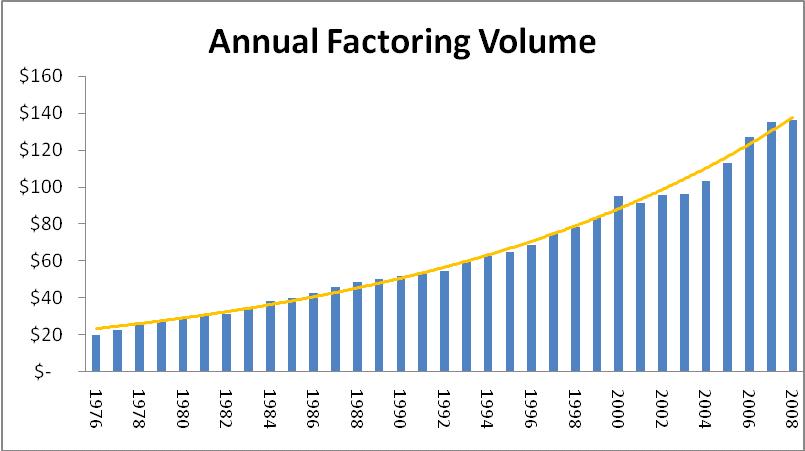
According to the Commercial Finance Association (CFA), an industry trade association for asset based lending and factoring companies, factoring volume (the dollar value of invoices purchased) in 2008 in the United States grew to $136 billion from $135.5 billion in 2007, representing a 0.5% increase. The CFA survey highlights that the growth is attributable to a number of factors including a greater acceptance of the factoring product. A primary strategy of the Company is to increase revenues and profitability by acquiring the accounts receivable portfolios and possibly the business development and management teams of other local and regional factoring firms by primarily targeting acquisition firms in the United States with revenues of generally less than $10 million. Management of our company is unable to estimate the portion of the $136 billion market which consists of companies in our targeted market for acquisition. Nevertheless, Management believes that our targeted market for acquisitions represents a small portion of the overall United States factoring volume.
Factoring sustained its 30 year pattern of growth in 2008.
Management estimates, based on examination of Dun & Bradstreet data and a market overview provided by a merger and acquisition advisory firm, that there are approximately 2,900 accounts receivable factoring and financing firms in the United States with over 2,000 firms with revenues of less than $1 million. Management believes that the fragmentation of the market among other factors, make this industry attractive for consolidation. Driving factors for consolidation include:
|
o
|
Limited growth capital for small factors.
Small factoring firms may have credit availability constraints limiting the business volume which they can factor. The financial leverage that banks typically provide a finance company is a function of the capital in the business. The opportunity to combine their businesses with Anchor’s capital and possible lower cost of funds, back office support and potentially a larger credit facility are incentives to sell their business, particularly where they would receive our capital stock in return as part or all of the transaction price.
|
|
o
|
Anchor would provide an exit strategy for owners of small factoring firms who may have much of their personal wealth tied to the business and want to retire.
A cash sale of a factoring firm would provide liquidity to the owner of a factoring firm and the opportunity to receive a price over the factoring firm’s book value.
|
OPERATIONS
Our executive officers, namely Morry F. Rubin, CEO and Brad Bernstein, President, manage our day to day operations and internal growth and oversee our growth strategy. Anchor has three account executives, a Vice President of factoring operations, and one sales person. Our sales person handles in-bound sales calls. Our Vice President of factoring operations analyzes prospective funding transactions, monitors the portfolio and oversees credit.
Brookridge has two Co-Presidents and two account executives. The Company has a controller that maintains our books and records, wires funds daily to clients and provides back office oversight.
6
Underwriting Process
We have developed and utilize standard underwriting procedures, which are controlled in a checklist format that is reviewed and approved by members of the credit committee. The credit committee is presently comprised of our executive officers, although these functions may be delegated to other responsible personnel in the future as our company expands our operations. A member or members of the credit committee approve all new accounts and conduct periodic credit reviews of the client portfolio. Underwriting criteria include the following:
|
o
|
Background and credit checks are performed on the owners.
|
|
o
|
Personal or validity guarantees are sometimes obtained from the owners.
|
|
o
|
We “Notify” all accounts that are purchased. Anchor is a notification factor, which means that we notify in writing all accounts purchased that we have purchased the account and payments are to be made to Anchor’s central lockbox. Our client’s invoices also provide Anchor’s lockbox as address for payments. We also have a notification statement on our clients’ invoices that indicate we have purchased the account and payment is to be made to Anchor.
|
|
o
|
Initially we attempt to verify most of a new customer’s accounts. Verification includes review of third-party documentation and telephone discussions with the client’s customer so that we may substantiate that invoices are valid and without dispute.
|
|
o
|
We typically evaluate the creditworthiness on accounts with more than a $2,500 balance.
|
|
o
|
Other standard diligence testing includes payroll tax payment verification, company status with state of incorporation, pre and post filing lien searches and review of prior years’ corporate tax returns. For TruckerFunds.com accounts we do not verify payroll tax payments or review prior years’ tax returns.
|
|
o
|
We require that our clients enter into a factoring and security agreement or purchase order finance agreement and file a first senior lien on purchased accounts, and on a case-by-case basis, sometimes on all of our clients’ tangible and intangible assets. For purchase order financings we also have a senior lien on inventory.
|
Credit Management
To efficiently and quickly determine the credit worthiness of an account, we utilize an instant credit checking system that we call Creditguard. Creditguard is an in-house evaluation tool that we have developed, but we do not claim any proprietary rights at this time. Creditguard utilizes a proven credit formula that combines various Dun & Bradstreet credit data elements. This formula and system provide an initial credit limit so that accounts can be approved or rejected quickly. If additional credit is necessary beyond the initial credit limit, we then independently check three vendor references and a bank reference to determine if additional credit can be extended. Collection calls are usually made in advance of their due date to secure a commitment or estimated time to receive payment.
CLIENTS
Our clients are all small businesses that typically range in size from start-up to $30 million in annual sales. We provide our factoring services to any type of business where we can verify and substantiate an accounts receivable invoice for delivery of a product or performance of a service. Examples of current factoring clients include a commercial janitorial company, transportation company, medical staffing firm, and an IT consulting company. We typically provide our purchase order finance services to companies that have non-cancelable orders from credit worthy companies. Examples of current purchase order finance clients include an importer/distributor of floor tiles and an importer of digital picture frames. We target all small businesses to educate and convert them to factoring and purchase order finance. We believe that this small business market is under served by banks and other funding institutions that view many of these companies not “bankable” because of their size, limited operating history, thin capitalization or poor / inconsistent financial performance. Our focus is funding based on the quality of our clients’ customer’s ability to pay and the validity of the accounts receivable invoice or purchase order. Anchor has credit and verification processes to assist in assuring that customers are creditworthy and invoices and purchase orders are valid. We secure our funding by placing a senior first lien on all clients’ accounts receivable, inventory for purchase order finance transactions and other tangible and intangible assets. We also often obtain personal guarantees from our clients’ owners.
SALES AND MARKETING
Our marketing strategies include, without limitation, the following:
|
●
|
Media advertising in key metropolitan markets;
|
|
|
|
Increase our internet advertising which in the past has been a successful strategy for Anchor; and
|
|
|
|
Radio - test market selective radio spot advertising on talk radio and sports oriented programming whose primary demographic are small business owners.
|
|
|
●
|
Establish cross-selling alliances with other small business providers including:
|
|
|
|
Small business accounting and tax preparation service firms; and
|
|
●
|
Commercial insurance brokers; and
|
|
●
|
Develop a referral network of business brokers, consultants and accountants and attorneys;
|
|
|
In key metropolitan areas, we plan on hiring business development officers to follow up on in-bound sales leads in person and develop additional business by networking with other small business providers including traditional bankers, accountants, lawyers and insurance brokers.
7
MANAGEMENT INFORMATION SYSTEMS
We utilize a factoring industry software program designed to effectively manage and operate a factoring company. This system currently manages multiple functions from purchasing invoices, advancing funds, recording collections and rebating clients. The system generates, on demand, numerous management reports including purchase activity, collections activity, return on capital, advances outstanding, accounts receivable trends, and credit reports which provide us with the ability to track, monitor and control the collateral (purchased accounts receivable). In addition, the software integrates with our general ledger accounting package, which enables us to meet our financial reporting requirements. Our clients can retrieve key on-line management reports and statements.
Purchase order financing transactions are managed through a spreadsheet program that has been customized with formulas to compute balances and fees earned. To our knowledge there is no purchase order finance industry software available for purchase.
Our current software platform can support our growth. Hardware redundancy, backup strategies and disaster recovery have been planned to reduce the risk of downtime.
GOVERNMENT REGULATIONS
To Management’s knowledge, factoring receivables and purchase order finance are not regulated industries, as we do not make loans. Nevertheless, if any of the transactions entered into by us are deemed to be loans or financing transactions by a court of law instead of a true purchase of accounts receivable, then various state laws and regulations would become applicable to us and could limit the fees and other charges we are able to charge our customers and may further subject us to any penalties under such state laws and regulations. These laws would also:
|
•
|
regulate credit granting activities, including establishing licensing requirements, if any, in various jurisdictions,
|
|
•
|
require disclosures to customers,
|
|
•
|
govern secured transactions,
|
|
•
|
set collection, foreclosure, repossession and claims handling procedures and other trade practices,
|
|
•
|
prohibit discrimination in the extension of credit, and
|
|
•
|
regulate the use and reporting of information related to a seller’s credit experience and other data collection.
|
This could have a material adverse effect on our business, financial condition, liquidity and results of operations. See “Risk Factors.”
COMPETITION
The factoring and financial service industry is highly fragmented and competitive. Competitive factors vary depending upon financial services products offered, customer, and geographic region. Competitive forces may limit our ability to charge our customary fees and raise fees to our customers in the future. Pressure on our margins is intensive and we cannot assure you that we will be able to successfully compete with our competitors. Our competitors, of which we are currently an insignificant competitor in our industry, include national, regional and local independent and bank owned factoring and finance companies and other full service factoring and financing organizations. Many of these competitors are larger than we are and may have access to capital at a lower cost than we do. Management estimates, based on examination of Dun & Bradstreet data and a market overview provided by a merger and acquisition advisory firm, that there are approximately 2,900 accounts receivable factoring and/or business financing firms in the United States, including us, with over 2,000 with revenues of less than $1 million. To our knowledge, no single firm dominates the small business segment of the industry.
8
EMPLOYEES
As of March 31, 2010, we have 12 full-time employees.
You should carefully consider the following risk factors, in addition to the other information presented in this Form 10-K, in evaluating us and our business. Any of the following risks, as well as other risks and uncertainties, could harm our business and financial results and cause the value of our securities to decline, which in turn could cause you to lose all or part of your investment.
Limited operating history.
Anchor Funding Services, LLC was formed in 2003 and Brookridge Funding Services, LLC, our 80% owned subsidiary was formed in 2009. Each company has only a limited operating history upon which investors may judge our performance. Future operating results will depend upon many factors, including, without limitation our ability to keep credit losses to a minimum, fluctuations in the economy, the degree and nature of competition, demand for our services, and our ability to integrate the operations of acquired businesses, to expand into new markets and to maintain margins in the face of pricing pressures. We can provide no assurances that our operations and consolidations with any companies that we acquire will result in us meeting our anticipated level of projected profitable operations, if at all.
Competition for customers in our industry is intense, and if we are not able to effectively compete, our financial results could be harmed and the price of our Shares could decline.
The factoring and financial service industry is highly competitive. There are many large full-service and specialized financing companies, as well as local and regional companies, which compete with us in the factoring and purchase order financing industry. Competition in our markets is intense. These competitive forces limit our ability to raise fees to our customers. Pressure on our margins is intense, and we cannot assure you that we will be able to successfully compete with our competitors, many of whom have substantially greater resources than we do. If we are not able to effectively compete in our targeted markets, our operating margins and other financial results will be harmed and the market price of our securities could decline.
If we are not able to maintain adequate lines of credit on commercially reasonable terms, our financial condition or results of operations could suffer.
We have the availability of a $7 million (expandable to $9 million) senior accounts receivable facility through November 2010 with an institutional asset based lender which advances funds against up to 90% of “eligible net factored accounts receivable” (minus client reserves as lender may establish in good faith) as defined in Anchor’s agreement with its institutional lender. This facility is secured by our assets, and contains certain standard covenants, representations and warranties for loans of this type. In the event that we fail to comply with the covenant(s) and the lender does not waive such non-compliance, we could be in default of our credit facility, which could subject us to penalty rates of interest and accelerate the maturity of the outstanding balances. We also have entered into a Senior Credit Agreement with MGM Funding, LLC, an affiliated entity owned by our co-chairmen of the Company and an outside investor, to provide loans directly to the operations of our Brookridge subsidiary. Loans made by this facility bear interest at the rate of 20% per annum and cannot exceed a maximum of $3.7 million dollars. The obligations to MGM are secured by the assets of Brookridge. The Credit Agreement contains standard representations, warrants and events of default for facilities of this type. Occurrences of an event of default under either one of our credit facilities allows the lender to accelerate the payment of the loans and/or terminate the commitments to lend, in addition to other legal remedies, including foreclosure on collateral. In the event we are not able to maintain adequate credit facilities for our factoring, purchase order financing and acquisition needs on commercially reasonable terms, our ability to operate our business and complete one or more acquisitions would be significantly impacted and our financial condition and results of operations could suffer. We can provide no assurances that replacement facilities will be obtained by us on terms satisfactory to us, if at all. In addition, it is currently contemplated that MGM will enter into a revolving note agreement with the Company to lend the Company up to $2,000,000 to expand our factoring business, secured by the assets of our Company. We can provide no assurances that our lending arrangements with MGM will be expanded on terms satisfactory to us, if at all.
9
We may acquire companies in the future and these acquisitions could disrupt our business or adversely affect our earnings. Further, we may complete acquisitions without first obtaining stockholder approval under applicable Delaware Law.
We intend to acquire small and/or medium local and/or regional factoring and financial service businesses. Our ability to complete acquisitions in the future may be impacted by many factors, including, without limitation, companies available for acquisition and the ability to achieve favorable terms. Entering into an acquisition entails many risks, any of which could harm our business, including, without limitation, failure to successfully integrate the acquired company with our existing business, retention of key employees, alienation or impairment of relationships with substantial customers or key employees of the acquired business or our existing business, and assumption of liabilities of the acquired business. Any acquisition that we consummate also may have an adverse affect on our liquidity or earnings and may be dilutive to our earnings. Adverse business conditions or developments suffered by or associated with any business we acquire additionally could result in impairment to the goodwill or intangible assets associated with the acquired businesses, and a related write down of the value of these assets, and adversely affect our earnings. Further, we may complete acquisitions without first obtaining stockholder approval under applicable Delaware Law.
Risks Associated with our Growth Strategy.
Our plans for growth, both internal and through acquisition of other factoring and financial service companies, are subject to numerous and substantial risks. We can provide no assurances that we will be able to expand our market presence in our current locations, successfully enter new markets, add new services and/or integrate acquired businesses into our operations. Our continued growth is dependent upon a number of factors, including the availability of working capital to support such growth, our response to existing and emerging competition, our ability to maintain sufficient profit margins while experiencing pricing pressures, our efforts to develop and maintain customer and employee relationships, and the hiring, training and retention of qualified personnel. We can provide no assurances that we will be able to identify acceptable acquisition candidates on terms favorable to us in a timely manner, if at all. A substantial portion of our capital resources is anticipated to be used primarily for these acquisitions. We expect to require additional debt or equity financing for future acquisitions, which additional financing may not be available on terms favorable to the Company, if at all. We can provide no assurances that any acquired business will be profitable.
We will seek to make acquisitions that may prove unsuccessful or strain or divert our resources.
We intend seek to expand our business through the acquisition of competitors’ factoring and service businesses and assets. We may not be able to complete any acquisitions on favorable terms, if at all. Acquisitions present risks that could materially and adversely affect our business and financial performance, including:
|
·
the diversion of our management's attention from our everyday business activities;
|
|
|
·
the contingent and latent risks associated with the past operations of, and other unanticipated problems arising in, the acquired business; and
|
|
·
the need to expand management, administration, and operational systems.
|
If we make, or plan to make, such acquisitions we cannot predict whether:
|
·
we will be able to successfully integrate the operations and personnel of any new businesses into our business;
|
|
|
·
we will realize any anticipated benefits of completed acquisitions;
|
|
·
there will be substantial unanticipated costs associated with acquisitions, including potential costs associated with liabilities undiscovered at the time of acquisition; or
|
|
|
·
stockholder approval of an acquisition will be sought.
|
In addition, future acquisitions by us may result in:
|
·
potentially dilutive issuances of our equity shares;
|
|
|
·
the incurrence of additional debt;
|
|
·
restructuring charges; and
|
|
|
·
the recognition of significant charges for depreciation and amortization related to intangible assets.
|
Risks Related to Our Financing Activities.
In our history, we have not experienced material credit losses. If we were to experience material losses on our accounts receivable and purchase order portfolio, they would have a material adverse effect on (i) our ability to fund our business and, (ii) to the extent the losses exceed our provision for credit losses, our revenues, net income and assets.
10
We purchase accounts receivable primarily from and make purchase order advances to privately owned small companies, which present a greater risk of loss than purchasing accounts receivable from and purchase order advances to larger companies.
Our portfolio consists primarily of accounts receivable and purchase order advances from small, privately owned businesses with annual revenues ranging from start-up to $30 million. Compared to larger, publicly owned firms, these companies generally have more limited access to capital and higher funding costs, may be in a weaker financial position and may need more capital to expand or compete. These financial challenges may make it difficult for our clients to continue as a going concern. Accordingly, advances made to these types of clients entail higher risks than advances made to companies who are able to access traditional credit sources. In part because of their smaller size, our clients may:
|
•
|
experience significant variations in operating results;
|
|
•
|
have narrower product lines and market shares than their larger competitors;
|
|
•
|
be particularly vulnerable to changes in customer preferences and market conditions;
|
|
•
|
be more dependent than larger companies on one or more major customers, the loss of which could materially impair their business, financial condition and prospects;
|
|
•
|
face intense competition, including from companies with greater financial, technical, managerial and marketing resources;
|
|
•
|
depend on the management talents and efforts of a single individual or a small group of persons for their success, the death, disability or resignation of whom could materially harm the client’s financial condition or prospects;
|
|
•
|
have less skilled or experienced management personnel than larger companies; or
|
|
•
|
do business in regulated industries, such as the healthcare industry, and could be adversely affected by policy or regulatory changes.
|
Accordingly, any of these factors could impair a client’s cash flow or result in other events, such as bankruptcy, which could limit our ability to collect on this client’s purchased accounts receivable or purchase order advances, and may lead to losses in our portfolio and a decrease in our revenues, net income and assets.
We may be adversely affected by deteriorating economic or business conditions.
Our business, financial condition and results of operations may be adversely affected by various economic factors, including the level of economic activity in the markets in which we operate. Delinquencies and credit losses generally increase during economic slowdowns or recessions. Because we fund primarily small businesses, many of our clients may be particularly susceptible to economic slowdowns or recessions and could impair a client’s cash flow or result in other events, such as bankruptcy, which could limit our ability to collect on this client’s purchased accounts receivable and purchase order advances, and may lead to losses in our portfolio and a decrease in our revenues, net income and assets. Unfavorable economic conditions may also make it more difficult for us to maintain both our new business origination volume and the credit quality of new business at levels previously attained. Unfavorable economic conditions also could increase our funding costs, limit our access to the capital markets or result in a decision by lenders not to extend credit to us. These events could significantly harm our operating results.
Our limited operating history makes it difficult for us to accurately judge the credit performance of our portfolio and, as a result, increases the risk that our allowance for credit losses may prove inadequate.
Our business depends on the creditworthiness of our clients’ customers and our clients. While we conduct due diligence and a review of the creditworthiness of most of our clients’ customers and all of our clients, this review requires the application of significant judgment by our management. Our judgment may not be correct. We maintain an allowance for credit losses on our consolidated financial statements in an amount that reflects our judgment concerning the potential for losses inherent in our portfolio. Management periodically reviews the appropriateness of our allowance considering economic conditions and trends, collateral values and credit quality indicators. We cannot assure you that our estimates and judgment with respect to the appropriateness of our allowance for credit losses are accurate. Our allowance may not be adequate to cover credit losses in our portfolio as a result of unanticipated adverse changes in the economy or events adversely affecting specific clients, industries or markets. If our allowance for credit losses is not adequate, our net income will suffer, and our financial performance and condition could be significantly impaired.
We may not have all of the material information relating to a potential client at the time that we make a credit decision with respect to that potential client or at the time we advance funds to the client. As a result, we may suffer credit losses or make advances that we would not have made if we had all of the material information.
There is generally no publicly available information about the privately owned companies to which we generally purchase accounts receivable from. Therefore, we must rely on our clients and the due diligence efforts of our employees to obtain the information that we consider when making our credit decisions. To some extent, our employees depend and rely upon the management of these companies to provide full and accurate disclosure of material information concerning their business, financial condition and prospects. If we do not have access to all of the material information about a particular client’s business, financial condition and prospects, or if a client’s accounting records are poorly maintained or organized, we may not make a fully informed credit decision which may lead, ultimately, to a failure or inability to collect our purchased accounts receivable and purchase order advances in their entirety.
11
We may make errors in evaluating accurate information reported by our clients and, as a result, we may suffer credit losses.
We underwrite our clients and clients’ customers based on certain financial information. Even if clients provide us with full and accurate disclosure of all material information concerning their businesses, we may misinterpret or incorrectly analyze this information. Mistakes by our staff and credit committee may cause us to make purchase order advances and purchase accounts receivable that we otherwise would not have purchased, to fund advances that we otherwise would not have funded or result in credit losses.
A client’s fraud could cause us to suffer material losses.
A client could defraud us by, among other things:
|
·
|
directing the proceeds of collections of its accounts receivable to bank accounts other than our established lockboxes;
|
|
·
|
failing to accurately record accounts receivable aging;
|
|
·
|
overstating or falsifying records showing accounts receivable or inventory;
|
|
·
|
providing inaccurate reporting of other financial information;
|
|
·
|
falsifying purchase orders to suppliers and from customers or;
|
|
·
|
stealing inventory that we have purchased.
|
|
|
|
As of December 31, 2009, clients that represent 5% or more of our accounts receivable and purchase order portfolio include a metal processor in New York that accounts for 7.82%, a food service client in Missouri that accounts for 6.58%, a trucking company located in Virginia which accounts for 6.25% and a tile distributor in Texas that accounts for 6.2%.
A client’s fraud could cause us to suffer material losses.
We may be unable to recognize or act upon an operational or financial problem with a client in a timely fashion so as to prevent a credit loss of purchased accounts receivable from that client or purchase order advances to that client.
Our clients may experience operational or financial problems that, if not timely addressed by us, could result in a substantial impairment or loss of the value of our purchased accounts receivable or collateral underlying our purchase order advances. We may fail to identify problems because our client did not report them in a timely manner or, even if the client did report the problem, we may fail to address it quickly enough or at all. As a result, we could suffer credit losses, which could have a material adverse effect on our revenues, net income and results of operations.
The security interest that we have in our clients’ assets may not be sufficient to protect us from a partial or complete loss if we are required to foreclose.
While we are secured by a lien on specified collateral of the client, there is no assurance that the collateral will protect us from suffering a partial or complete loss if we move to foreclose on the collateral. The collateral is primarily the purchased accounts receivable for factoring transactions and inventory for purchase order transactions. Factors that could reduce the value of the collateral that we have a security interest in include among other things:
|
•
|
problems with the client’s underlying product or services which result in greater than anticipated returns or disputed accounts;
|
|
|
•
|
unrecorded liabilities such as rebates, warranties or offsets;
|
|
•
|
the disruption or bankruptcy of key customers who are responsible for material amounts of the accounts receivable; and
|
|
|
• the client misrepresents, or does not keep adequate records of, important information concerning the accounts receivable.
|
||
Any one or more of the preceding factors could materially impair our ability to collect purchase order advances and all of the accounts receivable we may purchase from a client.
Errors by or dishonesty of our employees could result in credit losses.
We rely heavily on the performance and integrity of our employees in making our initial credit decision with respect to our clients and on-going credit decisions on our clients’ customers. Because there is generally little or no publicly available information about our clients or clients’ customers, we cannot independently confirm or verify the information our employees provide us for use in making our credit and funding decisions. Errors by our employees in assembling, analyzing or recording information concerning our clients and clients’ customers could cause us to fund clients and purchase accounts receivable that we would not otherwise fund or purchase. This could result in losses. Losses could also arise if any of our employees were dishonest. A dishonest employee could collude with our clients to misrepresent the creditworthiness of a prospective client or client customers or to provide inaccurate reports or invoices. If, based on an employee’s dishonesty, we may have funded a client and purchased accounts that were not creditworthy, which could result in our suffering credit losses.
12
We may incur lender liability as a result of our funding activities.
In recent years, a number of judicial decisions have upheld the right of borrowers to sue lending institutions on the basis of various evolving legal theories, collectively termed “lender liability.” Generally, lender liability is founded on the premise that a lender has either violated a duty, whether implied or contractual, of good faith and fair dealing owed to the borrower or has assumed a degree of control over the borrower resulting in the creation of a fiduciary duty owed to the borrower or its other creditors or shareholders. We may be subject to allegations of lender liability if it were determined that our advances were in fact loans and the relationship between Anchor and a client was that of lender and borrower rather than purchaser and seller. We cannot assure you that these claims will not arise or that we will not be subject to significant liability if a claim of this type did arise.
We may incur liability under state usury laws or other state laws and regulations if any of our funding arrangements are deemed to be loans or financing transactions instead of a true purchase of accounts receivable.
Various state laws and regulations limit the interest rates, fees and other charges lenders are allowed to charge their borrowers. If any of the factoring transactions entered into by us are deemed to be loans or financing transactions instead of a true purchase of accounts receivable, such laws and regulations may become applicable to us and could limit the interest rates, fees and other charges we are able to charge our customers and may further subject us to any penalties under such state laws and regulations. This could have a material adverse effect on our business, financial condition, liquidity and results of operations.
We are in a highly competitive business and may not be able to take advantage of attractive funding opportunities.
The factoring and purchase order finance industries are highly competitive. We have competitors who offer the same types of services to small privately owned businesses that are our target clients. Our competitors include a variety of:
|
•
|
specialty and commercial finance companies; and
|
|
|
•
|
national and regional banks that have factoring and purchase order divisions or subsidiaries.
|
Some of our competitors have greater financial, technical, marketing and other resources than we do. They also have greater access to capital than we do and at a lower cost than is available to us. Furthermore, we would expect to face increased price competition if other factors seek to expand within or enter our target markets. Increased competition could cause us to reduce our pricing and advance greater amounts as a percentage of a client’s eligible accounts receivable. Even with these changes, in an increasingly competitive market, we may not be able to attract and retain new clients. If we cannot engage new clients, our net income could suffer, and our financial performance and condition could be significantly impaired.
Our information and computer processing systems are critical to the operations of our business and any failure could cause significant problems.
Our information technology systems, located at our Charlotte, North Carolina headquarters, are essential for data exchange and operational communications to service our clients. Any interruption, impairment or loss of data integrity or malfunction of these systems could severely hamper our business and could require that we commit significant additional capital and management resources to rectify the problem.
The loss of any of our key personnel could harm our business.
Our future financial performance will depend to a significant extent on our ability to motivate and retain key management personnel. Competition for qualified management personnel is intense and in the event we experience turnover in our senior management positions, we cannot assure you that we will be able to recruit suitable replacements. We must also successfully integrate all new management and other key positions within our organization to achieve our operating objectives. Even if we are successful, turnover in key management positions may temporarily harm our financial performance and results of operations until new management becomes familiar with our business. At present, we do not maintain key-man life insurance on any of our executive officers, although we entered into employment contracts with each of Morry F. Rubin, Chief Executive Officer, and Brad Bernstein, President. Our Board of Directors is responsible for approval of all future employment contracts with our executive officers. We can provide no assurances that said future employment contracts and/or their current compensation is or will be on commercially reasonable terms to us in order to retain our key personnel. The loss of any of our key personnel could harm our business.
Lack of Committees.
Currently we have no audit, compensation, nominating or other committees of the board. In the future, we may establish committees at such time as the board deems it to be in the best interest of our stockholders. We can provide no assurances that our lack of committees will not continue in future operating periods. Since we have no audit committee composed solely of independent directors, as required by the Sarbanes-Oxley Act of 2002, as amended, our board of directors has all the responsibilities of the audit committee.
13
Risks associated with intangible assets.
A substantial portion of our future assets may consist of intangible assets including goodwill (excess of cost over fair value of net assets acquired and other intangible assets) relating to the potential acquisition of businesses. In the event of any sale or liquidation of us, there can be no assurance that the value of such intangible assets will be realized. In addition, any significant decrease in the value of such intangible assets could have a material adverse effect on us.
We are continually subject to the risk of new regulation, which could harm our business and/or operating results.
In recent years, a number of bills have been introduced in Congress and/or various state legislatures that would add new regulations governing the financial services industry. The enactment of any such new laws or regulations may negatively impact our business, financial condition and/or our financial results.
Control of the Company.
Our executive officers, directors and principal stockholders beneficially own more than 50% of the voting control of our capital stock. As a result, such persons, in the event that they act in concert, will have the ability to affect the election of all of our directors and the outcome of all issues submitted to our stockholders. Such concentration of ownership could limit the price that certain investors might be willing to pay in the future for shares of Common Stock, and could have the effect of making it more difficult for a third party to acquire, or of discouraging a third party from attempting to acquire, control of us. See “Item 12.”
Risks associated with the development of the Company’s management information and internal control systems.
Our data processing, accounting and analysis capabilities are important components of our business. As we make acquisitions, we will convert certain systems of the acquired companies to our systems. These conversions and the continued development and installation of such systems involve the risk of unanticipated complications and expenses. We can provide no assurances that we will be successful in this regard.
We have no established public market for our Securities.
Our outstanding Common Stock and Series 1 Convertible Preferred Stock (collectively the “Securities”) do not have an established trading market in the Over-the-Counter Market or on the OTC Bulletin Board, although our Common Stock has been quoted on the OTC Bulletin Board under the symbol “AFNG.” Trading in our Common Stock has been sporadic since it began in December 2007. The availability for sale of restricted securities pursuant to Rule 144 or otherwise could adversely affect the market for our Common Stock, if any. We can provide no assurances that an established public market will ever develop or be sustained for our common stock in the future. Further, we do not anticipate a public market will ever develop for our Series 1 Convertible Preferred Stock.
The price of our Common Stock may fluctuate significantly.
The market price for our Common Stock, if any, can fluctuate as a result of a variety of factors, including the factors listed above, many of which are beyond our control. These factors include: actual or anticipated variations in quarterly operating results; announcements of new services by our competitors or us; announcements relating to strategic relationships or acquisitions; changes in financial estimates or other statements by securities analysts; and other changes in general economic conditions. Because of this, we may fail to meet or exceed the expectations of our shareholders or others, and the market price for our Common Stock could fluctuate as a result.
Our Common Stock is considered to be a “penny stock” and, as such, the market for our Common Stock, should one develop, may be further limited by certain Commission rules applicable to penny stocks.
To the extent the price of our Common Stock remains below $5.00 per share or we have a net tangible assets of $2,000,000 or less, our common shares will be subject to certain “penny stock” rules promulgated by the Securities and Exchange Commission. Those rules impose certain sales practice requirements on brokers who sell penny stock to persons other than established customers and accredited investors (generally institutions with assets in excess of $5,000,000 or individuals with net worth in excess of $1,000,000). For transactions covered by the penny stock rules, the broker must make a special suitability determination for the purchaser and receive the purchaser’s written consent to the transaction prior to the sale. Furthermore, the penny stock rules generally require, among other things, that brokers engaged in secondary trading of penny stocks provide customers with written disclosure documents, monthly statements of the market value of penny stocks, disclosure of the bid and asked prices and disclosure of the compensation to the brokerage firm and disclosure of the sales person working for the brokerage firm. These rules and regulations adversely affect the ability of brokers to sell our common shares in the public market should one develop and they limit the liquidity of our Shares.
14
An investment in the Company is subject to dilution.
We may require substantial additional financing in order to achieve our business objectives. The Company may generate such financing through the sale of securities (including potentially to the owners of businesses we acquire) that would dilute the ownership of its existing security holders. In subsequent rounds of financing, the Company will likely issue securities that will have rights, preferences or privileges senior to our outstanding securities and that will include financial and other covenants that will restrict the Company’s flexibility.
We have never declared or paid cash dividends on our common stock and we do not anticipate paying any cash dividends on our common stock in the foreseeable future.
We have never declared or paid cash dividends on our common stock and we do not anticipate paying any cash dividends on our common stock in the foreseeable future. We currently intend to retain future earnings, if any, to fund the development and growth of our business. Except for the rights of holders of the shares of Series 1 Convertible Preferred Stock as described herein, any future determination to pay dividends will be dependent upon our financial condition, operating results, capital requirements, applicable contractual restrictions and other such factors as our Board of Directors may deem relevant.
THE FOREGOING RISK FACTORS DO NOT PURPORT TO BE A COMPLETE EXPLANATION OF THE RISKS INHERENT IN AN INVESTMENT IN THE COMPANY.
The Company has lease agreements for office space in Charlotte, NC, Boca Raton, FL and Danbury, CT. All lease agreements are with unrelated parties.
The Charlotte lease is effective on August 15, 2007, is for a twenty-four month term and includes an option to renew for an additional three year term at substantially the same terms. On November 1, 2007, the Company entered into a lease for additional space adjoining its Charlotte office. Both leases expire May 31, 2010 and the company plans to renew for two more years. The monthly rent for the combined space is approximately $2,340.
The Boca Raton lease was effective on August 20, 2007 and is for a sixty-one month term. The monthly rental was approximately $8,300. Pursuant to an agreement dated as of October 16, 2009, Anchor entered into an agreement to terminate its lease covering premises currently known as 800 Yamato Road, Suite 102, Boca Raton, FL 33431. The lease agreement which was entered into on April 16, 2007 and would have expired on May 31, 2012 terminated on October 31, 2009 and Anchor vacated the premises. Anchor bought out the lease at a total cost of $100,000 in order to reduce net leasing costs of an estimated $8,300 per month or $100,000 per annum.
Beginning November 1, 2009, the company entered into a 24 month lease for office space in Boca Raton, FL. The monthly rental is approximately $1,313.
In connection with Brookridge’s acquisition of a purchase order finance company, Brookridge assumed the seller’s lease for office space in Danbury, CT. The lease is for a monthly rental of $3,585 and expires on September 30, 2014.
We are not a party to any pending legal proceedings. Our property is not the subject of any pending legal proceedings. To our knowledge, no governmental authority is contemplating commencing a legal proceeding in which we would be named as a party.
15
Our common stock is quoted on the OTC Electronic Bulletin Board under the symbol “AFNG.” The following table sets forth the range of high and low closing sale prices of our Common Stock for our last two fiscal periods.
|
Quarters Ended
|
High
|
Low | ||||||
|
March 31, 2008
|
$ | 1.15 | $ | 1.15 | ||||
|
June 30, 2008
|
$ | 1.15 | $ | 1.05 | ||||
|
September 30, 2008
|
$ | 1.05 | $ | 1.05 | ||||
|
December 31, 2008
|
$ | 1.05 | $ | 0.60 | ||||
|
March 31, 2009
|
$ | 0.90 | $ | 0.10 | ||||
|
June 30, 2009
|
$ | 1.25 | $ | 0.60 | ||||
|
September 30, 2009
|
$ | 1.25 | $ | 0.15 | ||||
|
December 31, 2009
|
$ | 1.05 | $ | 0.30 | ||||
All quotations reflect inter-dealer prices, without retail mark-up, markdown or commissions, and may not necessarily represent actual transactions.
As of April 12, 2010, there were 18,524,889 shares of Common Stock issued and outstanding. As of April 12,, 2010, there were (i) outstanding options to purchase 2,691,500 shares of our Common Stock, (ii) outstanding Placement Agent Warrants to purchase 1,342,500 shares of our Common Stock, and (iii) outstanding 389,283 shares of our Series 1 Preferred Stock which are convertible into 1,946,415 shares of our Common Stock.
In January 2007, we had an initial float of 525,555 shares which were issued as free trading shares by the Bankruptcy Court under Section 1145(a)(1) of the Bankruptcy Code. Since then, our remaining outstanding equity securities have become eligible for sale pursuant to the requirements of Rule 144 of the Securities Act of 1933, as amended. In this respect, shares of our common stock beneficially owned by a person for at least six months (as defined in Rule 144) are eligible for resale under Rule 144 subject to the availability of current public information about us and, in the case of affiliated persons, subject to certain additional volume limitations, manner of sale provisions and notice provisions. Pursuant to Rule 144(b)(1) of the Securities Act, our non-affiliates (who have been non-affiliates for at least three months) may sell their common stock that they have held for one year (as defined in Rule 144) without compliance with the availability of current information.
Holders of Record
As of April 12 2010, there were 580 holders of record of shares of Common Stock and 68 holders of record of our Series 1 Preferred Stock. The Company's Transfer Agent is Continental Stock Transfer & Trust Company, 17 Battery Place, New York, NY 10004.
Dividend Policy
The holders of our Series 1 Preferred Stock are entitled to receive dividends as more fully described below. We have not paid or declared any cash dividends on our Common Stock. We currently intend to retain any earnings for future growth and, therefore, do not expect to pay cash dividends on our Common Stock in the foreseeable future.
Cumulative annual dividends are payable in shares of Series 1 Preferred Stock or, in certain instances in cash, at an annual rate of 8% ($.40 per share of Series 1 Preferred Stock), on December 31 of each year commencing December 31, 2007. Dividends payable on outstanding Shares of Series 1 Preferred Stock shall begin to accrue on the date of each closing and shall cease to accrue and accumulate on the earlier of December 31, 2009 or the applicable Conversion Date (the “Final Dividend Payment Date”). Thereafter, the holders of Series 1 Preferred Stock shall have the same dividend rights as holders of Common Stock of the Company, as if the Series 1 Preferred Stock has been fully converted into Common Stock. The dividend payable on December 31, 2007, December 31, 2008 and December 31, 2009 was declared and paid through the issuance of additional shares of Series 1 Preferred Stock.
16
Recent Sales of Unregistered Securities
For the year ended December 31, 2009 there were no sales of unregistered securities, except as follows:
|
Date of Sale
|
|
Title of Security
|
|
Number
Sold
|
|
Consideration
Received,
Commissions
|
|
Purchasers
|
|
Exemption from
Registration
Claimed
|
|
|
March 2009
and
December 2009
|
Common Stock
Options (1)
|
356,500
|
Securities granted under Equity Compensation Plan;
no cash received;
no commissions paid
|
Employees, Directors and/or
Officers
|
Section 4(2) of the Securities Act of 1933 and/or Rule 506 promulgated
thereunder
|
||||||
|
March 2009
and
December
2009
|
Common Stock
Options (2)
|
805,000
|
Securities granted outside Equity Compensation Plan;
no cash received;
no commissions paid
|
Employees, Directors and/or
Officers
|
Section 4(2) of the Securities Act of 1933 and/or Rule 506 promulgated
thereunder
|
||||||
|
December 2009
|
Common Stock and Warrants
|
500,002 shares; 2,000,016 Warrants (1)
|
$500,002 received;
no commissions paid
|
Accredited Investors
|
Section 4(2) of the Securities Act of 1933 and/or Rule 506 promulgated
thereunder
|
(1) Warrants and options are for a period of ten years exercisable at $1.00 per share.
(2) Options are for a period of ten years exercisable at between $.62 per share and $1.00 per share.
Recent Purchases of Securities
During the year ended December 31, 2009, the Company had no repurchases of its Common Stock.
Not applicable.
The following discussion should be read in conjunction with our consolidated financial statements and the notes thereto appearing elsewhere in this Form 10-K. All statements contained herein that are not historical facts, including, but not limited to, statements regarding anticipated future capital requirements, our future plan of operations, our ability to obtain debt, equity or other financing, and our ability to generate cash from operations, are based on current expectations. These statements are forward-looking in nature and involve a number of risks and uncertainties that may cause the Company’s actual results in future periods to differ materially from forecasted results.
Forward-Looking Statements
The Private Securities Litigation Reform Act of 1995 (the Act) provides a safe harbor for forward-looking statements made by or on behalf of our Company. Our Company and its representatives may from time to time make written or verbal forward-looking statements, including statements contained in this report and other Company filings with the Securities and Exchange Commission and in our reports to stockholders. Statements that relate to other than strictly historical facts, such as statements about the Company's plans and strategies and expectations for future financial performance are forward-looking statements within the meaning of the Act. Generally, the words “believe,” “expect,” “intend,” “estimate,” “anticipate,” “will” and other similar expressions identify forward-looking statements. The forward-looking statements are and will be based on management's then current views and assumptions regarding future events and operating performance, and speak only as of their dates. The Company undertakes no obligation to publicly update or revise any forward-looking statements, whether as a result of new information, future events or otherwise. See “Risk Factors” for a discussion of events and circumstances that could affect our financial performance or cause actual results to differ materially from estimates contained in or underlying our forward-looking statements.
Executive Overview
Our business objective is to create a well-recognized, national financial services firm for small businesses providing accounts receivable funding (factoring), outsourcing of accounts receivable management including collections and the risk of customer default and other specialty finance products including, but not limited to purchase order funding and government contract funding. For certain service businesses, Anchor also provides back office support including payroll, payroll tax compliance and invoice processing services. We provide our services to clients nationwide and may expand our services internationally in the future. We plan to achieve our growth objectives as described below through a combination of strategic and add-on acquisitions of other factoring and related specialty finance firms that serve small businesses in the United States and Canada and internal growth through mass media marketing initiatives. Our principal operations for Anchor are located in Charlotte, North Carolina. Brookridge’s operations are in Danbury, CT and we maintain an executive office in Boca Raton, Florida which includes the Company’s sales and marketing functions.
17
Client Accounts
As of December 31, 2009, clients that represent 5% or more of our accounts receivable and purchase order portfolio include a metal processor in New York that accounts for 7.82%, a food service client in Missouri that accounts for 6.58%, a trucking company located in Virginia which accounts for 6.25% and a tile distributor in Texas that accounts for 6.2%.
Results of Operations
Year Ended December 31, 2009 Compared to Year Ended December 31, 2008
Finance revenues increased to $1,699,221 for the year ended December 31, 2009 compared to $1,252,476 for the year ended December 31, 2008, a 35.7% increase. The change in revenue was primarily due to an increase in the number of clients. As of December 31, 2009, the Company had 126 active clients compared to 102 clients as of December 31, 2008.
The Company had net interest expense of $111,195 for the year ended December 31, 2009 compared to net interest income of $30,431 for the year ended December 31, 2008. This change is primarily the result of the decrease in cash in interest bearing accounts due to the Company’s using its cash to fund its purchasing of clients’ accounts receivable.
The Company had a provision for credit losses of $252,139 for the year ended December 31, 2009 compared to $63,797 for the year ended December 31, 2008. This increase is primarily the result of approximately a $215,000 loss on one account. For the last three fiscal years ending December 31, 2009, the company has purchased approximately $107 million of accounts receivable and incurred approximately $350,000 of credit losses or .33% of invoices purchased.
Operating expenses for the year ended December 31, 2009 were $3,223,684 compared to $2,486,719 for the year ended December 31, 2008, a 28.4% increase. This increase is primarily attributable to the Company’s incurring approximately $500,000 of additional costs associated with the Brookridge acquisition, the refinancing of its credit facility and terminating its Boca Raton lease.
Net loss for the year ended December 31, 2009 was $(1,888,948) compared to $(1,267,608) for the year ended December 31, 2008.
The following table compares the operating results for the years ended December 31, 2009 and 2008:
|
Year Ended December 31,
|
||||||||||||||||
|
2009
|
2008
|
$ Change
|
% Change
|
|||||||||||||
|
Finance revenues
|
$ | 1,699,221 | $ | 1,252,476 | $ | 446,745 | 35.7 | |||||||||
|
Interest income (expense), net
|
(111,195 | ) | 30,432 | (141,627 | ) | (465.4 | ) | |||||||||
|
Net finance revenues
|
1,588,026 | 1,282,908 | 305,118 | 23.8 | ||||||||||||
|
Provision for credit losses
|
(252,139 | ) | (63,797 | ) | (188,342 | ) | 295.2 | |||||||||
|
Finance revenues, net of interest expense and credit losses
|
1,335,887 | 1,219,111 | 116,776 | 9.6 | ||||||||||||
|
Operating expenses
|
3,223,684 | 2,486,719 | 736,965 | 28.4 | ||||||||||||
|
Net loss before income taxes
|
(1,887,797 | ) | (1,267,608 | ) | (620,189 | ) | 46.6 | |||||||||
|
Income tax (provision) benefit
|
- | - | - | - | ||||||||||||
|
Net loss
|
(1,887,797 | ) | (1,267,608 | ) | (620,189 | ) | 46.6 | |||||||||
|
Less: Noncontrolling interest share
|
1,151 | - | 1,151 | - | ||||||||||||
|
Controlling interest share
|
$ | (1,888,948 | ) | $ | (1,267,608 | ) | $ | (621,340 | ) | 46.7 | ||||||
18
Key changes in certain selling, general and administrative expenses:
|
Year Ended December 31,
|
|||||||||||||
|
2009
|
2008
|
$ Change
|
Explanation
|
||||||||||
|
Legal fees
|
$ | 279,651 | $ | 87,884 | $ | 191,767 |
This increase is primarily attributable to the Brookridge acquisition and the refinancing of the Company's credit facility
|
||||||
|
Consulting fees
|
104,592 | - | 104,592 |
Finders fee related to Brookridge acquisition
|
|||||||||
|
Credit facility
fees
|
100,585 | - | 100,585 |
Expenses associated with termination of credit facility
|
|||||||||
|
Rent
|
226,092 | 138,583 | 87,509 |
Represents the early termination fee for Boca Raton lease
|
|||||||||
| $ | 710,920 | $ | 226,467 | $ | 484,453 | ||||||||
Client Accounts
As of December 31, 2009, we have four clients that account for an aggregate of approximately 26.9% of our accounts receivable portfolio and approximately 11.9% of our revenues for the year ended December 31, 2009. The transactions and balances with these clients as of and for the year ended December 31, 2009 are summarized below:
|
Percentage of Accounts Receivable
|
Percentage of Revenues For
|
|
|
Portfolio As of
|
The Twelve Months Ended
|
|
|
Entity
|
December 31, 2009
|
December 31, 2009
|
|
Metal Processor in New York
|
7.8%
|
0.6%
|
|
Food Service Company in Missouri
|
6.6%
|
1.3%
|
|
Transportation Company in Virginia
|
6.3%
|
8.8%
|
|
Tile Distributor in Texas
|
6.2%
|
1.2%
|
A client’s fraud could cause us to suffer material losses.
Liquidity and Capital Resources
Cash Flow Summary
Cash Flows from Operating Activities
Net cash used in operating activities was $3,793,347 for the year ended December 31, 2009 and was primarily due to our net loss for the year and cash used by operating assets, primarily to purchase accounts receivable. The net loss was $1,888,948 for the year ended December 31, 2009. Cash used by operating assets and liabilities was primarily due to an increase of $2,735,137 in retained interest in accounts receivable. Increases and decreases in prepaid expenses, accounts payable, accrued payroll and accrued expenses were primarily the result of timing of payments and receipts.
Net cash used in operating activities was $4,258,017 for the year ended December 31, 2008 and was primarily due to our net loss for the year and cash used by operating assets, primarily to purchase accounts receivable. The net loss was $1,267,608 for the year ended December 31, 2008. Cash used by operating assets and liabilities was primarily due to an increase of $2,853,247 in retained interest in accounts receivable. Increases and decreases in prepaid expenses, accounts payable, accrued payroll and accrued expenses were primarily the result of timing of payments and receipts.
Cash Flows from Investing Activities
For the year ended December 31, 2009, net cash used in investing activities was $25,650 for the purchase of property and equipment.
For the year ended December 31, 2008, net cash used in investing activities was $27,147 for the purchase of property and equipment.
19
Cash Flows from Financing Activities
Net cash provided by financing activities was $3,909,379 for the year ended December 31, 2009. This was the result of $3,109,377 of proceeds from the Company’s senior accounts receivable facility, cash paid for common stock of $500,002 and capital contributed of $300,000 by the noncontrolling interest in Brookridge.
Net cash provided by financing activities was $1,187,224 for the year ended December 31, 2008. This was the result of $1,187,224 of proceeds from the Company’s senior credit facility.
Capital Resources
We have the availability of a $7 million (expandable to $9 million) senior accounts receivable facility through November 2010 with an institutional asset based lender which advances funds against up to 90% of “eligible net factored accounts receivable” (minus client reserves as lender may establish in good faith) as defined in Anchor’s agreement with its institutional lender. This facility is secured by our assets, and contains certain standard covenants, representations and warranties for loans of this type. In the event that we fail to comply with the covenant(s) and the lender does not waive such non-compliance, we could be in default of our credit facility, which could subject us to penalty rates of interest and accelerate the maturity of the outstanding balances. We also have entered into a Senior Credit Agreement with MGM Funding, LLC, an affiliated entity owned by our co-chairmen of the Company and an outside investor, to provide loans directly to the operations of our Brookridge subsidiary. Loans made by this facility bear interest at the rate of 20% per annum and cannot exceed a maximum of $3.7 million dollars. The obligations to MGM are secured by the assets of Brookridge. The Credit Agreement contains standard representations, warrants and events of default for facilities of this type. Occurrences of an event of default under either one of our credit facilities allows the lender to accelerate the payment of the loans and/or terminate the commitments to lend, in addition to other legal remedies, including foreclosure on collateral. In the event we are not able to maintain adequate credit facilities for our factoring, purchase order financing and acquisition needs on commercially reasonable terms, our ability to operate our business and complete one or more acquisitions would be significantly impacted and our financial condition and results of operations could suffer. We can provide no assurances that replacement facilities will be obtained by us on terms satisfactory to us, if at all. In addition, it is currently contemplated that MGM will enter into a revolving note agreement with the Company to lend the Company up to $2,000,000 to expand our factoring business, secured by the assets of our Company. We can provide no assurances that our lending arrangements with MGM will be expanded on terms satisfactory to us, if at all.
Based on our current cash position and our Credit Facilities, we believe can meet our cash needs for the next 12 to 15 months and support our anticipated organic growth. In the event we acquire another company, we may need additional equity or subordinated debt financing and/or a new credit facility to complete the transaction and our daily cash needs and liquidity could change based on the needs of the combined companies. At that time, in the event we are not able to obtain adequate new facilities and/or financing to complete the acquisition (if needed) and to operate the combined companies financing needs on commercially reasonable terms, our ability to operate and expand our business would be significantly impacted and our financial condition and results of operations could suffer.
Summary of Critical Accounting Policies and Estimates
Principles of Consolidation -
The accompanying consolidated financial statements include the accounts of Anchor Funding Services, Inc., its 100%- owned subsidiary, Anchor Funding Services, LLC and its 80%-owned subsidiary Brookridge Funding Services, LLC. The consolidated financial statements for the year ended December 31, 2009 include the combination of 80% of results of Brookridge Funding Services, LLC from December 7, 2009 (date of acquisition) through December 31, 2009.
|
|
Estimates –
The preparation of consolidated financial statements in conformity with accounting principles generally accepted in the United States of America requires management to make estimates that affect the reported amounts of assets and liabilities and disclosure of contingent assets and liabilities at the date of the consolidated financial statements and the reported amounts of revenues and expenses during the reporting period. Actual results could differ from those estimates.
|
20
|
|
Revenue Recognition –
The Company charges fees to its customers in one of two ways as follows:
|
|
1)
|
Fixed Transaction Fee.
Fixed transaction fees are a fixed percentage of the purchased invoice and purchase order advance. This percentage does not change from the date the purchased invoice is funded until the date the purchased invoice is collected.
|
|
2)
|
Variable Transaction Fee.
Variable transaction fees are variable based on the length of time the purchased invoice and purchase order advance is outstanding. As specified in its contract with the client, the Company charges variable increasing percentages of the purchased invoice or purchase order advance as time elapses from the purchase date to the collection date.
|
|
|
For both Fixed and Variable Transaction fees, the Company recognizes revenue by using one of two methods depending on the type of customer. For new customers the Company recognizes revenue using the cost recovery method. For established customers the Company recognizes revenue using the accrual method.
|
|
|
Under the cost recovery method, all revenue is recognized upon collection of the entire amount of purchased accounts receivable.
|
|
|
The Company considers new customers to be accounts whose initial funding has been within the last three months or less. Management believes it needs three months of history to reasonably estimate a customer’s collection period and accrued revenues. If three months of history has a limited number of transactions, the cost recovery method will continue to be used until a reasonable revenue estimate can be made based on additional history. Once the Company obtains sufficient historical experience, it will begin using the accrual method to recognize revenue.
|
|
|
For established customers the Company uses the accrual method of accounting. The Company applies this method by multiplying the historical yield, for each customer, times the amount advanced on each purchased invoice outstanding for that customer, times the portion of a year that the advance is outstanding. The customers’ historical yield is based on the Company’s last six months of experience with the customer along with the Company’s experience in the customer’s industry, if applicable.
|
|
|
The amounts recorded as revenue under the accrual method described above are estimates. As purchased invoices and purchase order advances are collected, the Company records the appropriate adjustments to record the actual revenue earned on each purchased invoice and purchase order advance. Adjustments from the estimated revenue to the actual revenue have not been material.
|
|
|
Retained Interest in Purchased Accounts Receivable –
Retained interest in purchased accounts receivable represents the gross amount of invoices purchased and advances on purchase orders from clients less amounts maintained in a reserve account. For factoring transactions, the Company purchases a customer’s accounts receivable and advances them a percentage of the invoice total. The difference between the purchase price and amount advanced is maintained in a reserve account. The reserve account is used to offset any potential losses the Company may have related to the purchased accounts receivable. For purchase order transactions the company advances and pays for 100% of the product’s cost.
|
|
|
The Company’s factoring and security agreements with their customers include various recourse provisions requiring the customers to repurchase accounts receivable if certain conditions, as defined in the factoring and security agreement, are met.
|
|
|
Senior management reviews the status of uncollected purchased accounts receivable and purchase order advances monthly to determine if any are uncollectible. The Company has a security interest in the accounts receivable and inventory purchased and, on a case-by-case basis, may have additional collateral. The Company files security interests in the property securing their advances. Access to this collateral is dependent upon the laws and regulations in each state where the security interest is filed. Additionally, the Company has varying types of personal guarantees from their customers relating to the purchased accounts receivable and purchase order advances.
|
|
|
Management considered approximately $57,000 of their December 31, 2009 and $94,000 of their December 31, 2008 retained interest in purchased accounts receivable to be uncollectible.
|
|
|
Management believes the fair value of the retained interest in purchased accounts receivable approximates its recorded value because of the relatively short term nature of the purchased receivable and the fact that the majority of these invoices have been subsequently collected.
|
21
Property and Equipment –
Property and equipment, consisting of furniture and fixtures and computers and software, are stated at cost. Depreciation is provided over the estimated useful lives of the depreciable assets using the straight-line method. Estimated useful lives range from 2 to 7 years.
Goodwill and Intangible Assets
– Goodwill represents the excess of the cost of purchased businesses over the fair
value of the net assets acquired.
|
|
The Company tests the goodwill balance for impairment annually and between annual tests if circumstances would require it. The Company’s goodwill testing is a two-step process with the first step being a test for potential impairment by comparing the fair value of the reporting unit with its carrying amount (including goodwill). If the fair value of the reporting unit exceeds the carrying amount, then no impairment exists. If the carrying amount of the reporting unit exceeds the fair value, the Company completes the second step to measure the amount of the impairment, if any. The Company will complete the annual test for impairment during its fourth quarter.
|
|
|
Identifiable intangible assets are carried at amortized cost. Intangible assets with definite lives are amortized over their useful lives and amortization is computed using the straight line method over their expected useful lives. Long-lived assets are tested for recoverability whenever events of changes in circumstances indicate that their carrying amounts may not be recoverable. Impairment losses are recognized if the carrying amount of a long-lived asset is not recoverable and exceeds its fair value.
|
Advertising Costs –
The Company charges advertising costs to expense as incurred. Total advertising costs were approximately:
|
For the years ending December 31,
|
||||||
|
2009
|
2008
|
|||||
| $ | 319,000 | $ | 391,000 | |||
Earnings per Share –
Basic net income per share is computed by dividing the net income for the period by the weighted average number of common shares outstanding during the period. Dilutive earnings per share include the potential impact of dilutive securities, such as convertible preferred stock, stock options and stock warrants. The dilutive effect of stock options and warrants is computed using the treasury stock method, which assumes the repurchase of common shares at the average market price.
Under the treasury stock method, options and warrants will have dilutive effect when the average price of common stock during the period exceeds the exercise price of options or warrants. For the years ending December 31, 2009 and 2008, the average price of common stock was less than the exercise price of the options and warrants.
Also when there is a year-to-date loss from continuing operations, potential common shares should not be included in the computation of diluted earnings per share since they would be considered anti-dilutive. For the years ending December 31, 2009 and 2008, there was a year-to-date loss from continuing operations.
Stock Based Compensation -
The fair value of transactions in which the Company exchanges its equity instruments for employee services (share-based payment transactions) must be recognized as an expense in the financial statements as services are performed.
Compensation expense is determined by reference to the fair value of an award on the date of grant and is amortized on a straight-line basis over the vesting period. We have elected to use the Black-Scholes-Merton (BSM) pricing model to determine the fair value of all stock option awards.
See Note 10 for the impact on the operating results for the years ended December 31, 2009 and 2008.
22
Fair Value of Financial Instruments –
The carrying value of cash equivalents, retained interest in purchased accounts receivable, due to financial institution, accounts payable and accrued liabilities approximates their fair value.
Cash and Cash Equivalents –
Cash and cash equivalents consist primarily of highly liquid cash investment funds with original maturities of three months or less when acquired.
Income Taxes –
Effective January 31, 2007, the Company became a “C” corporation for income tax purposes. In a “C” corporation income taxes are provided for the tax effects of transactions reported in the financial statements plus deferred income taxes related to the differences between financial statement and taxable income.
The primary differences between financial statement and taxable income for the Company are as follows:
·
Compensation costs related to the issuance of stock options
·
Use of the reserve method of accounting for bad debts
·
Differences in bases of property and equipment between financial and income tax reporting
·
Net operating loss carryforwards.
The deferred tax asset represents the future tax return consequences of utilizing these items. Deferred tax assets are reduced by a valuation reserve, when management is uncertain if the net deferred tax assets will ever be realized.
In July 2006, FASB issued guidance for accounting for uncertainty in income tax positions which clarifies the accounting for uncertain tax positions. This FASB requires that the Company recognize in its consolidated financial statements, the impact of a tax position, if that position is more likely than not of being sustained on audit, based on the technical merits of the position.
The Company applied this guidance to all its tax positions, including tax positions taken and those expected to be taken, under the transition provision of the interpretation. As a result of the implementation of this guidance, the Company recognized no liability for uncertain tax positions as of December 31, 2009 and 2008.
For the years ended December 31, 2009 and 2008, the Company recognized no liability for uncertain tax positions.
The Company classifies interest accrued on unrecognized tax benefits with interest expense. Penalties accrued on unrecognized tax benefits are classified with operating expenses.
Recent Accounting Pronouncements –
In June 2009, the FASB issued Statement No. 168,
The FASB Accounting Standards Codification TM and the Hierarchy of Generally Accepted Accounting Principles (“ASC 105,” Generally Accepted Accounting Principles).
ASC 105 replaces
FASB Statement No. 162
. Under the Statement, The FASB Accounting Standards Codification (Codification) has become the source of authoritative U.S. generally accepted accounting principles (GAAP) recognized by the FASB to be applied by nongovernmental entities. Rules and interpretive releases of the Securities and Exchange Commission (SEC) under authority of federal securities laws are also sources of authoritative GAAP for SEC registrants. On the effective date of this Statement, the Codification will supersede all then-existing non-SEC accounting and reporting standards. All other non-grandfathered non-SEC accounting literature not included in the Codification will become non-authoritative. This Statement is effective for financial statements issued for interim and annual periods ending after September 15, 2009. The codification is effective for these third quarter financial statements and the principal impact is limited to disclosures as all future references to authoritative literature will be referenced in accordance with the codification.
In April 2009, the FASB issued FSP SFAS 107-1 and APB 28-1 “
Interim Disclosures about Fair Value of Financial Instruments
” (“ASC 825-10” and “ASC 270-10”, Transition Related to FSP SFAS 107-1 and APB 28-1). ASC 825-10and 270-10 amend the disclosure requirements in ASC 825, “
Disclosures about Fair Value of Financial Instruments
”, and ASC 270, “
Interim Financial Reporting,
” to require disclosures about the fair value of financial instruments, including disclosure of the method(s) and significant assumptions used to estimate the fair value of financial instruments, in interim financial statements as well as in annual financial statements. Previously, these disclosures were required only in annual financial statements. ASC 825-10and 270-10 are effective and should be applied prospectively for financial statements issued for interim and annual reporting periods ending after June 15, 2009. In periods after initial adoption, ASC 825-10and 270-10 require comparative disclosures only for periods ending subsequent to initial adoption and does not require earlier periods to be disclosed for comparative purposes at initial adoption. The Company was not impacted by the adoption of this pronouncement.
23
In May 2009, the FASB issued FASB Statement No. 165,
Subsequent Events
(“ASC 855”,
Subsequent Events)
, which establishes general standards of and accounting for and disclosure of events that occur after the balance sheet date but before financial statements are issued or are available to be issued. This Statement was effective for interim and annual periods ending after June 15, 2009. The Company has complied with the requirements of ASC 855.
In August 2009, the FASB issued Accounting Standards Update (“ASU”) No. 2009-05,
Fair Value Measurements and Disclosures (Topic 820) – Measuring Liabilities at Fair Value.
This ASU provides amendments for fair value measurements of liabilities. It provides clarification that in circumstances in which a quoted price in an active market for the identical liability is not available, a reporting entity is required to measure fair value using one or more techniques. ASU 2009-05 also clarifies that when estimating a fair value of a liability, a reporting entity is not required to include a separate input or adjustment to other inputs relating to the existence of a restriction that prevents the transfer of the liability. ASU 2009-05 is effective for the first reporting period (including interim periods) beginning after issuance or fourth quarter 2009. The Company is assessing the impact of ASU 2009-05 on our financial condition, results of operations and disclosures.
In March 2008, the FASB issued ASC 815 “Derivatives and Hedging” (Formerly Statement of Financial Accounting Standards (SFAS) No. 161, “Disclosures about Derivative Instruments and Hedging Activities – an amendment to FASB No. 133” (SFAS 161)). ASC 815 requires expanded qualitative, quantitative and credit-risk disclosures about derivatives and hedging activities and their effects on the Company’s financial position, financial performance and cash flows. ASC 815 also clarifies that derivatives are subject to credit risk disclosures as required by SFAS 107, “Disclosures about Fair Value of Financial Statements.” ASC 815 is effective for the year beginning January 1, 2009. The adoption of ASC 815 has not had a material impact on the Company’s financial condition and results of operations.
In February 2008, the FASB issued guidance impacting ASC 860, “Transfers and Servicing.” (formerly FASB Staff Position (FSP) No. FAS 140-3, “Accounting for Transfers of Financial Assets and Repurchase Financing Transactions.”) ASC 860 requires an initial transfer of a financial asset and a repurchase financing that was entered into contemporaneously or in contemplation of the initial transfer to be evaluated as a linked transaction under SFAS No. 140 unless certain criteria are met, including that the transferred asset must be readily obtainable in the marketplace. ASC 860 is effective for fiscal years beginning after November 15, 2008, and is applicable to new transactions entered into after the date of adoption. The adoption of ASC 860 has not had a material impact on the Company’s financial condition and results of operations.
In December 2007, the FASB issued guidance impacting ASC 805, “Business Combinations” (formerly SFAS No. 141R). ASC 805 modifies the accounting for business combinations and requires, with limited exceptions, the acquiring entity in a business combination to recognize 100 percent of the assets acquired, liabilities assumed, and any non-controlling interest in the acquiree at the acquisition date fair value. In addition, ASC 805 limits the recognition of acquisition-related restructuring liabilities and requires the following: the expense of acquisition-related and restructuring costs and the acquirer to record contingent consideration measured at the acquisition date at fair value. ASC 805 is effective for new acquisitions consummated on or after January 1, 2009.
In December 2007, the FASB issued guidance impacting ASC 810, Consolidation, which requires all entities to report noncontrolling (minority) interests in subsidiaries as equity in the consolidated financial statements, but separate from the equity of the parent company. The statement further requires that consolidated net income be reported at amounts attributable to the parent and the noncontrolling interest, rather than expensing the income attributable to the minority interest holder. This statement also requires that companies provide sufficient disclosures to clearly identify and distinguish between the interests of the parent company and the interests of the noncontrolling owners, including a disclosure on the face of the consolidated statements for income attributable to the noncontrolling interest holder. This new guidance in ASC 810 was effective for the fiscal years beginning on or after December 15, 2008.
24
Consolidated Financial Statements
The report of the Independent Registered Public Accounting Firm, Consolidated Financial Statements and Schedules are set forth beginning on page F-1 of this Annual Report on Form 10-K following this page.
25
REPORT OF INDEPENDENT REGISTERD PUBLIC ACCOUNTING FIRM
The Stockholders and Board of Directors
Anchor Funding Services, Inc.
Charlotte, North Carolina
We have audited the accompanying consolidated balance sheets of Anchor Funding Services, Inc. and subsidiaries (the “Company”) as of December 31, 2009 and 2008, and the related consolidated statements of operations, changes in stockholders' equity and cash flows for each of the years in the two-year period ended December 31, 2009. These consolidated financial statements are the responsibility of the Company's management. Our responsibility is to express an opinion on these consolidated financial statements based on our audits.
We conducted our audits in accordance with standards of the Public Company Accounting Oversight Board (United States). Those standards require that we plan and perform the audit to obtain reasonable assurance about whether the consolidated financial statements are free of material misstatement.
The Company is not required to have, nor were we engaged to perform, an audit of its internal control over financial reporting. Our audit included consideration of internal control over financial reporting as a basis for designing audit procedures that are appropriate in the circumstances, but not for the purpose of expressing an opinion on the effectiveness of the Company’s internal control over financial reporting. Accordingly, we express no such opinion. An audit also includes examining, on a test basis, evidence supporting the amounts and disclosures in the consolidated financial statements.
An audit
also
includes assessing the accounting principles used and significant estimates made by management, as well as evaluating the overall financial statement presentation. We believe that our audits provide a reasonable basis for our opinion.
In our opinion, the consolidated financial statements referred to above present fairly, in all material respects, the financial position of Anchor Funding Services, Inc. and subsidiaries as of December 31, 2009 and 2008 and the results of their operations and their cash flows for each of the years in the two-year period ended December 31, 2009, in conformity with accounting principles generally accepted in the United States of America.
/s/Cherry, Bekaert & Holland, LLP
Charlotte, North Carolina
April 15, 2010
F - 1
|
ANCHOR FUNDING SERVICES, INC.
|
||||||||||
|
|
||||||||||
|
December 31,
|
||||||||||
|
ASSETS
|
||||||||||
|
2009
|
2008
|
|||||||||
|
CURRENT ASSETS:
|
||||||||||
|
Cash
|
$ | 491,486 | $ | 401,104 | ||||||
|
Retained interest in purchased accounts receivable, net
|
6,775,364 | 4,292,366 | ||||||||
|
Earned but uncollected fee income
|
163,116 | 87,529 | ||||||||
|
Due from lender
|
164,899 | - | ||||||||
|
Deferred financing costs, current
|
- | 85,130 | ||||||||
|
Prepaid expenses and other
|
82,680 | 116,950 | ||||||||
|
Total current assets
|
7,677,545 | 4,983,079 | ||||||||
|
PROPERTY AND EQUIPMENT, net
|
31,189 | 70,181 | ||||||||
|
GOODWILL
|
410,000 | - | ||||||||
|
INTANGIBLE ASSET – customer list
|
70,000 | - | ||||||||
|
DEFERRED FINANCING COSTS, non-current
|
- | 156,073 | ||||||||
|
SECURITY DEPOSITS
|
5,486 | 19,500 | ||||||||
|
TOTAL ASSETS
|
$ | 8,194,220 | $ | 5,228,833 | ||||||
|
LIABILITIES AND STOCKHOLDERS' EQUITY
|
||||||||||
|
CURRENT LIABILITIES:
|
||||||||||
|
Due to financial institution
|
$ | 4,296,601 | $ | 1,187,224 | ||||||
|
Due to participant
|
126,909 | - | ||||||||
|
Accounts payable
|
45,551 | 122,900 | ||||||||
|
Loan fees payable
|
- | 50,000 | ||||||||
|
Accrued payroll and related taxes
|
45,780 | 35,067 | ||||||||
|
Accrued expenses
|
316,204 | 45,141 | ||||||||
|
Collected but unearned fee income
|
52,430 | 58,707 | ||||||||
|
Contingent note payable
|
480,000 | - | ||||||||
|
Due to client
|
146,831 | - | ||||||||
|
Total current liabilities
|
5,510,306 | 1,499,039 | ||||||||
|
LOAN FEES PAYABLE, non-current
|
- | 50,000 | ||||||||
|
TOTAL LIABILITIES
|
5,510,306 | 1,549,039 | ||||||||
|
COMMITMENTS AND CONTINGENCIES
|
||||||||||
|
PREFERRED STOCK, net of issuance costs of
|
||||||||||
| $1,209,383 | 5,212,719 | 5,361,512 | ||||||||
|
COMMON STOCK
|
1,409 | 12,941 | ||||||||
|
ADDITIONAL PAID IN CAPITAL
|
2,916,552 | 1,660,516 | ||||||||
|
ACCUMULATED DEFICIT
|
(5,747,917 | ) | (3,355,175 | ) | ||||||
|
NONCONTROLLING INTEREST
|
301,151 | - | ||||||||
| 2,683,914 | 3,679,794 | |||||||||
| $ | 8,194,220 | $ | 5,228,833 | |||||||
F - 2
|
|
||||||||
|
For the years ended December 31,
|
||||||||
|
2009
|
2008
|
|||||||
|
FINANCE REVENUES
|
$ | 1,699,221 | $ | 1,252,476 | ||||
|
INTEREST EXPENSE - financial institution
|
(111,195 | ) | (9,664 | ) | ||||
|
INTEREST INCOME
|
- | 40,096 | ||||||
|
NET FINANCE REVENUES
|
1,588,026 | 1,282,908 | ||||||
|
PROVISIONFOR CREDIT LOSSES
|
(252,139 | ) | (63,797 | ) | ||||
|
FINANCE REVENUES, NET OF INTEREST EXPENSE
|
||||||||
|
AND CREDIT LOSSES
|
1,335,887 | 1,219,111 | ||||||
|
OPERATING EXPENSES
|
(3,223,684 | ) | (2,486,719 | ) | ||||
|
LOSS BEFORE INCOME TAXES
|
(1,887,797 | ) | (1,267,608 | ) | ||||
|
INCOME TAXES
|
- | - | ||||||
|
NET LOSS
|
(1,887,797 | ) | (1,267,608 | ) | ||||
|
LESS: NONCONTROLLING INTEREST SHARE
|
1,151 | - | ||||||
|
CONTROLLING INTEREST SHARE
|
(1,888,948 | ) | (1,267,608 | ) | ||||
|
DEEMED DIVIDEND ON CONVERTIBLE PREFERRED STOCK
|
(475,782 | ) | (486,800 | ) | ||||
|
NET LOSS ATTRIBUTABLE TO COMMON SHAREHOLDER
|
$ | (2,364,730 | ) | $ | (1,754,408 | ) | ||
|
NET LOSS ATTRIBUTABLE TO COMMON
|
||||||||
|
SHAREHOLDER, per share
|
||||||||
|
Basic
|
(0.18 | ) | (0.14 | ) | ||||
|
Dilutive
|
(0.18 | ) | (0.14 | ) | ||||
|
WEIGHTED AVERAGE NUMBER OF SHARES OUTSTANDING
|
||||||||
|
Basic and dilutive
|
13,224,664 | 12,718,636 | ||||||
The accompanying notes to the consolidated financial statements are an integral part of these statements.
F - 3
|
ANCHOR FUNDING SERVICES, INC.
|
||||||
|
CONSOLIDATED STATEMENTS OF STOCKHOLDERS' EQUITY
|
||||||
|
For the years ended December 31, 2009 and 2008
|
||||||
|
Preferred
|
Common
|
Additional
|
Accumulated
|
Noncontrolling
|
||||||||||||||||||||
|
Stock
|
Stock
|
Paid in Capital
|
Deficit
|
Interest
|
Total
|
|||||||||||||||||||
|
Balance, January 1, 2008
|
$ | 5,503,117 | $ | 11,821 | $ | 536,199 | $ | (1,529,780 | ) | - | $ | 4,521,357 | ||||||||||||
|
Issuance of 94,865 preferred shares in connection with the
|
||||||||||||||||||||||||
|
payment of the accrued preferred dividend liability as of December 31, 2007
|
473,425 | - | - | (67,429 | ) | - | 405,996 | |||||||||||||||||
|
Conversion of 220,366 preferred shares, plus accrued and
|
||||||||||||||||||||||||
|
declared dividends, to 1,119,823 common shares
|
(1,101,830 | ) | 1,120 | 1,104,267 | (3,558 | ) | - | (1 | ) | |||||||||||||||
|
Issuance of 97,360 preferred shares in connection with the
|
||||||||||||||||||||||||
|
payment of the accrued preferred dividend liability as of December 31, 2008
|
486,800 | - | - | (486,800 | ) | - | - | |||||||||||||||||
|
Provision for compensation expense related to stock options issued
|
- | - | 20,050 | - | - | 20,050 | ||||||||||||||||||
|
Net loss
|
- | - | - | (1,267,608 | ) | - | (1,267,608 | ) | ||||||||||||||||
|
Balance, December 31, 2008
|
5,361,512 | 12,941 | 1,660,516 | (3,355,175 | ) | - | 3,679,794 | |||||||||||||||||
|
Compensation expense related to issued stock options
|
- | - | 6,725 | - | - | 6,725 | ||||||||||||||||||
|
Benefit for compensation expense related to cancelled stock options
|
- | - | (10,810 | ) | - | - | (10,810 | ) | ||||||||||||||||
|
Stock options issued to directors/officers related to financing agreement
|
- | - | 96,000 | - | - | 96,000 | ||||||||||||||||||
|
Conversion of 124,915 preferred shares, plus accrued and
|
- | - | - | - | - | |||||||||||||||||||
|
declared dividends, to 652,587 common shares
|
(624,575 | ) | 65 | 652,522 | (28,012 | ) | - | - | ||||||||||||||||
| Change in par value | - | (11,647 | ) | 11,647 | - | - | - | |||||||||||||||||
|
Issuance of 500,002 common shares at $1
|
- | 50 | 499,952 | - | - | 500,002 | ||||||||||||||||||
|
Capital contribution for noncontrolling interest
|
- | - | - | - | 300,000 | 300,000 | ||||||||||||||||||
|
Issuance of 95,189 preferred shares in connection with the
payment of the accrued preferred dividend liability as of December 31, 2009
|
475,782 | - | - | (475,782 | ) | - | - | |||||||||||||||||
|
Net loss
|
- | - | - | (1,888,948 | ) | 1,151 | (1,887,797 | ) | ||||||||||||||||
|
Balance, December 31, 2009
|
$ | 5,212,719 | $ | 1,409 | $ | 2,916,552 | $ | (5,747,917 | ) | $ | 301,151 | $ | 2,683,914 | |||||||||||
The accompanying notes to the consolidated financial statements are an integral part of these statements.
F - 4
ANCHOR FUNDING SERVICES, INC.
UNAUDITED CONSOLIDATED STATEMENTS OF CASH FLOWS
For the Twelve months ended Dec 31,
|
CASH FLOWS FROM OPERATING ACTIVITIES:
|
2009
|
2008
|
||||||
|
Net loss:
|
$ | (1,888,948 | ) | $ | (1,267,608 | ) | ||
|
Adjustments to reconcile net loss to net cash
|
||||||||
|
used in operating activities:
|
||||||||
|
Noncontrolling interest share
|
1,151 | - | ||||||
|
Depreciation and amortization
|
305,845 | 46,010 | ||||||
|
Compensation expense related to issuance of stock options
|
91,915 | 20,050 | ||||||
|
Allowance for uncollectible accounts
|
252,139 | 63,096 | ||||||
|
Changes in operating assets and liabilities
|
||||||||
|
Increase in retained interest in purchased
|
||||||||
|
accounts receivable
|
(2,735,137 | ) | (2,853,247 | ) | ||||
|
Increase in earned but uncollected
|
(75,587 | ) | (61,787 | ) | ||||
|
Increase in due from customer
|
(164,899 | ) | - | |||||
|
Decrease (increase) in prepaid expenses and other
|
34,270 | (51,934 | ) | |||||
|
Increase in loan fees
|
- | (241,203 | ) | |||||
|
Decrease in security deposits
|
14,014 | 716 | ||||||
|
Decrease (increase) in accounts payable
|
(77,349 | ) | 54,172 | |||||
|
Increase (decrease) in loan fees payable
|
(100,000 | ) | 100,000 | |||||
|
Increase (decrease) in accrued payroll and related taxes
|
40,713 | (66,181 | ) | |||||
|
(Decrease) increase in collected but not earned
|
(6,277 | ) | 27,959 | |||||
|
Increase in due to participant
|
126,909 | - | ||||||
|
Increase (decrease) in accrued expenses
|
241,063 | (28,060 | ) | |||||
|
Increase in due to client
|
146,831 | - | ||||||
|
Net cash used in operating activities
|
(3,793,347 | ) | (4,258,017 | ) | ||||
|
CASH FLOWS FROM INVESTING ACTIVITIES:
|
||||||||
|
|
||||||||
|
Purchases of property and equipment
|
(25,650 | ) | (27,147 | ) | ||||
|
Net cash used in investing activities
|
(25,650 | ) | (27,147 | ) | ||||
|
CASH FLOWS FROM FINANCING ACTIVITIES:
|
300,000 | - | ||||||
| Capital contributed | ||||||||
|
Cash paid for common stock
|
500,002 | - | ||||||
|
Proceeds from financial institution, net
|
3,109,377 | 1,187,224 | ||||||
|
Net cash provided by financing activities
|
3,909,379 | 1,187,224 | ||||||
|
INCREASE (DECREASE) IN CASH
|
90,382 | (3,097,940 | ) | |||||
|
CASH, beginning of period
|
401,104 | 3,499,044 | ||||||
|
CASH, end of period
|
$ | 491,486 | $ | 401,104 | ||||
T
he accompanying notes to the consolidated financial statements are an integral part of these statements.
F - 5
ANCHOR FUNDING SERVICES, INC
Notes To Consolidated Financial Statements
December 31, 2009 and 2008
|
1.
BACKGROUND AND DESCRIPTION OF BUSINESS:
|
|
|
The consolidated financial statements include the accounts of Anchor Funding Services, Inc. (formerly BTHC XI, Inc.) its wholly owned subsidiary, Anchor Funding Services, LLC (“Anchor”) and its 80% owned subsidiary Brookridge Funding Services, LLC (“Brookridge”, collectively, “the Company”). In April of 2007, BTHC XI, Inc. changed its name to Anchor Funding Services, Inc. All significant intercompany balances and transactions have been eliminated in consolidation.
|
|
|
Anchor Funding Services, Inc. is a Delaware corporation. Anchor Funding Services, Inc. has no operations; substantially all operations of the Company are the responsibility of Anchor Funding Services, LLC and Brookridge Funding Services, LLC.
|
|
|
Anchor Funding Services, LLC is a North Carolina limited liability company. Anchor Funding Services, LLC was formed for the purpose of providing factoring and back office services to businesses located throughout the United States of America.
|
|
|
On December 7, 2009, Brookridge Funding Services, LLC, the Company’s 80% owned subsidiary, acquired certain assets and accounts of Brookridge Funding, LLC. Brookridge Funding Services, LLC is a North Carolina limited liability company with operations in Danbury, Connecticut. Brookridge Funding Services, LLC provides factoring and purchase order funding to businesses located throughout the United States of America.
|
|
2.
SUMMARY OF SIGNIFICANT ACCOUNTING POLICIES:
|
|
|
Principles of Consolidation -
The accompanying consolidated financial statements include the accounts of Anchor Funding Services, Inc., its wholly owned subsidiary, Anchor Funding Services, LLC and its 80%owned subsidiary Brookridge Funding Services, LLC. The consolidated statement of operations for the year ended December 31, 2009 include both results of Brookridge Funding Services, LLC from December 7, 2009 (date of acquisition) through December 31, 2009, as well as Anchor Funding Services, LLC for the year ended December 31, 2009..
|
|
|
Estimates –
The preparation of consolidated financial statements in conformity with accounting principles generally accepted in the United States of America requires management to make estimates that affect the reported amounts of assets and liabilities and disclosure of contingent assets and liabilities at the date of the consolidated financial statements and the reported amounts of revenues and expenses during the reporting period. Actual results could differ from those estimates.
|
|
|
Revenue Recognition –
The Company charges fees to its customers in one of two ways as follows:
|
|
1)
|
Fixed Transaction Fee.
Fixed transaction fees are a fixed percentage of the purchased invoice and purchase order advance. This percentage does not change from the date the purchased invoice is funded until the date the purchased invoice is collected.
|
|
2)
|
Variable Transaction Fee.
Variable transaction fees are variable based on the length of time the purchased invoice and purchase order advance is outstanding. As specified in its contract with the client, the Company charges variable increasing percentages of the purchased invoice or purchase order advance as time elapses from the purchase date to the collection date.
|
|
|
For both Fixed and Variable Transaction fees, the Company recognizes revenue by using one of two methods depending on the type of customer. For new customers the Company recognizes revenue using the cost recovery method. For established customers the Company recognizes revenue using the accrual method.
|
|
|
Under the cost recovery method, all revenue is recognized upon collection of the entire amount of purchased accounts receivable.
|
F - 6
The Company considers new customers to be accounts whose initial funding has been within the last three months or less. Management believes it needs three months of history to reasonably estimate a customer’s collection period and accrued revenues. If three months of history has a limited number of transactions, the cost recovery method will continue to be used until a reasonable revenue estimate can be made based on additional history. Once the Company obtains sufficient historical experience, it will begin using the accrual method to recognize revenue.
For established customers the Company uses the accrual method of accounting. The Company applies this method by multiplying the historical yield, for each customer, times the amount advanced on each purchased invoice outstanding for that customer, times the portion of a year that the advance is outstanding. The customers’ historical yield is based on the Company’s last six months of experience with the customer along with the Company’s experience in the customer’s industry, if applicable.
The amounts recorded as revenue under the accrual method described above are estimates. As purchased invoices and purchase order advances are collected, the Company records the appropriate adjustments to record the actual revenue earned on each purchased invoice and purchase order advance. Adjustments from the estimated revenue to the actual revenue have not been material.
Retained Interest in Purchased Accounts Receivable –
Retained interest in purchased accounts receivable represents the gross amount of invoices purchased and advances on purchase orders from clients less amounts maintained in a reserve account. For factoring transactions, the Company purchases a customer’s accounts receivable and advances them a percentage of the invoice total. The difference between the purchase price and amount advanced is maintained in a reserve account. The reserve account is used to offset any potential losses the Company may have related to the purchased accounts receivable. For purchase order transactions the company advances and pays for 100% of the product’s cost.
The Company’s factoring and security agreements with their customers include various recourse provisions requiring the customers to repurchase accounts receivable if certain conditions, as defined in the factoring and security agreement, are met.
Senior management reviews the status of uncollected purchased accounts receivable and purchase order advances monthly to determine if any are uncollectible. The Company has a security interest in the accounts receivable and inventory purchased and, on a case-by-case basis, may have additional collateral. The Company files security interests in the property securing their advances. Access to this collateral is dependent upon the laws and regulations in each state where the security interest is filed. Additionally, the Company has varying types of personal guarantees from their customers relating to the purchased accounts receivable and purchase order advances.
Management considered approximately $57,000 of their December 31, 2009 and $94,000 of their December 31, 2008 retained interest in purchased accounts receivable to be uncollectible.
Management believes the fair value of the retained interest in purchased accounts receivable approximates its recorded value because of the relatively short term nature of the purchased receivable and the fact that the majority of these invoices have been subsequently collected. As of December 31, 2009, accounts receivable purchased over 90 days old and still accruing fees totaled approximately $190,000.
Property and Equipment –
Property and equipment, consisting of furniture and fixtures and computers and software, are stated at cost. Depreciation is provided over the estimated useful lives of the depreciable assets using the straight-line method. Estimated useful lives range from 2 to 7 years.
Goodwill and Intangible Assets
– Goodwill represents the excess of the cost of purchased businesses over the fair
value of the net assets acquired.
The Company tests the goodwill balance for impairment annually and between annual tests if circumstances would require it. The Company’s goodwill testing is a two-step process with the first step being a test for potential impairment by comparing the fair value of the reporting unit with its carrying amount (including goodwill). If the fair value of the reporting unit exceeds the carrying amount, then no impairment exists. If the carrying amount of the reporting unit exceeds the fair value, the Company completes the second step to measure the amount of the impairment, if any. The Company will complete the annual test for impairment during its fourth quarter in future years
Identifiable intangible assets are carried at amortized cost. Intangible assets with definite lives are amortized over their useful lives and amortization is computed using the straight line method over their expected useful lives. Long-lived assets are tested for recoverability whenever events of changes in circumstances indicate that their carrying amounts may not be recoverable. Impairment losses are recognized if the carrying amount of a long-lived asset is not recoverable and exceeds its fair value.
F - 7
|
|
Advertising Costs –
The Company charges advertising costs to expense as incurred. Total advertising costs were approximately $319,00 and $391,000 for the years ended December 31, 2009 and 2008, respectively.
|
|
|
Earnings per Share –
Basic net income per share is computed by dividing the net income for the period by the weighted average number of common shares outstanding during the period. Dilutive earnings per share includes the potential impact of dilutive securities, such as convertible preferred stock, stock options and stock warrants. The dilutive effect of stock options and warrants is computed using the treasury stock method, which assumes the repurchase of common shares at the average market price.
|
Under the treasury stock method, options and warrants will have dilutive effect when the average price of common stock during the period exceeds the exercise price of options or warrants. For the years ending December 31, 2009 and 2008, the average price of common stock was less than the exercise price of the options and warrants.
|
|
Also when there is a year-to-date loss from continuing operations, potential common shares should not be included in the computation of diluted earnings per share, since they would have an anti-dilutive effect.. For the years ending December 31, 2009 and 2008, there was a year-to-date loss from continuing operations.
|
|
|
Stock Based Compensation -
The fair value of transactions in which the Company exchanges its equity instruments for employee services (share-based payment transactions) must be recognized as an expense in the financial statements as services are performed.
|
Compensation expense is determined by reference to the fair value of an award on the date of grant and is amortized on a straight-line basis over the vesting period. We have elected to use the Black-Scholes-Merton (BSM) pricing model to determine the fair value of all stock option awards.
|
|
See Note 10 for the impact on the operating results for the years ended December 31, 2009 and 2008.
|
|
|
Fair Value of Financial Instruments –
The carrying value of cash equivalents, retained interest in purchased accounts receivable, due to financial institution, accounts payable and accrued liabilities approximates their fair value.
|
|
|
Cash and cash equivalents –
Cash and cash equivalents consist primarily of highly liquid cash investment funds with original maturities of three months or less when acquired.
|
|
|
Income Taxes –
The Company is a “C” corporation for income tax purposes. In a “C” corporation income taxes are provided for the tax effects of transactions reported in the financial statements plus deferred income taxes related to the differences between financial statement and taxable income.
|
|
|
The primary differences between financial statement and taxable income for the Company are as follows:
|
|
·
|
Compensation costs related to the issuance of stock options
|
|
·
|
Use of the reserve method of accounting for bad debts
|
|
·
|
Differences in bases of property and equipment between financial and income tax reporting
|
|
·
|
Net operating loss carryforwards.
|
F - 8
|
|
The deferred tax asset represents the future tax return consequences of utilizing these items. Deferred tax assets are reduced by a valuation reserve, when management is uncertain if the net deferred tax assets will ever be realized.
|
In July 2006, FASB issued guidance for accounting for uncertainty in income taxespositions which clarifies the accounting for uncertain tax positions. This FASB requires that the Company recognize in its consolidated financial statements, the impact of a tax position, if that position is more likely than not of being sustained on audit, based on the technical merits of the position.
The Company applied this guidance to all its tax positions, including tax positions taken and those expected to be taken, under the transition provision of the interpretation. As a result of the implementation of this guidance, the Company recognized no liability for uncertain tax positions as of December 31, 2009 and 2008.
For the years ended December 31, 2009 and 2008, the Company recognized no liability for uncertain tax positions.
The Company classifies interest accrued on unrecognized tax benefits with interest expense. Penalties accrued on unrecognized tax benefits are classified with operating expenses.
|
|
Recent Accounting Pronouncements –
|
In June 2009, the FASB issued Statement No. 168,
The FASB Accounting Standards Codification TM and the Hierarchy of Generally Accepted Accounting Principles (“ASC 105,” Generally Accepted Accounting Principles).
ASC 105 replaces
FASB Statement No. 162
. Under the Statement, The FASB Accounting Standards Codification (Codification) has become the source of authoritative U.S. generally accepted accounting principles (GAAP) recognized by the FASB to be applied by nongovernmental entities. Rules and interpretive releases of the Securities and Exchange Commission (SEC) under authority of federal securities laws are also sources of authoritative GAAP for SEC registrants. On the effective date of this Statement, the Codification will supersede all then-existing non-SEC accounting and reporting standards. All other non-grandfathered non-SEC accounting literature not included in the Codification will become non-authoritative. This Statement is effective for financial statements issued for interim and annual periods ending after September 15, 2009. The codification is effective for these third quarter financial statements and the principal impact is limited to disclosures as all future references to authoritative literature will be referenced in accordance with the codification.
In April 2009, the FASB issued FSP SFAS 107-1 and APB 28-1 “
Interim Disclosures about Fair Value of Financial Instruments
” (“ASC 825-10” and “ASC 270-10”, Transition Related to FSP SFAS 107-1 and APB 28-1). ASC 825-10and 270-10 amend the disclosure requirements in ASC 825, “
Disclosures about Fair Value of Financial Instruments
”, and ASC 270, “
Interim Financial Reporting,
” to require disclosures about the fair value of financial instruments, including disclosure of the method(s) and significant assumptions used to estimate the fair value of financial instruments, in interim financial statements as well as in annual financial statements. Previously, these disclosures were required only in annual financial statements. ASC 825-10and 270-10 are effective and should be applied prospectively for financial statements issued for interim and annual reporting periods ending after June 15, 2009. In periods after initial adoption, ASC 825-10and 270-10 require comparative disclosures only for periods ending subsequent to initial adoption and does not require earlier periods to be disclosed for comparative purposes at initial adoption. The Company was not impacted by the adoption of this pronouncement.
In May 2009, the FASB issued FASB Statement No. 165,
Subsequent Events
(“ASC 855”,
Subsequent Events)
, which establishes general standards of and accounting for and disclosure of events that occur after the balance sheet date but before financial statements are issued or are available to be issued. This Statement was effective for interim and annual periods ending after June 15, 2009. The Company has complied with the requirements of ASC 855.
F - 9
|
In August 2009, the FASB issued Accounting Standards Update (“ASU”) No. 2009-05,
Fair Value Measurements and Disclosures (Topic 820) – Measuring Liabilities at Fair Value.
This ASU provides amendments for fair value measurements of liabilities. It provides clarification that in circumstances in which a quoted price in an active market for the identical liability is not available, a reporting entity is required to measure fair value using one or more techniques. ASU 2009-05 also clarifies that when estimating a fair value of a liability, a reporting entity is not required to include a separate input or adjustment to other inputs relating to the existence of a restriction that prevents the transfer of the liability. ASU 2009-05 is effective for the first reporting period (including interim periods) beginning after issuance or fourth quarter 2009. The Company is assessing the impact of ASU 2009-05 on our financial condition, results of operations and disclosures.
|
|
|
In March 2008, the FASB issued ASC 815 “Derivatives and Hedging” (Formerly Statement of Financial Accounting Standards (SFAS) No. 161, “Disclosures about Derivative Instruments and Hedging Activities – an amendment to FASB No. 133” (SFAS 161)). ASC 815 requires expanded qualitative, quantitative and credit-risk disclosures about derivatives and hedging activities and their effects on the Company’s financial position, financial performance and cash flows. ASC 815 also clarifies that derivatives are subject to credit risk disclosures as required by SFAS 107, “Disclosures about Fair Value of Financial Statements.” ASC 815 is effective for the year beginning January 1, 2009. The adoption of ASC 815 has not had a material impact on the Company’s financial condition and results of operations.
|
|
|
In February 2008, the FASB issued guidance impacting ASC 860, “Transfers and Servicing.” (formerly FASB Staff Position (FSP) No. FAS 140-3, “Accounting for Transfers of Financial Assets and Repurchase Financing Transactions.”) ASC 860requires an initial transfer of a financial asset and a repurchase financing that was entered into contemporaneously or in contemplation of the initial transfer to be evaluated as a linked transaction under SFAS No. 140 unless certain criteria are met, including that the transferred asset must be readily obtainable in the marketplace. ASC 860is effective for fiscal years beginning after November 15, 2008, and is applicable to new transactions entered into after the date of adoption. The adoption of ASC 860 has not had a material impact on the Company’s financial condition and results of operations.
|
|
|
In December 2007, the FASB issued guidance impacting ASC 805, “Business Combinations” (formerly SFAS No. 141R). ASC 805 modifies the accounting for business combinations and requires, with limited exceptions, the acquiring entity in a business combination to recognize 100 percent of the assets acquired, liabilities assumed, and any non-controlling interest in the acquiree at the acquisition date fair value. In addition, ASC 805 limits the recognition of acquisition-related restructuring liabilities and requires the following: the expense of acquisition-related and restructuring costs and the acquirer to record contingent consideration measured at the acquisition date at fair value. ASC 805 is effective for new acquisitions consummated on or after January 1, 2009.
|
|
|
In December 2007, the FASB issued guidance impacting ASC 810, Consolidation, which requires all entities to report noncontrolling (minority) interests in subsidiaries as equity in the consolidated financial statements, but separate from the equity of the parent company. The statement further requires that consolidated net income be reported at amounts attributable to the parent and the noncontrolling interest, rather than expensing the income attributable to the minority interest holder. This statement also requires that companies provide sufficient disclosures to clearly identify and distinguish between the interests of the parent company and the interests of the noncontrolling owners, including a disclosure on the face of the consolidated statements for income attributable to the noncontrolling interest holder. This new guidance in ASC 810 was effective for the fiscal years beginning on or after December 15, 2008.
|
|
3.
RETAINED INTEREST IN PURCHASED ACCOUNTS RECEIVABLE:
|
|
|
Retained interest in purchased accounts receivable consists of the following:
|
|
December 31, 2009
|
December 31, 2008
|
|||||||
|
Purchased invoices
|
$ | 7,260,539 | $ | 5,340,975 | ||||
|
Purchase order advances
|
737,813 | - | ||||||
|
Reserve account
|
(1,165,886 | ) | (954,104 | ) | ||||
|
Allowance for uncollectible invoices
|
(57,102 | ) | (94,505 | ) | ||||
| $ | 6,775,364 | $ | 4,292,366 | |||||
F - 10
|
|
Retained interest in purchased accounts receivable consists, excluding excluding the allowance for uncollectible invoices,, of United States companies in the following industries:
|
|
December 31, 2009
|
December 31, 2008
|
|||||||
|
Staffing
|
$ | 734,415 | $ | 1,049,623 | ||||
|
Transportation
|
1,737,153 | 1,666,895 | ||||||
|
Publishing
|
- | 2,664 | ||||||
|
Construction
|
5,218 | 5,218 | ||||||
|
Service
|
3,107,145 | 1,417,615 | ||||||
|
Metal Processing
|
625,501 | - | ||||||
|
Other
|
623,034 | 244,856 | ||||||
| $ | 6,832,466 | $ | 4,386,871 | |||||
|
|
|
|
Total purchased invoices and purchase order advances were as follows:
|
|
For the years ending December 31,
|
||||||||
|
2009
|
2008
|
|||||||
|
Purchased invoices
|
$ | 57,867,024 | $ | 38,048,000 | ||||
|
Purchase order advances
|
1,257,783 | - | ||||||
| $ | 59,124,807 | $ | 38,048,000 | |||||
4.
PROPERTY AND EQUIPMENT:
|
|
Property and equipment consist of the following:
|
|
Estimated
|
|||||||||
|
Useful Lives
|
December 31, 2009
|
December 31, 2008
|
|||||||
|
Furniture and fixtures
|
2-5 years
|
$ | 44,731 | $ | 33,960 | ||||
|
Computers and software
|
3-7 years
|
135,891 | 121,012 | ||||||
| 180,622 | 154,972 | ||||||||
|
Less: accumulated depreciation
|
(149,433 | ) | (84,791 | ) | |||||
| $ | 31,189 | $ | 70,181 | ||||||
|
|
Depreciation expense was $64,642 and $46,010 for the years ended December 31, 2009 and 2008, respectively.
|
5. – GOODWILL AND INTANGIBLE ASSETS
The changes in goodwill for year ended December 31, 2009 is as follows:
|
|
||||||||
|
Goodwill at January 1, 2009
|
|
$
|
- | |||||
|
Brookridge acquisition
|
410,000
|
|||||||
| Goodwill at December 31, 2009 |
|
$
|
410,000 | |||||
Identifiable intangible assets, net of amortization at December 31, 2009, were as follows:
|
December 31, 2009
|
||||||||||||
|
Cost
|
Accumulated Amortization
|
Net
|
||||||||||
|
Brookridge customer relationships
|
$ | 70,000 | $ | - | $ | 70,000 | ||||||
F - 11
The Company has assessed the useful life of this asset in connection with the recoverability assessments. Amortization is based on the estimated useful life of 30 months. Since the Company acquired this asset in December 2009, the amortization expense would have had an immaterial impact on the statement of operations for the year ended December 31, 2009.
The estimated annual amortization expense for each of the next five years is as follows:
|
Year
|
Amount
|
|||
|
2010
|
$ | 28,000 | ||
|
2011
|
28,000 | |||
|
2012
|
14,000 | |||
|
6. DUE TO FINANCIAL INSTITUTION:
|
|
|
On, November 30, 2009, Anchor Funding Services, LLC, entered into a $7 million senior Accounts Receivable (A/R) Credit Facility with a maximum amount of up to $9 million with lender approval. This funding facility is based upon Anchor's submission and approval of eligible accounts receivable. This facility replaced Anchor’s revolving credit facility from another financial institution. Anchor pays .5% for the first 30 days of the face value for each invoice funded and .016% for each day thereafter until collected. In addition, interest on advances is paid monthly at the Prime Rate plus 2.0%. Anchor pays the financial institution various other monthly fees as defined in the agreement. The agreement requires that Anchor use $1,000,000 of its own funds first to finance its clients. The agreement contains customary representations and warranties, events of default and limitations, among other provisions. The agreement is collateralized by a first lien on all Anchors’ assets. Borrowings on this agreement are partially guaranteed by the Company’s President and Chief Executive Officer. The partial guarantee is $250,000 each.
|
|
|
In November 2008, the Company entered into an agreement with a financial institution to finance the factoring of receivables and to provide ongoing working capital. The agreement is a revolving credit facility that allows the Company to borrow up to $15,000,000. This agreement was replaced by the A/R Credit Facility described, above.
|
|
|
Borrowings were made at the request of the Company. The amount eligible to be borrowed was based on a borrowing base formula as defined in the agreement. The interest on borrowings was paid monthly at LIBOR rate plus 4%. In addition to interest, the Company paid the financial institution various monthly fees as defined in the agreement.
|
|
|
The agreement was collateralized by a first lien on all Company assets. Borrowings on this agreement were partially guaranteed by the Company’s President and Chief Executive Officer. The partial guarantee was $250,000 each.
|
|
|
The agreement, among other covenants, required the Company to maintain certain financial ratios. As of December 31, 2009, the Company was in compliance with, or obtained waivers for, all provisions of this agreement.
|
|
7.
CAPITAL STRUCTURE:
|
|
|
The Company’s capital structure consists of preferred and common stock as described below:
|
|
|
Preferred Stock –
The Company is authorized to issue 10,000,000 shares of $.001 par value preferred stock. The Company’s Board of Directors determines the rights and preferences of its preferred stock.
|
|
|
On January 31, 2007, the Company filed a Certificate of Designation with the Secretary of State of Delaware. Effective with this filing, 2,000,000 preferred shares became Series 1 Convertible Preferred Stock. Series 1 Convertible Preferred Stock will rank senior to Common Stock.
|
F - 12
Series 1 Convertible Preferred Stock is convertible into 5 shares of the Company’s Common Stock. The holder of the Series 1 Convertible Preferred Stock has the option to convert the shares to Common Stock at any time. Upon conversion all accumulated and unpaid dividends will be paid as additional shares of Common Stock.
The dividend rate on Series 1 Convertible Preferred Stock is 8%. Dividends are paid annually on December 31st in the form of additional Series 1 Convertible Preferred Stock unless the Board of Directors approves a cash dividend. Dividends on Series 1 Convertible Preferred Stock shall cease to accrue on the earlier of December 31, 2009, or on the date they are converted to Common Shares. Thereafter, the holders of Series 1 Convertible Preferred Stock have the same dividend rights as holders of Common Stock, as if the Series 1 Convertible Preferred Stock had been converted to Common Stock.
Common Stock –
The Company is authorized to issue 65,000,000 shares of $.0001 par value Common Stock as of December 31, 2009. The Company was authorized to issue 40,000,000 shares of $.001 par value Common Stock as of December 31, 2008. Each share of Common Stock entitles the holder to one vote at all stockholder meetings. Dividends on Common Stock will be determined annually by the Company’s Board of Directors.
The changes in Series 1 Convertible Preferred Stock and Common Stock shares for the years ended December 31, 2009 and 2008 is summarized as follows:
|
Series 1 Convertible
|
Common
|
|||||||
|
Preferred Stock
|
Stock
|
|||||||
|
Balance, January 1, 2008
|
1,342,500 | 11,820,555 | ||||||
|
Shares issued as payment for the
|
||||||||
|
2007 preferred stock dividend
|
94,865 | - | ||||||
|
Shares issued (redeemed) related
|
||||||||
|
to the conversion of preferred shares
|
||||||||
|
to common shares
|
(220,366 | ) | 1,119,823 | |||||
|
Shares issued as payment for the
|
||||||||
|
2008 preferred stock dividend
|
97,360 | - | ||||||
|
Balance, December 31, 2008
|
1,314,359 | 12,940,378 | ||||||
|
Shares issued (redeemed) related
|
||||||||
|
to the conversion of preferred shares
|
||||||||
|
to common shares
|
(124,915 | ) | 652,587 | |||||
| Shares issued as part of Brookridge acquisition | 500,002 | |||||||
|
Shares issued as payment for the
|
||||||||
|
2009 preferred stock dividend
|
95,189 | - | ||||||
|
Balance, December 31, 2009
|
1,284,633 | 14,092,967 | ||||||
8. RELATED PARTY TRANSACTION:
On December 7, 2009, Brookridge Funding Services, LLC, the Company’s 80% owned subsidiary, acquired certain assets and accounts of Brookridge Funding, LLC. In connection with the closing, Brookridge entered into a credit agreement (the “Credit Agreement”) with MGM Funding, LLC (“MGM”), a limited liability company owned and controlled by the Company’s Co-Chairmen, Morry F. Rubin and George Rubin, and an investor (“Lender”), pursuant to which Lender will provide a $3.7 million senior credit facility to Brookridge. Morry F. Rubin is the managing member of MGM. Loans under the Credit Agreement are secured by all of Brookridge’s assets and bear interest at a 20% annual rate. The Credit Agreement contains standard representations, covenants and events of default for facilities of this type. Occurrence of an event of default allows the Lender to accelerate the payment of the loans and/or terminate the commitments to lend, in addition to other legal remedies, including foreclosing on collateral. At December 31, 2009, $164,899 was due from the lender because collections in excess of the loan balance swept to the Lender account for payment. This amount was subsequently paid.
F - 13
|
9. EMPLOYMENT AND STOCK OPTION AGREEMENTS:
|
On January 31, 2007, the Board adopted our 2007 Omnibus Equity Compensation Plan (the “Plan”), with 2,100,000 common shares authorized for issuance under the Plan. In October 2009 the Company's stockholders approved an increase in the number of shares covered by the Plan to 4,200,000 shares.
|
|
At closing of the exchange transaction described above, M. Rubin and Brad Bernstein (“B. Bernstein”), the husband of Ilissa Bernstein and President of the Company, entered into employment contracts and stock option agreements. Additionally, at closing two non-employee directors entered into stock option agreements.
|
|
|
The following summarizes M. Rubin’s employment agreement and stock options:
|
|
·
|
The employment agreement with M. Rubin currently retains his services as Co-chairman and Chief Executive Officer through January 31, 2011.
|
|
·
|
An annual salary of $1 until, the first day of the first month following such time as the Company, shall have, within any period beginning on January 1 and ending not more than 12 months thereafter, earned pre-tax net income exceeding $1,000,000, M. Rubin’s base salary shall be adjusted to an amount, to be mutually agreed upon between M. Rubin and the Company, reflecting the fair value of the services provided, and to be provided, by M. Rubin taking into account (i) his position, responsibilities and performance, (ii) the Company’s industry, size and performance, and (iii) other relevant factors. M. Rubin is eligible to receive annual bonuses as determined by the Company’s compensation committee. M. Rubin shall be entitled to a monthly automobile allowance of $1,500.
|
|
·
|
10-year options to purchase 650,000 shares exercisable at $1.25 per share, pursuant to the Company’s 2007 Omnibus Equity Compensation Plan. Vesting of the fair value of the options is one-third immediately, one-third on February 29, 2008 and one-third on February 28, 2009, provided that in the event of a change in control or M. Rubin is terminated without cause or M. Rubin terminates for good reason, all unvested options shall accelerate and immediately vest and become exercisable in full on the earliest of the date of change in control or date of M. Rubin’s voluntary termination or by the Company without cause.
|
|
|
The following summarizes B. Bernstein’s employment agreement and stock options:
|
|
·
|
The employment agreement with B. Bernstein currently retains his services as President for a three-year period through January 31, 2011.
|
|
·
|
An annual salary of $205,000 during the first year, $220,000 during the second year and $240,000 during the third year and any additional year of employment. The Board may periodically review B. Bernstein’s base salary and may determine to increase (but not decrease) the base salary in accordance with such policies as the Company may hereafter adopt from time to time. B. Bernstein is eligible to receive annual bonuses as determined by the Company’s compensation committee. B. Bernstein shall be entitled to a monthly automobile allowance of $1,000.
|
|
·
|
10-year options to purchase 950,000 shares exercisable at $1.25 per share, pursuant to the Company’s 2007 Omnibus Equity Compensation Plan. Vesting of the fair value of the options is one-third immediately, one-third on February 29, 2008 and one-third on February 28, 2009, provided that in the event of a change in control or B. Bernstein is terminated without cause or B. Bernstein terminates for good reason, all unvested options shall accelerate and immediately vest and become exercisable in full on the earliest of the date of change in control or date of B. Bernstein’s voluntary termination or by the Company without cause.
|
F - 14
|
|
On December 4, 2009, Anchor Funding Services, Inc., entered into an Asset Purchase Agreement with Brookridge Funding, LLC providing for the acquisition of certain assets and accounts of Seller’s purchase order finance business. The closing of the acquisition took place on December 7, 2009. In connection with the transaction, Brookridge entered into employment contracts and stock option agreements with Michael Hilton and John McNiff, each a Co-President of Brookridge.
|
|
|
The following summarizes Mr. Hilton’s and Mr. McNiff’s employment agreements and stock options:
|
|
·
|
The employment agreement retains their services as Co-Presidents of Brookridge for a five-year period.
|
|
·
|
An annual salary of $120,000 per year.
|
|
·
|
Each is to receive 10-year options to purchase 112,500 shares exercisable at $1.00 per share, pursuant to the Company’s 2007 Omnibus Equity Compensation Plan. Vesting of the fair value of the options is equally over 5 years in arrears.
|
|
|
The following summarizes the stock option agreements entered into with three directors:
|
|
·
|
10-year options to purchase 280,000 shares exercisable at $1.25 per share, pursuant to the Company’s 2007 Omnibus Equity Compensation Plan. Vesting of the fair value of the options is one-third immediately, one-third one year from the grant date and the remainder 2 years from grant date. If any director ceases serving the Company for any reason, all unvested options shall terminate immediately and all vested options must be exercised within 90 days after the director ceases serving as a director.
|
|
|
The following summarizes employee stock option agreements entered into with five employees:
|
|
·
|
10-year options to purchase 86,500 shares exercisable at prices of $1.00 and $1.25 per share, pursuant to the Company’s 2007 Omnibus Equity Compensation Plan. The grant dates range from September 28, 2007 to November 30, 2009. Vesting periods range from one to four years. If any employee ceases being employed by the Company for any reason, all vested and unvested options shall terminate immediately.
|
|
|
The following table summarizes information about stock options as of December 31, 2009:
|
|
Exercise
|
Number
|
Remaining
|
Number
|
||||
|
Price
|
Outstanding
|
Contractual Life
|
Exercisable
|
||||
|
$1.25
|
1,886,500
|
7 years
|
1,849,167
|
||||
|
$1.00
|
305,000
|
9-10 years
|
20,000
|
||||
|
$0.62
|
500,000
|
9 years
|
500,000
|
||||
|
2,691,500
|
2,369,167
|
The Company recorded the issuance of these options
in accordance with ASC 718 "Compensation-Stock Compensation". The following information was input into a Black Scholes option pricing model
|
December 31, 2009
|
December 31, 2008
|
|||||||
|
Exercise price
|
$ | 1.00 | 1.25 | |||||
|
Term
|
10 years
|
10 years
|
||||||
|
Volatility
|
.85 | 2.5 | ||||||
|
Dividends
|
0 | % | 0 | % | ||||
|
Discount rate
|
3.73 | % | 4.75 | % | ||||
F - 15
|
|
The fair value amounts recorded for these options in the statement of operations for the year ended December 31, 2009 was $6,725 and December 31, 2008 was $20,050. Options cancelled for the year ended December 31, 2009 and 2008 totaled $10,810 and $0, respectively.
|
|
|
The pre-tax fair value effect recorded for these options in the statement of operations for the years ending December 31, 2009 and 2008 was as follows:
|
|
2009
|
2008
|
|||||||
|
Fully vested stock options
|
$ | 1,514 | $ | 8,108 | ||||
|
Unvested portion of stock options
|
5,211 | 11,942 | ||||||
| $ | 6,725 | $ | 20,050 | |||||
|
10. WARRANTS
|
|
|
The placement agent was issued warrants to purchase 1,342,500 shares of the Company’s common stock. The following information was input into a Black Scholes option pricing model to compute a per warrant price of $.0462:
|
|
Exercise price
|
$ | 1.10 | ||
|
Term
|
5 years
|
|||
|
Volatility
|
2.5 | |||
|
Dividends
|
0 | % | ||
|
Discount rate
|
4.70 | % | ||
The following table summarizes information about stock warrants as of December 31, 2009:
|
Weighted Average
|
||||||
|
Exercise
|
Number
|
Remaining
|
Number
|
|||
|
Price
|
Outstanding
|
Contractual Life
|
Exercisable
|
|||
|
$1.10
|
1,342,500
|
5 years
|
1,342,500
|
|||
|
$1.00
|
2,000,004
|
10 years
|
2,000,004
|
|
11.
CONCENTRATIONS:
|
|
|
Revenues –
The Company recorded revenues from United States companies in the following industries as follows:
|
|
Industry
|
For the year ending December 31,
|
|||||||
|
2009
|
2008
|
|||||||
|
Staffing
|
$ | 258,928 | $ | 270,732 | ||||
|
Transportation
|
634,811 | 532,657 | ||||||
|
Construction
|
3,393 | 5,725 | ||||||
|
Service
|
714,236 | 388,494 | ||||||
|
Metal Processor
|
10,669 | - | ||||||
|
Other
|
77,184 | 54,868 | ||||||
| $ | 1,699,221 | $ | 1,252,476 | |||||
|
|
Major Customers –
The Company had the no major customers for the years ending December 31, 2009 and 2008 which represent 10 percent or more of its revenues.
|
F - 16
|
|
Cash –
The Company places its cash and cash equivalents on deposit with a with financial institutions in the United States. In 2008, the Federal Deposit Insurance Corporation (FDIC) temporarily increased coverage to $250,000 for substantially all depository accounts and temporarily provides unlimited coverage for certain qualifying and participating non-interest bearing transaction accounts. The unlimited coverage for participating accounts expires in June 30, 2010 and the $250,000 increased coverage for other accounts is schedules to expire on December 31, 2013, at which time it is anticipatedamounts insured by the FDIC will return to $100,000.. During the year, the Company from time to time may have had amounts on deposit in excess of the insured limits. As of year end, the Company had approximately $200,000 which exceed these insured amounts.
|
|
12.
SUPPLEMENTAL DISCLOSURES OF CASH FLOW:
|
|
|
Cash paid for interest was as follows:
|
|
For the year ending December 31,
|
||||||
|
2009
|
2008
|
|||||
| $ | 111,195 | $ | 9,500 | |||
|
|
Non-cash financing and investing activities consisted of the following:
|
|
|
For the year ending 2009 –
|
|
|
Exchange of 124,915 preferred shares for 652,587 common shares.
|
|
|
95,189 preferred shares were issued in satisfaction of the dividend obligation for the year ended December 31, 2009.
|
|
|
80,000 stock options were issued to employees
|
|
|
225,000 stock options (112,500 each) were issued to the Co-Presidents of Brookridge
|
|
|
For the year ending 2008 -
|
|
|
94,685 preferred shares were issued in satisfaction of the accrued dividend obligation as of December 31, 2007.
|
|
|
Exchange of 220,366 preferred shares for 1,119,613 common shares.
|
|
|
97,360 preferred shares were issued in satisfaction of the dividend obligation for the year ended December 31, 2008.
|
|
|
104,000 stock options were issued to directors and employees
|
|
13.
INCOME TAXES:
|
|
|
The current and deferred income tax provision for the years ending December 31, 2009 and 2008 consists of the following:
|
|
For the Year
|
For the Year
|
|||||||
|
Ending
|
Ending
|
|||||||
|
December 31, 2009
|
December 31, 2008
|
|||||||
|
Current provision
|
$ | - | $ | - | ||||
|
Deferred benefit
|
817,000 | 452,000 | ||||||
| $ | 817,000 | $ | 452,000 | |||||
|
Valuation reserve
|
(817,000 | ) | (452,000 | ) | ||||
| $ | - | $ | - | |||||
F - 17
|
|
The following table reconciles the total provision for income taxes recorded in the consolidated statement of operations with the amounts computed at the statutory federal tax rate of 34%:
|
|
For the Year
|
For the Year
|
|||||||
|
Ending
|
Ending
|
|||||||
|
December 31, 2009
|
December 31, 2008
|
|||||||
|
Tax benefit at statutory rate
|
$ | ( 642,000 | ) | $ | (431,000 | ) | ||
|
State tax benefit
|
(175,000 | ) | (21,000 | ) | ||||
|
Change in valuation allowance
|
817,000 | 452,000 | ||||||
| $ | - | - | ||||||
|
|
The deferred tax assets related to the differences between financial statement and taxable income as of December 31, 2009 and 2008 are as follows:
|
|
December 31, 2009
|
December 31, 2008
|
|||||||
|
Compensation costs related to issuance of stock options
|
$ | 41,000 | $ | 37,000 | ||||
|
Reserve method of accounting for bad debts
|
23,000 | 38,000 | ||||||
|
Basis differences in property and equipment
|
- | - | ||||||
|
Net operating loss carryforwards
|
1,614,000 | 786,000 | ||||||
| 1,678,000 | 861,000 | |||||||
|
Valuation reserve
|
(1,678,000 | ) | (861,000 | ) | ||||
| $ | - | $ | - | |||||
|
|
Management is uncertain if these deferred tax assets will ever be realized, therefore they have been fully reserved. The increase in the valuation reserve equals the deferred tax benefit.
|
The
net operating loss carryforward generated in the year ending December 31, 2009 was approximately $1,859,000.
|
|
The Company has the following net operating loss carryforwards available to offset future taxable income:
|
|
Amount
|
Expiration
|
|||||||
|
Federal
|
$ | 3,936,000 | 2021 - 2024 | |||||
|
State
|
$ | 3,934,000 | 2021 - 2024 | |||||
|
|
The Company files tax returns in the U.S. federal jurisdiction and various states. Currently, none of the Company’s open tax returns are being examined by the taxing authorities.
|
F - 18
|
14. FACILITY LEASES:
|
|
|
The Company has lease agreements for office space in Charlotte, NC, Boca Raton, FL and Danbury, CT. All lease agreements are with unrelated parties.
|
|
|
The Charlotte lease is effective on August 15, 2007, is for a twenty-four month term and includes an option to renew for an additional three year term at substantially the same terms. On November 1, 2007, the Company entered into a lease for additional space adjoining its Charlotte office. Both leases expire May 31, 2010 and the company plans to renew for two more years. The monthly rent for the combined space is approximately $2,340
|
|
|
The Boca Raton lease was effective on August 20, 2007 and is for a sixty-one month term. The monthly rental was approximately $8,300. Pursuant to an agreement dated as of October 16, 2009, Anchor entered into an agreement to terminate its lease covering premises currently known as 800 Yamato Road, Suite 102, Boca Raton, FL 33431. The lease agreement which was entered into on April 16, 2007 and would have expired on May 31, 2012 terminated on October 31, 2009 and Anchor vacated the premises. Anchor bought out the lease at a total cost of $100,000 in order to reduce net leasing costs of an estimated $8,300 per month or $100,000 per annum.
|
|
|
Beginning November 1, 2009, the company entered into a 24 month lease for office space in Boca Raton, FL. The monthly rental is approximately $1,313.
|
|
|
In connection with Brookridge’s acquisition of a purchase order finance company, Brookridge assumed the seller’s lease for office space in Danbury, CT. The lease is for a monthly rental of $3,585 and expires on September 30, 2014.
|
|
|
The rental expense for the years ended December 31, 2009 and 2008 was approximately $223,000 and $137,000, respectively. The future minimum lease payments are as follows:
|
|
2010
|
$ | 70,474 | ||
|
2011
|
56,149 | |||
|
2012
|
43,020 | |||
|
2013
|
43,020 | |||
|
2014
|
32,265 | |||
| $ | 244,928 |
|
|
15. ACQUSITIONS:
|
On December 4, 2009, the Company entered into an Asset Purchase Agreement (the “Asset Purchase Agreement”) with Brookridge Funding, LLC (“Seller”) providing for the acquisition of certain assets and accounts of Seller’s purchase order finance business (the “Acquired Business”). The closing of the acquisition took place on December 7, 2009. In connection with the transaction, the Company and Seller’s principals invested $1.5 million in Brookridge Funding Services, LLC, the Company’s newly formed 80% owned subsidiary which operates the Acquired Business. The purchase price for the Acquired Business was $2,389,824 million representing the fair market value of the Acquired Business’s purchased accounts receivable and purchase order advances.
F - 19
Since the purchase price equaled the fair market value of the net assets acquired, no Goodwill was recorded for the initial transaction.
For five years, the Sellers are to receive 20% of Brookridge’s net operating income, paid quarterly, up to a total of $800,000. Based on discounted cash flow and net present value analyses, the Company has recorded $480,000 of Goodwill and Intangibles and a corresponding liability in connection with contingent payments due to the Sellers. The estimated fair values are subject to change pending a final analysis of the total purchase price and the fair value of the assets acquired and liabilities assumed. Goodwill from this transaction will be deductible.
Pro forma effect of acquisition
The results of operations of Brookridge have been included in the consolidated results of operations of the Company since December 5, 2009,
The unaudited pro forma information below presents the results of operations as if the acquisitions of Brookridge had occurred on the first day of the periods presented. The unaudited pro forma information is presented for informational purposes only and is not intended to represent or be indicative of the results of operations of the combined companies had these events occurred at the beginning of the periods presented nor is it indicative of future results. Because of the pro forma net losses for each of the periods, potentially dilutive securities have been excluded from the calculation of basic and diluted earnings per share as they would have an anti-dilutive effect.
|
Year ended
December 31, 2009
|
Year ended
December 31, 2008
|
|||||||
|
Total revenue
|
$ | 3,208,718 | $ | 3,436,120 | ||||
|
Net loss
|
$ | (2,065,028 | ) | $ | (1,297,967 | ) | ||
|
Net loss per share:
|
||||||||
|
Basic
|
$ | (0.16 | ) | $ | (0.10 | ) | ||
|
Diluted
|
$ | (0.16 | ) | $ | (0.10 | ) | ||
|
Pro forma weighted average number of common shares outstanding:
|
||||||||
|
Basic
|
13,224,664 | 12,718,636 | ||||||
|
Diluted
|
13,224,664 | 12,718,636 | ||||||
16. SUBSEQUENT EVENTS:
On March 23, 2010, the Board of Directors approved Anchor entering into a Promissory Note for up to $2 million from MGM Funding, LLC. Morry F. Rubin is the managing member of MGM. The money to be borrowed under the note is subordinate to Anchor’s accounts receivable credit facility. The Promissory Note is to assist Anchor in funding up to 50% of the funds employed for a specific client that Anchor’s senior lender will only fund up to 50% of the funds employed. The senior lender’s limitation is based on the size of the client’s credit facility. The MGM Promissory Note is a demand note.
F - 20
Not applicable.
Under the supervision and with the participation of our management, including the Chief Executive Officer and Chief Financial Officer, we have evaluated the effectiveness of our disclosure controls and procedures as required by Exchange Act Rule 13a-15(b) as of the end of the period covered by this report. Based on that evaluation, the Chief Executive Officer and Chief Financial Officer have concluded that these disclosure controls and procedures are effective.
|
|
Report of Management on Internal Control Over Financial Reporting
|
Our management is responsible for establishing and maintaining adequate internal control over financial reporting for the company. Internal control over financial reporting is a process to provide reasonable assurance regarding the reliability of our financial reporting for external purposes in accordance with accounting principles generally accepted in the United States of America. Internal control over financial reporting includes maintaining records that in reasonable detail accurately and fairly reflect our transactions; providing reasonable assurance that transactions are recorded as necessary for preparation of our financial statements; providing reasonable assurance that receipts and expenditures of company assets are made in accordance with management authorization; and providing reasonable assurance that unauthorized acquisition, use or disposition of company assets that could have a material effect on our financial statements would be prevented or detected on a timely basis. Because of its inherent limitations, internal control over financial reporting is not intended to provide absolute assurance that a misstatement of our financial statements would be prevented or detected.
Management conducted an evaluation of the effectiveness of our internal control over financial reporting based on the framework in
Internal Control – Integrated Framework
issued by the Committee of Sponsoring Organizations of the Treadway Commission. Based on this evaluation, management concluded that the company’s internal control over financial reporting was effective as of December 31, 2009. There were no changes in our internal control over financial reporting during the quarter ended December 31, 2009 that have materially affected, or are reasonably likely to materially affect, our internal control over financial reporting. Our independent auditors have not audited and are not required to audit this assessment of our internal control over financial reporting for the fiscal year ended December 31, 2009.
Not Applicable.
The names, ages and principal occupations of the Company's present officers and directors are listed below.
|
Name (1)
|
Age
|
Position
|
|
George Rubin*
|
80
|
Co-Chairman of the Board and Co-Founder
|
|
Morry Rubin*
|
50
|
Co-Chairman, CEO, Director, Co-Founder
|
|
Brad Bernstein
|
44
|
President, CFO and Co-Founder
|
|
Kenneth Smalley
|
46
|
Director
|
|
E. Anthony Woods
|
69
|
Director
|
__________________
|
|
* George Rubin is the father of Morry F. Rubin.
|
|
(1)
|
Directors are elected at the annual meeting of stockholders and hold office until the following annual meeting. We currently have a vacancy on the Board of Directors due to the December 2, 2008 resignation of Frank M. DeLape.
|
The terms of all officers expire at the annual meeting of directors following the annual stockholders meeting. Officers serve at the pleasure of the Board and may be removed, either with or without cause, by the Board of Directors, and a successor elected by a majority vote of the Board of Directors, at any time, subject to their rights under employment agreements.
26
George Rubin
has been a director of the Company since January 31, 2007. He served as Co-Chairman of Anchor Funding Services, LLC since its formation in 2003. Since October, 1998, George Rubin has been a director and a principal owner of Preferred Labor LLC, which completed the sale if its business on April 23, 2007. Mr. Rubin devotes to Anchor such time as is necessary for the performance of his duties. George Rubin was Chairman of the Board of ATC Group Services, Inc., a publicly held Company, from 1988 to 1998. ATC was sold to a financial investor group for approximately $160 million. From 1961 to 1987, Mr. Rubin served as President, Treasurer and Director of Staff Builders, Inc. During that time, Staff Builders, Inc. was a publicly held corporation engaged in providing temporary personnel in the healthcare, light industrial and clerical fields. While he served as President, Staff Builders, Inc. operated through approximately 100 offices and generated revenues in excess of $100 million.
Morry F. Rubin
has been a director and executive officer of the Company since January 31, 2007. He served as Co-Chairman and Chief Executive Officer of Anchor funding Services, LLC since its formation in 2003. Since 1998, Morry F. Rubin also has been Chairman, Chief Executive Officer and principal owner of Preferred Labor LLC which completed the sale if its business on April 23, 2007. On January 31, 2007, Mr. Rubin became a full-time employee of our company. Prior to his involvement with Preferred Labor, Mr. Rubin was President, Chief Executive Officer, Treasurer and a director of ATC Group Services, Inc. (“ATC”), a publicly held company, from 1988 to 1998. In January 1998, ATC was sold to a financial investor group for approximately $160 million. Mr. Rubin was also President, Chief Executive Officer and Treasurer of Aurora Environmental, Inc. from May 1985 to June 1995, and was a director of Aurora from September 1983 to June 1995. In 1995, Morry Rubin was selected as a finalist for the Ernst & Young Entrepreneur of the Year under 40 Award for the New York City Region. From 1981 to 1987, Mr. Rubin was employed in sales and as director of acquisitions for Staff Builders, Inc., a publicly held company engaged in providing temporary personnel in the healthcare, light industrial and clerical fields.
Brad Bernstein
has been a director and executive officer of the Company since January 31, 2007. He served as President and Chief Financial Officer of Anchor Funding Services, LLC since its formation in 2003. Mr. Bernstein was employed by Preferred Labor LLC from March 1999 through January, 2007. Mr. Bernstein served Preferred as its Chief Financial Officer and later as its President. On January 31, 2007, Mr. Bernstein became a full-time employee of our company. Before joining Preferred Labor he was a partner of Miller, Ellin Consulting Group, LLP. Mr. Bernstein advised companies in many areas to improve their operations and increase their profitability. Mr. Bernstein’s clients also included major commercial and investment banks, asset based lenders and factoring companies. These institutions relied on his ability to oversee due diligence engagements and evaluate a Company’s financial performance, its internal control structure and the quality of its assets before making investments or loans. Mr. Bernstein has used his banking relationships to raise debt and negotiate and structure financing for companies. Mr. Bernstein received a Bachelor of Arts degree from Columbia University.
Kenneth D. Smalley C.F.A.
is currently serving as Managing Director of The Seaport Group, a licensed broker/dealer. Between September 2006 and August 2007, Mr. Smalley served as Chief Financial Officer of Bridgehead Group, a venture company.
Mr. Smalley has also been involved in the Legal Finance Industry, specially the Pre-Settlement Legal Financing Sector, as one of the original founders of the Cambridge Management Group and as a leading consultant (March 2005 through September 2006) to the industry.
Previously, Mr. Smalley was the director of the High Yield Portfolio Group at The Dreyfus Corporation from May of 2001 through February of 2005. As Dreyfus’s high yield portfolio manager, he was responsible for the performance of over $1.5 billion in mutual fund assets. Prior to joining Dreyfus, Mr. Smalley was a high-yield portfolio manager and analyst with the Alliance Capital Management Corporation (January 1999 through May 2001). Prior to joining Alliance Capital, he was a high-yield bond trader and analyst at, the PaineWebber Group Inc. (July 1996 through December 1998), NatWest Securities from March 1994 through December 1995, and Nomura Securities from April of 1993 to March of 1994. Mr. Smalley was a credit analyst at Teacher Insurance and Annuity Association from July of 1989 through April of 1993 and began his career in 1985 as a financial analyst at General Electric Co.’s Aircraft Engine Business Group. Mr. Smalley received his M.B.A. from the Stern School in 1989, and is a Chartered Financial Analyst. Mr. Smalley has Series 7, Series 63, Series 86 and Series 87 licenses with Financial Industry Regulatory Authority, Inc.
27
E. Anthony Woods
has served as Chairman and Chief Executive Officer of Support Source, a limited liability investing/consulting company, providing financial, management and marketing expertise to the healthcare industry since 2003. From 1987 through 2002, Mr. Woods served as President and Chief Executive Officer of Deaconess Association, Inc., a large Cincinnati based diversified healthcare holding company operating for profit and not for profit health services corporations. Since 2007, Mr. Woods has served as a director of Critical Homecare Solutions, an equity-fund owned company and leading provider of homecare services and products currently serving 15,000 patients in 14 states. Since 2006, Mr. Woods has served as a director of Phoenix Health Systems, a national provider of healthcare information technology outsourcing solutions. Since 2004, Mr. Woods has served as a director (and as Chairman since 2006) of LCA-Vision, a leading provider of laser vision correction services which owns and operates over 70 fixed-site centers in the United States and through a joint venture in Canada. Since 2003, Mr. Woods has also been active as Chairman of the Board of Deaconess Association, Inc. and he is currently serving as interim Chief Executive Officer and Chief Financial Officer of said company. Since 1998, he has also served as a director of Cincinnati Financial Corporation, a Standard & Poors 500 company which serves as a holding company with subsidiaries which underwrite fire, auto, casualty and other related forms of insurance. Mr. Woods is 67 years of age. He received his M.B.A. in Finance and Marketing from Samford University and a B.S. and M.S. in Engineering from the University of Tennessee.
Michael P. Hilton and John A. McNiff III, are each Co-President of Brookridge, the Company's 80% owned subsidiary. The following is their biographical information:
Michael P. Hilton
. Michael Hilton has been a Co-President of Brookridge since December 7, 2009. Prior to this Mr. Hilton served as a Co-Managing Director of Brookridge Funding, LLC and its affiliated companies for 12 years. Brookridge Funding was a purchase order funding company with particular expertise in the import/export market. He has written articles on purchase order funding and factoring. From 1986 to 1995 Mr. Hilton was involved in the Cable TV industry primarily as Chairman of Brookridge, Inc. From 1979 to 1982 Mr. Hilton served as CFO of A.G. Becker, the 14
th
-largest brokerage firm at that time, and was involved in all facets of credit review. From 1983 to 1985 Mr. Hilton served as CFO of RPG, Inc., a Wall Street brokerage firm, where he was involved in all aspects of credit review. From 1976 to 1979 was Co-General Manager of S & B Brokerage Services Company where he structured numerous successful financial transactions whereby insurance company-guaranteed corporate debt instruments were issued to public and institutional markets. After graduating from St. John Fisher College in 1963 with a BBA degree, Mr. Hilton began his business career as a public accountant with Price Waterhouse, where he had extensive experience in setting up accounting systems and controls. Mr. Hilton serves on the board of the Connecticut Chapter of the Turnaround Management Association.
John A. McNiff III.
John McNiff has been a Co-President of Brookridge since December 7, 2009. Mr. McNiff has served as Co-Managing Director of Brookridge Funding, LLC and its affiliated companies for 12 years. Brookridge Funding was a purchase order funding company with particular expertise in the import/export market. There, Mr. McNiff was primarily responsible for operations management and establishing procedures and controls as well as due diligence analysis. From 1984 to 1995 Mr. McNiff wasn involved in the Cable TV industry, primarily as the President of Brookridge, Inc. Mr. McNiff also served as President of Brookridge Securities Corporation, a NASD member firm during this period. Mr. McNiff served as President of Wycombe Securities Corporation (1984-1986) and as Executive V.P. of Wycombe, Ltd. and related companies (1980-1986) where he was involved with the structuring, financing, syndication and operations of numerous private placements.
Corporate Governance
Our business, property and affairs are managed by, or under the direction of, our Board, in accordance with the General Corporation Law of the State of Delaware and our By-Laws. Members of the Board are kept informed of our business through discussions with the Chief Executive Officer and other key members of management, by reviewing materials provided to them by management.
We continue to review our corporate governance policies and practices by comparing our policies and practices with those suggested by various groups or authorities active in evaluating or setting best practices for corporate governance of public companies. Based on this review, we have adopted, and will continue to adopt, changes that the Board believes are the appropriate corporate governance policies and practices for our Company. We have adopted changes and will continue to adopt changes, as appropriate, to comply with the Sarbanes-Oxley Act of 2002 and subsequent rule changes made by the SEC and any applicable securities exchange.
Director
Qualifications
and Diversity
The board seeks independent directors who represent a diversity of backgrounds and experiences that will enhance the quality of the board’s deliberations and decisions. Candidates shall have substantial experience with one or more publicly traded companies or shall have achieved a high level of distinction in their chosen fields. The board is particularly interested in maintaining a mix that includes individuals who are active or retired executive officers and senior executives, particularly those with experience in the finance and capital market industries.
In evaluating nominations to the Board of Directors, our Board also looks for certain personal attributes, such as integrity, ability and willingness to apply sound and independent business judgment, comprehensive understanding of a director’s role in corporate governance, availability for meetings and consultation on Company matters, and the willingness to assume and carry out fiduciary responsibilities. Qualified candidates for membership on the Board will be considered without regard to race, color, religion, sex, ancestry, national origin or disability.
28
Risk Oversight
Enterprise risks are identified and prioritized by management and each prioritized risk is assigned to the full board for oversight. These risks include, without limitation, the following:
Risks and exposures associated with strategic, financial and execution risks and other current matters that may present material risk to our operations, plans, prospects or reputation.
Risks and exposures associated with financial matters, particularly financial reporting, tax, accounting, disclosure, internal control over financial reporting, financial policies, investment guidelines and credit and liquidity matters.
Risks and exposures relating to corporate governance; and management and director succession planning.
Risks and exposures associated with leadership assessment, and compensation programs and arrangements, including incentive plans.
Board Leadership Structure
The Chairman of the Board presides at all meetings of the Board. The Chairman is appointed on an annual basis by at least a majority vote of the remaining directors. Currently, the offices of Chairman of the Board and Chief Executive Officer are not entirely separated, as our Chief Executive officer is also Co-Chairman of the Board. The company has no fixed policy with respect to the separation of the offices of the Chairman of the Board and Chief Executive Officer. The Board believes that ultimately the separation of the offices of the Chairman of the Board and Chief Executive Officer is likely to be part of the succession planning process and that it is in the best interests of the company to make this determination from time to time.
Limitation of Directors’ Liability and Indemnification
Our directors are not personally liable to us or to any of our stockholders for monetary damages for breach of fiduciary duty as a director except for liability (i) for any breach of the director’s duty of loyalty to us or our stockholders, (ii) for acts or omissions not in good faith or which involve intentional misconduct or a knowing violation of law, (iii) under Section 174 of the General Corporation Law of the State of Delaware or (iv) for any transaction from which the director derived any improper personal benefit. If the General Corporation Law of the State of Delaware or any other statute of the State of Delaware is amended to authorize the further elimination or limitation of the liability of our directors, then the liability of our directors will be limited to the fullest extent permitted by the statutes of the State of Delaware, as so amended, and such elimination or limitation of liability shall be in addition to, and not in lieu of, the provided limitation on the liability of a director. To the maximum extent permitted by law, we fully indemnify any person who was or is a party or is threatened to be made a party to any threatened, pending or completed action, suit or proceeding (whether civil, criminal, administrative or investigative) by reason of the fact that such person is or was our director or officer, or is or was serving at our request as a director or officer of another corporation, partnership, joint venture, trust, employee benefit plan or other enterprise, against expenses (including attorneys’ fees), judgments, fines and amounts paid in settlement actually and reasonably incurred by such person in connection with such action, suit or proceeding. To the extent permitted by law, we may fully indemnify any person who was or is a party or is threatened to be made a party to any threatened, pending or completed action, suit or proceeding (whether civil, criminal, administrative or investigative) by reason of the fact that such person is or was our employee or agent, or is or was serving at our request as an employee or agent of another corporation, partnership, joint venture, trust, employee benefit plan or other enterprise, against expenses (including attorneys’ fees), judgments, fines and amounts paid in settlement actually and reasonably incurred by such person in connection with such action, suit or proceeding. We will, if so requested by a director or officer, advance expenses (including attorneys’ fees) incurred by such director or officer in advance of the final disposition of such action, suit or proceeding upon the receipt of an undertaking by or on behalf of such director or officer to repay such amount if it shall ultimately be determined that such director or officer is not entitled to indemnification. We may advance expenses (including attorneys’ fees) incurred by an employee or agent in advance of the final disposition of such action, suit or proceeding upon such terms and conditions, if any, as our Board deems appropriate.
29
Committees
Currently the Company has no audit, compensation, corporate governance, nominating or other committee of the Board of Directors. The Sarbanes-Oxley Act of 2002, as amended, required each corporation to have an audit committee consisting solely of independent directors and to identify the independent directors who are considered to be a “financial expert.” Under the National Association of Securities Dealers Automated Quotations definition, an “independent director means a person other than an officer or employee of the Company or its subsidiaries or any other individuals having a relationship that, in the opinion of the Company’s board of directors, would interfere with the exercise of independent judgment in carrying out the responsibilities of the director. The board’s discretion in determining director independence is not completely unfettered. Further, under the NASDAQ definition, an independent director is a person who (1) is not currently (or whose immediate family members are not currently), and has not been over the past three years (or whose immediate family members have not been over the past three years), employed by the company; (2) has not (or whose immediate family members have not) been paid more than $60,000 during the current or past three fiscal years; (3) has not (or whose immediately family has not) been a partner in or controlling shareholder or executive officer of an organization which the company made, or from which the company received, payments in excess of the greater of $200,000 or 5% of that organizations consolidated gross revenues, in any of the most recent three fiscal years; (4) has not (or whose immediate family members have not), over the past three years been employed as an executive officer of a company in which an executive officer of Anchor has served on that company’s compensation committee; or (5) is not currently (or whose immediate family members are not currently), and has not been over the past three years (or whose immediate family members have not been over the past three years) a partner of Anchor’s outside auditor.
The term “Financial Expert” is defined under Sarbanes-Oxley Act of 2002, as amended, as a person who has the following attributes: an understanding of generally accepted accounting principles and financial statements; has the ability to assess the general application of such principles in connection with the accounting for estimates, accruals and reserves; experience preparing, auditing, analyzing or evaluating financial statements that present a breadth and level of complexity of accounting issues that are generally comparable to the breadth and complexity of issues that can reasonably be expected to be raised by the company’s financial statements, or experience actively supervising one or more persons engaged in such activities; an understanding of internal controls and procedures for financial reporting; and an understanding of audit committee functions.
Board Members Who Are Deemed Independent
Our board of directors has determined that Kenneth Smalley and E. Anthony Woods are each an “independent director” and a “financial expert” as defined in accordance with the definitions above.
|
Code of Ethics
|
Effective March 3, 2003, the Securities & Exchange Commission requires registrants like the Company to either adopt a code of ethics that applies to the Company’s Chief Executive Officer and Chief Financial Officer or explain why the Company has not adopted such a code of ethics. For purposes of item 406 of Regulation S-K, the term “code of ethics” means written standards that are reasonably designed to deter wrongdoing and to promote:
|
·
|
Honest and ethical conduct, including the ethical handling of actual or apparent conflicts of interest between personal and professional relationships;
|
|
·
|
Full, fair, accurate, timely and understandable disclosure in reports and documents that the Company files with, or submits to, the Securities & Exchange Commission and in other public communications made by the Company;
|
|
·
|
Compliance with applicable governmental law, rules and regulations;
|
|
·
|
The prompt internal reporting of violations of the code to an appropriate person or persons identified in the code; and
|
|
·
|
Accountability for adherence to the code.
|
As of the date of this Form 10-K, we have not adopted a code of ethics and none is anticipated until an audit committee is appointed to oversee its anticipated provisions.
30
Compliance with Section 16(a) of the Exchange Act
Section 16(a) of the Securities Exchange Act of 1934, as amended, requires our officers and directors, and persons who own more than ten percent of a registered class of our equity securities, to file reports of ownership and changes in ownership with the Securities and Exchange Commission (the “Commission”). Officers, directors and greater than ten percent stockholders are required by the Commission's regulations to furnish us with copies of all Section 16(a) forms they file. During fiscal 2009, none of our officers, directors or 10% or greater stockholders are believed to have filed any forms late to the best of our knowledge.
The following table sets forth the overall compensation earned over the fiscal years ended December 31, 2009 and 2008 by (1) each person who served as the principal executive officer of the Company or its subsidiary during fiscal year 2009; (2) our most highly compensated (up to a maximum of two) executive officers as of December 31, 2009 with compensation during fiscal year ended 2009 of $100,000 or more; and (3) those two individuals, if any, who would have otherwise been in included in section (2) above but for the fact that they were not serving as an executive of us as of December 31, 2009.
|
Fiscal
Year
|
Salary
($)
|
Bonus
($)
|
Stock
Awards
($)
|
Options
Awards
($)(1)
|
Non-Equity
Incentive Plan
Compensation ($)
|
Non-qualified
Deferred
Compensation
Earnings ($)
|
All Other
Compen-
sation
($) (2)(3)
|
Total ($)
|
|||||||||||
|
Morry F. Rubin
Chief Executive
Officer (4)
|
2009
2008
|
$1.00
$1.00
|
$-0-
$-0-
|
$-0-
$-0-
|
|
$424
$5,910
|
$
$
|
-0-
-0-
|
$
$
|
-0-
-0-
|
|
$18,000
$18,000
|
$18,425
$23,911
|
||||||
|
Brad Bernstein
President
|
2009
2008
|
$246,538
$223,338
|
$-0-
$-0-
|
$-0-
$-0-
|
|
$622
$8,641
|
$
$
|
-0-
-0-
|
$
$
|
-0-
-0-
|
|
$12,000
$12,000
|
$259,160
$243,979
|
________________
|
(1)
|
ASC 718 requires the company to determine the overall value of the restricted stock awards and options as of the date of grant based upon the Black-Scholes method of valuation which total amounts are set forth in the table above under the year of grant, and to then expense that value over the service period over which the restricted stock awards and options become vested. As a general rule, for time-in-service-based restricted stock awards and options, the company will immediately expense any restricted stock awards and option or portion thereof which is vested upon grant, while expensing the balance on a pro rata basis over the remaining vesting term of the restricted stock awards and options. For a description ASC 718 and the assumptions used in determining the value of the restricted stock awards and options under the Black-Scholes model of valuation, see the notes to the consolidated financial statements included with this Form 10-K.
|
|
(2)
|
Includes all other compensation not reported in the preceding columns, including (i) perquisites and other personal benefits, or property, unless the aggregate amount of such compensation is less than $10,000; (ii) any “gross-ups” or other amounts reimbursed during the fiscal year for the payment of taxes; (iii) discounts from market price with respect to securities purchased from the company except to the extent available generally to all security holders or to all salaried employees; (iv) any amounts paid or accrued in connection with any termination (including without limitation through retirement, resignation, severance or constructive termination, including change of responsibilities) or change in control; (v) contributions to vested and unvested defined contribution plans; (vi) any insurance premiums paid by, or on behalf of, the company relating to life insurance for the benefit of the named executive officer; and (vii) any dividends or other earnings paid on stock or option awards that are not factored into the grant date fair value required to be reported in a preceding column.
|
|
(3)
|
Includes compensation for service as a director described under Director Compensation, below.
|
|
(4)
|
Does not include monies paid to Mr. Rubin on an investment in the Company as described under "Item 13".
|
For a description of the material terms of each named executive officers’ employment agreement, including the terms of any contract, agreement, plan or other arrangement that provides for any payment to a named executive officer in connection with his or her resignation, retirement or other termination, or a change in control of the company see section below entitled “Employment Agreements.”
31
No outstanding common share purchase option or other equity-based award granted to or held by any named executive officer in 2009 were repriced or otherwise materially modified, including extension of exercise periods, the change of vesting or forfeiture conditions, the change or elimination of applicable performance criteria, or the change of the bases upon which returns are determined, nor was there any waiver or modification of any specified performance target, goal or condition to payout.
Executive Officer Outstanding Equity Awards At Fiscal Year-End
The following table provides certain information concerning any common share purchase options, stock awards or equity incentive plan awards held by each of our named executive officers that were outstanding, exercisable and/or vested as of December 31, 2009.
|
Option Awards
|
Stock Awards
|
||||||||||||||||||||||||||||
|
Name
|
Number of
Securities
Underlying
Unexercised
Options(#)
Exercisable
|
Number of
Securities
Underlying
Unexercised
Options(#)
Unexercisable
|
Equity
Incentive Plan
Awards:
Number of
Securities
Underlying
Unexercised
Unearned
Options (#)
|
Option
Exercise
Price ($)
|
Option
Expiration
Date
|
Number of
Shares or
Units of
Stock That
Have Not
Vested (#)
|
Market
Value of
Shares or
Units of
Stock That
Have Not
Vested
|
Equity
Incentive
Plan
Awards:
Number
of
Unearned
Shares,
Units or
Other
Rights
That Have
Not
Vested
|
Equity
Incentive Plan
Awards:
Market or
Payout Value
Of Unearned
Shares, Units
Or Other Rights
That Have Not
Vested
|
||||||||||||||||||||
|
Morry F. Rubin
|
650,000
|
- 0 -
|
-0-
|
1.25
|
01/31/2017
|
-0-
|
N/A
|
-0-
|
N/A
|
||||||||||||||||||||
|
Morry F. Rubin
|
250,000
|
- 0 -
|
- 0 -
|
.62
|
03/23/2019
|
-0-
|
N/A
|
-0-
|
N/A
|
||||||||||||||||||||
|
Brad Bernstein
|
250,000
|
- 0 -
|
-0-
|
.62
|
03/23/2019
|
-0-
|
N/A
|
-0-
|
N/A
|
||||||||||||||||||||
|
Brad Bernstein
|
950,000
|
- 0 -
|
-0-
|
1.25
|
01/31/2017
|
-0-
|
N/A
|
-0-
|
N/A
|
||||||||||||||||||||
|
N/A – Not applicable.
|
Employment Agreements
Each of the following executive officers is a party to an employment agreement with the Company.
|
Name
|
Position
|
2010
Annual Salary(1)
|
Bonus (2)
|
|||
|
Morry F. Rubin
|
Chief Executive Officer
|
$
|
1 (1)
|
Annual bonuses at the discretion of the Board in an amount determined by the compensation committee.
|
||
|
Brad Bernstein
|
President
|
$
|
240,000 (2)
|
Annual bonuses at the discretion of the Board in an amount determined by the compensation committee.
|
||
____________
|
|
N/A – Not applicable.
|
|
(1)
|
Effective commencing on the first day of the first month following such time as the Company shall have, within any period beginning on January 1 and ending not more than 12 months thereafter, earned pre-tax net income exceeding $1,000,000, Mr. Rubin’s Base Salary shall be adjusted to an amount, to be mutually agreed upon between Employee and the Company, reflecting the fair value of the services provided, and to be provided, by Employee taking into account (i) Employee’s position, responsibilities and performance, (ii) the Company’s industry, size and performance, and (iii) other relevant factors.
|
|
(2)
|
The Company shall pay Mr. Bernstein a fixed base salary of $205,000 during the first year of the Employment Term (commencing January 31, 2007), $220,000 during the second year of the Employment Term and $240,000 during the Third Year and any additional year of the Employment Term. The Board may periodically review Mr. Bernstein’s Base Salary and may determine to increase (but not decrease) the Base Salary, in accordance with such policies as the Company may hereafter adopt from time to time, if it deems appropriate.
|
32
On January 31, 2007, we entered into a three-year employment agreement with Morry F. Rubin (“M. Rubin”) to retain his services as Co-chairman and Chief Executive Officer. We entered into a three-year employment agreement to retain the services of Brad Bernstein (“Bernstein”) as President. The following summarizes the employment agreements of M. Rubin and Bernstein, who are individually referred to as “Executive” and collectively as “Executives.”
|
·
|
Each Executive shall receive a base salary and bonuses as described above. M. Rubin and Bernstein shall be entitled to a monthly automobile allowance of $1,500 and $1,000, respectively;
|
|
·
|
M. Rubin and Bernstein were granted on January 31, 2007 10-year options to purchase 650,000 and 950,000 shares, respectively, exercisable at $1.25 per share, pursuant to the Company’s 2007 Omnibus Equity Compensation Plan. All options granted to them have vested.
|
|
·
|
The Agreement shall be automatically renewed for additional one year terms unless either party notifies the other, in writing, at least 60 days prior to the expiration of the term, of such party’s intention not to renew the Agreement. On December 3, 2009, each Agreement renewed for one additional year through the close of business on January 31, 2011;
|
|
·
|
Each Executive shall be required to devote his full business time and efforts to the business and affairs of the Company. Each executive shall be entitled to indemnification to the full extent permitted by law. Each executive is subject to provisions relating to non-compete, non-solicitation of employees and customers during the term of the Agreement and for a specified period thereafter (other than for termination without cause or by the Executive for good reason.
|
|
·
|
Each Executive shall be entitled to participate in such Executive benefit and other compensatory or non-compensatory plans that are available to similarly situated executives of the Company and shall be entitled to be reimbursed for up to $25,000 of medical costs not covered by the Company’s health insurance per year.
|
|
·
|
Bernstein shall be entitled to reimbursement for out-of-pocket moving costs incurred in connection with the relocation of the Company’s Executive offices to Boca Raton, FL;
|
|
·
|
The Company shall, to the extent such benefits can be obtained at a reasonable cost, provide the Executive with disability insurance benefits of at least 60% of his gross Base Salary per month; provided that for purposes of the foregoing, prior to the date on which M. Rubin’s Base Salary is adjusted above $1.00 as described above, M. Rubin’s Base Salary shall be deemed to be $300,000. In the event of the Executive’s Disability, the Executive and his family shall continue to be covered by all of the Company’s Executive welfare benefit plans at the Company’s expense, to the extent such benefits may, by law, be provided, for the lesser of the term of such Disability and 24 months, in accordance with the terms of such plans; and
|
|
·
|
The Company shall, to the extent such benefits can be obtained at a reasonable cost, provide the Executive with life insurance benefits in the amount of at least $500,000. In the event of the Executive’s death, the Executive’s family shall continue to be covered by all of the Company’s Executive welfare benefit plans, at the Company’s expense, to the extent such benefits may, by law, be provided, for 12 months following the Executive’s death in accordance with the terms of such plans.
|
Termination of Employment.
Each Executive’s employment with the Company may be terminated by mutual agreement. The following description summarizes the severance pay (exclusive of base salary, car allowances and benefits due up to the date of termination), if any, of each Executive in the event of termination (other than by mutual agreement) and the treatment of each Executive’s options:
Termination for Cause
. In the event of any termination for cause (as defined in the agreement), the Executive shall not receive any severance pay and any and all stock options granted to the Executive shall terminate according to their terms of grant with any such vested options being exercisable for the shorter of (i) 90 days from the date of termination and (ii) the exercise term of each relevant option grant.
Termination for Disability or Death
. In the event of termination for disability (as defined in the agreement) or death, Executive shall receive all bonuses then earned, six months severance pay in the case of death, and the acceleration of certain options. Such options may be exercised for the longer of (i) 12 months from the date of the date of termination and (ii) the exercise term of each relevant option grant.
Termination without Cause
. The Executive's employment with the Company may be terminated by the Company, in the absence of Cause and by Executive for Good Reason (as defined in the agreement). In such event, Executive shall receive 12 months severance pay, targeted bonuses, continuation of certain benefits and full vesting of all options. Such options may be exercised for the longer of (i) 12 months from the date of termination and (ii) the exercise term of each relevant option grant.
33
Voluntary Resignation
. The Executive’s employment with the Company may be terminated by the Executive without Good Reason. In such event, the Executive shall not receive any severance pay and unless termination occurs in the first year of employment, all vested options shall be retained by the Executive for the full exercise term of each relevant option.
On December 7, 2009, , we entered into a five-year employment agreement with Michael Hilton (“Hilton”) to retain his services as Co-President of Brookridge. We entered into a five year employment agreement to retain the services of John McNiff (“McNiff”) as Co-President of Brookridge. The following summarizes the employment agreements of Hilton and McNiff, who are individually referred to as “Executive” and collectively as “Executives.”
|
·
|
Each Executive shall receive a base salary of $120,000 per annum;
|
|
·
|
Hilton and McNiff are to be granted 10-year options to purchase 112,500 shares each, with vesting to occur over a period of five years in arrears, exercisable at $1.00 per share, pursuant to the Company’s 2007 Omnibus Equity Compensation Plan.
|
|
·
|
Each Executive shall be required to devote his full business time and efforts to the business and affairs of the Company. Each executive is subject to provisions relating to non-compete, non-solicitation of employees and customers during the term of the Agreement and for a specified period thereafter (other than for termination without cause.
|
Termination of Employment.
Each Executive’s employment with the Company may be terminated by mutual agreement. The following description summarizes the severance pay (exclusive of base salary, car allowances and benefits due up to the date of termination), if any, of each Executive in the event of termination (other than by mutual agreement) and the treatment of each Executive’s options:
Termination for Cause
. In the event of any termination for cause (as defined in the agreement), the Executive shall not receive any severance pay and any and all stock options granted to the Executive shall terminate according to their terms of grant.
Termination for Disability or Death
. In the event of termination for disability (as defined in the agreement) or death, Executive shall receive compensation up until the date of disability or death In addition, death and disability does not impact employee and successors to receive contiongent purchase price consideration in connection with the asset purchase agreement with Brookridge Funding, LLC.
Review of Risks Arising from Compensation Policies and Practices
We have reviewed our compensation policies and practices for all employees and concluded that any risks arising from our policies and practices are not reasonably likely to have a material adverse effect on the Company.
DIRECTOR COMPENSATION
Cash Fees and Options
Currently the Company has no audit, compensation, corporate governance, nominating or other committee of the Board of Directors, although it intends to establish an audit, compensation and corporate governance committee in the near future. The chairman of each committee that is formed by us at a later date will be entitled to an annual fee of $6,500 and each non-executive director will receive an annual fee of $6,500 as a member of the Board, a fee of $1,000 per Board or Committee meeting (or consent in lieu of a meeting), and an activity fee of $1,000 per day for services rendered by the Board member. George Rubin is receiving the same health and dental insurance benefits as those provided to our executive officers to the extent permitted by the rules and regulations applicable thereto and an additional medical reimbursement of up to $25,000 per annum. Members of the Board of Directors are eligible to participate under one or more of our company’s stock option plan(s). On January 31, 2007, we established a stock option plan and granted non-statutory stock options to purchase 950,000, shares and 650,000 shares to Brad Bernstein and Morry F. Rubin, respectively, exercisable at $1.25 per share. On the same date, we also granted non-statutory stock options to purchase 180,000 shares to each of Kenneth Smalley and Frank Delape, exercisable at $1.25 per share. These options have a term of ten years and vest one-third on the date of grant, one-third on February 29, 2008 and one-third on February 28, 2009. On December 2, 2008, Mr. DeLape resigned from the Board. He had a period of 90 days to exercise his vested options, which options expired unexercised on March 2, 2009. On May 28, 2008, we granted E. Anthony Woods options to purchase 100,000 shares, exercisable at $1.25 per share from the vesting date through May 28, 2018, with one-third vesting on May 28, 2008, one third vesting on May 28, 2009 and the remaining one-third vesting on May 28, 2010. Equity incentive awards and cash payments to directors will be determined in the sole discretion of the Board and/or compensation committee of the Board at such times and in such amounts as the Board or a committee thereof determines to make such awards.
34
Travel Expenses
All directors shall be reimbursed for their reasonable out of pocket expenses associated with attending the meeting.
2009 Compensation
The following table shows the overall compensation earned for the 2009 fiscal year with respect to each non-employee and non-executive directors of the Company as of December 31, 2009.
|
DIRECTOR COMPENSATION
|
|||||||||||||||||||||||
|
Name and
Principal
Position
|
Fees
Earned
or Paid
in Cash
($)
|
Stock
Awards
($) (1)
|
Option
Awards ($)
(1)
|
Non-Equity
Incentive Plan
Compensation
($) (2)
|
Nonqualified
Deferred
Compensation
Earnings ($)
|
All Other
Compensation
($) (3)(5)
|
Total ($)
|
||||||||||||||||
|
Kenneth Smalley, Director
|
$9,500
|
$
|
- 0-
|
$
|
468
|
$
|
-0-
|
$
|
-0-
|
$
|
-0-
|
$
|
9,968
|
||||||||||
|
George Rubin, Director (6)
|
$9,500
|
$
|
-0-
|
$
|
-0-
|
$
|
-0-
|
$
|
-0-
|
$
|
7,990
|
$
|
17,490
|
||||||||||
|
E. Anthony Woods,
Director
|
$6,792
|
$
|
-0-
|
$
|
1,560
|
$
|
-0-
|
$
|
-0-
|
$
|
-0-
|
$
|
8,352
|
||||||||||
|
(1)
|
ASC 718 requires the company to determine the overall value of the restricted stock awards and the options as of the date of grant based upon the Black-Scholes method of valuation which total amounts are set forth in the table above under the year of grant, and to then expense that value over the service period over which the restricted stock awards and the options become exercisable vested. As a general rule, for time-in-service-based restricted stock awards and options, the company will immediately expense any restricted stock award or option or portion thereof which is vested upon grant, while expensing the balance on a pro rata basis over the remaining vesting term of the restricted stock award and option. For a description ASC 718 and the assumptions used in determining the value of the restricted stock awards and options under the Black-Scholes model of valuation, see the notes to the financial statements included with this Form 10-SB/A.
|
|
(2)
|
Excludes awards or earnings reported in preceding columns.
|
|
(3)
|
Includes all other compensation not reported in the preceding columns, including (i) perquisites and other personal benefits, or property, unless the aggregate amount of such compensation is less than $10,000; (ii) any “gross-ups” or other amounts reimbursed during the fiscal year for the payment of taxes; (iii) discounts from market price with respect to securities purchased from the company except to the extent available generally to all security holders or to all salaried employees; (iv) any amounts paid or accrued in connection with any termination (including without limitation through retirement, resignation, severance or constructive termination, including change of responsibilities) or change in control; (v) contributions to vested and unvested defined contribution plans; (vi) any insurance premiums paid by, or on behalf of, the company relating to life insurance for the benefit of the director; (vii) any consulting fees earned, or paid or payable; (viii) any annual costs of payments and promises of payments pursuant to a director legacy program and similar charitable awards program; and (ix) any dividends or other earnings paid on stock or option awards that are not factored into the grant date fair value required to be reported in a preceding column.
|
35
|
(4)
|
All other compensation includes the payment of health insurance which is not provided to other non-employee directors. Mr. Rubin's compensation excludes monies earned as an investor. See "Item 13" for a description of certain transactions involving George Rubin.
|
Indemnification; Director and Officer Liability Insurance.
The Company has agreed to indemnify (and advance the costs of defense of) each director (and his legal representatives) to the fullest extent permitted by the laws of the state in which the Company is incorporated, as in effect at the time of the subject act or omission, or by the Certificate of Incorporation and Bylaws of the Company, whichever affords greater protection to each director, and both during and after termination (for any reason). The Company shall cause each director to be covered under a directors and officers' liability insurance policy for his acts (or non-acts) as an officer or director of the Company or any of its affiliates. Such policy shall be maintained by the Company at its expense in an amount of at least $5 million during the term each director serves the Company (including the time period of coverage after each director’s service terminates for any reason whatsoever).
In the event of any litigation or other proceeding between the Company and a director with respect to enforcement of a director’s rights to indemnification and director and officer liability insurance and such litigation or proceeding results in final judgment or order in favor of the Director, which judgment or order is substantially inconsistent with the positions asserted by the Company in such litigation or proceeding, the losing party shall reimburse the prevailing party for all of his/its reasonable costs and expenses relating to such litigation or other proceeding, including, without limitation, his/its reasonable attorneys' fees and expenses.
36
2007 Omnibus Equity Compensation Plan
On January 31, 2007, the Board adopted our 2007 Omnibus Equity Compensation Plan (the “Plan”), with 2,100,000 common shares authorized for issuance under the Plan. In October 2009 the Company's stockholders approved an increase in the number of shares covered by the Plan to 4,200,000 shares.
The following table shows the amounts that have been granted under the Plan as of April 12, 2010:
|
2007 Omnibus Equity Compensation Plan
|
||
|
Name and Position
|
Dollar Value ($)
|
Number of Options
|
|
Morry R. Rubin, Chief Executive Officer (2)
|
-0- (1)
|
900,000
|
|
Brad Bernstein, President (2)
|
-0- (1)
|
1,200,000
|
|
Michael Hilton
|
-0- (1)
|
112,500
|
|
John McNiff
|
-0- (1)
|
112,500
|
|
Executive Group (four persons) (2)(3)
|
-0- (1)
|
2,325,000
|
|
Non-Executive Director Group (two persons) (2)
|
-0- (1)
|
280,000
|
|
Non-Executive Officer Employee Group
|
-0- (1)
|
86,500
_________
|
______________
|
(1)
|
The dollar value of these options is based upon the fair market value of our common stock as of the close of business on April 12, 2010, less the exercise price of each respective option.
|
|
(2)
|
We have a stock option plan covering 4,200,000 shares and granted non-statutory stock options to purchase 950,000, shares and 650,000 shares to Brad Bernstein and Morry F. Rubin, respectively, exercisable at $1.25 per share and granted non-statutory stock options to purchase 180,000 shares to each of Kenneth Smalley and Frank DeLape, exercisable at $1.25 per share. These options have a term of ten years and vest one-third on the date of grant, one-third on February 29, 2008 and one-third on February 28, 2009. On December 2, 2008, Mr. DeLape resigned from the Board. He had a period of 90 days to exercise his vested options, which options expired unexercised on March 2, 2009. On May 28, 2008, we granted E. Anthony Woods options to purchase 100,000 shares, exercisable at $1.25 per share from the vesting date through May 28, 2018, with one-third vesting on May 28, 2008, one third vesting on May 28, 2009 and the remaining one-third vesting on May 28, 2010.
|
|
(3)
|
Represents options to purchase 112,500 shares, which vest over a period of five years in arrears and exercsiable at $1.00 per share from the vesting date through the tenth anniversary of the date of grant.
|
The following is a summary of the material features of the Plan:
Shares Subject to the Plan
The maximum number of shares of common stock with respect to which awards may be made under the Plan is 4,200,000. In the event of any stock split, reverse stock split, stock dividend, recapitalization, reclassification or other similar event or transaction, the Compensation Committee will make such equitable adjustments to the number, kind and price of shares subject to outstanding grants and to the number of shares available for issuance under the Plan as it deems necessary or appropriate. Shares subject to forfeiture, cancelled or expired awards granted under the Plan will again become available for issuance under the Plan. In addition, shares surrendered in payment of any exercise price or in satisfaction of any withholding obligation arising in connection with an award granted under the Plan will again become available for issuance under the Plan.
Administration
A committee of two or more directors appointed by the Board will administer the Plan (the “Committee”); however, until the Committee is appointed, the Board administers the Plan. The Committee interprets the Plan, selects award recipients, determines the number of shares subject to each award and establishes the price, vesting and other terms of each award. While there are no predetermined performance formulas or measures or other specific criteria used to determine recipients of awards under the Plan, awards are based generally upon consideration of the grantee's position and responsibilities, the nature of services provided, the value of the services to us, the present and potential contribution of the grantee to our success, the anticipated number of years of service remaining and other factors which the Board or the Committee deems relevant.
37
Eligibility
Employees, directors, consultants and other service providers of our Company and its affiliates are eligible to participate in the Plan, provided; however, that only employees of our Company are eligible to receive incentive stock options. Other than consultants and other service providers, the number of currently eligible employees in the Plan is five. The maximum number of shares that are the subject of grants made under the Plan to any individual during any calendar year may not exceed 1,000,000 shares, subject to certain adjustments. A participant in the Plan may not accrue dividend equivalents during any calendar year in excess of $500,000.
Amendment and Termination of Plan
The Board may amend, alter or discontinue the Plan at any time; provided, however, that the Board may not amend the Plan without stockholder approval if such approval is required in order to comply with the Code or applicable laws or to comply with applicable stock exchange requirements. The Plan will terminate on the day immediately preceding the tenth anniversary of the Plan’s effective date, unless the Plan is terminated earlier by the Board or is extended by the Board with the approval of the stockholders.
Grants
Grants made under the Plan may consist of incentive stock options, non-qualified stock options, stock appreciation rights or “SARs”, stock awards, stock unit awards, dividend equivalents and other stock-based awards. Each grant is subject to the terms and conditions set forth in the Plan and to those other terms and conditions specified by the Committee and memorialized in a written grant agreement between our Company and grant recipient (the “Grant Instrument”).
Stock Options
The Plan permits the grant of incentive stock options (“ISOs”) to our employees and the employees of our subsidiaries. The Plan also provides for the grant of non-qualified stock options (“NQSOs”) to our employees, directors, and consultants and other individuals who perform services for us (as well as to employees, directors, consultants and service providers of our subsidiaries). The exercise price of any stock option granted under the Plan will be equal to or greater than the fair market value of such stock on the date the option is granted, provided, however, that the exercise price of any incentive stock options granted under the Plan to an employee who, at the time of grant, owns stock possessing more than 10% of the total combined voting power of all classes of our stock or any parent or subsidiary of us, may not be less than 110% of the fair market value of our common stock on the date of grant. Generally, payment of the option price may be made (i) in cash, (ii) with the Committee’s consent, by approval of the Committee, by delivering shares of Company Stock owned by the Optionee (including Company Stock acquired in connection with the exercise of an Option, subject to such restrictions as the Committee deems appropriate) and having a Fair Market Value on the date of exercise equal to the Exercise Price or by attestation (on a form prescribed by the Committee) to ownership of shares of Company Stock having a Fair Market Value on the date of exercise equal to the Exercise Price, (iii) through a broker in accordance with applicable laws, or (iv) with a combination of cash and shares. The participant must pay the option price and the amount of withholding tax due, if any, at the time of exercise. Shares of common stock will not be issued or transferred upon exercise of the option until the option price and the withholding obligation are fully paid.
Under the Plan, each option is exercisable at such time and to such extent as specified in the pertinent Grant Instrument between our Company and the option recipient. However, no option shall be exercisable with respect to any shares of common stock more than ten years after the date of grant of such award (except as otherwise determined by the Committee with respect to non-incentive options) and no incentive stock option that is granted to an employee, who at the time of grant, owns stock possessing more than 10% of the total combined voting power of all classes of stock of our Company, or any parent or subsidiary of ours, may be exercised more than five years from the date of grant. Notwithstanding the foregoing, the Committee may provide, in a Grant Instrument, that a Grantee may transfer Nonqualified Stock Options to family members, or one or more trusts or other entities for the benefit of or owned by family members, consistent with the applicable securities laws, according to such terms as the Committee may determine; provided that the Grantee receives no consideration for the transfer of an Option and the transferred Option shall continue to be subject to the same terms and conditions as were applicable to the Option immediately before the transfer.
38
Effects of Termination of Service with our Company
Generally, unless provided otherwise in the Grant Instrument, the right to exercise any option or SAR (described below) terminates ninety (90) days following termination of the participant’s relationship with the Company for reasons other than death, disability or termination for “cause” as defined in the Plan. If the participant’s relationship with us terminates due to death or disability, unless provided otherwise in the Grant Instrument, the right to exercise an option or SAR will terminate the earlier of one year following such termination or the original expiration date. If the participant’s relationship with us is terminated for “cause”, any option or SAR not already exercised will automatically be forfeited as of the date such termination.
Stock Awards
We may issue awards of our common stock pursuant to the terms of the Plan. A stock award may be issued for consideration or for no consideration and may be subject to certain restrictions and risk of forfeiture (such as the completion of a period of service or attainment of a performance goal) as determined by the Committee and set forth in the Grant Instrument governing the stock award. If a participant’s employment terminates before the vesting condition is fulfilled, the shares will be forfeited. While the shares remain unvested, a participant may not sell, assign, transfer, pledge or otherwise dispose of the shares. Unless otherwise determined by the Committee, a stock award entitles the participant to all of the rights of a stockholder of our Company, including the right to vote the shares and the right to receive any dividends thereon.
Stock Units
The Plan provides for the grant of stock units to employees, non-employee directors, or consultants or other individuals who perform services for us, subject to any terms and conditions, including the fulfillment of specified performance goals or other conditions, as may be established by the Committee. Each stock unit represents one hypothetical share of common stock and the right of the grantee to receive an amount based on the value of a share of our common stock. Payments with respect to stock units may be made in cash or in shares of common stock, or in combination of the two as determined by the appointed committee.
Stock Appreciation Rights
The Plan also provides for the grant of SARs, either alone or in tandem with stock options. An SAR entitles its holder to a cash payment of the excess of the fair market value of our common stock on the date of exercise, over the fair market value of our common stock on the date of grant. An SAR issued in tandem with a stock option will have the same terms as the stock option. The terms of an SAR granted alone, without an option, will be established by the Committee, in the Grant Instrument governing the SAR.
Other Stock-Based Award
The Committee may grant other stock-based awards, other than those described herein, that are based on, measured by or payable in shares of common stock on such terms and conditions as the Committee may determine. Such awards may be subject to the achievement of performance goals or other conditions and may be payable in cash, shares of common stock or any combination of cash and shares of common stock as the Committee shall determine.
Dividend Equivalents
The Committee may grant dividend equivalents in connection with grants under the Plan. Dividend equivalents may be paid currently or accrued as contingent cash obligations and may be payable in cash or shares of common stock, and upon such terms as the appointed committee may establish, including the achievement of specific performance goals.
39
Change of Control of the Company
In the event of a Change of Control, as that term is defined in the Plan, of our Company, the Committee has discretion to, among other things, accelerate the vesting of outstanding grants, cashout outstanding grants or exchange outstanding grants for similar grants of a successor company. A Change of Control of our Company will be deemed to have taken place upon the:
|
•
|
the acquisition by any person of direct or indirect ownership of securities representing more than 50% of the voting power of our then outstanding stock;
|
|
|
•
|
a consolidation or merger of our Company resulting in the stockholders of the Company immediately prior to such event not owning at least a majority of the voting power of the resulting entity’s securities outstanding immediately following such event;
|
|
|
•
|
the sale of substantially all of our assets; or
|
|
|
•
|
The liquidation or dissolution of our Company.
|
As of April 12, 2010, we have 18,524,889 shares of Common Stock and 389,283 shares of Series 1 Preferred Stock issued and outstanding. In this respect, each one share of Series 1 Preferred Stock has the voting rights of 5.7877 common shares, but is convertible into only 5.0 common shares. Accordingly, the 389,28 shares of Series 1 Preferred Stock are convertible into 1,946,415 shares of Common Stock with the equivalent voting rights of 2,253,053 common shares The following table sets forth information regarding the economic ownership of our company Common Stock by:
|
|
each of our stockholders who is known by us to beneficially own more than 5% of our common stock;
|
|
|
each of our executive officers; and
|
|
|
each of our directors.
|
Beneficial ownership is determined based on the rules and regulations of the Commission. A person has beneficial ownership of shares if the individual has the power to vote and/or dispose of shares. This power can be sole or shared, and direct or indirect. In computing the number of shares beneficially owned by a person and the percentage ownership of that person, shares of common stock subject to options held by that person are counted as outstanding in such cases where the option holder may exercise the options within 60 days of the date hereof. These shares, however, are not counted as outstanding for the purposes of computing the percentage ownership of any other person. Except as indicated in the footnotes to the table below, each person named in the table has sole voting and dispositive power with respect to the shares set forth opposite that person’s name.
|
Name of Beneficial Owner
|
Shares of Common Stock Beneficially Owned
|
% of Shares
of Common Stock
Beneficially Owned
|
||||||
|
Morry F. Rubin (1)
|
5,821,340 | 29.0 | ||||||
|
George Rubin (1)
|
3,987,840 | 20.8 | ||||||
|
Ilissa and Brad Bernstein (2)
|
3,200,000 | 16.2 | ||||||
|
E. Anthony Woods (4)
|
100,000 | .5 | ||||||
|
Kenneth Smalley (3)
|
180,000 | 1.0 | ||||||
|
Michael Hilton (8)
|
-0- | -0- | ||||||
|
John A. McNiff (8)
|
-0- | -0- | ||||||
|
All officers and directors as a group (seven persons) (5)
|
13,027,180 | 11.6 | ||||||
|
William Baquet(6)
|
2,178,944 | 11.6 | ||||||
|
Buechel Family Ltd Partnership (7)
|
1,251,786 | 6.6 | ||||||
|
Buechel Patient Care Research & Education Fund (7)
|
1,251,786 | 6.6 | ||||||
|
Marc Malaga (9)
|
2,205,100 | 11.3 | ||||||
|
*
|
Represents less than 1% of the outstanding shares.
|
40
______
_______________
|
(1)
|
Morry Rubin’s beneficial ownership includes options/warrants to purchase 1,566,672 shares of Common Stock granted to him and 262,000 shares in which Morry Rubin’s wife and George Rubin are co-trustees of certain family trusts. George Rubin’s beneficial ownership includes 262,000 shares in which Morry Rubin’s wife and George Rubin are co-trustees of certain family trusts and warrants to purchase 666,672 shares.
|
|
|
|
(2)
|
Of the 3,200,000 shares beneficially owned by them, 2,000,000 common are owned by Illissa Bernstein, Brad Bernstein’s wife. The remaining 1,200,000 shares represent vested options to purchase a like amount of shares of Common Stock granted to Brad Bernstein.
|
|
|
(3)
|
Includes options to purchase 180,000 shares of Common Stock.
|
|
|
(4)
|
Includes options to purchase 100,000 options granted to Mr. Woods.
|
|
(5)
|
Includes all options and warrants to purchase 3,046,672 shares.
|
|
|
|
(6)
|
The shares held by William Baquet include 1,500,000 shares which are directly beneficially owned by him and warrants to purchase 678,944 shares of our Common Stock, exercisable at a purchase price of $1.10 per share through January 31, 2012, which warrants were issued to Fordham Financial Management, Inc. in connection with the completion of our recent private placement of Series 1 Convertible Preferred Stock. William Baquet is an executive officer, director and principal of Fordham Financial Management, Inc.
|
|
|
(7)
|
This person beneficially owns 31,812 shares of Series 1 Preferred Stock convertible into 159,060 shares of Common Stock. These beneficial owners are under common control of Frederick Buechel.
|
|
(8)
|
Excludes options to purchase 112,500 shares which are not vested and will not vest within 60 days of the filing date of this Form 10-K.
|
|
| (9) | Includes 68,214 shares of Series 1 Preferred Stock convertible into 341,070 shares of Common Stock and warrants to purchase 666,672 shares. |
Securities Authorized for Issuance under Equity Compensation Plans.
The following summary information is as of March 31, 2010 and relates to our 2007 Plan described elsewhere herein pursuant to which we have granted options to purchase our common stock:
|
(a)
|
(b)
|
(c)
|
|
|
Plan category
|
Number of shares of common stock to be issued upon exercise
Of outstanding options
|
Weighted average
exercise price of
outstanding
options
|
Number of securities
remaining available for
future issuance under
equity compensation plans
(excluding shares
reflected in column (a)
|
|
Equity Compensation
Plans
|
2,691,500 |
$1.10
|
1,508,500 |
41
On December 4, 2009, the Company entered into an Asset Purchase Agreement (the “Asset Purchase Agreement”) with Brookridge Funding, LLC (“Seller”) providing for the acquisition of certain assets and accounts of Seller’s purchase order finance business (the “Acquired Business”). The closing of the acquisition took place on December 7, 2009. In connection with the transaction, the Company invested $1.2 million and Seller's Principal invested $300,000 in Brookridge Funding Services, LLC, the Company’s newly formed 80% owned subsidiary which will operate the Acquired Business (“Brookridge”). The purchase price for the Acquired Business was $2.4 million (the Acquired Business’s outstanding client account balances at closing), plus an earn-out payment based the Acquired Business’s operating income of up to $800,000.
In connection with closing, Brookridge entered into a credit agreement (the “Credit Agreement”) with MGM Funding, LLC, a limited liability owned and controlled by the Company’s Co-Chairmen, Morry F. Rubin and George Rubin, and Marc Malapa, a principal stockholder (“Lender”), pursuant to which Lender is providing a senior credit facility to Brookridge of up to $3.7 million. Morry F. Rubin is the managing member of MGM and Chief Executive Officer of the Company. Loans under the Credit Agreement are secured by all of Brookridge’s assets and will bear interest at a 20% annual rate. The Credit Agreement contains standard representations, covenants and events of default for facilities of this type. Occurrence of an event of default allows the Lender to accelerate the payment of the loans and/or terminate the commitments to lend, in addition to other legal remedies, including foreclosing on collateral.
Also in connection with closing, the company received gross proceeds of $500,004 from the sale of 500,004 shares of common stock and ten year warrants to purchase 2,000,016 shares of common stock exercisable at $1.00 per share (the "Equity Investment"). The Equity Investment was purchased one-third by Morry F. Rubin, one-third by George Rubin and one-third by Marc Malaga, each of whom are owners of the Lender.
Michael P. Hilton and John A. McNiff III, each co-president of an 80% owned subsidiary, Brookridge, each purchased a ten percent interest in Brookridge at a cost of $150,000 and each agreed to guarantee repayment of the Lender's Credit Facility up to an amount equal to $300,000. At Closing, the company entered into employment agreements with Messers Hilton and McNiff and granted each of Messrs. Hilton and McNiff's ten year options to purchase 112,500 shares of our common stock at an exercisable price of $1.00 per share. See "Item 11".
On March 23, 2010, the Board of Directors approved Anchor entering into a Promissory Note for up to $2 million from MGM Funding, LLC. Morry F. Rubin is the managing member of MGM. The money to be borrowed under the note is subordinate to Anchor’s accounts receivable credit facility. The Promissory Note is to assist Anchor in funding up to 50% of the funds employed for a specific client that Anchor’s senior lender will only fund up to 50% of the funds employed. The senior lender’s limitation is based on the size of the client’s credit facility. The MGM Promissory Note is a demand note.
|
|
Independent Directors
|
Currently the Company has no audit, compensation, corporate governance, nominating or other committee of the Board of Directors. Under the National Association of Securities Dealers Automated Quotations definition, an “independent director means a person other than an officer or employee of the Company or its subsidiaries or any other individuals having a relationship that, in the opinion of the Company’s board of directors, would interfere with the exercise of independent judgment in carrying out the responsibilities of the director. The board’s discretion in determining director independence is not completely unfettered. Further, under the NASDAQ definition, an independent director is a person who (1) is not currently (or whose immediate family members are not currently), and has not been over the past three years (or whose immediate family members have not been over the past three years), employed by the company; (2) has not (or whose immediate family members have not) been paid more than $60,000 during the current or past three fiscal years; (3) has not (or whose immediately family has not) been a partner in or controlling shareholder or executive officer of an organization which the company made, or from which the company received, payments in excess of the greater of $200,000 or 5% of that organizations consolidated gross revenues, in any of the most recent three fiscal years; (4) has not (or whose immediate family members have not), over the past three years been employed as an executive officer of a company in which an executive officer of Anchor has served on that company’s compensation committee; or (5) is not currently (or whose immediate family members are not currently), and has not been over the past three years (or whose immediate family members have not been over the past three years) a partner of Anchor’s outside auditor. Currently, Kenneth Smalley and E. Anthony Woods are each deemed by management to be an independent director of Anchor.
42
Audit Fees
During fiscal 2009 and 2008, the aggregate fees billed for professional services rendered by Cherry, Bekaert & Holland, LLP (the “Independent Auditors”) for the 2009 and 2008 audit of the Company's annual consolidated financial statements totaled approximately $55,000 and $55,000, respectively.
Financial Information Systems Design and Implementation Fees
During 2009 and 2008, there were $-0- in fees billed for professional services by Cherry, Bekaert & Holland, LLP , rendered in connection with, directly or indirectly, operating or supervising the operation of its information system or managing its local area network.
All Other Fees
During 2009 and 2008, there were $58,416 and $21,300 in fees billed for professional services rendered by Cherry, Bekaert & Holland, LLP, respectively, for review of the Company’s quarterly and other filings with the Securities and Exchange Commission. The foregoing fees exclude expense reimbursements of approximately $-0-.
|
(a)
|
Financial Statements
|
The following documents are filed under “
Item 8. Financial Statements and Supplementary Data,”
pages F-1 through F - 20 and are included as part of this Form 10-K as the financial statements of the Company for the years ended December 31, 2009 and 2008:
Reports of Independent Registered Public Accounting Firms
Balance Sheets
Statements of Operations
Statement of Stockholders’ Equity
Notes to Financial Statements
Exhibits
The following exhibits are all previously filed in connection with our Form 10-SB, as amended, unless otherwise noted.
|
2.1
|
Exchange Agreement
|
|
3.1
|
Certificate of Incorporation-BTHC,INC.
|
|
3.2
|
Certificate of Merger of BTHC XI, LLC into BTHC XI, Inc.
|
|
3.3
|
Certificate of Amendment
|
|
3.4
|
Designation of Rights and Preferences-Series 1 Convertible Preferred Stock
|
|
3.5
|
Amended and Restated By-laws
|
|
4.1
|
Form of Placement Agent Warrant issued to Fordham Financial Management
|
|
10.1
|
Directors’ Compensation Agreement-George Rubin
|
|
10.2
|
Employment Contract-Morry F. Rubin
|
|
10.3
|
Employment Contract-Brad Bernstein
|
|
10.4
|
Agreement-Line of Credit
|
|
10.5
|
Fordham Financial Management-Consulting Agreement
|
|
10.6
|
Facilities Lease – Florida
|
|
10.7
|
Facilities Lease – North Carolina
|
|
10.8
|
Loan and Security Agreement (1)
|
|
10.9
|
Revolving Note (1)
|
|
10.10
|
Debt Subordination Agreement (1)
|
43
|
10.11
|
Guaranty Agreement (Morry Rubin) (1)
|
|
10.12
|
Guaranty Agreement (Brad Bernstein)(1)
|
|
10.13
|
Continuing Guaranty Agreement (1)
|
|
10.14
|
Pledge Agreement (1)
|
|
10.16
|
Asset Purchase Agreement between the Company and Brookridge Funding LLC (2).
|
|
10.17
|
Senior Credit Facility between the Company and MGM Funding LLC (2)
|
|
10.18
|
Senior Credit Facility Guarantee - Michael P. Hilton and John A. McNiff III *
|
|
10.19
|
Employment Agreement - Michael P. Hilton *
|
|
10.20
|
Employment Agreement - John A. McNiff *
|
|
10.21
|
Accounts Receivable Credit Facility with Greystone Commercial Services LP (3)
|
|
21.1
|
Subsidiaries of Registrant listing state of incorporation*
|
|
31.1
|
Rule 13a-14(a) Certification – Chief Executive Officer *
|
|
31.2
|
Rule 13a-14(a) Certification – Chief Financial Officer *
|
|
32.1
|
Section 1350 Certification – Chief Executive Officer *
|
|
32.2
|
Section 1350 Certification – Chief Financial Officer *
|
|
99.1
|
2007 Omnibus Equity Compensation Plan
|
|
99.2
|
Form of Non-Qualified Option under 2007 Omnibus Equity Compensation Plan
|
|
99.3
|
Amendment to 2007 Omnibus Equity Compensation Plan increasing the Plan to 4,200,000 shares *
|
|
99.4
|
Press Release - 2009 Results of Operations *
|
_____________
* Filed herewith.
|
(1)
|
Incorporated by reference to the Registrant’s Form 8-K filed November 24, 2008 (date of earliest event November 21, 2008).
|
|
(2)
|
Incorporated by reference to the Registrant's Form 8-K filed December 8, 2009 (date of earliest event - December 4, 2009).
|
|
(3)
|
Incorporated by reference to the Registrant's Form 8-K filed December 2, 2009 (date of earliest event - November 30, 2009).
|
|
(b)
|
Financial Statement Schedules
|
44
We are not filing any financial statement schedules as part of this Form 10-K because such schedules are either not applicable or the required information is included in the financial statements or notes thereto.
SIGNATURES
Pursuant to the requirements Section 13 or 15(d) of the Securities Exchange Act of 1934, the Registrant has caused this Report to be signed on its behalf by the undersigned, thereunto duly authorized.
| ANCHOR FUNDING SERVICES, INC. | |||
|
By:
|
/s/ Brad Bernstein | ||
| Brad Bernstein, President and Chief Financial Officer | |||
Dated: Boca Raton, Florida
April 15, 2010
Pursuant to the requirements of the Securities Exchange Act of 1934, this Report has been signed below by the following persons on behalf of the Registrant and in the capacities and on the dates indicated:
|
Signature
|
Title
|
Date
|
||
|
/s/
Brad Bernstein
|
President and Chief Financial Officer
|
April 15, 2010
|
||
| Brad Bernstein | ||||
|
/s/ Morry F. Rubin
|
Chief Executive Officer Director and
|
April 15, 2010
|
||
| Morry F. Rubin | Co-Chairman of the Board | |||
|
/s/
George Rubin
|
Co-Chairman of the Board
|
April 15, 2010
|
||
|
George Rubin
|
||||
| /s/ E. Anthony Woods | Director | April 15, 2010 | ||
|
E. Anthony Woods
|
||||
| /s/ Kenneth Smalley | Director | April 15, 2010 | ||
|
Kenneth Smalley
|
||||
Morry F. Rubin, Brad Bernstein, George Rubin, E. Anthony Woods and Kenneth Smalley represent all the current members of the Board of Directors.
45
TABLE OF CONTENTS
Part IItem 1. BusinessItem 1. A. Risk FactorsItem 2. Description Of PropertyItem 3. Legal ProceedingsItem 4. ReservedPart IIItem 5. Market For Common Equity, Related Stockholder Matters and Issuer Purchases Of Equity SecuritiesItem 6. Selected Financial DataItem 7. Management S Discussion and Analysis Of Financial Condition and Results Of OperationsItem 8. Consolidated Financial StatementsItem 9. Changes in and Disagreements with Accountants on Accounting and Financial DisclosureItem 9. A.(t) Controls and ProceduresItem 9. B. Other InformationPart IIIItem 10. Directors, Executive Officers and Corporate GovernanceItem 11. Compensation Of Directors and Executive OfficersItem 12. Security Ownership Of Certain Beneficial Owners and Management and Related Stockholder MattersItem 13. Certain Relationships and Related Transactions and Director IndependenceItem 13. Principal Accountant Fees and ServicesItem 14. Exhibits and Financial Statement SchedulesItem 8. Financial Statements and Supplementary Data,