MGIC INVESTMENT CORP
10-Ks and 10-Qs
|
|
|
|
|
|
|
|
|
|
|
|
|
|
|
|
|
|
|
|
|
|
|
|
|
|
|
|
|
|
|
|
|
|
|
|
|
|
|
|
|
|
|
|
|
|
|
|
|
|
FORM
10-Q
UNITED STATES SECURITIES AND EXCHANGE COMMISSION
WASHINGTON, D.C. 20549
|
|
QUARTERLY REPORT PURSUANT TO SECTION 13 OR 15(d) OF THE SECURITIES EXCHANGE ACT OF 1934 | |||||||
| For the quarterly period ended |
|
|||||||
|
|
TRANSITION REPORT PURSUANT TO SECTION 13 OR 15(d) OF THE SECURITIES EXCHANGE ACT OF 1934 | |||||||
| For the transition period from ______ to ______ | ||||||||
| Commission file number |
|
|||||||

(Exact name of registrant as specified in its charter)
|
|
|
||||||||||
| (State or other jurisdiction of incorporation or organization) | (I.R.S. Employer Identification No.) | ||||||||||
|
|
|
||||||||||
|
|
|
(Zip Code) | |||||||||
| (Address of principal executive offices) | |||||||||||
|
|
|
||||||||||
| (Registrant’s telephone number, including area code) | |||||||||||
Securities registered pursuant to Section 12(b) of the Act:
| Title of each class | Trading Symbol | Name of each exchange on which registered | ||||||||||||
|
|
|
|
||||||||||||
Indicate by check mark whether the registrant (1) has filed all reports required to be filed by Section 13 or 15(d) of the Securities Exchange Act of 1934 during the preceding 12 months (or for such shorter period that the registrant was required to file such reports), and (2) has been subject to such filing requirements for the past 90 days.
Yes
☒
No
☐
Indicate by check mark whether the registrant has submitted electronically every Interactive Data File required to be submitted pursuant to Rule 405 of Regulation S-T during the preceding 12 months (or for such shorter period that the registrant was required to submit such files).
Yes
☒
No
☐
Indicate by check mark whether the registrant is a large accelerated filer, an accelerated filer, a non-accelerated filer, or a smaller reporting company. See the definitions of “large accelerated filer,” “accelerated filer,” “smaller reporting company,” and “emerging growth company” in Rule 12b-2 of the Exchange Act. (Check one):
|
|
☒
|
Accelerated filer
☐
|
Non-accelerated filer
☐
|
Smaller reporting company |
|
(Do not check if a smaller reporting company) | ||||||||||||||
| Emerging growth company |
|
If an emerging growth company, indicate by check mark if the registrant has elected not to use the extended transition period for complying with any new or revised financial accounting standards provided pursuant to Section 13(a) of the Exchange Act.
o
|
||||||||||||||||||
Indicate by check mark whether the registrant is a shell company (as defined in Rule 12b-2 of the Exchange Act). YES
☐
NO
x
Indicate the number of shares outstanding of each of the issuer’s classes of common stock, as of the latest practicable date: As of July 30, 2021, there were
339,322,356
shares of common stock of the registrant, par value $1.00 per share, outstanding.
Forward Looking and Other Statements
All statements in this report that address events, developments or results that we expect or anticipate may occur in the future are “forward looking statements.” Forward looking statements consist of statements that relate to matters other than historical fact. In most cases, forward looking statements may be identified by words such as “believe,” “anticipate” or “expect,” or words of similar import. The risk factors referred to in “Forward Looking Statements and Risk Factors – Location of Risk Factors” in Management’s Discussion and Analysis of Financial Condition and Results of Operations below, may cause our actual results to differ materially from the results contemplated by forward looking statements that we may make. We are not undertaking any obligation to update any forward looking statements or other statements we may make in this document even though these statements may be affected by events or circumstances occurring after the forward looking statements or other statements were made. Therefore no reader of this document should rely on these statements being current as of any time other than the time at which this document was filed with the Securities and Exchange Commission.
MGIC Investment Corporation - Q2 2020 | 2
MGIC INVESTMENT CORPORATION AND SUBSIDIARIES
FORM 10-Q
FOR THE QUARTER ENDED June 30, 2021
| Table of contents | ||||||||
| Page | ||||||||
|
Consolidated Balance Sheets -
June 30, 2021 (Unaudited) and December 31, 2020
|
||||||||
|
Consolidated Statements of Operations (Unaudited) - Three and Six Months Ended June 30, 2021 and 2020
|
||||||||
|
Consolidated Statements of Comprehensive Income (Unaudited) - Three and Six Months Ended June 30, 2021 and 2020
|
||||||||
|
Consolidated Statements of Shareholders’ Equity (Unaudited) - Three and Six Months Ended June 30, 2021 and 2020
|
||||||||
|
Consolidated Statements of Cash Flows (Unaudited) - Three and Six Months Ended June 30, 2021 and 2020
|
||||||||
| Item 2 | Unregistered Sales of Equity Securities and Use of Proceeds | |||||||
MGIC Investment Corporation - Q2 2021 | 3
Glossary of terms and acronyms
/ A
ARMs
Adjustable rate mortgages
ABS
Asset-backed securities
ASC
Accounting Standards Codification
Available Assets
Assets, as designated under the PMIERs, that are readily available to pay claims, and include the most liquid investments
/ B
Book or book year
A group of loans insured in a particular calendar year
BPMI
Borrower-paid mortgage insurance
/ C
CECL
Current expected credit losses covered under ASC 326
CFPB
Consumer Financial Protection Bureau
CLO
Collateralized loan obligations
CMBS
Commercial mortgage-backed securities
COVID-19 Pandemic
An outbreak of the novel coronavirus disease, later named COVID-19, that has spread globally, causing significant adverse effects on populations and economies. The outbreak of COVID-19 was declared a pandemic by the World Health Organization and a national emergency in the United States in March 2020
CRT
Credit risk transfer. The transfer of a portion of mortgage credit risk to the private sector through different forms of transactions and structures
/ D
DAC
Deferred insurance policy acquisition costs
Debt-to-income (“DTI”) ratio
The ratio, expressed as a percentage, of a borrower’s total debt payments to gross income
Direct
Before giving effect to reinsurance
Delinquent Loan
A loan that is past due on a mortgage payment. A delinquent loan is typically reported to us by servicers when the loan has missed two or more payments. A loan will continue to be reported as delinquent until it becomes current or a claim payment has been made. A delinquent loan is also referred to as a default
/ E
EPS
Earnings per share
/ F
Fannie Mae
Federal National Mortgage Association
FCRA
Fair Credit Reporting Act
FHA
Federal Housing Administration
FHFA
Federal Housing Finance Agency
FHLB
Federal Home Loan Bank of Chicago, of which MGIC is a member
FICO score
A measure of consumer credit risk provided by credit bureaus, typically produced from statistical models by Fair Isaac Corporation utilizing data collected by the credit bureaus
Freddie Mac
Federal Home Loan Mortgage Corporation
/ G
GAAP
Generally Accepted Accounting Principles in the United States
GSEs
Collectively, Fannie Mae and Freddie Mac
/ H
HAMP
Home Affordable Modification Program
HARP
Home Affordable Refinance Program
MGIC Investment Corporation - Q2 2021 | 4
Home Re Transactions
Excess-of-loss reinsurance transactions with unaffiliated special purpose insurers domiciled in Bermuda
HOPA
Homeowners Protection Act
HUD
Housing and Urban Development
/ I
IBNR Reserves
Loss reserves established on loans we estimate are delinquent, but for which the delinquency has not been reported to us
IIF
Insurance in force, which for loans insured by us, is equal to the unpaid principal balance reported to us
ILN
Insurance-linked notes
/ L
LAE
Loss adjustment expenses, which includes the costs of settling claims, including legal and other expenses and general expenses of administering the claims settlement process.
Loan-to-value ("LTV") ratio
The ratio, expressed as a percentage, of the dollar amount of the first mortgage loan to the value of the property at the time the loan became insured and does not reflect subsequent housing price appreciation or depreciation. Subordinate mortgages may also be present.
Long-term debt:
5.75% Notes
5.75% Senior Notes due on August 15, 2023, with interest payable semi-annually on February 15 and August 15 of each year
5.25% Notes
5.25% Senior Notes due on August 15, 2028, with interest payable semi-annually on February 15 and August 15 of each year
9% Debentures
9% Convertible Junior Subordinated Debentures due on April 1, 2063, with interest payable semi-annually on April 1 and October 1 of each year
FHLB Advance or the Advance
1.91% Fixed rate advance from the FHLB due on February 10, 2023, with interest payable monthly
Loss ratio
The ratio, expressed as a percentage, of the sum of incurred losses and loss adjustment expenses to NPE
Low down payment loans or mortgages
Loans with less than 20% down payments
LPMI
Lender-paid mortgage insurance
/ M
MBS
Mortgage-backed securities
MD&A
Management's discussion and analysis of financial condition and results of operations
MGIC
Mortgage Guaranty Insurance Corporation, a subsidiary of MGIC Investment Corporation
MAC
MGIC Assurance Corporation, a subsidiary of MGIC
Minimum Required Assets
The minimum amount of Available Assets that must be held under the PMIERs which is based on an insurer’s book of RIF and is calculated from tables of factors with several risk dimensions, reduced for credit given for risk ceded under reinsurance transactions, and subject to a floor of $400 million.
MPP
Minimum Policyholder Position, as required under certain state requirements. The “policyholder position” of a mortgage insurer is its net worth or surplus, contingency reserve and a portion of the reserves for unearned premiums
/ N
N/A
Not applicable for the period presented
NAIC
The National Association of Insurance Commissioners
NIW
New Insurance Written, is the aggregate original principal amount of the mortgages that are insured during a period
N/M
Data, or calculation, deemed not meaningful for the period presented
NPE
The amount of premiums earned, net of premiums assumed and ceded under reinsurance agreements
MGIC Investment Corporation - Q2 2021 | 5
NPL
Non-performing loan, which is a delinquent loan, at any stage in its delinquency
NPW
The amount of premiums written, net of premiums assumed and ceded under reinsurance agreements
/ O
OCI
Office of the Commissioner of Insurance of the State of Wisconsin
OTTI
Other than temporary impairment
/ P
Persistency
The percentage of our insurance remaining in force from one year prior
PMI
Private Mortgage Insurance (as an industry or product type)
PMIERs
Private Mortgage Insurer Eligibility Requirements issued by each of Fannie Mae and Freddie Mac to set forth requirements that an approved insurer must meet and maintain to provide mortgage guaranty insurance on loans delivered to or acquired by Fannie Mae or Freddie Mac, as applicable.
Premium Yield
The ratio of premium earned divided by the average IIF outstanding for the period measured
Premium Rate
The contractual rate charged for coverage under our insurance policies.
Primary Insurance
Insurance that provides mortgage default protection on individual loans. Primary insurance may be written on a "flow" basis, in which loans are insured in individual, loan-by-loan transactions, or on a "bulk" basis, in which each loan in a portfolio of loans is individually insured in a single bulk transaction.
Profit Commission
Payments we receive from reinsurers under each of our quota share reinsurance transactions if the annual loss ratio is below levels specified in the quota share reinsurance transaction
/ Q
QSR Transaction
Quota share reinsurance transaction with a group of unaffiliated reinsurers
2015 QSR
Our QSR transaction that provides coverage on eligible NIW written prior to 2017
2017 QSR
Our QSR transaction that provides coverage on eligible NIW in 2017
2018 QSR
Our QSR transaction that provides coverage on eligible NIW in 2018
2019 QSR
Our QSR transaction that provides coverage on eligible NIW in 2019
2020 QSR
Our QSR transactions that provide coverage on eligible NIW in 2020
2021 QSR
Our QSR transactions that provide coverage on eligible NIW in 2021
2022 QSR
Our QSR transactions that provide coverage on eligible NIW in 2022
Credit Union QSR
Our QSR transaction that provides coverage on eligible NIW from credit union institutions originated from April 1, 2020 through December 31, 2025
QM
A mortgage loan that satisfies the “qualified mortgage” loan characteristics pursuant to the Consumer Financial Protection Bureau’s ability-to-repay under the Truth in Lending Act. Originating a QM loan may provide a lender with legal protection from lawsuits that claim the lender failed to verify a borrower’s ability to repay.
/ R
RESPA
Real Estate Settlement Procedures Act
RIF
Risk in force, which for an individual loan insured by us, is equal to the unpaid loan principal balance, as reported to us, multiplied by the insurance coverage percentage. RIF is sometimes referred to as exposure.
MGIC Investment Corporation - Q2 2021 | 6
Risk-to-capital
Under certain state regulations, the ratio of RIF,
net of reinsurance and exposure on policies currently in default and for which loss reserves have been established,
to the level of statutory capital
RMBS
Residential mortgage-backed securities
/ S
State Capital Requirements
Under certain state regulations, the minimum amount of statutory capital relative to risk in force (or similar measure)
/ T
TILA
Truth in Lending Act
/ U
Underwriting expense ratio
The ratio, expressed as a percentage, of the underwriting and operating expenses, net and amortization of DAC of our combined insurance operations (which excludes underwriting and operating expenses of our non-insurance subsidiaries) to NPW
Underwriting profit
NPE minus incurred losses and underwriting and operating expenses
USDA
U.S. Department of Agriculture
/ V
VA
U.S. Department of Veterans Affairs
VIE
Variable interest entity
MGIC Investment Corporation - Q2 2021 | 7
PART I. FINANCIAL INFORMATION
Item 1. Financial Statements
| MGIC INVESTMENT CORPORATION AND SUBSIDIARIES | |||||||||||||||||||||||
| CONSOLIDATED BALANCE SHEETS | |||||||||||||||||||||||
| (In thousands) | Note | June 30, 2021 | December 31, 2020 | ||||||||||||||||||||
| (Unaudited) | |||||||||||||||||||||||
| ASSETS | |||||||||||||||||||||||
| Investment portfolio: | 7 / 8 | ||||||||||||||||||||||
| Fixed income, available-for-sale, at fair value (amortized cost 2021 - $6,682,052; 2020 - $6,317,164) | $ |
|
$ |
|
|||||||||||||||||||
| Equity securities, at fair value (cost 2021 - $14,964; 2020 - $17,522) |
|
|
|||||||||||||||||||||
| Other invested assets, at cost |
|
|
|||||||||||||||||||||
| Total investment portfolio |
|
|
|||||||||||||||||||||
| Cash and cash equivalents |
|
|
|||||||||||||||||||||
| Restricted cash and cash equivalents |
|
|
|||||||||||||||||||||
| Accrued investment income |
|
|
|||||||||||||||||||||
| Reinsurance recoverable on loss reserves | 4 |
|
|
||||||||||||||||||||
| Reinsurance recoverable on paid losses |
|
|
|||||||||||||||||||||
| Premiums receivable |
|
|
|||||||||||||||||||||
| Home office and equipment, net |
|
|
|||||||||||||||||||||
| Deferred insurance policy acquisition costs |
|
|
|||||||||||||||||||||
| Other assets |
|
|
|||||||||||||||||||||
| Total assets | $ |
|
$ |
|
|||||||||||||||||||
| LIABILITIES AND SHAREHOLDERS’ EQUITY | |||||||||||||||||||||||
| Liabilities: | |||||||||||||||||||||||
| Loss reserves | $ |
|
$ |
|
|||||||||||||||||||
| Unearned premiums |
|
|
|||||||||||||||||||||
| Federal Home Loan Bank advance |
|
|
|||||||||||||||||||||
| Senior notes |
|
|
|||||||||||||||||||||
| Convertible junior subordinated debentures |
|
|
|||||||||||||||||||||
| Other liabilities |
|
|
|||||||||||||||||||||
| Total liabilities |
|
|
|||||||||||||||||||||
| Contingencies |
|
|
|||||||||||||||||||||
| Shareholders’ equity: | |||||||||||||||||||||||
| Common stock (one dollar par value, shares authorized 1,000,000; shares issued 2021 - 371,353; 2020 - 371,353; shares outstanding 2021 - 339,316; 2020 - 338,573) |
|
|
|||||||||||||||||||||
| Paid-in capital |
|
|
|||||||||||||||||||||
| Treasury stock at cost (shares 2021 - 32,037; 2020 - 32,779) |
(
|
(
|
|||||||||||||||||||||
| Accumulated other comprehensive income, net of tax |
|
|
|||||||||||||||||||||
| Retained earnings |
|
|
|||||||||||||||||||||
| Total shareholders’ equity |
|
|
|||||||||||||||||||||
| Total liabilities and shareholders’ equity | $ |
|
$ |
|
|||||||||||||||||||
See accompanying notes to consolidated financial statements.
MGIC Investment Corporation - Q2 2021 | 8
| MGIC INVESTMENT CORPORATION AND SUBSIDIARIES | |||||||||||||||||||||||||||||||||||
| CONSOLIDATED STATEMENTS OF OPERATIONS (Unaudited) | |||||||||||||||||||||||||||||||||||
| Three Months Ended June 30, | Six Months Ended June 30, | ||||||||||||||||||||||||||||||||||
| (In thousands, except per share data) | Note | 2021 | 2020 | 2021 | 2020 | ||||||||||||||||||||||||||||||
| Revenues: | |||||||||||||||||||||||||||||||||||
| Premiums written: | |||||||||||||||||||||||||||||||||||
| Direct | $ |
|
$ |
|
$ |
|
$ |
|
|||||||||||||||||||||||||||
| Assumed |
|
|
|
|
|||||||||||||||||||||||||||||||
| Ceded |
(
|
(
|
(
|
(
|
|||||||||||||||||||||||||||||||
| Net premiums written |
|
|
|
|
|||||||||||||||||||||||||||||||
| Decrease in unearned premiums, net |
|
|
|
|
|||||||||||||||||||||||||||||||
| Net premiums earned |
|
|
|
|
|||||||||||||||||||||||||||||||
| Investment income, net of expenses |
|
|
|
|
|||||||||||||||||||||||||||||||
| Net realized investment gains |
|
|
|
|
|||||||||||||||||||||||||||||||
| Other revenue |
|
|
|
|
|||||||||||||||||||||||||||||||
| Total revenues |
|
|
|
|
|||||||||||||||||||||||||||||||
| Losses and expenses: | |||||||||||||||||||||||||||||||||||
| Losses incurred, net |
|
|
|
|
|||||||||||||||||||||||||||||||
| Amortization of deferred policy acquisition costs |
|
|
|
|
|||||||||||||||||||||||||||||||
| Other underwriting and operating expenses, net |
|
|
|
|
|||||||||||||||||||||||||||||||
| Interest expense |
|
|
|
|
|||||||||||||||||||||||||||||||
| Total losses and expenses |
|
|
|
|
|||||||||||||||||||||||||||||||
| Income before tax |
|
|
|
|
|||||||||||||||||||||||||||||||
| Provision for income taxes |
|
|
|
|
|||||||||||||||||||||||||||||||
| Net income | $ |
|
$ |
|
$ |
|
$ |
|
|||||||||||||||||||||||||||
| Earnings per share: | |||||||||||||||||||||||||||||||||||
| Basic | $ |
|
$ |
|
$ |
|
$ |
|
|||||||||||||||||||||||||||
| Diluted | $ |
|
$ |
|
$ |
|
$ |
|
|||||||||||||||||||||||||||
| Weighted average common shares outstanding - basic |
|
|
|
|
|||||||||||||||||||||||||||||||
| Weighted average common shares outstanding - diluted |
|
|
|
|
|||||||||||||||||||||||||||||||
See accompanying notes to consolidated financial statements.
MGIC Investment Corporation - Q2 2021 | 9
| MGIC INVESTMENT CORPORATION AND SUBSIDIARIES | ||||||||||||||||||||||||||||||||
| CONSOLIDATED STATEMENTS OF COMPREHENSIVE INCOME (Unaudited) | ||||||||||||||||||||||||||||||||
| Three Months Ended June 30, | Six Months Ended June 30, | |||||||||||||||||||||||||||||||
| (In thousands) | Note | 2021 | 2020 | 2021 | 2020 | |||||||||||||||||||||||||||
| Net income | $ |
|
$ |
|
$ |
|
$ |
|
||||||||||||||||||||||||
| Other comprehensive income (loss), net of tax: | ||||||||||||||||||||||||||||||||
| Change in unrealized investment gains and losses |
|
|
(
|
|
||||||||||||||||||||||||||||
| Benefit plan adjustments |
|
|
|
|
||||||||||||||||||||||||||||
| Other comprehensive income (loss), net of tax |
|
|
(
|
|
||||||||||||||||||||||||||||
| Comprehensive income | $ |
|
$ |
|
$ |
|
$ |
|
||||||||||||||||||||||||
See accompanying notes to consolidated financial statements.
MGIC Investment Corporation - Q2 2021 | 10
| MGIC INVESTMENT CORPORATION AND SUBSIDIARIES | ||||||||||||||||||||||||||||||||
| CONSOLIDATED STATEMENTS OF SHAREHOLDERS' EQUITY (Unaudited) | ||||||||||||||||||||||||||||||||
| Three Months Ended June 30, | Six Months Ended June 30, | |||||||||||||||||||||||||||||||
| (In thousands) | Note | 2021 | 2020 | 2021 | 2020 | |||||||||||||||||||||||||||
| Common stock | ||||||||||||||||||||||||||||||||
| Balance, beginning and end of period | $ |
|
$ |
|
$ |
|
$ |
|
||||||||||||||||||||||||
| Paid-in capital | ||||||||||||||||||||||||||||||||
| Balance, beginning of period, as previously reported |
|
|
|
|
||||||||||||||||||||||||||||
| 2 | — | — |
(
|
— | ||||||||||||||||||||||||||||
| Balance, beginning of the period, as adjusted |
|
|
|
|
||||||||||||||||||||||||||||
| Reissuance of treasury stock, net under share-based compensation plans |
(
|
|
(
|
(
|
||||||||||||||||||||||||||||
| Equity compensation |
|
|
|
|
||||||||||||||||||||||||||||
| Balance, end of period |
|
|
|
|
||||||||||||||||||||||||||||
| Treasury stock | ||||||||||||||||||||||||||||||||
| Balance, beginning of period |
(
|
(
|
(
|
(
|
||||||||||||||||||||||||||||
| Reissuance of treasury stock, net under share-based compensation plans |
|
|
|
|
||||||||||||||||||||||||||||
| Repurchase of common stock |
|
|
|
(
|
||||||||||||||||||||||||||||
| Balance, end of period |
(
|
(
|
(
|
(
|
||||||||||||||||||||||||||||
| Accumulated other comprehensive income (loss) | ||||||||||||||||||||||||||||||||
| Balance, beginning of period |
|
|
|
|
||||||||||||||||||||||||||||
| Other comprehensive income (loss), net of tax |
|
|
(
|
|
||||||||||||||||||||||||||||
| Balance, end of period |
|
|
|
|
||||||||||||||||||||||||||||
| Retained earnings | ||||||||||||||||||||||||||||||||
| Balance, beginning of period, as previously reported |
|
|
|
|
||||||||||||||||||||||||||||
| 2 | — | — |
|
— | ||||||||||||||||||||||||||||
| Balance, beginning of the period, as adjusted |
|
|
|
|
||||||||||||||||||||||||||||
| Net income |
|
|
|
|
||||||||||||||||||||||||||||
| Cash dividends |
(
|
(
|
(
|
(
|
||||||||||||||||||||||||||||
| Balance, end of period |
|
|
|
|
||||||||||||||||||||||||||||
| Total shareholders’ equity | $ |
|
$ |
|
$ |
|
$ |
|
||||||||||||||||||||||||
See accompanying notes to consolidated financial statements.
MGIC Investment Corporation - Q2 2021 | 11
| MGIC INVESTMENT CORPORATION AND SUBSIDIARIES | ||||||||||||||
| CONSOLIDATED STATEMENTS OF CASH FLOWS (Unaudited) | ||||||||||||||
| Six Months Ended June 30, | ||||||||||||||
| (In thousands) | 2021 | 2020 | ||||||||||||
| Cash flows from operating activities: | ||||||||||||||
| Net income | $ |
|
$ |
|
||||||||||
| Adjustments to reconcile net income to net cash provided by operating activities: | ||||||||||||||
| Depreciation and amortization |
|
|
||||||||||||
| Deferred tax expense |
|
|
||||||||||||
| Net realized investment (gains) losses |
(
|
(
|
||||||||||||
| Change in certain assets and liabilities: | ||||||||||||||
| Accrued investment income |
(
|
|
||||||||||||
| Reinsurance recoverable on loss reserves |
(
|
(
|
||||||||||||
| Reinsurance recoverable on paid losses |
(
|
|
||||||||||||
| Premium receivable |
(
|
|
||||||||||||
| Deferred insurance policy acquisition costs |
(
|
(
|
||||||||||||
| Profit commission receivable |
(
|
|
||||||||||||
| Loss reserves |
|
|
||||||||||||
| Unearned premiums |
(
|
(
|
||||||||||||
| Return premium accrual |
|
(
|
||||||||||||
| Current income taxes |
(
|
|
||||||||||||
| Other, net |
|
|
||||||||||||
| Net cash provided by operating activities |
|
|
||||||||||||
| Cash flows from investing activities: | ||||||||||||||
| Purchases of investments |
(
|
(
|
||||||||||||
| Proceeds from sales of investments |
|
|
||||||||||||
| Proceeds from maturity of fixed income securities |
|
|
||||||||||||
| Additions to property and equipment |
(
|
(
|
||||||||||||
| Net cash provided by (used in) investing activities |
(
|
(
|
||||||||||||
| Cash flows from financing activities: | ||||||||||||||
| Repurchase of common stock |
|
(
|
||||||||||||
| Dividends paid |
(
|
(
|
||||||||||||
| Payment of withholding taxes related to share-based compensation net share settlement |
(
|
(
|
||||||||||||
| Net cash provided by (used in) financing activities |
(
|
(
|
||||||||||||
| Net increase (decrease) in cash and cash equivalents and restricted cash and cash equivalents |
(
|
|
||||||||||||
| Cash and cash equivalents and restricted cash and cash equivalents at beginning of period |
|
|
||||||||||||
| Cash and cash equivalents and restricted cash and cash equivalents at end of period | $ |
|
$ |
|
||||||||||
See accompanying notes to consolidated financial statements.
MGIC Investment Corporation - Q2 2021 | 12
MGIC INVESTMENT CORPORATION AND SUBSIDIARIES
NOTES TO CONSOLIDATED FINANCIAL STATEMENTS
June 30, 2021
(Unaudited)
Note 1.
Nature of Business and Basis of Presentation
MGIC Investment Corporation is a holding company which, through Mortgage Guaranty Insurance Corporation (“MGIC”), is principally engaged in the mortgage insurance business. We provide mortgage insurance to lenders throughout the United States and to government sponsored entities to protect against loss from defaults on low down payment residential mortgage loans. MGIC Assurance Corporation (“MAC”) and MGIC Indemnity Corporation (“MIC”), insurance subsidiaries of MGIC, provide insurance for certain mortgages under Fannie Mae and Freddie Mac (the “GSEs”) credit risk transfer programs.
The accompanying unaudited consolidated financial statements of MGIC Investment Corporation and its wholly-owned subsidiaries have been prepared in accordance with the instructions to Form 10-Q as prescribed by the Securities and Exchange Commission (“SEC”) for interim reporting and do not include all of the other information and disclosures required by accounting principles generally accepted in the United States of America (“GAAP”). These statements should be read in conjunction with the consolidated financial statements and notes thereto for the year ended December 31, 2020 included in our 2020 Annual Report on Form 10-K. As used below, “we,” “our” and “us” refer to MGIC Investment Corporation’s consolidated operations or to MGIC Investment Corporation, as the context requires.
In the opinion of management, the accompanying financial statements include all adjustments, consisting primarily of normal recurring accruals, necessary to fairly state our consolidated financial position and consolidated results of operations for the periods indicated. The consolidated results of operations for an interim period are not necessarily indicative of the results that may be expected for the year ending December 31, 2021.
The substantial majority of our NIW has been for loans purchased by the GSEs. The current private mortgage insurer eligibility requirements ("PMIERs") of the GSEs include financial requirements, as well as business, quality control and certain transactional approval requirements. The financial requirements of the PMIERs require a mortgage insurer’s "Available Assets" (generally only the most liquid assets of an insurer) to equal or exceed its "Minimum Required Assets" (which are based on an insurer's book of risk in force, calculated from tables of factors with several risk dimensions). Based on our application of the PMIERs, as of June 30, 2021, MGIC’s Available Assets are in excess of its Minimum Required Assets; and MGIC is in compliance with the PMIERs and eligible to insure loans purchased by the GSEs.
Subsequent events
Note 2.
Significant Accounting Policies
Recent accounting and reporting developments
Accounting standards effective in 2021, or early adopted, and relevant to our financial statements are described below:
Simplifying the Accounting for Income Taxes: ASU 2019-12
Effective January 1, 2021, we adopted FASB guidance which simplifies Accounting for Income Taxes (Topic 740) by removing certain exceptions to Topic 740. The adoption of this guidance did not have a material impact on our consolidated financial statements.
Clarification of Accounting for Equity Securities: ASU 2020-01
Effective January 1, 2021, we adopted ASU 2020-01, which clarifies certain interactions of accounting for equity securities under Topic 321, accounting for equity securities under the equity method of accounting in Topic 323, and accounting for certain forward contracts and purchased options in Topic 815. The amendment clarifies the consideration of observable transactions before applying or discounting the equity method of accounting. The adoption of this guidance did not have a material impact on our consolidated financial statements.
Codification Improvements to Subtopic 310-20, Receivables - Nonrefundable Fees and Other Costs: ASU 2020-08
Effective January 1, 2021, we adopted Accounting Standards Update No. 2017-08, Receivables—Nonrefundable Fees and Other Costs (Subtopic 310-20): Premium Amortization on Purchased Callable Debt Securities. FASB standard 2017-08 shortened the amortization period for certain purchased callable debt securities held at a premium by requiring that an entity amortize the premium associated with those callable debt securities within the scope of paragraph 310-20-25-33 to the earliest call date and clarified the FASB’s intent that an entity should reevaluate whether a callable debt security that has multiple call dates is within the scope of paragraph 310-20-35-33 for each reporting period. This guidance clarified that the issuer of a callable debt security should use the next call date versus the earliest call date in amortizing premium. The adoption of this guidance did not have a material impact on our consolidated financial statements.
Accounting for Convertible Instruments and Contracts in an Entity’s Own Equity: ASU 2020-06
Effective January 1, 2021, we adopted ASU 2020-06 using a modified retrospective basis. ASU 2020-06 simplifies the accounting for certain financial instruments with characteristics of liabilities and equity. It also includes amendments to EPS guidance. The updated guidance reduced the number of accounting models for convertible debt instruments and convertible preferred stock, and eliminated the cash conversion feature within ASU 470. As a result of
MGIC Investment Corporation - Q2 2021 | 13
these changes, more convertible instruments will be reported as a single unit on the balance sheet. We previously accounted for our 9% Debentures under the cash conversion feature, which required us to account for the conversion features of our 9% Debentures within Paid-in Capital. The adoption of this guidance resulted in a $
68.3
million cumulative effect adjustment to our 2021 beginning Retained Earnings and Paid-in Capital to reflect the 9% Debentures as if we had always accounted for them as a liability in their entirety.
The updated guidance also includes updates to the EPS calculation. It requires an entity to use the if-converted method, assume share settlement when settlement can be in cash or in shares, use an average market price for the period if the number of shares is based on an entity’s share price, and use the weighted average shares from each quarter to calculate the year to date weighted average shares. The guidance also includes improvements to the disclosures for convertible instruments and EPS. The adoption of this guidance did not have a material impact on our consolidated financial statement disclosures.
Reference Rate Reform: ASU 2020-04
In March 2020, the FASB issued ASU 2020-04 to provide temporary optional guidance to ease the potential burden in accounting for (or recognizing the effects of) reference rate reform. It provides optional expedients and exceptions for applying generally accepted accounting principles to contracts, hedging relationships and other transactions affected by reference rate reform if certain criteria are met. This standard may be elected and applied prospectively over time from March 12, 2020 through December 31, 2022 as reference rate reform activities occur. The adoption of, and future elections under, this standard are not expected to have a material impact on our consolidated financial statements as the standard will ease, if warranted, the requirements for accounting for the future effects of reference rate reform. We continue to monitor the impact the discontinuance of LIBOR or other reference rates will have on our contracts and other transactions.
Note 3.
Debt
Debt obligations
The aggregate carrying values of our long-term debt obligations and their par values, if different, as of June 30, 2021 and December 31, 2020 are presented in table 3.1 below.
| Long-term debt obligations | |||||||||||||||||
| Table |
3.1
|
||||||||||||||||
| (In millions) | June 30, 2021 | December 31, 2020 | |||||||||||||||
| FHLB Advance - 1.91%, due February 2023 | $ |
|
$ |
|
|||||||||||||
| 5.75% Notes, due August 2023 (par value: $242.3 million) |
|
|
|||||||||||||||
| 5.25% Notes, due August 2028 (par value: $650 million) |
|
|
|||||||||||||||
|
9% Debentures, due April 2063
(1)
|
|
|
|||||||||||||||
| Long-term debt, carrying value | $ |
|
$ |
|
|||||||||||||
The
5.75
% Senior Notes (“
5.75
% Notes”),
5.25
% Senior Notes (5.25% Notes) and
9
% Convertible Junior Subordinated Debentures (“
9
% Debentures”) are obligations of our holding company, MGIC Investment Corporation. The Federal Home Loan Bank Advance (the “FHLB Advance”) is an obligation of MGIC.
See Note 7 “Debt” in our Annual Report on Form 10-K for the year ended December 31, 2020 for additional information pertaining to our debt obligations. As of June 30, 2021 we are in compliance with all of our debt covenants.
Interest payments
Interest payments for the six months ended June 30, 2021 and 2020 were $
35.2
million and $
31.3
million, respectively.
MGIC Investment Corporation - Q2 2021 | 14
Note 4.
Reinsurance
The reinsurance agreements to which we are a party, excluding captive agreements (which were immaterial), are discussed below.
The effect of all of our reinsurance agreements on premiums earned and losses incurred is shown in table 4.1 below.
| Reinsurance | |||||||||||||||||||||||||||||
| Table |
4.1
|
||||||||||||||||||||||||||||
| Three Months Ended June 30, | Six Months Ended June 30, | ||||||||||||||||||||||||||||
| (In thousands) | 2021 | 2020 | 2021 | 2020 | |||||||||||||||||||||||||
| Premiums earned: | |||||||||||||||||||||||||||||
| Direct | $ |
|
$ |
|
$ |
|
$ |
|
|||||||||||||||||||||
| Assumed |
|
|
|
|
|||||||||||||||||||||||||
|
Ceded
(1)
|
(
|
(
|
(
|
(
|
|||||||||||||||||||||||||
| Net premiums earned | $ |
|
$ |
|
$ |
|
$ |
|
|||||||||||||||||||||
| Losses incurred: | |||||||||||||||||||||||||||||
| Direct | $ |
|
$ |
|
$ |
|
$ |
|
|||||||||||||||||||||
| Assumed |
|
|
|
|
|||||||||||||||||||||||||
| Ceded |
(
|
(
|
(
|
(
|
|||||||||||||||||||||||||
| Losses incurred, net | $ |
|
$ |
|
$ |
|
$ |
|
|||||||||||||||||||||
(1) Ceded premiums earned net of profit commission
Quota share reinsurance
We have entered into quota share reinsurance ("QSR") transactions with panels of third-party reinsurers to cede a fixed quota share percentage of premiums earned and received and losses incurred on insurance covered by the transactions. We receive the benefit of a ceding commission equal to
20
% of premiums ceded before profit commission. We also receive the benefit of a profit commission through a reduction of premiums we cede. The profit commission varies inversely with the level of losses on a “dollar for dollar” basis and can be eliminated at annual loss ratios higher than we have experienced on our QSR Transactions.
Each of our QSR Transactions typically have annual loss ratio caps of
300
% and lifetime loss ratios of
200
%
.
MGIC Investment Corporation - Q2 2021 | 15
Table 4.2 below provides additional detail regarding our QSR Transactions.
| Reinsurance | |||||||||||||||||||||||||||||
| Table | 4.2 | ||||||||||||||||||||||||||||
| Quota Share Contract | Covered Policy Years | Quota Share % |
Annual Loss Ratio to Exhaust Profit Commission
(1)
|
Contractual Termination Date | |||||||||||||||||||||||||
| 2015 QSR | Prior to 2017 |
|
% |
|
% | December 31, 2031 | |||||||||||||||||||||||
| 2017 QSR | 2017 |
|
% |
|
% | December 31, 2028 | |||||||||||||||||||||||
| 2018 QSR | 2018 |
|
% |
|
% | December 31, 2029 | |||||||||||||||||||||||
| 2019 QSR | 2019 |
|
% |
|
% | December 31, 2030 | |||||||||||||||||||||||
| 2020 QSR | 2020 |
|
% |
|
% | December 31, 2031 | |||||||||||||||||||||||
| 2020 QSR and 2021 QSR | 2020 - 2021 |
|
% |
|
% | December 31, 2032 | |||||||||||||||||||||||
| 2021 QSR | 2021 |
|
% |
|
% | December 31, 2032 | |||||||||||||||||||||||
| 2022 QSR | 2022 |
|
% |
|
% | December 31, 2033 | |||||||||||||||||||||||
|
Credit Union QSR
(2)
|
2020-2025 |
|
% |
|
% | December 31, 2039 | |||||||||||||||||||||||
(1)
We will receive a profit commission provided the annual loss ratio on policies covered under the transaction remains below this ratio.
(2)
Eligible credit union business written before April 1, 2020 was covered by our 2019 and prior QSR Transactions.
We can elect to terminate the QSR Transactions under specified scenarios without penalty upon prior written notice, including if we will receive less than
90
% (
80
% for the Credit Union QSR Transaction ) of the full credit amount under the PMIERs, full financial statement credit or full credit under applicable regulatory capital requirements for the risk ceded in any required calculation period.
Table 4.3 provides additional detail regarding optional termination dates and optional reductions to our quota share percentage which can, in each case, be elected by us for a fee. The optional reduction to the quota share percentage would give us an option to reduce our quota share percentage from the original percentage shown in table 4.2 to the percentage shown in table 4.3.
| Reinsurance | ||||||||||||||||||||||||||
| Table | 4.3 | |||||||||||||||||||||||||
| Quota Share Contract |
Optional Termination Date
(1)
|
Optional Quota Share % Reduction Date
(2)
|
Quota Share % Reduction | |||||||||||||||||||||||
| 2015 QSR | June 30, 2021 | NA | NA | |||||||||||||||||||||||
| 2017 QSR | December 31, 2021 | NA | NA | |||||||||||||||||||||||
| 2018 QSR | December 31, 2021 | NA | NA | |||||||||||||||||||||||
| 2019 QSR | December 31, 2021 | July 1, 2020 | 25% or 20% | |||||||||||||||||||||||
| 2020 QSR | December 31, 2022 | July 1, 2021 | 10.5% or 8% | |||||||||||||||||||||||
| 2020 QSR and 2021 QSR, 2020 Policy year | December 31, 2022 | July 1, 2021 | 14.5% or 12% | |||||||||||||||||||||||
| 2020 QSR and 2021 QSR, 2021 Policy year | December 31, 2023 | July 1, 2022 | 14.5% or 12% | |||||||||||||||||||||||
| 2021 QSR | December 31, 2023 | July 1, 2022 | 10.5% or 8% | |||||||||||||||||||||||
| 2022 QSR | December 31, 2024 | July 1, 2023 | 12.5% or 10% | |||||||||||||||||||||||
(1)
We can elect early termination of the QSR Transaction beginning on this date, and bi-annually thereafter for the 2015 QSR, 2019 QSR, 2020 QSR, 2021 QSR, and 2022 QSR. Early termination of the 2018 QSR can be elected on this date and annually thereafter.
MGIC Investment Corporation - Q2 2021 | 16
Table 4.4 below provides a summary of our QSR Transactions, excluding captive agreements, for the three and six months ended June 30, 2021 and 2020.
| Quota Share Reinsurance | |||||||||||||||||||||||||||||
| Table | 4.4 | ||||||||||||||||||||||||||||
| Three Months Ended June 30, | Six Months Ended June 30, | ||||||||||||||||||||||||||||
| (In thousands) | 2021 | 2020 | 2021 | 2020 | |||||||||||||||||||||||||
| Ceded premiums written and earned, net of profit commission | $ |
|
$ |
|
$ |
|
$ |
|
|||||||||||||||||||||
| Ceded losses incurred |
|
|
|
|
|||||||||||||||||||||||||
|
Ceding commissions
(1)
|
|
|
|
|
|||||||||||||||||||||||||
| Profit commission |
|
(
|
|
|
|||||||||||||||||||||||||
(1)
Ceding commissions are reported within Other underwriting and operating expenses, net on the consolidated statements of operations.
Under the terms of our QSR Transactions, currently in effect, ceded premiums, ceding commissions, profit commission, and ceded paid loss and LAE are settled net on a quarterly basis. The ceded premiums due after deducting the related ceding commission and profit commission is reported within Other liabilities on the consolidated balance sheets.
The reinsurance recoverable on loss reserves related to our QSR Transactions was $
111.2
million as of June 30, 2021 and $
95.0
million as of December 31, 2020. The reinsurance recoverable balance is secured by funds on deposit from the reinsurers, the minimum amount of which is based on the greater of a reinsurer’s funding requirements under PMIERs or ceded reserves. An allowance for credit losses was not required at June 30, 2021.
Excess of loss reinsurance
We have aggregate excess of loss reinsurance transactions (“Home Re Transactions”) with unaffiliated special purpose insurers domiciled in Bermuda (“Home Re Entities”). For the reinsurance coverage periods, we retain the first layer of the respective aggregate losses paid, and a Home Re Entity will then provide second layer coverage up to the outstanding reinsurance coverage amount. We retain losses paid in excess of the outstanding reinsurance coverage amount. Subject to certain conditions, the reinsurance coverage decreases over a period of either
10
or
12.5
years, depending on the transaction, as the underlying covered mortgages amortize or are repaid, or mortgage insurance losses are paid. MGIC has rights to terminate the Home Re Transactions under certain circumstances.
The Home Re Entities financed the coverages by issuing mortgage insurance-linked notes (“ILNs”) to unaffiliated investors in an aggregate amount equal to the initial reinsurance coverage amounts. The Home Re 2018-1, Home Re 2019-1, and Home Re 2020-1 ILNs each have
ten-year
legal maturities and the Home Re 2021-1 ILN has a twelve and a half year legal maturity, and each ILN is non-recourse to any assets of MGIC or affiliates. The proceeds of the ILNs, which were deposited into reinsurance trusts for the benefit of MGIC, will be the source of reinsurance claim payments to MGIC and principal repayments on the ILNs.
When a “Trigger Event” is in effect, payment of principal on the related notes will be suspended and the reinsurance coverage available to MGIC under the transactions will not be reduced by such principal payments. As of June 30, 2021 a "Trigger Event" has occurred on our Home Re 2018-1 and Home Re 2019-1 ILN transactions because the reinsured principal balance of loans that were reported 60 or more days delinquent exceeded
4
% of the total reinsured principal balance of loans under each transaction. A “Trigger Event” has also occurred on the Home Re 2021-1 ILN transaction because the credit enhancement of the most senior tranche is less than the target credit enhancement.
MGIC Investment Corporation - Q2 2021 | 17
Table 4.5 provides a summary of our Home Re Transactions as of June 30, 2021 and December 31, 2020.
| Excess of Loss Reinsurance | ||||||||||||||
| Table 4.5 | ||||||||||||||
| ($ in thousands) | Home Re 2021-1, Ltd. | Home Re 2020-1, Ltd. | Home Re 2019-1, Ltd. | Home Re 2018-1, Ltd. | ||||||||||
| Issue Date | February 2, 2021 | October 29, 2020 | May 25, 2019 | October 30, 2018 | ||||||||||
| Policy Inforce Dates | August 1, 2020 - December 31, 2020 | January 1, 2020 - July 31, 2020 | January 1, 2018 - March 31, 2019 | July 1, 2016 - December 31, 2017 | ||||||||||
|
Optional Call Date
(1)
|
January 25, 2028 | October 25, 2027 | May 25, 2026 | October 25, 2025 | ||||||||||
| Initial First Layer Retention |
|
|
|
|
||||||||||
| Initial Excess of Loss Reinsurance Coverage |
|
|
|
|
||||||||||
|
June 30, 2021
|
||||||||||||||
| Remaining First Layer Retention |
|
|
|
|
||||||||||
| Remaining Excess of Loss Reinsurance Coverage |
|
|
|
|
||||||||||
| December 31, 2020 | ||||||||||||||
| Remaining First Layer Retention | — |
|
|
|
||||||||||
| Remaining Excess of Loss Reinsurance Coverage | — |
|
|
|
||||||||||
In August 2021, MGIC entered into a $
398.4
million Home Re Transaction that covers policies with inforce dates from January 1, 2021 through May 28, 2021.
The reinsurance premiums ceded to each Home Re Entity are composed of coverage, initial expense and supplemental premiums. The coverage premiums are generally calculated as the difference between the amount of interest payable by the Home Re Entity on the remaining reinsurance coverage levels, and the investment income collected on the collateral assets held in a reinsurance trust account and used to collateralize the Home Re Entity’s reinsurance obligation to MGIC. The amount of monthly reinsurance coverage premium ceded will fluctuate due to changes in the reference rate and changes in money market rates that affect investment income collected on the assets in the reinsurance trust. The Home Re Transaction closing in August 2021 references SOFR, while the remaining Home Re Transactions reference the one-month LIBOR. As a result, we concluded that each Home Re transaction contains an embedded derivative that is accounted for separately as a freestanding derivative. The fair values of the derivatives at June 30, 2021, were not material to our consolidated balance sheet, and the change in fair value during the three and six months ended June 30, 2021 was not material to our consolidated statements of operations. Total ceded premiums were $
10.0
million and $
20.3
million for the three and six months ended June 30, 2021, and $
4.4
million and $
9.1
million for the three and six months ended June 30, 2020, respectively.
At the time the Home Re Transactions were entered into, we concluded that each Home Re Entity is a variable interest entity (“VIE”). A VIE is a legal entity that does not have sufficient equity at risk to finance its activities without additional subordinated financial support or is structured such that equity investors lack the ability to make sufficient decisions relating to the entity’s operations through voting rights or do not substantively participate in gains and losses of the entity. Given that MGIC (1) does not have the unilateral
power to direct the activities that most significantly affect each Home Re Entity’s economic performance and (2) does not have the obligation to absorb losses or the right to receive benefits of each Home Re Entity that potentially could be significant to the Home Re Entity, consolidation of the Home Re Entities is not required.
We are required to disclose our maximum exposure to loss, which we consider to be an amount that we could be required to record in our statements of operations, as a result of our involvement with the VIEs under our Home Re Transactions. As of June 30, 2021, and December 31, 2020, we did not have material exposure to the VIEs as we have no investment in the VIEs and had no reinsurance claim payments due from the VIEs under our reinsurance transactions. We are unable to determine the timing or extent of claims from losses that are ceded under the reinsurance transactions. The VIE assets are deposited in reinsurance trusts for the benefit of MGIC that will be the source of reinsurance claim payments to MGIC. The purpose of the reinsurance trusts is to provide security to MGIC for the obligations of the VIEs under the reinsurance transactions. The trustee of the reinsurance trusts, a recognized provider of corporate trust services, has established segregated accounts within the reinsurance trusts for the benefit of MGIC, pursuant to the trust agreements. The trust agreements are governed by, and construed in accordance with, the laws of the State of New York. If the trustee of the reinsurance trusts failed to distribute claim payments to us as provided in the reinsurance trusts, we would incur a loss related to our losses ceded under the Home Re Transactions and deemed unrecoverable. We are also unable to determine the impact such possible failure by the trustee to perform pursuant to the reinsurance trust agreements may have on our consolidated financial statements. As a result, we are unable to quantify our maximum exposure to loss related to our involvement with the VIEs. MGIC has certain termination rights under the reinsurance transactions should its claims not be paid. We
MGIC Investment Corporation - Q2 2021 | 18
consider our exposure to loss from our reinsurance transactions with the VIEs to be remote.
Table 4.6 presents the total assets of the Home Re Entities as of June 30, 2021 and December 31, 2020.
| Home Re total assets | |||||||||||
| Table | 4.6 | ||||||||||
| (In thousands) | |||||||||||
| Home Re Entity (Issue date) | Total VIE Assets | ||||||||||
| June 30, 2021 | |||||||||||
| Home Re 2018-1 Ltd. | $ |
|
|||||||||
| Home Re 2019-1 Ltd. |
|
||||||||||
| Home Re 2020-1 Ltd. |
|
||||||||||
| Home Re 2021-1 Ltd. |
|
||||||||||
| December 31, 2020 | |||||||||||
| Home Re 2018-1 Ltd. | $ |
|
|||||||||
| Home Re 2019-1 Ltd. |
|
||||||||||
| Home Re 2020-1 Ltd. |
|
||||||||||
The reinsurance trust agreements provide that the trust assets may generally only be invested in certain money market funds that (i) invest at least
99.5
% of their total assets in cash or direct U.S. federal government obligations, such as U.S. Treasury bills, as well as other short-term securities backed by the full faith and credit of the U.S. federal government or issued by an agency of the U.S. federal government, (ii) have a principal stability fund rating of “AAAm” by S&P or a money market fund rating of “Aaa-mf” by Moody’s as of the Closing Date and thereafter maintain any rating with either S&P or Moody’s, and (iii) are permitted investments under the applicable credit for reinsurance laws and applicable PMIERs credit for reinsurance requirements.
Note 5.
Litigation and Contingencies
reserving methodology incorporates our estimates of future rescissions, curtailments, and reversals of rescissions and curtailments. A variance between ultimate actual rescission, curtailment and reversal rates and our estimates, as a result of the outcome of litigation, settlements or other factors, could materially affect our losses.
When the insured disputes our right to rescind coverage or curtail claims, we generally engage in discussions in an attempt to settle the dispute. If we are unable to reach a settlement, the outcome of a dispute ultimately may be determined by legal proceedings. Under ASC 450-20, until a loss associated with settlement discussions or legal proceedings becomes probable and can be reasonably estimated, we consider our claim payment or rescission resolved for financial reporting purposes and do not accrue an estimated loss. When we determine that a loss is probable and can be reasonably estimated, we record our best estimate of our probable loss, including recording a probable loss of $
6.3
million in the second quarter of 2021. The probable loss is reported within Loss Reserves on the Consolidated Balance Sheet and within Losses Incurred, net on the Consolidated Statements of Operations.. In those cases, until settlement negotiations or legal proceedings are concluded (including the receipt of any necessary GSE approvals), it is possible that we will record an additional loss. We are currently involved in discussions and/or proceedings with respect to our claims paying practices. Although it is possible that, if not resolved by negotiation, we will not prevail on all matters, we are unable to make a reasonable estimate or range of estimates of the potential liability. We estimate the maximum exposure where a loss is reasonably possible to be approximately $
28
million more than the amount of the probable loss we have recorded. This estimate of maximum exposure is based upon currently available information; is subject to significant judgment, numerous assumptions and known and unknown uncertainties; will include an amount for matters for which we have recorded a probable loss until such matters are concluded; will include different matters from time to time; and does not include interest or consequential or exemplary damages.
In addition to the matters described above, we are involved in other legal proceedings in the ordinary course of business. In our opinion, based on the facts known at this time, the ultimate resolution of these ordinary course legal proceedings will not have a material adverse effect on our financial position or results of operations.
MGIC Investment Corporation - Q2 2021 | 19
Note 6.
Earnings per Share
Basic earnings per share (“EPS”) is calculated by dividing net income by the weighted average number of shares of common stock outstanding. For purposes of calculating basic EPS, vested restricted stock and restricted stock units (“RSUs”) are considered outstanding. Diluted EPS includes the components of basic EPS and also gives effect to dilutive common stock equivalents. The determination of whether components are dilutive is calculated independently for each period. We calculate diluted EPS using the treasury stock method and if-converted method. Under the treasury stock method, diluted EPS reflects the potential dilution that could occur if unvested RSUs result in the issuance of common stock. Under the if-converted method, diluted EPS reflects the potential dilution that could occur if our
9
% Debentures result in the issuance of common stock. The determination of potentially issuable shares does not consider the satisfaction of the conversion requirements and the shares are included in the determination of diluted EPS as of the beginning of the period, if dilutive. For the quarter ended June 30, 2020 common stock equivalents of
19.1
million were not included because they were antidilutive.
Table 6.1 reconciles the numerators and denominators used to calculate basic and diluted EPS.
| Earnings per share | |||||||||||||||||||||||||||||
| Table |
6.1
|
||||||||||||||||||||||||||||
| Three Months Ended June 30, | Six Months Ended June 30, | ||||||||||||||||||||||||||||
| (In thousands, except per share data) | 2021 | 2020 | 2021 | 2020 | |||||||||||||||||||||||||
| Basic earnings per share: | |||||||||||||||||||||||||||||
| Net income | $ |
|
$ |
|
$ |
|
$ |
|
|||||||||||||||||||||
| Weighted average common shares outstanding - basic |
|
|
|
|
|||||||||||||||||||||||||
| Basic earnings per share | $ |
|
$ |
|
$ |
|
$ |
|
|||||||||||||||||||||
| Diluted earnings per share: | |||||||||||||||||||||||||||||
| Net income | $ |
|
$ |
|
$ |
|
$ |
|
|||||||||||||||||||||
|
Interest expense, net of tax
(1):
|
|||||||||||||||||||||||||||||
| 9% Debentures |
|
|
|
|
|||||||||||||||||||||||||
| Diluted income available to common shareholders | $ |
|
$ |
|
$ |
|
$ |
|
|||||||||||||||||||||
| Weighted average common shares outstanding - basic |
|
|
|
|
|||||||||||||||||||||||||
| Effect of dilutive securities: | |||||||||||||||||||||||||||||
| Unvested RSUs |
|
|
|
|
|||||||||||||||||||||||||
| 9% Debentures |
|
|
|
|
|||||||||||||||||||||||||
| Weighted average common shares outstanding - diluted |
|
|
|
|
|||||||||||||||||||||||||
| Diluted earnings per share | $ |
|
$ |
|
$ |
|
$ |
|
|||||||||||||||||||||
(1)
Interest expense for the three and six months ended June 30, 2021 and 2020, respectively, has been tax effected at a rate of
21
%.
MGIC Investment Corporation - Q2 2021 | 20
Note 7.
Investments
Fixed income securities
Our fixed income securities classified as available-for-sale at June 30, 2021 and December 31, 2020 are shown in tables 7.1a and 7.1b below.
|
Details of fixed income securities by category as of June 30, 2021
|
|||||||||||||||||||||||||||||||||||
| Table | 7.1a | ||||||||||||||||||||||||||||||||||
| (In thousands) | Amortized Cost | Allowance for Expected Credit Loss | Gross Unrealized Gains | Gross Unrealized (Losses) | Fair Value | ||||||||||||||||||||||||||||||
| U.S. Treasury securities and obligations of U.S. government corporations and agencies | $ |
|
$ |
|
$ |
|
$ |
(
|
$ |
|
|||||||||||||||||||||||||
| Obligations of U.S. states and political subdivisions |
|
|
|
(
|
|
||||||||||||||||||||||||||||||
| Corporate debt securities |
|
|
|
(
|
|
||||||||||||||||||||||||||||||
| ABS |
|
|
|
(
|
|
||||||||||||||||||||||||||||||
| RMBS |
|
|
|
(
|
|
||||||||||||||||||||||||||||||
| CMBS |
|
|
|
(
|
|
||||||||||||||||||||||||||||||
| CLOs |
|
|
|
(
|
|
||||||||||||||||||||||||||||||
| Foreign government debt |
|
|
|
(
|
|
||||||||||||||||||||||||||||||
| Total fixed income securities | $ |
|
$ |
|
$ |
|
$ |
(
|
$ |
|
|||||||||||||||||||||||||
| Details of fixed income securities by category as of December 31, 2020 | |||||||||||||||||||||||||||||||||||
| Table | 7.1b | ||||||||||||||||||||||||||||||||||
| (In thousands) | Amortized Cost | Allowance for Expected Credit Losses | Gross Unrealized Gains |
Gross Unrealized (Losses)
(1)
|
Fair Value | ||||||||||||||||||||||||||||||
| U.S. Treasury securities and obligations of U.S. government corporations and agencies | $ |
|
$ |
|
$ |
|
$ |
(
|
$ |
|
|||||||||||||||||||||||||
| Obligations of U.S. states and political subdivisions |
|
|
|
(
|
|
||||||||||||||||||||||||||||||
| Corporate debt securities |
|
|
|
(
|
|
||||||||||||||||||||||||||||||
| ABS |
|
(
|
|
(
|
|
||||||||||||||||||||||||||||||
| RMBS |
|
|
|
(
|
|
||||||||||||||||||||||||||||||
| CMBS |
|
|
|
(
|
|
||||||||||||||||||||||||||||||
| CLOs |
|
|
|
(
|
|
||||||||||||||||||||||||||||||
| Foreign government debt |
|
|
|
|
|
||||||||||||||||||||||||||||||
| Commercial paper |
|
|
|
|
|
||||||||||||||||||||||||||||||
| Total fixed income securities | $ |
|
$ |
(
|
$ |
|
$ |
(
|
$ |
|
|||||||||||||||||||||||||
We had $
13.9
million and $
14.1
million of investments at fair value on deposit with various states as of June 30, 2021 and December 31, 2020, respectively, due to regulatory requirements of those state insurance departments. In connection with our insurance and reinsurance activities within MAC and MIC, insurance subsidiaries of MGIC, we are required to maintain assets in trusts for the benefit of contractual counterparties, which had investments at fair value of $
185.6
million and $
160.3
million at June 30, 2021 and December 31, 2020, respectively.
MGIC Investment Corporation - Q2 2021 | 21
The amortized cost and fair values of fixed income securities at June 30, 2021, by contractual maturity, are shown in table 7.2 below. Actual maturities will differ from contractual maturities because borrowers may have the right to call or prepay obligations with or without call or prepayment penalties. Because most ABS, RMBS, CMBS, and CLOs provide for periodic payments throughout their lives, they are listed in separate categories.
| Fixed income securities maturity schedule | |||||||||||||||||
| Table | 7.2 | ||||||||||||||||
| June 30, 2021 | |||||||||||||||||
| (In thousands) | Amortized cost | Fair Value | |||||||||||||||
| Due in one year or less | $ |
|
$ |
|
|||||||||||||
| Due after one year through five years |
|
|
|||||||||||||||
| Due after five years through ten years |
|
|
|||||||||||||||
| Due after ten years |
|
|
|||||||||||||||
|
|
|
||||||||||||||||
| ABS |
|
|
|||||||||||||||
| RMBS |
|
|
|||||||||||||||
| CMBS |
|
|
|||||||||||||||
| CLOs |
|
|
|||||||||||||||
| Total as of June 30, 2021 | $ |
|
$ |
|
|||||||||||||
Proceeds from sales of fixed income securities classified as available-for-sale were $
140.1
million and $
448.5
million during the six months ended June 30, 2021 and 2020, respectively. Gross gains of $
2.3
million and $
5.3
million and gross losses of $
0.4
million and $
0.7
million were realized during the three and six months ended June 30, 2021. We did
no
t record any realized losses for the three and six months ended June 30, 2021 related to our intent to sell certain securities. During the three and six months ended June 30, 2020 gross gains of $
7.3
million and $
12.4
million and gross losses of $
3.7
million and $
5.0
million, respectively, were realized. We did not record any realized losses for the three months ended June 30, 2020 and recorded realized losses of $
0.3
million for the six months ended June 30, 2020 related to our intent to sell certain securities.
During the six months ended June 30, 2021, we reduced our expected credit loss on securities where a credit loss was previously recognized by $
49
thousand. There was
no
allowance for credit losses at June 30, 2020.
Equity securities
The cost and fair value of investments in equity securities at June 30, 2021 and December 31, 2020 are shown in tables 7.3a and 7.3b below.
| Details of equity security investments as of June 30, 2021 | |||||||||||||||||||||||||||||
| Table | 7.3a | ||||||||||||||||||||||||||||
| (In thousands) | Cost | Gross Gains | Gross Losses | Fair Value | |||||||||||||||||||||||||
| Equity securities | $ |
|
$ |
|
$ |
(
|
$ |
|
|||||||||||||||||||||
| Details of equity security investments as of December 31, 2020 | |||||||||||||||||||||||||||||
| Table | 7.3b | ||||||||||||||||||||||||||||
| (In thousands) | Cost | Gross Gains | Gross Losses | Fair Value | |||||||||||||||||||||||||
| Equity securities | $ |
|
$ |
|
$ |
(
|
$ |
|
|||||||||||||||||||||
For the three and six months ended June 30, 2021, we recognized $
0.2
million of net gains and $
0.2
million of net losses on equity securities still held as of June 30, 2021. For the three and six months ended June 30, 2020, we recognized $
1.2
million and $
0.3
million of net gains, respectively, on equity securities still held as of June 30, 2020.
Other invested assets
Other invested assets include an investment in Federal Home Loan Bank ("FHLB") stock that is carried at cost, which due to its nature approximates fair value. Ownership of FHLB stock provides access to a secured lending facility, and our current FHLB Advance amount is secured by eligible collateral whose fair value is maintained at a minimum of
102
% of the outstanding principal balance of the FHLB Advance. As of June 30, 2021 and December 31, 2020, that collateral consisted of fixed income securities included in our total investment portfolio, and cash and cash equivalents, with a total fair value of $
163.3
million and $
163.9
million, respectively.
MGIC Investment Corporation - Q2 2021 | 22
Unrealized investment losses
Tables 7.4a and 7.4b below summarize, for all available-for-sale investments in an unrealized loss position at June 30, 2021 and December 31, 2020, the aggregate fair value and gross unrealized loss by the length of time those securities have been continuously in an unrealized loss position. The fair value amounts reported in tables 7.4a and 7.4b are estimated using the process described in
Note 8 - “Fair Value Measurements”
to these consolidated financial statements and in Note 3 - “Significant Accounting Policies” to the consolidated financial statements in our 2020 Annual Report on Form 10-K.
| Unrealized loss aging for securities by type and length of time as of June 30, 2021 | |||||||||||||||||||||||||||||||||||||||||
| Table | 7.4a | ||||||||||||||||||||||||||||||||||||||||
| Less Than 12 Months | 12 Months or Greater | Total | |||||||||||||||||||||||||||||||||||||||
| (In thousands) | Fair Value | Unrealized Losses | Fair Value | Unrealized Losses | Fair Value | Unrealized Losses | |||||||||||||||||||||||||||||||||||
| U.S. Treasury securities and obligations of U.S. government corporations and agencies | $ |
|
$ |
(
|
$ |
|
$ |
|
$ |
|
$ |
(
|
|||||||||||||||||||||||||||||
| Obligations of U.S. states and political subdivisions |
|
(
|
|
|
|
(
|
|||||||||||||||||||||||||||||||||||
| Corporate debt securities |
|
(
|
|
|
|
(
|
|||||||||||||||||||||||||||||||||||
| ABS |
|
(
|
|
|
|
(
|
|||||||||||||||||||||||||||||||||||
| RMBS |
|
(
|
|
(
|
|
(
|
|||||||||||||||||||||||||||||||||||
| CMBS |
|
(
|
|
(
|
|
(
|
|||||||||||||||||||||||||||||||||||
| CLOs |
|
(
|
|
(
|
|
(
|
|||||||||||||||||||||||||||||||||||
| Foreign government debt |
|
(
|
|
|
|
(
|
|||||||||||||||||||||||||||||||||||
| Total | $ |
|
$ |
(
|
$ |
|
$ |
(
|
$ |
|
$ |
(
|
|||||||||||||||||||||||||||||
| Unrealized loss aging for securities by type and length of time as of December 31, 2020 | |||||||||||||||||||||||||||||||||||||||||
| Table | 7.4b | ||||||||||||||||||||||||||||||||||||||||
| Less Than 12 Months | 12 Months or Greater | Total | |||||||||||||||||||||||||||||||||||||||
| (In thousands) | Fair Value |
Unrealized
Losses
|
Fair Value |
Unrealized
Losses
|
Fair Value |
Unrealized
Losses
|
|||||||||||||||||||||||||||||||||||
| U.S. Treasury securities and obligations of U.S. government corporations and agencies | $ |
|
$ |
(
|
$ |
|
$ |
|
$ |
|
$ |
(
|
|||||||||||||||||||||||||||||
| Obligations of U.S. states and political subdivisions |
|
(
|
|
|
|
(
|
|||||||||||||||||||||||||||||||||||
| Corporate debt securities |
|
(
|
|
|
|
(
|
|||||||||||||||||||||||||||||||||||
| ABS |
|
(
|
|
|
|
(
|
|||||||||||||||||||||||||||||||||||
| RMBS |
|
(
|
|
(
|
|
(
|
|||||||||||||||||||||||||||||||||||
| CMBS |
|
(
|
|
(
|
|
(
|
|||||||||||||||||||||||||||||||||||
| CLOs |
|
(
|
|
(
|
|
(
|
|||||||||||||||||||||||||||||||||||
| Total | $ |
|
$ |
(
|
$ |
|
$ |
(
|
$ |
|
$ |
(
|
|||||||||||||||||||||||||||||
Based on current facts and circumstances, we believe the unrealized losses as of June 30, 2021 presented in table 7.4a above are not indicative of the ultimate collectability of the current amortized cost of the securities. The unrealized losses in all categories of our investments at June 30, 2021 were primarily caused by changes in interest rates between the time of purchase and the respective fair value measurement date. We also rely upon estimates of several credit and non-credit factors in our review and evaluation of individual investments to determine whether a credit impairment exists.
There were
336
and
109
securities in an unrealized loss position at June 30, 2021 and December 31, 2020, respectively.
MGIC Investment Corporation - Q2 2021 | 23
Note 8.
Fair Value Measurements
Recurring fair value measurements
The following describes the valuation methodologies generally used by the independent pricing sources, or by us, to measure financial instruments at fair value, including the general classification of such financial instruments pursuant to the valuation hierarchy.
•
Fixed income securities:
U.S. Treasury Securities and Obligations of U.S. Government Corporations and Agencies:
Securities with valuations derived from quoted prices for identical instruments in active markets that we can access are categorized in Level 1 of the fair value hierarchy. Securities valued by surveying the dealer community, obtaining relevant trade data, benchmark quotes and spreads and incorporating this information in the valuation process are categorized as Level 2 of the fair value hierarchy.
Corporate Debt Bonds
are valued by surveying the dealer community, obtaining relevant trade data, benchmark quotes and spreads and incorporating this information into the valuation process. These securities are generally categorized in Level 2 of the fair value hierarchy.
Obligations of U.S. States & Political Subdivisions
are valued by tracking, capturing, and analyzing quotes for active issues and trades reported via the Municipal Securities Rulemaking Board records. Daily briefings and reviews of current economic conditions, trading levels, spread relationships, and the slope of the yield curve provide further data for evaluation. These securities are generally categorized in Level 2 of the fair value hierarchy.
Residential Mortgage-Backed Securities ("RMBS")
are valued by monitoring interest rate movements, and other pertinent data daily. Incoming market data is enriched to derive spread, yield and/or price data as appropriate, enabling known data points to be extrapolated for valuation application across a range of related securities. These securities are generally categorized in Level 2 of the fair value hierarchy.
Commercial Mortgage-Backed Securities ("CMBS")
are valued using techniques that reflect market participants’ assumptions and maximize the use of relevant observable inputs including quoted prices for similar assets, benchmark yield curves and market corroborated inputs. Evaluation uses regular reviews of the inputs for securities covered, including executed trades, broker quotes, credit information, collateral attributes and/or cash flow waterfall as applicable. These securities are generally categorized in Level 2 of the fair value hierarchy.
Asset-Backed Securities ("ABS")
are valued using spreads and other information solicited from market buy-and-sell-side sources, including primary and secondary dealers, portfolio managers, and research analysts. Cash flows are generated for each tranche, benchmark yields are determined, and deal collateral performance and tranche level attributes including trade activity, bids, and offers are applied, resulting in tranche specific prices. These securities are generally categorized in Level 2 of the fair value hierarchy.
Collateralized loan obligations ("CLOs")
are valued by evaluating manager rating, seniority in the capital structure, assumptions about prepayment, default and recovery and their impact on cash flow generation. Loan level net asset values are determined and aggregated for tranches and as a final step prices are checked against available recent trade activity. These securities are generally categorized in Level 2 of the fair value hierarchy.
Foreign government debt
is valued by surveying the dealer community, obtaining relevant trade data, benchmark quotes and spreads and incorporating this information into the valuation process. These securities are generally categorized in Level 2 of the fair value hierarchy.
Commercial Paper,
which has an original maturity greater than 90 days
,
is valued using market data for comparable instruments of similar maturity and average yields. These securities are categorized in Level 2 of the fair value hierarchy.
•
Equity securities: Consist of actively traded, exchange-listed equity securities, including exchange traded funds (“ETFs”) and Bond Mutual Funds, with valuations derived from quoted prices for identical assets in active markets that we can access. These securities are valued in Level 1 of the fair value hierarchy.
•
Cash Equivalents: Consists of money market funds and treasury bills with valuations derived from quoted prices for identical assets in active markets that we can access. These securities are valued in level 1 of the fair value hierarchy. Instruments in this category valued using market data for comparable instruments are classified as level 2 in the fair value hierarchy.
•
Real estate acquired is valued at the lower of our acquisition cost or a percentage of the appraised value. The percentage applied to the appraised value is based upon our historical sales experience adjusted for current trends. These securities are categorized in level 3 of the fair value hierarchy.
MGIC Investment Corporation - Q2 2021 | 24
Assets measured at fair value, by hierarchy level, as of June 30, 2021 and December 31, 2020 are shown in tables 8.1a and 8.1b below. The fair value of the assets is estimated using the process described above, and more fully in Note 3 - “Significant Accounting Policies” to the consolidated financial statements in our 2020 Annual Report on Form 10-K.
|
Assets carried at fair value by hierarchy level as of June 30, 2021
|
|||||||||||||||||||||||||||||
| Table | 8.1a | ||||||||||||||||||||||||||||
| (In thousands) | Total Fair Value |
Quoted Prices in Active Markets for Identical Assets
(Level 1)
|
Significant Other Observable Inputs
(Level 2)
|
Significant Unobservable Inputs
(Level 3)
|
|||||||||||||||||||||||||
| U.S. Treasury securities and obligations of U.S. government corporations and agencies | $ |
|
$ |
|
$ |
|
$ |
|
|||||||||||||||||||||
| Obligations of U.S. states and political subdivisions |
|
|
|
|
|||||||||||||||||||||||||
| Corporate debt securities |
|
|
|
|
|||||||||||||||||||||||||
| ABS |
|
|
|
|
|||||||||||||||||||||||||
| RMBS |
|
|
|
|
|||||||||||||||||||||||||
| CMBS |
|
|
|
|
|||||||||||||||||||||||||
| CLOs |
|
|
|
|
|||||||||||||||||||||||||
| Foreign government debt |
|
|
|
|
|||||||||||||||||||||||||
| Total fixed income securities |
|
|
|
|
|||||||||||||||||||||||||
| Equity securities |
|
|
|
|
|||||||||||||||||||||||||
| Cash Equivalents |
|
|
|
|
|||||||||||||||||||||||||
|
Real estate acquired
(1)
|
|
|
|
|
|||||||||||||||||||||||||
| Total | $ |
|
$ |
|
$ |
|
$ |
|
|||||||||||||||||||||
|
Assets carried at fair value by hierarchy level as of December 31, 2020
|
|||||||||||||||||||||||||||||
| Table | 8.1b | ||||||||||||||||||||||||||||
| (In thousands) | Total Fair Value |
Quoted Prices in Active Markets for Identical Assets
(Level 1)
|
Significant Other Observable Inputs
(Level 2)
|
Significant Unobservable Inputs
(Level 3)
|
|||||||||||||||||||||||||
| U.S. Treasury securities and obligations of U.S. government corporations and agencies | $ |
|
$ |
|
$ |
|
$ |
|
|||||||||||||||||||||
| Obligations of U.S. states and political subdivisions |
|
|
|
|
|||||||||||||||||||||||||
| Corporate debt securities |
|
|
|
|
|||||||||||||||||||||||||
| ABS |
|
|
|
|
|||||||||||||||||||||||||
| RMBS |
|
|
|
|
|||||||||||||||||||||||||
| CMBS |
|
|
|
|
|||||||||||||||||||||||||
| CLOs |
|
|
|
|
|||||||||||||||||||||||||
| Foreign government debt |
|
|
|
|
|||||||||||||||||||||||||
| Commercial paper |
|
|
|
|
|||||||||||||||||||||||||
| Total fixed income securities |
|
|
|
|
|||||||||||||||||||||||||
| Equity securities |
|
|
|
|
|||||||||||||||||||||||||
| Cash Equivalents |
|
|
|
|
|||||||||||||||||||||||||
|
Real estate acquired
(1)
|
|
|
|
|
|||||||||||||||||||||||||
| Total | $ |
|
$ |
|
$ |
|
$ |
|
|||||||||||||||||||||
(1)
Real estate acquired through claim settlement, which is held for sale, is reported in “Other assets” on the consolidated balance sheets.
Certain financial instruments, including insurance contracts, are excluded from these fair value disclosure requirements. The carrying values of cash and cash equivalents (Level 1) and accrued investment income (Level 2) approximated their fair values. Additional fair value disclosures related to our investment portfolio are included in
Note 7 – “Investments.”
MGIC Investment Corporation - Q2 2021 | 25
Reconciliations of Level 3 assets
For assets measured at fair value using significant unobservable inputs (Level 3), a reconciliation of the beginning and ending balances for the three and six months ended June 30, 2021 and 2020 is shown in tables 8.2a through 8.2d below. There were no losses included in earnings for those periods attributable to the change in unrealized losses on assets still held at the end of the applicable period.
|
Fair value roll-forward for financial instruments classified as Level 3 for the three months ended June 30, 2021
|
|||||||||||
| Table |
8.2a
|
||||||||||
| (In thousands) | Real Estate Acquired | ||||||||||
| Balance at March 31, 2021 | $ |
|
|||||||||
| Purchases |
|
||||||||||
| Sales |
(
|
||||||||||
| Included in earnings and reported as losses incurred, net |
|
||||||||||
| Balance at June 30, 2021 | $ |
|
|||||||||
|
Fair value roll-forward for financial instruments classified as Level 3 for the six months ended June 30, 2021
|
|||||||||||
| Table | 8.2b | ||||||||||
| (In thousands) | Real Estate Acquired | ||||||||||
| Balance at December 31, 2020 | $ |
|
|||||||||
| Purchases |
|
||||||||||
| Sales |
(
|
||||||||||
| Included in earnings and reported as losses incurred, net |
|
||||||||||
|
Balance at June 30, 2021
|
$ | 572 | |||||||||
|
Fair value roll-forward for financial instruments classified as Level 3 for the three months ended June 30, 2020
|
|||||||||||
| Table | 8.2c | ||||||||||
| (In thousands) | Real Estate Acquired | ||||||||||
| Balance at March 31, 2020 | $ |
|
|||||||||
| Purchases |
|
||||||||||
| Sales |
(
|
||||||||||
| Included in earnings and reported as losses incurred, net |
|
||||||||||
|
Balance at June 30, 2020
|
$ |
|
|||||||||
|
Fair value roll-forward for financial instruments classified as Level 3 for the six months ended June 30, 2020
|
|||||||||||
| Table | 8.2d | ||||||||||
| (In thousands) | Real Estate Acquired | ||||||||||
|
Balance at December 31, 2019
|
$ |
|
|||||||||
| Purchases |
|
||||||||||
| Sales |
(
|
||||||||||
| Included in earnings and reported as losses incurred, net |
|
||||||||||
|
Balance at June 30, 2020
|
$ | 1,963 | |||||||||
Financial assets and liabilities not measured at fair value
Other invested assets include an investment in FHLB stock that is carried at cost, which due to restrictions that require it to be redeemed or sold only to the security issuer at par value, approximates fair value. The fair value of other invested assets is categorized as Level 2.
Financial liabilities include our outstanding debt obligations. The fair values of our
5.75
% and
5.25
% Notes and
9
% Debentures were based on observable market prices. The fair value of the FHLB Advance was estimated using cash flows discounted at current incremental borrowing rates for similar borrowing arrangements. In all cases the fair values of the financial liabilities below are categorized as Level 2.
MGIC Investment Corporation - Q2 2021 | 26
Table 8.3 presents the carrying value and fair value of our financial assets and liabilities disclosed, but not carried, at fair value at June 30, 2021 and December 31, 2020.
| Financial assets and liabilities not measured at fair value | |||||||||||||||||||||||||||||
| Table | 8.3 | ||||||||||||||||||||||||||||
| June 30, 2021 | December 31, 2020 | ||||||||||||||||||||||||||||
| (In thousands) | Carrying Value | Fair Value | Carrying Value | Fair Value | |||||||||||||||||||||||||
| Financial assets | |||||||||||||||||||||||||||||
| Other invested assets | $ |
|
$ |
|
$ |
|
$ |
|
|||||||||||||||||||||
| Financial liabilities | |||||||||||||||||||||||||||||
| FHLB Advance |
|
|
|
|
|||||||||||||||||||||||||
| 5.75% Senior Notes |
|
|
|
|
|||||||||||||||||||||||||
| 5.25% Senior Notes |
|
|
|
|
|||||||||||||||||||||||||
| 9% Convertible Junior Subordinated Debentures |
|
|
|
|
|||||||||||||||||||||||||
| Total financial liabilities | $ |
|
$ |
|
$ |
|
$ |
|
|||||||||||||||||||||
Note 9.
Other Comprehensive Income
The pretax and related income tax benefit (expense) components of our other comprehensive (loss) income for the three and six months ended June 30, 2021 and 2020 are included in table 9.1 below.
| Components of other comprehensive income (loss) | |||||||||||||||||||||||||||||
| Table |
9.1
|
||||||||||||||||||||||||||||
| Three Months Ended June 30, | Six Months Ended June 30, | ||||||||||||||||||||||||||||
| (In thousands) | 2021 | 2020 | 2021 | 2020 | |||||||||||||||||||||||||
| Net unrealized investment gains arising during the period | $ |
|
$ |
|
$ |
(
|
$ |
|
|||||||||||||||||||||
| Total income tax benefit (expense) |
(
|
(
|
|
(
|
|||||||||||||||||||||||||
| Net of taxes |
|
|
(
|
|
|||||||||||||||||||||||||
| Net changes in benefit plan assets and obligations |
|
|
|
|
|||||||||||||||||||||||||
| Total income tax benefit (expense) |
(
|
(
|
(
|
(
|
|||||||||||||||||||||||||
| Net of taxes |
|
|
|
|
|||||||||||||||||||||||||
| Total other comprehensive income (loss) |
|
|
(
|
|
|||||||||||||||||||||||||
| Total income tax benefit (expense) |
(
|
(
|
|
(
|
|||||||||||||||||||||||||
| Total other comprehensive income, net of tax | $ |
|
$ |
|
$ |
(
|
$ |
|
|||||||||||||||||||||
The pretax and related income tax benefit (expense) components of the amounts reclassified from our accumulated other comprehensive income (loss) (“AOCI”) to our consolidated statements of operations for the three and six months ended June 30, 2021 and 2020 are included in table 9.2 below.
| Reclassifications from AOCI | |||||||||||||||||||||||||||||
| Table |
9.2
|
||||||||||||||||||||||||||||
| Three Months Ended June 30, | Six Months Ended June 30, | ||||||||||||||||||||||||||||
| (In thousands) | 2021 | 2020 | 2021 | 2020 | |||||||||||||||||||||||||
|
Reclassification adjustment for net realized (losses) gains
(1)
|
$ |
|
$ |
(
|
$ |
|
$ |
(
|
|||||||||||||||||||||
| Income tax benefit (expense) |
(
|
|
(
|
|
|||||||||||||||||||||||||
| Net of taxes |
|
(
|
|
(
|
|||||||||||||||||||||||||
|
Reclassification adjustment related to benefit plan assets and obligations
(2)
|
(
|
(
|
(
|
(
|
|||||||||||||||||||||||||
| Income tax benefit (expense) |
|
|
|
|
|||||||||||||||||||||||||
| Net of taxes |
(
|
(
|
(
|
(
|
|||||||||||||||||||||||||
| Total reclassifications |
|
(
|
|
(
|
|||||||||||||||||||||||||
| Income tax benefit (expense) |
(
|
|
(
|
|
|||||||||||||||||||||||||
| Total reclassifications, net of tax | $ |
|
$ |
(
|
$ |
|
$ |
(
|
|||||||||||||||||||||
(1)
Increases (decreases) Net realized investment gains (losses) on the consolidated statements of operations.
(2)
Decreases (increases) Other underwriting and operating expenses, net on the consolidated statements of operations.
MGIC Investment Corporation - Q2 2021 | 27
A rollforward of AOCI for the six months ended June 30, 2021, including amounts reclassified from AOCI, are included in table 9.3 below.
| Rollforward of AOCI | |||||||||||||||||||||||
| Table |
9.3
|
||||||||||||||||||||||
| Six Months Ended June 30, 2021 | |||||||||||||||||||||||
| (In thousands) | Net unrealized gains and (losses) on available-for-sale securities | Net benefit plan assets and (obligations) recognized in shareholders' equity | Total accumulated other comprehensive income (loss) | ||||||||||||||||||||
| Balance at December 31, 2020, net of tax | $ |
|
$ |
(
|
$ |
|
|||||||||||||||||
| Other comprehensive income before reclassifications |
(
|
|
(
|
||||||||||||||||||||
| Less: Amounts reclassified from AOCI |
|
(
|
|
||||||||||||||||||||
| Balance, June 30, 2021, net of tax | $ |
|
$ |
(
|
$ |
|
|||||||||||||||||
Note 10.
Benefit Plans
Tables 10.1 and 10.2 provide the components of net periodic benefit cost for our pension, supplemental executive retirement and other postretirement benefit plans for the three and six months ended June 30, 2021 and 2020.
| Components of net periodic benefit cost | |||||||||||||||||||||||||||||
| Table |
10.1
|
||||||||||||||||||||||||||||
| Three Months Ended June 30, | |||||||||||||||||||||||||||||
| Pension and Supplemental Executive Retirement Plans | Other Postretirement Benefit Plans | ||||||||||||||||||||||||||||
| (In thousands) | 2021 | 2020 | 2021 | 2020 | |||||||||||||||||||||||||
| Service cost | $ |
|
$ |
|
$ |
|
$ |
|
|||||||||||||||||||||
| Interest cost |
|
|
|
|
|||||||||||||||||||||||||
| Expected return on plan assets |
(
|
(
|
(
|
(
|
|||||||||||||||||||||||||
| Amortization of net actuarial losses (gains) |
|
|
(
|
(
|
|||||||||||||||||||||||||
| Amortization of prior service cost (credit) |
(
|
(
|
|
|
|||||||||||||||||||||||||
| Net periodic benefit cost (benefit) | $ |
|
$ |
|
$ |
(
|
$ |
(
|
|||||||||||||||||||||
| Components of net periodic benefit cost | |||||||||||||||||||||||||||||
| Table | 10.2 | ||||||||||||||||||||||||||||
| Six Months Ended June 30, | |||||||||||||||||||||||||||||
| Pension and Supplemental Executive Retirement Plans | Other Postretirement Benefit Plans | ||||||||||||||||||||||||||||
| (In thousands) | 2021 | 2020 | 2021 | 2020 | |||||||||||||||||||||||||
| Service cost | $ |
|
$ |
|
$ |
|
$ |
|
|||||||||||||||||||||
| Interest cost |
|
|
|
|
|||||||||||||||||||||||||
| Expected return on plan assets |
(
|
(
|
(
|
(
|
|||||||||||||||||||||||||
| Amortization of net actuarial losses (gains) |
|
|
(
|
(
|
|||||||||||||||||||||||||
| Amortization of prior service cost (credit) |
(
|
(
|
|
|
|||||||||||||||||||||||||
| Net periodic benefit cost (benefit) | $ |
|
$ |
|
$ |
(
|
$ |
(
|
|||||||||||||||||||||
MGIC Investment Corporation - Q2 2021 | 28
Note 11.
Loss Reserves
We establish case reserves and loss adjustment expenses (“LAE”) reserves on delinquent loans that were reported to us as two payments past due and have not become current or resulted in a claim payment. Such loans are referred to as being in our delinquency inventory. Case reserves are established by estimating the number of loans in our delinquency inventory that will result in a claim payment, which is referred to as the claim rate, and further estimating the amount of the claim payment, which is referred to as claim severity.
IBNR reserves are established for estimated losses from delinquencies we estimate have occurred prior to the close of an accounting period but have not yet been reported to us. IBNR reserves are also established using estimated claim rates and claim severities.
Estimation of losses is inherently judgmental. The conditions that affect the claim rate and claim severity include the current and future state of the domestic economy, including unemployment and the current and future strength of local housing markets; exposure on insured loans; the amount of time between delinquency and claim filing; and curtailments and rescissions. The actual amount of the claim payments may be substantially different than our loss reserve estimates. Our estimates could be adversely affected by several factors, including a deterioration of regional or national economic conditions, including unemployment and the continued impact of the COVID-19 pandemic, leading to a reduction in borrowers’ income and thus their ability to make mortgage payments, the impact of past and future government initiatives and actions taken by the GSEs (including mortgage forbearance programs and foreclosure moratoriums), and a drop in housing values which may affect borrower willingness to continue to make mortgage payments when the value of the home is below the mortgage balance. Loss reserves in future periods will also be dependent on the number of loans reported to us as delinquent.
Changes to our estimates could result in a material impact to our consolidated results of operations and financial position, even in a stable economic environment. It is reasonably possible that given the uncertainty of the impacts of the COVID-19 pandemic, our reserve estimate may continue to be impacted.
In considering the potential sensitivity of the factors underlying our estimate of loss reserves, it is possible that even a relatively small change in our estimated claim rate or severity could have a material impact on loss reserves and, correspondingly, on our consolidated results of operations even in a stable economic environment. For example, as of June 30, 2021, assuming all other factors remain constant, a $1,000 increase/decrease in the average severity reserve factor would change the loss reserve amount by approximately +/- $
17
million. A one percentage point increase/decrease in the average claim rate reserve factor would change the loss reserve amount by approximately +/- $
25
million.
The “Losses incurred” section of table 11.1 below shows losses incurred on delinquencies that occurred in the current
year and in prior years. The amount of losses incurred relating to delinquencies that occurred in the current year represents the estimated amount to be ultimately paid on such delinquencies. The amount of losses incurred relating to delinquencies that occurred in prior years represents the difference between the actual claim rate and severity associated with those delinquencies resolved in the current year compared to the estimated claim rate and severity at the prior year-end, as well as a re-estimation of amounts to be ultimately paid on delinquencies continuing from the end of the prior year. This re-estimation of the claim rate and severity is the result of our review of current trends in the delinquency inventory, such as percentages of delinquencies that have resulted in a claim, the amount of the claims relative to the average loan exposure, changes in the relative level of delinquencies by geography and changes in average loan exposure.
Losses incurred on delinquencies that occurred in the current year decreased in the first six months of 2021 compared to the same period last year due to a decrease in new delinquency notices. In addition, we decreased IBNR reserve estimates by $
5.9
million in the first six months of 2021, compared to a $
38.9
million increase in the first six months of 2020. New delinquency notices and IBNR estimates increased in the six months ended June 30, 2020 due to the impact of the COVID-19 pandemic. Given the uncertainty surrounding the long-term impact of COVID-19, it is difficult to predict the ultimate effect of the COVID-19 related delinquencies and forbearances on our loss incidence.
For the six months ended June 30, 2021 we experienced adverse loss development of $
1.7
million on previously received notices primarily due to the recognition of a probable loss of $
6.3
million related to litigation of our claims paying practices, offset by favorable development on pool reserves, LAE reserves and reinsurance. For the six months ended June 30, 2020 we experienced adverse loss development of $
12.8
million on previously received delinquencies primarily related to severity.
The “Losses paid” section of table 11.1 below shows the amount of losses paid on delinquencies that occurred in the current year and losses paid on delinquencies that occurred in prior years. For several years, the average time it took to receive a claim associated with a delinquency had increased significantly from our historical experience of approximately twelve months. This was, in part, due to new loss mitigation protocols established by servicers and to changes in some state foreclosure laws that may include, for example, a requirement for additional review and/or mediation processes. Prior to 2020, we had experienced a decline in the average time it takes servicers to process foreclosures, which has reduced the average time to receive a claim associated with new delinquency notices that do not cure. All else being equal, the longer the period between delinquency and claim filing, the greater the severity.
In light of the uncertainty caused by the COVID-19 pandemic, specifically the foreclosure moratoriums and forbearance plans, we expect the average time it takes to receive a claim will increase.
MGIC Investment Corporation - Q2 2021 | 29
Premium refunds
Our estimate of premiums to be refunded on expected claim payments is accrued for separately in “Other Liabilities” on our consolidated balance sheets and approximated $
32.6
million and $
30.1
million at June 30, 2021 and December 31, 2020, respectively.
Table 11.1 provides a reconciliation of beginning and ending loss reserves as of and for the six months ended June 30, 2021 and 2020.
| Development of reserves for losses and loss adjustment expenses | |||||||||||||||||
| Table |
11.1
|
||||||||||||||||
| Six Months Ended June 30, | |||||||||||||||||
| (In thousands) | 2021 | 2020 | |||||||||||||||
| Reserve at beginning of period | $ |
|
$ |
|
|||||||||||||
| Less reinsurance recoverable |
|
|
|||||||||||||||
| Net reserve at beginning of period |
|
|
|||||||||||||||
| Losses incurred: | |||||||||||||||||
| Losses and LAE incurred in respect of delinquency notices received in: | |||||||||||||||||
| Current year |
|
|
|||||||||||||||
|
Prior years
(1)
|
|
|
|||||||||||||||
| Total losses incurred |
|
|
|||||||||||||||
| Losses paid: | |||||||||||||||||
| Losses and LAE paid in respect of delinquency notices received in: | |||||||||||||||||
| Current year |
|
|
|||||||||||||||
| Prior years |
|
|
|||||||||||||||
| Reinsurance terminations |
|
(
|
|||||||||||||||
| Total losses paid |
|
|
|||||||||||||||
| Net reserve at end of period |
|
|
|||||||||||||||
| Plus reinsurance recoverables |
|
|
|||||||||||||||
| Reserve at end of period | $ |
|
$ |
|
|||||||||||||
(1)
A positive number for prior year loss development indicates a deficiency of prior year reserves. A negative number for prior year loss development indicates a redundancy of prior year loss reserves. See the following table for more information about prior year loss development.
The prior year development of the reserves in the first six months of 2021 and 2020 is reflected in table 11.2 below.
| Reserve development on previously received delinquencies | |||||||||||||||||
| Table |
11.2
|
||||||||||||||||
| Six Months Ended June 30, | |||||||||||||||||
| (In thousands) | 2021 | 2020 | |||||||||||||||
| Increase (decrease) in estimated claim rate on primary defaults | $ |
(
|
$ |
(
|
|||||||||||||
| Increase (decrease) in estimated severity on primary defaults |
|
|
|||||||||||||||
| Change in estimates related to pool reserves, LAE reserves, reinsurance, and other |
|
|
|||||||||||||||
|
Total prior year loss development
(1)
|
$ |
|
$ |
|
|||||||||||||
(1)
A positive number for prior year loss development indicates a deficiency of prior year loss reserves. A negative number for prior year loss development indicates a redundancy of prior year loss reserves.
MGIC Investment Corporation - Q2 2021 | 30
Delinquency inventory
A rollforward of our primary delinquency inventory for the three and six months ended June 30, 2021 and 2020 appears in table 11.3 below. The information concerning new notices and cures is compiled from monthly reports received from loan servicers. The level of new notice and cure activity reported in a particular month can be influenced by, among other things, the date on which a servicer generates its report, the number of business days in a month and transfers of servicing between loan servicers.
| Delinquency inventory rollforward | |||||||||||||||||||||||||||||
| Table |
11.3
|
||||||||||||||||||||||||||||
| Three Months Ended June 30, | Six Months Ended June 30, | ||||||||||||||||||||||||||||
| 2021 | 2020 | 2021 | 2020 | ||||||||||||||||||||||||||
| Delinquency inventory at beginning of period |
|
|
|
|
|||||||||||||||||||||||||
| New notices |
|
|
|
|
|||||||||||||||||||||||||
| Cures |
(
|
(
|
(
|
(
|
|||||||||||||||||||||||||
| Paid claims |
(
|
(
|
(
|
(
|
|||||||||||||||||||||||||
| Rescissions and denials |
(
|
(
|
(
|
(
|
|||||||||||||||||||||||||
| Delinquency inventory at end of period |
|
|
|
|
|||||||||||||||||||||||||
COVID-19 Activity
Our delinquency inventory increased beginning in the second quarter of 2020 because of the impacts of the COVID-19 pandemic, including the high level of unemployment and economic uncertainty resulting from measures to reduce the transmission of COVID-19. Starting in the third quarter of 2020, we experienced an increase in cures associated with our COVID-19 new delinquency notices. Government initiatives and actions taken by the GSEs provide for payment forbearance on mortgages to borrowers experiencing hardship during the COVID-19 pandemic. These forbearance plans generally allow for mortgage payments to be suspended for up to 18 months: an initial forbearance period of up to six months; if requested by the borrower, an extension of up to six months; and, for loans in a COVID-19 forbearance plan as of February 28, 2021, an additional extension up to six months, subject to certain limits.
Table 11.4 below shows the number of consecutive months a borrower is delinquent. Historically as a delinquency ages it becomes more likely to result in a claim.
| Primary delinquency inventory - consecutive months delinquent | ||||||||||||||
| Table |
11.4
|
|||||||||||||
| June 30, 2021 | December 31, 2020 | June 30, 2020 | ||||||||||||
| 3 months or less |
|
|
|
|||||||||||
| 4-11 months |
|
|
|
|||||||||||
|
12 months or more
(1)
|
|
|
|
|||||||||||
| Total |
|
|
|
|||||||||||
| 3 months or less |
|
% |
|
% |
|
% | ||||||||
| 4-11 months |
|
% |
|
% |
|
% | ||||||||
| 12 months or more |
|
% |
|
% |
|
% | ||||||||
| Total |
|
% |
|
% |
|
% | ||||||||
| Primary claims received inventory included in ending delinquent inventory |
|
|
|
|||||||||||
The increase in delinquency inventory that is 12 months or more consecutive months delinquent compared to June 30, 2020 and December 31, 2020 is primarily due to the number of new delinquency notices received in the second quarter of 2020 resulting from the impacts of the COVID-19 pandemic. This was partially offset by an increase in cures in the second half of 2020 and in the first half of 2021.
Claims paying practices
Our loss reserving methodology incorporates our estimates of future rescissions. A variance between ultimate actual rescission rates and our estimates, as a result of the outcome of litigation, settlements or other factors, could materially affect our losses. For information about discussions and legal proceedings with customers with respect to our claims paying practices see
Note 5 – “Litigation and Contingencies.”
MGIC Investment Corporation - Q2 2021 | 31
Note 12.
Shareholders’ Equity
Change in Accounting Policy
As of January 1, 2021, we adopted the updated guidance for "A
ccounting for Convertible Instruments and Contracts in an Entity’s Own Equity”.
The application of this guidance resulted in a $
68.3
million cumulative effect adjustment to our 2021 beginning retained earnings and paid in capital to reflect the 9% Debenture as if we had always accounted for the debt as a liability in its entirety
Share repurchase programs
We did
no
t repurchase any shares during the first half of 2021, compared to the repurchase of
9.6
million shares of common stock, at an average cost of $
12.47
per share, in the first half of 2020. We may repurchase up to an additional $
291
million of our common stock through the end of 2021 under a share repurchase program approved by our Board of Directors in 2020. Repurchases may be made from time to time on the open market or through privately negotiated transactions. The repurchase program may be suspended for periods or discontinued at any time. Due to the uncertainty caused by the COVID-19 pandemic, we had temporarily suspended stock repurchases but intend to resume them in the third quarter.
Cash dividends
In March and May of 2021, we paid quarterly cash dividends of $
0.06
per share to shareholders which totaled $
41.1
million. On July 29, 2021, the Board of Directors declared a quarterly cash dividend to holders of the company’s common stock of $
0.08
per share payable on August 26, 2021, to shareholders of record at the close of business on August 12, 2021.
Note 13.
Share-Based Compensation
We have certain share-based compensation plans. Under the fair value method, compensation cost is measured at the grant date based on the fair value of the award and is recognized over the service period which generally corresponds to the vesting period. Awards under our plans generally vest over periods ranging from one to
three years
.
Table 13.1 shows the number of restricted stock units (RSUs) granted to employees and the weighted average fair value per share during the periods presented (shares in thousands).
| Restricted stock unit grants | ||||||||||||||||||||
| Table |
13.1
|
|||||||||||||||||||
| Six months ended June 30, | ||||||||||||||||||||
| 2021 | 2020 | |||||||||||||||||||
|
RSUs
Granted
(in thousands)
|
Weighted Average Share Fair Value |
RSUs
Granted
(in thousands)
|
Weighted Average Share Fair Value | |||||||||||||||||
| RSUs subject to performance conditions |
|
$ |
|
|
$ |
|
||||||||||||||
| RSUs subject only to service conditions |
|
|
|
|
||||||||||||||||
MGIC Investment Corporation - Q2 2021 | 32
Note 14.
Statutory Information
The insurance laws of
16
jurisdictions, including Wisconsin, our domiciliary state, require a mortgage insurer to maintain a minimum amount of statutory capital relative to the RIF (or a similar measure) in order for the mortgage insurer to continue to write new business. We refer to these requirements as the “State Capital Requirements” and, together with the GSE Financial Requirements, the “Financial Requirements.” While they vary among jurisdictions, the most common State Capital Requirements allow for a maximum risk-to-capital ratio of
25 to 1
. A risk-to-capital ratio will increase if (i) the percentage decrease in capital exceeds the percentage decrease in insured risk, or (ii) the percentage increase in capital is less than the percentage increase in insured risk. Wisconsin does not regulate capital by using a risk-to-capital measure but instead requires a minimum policyholder position (“MPP”). The “policyholder position” of a mortgage insurer is its net worth or surplus, contingency reserve and a portion of the reserves for unearned premiums.
At June 30, 2021, MGIC’s risk-to-capital ratio was
8.9 to 1
, below the maximum allowed by the jurisdictions with State Capital Requirements, and its policyholder position was $
3.5
billion above the required MPP of $
1.7
billion. The calculation of our risk-to-capital ratio and MPP reflect credit for the risk ceded under our reinsurance transactions. It is possible that MGIC will not be allowed full credit for the risk ceded to the reinsurers. If MGIC is not allowed an agreed level of credit under either the State Capital Requirements or the financial requirements of the PMIERs, MGIC may terminate the reinsurance transactions, without penalty.
At June 30, 2021, the risk-to-capital ratio of our combined insurance operations was
8.9 to 1
.
Dividend restrictions
MGIC did not pay cash and/or investment security dividends to our holding company during the first six months of 2021 due to the uncertainty of the COVID-19 pandemic. In August 2021, MGIC paid a dividend of $
150
million to our holding company.
MGIC is subject to statutory regulations as to payment of dividends. The maximum amount of dividends that MGIC may pay in any twelve-month period without regulatory approval by the OCI is the lesser of adjusted statutory net income or
10
% of statutory ‘policyholders’ surplus as of the preceding calendar year end. Adjusted statutory net income is defined for this purpose to be the greater of statutory net income, net of realized investment gains, for the calendar year preceding the date of the dividend or statutory net income, net of realized investment gains, for the three calendar years preceding the date of the dividend less dividends paid within the first two of the preceding three calendar years. Before making any dividend payments, we will notify the OCI to ensure it does not object.
Under the PMIERs guidance, any dividend paid by MGIC to our holding company, through September 30, 2021, requires GSE approval if MGIC's excess of Available Assets is or would become less than
50
% of its Minimum Required Assets; and from October 1, 2021 through December 31, 2021 such dividends require GSE approval if MGIC's excess of Available Assets is or would become less than
15
% of its Minimum Required Assets. GSE approval was not required for the August 2021 dividend.
The OCI recognizes only statutory accounting principles prescribed, or practices permitted by the State of Wisconsin for determining and reporting the financial condition and results of operations of an insurance company. The OCI has adopted certain prescribed accounting practices that differ from those found in other states. Specifically, Wisconsin domiciled companies record changes in their contingency reserves through their income statement as a change in underwriting deduction. As a result, in periods in which MGIC is increasing contingency reserves, statutory net income is reduced.
Statutory Financial Information
The statutory net income, policyholders’ surplus, and contingency reserve liability of the insurance subsidiaries of our holding company are shown in table 14.1. The surplus amounts included in the following table are the combined policyholders’ surplus of our insurance operations as utilized in our risk-to-capital calculations.
| Financial information of our insurance subsidiaries | ||||||||||||||
| Table 14.1 | ||||||||||||||
|
As of and for the Six Months Ended June 30,
|
||||||||||||||
| (In thousands) | 2021 | 2020 | ||||||||||||
| Statutory net income | $ |
|
$ |
|
||||||||||
| Statutory policyholders' surplus |
|
|
||||||||||||
| Contingency reserve |
|
|
||||||||||||
MGIC Investment Corporation - Q2 2021 | 33
Item 2. Management’s Discussion and Analysis of Financial Condition and Results of Operations
Introduction
The following is management’s discussion and analysis of the financial condition and results of operations of MGIC Investment Corporation for the second quarter of 2021. While the uncertainty resulting from the COVID-19 pandemic had a material impact on our 2020 financial results, as we reserved for losses associated with the increased delinquency notices received, it had a limited impact on our results for the three and six months ended June 30, 2021. While uncertain, the future impact of the COVID-19 pandemic on the Company’s financial results, liquidity and/or financial condition may also be material. As used below, “we” and “our” refer to MGIC Investment Corporation’s consolidated operations. This form 10-Q should be read in conjunction with “Management’s Discussion and Analysis of Financial Condition and Results of Operations” in our Annual Report on Form 10-K for the year ended December 31, 2020. See the
“Glossary of terms and acronyms”
for definitions and descriptions of terms used throughout this MD&A. Our revenues and losses could be affected by the Risk Factors referred to under “Forward Looking Statements and Risk Factors” below and they are an integral part of the MD&A.
Forward Looking and Other Statements
As discussed under “Forward Looking Statements and Risk Factors” below, actual results may differ materially from the results contemplated by forward looking statements. These forward looking statements, including the discussion of the impact of the COVID-19 pandemic, speak only as of the date of this filing and are subject to change without notice as the Company cannot predict all risks relating to this evolving set of events. We are not undertaking any obligation to update any forward looking statements or other statements we may make in the following discussion or elsewhere in this document even though these statements may be affected by events or circumstances occurring after the forward looking statements or other statements were made. Therefore, no reader of this document should rely on these statements being current as of any time other than the time at which this document was filed with the Securities and Exchange Commission.
MGIC Investment Corporation - Q2 2021 | 34
Overview
| Summary financial results of MGIC Investment Corporation | |||||||||||||||||||||||||||||||||||||||||
| Three Months Ended June 30, | Six Months Ended June 30, | ||||||||||||||||||||||||||||||||||||||||
| (In millions, except per share data, unaudited) | 2021 | 2020 | % Change | 2021 | 2020 | % Change | |||||||||||||||||||||||||||||||||||
| Selected statement of operations data | |||||||||||||||||||||||||||||||||||||||||
| Net premiums earned | $ | 251.5 | $ | 243.6 | 3 | $ | 506.6 | $ | 504.5 | — | |||||||||||||||||||||||||||||||
| Investment income, net of expenses | 41.1 | 39.7 | 4 | 79.0 | 81.0 | (2) | |||||||||||||||||||||||||||||||||||
| Losses incurred, net | 29.2 | 217.4 | (87) | 68.8 | 278.3 | N/M | |||||||||||||||||||||||||||||||||||
| Other underwriting and operating expenses, net | 53.8 | 44.3 | 21 | 101.8 | 86.5 | 18 | |||||||||||||||||||||||||||||||||||
| Income before tax | 193.9 | 16.5 | 1,075 | 383.5 | 204.7 | 87 | |||||||||||||||||||||||||||||||||||
| Provision for income taxes | 40.8 | 2.4 | 1,600 | 80.4 | 40.9 | 97 | |||||||||||||||||||||||||||||||||||
| Net income | 153.1 | 14.0 | — | 303.1 | 163.9 | 85 | |||||||||||||||||||||||||||||||||||
| Diluted income per share | $ | 0.44 | $ | 0.04 | 1,000 | $ | 0.87 | $ | 0.48 | 81 | |||||||||||||||||||||||||||||||
|
Non-GAAP Financial Measures
(1)
|
|||||||||||||||||||||||||||||||||||||||||
| Adjusted pre-tax operating income | $ | 191.9 | $ | 11.2 | 1,613 | $ | 378.9 | $ | 196.6 | 93 | |||||||||||||||||||||||||||||||
| Adjusted net operating income | 151.5 | 9.9 | 1,430 | 299.5 | 157.4 | 90 | |||||||||||||||||||||||||||||||||||
| Adjusted net operating income per diluted share | $ | 0.44 | $ | 0.03 | 1,367 | $ | 0.86 | $ | 0.46 | 87 | |||||||||||||||||||||||||||||||
Summary of second quarter and year to date 2021 results
Comparative quarterly results
We recorded second quarter 2021 net income of $153.1 million, or $0.44 per diluted share. Net income increased by $139.0 million from net income of $14.0 million in the prior year primarily reflecting a decrease in losses incurred, net, and higher net premiums earned, partially offset by higher other underwriting and operating expenses, net, and a higher provision for income taxes.
Diluted income per share increased due to an increase in net income, partially offset by the effects of an increased number of diluted weighted average shares outstanding resulting from common stock equivalents of 19.1 million shares being antidilutive for the quarter ended June 30, 2020.
Adjusted net operating income for the second quarter 2021 was $151.5 million (Q2 2020: $9.9 million) and adjusted net operating income per diluted share was $0.44 (Q2 2020: $0.03).
Net premiums earned increased as a result of higher net premiums written, offset by the decrease in accelerated premiums earned from single premium policy cancellations that resulted from a decrease in refinance activity. The increase in net premium written was due to an increase in insurance inforce and an increase in profit commission, partially offset by a decrease in the net premium yield. Profit commission was lower in the second quarter of 2020 due to higher ceded incurred losses resulting from the impacts of the COVID-19 pandemic.
Losses incurred, net
for the second quarter of 2021 were $29.2 million, a decrease of $188.2 million over prior year losses incurred of $217.4 million. In the second quarter of 2021, we received 84% fewer new delinquency notices compared to the prior year. In addition, in the second quarter of 2021, our re-estimation of reserves on previous delinquencies resulted in insignificant loss development compared to $10 million of adverse loss reserve development
in the second quarter of 2020. In the second quarter of 2021, we also increased our IBNR and other, reserve from $4 million compared to an increase of $31 million in the second quarter of 2020. The second quarter of 2020 reflects the impacts of the COVID-19 pandemic.
The increase in other underwriting and operating expenses, net is primarily due to increases in professional and consulting services related to our technology and business process investments. This was partially offset by decreases in employee compensation costs.
The increase in our provision for income taxes in the second quarter of 2021 as compared to the same period in the prior year was primarily due to an increase in income before tax.
Comparative year to date results
We recorded net income of $303.1 million, or $0.87 per diluted share during the first six months of 2021. Net income increased by $139.2 million from net income of $163.9 million in the prior year, or $0.48 per diluted share, The increase primarily reflected a decrease in losses incurred, net, partially offset by higher underwriting and operating expenses, net, a higher provision for income taxes, and higher interest expense.
Diluted income per share was higher than the prior year due to the increase in net income, partially offset by a decrease in the number of our diluted weighted average shares outstanding.
Adjusted net operating income for the first six months of 2021 was $299.5 million (YTD 2020: $157.4 million) and adjusted net operating income per diluted share was $0.86 (YTD 2020: $0.46). The increase in 2021 adjusted net operating income and adjusted net operating income per diluted share compared to 2020 primarily reflects higher net income.
Losses incurred, net for the first six months of 2021 were $68.8 million, a decrease of $209.5 million from the prior year
MGIC Investment Corporation - Q2 2021 | 35
losses incurred, net of $278.3 million. The decrease is due to a 72% decrease in new delinquency notices from the prior year. In addition, in the first six month of 2021, the change in IBNR and other reserves was insignificant compared to an increase of $39 million in the prior year. The increase in losses incurred, net, and IBNR reserves in the first six months of 2020 reflect the impacts of COVID-19 pandemic.
The increase in other underwriting and operating expenses, net over the prior year is primarily due to increases in professional and consulting services related to our technology and business process investments. This was partially offset by decreases in employee compensation costs.
Interest expense in the first half of 2021 increased compared with the same period in 2020 due to the August 2020 issuance of our 5.25% Notes, partially offset by the repurchase of a portion of our 5.75% Notes and 9% Debentures.
The increase in our provision for income taxes in the first six months of 2021 as compared to the same period in the prior year was primarily due to an increase in income before tax.
See
“Consolidated Results of Operations”
below for additional discussion of our results for the three and six months ended June 30, 2021 compared to the respective prior year period.
Capital
MGIC dividend payments to our holding company
MGIC did not pay a cash and/or investment security dividend to our holding company in the first half of 2021 compared to a $390 million dividend in the first quarter of 2020. In August 2021, MGIC paid a dividend of $150 million to our holding company. Future dividend payments from MGIC to the holding company will continue to be determined in consultation with the board, and after considering any updated estimates about the economic impacts of the COVID-19 pandemic on our business. We ask the Wisconsin OCI not to object before MGIC pays dividends to the holding company.
Under the PMIERS guidance, any dividend paid by MGIC to our holding company, through September 30, 2021, requires GSE approval if MGIC's excess of Available Assets is or would become less than 50% of its Minimum Required Assets; and from October 1, 2021 through December 31, 2021 such dividends require GSE approval if MGIC's excess of Available Assets is or would become less than 15% of its Minimum Required Assets. GSE approval was not required for the August 2021 dividend.
Share repurchase programs
We did not repurchase any shares during the six months ended June 30, 2021 compared to the repurchase of 9.6 million shares of commons stock for the six months ended June 30, 2020. As of June 30, 2021 we had remaining authorization to repurchase $291 million of our common stock through the end of 2021 under a share repurchase program approved by our Board of Directors in January 2020. Repurchases may be made from time to time on the open market, including through 10b5-1 plans, or through privately negotiated transactions. The repurchase programs may be suspended for periods or discontinued at any time. Due to the uncertainty caused by the COVID-19 pandemic, we had temporarily suspended stock repurchases, but intend to resume them in the third quarter. As of June 30, 2021, we had approximately 339 million shares of common stock outstanding.
Dividends to shareholders
In May 2021, we paid a dividend of $0.06 per common share totaling $20.5 million to our shareholders. On July 29, 2021, our Board of Directors declared a quarterly cash dividend of $0.08 per common share to shareholders of record on August 12, 2021, payable on August 26, 2021.
GSEs
We must comply with a GSE’s PMIERS to be eligible to insure loans delivered to or purchased by that GSE. The PMIERs include financial requirements, as well as business, quality control and certain transactional approval requirements. The financial requirements of the PMIERs require a mortgage insurer’s "Available Assets" (generally only the most liquid assets of an insurer) to equal or exceed its "Minimum Required Assets" (which are based on an insurer's book of risk in force, calculated from tables of factors with several risk dimensions, reduced for credit given for risk ceded under reinsurance transactions, and subject to a floor amount). Based on our application of the more restrictive PMIERs as of June 30, 2021, MGIC’s Available Assets totaled $5.7 billion, or $2.3 billion in excess of its Minimum Required Assets.
The PMIERs generally require us to hold significantly more Minimum Required Assets for delinquent loans than for performing loans and the Minimum Required Assets required to be held increases as the number of payments missed on a delinquent loan increases. For delinquent loans whose initial missed payment occurred on or after March 1, 2020 and prior to April 1, 2021 (the "COVID-19 Crisis Period"), the Minimum Required Assets are generally reduced by 70% for at least three months. The 70% reduction will continue, or be newly applied, for delinquent loans that are subject to a forbearance plan that is granted in response to a financial hardship related to COVID-19, the terms of which are materially consistent with terms of forbearance plans offered by Freddie Mac or Fannie Mae. Loans considered to be subject to a forbearance plan include those that are in a repayment plan or loan modification trial period following the forbearance plan.
MGIC Investment Corporation - Q2 2021 | 36
Forbearance for federally-insured mortgages allows for mortgage payments to be suspended for up to 18 month: an initial forbearance period of up to six months; if requested by the borrower following contact by the servicers, an extension of up to six months; and, for loans in a COVID-19 forbearance plan as of February 28, 2021, an additional six months, subject to certain limits. The servicer of the loan must begin attempts to contact the borrower no later than 30 days prior to the expiration of any forbearance plan term and must continue outreach attempts until appropriate contact is made or the forbearance plan term has expired.
If a servicer of a loan is unable to contact the borrower prior to the expiration of the first 180-day forbearance plan term, or if the forbearance plan reaches its twelve-month anniversary and is not further extended, the forbearance plan will generally expire. In such case, if the loan remains delinquent, the 70% reduction in Minimum Required Assets for that loan will no longer be applicable, our Minimum Required Assets will increase and our excess of Available Assets over Minimum Required Assets will decrease.
If MGIC ceases to be eligible to insure loans purchased by one or both of the GSEs, it would significantly reduce the volume of our NIW, the substantial majority of which is for loans delivered to or purchased by the GSEs. In addition to the increase in Minimum Required Assets associated with delinquent loans, factors that may negatively impact MGIC’s ability to continue to comply with the financial requirements of the PMIERs include the following:
|
è
|
The GSEs may make the PMIERs more onerous in the future. The PMIERs provide that the factors that determine Minimum Required Assets will be updated periodically, or as needed if there is a significant change in macroeconomic conditions or loan performance. We do not anticipate that the regular periodic updates will occur more frequently than once every two years. The PMIERs state that the GSEs will provide notice 180 days prior to the effective date of updates to the factors; however, the GSEs may amend any portion of the PMIERs at any time, including by imposing restrictions specific to our company.
|
||||
|
è
|
There may be future implications for PMIERs as a result of changes to regulatory capital requirements for the GSEs. In November 2020, the FHFA adopted a rule containing a risk-based capital framework for the GSEs that will increase their capital requirements, including through a decrease in credit received for credit risk transfer “CRT” transactions, effective on the later of (i) the date of termination of the FHFA’s conservatorship of the applicable GSE; (ii) sixty days after publication of the adopted rule in the Federal Register; or (iii) any later compliance date provided in a consent order or other transition order applicable to a GSE. The increase in capital requirements may ultimately result in an increase in the Minimum Required Assets required to be held by mortgage insurers, including through a decrease in credit received for mortgage insurers’ reinsurance transactions.
|
||||
| è |
Our future operating results may be negatively impacted by the matters discussed in our risk factors. Such matters could decrease our revenues, increase our losses or require the use of assets, thereby creating a shortfall in Available Assets.
|
||||
Our reinsurance transactions enable us to earn higher returns on our business than we would without them because they reduce the Minimum Required Assets we must hold under PMIERs. However, reinsurance may not always be available to us, or available on similar terms, and our quota share reinsurance subjects us to counterparty credit risk. The calculated credit for excess of loss reinsurance transactions under PMIERs is generally based on the PMIERs requirement of the covered loans and the attachment and detachment point of the coverage. PMIERs credit is generally not given for the reinsured risk above the PMIERs requirement. The total credit under the PMIERS for risk ceded under our reinsurance transactions is subject to a modest reduction. Our existing reinsurance transactions are subject to periodic review by the GSEs and there is a risk we will not receive our current level of credit in future periods for the risk ceded under them. In addition, we may not receive the same level of credit under future transactions that we receive under existing transactions.
State Regulations
The insurance laws of 16 jurisdictions, including Wisconsin, our domiciliary state, require a mortgage insurer to maintain a minimum amount of statutory capital relative to its RIF (or a similar measure) in order for the mortgage insurer to continue to write new business. We refer to these requirements as the “State Capital Requirements.” While they vary among jurisdictions, the most common State Capital Requirements allow for a maximum risk-to-capital ratio of 25 to 1. A risk-to-capital ratio will increase if (i) the percentage decrease in capital exceeds the percentage decrease in insured risk, or (ii) the percentage increase in capital is less than the percentage increase in insured risk. Wisconsin does not regulate capital by using a risk-to-capital measure but instead requires an MPP. The “policyholder position” of a mortgage insurer is its net worth or surplus, contingency reserve, and a portion of the reserve for unearned premiums
At June 30, 2021, MGIC’s risk-to-capital ratio was 8.9 to 1, below the maximum allowed by the jurisdictions with State Capital Requirements, and its policyholder position was $3.5 billion above the required MPP of $1.7 billion. The calculation of our risk-to-capital ratio and MPP reflect credit for the risk ceded under our reinsurance transactions. It is possible that under the revised State Capital Requirements discussed below, MGIC will not be allowed full credit for the risk ceded to the reinsurers. If MGIC is not allowed an agreed level of credit under either the State Capital Requirements or the PMIERs, MGIC may terminate the reinsurance transactions, without penalty. Refer to our risk factor titled “State capital requirements may prevent us from continuing to write new insurance on an uninterrupted basis” for more information about matters that could negatively our compliance with State Capital Requirements.
At June 30, 2021, the risk-to-capital ratio of our combined insurance operations was 8.9 to 1.
The NAIC has previously announced plans to revise the minimum capital and surplus requirements for mortgage insurers that are provided for in its Mortgage Guaranty Insurance Model Act. In December 2019, a working group of state regulators released an exposure draft of a revised Mortgage Guaranty Insurance Model Act and a risk-based capital framework to establish capital requirements for mortgage insurers, although no date has been established by
MGIC Investment Corporation - Q2 2021 | 37
which the NAIC must propose revisions to the capital requirements and certain items have not yet been completely addressed by the framework, including the treatment of ceded risk and minimum capital floors. Currently we believe that the PMIERs contain more restrictive capital requirements than the draft Mortgage Guaranty Insurance Model Act in most circumstances.
GSE reform
The FHFA has been the conservator of the GSEs since 2008 and has the authority to control and direct their operations. The increased role that the federal government has assumed in the residential housing finance system through the GSE conservatorship may increase the likelihood that the business practices of the GSEs change, including through administrative action, in ways that have a material adverse effect on us and that the charters of the GSEs are changed by new federal legislation.
In 2019, under the prior Presidential Administration, the U.S. Treasury Department (“Treasury”) released the “Treasury Housing Reform Plan” (“the Plan”). The Plan recommends administrative and legislative reforms for the housing finance system, with such reforms intended, among other things, to achieve the goal of ending conservatorships of the GSEs.
The impact of the Plan on private mortgage insurance is unclear, in part, due to the change in Presidential Administration.
The GSEs announced that loans with applications received on or after July 1, 2021 cannot be “GSE Patch” loans and must conform to a new “Qualified Mortgage” (“QM”) definition. The GSE Patch had expanded the definition of QM under the Truth in Lending Act (Regulation Z) ("TILA") to include mortgages eligible to be purchased by the GSEs, even if the mortgages do not meet the debt-to-income ("DTI") ratio limit of 43% that is included in the previous QM definition. Originating a QM may provide a lender with legal protection from lawsuits that claim the lender failed to verify a borrower’s ability to repay. The new QM definition continues to require lenders to consider a borrower's DTI ratio; however, it replaces the DTI ratio cap with a pricing threshold that would exclude from the definition of QM a loan whose annual percentage rate (“APR”) exceeds the average prime offer rate for comparable loans by 2.25 percentage points or more.
Treasury’s Plan indicated that the FHFA and HUD should develop and implement a specific understanding as to the appropriate roles and overlap between the GSEs and FHA, including with respect to the GSEs’ acquisitions of high LTV ratio and high DTI ratio loans. In connection with the 2021 amendment to their Preferred Stock Purchase Plans, the GSEs must limit the acquisition of certain loans with multiple higher risk characteristics related to LTV, DTI and credit score, to levels indicated to be their current levels at the time of the amendment.
For additional information about the business practices of the GSEs, see our risk factor titled “Changes in the business practices of the GSEs, federal legislation that changes their charters or a restructuring of the GSEs could reduce our revenues or increase our losses.”
COVID-19 Pandemic
The increased level of unemployment and economic uncertainty resulting from the COVID-19 pandemic, initiatives to reduce the transmission of COVID-19
(including "shelter-in-place" restrictions), as well as COVID-19‑related illnesses and deaths, had a material impact on our 2020 financial results, as we reserved for losses associated with the increased delinquency notices received. While uncertain, the future impact of the COVID-19 pandemic on the Company’s business, financial results, liquidity and/or financial condition may also be material. The magnitude of the impact will be influenced by various factors, including the length and severity of the pandemic in the United States, the length of time that measures intended to reduce the transmission of COVID-19
remain in place, the level of unemployment, and the impact of past and future government initiatives and actions taken by the GSEs (including mortgage forbearance and modification programs) to mitigate the economic harm caused by the COVID-19 pandemic.
As noted above, the servicer of a loan must begin attempts to contact the borrower no later than 30 days prior to the expiration of any forbearance plan term and must continue outreach attempts until appropriate contact is made or the forbearance plan term has expired. In certain circumstances, the servicer may be unable to contact the borrower and the forbearance plan will expire after the first six months. A delinquent mortgage for which the borrower was unable to be contacted and that is not in a forbearance plan may be more likely to result in a claim than a delinquent loan in a forbearance plan. The substantial majority of our NIW was delivered to or purchased by the GSEs. While servicers of some non-GSE loans may not be required to offer forbearance to borrowers, we allow servicers to apply GSE loss mitigation programs to non-GSE loans.
Historically, forbearance plans have reduced the incidence of our losses on affected loans. However, given the uncertainty surrounding the long-term economic impact of COVID-19, it is difficult to predict the ultimate effect of COVID-19 related forbearances on our loss incidence. As of June 30, 2021 55% of our delinquency inventory was reported to us as in forbearance plans. Whether a loan's delinquency will cure, including through modification, when its forbearance plan ends will depend on the economic circumstances of the borrower at that time. The severity of losses associated with loans whose delinquencies do not cure will depend on economic conditions at that time, including home prices.
The GSEs have introduced specific loss mitigation options for borrowers impacted by COVID-19 when their forbearance plans end, including the COVID-19 Payment Deferral solution for borrowers who are unable to immediately or gradually repay their missed loan payments. Under the COVID-19 Payment Deferral solution, the borrower's monthly loan payment would be returned to its pre-COVID amount and the missed payments would be added to the end of the mortgage term without accruing any additional interest or late fees. The deferred payments would be due when the loan is paid off or refinanced, or the home is sold.
Foreclosures on mortgages purchased or securitized by the GSEs have been suspended through July 31, 2021. Under a CFPB rule that is generally effective from August 31, 2021 through December 31, 2021 (from July 31, 2021 for servicers of GSE mortgages), with limited exceptions, servicers must
MGIC Investment Corporation - Q2 2021 | 38
ensure that at least one temporary procedural safeguard has been met before referring 120-day delinquent loans for foreclosure.
The foreclosure moratoriums and forbearance plans in place under the GSE initiatives have delayed, and may continue to delay, the receipt and payment of claims.
Factors affecting our results
As noted above, the COVID-19 pandemic may negatively impact our future business, results of operations, and financial condition. The magnitude of the impact will be influenced by the factors discussed above under “COVID-19 Pandemic.” We have addressed some of the potential impacts throughout this document.
Our results of operations are generally affected by:
Premiums written and earned
Premiums written and earned in a year are influenced by:
•
NIW, which increases IIF. Many factors affect NIW, including the volume of low down payment home mortgage originations and competition to provide credit enhancement on those mortgages from the FHA, the VA, other mortgage insurers, and other alternatives to mortgage insurance, including GSE programs that may reduce or eliminate the demand for mortgage insurance. NIW does not include loans previously insured by us that are modified, such as loans modified under HARP.
•
Cancellations, which reduce IIF. Cancellations due to refinancings are affected by the level of current mortgage interest rates compared to the mortgage coupon rates throughout the in force book, current home values compared to values when the loans in the in force book were insured and the terms on which mortgage credit is available. Home price appreciation can give homeowners the right to cancel mortgage insurance on their loans if sufficient home equity is achieved. Cancellations also result from policy rescissions, which require us to return any premiums received on the rescinded policies and claim payments, which require us to return any premium received on the related policies from the date of default on the insured loans. Cancellations of single premium policies, which are generally non-refundable, result in immediate recognition of any remaining unearned premium.
•
Premium rates, which are affected by competitive pressures, the risk characteristics of the insured loans, the percentage of coverage on the insured loans, PMIERs capital requirements, and product type. The substantial majority of our monthly and annual mortgage insurance premiums are under premium plans for which, for the first ten years of the policy, the amount of premium is determined by multiplying the initial premium rate by the original loan balance; thereafter, the premium rate resets to a lower rate used for the remaining life of the policy. However, for loans that have utilized HARP, the initial ten-year period resets as of the date of the HARP transaction. The remainder of our monthly and annual premiums are under premium plans for which premiums are determined by a fixed percentage of the loan’s amortizing balance over the life of the policy.
•
Premiums ceded, net of a profit commission, under our QSR Transactions and premiums ceded under our Home Re Transactions. Profit commission varies inversely with the level of ceded losses on a “dollar for dollar” basis and can be eliminated at ceded loss levels higher than what we currently are experiencing. Profit commission is higher when there is less benefit from ceded losses incurred and lower when there is more benefit from ceded losses incurred. See
Note 4 - “Reinsurance”
to our consolidated financial statements for a discussion of our reinsurance transactions.
Premiums are generated by the insurance that is in force during all or a portion of the period. A change in the average IIF in the current period compared to an earlier period is a factor that will increase (when the average in force is higher) or reduce (when it is lower) premiums written and earned in the current period, although this effect may be enhanced (or mitigated) by differences in the average premium rate between the two periods as well as by premiums that are returned or expected to be returned in connection with claim payments and rescissions, and premiums ceded under reinsurance transactions. Also, NIW and cancellations during a period will generally have a greater effect on premiums written and earned in subsequent periods than in the period in which these events occur.
Investment income
Our investment portfolio is composed principally of investment grade fixed income securities. The principal factors that influence investment income are the size of the portfolio and its yield. As measured by amortized cost (which excludes changes in fair value, such as from changes in interest rates), the size of the investment portfolio is mainly a function of cash generated from (or used in) operations, such as NPW, investment income, net claim payments and expenses, and cash provided by (or used for) non-operating activities, such as debt, stock issuances or repurchases, and dividends.
Losses incurred
Losses incurred are the current expense that reflects claim payments, costs of settling claims, and estimated payments that will ultimately be made as a result of delinquencies on insured loans. As explained under “Critical Accounting Policies” in our 2020 10-K MD&A, except in the case of a premium deficiency reserve, we recognize an estimate of this expense only for delinquent loans. The level of new delinquencies has historically followed a seasonal pattern, with new delinquencies in the first part of the year lower than new delinquencies in the latter part of the year, though this pattern can be affected by the state of the economy and local housing markets. Pandemics, including COVID-19, and other natural disasters may result in delinquencies not following the typical pattern. Losses incurred are generally affected by:
•
The state of the economy, including unemployment and housing values, each of which affects the likelihood that loans will become delinquent and whether loans that are delinquent cure their delinquency.
•
The product mix of the in force book, with loans having higher risk characteristics generally resulting in higher delinquencies and claims.
MGIC Investment Corporation - Q2 2021 | 39
•
The size of loans insured, with higher average loan amounts tending to increase losses incurred.
•
The percentage of coverage on insured loans, with deeper average coverage tending to increase losses incurred.
•
The rate at which we rescind policies or curtail claims. Our estimated loss reserves incorporate our estimates of future rescissions of policies and curtailments of claims, and reversals of rescissions and curtailments. We collectively refer to rescissions and denials as “rescissions” and variations of this term. We call reductions to claims “curtailments.”
•
The distribution of claims over the life of a book. Historically, the first few years after loans are originated are a period of relatively low claims, with claims increasing substantially for several years subsequent and then declining, although persistency, the condition of the economy, including unemployment and housing prices, and other factors can affect this pattern. For example, a weak economy or housing value declines can lead to claims from older books increasing, continuing at stable levels or experiencing a lower rate of decline. See further information under “Mortgage insurance earnings and cash flow cycle” below.
•
Losses ceded under reinsurance transactions. See
Note 4 - “Reinsurance”
to our consolidated financial statements for a discussion of our reinsurance transactions.
Underwriting and other expenses
Underwriting and other expenses includes items such as employee compensation, fees for professional and consulting services, depreciation and maintenance expense, and premium taxes, and are reported net of ceding commissions associated with our QSR transactions. Employee compensation expenses are variable due to share-based compensation, changes in benefits, and headcount (which can fluctuate due to volume). See
Note 4 - “Reinsurance”
to our consolidated financial statements for a discussion of the ceding commission on our reinsurance transactions.
Interest expense
Interest expense primarily reflects the interest associated with our outstanding debt obligations discussed in
Note 3 - “Debt”
to our consolidated financial statements and under
“Liquidity and Capital Resources”
below.
Other
Certain activities that we do not consider part of our fundamental operating activities may also impact our results of operations and include the following.
Net realized investment gains (losses)
•
Fixed income securities. Realized investment gains and losses are a function of the difference between the amount received on the sale of a fixed income security and the fixed income security’s cost basis, as well as any credit allowances recognized in earnings. The amount received on the sale of fixed income securities is affected by the coupon rate of the security compared to the yield of comparable securities at the time of sale.
•
Equity securities. Realized investment gains and losses are a function of the periodic change in fair value.
Loss on debt extinguishment
Gains and losses on debt extinguishment result from discretionary activities that are undertaken to enhance our capital position, improve our debt profile, and/or reduce potential dilution from our outstanding convertible debt. Extinguishing our outstanding debt obligations early through these discretionary activities may result in losses primarily driven by the payment of consideration in excess of our carrying value or their fair value, and the write off of unamortized debt issuance costs on the extinguished portion of the debt.
Refer to
“Explanation and reconciliation of our use of Non-GAAP financial measures”
below
to understand how these items impact our evaluation of our core financial performance.
Mortgage insurance earnings and cash flow cycle
In general, the majority of any underwriting profit that a book generates occurs in the early years of the book, with the largest portion of any underwriting profit realized in the first year following the year the book was written. Subsequent years of a book may result in either underwriting profit or underwriting losses. This pattern of results typically occurs because relatively few of the incurred losses on delinquencies that a book will ultimately experience typically occur in the first few years of the book, when premium revenue is highest, while subsequent years are affected by declining premium revenues, as the number of insured loans decreases (primarily due to loan prepayments) and increasing losses. The typical pattern is also a function of premium rates generally resetting to lower levels after ten years. Changes in economic conditions, including those related to pandemics, including COVID-19, and other natural disasters may result in delinquencies not following the typical pattern.
MGIC Investment Corporation - Q2 2021 | 40
Explanation and reconciliation of our use of non-GAAP financial measures
Non-GAAP financial measures
We believe that use of the Non-GAAP measures of adjusted pre-tax operating income (loss), adjusted net operating income (loss) and adjusted net operating income (loss) per diluted share facilitate the evaluation of the company's core financial performance thereby providing relevant information to investors. These measures are not recognized in accordance with GAAP and should not be viewed as alternatives to GAAP measures of performance.
Adjusted pre-tax operating income (loss)
is defined as GAAP income (loss) before tax, excluding the effects of net realized investment gains (losses), gain and losses on debt extinguishment, net impairment losses recognized in earnings and infrequent or unusual non-operating items where applicable.
Adjusted net operating income (loss)
is defined as GAAP net income (loss) excluding the after-tax effects of net realized investment gains (losses), gain and losses on debt extinguishment, net impairment losses recognized in earnings, and infrequent or unusual non-operating items where applicable. The amounts of adjustments to components of pre-tax operating income (loss) are tax effected using a federal statutory tax rate of 21%.
Adjusted net operating income (loss) per diluted share
is calculated in a manner consistent with the accounting standard regarding earnings per share by dividing (i) adjusted net operating income (loss) after making adjustments for interest expense on convertible debt, whenever the impact is dilutive by (ii) diluted weighted average common shares outstanding, which reflects share dilution from unvested restricted stock units and from convertible debt when dilutive under the “if-converted” method.
Although adjusted pre-tax operating income (loss) and adjusted net operating income (loss) exclude certain items that have occurred in the past and are expected to occur in the future, the excluded items represent items that are: (1) not viewed as part of the operating performance of our primary activities; or (2) impacted by both discretionary and other economic or regulatory factors and are not necessarily indicative of operating trends, or both. These adjustments, along with the reasons for their treatment, are described below. Trends in the profitability of our fundamental operating activities can be more clearly identified without the fluctuations of these adjustments. Other companies may calculate these measures differently. Therefore, their measures may not be comparable to those used by us.
(1)
Net realized investment gains (losses).
The recognition of net realized investment gains or losses can vary significantly across periods as the timing of individual securities sales is highly discretionary and is influenced by such factors as market opportunities, our tax and capital profile, and overall market cycles.
(2)
Gains and losses on debt extinguishment.
Gains and losses on debt extinguishment result from discretionary activities that are undertaken to enhance our capital position, improve our debt profile, and/or reduce potential dilution from our outstanding convertible debt.
(3)
Net impairment losses recognized in earnings.
The recognition of net impairment losses on investments can vary significantly in both size and timing, depending on market credit cycles, individual issuer performance, and general economic conditions.
(4)
Infrequent or unusual non-operating items
. Items that are non-recurring in nature and are not part of our primary operating activities.
MGIC Investment Corporation - Q2 2021 | 41
| Non-GAAP reconciliations | ||||||||||||||||||||||||||||||||||||||
|
Reconciliation of Income before tax / Net income to Adjusted pre-tax operating income / Adjusted net operating income
|
||||||||||||||||||||||||||||||||||||||
| Three Months Ended June 30, | ||||||||||||||||||||||||||||||||||||||
| 2021 | 2020 | |||||||||||||||||||||||||||||||||||||
| (In thousands, except per share amounts) | Pre-tax | Tax effect |
Net
(after-tax) |
Pre-tax | Tax effect |
Net
(after-tax) |
||||||||||||||||||||||||||||||||
| Income before tax / Net income | $ | 193,868 | $ | 40,817 | $ | 153,051 | $ | 16,483 | $ | 2,436 | $ | 14,047 | ||||||||||||||||||||||||||
| Adjustments: | ||||||||||||||||||||||||||||||||||||||
| Net realized investment (gains) losses | (1,927) | (405) | (1,522) | (5,274) | (1,107) | (4,167) | ||||||||||||||||||||||||||||||||
| Adjusted pre-tax operating income / Adjusted net operating income | $ | 191,941 | $ | 40,412 | $ | 151,529 | $ | 11,209 | $ | 1,329 | $ | 9,880 | ||||||||||||||||||||||||||
| Reconciliation of Net income per diluted share to Adjusted net operating income per diluted share | ||||||||||||||||||||||||||||||||||||||
| Weighted average diluted shares outstanding | 356,536 | 339,661 | ||||||||||||||||||||||||||||||||||||
| Net income per diluted share | $ | 0.44 | $ | 0.04 | ||||||||||||||||||||||||||||||||||
| Net realized investment (gains) losses | — | (0.01) | ||||||||||||||||||||||||||||||||||||
| Adjusted net operating income per diluted share | $ | 0.44 | $ | 0.03 | ||||||||||||||||||||||||||||||||||
|
Reconciliation of Income before tax / Net income to Adjusted pre-tax operating income / Adjusted net operating income
|
||||||||||||||||||||||||||||||||||||||
| Six Months Ended June 30, | ||||||||||||||||||||||||||||||||||||||
| 2021 | 2020 | |||||||||||||||||||||||||||||||||||||
| (In thousands, except per share amounts) | Pre-tax | Tax effect |
Net
(after-tax) |
Pre-tax | Tax effect |
Net
(after-tax) |
||||||||||||||||||||||||||||||||
| Income before tax / Net income | $ | 383,485 | $ | 80,413 | $ | 303,072 | $ | 204,722 | $ | 40,870 | $ | 163,852 | ||||||||||||||||||||||||||
| Adjustments: | ||||||||||||||||||||||||||||||||||||||
| Net realized investment (gains) losses | (4,549) | (955) | (3,594) | (8,149) | (1,711) | (6,438) | ||||||||||||||||||||||||||||||||
| Adjusted pre-tax operating income / Adjusted net operating income | $ | 378,936 | $ | 79,458 | $ | 299,478 | $ | 196,573 | $ | 39,159 | $ | 157,414 | ||||||||||||||||||||||||||
| Reconciliation of Net income per diluted share to Adjusted net operating income per diluted share | ||||||||||||||||||||||||||||||||||||||
| Weighted average diluted shares outstanding | 356,461 | 362,003 | ||||||||||||||||||||||||||||||||||||
| Net income per diluted share | $ | 0.87 | $ | 0.48 | ||||||||||||||||||||||||||||||||||
| Net realized investment (gains) losses | (0.01) | (0.02) | ||||||||||||||||||||||||||||||||||||
| Adjusted net operating income per diluted share | $ | 0.86 | $ | 0.46 | ||||||||||||||||||||||||||||||||||
MGIC Investment Corporation - Q2 2021 | 42
Mortgage Insurance Portfolio
New insurance written
The total amount of mortgage originations is generally influenced by the level of new and existing home sales, the percentage of homes purchased for cash, and the level of refinance activity. PMI market share of total mortgage originations is influenced by the mix of purchase and refinance originations. PMI market share is also impacted by the market share of total originations of the FHA, VA, USDA, and other alternatives to mortgage insurance, including GSE programs that may reduce or eliminate the demand for mortgage insurance.
NIW for the second quarter of 2021 was $33.6 billion (Q2 2020: $28.2 billion) and for the six months of 2021 was $64.4 billion (YTD 2020: $46.1 billion). The increase for the three and six months ended June 30, 2021, compared to the prior periods, was primarily driven by the increase in the mortgage origination market.
The following tables present characteristics of our primary NIW for the three and six months ended June 30, 2021 and 2020.
| Primary NIW by FICO score | |||||||||||||||||||||||||||||
| Three Months Ended June 30, | Six Months Ended June 30, | ||||||||||||||||||||||||||||
|
(% of primary NIW)
|
2021 | 2020 | 2021 | 2020 | |||||||||||||||||||||||||
| 760 and greater | 43.7 | % | 47.1 | % | 45.1 | % | 46.6 | % | |||||||||||||||||||||
| 740 - 759 | 17.8 | % | 19.3 | % | 17.5 | % | 19.6 | % | |||||||||||||||||||||
| 720 - 739 | 14.3 | % | 13.4 | % | 13.9 | % | 13.6 | % | |||||||||||||||||||||
| 700 - 719 | 11.5 | % | 9.7 | % | 11.5 | % | 10.0 | % | |||||||||||||||||||||
| 680 - 699 | 7.4 | % | 7.0 | % | 7.4 | % | 7.0 | % | |||||||||||||||||||||
| 660 - 679 | 2.8 | % | 2.0 | % | 2.5 | % | 1.9 | % | |||||||||||||||||||||
| 640 - 659 | 1.9 | % | 1.0 | % | 1.6 | % | 1.0 | % | |||||||||||||||||||||
| 639 and less | 0.6 | % | 0.5 | % | 0.5 | % | 0.3 | % | |||||||||||||||||||||
| Primary NIW by loan-to-value | |||||||||||||||||||||||||||||
| Three Months Ended June 30, | Six Months Ended June 30, | ||||||||||||||||||||||||||||
| (% of primary NIW) | 2021 | 2020 | 2021 | 2020 | |||||||||||||||||||||||||
| 95.01% and above | 12.0 | % | 8.5 | % | 10.1 | % | 8.5 | % | |||||||||||||||||||||
| 90.01% to 95.00% | 41.7 | % | 38.8 | % | 38.7 | % | 40.4 | % | |||||||||||||||||||||
| 85.01% to 90.00% | 30.8 | % | 31.8 | % | 31.7 | % | 31.4 | % | |||||||||||||||||||||
| 80.01% to 85% | 15.5 | % | 20.9 | % | 19.5 | % | 19.7 | % | |||||||||||||||||||||
| Primary NIW by debt-to-income ratio | ||||||||||||||||||||||||||
| Three Months Ended June 30, | Six Months Ended June 30, | |||||||||||||||||||||||||
| (% of primary NIW) | 2021 | 2020 | 2021 | 2020 | ||||||||||||||||||||||
| 45.01% and above | 12.9 | % | 10.8 | % | 12.4 | % | 11.6 | % | ||||||||||||||||||
| 38.01% to 45.00% | 30.4 | % | 30.0 | % | 29.7 | % | 31.0 | % | ||||||||||||||||||
| 38.00% and below | 56.7 | % | 59.2 | % | 57.9 | % | 57.4 | % | ||||||||||||||||||
| Primary NIW by policy payment type | |||||||||||||||||||||||||||||
| Three Months Ended June 30, | Six Months Ended June 30, | ||||||||||||||||||||||||||||
| (% of primary NIW) | 2021 | 2020 | 2021 | 2020 | |||||||||||||||||||||||||
| Monthly premiums | 93.3 | % | 88.1 | % | 92.0 | % | 86.9 | % | |||||||||||||||||||||
| Single premiums | 6.7 | % | 11.8 | % | 8.0 | % | 13.0 | % | |||||||||||||||||||||
| Annual premiums | 0.0 | % | 0.1 | % | 0.0 | % | 0.1 | % | |||||||||||||||||||||
| Primary NIW by type of mortgage | |||||||||||||||||||||||||||||
| Three Months Ended June 30, | Six Months Ended June 30, | ||||||||||||||||||||||||||||
| (% of primary NIW) | 2021 | 2020 | 2021 | 2020 | |||||||||||||||||||||||||
| Purchases | 79.3 | % | 56.8 | % | 69.9 | % | 60.1 | % | |||||||||||||||||||||
| Refinances | 20.7 | % | 43.2 | % | 30.1 | % | 39.9 | % | |||||||||||||||||||||
Insurance and risk in force
The amount of our IIF and RIF is impacted by the amount of NIW and cancellations of primary IIF during the period. Cancellation activity is primarily due to refinancing activity, but is also impacted by rescissions, cancellations due to claim payment, and policies cancelled when borrowers achieve the required amount of home equity. Refinancing activity has historically been affected by the level of mortgage interest rates and the level of home price appreciation. Cancellations generally move inversely to the change in the direction of interest rates, although they generally lag a change in direction.
Persistency
.
Our persistency was 57.1% at June 30, 2021 compared to 60.5% at December 31, 2020 and 68.2% at June 30, 2020. Since 2000, our year-end persistency ranged from a high of 84.7% at December 31, 2009 to a low of 47.1% at December 31, 2003.
| IIF and RIF | |||||||||||||||||||||||||||||
| Three Months Ended June 30, | Six Months Ended June 30, | ||||||||||||||||||||||||||||
| (In billions) | 2021 | 2020 | 2021 | 2020 | |||||||||||||||||||||||||
| NIW | $ | 33.6 | $ | 28.2 | $ | 64.4 | $ | 46.1 | |||||||||||||||||||||
| Cancellations | (23.3) | (23.2) | (49.0) | (37.9) | |||||||||||||||||||||||||
| Increase in primary IIF | $ | 10.3 | $ | 5.0 | $ | 15.4 | $ | 8.2 | |||||||||||||||||||||
| Direct primary IIF as of June 30, | $ | 262.0 | $ | 230.5 | $ | 262.0 | $ | 230.5 | |||||||||||||||||||||
| Direct primary RIF as of June 30, | $ | 65.3 | $ | 58.7 | $ | 65.3 | $ | 58.7 | |||||||||||||||||||||
MGIC Investment Corporation - Q2 2021 | 43
Credit profile of our primary RIF
The proportion of our total primary RIF written after 2008 has been steadily increasing in proportion to our total primary RIF. Our 2009 and later books possess significantly improved risk characteristics when compared to our 2005-2008 books. Modification and refinance programs, such as HAMP and HARP, which expired at the end of 2016 and 2018, respectively, but have been replaced by other GSE modification programs, make outstanding loans more affordable to borrowers with the goal of reducing the number of foreclosures. HARP allowed borrowers who were not delinquent, but who may not otherwise have been able to refinance their loans under the current GSE underwriting standards due to, for example, the current LTV exceeding 100%, to refinance and lower their note rate. As of June 30, 2021, our modifications accounted for 6.4% of our total RIF, compared to 7.8% at December 31, 2020. Loans associated with 85.7% of all our modifications were current as of June 30, 2021.
The following table sets forth certain statistics associated with our primary IIF and RIF as of June 30, 2021, by year(s) of policy origination since 1985.
| Primary insurance in force and risk in force by policy year | |||||||||||||||||||||||||||||||||||||||||
| (in millions) | Insurance in Force | Risk In Force | Weighted Avg. Interest Rate | Delinquency Rate |
Cede Rate %
(1)
|
% of Original Remaining | |||||||||||||||||||||||||||||||||||
| Policy Year | Total | % of Total | Total | % of Total | |||||||||||||||||||||||||||||||||||||
| 2004 and prior | $ | 2,036 | 0.8 | % | $ | 567 | 0.9 | % | 7.3 | % | 12.6 | % | 0.5 | % | N.M. | ||||||||||||||||||||||||||
| 2005-2008 | 16,162 | 6.2 | % | 4,284 | 6.5 | % | 6.9 | % | 12.2 | % | 4.0 | % | 6.6 | % | |||||||||||||||||||||||||||
| 2009-2015 | 14,691 | 5.6 | % | 4,005 | 6.1 | % | 4.2 | % | 5.3 | % | 14.3 | % | 8.3 | % | |||||||||||||||||||||||||||
| 2016 | 12,748 | 4.9 | % | 3,394 | 5.2 | % | 3.9 | % | 4.5 | % | 14.1 | % | 26.5 | % | |||||||||||||||||||||||||||
| 2017 | 14,409 | 5.5 | % | 3,698 | 5.7 | % | 4.2 | % | 5.7 | % | 26.0 | % | 29.2 | % | |||||||||||||||||||||||||||
| 2018 | 14,896 | 5.7 | % | 3,775 | 5.8 | % | 4.8 | % | 6.6 | % | 24.9 | % | 29.8 | % | |||||||||||||||||||||||||||
| 2019 | 31,247 | 11.9 | % | 7,896 | 12.1 | % | 4.1 | % | 3.8 | % | 27.1 | % | 48.0 | % | |||||||||||||||||||||||||||
| 2020 | 97,490 | 37.2 | % | 23,425 | 35.9 | % | 3.2 | % | 1.0 | % | 27.7 | % | 85.3 | % | |||||||||||||||||||||||||||
| 2021 | 58,347 | 22.2 | % | 14,234 | 21.8 | % | 3.0 | % | 0.0 | % | 28.2 | % | 98.9 | % | |||||||||||||||||||||||||||
| Total | $ | 262,026 | 100.0 | % | $ | 65,278 | 100.0 | % | |||||||||||||||||||||||||||||||||
(1)
Cede Rate % is calculated as the risk in force ceded to our QSR transactions divided by the total risk in force.
Pool and other insurance
MGIC has written no new pool insurance since 2008; however, for a variety of reasons, including responding to capital market alternatives to PMI and customer demands, MGIC may write pool risk in the future. Our direct pool risk in force was $322 million ($208 million on pool policies with aggregate loss limits and $114 million on pool policies without aggregate loss limits) at June 30, 2021 compared to $340 million ($210 million on pool policies with aggregate loss limits and $130 million on pool policies without aggregate loss limits) at December 31, 2020. If claim payments associated with a specific pool reach the aggregate loss limit, the remaining IIF within the pool would be cancelled and any remaining delinquencies under the pool would be removed from our delinquency inventory.
In connection with the GSEs' CRT programs, an insurance subsidiary of MGIC provides insurance and reinsurance covering portions of the credit risk related to certain reference pools of mortgages acquired by the GSEs. Our RIF, as reported to us, related to these programs was approximately $329 million and $287 million as of June 30, 2021 and December 31, 2020, respectively.
MGIC Investment Corporation - Q2 2021 | 44
Consolidated Results of Operations
The following section of the MD&A provides a comparative discussion of MGIC Investment Corporation’s Consolidated Results of Operations for the three and six months ended June 30, 2021 and 2020.
Revenues
| Revenues | |||||||||||||||||||||||||||||||||||||||||
| Three Months Ended June 30, | Six Months Ended June 30, | ||||||||||||||||||||||||||||||||||||||||
|
(in millions)
|
2021 | 2020 | % Change | 2021 | 2020 | % Change | |||||||||||||||||||||||||||||||||||
| Net premiums written | $ | 241.7 | $ | 221.4 | 9 | $ | 483.2 | $ | 467.4 | 3 | |||||||||||||||||||||||||||||||
| Net premiums earned | $ | 251.5 | $ | 243.6 | 3 | $ | 506.6 | $ | 504.5 | — | |||||||||||||||||||||||||||||||
| Investment income, net of expenses | 41.1 | 39.7 | 4 | 79.0 | 81.0 | (2) | |||||||||||||||||||||||||||||||||||
| Net realized investment gains | 2.2 | 6.7 | N/M | 4.4 | 8.6 | N/M | |||||||||||||||||||||||||||||||||||
| Other revenue | 3.0 | 4.0 | (25) | 5.8 | 6.8 | (14) | |||||||||||||||||||||||||||||||||||
| Total revenues | $ | 297.9 | $ | 294.0 | 1 | $ | 595.8 | $ | 600.9 | (1) | |||||||||||||||||||||||||||||||
Net premiums written and earned
Comparative quarterly results
NPW and NPE increased for the three months ended June 30, 2021 compared with the prior year. The increase in NPW was due to an increase in insurance inforce and an increase in profit commission, partially offset by a decrease in the net premium yield. Profit commission was lower in the second quarter of 2020 due to higher ceded incurred losses resulting from the impacts of the COVID-19 pandemic. NPE increased as a result of higher NPW, offset by a decrease in accelerated premiums earned from single premium policy cancellations due to a decrease in refinance activity.
Comparative year to date results
NPW and NPE increased for the six months ended June 30, 2021 compared with the prior year. The increase in NPW was due to an increase in insurance inforce and a decrease in ceded premiums written, net of profit commission, partially offset by a decrease in the net premium yield. NPE increased as a result of higher NPW, offset by a decrease in accelerated premiums earned from single premium policy cancellations due to a decrease in refinance activity.
See
“Overview - Factors Affecting Our Results”
above for additional factors that influenced the amount of net premiums written and earned during the periods. See “Reinsurance Transactions” below for discussion of our ceded premiums written and earned.
Premium yields
Net premium yield is NPE divided by average IIF during the period and is influenced by a number of key drivers. The following table presents the key drivers of our net premium yield for the three and six months ended June 30, 2021 and from the respective prior year period.
| Premium Yield | ||||||||||||||||||||
|
Three Months Ended June 30,
|
Six Months Ended June 30,
|
|||||||||||||||||||
| (in basis points) |
2021
|
2020
|
2021
|
2020
|
||||||||||||||||
| In force portfolio yield | (1) | 42.6 | 48.1 | 43.0 | 48.6 | |||||||||||||||
| Premium refunds | (0.2) | (0.3) | (0.5) | (0.5) | ||||||||||||||||
| Accelerated earnings on single premium policies | 3.1 | 5.9 | 3.8 | 4.6 | ||||||||||||||||
| Total direct premium yield | 45.5 | 53.7 | 46.3 | 52.7 | ||||||||||||||||
| Ceded premiums earned, net of profit commission and assumed premiums | (2) | (6.4) | (11.0) | (6.5) | (8.1) | |||||||||||||||
| Net premium yield | 39.1 | 42.7 | 39.8 | 44.6 | ||||||||||||||||
(1) Total direct premiums earned, excluding premium refunds and accelerated premiums from single premium policy cancellations divided by average primary insurance in force.
(2) Assumed premiums include those from our participation in GSE CRT programs, of which the impact on the net premium yield was 0.4 bps for the six months ended June 30, 2021 compared to 0.5 bps for the six months ended June 30, 2020.
MGIC Investment Corporation - Q2 2021 | 45
Factors that impacted our net premium yield include the following:
| In force Portfolio Yield | |||||
|
è
|
A larger percentage of our IIF from book years with lower premium rates due to a decline in premium rates in recent years resulting from pricing competition, insuring mortgages with lower risk characteristics, lower required capital, the availability of reinsurance, and certain policies undergoing premium rate resets on their ten-year anniversaries. | ||||
| Premium Refunds | |||||
|
è
|
Premium refunds adversely impact our net premium yield and are primarily driven by claim activity and our estimate of refundable premiums on our delinquency inventory. | ||||
| Accelerated earnings on single premium policies | |||||
|
è
|
Accelerated earned premium from cancellation of single premium policies prior to their estimated policy life, primarily due to refinancing activity, increase our yield. | ||||
| Ceded premiums earned, net of profit commission and assumed premiums | |||||
|
è
|
Ceded premiums earned, net of profit commission adversely impact our net premium yield. Ceded premiums earned, net of profit commission, were primarily associated with the QSR Transactions and the Home Re Transactions. Assumed premiums consists primarily of premiums from GSE CRT programs. See “Reinsurance Transactions “ below for further discussion on our reinsurance transactions. | ||||
As discussed in our Risk Factor titled “Competition or changes in our relationships with our customers could reduce our revenues, reduce our premium yields and / or increase our losses,” the private mortgage insurance industry is highly competitive and premium rates have declined over the past several years. We expect our net premium yield to continue to decline as older insurance policies with higher premium rates run off and are replaced with new insurance policies which generally have lower premium rates.
Reinsurance Transactions
Quota share reinsurance
Our quota share reinsurance affects various lines of our statements of operations and therefore we believe it should be analyzed by reviewing its total effect on our pre-tax income, described as follows.
| è | We cede a fixed percentage of premiums on insurance covered by the agreements. | |||||||
| è | We receive the benefit of a profit commission through a reduction in the premiums we cede. The profit commission varies inversely with the level of losses on a “dollar for dollar” basis and can be eliminated at loss levels higher than what we are currently experiencing. As a result, lower levels of ceded losses result in a higher profit commission and less benefit from ceded losses; higher levels of ceded losses result in more benefit from ceded losses and a lower profit commission (or for certain levels of accident year loss ratios, its elimination). | |||||||
| è | We receive the benefit of a ceding commission through a reduction in underwriting expenses equal to 20% of premiums ceded (before the effect of the profit commission). | |||||||
| è | We cede a fixed percentage of losses incurred on insurance covered by the agreements. | |||||||
The following table provides information related to our quota share reinsurance transactions for 2021 and 2020.
| Quota Share Reinsurance | ||||||||||||||||||||||||||
|
Three Months Ended June 30,
|
Six Months Ended June 30, | |||||||||||||||||||||||||
| (Dollars in thousands) | 2021 | 2020 | 2021 | 2020 | ||||||||||||||||||||||
| Ceded premiums written and earned, net of profit commission | $33,983 | $61,357 | $67,373 | $88,203 | ||||||||||||||||||||||
| % of direct premiums written | 12% | 22% | 12% | 16% | ||||||||||||||||||||||
| % of direct premiums earned | 12% | 20% | 11% | 15% | ||||||||||||||||||||||
| Profit commission | $30,978 | $(1,231) | $62,922 | $28,748 | ||||||||||||||||||||||
| Ceding commissions | $12,991 | $12,025 | $26,058 | $23,390 | ||||||||||||||||||||||
| Ceded losses incurred | $8,903 | $38,982 | $17,308 | $44,786 | ||||||||||||||||||||||
| Mortgage insurance portfolio: | ||||||||||||||||||||||||||
| Ceded RIF (in millions) | ||||||||||||||||||||||||||
| 2015 QSR | 1,187 | 2,194 | ||||||||||||||||||||||||
| 2017 QSR | 950 | 1,842 | ||||||||||||||||||||||||
| 2018 QSR | 956 | 1,859 | ||||||||||||||||||||||||
| 2019 QSR | 2,054 | 3,529 | ||||||||||||||||||||||||
| 2020 QSR | 5,523 | 2,624 | ||||||||||||||||||||||||
| 2021 QSR | 3,872 | — | ||||||||||||||||||||||||
| Credit Union QSR | 1,222 | 244 | ||||||||||||||||||||||||
| Total ceded RIF | 15,764 | 12,292 | ||||||||||||||||||||||||
MGIC Investment Corporation - Q2 2021 | 46
Covered risk
The amount of our NIW, new risk written, IIF, and RIF subject to our QSR Transactions as shown in the following table will vary from period to period in part due to the mix of our risk written during the period.
| Quota Share Reinsurance | ||||||||||||||||||||||||||
| Three Months Ended June 30, | Six Months Ended June 30, | |||||||||||||||||||||||||
| 2021 | 2020 | 2021 | 2020 | |||||||||||||||||||||||
| NIW subject to QSR Transactions | 81.6 | % | 73.5 | % | 77.8 | % | 72.9 | % | ||||||||||||||||||
| New Risk Written subject to QSR Transactions | 90.4 | % | 85.2 | % | 88.3 | % | 83.8 | % | ||||||||||||||||||
| IIF subject to QSR Transactions | 74.6 | % | 77.0 | % | 74.6 | % | 77.0 | % | ||||||||||||||||||
| RIF subject to QSR Transactions | 81.6 | % | 81.3 | % | 81.6 | % | 81.3 | % | ||||||||||||||||||
The increase in NIW and new risk written subject to quota share reinsurance increased for the three months ended June 30, 2021 compared to the same period of the prior year primarily due to a decrease in NIW with LTVs less than or equal to 85% and amortization terms less than or equal to 20 year, which are excluded from the QSR Transactions. The NIW and new risk written subject to quota share reinsurance increased in the first six months of 2021 when compared to the same period of the prior year primarily due to the Credit Union QSR transaction not being effective until April 1, 2020 and a decrease in NIW with amortization terms less than or equal to 20 year, which are excluded from the QSR Transactions.
As of June 30, 2021, the weighted average coverage percentage of our QSR transactions was 24% based on RIF.
Excess of loss reinsurance
As of June 30, 2021 our excess of loss reinsurance provided $1.2 billion of loss coverage on a portfolio of policies having an in force date from July 1, 2016 through March 31, 2019, and from January 1, 2020 through December 31, 2020; all dates inclusive. As of June 30, 2021, the aggregate exposed principal balances under the Home Re 2018-1, 2019-1, 2020-1, and 2021-1 transactions were approximately $2.6 billion, $2.3 billion, $7.2 billion, and $8.9 billion, respectively, which take into account the mortgage insurance coverage percentage, net retained risk after quota share reinsurance, and the reinsurance inclusion percentage of the unpaid principal balance. We ceded premiums of $10.0 million and $20.3 million for the three and six months ended June 30, 2021, and $4.4 million and $9.1 million for the three and six months ended June 30, 2020.
In February 2021, MGIC entered into $398.8 excess of loss agreement (executed through an insurance linked notes transaction) on a portfolio of policies having in force dates from August 1, 2020 through December 31, 2020.
In August 2021, MGIC entered into a $398.4 million excess of loss reinsurance agreement (executed through an insurance
linked notes transaction) that covers policies with inforce dates from January 1, 2021 through May 28, 2021.
When a “Trigger Event” is in effect, payment of principal on the related notes will be suspended and the reinsurance coverage available to MGIC under the transactions will not be reduced by such principal payments. As of June 30, 2021 a "Trigger Event" is in effect on our Home Re 2018-1, 2019-1, and 2021-1 transactions. On the Home Re 2018-1 and 2019-1 transactions a “Trigger Event” has occurred because the reinsured principal balance of loans that were reported 60 or more days delinquent exceeded 4% of the total reinsured principal balance of loans under each transaction. A “Trigger Event” has occurred on our Home Re 2021-1 transaction because the credit enhancement of the most senior tranche is less than the target credit enhancement.
Investment income
Comparative quarterly and year to date results
Net investment income in the three and six months ended June 30, 2021 was $41.1 million and $79.0 million, respectively. Net investment income in the three and six months ended June 30, 2020 was $39.7 million and $81.0 million. Net investment income was impacted by lower investment yields, offset by an increase in the investment portfolio.
Losses and expenses
| Losses and expenses | |||||||||||||||||||||||||||||
| Three Months Ended June 30, | Six Months Ended June 30, | ||||||||||||||||||||||||||||
| (In millions) | 2021 | 2020 | 2021 | 2020 | |||||||||||||||||||||||||
| Losses incurred, net | $ | 29.2 | $ | 217.4 | $ | 68.8 | $ | 278.3 | |||||||||||||||||||||
| Amortization of deferred policy acquisition costs | 3.0 | 2.9 | 5.7 | 5.4 | |||||||||||||||||||||||||
| Other underwriting and operating expenses, net | 53.8 | 44.3 | 101.8 | 86.5 | |||||||||||||||||||||||||
| Interest expense | 18.0 | 12.9 | 36.0 | 25.9 | |||||||||||||||||||||||||
| Total losses and expenses | $ | 104.0 | $ | 277.5 | $ | 212.3 | $ | 396.1 | |||||||||||||||||||||
Losses incurred, net
As discussed in “Critical Accounting Policies” in our 2020 10-K MD&A, we establish case loss reserves for future claims on delinquent loans that were reported to us as two payments past due and have not become current or resulted in a claim payment. Such loans are referred to as being in our delinquency inventory. Case loss reserves are established based on estimating the number of loans in our delinquency inventory that will result in a claim payment, which is referred to as the claim rate, and further estimating the amount of the claim payment, which is referred to as claim severity.
IBNR reserves are established for delinquencies estimated to have occurred prior to the close of an accounting period, but not yet reported to us. IBNR reserves are established using estimated claim rates and claim severities.
Estimation of losses is inherently judgmental. The conditions that affect the claim rate and claim severity include the current and future state of the domestic economy, including unemployment, and the current and future strength of local
MGIC Investment Corporation - Q2 2021 | 47
housing markets. The actual amount of the claim payments may be substantially different than our loss reserve estimates. Our estimates could be adversely affected by several factors, including a deterioration of regional or national economic conditions, including unemployment, leading to a reduction in borrower income and thus their ability to make mortgage payments, and a drop in housing values that could result in, among other things, greater losses on loans, and may affect borrower willingness to continue to make mortgage payments when the value of the home is below the mortgage balance. Historically, losses incurred have followed a seasonal trend in which the second half of the year has weaker credit performance than the first half, with higher new notice activity and a lower cure rate. Changes in economic circumstances, including those associated with the COVID-19 pandemic, affected this pattern starting in the second quarter of 2020.
As discussed in our Risk Factor titled “The Covid-19 pandemic may continue to materially impact our financial results and may also materially impact our business, liquidity and financial condition" the impact of the COVID-19 pandemic on our future incurred losses is uncertain and may be material. As discussed in our risk factor titled “Because we establish loss reserves only upon a loan delinquency rather than based on estimates of our ultimate losses on risk in force, losses may have a disproportionate adverse effect on our earnings in certain periods” if we have not received a notice of delinquency with respect to a loan and if we have not estimated the loan to be delinquent as of June 30, 2021 through our IBNR reserve, then we have not yet recorded an incurred loss with respect to that loan.
Our estimates are also affected by any agreements we enter into regarding our claims paying practices. Changes to our estimates could result in a material impact to our consolidated results of operations and financial position, even in a stable economic environment.
Comparative quarterly results
Losses incurred, net in the second quarter of 2021 were $29.2 million compared to $217.4 million in the prior year. The decrease is primarily due to an 84% reduction in new delinquency notices received in the second quarter of 2021 compared to the prior year. New delinquency notices increased in the second quarter of 2020 due to the impact of the COVID-19 pandemic and the macroeconomic environment. We also increased our IBNR and other reserve estimate $4 million in the second quarter of 2021, compared to an increase of $31 million in the second quarter of 2020. The IBNR and other reserves as of June 30, 2021 includes the recognition of a probable loss of $6.3 million related to litigation of our claims paying practices
Comparative year to date results
Losses incurred, net in the six months ended June 30, 2021 were $68.8 million compared to $278.3 million in the prior year period. The decrease is primarily due to a 72% reduction in new delinquency notices in the first six months of 2021 compared to the prior year. New delinquency notices increased in the second half of 2020 due to the impact of the COVID-19 pandemic and the macroeconomic environment. IBNR and other reserves estimates increased $39 million in the first half of 2020 compared to an insignificant change for the first half of 2021.
| Composition of losses incurred | |||||||||||||||||||||||||||||||||||||||||
| Three Months Ended June 30, | Six Months Ended June 30, | ||||||||||||||||||||||||||||||||||||||||
| (in millions) | 2021 | 2020 | % Change | 2021 | 2020 | % Change | |||||||||||||||||||||||||||||||||||
| Current year / New notices | $25.7 | $205.7 | (88) | $67.1 | $265.5 | (75) | |||||||||||||||||||||||||||||||||||
| Prior year reserve development | 3.5 | 11.6 | (70) | 1.7 | 12.8 | (87) | |||||||||||||||||||||||||||||||||||
| Losses incurred, net | $29.2 | $217.3 | (87) | $68.8 | $278.3 | (75) | |||||||||||||||||||||||||||||||||||
Loss ratio
The loss ratio is the ratio, expressed as a percentage, of the sum of incurred losses and loss adjustment expenses to net premiums earned. The decrease in the loss ratio for the three and six months ended June 30, 2021 compared to the respective prior year periods was primarily due to a decrease in losses incurred discussed above.
| Three Months Ended June 30, | Six Months Ended June 30, | |||||||||||||||||||||||||
| 2021 | 2020 | 2021 | 2020 | |||||||||||||||||||||||
| Loss ratio | 11.6 | % | 89.2 | % | 13.6 | % | 55.2 | % | ||||||||||||||||||
MGIC Investment Corporation - Q2 2021 | 48
New notice claim rate
New delinquency notices for the three months ended June 30, 2021 decreased 84% from the same period last year as new notice activity was below pre-COVID-19 pandemic levels. The new notice claim rate for the three months ended June 30, 2021 was consistent with the three months ended March 31, 2021 and December 31, 2020 and increased compared to the three months ended June 30, 2020
Many of the loans in our delinquency inventory have entered forbearance plans. Historically, forbearance plans have reduced the incidence of our losses on affected loans. However, given the uncertainty surrounding the long-term economic impact of COVID-19, it is difficult to predict the ultimate effect of COVID-19 related forbearances on our loss incidence. Whether a loan's delinquency will cure, including through modification, when its forbearance plan ends will depend on the economic circumstances of the borrower at that time. The severity of losses associated with loans whose delinquencies do not cure will depend on economic conditions at that time, including home prices compared to home prices at the time of placement of coverage. Forbearance information is based on the most recent information provided by the GSEs, as well as loan servicers, and we believe substantially all represent forbearances related to COVID-19. While the forbearance information provided by the GSEs refers to delinquent loans in forbearance as of the prior month-end, the information provided by loan servicers may be more current. As of June 30, 2021 55% of our delinquency inventory were in such plans.
| New notices and delinquency inventory during the period | |||||||||||||||||
|
June 30, 2021
|
|||||||||||||||||
| Policy Year | New Notices for the Three Months Ended | New Notices for the Six Months Ended | Delinquency Inventory | % of Delinquency Inventory in Forbearance | Avg. Number of Missed Payments of Delinquency Inventory | ||||||||||||
| 2004 and prior | 825 | 1,958 | 3,125 | 22.3 | % | 20 | |||||||||||
| 2005-2008 | 2,725 | 6,654 | 13,319 | 33.3 | % | 18 | |||||||||||
| 2009-2015 | 850 | 2,192 | 4,777 | 58.9 | % | 11 | |||||||||||
| 2016 | 567 | 1,367 | 3,079 | 68.0 | % | 11 | |||||||||||
| 2017 | 722 | 1,876 | 4,456 | 69.1 | % | 11 | |||||||||||
| 2018 | 840 | 2,181 | 5,204 | 71.4 | % | 10 | |||||||||||
| 2019 | 915 | 2,420 | 5,305 | 77.1 | % | 10 | |||||||||||
| 2020 | 1,273 | 3,066 | 3,531 | 80.2 | % | 7 | |||||||||||
| 2021 | 319 | 333 | 203 | 42.9 | % | 3 | |||||||||||
| Total | 9,036 | 22,047 | 42,999 | 55.4 | % | 13 | |||||||||||
|
Claim rate on new notices
(1)
|
8 | % | 8 | % | |||||||||||||
| June 30, 2020 | |||||||||||||||||
| Policy Year | New Notices for the Three Months Ended | New Notices for the Six Months Ended | Delinquency Inventory | % of Delinquency Inventory in Forbearance | Avg. Number of Missed Payments of Delinquency Inventory | ||||||||||||
| 2004 and prior | 2,218 | 3,705 | 4,380 | 28.3 | % | 14 | |||||||||||
| 2005-2008 | 11,606 | 17,236 | 19,577 | 43.9 | % | 11 | |||||||||||
| 2009-2015 | 7,574 | 9,326 | 8,802 | 73.3 | % | 4 | |||||||||||
| 2016 | 5,806 | 6,640 | 6,143 | 82.2 | % | 4 | |||||||||||
| 2017 | 8,052 | 9,158 | 8,495 | 83.7 | % | 3 | |||||||||||
| 2018 | 9,293 | 10,372 | 9,482 | 85.5 | % | 3 | |||||||||||
| 2019 | 11,113 | 11,622 | 10,621 | 85.4 | % | 3 | |||||||||||
| 2020 | 1,922 | 1,923 | 1,826 | 58.1 | % | 2 | |||||||||||
| Total | 57,584 | 69,982 | 69,326 | 67.3 | % | 6 | |||||||||||
|
Claim rate on new notices
(1)
|
7 | % | 7 | % | |||||||||||||
| (1) - Claim rate is the respective quarter or year to date weighted average rate and is rounded to the nearest whole percent. | |||||||||||||||||
MGIC Investment Corporation - Q2 2021 | 49
Claims severity
Factors that impact claim severity include:
| è | economic conditions at time of claim filing, including home prices compared to home prices at the time of placement of coverage, | |||||||
| è | exposure of the loan, which is the unpaid principal balance of the loan times our insurance coverage percentage, | |||||||
| è | length of time between delinquency and claim filing (which impacts the amount of interest and expenses, with a longer time between default and claim filing generally increasing severity), and | |||||||
| è | curtailments. | |||||||
As discussed in
Note 11 - “Loss Reserves,”
the average time for servicers to process foreclosures prior to 2020 had been decreasing. In light of the uncertainty caused by the COVID-19 pandemic, the average number of missed payments at the time a claim is received and expected to be received will increase in 2021. Our loss reserves estimates take into consideration trends over time, because the development of the delinquencies may vary from period to period without establishing a meaningful trend.
The majority of loans prior to 2008 (which represent 31% of the loans in the delinquency inventory) are covered by master policy terms that, except under certain circumstances, do not limit the number of years that an insured can include interest when filing a claim. Under our current master policy terms, an insured can include accumulated interest when filing a claim only for the first three years the loan is delinquent. In each case, the insured must comply with its obligations under the terms of the applicable master policy.
| Claims severity trend for claims paid during the period | |||||||||||||||||||||||||||||
| Period | Average exposure on claim paid | Average claim paid | % Paid to exposure | Average number of missed payments at claim received date | |||||||||||||||||||||||||
| Q2 2021 | $ | 40,300 | $ | 34,068 | 84.5 | % | 36 | ||||||||||||||||||||||
| Q1 2021 | 46,807 | 36,725 | 78.5 | % | 34 | ||||||||||||||||||||||||
| Q4 2020 | 48,321 | 40,412 | 83.6 | % | 32 | ||||||||||||||||||||||||
| Q3 2020 | 47,780 | 40,600 | 85.0 | % | 27 | ||||||||||||||||||||||||
| Q2 2020 | 44,905 | 42,915 | 95.6 | % | 32 | ||||||||||||||||||||||||
| Q1 2020 | 46,247 | 47,222 | 102.1 | % | 33 | ||||||||||||||||||||||||
| Q4 2019 | 46,076 | 46,302 | 100.5 | % | 34 | ||||||||||||||||||||||||
| Q3 2019 | 42,821 | 44,388 | 103.7 | % | 35 | ||||||||||||||||||||||||
| Q2 2019 | 46,950 | 46,883 | 99.9 | % | 34 | ||||||||||||||||||||||||
| Q1 2019 | 42,277 | 43,930 | 103.9 | % | 35 | ||||||||||||||||||||||||
| Note: Table excludes material settlements. Settlements include amounts paid in settlement disputes for claims paying practices and/or commutations of policies. | |||||||||||||||||||||||||||||
The foreclosure moratoriums and forbearance plans in place under GSE initiatives have delayed and may continue to delay the receipt of claims. Claims that were resolved after the first quarter of 2020 experienced an increase in loss mitigation activities, primarily third party acquisitions (sometimes referred to as “short sales”), resulting in a decrease in the average claim paid and the average claim paid as a percentage of exposure. As foreclosure moratoriums and forbearance plans end, we expect to see an increase in claims received and claims paid at exposure levels above those experienced subsequent to the second quarter of 2020. The magnitude and timing of the increases are uncertain.
In considering the potential sensitivity of the factors underlying our estimate of loss reserves, it is possible that even a relatively small change in our estimated claim rate or severity could have a material impact on reserves and, correspondingly, on our consolidated results of operations even in a stable economic environment. For example, as of June 30, 2021, assuming all other factors remain constant, a $1,000 increase/decrease in the average severity reserve factor would change the reserve amount by approximately +/- $17 million. A 1 percentage point increase/decrease in the average claim rate reserve factor would change the reserve amount by approximately +/- $25 million.
See
Note 11 – “Loss Reserves”
to our consolidated financial statements for a discussion of our losses incurred and claims paying practices.).
The length of time a loan is in the delinquency inventory (see
Note 11- “Loss Reserves,”
table 11.4) can differ from the number of payments that the borrower has not made or is considered delinquent. These differences typically result from a borrower making monthly payments that do not result in the loan becoming fully current. The number of payments that a borrower is delinquent is shown in the following table.
MGIC Investment Corporation - Q2 2021 | 50
| Delinquency inventory - number of payments delinquent | |||||||||||||||||||||||
|
June 30, 2021
|
December 31, 2020 | June 30, 2020 | |||||||||||||||||||||
| 3 payments or less | 8,619 | 14,183 | 51,877 | ||||||||||||||||||||
| 4-11 payments | 14,894 | 35,977 | 11,026 | ||||||||||||||||||||
|
12 payments or more
(1)
|
19,486 | 7,550 | 6,423 | ||||||||||||||||||||
| Total | 42,999 | 57,710 | 69,326 | ||||||||||||||||||||
| 3 payments or less | 20 | % | 25 | % | 75 | % | |||||||||||||||||
| 4-11 payments | 35 | % | 62 | % | 16 | % | |||||||||||||||||
| 12 payments or more | 45 | % | 13 | % | 9 | % | |||||||||||||||||
| Total | 100 | % | 100 | % | 100 | % | |||||||||||||||||
(1)
Approximately 10%, 31%, and 33% of the primary delinquency inventory with 12 payments or more delinquent has at least 36 payments delinquent as of June 30, 2021, December 31, 2020, and June 30, 2020, respectively.
Net losses and LAE paid
Net losses and LAE paid in the three and six months ended June 30, 2021 decreased by $18 million and $49 million, respectively, or 56% and 63%, respectively, compared to the same period in the prior year due to lower claim activity on our primary business due to foreclosure moratoriums and payment forbearance plans in place.
While foreclosure moratoriums and payment forbearance plans remain in place, net losses and LAE paid are expected to continue to be lower. As the various moratorium and forbearance plans end, we expect net losses and LAE paid to increase, however, the magnitude and timing of the increases are uncertain.
The following table presents our net losses and LAE paid for the three and six months ended June 30, 2021 and 2020.
| Net losses and LAE paid | |||||||||||||||||||||||||||||
| Three Months Ended June 30, |
Six Months Ended June 30,
|
||||||||||||||||||||||||||||
| (In millions) | 2021 | 2020 | 2021 | 2020 | |||||||||||||||||||||||||
| Total primary (excluding settlements) | $ | 11 | $ | 29 | $ | 23 | $ | 71 | |||||||||||||||||||||
| Pool | — | — | — | 1 | |||||||||||||||||||||||||
| Direct losses paid | 11 | 29 | 23 | 72 | |||||||||||||||||||||||||
| Reinsurance | — | (2) | (1) | (3) | |||||||||||||||||||||||||
| Net losses paid | 11 | 27 | 22 | 69 | |||||||||||||||||||||||||
| LAE | 3 | 5 | 7 | 9 | |||||||||||||||||||||||||
| Net losses and LAE paid | $ | 14 | $ | 32 | $ | 29 | $ | 78 | |||||||||||||||||||||
Primary claims paid for the top 15 jurisdictions (based on 2021 losses paid) and all other jurisdictions for the three and six months ended June 30, 2021 and 2020 appears in the following table.
| Paid losses by jurisdiction | |||||||||||||||||||||||||||||
| Three Months Ended June 30, |
Six Months Ended June 30,
|
||||||||||||||||||||||||||||
| (In millions) | 2021 | 2020 | 2021 | 2020 | |||||||||||||||||||||||||
| Florida * | $ | 1 | $ | 3 | $ | 3 | $ | 10 | |||||||||||||||||||||
| New York * | 1 | 3 | 3 | 8 | |||||||||||||||||||||||||
| Puerto Rico * | 2 | 1 | 2 | 4 | |||||||||||||||||||||||||
| Illinois * | 1 | 2 | 2 | 6 | |||||||||||||||||||||||||
| New Jersey * | 1 | 2 | 2 | 6 | |||||||||||||||||||||||||
| Maryland | 1 | 2 | 1 | 5 | |||||||||||||||||||||||||
| Pennsylvania * | — | 1 | 1 | 3 | |||||||||||||||||||||||||
| Ohio * | 1 | 1 | 1 | 2 | |||||||||||||||||||||||||
| Indiana * | 1 | 1 | 1 | 1 | |||||||||||||||||||||||||
| Connecticut * | — | 1 | 1 | 1 | |||||||||||||||||||||||||
| Louisiana * | — | — | 1 | 1 | |||||||||||||||||||||||||
| Wisconsin | — | 1 | 1 | 1 | |||||||||||||||||||||||||
| Massachusetts * | — | 1 | — | 2 | |||||||||||||||||||||||||
| Virginia | — | 1 | — | 2 | |||||||||||||||||||||||||
| Iowa * | — | — | — | — | |||||||||||||||||||||||||
| All other jurisdictions | 2 | 9 | 4 | 19 | |||||||||||||||||||||||||
| Total primary (excluding settlements) | $ | 11 | $ | 29 | $ | 23 | $ | 71 | |||||||||||||||||||||
Note: Asterisk denotes jurisdictions in the table above that predominately use a judicial foreclosure process, which generally increases the amount of time it takes for a foreclosure to be completed
The primary average claim paid for the top 5 states (based on 2021 losses paid) for the three and six months ended June 30, 2021 and 2020 appears in the following table.
| Primary average claim paid | ||||||||||||||||||||||||||
| Three Months Ended June 30, |
Six Months Ended June 30,
|
|||||||||||||||||||||||||
| 2021 | 2020 | 2021 | 2020 | |||||||||||||||||||||||
| Florida * | $ | 39,831 | $ | 52,669 | $ | 43,802 | $ | 62,345 | ||||||||||||||||||
| New York * | 89,808 | 101,164 | 101,993 | 108,762 | ||||||||||||||||||||||
| Puerto Rico * | 42,673 | 44,222 | 42,443 | 43,589 | ||||||||||||||||||||||
| Illinois * | 31,437 | 40,017 | 32,292 | 42,455 | ||||||||||||||||||||||
| New Jersey * | 57,853 | 97,622 | 70,057 | 101,958 | ||||||||||||||||||||||
| All other jurisdictions | 26,151 | 35,220 | 26,957 | 35,795 | ||||||||||||||||||||||
| All jurisdictions | $ | 34,068 | $ | 42,915 | $ | 35,328 | $ | 45,394 | ||||||||||||||||||
Note: Asterisk denotes jurisdictions in the table above that predominately use a judicial foreclosure process, which generally increases the amount of time it takes for a foreclosure to be completed
.
MGIC Investment Corporation - Q2 2021 | 51
The primary average claim paid can vary materially from period to period based upon a variety of factors, including the local market conditions, average loan amount, average coverage percentage, the amount of time between delinquency and claim filing, and our loss mitigation efforts on loans for which claims are paid.
The primary average RIF on delinquent loans at June 30, 2021, December 31, 2020 and June 30, 2020 and for the top 5 jurisdictions (based on 2021 delinquency inventory) appears in the following table.
| Primary average RIF - delinquent loans | ||||||||||||||||||||
| June 30, 2021 | December 31, 2020 | June 30, 2020 | ||||||||||||||||||
| Florida | $ | 57,564 | $ | 56,956 | $ | 58,968 | ||||||||||||||
| Texas | 52,897 | 53,194 | 54,700 | |||||||||||||||||
| Illinois | 41,423 | 41,451 | 44,829 | |||||||||||||||||
| California | 90,626 | 89,202 | 89,733 | |||||||||||||||||
| Pennsylvania | 41,698 | 42,616 | 45,730 | |||||||||||||||||
| All other jurisdictions | 51,933 | 45,850 | 48,340 | |||||||||||||||||
| All jurisdictions | $ | 53,787 | $ | 53,804 | $ | 56,236 | ||||||||||||||
The primary average RIF on all loans was $56,680, $54,891, and $53,713 at June 30, 2021, December 31, 2020, and June 30, 2020, respectively.
Loss reserves
Our primary delinquency rate at June 30, 2021 was 3.71% (YE 2020: 5.11%, June 30, 2020: 6.35%). Our primary delinquency inventory was 42,999 loans at June 30, 2021, representing a decrease of 25% from December 31, 2020 and 38% from June 30, 2020. As of June 30, 2021, 55% of our delinquency inventory were reported to us as subject to forbearance plans. We believe substantially all represent forbearance plans related to COVID-19. Generally, a defaulted loan with fewer missed payments is less likely to result in a claim. Prior to 2020, we experienced a decline in the number of delinquencies in inventory with twelve or more missed payments. The increase at June 30, 2021 of delinquencies with twelve or more missed payment is due to the number of new delinquency notices received in the second quarter of 2020 resulting from the impacts of the COVID-19 pandemic. However, given the uncertainty surrounding the long-term economic impact of COVID-19, it is difficult to predict the ultimate effect of COVID-19 related forbearances on our loss incidence. Whether a loan’s delinquency will cure when its forbearance plan ends will depend on the economic circumstances of the borrower at that time.
MGIC Investment Corporation - Q2 2021 | 52
The gross reserves at June 30, 2021, December 31, 2020, and June 30, 2020 appear in the table below.
| Gross reserves | ||||||||||||||||||||||||||
| June 30, 2021 | December 31, 2020 | June 30, 2020 | ||||||||||||||||||||||||
| Primary: | ||||||||||||||||||||||||||
| Direct case loss reserves (in millions) | $ | 843 | $ | 789 | $ | 677 | ||||||||||||||||||||
| Direct IBNR and LAE reserves | 85 | 82 | 110 | |||||||||||||||||||||||
| Total primary direct loss reserves | $ | 928 | $ | 871 | $ | 787 | ||||||||||||||||||||
| Ending delinquent inventory | 42,999 | 57,710 | 69,326 | |||||||||||||||||||||||
| Percentage of loans delinquent (delinquency rate) | 3.71 | % | 5.11 | % | 6.35 | % | ||||||||||||||||||||
| Average total primary loss reserves per delinquency | $ | 21,147 | $ | 15,100 | $ | 11,357 | ||||||||||||||||||||
| Primary claims received inventory included in ending delinquent inventory | 159 | 159 | 247 | |||||||||||||||||||||||
|
Pool
(1)
:
|
||||||||||||||||||||||||||
| Direct loss reserves (in millions): | ||||||||||||||||||||||||||
| With aggregate loss limits | $ | 5 | $ | 6 | $ | 7 | ||||||||||||||||||||
| Without aggregate loss limits | 2 | 2 | 3 | |||||||||||||||||||||||
| Total pool direct loss reserves | $ | 7 | $ | 8 | $ | 10 | ||||||||||||||||||||
| Ending default inventory: | ||||||||||||||||||||||||||
| With aggregate loss limits | 348 | 442 | 457 | |||||||||||||||||||||||
| Without aggregate loss limits | 194 | 238 | 248 | |||||||||||||||||||||||
| Total pool ending delinquent inventory | 542 | 680 | 705 | |||||||||||||||||||||||
| Pool claims received inventory included in ending delinquent inventory | 7 | 10 | 5 | |||||||||||||||||||||||
|
Other gross reserves
(2)
(in millions)
|
$ | 1 | $ | 2 | $ | — | ||||||||||||||||||||
(1)
Since a number of our pool policies include aggregate loss limits and/or deductibles, we do not disclose an average direct reserve per delinquency for our pool business.
(2)
Other Gross Reserves includes direct and assumed reserves that are not included within our primary or pool loss reserves.
MGIC Investment Corporation - Q2 2021 | 53
The primary delinquency inventory for the top 15 jurisdictions (based on June 30, 2021 delinquency inventory) at June 30, 2021, December 31, 2020 and June 30, 2020 appears in the following table.
| Primary delinquency inventory by jurisdiction | ||||||||||||||||||||
| June 30, 2021 | December 31, 2020 | June 30, 2020 | ||||||||||||||||||
| Florida * | 4,086 | 5,936 | 7,608 | |||||||||||||||||
| Texas | 3,467 | 4,617 | 5,361 | |||||||||||||||||
| Illinois * | 2,779 | 3,460 | 3,822 | |||||||||||||||||
| California | 2,680 | 3,584 | 4,742 | |||||||||||||||||
| Pennsylvania * | 2,062 | 2,593 | 3,360 | |||||||||||||||||
| New York * | 1,987 | 2,416 | 2,973 | |||||||||||||||||
| Ohio * | 1,809 | 2,541 | 2,825 | |||||||||||||||||
| Georgia | 1,736 | 2,422 | 2,985 | |||||||||||||||||
| New Jersey * | 1,478 | 1,960 | 2,619 | |||||||||||||||||
| Michigan | 1,318 | 1,842 | 2,243 | |||||||||||||||||
| North Carolina | 1,285 | 1,686 | 2,077 | |||||||||||||||||
| Maryland | 1,242 | 1,556 | 1,820 | |||||||||||||||||
| Virginia | 1,028 | 1,377 | 1,687 | |||||||||||||||||
| Puerto Rico * | 1,009 | 1,458 | 2,526 | |||||||||||||||||
| Minnesota | 928 | 1,234 | 1,282 | |||||||||||||||||
| All other jurisdictions | 14,105 | 19,028 | 21,396 | |||||||||||||||||
| Total | 42,999 | 57,710 | 69,326 | |||||||||||||||||
Note: Asterisk denotes jurisdictions in the table above that predominately use a judicial foreclosure process, which generally increases the amount of time it takes for a foreclosure to be completed
.
The primary delinquency inventory by policy year at June 30, 2021, December 31, 2020 and June 30, 2020 appears in the following table.
| Primary delinquency inventory by policy year | ||||||||||||||||||||
| June 30, 2021 | December 31, 2020 | June 30, 2020 | ||||||||||||||||||
| Policy year: | ||||||||||||||||||||
| 2004 and prior | 3,125 | 3,885 | 4,380 | |||||||||||||||||
| 2004 and prior % | 7 | % | 7 | % | 6 | % | ||||||||||||||
| 2005 | 1,943 | 2,462 | 2,851 | |||||||||||||||||
| 2006 | 3,407 | 4,265 | 5,035 | |||||||||||||||||
| 2007 | 6,216 | 8,011 | 8,919 | |||||||||||||||||
| 2008 | 1,753 | 2,346 | 2,772 | |||||||||||||||||
| 2005 - 2008 % | 31 | % | 30 | % | 28 | % | ||||||||||||||
| 2009 | 110 | 159 | 191 | |||||||||||||||||
| 2010 | 74 | 99 | 119 | |||||||||||||||||
| 2011 | 113 | 151 | 215 | |||||||||||||||||
| 2012 | 230 | 357 | 514 | |||||||||||||||||
| 2013 | 651 | 929 | 1,212 | |||||||||||||||||
| 2014 | 1,416 | 2,089 | 2,509 | |||||||||||||||||
| 2015 | 2,183 | 3,133 | 4,042 | |||||||||||||||||
| 2009 - 2015 % | 11 | % | 12 | % | 13 | % | ||||||||||||||
| 2016 | 3,079 | 4,599 | 6,143 | |||||||||||||||||
| 2017 | 4,456 | 6,746 | 8,495 | |||||||||||||||||
| 2018 | 5,204 | 7,468 | 9,482 | |||||||||||||||||
| 2019 | 5,305 | 7,929 | 10,621 | |||||||||||||||||
| 2020 | 3,531 | 3,082 | 1,826 | |||||||||||||||||
| 2021 | 203 | |||||||||||||||||||
| 2016 and later % | 51 | % | 52 | % | 53 | % | ||||||||||||||
| Total | 42,999 | 57,710 | 69,326 | |||||||||||||||||
At March 31, 2020, before the COVID-19 pandemic impacted our delinquency inventory, our delinquency inventory was 27,384. As a result of the impacts of the COVID-19 pandemic, we experienced an increase in our delinquency inventory beginning in the second quarter of 2020. We expect that delinquencies will remain at elevated levels in 2021.
On our primary business, the highest claim frequency years have typically been the third and fourth year after loan origination. However, the pattern of claim frequency can be affected by many factors, including persistency and deteriorating economic conditions. Deteriorating economic conditions, including the impacts of the COVID-19 pandemic, can result in increasing claims following a period of declining claims.
As of June 30, 2021, 71% of our primary RIF was written subsequent to December 31, 2018, 77% of our primary RIF was written subsequent to December 31, 2017, and 83% of our primary RIF was written subsequent to December 31, 2016.
COVID-19 Delinquency Activity
The delinquency inventory increased after the first quarter of 2020 because of the impacts of the COVID-19 pandemic, including the high level of unemployment and economic uncertainty resulting from measures to reduce the transmission of the COVID-19.
MGIC Investment Corporation - Q2 2021 | 54
Forbearance programs enacted by the GSEs provide for payment forbearance on mortgages to borrowers experiencing a hardship during the COVID-19 pandemic. As of June 30, 2021, December 31, 2020, and June 30, 2020, 55%, 62%, and 67%, respectively, of our delinquency inventory was reported as subject to a forbearance plan. We believe substantially all represent forbearances related to COVID-19. The following tables present characteristics of our primary delinquency inventory in forbearance plans.
The number of payments that a borrower in forbearance is delinquent as of June 30, 2021, December 31, 2020, and June 30, 2020 is shown in the following table.
| Forbearance Delinquency inventory - number of payments delinquent | ||||||||||||||||||||
|
June 30, 2021
|
December 31, 2020 |
June 30, 2020
|
||||||||||||||||||
| 3 payments or less | 3,082 | 6,580 | 41,295 | |||||||||||||||||
| 4-11 payments | 9,782 | 28,153 | 5,023 | |||||||||||||||||
|
12 payments or more
(1)
|
10,985 | 1,145 | 366 | |||||||||||||||||
| Total | 23,849 | 35,878 | 46,684 | |||||||||||||||||
| 3 payments or less | 13 | % | 18 | % | 89 | % | ||||||||||||||
| 4-11 payments | 41 | % | 79 | % | 10 | % | ||||||||||||||
| 12 payments or more | 46 | % | 3 | % | 1 | % | ||||||||||||||
| Total | 100 | % | 100 | % | 100 | % | ||||||||||||||
The primary delinquency inventory in forbearance for the top 15 jurisdictions (based on June 30, 2021 delinquency inventory) at June 30, 2021, December 31, 2020 and June 30, 2020 appears in the following table.
| Primary delinquency inventory in forbearance by jurisdiction | ||||||||||||||||||||
|
June 30, 2021
|
December 31, 2020 |
June 30, 2020
|
||||||||||||||||||
| Florida * | 2,484 | 4,150 | 5,697 | |||||||||||||||||
| Texas | 2,210 | 3,285 | 3,936 | |||||||||||||||||
| Illinois * | 1,532 | 2,162 | 2,498 | |||||||||||||||||
| California | 1,832 | 2,668 | 3,703 | |||||||||||||||||
| Pennsylvania * | 923 | 1,294 | 2,041 | |||||||||||||||||
| New York * | 812 | 1,088 | 1,600 | |||||||||||||||||
| Ohio * | 783 | 1,228 | 1,698 | |||||||||||||||||
| Georgia | 1,132 | 1,721 | 2,294 | |||||||||||||||||
| New Jersey * | 823 | 1,174 | 1,788 | |||||||||||||||||
| Michigan | 701 | 1,151 | 1,537 | |||||||||||||||||
| North Carolina | 725 | 1,081 | 1,426 | |||||||||||||||||
| Maryland | 721 | 994 | 1,228 | |||||||||||||||||
| Virginia | 640 | 935 | 1,251 | |||||||||||||||||
| Puerto Rico * | 383 | 630 | 1,601 | |||||||||||||||||
| Minnesota | 600 | 857 | 913 | |||||||||||||||||
| All other jurisdictions | 7,548 | 11,460 | 13,473 | |||||||||||||||||
| Total | 23,849 | 35,878 | 46,684 | |||||||||||||||||
The primary delinquency inventory in forbearance by policy year at June 30, 2021, December 31, 2020 and June 30, 2020 appears in the following table.
| Primary delinquency inventory in forbearance by policy year | ||||||||||||||||||||
|
June 30, 2021
|
December 31, 2020 |
June 30, 2020
|
||||||||||||||||||
| Policy year: | ||||||||||||||||||||
| 2004 and prior | 697 | 937 | 1,240 | |||||||||||||||||
| 2004 and prior % | 3 | % | 3 | % | 3 | % | ||||||||||||||
| 2005 | 500 | 671 | 869 | |||||||||||||||||
| 2006 | 964 | 1,293 | 1,773 | |||||||||||||||||
| 2007 | 2,206 | 3,330 | 4,358 | |||||||||||||||||
| 2008 | 767 | 1,197 | 1,602 | |||||||||||||||||
| 2005 - 2008 % | 18 | % | 18 | % | 18 | % | ||||||||||||||
| 2009 | 54 | 84 | 104 | |||||||||||||||||
| 2010 | 23 | 38 | 49 | |||||||||||||||||
| 2011 | 47 | 66 | 125 | |||||||||||||||||
| 2012 | 125 | 229 | 349 | |||||||||||||||||
| 2013 | 360 | 583 | 876 | |||||||||||||||||
| 2014 | 843 | 1,389 | 1,836 | |||||||||||||||||
| 2015 | 1,360 | 2,180 | 3,109 | |||||||||||||||||
| 2009 - 2015 % | 12 | % | 13 | % | 14 | % | ||||||||||||||
| 2016 | 2,095 | 3,490 | 5,050 | |||||||||||||||||
| 2017 | 3,081 | 5,180 | 7,112 | |||||||||||||||||
| 2018 | 3,716 | 5,927 | 8,106 | |||||||||||||||||
| 2019 | 4,091 | 6,670 | 9,065 | |||||||||||||||||
| 2020 | 2,833 | 2,614 | 1,061 | |||||||||||||||||
| 2021 | 87 | — | — | |||||||||||||||||
| 2016 and later % | 67 | % | 67 | % | 65 | % | ||||||||||||||
| Total | 23,849 | 35,878 | 46,684 | |||||||||||||||||
MGIC Investment Corporation - Q2 2021 | 55
Underwriting and other expenses, net
Underwriting and other expenses includes items such as employee compensation costs, fees for professional and consulting services, depreciation and maintenance expense, and premium taxes, and are reported net of ceding commissions.
Underwriting and other expenses, net for the three months ended June 30, 2021 were $53.8 million, an increase from $44.3 million in the prior year period. Underwriting and other expenses, net for the six months ended June 30, 2021 were $101.8 million, an increase from $86.5 million in the prior year period. Underwriting and other expenses, net increased during the three and six months ended June 30, 2021 compared with the same periods in the prior year primarily due to increases in professional and consulting services related to our investments in our infrastructure. This was partially offset by decreases in employee compensation costs.
| Three Months Ended June 30, | Six Months Ended June 30, | |||||||||||||||||||||||||
| 2021 | 2020 | 2021 | 2020 | |||||||||||||||||||||||
| Underwriting expense ratio | 22.3 | % | 20.1 | % | 21.1 | % | 18.6 | % | ||||||||||||||||||
The underwriting expense ratio is the ratio, expressed as a percentage, of the underwriting and operating expenses, net and amortization of DAC of our combined insurance operations (which excludes underwriting and operating expenses of our non-insurance subsidiaries) to NPW. The underwriting expense ratio in the three and six months ended June 30, 2021 increased due to a an increase in underwriting expenses, only partially offset by the effects of the increase in NPW when compared with the same periods the prior year.
Provision for income taxes and effective tax rate
| Income tax provision and effective tax rate | |||||||||||||||||||||||||||||
| Three Months Ended June 30, | Six Months Ended June 30, | ||||||||||||||||||||||||||||
| (In millions, except rate) | 2021 | 2020 | 2021 | 2020 | |||||||||||||||||||||||||
| Income before tax | $ | 193.9 | $ | 16.5 | $ | 383.5 | $ | 204.7 | |||||||||||||||||||||
| Provision for income taxes | $ | 40.8 | $ | 2.4 | $ | 80.4 | $ | 40.9 | |||||||||||||||||||||
| Effective tax rate | 21.1.% | 14.8 | % | 21.0 | % | 20.0 | % | ||||||||||||||||||||||
Our effective tax rate for the three months ended June 30, 2021 approximated the statutory tax rate of 21%. The difference between our statutory tax rate of 21% and our effective tax rate of 14.8% for the three months ended June 30, 2020 was due to an underwriting loss and the benefits of tax preferenced securities.
Our effective tax rate for the six months ended June 30, 2021 approximated the statutory tax rate of 21%. The difference between our statutory tax rate of 21% and our effective tax rate of 20.0% for the first six months of 2020 was primarily due to the benefits of tax preferenced securities.
MGIC Investment Corporation - Q2 2021 | 56
Balance Sheet Review
Total assets, liabilities, and shareholders’ equity
As of June 30, 2021 and December 31, 2020, total assets were $7.6 billion and $7.4 billion, respectively, and total liabilities at each date were $2.7 billion. Shareholders’ equity was $4.9 billion as of June 30, 2021 and $4.7 billion as of December 31, 2020. The increase in shareholders’ equity represents net income in the first six months of 2021, offset in part by a decrease in unrealized gains and by dividends paid.
The following sections mainly focus on our cash and cash equivalents, investments and loss reserves as these reflect the major developments in our assets and liabilities since December 31, 2020.
Consolidated balance sheets - Assets
as of June 30, 2021
(In thousands)
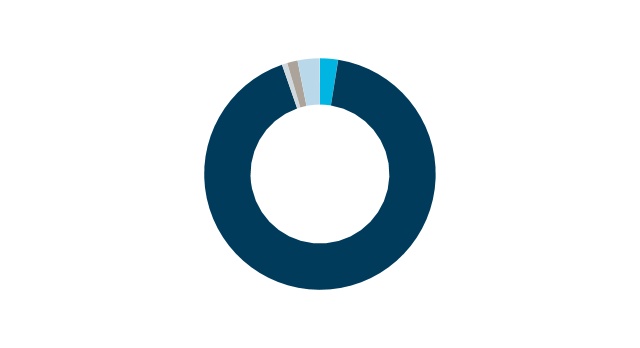
| ● | Cash and cash equivalents | $ | 190,953 | |||||
| ● | Investments | 6,982,962 | ||||||
| ● | Premiums receivable | 56,637 | ||||||
| ● | Reinsurance Recoverable | 111,153 | ||||||
| ● | Other assets | 234,022 | ||||||
Cash and cash equivalents (including restricted)
- Our cash and cash equivalents balance decreased to $191 million as of June 30, 2021, from $297 million as of December 31, 2020, as net cash generated from operating activities was used in investing and financing activities.
Consolidated balance sheets - Liabilities and equity
as of June 30, 2021
(In thousands)

| ● | Loss reserves | $ | 936,236 | |||||
| ● | Unearned premiums | 263,751 | ||||||
| ● | Long-term debt | 1,244,257 | ||||||
| ● | Other liabilities | 216,776 | ||||||
| ● | Shareholders’ equity | 4,914,707 | ||||||
Loss reserves
- Our loss reserves include estimates of losses and settlement expenses on (1) loans in our delinquency inventory (known as case reserves), (2) IBNR delinquencies, and (3) LAE. Our gross reserves are reduced by reinsurance recoverable on our estimated losses and settlement expenses to calculate a net reserve balance. Loss reserves increased by 6% to $936 million as of June 30, 2021, from $881 million as of December 31, 2020. Reinsurance recoverables on our estimated losses and settlement expenses were $111 million and $95 million as of June 30, 2021 and December 31, 2020, respectively. The increase in loss reserves is primarily due to additional loss reserves established on new delinquency notices received in the first six months of 2021, with insignificant development on reserves of previously received delinquencies.
Income Taxe
s
- Our current income tax receivable was $3.5 million and $2.1 million at June 30, 2021 and December 31, 2020, respectively and is included as a component of other assets in our consolidated balance sheets. Our deferred income tax liability was $54.3 million and $60.0 million at June 30, 2021 and December 31, 2020, respectively and is included as a component of other liabilities in our consolidated balance sheets. The decrease in our deferred income tax liability was primarily due to the tax effect of unrealized losses generated by the investment portfolio during the first six months of 2021. At June 30, 2021 and December 31, 2020, we owned $345.3 and $271.0 million of tax and loss bonds, respectively. If the
MGIC Investment Corporation - Q2 2021 | 57
federal income tax rate increases, our net deferred income tax liability or asset would increase. In addition, on the effective date of the tax rate increase, we would establish a deferred income tax liability related to tax and loss bonds in an amount equal to the difference between the new federal income tax rate and the 21% federal income tax rate at which the tax and loss bonds were accrued.
Investment portfolio
The average duration and investment yield of our investment portfolio as of June 30, 2021, December 31, 2020, and June 30, 2020 are shown in the table below.
| Portfolio duration and embedded investment yield | |||||||||||||||||||||||
| June 30, 2021 | December 31, 2020 | June 30, 2020 | |||||||||||||||||||||
| Duration (in years) | 4.4 | 4.3 | 4.0 | ||||||||||||||||||||
|
Pre-tax yield
(1)
|
2.5% | 2.6% | 2.8% | ||||||||||||||||||||
|
After-tax yield
(1)
|
2.0% | 2.1% | 2.3% | ||||||||||||||||||||
(1)
Embedded investment yield is calculated on a yield-to-worst basis.
The security ratings of our fixed income investments as of June 30, 2021, December 31, 2020, and June 30, 2020 are shown in the following table.
| Fixed income security ratings | |||||||||||||||||
|
Security Ratings
(1)
|
|||||||||||||||||
| Period | AAA | AA | A | BBB | |||||||||||||
| June 30, 2021 | 20% | 25% | 34% | 21% | |||||||||||||
| December 31, 2020 | 23% | 22% | 35% | 20% | |||||||||||||
| June 30, 2020 | 24% | 20% | 34% | 21% | |||||||||||||
(1)
Ratings are provided by one or more of: Moody's, Standard & Poor's and Fitch Ratings. If three ratings are available, the middle rating is utilized; otherwise the lowest rating is utilized.
Off-Balance Sheet Arrangements
Home Re 2018-1 Ltd., Home Re 2019-1 Ltd., Home Re 2020-1 Ltd., and Home Re 2021-1 Ltd. are special purpose variable interest entities that are not consolidated in our consolidated financial statements because we do not have the unilateral power to direct those activities that are significant to their economic performance. See
Note 4 - “Reinsurance,”
to our consolidated financial statements for additional information.
MGIC Investment Corporation - Q2 2021 | 58
Liquidity and Capital Resources
Consolidated Cash Flow Analysis
We have three primary types of cash flows: (1) operating cash flows, which consist mainly of cash generated by our insurance operations and income earned on our investment portfolio, less amounts paid for claims, interest expense and operating expenses, (2) investing cash flows related to the purchase, sale and maturity of investments and purchases of property and equipment and (3) financing cash flows generally from activities that impact our capital structure, such as changes in debt and shares outstanding, and dividend payouts. The following table summarizes our consolidated cash flows from operating, investing and financing activities:
| Summary of consolidated cash flows | |||||||||||||||||
| Six Months Ended June 30, | |||||||||||||||||
| (In thousands) | 2021 | 2020 | |||||||||||||||
| Total cash provided by (used in): | |||||||||||||||||
| Operating activities | $ | 349,422 | $ | 420,125 | |||||||||||||
| Investing activities | (407,342) | (47,466) | |||||||||||||||
| Financing activities | (47,807) | (170,322) | |||||||||||||||
| Increase (decrease) in cash and cash equivalents and restricted cash and cash equivalents | $ | (105,727) | $ | 202,337 | |||||||||||||
Net cash provided by operating activities for the six months ended June 30, 2021 decreased compared to the same period of 2020 primarily due to an increase in income taxes paid and a decrease in cash received from premiums written, net.
Net cash used in investing activities for the six months ended June 30, 2021 and June 30, 2020 primarily reflects purchases of fixed income and equity securities during the period that exceeded sales and maturities of fixed income and equity securities during the period as cash from operations was available for additional investment.
Net cash from financing activities for the six months ended June 30, 2021 primarily reflects dividends to shareholders, and the payment of withholding taxes related to share-based compensation net share settlement. Net cash used in financing activities for the six months ended June 30, 2020 reflects share repurchases during the period, as well as dividends paid to shareholders and payments of withholding taxes related to share-based compensation net share settlement.
Capitalization
Debt - holding company
As of June 30, 2021, our holding company’s debt obligations were $1.1 billion in aggregate principal consisting of our 5.75% Notes, 5.25% Notes, and 9% Debentures.
In the third quarter of 2020, MGIC distributed to the holding company, as a dividend, its ownership in the 9% Debentures, retiring those 9% Debentures. As of June 30, 2020 MGIC's ownership of our holding company's 9% Debentures of $132.7 million was eliminated in consolidation, but remained an obligation of our holding company.
Liquidity analysis - holding company
As of June 30, 2021, we had approximately $772 million in cash and investments at our holding company. These resources are maintained primarily to service our debt interest expense, pay debt maturities, repurchase shares, repurchase debt, pay dividends to shareholders, and to settle intercompany obligations. While these assets are held, we generate investment income that serves to offset a portion of our interest expense. Investment income and the payment of dividends from our insurance subsidiaries are the principal sources of holding company cash inflow. MGIC is the principal source of dividends, and their payment is restricted by insurance regulation. Under the PMIERs guidance, any dividend paid by MGIC to our holding company, through September 30, 2021, requires GSE approval if MGIC's excess of Available Assets is or would become less than 50% of its Minimum Required Assets; and from October 1, 2021 through December 31, 2021 such dividends require GSE approval if MGIC's excess of Available Assets is or would become less than 15% of its Minimum Required Assets. See
Note 14 - “Statutory Information”
to our consolidated financial statement for additional information about MGIC’s dividend restrictions. The payment of dividends from MGIC is also influenced by our view of the appropriate level of PMIERs Available Assets to maintain in excess of Minimum Required Assets. Other sources of holding company liquidity include raising capital in the public markets. The ability to raise capital in the public markets is subject to prevailing market conditions, investor demand for the securities to be issued, and our deemed creditworthiness.
In the second quarter of 2021 we paid $20 million in dividends to shareholders. On July 29, 2021, our Board of Directors declared a quarterly cash dividend of $0.08 per common share to shareholders of record on August 12, 2021, payable on August 26, 2021.
In the first six months of 2021, our holding company cash and investments decreased by $75 million to $772 million as of June 30, 2021.
Significant cash and investments
inflows
during the first six months:
•
$ 9 million of investment income.
Significant cash
outflows
during the first six months:
•
$41 million in cash dividends paid to shareholders
•
$34 million of interest payments on our 5.75% Notes, 5.25% Notes, and 9% Debentures.
We did not repurchase any shares of our common stock during the six months ended June 30, 2021 compared to the repurchase of 9.6 million shares of common stock during the six months ended June 30, 2020. Our share repurchase programs may be suspended or discontinued at any time. Due to the uncertainty caused by the COVID-19 pandemic, we had temporarily suspended stock repurchases, but intend to resume them in the third quarter. See
“Overview - Capital”
of this MD&A for a discussion of the share repurchase program authorized in January 2020.
MGIC Investment Corporation - Q2 2021 | 59
MGIC did not pay a cash and/or investment security dividend to our holding company in the first six months 2021, compared to a $390 million dividend in the first six months of 2020. In August 2021, MGIC paid a dividend of $150 million to our holding company. Future dividend payments from MGIC to the holding company will be determined in consultation with the board, and after considering any updated estimates about the economic impacts of the COVID-19 pandemic on our business. We ask the Wisconsin OCI not to object before MGIC pays dividends to the holding company.
The net unrealized gains on our holding company investment portfolio were approximately $1.9 million at June 30, 2021 and the portfolio had a modified duration of approximately 1.8 years.
Subject to certain limitations and restrictions, holders of each of the 9% Debentures may convert their notes into shares of our common stock at their option under the terms of their issuance, in which case our corresponding obligation will be eliminated.
See Note 7 – “Debt” to our consolidated financial statements in our Annual Report on Form 10-K for the year ended December 31, 2020 for additional information about the conversion terms of our 9% Debentures and the terms of our indebtedness, including our option to defer interest on our 9% Debentures. The description in Note 7 - “Debt” to our consolidated financial statements in our Annual Report on Form 10-K is qualified in its entirety by the terms of the notes and debentures..
Debt at subsidiaries
MGIC is a member of the FHLB, which provides MGIC access to an additional source of liquidity via a secured lending facility. MGIC borrowed $155 million in the form of a fixed rate advance from the FHLB. Interest on the Advance is payable monthly at an annual rate, fixed for the term of the Advance, of 1.91%. The principal of the Advance matures on February 10, 2023. MGIC may prepay the Advance at any time. Such prepayment would be below par if interest rates have risen after the Advance was originated, or above par if interest rates have declined. The Advance is secured by eligible collateral whose fair value is maintained at a minimum of 102% of the outstanding principal balance. MGIC provided eligible collateral from its investment portfolio.
Capital Adequacy
PMIERs
As of June 30, 2021, MGIC’s Available Assets under the PMIERs totaled approximately $5.7 billion, an excess of approximately $2.3 billion over its Minimum Required Assets; and MGIC is in compliance with the requirements of the PMIERs and eligible to insure loans delivered to or purchased by the GSEs. Our reinsurance transactions provided an aggregate of approximately $1.7 billion of capital credit under the PMIERs as of June 30, 2021. Refer to
Note 4 - “Reinsurance”
to our consolidated financial statements for additional information on our QSR and Home Re Transactions.
We anticipate our delinquency inventory to remain elevated in 2021 due to the impacts of the COVID-19 pandemic. The PMIERS generally require us to hold significantly more
Minimum Required Assets for delinquent loans than for performing loans and the Minimum Required Assets required to be held increases as the number of payments missed on a delinquent loan increases. For delinquent loans whose initial missed payment occurred on or after March 1, 2020 and prior to April 1, 2021 (the "COVID-19 Crisis Period"), the Minimum Required Assets are generally reduced by 70% for at least three months. The 70% reduction will continue, or be newly applied, for delinquent loans that are subject to a forbearance plan that is granted in response to a financial hardship related to COVID-19, the terms of which are materially consistent with terms of forbearance plans offered by Freddie Mac or Fannie Mae. Under the PMIERs, a forbearance plan on a loan with an initial missed payment occurring during the COVID-19 Crisis Period is assumed to have been granted in response to a financial hardship related to COVID-19. Loans considered to be subject to a forbearance plan include those that are in a repayment plan or loan modification trial period following the forbearance plan.
Forbearance for federally-insured mortgages allows for mortgage payments to be suspended for up to 18 months: an initial forbearance period of up to six months; if requested by the borrower following contact by the servicers, an extension of up to six months; and for loans in a COVID-19 forbearance plan as of February 28, 2021 an additional six months, subject to certain limits. The servicer of the mortgage must begin attempts to contact the borrower no later than 30 days prior to the expiration of any forbearance plan term and must continue outreach attempts until appropriate contact is made or the forbearance plan term has expired. If a servicer of a loan is unable to contact the borrower prior to the expiration of the first six month forbearance plan term, or if the forbearance plan reaches its twelve-month anniversary and is not further extended, the forbearance plan will expire. In such case, the 70% reduction in Minimum Required Assets for that loan will no longer be applicable and our Minimum Required Assets will increase.
We expect the GSEs and servicers will provide us with information about the forbearance status for nearly all of the loans in our delinquency inventory. The forbearance information provided by the GSEs will be with respect to delinquent loans in forbearance as of the prior month-end, while the information provided by loan servicers may be more current. As a result, in some cases, there may be a delay in our ability to take advantage of the 70% reduction.
Refer to
“Overview - Capital - GSEs”
of this MD&A and our risk factor titled “We may not continue to meet the GSEs’ private mortgage insurer eligibility requirements and our returns may decrease if we are required to maintain more capital in order to maintain our eligibility” for further discussion of PMIERs.
Risk-to-capital
The insurance laws of 16 jurisdictions, including Wisconsin, our domiciliary state, require a mortgage insurer to maintain a minimum amount of statutory capital relative to its RIF (or a similar measure) in order for the mortgage insurer to continue to write new business. While they vary among jurisdictions, the most common State Capital Requirements allow for a maximum risk-to-capital ratio of 25 to 1.
MGIC Investment Corporation - Q2 2021 | 60
We compute our risk-to-capital ratio on a separate company statutory basis, as well as on a combined insurance operation basis. The risk-to-capital ratio is our net RIF divided by our policyholders’ position. Our net RIF includes both primary and pool risk in force, net of reinsurance and excludes risk on policies that are currently in default and for which loss reserves have been established. The risk amount includes pools of loans with contractual aggregate loss limits and without these limits. Policyholders’ position consists primarily of statutory policyholders’ surplus (which increases as a result of statutory net income and decreases as a result of statutory net loss and dividends paid), plus the statutory contingency reserve, and a portion of the reserves for unearned premiums. The statutory contingency reserve is reported as a liability on the statutory balance sheet. A mortgage insurance company is required to make annual additions to the contingency reserve of approximately 50% of net earned premiums. These contributions must generally be maintained for a period of ten years. However, with regulatory approval a mortgage insurance company may make early withdrawals from the contingency reserve when incurred losses exceed 35% of net earned premiums in a calendar year.
MGIC’s separate company risk-to-capital calculation is shown in the table below.
| Risk-to-capital - MGIC separate company | |||||||||||||||||
| (In millions, except ratio) | June 30, 2021 | December 31, 2020 | |||||||||||||||
|
RIF - net
(1)
|
$ | 46,593 | $ | 44,511 | |||||||||||||
| Statutory policyholders’ surplus | 1,439 | 1,336 | |||||||||||||||
| Statutory contingency reserve | 3,782 | 3,521 | |||||||||||||||
| Statutory policyholders’ position | $ | 5,221 | $ | 4,857 | |||||||||||||
| Risk-to-capital | 8.9:1 | 9.2:1 | |||||||||||||||
(1)
RIF – net, as shown in the table above is net of reinsurance and exposure on policies currently delinquent ($2.2 billion at June 30, 2021 and $2.9 billion December 31, 2020) for which loss reserves have been established.
Our combined insurance companies’ risk-to-capital calculation is shown in the table below.
| Risk-to-capital - Combined insurance companies | |||||||||||||||||
| (In millions, except ratio) | June 30, 2021 | December 31, 2020 | |||||||||||||||
|
RIF - net
(1)
|
$ | 47,048 | $ | 44,868 | |||||||||||||
| Statutory policyholders’ surplus | 1,443 | 1,340 | |||||||||||||||
| Statutory contingency reserve | 3,850 | 3,586 | |||||||||||||||
| Statutory policyholders’ position | $ | 5,293 | $ | 4,926 | |||||||||||||
| Risk-to-capital | 8.9:1 | 9.1:1 | |||||||||||||||
(1)
RIF – net, as shown in the table above, is net of reinsurance and exposure on policies currently delinquent ($2.2 billion at June 30, 2021 and $2.9 billion December 31, 2020) for which loss reserves have been established.
The decrease in MGIC's risk-to-capital and our combined insurance companies’ risk to capital in the first six months of 2021 was due to an increase in statutory policyholders’ position, partially offset by an increase in RIF, net.
For additional information regarding regulatory capital see
Note 14 – “Statutory Information”
to our consolidated financial
statements as well as our risk factor titled “State Capital requirements may prevent us from continuing to write new insurance on an uninterrupted basis.”
Financial Strength Ratings
| MGIC financial strength ratings | ||||||||||||||
| Rating Agency | Rating | Outlook | ||||||||||||
| Moody’s Investor Services | Baa1 | Stable | ||||||||||||
| Standard and Poor’s Rating Services | BBB+ | Stable | ||||||||||||
| A.M. Best | A- | Stable | ||||||||||||
| MAC financial strength ratings | ||||||||||||||
| Rating Agency | Rating | Outlook | ||||||||||||
| A.M. Best | A- | Stable | ||||||||||||
For further information about the importance of MGIC’s ratings, see our risk factor titled “Competition or changes in our relationships with our customers could reduce our revenues, reduce our premium yields and / or increase our losses.”
MGIC Investment Corporation - Q2 2021 | 61
Contractual Obligations
The following table summarizes, as of June 30, 2021, the approximate future payments under our contractual obligations and estimated claim payments on established loss reserves.
| Contractual obligations | |||||||||||||||||||||||||||||||||||
| Payments due by period | |||||||||||||||||||||||||||||||||||
| (In millions) | Total | Less than 1 year | 1-3 years | 3-5 years | More than 5 years | ||||||||||||||||||||||||||||||
| Long-term debt obligations | $ | 2,341.0 | $ | 69.9 | $ | 525.9 | $ | 105.8 | $ | 1,639.4 | |||||||||||||||||||||||||
| Operating lease obligations | 1.5 | 0.8 | 0.7 | — | — | ||||||||||||||||||||||||||||||
| Purchase obligations | 53.4 | 30.9 | 22.5 | — | — | ||||||||||||||||||||||||||||||
| Other long-term liabilities | 936.2 | 131.0 | 402.6 | 402.6 | — | ||||||||||||||||||||||||||||||
| Total | $ | 3,332.1 | $ | 232.6 | $ | 951.7 | $ | 508.4 | $ | 1,639.4 | |||||||||||||||||||||||||
Our long-term debt obligations as of June 30, 2021 include their related interest and are discussed in
Note 3 - “Debt”
to our consolidated financial statements and under
“Liquidity and Capital Resources”
above. Our operating lease obligations include operating leases on data processing equipment and autos, as discussed in Note 16 – “Leases” to our consolidated financial statements in our Annual Report on Form 10-K for the year ended December 31, 2020. Purchase obligations consist primarily of agreements to purchase items related to our continued investment in our information technology infrastructure in the normal course of business.
Our other long-term liabilities represent the case and LAE loss reserves established to recognize the liability for losses and LAE related to existing delinquency inventory on insured mortgage loans and our IBNR reserve. The timing of the future claim payments associated with the established case loss reserves was determined primarily based on two key assumptions: the length of time it takes for a notice of delinquency to develop into a received claim and the length of time it takes for a received claim to be ultimately paid. The future claim payment periods are estimated based on historical experience, and could emerge differently than this estimate, in part, due to uncertainty regarding the impact of certain factors, such as impacts from the COVID-19 pandemic, loss mitigation protocols established by servicers and changes in some state foreclosure laws that may include, for example, a requirement for additional review and/or mediation process.
See
Note 11 – “Loss Reserves”
to our consolidated financial statements. In accordance with GAAP for the mortgage insurance industry, we establish loss reserves only for delinquent loans that were reported to us as two or more payments past due and have not become current or resulted in a claim payment and for loans we estimate are delinquent but for which delinquencies have not yet been received (“IBNR”). Because our reserving method does not take into account the impact of future losses that could occur from loans that are not delinquent, our obligation for ultimate losses that we expect to occur under our policies in force at any period end is not reflected in our consolidated financial statements or in the table above.
MGIC Investment Corporation - Q2 2021 | 62
Forward Looking Statements and Risk Factors
General
: Our business, results of operations, and financial condition could be affected by the risk factors referred to under “Location of Risk Factors” below. These risk factors are an integral part of Management’s Discussion and Analysis.
These factors may also cause actual results to differ materially from the results contemplated by forward looking statements that we may make. Forward looking statements consist of statements which relate to matters other than historical fact. Among others, statements that include words such as we “believe,” “anticipate” or “expect,” or words of similar import, are forward looking statements. These risk factors, including the discussion of the impact of the COVID-19 pandemic, speak only as of the date of this press release and are subject to change without notice as the Company cannot predict all risks relating to this evolving set of events. We are not undertaking any obligation to update any forward looking statements we may make even though these statements may be affected by events or circumstances occurring after the forward looking statements were made. Therefore, no reader of this document should rely on these statements being current as of any time other than the time at which this document was filed with the Securities and Exchange Commission.
While we communicate with security analysts from time to time, it is against our policy to disclose to them any material non-public information or other confidential information. Accordingly, investors should not assume that we agree with any statement or report issued by any analyst irrespective of the content of the statement or report, and such reports are not our responsibility.
Location of Risk Factors: The risk factors are in Item 1 A of our Annual Report on Form 10-K for the year ended December 31, 2020, as supplemented by Part II, Item 1 A of our Quarterly Report on Form 10-Q for the quarter ended March 31, 2021, Part II, Item 1 A of this Quarterly Report on Form 10-Q. The risk factors in the 10-K, as supplemented by those 10‑Qs and through updating of various statistical and other information, are reproduced in Exhibit 99 to this Quarterly Report on Form 10-Q.
Item 3. Quantitative and Qualitative Disclosures about Market Risk
Our investment portfolio is essentially a fixed income portfolio and is exposed to market risk. Important drivers of the market risk are credit spread risk and interest rate risk.
Credit spread risk
is the risk that we will incur a loss due to adverse changes in credit spreads. Credit spread is the additional yield on fixed income securities above the risk-free rate (typically referenced as the yield on U.S. Treasury securities) that market participants require to compensate them for assuming credit, liquidity and/or prepayment risks.
We manage credit risk via our investment policy guidelines which primarily place our investments in investment grade securities and limit the amount of our credit exposure to any one issue, issuer and type of instrument. Guideline and investment portfolio detail is available in "Business – Section
C, Investment Portfolio" in Item 1 of our Annual Report on Form 10-K for the year ended December 31, 2020.
Interest rate risk
is the risk that we will incur a loss due to adverse changes in interest rates relative to the characteristics of our interest bearing assets.
One of the measures used to quantify this exposure is modified duration. Modified duration measures the price sensitivity of the assets to the changes in spreads. At June 30, 2021, the modified duration of our fixed income investment portfolio was 4.4 years, which means that an instantaneous parallel shift in the yield curve of 100 basis points would result in a change of 4.4% in the fair value of our fixed income portfolio. For an upward shift in the yield curve, the fair value of our portfolio would decrease and for a downward shift in the yield curve, the fair value would increase. See
Note 7 – “Investments
” to our consolidated financial statements for additional disclosure surrounding our investment portfolio.
Item 4. Controls and Procedures
Our management, with the participation of our principal executive officer and principal financial officer, has evaluated our disclosure controls and procedures (as defined in Rule 13a-15(e) under the Securities Exchange Act of 1934, as amended), as of the end of the period covered by this Quarterly Report on Form 10-Q. Based on such evaluation, our principal executive officer and principal financial officer concluded that such controls and procedures were effective as of the end of such period. There was no change in our internal control over financial reporting that occurred during the second quarter of 2021 that materially affected, or is reasonably likely to materially affect, our internal control over financial reporting.
MGIC Investment Corporation - Q2 2021 | 63
PART II. OTHER INFORMATION
Item 1. Legal Proceedings
Certain legal proceedings arising in the ordinary course of business may be filed or pending against us from time to time. For information about such legal proceedings, you should review
Note
5
- “
Litigation and Contingencies
”
to our consolidated financial statements our risk factor titled “We are involved in legal proceedings and are subject to the risk of additional legal proceedings in the future” in Exhibit 99.
Item 1 A. Risk Factors
With the exception of the changes described and set forth below, there have been no material changes in our risk factors from the risk factors disclosed in the Company’s Annual Report on Form 10-K for the year ended December 31, 2020, as supplemented by Part II, Item I A of our Quarterly Report on Form 10-Q for the Quarter ended March 31, 2021. The risk factors in the 10-K, as supplemented by that 10-Q and this 10-Q and through updating of various statistical and other information, are reproduced in their entirety in Exhibit 99 to this Quarterly Report on Form 10‑Q.
Downturns in the domestic economy or declines in home prices may result in more homeowners defaulting and our losses increasing, with a corresponding decrease in our returns.
Losses result from events that reduce a borrower’s ability or willingness to make mortgage payments, such as unemployment, health issues, family status, and whether the home of a borrower who defaults on a mortgage can be sold for an amount that will cover unpaid principal and interest and the expenses of the sale. A deterioration in economic conditions, including an increase in unemployment, generally increases the likelihood that borrowers will not have sufficient income to pay their mortgages and can also adversely affect home prices, which in turn can influence the willingness of borrowers with sufficient resources to make mortgage payments when the mortgage balance exceeds the value of the home. The seasonally-adjusted Purchase-Only U.S. Home Price Index of the Federal Housing Finance Agency (the “FHFA”), which is based on single-family properties whose mortgages have been purchased or securitized by Fannie Mae or Freddie Mac, indicates that home prices increased by 7.7% in the first five months of 2021, after increasing by 11.5%, 5.4%, 5.7% and 6.3% in 2020, 2019, 2018 and 2017, respectively. The price-to-income ratio in some markets exceeds its historical average, in part as a result of recent home price appreciation outpacing increases in income. Home prices may decline even absent a deterioration in economic conditions due to declines in demand for homes, which in turn may result from changes in buyers’ perceptions of the potential for future appreciation, restrictions on and the cost of mortgage credit due to more stringent underwriting standards, higher interest rates, changes to the tax deductibility of mortgage interest, decreases in the rate of household formations, or other factors.
The unemployment rate rose from 3.5% as of December 31, 2019, to 14.7% as of April 30, 2020. It was 5.9% as of June 30, 2021. High levels of unemployment may result in an
increasing number of loans in our delinquency inventory and an increasing number of insurance claims; however, the increases are difficult to predict given the uncertainty in the current market environment, including uncertainty about the length and severity of the COVID-19 pandemic; efforts to reduce the transmission of COVID-19; effects of forbearance programs enacted by the GSEs, various states and municipalities; and effects of past and future government stimulus programs.
Forbearance for federally-insured mortgages (including those delivered to or purchased by the GSEs) allows for mortgage payments to be suspended for up to 18 months: an initial forbearance period of up to six months; if requested by the borrower following contact by the servicer, an extension of up to six months; and, for loans in a COVID-19 forbearance plan as of February 28, 2021, an additional extension of up to six months, subject to certain limits. The servicer of the loan must begin attempts to contact the borrower no later than 30 days prior to the expiration of any forbearance plan term and must continue outreach attempts until appropriate contact is made or the forbearance plan term has expired. In certain circumstances, the servicer will be unable to contact the borrower and the forbearance plan will expire after the first 180-day plan. A delinquent loan for which the borrower was unable to be contacted and that is not in a forbearance plan may be more likely to result in a claim than a delinquent loan in a forbearance plan.
Historically, forbearance plans have reduced the incidence of our losses on affected loans. However, given the uncertainty surrounding the long-term economic impact of COVID-19, it is difficult to predict the ultimate effect of COVID-19 related forbearances on our loss incidence. At June 30, 2021, 23,849 of the loans in our delinquency inventory were reported to us as in forbearance. Of the 46,684 loans in our delinquency inventory as of June 30, 2020 that were reported to us as in forbearance, 70.2% are no longer in the default inventory as of June 30, 2021; 22.5% are still in the delinquency inventory and reported to us as in forbearance; and 7.4% are still in the delinquency inventory but no longer reported to us as in forbearance. As of June 30, 2021, 55% of the loans in forbearance have reached the twelve-month anniversary of their forbearance plans, 16% have reached the nine-month anniversary of their forbearance plans, and 11% have reached the six-month anniversary of their forbearance plans. Whether a loan delinquency will cure, including through modification, when forbearance ends will depend on the economic circumstances of the borrower at that time. The severity of losses associated with delinquencies that do not cure will depend on economic conditions at that time, including home prices.
Foreclosures on mortgages purchased or securitized by the GSEs have been suspended through July 31, 2021. Under a CFPB rule that is generally effective from August 31, 2021 through December 31, 2021 (from July 31, 2021 for servicers of GSE mortgages), with limited exceptions, servicers must ensure that at least one temporary procedural safeguard has been met before referring 120-day delinquent loans for foreclosure.
MGIC Investment Corporation - Q2 2021 | 64
We are subject to comprehensive regulation and other requirements, which we may fail to satisfy.
We are subject to comprehensive regulation, including by state insurance departments. Many regulations are designed for the protection of our insured policyholders and consumers, rather than for the benefit of investors. Mortgage insurers, including MGIC, have in the past been involved in litigation and regulatory actions related to alleged violations of the anti-referral fee provisions of the Real Estate Settlement Procedures Act ("RESPA"), and the notice provisions of the Fair Credit Reporting Act ("FCRA"). While these proceedings in the aggregate did not result in material liability for MGIC, there can be no assurance that the outcome of future proceedings, if any, under these laws would not have a material adverse effect on us. To the extent that we are construed to make independent credit decisions in connection with our contract underwriting activities, we also could be subject to increased regulatory requirements under the Equal Credit Opportunity Act ("ECOA"), FCRA, and other laws. Under ECOA, examination may also be made of whether a mortgage insurer's underwriting decisions have a disparate impact on persons belonging to a protected class in violation of the law.
Although their scope varies, state insurance laws generally grant broad supervisory powers to agencies or officials to examine insurance companies and enforce rules or exercise discretion affecting almost every significant aspect of the insurance business, including payment for the referral of insurance business, premium rates and discrimination in pricing, and minimum capital requirements. The increased use, by the private mortgage insurance industry, of risk-based pricing systems that establish premium rates based on more attributes than previously considered, and of algorithms, artificial intelligence and data and analytics, may lead to additional regulatory scrutiny of premium rates and of other matters such as discrimination in pricing and underwriting, data privacy and access to insurance. For more information about state capital requirements, see our risk factor titled “
State capital requirements may prevent us from continuing to write new insurance on an uninterrupted basis
.” For information about regulation of data privacy, see our risk factor titled “
We could be adversely affected if personal information on consumers that we maintain is improperly disclosed; our information technology systems are damaged or their operations are interrupted; or our automated processes do not operate as expected
.” For more details about the various ways in which our subsidiaries are regulated, see “Business - Regulation” in Item 1 of our Annual Report on Form 10-K for the year ended December 31, 2020.
While we have established policies and procedures to comply with applicable laws and regulations, many such laws and regulations are complex and it is not possible to predict the eventual scope, duration or outcome of any reviews or investigations nor is it possible to predict their effect on us or the mortgage insurance industry.
Changes in interest rates, house prices or mortgage insurance cancellation requirements may change the length of time that our policies remain in force.
The premium from a single premium policy is collected upfront and generally earned over the estimated life of the policy. In contrast, premiums from a monthly premium policy are received and earned each month over the life of the policy. In each year, most of our premiums earned are from insurance that has been written in prior years. As a result, the length of time insurance remains in force, which is generally measured by persistency (the percentage of our insurance remaining in force from one year prior), is a significant determinant of our revenues. A higher than expected persistency rate may decrease the profitability from single premium policies because they will remain in force longer and may increase the incidence of claims than was estimated when the policies were written. A low persistency rate on monthly premium policies will reduce future premiums but may also reduce the incidence of claims, while a high persistency on those policies will increase future premiums but may increase the incidence of claims.
Our persistency rate was 57.1% at June 30, 2021, 60.5% at December 31, 2020 and 75.8% at December 31, 2019. Since 2000, our year-end persistency ranged from a high of 84.7% at December 31, 2009 to a low of 47.1% at December 31, 2003. Our persistency rate is primarily affected by the level of current mortgage interest rates compared to the mortgage coupon rates on our insurance in force, which affects the vulnerability of the insurance in force to refinancing; and the current amount of equity that borrowers have in the homes underlying our insurance in force. Borrowers with significant equity may be able to refinance their loans without requiring mortgage insurance. In addition, the Homeowners Protection Act (“HOPA”) requires servicers to cancel mortgage insurance when a borrower’s LTV ratio meets or is scheduled to meet certain levels, generally based on the original value of the home and subject to various conditions. The GSEs’ mortgage insurance cancellation guidelines may be more flexible than HOPA and they consider a home’s current value.
The mix of business we write affects our Minimum Required Assets under the PMIERs, our premium yields and the likelihood of losses occurring.
The Minimum Required Assets under the PMIERs are, in part, a function of the direct risk-in-force and the risk profile of the loans we insure, considering LTV ratio, credit score, vintage, Home Affordable Refinance Program ("HARP") status and delinquency status; and whether the loans were insured under lender-paid mortgage insurance policies or other policies that are not subject to automatic termination consistent with the Homeowners Protection Act requirements for borrower-paid mortgage insurance. Therefore, if our direct risk-in-force increases through increases in NIW, or if our mix of business changes to include loans with higher LTV ratios or lower FICO scores, for example, all other things equal, we will be required to hold more Available Assets in order to maintain GSE eligibility.
The minimum capital required by the risk-based capital framework contained in the exposure draft released by the
MGIC Investment Corporation - Q2 2021 | 65
NAIC in December 2019 would be, in part, a function of certain loan and economic factors, including property location, LTV ratio and credit score; general underwriting quality in the market at the time of loan origination; the age of the loan; and the premium rate we charge. Depending on the provisions of the capital requirements when they are released in final form and become effective, our mix of business may affect the minimum capital we are required to hold under the new framework.
The percentage of our NIW from all single-premium policies was 8% in the first half of 2021 and 9% in 2020 and has ranged from approximately 8% in 2021 to 19% in 2017. Depending on the actual life of a single premium policy and its premium rate relative to that of a monthly premium policy, a single premium policy may generate more or less premium than a monthly premium policy over its life.
As discussed in our risk factor titled "
Reinsurance may not always be available or affordable,"
we have in place various QSR transactions. Although the transactions reduce our premiums, they have a lesser impact on our overall results, as losses ceded under the transactions reduce our losses incurred and the ceding commissions we receive reduce our underwriting expenses. The effect of the QSR transactions on the various components of pre-tax income will vary from period to period, depending on the level of ceded losses. We also have in place various excess-of-loss ("XOL") reinsurance transactions, under which we cede premiums. Under the XOL reinsurance transactions, for the respective reinsurance coverage periods, we retain the first layer of aggregate losses, and a special purpose entity provides second layer coverage up to the outstanding reinsurance coverage amount.
In addition to the effect of reinsurance on our premiums, we expect a decline in our premium yield because an increasing percentage of our insurance in force is from recent book years whose premium rates had been trending lower.
Our ability to rescind insurance coverage became more limited for new insurance written beginning in mid-2012, and it became further limited for new insurance written under our revised master policy that became effective March 1, 2020. These limitations may result in higher losses than would be the case under our previous master policies. In addition, our rescission rights temporarily have become more limited due to accommodations we have made in connection with the COVID-19 pandemic. We have waived our rescission rights in certain circumstances where the failure to make payments was associated with a COVID-19 pandemic-related forbearance.
From time to time, in response to market conditions, we change the types of loans that we insure. We also may change our underwriting guidelines, in part by agreeing with certain approval recommendations from a GSE automated underwriting system. We also make exceptions to our underwriting requirements on a loan-by-loan basis and for certain customer programs. Our underwriting requirements are available on our website at http://www.mgic.com/underwriting/index.html.
Even when home prices are stable or rising, mortgages with certain characteristics have higher probabilities of claims. As of June 30, 2021, mortgages with these characteristics in our primary risk in force included mortgages with LTV ratios greater than 95% (14.7%), mortgages with borrowers having FICO scores below 680 (8.6%), including those with borrowers having FICO scores of 620-679 (7.3%), mortgages with limited underwriting, including limited borrower documentation (1.2%), and mortgages with borrowers having DTI ratios greater than 45% (or where no ratio is available) (13.3%), each attribute as determined at the time of loan origination. Loans with more than one of these attributes accounted for 2.3% of our primary risk in force as of June 30, 2021, and less than one percent of our NIW in the first half of 2021 and in 2020. When home prices increase and/or the percentage of our NIW from purchase transactions increases, our NIW on mortgages with higher LTV ratios and higher DTI ratios may increase.
From time to time, we change the processes we use to underwrite loans. For example, we may rely on information provided to us by a lender that was obtained from certain of the GSEs’ automated appraisal and income verification tools. Those tools may produce results that differ from the results that would have been determined using different methods. For example, the appraisal tools may indicate property values that differ from the values that would have been determined by onsite appraisals. In addition, we continue to further automate our underwriting processes. It is possible that our automated processes result in our insuring loans that we would not otherwise have insured under our prior processes. In addition, the number of refinance loans receiving appraisal waivers from the GSEs increased significantly beginning in 2020 and temporary policies adopted by the GSEs in response to COVID-19, which we follow, allow for property valuations in certain transactions to be based on appraisals that do not involve an onsite or interior property inspection of the property. Our acceptance of GSE appraisal waivers and appraisal flexibilities may affect our pricing and risk assessment.
Approximately 72.1% of our first half 2021 NIW and 70.2% of our 2020 NIW (by risk written) was originated under delegated underwriting programs pursuant to which the loan originators had authority on our behalf to underwrite the loans for our mortgage insurance. For loans originated through a delegated underwriting program, we depend on the originators' compliance with our guidelines and rely on the originators' representations that the loans being insured satisfy the underwriting guidelines, eligibility criteria and other requirements. While we have established systems and processes to monitor whether certain aspects of our underwriting guidelines were being followed by the originators, such systems may not ensure that the guidelines were being strictly followed at the time the loans were originated.
The widespread use of risk-based pricing systems by the private mortgage insurance industry (discussed in our risk factor titled
"Competition or changes in our relationships with our customers could reduce our revenues, reduce our premium yields and / or increase our losses"
) makes it more difficult to compare our premium rates to those offered by our competitors. We may not be aware of industry rate changes until we observe that our mix of new insurance written has changed and our mix may fluctuate more as a result.
MGIC Investment Corporation - Q2 2021 | 66
If state or federal regulations or statutes are changed in ways that ease mortgage lending standards and/or requirements, or if lenders seek ways to replace business in times of lower mortgage originations, it is possible that more mortgage loans could be originated with higher risk characteristics than are currently being originated, such as loans with lower FICO scores and higher DTI ratios. Lenders could pressure mortgage insurers to insure such loans, which are expected to experience higher claim rates. Although we attempt to incorporate these higher expected claim rates into our underwriting and pricing models, there can be no assurance that the premiums earned and the associated investment income will be adequate to compensate for actual losses even under our current underwriting requirements.
Our holding company debt obligations materially exceed our holding company cash and investments.
At June 30, 2021, we had approximately $772 million in cash and investments at our holding company and our holding company’s debt obligations were $1.1 billion in aggregate principal amount, consisting of $242 million of 5.75% Senior Notes due in 2023 ("5.75% Notes"), $650 million of 5.25% Senior Notes due 2028 (the 5.25% Notes), and $209 million of 9% Convertible Junior Subordinated Debentures due in 2063 ("9% Debentures"). Annual debt service on the 5.75% Notes, 5.25% Notes and 9% Debentures outstanding as of June 30, 2021, is approximately $70 million.
The 5.75% Senior Notes, 5.25% Senior Notes and 9% Debentures are obligations of our holding company, MGIC Investment Corporation, and not of its subsidiaries. The payment of dividends from our insurance subsidiaries which, other than investment income and raising capital in the public markets, is the principal source of our holding company cash inflow, is restricted by insurance regulation. In addition, through September 30, 2021, dividends paid by MGIC to our holding company require GSE approval if MGIC's excess of Available Assets is or would become less than 50% of its Minimum Required Assets; and from October 1, 2021 through December 31, 2021 such dividends require GSE approval if MGIC's excess of Available Assets is or would become less than 15% of its Minimum Required Assets. MGIC is the principal source of dividends. In the first quarter of 2020, MGIC paid a total of $390 million in dividends of cash and investments to our holding company. We ask the OCI not to object before MGIC pays dividends and, due to the uncertainty surrounding the COVID-19 pandemic, MGIC did not pay dividends of cash and/or investment securities to the holding company from the second quarter of 2020 through the second quarter of 2021; however, in the third quarter of 2020, MGIC distributed to the holding company, as a dividend, its ownership in $133 million of the 9% Debentures, with a fair value of $167 million and in August 2021, MGIC paid a $150 million cash dividend to the holding company. GSE approval was not required for the August 2021 dividend. Future dividend payments from MGIC to the holding company will be determined in consultation with the board of directors, and after considering any updated estimates about the economic impacts of the COVID-19 pandemic on our business.
In 2020, we issued the 5.25% Senior Notes and used a portion of the proceeds to repurchase $183 million of our 5.75%
Senior Notes and $48 million of our 9% Debentures. We may, from time to time, repurchase our debt obligations on the open market (including through 10b5-1 plans) or through privately negotiated transactions.
In 2020 we repurchased approximately 9.6 million shares of our common stock, using approximately $120 million of holding company resources. As of June 30, 2021, we had $291 million of authorization remaining to repurchase our common stock through the end of 2021 under a share repurchase program approved by our Board of Directors in January 2020. Repurchases may be made from time to time on the open market (including through 10b5-1 plans) or through privately negotiated transactions. The repurchase program may be suspended for periods or discontinued at any time. Due to the uncertainty caused by the COVID-19 pandemic, we had temporarily suspended stock repurchases but intend to resume them in the third quarter. If any additional capital contributions to our subsidiaries were required, such contributions would decrease our holding company cash and investments. As described in our Current Report on Form 8-K filed with the SEC on February 11, 2016, MGIC borrowed $155 million from the Federal Home Loan Bank of Chicago. This is an obligation of MGIC and not of our holding company.
We could be adversely affected if personal information on consumers that we maintain is improperly disclosed, our information technology systems are damaged or their operations are interrupted, or our automated processes do not operate as expected.
As part of our business, we maintain large amounts of personal information of consumers. Federal and state laws designed to promote the protection of such information require businesses that collect or maintain consumer information to adopt information security programs, and to notify individuals, and in some jurisdictions, regulatory authorities, of security breaches involving personally identifiable information. Those laws may require free credit monitoring services to be provided to individuals affected by security breaches. While we have information security policies and systems in place to prevent unauthorized disclosure, there can be no assurance that unauthorized disclosure, either through the actions of third parties or employees, will not occur. Unauthorized disclosure could adversely affect our reputation, result in a loss of business and expose us to material claims for damages.
We rely on the efficient and uninterrupted operation of complex information technology systems. All information technology systems are potentially vulnerable to damage or interruption from a variety of sources, including by third-party cyber attacks, including those involving ransomware. Due to our reliance on information technology systems, including ours and those of our customers and third-party service providers, their damage or interruption could adversely affect our reputation and severely disrupt our operations, which could have a material adverse effect on our business, business prospects and results of operations.
In response to the COVID-19 pandemic, the Company transitioned to a primarily virtual workforce model and will likely continue to operate under a hybrid model in the future.
MGIC Investment Corporation - Q2 2021 | 67
Virtual and hybrid workforce models may be more vulnerable to security breaches.
We are in the process of upgrading certain of our information systems, and transforming and automating certain of our business processes, and we continue to enhance our risk-based pricing system and our system for evaluating risk. Certain of our information systems have been in place for a number of years and it has become increasingly difficult to support their operation. The implementation of technological and business process improvements, as well as their integration with customer and third-party systems when applicable, is complex, expensive and time consuming. If we fail to timely and successfully implement and integrate the new technology systems, if the third party providers to which we are becoming increasingly reliant do not perform as expected, if our legacy systems fail to operate as required, or if the upgraded systems and/or transformed and automated business processes do not operate as expected, it could have an adverse impact on our business, business prospects and results of operations.
MGIC Investment Corporation - Q2 2021 | 68
Item 5. Other Information
Item 6. Exhibits
The accompanying Index to Exhibits is incorporated by reference in answer to this portion of this Item, and except as otherwise indicated in the next sentence, the Exhibits listed in such Index are filed as part of this Form 10-Q. Exhibit 32 is not filed as part of this Form 10-Q but accompanies this Form 10-Q.
(Part II, Item 6)
Index to exhibits
| Exhibit Number | Description of Exhibit | Form | Exhibit(s) | Filing Date | |||||||||||||
| Certification of CEO under Section 302 of Sarbanes-Oxley Act of 2002 † | |||||||||||||||||
| Certification of CFO under Section 302 of Sarbanes-Oxley Act of 2002 † | |||||||||||||||||
| Certification of CEO and CFO under Section 906 of Sarbanes-Oxley Act of 2002 (as indicated in Item 6 of Part II, this Exhibit is not being “filed”) †† | |||||||||||||||||
| Risk Factors included in Item 1A of our Annual Report on Form 10-K for the year ended December 31, 2020, as supplemented by Part II, Item 1A of our Quarterly Reports on Form 10-Q for the quarters ended March 31, 2021 and June 30, 2021, and through updating of various statistical and other information † | |||||||||||||||||
| 101.INS | Inline XBRL Instance Document | ||||||||||||||||
| 101.SCH | Inline XBRL Taxonomy Extension Schema Document | ||||||||||||||||
| 101.CAL | Inline XBRL Taxonomy Extension Calculation Linkbase Document | ||||||||||||||||
| 101.DEF | Inline XBRL Taxonomy Extension Definition Linkbase Document | ||||||||||||||||
| 101.LAB | Inline XBRL Taxonomy Extension Label Linkbase Document | ||||||||||||||||
| 101.PRE | Inline XBRL Taxonomy Extension Presentation Linkbase Document | ||||||||||||||||
| 104 | Cover Page Interactive Data File (formatted as Inline XBRL and contained in Exhibit 101) | ||||||||||||||||
* Denotes a management contract or compensatory plan.
† Filed herewith.
†† Furnished herewith.
MGIC Investment Corporation - Q2 2021 | 69
SIGNATURES
Pursuant to the requirements of the Securities Exchange Act of 1934, the registrant has duly caused this report to be signed on its behalf by the undersigned thereunto duly authorized, on August 4, 2021.
| MGIC INVESTMENT CORPORATION | |||||
| /s/ Nathaniel H. Colson | |||||
| Nathaniel H. Colson | |||||
| Executive Vice President and | |||||
| Chief Financial Officer | |||||
| /s/ Julie K. Sperber | |||||
| Julie K. Sperber | |||||
| Vice President, Controller and Chief Accounting Officer | |||||
MGIC Investment Corporation - Q2 2021 | 70
Item 2. Unregistered Sale of Equity Securities and Use of Proceeds
Issuer Purchases of Equity Securities
The following table provides information about purchases of MGIC Investment Corporation common stock by us during the three months ended June 30, 2021.
| Share repurchases | ||||||||||||||||||||||||||||||||
| Period Beginning | Period Ending | Total number of shares purchased | Average price paid per share | Total number of shares purchased as part of publicly announced plans or programs |
Approximate dollar value of shares that may yet be purchased under the programs
(1)
|
|||||||||||||||||||||||||||
| April 1, 2021 | April 30, 2021 | — | $ | — | — | $ | 290,818,024 | |||||||||||||||||||||||||
| May 1, 2021 | May 31, 2021 | — | $ | — | — | $ | 290,818,024 | |||||||||||||||||||||||||
| June 1, 2021 | June 30, 2021 | — | $ | — | — | $ | 290,818,024 | |||||||||||||||||||||||||
| — | $ | — | — | |||||||||||||||||||||||||||||
(1)
On January 28, 2020, our Board of Directors authorized a share repurchase program under which we may repurchase up to an additional $291 million of our common stock through the end of 2021. Repurchases may be made from time to time on the open market (including through 10b5-1 plans) or through privately negotiated transactions. The repurchase program may be suspended for periods or discontinued at any time. Due to the uncertainty caused by the COVID-19 pandemic, we had temporarily suspended stock repurchases but intend to resume in the third quarter.
MGIC Investment Corporation - Q2 2021 | 71
TABLE OF CONTENTS
Part I. Financial InformationItem 1. Financial StatementsNote 1. Nature Of Business and Basis Of PresentationNote 2. Significant Accounting PoliciesNote 3. DebtNote 4. ReinsuranceNote 5. Litigation and ContingenciesNote 6. Earnings Per ShareNote 7. InvestmentsNote 8. Fair Value MeasurementsNote 9. Other Comprehensive IncomeNote 10. Benefit PlansNote 11. Loss ReservesNote 12. Shareholders EquityNote 13. Share-based CompensationNote 14. Statutory InformationItem 2. Management S Discussion and Analysis Of Financial Condition and Results Of OperationsItem 3. Quantitative and Qualitative Disclosures About Market RiskItem 4. Controls and ProceduresPart II. Other InformationItem 1. Legal ProceedingsItem 1 A. Risk FactorsItem 5. Other InformationItem 6. ExhibitsItem 2. Unregistered Sale Of Equity Securities and Use Of Proceeds