SELLAS LIFE SCIENCES GROUP, INC.
10-Ks and 10-Qs
|
|
|
|
|
|
|
|
|
|
|
|
|
|
|
|
|
|
|
|
|
|
|
|
|
|
|
|
|
|
|
|
|
|
|
|
|
|
|
|
|
|
|
|
|
|
|
|
|
|
|
|
|
|
|
|
|
|
|
|
|
|
|
|
|
|
|
|
|
|
|
UNITED STATES
SECURITIES AND EXCHANGE COMMISSION
WASHINGTON, D.C. 20549
________________________________
FORM 10-K
________________________________
(Mark One)
|
x
|
ANNUAL REPORT PURSUANT TO SECTION 13 OR 15(d) OF THE SECURITIES EXCHANGE ACT OF 1934
|
For the fiscal year ended
December 31, 2019
or
|
o
|
TRANSITION REPORT PURSUANT TO SECTION 13 OR 15(d) OF THE SECURITIES EXCHANGE ACT OF 1934
|
For the transition period from _________ to _________
Commission File Number: 001-33958
SELLAS Life Sciences Group, Inc.
(Exact name of registrant as specified in its charter)
________________________________
|
Delaware
|
|
20-8099512
|
||
|
(State of incorporation)
|
|
(I.R.S. Employer Identification No.)
|
||
15 West 38
th
Street, 10
th
Floor, New York, NY 10018
(Address of principal executive officers)
(917) 438-4353
(Registrant's telephone number, including area code)
|
Securities registered pursuant to Section (12(b) of the Exchange Act:
|
||||
|
Title of Each Class
|
Trading Symbol(s)
|
|
Name of Each Exchange on Which Registered
|
|
|
Common Stock, $0.0001 Par Value per share
|
SLS
|
|
The Nasdaq Capital Market
|
|
|
Securities registered pursuant to Section (12(g) of the Exchange Act: None
|
||||
________________________________
Indicate by check mark if the registrant is a well-known seasoned issuer, as defined in Rule 405 of the Securities Act. Yes
o
No
x
Indicate by check mark if the registrant is not required to file reports pursuant to Section 13 or Section 15(d) of the Exchange Act. Yes
o
No
x
Indicate by check mark whether the registrant (1) has filed all reports required to be filed by Section 13 or 15(d) of the Securities Exchange Act of 1934 during the preceding 12 months (or for such shorter period that the Registrant was required to file such reports), and (2) has been subject to such filing requirements for the past 90 days. Yes
x
No
o
Indicate by check mark whether the registrant has submitted electronically every Interactive Data File required to be submitted pursuant to Rule 405 of Regulation S-T (§232.405 of this chapter) during the preceding 12 months (or for such shorter period that the registrant was required to submit such files). Yes
x
No
o
Indicate by check mark whether the registrant is a large accelerated filer, an accelerated filer, a non-accelerated filer, a smaller reporting company, or an emerging growth company. See the definitions of “large accelerated filer,” “accelerated filer,” “smaller reporting company,” and "emerging growth company" in Rule 12b-2 of the Exchange Act.
|
Large accelerated filer
|
o
|
Accelerated filer
|
o
|
Non-accelerated filer
|
x
|
|||||
|
Smaller reporting company
|
x
|
Emerging growth company
|
o
|
|||||||
If an emerging growth company, indicate by check mark if the registrant has elected not to use the extended transition period for complying with any new or revised financial accounting standards provided pursuant to Section 13(a) of the Exchange Act.
o
Indicate by check mark whether the registrant is a shell company (as defined in Rule 12b-2 of the Exchange Act).
o
Yes
x
No
The aggregate market value of the registrant's common stock, $0.0001 per value per share, held by non-affiliates of the registrant on June 28, 2019, the last business day of the registrant's most recently completed second fiscal quarter, was $11,217,186 (based on the closing sales price of the registrant's common stock on that date). Shares of the registrant's common stock held by each officer and director and each person who owns 5% or more of the outstanding common stock of the registrant have been excluded in that such persons may be deemed to be affiliates. This determination of affiliate status is not necessarily a conclusive determination for other purposes. As of
March 13, 2020
, SELLAS Life Sciences Group, Inc. had outstanding
6,717,900
shares of common stock, $0.0001 par value per share, exclusive of treasury shares.
DOCUMENTS INCORPORATED BY REFERENCE
Certain information required in Part III of this Annual Report on Form 10-K is incorporated from the registrant’s Proxy Statement for its 2020 Annual Meeting of Stockholders to be filed with the Securities and Exchange Commission pursuant to Regulation 14A not later than 120 days after the end of the fiscal year covered by this Form 10-K, provided that if such Proxy Statement is not filed within such period, such information will be included in an amendment to this Form 10-K to be filed within such 120-day period.
SPECIAL NOTE REGARDING FORWARD LOOKING STATEMENTS
Some of the information contained in this annual report on Form 10-K may include forward-looking statements that reflect our current views with respect to our development programs, business strategy, business plan, financial performance and other future events. These statements include forward-looking statements both with respect to us, specifically, and our industry, in general. Such forward-looking statements include the words "expect," "intend,” "plan," "believe," "project," "estimate,” "may,” "should," "anticipate," "will" and similar statements of a future or forward-looking nature identify forward-looking statements.
Forward-looking statements are neither historical facts nor assurances of future performance. Instead, they are based only on our current beliefs, expectations and assumptions regarding the future of our business, future plans and strategies, projections, anticipated events and trends, the economy and other future conditions. Forward-looking statements are subject to inherent uncertainties, risks and changes in circumstances that are difficult to predict and many of which are outside of our control. There are or will be important factors that could cause actual results to differ materially from those indicated in these statements. These factors include, but are not limited to, those factors set forth in the sections entitled "Business - Overview - Recent Developments," "Risk Factors," "Legal Proceedings," and "Management’s Discussion and Analysis of Financial Condition and Results of Operations," in this annual report on Form 10-K, which you should review carefully. We undertake no obligation to publicly update or review any forward-looking statement, whether as a result of new information, future developments or otherwise, except as required by law.
1
SELLAS LIFE SCIENCES GROUP, INC.
FORM 10-K - Annual Report
For the Year Ended
December 31, 2019
TABLE OF CONTENTS
|
Page
|
|||
|
PART I
|
|||
|
Item 1
|
|||
|
Item 1A
|
|||
|
Item 1B
|
|||
|
Item 2
|
|||
|
Item 3
|
|||
|
Item 4
|
|||
|
PART II
|
|||
|
Item 5
|
|||
|
Item 6
|
|||
|
Item 7
|
|||
|
Item 7A
|
|||
|
Item 8
|
|||
|
Item 9
|
|||
|
Item 9A
|
|||
|
Item 9B
|
|||
|
PART III
|
|||
|
Item 10
|
|||
|
Item 11
|
|||
|
Item 12
|
|||
|
Item 13
|
|||
|
Item 14
|
|||
|
PART IV
|
|||
|
Item 15
|
|||
|
Item 16
|
|||
The names “SELLAS Life Sciences Group, Inc.,” “SELLAS,” the SELLAS logo, and other trademarks or service marks of SELLAS Life Sciences Group, Inc. appearing in this annual report on Form 10-K are the property of SELLAS Life Sciences Group, Inc. Other trademarks, service marks or trade names appearing in this prospectus are the property of their respective owners. We do not intend the use or display of other companies’ trade names, trademarks or service marks to imply a relationship with, or endorsement or sponsorship of or by either, of these other companies.
Unless the context otherwise indicates, references in these notes to the “Company,” “we,” “us” or “our” refer to SELLAS Life Sciences Group, Inc. and its wholly owned subsidiaries.
PART I
ITEM 1. BUSINESS
Overview
We are a late-stage clinical biopharmaceutical company focused on developing novel cancer immunotherapeutics for a broad range of cancer indications. Our product candidates currently include galinpepimut-S and nelipepimut-S.
Galinpepimut-S, or GPS
Our lead product candidate, galinpepimut-S, or GPS, is a cancer immunotherapeutic agent licensed from Memorial Sloan Kettering Cancer Center, or MSK, that targets the Wilms tumor 1, or WT1, protein, which is present in 20 or more cancer types. Based on its mechanism of action as a directly immunizing agent, GPS has potential as a monotherapy or in combination with other immunotherapeutic agents to address a broad spectrum of hematologic, or blood, cancers and solid tumor indications.
In January 2020, we commenced a Phase 3 trial for GPS monotherapy in patients with acute myeloid leukemia, or AML, in the maintenance setting after achievement of their second complete remission, or CRem2, following successful completion of second-line antileukemic therapy. We expect this study will be used as the basis for a Biologics License Application, or BLA, submission, subject to a statistically significant and clinically meaningful data outcome and agreement with the U.S. Food & Drug Administration, or the FDA. This trial is expected to serve as the basis for a Biologics License Application, or BLA, submission, subject to positive results. The study is expected to enroll approximately 116 patients at approximately 50 clinical sites in the United States and Europe and is contemplated to have a planned interim safety and futility analysis after 80 events (deaths).
In December 2018, we initiated a Phase 1/2 multi-arm ("basket" type) clinical study of GPS in combination with Merck & Co., Inc.’s anti-PD-1 therapy, Keytruda® (pembrolizumab). We plan to enroll up to approximately 90 patients at up to 20 centers in the United States. The initial tumor types being studied are ovarian cancer (second or third line) and colorectal cancer (third or fourth line) with up to approximately 40 patients in total in these two indications, to be followed by AML (in patients having achieved partial response as their best hematological response after four cycles of therapy with hypomethylating agents), triple negative breast cancer, or TNBC, (second line), and small cell lung cancer, or SCLC.
GPS was granted Orphan Drug Product Designations from the FDA, as well as Orphan Medicinal Product Designations from the European Medicines Agency, or EMA, for GPS in AML, malignant pleural mesothelioma, or MPM, and multiple myeloma, or MM, as well as Fast Track Designation for AML, MPM, and MM from the FDA.
Nelipepimut-S or NPS
Nelipepimut-S, or NPS, is a cancer immunotherapy targeting the human epidermal growth factor receptor 2, or HER2, expressing cancers. Data presented in 2018 from a Phase 2b clinical trial of the combination of trastuzumab (Herceptin®) plus NPS in HER2 low expressing (1+ or 2+ per immunohistochemistry, or IHC) breast cancer patients in the adjuvant setting to prevent recurrences showed a clinically and statistically significant improvement in the disease-free survival, or DFS, rate for the TNBC cohort at 24 months for patients treated with NPS plus trastuzumab of 92.6% compared to 70.2% for those treated with trastuzumab alone. Following ongoing discussions with the FDA and based upon written feedback from the FDA and on the totality of clinical, safety and translational NPS data to date, we have finalized the design and plan for a Phase 3 registration-enabling study of NPS in combination with trastuzumab for the treatment of patients with TNBC in the adjuvant setting after standard treatment. If successful, we believe this study may be considered as the basis for a BLA submission to the FDA. We are seeking out-licensing opportunities to fund and conduct the future clinical development of NPS in order to maximize the potential of the program and we do not plan to conduct and fund a Phase 3 program for NPS on our own.
2
FBP-targeting bivalent vaccine (GALE-301/-302)
In order to prioritize development of our core assets, we have determined to cease development of GALE-301 and GALE-302, cancer immunotherapies that target the E39 peptide derived from the folate binding protein, or FBP, which were licensed in from The Henry M. Jackson Foundation, or HJF, and the MD Anderson Cancer Center, or MDACC. We are currently negotiating a termination of the license agreement with HJF and MDACC.
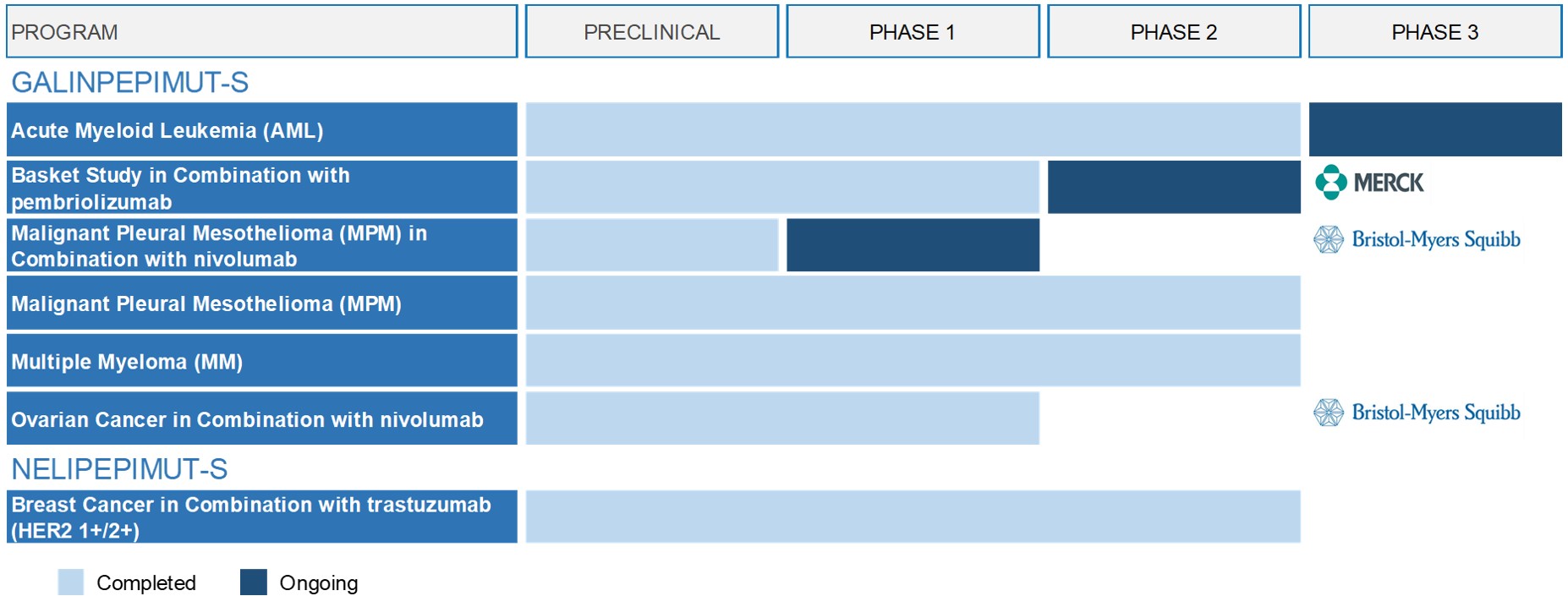
The chart below summarizes the current status of our clinical development pipeline:
Recent Developments
On January 9, 2020, we entered into a Securities Purchase Agreement with certain investors, pursuant to which we agreed to issue and sell, in a registered direct offering (i) an aggregate of 1,189,000 shares of our common stock at an offering price of $3.9825 per share and (ii) an aggregate of 448,800 pre-funded warrants exercisable for shares of our common stock at an offering price of $3.9725 per pre-funded warrant, for gross proceeds of approximately $6.5 million before deducting the placement agent fee and related offering expenses.
Concurrently, in a private placement we agreed to issue to the investors in the registered direct offering warrants exercisable for an aggregate of 818,900 shares of our common stock at an exercise price of $3.93 per share. Each warrant will be immediately exercisable and will expire five and one-half years from the issuance date. The warrants and the shares of our common stock issuable upon the exercise of the warrants were not registered under the Securities Act of 1933, as amended, or the Securities Act, and were offered pursuant to the exemption provided in Section 4(a)(2) under the Securities Act, and Rule 506(b) promulgated thereunder.
3
Merger of SELLAS Life Sciences Group Ltd. and Galena Biopharma, Inc.
On December 29, 2017, we completed the business combination with the privately held Bermuda exempted company, Sellas Life Sciences Group Ltd., or Private SELLAS, in accordance with the terms of the Agreement and Plan of Merger and Reorganization, dated as of August 7, 2017 and amended November 5, 2017, or the Merger Agreement, among SELLAS Life Sciences Group, Inc., Sellas Intermediate Holdings I, Inc., Sellas Intermediate Holdings II, Inc., Galena Bermuda Merger Sub, Ltd., and Private SELLAS. We refer to this business combination throughout this annual report on Form 10-K as the Merger. Immediately after the Merger, the former Private SELLAS shareholders owned approximately 67.5% of our fully diluted common stock, and the pre-Merger shareholders owned the remaining approximately 32.5%.
As a result of the Merger, our business is now substantially comprised of the business of Private SELLAS, and although we are considered the legal acquiror of Private SELLAS, for accounting purposes, Private SELLAS is considered to have acquired our company in the Merger. Consequently, the Merger is accounted for as a reverse acquisition. Upon completion of the Merger, we changed our name from “Galena Biopharma, Inc.” to “SELLAS Life Sciences Group, Inc.,” our common stock began trading on The Nasdaq Capital Market under a new ticker symbol “SLS” on January 2, 2018 and our financial statements became those of Private SELLAS.
As used in this annual report on Form 10-K, the words “we,” “us,” “our,” the “Company,” and “SELLAS” refer to SELLAS Life Sciences Group, Inc. and its consolidated subsidiaries following completion of the Merger.
4
The Cancer Immunotherapy Industry
Overview
Current treatments for cancer include surgery, radiation therapy, chemotherapy, hormone therapy, targeted therapy and immunotherapy. Cancer immunotherapy is an approach to cancer treatment that harnesses the body’s natural immune system response to fight and/or prevent tumor growth while keeping normal cells unaffected or delivering certain immune system components in order to inhibit the spread of cancer. In recent years, cancer immunotherapy drugs have emerged as a new mode of cancer treatment, alongside more established options such as surgery, chemotherapy, targeted therapy and radiation therapy.
Either as monotherapy or in combination therapies, immunotherapies may produce long-term remissions or even operational “cures” for cancers that have often been fatal until recently. Cancer immunotherapy is an important and rapidly emerging field, which has led to exciting new clinical research studies and garnered the attention of investors, biotechnology and pharmaceutical companies, regulatory agencies, payors and hospital systems, cancer patients and their families and the general public at large.
Market
According to a January 2020 report by Kelly Scientific Publications, cancer immunotherapy drugs have already captured nearly 50% of the overall oncology drugs market in 2019, generating about $75 billion in that year alone and are forecast to surpass $115 billion in 2023. Additionally, an October 2019 Allied Market Research report on the estimated entire market value of oncology drugs (of any type) suggests that cancer immunotherapies could represent up to 77% of that total value by 2023. According to a report published in September 2018, it was projected that approximately 70% of the 2019 immunotherapy market would be comprised of checkpoint inhibitors (~30% of the market share), immune synapse co-stimulators and bispecific monoclonal antibodies (~40% of the market share), as well as approximately 30% of other immunotherapies, including chimeric antigen receptor (CAR) T-cell therapies and other cell-based modalities (e.g., ex vivo modified natural killer or NK cells). It is predicted that the checkpoint inhibitor market share will decrease slightly by 2023, reaching a 27% value (from a 30% value in 2019), as novel therapies, including peptide cancer active immunizers (vaccines) such as our product candidates, GPS and NPS and cell-based therapies, advance into regulatory approvals and use in the cancer market.
The total number of newly diagnosed patients with AML per year in the United States is approximately 21,450 (2019 epidemiological data: American Cancer Society). It is estimated that the number of adult patients of any age with AML in the United States per year who successfully enter into CRem2, the indication of our REGAL study, is approximately 2,000 patients and approximately 4,700 patients outside of the United States in the rest of the world, or ROW, while the number of patients who achieve CRem1 is estimated to be approximately 16,400 patients in the United States and approximately 38,100 patients ROW. The number of patients potentially eligible for GPS maintenance therapy after achievement of CRem2 status is approximately 1,200 patients in the United States and approximately 2,800 patients ROW.
Products/Pipeline
Galinpepimut-S (GPS)
Overview
GPS is a WT1-targeting peptide-based cancer immunotherapeutic being developed as a monotherapy and in combination with other therapeutic agents to treat different types of cancers that result from uninhibited tumor cell growth. GPS targets malignancies and tumors characterized by an overexpression of the WT1 protein. The WT1 protein is one of the most widely expressed cancer proteins in multiple malignancies. A 2009 pilot project regarding the prioritization of cancer antigens (substances that evoke an immune response) conducted by the National Cancer Institute, or NCI, a division of the National Institutes of Health, or NIH, ranked the WT1 protein as a top priority for immunotherapy.
5
WT1 is a protein that resides in the cell’s nucleus and participates in the process of cancer formation and progression. As such, it is classified as an “oncogene.” WT1 plays a key role in the development of the kidneys in fetal life, but then almost disappears from normal organs and tissues. In a wide variety of cancers (20 or more cancer types), WT1 becomes detectable again in at least 50% of tumor pathology specimens in the cells of these cancers. WT1 appears in large amounts (
i.e.
, becomes “overexpressed”) in numerous hematological malignancies, including AML, MM and chronic myeloid leukemia, as well as in many solid malignancies such as MPM, gastrointestinal cancers (such as colorectal cancer), glioblastoma multiforme, TNBC, ovarian cancer and SCLC.
The following figure shows the ratio of samples testing positive for WT1 expression compared to the total number of samples tested for WT1 expression in a number of different malignancies.
WT1 EXPRESSION FREQUENCY ACROSS VARIOUS CANCERS
(Positive samples / Total samples)

Mechanism of Action in Immune System
GPS is a multi-peptide product that has been modified to enhance the degree and duration of the immune response against the WT1 protein. The modification is based on the fact that two of the four peptides in the peptide mixture comprising GPS are deliberately mutated in a single amino acid residue. These mutated peptides are recognized by the immune system as non-self-entities and are therefore less likely to induce immune tolerance. After administration of these mutated peptides, the patients become immunized against the corresponding native versions of these peptides (which are expressed by the tumor cells), and thus, are able to cross-react against them, which concept is called the heteroclitic principle.
6
We believe that GPS has a mechanism of action that involves direct activation of the patient’s immune system specifically and solely against the WT1 protein. Although the immune system is designed to identify foreign or abnormal proteins expressed on tumor cells, this process is often defective in cancer patients. Typically, patients harboring WT1-positive malignancies have very few or no T cells specifically reactive or responsive to, and therefore activated by, WT1. T cells are involved in both sensing and killing abnormal cells, in addition to coordinating the activation of other cells in an immune response. T cells can be classified into two major subsets, CD4 cells and CD8 cells. CD8 cells are characterized by a CD8 protein on their cell surface that allow them to recognize, bind and kill cells infected by cancer cells. CD4 cells, known as helper T cells, are critical to providing the signals necessary for sustained CD8 cell responses and are also capable of exerting direct anti-tumor activity. GPS is designed to elicit both CD4 and CD8 cell immune responses. We believe that the activation of CD8 cells by GPS could lead to direct cancer cell killing, or cytotoxicity, and the eventual establishment of immunologic memory against a WT1-expressing cancer. This occurs by two mechanisms: (i) conversion of some of the activated CD8 cells to CD8 memory cells, and (ii) activation of CD4 cells and the eventual creation of CD4 terminal effective memory cells.
We believe that, with respect to the conversion of activated CD8 cells, the GPS stimulated CD8 cells transform into cytotoxic T-lymphocytes, or CTLs, which are expected to be able to attack and destroy specifically WT1-positive cancer cells. Each CTL typically destroys one WT1-positive cancer cell, but they have been shown to be able to kill up to 10 to 20 WT1-positive cancer cells. Further, with respect to the activation of CD4 cells, we believe that CD4 cells are stimulated to produce WT1-specific, helper T cells, which are able to in turn activate CTLs and B cells. The B-cells “helped” by the helper T cells produce antibodies to specific WT1 epitopes. The anti-cancer effect is considered to be a result of a combination of all of the above actions, as well as possible additional, less clear mechanisms involving other immune cell types (
e.g.
, natural killer cells) that are not as widely understood.
The following diagram illustrate GPS’ mechanism of action:

GPS cannot be administered to patients in a water-soluble form, and so it is given under the skin, or subcutaneously. If administered on its own, GPS would rapidly degrade and would not have the opportunity to activate the immune system. Therefore, GPS is mixed with Montanide™, a commercially available, non-specific immune adjuvant composed of a natural metabolizable oil and a very refined emulsifier, creating a dense emulsion. Montanide is co-administered with GPS by subcutaneous injection to optimally activate cellular and humoral immune responses in vaccinated patients. Additionally, prior to the administration of GPS, patients receive another immune adjuvant, GM-CSF, to non-specifically stimulate and activate antigen-presenting cells, or APCs, in the vicinity of the subcutaneous injection of GPS.
7
After subcutaneous injection, the WT1 peptides within GPS disperse locally underneath the injection site and at local lymph nodes and are ingested by APCs. Digested peptide fragments are then presented on the surface of APCs to CD8 and CD4 lymphocytes while simultaneously associated on the cell membrane with major histocompatibility complexes, or MHC, human leukocyte antigen, or HLA molecules. This process activates the CD4 and CD8 cells and sensitizes them to the key 25 epitopes of WT1, thus initiating the process of short- and long-term T-cell-mediated immunity against WT1.
8
Key Features
The following table summarizes the key features of GPS:
|
Key features of an Optimal Cancer
Active Immunizer Therapeutic
|
GPS Properties and Clinical Strategy
|
|
|
Selecting the right target antigen and
epitopes within that antigen
|
Four peptides and 25 epitopes selected optimally with the objective of ensuring:
- optimal MHC complex presentation;
- specificity across different HLA types;
- production of both CD4 and CD8 activated cells; and
- the ability to apply the heteroclitic principle, as described above, to overcome tolerance.
|
|
|
Optimal T-cell engagement leading to
cancer cell destruction
|
Immune response data from the final analysis of the Phase I clinical study of GPS in MM in 12 evaluable patients that were presented at the 44
th
Annual Meeting of the European Society for Blood and Marrow Transplantation, or EBMT, in 2018 (Dr. Kohne et al.) showed 75% frequency of either CD8+ or CD4+ responses to an all-pool mixture of WT1-derived antigens after completion of the 12 vaccinations per the study protocol. This evidence of multi-epitope, broad cross-reactivity along the full-length of the WT1 protein is suggestive of epitope spreading, as it emerged across epitopes against which the patients were not specifically immunized. These data corroborate the results of an earlier analysis in mid-2017 and strongly suggest stimulation of T cells towards intracellular antigen fragments from GPS-induced destruction of tumor cells, which effect is a hallmark of an effective vaccine, e.g., that it is targeting the right epitopes chosen by design.
|
|
|
Overcoming the barriers of an
adverse/immunosuppressive tumor
micro-environment, or TME
|
The GPS monotherapy clinical studies are in the setting of complete remission, or CRem, and minimal residual disease, or MRD, whereby no bulky or measurable tumor deposits exist. This is typically seen after successful frontline therapy in select cancer types for which such debulking standard therapies exist (
e.g.
, AML or MPM). In these settings, the tumor micro-environment, or TME, is substantially absent. We are also pursuing combination therapy with checkpoint inhibitors in tumor settings whereby measurable disease exists, as contemporaneous checkpoint inhibition would abrogate the immunosuppressive effects of the TME.
|
|
|
Overcoming or mitigating immune
tolerance
|
Heteroclitic peptides are those in which mutations have been deliberately introduced in the amino acid sequence. The use of heteroclitic peptide in an active immunizer, such as GPS, increases immunogenicity without changes in the antigenicity profile, as well as strengthens MHC binding of the peptide to produce cytotoxic CD8 cells that continue to recognize the corresponding native peptide sequence. This is believed to be a key factor differentiating GPS from essentially all previously developed peptide vaccines, and applies a highly innovative technology platform, peptide heteroclicity, in a clinical late-stage cancer immunotherapeutic candidate product.
|
|
|
Addressing the broadest possible
candidate patient population
|
GPS has activity across multiple HLA types that could allow treatment of a vast majority of global patient populations harboring WT1-positive malignancies.
|
|
9
Potential Key Differentiators
GPS’ potential key differentiators as compared to other active immunization or vaccine-type approaches, as well as compared to immunotherapy approaches more generally, are as follows:
|
•
|
heteroclitic peptides may offer increased immune response and less potential for tolerance;
|
|
•
|
multivalent oligopeptide mixture potentially drives differentiated immunotherapeutic efficacy, targeting 25 key epitopes of WT1;
|
|
•
|
potentially applicable to 20 or more cancer types worldwide and the vast majority of HLA types;
|
|
•
|
CRem or MRD status (after initial tumor debulking with preceding standard therapy) is the preferred setting for GPS monotherapy;
|
|
•
|
not directly competitive with current clinical standard of care therapies, but rather believed to complement them in the maintenance setting;
|
|
•
|
potential for combination approaches with other cancer immunotherapies, due to tolerable adverse event profile;
|
|
•
|
anticipated cost-effective manufacturing; allogeneic, “off-the-shelf,” vialed subcutaneously administered drug that is not patient-specific; and
|
|
•
|
positive Phase 2 clinical data on effectiveness (based on overall survival, or OS, in AML and progression-free survival, or PFS, in MM) with good tolerability and a favorable safety profile.
|
Development Program for GPS
GPS has the potential as a monotherapy or in combination with other immunotherapeutic agents to address a broad spectrum of hematologic, or blood, cancers and solid tumor indications. We are currently exploring the potential role for GPS in both monotherapy and combination therapy environments:
|
•
|
GPS monotherapy
: Phase 2 clinical trials of GPS as monotherapy for AML, MPM and MM have been completed. In January 2020, we commenced the Phase 3 clinical trial of GPS in AML, also known as the REGAL Study. The pivotal Phase 3 REGAL study is a 1:1 randomized, open-label study comparing GPS monotherapy in the maintenance setting to investigators’ choice of best available treatment in AML patients who have achieved hematologic complete remission, with or without thrombocytopenia (CRem2/CRem2p), after second-line antileukemic therapy and who are deemed ineligible for or unable to undergo allogeneic stem-cell transplantation. The study is expected to enroll approximately 116 patients across approximately 50 clinical sites in the United States and Europe. The primary endpoint is overall survival, or OS
,
from the time of study entry. The Phase 2 study in AML CRem2 patients, which is the same indication as the Phase 3 REGAL study, showed a median OS of 21.0 months, at a median follow-up of 30.8 months, in patients receiving GPS compared to 5.4 months in contemporaneously treated patients with best standard therapy. See data set forth in “- AML Clinical Data.”
|
|
•
|
GPS combination therapy
:
|
|
◦
|
Combination basket study:
In December 2018, we initiated a Phase 1/2 multi-arm ("basket" type) clinical trial of GPS in combination with the anti-PD-1 therapy Keytruda (pembrolizumab) in collaboration with a Merck & Co., Inc., Kenilworth, N.J., U.S. subsidiary (known as MSD outside the United States and Canada), or Merck. The purpose of the basket trial is to determine if the administration of GPS in combination with pembrolizumab has the potential to demonstrate clinical activity in the presence of macroscopic disease, where monotherapy with either agent would have a more limited effect.
|
10
|
◦
|
Mesothelioma
:
A Phase I open-label investigator-sponsored clinical trial of GPS, in combination with Bristol-Myers Squibb’s anti-PD-1 therapy, nivolumab, in patients with MPM who harbor relapsed or refractory disease after having received frontline standard of care multimodality therapy was commenced in February 2020 at MSK. The study drug is being provided by us and Bristol-Myers Squibb. The principal investigator for the study is Dr. Marjorie G. Zauderer, MD, Co-Director, Mesothelioma Program and Associate Attending Physician in the Thoracic Oncology Service, Department of Medicine at MSK.
|
The purpose of the trial is to determine if the administration of GPS in combination with nivolumab has the potential to demonstrate antitumor immune responses and meaningful clinical activity in the presence of macroscopic disease in MPM patients. The study will also investigate the tolerability of the combination, evaluate the immunogenicity of the two agents administered together, by CD4+ and CD8+ T-lymphocytes (both peripherally and at the tumor site), and gauge the degree of clinical benefit by assessment of the overall response rate with the combination in comparison with that reported with nivolumab alone in historical comparable patient populations. In a randomized, controlled, blinded Phase 2 clinical trial in MPM patients completed in 2017, GPS monotherapy, given as maintenance after first line tumor-debulking multimodality treatment, demonstrated meaningful clinical activity with median survival of 22.8 months vs. 18.3 months in the control group (N=41) and with associated sustained immune responses (both CD4+ and CD8+) against the WT1 antigen while adverse events were mainly comprised of low grade reactions at the site of the injection.
Targeted Indications
GPS Monotherapy for Acute Myeloid Leukemia (AML)
Current AML Treatment Therapies
AML is an aggressive and highly lethal blood cancer characterized by the rapid growth of abnormal white blood cells that build up in the bone marrow and interfere with the production of normal blood cells. Its symptoms include fatigue, shortness of breath, bruising and bleeding, and increased risk of infection. The cause of AML is unknown, and the disease is typically fatal within weeks or months if untreated. AML most commonly affects adults, and its incidence increases with age. Until recently, the overall treatment landscape for AML had remained static for decades, as numerous targeted and antiproliferative agents were unsuccessful in according meaningful long-term clinical benefits, including increments in survival. Standard treatments included chemotherapy as well as hypomethylating agents, or HMAs, while select patients could have also undergone a hematopoietic, or blood-forming, stem cell transplant, or allo-HSCT. Recently approved agents that target mutations of the isocitrate dehydrogenase, or IDH, type-1 and -2 proteins and the FMS-like tyrosine-protein kinase, or FLT3, proteins, as well as the novel fixed-combination of chemotherapy Vyxeos and the CD33-targeting antibody-drug conjugate gemtuzumab ozogamicin, the B-cell lymphoma 2 (bcl-2) inhibitor venetoclax, and the sonic hedgehog (Hh) signaling inhibitor glasdegib have led to modest incremental improved patient outcomes. Nonetheless, the goal of therapy for AML, both in the upfront and salvage settings, is to achieve a state of complete remission, or CRem. CRem is defined per consensus criteria by the European Leukemia Net, whereby the hematologic and clinical features of the disease are no longer detected. In the first line setting, once AML patients achieve a status of first CRem (CRem1) they have two options for a meaningful long-term benefit: allo-HSCT and maintenance therapy with an investigational oral form of the HMA azacytidine, which is not yet approved for use by any health authority. In the second line setting, i.e., in AML patients who have relapsed and are receiving salvage antileukemic therapy we are not aware of any therapies, other than allo-HSCT
,
that have shown any meaningful long-term benefit when used as maintenance after patients achieve a status of second CRem or CRem2. Once the disease relapses after second-line therapy, patients have very limited options, as no third-line therapies have shown demonstrable clinical impact to date and eventually AML patients in second relapse generally succumb to AML or complications associated with it. We believe that there is a significant unmet medical need for a reasonably safe and effective maintenance therapy for AML patients who have achieved CRem2 status after successful second-line (salvage) therapies, as a large proportion of these patients are ineligible for or unable to undergo allo-HSCT.
11
The AML indication was chosen for first-in-human clinical studies of GPS for the following reasons:
|
•
|
AML presents a clinical setting in which CRem status (specifically CRem2) can be achieved with standard antileukemic therapy;
|
|
•
|
the high degree of unmet medical need in recurrent/relapsed AML and the absence of an effective maintenance therapy over the decades after salvage re-induction until and immediately after achievement of CRem2 status, especially considering that most patients in this clinical scenario are older than 60 years of age;
|
|
•
|
the almost universal expression of WT1 in leukemic blasts, which are AML’s replicating malignant cells, as well as leukemic stem cells, or LSCs, cells that are or become extremely resistant to standard chemotherapy or targeted agent approaches and which can be realistically eradicated only with immunotherapy methods (including allo-HSCT). LSCs have been shown to be susceptible to targeting by cytotoxic T cells (CD8 and CD4 cells) stimulated against leukemia-associated antigens and we predicted this would be the case for GPS;
|
|
•
|
the fact that WT1 has been associated with the actual development of leukemia;
|
|
•
|
the positive correlation between the level of expression of WT1 and the prognosis in AML;
|
|
•
|
the fact that the level of expression of WT1 can be followed over time in patients during and after therapy, including immunotherapy, as a method of monitoring for MRD;
|
|
•
|
early evidence from mouse models that vaccination with peptides against select WT1 antigenic epitopes leads to detection of immune response;
|
|
•
|
early evidence that human immunocytes sensitized ex-vivo to peptides contained in GPS were able to recognize naturally presented WT1 peptides on the surface of several leukemia cell lines;
|
|
•
|
early anecdotal (at the time) clinical data showing antileukemic activity of WT1 monovalent vaccines in the CRem1 maintenance setting in Japanese population (albeit restricted to HLA-A*2401 type), as well as a dendritic cell vaccine in the Netherlands (independent of HLA haplotype) in the same setting;
|
|
•
|
a predictive assumption of very low to negligible degree of clinical toxicity with a WT1-targeted immunotherapy such as GPS, due to the fact that WT1 in normal, non-cancerous, tissues is both expressed at extremely low levels and limited in number of organs and tissues, but also due to the fact that WT1 fragments, or peptide epitopes, in normal cells are presented to host APCs in a different manner than are WT1 fragments produced in cancer cells; of note, WT1 expression in normal tissues of adults is limited to the podocyte layer of the glomerulus (kidney), Sertoli cells (testis), granulosa cells (ovary), decidual cells (uterus), mesothelial cells (peritoneum, pleura), mammary duct and lobule (breast), and blood-forming (hematopoietic) progenitor cells (CD34+ cells in the bone marrow); and
|
|
•
|
the advent of modern immunotherapeutics in cancer and the promise of an innovative, off-the-shelf potentially effective, low adverse event burden immunotherapy to prevent or delay relapse in patients once they achieve CRem status in AML, a disease that has historically been associated with dearth of deep and sustained responses to checkpoint inhibitors.
|
GPS has been granted Fast Track and Orphan Drug designations by the FDA for the treatment of AML.
AML Clinical Data
In an initial pilot clinical trial in AML, a total of nine adult patients of all ages with de novo AML were treated with upfront standard chemotherapy and were able to achieve their first complete remission, or CRem1. Administration of GPS resulted in a median OS that was at least 35 months from the time of GPS administration. In this study, specifically for patients who were 60 years and older (n=5), median OS was at least 33 months from the time of GPS administration or approximately 43 months from the time of initial AML diagnosis. The mean time of follow-up was 30 months from the time of diagnosis at the time of this analysis for all patients. Of the eight patients tested for immunologic response, seven, or 87.5%, demonstrated a WT1-specific immune response.
12
In a subsequent Phase 2 clinical trial in AML, a total of 22 adult patients of all ages with de novo AML were treated with upfront standard chemotherapy and were able to achieve CRem1. Most patients also received one to four cycles of “consolidation” chemotherapy per standard AML treatment guidelines. GPS was then administered within three months from the completion of the consolidation chemotherapy regimen in up to 12 total doses: six initial doses (priming immunization) followed by six additional “booster” immunizations over a total period of up to 15 months to qualifying patients (
i.e.
, patients who were clinically stable and did not show disease recurrence after the first six injections). This Phase 2 clinical trial met its primary endpoint of an actual OS rate of at least 34%, measured three years into the clinical trial (
i.e.
, percentage of patients alive after three years of follow-up). An actual OS rate of 47.4% was demonstrated at three years post-GPS treatment, exceeding historical published data of OS of 20% to 25% by 2.4- to 1.9-fold (or 240% to 190%), respectively.
GPS administration was also shown to improve OS in comparison to historical data in patients in CRem1. Administration of GPS resulted in a median OS that was poised to exceed 67.6 months from the time of initial AML diagnosis in patients of all ages, which represents a substantial improvement compared to best standard therapy. Only five of the 22 patients underwent allo-HSCT and an ad hoc statistical analysis failed to show a significant effect of the transplant upon OS (either in median survival times or survival rates at specific landmark time-points). In this study, the patients’ median age was 64 years old. The most frequent toxicities were mild to moderate local skin reactions and inflammation, as well as fatigue, which were self-limited and responded to local supportive measures and analgesics. None of the patients developed significant serious or high grade systemic adverse reactions (including anaphylaxis) attributable to GPS. GPS elicited WT1-specific immune responses in 88% of patients, including CD4 and CD8 T-cell responses. Further, the heteroclitic principle was confirmed, in that immune responses were seen against the native version of the two mutated WT1 peptides within the GPS mixture. The results showed a trend in improved clinical outcomes in patients who mounted an immune response with GPS compared to those patients who did not. Importantly, a preplanned subgroup analysis for the cohort of 13 patients within the clinical trial who were 60 years of age or older demonstrated a median OS of 35.3 months from time of initial diagnosis. Comparable historical populations have a median OS ranging from 9.5 to 15.8 months from initial diagnosis, which represents a 2.25 to 3.75-fold improvement in OS associated with GPS therapy in the CRem1 maintenance setting as contrasted to these historical cohorts of broadly comparable patients.
An additional Phase 2 clinical trial of GPS was performed at the H. Lee Moffitt Cancer Center & Research Institute, or Moffitt. This Phase 2 trial included 10 AML patients who had received first-line therapy for their disease, who then experienced relapse and were subsequently treated with second-line chemotherapy and achieved a CRem2. This group of patients had a more advanced disease in comparison to those treated in the Phase 2 clinical trial in CRem1 patients discussed above, and typically demonstrated a historical OS of less than ~8 months, even with post-CRem2 allo-HSCT. In the Moffitt trial, the efficacy of GPS (measured as median OS, from the time of achievement of CRem2 until death from any cause) was compared with that of “watchful waiting” in a cohort of 15 contemporaneously treated (but not matched by randomization) broadly comparable patients treated by the same clinical team at Moffitt. Initial data, at a median follow-up of 19.3 months, showed that GPS administration resulted in a median OS of 16.3 months (495 days) compared to 5.4 months (165 days) from the time of achievement of CRem2. This was a statistically significant difference (p=0.0175). Two of 14 AML patients demonstrated relapse-free survival of more than one year. Both of these patients were in CRem2 at time of GPS administration, with duration of their second remission exceeding duration of their CRem1, strongly suggesting a potential benefit based on immune response mechanisms. Final data, at a median follow-up of 30.8 months, showed a median OS of 21.0 months in patients receiving GPS therapy compared to 5.4 months in the AML CRem2 patients treated with best standard care. This is a statistically significant difference (p-value < 0.02). GPS was well-tolerated in this clinical trial.
13
AML Phase 3 Clinical Trial
In January 2020, we commenced a Phase 3 pivotal registration-enabling study for GPS in AML patients in second complete remission, including those in complete remission with incomplete platelet recovery (CRp). This study is a 1:1 randomized, open-label study comparing GPS in the maintenance setting to investigators’ choice of best available treatment, or BAT, in adult AML patients (age >18 yrs) who have achieved their second hematologic (morphological) complete remission, with or without thrombocytopenia (CRem2/CRem2p; with “p” designating platelets), after second-line antileukemic therapy and who are deemed ineligible for or unable to undergo allo-HSCT. We expect this study will be used as the basis for a BLA submission, subject to a statistically significant and clinically meaningful data outcome and agreement with the FDA.
The Phase 3 study is expected to enroll approximately 116 patients at approximately 50 clinical sites in the United States and Europe. The primary endpoint is OS and secondary endpoints include leukemia-free survival rates of achievement of MRD negativity, and antigen-specific T-cell immune response dynamics over time. The study will have a single planned interim safety and futility analysis after 80 events (deaths). The key features and schema of this study are shown in the following graphic:

14
GPS Monotherapy in Other Indications
MPM
MPM is an asbestos-related cancer that forms on the protective tissues that cover many of the internal organs. The most common area affected is the lining of the lungs and abdomen, though it can also form around the lining of the heart. Most cases are traced to job-related exposures to asbestos and it can take approximately 40 years between exposure and cancer formation. Symptoms may include shortness of breath, a swollen abdomen, chest wall pain, cough, feeling tired, and weight loss. MPM is generally resistant to radiation and chemotherapy, and long-term survival is rare, even in cases where aggressive upfront debulking multimodality therapy (
i.e.
, extirpative surgery, chemotherapy and in some cases radiotherapy, often described as “trimodality therapy” when used to treat MPM) are used.
A randomized, double-blind, placebo-controlled Phase 2 clinical trial in MPM patients enrolled a total of 41 patients at MSK and M.D. Anderson Cancer Center. Data from this Phase 2 clinical trial was presented in 2016. Based on an initial analysis of 40 patients who were eligible at the time with a median follow-up of 16.3 months, a median OS of 24.8 months was seen for GPS-treated MPM patients, compared to a median OS of 16.6 months for patients in the control arm. For patients with a basic reproductive ratio tumor resection and subsequent treatment with GPS, a significant survival benefit was observed compared to those who received a placebo, with a median OS of 39.3 months compared to 24.8 months (HR: 0.415) in favor of GPS. In a subsequent analysis for the entire cohort (n=41) in August 2016, with a median follow-up of 17.2 months, a median OS of 22.8 months was observed for GPS-treated MPM patients, compared to a median OS of 18.3 months for patients in the control arm. In the datasets from both of these analyses, GPS was shown to induce WT1-specific CD8 and CD4 T-cell activation. There were no clinically significant severe adverse events in this study.
Multiple Myeloma (MM)
MM is a cancer formed by malignant plasma cells, and its cause is unknown. The overgrowth of plasma cells in the bone marrow crowds out normal blood-forming cells, causing low blood counts and anemia (a shortage of red blood cells). MM can also cause a shortage of platelets (cells responsible for normal blood clotting) and lead to increased bleeding and bruising, along with problems fighting infections due to low white cell counts and/or lower levels of infection-fighting antibodies. MM causes a host of organ problems and symptoms, including fatigue, bone pain, fractures, circulatory problems (in small vessels of the brain, eye retina, heart, bowel, etc.) and kidney failure. Treatment for MM includes chemotherapy, glucocorticoids, drugs that modulate the immune system (immunomodulatory drugs, or IMiDs), proteasome inhibitors, histone deaceylase inhibitors, targeted monoclonal antibodies, radiation and autologous stem cell transplants, or ASCTs. The prognosis in MM is highly variable and depends on numerous risk factors, some related to the biology of the disease, others to the host (
e.g.
, age and functional status). Consequently, median survival can vary from up to at least 15 years in non-high-risk patients who achieve CRems, as defined by the International Myeloma Working Group, or IMWG, criteria, to approximately three years (from time of initial treatment) in patients with MM who achieve less than partial response, or PR, after ASCT. There are patients with MM who fare even more poorly than described above. For example, those in the immediately aforementioned group who also have high-risk cytogenetics at baseline may survive on average less than three years. Similarly, patients who are ineligible for ASCT and are managed only with chemotherapy and long-term IMiD maintenance (with up to nine cycles of lenalidomide) who also achieve less than CRems and remain MRD-positive demonstrate a three-year OS rate of only about 55%; these landmark three-year OS rates decrease by approximately 40 to 50% in patients who also have high-risk cytogenetics at baseline. Despite significant therapeutic advances in the management of MM, the prognosis of patients with high-risk cytogenetics at the time of diagnosis remains quite poor, even when they successfully complete an ASCT, particularly if such patients continue to have evidence of MRD.
15
We have reported comprehensive final data from a Phase 2 study for GPS in 19 patients with MM. All non-progression events were confirmed and remained ongoing as of the time of the latest presentation (median follow-up at 20 months for survivors). The data indicate promising clinical activity among MM patients with high-risk cytogenetics at initial diagnosis who also remain MRD(+) after successful frontline therapy (induction regimen followed by ASCT). This subgroup of MM patients, when serially assessed per IMWG criteria, typically relapse/progress within 12 to 14 months after ASCT, even when they receive maintenance therapy with IMiDs such as thalidomide or proteasome inhibitors such as bortezomib. Of note, 18 of the 19 patients received lenalidomide maintenance starting after the first three GPS administrations following ASCT; the remaining single patient received bortezomib under the same schedule. All patients had evidence of at least MRD after ASCT, while 15 of the 19 also had high-risk cytogenetics at diagnosis. Combined, these characteristics typically result in low PFS rates that do not exceed 12 to 14 months following ASCT, even while on maintenance therapy with IMiDs or proteasome inhibitors, which are the current standards of care. At June 2017, median PFS with GPS was 23.6 months, while median OS had not been reached. Our results compare favorably with an unmatched cohort of broadly comparable MM patients with high-risk cytogenetics published by the Spanish PETHEMA group from the PETHEMA Network No. 2005-001110-41 trial. Our GPS therapy demonstrated a 1.87-fold increase in median PFS, as well as a 1.34-fold increase in the PFS rate at 18 months compared to the aforementioned historical cohort, which included MM patients with high-risk cytogenetics and MRD(+) post-ASCT and on continuous intensive maintenance with thalidomide +/- bortezomib. The safety profile was devoid of grade 3/4/5 treatment-related adverse events. Immune response data showed that up to 91% of patients had successfully developed T-cell (CD8 or CD4) reactivity to any of the four peptides within the GPS mixture, while up to 64% of patients demonstrated immune response positivity (CD4/CD8) against more than one WT1 peptide (multivalent responses). Moreover, multifunctional cross-epitope T-cell reactivity was observed in 75% of patients to antigenic epitopes against which hosts were not specifically immunized, in a pattern akin to epitope spreading. Further, a distinctive link was shown between the evolution of immune responses and changes in clinical response status (achievement of CR/very good partial response clinical status per IMWG criteria) over time following treatment with GPS, with each patient being used as his or her own control for each longitudinal comparison. This association has not been previously described for a peptide vaccine in MM. We believe that these results offer mechanistic underpinnings for immune activation against WT1 in patients with aggressive, high-risk MM, and support the potential antimyeloma activity of GPS.
GPS Combination Therapy with PD-1 blocker (nivolumab) for Ovarian Cancer
Epithelial cancer of the ovary, or ovarian cancer, is a relatively common gynecologic cancer that develops insidiously, and hence is associated with vague or no symptoms that would urge patients to seek medical attention. Not surprisingly, most women with ovarian cancer present with advanced (at least locally or regionally, and often systemically spread) disease. Ovarian cancer is managed with initial surgical resection followed by platinum-based chemotherapy. During the past decade, incremental advances in chemotherapy, and the introduction of targeted therapies (such as poly-ADP-ribose polymerase inhibitors and several others) and specially formulated compounds (such as liposomal anthracyclines) have resulted in improved survival and in more effective treatment of relapsed disease. In addition, a better understanding of genetic risk factors, along with aggressive screening, has permitted a tailored approach to preventive strategies, such as bilateral salpingo-oophorectomy in selected women along in specific patient populations genetically predisposed to this cancer (such as those harboring genetic alterations of the BRCA gene family). Although a complete clinical remission following initial chemotherapy can be anticipated for many patients, a review of “second-look” laparotomy, when it was often performed as a matter of routine care, indicates that less than 50% of patients are actually free of disease. Furthermore, nearly half of patients with a negative “second-look” procedure relapse and require additional treatment. Many patients will achieve a CRem2 clinical response with additional chemotherapy. However, almost all patients will relapse after a short remission interval of nine to 11 months. Effective strategies, such as introduction of novel immunotherapies, to prolong remission or to prevent relapse are required, as subsequent remissions are of progressively shorter duration until chemotherapy resistance broadly develops, leading to eventual disease-related demise.
16
Ovarian cancer represents an intriguing opportunity to study both the clinical and immunologic effects of GPS in another solid tumor. Additionally, therapeutic targeting of WT1 through immune pathways has largely not been pursued by others to date for this indication and ovarian cancer remains “incurable” once it advances and becomes disseminated, even in the face of significant advances in the field. Ovarian cancer was chosen as a target indication for the following reasons:
|
•
|
ovarian cancer presents a clinical setting whereby MRD status can be achieved with standard upfront therapy both immediately after first line therapy, but also after effective debulking of the “first relapse.” The latter subgroup of patients (after successful second line treatment/first salvage, lacking demonstrable macroscopic residual disease) would be optimal candidates for GPS therapy, as no standard maintenance therapy exists for such patients and the subsequent relapse patterns and metrics are known and predictable;
|
|
•
|
the high levels of expression of WT1 in ovarian cancer cells. In fact, WT1 expression is so frequent that pathologists routinely use immunohistochemical stains for WT1 (with a standardized convention for describing expression and determining as “positive” or “negative”) to help distinguish epithelial ovarian cancers from other tumors;
|
|
•
|
preliminary evidence that WT1 expression may be linked to prognosis in ovarian cancer and that it may play an anti-apoptotic role in ovarian cancer cell lines;
|
|
•
|
the high degree of unmet medical need in ovarian cancer patients after first (or subsequent) successful “salvage” debulking therapy and the absence of effective therapies for such patients; and
|
|
•
|
a predictive assumption of very low to negligible degree of clinical toxicity with a WT1-targeted immunotherapy such as GPS due to the fact that WT1 in normal, non-cancerous tissues is both expressed at extremely low levels and limited in number of organs and tissues, but also due to the fact that WT1 fragments, or peptide epitopes, in normal cells are presented to host APCs in a different manner than are WT1 fragments produced in cancer cells.
|
GPS was studied in combination with nivolumab, a PD-1 immune checkpoint inhibitor, in an open-label, non-randomized Phase 1/pilot clinical trial, which was independently sponsored by MSK. The aim of the study was to evaluate the safety and efficacy of this combination in patients with WT1-expressing (WT1+) recurrent ovarian, fallopian tube or primary peritoneal cancer who were in second or greater clinical remission (after their successful first or subsequent “salvage” therapy). Eligible patients were devoid of macroscopic residual or recurrent disease, i.e., were free of locally or distantly metastatic deposits detectable by imaging modalities (CT, MRI and/or PET scan). This Phase 1/pilot clinical trial enrolled 11 patients with recurrent ovarian cancer who were in second or greater clinical remission at MSK, of whom 10 were evaluable. Patients enrolled in the clinical trial received the combination therapy during the clinical trial’s 14-week treatment period. Individuals who had not progressed by the end of this period also received a maintenance course of GPS. In this study, treatment was continued until disease progression or toxicity. Information on the primary endpoint of this clinical trial, which was the safety of repeated GPS administrations, for a total of six doses, in combination with seven infusions of nivolumab was presented at the ASCO 2018 annual meeting (O’Cearbhaill RE, et al). The secondary endpoint of the study was immune response, and the exploratory endpoints included landmark one-year PFS rate compared to historical controls and correlative analyses between clinical and immune responses. Exploratory efficacy interim data from this pilot trial showed that GPS, when combined with a PD-1 inhibitor, in this case nivolumab, demonstrated PFS of 64% at one year in an intent to treat the group of 11 evaluable patients with WT1+ ovarian cancer in second or greater remission. Among patients who received at least three doses of GPS in combination with nivolumab, PFS at one year was 70% (7/10). The historical rates with best standard treatment do not exceed 50% in this disease setting. The most common adverse events were Grade 1 or 2, including fatigue and injection site reactions. Dose limiting toxicity, or DLT, was observed in one patient, following the second dose of the combination. No additional adverse event burden was observed for the combination as compared to nivolumab monotherapy. The combination induced a high frequency of T- and B-cell immune responses.
17
Follow-up data now show that three of the 11 patients enrolled in the study have continued to show no signs of disease progression. The mean progression free survival (PFS) for these three patients is 35.4 months from the initiation of salvage chemotherapy
,
or mean PFS of 30.1 months from the first administration of GPS plus nivolumab. Based on this follow-up information, the estimated two-year PFS rate for this study is now 27.3% for the intent-to-treat (ITT) patients (n=11) and approximately 30% for patients who received greater than two doses of GPS and nivolumab (n=10), as compared to a historical 3% to 10% PFS rate for patients receiving only salvage chemotherapy. No new serious adverse events were noted during the longer follow-up period.
GPS Combination Therapy with PD1 blocker (pembrolizumab) for Other Cancers
Given the potential immunobiologic and pharmacodynamic synergy between GPS and an immune check-point inhibitor (e.g., PD1 blocker), we entered into a Clinical Trial Collaboration and Supply Agreement with Merck (known as MSD outside the United States and Canada), to assess the efficacy and safety of GPS in combination with Merck’s anti-PD-1 therapy pembrolizumab with exploratory long-term follow-up for OS and safety and have commenced a Phase 1/2 open-label, non-comparative, multicenter, multi-arm study of patients with WT1-positive advanced cancers, including both hematologic malignancies and solid tumors. The initial tumor types to be treated are ovarian cancer (second or third line) and colorectal cancer (third or fourth line), to be followed by TNBC (second line), SCLC (second line), and AML (patients unable to attain deeper morphological response than PR on hypomethylating agents and who are either ineligible for or unable to undergo allo-HSCT). This clinical study was initiated in December 2018 and we plan to enroll up to approximately 40 patients in the two currently actively accruing arms, out of a total of up to approximately 90 patients for the entire study, in up to 20 centers in the United States only. The purpose of this five-arm “basket” trial is to determine whether the administration of GPS in combination with pembrolizumab has the potential to demonstrate clinical activity in the presence of macroscopic disease, where monotherapy with either agent would have a more limited effect. The negative influence of TME factors on the immune response is predicted to be mitigated by PD1 inhibition (by pembrolizumab), thus allowing the patients’ own immune cells to invade and destroy cancerous growth deposits specifically sensitized against WT1 (by concomitantly-administered GPS). The key features and schema of this study are shown in the graphic below:
18

GPS Combination Therapy with PD1 blocker (nivolumab) for MPM
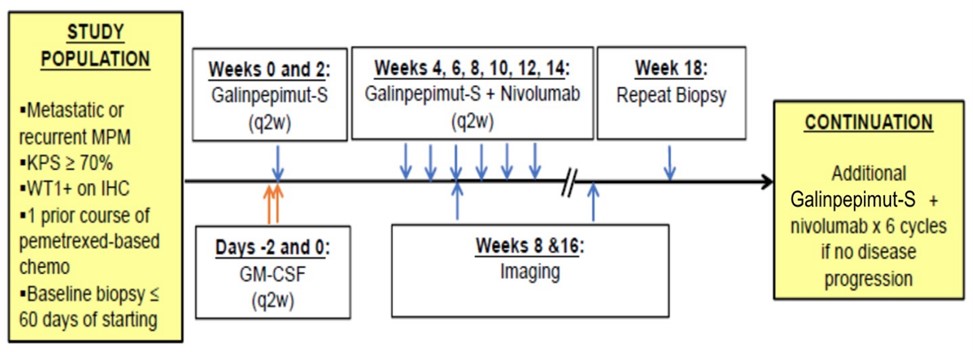
A single-center, open-label, single-arm, non-randomized investigator-sponsored Phase 1 trial of concomitant administration of GPS in combination with nivolumab was initiated in February 2020 at MSK in patients with MPM who have previously received treatment with pemetrexed-based chemotherapy and have measurable disease on imaging, either due to residual disease after prior treatment or recurrent disease. We are providing GPS and BMS is providing nivolumab for this study.
The IST is planned to accrue a minimum of 10 patients. Its primary objective is to determine the tolerability of the GPS plus nivolumab combination in patients with previously treated MPM who have documented progression of disease on imaging at the time of study entry, while the secondary objective is to evaluate the immunogenicity of the above combination by assessing the WT1-specific cell-mediated immune response both in peripheral blood and at the tumor site.
19
The key features and schema of the study are shown in the Figure below:
NPS (nelipepimut-S)
Our other cancer immunotherapy product, NPS, utilizes a targeted approach and is being developed to potentially: (i) prevent secondary recurrence of HER2, low expressing breast cancer and (ii) prevent ductal carcinoma in situ, or DCIS, from becoming invasive breast cancer. Our programs for NPS primarily target patients in the adjuvant, or after-surgery, setting who have relatively healthy immune systems but may still have residual disease. MRD, or micrometastases, that are undetectable by current radiographic scanning technologies, can result in breast cancer recurrence.
NPS is the immunodominant nonapeptide derived from the extracellular domain of the HER2 protein, a well-established and validated target for therapeutic intervention in breast and gastric carcinomas. The NPS vaccine is combined with GM-CSF (Sargramostim) for injection in between the layers of the skin epidermis, i.e., intradermal administration. Data has shown that an increased presence of circulating tumor cells, or CTCs, may predict reduced DFS, and OS, suggesting a presence of isolated micrometastases, not detectable clinically, but, over time, can lead to recurrence of cancer, most often in distant sites. After binding to the specific HLA molecules on antigen presenting cells, the NPS sequence stimulates specific cytotoxic T-lymphocytes, or CTLs, causing significant clonal expansion. These activated CTLs recognize, neutralize and destroy, through cell lysis, HER2 expressing cancer cells, including occult cancer cells and micrometastatic foci. The nelipepimut immune response can also generate CTLs to other immunogenic peptides through inter- and intra-antigenic epitope spreading.
NPS Therapy for Breast Cancer
According to NCI, over 260,000 women in the United States are diagnosed with breast cancer annually. While improved diagnostics and targeted therapies have decreased breast cancer mortality in the United States, metastatic breast cancer remains incurable. Approximately 75% to 80% of breast cancer patients test positive for some increased amount of the HER2 receptor, which is associated with disease progression and decreased survival. Only approximately 20% to 30% of all breast cancer patients have a HER2-directed, approved treatment option, i.e., trastuzumab, available after their initial standard of care. The patients are defined as having tumors demonstrating a level of HER2 expression of 3+ by immunohistochemistry, or IHC, (HER2 IHC 3+), or HER2 IHC 2+ but also being positive by HER2 gene amplification by fluorescence in situ hybridization, or FISH. This leaves the majority of breast cancer patients with low-to-intermediate HER2 expression by IHC (IHC 1+, 2+ by IHC) with tumors that are not HER2-amplified by FISH ineligible for targeted therapy with trastuzumab and without an effective targeted treatment option to prevent cancer recurrence.
20
In April 2018, we announced positive interim data from the prospective, randomized, single-blinded, controlled Phase 2b IST clinical trial of trastuzumab +/- NPS in HER2 1+/2+ breast cancer patients in the adjuvant setting to prevent recurrences. A pre-specified interim analysis, conducted by the DSMB of the efficacy and safety data for the study in an overall population of 275 patients as well as the two primary study target patient populations (node-positive and TNBC) after a median follow-up of 19 months, demonstrated:
|
•
|
a clinically meaningful difference in median DFS in favor of the active arm (NPS + trastuzumab), a primary endpoint of the study, with hazard ratios of 0.67 and 0.61 in the intent to treat, or ITT, and modified ITT, or mITT, populations (i.e., those who received at least one dose of vaccine or control) as well as a 34.9% and 39.5% reduction in relative risk of recurrence in the active versus control arms in the ITT and mITT populations, respectively;
|
|
•
|
a clinically meaningful and also statistically significant difference between the two arms in the cohort of patients (n= 98) with TNBC, with a hazard ratio of 0.26 and a p-value of 0.023 in favor of the NPS + trastuzumab combination with a 70.4% reduction in relative risk of recurrence in the active arm versus control;
|
|
•
|
a clinically meaningful and statistically significant difference between the two arms in favor of the combination in the cohort of patients not receiving hormonal therapy (n = 110), with a hazard ratio of 0.24 and a p-value of 0.009 with a 74.1% reduction in relative risk of recurrence in the active arm versus control;
|
|
•
|
no notable differences between treatment arms; and
|
|
•
|
that the addition of NPS to trastuzumab did not result in any additional cardiotoxicity compared to trastuzumab alone.
|
Based on these results, the DSMB recommended that we expeditiously seek regulatory guidance from the FDA for further development of the combination of GPS plus trastuzumab for TNBC.
In October 2018, we announced the following final data at the 26-month median follow-up of the NPS +/- trastuzumab Phase 2b trial for the TNBC cohort, which confirmed the previously reported positive data:
|
•
|
clinically and statistically significant efficacy in the TNBC cohort, with a p-value of 0.013 and a 75.2% reduction in risk of relapse or death;
|
|
•
|
clinically meaningful difference in median DFS in favor of the active arm (patients treated with NPS + trastuzumab) in the TNBC cohort at 24 months for patients of 92.6% compared to 70.2% for those treated with trastuzumab alone; and
|
|
•
|
in all HER2 low-expressing breast cancer patients, the DFS rate was also in favor of the NPS plus trastuzumab combination (89.8%) as compared to trastuzumab alone (83.8%).
|
The DSMB, in October 2018, unanimously concluded that the final analysis of the Phase 2b study data with a median follow-up of 26 months confirmed that TNBC patients should be the key target population for the development of trastuzumab plus NPS in the adjuvant setting in early-stage HER2 1+/2+ breast cancer patients and again recommended that we expeditiously seek regulatory guidance for further development for TNBC.
In November and December 2018 we announced the following positive data from a preplanned secondary efficacy analysis across HLA allele subgroups from the Phase 2b IST study:
|
•
|
the data analysis confirmed the therapeutic potential of NPS in patients with early-stage TNBC in the adjuvant setting across HLA types A-02, -03, -24 and -26, which cover approximately 80-85% of the North American/European populations and 86-90% of Asian/Pacific basin populations;
|
|
•
|
in the subgroup of TNBC patients with the HLA-A24+ allele type, which is highly prevalent in the Asian population, treated with the combination of NPS and trastuzumab (n=47), the p-value is 0.003 with a 90.6% relative reduction in risk of relapse or death at 24 months and a hazard ratio of 0.08 in favor of the active (combination) arm;
|
21
|
•
|
TNBC patients with the HLA-A24+ allele type had a significant improvement in DFS both by log-rank and landmark (24 month) analysis despite the lowest predicted binding potential between the E75 (NPS) antigen and this HLA-type; and
|
|
•
|
a clinically meaningful and statistically significant decrease in the number of clinically detectable relapses in the TNBC cohort with the combination of trastuzumab and NPS (7.5%) versus trastuzumab alone (27.3%) (p=0.004).
|
In June 2019, we announced results from a preplanned analysis of immunologic responses in the TNBC cohort at the 2019 Annual Meeting of the American Society of Clinical Oncology (ASCO). 91 of the 97 TNBC patients, 51 of whom received the combination therapy, were analyzed for immune responses, or IR, at five timepoints. IR were evaluated ex vivo by clonal expansion of antigen NPS-specific cytotoxic T-lymphocytes, or CTL, by dextramer-staining/flow cytometry at predefined time points over three years. In vivo IR were assessed by cutaneous delayed type hypersensitivity, or DTH, reactions periodically, by measuring the diameter of skin induration post treatment.
NPS plus trastuzumab-treated TNBC patients exhibited increases in CTL frequencies compared with baseline by 1.1-, 1.73-, and 2.86-fold at 18, 24 and 30 months, respectively. The mean CTL frequencies in these patients increased from 29±0.1 per 10
-4
at baseline to 112±2.6% at 30 months, a 2.86-fold difference that was highly clinically indicative (p = 0.058), as compared with patients receiving trastuzumab only, whereby CTL frequencies were 20±0.1 per 10
-4
at baseline compared with 52±1.6 per 10
-4
at 30 months, a 1.6-fold non-significant difference (p=0.70). Three patients in the combination arm recurred (5.9%) as compared with 12 (30%) in the trastuzumab-alone arm. TNBC patients treated with NPS plus trastuzumab whose disease recurred did not mount an IR by ex vivo assessment (absolute CTL frequency change) or by in vivo DTH (no change in skin induration), while non-recurrent patients mounted both vigorous NPS-specific clonal CTL expansion and enhanced in vivo DTH.
In a Type C meeting with the FDA in late 2018, as well as subsequently during 2019, we discussed several key points of the clinical and regulatory strategy for NPS in combination with trastuzumab for TNBC, a registration-enabling Phase 3 trial design and biostatistical plan. After having received written feedback from the FDA in February 2020, we have finalized the design and plan for a Phase 3 registration-enabling study of NPS in combination with trastuzumab for the treatment of patients with TNBC in the adjuvant setting after standard treatment based upon the FDA feedback and on the totality of clinical, safety and translational NPS data to date. The FDA indicated in its feedback that there is adequate safety information to support the use of NPS in combination with trastuzumab. The planned Phase 3 study will be a 1:1 randomized, blinded two-arm study to evaluate the efficacy and safety of the NPS vaccine (NPS plus GM-CSF) in combination with trastuzumab vs. GM-CSF alone as maintenance treatment in the adjuvant setting following standard-of-care therapy in patients with TNBC, defined as hormone receptor-negative, HER2 1+/2+ tumors (as assessed by immunohistochemistry tumors), at high risk of recurrence. If successful, we believe this study may be considered as the basis for a BLA submission to the FDA. We are seeking out-licensing opportunities to fund and conduct the future clinical development of NPS in order to maximize the potential of the program and we do not plan to conduct and fund a Phase 3 program for NPS on our own.
Our second IST for NPS plus trastuzumab is a Phase 2 study in high-risk HER2 3+ breast cancer patients who are defined as patients with HER2 3+ (“classic” HER2+) breast cancer who have completed neoadjuvant therapy with an approved regimen that includes trastuzumab and who have failed to achieve a pathological complete response, meaning they have microscopic evidence of residual disease at the time of their primary surgery and are therefore at an increased risk of disease recurrence. The protocol for this study specified that the patients also should be HLA A2+ or HLA A3+. This multi-center, prospective, randomized, single-blinded Phase 2 clinical trial is fully enrolled with 100 patients actively participating. The rationale for this study is based on the fact that HER2 3+ patients with high risk features are known to have higher recurrence rates than all other HER2 3+ breast cancer patients. Eligible patients are being randomized to receive NPS + GM-CSF + trastuzumab or trastuzumab + GM-CSF alone. The primary endpoint of the study is DFS. Funding for this trial was awarded through the Congressionally Directed Medical Research Program, funded through the Department of Defense, via a breast cancer research program breakthrough award. In February 2017, the DSMB reported that there were no safety concerns with the trial and the trial is not futile. The pre-specified interim safety analysis was also completed on 50 patients and demonstrated that the combination is well tolerated with no increased cardiotoxicity associated with giving NPS in combination with trastuzumab. The recommendation from the DSMB was to continue the HER2 3+ trial unmodified. Top-line data is expected by the end of 2020.
22
NPS was previously granted Fast Track designation by the FDA for the adjuvant treatment of patients with early stage breast cancer with low to intermediate HER2 expression following standard of care upfront therapy (surgery plus chemotherapy +/- radiotherapy).
NPS for Ductal Carcinoma In Situ of the Breast (DCIS)
DCIS is defined by the NCI as a noninvasive condition in which abnormal cells are found in the lining of a breast duct and have not spread outside the duct to other tissues in the breast. DCIS is the most common type of breast neoplasm with malignant potential. DCIS represents about 20% of breast cancer cases diagnosed annually in the United States, which translates to more than 48,000 women being newly diagnosed in 2019, according to the most recent estimates by the American Cancer Society. In some cases, DCIS may become invasive cancer and spread to other tissues, and at this time, there is no way to know which lesions could become invasive. The goal of therapy for DCIS is to prevent the progression of the tumor toward an invasive breast cancer. Current treatment options for DCIS include breast-conserving surgery and radiation therapy with or without tamoxifen, breast-conserving surgery without radiation therapy, or total mastectomy with or without tamoxifen. Considering the potential for side effects from radiation therapy and the prolonged use of hormonal blockade therapy such as tamoxifen, an alternative adjuvant therapy that would be at least equally effective in reducing progression of DCIS to an invasive breast cancer would be an attractive management option. We are supporting a Phase 2 IST to evaluate women diagnosed with DCIS who are HLA-A2+ or A3+ positive, who express HER2 at IHC 1+, 2+, or 3+ levels, and who are pre- or post-menopausal. This clinical study was initiated in February 2018. Patients are being randomized to one of two arms: NPS plus GM-CSF or GM-CSF alone. The trial is sponsored and operationalized by the NCI, studying NPS’s potential clinical effects in earlier stage disease. The trial has an immunological (rather than clinical) endpoint evaluating NPS peptide-specific cytotoxic T lymphocyte (CTL; CD8+ T-cell) response in vaccinated patients. In August 2019, the Company announced the completion of enrollment in this study. Initial data from this trial are expected in the second quarter of 2020.
Strategic Collaborations and License Agreements
Exclusive License Agreement-Memorial Sloan Kettering Cancer Center
In September 2014, we entered into a license agreement with MSK under which we were granted an exclusive license to develop and commercialize MSK’s WT1 peptide vaccine technology. The MSK original license agreement was first amended in October 2015, further amended in August 2016, amended and restated in May 2017 and again amended and restated in October 2017. In connection with the entry of the original license agreement and its amendments, MSK was issued or assigned an aggregate of 4,846 ordinary shares of Private SELLAS common stock for the year ended December 31, 2017. These common stock shares were converted into our common stock shares upon the Merger.
Under the terms of the current amended and restated MSK license agreement, we agreed to pay minimum royalty payments in the amount of $0.1 million each year commencing in 2015 and research funding costs of $0.2 million in each year and for three years commencing in January 2016. We also agreed to pay MSK a mid-six digit amount over a one year period in exchange for MSK’s agreement to further amend and restate the MSK license agreement in October 2017. In addition, to the extent certain development and commercial milestones are achieved, we also agreed to pay MSK up to $17.4 million in aggregate milestone payments for each licensed product, and for each additional patent licensed product, up to $2.8 million in additional milestone payments. We also agreed to pay MSK a tiered royalty in the mid-single digits in the event of commercial sales of any licensed products and agreed to raise $25.0 million in gross proceeds no later than December 31, 2018. We raised this amount from the proceeds received from the sale of our Series A Convertible Preferred stock in March 2018 and our underwritten public offering of shares of common stock, pre-funded warrants to purchase shares of common-stock, and warrants to purchase shares of common stock in July 2018. Under the terms of the agreement, we achieved a clinical development milestone at the end of the fourth quarter of 2018, triggering a $0.5 million payment in the first quarter of 2019.
23
Unless terminated earlier in accordance with its terms, the MSK license agreement as amended and restated, will continue on a country-by-country and licensed product-by-licensed product basis, until the later, of: (a) expiration of the last valid claim embracing such licensed product; (b) expiration of any market exclusivity period granted by law with respect to such licensed product; or (c) ten years from the first commercial sale in such country.
Merck & Co., Inc. Clinical Trial Collaboration and Supply Agreement
In September 2017, we entered into a clinical trial collaboration and supply agreement through a Merck subsidiary, whereby we agreed with the Merck subsidiary to collaborate on a clinical program to evaluate GPS as it is administered in combination with their PD1 blocker pembrolizumab in a Phase 1/2 clinical trial enrolling patients in up to five cancer indications, including both hematologic malignancies and solid tumors.
The Phase 1/2 clinical trial utilizes a combination of GPS plus pembrolizumab in patients with WT1+ relapsed or refractory tumors. Specifically, the study is designed to explore the following cancer indications: AML, ovarian, triple-negative breast, small cell lung, and colorectal (arm enriched in but not exclusive to patients with microsatellite instability-low tumors). This study will assess the efficacy and safety of the combination, comparing overall response rates and immune response markers achieved with the combination compared to prespecified rates based on those seen with pembrolizumab alone in comparable patient populations. This trial was initiated in December 2018.
The University of Texas M. D. Anderson Cancer Center and The Henry M. Jackson Foundation for the Advancement of Military Medicine, Inc. License Agreement
In September 2006, we acquired rights and assumed obligations under a license agreement among Apthera, Inc., our wholly owned subsidiary, the University of Texas M.D. Anderson Cancer Center, or MDACC, and the Henry M. Jackson Foundation for the Advancement of Military Medicine, Inc., or HJF, which grants exclusive worldwide rights to a U.S. patent covering the nelipepimut-S peptide and several U.S. and foreign patents and patent applications covering methods of using the peptide as a vaccine. Under the license agreement we agreed to pay MDACC and HJF up to $3.8 million in aggregate milestone payments to the extent certain development and commercial milestones are reached and a $0.2 million annual maintenance fee. We also agreed to pay MDACC and HJF a tiered royalty in the mid-single digits in the event of any commercial sales of licensed products.
Manufacturing
We do not own or operate manufacturing facilities for the production of our product candidates, nor do we have plans to develop our own manufacturing operations in the foreseeable future. We currently depend on third-party contract manufacturers for all of our required raw materials, active pharmaceutical ingredients, and finished product candidate for our clinical trials, including manufacturers with facilities in northern Italy. We do not have any current contractual arrangements for the manufacture of commercial supplies of any product candidates. We currently employ internal resources and third-party consultants to manage our manufacturing contractors.
Sales and Marketing
We have not yet defined our sales, marketing or product distribution strategy for our product candidates or any future product candidates. Our future commercial strategy may include the use of strategic partners, distributors, a contract sale force, or the establishment of our own commercial and specialty sales force, as well as similar strategies for regions and territories outside the United States. We plan to further evaluate these alternatives as we approach approval for the use of our product candidates for one or more indications.
24
Intellectual Property
Our commercial success depends in part on our ability to avoid infringing the proprietary rights of third parties, our ability to obtain and maintain proprietary protection for our technologies where applicable and to prevent others from infringing our proprietary rights. We seek to protect our proprietary technologies by, among other methods, evaluating relevant patents, establishing defensive positions, monitoring European Union oppositions and pending intellectual property rights, preparing litigation strategies in view of the U.S. legislative framework and filing U.S. and international patent applications on technologies, inventions and improvements that are important to our business. Patents and other intellectual property rights are crucial to our success. It is our policy to protect our intellectual property rights through available means, including filing and prosecuting patent applications in the United States and other countries, protecting trade secrets, and utilizing regulatory protections such as data exclusivity. We also include restrictions regarding use and disclosure of our proprietary information in our contracts with third parties, and utilize customary confidentiality and invention assignment agreements with our employees, consultants, clinical investigators and scientific advisors to protect our confidential information and know-how. Together with our licensors, we also rely on trade secrets to protect our combined technology especially where we do not believe patent protection is appropriate or obtainable. It is our policy to operate without knowingly infringing on, or misappropriating, the proprietary rights of others.
An international patent law treaty, or PCT, provides a unified procedure for filing patent applications to protect inventions in each of its contracting states. Thus, a single PCT application can be converted into a national stage patent application in any of the more than 150 PCT contracting states, and is considered a simple, cost-effective means for seeking patent protection in numerous regions or countries. This nationalization (converting into an application in any of the contracting states) typically occurs 18 months after the PCT application filing date. We also rely on trade secrets, know-how and continuing technological innovation to develop and maintain our proprietary position.
The term of individual patents depends upon the legal term of the patents in countries in which they are obtained. In most countries, including the United States, the patent term is generally 20 years from the earliest date of filing a non-provisional patent application in the applicable country. In the United States, a patent’s term may, in certain cases, be lengthened by patent term adjustment, which compensates a patentee for administrative delays by the U.S. Patent and Trademark Office in examining and granting a patent or may be shortened if a patent is terminally disclaimed over a commonly owned patent or a patent naming a common inventor and having an earlier expiration date.
The patent term of a patent that covers an FDA-approved drug may also be eligible for patent term extension, which permits patent term restoration as compensation for the patent term lost during the FDA regulatory review process. The Drug Price Competition and Patent Term Restoration Act of 1984, or the Hatch-Waxman Act, permits a patent term extension of up to five years beyond the expiration of the patent. The length of the patent term extension is related to the length of time the drug is under regulatory review. Patent term extension cannot extend the remaining term of a patent beyond a total of 14 years from the date of product approval, and only one patent applicable to an approved drug may be extended. Similar provisions are available in Europe and other foreign jurisdictions to extend the term of a patent that covers an approved drug. It remains to be seen how the FDA and the courts will interpret the statutory language for patent term extension on biologics.
25
The following chart summarizes our intellectual property rights:
|
Product Candidate
|
Product Candidate Component
|
Jurisdiction
|
Indication
|
Claims
|
Scope
|
Latest Estimated Patent Exclusivity Period
|
|
GPS
|
Peptide WT1-A1
|
United States
|
Any
|
Composition of Matter
|
1 issued
|
03/22/2026*
|
|
GPS
|
Peptide WT1-A1
|
Australia, Switzerland, Germany, Spain, France, Great Britain, Italy
|
Any
|
Composition of Matter
|
8 issued
|
11/30/2024
|
|
GPS
|
Peptide WT1-A1
|
Canada
|
Any
|
Composition of Matter and Method of Use
|
1 issued
|
11/30/2024
|
|
GPS
|
Peptides WT1-427 long and WT1-331 long
|
United States
|
Any
|
Composition of Matter
|
1 issued
|
10/26/2031*
|
|
GPS
|
Peptides WT1-427 long and WT1-331 long
|
United States
|
WT1-expressing cancer
|
Method of Use
|
1 issued
|
10/17/2026
|
|
GPS
|
Peptides WT1-427 long and WT1-331 long
|
United States
|
Any
|
Composition of Matter and Method of Use
|
1 issued
|
10/17/2026
|
|
GPS
|
Peptides WT1-427 long and WT1-331 long
|
United States
|
Composition of Matter and Method of Use
|
1 pending
|
10/17/2026**
|
|
|
GPS
|
Peptide WT1-427 long
|
Australia, Switzerland, Germany, Spain, France, Great Britain, Ireland, Italy
|
Any
|
Composition of Matter and Method of Use
|
9 issued
|
10/17/2026
|
|
GPS
|
Peptide WT1-331 long
|
Switzerland, Germany, Spain, France, Great Britain, Ireland, Italy
|
Any
|
Composition of Matter and Method of Use
|
8 issued
|
10/17/2026
|
|
GPS
|
Peptide WT1-427 long
|
Canada
|
Any
|
Composition of Matter and Method of Use
|
1 issued
|
10/17/2026
|
|
GPS
|
Peptides WT1-427 long and WT1-331 long
|
Canada
|
Any
|
Composition of Matter and Method of Use
|
1 pending
|
10/17/2026**
|
|
GPS
|
Non-product peptide
|
United States
|
Any
|
Composition of Matter
|
1 issued
|
12/21/2026
|
|
GPS
|
Peptide WT1-122A1 long
|
United States
|
Any
|
Composition of Matter
|
1 issued
|
02/20/2033*
|
26
|
GPS
|
Peptide WT1-122A1 long
|
United States
|
Any
|
Composition of Matter and Method of Use
|
1 pending
|
04/10/2027**
|
|
GPS
|
Peptide WT1-122A1 long
|
Austria, Belgium, Switzerland, Germany, Spain, Finland, France, Great Britain, Greece, Ireland, Italy, Netherlands, Poland, Romania, Turkey
|
Any
|
Composition of Matter and Method of Use
|
15 issued
|
4/10/2027
|
|
GPS
|
Peptide WT1-122A1 long
|
Europe, Canada, Hong Kong
|
Any
|
Composition of Matter and Method of Use
|
3 pending
|
4/10/2027
|
|
GPS
|
Product peptides plus checkpoint inhibitors
|
United States, Australia, Canada, China, Europe, Hong Kong, Japan, South Korea
|
Any
|
Composition of Matter and Method of Use
|
8 pending
|
11/18/2036**
|
|
GPS
|
Product peptides plus other WT1 peptides
|
United States
|
Any
|
Composition of Matter and Method of Use
|
1 pending
|
2040***
|
|
Not applicable
|
Non-product peptide
|
United States
|
Any
|
Composition of Matter and Method of Use
|
1 issued, 1 pending
|
1/15/2034
|
|
Not applicable
|
Non-product peptide
|
Australia, China, Macau, Japan
|
Any
|
Composition of Matter and Method of Use
|
4 issued
|
1/15/2034
|
|
Not applicable
|
Non-product peptide
|
Australia, Canada, China, Europe, Japan
|
Composition of Matter and Method of Use
|
6 pending
|
1/15/2034**
|
|
|
NeuVax™
|
United States, Australia, Canada, China, Europe, Hong Kong, Japan, Korea
|
Recurrence of cancers expressing low to intermediate levels of HER2/neu
|
Methods of Use
|
6 pending and 12 issued
|
2028
|
|
|
and Mexico
|
||||||
|
NeuVax™ in combination with trastuzumab
|
United States and Australia
|
HER2/neu expressing cancer
|
Methods of Use
|
2 issued
|
2026
|
|
|
NeuVax™ in combination with trastuzumab
|
United States and PCT
|
Triple-negative breast cancer
|
Methods of Use
|
2 pending
|
2039
|
|
27
|
GALE-301
|
United States, Europe, and Hong Kong
|
Cancers expressing low levels of FBP (IHC 0 or 1+)
|
Dosage Regimen
|
3 pending
|
2037
|
|
|
GALE-301 & GALE-302 Combination
|
United States, Canada, Europe, Hong Kong, and Japan
|
Cancers expressing Folate Binding Protein (FBP)
|
Compositions & Methods of Use
|
1 pending and 9 issued
|
2022
|
|
|
GALE-301 & GALE-302 Combination
|
United States
|
Cancers expressing Folate Binding Protein (FBP)
|
Combination Dosage Regimen
|
1 issued and 1 pending
|
2036
|
|
|
*
|
Includes patent term adjustment
|
|
**
|
Projected expiration date of pending application, if granted
|
|
***
|
Projected expiration date of non-provisional application to be filed from provisional application
|
Each of the above-referenced pending or issued patents is owned by us, or has been option licensed by us. To our knowledge, there are no contested proceedings or third-party claims relating to any of the above pending or issued patents.
28
Competition
Cancer immunotherapy has become a significant growth area for the biopharmaceutical industry, attracting large pharmaceutical companies as well as small niche players. Generally, our principal competitors in the cancer immunotherapy market comprise both companies with currently approved products for various indications, such as manufacturers of approved bispecific antibodies, CAR-T cells, and checkpoint inhibitors, as well as companies currently engaged in cancer immunotherapy clinical development. The large and medium-size players who have successfully obtained approval for cancer immunotherapy products include Bristol-Myers Squib Company, or BMS, Merck & Co., Inc., Genentech, Inc. (a subsidiary of Roche Holding AG), AstraZeneca PLC, Celgene Corporation, which was acquired by BMS, Johnson & Johnson/Janssen Pharmaceuticals, Amgen, Novartis, Acerta Pharmaceuticals (a subsidiary of AstraZeneca), Juno Therapeutics, Inc. (a subsidiary of Celgene, now BMS), Kite Pharma, Inc., a wholly-owned subsidiary of Gilead Sciences, Inc. and Pfizer, Inc./EMD Serono, Inc. Most of these companies, either alone or together with their collaborative partners, have substantially greater financial resources than we do.
Companies developing novel products with similar indications to those we are pursuing are expected to influence our ability to penetrate and maintain market share. Principal competitors for our AML indication include both companies with currently approved products in AML, such as AbbVie/Genentech (the holders of rights to VENCLEXTA), Agios Pharmaceuticals, Inc. (the holder of U.S. rights to TIBSOVO), Novartis AG (the holder of rights to RYDAPT), Astellas (the holder of rights to XOSPATA), Celgene (now BMS) (the holder of rights to VIDAZA and IDHIFA), Otsuka Pharmaceutical Co., Ltd. (the holder of rights to DACOGEN), among others, as well as those with front-line chemotherapy drugs and maintenance therapies such as Jazz Pharmaceuticals plc (the holder of rights to VYXEOS), as well as Pfizer (the holder of rights to MYLOTARG and DAURISMO), among others, as well as companies with drugs currently in development in AML, such as Celgene (now BMS), the holder of rights to oral azacytidine, Stemline Therapeutics (the holder of rights to ELZONRIS), Novartis AG (the holder of rights to ODOMZO), Daiichi Sankyo (the holder of rights to quizartinib), Pfizer/EMD Serono (the holders of rights to BAVENCIO), Karyopharm Therapeutics (the holder of rights to XPOVIO), Pfizer/AROG Pharmaceuticals, LLC (the holders of rights to crenolanib), and PharmaMar (the holder of rights to lurbinectedin), among several others. Companies currently engaged in the clinical development of WT1-targeting vaccines (not specifically for AML) include Otsuka Pharmaceutical Co., Ltd. (the holder of rights to OCV-501) and Sumitomo Dainippon Pharma Co., Ltd./ Boston Biomedical, Inc. (the holder of rights to DSP-7888).
For patients with early stage breast cancer, adjuvant therapy is often given to prevent recurrence and increase the chance of long-term DFS. Adjuvant therapy for breast cancer can include chemotherapy, hormonal therapy, radiation therapy, or combinations thereof. In addition, the HER2 targeting drug trastuzumab (HERCEPTIN) - alone or in combination with pertuzumab (PERJETA), both manufactured and marketed by Roche/Genentech, may be given to patients with tumors with high expression of HER2 (HER2-positive or HER2 IHC 3+). Various other novel targets are in clinical studies in breast cancer, such as MUC1, in the context of antigen-specific immunotherapy. In addition, the FDA recently approved the first ever immunotherapy regimen for TNBC that cannot be removed with surgery and is locally advanced or metastatic, the combination of the PD-L1 checkpoint inhibitor atezolizumab (TECENTRIQ; Roche/Genentech) with nab-paclitaxel (ABRAXANE; Celgene/BMS). This combination could be further developed for earlier stages of the disease, including the adjuvant setting, which could then become directly competitive with NPS. Finally, more recently, Daiichi Sankyo and AstraZeneca have been pursuing the clinical development of the HER2-targeting antibody drug conjugate (ADC) Fam-trastuzumab deruxtecan (or DS-8201), which may have activity in patients harboring breast cancers with low-to-intermediate (IHC1+/2+) HER2 expression (including TNBC), an agent that has the potential of becoming directly competitive with NPS.
With regard to additional competition for NPS in the adjuvant setting for TNBC, there are several cancer vaccines in development for breast cancer, including but not limited toTPIV200 (Marker Therapeutics, Inc.), AE-37 (Antigen Express), and Stimuvax (Merck KgA). While these development candidates are aimed at a number of different targets, and AE-37 has published data in the HER2-positive (IHC3+) breast cancer patient population, there is no guarantee that any of these compounds will not in the future be indicated for treatment of low-to-intermediate (IHC1+/2+) HER2 breast cancer patients (including TNBC patients) and become directly competitive with NPS.
29
Both with regard to GPS and NPS, many of our competitors, either alone or with their strategic partners, have substantially greater financial, technical and human resources than we do, and also greater experience in obtaining FDA and other regulatory approvals of treatments and commercializing those treatments. Accordingly, our competitors may be more successful than us in obtaining approval for cancer immunotherapy products and achieving widespread market acceptance. Our competitors’ treatments may be more effectively marketed and sold than any products we may commercialize, thus causing limited market share before we can recover the expenses of developing and commercializing of our cancer immunotherapy product candidate.
Mergers and acquisitions in the biotechnology and pharmaceutical industries may result in even more resources being concentrated among a smaller number of our competitors. Smaller or early stage companies may also prove to be significant competitors, particularly through collaborative arrangements with large and established companies. These activities may lead to consolidated efforts that allow for more rapid development of cancer immunotherapy product candidates.
These competitors also compete with us in recruiting and retaining qualified scientific and management personnel, the ability to work with specific clinical contract organizations due to conflict of interest, and also the conduct of trials in the ability to recruit clinical trial sites and subjects for our clinical trials.
We expect any products that we develop and commercialize to compete on the basis of, among other things, efficacy, safety, price and the availability of reimbursement from government and other third-party payors. Our commercial opportunity could be reduced or eliminated if our competitors develop and commercialize products that are viewed as safer, more convenient or less expensive than any products that we may develop. Our competitors also may obtain FDA or other regulatory approval for their products more rapidly than we may obtain approval for our current product candidates or any other future product candidate, which could result in our competitors establishing a strong market position before we are able to enter the market.
Government Regulation
The FDA and other regulatory authorities at federal, state, and local levels, as well as in foreign countries, extensively regulate, among other things, the research, development, testing, manufacture, quality control, import, export, safety, effectiveness, labeling, packaging, storage, distribution, record keeping, approval, advertising, promotion, marketing, post-approval monitoring, and post-approval reporting of biologics such as those we are developing. Along with third-party contractors, we will be required to navigate the various preclinical, clinical and commercial approval requirements of the governing regulatory agencies of the countries in which we wish to conduct studies or seek approval or licensure of its current or future product candidates. The process of obtaining regulatory approvals and the subsequent compliance with appropriate federal, state, local, and foreign statutes and regulations require the expenditure of substantial time and financial resources. A company can make only those claims relating to safety and efficacy, purity and potency that are approved by the FDA and in accordance with the provisions of the approved label.
The process required by the FDA before biologic product candidates may be marketed in the United States generally involves the following:
|
•
|
completion of extensive preclinical laboratory tests and animal studies performed in accordance with the FDA’s current Good Laboratory Practices, or GLP, regulations or other applicable regulations;
|
|
•
|
submission to the FDA of an IND application, which must become effective before clinical trials may begin and must be updated annually or when significant changes are made;
|
|
•
|
approval by an independent Institutional Review Board, or IRB, or ethics committee at each clinical site before the trial is begun;
|
|
•
|
performance of adequate and well-controlled human clinical trials in accordance with good clinical practices, or GCP, and other clinical-trial related regulations to establish the safety, purity and potency of the investigational biologic product candidate for its proposed indication;
|
|
•
|
preparation of and submission to the FDA of a BLA, after completion of all pivotal clinical trials;
|
|
•
|
satisfactory completion of an FDA Advisory Committee review, if applicable;
|
30
|
•
|
a determination by the FDA within 60 days of its receipt of a BLA to file the application for review;
|
|
•
|
satisfactory completion of an FDA pre-approval inspection of the manufacturing facility or facilities at which the proposed product is produced to assess compliance with current Good Manufacturing Practices, or cGMP, and to assure that the facilities, methods and controls are adequate to preserve the biological product’s continued safety, purity and potency;
|
|
•
|
potential audit of selected clinical trial sites to assess compliance with current GCP and the integrity of the clinical data submitted in support of the BLA; and
|
|
•
|
FDA review and approval of the BLA to permit commercial marketing of the product for particular indications for use in the United States.
|
The testing and approval process requires substantial time, effort and financial resources, and we cannot be certain that any approvals for our current or future product candidates will be granted on a timely basis, if at all.
Preclinical studies
Before testing any drug or biological product candidate, including our product candidates, in humans, the product candidate must undergo rigorous preclinical testing. The preclinical developmental stage generally involves laboratory evaluations of drug chemistry, formulation and stability, as well as studies to evaluate toxicity in animals, which support subsequent clinical testing. Preclinical studies include laboratory evaluation of product chemistry and formulation, as well as in vitro and animal studies to assess the potential for adverse events and in some cases to establish a rationale for therapeutic use. The conduct of preclinical studies is subject to federal regulations and requirements, including GLP regulations for safety/toxicology studies. Some long-term preclinical testing, such as animal tests of reproductive adverse events and carcinogenicity, may continue after an IND for an investigational drug candidate is submitted to the FDA and human clinical trials have been initiated.
Prior to beginning the first clinical trial with a product candidate, we must submit an IND to the FDA. An IND is a request for authorization from the FDA to administer an investigational new drug product to humans. The central focus of an IND submission is on the general investigational plan and the protocol(s) for clinical studies. The IND also includes the results of the preclinical studies, together with manufacturing information, analytical data, any available clinical data or literature. An IND must become effective before human clinical trials may begin. The IND automatically becomes effective 30 days after receipt by the FDA, unless the FDA, within the 30-day time period, raises safety concerns or questions about the proposed clinical trial. In such a case, the IND may be placed on clinical hold and the IND sponsor and the FDA must resolve any outstanding concerns or questions before the clinical trial can begin. Submission of an IND therefore may or may not result in FDA authorization to begin a clinical trial.
Human clinical trials in support of a BLA
Clinical trials involve the administration of the investigational product to human subjects under the supervision of qualified investigators in accordance with GCP, which include the requirement that all research subjects provide their informed consent for their participation in any clinical trial. Clinical trials are conducted under protocols detailing, among other things, the objectives of the clinical trial, the parameters to be used in monitoring safety and the effectiveness criteria to be evaluated. A separate submission to the existing IND must be made for each successive clinical trial conducted during product development and for any subsequent protocol amendments. Furthermore, an IRB for each site proposing to conduct the clinical trial must review and approve the plan for any clinical trial and its informed consent form before the clinical trial begins at that site and must monitor the clinical trial until completed. Regulatory authorities, the IRB or the sponsor may suspend a clinical trial at any time on various grounds, including a finding that the subjects are being exposed to an unacceptable health risk or that the trial is unlikely to meet its stated objectives. Some studies also include oversight by an independent DSMB organized by the clinical trial sponsor, which provides authorization for whether or not a clinical trial may move forward at designated check points based on access to certain data from the clinical trial and may halt the clinical trial if it determines that there is an unacceptable safety risk for subjects or other grounds, such as no demonstration of efficacy.
31
Information about certain clinical trials, including details of the protocol and eventually study results, also must be submitted within specific timeframes to the National Institutes of Health for public dissemination on the ClinicalTrials.gov data registry. Information related to the product, patient population, phase of investigation, study sites and investigators and other aspects of the clinical trial is made public as part of the registration of the clinical trial. Sponsors are also obligated to disclose the results of their clinical trials after completion. Disclosure of the results of these trials can be delayed in some cases for up to two years after the date of completion of the trial. Competitors may use this publicly available information to gain knowledge regarding the progress of development programs.
For purposes of BLA approval, human clinical trials are typically conducted in three sequential phases that may overlap.
|
•
|
Phase 1
-The investigational product is initially introduced into healthy human subjects or patients with the target disease or condition. These studies are designed to test the safety, dosage tolerance, absorption, metabolism and distribution of the investigational product in humans, the side effects associated with increasing doses, and, if possible, to gain early evidence on effectiveness.
|
|
•
|
Phase 2
-The investigational product is administered to a limited patient population with a specified disease or condition to evaluate the preliminary efficacy, optimal dosages and dosing schedule and to identify possible adverse side effects and safety risks. Multiple Phase 2 clinical trials may be conducted to obtain information prior to beginning larger and more expensive Phase 3 clinical trials.
|
|
•
|
Phase 3
-The investigational product is administered to an expanded patient population to further evaluate dosage, to provide statistically significant evidence of clinical efficacy and to further test for safety, generally at multiple geographically dispersed clinical trial sites. These clinical trials are intended to establish the overall risk/benefit ratio of the investigational product and to provide an adequate basis for product approval and labeling. These trials may include comparisons with placebo and/or other comparator treatments. The duration of treatment is often extended to mimic the actual use of a product during marketing.
|
|
•
|
Phase 4
-In some cases, the FDA may require, or companies may voluntarily pursue, additional clinical trials after a product is approved to gain additional information and experience from the treatment of patients in the intended therapeutic indication, particularly for long-term safety follow up. These so-called Phase 4 studies may be made a condition to approval of the BLA.
|
Phase 1, Phase 2 and Phase 3 testing may not be completed successfully within a specified period, if at all, and there can be no assurance that the data collected will support FDA approval or licensure of the product.
Progress reports detailing the results of the clinical trials must be submitted at least annually to the FDA and more frequently if serious adverse events, or SAEs, occur. The FDA or the sponsor may suspend or terminate a clinical trial at any time on various grounds, including a finding that the research subjects or patients are being exposed to an unacceptable health risk. Similarly, an IRB can suspend or terminate approval of a clinical trial at its institution if the clinical trial is not being conducted in accordance with the clinical protocol, cGCP, or other IRB requirements or if the drug has been associated with unexpected serious harm to patients.
Concurrent with clinical trials, companies may complete additional animal studies and develop additional information about the biological characteristics of the product candidate and must finalize a process for manufacturing the product in commercial quantities in accordance with cGMP requirements. The manufacturing process must be capable of consistently producing quality batches of the product candidate and, among other things, must develop methods for testing the identity, strength, quality and purity of the final product, or for biologics, the safety, purity and potency. Additionally, appropriate packaging must be selected and tested, and stability studies must be conducted to demonstrate that the product candidate does not undergo unacceptable deterioration over its shelf life.
32
BLA Submission and Review by the FDA
Assuming successful completion of all required testing in accordance with all applicable regulatory requirements, the results of product development, preclinical studies and clinical trials are submitted to the FDA as part of a BLA requesting approval to market the product for one or more indications. The BLA must contain proof of the biological product candidate’s safety, purity, potency and efficacy for its proposed indication or indications in the form of relevant data available from pertinent preclinical and clinical studies, including negative or ambiguous results as well as positive findings, together with detailed information relating to the product’s chemistry, manufacturing, controls, and proposed labeling, among other things. Data can come from company-sponsored clinical studies intended to test the safety and effectiveness of a use of the product, or from a number of alternative sources, including studies initiated by investigators. FDA approval of a BLA must be obtained before a biologic may be marketed in the United States.
Under federal law, the fee for the submission of a BLA for which clinical data is submitted and analyzed is substantial (for example, for FY2020 this application fee exceeds $2.9 million), and the sponsor of an approved BLA is also subject to an annual program fee, currently more than $300,000 per program. These fees are typically increased annually, but exemptions and waivers may be available under certain circumstances (such as a waiver for the first human drug application submitted by a qualifying small business and exemptions for orphan products).
Once a BLA has been submitted, the FDA’s goal is to review the application within ten months after it accepts the application for filing, or, if the application relates to an unmet medical need in a serious or life-threatening indication, six months after the FDA accepts the application for filing. This FDA review typically takes twelve months from the date the BLA is submitted to the FDA (for a standard review) and eight months from the date the BLA is submitted (for a “priority review”) because the FDA has approximately two months, or 60 days, after BLA submission to make a “filing” decision. Furthermore, the review process is often significantly extended by FDA requests for additional information or clarification. The FDA may request additional information rather than accept an NDA or BLA for filing. In this event, the application must be resubmitted with the additional information. The resubmitted application is also subject to review before the FDA accepts it for filing.
After the BLA is accepted for filing, the FDA reviews a BLA to determine, among other things, whether a product is safe, pure and potent and the facility in which it is manufactured, processed, packed, or held meets standards designed to assure the product’s continued safety, purity and potency. The FDA may refer any BLA, including applications for novel biologic candidates which present difficult questions of safety or efficacy to an advisory committee to provide clinical insight on application review questions. Typically, an advisory committee is a panel of independent experts, including clinicians and other scientific experts that reviews, evaluates and provides a recommendation as to whether the application should be approved and under what conditions. The FDA is not bound by the recommendation of an advisory committee, but it considers such recommendations when making final decisions on approval.
Before approving a BLA, the FDA will typically inspect the facility or facilities where the product is manufactured. The FDA will not approve an application unless it determines that the manufacturing processes and facilities are in compliance with cGMP requirements and adequate to assure consistent production of the product within required specifications. Additionally, before approving a BLA, the FDA will typically inspect one or more clinical sites to assure compliance with GCP. If the FDA determines that the application, manufacturing process or manufacturing facilities are not acceptable, it will outline the deficiencies in the submission and often will request additional testing or information. Notwithstanding the submission of any requested additional information, the FDA ultimately may decide that the application does not satisfy the regulatory criteria for approval.
33
Under the Pediatric Research Equity Act, or PREA, amendments to the FDCA, a BLA or supplement to a BLA must contain data that are adequate to assess the safety and efficacy of the product candidate for the claimed indications in all relevant pediatric populations and to support dosing and administration for each pediatric population for which the product is safe and effective. The FDA may grant deferrals for submission of pediatric data or full or partial waivers. The Food and Drug Administration Safety and Innovation Act, or the FDASIA, enacted in 2012, made permanent PREA to require a sponsor who is planning to submit a marketing application for a product that includes a new active ingredient, new indication, new dosage form, new dosing regimen or new route of administration to submit an initial Pediatric Study Plan, or PSP, within sixty days of an end-of-Phase 2 meeting or, if there is no such meeting, as early as practicable before the initiation of the Phase 3 or Phase 2/3 clinical trial. The initial PSP must include an outline of the pediatric study or studies that the sponsor plans to conduct, including trial objectives and design, age groups, relevant endpoints and statistical approach, or a justification for not including such detailed information, and any request for a deferral of pediatric assessments or a full or partial waiver of the requirement to provide data from pediatric studies along with supporting information. The FDA and the sponsor must reach an agreement on the PSP. A sponsor can submit amendments to an agreed upon initial PSP at any time if changes to the pediatric plan need to be considered based on data collected from pre-clinical studies, early phase clinical trials or other clinical development programs.
The testing and approval process requires substantial time, effort and financial resources, and each may take several years to complete. The FDA may not grant approval on a timely basis, or at all, and we may encounter difficulties or unanticipated costs in its efforts to secure necessary governmental approvals, which could delay or preclude us from marketing its products. After the FDA evaluates a BLA and conducts inspections of manufacturing facilities where the investigational product and/or its drug substance will be produced, the FDA may issue an approval letter or a Complete Response Letter. An approval letter authorizes commercial marketing of the product with specific prescribing information for specific indications. A Complete Response Letter indicates that the review cycle of the application is complete and the application is not ready for approval. A Complete Response Letter generally outlines the deficiencies in the submission and may require substantial additional testing, information or clarification for FDA to reconsider the application. The FDA may delay or refuse approval of a BLA if applicable regulatory criteria are not satisfied, require additional testing or information and/or require post-marketing testing and surveillance to monitor safety or efficacy of a product.
If regulatory approval of a product is granted, such approval may entail limitations on the indicated uses for which such product may be marketed. For example, the FDA may approve the BLA with a Risk Evaluation and Mitigation Strategy, or REMS, plan to mitigate risks, which could include medication guides, physician communication plans, or elements to assure safe use, such as restricted distribution methods, patient registries and other risk minimization tools. The FDA determines the requirement for a REMS, as well as the specific REMS provisions, on a case-by-case basis. If the FDA concludes a REMS plan is needed, the sponsor of the NDA or BLA must submit a proposed REMS. The FDA will not approve a BLA without a REMS, if required. The FDA also may condition approval on, among other things, changes to proposed labeling or the development of adequate controls and specifications. Once approved, the FDA may withdraw the product approval if compliance with pre- and post-marketing regulatory standards is not maintained or if problems occur after the product reaches the marketplace. The FDA may require one or more Phase 4 post-market studies and surveillance to further assess and monitor the product’s safety and effectiveness after commercialization and may limit further marketing of the product based on the results of these post-marketing studies. In addition, new government requirements, including those resulting from new legislation, may be established, or the FDA’s policies may change, which could delay or prevent regulatory approval of our products under development.
If a product receives regulatory approval from the FDA, the approval is limited to the conditions of use (e.g., patient population, indication) described in the application. Further, depending on the specific risk(s) to be addressed, the FDA may require that contraindications, warnings or precautions be included in the product labeling, require that post-approval trials, including Phase 4 clinical trials, be conducted to further assess a product’s safety after approval, require testing and surveillance programs to monitor the product after commercialization, or impose other conditions, including distribution and use restrictions or other risk management mechanisms under a REMS, which can materially affect the potential market and profitability of the product. The FDA may prevent or limit further marketing of a product based on the results of post-marketing trials or surveillance programs. After approval, some types of changes to the approved product, such as adding new indications, manufacturing changes and additional labeling claims, are subject to further testing requirements and FDA review and approval.
34
Fast Track, Priority Review, Accelerated Approval, and Breakthrough Therapy Designations
A sponsor may seek approval of its product candidate under programs designed to accelerate FDA’s review and approval of new drugs and biological products that meet certain criteria. Specifically, new drugs and biological products are eligible for Fast Track designation if they are intended to treat a serious or life-threatening condition and demonstrate the potential to address unmet medical needs for the condition. For a product candidate with Fast Track designation, the FDA may consider sections of the BLA for review on a rolling basis before the complete application is submitted if relevant criteria are met. A Fast Track designated product candidate may also qualify for priority review, under which the FDA sets the target date for FDA action on the BLA at six months after the FDA accepts the application for filing. We have obtained Fast Track designation for GPS in AML, MPM, and MM, and for NPS in TNBC. Priority review is granted when there is evidence that the proposed product would be a significant improvement in the safety or effectiveness of the treatment, diagnosis, or prevention of a serious condition. Significant improvement may be illustrated by evidence of increased effectiveness in the treatment of a condition, elimination or substantial reduction of a treatment-limiting drug reaction, documented enhancement of patient compliance that may lead to improvement in serious outcomes, or evidence of safety and effectiveness in a new subpopulation. If criteria are not met for priority review, the application is subject to the standard FDA review period of ten months after FDA accepts the application for filing. Priority review designation does not change the scientific/medical standard for approval or the quality of evidence necessary to support approval.
Under the Accelerated Approval program, the FDA may approve a BLA on the basis of either a surrogate endpoint that is reasonably likely to predict clinical benefit, or on a clinical endpoint that can be measured earlier than irreversible morbidity or mortality, that is reasonably likely to predict an effect on irreversible morbidity or mortality or other clinical benefit, taking into account the severity, rarity, or prevalence of the condition and the availability or lack of alternative treatments. Post-marketing studies or completion of ongoing studies after marketing approval are generally required to verify the biologic’s clinical benefit in relationship to the surrogate endpoint or ultimate outcome in relationship to the clinical benefit. Failure to conduct required post-approval studies, or to confirm the predicted clinical benefit of the product during post-marketing studies, would allow the FDA to withdraw approval of the drug.
In addition, a sponsor may seek FDA designation of its product candidate as a Breakthrough Therapy, if the product candidate is intended, alone or in combination with one or more other drugs or biologics, to treat a serious or life-threatening disease or condition and preliminary clinical evidence indicates that the therapy may demonstrate substantial improvement over existing therapies on one or more clinically significant endpoints, such as substantial treatment effects observed early in clinical development. If the FDA designates a breakthrough therapy, it may take actions appropriate to expedite the development and review of the application. Breakthrough designation also allows the sponsor to file sections of the BLA for review on a rolling basis. Drugs or biologics designated as breakthrough therapies are also eligible for accelerated approval of their respective marketing applications.
Even if a product qualifies for one or more of these programs, the FDA may later decide that the product no longer meets the conditions for qualification or decide that the time period for FDA review or approval will not be shortened. Fast Track, Priority Review and Breakthrough Therapy designations do not change the standards for approval but may expedite the development or approval process.
Orphan Drugs
Under the Orphan Drug Act, the FDA may grant Orphan Drug Product Designation to a drug or biologic intended to treat a rare disease or condition, defined as a disease or condition with a patient population of fewer than 200,000 individuals in the United States, or a patient population greater than 200,000 individuals in the United States and when there is no reasonable expectation that the cost of developing and making available the drug or biologic in the United States will be recovered from sales in the United States for that drug or biologic. Orphan Drug Product Designation must be requested before submitting a BLA. After the FDA grants Orphan Drug Product Designation, the generic identity of the therapeutic agent and its potential orphan use are disclosed publicly by the FDA.
35
If a product that has Orphan Drug Product Designation subsequently receives the first FDA approval for a particular active ingredient for the disease for which it has such designation, the product is entitled to orphan product exclusivity, which means that the FDA may not approve any other applications, including a full BLA, to market the same biologic for the same indication for seven years, except in limited circumstances, such as a showing of clinical superiority to the product with orphan drug exclusivity or if FDA finds that the holder of the orphan drug exclusivity has not shown that it can assure the availability of sufficient quantities of the orphan drug to meet the needs of patients with the disease or condition for which the drug was designated. Orphan drug exclusivity does not prevent the FDA from approving a different drug or biologic for the same disease or condition, or the same drug or biologic for a different disease or condition. Among the other benefits of Orphan Drug Product Designation are tax credits for certain research and a waiver of the BLA application user fee.
A drug with Orphan Drug Product Designation may not receive orphan drug exclusivity if it is approved for a use that is broader than the indication for which it received Orphan Drug Product Designation. In addition, orphan drug exclusive marketing rights in the United States may be lost if the FDA later determines that the request for designation was materially defective or if the manufacturer is unable to assure sufficient quantities of the product to meet the needs of patients with the rare disease or condition. We have obtained Orphan Drug Product Designation in the United States for GPS in AML, MPM and MM.
Pediatric exclusivity
Pediatric exclusivity is a type of non-patent marketing exclusivity available in the United States and, if granted, it provides for the attachment of an additional six months of marketing protection to the term of any existing regulatory exclusivity or listed patents. This six-month exclusivity may be granted if an NDA sponsor submits pediatric data that fairly respond to a written request from the FDA for such data. The data do not need to show the product to be effective in the pediatric population studied; rather, if the clinical trial is deemed to fairly respond to the FDA’s request, the additional protection is granted. If reports of requested pediatric studies are submitted to and accepted by the FDA within the statutory time limits, whatever statutory or regulatory periods of exclusivity or patent protection cover the product are extended by six months. This is not a patent term extension, but it effectively extends the regulatory period during which the FDA cannot approve another application. The issuance of a Written Request does not require the sponsor to undertake the described studies.
Reference product exclusivity for biological products
In March 2010, the Patient Protection and Affordable Care Act was enacted in the United States and included the Biologics Price Competition and Innovation Act of 2009, or the BPCIA. The BPCIA amended the PHSA to create an abbreviated approval pathway for biological products that are biosimilar to or interchangeable with an FDA-licensed reference biological product. A federal district court ruling in Texas struck down the Affordable Care Act in its entirety based on constitutionality last year, and in December 2019 the Fifth Circuit Court of Appeals upheld the lower court’s finding that the individual mandate in the law is unconstitutional. However, the Fifth Circuit also reversed and remanded the case to the district court to determine if other reforms enacted as part of the Affordable Care Act, but not specifically related to the individual mandate or health insurance, including the BPCIA, could be severed from the rest of the Affordable Care Act so as not to be declared invalid. It is unclear how this decision, subsequent appeals, including potentially to the U.S. Supreme Court, and other efforts to repeal and replace the Affordable Care Act will affect the implementation of that law and our business. To date, the FDA has approved a number of biosimilars, and numerous biosimilars have been approved in Europe. The FDA has also issued several guidance documents outlining its approach to reviewing and approving biosimilars and interchangeable biosimilars.
36
A biosimilar product is defined as one that is highly similar to a reference product notwithstanding minor differences in clinically inactive components and for which there are no clinically meaningful differences between the biological product and the reference product in terms of the safety, purity and potency of the product. An interchangeable product is a biosimilar product that can be expected to produce the same clinical results as the reference product in any given patient and, for products administered multiple times to an individual, that the product and the reference product may be alternated or switched after one has been previously administered without increasing safety risks or risks of diminished efficacy relative to exclusive use of the reference biological product without such alternation or switch. Upon licensure by the FDA, an interchangeable biosimilar may be substituted for the reference product without the intervention of the health care provider who prescribed the reference product, although to date no such products have been approved for marketing in the United States.
The biosimilar applicant must demonstrate that the product is biosimilar based on data from (1) analytical studies showing that the biosimilar product is highly similar to the reference product; (2) animal studies (including toxicity); and (3) one or more clinical studies to demonstrate safety, purity and potency in one or more appropriate conditions of use for which the reference product is approved. In addition, the applicant must show that the biosimilar and reference products have the same mechanism of action for the conditions of use on the label, route of administration, dosage and strength, and the production facility must meet standards designed to assure product safety, purity and potency.
A reference biological product is granted twelve years of data exclusivity from the time of first licensure of the product, and the first approved interchangeable biologic product will be granted an exclusivity period of up to one year after it is first commercially marketed. If pediatric studies are performed and accepted by the FDA as responsive to a Written Request, the twelve-year exclusivity period will be extended for an additional six months. In addition, the FDA will not accept an application for a biosimilar or interchangeable product based on the reference biological product until four years after the date of first licensure of the reference product. “First licensure” typically means the initial date the particular product at issue was licensed in the United States. Date of first licensure does not include the date of licensure of (and a new period of exclusivity is not available for) a supplement for the reference product for a subsequent application filed by the same sponsor or manufacturer of the reference product (or licensor, predecessor in interest or other related entity) for a change (not including a modification to the structure of the biological product) that results in a new indication, route of administration, dosing schedule, dosage form, delivery system, delivery device or strength or for a modification to the structure of the biological product that does not result in a change in safety, purity or potency. Therefore, one must determine whether a new product includes a modification to the structure of a previously licensed product that results in a change in safety, purity or potency to assess whether the licensure of the new product is a first licensure that triggers its own period of exclusivity. Whether a subsequent application, if approved, warrants exclusivity as the “first licensure” of a biological product is determined on a case-by-case basis with data submitted by the sponsor.
The BPCIA is complex and only beginning to be interpreted and implemented by the FDA. In addition, recent government proposals have sought to reduce the twelve-year reference product exclusivity period. Other aspects of the BPCIA, some of which may impact the BPCIA exclusivity provisions, have also been the subject of recent litigation. As a result, the ultimate impact, implementation and meaning of the BPCIA is subject to significant uncertainty.
37
Post-approval requirements
Following approval of a new product, the manufacturer and the approved product are subject to pervasive and continuing regulation by the FDA, including, among other things, monitoring and recordkeeping activities, reporting of adverse experiences with the product, product sampling and distribution restrictions, complying with promotion and advertising requirements, which include restrictions on promoting drugs for unapproved uses or patient populations (i.e., “off-label use”) and limitations on industry-sponsored scientific and educational activities. Although physicians may prescribe legally available products for off-label uses, manufacturers may not market or promote such uses. The FDA and other agencies actively enforce the laws and regulations prohibiting the promotion of off-label uses, and a company that is found to have improperly promoted off-label uses may be subject to significant liability. If there are any modifications to the product, including changes in indications, labeling or manufacturing processes or facilities, the applicant may be required to submit and obtain FDA approval of a new BLA or a BLA supplement, which may require the applicant to develop additional data or conduct additional pre-clinical studies and clinical trials. The FDA may also place other conditions on approvals including the requirement for a REMS to assure the safe use of the product. A REMS could include medication guides, physician communication plans or elements to assure safe use, such as restricted distribution methods, patient registries and other risk minimization tools. Any of these limitations on approval or marketing could restrict the commercial promotion, distribution, prescription or dispensing of products. Product approvals may be withdrawn for non-compliance with regulatory standards or if problems occur following initial marketing.
FDA regulations require that products be manufactured in specific approved facilities and in accordance with cGMPs. The cGMP regulations include requirements relating to organization of personnel, buildings and facilities, equipment, control of components and drug product containers and closures, production and process controls, packaging and labeling controls, holding and distribution, laboratory controls, records and reports and returned or salvaged products. The manufacturing facilities for our product candidates must meet cGMP requirements and satisfy the FDA or comparable foreign regulatory authorities satisfaction before any product is approved and our commercial products can be manufactured. We rely, and expect to continue to rely, on third parties for the production of clinical and commercial quantities of our products in accordance with cGMP regulations. These manufacturers must comply with cGMP regulations that require, among other things, quality control and quality assurance, the maintenance of records and documentation and the obligation to investigate and correct any deviations from cGMP. Manufacturers and other entities involved in the manufacture and distribution of approved drugs or biologics are required to register their establishments with the FDA and certain state agencies and are subject to periodic unannounced inspections by the FDA and certain state agencies for compliance with cGMP and other laws. Accordingly, manufacturers must continue to expend time, money and effort in the area of production and quality control to maintain cGMP compliance. Future inspections by the FDA and other regulatory agencies may identify compliance issues at the facilities of our CMOs that may disrupt production or distribution or require substantial resources to correct. In addition, the discovery of conditions that violate these rules, including failure to conform to cGMPs, could result in enforcement actions, and the discovery of problems with a product after approval may result in restrictions on a product, manufacturer or holder of an approved BLA, including voluntary recall and regulatory sanctions as described below.
Once an approval or clearance of a drug is granted, the FDA may withdraw the approval if compliance with regulatory requirements and standards is not maintained or if problems occur after the product reaches the market. Later discovery of previously unknown problems with a product, including adverse events of unanticipated severity or frequency, or with manufacturing processes, or failure to comply with regulatory requirements, may result in mandatory revisions to the approved labeling to add new safety information; imposition of post-market or clinical trials to assess new safety risks; or imposition of distribution or other restrictions under a REMS program. Other potential consequences include, among other things:
|
•
|
restrictions on the marketing or manufacturing of the product, complete withdrawal of the product from the market or product recalls;
|
|
•
|
fines, warning letters or other enforcement-related letters or clinical holds on post-approval clinical trials;
|
|
•
|
refusal of the FDA to approve pending BLAs or supplements to approved BLAs, or suspension or revocation of product approvals;
|
|
•
|
product seizure or detention, or refusal to permit the import or export of products;
|
38
|
•
|
injunctions or the imposition of civil or criminal penalties; and
|
|
•
|
consent decrees, corporate integrity agreements, debarment, or exclusion from federal health care programs; or mandated modification of promotional materials and labeling and the issuance of corrective information.
|
In addition, the distribution of prescription pharmaceutical products is subject to the Prescription Drug Marketing Act, or PDMA, which regulates the distribution of drugs and drug samples at the federal level and sets minimum standards for the registration and regulation of drug distributors by the states. Both the PDMA and state laws limit the distribution of prescription pharmaceutical product samples and impose requirements to ensure accountability in distribution. Most recently, the Drug Supply Chain Security Act, or DSCSA, was enacted with the aim of building an electronic system to identify and trace certain prescription drugs distributed in the United States, including most biological products. The DSCSA mandates phased-in and resource-intensive obligations for pharmaceutical manufacturers, wholesale distributors, and dispensers over a ten‑year period that is expected to culminate in November 2023. From time to time, new legislation and regulations may be implemented that could significantly change the statutory provisions governing the approval, manufacturing and marketing of products regulated by the FDA. It is impossible to predict whether further legislative or regulatory changes will be enacted, or FDA regulations, guidance or interpretations changed or what the impact of such changes, if any, may be.
Other Healthcare Laws and Compliance Requirements
Our sales, promotion, medical education and other activities following product approval will be subject to regulation by numerous regulatory and law enforcement authorities in the United States in addition to FDA, including potentially the Federal Trade Commission, the Department of Justice, the Centers for Medicare and Medicaid Services, other divisions of the Department of Health and Human Services and state and local governments. Our promotional and scientific/educational programs must comply with the federal Anti-Kickback Statute, the Foreign Corrupt Practices Act, the False Claims Act, or FCA, the Veterans Health Care Act, physician payment transparency laws, privacy laws, security laws, and additional state laws similar to the foregoing.
The federal Anti-Kickback Statute prohibits, among other things, the offer, receipt, or payment of remuneration in exchange for or to induce the referral of patients or the use of products or services that would be paid for in whole or part by Medicare, Medicaid or other federal health care programs. Remuneration has been broadly defined to include anything of value, including cash, improper discounts, and free or reduced price items and services. The government has enforced the Anti-Kickback Statute to reach large settlements with healthcare companies based on sham research or consulting and other financial arrangements with physicians. Further, a person or entity does not need to have actual knowledge of the statute or specific intent to violate it to have committed a violation. In addition, the government may assert that a claim including items or services resulting from a violation of the federal Anti-Kickback Statute constitutes a false or fraudulent claim for purposes of the FCA. Many states have similar laws that apply to their state health care programs as well as private payors.
39
The FCA, imposes liability on persons who, among other things, present or cause to be presented false or fraudulent claims for payment by a federal health care program. The FCA has been used to prosecute persons submitting claims for payment that are inaccurate or fraudulent, that are for services not provided as claimed, or for services that are not medically necessary. Actions under the FCA may be brought by the U.S. Attorney General or as a qui tam action by a private individual in the name of the government. Violations of the FCA can result in significant monetary penalties and treble damages. The federal government is using the FCA, and the accompanying threat of significant liability, in its investigation and prosecution of pharmaceutical and biotechnology companies throughout the country, for example, in connection with the promotion of products for unapproved uses and other sales and marketing practices. The government has obtained multi-million and multi-billion dollar settlements under the FCA in addition to individual criminal convictions under applicable criminal statutes. In addition, companies have been forced to implement extensive corrective action plans, and have often become subject to consent decrees or corporate integrity agreements, restricting the manner in which they conduct their business. The federal Health Insurance Portability and Accountability Act of 1996, or HIPAA, also created federal criminal statutes that prohibit, among other things, knowingly and willfully executing a scheme to defraud any healthcare benefit program, including private third-party payors and knowingly and willfully falsifying, concealing or covering up a material fact or making any materially false, fictitious or fraudulent statement in connection with the delivery of or payment for healthcare benefits, items or services. Given the significant size of actual and potential settlements, it is expected that the government will continue to devote substantial resources to investigating healthcare providers’ and manufacturers’ compliance with applicable fraud and abuse laws.
In addition, there has been a recent trend of increased federal and state regulation of payments made to physicians and other healthcare providers. The Patient Protection and Affordable Care Act, as amended by the Health Care and Education Reconciliation Act, or collectively, the Affordable Care Act, among other things, requires manufacturers of FDA-approved drugs, devices, biologics and medical supplies covered by Medicare or Medicaid to report, on an annual basis, to the U.S. Department of Health and Human Services information related to payments or other transfers of value made by them to physicians and teaching hospitals, as well as ownership and investment interests held by physicians and their immediate family members. Failure to submit required information may result in civil monetary penalties
.
Certain states also mandate implementation of commercial compliance programs, impose restrictions on drug manufacturer marketing practices and/or require the tracking and reporting of gifts, compensation and other remuneration to physicians and other healthcare professionals.
We may also be subject to data privacy and security regulation by both the federal government and the states in which it conducts its business. HIPAA, as amended by the Health Information Technology and Clinical Health Act, or HITECH, and their respective implementing regulations, imposes specified requirements relating to the privacy, security and transmission of individually identifiable health information. Among other things, HITECH makes HIPAA’s privacy and security standards directly applicable to “business associates,” defined as independent contractors or agents of covered entities that create, receive, maintain or transmit protected health information in connection with providing a service for or on behalf of a covered entity. HITECH also increased the civil and criminal penalties that may be imposed against covered entities, business associates and possibly other persons, and gave state attorneys general new authority to file civil actions for damages or injunctions in federal courts to enforce the federal HIPAA laws and seek attorney’s fees and costs associated with pursuing federal civil actions. In addition, state laws govern the privacy and security of health information in certain circumstances, many of which differ from each other in significant ways and may not have the same effect.
If our operations are found to be in violation of any of such laws or any other governmental regulations that apply to it, we may be subject to penalties, including, without limitation, civil and criminal penalties, damages, fines, the curtailment or restructuring of our operations, exclusion from participation in federal and state healthcare programs and imprisonment, any of which could adversely affect our ability to operate our business and our financial results.
Also, the U.S. Foreign Corrupt Practices Act and similar worldwide anti-bribery laws generally prohibit companies and their intermediaries from making improper payments to foreign officials for the purpose of obtaining or retaining business. We cannot assure you that our internal control policies and procedures will protect us from reckless or negligent acts committed by our employees, future distributors, partners, collaborators or agents. Violations of these laws, or allegations of such violations, could result in fines, penalties or prosecution and have a negative impact on our business, results of operations and reputation.
40
Coverage and Reimbursement
Sales of pharmaceutical products depend significantly on the availability of third-party coverage and reimbursement. Third-party payors include government health administrative authorities, managed care providers, private health insurers and other organizations. Although we currently believe that third-party payors will provide coverage and reimbursement for our product candidates, if approved, these third-party payors are increasingly challenging the price and examining the cost-effectiveness of medical products and services. In addition, significant uncertainty exists as to the reimbursement status of newly approved healthcare products. We may need to conduct expensive pharmacoeconomic studies to demonstrate the medical necessity and comparative cost-effectiveness of our product candidates. Seeking coverage and reimbursement from third-party payors can be time consuming and expensive. Moreover, a payor’s decision to provide coverage for a drug product does not imply that an adequate reimbursement rate will be approved. Reimbursement may not be available or sufficient to allow us to sell our products on a competitive and profitable basis.
In some foreign countries, proposed pricing for a drug must be approved before the product may be lawfully marketed. The requirements governing drug pricing vary widely from country to country. Some countries provide that drug products may be marketed only after agreement on a reimbursement price has been reached. Some countries may require additional studies that compare the cost-effectiveness of our product candidate to currently available therapies (so called health technology assessment, or HTA) in order to obtain reimbursement or pricing approval. For example, the European Union provides options for its member states to restrict the range of medicinal products for which their national health insurance systems provide reimbursement and to control the prices of medicines. A member state may approve a specific price for the product or it may instead adopt a system of direct or indirect controls on the profitability of the company placing the product on the market. Other member states allow companies to fix their own drug prices but monitor and control prescription volumes and issue guidance to physicians to limit prescriptions. There can be no assurance that any country that has price controls or reimbursement limitations for pharmaceutical products will allow favorable reimbursement and pricing arrangements for any of our products. Historically, products launched in the European Union do not follow price structures of the United States and generally tend to by significantly lower.
Downward pressure on health care costs in general, particularly prescription drugs, is intensifying. As a result, barriers to the entry of new drug products are increasing. In addition, there can be considerable pressure by governments and other stakeholders on prices and reimbursement levels, including as part of cost containment measures. Political, economic and regulatory developments may further complicate pricing negotiations, and pricing negotiations may continue even after reimbursement has been obtained. Reference pricing used by various E.U. member states and parallel distribution (arbitrage between low-priced and high-priced member states) could further reduce prices. Any country that has price controls or reimbursement limitations for drug products may not allow favorable reimbursement and pricing arrangements.
Foreign Regulation
In addition to regulations in the United States, we are and will be subject, either directly or through our distribution partners, to a variety of regulations in other jurisdictions governing, among other things, clinical trials and commercial sales and distribution of our products, if approved.
Whether or not we obtain FDA approval for a product, we must obtain the requisite approvals from regulatory authorities in non-U.S. countries prior to the commencement of clinical trials or marketing of the product in those countries. The time required to obtain approval in other countries and jurisdictions might differ from and be longer than that required to obtain FDA approval. Regulatory approval in one country or jurisdiction does not ensure regulatory approval in another, but a failure or delay in obtaining regulatory approval in one country or jurisdiction may negatively impact the regulatory process in others.
Certain countries outside of the United States have processes that require the submission of a clinical trial application much like an IND prior to the commencement of human clinical trials. In Europe, for example, a clinical trial application, or CTA, must be submitted to the competent national health authority and to independent ethics committees in each country in which a company plans to conduct clinical trials. Once the CTA is approved in accordance with a country’s requirements, clinical trials may proceed in that country.
41
The requirements and process governing the conduct of clinical trials, product licensing, pricing and reimbursement vary from country to country, even though there is already some degree of legal harmonization in the E.U. member states resulting from the national implementation of underlying E.U. legislation. In all cases, the clinical trials are conducted in accordance with GCP and other applicable regulatory requirements. To obtain regulatory approval of a new drug or medicinal product in the European Union, a sponsor must obtain approval of a marketing authorization application. The way in which a medicinal product can be approved in the European Union depends on the nature of the medicinal product.
The centralized procedure results in a single marketing authorization granted by the European Commission that is valid across the European Union, as well as in Iceland, Liechtenstein and Norway. The centralized procedure is compulsory for human drugs that are: (i) derived from biotechnology processes, such as genetic engineering, (ii) contain a new active substance indicated for the treatment of certain diseases, such as HIV/AIDS, cancer, diabetes, neurodegenerative diseases, autoimmune and other immune dysfunctions and viral diseases, (iii) officially designated as “orphan drugs” and (iv) advanced-therapy medicines, such as gene-therapy, somatic cell-therapy or tissue-engineered medicines. The centralized procedure may at the request of the applicant also be used for human drugs which do not fall within the above mentioned categories if (a) the human drug contains a new active substance which was not authorized in the European Community before May 20, 2004; or (b) the applicant shows that the medicinal product constitutes a significant therapeutic, scientific or technical innovation or that the granting of authorization in the centralized procedure is in the interests of patients or animal health at the European Community level.
Under the centralized procedure in the European Union, the maximum timeframe for the evaluation of a marketing authorization application by the EMA is 210 days (excluding clock stops, when additional written or oral information is to be provided by the applicant in response to questions asked by the Committee for Medicinal Products for Human Use, or CHMP), with adoption of the actual marketing authorization by the European Commission thereafter. Accelerated evaluation might be granted by the CHMP in exceptional cases, when a medicinal product is expected to be of a major public health interest from the point of view of therapeutic innovation, defined by three cumulative criteria: the seriousness of the disease to be treated; the absence of an appropriate alternative therapeutic approach, and anticipation of exceptional high therapeutic benefit. In this circumstance, EMA ensures that the evaluation for the opinion of the CHMP is completed within 150 days, excluding clock stops, and the opinion issued thereafter.
There are also two other possible routes to authorize medicinal products in several E.U. countries, which are available for investigational medicinal products for which the centralized procedure is not obligatory: the decentralized procedure and the mutual recognition procedure, or MRP. Using the decentralized procedure, an applicant may apply for simultaneous authorization in more than one E.U. country of medicinal products that have not yet been authorized in any E.U. country and that do not fall within the mandatory scope of the centralized procedure.
The MRP is applicable to the majority of conventional medicinal products, and is based on the principle of recognition of an already existing national marketing authorization by one or more member states. The characteristic of the MRP is that the procedure builds on an already existing marketing authorization in an E.U. member state which is used as reference in order to obtain marketing authorizations in other E.U. member states. In the MRP, a marketing authorization for a drug already exists in one or more member states of the E.U. and subsequently marketing authorization applications are made in other European Union member states by referring to the initial marketing authorization. The member state in which the marketing authorization was first granted will then act as the reference member state. The member states where the marketing authorization is subsequently applied for act as concerned member states.
42
The MRP is based on the principle of the mutual recognition by E.U. member states of their respective national marketing authorizations. Based on a marketing authorization in the reference member state, the applicant may apply for marketing authorizations in other member states. In such case, the reference member state shall update its existing assessment report about the drug in 90 days. After the assessment is completed, copies of the report are sent to all member states, together with the approved summary of product characteristics, labeling and package leaflet. The concerned member states then have 90 days to recognize the decision of the reference member state and the summary of product characteristics, labeling and package leaflet. National marketing authorizations shall be granted within 30 days after acknowledgement of the agreement.
Should any Member State refuse to recognize the marketing authorization by the reference member state, on the grounds of potential serious risk to public health, the issue will be referred to a coordination group. Within a timeframe of 60 days, member states shall, within the coordination group, make all efforts to reach a consensus. If this fails, the procedure is submitted to an EMA scientific committee for arbitration. The opinion of this EMA Committee is then forwarded to the Commission, for the start of the decision-making process. As in the centralized procedure, this process entails consulting various European Commission Directorates General and the Standing Committee on Human Medicinal Products or Veterinary Medicinal Products, as appropriate.
The criteria for designating an orphan medicinal product in the European Union are similar in principle to those in the United States. Under Article 3 of Regulation (EC) 141/2000, a medicinal product may be designated as orphan if (1) it is intended for the diagnosis, prevention or treatment of a life-threatening or chronically debilitating condition; (2) either (a) such condition affects no more than five in 10,000 persons in the European Union when the application is made, or (b) the product, without the benefits derived from orphan status, would not generate sufficient return in the European Union to justify investment; and (3) there exists no satisfactory method of diagnosis, prevention or treatment of such condition authorized for marketing in the European Union, or if such a method exists, the product will be of significant benefit to those affected by the condition, as defined in Regulation (EC) 847/2000. Orphan medicinal products are eligible for financial incentives such as reduction of fees or fee waivers and are, upon grant of a marketing authorization, entitled to ten years of market exclusivity for the approved therapeutic indication. The application for orphan designation must be submitted before the application for marketing authorization. The applicant will receive a fee reduction for the marketing authorization application if the orphan designation has been granted, but not if the designation is still pending at the time the marketing authorization is submitted. Orphan designation does not convey any advantage in, or shorten the duration of, the regulatory review and approval process.
The ten-year market exclusivity in the European Union may be reduced to six years if, at the end of the fifth year, it is established that the product no longer meets the criteria for orphan designation, for example, if the product is sufficiently profitable not to justify maintenance of market exclusivity. Additionally, marketing authorization may be granted to a similar product for the same indication at any time if:
|
•
|
the second applicant can establish that its product, although similar, is safer, more effective or otherwise clinically superior;
|
|
•
|
the applicant consents to a second orphan medicinal product application; or
|
|
•
|
the applicant cannot supply enough orphan medicinal product.
|
We have obtained Orphan Medicinal Product Designations from the EMA for GPS in AML, MPM and MM.
For other countries outside of the European Union, such as countries in Eastern Europe, Latin America or Asia, the requirements governing the conduct of clinical trials, product licensing, pricing and reimbursement vary from country to country. In all cases, again, the clinical trials are conducted in accordance with GCP and the other applicable regulatory requirements.
If we fail to comply with applicable foreign regulatory requirements, we may be subject to, among other things, fines, suspension of clinical trials, suspension or withdrawal of regulatory approvals, product recalls, seizure of products, operating restrictions and criminal prosecution.
43
Corporate Information
Our principal executive offices are located at 15 West 38
th
Street, 10
th
Floor, New York, NY 10018, and our phone number is (917) 438-4353. Our website address is www.sellaslife.com. We do not incorporate the information on our website into this annual report on Form 10-K, and you should not consider such information part of this annual report on Form 10-K.
We were incorporated on April 3, 2006 in Delaware as Argonaut Pharmaceuticals, Inc. On November 28, 2006, we changed our name to RXi Pharmaceuticals Corporation and began operations January 2007. On September 26, 2011, we changed our name to Galena Biopharma, Inc., or Galena. In December 2017, we completed the Merger with Private SELLAS and changed our name to “SELLAS Life Sciences Group, Inc.”
44
ITEM 1A. RISK FACTORS
You should consider carefully the risks and uncertainties described below, together with all of the other information in this annual report on Form 10-K. We operate in a dynamic and rapidly changing industry that involves numerous risks and uncertainties. The risks and uncertainties described below are not the only ones we face. Other risks and uncertainties, including those that we do not currently consider material, may impair our business. If any of the risks discussed below actually occur, our business, financial condition, operating results or cash flows could be materially adversely affected. This annual report on Form 10-K also contains forward-looking statements that involve risks and uncertainties. Our actual results could differ materially from those anticipated in these forward-looking statements as a result of certain factors, including the risks we face as described below and elsewhere in this annual report on Form 10-K.
Our business may be adversely affected by the recent coronavirus outbreak.
In December 2019, a novel strain of coronavirus was reported to have surfaced in Wuhan, China. This coronavirus has since spread to other parts of the world, including the United States and Europe, and efforts to contain the spread of this coronavirus have intensified. If this outbreak continues to spread, we may need to limit operations or implement limitations, and may experience limitations in employee resources. There are risks that other countries or regions may be less effective at containing the coronavirus, or that it may be more difficult to contain if the outbreak reaches a larger population or broader geography, in which case the risks described herein could be elevated significantly. The extent to which the coronavirus impacts our results will depend on future developments, which are highly uncertain and cannot be predicted, including new information which may emerge concerning the severity of the coronavirus and the actions to contain the coronavirus or treat its impact, among others.
Should the coronavirus continue to spread, our business operations could be delayed or interrupted. For instance, our clinical trials may suffer from lower than anticipated patient recruitment or enrollment and we may be forced to temporarily delay or pause ongoing trials. Further, if the spread of the coronavirus continues and our operations are impacted, we risk a delay, default and/or nonperformance under our existing agreements arising from force majeure, and the operations of certain of our active pharmaceutical ingredient manufacturers could be significantly delayed as well. Additionally, while we believe that we currently have sufficient supply of our product candidates to continue our ongoing clinical trials, some of our product candidates or the materials contained therein (such as the APIs for our GPS study, which are manufactured in the Lombardy region of Italy), come from facilities in areas impacted by the coronavirus, which could result in shortages due to ongoing efforts to address the outbreak. If any of the foregoing were to occur, it could materially adversely affect our revenues, financial condition, profitability, and cash flows.
Risks Relating to Our Financial Position and Capital Needs
We have incurred substantial losses since our inception and anticipate that we will continue to incur substantial and increasing losses for the foreseeable future.
We are a late-stage clinical stage biopharmaceutical company focused on development of novel cancer immunotherapies for a broad range of cancer indications. Investment in biopharmaceutical product development is highly speculative because it entails substantial upfront capital expenditures and significant risk that a product candidate will fail to prove effective, gain regulatory approval or become commercially viable. We do not have any products approved by regulatory authorities and have not generated any revenues from collaboration and licensing agreements or product sales to date, and have incurred significant research, development and other expenses related to our ongoing operations and expect to continue to incur such expenses. As a result, we have not been profitable and have incurred significant operating losses in every reporting period since our inception. For the years ended December 31, 2019 and 2018, we reported a net loss of $19.3 million and $27.7 million, respectively. As of December 31, 2019 and December 31, 2018, we had an accumulated deficit of $101.1 million and $81.9 million, respectively.
45
We do not expect to generate revenues for many years, if at all. We expect to continue to incur significant expenses and operating losses for the foreseeable future. We anticipate these losses to increase as we continue to research, develop and seek regulatory approvals for our product candidates and any additional product candidates we may acquire, and potentially begin to commercialize product candidates that may achieve regulatory approval. We may also encounter unforeseen expenses, difficulties, complications, delays and other unknown factors that may adversely affect our business. The size of our future net losses will depend, in part, on the rate of future growth of our expenses and our ability to generate revenues. Our expenses will further increase as we:
|
•
|
conduct additional clinical trials of our lead product, GPS, including the Phase 3 clinical trial evaluating GPS for AML and the Phase 1/2 basket study in combination with pembrolizumab;
|
|
•
|
hire additional clinical, manufacturing, quality control, quality assurance and scientific personnel;
|
|
•
|
seek marketing approval for any product candidates that successfully complete clinical trials;
|
|
•
|
develop our outsourced manufacturing and commercial activities and establish sales, marketing and distribution capabilities, if we receive, or expect to receive, marketing approval for any product candidates;
|
|
•
|
in-license or acquire the rights to, and pursue development of, other products, product candidates or technologies;
|
|
•
|
maintain, expand and protect our intellectual property portfolio; and
|
|
•
|
add operational, financial and management information systems and personnel.
|
We will need significant additional financing to fund our operations and complete the development and, if approved, the commercialization of our product candidates. If we are unable to raise capital when needed, we could be forced to delay, reduce or eliminate our product development programs or commercialization efforts.
We expect our existing cash as of December 31, 2019 and the proceeds received in the first quarter of 2020 from the shares of common stock sold pursuant to the Distribution Agreement and the Registered Direct Offering will enable us to fund our operating expenses through the end of 2020. Our existing cash will not be sufficient to complete development and obtain regulatory approval for our lead product candidate, and we will need to raise significant additional capital to help us do so. In addition, our operating plan may change as a result of many factors currently unknown to us, and we may need additional funds sooner than planned. If we are unable to obtain sufficient funding for our operations, we may be delayed in pursuing development programs in potentially promising indications, if at all.
We expect to expend substantial resources for the foreseeable future to continue the clinical development and manufacturing of our product candidates and the advancement and expansion of our preclinical research pipeline, in particular the Phase 1/2 basket study of GPS in combination with pembrolizumab and our Phase 3 study of GPS in AML. These expenditures will include costs associated with research and development, potentially acquiring new product candidates or technologies, conducting preclinical studies and clinical trials and potentially obtaining regulatory approvals and manufacturing products, as well as marketing and selling products approved for sale, if any.
46
Our future capital requirements depend on many factors, including:
|
•
|
the scope, progress, results and costs of our ongoing and planned development programs for our product candidates, as well as any additional clinical trials we undertake to obtain data sufficient to seek marketing approval for our product candidates in any indication;
|
|
•
|
the timing of, and the costs involved in, obtaining regulatory approvals for our product candidates if our clinical trials are successful;
|
|
•
|
the cost of commercialization activities for our product candidates, if any of these product candidates are approved for sale, including marketing, sales and distribution costs;
|
|
•
|
the cost of manufacturing our product candidates for clinical trials in preparation for regulatory approval, including the cost and timing of process development, manufacturing scale-up and validation activities;
|
|
•
|
our ability to establish and maintain strategic licensing or other arrangements and the financial terms of such agreements;
|
|
•
|
the costs to in-license future product candidates or technologies;
|
|
•
|
the costs involved in preparing, filing, prosecuting, maintaining, expanding, defending and enforcing patent claims, including litigation costs and the outcome of such litigation;
|
|
•
|
the costs in defending and resolving future derivative and securities class action litigation;
|
|
•
|
our operating expenses; and
|
|
•
|
the emergence of competing technologies or other adverse market developments.
|
Additional funds may not be available when we need them on terms that are acceptable to us, or at all. We have no committed source of additional capital. Moreover, the global coronavirus pandemic has led to significant uncertainty and increased volatility in the capital markets. If these conditions in the capital markets continue for an extended period of time it will impact our ability to raise capital. If adequate funds are not available to us on a timely basis, we may not be able to continue as a going concern or we may be required to delay, limit, reduce or terminate preclinical studies, clinical trials or other development activities for one or more of our product candidates or target indications, or delay, limit, reduce or terminate our establishment of sales and marketing capabilities or other activities that may be necessary to commercialize our product candidates.
Raising additional capital may cause dilution to our existing stockholders, restrict our operations or require us to relinquish rights to our product candidates on unfavorable terms to us.
We may seek additional capital through a variety of means, including through private and public equity offerings and debt financings, collaborations, strategic alliances and marketing, distribution or licensing arrangements. To the extent that we raise additional capital through the sale of equity or convertible debt securities, or through the issuance of shares under management or other types of contracts, or upon the exercise or conversion of outstanding derivative securities, the ownership interests of our stockholders will be diluted, and the terms of such financings may include liquidation or other preferences, anti-dilution rights, conversion and exercise price adjustments and other provisions that adversely affect the rights of our stockholders, including rights, preferences and privileges that are senior to those of our holders of common stock in the event of a liquidation. For example, in March and May 2018, we issued convertible preferred stock which contained rights, preferences and privileges which were senior to those of holders of our common stock. Such preferred stock is no longer outstanding. In such event, there is a possibility that once all senior claims are settled, there may be no assets remaining to pay out to the holders of our common stock. Debt financing, if available, could include covenants limiting or restricting our ability to take certain actions, such as incurring additional debt, making capital expenditures, entering into licensing arrangements, or declaring dividends and may require us to grant security interests in our assets, including our intellectual property, and for our subsidiaries to guarantee our obligations. If we raise additional funds through collaborations, strategic alliances, or marketing, distribution or licensing arrangements with third parties, we may have to relinquish valuable rights to our technologies, future revenue streams, products or product candidates or grant licenses on terms that may not be favorable to us. If we are unable to raise additional funds through equity or debt financings when needed, we may be required to grant rights to develop and market products or product candidates that we would otherwise prefer to develop and market ourselves.
47
There is substantial doubt about our ability to continue as a going concern.
As of December 31, 2019, we had a cash and cash equivalents balance of approximately $7.3 million. In addition, we had outstanding accounts payable and accrued expenses of $5.3 million. We expect our existing cash as of December 31, 2019 and the $5.9 million net proceeds received from the January 2020 Registered Direct Offering will enable us to fund our operating expenses and capital expenditure requirements through the end of 2020. In the event that we are unable to obtain additional financing, we may be unable to continue as a going concern. There is no guarantee that we will be able to secure additional financing. Changes in our operating plans, our existing and anticipated working capital needs, defense costs related to our ongoing legal proceedings and any additional legal proceedings we might become subject to in the future, the acceleration or modification of our development activities, any near-term or future expansion plans, increased expenses, potential acquisitions or other events may further affect our ability to continue as a going concern. See Note 2 to our consolidated financial statements included elsewhere in the 2019 Form 10-K for additional information on our assessment as of December 31, 2019. Similarly, the report of our independent registered public accounting firm on our consolidated financial statements as of and for the year ended December 31, 2019 includes an explanatory paragraph indicating that there is substantial doubt about our ability to continue as a going concern. Our consolidated financial statements do not include any adjustments that might result from the outcome of this uncertainty. If we cannot continue as a viable entity, our securityholders may lose some or all of their investment in us.
We currently have no source of revenues. We may never generate revenues or achieve profitability.
Currently, we do not generate any revenues from product sales or otherwise. Even if we are able to successfully achieve regulatory approval for our product candidates, we do not know when we will generate revenues or become profitable, if at all. Our ability to generate revenues from product sales and achieve profitability will depend on our ability to successfully commercialize products, including our current product candidates, and other product candidates that we may develop, in-license or acquire in the future. Our ability to generate revenues and achieve profitability also depends on a number of additional factors, including our ability to:
|
•
|
successfully complete development activities, including the necessary clinical trials;
|
|
•
|
complete and submit either BLAs or NDAs to the FDA and obtain U.S. regulatory approval for indications for which there is a commercial market;
|
|
•
|
complete and submit applications to foreign regulatory authorities in Europe, Asia and other jurisdictions;
|
|
•
|
obtain regulatory approval in territories with viable market sizes;
|
|
•
|
obtain coverage and adequate reimbursement from third parties, including government and private payors;
|
|
•
|
set commercially viable prices for our products, if any;
|
|
•
|
establish and maintain supply and manufacturing relationships with reliable third parties and/or build our own manufacturing facility and ensure adequate, legally globally compliant manufacturing of bulk drug substances and drug products to maintain that supply;
|
|
•
|
develop distribution processes for our product candidates;
|
|
•
|
develop commercial quantities of our product candidates, once approved, at acceptable cost levels; obtain additional funding, if required to develop and commercialize our product candidates;
|
|
•
|
develop a commercial organization capable of sales, marketing and distribution for any products we intend to sell ourselves, in the markets in which we choose to commercialize on our own;
|
|
•
|
achieve market acceptance of our products;
|
|
•
|
attract, hire and retain qualified personnel; and
|
|
•
|
protect our rights in our intellectual property portfolio.
|
48
Our revenues for any product candidate for which regulatory approval is obtained will be dependent, in part, upon the size of the markets in the territories for which it gains regulatory approval, the accepted price for the product, the ability to get reimbursement at any price, and whether we own the commercial rights for that territory. If the number of our addressable disease patients is not as significant as our estimates, the indication approved by regulatory authorities is narrower than we expect, or the reasonably accepted population for treatment is narrowed by competition, physician choice or treatment guidelines, we may not generate significant revenues from sales of such products, even if approved. In addition, we anticipate incurring significant costs associated with commercializing any approved product candidate. As a result, even if we generate revenues, we may not become profitable and may need to obtain additional funding to continue operations. If we fail to become profitable or are unable to sustain profitability on a continuing basis, then we may be unable to continue our operations at planned levels and may be forced to reduce our operations.
Risks Related to the Development and Regulatory Approval of Our Product Candidates
Clinical-stage biopharmaceutical companies with product candidates in clinical development face a wide range of challenging activities which may entail substantial risk.
We are currently a late-stage clinical biopharmaceutical company with product candidates in clinical development. The success of our product candidates will depend on several factors, including the following:
|
•
|
designing, conducting and successfully completing preclinical development activities, including preclinical efficacy and IND-enabling studies, for our product candidates or product candidates we are interested in in-licensing or acquiring, including product candidates;
|
|
•
|
designing, conducting and completing clinical trials for our product candidates with positive results;
|
|
•
|
receipt of regulatory approvals from applicable authorities;
|
|
•
|
obtaining and maintaining patent and trade secret protection and regulatory exclusivity for our product candidates;
|
|
•
|
making arrangements with third-party manufacturers, receiving regulatory approval of our manufacturing processes and our third-party manufacturers’ facilities from applicable regulatory authorities and ensuring adequate supply of drug product;
|
|
•
|
manufacturing our product candidates at an acceptable cost;
|
|
•
|
effectively launching commercial sales of our product candidates, if approved, whether alone or in collaboration with others;
|
|
•
|
achieving acceptance of our product candidates, if approved, by patients, the medical community and third-party payors;
|
|
•
|
effectively competing with other therapies;
|
|
•
|
if our products candidates are approved, obtaining and maintaining coverage and adequate reimbursement by third-party payors, including government payors, for our product candidates;
|
|
•
|
complying with all applicable regulatory requirements, including FDA current Good Clinical Practices, or GCP, current Good Manufacturing Practices, or cGMP, and standards, rules and regulations governing promotional and other marketing activities;
|
|
•
|
maintaining a continued acceptable safety profile of the products during development and following approval; and
|
|
•
|
maintaining and growing an organization of scientists and business people who can develop and commercialize our products and technology.
|
If we do not achieve one or more of these factors in a timely manner or at all, we could experience significant delays or an inability to successfully develop and commercialize our product candidates, which could materially harm our business.
49
Our lead product candidate, GPS, represents a new therapeutic approach that presents significant challenges.
Our future success is substantially dependent on the successful development of WT1 peptide immunotherapies in general and GPS in particular. Because this program represents a new approach to cancer immunotherapy for the treatment of cancer and other diseases, developing and commercializing GPS subjects us to a number of challenges, including:
|
•
|
obtaining regulatory approval from the FDA and other regulatory authorities, which have very limited experience with the development and commercialization of WT1 cancer immunotherapies;
|
|
•
|
obtaining the components required for the administration of GPS (i.e., GPS, granulocyte macrophage-colony stimulating factor, or GM-CSF, and Montanide) from three separate sources, the subsequent separate storage requirements for each of these components and the delivery of these components to the administration location;
|
|
•
|
utilizing GPS in combination with other therapies, which may increase the risk of adverse side effects;
|
|
•
|
sourcing clinical and, if approved, commercial supplies for the materials used to manufacture and process GPS;
|
|
•
|
developing a manufacturing process used in connection with GPS that will yield a satisfactory product that is safe, effective, scalable and profitable;
|
|
•
|
establishing sales and marketing capabilities after obtaining any regulatory approval to gain market acceptance; and
|
|
•
|
obtaining coverage and adequate reimbursement from third-party payors and government authorities.
|
Moreover, public perception of safety issues, including adoption of new therapeutics or novel approaches to treatment, may adversely influence the willingness of subjects to participate in clinical trials, or if approved, of physicians to subscribe to the novel treatment mechanics. Physicians, hospitals and third-party payors often are slow to adopt new products, technologies and treatment practices that require additional educational upfront costs and training. Physicians may not be willing to undergo training to adopt this novel therapy, may decide the therapy is too complex to adopt without appropriate training and may choose not to administer the therapy. Based on these and other factors, hospitals and payors may decide that the benefits of this new therapy do not or will not outweigh their costs.
50
We may find it difficult to enroll patients in our clinical trials given the limited number of patients who have the diseases for which our product candidates are being studied which could delay or prevent the start of clinical trials for our product candidates.
Identifying and qualifying patients to participate in clinical trials of our current and future product candidates is essential to our success. The timing of our clinical trials depends in part on the rate at which we can recruit patients to participate in clinical trials of our product candidates, and we may experience delays in our clinical trials if we encounter difficulties in enrollment. If we experience delays in our clinical trials, the timeline for obtaining regulatory approval of our product candidates will most likely be delayed.
Many factors may affect our ability to identify, enroll and maintain qualified patients, including the following:
|
•
|
disruptions caused by the global coronavirus pandemic;
|
|
•
|
eligibility criteria of our ongoing and planned clinical trials with specific characteristics appropriate for inclusion in our clinical trials;
|
|
•
|
design of the clinical trial;
|
|
•
|
size and nature of the patient population;
|
|
•
|
patients’ perceptions as to risks and benefits of the product candidate under study and the participation in a clinical trial generally in relation to other available therapies, including any new drugs that may be approved for the indications we are investigating;
|
|
•
|
the availability and efficacy of competing therapies and clinical trials;
|
|
•
|
pendency of other trials underway in the same patient population;
|
|
•
|
willingness of physicians to participate in our planned clinical trials;
|
|
•
|
severity of the disease under investigation;
|
|
•
|
proximity of patients to clinical sites;
|
|
•
|
patients who do not complete the trials for personal reasons; and
|
|
•
|
issues with contract research organizations, or CROs, and/or with other vendors that handle our clinical trials.
|
For example, in our recently initiated Phase 3 clinical trial for GPS in patients with AML, only patients who meet specific inclusion criteria will be eligible to participate in the study. Primary entry restrictions include having achieved complete remission or CRem, and demonstrating adequate hematologic recovery, not being candidates for bone marrow transplant and not being eligible for treatments targeted at certain mutations common in significant proportions of AML patients. The estimated prevalence of AML is 12,000 to 20,000 cases in the United States (across all ages) and only a subset of this group satisfies the enrollment criteria for our AML Phase 3 clinical trial.
We may not be able to initiate or continue to support clinical trials of our product candidates for one or more indications, or any future product candidates if we are unable to locate and enroll a sufficient number of eligible participants in these trials as required by the FDA or other regulatory authorities. Even if we are able to enroll a sufficient number of patients in our clinical trials, if the pace of enrollment is slower than we expect, the development costs for our product candidates may increase and the completion of our trials may be delayed or our trials could become too expensive to complete.
If we experience delays in the completion of, or termination of, any clinical trials of our current or future product candidates, the commercial prospects of our product candidates could be harmed, and our ability to generate product revenue from any of these product candidates could be delayed or prevented. In addition, any delays in completing our clinical trials would likely increase our overall costs, impair product candidate development and jeopardize our ability to obtain regulatory approval relative to our current plans. Any of these occurrences may harm our business, financial condition, and prospects significantly.
51
The results of preclinical studies or earlier clinical trials are not necessarily predictive of future results. Our existing product candidates in clinical trials, and any other product candidates that may advance into clinical trials, may not have favorable results in later clinical trials or receive regulatory approval.
Success in preclinical studies and early clinical trials does not ensure that later clinical trials will generate adequate data to demonstrate the efficacy and safety of an investigational drug. A number of companies in the pharmaceutical and biotechnology industries, including those with greater resources and experience than us, have suffered significant setbacks in clinical trials, even after seeing promising results in earlier preclinical studies or clinical trials. Any of our product candidates that are in, or may advance to, clinical trials may not succeed in clinical trials despite promising preclinical data. For example, with respect to GPS, a broadly similar anti-cancer peptide immunotherapeutic against melanoma-specific antigen being developed by GlaxoSmithKline for advanced unresectable melanoma initially produced positive efficacy data in a Phase 2 clinical study, but subsequently failed to prove more beneficial than placebo in a controlled, blinded and randomized Phase 3, registration-enabling clinical trial in the same indication in patients after tumor resection.
Despite the results reported in earlier preclinical studies or clinical trials for our product candidates, we do not know whether the clinical trials we may conduct will demonstrate adequate efficacy and safety to result in regulatory approval to market GPS or any of our product candidates for a particular indication, either as a monotherapy or in combination, in any particular jurisdiction. Efficacy data from prospectively designed trials may differ significantly from those obtained from retrospective subgroup analyses. If later-stage clinical trials do not produce favorable results, our ability to achieve regulatory approval for GPS may be adversely impacted. Even if we believe that we have adequate data to support an application for regulatory approval to market any of our current or future product candidates, the FDA or other regulatory authorities may not agree and may require that we conduct additional clinical trials.
Clinical drug development involves a lengthy and expensive process with an uncertain outcome.
Clinical testing is expensive and can take many years to complete, with the outcome inherently uncertain. Failure can occur at any time during the clinical trial process. Before obtaining approval from regulatory authorities for the sale of any product candidate, we must conduct extensive clinical trials to demonstrate the safety and efficacy of our product candidates in humans. Prior to initiating clinical trials, a sponsor must complete extensive preclinical testing of a product candidate, including, in most cases, preclinical efficacy experiments as well IND-enabling toxicology studies. These experiments and studies may be time-consuming and expensive to complete. The necessary preclinical testing may not be completed successfully for a preclinical product candidate and a potentially promising product candidate may therefore never be tested in humans. Once it commences, clinical testing is expensive, difficult to design and implement, can take many years to complete and is uncertain as to outcome. A failure of one or more clinical trials can occur at any stage of testing. The outcome of preclinical testing and early clinical trials may not be predictive of the success of later clinical trials, and interim results of a clinical trial do not necessarily predict final results. Moreover, preclinical and clinical data are often susceptible to varying interpretations and analyses, and many companies that have believed their product candidates performed satisfactorily in preclinical studies and clinical trials have nonetheless failed to obtain marketing approval of their products. We may experience numerous unforeseen events during drug development that could delay or prevent our ability to receive marketing approval or commercialize our product candidates. In particular, clinical trials of our product candidates may produce inconclusive or negative results. We have limited data regarding the safety, tolerability and efficacy of GPS administered as monotherapy or in combination with PD-1 inhibitors. For a further discussion of the safety risks in our trials, see the risk factor herein entitled "Our current and future product candidates, the methods used to deliver them or their dosage levels may cause undesirable side effects or have other properties that could delay or prevent their regulatory approval, limit the commercial profile of an approved label or result in significant negative consequences following any regulatory approval." Clinical trials also require the review and oversight of an institutional review board, or IRB. An inability or delay in obtaining IRB approval could prevent or delay the initiation and completion of clinical trials, and the FDA may decide not to consider any data or information derived from a clinical investigation not subject to initial and continuing IRB review and approval.
52
We may experience delays in our ongoing or future clinical trials, and we do not know whether planned clinical trials will begin or enroll subjects on time, will need to be redesigned or will be completed on schedule, if at all. There can be no assurance that the FDA will not put clinical trials of any of our product candidates on clinical hold in the future. Clinical trials may be delayed, suspended or prematurely terminated for a variety of reasons, such as:
|
•
|
delay or failure in reaching agreement with the FDA or a comparable foreign regulatory authority on a clinical trial design that we are able to execute;
|
|
•
|
delay or failure in obtaining authorization to commence a trial or inability to comply with conditions imposed by a regulatory authority regarding the scope or design of a trial;
|
|
•
|
delay or failure in reaching agreement on acceptable terms with prospective contract research organizations, or CROs, and clinical trial sites, the terms of which can be subject to extensive negotiation and may vary significantly among different CROs and trial sites;
|
|
•
|
delay or failure in obtaining IRB approval or the approval of other reviewing entities, including comparable foreign regulatory authorities, to conduct a clinical trial at each site;
|
|
•
|
withdrawal of clinical trial sites from our clinical trials or the ineligibility of a site to participate in our clinical trials;
|
|
•
|
delay or failure in recruiting and enrolling suitable subjects to participate in a trial;
|
|
•
|
delay or failure in subjects completing a trial or returning for post-treatment follow-up;
|
|
•
|
clinical sites and investigators deviating from trial protocol, failing to conduct the trial in accordance with regulatory requirements, or dropping out of a trial;
|
|
•
|
inability to identify and maintain a sufficient number of trial sites, many of which may already be engaged in other clinical trial programs, including some that may be for the same indication;
|
|
•
|
failure of our third-party clinical trial managers, CROs, clinical trial sites, contracted laboratories or other third-party vendors to satisfy their contractual duties, meet expected deadlines or return trustworthy data;
|
|
•
|
delay or failure in adding new trial sites;
|
|
•
|
interim results or data that are ambiguous or negative or are inconsistent with earlier results or data;
|
|
•
|
alteration of trial design necessitated by re-evaluation of design assumptions based upon observed data;
|
|
•
|
feedback from the FDA, the IRB, DSMB or a comparable foreign regulatory authority, or results from earlier stage or concurrent preclinical studies and clinical trials, that might require modification to the protocol for a trial;
|
|
•
|
a decision by the FDA, the IRB, a comparable foreign regulatory authority, or us, or a recommendation by a DSMB or comparable foreign regulatory authority, to suspend or terminate clinical trials at any time for safety issues or for any other reason;
|
|
•
|
unacceptable risk-benefit profile, unforeseen safety issues or adverse side effects;
|
|
•
|
failure to demonstrate a benefit from using a product candidate;
|
|
•
|
difficulties in manufacturing or obtaining from third parties sufficient quantities of a product candidate to start or to use in clinical trials;
|
|
•
|
lack of adequate funding to continue a trial, including the incurrence of unforeseen costs due to enrollment delays, requirements to conduct additional studies or increased expenses associated with the services of our CROs and other third parties; or
|
|
•
|
changes in governmental regulations or administrative actions or lack of adequate funding to continue a clinical trial.
|
53
If we experience delays in the completion or termination of any clinical trial of our product candidates, the approval and commercial prospects of such product candidates will be harmed, delaying our ability to generate product revenues from such product candidate and our costs will most likely increase. The required regulatory approvals may also be delayed, thereby jeopardizing our ability to commence product sales and generate revenues and the period of commercial exclusivity for our products may be decreased. Regulatory approval of our product candidates may be denied for the same reasons that caused the delay.
Risks associated with operating in foreign countries could materially adversely affect our product development.
We may conduct future studies in countries outside of the United States. Consequently, we may be subject to risks related to operating in foreign countries. Risks associated with conducting operations in foreign countries include:
|
•
|
differing regulatory requirements for drug approvals and regulation of approved drugs in foreign countries; more stringent privacy requirements for data to be supplied to our operations in the United States,
e.g.
, General Data Protection Regulation in the European Union;
|
|
•
|
unexpected changes in tariffs, trade barriers and regulatory requirements; economic weakness, including inflation, or political instability in particular foreign economies and markets; compliance with tax, employment, immigration and labor laws for employees living or traveling abroad; foreign taxes, including withholding of payroll taxes;
|
|
•
|
differing payor reimbursement regimes, governmental payors or patient self-pay systems and price controls;
|
|
•
|
foreign currency fluctuations, which could result in increased operating expenses or reduced revenues, and other obligations incident to doing business or operating in another country;
|
|
•
|
workforce uncertainty in countries where labor unrest is more common than in the United States;
|
|
•
|
uncertainties related to the withdrawal of the United Kingdom from the European Union (known as "Brexit") and its financial, trade, regulatory and legal implications, which could lead to legal uncertainty and potentially divergent national laws and regulations as the United Kingdom determines which EU laws to replace or replicate, and which may further create global economic uncertainty, which could materially adversely affect our business, business opportunities, results of operations, financial condition, and cash flows;
|
|
•
|
the recent outbreak of an infection caused by COVID-19, a novel coronavirus strain commonly referred to as coronavirus, which has resulted in global travel restrictions and as of March 2020, has spread to over 50 countries, including the United States and the Lombardy region of Italy, which is where our APIs are manufactured for our GPS study;
|
|
•
|
production shortages resulting from any events affecting raw material supply or manufacturing capabilities abroad, including those that may result from the recent coronavirus outbreak; and
|
|
•
|
business interruptions resulting from geopolitical actions, including war and terrorism.
|
54
Our current and future product candidates, the methods used to deliver them or their dosage levels may cause undesirable side effects or have other properties that could delay or prevent their regulatory approval, limit the commercial profile of an approved label or result in significant negative consequences following any regulatory approval.
Undesirable side effects caused by our current or future product candidates, their delivery methods or dosage levels could cause us or regulatory authorities to interrupt, delay or halt clinical trials and could result in a more restrictive label or the delay or denial of regulatory approval or termination of clinical trials by the FDA or other comparable foreign regulatory authority; an independent DSMB that is governing our clinical trials; or an IRB, that approves and, monitors biomedical research to protect the rights and welfare of human subjects. For example, although no high-grade delayed type hypersensitivity in the skin or systemic anaphylaxis events have been noted after GPS administration in patients treated in our clinical studies to date, it is theoretically possible that such toxicities, or other type of adverse events, may occur in future clinical studies. As a result of safety or toxicity issues that we may experience in our clinical trials, or negative or inconclusive results from the clinical trials of others for drug candidates similar to our own, we may not receive approval to market any product candidates, which could prevent us from ever generating revenues or achieving profitability. Results of our trials could reveal an unacceptably high severity and incidence of side effects. In such an event, our trials could be suspended or terminated, and the FDA or comparable foreign regulatory authorities could order us to cease further development of or deny approval of our product candidates for any or all targeted indications. The drug-related side effects could also affect patient recruitment or the ability of enrolled subjects to complete the trial or result in potential product liability claims. Any of these occurrences may have a material adverse effect on our business, results of operations, financial condition, cash flows and future prospects.
Additionally, if any of our product candidates receives regulatory approval, and we or others later identify undesirable side effects caused by such product, a number of potentially significant negative consequences could result, including that:
|
•
|
we may be forced to suspend marketing of such product;
|
|
•
|
regulatory authorities may withdraw their approvals of such product;
|
|
•
|
regulatory authorities may require additional warnings on the label that could diminish the usage or otherwise limit the commercial success of such products;
|
|
•
|
we may be required to conduct post-marketing studies;
|
|
•
|
we may be required to change the way the product is administered;
|
|
•
|
we could be sued and held liable for harm caused to subjects or patients; and
|
|
•
|
our reputation may suffer.
|
Any of these events could prevent us from achieving or maintaining market acceptance of the particular product candidate, if approved.
Our product development program may not uncover all possible adverse events that patients who take our product candidates may experience. The number of subjects exposed to product candidates and the average exposure time in the clinical development program may be inadequate to detect rare adverse events or chance findings that may only be detected once the product is administered to more patients and for greater periods of time.
Clinical trials by their nature utilize a sample of the potential patient population. However, with a limited number of subjects and limited duration of exposure, we cannot be fully assured that rare and severe side effects of our product candidates will be uncovered. Such rare and severe side effects may only be uncovered with a significantly larger number of patients exposed to our product candidates. If such safety problems occur or are identified after our product candidates reaches the market, the FDA may require that we amend the labeling of the product or recall the product, or may even withdraw approval for the product.
55
Our future success is dependent on the regulatory approval of our product candidates.
Our business is dependent on our ability to obtain regulatory approval for our product candidates in a timely manner. We cannot commercialize product candidates in the United States without first obtaining regulatory approval for the product from the FDA. Similarly, we cannot commercialize product candidates outside of the United States without obtaining regulatory approval from comparable foreign regulatory authorities. Before obtaining regulatory approvals for the commercial sale of any product candidate for a target indication, we must demonstrate with substantial evidence gathered in preclinical studies and clinical trials, generally including two well-controlled Phase 3 trials, that the product candidate is safe and effective for use for that target indication and that the manufacturing facilities, processes and controls are adequate with respect to such product candidate.
The time required to obtain approval by the FDA and comparable foreign regulatory authorities is unpredictable but typically takes many years following the commencement of preclinical studies and clinical trials and depends upon numerous factors, including the substantial discretion of the regulatory authorities. In addition, approval policies, regulations, or the type and amount of clinical data necessary to gain approval may change during the course of a product candidate’s clinical development and may vary among jurisdictions.
Even if a product candidate were to successfully obtain approval from the FDA and comparable foreign regulatory authorities, any approval might contain significant limitations related to use restrictions for specified age groups, warnings, precautions or contraindications, or may be subject to burdensome post-approval study or risk management requirements. Also, any regulatory approval of our current or future product candidates, once obtained, may be withdrawn.
Our current and future product candidates could fail to receive regulatory approval from the FDA.
We have not obtained regulatory approval for any product candidate and it is possible that our existing product candidates or any future product candidates will not obtain regulatory approval, for many reasons, including:
|
•
|
disagreement with the regulatory authorities regarding the scope, design or implementation of our clinical trials;
|
|
•
|
failure to demonstrate that a product candidate is safe and effective for our proposed indication;
|
|
•
|
failure of clinical trials to meet the level of statistical significance required for approval;
|
|
•
|
failure to demonstrate that a product candidate’s clinical and other benefits outweigh its safety risks;
|
|
•
|
disagreement with our interpretation of data from preclinical studies or clinical trials;
|
|
•
|
the insufficiency of data collected from clinical trials of our product candidates to support the submission and filing of a BLA, NDA or other submission or to obtain regulatory approval;
|
|
•
|
the insufficiency of a single Phase 3 clinical trial of GPS in AML for regulatory approval in that indication;
|
|
•
|
failure to obtain approval of our manufacturing processes or facilities of third-party manufacturers with whom we contract for clinical and commercial supplies or our own manufacturing facility; or
|
|
•
|
changes in the approval policies or regulations that render our preclinical and clinical data insufficient for approval.
|
The FDA or a comparable foreign regulatory authority may require more information, including additional preclinical or clinical data to support approval or additional studies, which may delay or prevent approval and our commercialization plans, or we may decide to abandon the development program. If we were to obtain approval, regulatory authorities may approve any of our product candidates for fewer or more limited indications than we request (including failing to approve the most commercially promising indications), may grant approval contingent on the performance of costly post-marketing clinical trials, or may approve a product candidate with a label that does not include the labeling claims necessary or desirable for the successful commercialization of that product candidate.
56
If we are unable to obtain regulatory approval for one of our product candidates in one or more jurisdictions, or any approval contains significant limitations, we may not be able to obtain sufficient funding to continue the development of that product or generate revenues attributable to that product candidate.
We currently have Orphan Drug designation for certain product candidates, and may seek Orphan Drug Product designation for additional product candidates or indications, which might not be received or provide the intended benefit thereof.
Regulatory authorities in some jurisdictions, including the United States and Europe, may designate drugs for relatively small patient populations as Orphan Drugs. Under the Orphan Drug Act, the FDA may designate a product as an Orphan Drug if it is a drug intended to treat a rare disease or condition, which is generally defined as a patient population of fewer than 200,000 individuals annually in the United States. We have received Orphan Drug Product designations from the FDA for GPS in AML, MPM and MM as well as Orphan Medicinal Product designations from the EMA for GPS in AML, MPM and MM. Although we have received Orphan Drug Product designation for GPS, there is no guarantee that any of these indications for GPS will be successfully approved by the FDA, that GPS will be commercially successful in the marketplace, or that another product will not be approved for the same indication ahead of our product candidate.
Even if we obtain Orphan Drug exclusivity for a product, that exclusivity may not effectively protect the product from competition because different drugs can be approved for the same condition. Even after an Orphan Drug is approved, the FDA can subsequently approve another drug for the same condition if the FDA concludes that the later drug is clinically superior in that it is shown to be safer, more effective or makes a major contribution to patient care. In addition, Orphan Drug exclusivity may be lost if the FDA or EMA determines that the request for designation was materially defective or if the manufacturer is unable to assure sufficient quantity of the drug to meet the needs of patients with the rare disease or condition.
We currently have Fast Track designation for certain product candidates and may seek Fast Track designation for additional product candidates or indications, which might not be received or provide the intended benefits thereof.
If a product candidate is intended for the treatment of a serious condition and nonclinical or clinical data demonstrate the potential to address unmet medical need for this condition, a product sponsor may apply to the FDA for Fast Track designation, which may or may not be granted by the FDA. The FDA has given us Fast Track designation for GPS in AML and MPM and for NPS for the adjuvant treatment of patients with early stage breast cancer with low to intermediate HER2 expression following standard of care upfront therapy (surgery plus chemotherapy +/- radiotherapy).
However, Fast Track designation does not ensure that we will receive marketing approval or that approval will be granted within any particular timeframe. We may not experience a faster development or regulatory review or approval process with Fast Track designation compared to conventional FDA procedures. In addition, the FDA may withdraw Fast Track designation if it believes that the designation is no longer supported by data from our clinical development program. Fast Track designation alone does not guarantee qualification for the FDA’s priority review procedures.
57
Failure to obtain regulatory approval in international jurisdictions would prevent our product candidates from being marketed abroad.
In addition to regulations in the United States, to market and sell our product candidates in the European Union, United Kingdom, many Asian countries and other jurisdictions, we must obtain separate regulatory approvals and comply with numerous and varying regulatory requirements. Approval by the FDA does not ensure approval by regulatory authorities in other countries or jurisdictions, and approval by one regulatory authority outside the United States does not ensure approval by regulatory authorities in other countries or jurisdictions or by the FDA. The regulatory approval process outside the United States generally includes all of the risks associated with obtaining FDA approval as well as risks attributable to the satisfaction of local regulations in foreign jurisdictions. The approval procedure varies among countries and can involve additional testing. The time required to obtain approval may differ substantially from that required to obtain FDA approval. We may not be able to obtain approvals from regulatory authorities outside the United States on a timely basis, if at all. Clinical trials accepted in one country may not be accepted by regulatory authorities in other countries. In addition, many countries outside the United States require that a product be approved for reimbursement before it can be approved for sale in that country. A product candidate that has been approved for sale in a particular country may not receive reimbursement approval in that country, or may receive reimbursement at a level that is not commercially viable.
We may not be able to file for regulatory approvals and may not receive necessary approvals to commercialize our products in any market. If we are unable to obtain approval of any of our current or future product candidates by regulatory authorities in the European Union, United Kingdom, Asia or elsewhere, the commercial prospects of that product candidate may be significantly diminished, our business prospects could decline and this could materially adversely affect our business, results of operations and financial condition.
Even if our current and future product candidates receive regulatory approval, they may still face future development and regulatory difficulties.
Even if we obtain regulatory approval for a product candidate, that approval would be subject to ongoing requirements by the FDA and comparable foreign regulatory authorities governing the manufacture, quality control, further development, labeling, packaging, storage, distribution, adverse event reporting, safety surveillance, import, export, advertising, promotion, recordkeeping and reporting of safety and other post-marketing information. These requirements include submissions of safety and other post-marketing information and reports, registration, as well as continued compliance by us and/or our contract manufacturing organizations, or CMOs, and CROs for any post-approval clinical trials that we may conduct. The safety profile of any product will continue to be closely monitored by the FDA and comparable foreign regulatory authorities after approval. If the FDA or comparable foreign regulatory authorities become aware of new safety information after approval of any of our product candidates, they may require labeling changes or establishment of a risk evaluation and mitigation strategy, impose significant restrictions on a product’s indicated uses or marketing or impose ongoing requirements for potentially costly post-approval studies or post-market surveillance.
In addition, manufacturers of drug products and their facilities are subject to continual review and periodic inspections by the FDA and other regulatory authorities for compliance with Good Manufacturing Practices, or cGMP, Good Clinical Practices, or GCP, and other regulations. If we or a regulatory agency discover previously unknown problems with a product, such as adverse events of unanticipated severity or frequency, or problems with the facility where the product is manufactured, a regulatory agency may impose restrictions on that product, the manufacturing facility or us, including requiring recall or withdrawal of the product from the market or suspension of manufacturing. If we, our product candidates or the manufacturing facilities for our product candidates fail to comply with applicable regulatory requirements, a regulatory agency may:
|
•
|
issue warning letters or untitled letters;
|
|
•
|
mandate modifications to promotional materials or require us to provide corrective information to healthcare practitioners;
|
|
•
|
require us to enter into a consent decree, which can include imposition of various fines, reimbursements for inspection costs, required due dates for specific actions and penalties for noncompliance;
|
58
|
•
|
seek an injunction or impose civil or criminal penalties or monetary fines;
|
|
•
|
suspend or withdraw regulatory approval;
|
|
•
|
suspend any ongoing clinical trials;
|
|
•
|
refuse to approve pending applications or supplements to applications filed by us;
|
|
•
|
suspend or impose restrictions on operations, including costly new manufacturing requirements; or
|
|
•
|
seize or detain products, refuse to permit the import or export of products, or require us to initiate a product recall.
|
The occurrence of any event or penalty described above may inhibit our ability to successfully commercialize our products and generate revenues.
Advertising and promotion of any product candidate that obtains approval in the United States will be heavily scrutinized by the FDA, the DOJ, the Office of Inspector General of HHS, state attorneys general, members of Congress and the public. A company can make only those claims relating to safety and efficacy, purity and potency that are approved by the FDA and in accordance with the provisions of the approved label. Additionally, advertising and promotion of any product candidate that obtains approval outside of the United States will be heavily scrutinized by comparable foreign regulatory authorities. Violations, including actual or alleged promotion of our products for unapproved or off-label uses, are subject to enforcement letters, inquiries and investigations, and civil and criminal sanctions by the FDA, as well as prosecution under the federal False Claims Act. Any actual or alleged failure to comply with labeling and promotion requirements may have a negative impact on our business.
Even if we obtain regulatory approval for a product, we will remain subject to ongoing regulatory requirements.
Even if our product candidates are approved, we will be subject to ongoing regulatory requirements with respect to manufacturing, labeling, packaging, storage, advertising, promotion, sampling, record-keeping, conduct of post-marketing clinical trials and submission of safety, efficacy and other post-approval information, including both federal and state requirements in the United States and requirements of comparable foreign regulatory authorities.
Manufacturers and manufacturers’ facilities are required to continuously comply with FDA and comparable foreign regulatory authority requirements, including ensuring quality control and manufacturing procedures conform to cGMP, regulations and corresponding foreign regulatory manufacturing requirements. Accordingly, we and our contract manufacturers will be subject to continual review and inspections to assess compliance with cGMP and adherence to commitments made in any BLA submission to the FDA or any other type of domestic or foreign marketing authorization application.
Any regulatory approvals we receive for any of our product candidates may be subject to limitations on the approved indicated uses for which the product candidate may be marketed or to the conditions of approval, or contain requirements for potentially costly post-marketing testing, including Phase 4 clinical trials, and surveillance to monitor the safety and efficacy of the product candidate. We will be required to report adverse reactions and production problems, if any, to the FDA and comparable foreign regulatory authorities. Any new legislation addressing drug safety issues could result in delays in product development or commercialization, or increased costs to assure compliance. If our original marketing approval for a product candidate was obtained through an accelerated approval pathway, we could be required to conduct a successful post-marketing clinical trial to confirm the clinical benefit for our products. An unsuccessful post-marketing clinical trial or failure to complete such a trial could result in the withdrawal of marketing approval.
59
If a regulatory agency discovers previously unknown problems with a product, such as adverse events of unanticipated severity or frequency, or problems with the facility where the product is manufactured, or it disagrees with the promotion, marketing or labeling of a product, the regulatory agency may impose restrictions on that product or us, including requiring withdrawal of the product from the market. If we fail to comply with applicable regulatory requirements, a regulatory agency or enforcement authority may, among other things:
|
•
|
issue warning letters;
|
|
•
|
impose civil or criminal penalties;
|
|
•
|
suspend or withdraw regulatory approval;
|
|
•
|
suspend any of our ongoing clinical trials;
|
|
•
|
refuse to approve pending applications or supplements to approved applications submitted by us;
|
|
•
|
impose restrictions on our operations, including closing our contract manufacturers' facilities; or
|
|
•
|
require a product recall.
|
Any government investigation of alleged violations of law would require us to expend significant time and resources in response and could generate adverse publicity. Any failure to comply with ongoing regulatory requirements may significantly and adversely affect our ability to develop and commercialize our products and the value of our business and our operating results would be adversely affected.
Risks Related to Our Manufacturing
We have limited to no manufacturing, sales, marketing or distribution capability and must rely upon third parties for such.
We currently have agreements with various third-party manufacturing facilities for production of our product candidates for research and development and testing purposes. We depend on these manufacturers to meet our deadlines, quality standards and specifications. Our reliance on third parties for the manufacture of our active pharmaceutical ingredient and drug product and, in the future, any approved products, creates a dependency that could severely disrupt our research and development, our clinical testing, and ultimately our sales and marketing efforts if the source of such supply proves to be unreliable or unavailable. If the contracted manufacturing source is unreliable or unavailable, we may not be able to manufacture clinical drug supplies of our product candidates, and our preclinical and clinical testing programs may not be able to move forward and our entire business plan could fail.
Both the active pharmaceutical ingredient and drug product for our product candidates are currently single sourced. We believe these single sources are currently capable of supplying all anticipated needs of our proposed clinical studies, as well as initial commercial introduction. If we are able to commercialize our products in the future, there is no assurance that our manufacturers will be able to meet commercialized scale production requirements in a timely manner or in accordance with applicable standards or cGMP. Once the nature and scope of additional indications and their commensurate drug product demands are established, we will seek secondary suppliers of both the active pharmaceutical ingredient and drug product for our product candidates, but we cannot assure that such secondary suppliers will be found on terms acceptable to us, or at all.
60
We are subject to a multitude of manufacturing risks, any of which could substantially increase our costs and limit supply of our product candidates.
We and our CMOs will need to conduct significant development work for each product candidate for each target indication for studies, trials and commercial launch readiness. We intend to improve the existing processes for GPS in connection with more advanced clinical trials or commercialization efforts we may undertake in the future. Developing commercially viable manufacturing processes is a difficult, expensive and uncertain task, and there are risks associated with scaling to the level required for advanced clinical trials or commercialization, including cost overruns, potential problems with process scale-up, process reproducibility, stability issues, storage issues, consistency and timely availability of reagents or raw materials. The manufacturing facilities in which our product candidates will be made could be adversely affected by the recent coronavirus outbreak, other pandemics, earthquakes and other natural disasters, equipment failures, labor shortages, lack of adequate temperature controls, power failures, and numerous other factors. We currently estimate that we have sufficient clinical supplies to support our clinical trials through the end of 2020, however, this estimate is dependent on patient enrollment rates and a number of other factors and, accordingly, could change
.
Moreover, current clinical supplies may not be adequate for future clinical studies.
Additionally, the process of manufacturing our product candidates is complex, highly regulated and subject to several risks, including but not limited to:
|
•
|
product loss due to contamination, equipment failure or improper installation or operation of equipment, or vendor or operator error;
|
|
•
|
product loss or manufacturing failure due to failure of temperature controls in production, storage or transit;
|
|
•
|
reduced production yields, product defects, and other supply disruptions due to deviations, even minor, from normal manufacturing and distribution processes;
|
|
•
|
unexpected product defects;
|
|
•
|
microbial, viral, or other contaminations in our product candidates or in the manufacturing facilities in which our product candidates are made, which may result in the closure of such manufacturing facilities for an extended period of time to allow for the investigation and remediation of the contamination;
|
|
•
|
adverse impact on the active ingredient of GPS as a result of potential contamination from the presence of heavy metals which can lead to higher than acceptable rates of impurities resulting in the active ingredient being unacceptable for use; and
|
|
•
|
adverse impact on the manufacturing of GPS as a result of potential contamination from excess water and oxygen which can lead to higher than acceptable levels of impurities resulting in the drug product being unacceptable for use.
|
Any adverse developments affecting manufacturing operations for our product candidates may result in shipment delays, inventory shortages, lot failures, withdrawals or recalls or other interruptions in the supply of our drug substance and drug product, which could delay the development of our product candidates. We may also have to write off inventory, incur other charges and expenses for supply of drug product that fails to meet specifications, undertake costly remediation efforts, or seek more costly manufacturing alternatives. Inability to meet the demand for our product candidates could damage our reputation and the reputation of our products among physicians, healthcare payors, patients or the medical community, and cancer treatment centers, which could adversely affect our ability to operate our business and our results of operations.
61
In the clinical trials using GPS and NPS, GM-CSF is also administered and its availability is dependent upon a third-party manufacturer, which may or may not reliably provide GM-CSF, thus jeopardizing the completion of the trials.
Some of our product candidates are administered in combination with GM-CSF, which is available in both liquid and lyophilized forms exclusively from one manufacturer. We will continue to be dependent on that manufacturer for our supply of GM-CSF in connection with the ongoing GPS and NPS trials and the potential commercial manufacture of these programs. We have not entered into a dedicated supply agreement with the manufacturer for GM-CSF, and instead rely on purchase orders to meet our supply needs. Any temporary interruptions or discontinuation of the availability of GM-CSF, or any determination by us to change the GM-CSF used with GPS or NPS, could have a material adverse effect on our clinical trials and any commercialization of the assets. Similarly, for GPS. Montanide is also administered in combination with GM-CSF and GPS. Any temporary interruptions or discontinuation of the availability of Montanide could have a material adverse effect on our clinical trials for GPS and any commercialization of the asset.
If any of our CMOs’ clinical manufacturing facilities are damaged or destroyed or production at such facilities is otherwise interrupted, our business and prospects would be negatively affected.
If our CMOs’ manufacturing facilities or the equipment in them is damaged or destroyed, we may not be able to quickly or inexpensively replace our manufacturing capacity or replace it at all. In the event of a temporary or protracted loss of this facility or equipment, we might not be able to transfer manufacturing to another CMO. Even if we could transfer manufacturing to another CMO, the shift would likely be expensive and time-consuming, particularly because the new facility would need to comply with the necessary regulatory requirements and we would need FDA approval before selling any products manufactured at that facility. Such an event could delay our clinical trials or reduce our product sales.
Although we currently maintain insurance coverage against damage to our property and to cover business interruption and research and development restoration expenses, our insurance coverage may not reimburse us, or may not be sufficient to reimburse us, for any expenses or losses we may suffer. We may be unable to meet our requirements for our product candidates if there were a catastrophic event or failure of our current manufacturing facility or processes.
Risks Related to Our Dependence on Third Parties and Our License Agreements
We rely on third parties to conduct our preclinical studies and clinical trials. If these third parties do not successfully carry out their contractual duties or meet expected deadlines, or if we lose any of our CROs or other key third-party vendors, we may not be able to obtain regulatory approval for or commercialize our current or future product candidates on a timely basis, if at all.
Our internal capacity for clinical trial execution and management is limited and therefore we rely heavily on third parties. We have relied upon and plan to continue to rely upon third-party CROs, vendors and contractors to monitor and manage data for our ongoing preclinical and clinical programs. For example, our collaborating investigators at MSK, along with their clinical and clinical operations teams, assist with the ongoing clinical trials for GPS as well as performance of the analysis, publication and presentation of data and results related to this program. We also rely on collaborating investigators, along with their clinical and clinical operations teams, at MSK for the collection and transfer of various types of follow-up data regarding studies previously conducted by MSK.
We have engaged Worldwide Clinical Trials to perform as a CRO with respect to our Phase 3 trial for GPS in AML. We currently rely on and plan to continue to rely on Worldwide and/or other CROs and other third-party vendors for all of our ongoing and contemplated clinical studies, with services to be rendered by such CROs and vendors ranging from, in the case of assorted Phase 2 trials, specific and need-tailored (
e.g.
, data management and biostatistics) only to, in the case of our immune combination (PD1 blocker) Phase 2 trials and our Phase 3 trial for GPS in AML, all-encompassing. We rely on these parties for the execution of our preclinical studies and clinical trials, including the proper and timely conduct of our clinical trials, and we control only some aspects of their activities. Outsourcing these functions involves risk that third parties may not perform to our standards, may not produce results or data in a timely manner or may fail to perform at all.
62
While we have agreements governing the commitments of our third-party vendor services, we have limited influence over their actual performance. Nevertheless, we are responsible for ensuring that each of our trials is conducted in accordance with the applicable protocol and legal, regulatory and scientific standards, and our reliance on the CROs does not relieve us of our regulatory responsibilities.
If our company, or any of our partners or CROs, fail to comply with applicable regulations and good clinical practices, the clinical data generated in our clinical trials may be deemed unreliable and the FDA or comparable foreign regulatory authorities may require us to perform additional clinical trials before approving our regulatory applications. We cannot assure you that upon inspection by a given regulatory authority, such regulatory authority will determine that any of our clinical trials comply with applicable requirements. In addition, our clinical trials must be conducted with product produced under cGMP and other requirements. We are also required to register ongoing clinical trials and post the results of completed clinical trials on a government-sponsored database, clinicaltrials.gov, within a specified timeframe. Failure to comply also would violate federal requirements in the United States and could result in other penalties, which would delay the regulatory approval process and result in adverse publicity.
Our CROs, third-party vendors and contractors are not our employees, and except for remedies available to us under our agreements with such CROs, third-party vendors and contractors, we cannot control whether or not they devote sufficient time and resources, including experienced staff, to our ongoing clinical, nonclinical and preclinical programs. They may also have relationships with other entities, some of which may be our competitors. If CROs, third-party vendors and contractors do not successfully carry out their contractual duties or obligations or meet expected deadlines or if the quality or accuracy of the clinical data they obtain is compromised due to the failure to adhere to our clinical protocols, regulatory requirements or for other reasons, our clinical trials may be extended, delayed or terminated and we may not be able to obtain regulatory approval for or successfully commercialize our current or future product candidates. CRO, vendor or contractor errors could cause our results of operations and the commercial prospects for our current or future product candidates to be harmed, our costs to increase and our ability to generate revenues to be delayed.
In addition, the use of third-party service providers requires us to disclose our proprietary information to these parties, which could increase the risk that this information will be misappropriated. We currently have a small number of employees, which limits the internal resources we have available to identify and monitor our third-party providers. To the extent we are unable to identify and successfully manage the performance of third-party service providers in the future, our business may be adversely affected. Though we carefully manage our relationships with our CROs, there can be no assurance that we will not encounter challenges or delays in the future or that these delays or challenges will not have a material adverse impact on our business, financial condition and prospects.
If any of our relationships with our third-party CROs, third-party vendors or contractors terminate, we may not be able to enter into arrangements with alternative CROs, third-party vendors or contractors on a timely basis, on commercially reasonable terms or at all.
Our CROs, third-party vendors and contractors have the right to terminate their agreements with us in the event of an uncured material breach. In addition, some of our CROs, third-party vendors and contractors have an ability to terminate their respective agreements with us if it can be reasonably demonstrated that the safety of the subjects participating in our clinical trials warrants such termination, if we make a general assignment for the benefit of our creditors or if we are liquidated. Identifying, qualifying and managing performance of third-party service providers can be difficult, time consuming and cause delays in our development programs. In addition, there is a natural transition period when a new CRO, third-party vendor or contractor commences work and the new CRO, third-party vendor or contractor may not provide the same type or level of services as the original provider.
63
We are dependent on technologies we license, and if we lose the right to license such technologies or we fail to license new technologies in the future, our ability to develop new products would be harmed, and if we fail to meet our obligations under our license agreements, we may lose the ability to develop our product candidates.
We currently are dependent on licenses from third parties for technologies relating to our product candidates. Our current licenses impose, and any future licenses we enter into are likely to impose, various development, funding, royalty, diligence, sublicensing, insurance and other obligations on us. If our license with respect to any of these technologies is terminated for any reason, the development of the products contemplated by the licenses would be delayed, or suspended altogether, while we seek to license similar technology or develop new non-infringing technology. The costs of obtaining new licenses are high. For example, we are entirely dependent on our license from MSK to allow us to develop and commercialize our lead product candidate, GPS, and any loss of or challenge to our license agreement with MSK could have a material and adverse effect on our business and result of operations.
Under certain license agreements that we have already entered into, we have minimum dollar amounts per year that we are obligated to spend on the development of the technology we have licensed from our contract partners and other obligations to maintain certain licenses. If we fail to meet such requirements under any of our licenses or if we fail to comply with any other obligations under these licenses, we may be in breach of our obligations under such agreements, which may result in the loss of the technology licensed.
In addition, our business depends on our ability to license therapeutic compounds from third parties. If we fail to meet our obligations under our license agreements, we may lose the ability to develop our product candidates, which would adversely affect our business.
We have in-licensed a significant portion of our intellectual property from MSK. If we breach our license agreement with MSK, we could lose the ability to continue the development and potential commercialization of GPS.
We do not currently own any patents or patent applications related to our lead product candidate, GPS. GPS is licensed-in from MSK and includes an exclusive license to United States and foreign patent applications. Under the MSK license agreement, we are subject to various obligations, including diligence obligations with respect to funding, development and commercialization activities, payment obligations upon achievement of certain milestones and royalties on product sales, as well as other material obligations. If there is any conflict, dispute, disagreement or issue of nonperformance between us and MSK regarding our rights or obligations under the license agreements, including any such conflict, dispute or disagreement arising from our failure to satisfy diligence or payment obligations under any such agreement, we may be liable to pay damages and MSK may have a right to terminate the affected license. The loss of our license agreement with MSK could materially adversely affect our ability to proceed to utilize the affected intellectual property in our development efforts, our ability to enter into future collaboration, licensing and/or marketing agreements for GPS and our ability to commercialize GPS. The risks described elsewhere pertaining to our patents and other intellectual property rights also apply to the intellectual property rights that we license, and any failure by us or our licensors to obtain, maintain and enforce these rights could have a material adverse effect on our business.
64
We may not be able to identify any suitable acquiror, licensing or collaboration partner for NPS, or if we are able to find such a suitable acquiror or partner, to enter into a transaction with such acquiror or partner on favorable terms, which will impair our ability to derive value from the NPS asset.
We have determined that we will not engage in further development of NPS. As a result of such determination, the primary path available to derive value from the NPS asset is to find a suitable acquiror, licensing or collaboration partner for the asset. We currently have no agreements or commitments to engage in any specific transactions, and our exploration of various strategic alternatives may not result in any specific action or transaction. To the extent that this effort results in a transaction, our business objectives may change depending upon the nature of the transaction. There can be no assurance that we will enter into any transaction as a result of this effort or that a transaction will be able to be consummated upon favorable terms, including up-front, milestone, royalty and/or license payments as a result of numerous factors, many of which are outside of our control. Furthermore, if we enter into a transaction relating to NPS, we cannot predict the impact that such transaction might have on our stock price. We also cannot predict the impact on our stock price if we fail to enter into such a transaction. If we do enter into a transaction to out-license NPS, there is no assurance that the licensee will be successful in the development and commercialization of the asset as any potential licensee would be subject to many of the same risks associated with clinical development set forth in this “Risk Factors” section.
We may not realize the benefits of our strategic alliances that we may form in the future.
We may form strategic alliances, create joint ventures or collaborations or enter into licensing arrangements with third parties that we believe will complement or augment our existing business. These relationships, or those like them, may require us to incur nonrecurring and other charges, increase our near- and long-term expenditures, issue securities that dilute our existing stockholders or disrupt our management and business. In addition, we face significant competition in seeking appropriate strategic alliances and the negotiation process is time-consuming and complex. Moreover, we may not be successful in our efforts to establish a strategic alliance or other alternative arrangements for any future product candidates and programs because our research and development pipeline may be insufficient, our product candidates and programs may be deemed to be at too early a stage of development for collaborative effort and third parties may not view our product candidates and programs as having the requisite potential to demonstrate safety and efficacy. If we license products or acquire businesses, we may not be able to realize the benefit of such transactions if we are unable to successfully integrate them with our existing operations and company culture. We cannot be certain that, following a strategic transaction or license, we will achieve the revenues or specific net income that justifies such transaction. Any delays in entering into new strategic alliances agreements related to our product candidates could also delay the development and commercialization of our product candidates and reduce their competitiveness even if they reach the market.
Our business involves the use of hazardous materials and we and our third-party manufacturers and suppliers must comply with environmental, health and safety laws and regulations, which can be expensive and restrict how we do business.
Our third-party manufacturers’ and suppliers’ activities involve the controlled storage, use and disposal of hazardous materials. We and our manufacturers and suppliers are subject to laws and regulations governing the use, manufacture, storage, handling and disposal of these hazardous materials even after we sell or otherwise dispose of the products. In some cases, these hazardous materials and various wastes resulting from their use will be stored at our contractors or manufacturers’ facilities pending use and disposal. We cannot completely eliminate the risk of contamination, which could cause injury to our employees and others, environmental damage resulting in costly cleanup and liabilities under applicable laws and regulations governing the use, storage, handling and disposal of these materials and specified waste products. Although we expect that the safety procedures utilized by our third-party contractors and manufacturers for handling and disposing of these materials will generally comply with the standards prescribed by these laws and regulations, we cannot guarantee that this will be the case or eliminate the risk of accidental contamination or injury from these materials. In such an event, we may be held liable for any resulting damages and such liability could exceed our resources. We do not currently carry biological or hazardous waste insurance coverage and our property and casualty, and general liability insurance policies specifically exclude coverage for damages and fines arising from biological or hazardous waste exposure or contamination.
65
We may not be able to establish or maintain the third-party relationships that are necessary to develop or potentially commercialize some or all of our product candidates.
We expect to depend on collaborators, partners, licensees, clinical research organizations and other third parties to support our discovery efforts, to formulate product candidates, to manufacture our product candidates, and to conduct clinical trials for some or all of our product candidates. We cannot guarantee that we will be able to successfully negotiate agreements for or maintain relationships with collaborators, partners, licensees, clinical investigators, vendors and other third parties on favorable terms, if at all. Our ability to successfully negotiate such agreements will depend on, among other things, potential partners’ evaluation of the superiority of our technology over competing technologies and the quality of the preclinical and clinical data that we have generated, and the perceived risks specific to developing our product candidates. If we are unable to obtain or maintain these agreements, we may not be able to clinically develop, formulate, manufacture, obtain regulatory approvals for or commercialize our product candidates. We cannot necessarily control the amount or timing of resources that our contract partners will devote to our research and development programs, product candidates or potential product candidates, and we cannot guarantee that these parties will fulfill their obligations to us under these arrangements in a timely fashion. We may not be able to readily terminate any such agreements with contract partners even if such contract partners do not fulfill their obligations to us.
In addition, we may receive notices from third parties from time to time alleging that our technology or product candidates infringe upon the intellectual property rights of those third parties. Any assertion by third parties that our activities or product candidates infringe upon the intellectual property rights of third parties may adversely affect our ability to secure strategic partners or licensees for our technology or product candidates or our ability to secure or maintain manufacturers for our compounds.
Risks Related to Our Intellectual Property
We may not be able to obtain and enforce patent rights or other intellectual property rights that cover our product candidates and that are of sufficient breadth to prevent third parties from competing against us.
Our success with respect to our product candidates will depend in part on our ability to obtain and maintain patent protection in the United States and abroad, to preserve our trade secrets, and to prevent third parties from infringing upon our proprietary rights. We seek to protect our proprietary position by filing in the United States and in certain foreign jurisdictions patent applications related to our novel technologies and product candidates that are important to our business. The patent prosecution process is expensive and time-consuming, and we may not be able to file and prosecute all necessary or desirable patent applications at a reasonable cost or in a timely manner. It is also possible that we will fail to identify patentable aspects of our research and development output before it is too late to obtain patent protection. In addition, we may not pursue or obtain patent protection in all major markets. Moreover, in some circumstances, we do not have the right to control the preparation, filing or prosecution of patent applications, or to maintain the patents, covering technology that we license from third parties or covering technology that a collaboration or commercialization partner may develop. In some circumstances, our licensors have the right to enforce the licensed patents without our involvement or consent, or to decide not to enforce or to allow us to enforce the licensed patents. Therefore, these patents and applications may not be prosecuted and enforced in a manner consistent with the best interests of our business. If any such licensors fail to maintain such patents, or lose rights to those patents, the rights that we have licensed may be reduced or eliminated and our ability to develop and commercialize any of our products that are the subject of such licensed rights could be adversely affected.
66
The patent position of biotechnology and pharmaceutical companies generally is highly uncertain, involves complex legal and factual questions and has in recent years been the subject of much litigation. In addition, the laws of foreign jurisdictions may not protect our rights to the same extent as the laws of the United States. For example, European patent law restricts the patentability of methods of treatment of the human body more than U.S. law does. Publications of discoveries in the scientific literature often lag behind the actual discoveries, and patent applications in the United States and other jurisdictions are typically not published until 18 months after filing, or in some cases not at all. Therefore, we cannot be certain that we or our licensors were the first to make the inventions claimed in our owned or licensed patents or pending patent applications, or that we or our licensors were the first to file for patent protection of such inventions. Moreover, the U.S. Patent and Trademark Office, or USPTO, might require that the term of a patent issuing from a pending patent application be disclaimed and limited to the term of another patent that is commonly owned or names a common inventor. As a result, the issuance, scope, validity, term, enforceability and commercial value of our patent rights are highly uncertain.
Our pending and future patent applications, and any collaboration or commercialization partner’s pending and future patent applications, may not result in patents being issued which protect our technology or products, in whole or in part, or which effectively prevent others from commercializing competitive technologies and products.
During prosecution of any patent application, the issuance of any patents based on the application may depend upon our or their ability to generate additional preclinical or clinical data that support the patentability of our proposed claims. We or any collaboration or commercialization partner may not be able to generate sufficient additional data on a timely basis, or at all. Moreover, changes in either the patent laws or interpretation of the patent laws in the United States or other countries may diminish the value of our or a collaboration or commercialization partner’s patents or narrow the scope of our or their patent protection.
Changes in either the patent laws or in the interpretations of patent laws in the United States or abroad may diminish the value of our intellectual property.
On September 16, 2011, the Leahy-Smith America Invents Act, or the Leahy-Smith Act, was signed into law. The Leahy-Smith Act includes a number of significant changes to the U.S. patent law. These include provisions that affect the way patent applications will be prosecuted and may also affect patent litigation. Accordingly, it is not clear what, if any, impact the Leahy-Smith Act will have on the operation of our business. However, the Leahy-Smith Act, in particular the first-to-file provision and our implementation, could increase the uncertainties and costs surrounding the prosecution of our patent applications and the enforcement of or defense of our issued patents, all of which could have a material adverse effect on our business and financial condition. Accordingly, we cannot predict the breadth of claims that may be allowed or enforced in our patents or in third-party patents.
In addition, U.S. Supreme Court rulings have narrowed the scope of patent protection available in certain circumstances in certain situations. From time to time, the U.S. Supreme Court, other federal courts, the U.S. Congress, or interpretation by the USPTO may change the standards of patentability and any such changes could have a negative impact on our business.
Some cases decided by the U.S. Supreme Court have involved questions of when claims reciting abstract ideas, laws of nature, natural phenomena and/or natural products are eligible for a patent, regardless of whether the claimed subject matter is otherwise novel and inventive. These cases include
Association for Molecular Pathology v. Myriad Genetics, Inc.
, 569 U.S. 576 (2013), also known as the Myriad decision;
Alice Corp. v. CLS Bank International
, 573 U.S. 13-298 (2014), also known as the Alice decision; and
Mayo Collaborative Services v. Prometheus Laboratories, Inc.
, also known as the Prometheus decision, 566 U.S. 66 (2012). The full impact of these decisions is not yet known. In view of these and subsequent court decisions, the USPTO has issued materials to patent examiners providing guidance for determining the patent eligibility of claims reciting laws of nature, natural phenomena, or natural products.
67
Our current product candidates include products, or components, derived to various extents from nature; therefore, these decisions and their interpretation by the courts and the USPTO may impact prosecution, defense, and enforcement of certain types of patent claims in our patent portfolio. In addition to increasing uncertainty with regard to our ability to obtain future patents, this combination of events has created uncertainty with respect to the value of patents, once obtained. Depending on these and other decisions by U.S. Congress, the federal courts, and the USPTO, the laws and regulations governing patents could change or be interpreted in unpredictable ways that would weaken our ability to obtain some patent claims or to enforce patents that may issue to us in the future. In addition, these events may adversely affect our ability to defend patents that may issue in procedures in the USPTO or in U.S. courts.
While we intend to take actions reasonably necessary to enforce our patent rights, we may not be able to detect infringement of our own or in-licensed patents, which may be especially difficult for methods of manufacturing or formulation products.
We depend, in part, on our licensors and collaborators to protect a substantial portion of our proprietary rights. In addition, third parties may challenge our in-licensed patents and any of our own patents that we may obtain, which could result in the invalidation or unenforceability of some or all of the relevant patent claims. Litigation or other proceedings to enforce or defend intellectual property rights is very complex, expensive, and may divert our management’s attention from our core business and may result in unfavorable results that could adversely affect our ability to prevent third parties from competing with us.
If another party has reason to assert a substantial new question of patentability against any of our claims in our own and in-licensed patents, the third party can request that the patent claims be reexamined, which may result in a loss of scope of some claims or a loss of the entire patent. In addition to potential infringement suits, and interference and reexamination proceedings, we may become a party to patent opposition proceedings where either the patentability of the inventions subject of our patents are challenged, or we are challenging the patents of others. The costs of these proceedings could be substantial, and it is possible that such efforts would be unsuccessful. As the medical device, biotechnology and pharmaceutical industries expand and more patents are issued, the risk increases that others may assert our commercial product and/or product candidates infringe their patent rights. If a third-party’s patents were found to cover our commercial product and product candidates, proprietary technologies or our uses, we or our collaborators could be enjoined by a court and required to pay damages and could be unable to continue to commercialize our products or use our proprietary technologies unless we or it obtained a license to the patent. A license may not be available to us or our collaborators on acceptable terms, if at all. In addition, during litigation, the patent holder could obtain a preliminary injunction or other equitable relief, which could prohibit us from making, using or selling our commercial product and product candidates pending a trial on the merits, which could be years away.
Our product candidates may face biosimilar competition sooner than expected after the expiration of our composition of matter patent protection for such products.
Even if we are successful in achieving regulatory approval to commercialize a product candidate ahead of our competitors, our product candidates may face competition from biosimilar products. Most biological products are licensed for marketing by FDA via a biologics license application, or BLA, under authorities in the Public Health Service Act, or PHSA. To obtain licensure or marketing approval for a new biologic, the sponsor (generally, the manufacturer) must demonstrate in the BLA that the biological product, and that the facility in which it is manufactured, processed, packed, or held, meets standards to assure that the product is safe, pure, and potent. As with other FDA-approved products, any subsequent change to the manufacturing process requires a demonstration to FDA of the comparability of the product’s attributes before and after the change to ensure that the safety and effectiveness of the product is maintained. In 2010, the Biologics Price Competition and Innovation Act, or BPCIA, enacted as Title VII of the Patient Protection and Affordable Care Act, or ACA, established an abbreviated pathway under the PHSA for licensure of biosimilar biologics (i.e., biosimilars, sometimes referred to as follow-on biologics). A biosimilar is a biological product that is demonstrated to be “highly similar” (i.e., biosimilar), but not identical, to an FDA-licensed biological product (i.e., the reference product).
68
The BPCIA also establishes periods of exclusivity for a brand-name biologic (the reference product), one with a duration of 4 years and the other with a duration of 12 years. These periods of regulatory exclusivity initiate upon licensure of the new biological product if certain requirements are met. During the four-year exclusivity period, an abbreviated BLA for a biosimilar referencing the protected brand-name biologic may not be submitted to FDA. During the 12-year exclusivity period, approval of an abbreviated BLA for a biosimilar referencing the protected brand-name biologic may not be made effective, which means FDA may not approve the biosimilar application until 12 years after the date on which the reference product was first licensed.
In addition, the BPCIA provides for a process for disclosure and negotiation between the biosimilar applicant and reference product sponsor, sometimes referred to as the “patent dance”. Although not mandatory on the party of the biosimilar applicant, the dance involves several rounds of informational exchanges concerning potential disputes over the biosimilar applicant’s infringement of the reference product sponsor’s patents. Also, biosimilar licensure under the BPCIA is not contingent upon resolution of patent disputes. Therefore, the FDA may approve a biosimilar despite unresolved patent issues between the reference product sponsor and the biosimilar applicant.
Our composition of matter patents for certain of our product candidates have expired or will expire prior to any product marketing approval. We intend to seek data exclusivity and market exclusivity for our GPS as well as our NPS product candidates, which are expected to be regulated by the FDA as biological products, provided under the PHSA, and similar laws in other countries. We believe that these product candidates will qualify for four years of data exclusivity and 12 years of market exclusivity under the BPCIA. The law is complex and continues to be interpreted and implemented by the FDA. As a result, its ultimate impact, implementation, and meaning are subject to uncertainty. While it is uncertain when such processes intended to implement BPCIA may be fully adopted by the FDA, any such processes could have a material adverse effect on the future commercial prospects for our product candidates. There is also a risk that the U.S. Congress could amend the BPCIA to shorten the 12-year market exclusivity period or that the FDA will not consider our product candidates to be reference biological products pursuant to its interpretation of the exclusivity provisions of the BPCIA for competing products, potentially creating the opportunity for biosimilar competition sooner than anticipated after the expiration of our patent protection. Moreover, the extent to which a biosimilar, once approved, will be substituted for any reference product in a way that is similar to traditional generic substitution for non-biological products is not yet clear, and will depend on a number of marketplace and regulatory factors that are still developing. Under the BPCIA as well as state pharmacy laws, only interchangeable biosimilar products are considered substitutable for the reference biological product without the intervention of the health care provider who prescribed the original biological product. However, as with all prescribing decisions made in the context of a patient-provider relationship and a patient’s specific medical needs, health care providers are not restricted from prescribing biosimilar products in an off-label manner.
Even if, as we expect, GPS and NPS are considered to be reference products eligible for 12 years of exclusivity under the BPCIA, a competitor could decide to forego the abbreviated approval pathway available for biosimilar products and to submit a full BLA for product licensure after completing its own preclinical studies and clinical trials. In such a situation, any exclusivity to which we may be eligible under the BPCIA would not prevent the competitor from marketing its biological product as soon as it is approved.
In Europe, the European Commission has granted marketing authorizations for several biosimilar products pursuant to a set of general and product class-specific guidelines for biosimilar approvals issued over the past few years. In addition, companies may be developing biosimilar products in other countries that could compete with our products, if approved.
The regulatory, or non-patent, exclusivity available to drugs or biologics in some countries is less than that provided by the United States. On January 29, 2020, the United States signed the United States-Mexico-Canada Agreement (USMCA), which is to replace the North American Free Trade Agreement (NAFTA) of 1994. The current version, which awaits ratification by Canada, does not include a minimum 10-year market exclusivity period for biologics that was part of earlier versions of the Agreement. The 10-year period in the USMCA would have increased Canada’s 8-year period of exclusivity and Mexico’s 5-year period of exclusivity. Furthermore, in some countries outside of the United States, peptide vaccines, such as GPS and NPS are regulated as chemical drugs rather than as biologics and may or may not be eligible for non-patent exclusivity.
69
If we are sued for infringing the intellectual property rights of third parties, such litigation could be costly and time-consuming and could prevent or delay our development and commercialization efforts.
Our commercial success depends, in part, on us and our collaborators not infringing the patents and proprietary rights of third parties. There is a substantial amount of litigation and other adversarial proceedings, both within and outside the United States, involving patent and other intellectual property rights in the biotechnology and pharmaceutical industries, including patent infringement lawsuits, interference or derivation proceedings, oppositions, and
inter partes
and post-grant review proceedings before the USPTO and non-U.S. patent offices. Numerous U.S. and non-U.S. issued patents and pending patent applications owned by third parties exist in the fields in which we are developing and may develop our current and future product candidates. As the biotechnology and pharmaceutical industries expand and more patents are issued, and as our product pipeline grows, the risk increases that our product candidates may be subject to claims of infringement of third parties’ patent rights as it may not always be clear to industry participants, including us, which patents cover various types of products or methods of use. The coverage of patents is subject to interpretation by the courts, and the interpretation is not always uniform or predictable.
If we are sued for patent infringement, we would need to demonstrate that our product candidates, products and methods either do not infringe the patent claims of the relevant patent or that the patent claims are invalid, and we may not be able to do this. Proving that a patent is invalid is difficult. If any issued third-party patents were held by a court of competent jurisdiction to cover aspects of our materials, formulations, methods of manufacture or methods for treatment, we could be forced, including by court order, to cease developing, manufacturing or commercializing the relevant product candidate until such patent expired. Alternatively, we may be required to obtain a license from such third party in order to use the infringing technology and to continue developing, manufacturing or marketing the infringing product candidate. We could be prevented from commercializing a product candidate or be forced to cease some aspect of our business operations, if, as a result of actual or threatened patent infringement claims, we are unable to enter into licenses on acceptable terms. In addition, parties making claims against us may also obtain injunctive or other equitable relief, which could effectively block our ability to further develop and commercialize one or more of our product candidates.
Defending against claims of patent infringement or misappropriation of trade secrets could be costly and time consuming, regardless of the outcome. Thus, even if we were to ultimately prevail, or to settle at an early stage, such litigation could burden us with substantial unanticipated costs. In addition, litigation or threatened litigation could result in significant demands on the time and attention of our management team, distracting them from the pursuit of other company business. In the event of a successful claim of infringement against us, we may have to pay substantial damages, including treble damages and attorneys’ fees if we are found to have willfully infringed a patent, or to redesign our infringing product candidates, which may be impossible or require substantial time and monetary expenditure. We may also elect to enter into license agreements in order to settle patent infringement claims prior to litigation, and any such license agreement may require us to pay royalties and other fees that could be significant. During the course of any patent or other intellectual property litigation, there could be public announcements of the results of hearings, rulings on motions, and other interim proceedings in the litigation. If securities analysts or investors regard these announcements as negative, the perceived value of our product candidates, programs or intellectual property could be diminished. Accordingly, the market price of our shares of common stock may decline.
70
We may not be able to protect our intellectual property rights throughout the world.
Filing, prosecuting, enforcing and defending patents on our current and future product candidates in all countries throughout the world would be prohibitively expensive. We or our licensors’ intellectual property rights in certain countries outside the United States may be less extensive than those in the United States. In addition, the laws of certain foreign countries do not protect intellectual property rights to the same extent as laws in the United States. Consequently, we and our licensors may not be able to prevent third parties from practicing our and our licensors’ inventions in countries outside the United States, or from selling or importing infringing products made using our and our licensors’ inventions in and into the United States or other jurisdictions. Competitors may use our and our licensors’ technologies in jurisdictions where we have not obtained patent protection or where we do not have exclusive rights under the relevant patent(s) to develop their own products and, further, may export otherwise infringing products to territories where we and our licensors have patent protection but where enforcement is not as strong as that in the United States. These infringing products may compete with our product candidates in jurisdictions where we or our licensors have no issued patents or where we do not have exclusive rights under the relevant patent(s), or our patent claims and other intellectual property rights may not be effective or sufficient to prevent them from so competing.
Many companies have encountered significant problems in protecting and defending intellectual property rights in foreign jurisdictions. The legal systems of certain countries, particularly certain developing countries, do not favor the enforcement of patents and other intellectual property protection, particularly those relating to biopharmaceuticals, which could make it difficult for us and our licensors to stop the infringement of our and our licensors’ patents or marketing of competing products in violation of our and our licensors’ proprietary rights generally. Proceedings to enforce our and our licensors’ patent rights in foreign jurisdictions could result in substantial costs and divert our attention from other aspects of our business, could put our and our licensors’ patents at risk of being invalidated or interpreted narrowly, could put our and our licensors’ patent applications at risk of not issuing, and could provoke third parties to assert claims against us or our licensors. We or our licensors may not prevail in any lawsuit that we or our licensors initiate, and even if we or our licensors are successful the damages or other remedies awarded, if any, may not be commercially meaningful.
We may become involved in lawsuits to protect or enforce our intellectual property, which could be expensive, time-consuming and unsuccessful and have a material adverse effect on the success of our business and on our stock price.
Third parties may infringe our patents, the patents of our licensors, or misappropriate or otherwise violate our or our licensors’ intellectual property rights. We and our licensors’ patent applications cannot be enforced against third parties practicing the technology claimed in such applications unless and until a patent issues from such applications, and then only to the extent the issued claims cover the technology. In the future, we or our licensors may elect to initiate legal proceedings to enforce or defend our or our licensors’ intellectual property rights, to protect our or our licensors’ trade secrets or to determine the validity or scope of intellectual property rights we own or control. Any claims that we assert against perceived infringers could also provoke these parties to assert counterclaims against us alleging that we infringe their intellectual property rights or that our intellectual property rights are invalid. In addition, third parties may initiate legal proceedings against us or our licensors to challenge the validity or scope of intellectual property rights we own or control. The proceedings can be expensive and time-consuming. Many of our or our licensors’ adversaries in these proceedings may have the ability to dedicate substantially greater resources to prosecuting these legal actions than we or our licensors can. Accordingly, despite our or our licensors’ efforts, we or our licensors may not be able to prevent third parties from infringing upon or misappropriating intellectual property rights we own or control, particularly in countries where the laws may not protect our rights as fully as in the United States. Litigation could result in substantial costs and diversion of management resources, which could harm our business and financial results. In addition, in an infringement proceeding, a court may decide that a patent owned by or licensed to us is invalid or unenforceable, in whole or in part, or may refuse to stop the other party from using the technology at issue on the grounds that our or our licensors’ patents do not cover the technology in question. An adverse result in any litigation proceeding could put one or more of our or our licensors’ patents at risk of being invalidated, held unenforceable or interpreted narrowly.
71
Interference or derivation proceedings provoked by third parties, brought by us or our licensors or collaborators, or brought by the USPTO or any non-U.S. patent authority may be necessary to determine the priority of inventions or matters of inventorship with respect to our or our licensors’ patents or patent applications. We may also become involved in other proceedings, such as reexamination or opposition proceedings,
inter partes
review, post-grant review or other pre-issuance or post-grant proceedings in the USPTO or its foreign counterparts relating to our intellectual property or the intellectual property of others. An unfavorable outcome in any such proceeding could require us or our licensors to cease using the related technology and commercializing the affected product candidate, or to attempt to license rights to it from the prevailing party.
Our business could be harmed if the prevailing party does not offer us or our licensors a license on commercially reasonable terms if any license is offered at all. Even if we or our licensors obtain a license, it may be non-exclusive, thereby giving our competitors access to the same technologies licensed to us or our licensors. In addition, if the breadth or strength of protection provided by our or our licensor’s patents and patent applications is threatened, it could dissuade companies from collaborating with us to license, develop or commercialize current and future product candidates. Even if we successfully defend such litigation or proceeding, we may incur substantial costs and it may distract our management and other employees. We could be found liable for monetary damages, including treble damages and attorneys’ fees, if we are found to have willfully infringed a patent.
Furthermore, because of the substantial amount of discovery required in connection with intellectual property litigation, there is a risk that some of our confidential information could be compromised by disclosure during this type of litigation. In addition, there could be public announcements of the results of hearings, motions or other interim proceedings or developments. If securities analysts or investors perceive these results to be negative, it could have a substantial adverse effect on the price of shares of our common stock. Furthermore, under Title XI of the Medicare Prescription Drug, Improvement, and Modernization Act of 2003, or MMA, certain agreements, including patent litigation settlement agreements between brand and generic drug companies, must be filed with the Federal Trade Commission, or FTC, and Department of Justice, or DOJ. The Patient Right to Know Drug Prices Act amended MMA Title XI, expanding the reporting requirements to include agreements between biosimilar product applicants and biologic companies.
Although we have taken steps to protect our trade secrets and unpatented know-how, by entering into confidentiality agreements with third parties, and proprietary information and invention agreements with certain employees, consultants and advisors, third parties may still obtain this information or we may be unable to protect our rights.
Proprietary trade secrets and unpatented know-how are also very important to our business. We also have limited control over the protection of trade secrets used by our licensors, collaborators and suppliers. There can be no assurance that binding agreements will not be breached, that we would have adequate remedies for any breach, or that our trade secrets and unpatented know-how will not otherwise become known or be independently discovered by our competitors. If trade secrets are independently discovered, we would not be able to prevent their use. Enforcing a claim that a third party illegally obtained and is using our trade secrets or unpatented know-how is expensive and time consuming, and the outcome is unpredictable.
We may be subject to claims that our employees, consultants or independent contractors have wrongfully used or disclosed to us alleged trade secrets of their other clients or former employers. As is common in the biotechnology and pharmaceutical industry, certain of our employees were formerly employed by other biotechnology or pharmaceutical companies, including our competitors or potential competitors. Moreover, we engage the services of consultants to assist us in the development of our commercial product and product candidates, many of whom were previously employed at or may have previously been or are currently providing consulting services to, other biotechnology or pharmaceutical companies, including our competitors or potential competitors. We may be subject to claims that these employees and consultants or we have inadvertently or otherwise used or disclosed trade secrets or other proprietary information of their former employers or their former or current customers. Litigation may be necessary to defend against these types of claims. Even if we are successful in defending against any such claims, any such litigation would likely be protracted, expensive, a distraction to our management team, not viewed favorably by investors and other third parties, and may potentially result in an unfavorable outcome.
72
If we are unable to protect the confidentiality of our trade secrets and other proprietary information, the value of our technology could be materially adversely affected, and our business could be harmed.
In addition to seeking the protection afforded by patents, we rely on trade secret protection and confidentiality agreements to protect proprietary know-how that is not patentable or that we elect not to patent, processes for which patents are difficult to enforce, and other elements of our technology, discovery and development processes that involve proprietary know-how, information or technology that is not covered by patents. Any disclosure to or misappropriation by third parties of our confidential proprietary information could enable competitors to quickly duplicate or surpass our technological achievements, including by enabling them to develop and commercialize products substantially similar to or competitive with our current or future product candidates, thus eroding our competitive position in the market. Trade secrets can be difficult to protect. We seek to protect our proprietary technology and processes, in part, by entering into confidentiality agreements and invention assignment agreements with our employees, consultants, and outside scientific advisors, contractors and collaborators. These agreements are designed to protect our proprietary information. Although we use reasonable efforts to protect our trade secrets, our employees, consultants, contractors, or outside scientific advisors might intentionally or inadvertently disclose our trade secrets or confidential, proprietary information to competitors. In addition, competitors may otherwise gain access to our trade secrets or independently develop substantially equivalent information and techniques. If any of our confidential proprietary information were to be lawfully obtained or independently developed by a competitor, we would have no right to prevent such competitor from using that technology or information to compete with us, which could harm our competitive position.
Enforcing a claim that a third party illegally obtained and is using any of our trade secrets is expensive and time consuming, and the outcome is unpredictable. In addition, the laws of certain foreign countries do not protect proprietary rights such as trade secrets to the same extent or in the same manner as the laws of the United States. Misappropriation or unauthorized disclosure of our trade secrets to third parties could impair our competitive advantage in the market and could materially adversely affect our business, results of operations and financial condition.
Some intellectual property that we have in-licensed, if created as a result of government funded programs, may be subject to certain federal regulations.
Some of the agreements covering the intellectual property rights we have licensed provide that to the extent that such rights are derived from the use of U.S. government funding, those rights may therefore be subject to certain federal regulations. As a result, the U.S. government may have certain rights to intellectual property embodied in our current or future product candidates pursuant to the Bayh-Dole Act of 1980, or Bayh-Dole Act. These U.S. government rights in certain inventions developed under a government-funded program include a non-exclusive, non-transferable, irrevocable worldwide license to use inventions for any governmental purpose. In addition, the U.S. government has the right to require us to grant exclusive, partially exclusive or non-exclusive licenses to any of these inventions to a third party if it determines that: (i) adequate steps have not been taken to commercialize the invention, (ii) government action is necessary to meet public health or safety needs or (iii) government action is necessary to meet requirements for public use under federal regulations (also referred to as "march-in rights"). The U.S. government also has the right to take title to these inventions if we, or the applicable licensor, fail to disclose the invention to the government and fail to file an application to register the intellectual property within specified time limits. Intellectual property generated under a government funded program is also subject to certain reporting requirements, compliance with which may require us or the applicable licensor to expend substantial resources. In addition, the U.S. government requires that any products embodying the subject invention or produced through the use of the subject invention be manufactured substantially in the United States. The manufacturing preference requirement can be waived if the owner of the intellectual property can show that reasonable but unsuccessful efforts have been made to grant licenses on similar terms to potential licensees that would be likely to manufacture substantially in the United States or that under the circumstances domestic manufacture is not commercially feasible. This preference for U.S. manufacturers may limit our ability to contract with non-U.S. product manufacturers for products covered by such intellectual property. To the extent any of our current or future intellectual property is generated through the use of U.S. government funding, the provisions of the Bayh-Dole Act may similarly apply.
73
Risks Related to Commercialization of Our Current and Future Product Candidates
Our commercial success depends upon attaining significant market acceptance of our current and future product candidates, if approved, among physicians, patients, healthcare payors and cancer treatment centers.
Even if we obtain regulatory approval for any of our current or future product candidates, the products may not gain market acceptance among physicians, healthcare payors, patients or the medical community, including cancer treatment centers. Market acceptance of any product candidates for which we receive approval depends on a number of factors, including:
|
•
|
the efficacy and safety of such product candidates as demonstrated in clinical trials;
|
|
•
|
the clinical indications and patient populations for which the product candidate is approved;
|
|
•
|
acceptance by physicians, major cancer treatment centers and patients of the drug as a safe and effective treatment;
|
|
•
|
the adoption of novel immunotherapies by physicians, hospitals and third-party payors;
|
|
•
|
the potential and perceived advantages of product candidates over alternative treatments;
|
|
•
|
the safety of product candidates seen in a broader patient group, including our use outside the approved indications;
|
|
•
|
any restrictions on use together with other medications;
|
|
•
|
the prevalence and severity of any side effects;
|
|
•
|
product labeling or product insert requirements of the FDA or other regulatory authorities;
|
|
•
|
the timing of market introduction of our products as well as competitive products;
|
|
•
|
the development of manufacturing and distribution processes for commercial scale manufacturing for our novel WT1 peptide cancer immunotherapy product candidate;
|
|
•
|
the cost of treatment in relation to alternative treatments;
|
|
•
|
the availability of coverage and adequate reimbursement from third-party payors and government authorities;
|
|
•
|
relative convenience and ease of administration; and
|
|
•
|
the effectiveness of our sales and marketing efforts and those of our collaborators.
|
If any of our current and future product candidates are approved but fail to achieve market acceptance among physicians, patients, healthcare payors or cancer treatment centers, we will not be able to generate significant revenues, which would compromise our ability to become profitable.
Even if we are able to commercialize our current or future product candidates, the products may not receive coverage and adequate reimbursement from third-party payors in the United States and in other countries in which we seek to commercialize our products, which could harm our business.
Our ability to commercialize any product successfully will depend, in part, on the extent to which coverage and adequate reimbursement for these products and related treatments will be available from third-party payors, including government health administration authorities, private health insurers and other organizations.
74
Third-party payors determine which medications they will cover and establish reimbursement levels. A primary trend in the healthcare industry is cost containment. Third-party payors have attempted to control costs by limiting coverage and the amount of reimbursement for particular medications. Increasingly, third-party payors are requiring that drug companies provide them with predetermined discounts from list prices and are challenging the prices charged for medical products. Third-party payors may also seek additional clinical evidence, beyond the data required to obtain regulatory approval, demonstrating clinical benefit and value in specific patient populations before covering our products for those patients. We cannot be sure that coverage and adequate reimbursement will be available for any product that we commercialize and, if coverage is available, what the level of reimbursement will be. Coverage and reimbursement may impact the demand for, or the price of, any product candidate for which we obtain regulatory approval. If reimbursement is not available or is available only at limited levels, we may not be able to successfully commercialize any product candidate for which we obtain regulatory approval.
There may be significant delays in obtaining coverage and reimbursement for newly approved drugs, and coverage may be more limited than the purposes for which the drug is approved by the FDA or comparable foreign regulatory authorities. Moreover, eligibility for coverage and reimbursement does not imply that any drug will be paid for in all cases or at a rate that covers our costs, including research, development, manufacture, sale and distribution. Interim reimbursement levels for new drugs, if applicable, may also not be sufficient to cover our costs and may only be temporary. Reimbursement rates may vary according to the use of the drug and the clinical setting in which it is used, may be based on reimbursement levels already set for lower cost drugs and may be incorporated into existing payments for other services. Net prices for drugs may be reduced by mandatory discounts or rebates required by third-party payors and by any future relaxation of laws that presently restrict imports of drugs from countries where they may be sold at lower prices than in the United States. No uniform policy for coverage and reimbursement exists in the United States, and coverage and reimbursement can differ significantly from payor to payor. Third-party payors often rely upon Medicare coverage policy and payment limitations in setting their own reimbursement policies, but also have their own methods and approval process apart from Medicare determinations. Our inability to promptly obtain coverage and profitable reimbursement rates from both government-funded and private payors for any approved products that we develop could have a material adverse effect on our operating results, ability to raise capital needed to commercialize products and overall financial condition.
75
Recently enacted and future legislation, including potentially unfavorable pricing regulations, may increase the difficulty and cost for us to obtain regulatory approval of and commercialize our current or future product candidates and affect the prices we may obtain.
The regulations that govern, among other things, regulatory approvals, coverage, pricing and reimbursement for new drug products vary widely from country to country. In the United States and some foreign jurisdictions, there have been a number of legislative and regulatory changes and proposed changes regarding the healthcare system that could prevent or delay regulatory approval of our current or future product candidates, restrict or regulate post-approval activities and affect our ability to successfully sell any product candidates for which we obtain regulatory approval. In the United States, the European Union, United Kingdom and other potentially significant markets for our current and future product candidates, government authorities and third-party payors are increasingly attempting to limit or regulate the price of medical products and services, particularly for new and innovative products and therapies, which has resulted in lower average selling prices. Legislative and regulatory proposals have also been made to expand post-approval requirements and restrict sales and promotional activities for pharmaceutical products. For example, on May 8, 2019, the Centers for Medicare & Medicaid Services, or CMS, issued a final rule that would have required direct-to-consumer television advertisements of prescription drugs and biological products to include the Wholesale Acquisition Cost, or list price, of the product; however, the U.S. District Court for the District of Columbia invalidated the final rule, preventing it from taking effect. The District Court’s ruling is currently on appeal to the U.S. Court of Appeals for the DC Circuit, and the outcome of the final rule is uncertain. In addition, under the Trump Administration’s Safe Importation Plan, at the end of December 2019, the FDA issued a notice of proposed rulemaking to establish a system whereby state governmental entities could lawfully import and distribute prescription drugs sourced from Canada, although the impact of such future programs is uncertain. Congress and the Trump administration have each indicated that it will continue to seek additional new legislative and/or administrative measures to control drug costs. At the state level, legislatures are increasingly passing legislation and implementing regulations designed to control pharmaceutical and biological product pricing, including price or patient reimbursement constraints, discounts, restrictions on certain product access and marketing cost disclosure and transparency measures, and, in some cases, designed to encourage importation from other countries and bulk purchasing. We expect that additional state and federal healthcare reform measures will be adopted in the future, any of which could limit the amounts that federal and state governments will pay for healthcare products and services, which could result in reduced demand for our product candidates or additional pricing pressures. We cannot be sure whether additional legislative changes will be enacted, or whether the FDA regulations, guidance or interpretations will be changed, or what the impact of such changes on the regulatory approvals of our product candidates, if any, may be.
76
Healthcare legislative measures aimed at reducing healthcare costs may have a material adverse effect on our business and results of operations.
Third-party payors, whether domestic or foreign, or governmental or commercial, are developing increasingly sophisticated methods of controlling healthcare costs. In both the United States and certain international jurisdictions, there have been a number of legislative and regulatory changes to the health care system that could impact our ability to sell our products profitably. In particular, in 2010, the Affordable Care Act, or ACA, was enacted, which, among other things, subjected biologic products to potential competition by lower-cost biosimilars; addressed a new methodology by which rebates owed by manufacturers under the Medicaid Drug Rebate Program are calculated for drugs that are inhaled, infused, instilled, implanted or injected; increased the minimum Medicaid rebates owed by most manufacturers under the Medicaid Drug Rebate Program; extended the Medicaid Drug Rebate Program to utilization of prescriptions of individuals enrolled in Medicaid managed care organizations; subjected manufacturers to new annual fees and taxes for certain branded prescription drugs; and provided incentives to programs that increase the federal government’s comparative effectiveness research. Since its enactment, there have been judicial and Congressional challenges to certain aspects of the ACA, as well as recent efforts by the current U.S. administration to repeal or repeal and replace certain aspects of the ACA. On December 14, 2018, a U.S. District Court Judge in the Northern District of Texas, or the Texas District Court Judge, ruled that the individual mandate is a critical and inseverable feature of the ACA, and therefore, because it was repealed as a part of the Tax Act, the remaining provisions of the ACA are invalid as well. In December 2019, the Fifth Circuit Court of Appeals upheld the lower court’s finding that the individual mandate in the law is unconstitutional. However, the Fifth Circuit also reversed and remanded the case to the district court to determine if other reforms enacted as part of the Affordable Care Act, but not specifically related to the individual mandate or health insurance, including the BPCIA, could be severed from the rest of the Affordable Care Act so as not to be declared invalid. It is unclear how this decision, subsequent appeals, including potentially to the U.S. Supreme Court, and other efforts to repeal and replace the Affordable Care Act will affect the implementation of that law. Until there is more certainty concerning the future of the ACA, it will be difficult to predict its full impact and influence on our business.
In addition, other legislative changes have been proposed and adopted in the United States since the ACA was enacted. In August 2011, the Budget Control Act of 2011, among other things, created measures for spending reductions by Congress. A Joint Select Committee on Deficit Reduction, tasked with recommending a targeted deficit reduction of at least $1.2 trillion for the years 2013 through 2021, was unable to reach required goals, thereby triggering the legislation’s automatic reduction to several government programs. This includes aggregate reductions of Medicare payments to providers of 2% per fiscal year, which went into effect in 2013, and will remain in effect through 2027 unless additional Congressional action is taken. The American Taxpayer Relief Act of 2012 further reduced Medicare payments to several providers, including hospitals and cancer treatment centers, and increased the statute of limitations period for the government to recover overpayments to providers from three to five years.
There have been, and likely will continue to be, legislative and regulatory proposals at the foreign, federal and state levels directed at containing or lowering the cost of healthcare, including facilitation of generic entry and biosimilars. We cannot predict the initiatives that may be adopted in the future. The continuing efforts of the government, insurance companies, managed care organizations and other payors of healthcare services to contain or reduce costs of healthcare and/or impose price controls may adversely affect:
|
•
|
the demand for our product candidates, if we obtain regulatory approval;
|
|
•
|
our ability to receive or set a price that we believe is fair for our products;
|
|
•
|
our ability to generate revenue and achieve or maintain profitability;
|
|
•
|
our ability to enjoy or maintain market exclusivity;
|
|
•
|
the level of taxes that we are required to pay; and
|
|
•
|
the availability of capital.
|
77
We expect that the ACA, as well as other healthcare reform measures that may be adopted in the future, may result in additional reductions in Medicare and other healthcare funding, more rigorous coverage criteria, lower reimbursement and new payment methodologies. This could lower the price that we receive for any approved product. Any denial in coverage or reduction in reimbursement from Medicare or other government-funded programs may result in a similar denial or reduction in payments from private payors, which may prevent us from being able to generate sufficient revenue, attain profitability or commercialize our product candidates, if approved.
Price controls may be imposed in foreign markets, which may adversely affect our future profitability.
In some countries, particularly member states of the European Union, the pricing of prescription drugs is subject to governmental control. In these countries, pricing negotiations with governmental authorities can take considerable time after receipt of regulatory approval for a product. In addition, there can be considerable pressure by governments and other stakeholders on prices and reimbursement levels, including as part of cost containment measures. Political, economic and regulatory developments may further complicate pricing negotiations, and pricing negotiations may continue after reimbursement has been obtained. Reference pricing used by various European Union member states and parallel distribution, or arbitrage between low-priced and high-priced member states, can further reduce prices. In some countries, we or our collaborators may be required to conduct a clinical trial or other studies that compare the cost-effectiveness of our product candidates to other available therapies in order to obtain or maintain reimbursement or pricing approval. Publication of discounts by third-party payors or authorities may lead to further pressure on the prices or reimbursement levels within the country of publication and other countries. If reimbursement of our products is unavailable or limited in scope or amount, or if pricing is set at unsatisfactory levels, our business could be adversely affected.
Risks Related to Healthcare Compliance Regulations
Our relationships with customers and third-party payors will be subject to applicable anti-kickback, fraud and abuse and other healthcare laws and regulations, which could expose us to criminal sanctions, civil penalties, contractual damages, reputational harm and diminished profits and future earnings. If we or they are unable to comply with these provisions, we may become subject to civil and criminal investigations and proceedings that could have a material adverse effect on our business, financial condition and prospects.
Healthcare providers, physicians and third-party payors will play a primary role in the recommendation and prescription of any product candidates for which we obtain regulatory approval. Our current and future arrangements with healthcare providers, healthcare entities, third-party payors and customers may expose us to broadly applicable fraud and abuse and other healthcare laws and regulations that may constrain the business or financial arrangements and relationships through which we research, develop and will market, sell and distribute our products. As a pharmaceutical company, even though we do not and will not control referrals of healthcare services or bill directly to Medicare, Medicaid or other third-party payors, federal and state healthcare laws and regulations pertaining to fraud and abuse and patients’ rights are applicable to our business. Restrictions under applicable federal and state healthcare laws and regulations that may affect our ability to operate include the following:
|
•
|
the federal healthcare Anti-Kickback Statute which prohibits, among other things, individuals and entities from knowingly and willfully soliciting, offering, receiving or providing remuneration, directly or indirectly, overtly or covertly, in cash or in kind, to induce or reward, or in return for, either the referral of an individual for, or the purchase, order or recommendation of, any good or service, for which payment may be made, in whole or in part, under a federal healthcare program such as Medicare or Medicaid;
|
|
•
|
federal civil and criminal false claims laws, including the federal False Claims Act that can be enforced through civil whistleblower or qui tam actions, and civil monetary penalty laws, prohibit individuals or entities from knowingly presenting, or causing to be presented, to the federal government, including the Medicare and Medicaid programs, claims for payment or approval that are false or fraudulent or making a false statement to avoid, decrease or conceal an obligation to pay money to the federal government;
|
|
•
|
the federal Health Insurance Portability and Accountability Act of 1996, or HIPAA, which imposes criminal and civil liability for executing a scheme to defraud any healthcare benefit program and also created federal criminal laws that prohibit knowingly and willfully falsifying, concealing or covering up a material fact or making any materially false statements in connection with the delivery of or payment for
|
78
healthcare benefits, items or services, as amended by the Health Information Technology for Economic and Clinical Health Act of 2009, or HITECH, which imposes obligations, including mandatory contractual terms, with respect to safeguarding the privacy, security and transmission of individually identifiable health information on entities subject to the law, such as certain healthcare providers, health plans, and healthcare clearinghouses, known as covered entities, and their respective business associates that perform services for them that involve the creation, use, maintenance or disclosure of, individually identifiable health information;
|
•
|
the federal physician sunshine requirements under the ACA which requires certain manufacturers of drugs, devices, biologics and medical supplies, with certain exceptions, to report annually to HHS information related to payments and other transfers of value to physicians, other healthcare providers, and teaching hospitals, and ownership and investment interests held by physicians and other healthcare providers and their immediate family members and applicable group purchasing organizations;
|
|
•
|
analogous state and foreign laws and regulations, such as state anti-kickback and false claims laws, which may apply to sales or marketing arrangements and claims involving healthcare items or services reimbursed by non-governmental third-party payors, including private insurers; some state laws which require pharmaceutical companies to comply with the pharmaceutical industry’s voluntary compliance guidelines and the relevant compliance guidance promulgated by the federal government and may require drug manufacturers to report information related to payments and other transfers of value to physicians and other healthcare providers, marketing expenditures or pricing information; and certain state and local laws which require the registration of pharmaceutical sales representatives; and
|
|
•
|
state and foreign laws govern the privacy and security of health information in specified circumstances, many of which differ from each other in significant ways and often are not preempted by HIPAA, thus complicating compliance efforts.
|
Efforts to ensure that our business arrangements with third parties will comply with applicable healthcare laws and regulations will involve substantial costs. It is possible that governmental authorities will conclude that our business practices may not comply with current or future statutes, regulations or case law involving applicable fraud and abuse or other healthcare laws and regulations. If our operations are found to be in violation of any of these laws or any other governmental regulations that may apply to us, we may be subject to significant civil, criminal and administrative penalties, damages, fines, imprisonment, disgorgement, exclusion from government funded healthcare programs, such as Medicare and Medicaid, integrity oversight and reporting obligations, and the curtailment or restructuring of our operations. If any physicians or other healthcare providers or entities with whom we expect to do business are found to not be in compliance with applicable laws, they may be subject to criminal, civil or administrative sanctions, including exclusions from government funded healthcare programs. Many healthcare laws and regulations are rapidly changing and legislative bodies and regulatory agencies are regularly considering amendments and supplements to existing laws and regulations, and as a result interpretations of rules and confirmation of our compliance with such rules can be ambiguous.
79
Our employees may engage in misconduct or other improper activities, including noncompliance with regulatory standards and requirements, which could cause significant liability for us and harm our reputation.
We are exposed to the risk of employee fraud or other misconduct, including intentional failures to comply with FDA regulations or similar regulations of comparable foreign regulatory authorities, provide accurate information to the FDA or comparable foreign regulatory authorities, comply with manufacturing standards we have established, comply with federal and state healthcare fraud and abuse laws and regulations and similar laws and regulations established and enforced by comparable foreign regulatory authorities, report financial information or data accurately or disclose unauthorized activities to us. Employee misconduct could also involve the improper use of information obtained in the course of clinical trials, which could result in regulatory sanctions and serious harm to our reputation. It is not always possible to identify and deter employee misconduct, and the precautions we take to detect and prevent this activity may not be effective in controlling unknown or unmanaged risks or losses or in protecting us from governmental investigations or other actions or lawsuits stemming from a failure to be in compliance with such laws or regulations. If any such actions are instituted against us, and we are not successful in defending ourselves or asserting our rights, those actions could have a significant impact on our business and results of operations, including the imposition of significant civil, criminal and administrative penalties, damages, fines, imprisonment, exclusion from government funded healthcare programs, such as Medicare and Medicaid, and integrity oversight and reporting obligations.
We have been involved in multiple legal and governmental proceedings, including securities class action litigation, and may in the future be involved in proceedings, relating to the commercial activities of our predecessor that could divert management’s attention and adversely affect our financial condition and our business.
Our predecessor company, Galena, was involved in multiple legal and governmental proceedings, including stockholder class actions, both state and federal, some of which are ongoing. These legal and governmental actions, or the Galena Legacy Matters, included allegations relating to federal securities law violations, claims under the False Claims Act and Anti-Kickback Statute, claims regarding breaches of contract, and other stockholder allegations, including claims of breaches of fiduciary duty by our former directors, and fentanyl related litigation. Additionally, securities class action or stockholder derivative litigation has become common in our industry following the announcement of negative data or adverse events. We have in the past, and may in the future, become involved in this type of litigation. Litigation often is expensive and diverts management’s attention and resources, which could adversely affect the continuing company’s business.
In December 2015, we announced we had received a subpoena from the U.S. Attorney’s Office for the District of New Jersey, or the USAO NJ, requesting the production of a broad range of documents pertaining to marketing and promotional practices related to Abstral, a fentanyl or synthetic opioid product, that we sold to Sentynl Therapeutics Inc., or Sentynl, in November 2015. In January 2016, we announced that the USAO NJ and the Department of Justice, or DOJ, were conducting a criminal and civil investigation of us, which came to involve criminal investigations with respect to possibly one or more then-current and/or former employees. On September 8, 2017, the DOJ announced a civil settlement agreement with our company regarding certain of the marketing and promotional practices at issue in the USAO NJ and DOJ’s investigation. The settlement involved a civil resolution agreement and a civil payment of approximately $7.551 million, plus interest accrued since the date of reaching an agreement in principle in return for a release of federal government claims against our company in connection with the covered conduct in investigation. The civil payment was fully paid by us on or about December 29, 2017. The settlement did not include releases of criminal claims by the USAO NJ and DOJ or claims by state agencies or administrative claims by the Department of Health and Human Services, or HHS, but each of these government authorities indicated that they had no present intention to pursue claims in connection with the investigation. A qui tam action had been filed against us and others as described in our settlement agreement with DOJ and USAO NJ. As set forth in that settlement agreement, for a release of all claims against us and our former officers and directors and dismissal with prejudice of the qui tam lawsuit, the relator received a portion of the $7.551 million payment to the federal government. As a result of the payment of the settlement amount, the federal government and the relator filed a stipulation of dismissal with prejudice as to their claims against us in the qui tam lawsuit. In a separate settlement agreement, we paid $0.3 million in cash to the relator’s counsel for the statutorily mandated attorney’s fees.
80
We also received a subpoena from the U.S. Attorney’s Office for the Southern District of New York, or USAO SDNY, in February 2018, seeking documents related to specific prescribing physicians for Abstral (fentanyl) sublingual tablets, who have been subsequently indicted, to which we responded. To our knowledge, we are not a target or subject of that investigation and have had no further interaction with the USAO SDNY with regard to the matter after responding to the subpoena.
A federal investigation led by the U.S. Attorney’s Office for the Southern District of Alabama, or the SDAL, of two of the high-prescribing physicians for Abstral resulted in the criminal prosecution of the two physicians for alleged violations of the federal False Claims Act and other federal statutes. On April 28, 2016, a second superseding indictment was filed in the criminal case, which added additional information about the defendant physicians and provided information regarding the facts and circumstances involving a rebate agreement between us and the defendant physicians’ pharmacy as well as their ownership of our common stock. The criminal trial, which began on January 4, 2017, concluded with a jury verdict on February 23, 2017 finding these physicians guilty on 19 of 20 counts. In May 2017, one physician was sentenced to 20 years in prison, and the other physician was sentenced to 21 years in prison. At the end of the SDAL case, SDAL dismissed count 18 of the indictment charging that the physicians conspired, through the C&R Pharmacy, to receive illegal kickbacks in exchange for prescribing Abstral. To our knowledge, we were not a target or subject of that investigation.
There continues to be significant litigation and governmental activity generally in the fentanyl and opioid area, and this activity is expected to continue and may increase in the future. We cannot assure you we will not become subject to additional significant legal or governmental proceedings relating to Galena’s former Abstral business in the future. Moreover, in addition to these ongoing and prior matters, we may be exposed to claims, or other legal or governmental actions in the future relating to violations of the False Claims Act, Anti-Kickback Statute, the Affordable Care Act, or any other applicable state or federal statutes or regulations, and thereby be subject to penalties, such as civil and criminal penalties, damages, fines, or an administrative action of exclusion from government health care reimbursement programs. Since DOJ published a memorandum in 2016 formally instructing prosecutors to focus on individual accountability when dealing with corporate misconduct, individual prosecutions have increased. As a result, former individual executives or other former employees of Galena could be subjected to prosecution relating to Galena’s former Abstral business in the future. Further, we cannot predict how the results of the upcoming presidential election may impact current DOJ enforcement policies.
In February 2017, our predecessor company, Galena, and certain of its officers and directors, were named in a purported consolidated putative class action lawsuit that generally alleges that Galena and certain of its then officers and directors violated Sections 10(b) and/or 20(a) of the Securities Exchange Act of 1934 and Rule 10b-5 promulgated thereunder by failing to disclose, among other things, that certain of Galena’s promotional practices were allegedly improper and that these alleged failures rendered Galena’s statements about its business misleading. This action is currently pending in the U.S. District Court for the District of New Jersey. Three related derivative lawsuits were filed and are currently stayed pending resolution of the securities litigation. We deny any and all allegations of wrongdoing and are vigorously defending against these lawsuits. We are, however, unable to predict the outcome of these matters at this time. These lawsuits could adversely impact our reputation and divert management attention and resources away from other priorities.
As a result of a cease and desist order issued by the SEC on April 10, 2017 and our related settlement with the SEC, or the SEC Settlement, we are currently an “ineligible issuer” as the term is defined under Rule 405 promulgated under the Securities Act. This could make it more difficult for us to raise necessary financing in the future. If we fail to comply with the terms of the SEC Settlement in the future, it could have significant additional adverse consequences to us.
81
These Galena Legacy Matters have required and continue to require our management and board of directors to devote a significant amount of time and resources to defending such claims and addressing such allegations, rather than focusing on executing on our business plans and operations. We may, in the future, become subject to additional legal and governmental actions that will also require us to expend time and resources. The settlement of the Galena Legacy Matters has resulted in substantial payments, some of which have not been fully covered by our insurance policies. We may continue to incur substantial unreimbursed legal fees and other expenses in connection with the Galena Legacy Matters. These ongoing and other future legal and governmental proceedings may not qualify for coverage under, or may exceed the limit of, our applicable directors and officers liability insurance policies and could have a material adverse effect on our financial condition, liquidity, and results of operations. An unfavorable outcome in any of these matters could damage our business and reputation or result in additional claims or proceedings against us. Moreover, in addition to these ongoing and prior matters, we may be exposed to claims as a result of the Merger, or other legal or governmental actions in the future, which could result in the payment of additional amounts and have a material adverse effect on our financial condition and results of operations. We can make no assurances as to the time or resources that will need to be devoted to the Galena Legacy Matters, or any new or future matters or their outcome, or the impact, if any, that these matters or any resulting legal or governmental proceedings may have on our business or financial condition but any further action in respect of any such matter by a governmental agency could have a material adverse effect on our results of operation and our business and prospects. See “
Business-Legal Proceedings
” for more information regarding our legal and governmental proceedings.
Product liability lawsuits against us could cause us to incur substantial liabilities and to limit commercialization of any products that we may develop.
We face an inherent risk of product liability exposure related to the testing of our current or future product candidates in human clinical trials and will face an even greater risk if we commercially sell any products that we may develop. Product liability claims may be brought against us by subjects enrolled in our clinical trials, patients, healthcare providers or others using, administering or selling our products. If we cannot successfully defend ourselves against claims that our product candidates or products caused injuries, we could incur substantial liabilities. Regardless of merit or eventual outcome, liability claims may result in:
|
•
|
decreased demand for any product candidates or products that we may develop;
|
|
•
|
termination of clinical trial sites or entire clinical trial programs;
|
|
•
|
injury to our reputation and significant negative media attention;
|
|
•
|
withdrawal of clinical trial participants;
|
|
•
|
significant costs to defend the related litigation;
|
|
•
|
substantial monetary awards to trial subjects or patients;
|
|
•
|
loss of revenue;
|
|
•
|
diversion of management and scientific resources from our business operations; and
|
|
•
|
the inability to commercialize any products that we may develop.
|
We currently hold product liability insurance coverage at a level that we believe is customary for similarly situated companies and adequate to provide us with insurance coverage for foreseeable risks, but which may not be adequate to cover all liabilities that we may incur. Insurance coverage is increasingly expensive. We may not be able to maintain insurance coverage at a reasonable cost or in an amount adequate to satisfy any liability that may arise. We intend to expand our insurance coverage for products to include the sale of commercial products if we obtain regulatory approval for our product candidates in development, but we may be unable to obtain commercially reasonable product liability insurance for any products that receive regulatory approval. Large judgments have been awarded in class action lawsuits based on drugs that had unanticipated side effects. A successful product liability claim or series of claims brought against us, particularly if judgments exceed our insurance coverage, could decrease our cash and adversely affect our business. In addition, even in instances where we have insurance coverage, our insurance carriers may deny coverage, which could lead to the inability to recover for certain losses and costly insurance coverage disputes with our carriers.
82
Risks Related to our Business Operations
If we fail to maintain an effective system of internal control over financial reporting, we may not be able to accurately report our financial results or prevent fraud. As a result, stockholders could lose confidence in our financial and other public reports, which would harm our business, the trading price of our common stock and our ability to raise additional capital in the future.
Effective internal controls over financial reporting are necessary for us to provide reliable financial reports and, together with adequate disclosure controls and procedures, are designed to prevent fraud. Any failure to implement required new or improved controls, or difficulties encountered in their implementation, could cause us to fail to meet our reporting obligations. Ineffective internal controls could also cause investors to lose confidence in our reported financial information, which could have a negative effect on the trading price of Common Stock, and which could impact our ability to raise capital in the future. In addition, any future testing by us conducted in connection with Section 404 of the Sarbanes-Oxley Act of 2002, as amended (“SOX”), or any required subsequent testing by our independent registered public accounting firm, may reveal deficiencies in our internal controls over financial reporting that are deemed to be material weaknesses or that may require prospective or retroactive changes to our consolidated financial statements or identify other areas for further attention or improvement.
We are required, pursuant to Section 404 of SOX, to furnish a report by management on, among other things, the effectiveness of our internal control over financial reporting as of December 31, 2019. However, our independent registered public accounting firm is not required to attest to the effectiveness of our internal control over financial reporting pursuant to Section 404. Under the supervision and with the participation of our Chief Executive Officer and Vice President Finance and Interim Principal Accounting Officer, our management conducted an evaluation of the effectiveness of our internal control over financial reporting based on the guidelines in the Internal Control-Integrated Framework (2013) issued by the Committee of Sponsoring Organizations of the Treadway Commission. Based on that evaluation, our management concluded that our internal control over financial reporting was effective as of December 31, 2019. An independent assessment of the effectiveness of our internal controls could detect problems that our management’s assessment might not. Undetected material weaknesses in our internal controls could lead to financial statement restatements and require us to incur the expense of remediation.
83
We face substantial competition, which may result in others discovering, developing or commercializing products before or more successfully than we do.
We face competition from numerous pharmaceutical and biotechnology enterprises, as well as from academic institutions, government agencies and private and public research institutions for our current product candidates. Our commercial opportunities will be reduced or eliminated if our competitors develop and commercialize products that are safer, more effective, have fewer side effects or are less expensive than any products that we may develop. Competition could result in reduced sales and pricing pressure on our current or future product candidates, if approved, which in turn would reduce our ability to generate meaningful revenues and have a negative impact on our results of operations. In addition, significant delays in the development of our product candidates could allow our competitors to bring products to market before we do and impair our ability to commercialize our product candidates. The biotechnology industry, including the cancer immunotherapy market, is intensely competitive and involves a high degree of risk. We compete with other companies that have far greater experience and financial, research and technical resources than us. Potential competitors in the United States and worldwide are numerous and include pharmaceutical and biotechnology companies, educational institutions and research foundations, many of which have substantially greater capital resources, marketing experience, research and development staffs and facilities than ours. Some of our competitors may develop and commercialize products that compete directly with those incorporating our technology or may introduce products to market earlier than our products or on a more cost-effective basis. In addition, our technology may be subject to competition from other technology or methods developed using techniques other than those developed by traditional biotechnology methods. Our competitors compete with us in recruiting and retaining qualified scientific and management personnel as well as in acquiring technologies complementary to our technology. Our company and our collaborators may face competition with respect to product efficacy and safety, ease of use and adaptability to various modes of administration, acceptance by physicians, the timing and scope of regulatory approvals, availability of resources, reimbursement coverage, price and patent position, including the potentially dominant patent positions of others. An inability to successfully complete our product development or commercializing those product candidates could result in our having limited prospects for establishing market share or generating revenue from our technology.
There are several agents in clinical development in potentially comparable settings to our Phase 3 AML clinical development program for GPS. The most advanced of these products is oral Vidaza (azacitidine) (also known as CC-486), under development by Celgene Corporation, now a subsidiary of Bristol-Myers Squibb (NYSE: BMY), which reported top-line results from a registration-enabling Phase 3 study (named the QUAZAR or CC-486-AML-001 study) in September, 2019 in patients being maintained on this drug after achievement of CRem1. According to Celgene, the study met primary and key secondary endpoints, with no unexpected safety events, and Celgene/BMY plans to pursue a New Drug Application, or NDA, submission to the FDA in the first quarter of 2020. There are several of other investigational immunotherapies advancing through Phase 2 and Phase 3 trials for target indications that we believe are also potential target indications for GPS. If these or other therapies are successful in their development, it could negatively impact our ability to enroll our clinical trials and could negatively impact the commercial potential of GPS.
Principal competitors for our AML indication include both companies with currently approved products in AML, such as AbbVie/Genentech (the holders of rights to VENCLEXTA), Agios Pharmaceuticals, Inc. (the holder of U.S. rights to TIBSOVO), Novartis AG (the holder of rights to RYDAPT), Astellas (the holder of rights to XOSPATA), Celgene (now BMS) (the holder of rights to VIDAZA and IDHIFA), Otsuka Pharmaceutical Co., Ltd. (the holder of rights to DACOGEN), among others, as well as those with front-line chemotherapy drugs and maintenance therapies such as Jazz Pharmaceuticals plc (the holder of rights to VYXEOS), as well as Pfizer (the holder of rights to MYLOTARG and DAURISMO), among others, as well as companies with drugs currently in development in AML, such as Celgene (now BMS), the holder of rights to oral azacytidine, Stemline Therapeutics (the holder of rights to ELZONRIS), Novartis AG (the holder of rights to ODOMZO), Daiichi Sankyo (the holder of rights to quizartinib), Pfizer/EMD Serono (the holders of rights to BAVENCIO), Karyopharm Therapeutics (the holder of rights to XPOVIO), Pfizer/AROG Pharmaceuticals, LLC (the holders of rights to crenolanib), and PharmaMar (the holder of rights to lurbinectedin), among several others. Companies currently engaged in the clinical development of WT1-targeting vaccines (not specifically for AML) include Otsuka Pharmaceutical Co., Ltd. (the holder of rights to OCV-501) and Sumitomo Dainippon Pharma Co., Ltd./ Boston Biomedical, Inc. (the holder of rights to DSP-7888).
84
We are also planning a clinical development program in combination with cancer checkpoint inhibitors. This is a highly competitive field, with hundreds of such combination trials with various checkpoint inhibitors ongoing. If one or more of these combinations produce positive results in indications that we believe are targets for GPS (either in combination or in stand-alone administration) this could increase the difficulty for us to conduct our trials and could negatively impact our path to regulatory approval and our ability to successfully commercialize our products.
Many of our competitors or potential competitors have significantly greater established presence in the market, financial resources and expertise in research and development, manufacturing, preclinical testing, conducting clinical trials, obtaining regulatory approvals and marketing approved products than we do, and as a result may have a competitive advantage over us. Mergers and acquisitions in the pharmaceutical and biotechnology industries may result in even more resources being concentrated among a smaller number of our competitors. Smaller or early-stage companies may also prove to be significant competitors, particularly through collaborative arrangements with large and established companies. These third parties compete with us in recruiting and retaining qualified scientific and management personnel, establishing clinical trial sites and patient registration for clinical trials, as well as in acquiring technologies and technology licenses complementary to our programs or potentially advantageous to our business.
As a result of these factors, these competitors may obtain regulatory approval of their products before we are able to obtain patent protection or other intellectual property rights, which will limit our ability to develop or commercialize our current or future product candidates. Our competitors may also develop drugs that are safer, more effective, more widely used and cheaper than ours, and may also be more successful than us in manufacturing and marketing their products. These appreciable advantages could render our product candidates obsolete or noncompetitive before we can recover the expenses of development and commercialization.
We enter into various contracts in the normal course of our business in which we may be required to indemnify the other party to the contract under certain specific scenarios. In the event we have to perform under these indemnification provisions, it could have a material adverse effect on our business, financial condition and results of operations.
In the normal course of business, we periodically enter into academic, commercial, service, collaboration, licensing, consulting and other agreements that contain indemnification provisions. With respect to our academic and other research agreements, we typically agree to indemnify the institution and related parties from losses arising from claims relating to the products, processes or services made, used, sold or performed pursuant to the agreements for which we have secured licenses, and from claims arising from our or our sublicensees’ exercise of rights under the agreement. With respect to our collaboration agreements, we indemnify our collaborators from any third-party product liability claims that could result from the production, use or consumption of the product, as well as for alleged infringements of any patent or other intellectual property right by a third party. With respect to consultants, we indemnify them from claims arising from the good faith performance of their services.
Should our obligations under an indemnification provision exceed applicable insurance coverage or if we were denied insurance coverage for any claim, our business, financial condition and results of operations could be adversely affected. Similarly, if we are relying on a collaborator to indemnify us and the collaborator is denied insurance coverage for the claim or the indemnification obligation exceeds the applicable insurance coverage, and if the collaborator does not have other assets available to indemnify us, our business, financial condition and results of operations could be adversely affected.
85
Significant disruptions of information technology systems, computer system failures or breaches of information security could adversely affect our business.
We rely to a large extent upon sophisticated information technology systems to operate our business. In the ordinary course of business, we collect, store and transmit large amounts of confidential information (including, but not limited to, personal information and intellectual property). We also have outsourced significant elements of our operations to third parties, including significant elements of our information technology infrastructure and, as a result, we are managing many independent vendor relationships with third parties who may or could have access to our confidential information. The size and complexity of our information technology and information security systems, and those of our third-party vendors with whom we contract (and the large amounts of confidential information that is present on them), make such systems potentially vulnerable to service interruptions or to security breaches from inadvertent or intentional actions by our employees or vendors, or from malicious attacks by third parties. Such attacks are of ever-increasing levels of sophistication and are made by groups and individuals with a wide range of motives (including, but not limited to, industrial espionage and market manipulation) and expertise. While we have invested significantly in the protection of data and information technology, there can be no assurance that our efforts will prevent service interruptions or security breaches.
Our internal computer systems, and those of MSK, our CROs, our CMOs, and other business vendors on which we rely, are vulnerable to damage from computer viruses, unauthorized access, natural disasters, fire, terrorism, war and telecommunication and electrical failures. We exercise little or no control over these third parties, which increases our vulnerability to problems with their systems. If such an event were to occur and cause interruptions in our operations, it could result in a material disruption of our drug development programs. Any interruption or breach in our systems could adversely affect our business operations and/or result in the loss of critical or sensitive confidential information or intellectual property, and could result in financial, legal, business and reputational harm to us or allow third parties to gain material, inside information that they use to trade in our securities. For example, the loss of clinical trial data from completed or ongoing clinical trials could result in delays in our regulatory approval efforts and significantly increase our costs to recover or reproduce the data. To the extent that any disruption or security breach results in a loss of or damage to our data or applications, or inappropriate disclosure of confidential or proprietary information, we could incur liability, the further development of our current and future product candidates could be delayed and our business could be otherwise adversely affected.
We will likely need to grow the size of our organization in the future, and we may experience difficulties in managing this growth.
As of December 31, 2019 we had five full-time employees. Depending on the outcome of our review of our strategic alternatives, we may need to grow the size of our organization in order to support our continued development and potential commercialization of our product candidates. As our development and commercialization plans and strategies continue to develop, our need for additional managerial, operational, manufacturing, sales, marketing, financial and other resources may increase. Our management, personnel and systems currently in place may not be adequate to support this future growth. Future growth would impose significant added responsibilities on members of management, including:
|
•
|
managing our clinical trials effectively;
|
|
•
|
identifying, recruiting, maintaining, motivating and integrating additional employees;
|
|
•
|
managing our internal development efforts effectively while complying with our contractual obligations to licensors, licensees, contractors and other third parties;
|
|
•
|
improving our managerial, development, operational, information technology, human resources and finance systems; and
|
|
•
|
expanding our facilities.
|
86
If our operations expand, we will also need to manage additional relationships with various strategic partners, suppliers and other third parties. Our future financial performance and our ability to commercialize our product candidates and to compete effectively will depend, in part, on our ability to manage any future growth effectively, as well as our ability to develop a sales and marketing force when appropriate for our company. To that end, we must be able to manage our development efforts and preclinical studies and clinical trials effectively and hire, train and integrate additional management, research and development, manufacturing, administrative and sales and marketing personnel. The failure to accomplish any of these tasks could prevent us from successfully growing our company.
The requirements of being a public company may strain our resources, divert management’s attention and affect our ability to attract and retain qualified board members.
As a public company, we are subject to the reporting requirements of the Exchange Act, the Sarbanes-Oxley Act, the Dodd-Frank Act, the listing requirements of Nasdaq and other applicable securities rules and regulations. Compliance with these rules and regulations has increased, and will likely continue to increase, our legal and financial compliance costs, make some activities more difficult, time-consuming or costly, and place significant strain on our personnel, systems and resources. In addition, changing laws, regulations and standards relating to corporate governance and public disclosure are creating uncertainty for public companies, increasing legal and financial compliance costs and making some activities more time consuming. These laws, regulations and standards are subject to varying interpretations, in many cases due to their lack of specificity, and, as a result, their application in practice may evolve over time. This could result in continuing uncertainty regarding compliance matters, higher administrative expenses and a diversion of management’s time and attention. Further, if our compliance efforts differ from the activities intended by regulatory or governing bodies due to ambiguities related to practice, regulatory authorities may initiate legal proceedings against us and our business may be harmed. Being a public company that is subject to these rules and regulations also makes it more expensive for us to obtain and retain director and officer liability insurance, and we may in the future be required to accept reduced coverage or incur substantially higher costs to obtain or retain adequate coverage. These factors could also make it more difficult for us to attract and retain qualified members of our board of directors and qualified executive officers.
Our future success depends on our ability to retain our executive officers and to attract, retain and motivate qualified personnel.
We are highly dependent upon our personnel, including Dr. Angelos M. Stergiou (M.D., Sc.D. h.c.), our President and Chief Executive Officer, and member of our board of directors. Our employment agreement with Dr. Stergiou does not prevent him from terminating his employment with us at any time. The loss of Dr. Stergiou’s services could impede the achievement of our research, development and commercialization objectives. We have not obtained, do not own, nor are we the beneficiary of, key-person life insurance.
Governance changes, becoming subject to enhanced regulatory requirements and increased responsibilities associated with becoming a public company may influence our management personnel and our employees to terminate their employment with us. To enhance our ability to retain our executive management personnel, we have entered into retention agreements with certain executive officers and may find it beneficial to enter into additional retention agreements with other key personnel in the future, potentially increasing payroll and operating expenses.
Our future growth and success depend on our ability to recruit, retain, manage and motivate our employees. The loss of any member of our senior management team or the inability to hire or retain experienced management personnel could compromise our ability to execute our business plan and harm our operating results. Because of the specialized scientific and managerial nature of our business, we rely heavily on our ability to attract and retain qualified scientific, technical and managerial personnel. The competition for qualified personnel in the pharmaceutical field is intense and as a result, we may be unable to continue to attract and retain qualified personnel necessary for the development of our business.
87
If we and our third-party manufacturers fail to comply with environmental, health and safety laws and regulations, we could become subject to fines or penalties or incur costs that could have a material adverse effect on the success of our business.
We and our third-party manufacturers are subject to numerous environmental, health and safety laws and regulations, including those governing laboratory procedures and the handling, use, storage, treatment and disposal of hazardous materials and wastes. Our operations involve the use of hazardous and flammable materials, including chemicals and biological materials. Our operations also produce hazardous waste products. We generally contract with third parties for the disposal of these materials and wastes. We cannot eliminate the risk of contamination or injury from these materials. In the event of contamination or injury resulting from us or our third-party manufacturers’ use of hazardous materials, we could be held liable for any resulting damages, and any liability could exceed our resources. We also could incur significant costs associated with civil or criminal fines and penalties.
Although we maintain workers’ compensation insurance to cover the costs and expenses we may incur due to injuries to our employees resulting from the use of hazardous materials with a policy limit that we believe is customary for similarly situated companies and adequate to provide us with insurance coverage for foreseeable risks, this insurance may not provide adequate coverage against potential liabilities. We do not maintain insurance for environmental liability or toxic tort claims that may be asserted against us in connection with our storage or disposal of biological or hazardous materials.
In addition, we may incur substantial costs in order to comply with current or future environmental, health and safety laws and regulations. These current or future laws and regulations may impair our research, development or production efforts. Failure to comply with these laws and regulations also may result in substantial fines, penalties or other sanctions, which could adversely affect our business, financial condition, results of operations and prospects.
The Tax Cuts and Jobs Act could adversely affect our business and financial condition.
H.R. 1, “An Act to provide for reconciliation pursuant to title II and V of the concurrent resolution on the budget for fiscal year 2018,” informally entitled the Tax Cuts and Jobs Act, or the Tax Act, enacted on December 22, 2017, among other things, contains significant changes to corporate taxation, including reduction of the corporate tax rate from a top marginal rate of 35% to a single rate of 21%, limitation of the tax deduction for interest expense to 30% of adjusted taxable income (except for certain small businesses), limitation of the deduction for net operating losses carried forward from taxable years beginning after December 31, 2017 to 80% of current year taxable income and elimination of net operating loss carrybacks, one time taxation of offshore earnings at reduced rates regardless of whether they are repatriated, elimination of U.S. tax on foreign earnings (subject to certain important exceptions), providing immediate deductions for certain new investments instead of deductions for depreciation expense over time, and modifying or repealing many business deductions and credits (including reduction of tax credits under the Orphan Drug Act). Notwithstanding the reduction in the corporate income tax rate, the overall impact of the Tax Act is uncertain and our business and financial condition could be adversely affected. In addition, it is uncertain if and to what extent various states will conform to the Tax Act.
88
Our ability to use net operating losses to offset future taxable income may be subject to limitations.
As of December 31, 2019, we had federal and state net operating loss carryforwards of approximately $29.7 million and $6.0 million, respectively. Our NOLs generated in tax years ending on or prior to December 31, 2017 are only permitted to be carried forward for 20 years under applicable U.S. tax laws, and will begin to expire, if not utilized, beginning in 2027. These NOL carryforwards could expire unused and be unavailable to offset future income tax liabilities. Under the Tax Act, federal NOLs incurred in tax years ending after December 31, 2017 may be carried forward indefinitely, but the deductibility of such federal NOLs is limited. It is uncertain if and to what extent various states will conform to the Tax Act, or whether any further regulatory changes may be adopted in the future that could minimize its applicability. In addition, under Section 382 of the Internal Revenue Code of 1986, as amended, and certain corresponding provisions of state law, if a corporation undergoes an “ownership change,” which is generally defined as a greater than 50% change, by value, in the ownership of its equity over a three-year period, the corporation’s ability to use its pre-change NOL carryforwards and other pre-change tax attributes to offset its post-change income may be limited. The Merger constituted an ownership change and as such, our ability to use our NOL carryforwards is materially limited, which may harm our future operating results by effectively increasing our future tax obligations.
Risks Relating to Ownership of Our Common Stock
We need to secure additional capital which may cause dilution to you and our existing stockholders, provide subsequent investors with rights and preference that are senior to yours, restrict our operations or require us to relinquish rights to our product candidates on unfavorable terms to us.
We will need to raise additional capital in the future. If we raise funds through the issuance of debt or equity, any debt securities or preferred stock issued will have rights, preferences and privileges senior to those of holders of our common stock in the event of a liquidation. In such event, there is a possibility that once all senior claims are settled, there may be no assets remaining to pay out to the holders of common stock. In addition, if we raise funds through the issuance of additional equity, whether through private placements or additional public offerings, such an issuance would dilute our stockholders and, similar to some of our past financings, may contain terms that could result in additional further significant dilution in the future. Debt financing, if available, could include covenants limiting or restricting our ability to take certain actions, such as incurring additional debt, making capital expenditures, entering into licensing arrangements, or declaring dividends, and may require us to grant security interests in our assets, including our intellectual property and for our subsidiaries to guarantee our obligations.
89
The market price and trading volume of shares of our common stock may be volatile.
The market price of shares of our common stock has exhibited substantial volatility. Between January 2, 2019 and December 31, 2019, the trading price of shares of our common stock as reported on Nasdaq ranged from a low of $3.54 to a high of $89.50. The market price of shares of our common stock could continue to fluctuate significantly for many reasons, including the following factors:
|
•
|
reports of the results of our clinical trials regarding the safety or efficacy of our product candidates and surrogate markers;
|
|
•
|
announcements of regulatory developments or technological innovations by us or our competitors;
|
|
•
|
announcements of business or strategic transactions or our success in finalizing such a transaction;
|
|
•
|
announcements of legal or regulatory actions against us or any adverse outcome of any such actions;
|
|
•
|
changes in our relationships with our licensors, licensees and other strategic partners;
|
|
•
|
low volume in the number of shares of our common stock traded on Nasdaq;
|
|
•
|
our quarterly operating results;
|
|
•
|
announcements of dilutive financing;
|
|
•
|
announcements of additional potential reverse stock split;
|
|
•
|
developments in patent or other technology ownership rights;
|
|
•
|
additional funds may not be available on terms that are favorable to us and, in the case of equity financings, may result in dilution to our stockholders;
|
|
•
|
government regulation of drug pricing; and
|
|
•
|
general changes in the economy, the financial markets or the pharmaceutical or biotechnology industries.
|
Factors beyond our control may also have an impact on the market price of shares of our common stock. For example, to the extent that other companies within our industry experience declines in their stock prices, the market price of shares of our common stock may decline as well.
Inadequate funding for the FDA, the SEC and other government agencies could hinder their ability to hire and retain key leadership and other personnel, prevent new products and services from being developed or commercialized in a timely manner or otherwise prevent those agencies from performing normal business functions on which the operation of our business may rely, which could negatively impact our business.
The ability of the FDA to review and approve new products can be affected by a variety of factors, including government budget and funding levels, ability to hire and retain key personnel and accept the payment of user fees, and statutory, regulatory, and policy changes. Average review times at the agency have fluctuated in recent years as a result. In addition, government funding of the SEC and other government agencies on which our operations may rely, including those that fund research and development activities is subject to the political process, which is inherently fluid and unpredictable.
Disruptions at the FDA and other agencies may also slow the time necessary for new drugs to be reviewed and/or approved by necessary government agencies, which would adversely affect our business. For example, over the last several years the U.S. government has shut down several times and certain regulatory agencies, such as the FDA and the SEC, have had to furlough critical FDA, SEC and other government employees and stop critical activities. If a prolonged government shutdown were to occur, it could significantly impact the ability of the FDA to timely review and process our regulatory submissions, which could have a material adverse effect on our business and could impact our ability to access the public markets and obtain necessary capital in order to properly capitalize and continue our operations.
90
Future sales of substantial amounts of our common stock, or the possibility that such sales could occur, could adversely affect the market price of our common stock.
Future sales in the public market of shares of our common stock, including shares referred to in the foregoing risk factors or shares issued upon exercise of our outstanding stock options or warrants, or the perception by the market that these sales could occur, could lower the market price of our common stock or make it difficult for us to raise additional capital.
As of December 31, 2019, we had reserved for issuance 21,520 shares of our common stock issuable upon the exercise of outstanding stock options at a weighted-average exercise price of $112.81 per share and 301,714 shares of our common stock issuable upon the exercise of outstanding warrants at a weighted-average exercise price of $225.01 per share. Upon exercise or conversion, the underlying shares, similar to those issued as the settlement payment, may be resold into the public market. In the case of outstanding securities that have exercise or conversion prices that are below the market price of our common stock from time to time, our stockholders would experience dilution upon the exercise or conversion of these securities.
Certain of our securityholders have registration rights and they can require us, subject to certain limitations, to register their securities for resale, or require us to include their securities for resale in any offering of our common stock we may propose. Any such resales into the public market could place downward pressure on the price of our common stock.
We have issued and may issue additional preferred stock in the future, and the terms of the preferred stock may reduce the value of our common stock.
We are authorized to issue up to five million shares of preferred stock in one or more series. Our board of directors may determine the terms of future preferred stock offerings without further action by our stockholders. If we issue shares of preferred stock, it could affect stockholder rights or reduce the market value of our outstanding common stock. In particular, specific rights granted to future holders of preferred stock may include voting rights, preferences as to dividends and liquidation, conversion and redemption rights, sinking fund provisions, and restrictions on our ability to merge with or sell our assets to a third party.
We have settled in the past and may in the future settle legal claims through the issuance of freely tradable shares of our common stock, which results in dilution to holders of our common stock and may adversely affect the market price of our common stock
We have settled in the past and may in the future settle legal claims through the issuance of freely tradable shares of our common stock. In June 2018, we issued 4,574 unrestricted shares of our common stock (or $1,250,000 based on the volume-weighted average closing price for the 20 trading days immediately preceding June 21, 2018, the day before the transfer of the settlement stock to the settlement fund) to settle the case entitled
Patel vs. Galena Biopharma, Inc. et. al
. We may issue additional shares of common stock as settlement payments in the future. Payment of these amounts in our common stock could cause significant dilution to our stockholders, and the amount of that dilution will vary depending on the price of our common stock at the time of the payment. In addition, the issuance of such a significant number of shares of our may cause a decrease in the trading price of our common stock.
91
Anti-takeover provisions of our Amended and Restated Certificate of Incorporation and our Amended and Restated Bylaws and provisions of Delaware law could delay or prevent a change of control.
Anti-takeover provisions of our Amended and Restated Certificate of Incorporation and our Amended and Restated Bylaws may discourage, delay or prevent a merger or other change of control that stockholders may consider favorable or may impede the ability of the holders of our common stock to change our management and may be constrained by other contractual agreements with third parties. These provisions of our Amended and Restated Certificate of Incorporation and our Amended and Restated Bylaws, among other things:
|
•
|
divide our Board of Directors into three classes, with members of each class to be elected for staggered three-year terms;
|
|
•
|
limit the right of securityholders to remove directors;
|
|
•
|
prohibit stockholders from acting by written consent;
|
|
•
|
regulate how stockholders may present proposals or nominate directors for election at annual meetings of stockholders; and
|
|
•
|
authorize our Board to issue preferred stock in one or more series, without stockholder approval.
|
In addition, Section 203 of the Delaware General Corporation Law provides that, subject to limited exceptions, persons that acquire, or are affiliated with a person that acquires, more than 15% of the outstanding voting stock of a Delaware corporation shall not engage in any business combination with that corporation, including by merger, consolidation or acquisitions of additional shares for a three-year period following the date on which that person or our affiliate crosses the 15% stock ownership threshold. Section 203 could operate to delay or prevent a change of control of us.
If our common stock becomes subject to the penny stock rules, it may be more difficult to sell our common stock.
The SEC has adopted rules that regulate broker-dealer practices in connection with transactions in penny stocks. Penny stocks are generally equity securities with a price of less than $5.00 (other than securities registered on certain national securities exchanges or authorized for quotation on certain automated quotation systems, provided that current price and volume information with respect to transactions in such securities is provided by the exchange or system). The OTC Bulletin Board does not meet such requirements and if the price of our common stock is less than $5.00 and our common stock is no longer listed on a national securities exchange such as Nasdaq, our stock may be deemed a penny stock. The penny stock rules require a broker-dealer, at least two business days prior to a transaction in a penny stock not otherwise exempt from those rules, to deliver to the customer a standardized risk disclosure document containing specified information and to obtain from the customer a signed and date acknowledgment of receipt of that document. In addition, the penny stock rules require that prior to effecting any transaction in a penny stock not otherwise exempt from those rules, a broker-dealer must make a special written determination that the penny stock is a suitable investment for the purchaser and receive: (i) the purchaser’s written acknowledgment of the receipt of a risk disclosure statement; (ii) a written agreement to transactions involving penny stocks; and (iii) a signed and dated copy of a written suitability statement. These disclosure requirements may have the effect of reducing the trading activity in the secondary market for our common stock, and therefore stockholders may have difficulty selling their shares.
92
Our common stock may be delisted from the Nasdaq Capital Market which could negatively impact the price of our common stock, liquidity and our ability to access the capital markets.
The listing standards of the Nasdaq Capital Market provide that a company, in order to qualify for continued listing, must maintain a minimum stock price of $1.00 and satisfy standards relative to minimum stockholders’ equity, minimum market value of publicly held shares and various additional requirements. If we fail to comply with all listing standards applicable to issuers listed on the Nasdaq Capital Market, our common stock may be delisted. If our common stock is delisted, it could reduce the price of our common stock and the levels of liquidity available to our stockholders. In addition, the delisting of our common stock could materially adversely affect our access to the capital markets and any limitation on liquidity or reduction in the price of our common stock could materially adversely affect our ability to raise capital. Delisting from the Nasdaq Capital Market could also result in other negative consequences, including the potential loss of confidence by suppliers, customers and employees, the loss of institutional investor interest and fewer business development opportunities.
As previously reported, on May 31, 2019, we received a letter from Nasdaq indicating that, based upon the closing bid price of our common stock for the last 30 consecutive business days, we did not meet the minimum bid price of $1.00 per share required for continued listing on the Nasdaq Capital Market pursuant to the Minimum Bid Price Rule. We were provided an initial period of 180 calendar days, or until November 27, 2019, to regain compliance with the Minimum Bid Price Rule. The letter also indicated that if at any time before November 27, 2019 the closing bid price for our common stock is at least $1.00 for a minimum of ten consecutive business days, Nasdaq will provide written notification to the company that it complies with the Minimum Bid Price Rule.
We effected a 1-for-50 reverse stock split of our common stock on November 7, 2019, and on November 25, 2019, we were informed by Nasdaq that we regained compliance with the Minimum Bid Price Rule as a result of the closing bid price of our common stock being $1.00 per share or greater for the 10 consecutive business day period from November 8, 2019 to November 22, 2019.
Notwithstanding the reverse stock split and our compliance with The Nasdaq Capital market requirements, we cannot be sure that our share price will comply with the requirements for continued listing of our common stock on The Nasdaq Capital Market in the future, or that we will comply with the other continued listing requirements. If our shares of common stock lose their status on Nasdaq, we believe that they would likely be eligible to be quoted on the inter-dealer electronic quotation and trading system operated by Pink OTC Markets Inc., commonly referred to as the Pink Sheets and now known as the OTCQB market. Our shares of common stock may also be quoted on the Over-the-Counter Bulletin Board, an electronic quotation service maintained by the Financial Industry Regulatory Authority. These markets are generally not considered to be as efficient as, and not as broad as, Nasdaq. Selling our shares on these markets could be more difficult because smaller quantities of shares would likely be bought and sold, and transactions could be delayed. In addition, in the event our shares are delisted, broker-dealers have certain regulatory burdens imposed upon them, which may discourage broker-dealers from effecting transactions in our common stock, further limiting the liquidity of our common stock. These factors could result in lower prices and larger spreads in the bid and ask prices for our common stock.
We have never declared or paid cash dividends on our common stock and we do not anticipate paying cash dividends on our common stock in the foreseeable future.
Our business requires significant funding. We currently plan to invest all available funds and future earnings in the development and growth of our business and do not anticipate paying any cash dividends on our common stock in the foreseeable future and are prohibited by the terms of our outstanding indebtedness from paying dividends on any common stock, except with the prior consent of our lenders. As a result, capital appreciation, if any, of our common stock will be our stockholders’ sole source of potential gain for the foreseeable future.
93
ITEM 1B. UNRESOLVED STAFF COMMENTS
None.
ITEM 2. PROPERTIES
We lease our headquarters in New York, New York. The lease covers approximately 3,700 square feet of office space and expires in July 2020. Our monthly rent is $32,000 per month, which includes basic services. We believe that our facility is adequate for our current needs.
94
ITEM 3. LEGAL PROCEEDINGS
Our predecessor company, Galena was involved in multiple legal proceedings and administrative actions, including stockholder class actions, both state and federal, some of which are ongoing and to which we are now subject as a result of the Merger. They are as follows:
On February 13, 2017, multiple putative shareholder securities class action complaints were filed in federal court alleging, among other things, that Galena and certain of its former officers and directors failed to disclose that Galena’s promotional practices for Abstral® (fentanyl sublingual tablets) were allegedly improper and that Galena may be subject to civil and criminal liability, and that these alleged failures rendered Galena’s statements about its business misleading. The individual actions were consolidated, lead plaintiffs were named by the federal court and a consolidated complaint was filed. Galena filed a motion to dismiss the consolidated complaint on December 15, 2017. On August 21, 2018, our motion to dismiss the consolidated complaint was granted without prejudice to file an amended complaint. On September 20, 2018, the plaintiffs filed an amended complaint. On October 22, 2018, we filed a motion to dismiss the amended complaint. On November 13, 2019, the U.S. District Court for the District of New Jersey granted our motion to dismiss with leave to file an amended complaint. On December 20, 2019, the lead plaintiffs filed a Second Amended Consolidates Class Action Complaint. On January 29, 2020, we filed a motion to dismiss the amended complaint.
In March 2017, a derivative complaint was filed in the U.S. District Court for the District of New Jersey against Galena’s former directors and Galena, as a nominal defendant. In July 2017, a derivative complaint was filed in California state court against Galena’s former directors and Galena, as a nominal defendant. In January 2018, a derivative complaint was filed in the U.S. District Court for the District of New Jersey against Galena’s former directors, officers and employees, and us as a nominal defendant. In June 2018, a derivative complaint was filed in U.S. District Court for the Northern District of California against our current and former directors, and us as a nominal defendant. The plaintiff in the June 2018 case voluntarily withdrew his complaint from the U.S. District Court of the Northern District of California and on August 27, 2018 refiled the complaint in the Court of Chancery of the State of Delaware. These complaints purport to assert derivative claims for breach of fiduciary duty on our behalf against our former directors and, in certain of the complaints, our current directors, and our former officers and former employees, based on substantially similar facts as alleged in the putative shareholder securities class action complaints mentioned above. The March 2017, July 2017, and January 2018 lawsuits are currently stayed pending resolution of motions to dismiss in the referenced securities class action. The defendants in the August 2018 lawsuit filed a motion to dismiss the complaint. On November 13, 2019, the motion to dismiss was granted in its entirety by the Court of Chancery of the State of Delaware.
We deny the allegations in these cases and intend to vigorously defend against them. We are unable, however, to predict the outcome of these matters at this time.
ITEM 4. MINE SAFETY DISCLOSURES
Not applicable.
95
PART II
ITEM 5. MARKET FOR REGISTRANT'S COMMON EQUITY, RELATED STOCKHOLDER MATTERS AND ISSUER PURCHASES OF EQUITY SECURITIES
Market Information
Our common stock is listed on The NASDAQ Capital Market under the symbol SLS.
Holders
As of February 28, 2020, there were approximately 26 holders of record of our common stock. Because many of our shares are held by brokers and other institutions on behalf of stockholders, we are unable to estimate the total number of individual stockholders represented by these holders of record.
Dividends
During 2018, we paid $0.5 million in cash dividends to the holders of our Series A Convertible Preferred stock issued in our March 2018 private placement. We paid no cash dividends in 2019. We do not anticipate paying any cash dividends on our common stock in the foreseeable future.
Recent Sales of Unregistered Securities
During the period covered by this annual report, there were no sales by us of unregistered securities that were not previously reported by us in a Quarterly Report on Form 10-Q or Current Report on Form 8-K.
Purchases of Equity Securities
During the year ended December 31, 2019, we did not purchase any of our equity securities. Our Board of Directors has not authorized any repurchase plan or program for the purchase of shares of our common stock or other securities on the open market or otherwise.
Equity Compensation Plan Information
The following table provides information regarding the status of our existing equity compensation plans as of December 31, 2019:
|
Plan Category
|
Number of Securities to be Issued upon Exercise of Outstanding Options, Warrants and Rights
|
Weighted Average Exercise Price of Outstanding Options, Warrants and Rights
|
Number of Securities Remaining Available for Future Issuance under Equity Compensation Plans (Excluding Securities Reflected in Previous Columns)
|
|||||||
|
Equity compensation plans approved by security holders
|
||||||||||
|
2017 Equity Incentive Plan
|
21,520
|
|
$
|
112.81
|
|
—
|
|
|||
|
2019 Equity Incentive Plan
|
—
|
|
N/A
|
|
202,684
|
|
||||
|
Employee Stock Purchase Plan
|
—
|
|
N/A
|
|
5,302
|
|
||||
|
Equity compensation plans not approved by security holders
|
||||||||||
|
None
|
—
|
|
—
|
|
—
|
|
||||
|
Total
|
21,520
|
|
$
|
112.81
|
|
207,986
|
|
|||
ITEM 6. SELECTED FINANCIAL DATA
Not applicable.
96
ITEM 7. MANAGEMENT’S DISCUSSION AND ANALYSIS OF FINANCIAL CONDITION AND RESULTS OF OPERATIONS
You should read the following discussion in conjunction with the consolidated financial statements and the notes to the consolidated financial statements included elsewhere in this annual report on Form 10-K. This discussion contains forward-looking statements within the meaning of federal securities laws. Such forward-looking statements are subject to risks and uncertainties that could cause actual results to differ materially from those contained in such forward-looking statements, including those discussed in the section “Risk Factors” in Part I — Item 1A of this annual report on Form 10-K.
Please see Part I, Item 1 “Business— Strategic Collaboration and License Agreements” and Note 6 to our audited consolidated financial statements appearing elsewhere in this annual report on Form 10-K for more information relating to such arrangements.
Overview
We are a late-stage clinical biopharmaceutical company focused on developing novel cancer immunotherapeutics for a broad range of cancer indications. Our product candidates currently include galinpepimut-S and nelipepimut-S.
Galinpepimut-S, or GPS
Our lead product candidate, galinpepimut-S, or GPS, is a cancer immunotherapeutic agent licensed from Memorial Sloan Kettering Cancer Center, or MSK, that targets the Wilms tumor 1, or WT1, protein, which is present in 20 or more cancer types. Based on its mechanism of action as a directly immunizing agent, GPS has potential as a monotherapy or in combination with other immunotherapeutic agents to address a broad spectrum of hematologic, or blood, cancers and solid tumor indications.
In January 2020, we commenced a Phase 3 trial for GPS monotherapy in patients with acute myeloid leukemia, or AML, in the maintenance setting after achievement of their second complete remission, or CRem2, following successful completion of second-line antileukemic therapy. We expect this study will be used as the basis for a Biologics License Application, or BLA, submission, subject to a statistically significant and clinically meaningful data outcome and agreement with the U.S. Food & Drug Administration, or the FDA. This trial is expected to serve as the basis for a Biologics License Application, or BLA, submission, subject to positive results. The study is expected to enroll approximately 116 patients at approximately 50 clinical sites in the United States and Europe and is contemplated to have a planned interim safety and futility analysis after 80 events (deaths).
In December 2018, we initiated a Phase 1/2 multi-arm (‘basket’ type) clinical study of GPS in combination with Merck & Co., Inc.’s anti-PD-1 therapy, Keytruda® (pembrolizumab). We plan to enroll up to approximately 90 patients at up to 20 centers in the United States. The initial tumor types being studied are ovarian cancer (second or third line) and colorectal cancer (third or fourth line) with up to approximately 40 patients in total in these two indications, to be followed by AML (in patients having achieved partial response as their best hematological response after four cycles of therapy with hypomethylating agents), triple negative breast cancer, or TNBC, (second line), and small cell lung cancer, or SCLC.
GPS was granted Orphan Drug Product Designations from the FDA, as well as Orphan Medicinal Product Designations from the European Medicines Agency, or EMA, for GPS in AML, malignant pleural mesothelioma, or MPM, and multiple myeloma, or MM, as well as Fast Track Designation for AML, MPM, and MM from the FDA.
97
Nelipepimut-S or NPS
Nelipepimut-S, or NPS, is a cancer immunotherapy targeting the human epidermal growth factor receptor, or HER2, expressing cancers. Data presented in 2018 data from our Phase 2b clinical trial of the combination of trastuzumab (Herceptin®) plus NPS in HER2 low expressing 1+ or 2+ per immunohistochemistry, or IHC) breast cancer patients in the adjuvant setting to prevent recurrences showed a clinically and statistically significant improvement in the disease-free survival, or DFS rate for the TNBC cohort at 24 months for patients treated with NPS plus trastuzumab of 92.6% compared to 70.2% for those treated with trastuzumab alone. Following ongoing discussions with the FDA and based upon written feedback from the FDA and on the totality of clinical, safety and translational NPS data to date, we have finalized the design and plan for a Phase 3 registration-enabling study of NPS in combination with trastuzumab for the treatment of patients with TNBC in the adjuvant setting after standard treatment. If successful, we believe this study may be considered as the basis for a BLA submission to the FDA. We are seeking out-licensing opportunities to fund and conduct the future clinical development of NPS in order to maximize the potential of the program and we do not plan to conduct and fund a Phase 3 program for NPS on our own.
FBP-targeting bivalent vaccine (GALE-301/-302)
In order to prioritize development of our core assets, we have determined to cease development of GALE-301 and GALE-302, cancer immunotherapies that target the E39 peptide derived from the folate binding protein, or FBP, which were licensed in from The Henry M. Jackson Foundation, or HJF, and the MD Anderson Cancer Center, or MDACC. We are currently negotiating a termination of the license agreement with HJF and MDACC.
Financial Position
At December 31, 2019, we had cash and cash equivalents of
$7.3 million
. Since inception, we have incurred operating losses since inception, have not generated any product sales revenue and have not achieved profitable operations. We incurred net losses of
$19.3 million
and
$27.7 million
for the years ended December 31, 2019 and 2018, respectively. Our accumulated deficit as of December 31, 2019 was
$101.1 million
, and we expect to continue to incur substantial losses in future periods.
Our operating expenses will increase substantially as we continue to advance our product candidates assuming we receive sufficient funding to continue our ongoing studies and initiate our planned studies. We anticipate that our expenses will increase as we:
|
•
|
complete our Phase 3 clinical trial and our Phase 1/2 basket study;
|
|
•
|
continue the research, development and scale-up of manufacturing capabilities to optimize products and dose forms for which we may obtain regulatory approval;
|
|
•
|
maintain, expand and protect our global intellectual property portfolio;
|
|
•
|
hire additional clinical, manufacturing, and scientific personnel; and
|
|
•
|
add, acquire of develop operational, financial and management information systems and personnel, including personnel to support our drug development and potential future commercialization efforts.
|
We intend to use our existing cash and cash equivalents for working capital and to fund the research and development of our product candidates.
We expect that our existing cash as of December 31, 2019, together with the net proceeds of $5.9 million we received in the January 2020 Registered Direct Offering, will enable us to fund our operating expenses through the end of
2020.
98
Components of Results of Operations
Research and Development
Research and development expense consists of expenses incurred in connection with the discovery and development of our product candidates. We expense research and development costs as incurred. These expenses include:
|
•
|
expenses incurred under agreements with CROs, as well as investigative sites and consultants that conduct our preclinical studies and clinical trials;
|
|
•
|
manufacturing expenses;
|
|
•
|
outsourced professional scientific development services;
|
|
•
|
employee-related expenses, which include salaries, benefits and stock-based compensation;
|
|
•
|
payments made under our license agreements, under which we acquired certain intellectual property;
|
|
•
|
expenses relating to certain regulatory activities, including filing fees paid to regulatory agencies;
|
|
•
|
laboratory materials and supplies used to support our research activities; and
|
|
•
|
allocated expenses, utilities and other facility-related costs.
|
The successful development of our current and future product candidates is highly uncertain. At this time, we cannot reasonably estimate or know the nature, timing and costs of the efforts that will be necessary to complete the remainder of the development of, or when, if ever, material net cash inflows may commence from any current or future product candidates. This uncertainty is due to the numerous risks and uncertainties associated with the duration and cost of our clinical trials, which vary significantly over the life of a project as a result of many factors, including:
|
•
|
the number of clinical sites included in the trials;
|
|
•
|
the length of time required to enroll suitable patients;
|
|
•
|
the number of patients that ultimately participate in the trials;
|
|
•
|
the number of doses patients receive;
|
|
•
|
the duration of patient follow-up;
|
|
•
|
the results of clinical trials;
|
|
•
|
the expenses associated with manufacturing;
|
|
•
|
the receipt of marketing approvals; and
|
|
•
|
the commercialization of current and future product candidates.
|
Our expenditures are subject to additional uncertainties, including the terms and timing of regulatory approvals. We may never succeed in achieving regulatory approval for any of our current or future product candidates. We may obtain unexpected results from our clinical trials. We may elect to discontinue, delay or modify clinical trials of some product candidates or target indications or focus on others. A change in the outcome of any of these variables with respect to the development of a product candidate could mean a significant change in the costs and timing associated with the development of that product candidate. For example, if the FDA or other regulatory authorities were to require us to conduct clinical trials beyond those that we currently anticipate, or if we experience significant delays in enrollment in any of our clinical trials, we could be required to expend significant additional financial resources and time on the completion of clinical development. Cancer immunotherapy product commercialization may take several years and millions of dollars in development costs.
99
Research and development activities are central to our business model. Cancer immunotherapy product candidates in the later stages of clinical development generally have higher development costs than those in the earlier stages of clinical development, primarily due to the increased size and duration of the later-stage clinical trials. We expect our research and development expenses to increase for the foreseeable future as we conduct and complete our ongoing early and late stage clinical trials and initiate additional clinical trials.
General and Administrative Expense
General and administrative expenses consist principally of salaries and related costs for personnel in executive, administrative, finance and legal functions, including stock-based compensation, travel expenses and recruiting expenses, fees for outside legal counsel, and director and officer insurance premiums. Other general and administrative expenses include facility related costs, patent filing and prosecution costs, professional fees for business development, accounting, consulting, legal and tax-related services associated with maintaining compliance with our Nasdaq listing and SEC reporting requirements, investor relations costs, and other expenses associated with being a public company.
If and when we believe that regulatory approval of a product candidate appears likely, we anticipate that an increase in general and administrative expenses will occur as a result of our preparation for commercial operations, particularly as it relates to the sales and marketing of such product candidate.
In Process Research and Development Impairment Charge
These charges relate to the impairment charges recognized in connection with the abandonment of future development of GALE-401, GALE-301, and GALE-302 in-process research and development, or IPR&D, assets.
Non-Operating Income (Expense), Net
Non-operating income (expense), net consists of changes in fair value of our warrant liability, changes in fair value of our contingent consideration, loss on settlement of liability-classified warrants, and interest expense, net. Interest expense, net primarily reflects interest expense incurred on our convertible term notes and other loans held with current and former stockholders, offset by the interest earned from our cash and cash equivalents.
100
Results of Operations for the
Years Ended December 31, 2019
and 2018
The following table summarizes our results of operations for the
years ended December 31, 2019
and 2018:
|
(dollars in thousands)
|
Year ended December 31,
|
||||||||||
|
2019
|
2018
|
Change
|
|||||||||
|
Operating expenses:
|
|||||||||||
|
Research and development
|
$
|
7,285
|
|
$
|
8,767
|
|
$
|
(1,482
|
)
|
||
|
General and administrative
|
9,923
|
|
12,772
|
|
(2,849
|
)
|
|||||
|
In-process research and development impairment charge
|
2,833
|
|
9,550
|
|
(6,717
|
)
|
|||||
|
Total operating expenses and operating loss
|
(20,041
|
)
|
(31,089
|
)
|
(11,048
|
)
|
|||||
|
Non-operating income
|
668
|
|
2,041
|
|
(1,373
|
)
|
|||||
|
Loss before income taxes
|
(19,373
|
)
|
(29,048
|
)
|
(9,675
|
)
|
|||||
|
Income tax expense (benefit)
|
(81
|
)
|
(1,378
|
)
|
1,297
|
|
|||||
|
Net loss
|
$
|
(19,292
|
)
|
$
|
(27,670
|
)
|
$
|
(8,378
|
)
|
||
For the
year ended December 31, 2019
, our net loss was
$19.3 million
compared with a net loss of
$27.7 million
for the
year ended December 31, 2018
.
The decrease of
$8.4 million
in net loss was primarily attributable to a decrease in operating loss of
$11.0 million
, primarily driven by a decrease in non-cash charges of $6.7 million for impairments of in-process research and development, partially offset by an decrease in non-operating income of
$1.4 million
and a decrease in income tax benefit of
$1.3 million
.
Further analysis of the changes and trends in our operating results are discussed below.
Research and Development
Research and development expenses were
$7.3 million
for the
year ended December 31, 2019
compared to
$8.8 million
for the
year ended December 31, 2018
. As compared to the prior period, the
$1.5 million
decrease in research and development expenses was driven by a $1.0 million decrease in personnel related expenses due to decreased headcount, a $0.6 million decrease in licensing fees primarily driven by a clinical milestone for GPS recorded in 2018, a $0.3 million decrease in clinical expenses due to the completion of the Phase 2b trial of NPS in combination with trastuzumab (Herceptin
®
) in 2018, and a $0.2 million decrease in other research and development expenses. These decreases were partially offset by a $0.6 million increase in manufacturing related expenses for GPS. We anticipate that our research and development expenses will increase in the future as we continue to advance our product candidates into and through clinical trials, including the basket trial of GPS in combination with pembrolizumab and our Phase 3 trial of GPS in AML.
General and Administrative
General and administrative expenses were
$9.9 million
for the
year ended December 31, 2019
compared to
$12.8 million
for the
year ended December 31, 2018
. The $2.9 million decrease was primarily driven by a $0.8 million decrease in outside services and public company costs, a $0.7 million decrease in legal fees, a $0.7 million decrease in personnel related expenses due to reduced headcount, a $0.4 million decrease in rebates and returns of former commercial products, a $0.2 million decrease in accounting fees, and a $0.3 million decrease in other general and administrative expenses. These decreases during 2019 reflect the Company's efforts to limit expenses in order to preserve capital. These decreases were partially offset by a $0.2 million increase in insurance premiums.
101
In-Process Research and Development Impairment Charges
In January 2014, Galena, our predecessor-in-interest, acquired the worldwide rights to develop and commercialize anagrelide CR formulation (GALE-401) through its acquisition of Mills Pharmaceuticals, LLC, or Mills. The license agreement (“BVI Agreement”) for GALE-401 between Mills and BioVascular, Inc. (“BioVascular”) provides that Mills may terminate the BVI Agreement by providing 60 days written notice to BioVascular. On December 5, 2018, our Board of Directors approved the termination of the BVI Agreement and we, on behalf of Mills, provided written notice of such termination to BioVascular and confirmed that Mills will no longer support or pursue the filing, prosecution, or maintenance of any patent covered in the BVI Agreement. We previously disclosed that management had been evaluating GALE-401, among other items, for potential internal development, strategic partnership, or other types of product rationalizations and determined that further development of GALE-401 is outside of the scope of our core focus on cancer immunotherapy/cancer vaccine development. We recognized asset impairment expenses of approximately $9.6 million for the year ended December 31, 2018. Included in the asset impairment expenses are a non-cash charge of approximately $9.1 million for impairment of intangible assets recorded as in-process research and development and an additional $0.5 million of milestone payments recorded as deposits and other assets.
In September 2011, Galena, our predecessor-in-interest, acquired the worldwide rights to develop and commercialize cancer immunotherapies, GALE-301 and GALE-302, that target the E39 peptide derived from FBP receptor-alpha (FBP) through its license agreement with the Henry M. Jackson Foundation. We previously disclosed that management had been evaluating GALE-301 and GALE-302, among other items, for potential internal development, strategic partnership, or other types of product rationalizations and determined that further development of GALE-301 and GALE-302 is outside of our core focus of clinical development of GPS. During the fourth quarter of 2019, we determined that the IPR&D asset associated with the GALE-301 and 302 product candidates was impaired and recorded an impairment charge of approximately $2.8 million for the year ended December 31, 2019. Included in the asset impairment expenses are a non-cash charge of approximately $2.8 million for impairment of intangible assets recorded as in-process research and development and an acceleration of a de minimis amount of prepaid expenses and other current assets.
Non-Operating Income (Expense), Net
Non-operating income (expense), net for the
years ended December 31, 2019
and 2018, respectively, was as follows (dollars in thousands):
|
Years Ended December 31,
|
|||||||||||
|
2019
|
2018
|
Change
|
|||||||||
|
Change in fair value of warrant liability
|
$
|
1,136
|
|
$
|
5,300
|
|
$
|
(4,164
|
)
|
||
|
Change in fair value of the contingent consideration
|
(586
|
)
|
(3,032
|
)
|
2,446
|
|
|||||
|
Loss on settlement of liability-classified warrants
|
—
|
|
(727
|
)
|
727
|
|
|||||
|
Gain on extinguishment of debt
|
—
|
|
766
|
|
(766
|
)
|
|||||
|
Interest income (expense), net
|
118
|
|
(266
|
)
|
384
|
|
|||||
|
Total non-operating income (expense), net
|
$
|
668
|
|
$
|
2,041
|
|
$
|
(1,373
|
)
|
||
The decrease in our net non-operating income (expense) during the
year ended December 31, 2019
compared to the
year ended December 31, 2018
was primarily due to a non-cash $4.2 million decrease in the gain arising from the change in the fair value of liability-classified warrants to acquire shares of our common stock and a $0.8 million gain on extinguishment of debt in 2018. The decrease in the estimated fair value of our warrant liability was primarily due to the decrease in our common stock price. The $0.8 million gain on extinguishment of debt relates to the settlement with JGB (Cayman) Newton LTD, or JGB, the holder of our former senior secured debenture. As a result of the settlement, the $0.8 million of additional interest that was due at maturity was forgiven. See Note 8 to the consolidated financial statements included elsewhere in this Annual Report on Form 10-K for a description of the litigation and settlement agreement.
102
These amounts were partially offset by a $2.4 million increase in the change in fair value of the contingent consideration liability and a $0.7 million loss on settlement of liability-classified awards in 2018. The change in the estimated fair value of the contingent consideration is driven by changes in discount periods and rates, changes in the timing of development milestones achieved and changes in probability assumptions with respect to the likelihood of achieving the various earnout criteria. The $3.0 million change in fair value of the contingent consideration in 2018 reflects an adjusted probability and time-line for the potential approval of NPS associated with the positive interim data from the Phase 2b investigator-sponsored clinical trial of trastuzumab +/- NPS in HER2 1+/2+ breast cancer patients that was announced on April 2, 2018.
The $0.7 million loss on settlement of liability-classified warrants relates to warrants to acquire shares of common stock issued by Galena in February 2017 that were assumed in the Merger. During the year ended December 31, 2018, a total of 10,686 of the liability-classified warrants were canceled under various warrant exchange agreements, as further described herein. We issued 1,092 shares of our common stock in exchange for the surrender and cancellation of warrants to acquire 2,433 shares of our common stock and $1.0 million in convertible promissory notes in exchange for the surrender and cancellation of warrants to acquire 8,253 shares of our common stock. In April 2018, $0.8 million of outstanding principal and accrued interest was converted into 2,372 shares of common stock. In November of 2018, we paid the remaining principal and interest of $0.2 million to settle the debt. The fair value of the consideration exchanged which totaled approximately $1.3 million exceeded the fair value of the warrant liability of the canceled warrants by $0.7 million and is recorded as loss on settlement of liability-classified warrants in the consolidated statement of operations for the year ended December 31, 2018.
Interest income for the year ended December 31, 2019 consists of nominal interest earned from our cash and cash equivalents. Interest expense, net during the year ended December 31, 2018 consists of interest expense incurred on our previously outstanding long-term debt, partially offset by nominal interest earned from our cash and cash equivalents.
The changes in fair value of warrant liability, changes in fair value of contingent consideration, the loss on settlement of liability-classified warrants, and the gain on extinguishment of debt are all non-cash in nature.
Income Tax Expense (Benefit)
For the year ended December 31, 2019 we recognized an income tax benefit of $0.1 million primarily attributable to the intangible asset impairment charge. For the year ended December 31, 2018 we recognized an income tax benefit of $1.4 million primarily attributable to the intangible asset impairment charge.
103
Liquidity and Capital Resources
We have not generated any revenue from product sales or collaboration and licensing agreements in the years ended
December 31, 2019
and 2018. Since inception, we have incurred net losses, used net cash from our operations, and have funded substantially all of our operations through proceeds from sale of debt and equity securities.
On January 9, 2020, we entered into a Securities Purchase Agreement, or the Purchase Agreement, with certain investors named therein, or the Investors, pursuant to which we agreed to issue and sell, in a registered direct offering by us directly to the Investors, or the January 2020 Registered Offering, (i) an aggregate of 1,189,000 shares of our common stock at an offering price of $3.9825 per share and (ii) an aggregate of 448,800 pre-funded warrants exercisable for shares of our common stock, or the Pre-Funded Warrants, at an offering price of $3.9725 per Pre-Funded Warrant, for gross proceeds of approximately $6.5 million before deducting the placement agent fee and related offering expenses. The net proceeds to us from the January 2020 Registered Offering, after deducting placement agent fees and other estimated offering expenses, and excluding the exercise of any warrants, was approximately $5.9 million.
In 2019, we raised approximately $19.6 million, net of issuance costs, through the issuance of securities and the exercise of warrants.
The Company regularly explores alternative means of financing its operations and seeks funding through various sources, including public and private securities offerings, collaborative arrangements with third parties and other strategic alliances and business transactions.
As of
December 31, 2019
, we had an accumulated deficit of
$101.1 million
, cash and cash equivalents of
$7.3 million
, and restricted cash and cash equivalents of
$0.1 million
. In addition, we had accounts payable and accrued expenses and other current liabilities of
$5.3 million
as of
December 31, 2019
. These matters raise substantial doubt about our ability to continue as a going concern. Our consolidated financial statements do not include any adjustments related to the recoverability and classification of recorded asset amounts or the amounts and classification of liabilities that might result from the outcome of this uncertainty. We anticipate incurring additional losses until such time, if ever, that we can generate significant sales of any current or future product candidates in development.
This going concern assumption is based on management’s assessment of the sufficiency of our current and future sources of liquidity considering whether or not it is probable we will be able to meet our obligations as they become due for at least one year from the date our consolidated financial statements are available to be issued, and if not, whether our liquidation is imminent. Our management believes that our cash of
$7.3 million
as of
December 31, 2019
, together with the net proceeds of $5.9 million we received in the January 2020 Registered Direct Offering, will enable us to fund our operating expenses through end of 2020.
We will require substantial additional financing to fund our operations thereafter and to commercially develop any current or future product candidates. Alternatively, we will be required to scale back our plans and place certain activities on hold. We currently do not have any commitments to obtain additional funds and may be unable to obtain sufficient funding in the future on acceptable terms, if at all. Our management continues to evaluate different strategies to obtain the required funding for future operations. These strategies may include public and private placements of equity and/or debt securities, payments from potential strategic research and development collaborations, and licensing and/or marketing arrangements with pharmaceutical companies. Additionally, we continue to pursue discussions with global and regional pharmaceutical companies for licensing and/or co-development rights to our late- and early-stage pipeline candidates. There can be no assurance that these future funding efforts will be successful. If we cannot obtain the necessary funding, we will need to delay, scale back or eliminate some or all of our research and development programs; consider other various strategic alternatives, including a merger or sale; or cease operations.
104
Our future operations are highly dependent on a combination of factors, including (i) the timely and successful completion of additional financing, (ii) our ability to complete revenue-generating partnerships with pharmaceutical companies, (iii) the success of our research and development activities, (iv) the development of competitive therapies by other biotechnology and pharmaceutical companies, and, ultimately, (v) regulatory approval and market acceptance of our proposed future products.
Cash Flows
The following table summarizes our cash flows from operating, investing, and financing activities for the years ended December 31, 2019 and
2018
(amounts in thousands):
|
For the December 31,
|
|||||||
|
2019
|
2018
|
||||||
|
Net cash (used in) provided by:
|
|||||||
|
Operating activities
|
(17,643
|
)
|
(30,422
|
)
|
|||
|
Financing activities
|
19,569
|
|
23,123
|
|
|||
|
Net increase (decrease) in cash, cash equivalents, restricted cash, and restricted cash equivalents
|
$
|
1,926
|
|
$
|
(7,299
|
)
|
|
Net Cash Flow from Operating Activities
Net cash used in operating activities of
$17.6 million
during the year ended
December 31, 2019
was primarily attributable to our net loss of
$19.3 million
. This amount was offset by various net non-cash charges of
$2.8 million
, which was comprised of a $2.8 million impairment of our IPR&D asset associated with the GALE-301 and GALE-302 product candidates, a
$0.6 million
increase in the fair value of our contingent consideration liability, and $0.6 million in non-cash stock-based compensation expense. These amounts were partially offset by a gain of
$1.1 million
from the decrease in the fair value of liability-classified warrants and a $0.1 million decrease in our deferred tax liability. The net change in our operating assets and liabilities of
$1.1 million
is primarily attributable to a decrease in our accounts payable and accrued expenses.
Net cash used in operating activities of $30.4 million during the year ended December 31, 2018 was primarily attributable to our net loss of $27.7 million. This amount was offset by various net non-cash charges of $7.3 million, which was comprised of a $9.1 million impairment of our IPR&D asset associated with the GALE-401 product candidate, a $3.0 million increase in the fair value of our contingent consideration liability, $1.3 million increase in the fair value of common stock issued in connection with litigation settlements, and $0.7 million loss on settlement of liability-classified warrants, and $0.4 million in non-cash stock-based compensation expense. These amounts were partially offset by a gain of $5.3 million from the decrease in the fair value of liability-classified warrants and a $0.8 million gain on extinguishment of debt. The net change in our operating assets and liabilities of $10.0 million is primarily attributable to a decrease in our accounts payable and accrued expenses.
Net Cash Flow from Financing Activities
We generated
$19.6 million
of net cash from financing activities for the year ended
December 31, 2019
, which was primarily attributable to $16.0 million in net proceeds from the sale of common stock, common stock pre-funded warrants, and common stock warrants and $3.6 million in net proceeds from the exercise of warrants to acquire shares of common stock.
We generated
$23.1 million
of net cash from financing activities for the year ended
December 31, 2018
, which was primarily attributable to $21.6 million in net proceeds from the sale of common stock, common stock pre-funded warrants, and common stock warrants, $9.6 million in net proceeds from the sale of the Series A convertible preferred stock and warrants, partially offset by $7.6 million in principal payments on our previously outstanding senior secured debenture.
105
Contractual Obligations
We acquire product candidates still in development and enter into research and development arrangements with third parties that often require milestone and royalty payments to the third-party contingent upon the occurrence of certain future events linked to the success of the product candidate in development. Milestone payments may be required, contingent upon the successful achievement of an important point in the development life-cycle of the pharmaceutical product (e.g., approval of the product for marketing by a regulatory agency). We also typically have to make royalty payments based upon a percentage of the sales of the product candidate in the event that regulatory approval for marketing is obtained. Because of the contingent nature of these payments, they are not included in the table of contractual obligations.
These arrangements may be material individually and in the event that multiple milestones are reached in the same period, the aggregate charge to expense could be material to the results of operations in any one period. In addition, these arrangements often give us the discretion to terminate development of the product candidate, which would allow us to avoid making the contingent payments; however, we are unlikely to cease development if the product candidate successfully achieves clinical testing objectives.
As of December 31, 2019, we had the following noncancelable contractual commitments:
|
Payments due by period
|
|||||||||||||||||||
|
Total
|
Less than 1 year
|
1-3 years
|
3-5 years
|
More than 5 years
|
|||||||||||||||
|
Contractual obligations
|
|||||||||||||||||||
|
Operating lease
(1)
|
$
|
224
|
|
$
|
224
|
|
$
|
—
|
|
$
|
—
|
|
$
|
—
|
|
||||
(1)
Operating lease obligations reflect our obligation to make payments in connection with our corporate headquarters in New York, NY.
Off-Balance Sheet Arrangements
We have not entered into any off-balance sheet financing arrangements as of
December 31, 2019
.
106
Critical Accounting Policies and Estimates
Our consolidated financial statements are prepared in accordance with U.S. generally accepted accounting principles. The preparation of our consolidated financial statements and related disclosures requires our management to make estimates and judgments that affect the reported amounts of assets and liabilities, disclosure of contingent assets and liabilities at the date of the consolidated financial statements, and the reported amounts of revenues and expenses during the reported period. We base such estimates on historical experience, known trends and events and various other factors that are believed to be reasonable under the circumstances, the results of which form the basis for making judgments about the carrying values of assets and liabilities that are not readily apparent from other sources. We evaluate our estimates and assumptions on an ongoing basis. Our actual results may differ from these estimates under different assumptions and conditions.
While our significant accounting policies are described in more detail in the notes to our audited consolidated financial statements appearing elsewhere in this annual report on Form10-K, we believe that the following accounting policies are those most critical to the judgments and estimates used in the preparation of our consolidated financial statements.
Valuation of Intangible Assets
In conjunction with the Merger, we recorded intangible assets related to IPR&D. We had total intangible assets of $5.7 million and $8.5 million as of December 31, 2019 and 2018, respectively.
The identifiable intangible assets are measured at their respective fair values as of the acquisition date and may be subject to revision within the measurement period, which may be up to one year from the acquisition date. The models used in valuing these intangible assets require the use of significant estimates and assumptions including but not limited to:
|
•
|
estimates of revenue and operating profits related to products or product candidates;
|
|
•
|
the probability of success for unapproved product candidates considering their stages of development;
|
|
•
|
the time and resources needed to complete the development and approval of product candidates;
|
|
•
|
the life of the potential commercialized products and associated risks, including the inherent difficulties and uncertainties in developing a product candidate such as obtaining FDA and other regulatory approvals; and
|
|
•
|
risks related to the viability of and potential alternative treatments in any future target markets.
|
We believe the fair values used to record intangible assets acquired in connection with a business combination using information known and knowable and are based upon reasonable estimates and assumptions given the facts and circumstances as of the related valuation dates.
Intangible assets related to IPR&D are considered to be indefinite-lived until the completion or abandonment of the associated R&D efforts. If and when development is complete, which generally occurs if and when regulatory approval to market a product is obtained, the associated assets would be deemed finite-lived and would then be amortized based on their respective estimated useful lives at that point in time. During the period the assets are considered indefinite-lived, they are not amortized but are tested for impairment on an annual basis as well as between annual tests if we become aware of any events or changes that would indicate that it is more likely than not that the fair value of the IPR&D is below their respective carrying amounts. The fair value of our indefinite-lived intangible assets is dependent on assumptions such as the expected timing or probability of achieving the specified milestones, changes in projected revenues or changes in discount rates. Significant judgment is employed in determining these assumptions and changes to our assumptions could have a significant impact on our results of operations in any given period.
Intangible assets with finite useful lives are reviewed for impairment when facts or circumstances suggest that the carrying value of these assets may not be recoverable.
107
Goodwill
Goodwill is the excess of the cost of an acquired entity over the net amounts assigned to tangible and intangible assets acquired and liabilities assumed. Goodwill is not amortized but is subject to an annual impairment test. We have a single reporting unit and all goodwill relates to that reporting unit.
We perform our annual goodwill impairment test at the reporting unit level on October 1 of each fiscal year or more frequently if changes in circumstances or the occurrence of events suggest that an impairment exists. Goodwill is evaluated for impairment using the simplified test of goodwill impairment as defined by the FASB Accounting Standards Update No. 2017-04. Under the new guidance, goodwill impairment will be measured by the amount by which the carrying value of a reporting unit exceeds its fair value, without exceeding the carrying amount of goodwill allocated to that reporting unit. If the fair value of the reporting unit is less than its carrying value, an impairment loss is recorded to the extent that the implied fair value of the reporting unit’s goodwill is less than the carrying value of the reporting unit’s goodwill. We did not recognize any impairment of goodwill during the years ended December 31, 2019 and 2018.
Accrued Research and Development Expenses
As part of the process of preparing our consolidated financial statements, we are required to estimate our accrued research and development expenses. This process involves reviewing open contracts and purchase orders, communicating with applicable personnel to identify services that have been performed on our behalf and estimating the level of service performed and the associated cost incurred for the service when we have not yet been invoiced or otherwise notified of actual costs. The majority of our service providers require advance payments; however, some invoice us in arrears for services performed, on a pre-determined schedule or when contractual milestones are met. We make estimates of our accrued expenses as of each balance sheet date in the consolidated financial statements based on facts and circumstances known to us at that time. We periodically confirm the accuracy of the estimates with the service providers and make adjustments if necessary. Examples of estimated accrued research and development expenses include fees paid to:
|
•
|
Vendors in connection with preclinical development activities;
|
|
•
|
the production of preclinical and clinical trial materials; and
|
|
•
|
CROs in connection with clinical trials; and investigative sites in connection with clinical trials.
|
We base our expenses related to preclinical studies and clinical trials on our estimates of the services received and efforts expended pursuant to quotes and contracts with multiple research institutions and CROs that conduct and manage preclinical studies and clinical trials on our behalf. The financial terms of these agreements are subject to negotiation, vary from contract to contract and may result in uneven payment flows. There may be instances in which payments made to our vendors will exceed the level of services provided and result in a prepayment of the expense. Payments under some of these contracts depend on factors such as the successful enrollment of patients and the completion of clinical trial milestones. In accruing service fees, we estimate the time period over which services will be performed and the level of effort to be expended in each period. If the actual timing of the performance of services or the level of effort varies from the estimate, we adjust the accrual or prepaid accordingly. Although we do not expect its estimates to be materially different from amounts actually incurred, our understanding of the status and timing of services performed relative to the actual status and timing of services performed may vary and may result in reporting amounts that are too high or too low in any particular period. To date, we have not made any material adjustments to our prior estimates of accrued research and development expenses.
108
Valuation of Contingent Consideration
Acquisitions may include contingent consideration payments based on the achievement of certain future financial performance measures of the acquired company (earnout). Contingent consideration is required to be recognized at fair value as of the acquisition date. We estimate the fair value of these liabilities based on financial projections of the acquired companies and estimated probabilities of achievement. We believe our estimates and assumptions are reasonable; however, there is significant judgment involved. We evaluate, on a routine, periodic basis, the estimated fair value of the contingent consideration and changes in estimated fair value, subsequent to the initial fair value estimate at the time of the acquisition, are reflected in income or expense in the consolidated statements of comprehensive loss. Changes in the fair value of contingent consideration obligations may result from changes in discount periods and rates, changes in the timing of development milestones achieved and changes in probability assumptions with respect to the likelihood of achieving the various earnout criteria. Any changes in the estimated fair value of contingent consideration may have a material impact on our operating results.
Stock-Based Compensation
We account for stock-based compensation by estimating the fair value of each stock option on the date of grant using the Black-Scholes model. We recognize stock-based compensation expense on a straight-line basis over the vesting term. We account for stock-options issued to non-employees by valuing the award using the Black-Scholes model and re-measuring such awards to the current fair value until the awards are vested or a performance commitment has otherwise been reached. Because the fair market value of options granted to non-employee sis subject to change in the future, the amount of the future compensation expense will include fair value re-measurements until the stock options are fully vested.
The Black-Scholes model requires us to make certain assumptions regarding: (i) the expected volatility in the market price of our shares; (ii) dividend yield; (iii) risk-free interest rates; and (iv) the period of time employees are expected to hold the award prior to exercise (referred to as the expected holding period). As a result, if we revise our assumptions and estimates, our stock-based compensation expense could change.
Given our limited history as a publicly traded company following the Merger on December 29, 2017, we did not have sufficient trading data to calculate volatility based on our own common stock, and the expected volatility was calculated as of each grant date based on a peer group of publicly traded companies. The expected term of the stock options was determined based upon the simplified approach for employees, allowed under SEC Staff Accounting Bulletin No. 110, which assumes that the stock options will be exercised evenly from vesting to expiration. As data associated with future exercises is obtained, the expected term of future grants will be adjusted accordingly. For non-employee awards, we use the remaining contractual term.
We measure compensation for restricted stock units, or RSUs, based on the price of our shares at the grant date and we recognize the expense on a straight-line basis over the vesting period. The expense relating to RSUs that contain both a service and a performance condition is estimated and adjusted on a quarterly basis based upon our assessment of the probability that the performance condition would be met. As a result, if we revise such assessment, our stock-based compensation expense could change.
Derivative Financial Instruments
During the normal course of business, from time to time, we issue warrants and options to vendors as consideration to perform services. We may also issue warrants as part of a debt or equity financing. We do not enter into any derivative contracts for speculative purposes.
109
We recognize all derivatives as assets or liabilities measured at fair value with changes in fair value of derivatives reflected as current period income or loss unless the derivatives qualify for hedge accounting and are accounted for as such. During the year ended December 31, 2018, we issued warrants to purchase approximately 27,672 shares of common stock, in connection with sale of equity securities which the holders of such warrants have an option to put the warrants back to us in certain events. In accordance with ASC Topic 815-40, “Derivatives and Hedging — Contracts in Entity’s Own Stock” (“ASC 815-40”), the fair value of these warrants is required to be recorded as a liability, as the holders have an option to put the warrants back to us in certain events, as defined, and the warrants are determined not to be indexed to the Company’s own stock.
The derivative liabilities are remeasured each period end to the estimated fair value. The fair value of our derivative liabilities is estimated using the appropriate pricing model, with the following assumptions used for the initial measurement of warrants granted:
|
2018
|
|||
|
Risk free interest rate
|
2.76
|
%
|
|
|
Volatility
|
83.14
|
%
|
|
|
Expected lives (years)
|
5.5
|
|
|
|
Expected dividend yield
|
—
|
|
|
There were no warrants granted in 2019 accounted for as liabilities. The Company’s expected common stock price volatility assumption is based upon the volatility of a basket of companies that we consider comparable to us. The expected life assumptions for the warrants are estimated to coincide with the contractual terms of the warrants.
Recent Accounting Pronouncements Pending Adoption
In August 2018, FASB issued No. ASU 2018-13,
Fair Value Measurement (Topic 820) Disclosure Framework-Changes to the Disclosure Requirements for Fair Value Measurement
. ASU No. 2018-13 modifies, adds and removes certain specific disclosure requirements on fair value measurements in Topic 820. The amendments in ASU 2018-13 are effective for all entities for fiscal years, and interim periods within those fiscal years, beginning after December 15, 2019. The amendments on changes in unrealized gains and losses, the range and weighted average of significant unobservable inputs used to develop Level 3 fair value measurements, and the narrative description of measurement uncertainty should be applied prospectively for only the most recent interim or annual period presented in the initial fiscal year of adoption. All other amendments should be applied retrospectively to all periods presented upon their effective date. Early adoption is permitted. An entity is permitted to early adopt any removed or modified disclosures upon issuance of ASU No. 2018-13 and to delay adoption of the additional disclosures until their effective date. We are currently evaluating the potential impact of the adoption of the new standard on our consolidated financial statements.
In June 2018, the FASB issued ASU No. 2018-07,
Improvements to Nonemployee Share-Based Accounting
, which simplifies the accounting for share-based payments granted to nonemployees for goods and services. The ASU supersedes ASC 505-50 and expands the scope of ASC 718 to include all share-based payment arrangements related to the acquisition of goods and services from both nonemployees and employees. As a result, most of the guidance in ASC 718 associated with employee share-based payments, including most of its requirements related to classification and measurement, applies to nonemployee share-based payment arrangements. ASU No. 2018-07 generally requires an entity to use a modified retrospective transition approach, with a cumulative-effect adjustment to retained earnings as of the beginning of the fiscal year, for all (1) liability-classified nonemployee awards that have not been settled as of the adoption date and (2) equity-classified nonemployee awards for which a measurement date has not been established. The guidance is applicable to public business entities for fiscal years beginning after December 15, 2019 and interim periods within those years. We are currently evaluating the potential impact of the adoption of the new standard on our consolidated financial statements.
110
Recent Accounting Pronouncements Adopted
In July 2019, the FASB issued Accounting Standards Update ("ASU") No. 2019-07,
Codification Updates to SEC Sections - Amendments to SEC Paragraphs Pursuant to SEC Final Rule Releases No. 33-10532, Disclosure Update and Simplification, and Nos. 33-10231 and 33-10442, Investment Company Reporting Modernization and Miscellaneous Updates
(
SEC Update
). ASU No. 2019-07 clarifies or improves the disclosure and presentation requirements of a variety of codification topics by aligning them with the SEC’s regulations, thereby eliminating redundancies and making the codification easier to apply. ASU No. 2019-07 became effective upon issuance and the adoption of ASU No. 2019-07, which is applied prospectively, did not have an impact on our consolidated financial statements and disclosures.
On January 1, 2019, we adopted ASU No. 2016-02,
Leases (Topic 842
), as amended, which supersedes the lease accounting guidance under Topic 840, and generally requires lessees to recognize operating and financing lease liabilities and corresponding right-of-use ("ROU") assets on the balance sheet and to provide enhanced disclosures surrounding the amount, timing and uncertainty of cash flows arising from leasing arrangements. The new guidance retains a distinction between finance leases and operating leases, while requiring companies to recognize both types of leases on their balance sheet. The classification criteria for distinguishing between finance leases and operating leases are substantially similar to the criteria for distinguishing between capital leases and operating leases in legacy U.S. GAAP - ASC 840.
We adopted the new guidance using the modified retrospective transition approach by applying the new standard to all leases existing at the date of initial application and not restating comparative periods. We evaluated the potential cumulative effect of applying the new guidance and determined that such an adjustment would be immaterial. Results and disclosure requirements for reporting periods beginning after January 1, 2019 are presented under Topic 842, while prior period amounts have not been adjusted and continue to be reported in accordance with our historical accounting under Topic 840.
Under Topic 842, we determine if an arrangement is a lease at inception. ROU assets and liabilities are recognized at commencement date based on the present value of remaining lease payments over the lease term. For this purpose, we consider only payments that are fixed and determinable at the time of commencement. As our leases do not provide an implicit rate, we use our incremental borrowing rate based on the information available at commencement date in determining the present value of lease payments. Our incremental borrowing rate is a hypothetical rate based on our understanding of what our credit rating would be. Our lease terms may include options to extend or terminate the lease and the related payments are only included in the lease liability when it is reasonably certain that we will exercise such options. In connection with the adoption, we did not separate lease and associated non-lease components for the transitioned leases, but instead are accounting for them together as a single component. The adoption did not change the classification of lease-related expenses in the consolidated statements of operations, and we did not change the pattern of expense recognition. As a result, the adoption does not impact our beginning retained earnings, or our prior year consolidated statements of operations and has not materially affect the consolidated statements of cash flows.
In July 2017, the FASB issued ASU No. 2017-11,
Earnings Per Share (Topic 260); Distinguishing Liabilities from Equity Topic (480); Derivatives and Hedging (Topic 815): (Part I) Accounting for Certain Financial Instrument with Down Round Features, (Part II) Replacement of the Indefinite Deferral for Mandatorily Redeemable Financial Instruments of Certain Nonpublic Entities and Certain Mandatorily Redeemable Noncontrolling Interests with a Scope Exception
, which modifies the classification of some financial instruments. A down round feature no longer precludes equity classification and, therefore, a freestanding equity feature would no longer be accounted for as a derivative liability at fair value as a result of the existence of a down round feature. For freestanding equity-classified financial instruments, the amendments require entities present earnings per share in accordance with Topic 260, and to recognize the effect of the down round feature when triggered. Convertible instruments are now subject to specialized contingent beneficial conversion features. We adopted ASU No. 2017-11 on January 1, 2019 and determined it did not have a material impact to our consolidated financial statements. We determined our liability classified warrants contained cash settlement features that would continue to preclude equity classification subsequent to its adoption of ASU No. 2017-11.
111
In May 2017, the FASB issued ASU No. 2017-09,
Scope of Modification Accounting
. ASU No. 2017-09 clarifies which changes to the terms or conditions of a share-based payment award require an entity to apply modification accounting. This guidance is to be applied prospectively to awards modified on or after the adoption date. In accordance with ASU No. 2017-09, the Company adopted this standard prospectively in the first quarter of 2018. The adoption of ASU No. 2017-09 did not have a material impact on our consolidated financial statements.
The following table provides a reconciliation of the components of cash, cash equivalents, restricted cash, and restricted cash equivalents reported in our consolidated balance sheets to the total of the amount presented in the consolidated statements of cash flows (in thousands):
|
December 31,
|
|||||||
|
2019
|
2018
|
||||||
|
Cash and cash equivalents
|
$
|
7,277
|
|
$
|
5,337
|
|
|
|
Restricted cash and cash equivalents
|
100
|
|
114
|
|
|||
|
Total cash, cash equivalents, restricted cash, and restricted cash equivalents
|
$
|
7,377
|
|
$
|
5,451
|
|
|
We maintained
$0.1 million
and
$0.1 million
as of
December 31, 2019
and December 31, 2018, respectively, on hand with our financial institutions as collateral for its corporate credit cards.
112
ITEM 7A. QUANTITATIVE AND QUALITATIVE DISCLOSURES ABOUT MARKET RISK
The primary objective of our investment activities is to preserve capital. We do not utilize hedging contracts or similar instruments.
We are exposed to certain market risks relating primarily to interest rate risk on our cash and cash equivalents and risks relating to the financial viability of the institutions which hold our capital and through which we have invested our funds. We manage such risks by investing primarily in money market mutual funds.
In addition, we are exposed to foreign currency exchange rate fluctuations relating to payments we make to certain vendors and suppliers and license partners using foreign currencies. We do not hedge against foreign currency risks. Consequently, changes in exchange rates could adversely affect our operating results and stock price. Such losses have not been significant to date.
113
ITEM 8. FINANCIAL STATEMENTS AND SUPPLEMENTARY DATA
|
Page
|
|
114
REPORT OF INDEPENDENT REGISTERED PUBLIC ACCOUNTING FIRM
To the Stockholders and the Board of Directors of
SELLAS Life Sciences Group, Inc.
Opinion on the Consolidated Financial Statements
We have audited the accompanying consolidated balance sheets of SELLAS Life Sciences Group, Inc. (the “Company”), as of December 31, 2019 and 2018, the related consolidated statements of operations, stockholders’ equity and cash flows for the years then ended and the related notes (collectively referred to as the "consolidated financial statements"). In our opinion, the consolidated financial statements present fairly, in all material respects, the consolidated financial position of the Company as of December 31, 2019 and 2018, and the consolidated results of its operations and its cash flows for the years then ended, in conformity with accounting principles generally accepted in the United States of America.
Going Concern Uncertainty
The accompanying consolidated financial statements have been prepared assuming that the Company will continue as a going concern. As discussed in Note 2 to the consolidated financial statements, the Company has suffered recurring losses from operations and has a net capital deficiency that raise substantial doubt about its ability to continue as a going concern. Management’s plans in regard to these matters are also described in Note 2. The consolidated financial statements do not include any adjustments that might result from the outcome of this uncertainty.
Basis for Opinion
These consolidated financial statements are the responsibility of the Company’s management. Our responsibility is to express an opinion on the Company’s consolidated financial statements based on our audit. We are a public accounting firm registered with the Public Company Accounting Oversight Board (United States) (“PCAOB”) and are required to be independent with respect to the Company in accordance with the U.S. federal securities laws and the applicable rules and regulations of the Securities and Exchange Commission and the PCAOB.
We conducted our audits in accordance with the standards of the PCAOB. Those standards require that we plan and perform the audit to obtain reasonable assurance about whether the consolidated
financial statements are free of material misstatement, whether due to error or fraud. The Company is not required to have, nor were we engaged to perform, an audit of its internal control over financial reporting. As part of our audit
we are required to obtain an understanding of internal control over financial reporting but not for the purpose of expressing an opinion on the effectiveness of the Company’s internal control over financial reporting. Accordingly, we express no such opinion.
Our audits
included performing procedures to assess the risks of material misstatement of the consolidated
financial statements, whether due to error or fraud, and performing procedures to respond to those risks. Such procedures included examining, on a test basis, evidence regarding the amounts and disclosures in the consolidated financial statements. Our audit also included evaluating the accounting principles used and significant estimates made by management, as well as evaluating the overall presentation of the consolidated financial statements. We believe that our audits provide a reasonable basis for our opinion.
/s/ Moss Adams LLP
San Francisco, California
March 13, 2020
We have served as the Company’s auditor since 2018.
115
SELLAS LIFE SCIENCES GROUP, INC.
CONSOLIDATED BALANCE SHEETS
(Amounts in thousands, except share and per share data)
|
December 31,
|
|||||||
|
2019
|
2018
|
||||||
|
ASSETS
|
|||||||
|
Current assets:
|
|||||||
|
Cash and cash equivalents
|
$
|
7,277
|
|
$
|
5,337
|
|
|
|
Restricted cash and cash equivalents
|
100
|
|
114
|
|
|||
|
Stock subscription receivable
|
308
|
|
—
|
|
|||
|
Prepaid expenses and other current assets
|
557
|
|
387
|
|
|||
|
Total current assets
|
8,242
|
|
5,838
|
|
|||
|
Operating lease right-of-use asset
|
217
|
|
—
|
|
|||
|
In-process research and development
|
5,700
|
|
8,500
|
|
|||
|
Goodwill
|
1,914
|
|
1,914
|
|
|||
|
Deposits and other assets
|
536
|
|
663
|
|
|||
|
Total assets
|
$
|
16,609
|
|
$
|
16,915
|
|
|
|
LIABILITIES AND STOCKHOLDERS’ EQUITY
|
|||||||
|
Current liabilities:
|
|||||||
|
Accounts payable
|
$
|
3,902
|
|
$
|
3,755
|
|
|
|
Accrued expenses and other current liabilities
|
1,171
|
|
2,219
|
|
|||
|
Operating lease liability
|
217
|
|
—
|
|
|||
|
Total current liabilities
|
5,290
|
|
5,974
|
|
|||
|
Deferred tax liability
|
262
|
|
357
|
|
|||
|
Warrant liability
|
52
|
|
1,013
|
|
|||
|
Contingent consideration
|
4,912
|
|
4,326
|
|
|||
|
Total liabilities
|
10,516
|
|
11,670
|
|
|||
|
Commitments and contingencies (Note 9)
|
|
|
|||||
|
Stockholders’ equity:
|
|||||||
|
Preferred stock, $0.0001 par value; 5,000,000 shares authorized; Series A convertible preferred stock, 17,500 shares designated; no shares issued and outstanding at December 31, 2019 and December 31, 2018
|
—
|
|
—
|
|
|||
|
Common stock, $0.0001 par value; 350,000,000 shares authorized, 5,080,100 shares issued and outstanding at December 31, 2019; 440,529 shares issued and outstanding at December 31, 2018
|
5
|
|
1
|
|
|||
|
Additional paid-in capital
|
107,235
|
|
87,099
|
|
|||
|
Accumulated deficit
|
(101,147
|
)
|
(81,855
|
)
|
|||
|
Total stockholders’ equity
|
6,093
|
|
5,245
|
|
|||
|
Total liabilities and stockholders’ equity
|
$
|
16,609
|
|
$
|
16,915
|
|
|
See accompanying notes to these consolidated financial statements.
116
SELLAS LIFE SCIENCES GROUP, INC.
CONSOLIDATED STATEMENTS OF OPERATIONS
(Amounts in thousands, except share and per share data)
|
Year Ended December 31,
|
|||||||
|
2019
|
2018
|
||||||
|
Operating expenses:
|
|||||||
|
Research and development
|
$
|
7,285
|
|
$
|
8,767
|
|
|
|
General and administrative
|
9,923
|
|
12,772
|
|
|||
|
In-process research and development impairment charge
|
2,833
|
|
9,550
|
|
|||
|
Total operating expenses and operating loss
|
(20,041
|
)
|
(31,089
|
)
|
|||
|
Non-operating income (expense):
|
|||||||
|
Change in fair value of warrant liability
|
1,136
|
|
5,300
|
|
|||
|
Change in fair value of contingent consideration
|
(586
|
)
|
(3,032
|
)
|
|||
|
Loss on settlement of liability-classified warrants
|
—
|
|
(727
|
)
|
|||
|
Gain on extinguishment of debt
|
—
|
|
766
|
|
|||
|
Interest income (expense), net
|
118
|
|
(266
|
)
|
|||
|
Total non-operating income, net
|
668
|
|
2,041
|
|
|||
|
Loss before income taxes
|
(19,373
|
)
|
(29,048
|
)
|
|||
|
Income tax benefit
|
(81
|
)
|
(1,378
|
)
|
|||
|
Net loss
|
(19,292
|
)
|
(27,670
|
)
|
|||
|
Deemed dividend arising from warrant modifications
|
(8,416
|
)
|
—
|
|
|||
|
Deemed dividend arising from beneficial conversion feature of convertible preferred stock
|
—
|
|
(4,436
|
)
|
|||
|
Deemed dividend arising from the issuance of common stock to Series A convertible preferred stockholders under most favored nation provision
|
—
|
|
(8,654
|
)
|
|||
|
Impact of anti-dilution protection on liability-classified warrants
|
(243
|
)
|
(491
|
)
|
|||
|
Net loss attributable to common stockholders
|
$
|
(27,951
|
)
|
$
|
(41,251
|
)
|
|
|
Per share information:
|
|||||||
|
Net loss per common share attributable to common stockholders, basic and diluted
|
$
|
(10.92
|
)
|
$
|
(157.72
|
)
|
|
|
Weighted-average common shares outstanding, basic and diluted
|
2,558,755
|
|
261,542
|
|
|||
See accompanying notes to these consolidated financial statements.
117
SELLAS LIFE SCIENCES GROUP, INC.
CONSOLIDATED STATEMENT OF STOCKHOLDERS' EQUITY
(Amounts in thousands, except share amounts)
|
Preferred Stock
|
Common Stock
|
Additional Paid-In Capital
|
Accumulated Deficit
|
Total Stockholders' Equity
|
||||||||||||||||||||||
|
Shares
|
Amount
|
Shares
|
Amount
|
|||||||||||||||||||||||
|
Balance at January 1, 2018
|
—
|
|
$
|
—
|
|
115,337
|
|
$
|
1
|
|
$
|
56,254
|
|
$
|
(54,185
|
)
|
$
|
2,070
|
|
|||||||
|
Issuance of common stock and common stock warrants, net of issuance costs
|
—
|
|
—
|
|
136,900
|
|
—
|
|
21,564
|
|
—
|
|
21,564
|
|
||||||||||||
|
Issuance of common stock upon exercise of pre-funded warrants
|
—
|
|
—
|
|
81,000
|
|
—
|
|
—
|
|
—
|
|
—
|
|
||||||||||||
|
Issuance of Series A convertible preferred stock, net of offering costs
|
10,700
|
|
—
|
|
—
|
|
—
|
|
9,647
|
|
—
|
|
9,647
|
|
||||||||||||
|
Fair value of liability-classified warrants issued in connection with Series A convertible preferred stock offering
|
—
|
|
—
|
|
—
|
|
—
|
|
(5,039
|
)
|
—
|
|
(5,039
|
)
|
||||||||||||
|
Beneficial conversion feature arising from Series A convertible preferred stock
|
—
|
|
—
|
|
—
|
|
—
|
|
(4,436
|
)
|
—
|
|
(4,436
|
)
|
||||||||||||
|
Deemed dividend arising from beneficial conversion feature of Series A convertible preferred stock
|
—
|
|
—
|
|
—
|
|
—
|
|
4,436
|
|
—
|
|
4,436
|
|
||||||||||||
|
Conversion of Series A convertible preferred stock
|
(2,898
|
)
|
—
|
|
9,993
|
|
—
|
|
—
|
|
—
|
|
—
|
|
||||||||||||
|
Issuance of common stock to Series A convertible preferred stockholders under most favored nation provision
|
(7,802
|
)
|
—
|
|
74,963
|
|
—
|
|
(8,654
|
)
|
—
|
|
(8,654
|
)
|
||||||||||||
|
Deemed dividend arising from the issuance of common stock to Series A convertible preferred stockholders under most favored nation provision
|
—
|
|
—
|
|
—
|
|
—
|
|
8,654
|
|
—
|
|
8,654
|
|
||||||||||||
|
Impact of anti-dilution protection on liability-classified warrants
|
—
|
|
—
|
|
—
|
|
—
|
|
(491
|
)
|
—
|
|
(491
|
)
|
||||||||||||
|
Convertible preferred stock dividends
|
—
|
|
—
|
|
—
|
|
—
|
|
(487
|
)
|
—
|
|
(487
|
)
|
||||||||||||
|
Issuance of common stock as repayment of principal and interest on long-term debt
|
—
|
|
—
|
|
14,305
|
|
—
|
|
2,896
|
|
—
|
|
2,896
|
|
||||||||||||
|
Issuance of common stock in connection with litigation settlements
|
—
|
|
—
|
|
4,573
|
|
—
|
|
1,250
|
|
—
|
|
1,250
|
|
||||||||||||
|
Issuance of common stock upon conversion of promissory notes
|
—
|
|
—
|
|
2,372
|
|
—
|
|
825
|
|
—
|
|
825
|
|
||||||||||||
|
Issuance of common stock in connection with warrant exchange agreements
|
—
|
|
—
|
|
1,086
|
|
—
|
|
285
|
|
—
|
|
285
|
|
||||||||||||
|
Stock-based compensation
|
—
|
|
—
|
|
—
|
|
—
|
|
395
|
|
—
|
|
395
|
|
||||||||||||
|
Net loss
|
—
|
|
—
|
|
—
|
|
—
|
|
—
|
|
(27,670
|
)
|
(27,670
|
)
|
||||||||||||
|
Balance at December 31, 2018
|
—
|
|
—
|
|
440,529
|
|
1
|
|
87,099
|
|
(81,855
|
)
|
5,245
|
|
||||||||||||
|
Issuance of common stock and common stock warrants, net of issuance costs
|
—
|
|
—
|
|
1,051,441
|
|
1
|
|
16,143
|
|
—
|
|
16,144
|
|
||||||||||||
|
Issuance of common stock for exercise of warrants, net of offering costs
|
—
|
|
—
|
|
2,102,744
|
|
2
|
|
3,656
|
|
—
|
|
3,658
|
|
||||||||||||
|
Issuance of common stock upon exercise of pre-funded warrants
|
—
|
|
—
|
|
1,485,156
|
|
1
|
|
7
|
|
—
|
|
8
|
|
||||||||||||
|
Impact of anti-diultion protection on liability-classified warrants
|
—
|
|
—
|
|
—
|
|
—
|
|
(243
|
)
|
—
|
|
(243
|
)
|
||||||||||||
|
Issuance of common stock upon vesting of restricted stock units
|
—
|
|
—
|
|
230
|
|
—
|
|
—
|
|
—
|
|
—
|
|
||||||||||||
|
Stock-based compensation
|
—
|
|
—
|
|
—
|
|
—
|
|
573
|
|
—
|
|
573
|
|
||||||||||||
|
Net loss
|
—
|
|
—
|
|
—
|
|
—
|
|
—
|
|
(19,292
|
)
|
(19,292
|
)
|
||||||||||||
|
Balance at December 31, 2019
|
—
|
|
$
|
—
|
|
5,080,100
|
|
$
|
5
|
|
$
|
107,235
|
|
$
|
(101,147
|
)
|
$
|
6,093
|
|
|||||||
See accompanying notes to these consolidated financial statements.
118
SELLAS LIFE SCIENCES GROUP, INC.
CONSOLIDATED STATEMENTS OF CASH FLOWS
(Amounts in thousands)
|
Year ended December 31,
|
|||||||
|
2019
|
2018
|
||||||
|
Cash flows from operating activities:
|
|||||||
|
Net loss
|
$
|
(19,292
|
)
|
$
|
(27,670
|
)
|
|
|
Adjustment to reconcile net loss to net cash used in operating activities:
|
|||||||
|
Gain on extinguishment of debt
|
—
|
|
(766
|
)
|
|||
|
Non-cash In-process research and development impairment charge
|
2,833
|
|
9,100
|
|
|||
|
Non-cash interest expense
|
—
|
|
134
|
|
|||
|
Deferred income taxes
|
(95
|
)
|
(1,316
|
)
|
|||
|
Non-cash stock-based compensation
|
573
|
|
395
|
|
|||
|
Fair value of common stock issued in connection with litigation settlements
|
—
|
|
1,250
|
|
|||
|
Change in fair value of common stock warrants
|
(1,136
|
)
|
(5,302
|
)
|
|||
|
Change in fair value of contingent consideration
|
586
|
|
3,032
|
|
|||
|
Loss on settlement of liability-classified warrants
|
—
|
|
727
|
|
|||
|
Changes in operating assets and liabilities:
|
|||||||
|
Prepaid expenses and other assets
|
(76
|
)
|
212
|
|
|||
|
Accounts payable
|
12
|
|
(7,936
|
)
|
|||
|
Accrued expenses and other current liabilities
|
(1,048
|
)
|
(2,282
|
)
|
|||
|
Net cash used in operating activities
|
(17,643
|
)
|
(30,422
|
)
|
|||
|
Cash flows from financing activities:
|
|||||||
|
Proceeds from issuance of Series A convertible preferred stock and common stock warrants, net of issuance costs
|
—
|
|
9,647
|
|
|||
|
Proceeds from issuance of common stock, net of issuance costs
|
15,971
|
|
21,564
|
|
|||
|
Proceeds from exercise of warrants
|
3,598
|
|
—
|
|
|||
|
Dividends paid
|
—
|
|
(487
|
)
|
|||
|
Principal payments on long-term debt
|
—
|
|
(7,601
|
)
|
|||
|
Net cash provided by financing activities
|
19,569
|
|
23,123
|
|
|||
|
Net increase (decrease) in cash, cash equivalents, restricted cash, and restricted cash equivalents
|
1,926
|
|
(7,299
|
)
|
|||
|
Cash, cash equivalents, restricted cash, and restricted cash equivalents at the beginning of year
|
5,451
|
|
12,750
|
|
|||
|
Cash, cash equivalents, restricted cash, and restricted cash equivalents at the end of year
|
$
|
7,377
|
|
$
|
5,451
|
|
|
|
Supplemental disclosure of cash flow information:
|
|||||||
|
Cash received during the year for interest
|
$
|
118
|
|
$
|
186
|
|
|
|
Cash paid during the year for interest
|
$
|
—
|
|
$
|
321
|
|
|
|
Supplemental disclosure of non-cash investing and financing activities:
|
|||||||
|
Fair value of liability-classified warrants issued in connection with Series A convertible preferred stock recorded as issuance cost
|
$
|
—
|
|
$
|
5,350
|
|
|
|
Deemed dividend arising from beneficial conversion feature of Series A convertible preferred stock
|
$
|
—
|
|
$
|
4,436
|
|
|
|
Repayment of interest and principal on long-term debt through issuance of common stock
|
$
|
—
|
|
$
|
3,721
|
|
|
|
Stock subscription receivable
|
$
|
308
|
|
$
|
—
|
|
|
|
Reclassification of warrant liabilities upon exchange for shares of common stock
|
$
|
68
|
|
$
|
285
|
|
|
|
Impact of anti-dilution protection on liability-classified warrants
|
$
|
243
|
|
$
|
491
|
|
|
|
Debt issued in connection with warrant exchange agreements
|
$
|
—
|
|
$
|
966
|
|
|
|
Deferred offering costs included in accounts payable and accrued expenses
|
$
|
135
|
|
$
|
—
|
|
|
|
Right-of-use assets recorded upon adoption of ASC 842
|
$
|
549
|
|
$
|
—
|
|
|
See accompanying notes to these consolidated financial statements.
119
1. Organization and Description of Business
SELLAS Life Sciences Group, Inc. (the "Company" or "SELLAS") is a late-stage clinical biopharmaceutical company focused on novel cancer immunotherapeutics for a broad range of cancer indications. SELLAS’ lead product candidate, galinpepimut-S ("GPS"), is licensed from Memorial Sloan Kettering Cancer Center and targets the Wilms Tumor 1 ("WT1") protein, which is present in an array of tumor types. GPS has potential as a monotherapy or in combination to address a broad spectrum of hematologic malignancies and solid tumor indications. SELLAS’ second product candidate, nelipepimut-S ("NPS"), is a HER2-directed cancer immunotherapy with potential for the treatment of patients with early stage breast cancer with low to intermediate HER2 expression, otherwise known as HER2 1+ or 2+, which includes triple negative breast cancer patients, following standard of care.
As used in this Annual Report on Form 10-K, the words the "Company," and "SELLAS" refer to SELLAS Life Sciences Group, Inc. and its consolidated subsidiaries following the completion of the business combination with Galena Biopharma, Inc., a Delaware corporation ("Galena"), and SELLAS Life Sciences Group, Ltd., a privately held Bermuda exempted company ("Private SELLAS") in December 2017. This business combination is referred to as the Merger. Upon completion of the Merger, the Company's name changed from "Galena Biopharma, Inc." to "SELLAS Life Sciences Group, Inc." and the Company's financial statements became those of Private SELLAS.
2. Liquidity
The Company has incurred recurring losses and negative cash flows from operations since inception and has an accumulated deficit of
$101.1 million
as of December 31, 2019. The Company anticipates incurring additional losses until such time, if ever, that it can generate significant sales of its product candidates currently in development. Substantial additional financing will be needed by the Company to fund its operations and to commercially develop its products candidates. No assurance can be given that any such financing will be available when needed or that the Company's research and development efforts will be successful. The consolidated financial statements have been prepared on a going concern basis, which contemplates the realization of assets and satisfaction of liabilities in the normal course of business. The consolidated financial statements do not include any adjustments that might result from the outcome of this uncertainty.
On January 9, 2020, the Company entered into a Securities Purchase Agreement (the “Purchase Agreement”) with certain investors named therein (the “Investors”), pursuant to which the Company agreed to issue and sell, in a registered direct offering by the Company directly to the Investors (the “January 2020 Registered Offering”), (i) an aggregate of
1,189,000
shares of common stock, par value
$0.0001
per share, of the Company, at an offering price of
$3.9825
per share and (ii) an aggregate of
448,800
pre-funded warrants exercisable for shares of Common Stock (the “Pre-Funded Warrants”) at an offering price of
$3.9725
per Pre-Funded Warrant, for gross proceeds of approximately
$6.5 million
before deducting the placement agent fee and related offering expenses. The net proceeds to the Company from the January 2020 Registered Offering, after deducting underwriting discounts and commissions and other estimated offering expenses, and excluding the exercise of any warrants, was approximately
$5.9 million
.
In 2019, the Company raised
$19.6 million
, net of issuance costs, through the issuance of securities and the exercise of warrants. Please see Notes 10 and 11 for further information.
The Company regularly explores alternative means of financing its operations and seeks funding through various sources, including public and private securities offerings, collaborative arrangements with third parties and other strategic alliances and business transactions.
120
SELLAS LIFE SCIENCES GROUP, INC.
NOTES TO CONSOLIDATED FINANCIAL STATEMENTS - Continued
The Company currently does not have any commitments to obtain additional funds and may be unable to obtain sufficient funding in the future on acceptable terms, if at all. If the Company cannot obtain the necessary funding, it will need to delay, scale back or eliminate some or all of its research and development programs or enter into collaborations with third parties to commercialize potential products or technologies that it might otherwise seek to develop or commercialize independently, consider various other strategic alternatives, including a merger or sale of the Company, or cease operations. If the Company engages in collaborations, it may receive lower consideration upon commercialization of such products than if it had not entered into such arrangements or if it entered into such arrangements at later stages in the product development process.
The Company has evaluated the guidance of Accounting Standards Codification ("ASC") 205-40,
Presentation of Financial Statements - Going Concern
, in order to determine whether there is substantial doubt about its ability to continue as a going concern for one year from the date its financial statements are available to be issued. The Company has prepared its consolidated financial statements assuming that it will continue as a going concern, which contemplates realization of assets and the satisfaction of liabilities in the normal course of business. The Company has incurred net losses since inception and it expects to generate losses from operations for the foreseeable future primarily due to research and development costs for its product candidates, which raises substantial doubt about the Company’s ability to continue as a going concern. Various internal and external factors will affect whether and when the Company’s product candidates become approved drugs and how significant their market share will be, some of which are outside of the Company’s control. The length of time and cost of developing and commercializing these product candidates and/or failure of them at any stage of the drug approval process will materially affect the Company’s financial condition and future operations. The consolidated financial statements do not include any adjustments relating to the recoverability and classification of recorded asset amounts or the amounts and classification of liabilities that might result from the outcome of this uncertainty.
As of
December 31, 2019
, the Company had cash and cash equivalents of
$7.3 million
and restricted cash and cash equivalents of
$0.1 million
. In addition, the Company had outstanding accounts payable and accrued expenses of
$5.3 million
as of
December 31, 2019
. The Company expects its existing cash and cash equivalents as of
December 31, 2019
, together with the net proceeds of
$5.9 million
the Company received in the January 2020 Registered Direct Offering, will enable the Company to fund its operating expenses through the end of 2020.
3. Basis of Presentation and Significant Accounting Policies
Basis of Presentation
The accompanying consolidated financial statements have been prepared in conformity with accounting principles generally accepted in the United States (“U.S. GAAP”). Any reference in these notes to applicable guidance is meant to refer to U.S. GAAP as found in the Accounting Standards Codification ("ASC") and Accounting Standards Updates (“ASU”) of the Financial Accounting Standards Board (“FASB”).
Principles of Consolidation
The consolidated financial statements include the financial statements of the Company and its wholly owned subsidiaries. All significant intercompany accounts and transactions have been eliminated upon consolidation. Unless the context otherwise indicates, reference in these notes to the "Company" refer to SELLAS Life Sciences Group, Inc., and its wholly owned subsidiaries, Private SELLAS, SLSG Limited, LLC, Sellas Life Sciences Limited, Sellas Life Sciences Group UK Ltd., and Apthera, Inc. The functional currency of the Company's non-U.S. operations is the U.S. dollar.
Use of Estimates
The preparation of these consolidated financial statements in accordance with U.S. GAAP requires management to make estimates and assumptions that affect the reported amounts of assets and liabilities and disclosure of contingent assets and liabilities at the date of the financial statements and the reported amounts of expenses during the reporting period.
121
SELLAS LIFE SCIENCES GROUP, INC.
NOTES TO CONSOLIDATED FINANCIAL STATEMENTS - Continued
On an ongoing basis, the Company evaluates its estimates using historical experience and other factors, including the current economic environment. Significant items subject to such estimates are assumptions used for purposes of determining stock-based compensation, the fair value of the warrants, fair value of intangible assets acquired, carrying value of goodwill, fair value of contingent purchase price consideration, fair value of deferred tax liability assumed and accounting for research and development activities. Management believes its estimates to be reasonable under the circumstances. Actual results could differ significantly from those estimates.
Reverse Stock Split
The Company effected a one-for-50 reverse stock split of its common stock on November 6, 2019. The reverse stock split combined 50 shares of the Company's issued and outstanding common stock into one share of common stock and correspondingly adjusted the exercise prices for options and warrants that were issued and outstanding. Options granted were proportionately adjusted for the reverse stock split. These consolidated financial statements give retroactive effect to such reverse stock split and all share and per share amounts have been adjusted accordingly.
Segment Information
Operating segments are defined as components of an enterprise about which separate discrete information is available for evaluation by the chief operating decision maker, or decision-making group, in deciding how to allocate resources and in assessing performance. The Company views its operations and manages its business in
one
segment.
Fair Value of Financial Instruments
The carrying amounts of the Company’s financial instruments, including cash equivalents and accounts payable, approximate fair value due to the short-term nature of those instruments. The carrying amounts of the Company’s contingent consideration and liability-classified warrants are each recorded at their estimated fair value. The fair value of the contingent consideration and warrants utilize certain unobservable inputs that fall within Level 3 of the fair value hierarchy.
Concentration of Credit Risk
Financial instruments that potentially expose the Company to concentrations of credit risk consist principally of cash on deposit with multiple financial institutions, the balances of which frequently exceed federally insured limits.
Cash and Cash Equivalents
The Company considers any highly liquid investments, such as money market funds, with an original maturity of three months or less to be cash and cash equivalents.
Restricted Cash and Cash Equivalents
Restricted cash consists of certificates of deposit on hand with the Company’s financial institutions as collateral for its corporate credit cards.
Stock Subscription Receivable
In accordance with FASB ASC 505-10-45-2, “
Receivables for Issuance of Equity
,
”
the Company recorded a stock subscription receivable as of December 31, 2019 related to the sale of shares of common stock prior to December 31, 2019 as the cash was collected before the financial statements are issued or available to be issued. Prior to December 31, 2019, the Company sold
75,000
shares of common stock for gross proceeds of
$0.3 million
. On January 2, 2020, the Company received the
$0.3 million
gross proceeds for the sale of shares of common stock and therefore recorded a stock subscription receivable of
$0.3 million
as of December 31, 2019.
122
SELLAS LIFE SCIENCES GROUP, INC.
NOTES TO CONSOLIDATED FINANCIAL STATEMENTS - Continued
Intangible Assets
Intangible assets are comprised of identifiable in-process research and development (“IPR&D”) assets and are considered indefinite-lived intangible assets and are assessed for impairment annually on October 1 or more frequently if impairment indicators exist. If the associated research and development effort is abandoned, the related assets will be written off, and the Company will record a non-cash impairment loss. For those compounds that reach commercialization, the IPR&D assets will be amortized over their estimated useful lives. In December 2019, the Company abandoned future development efforts for the IPR&D asset associated with the GALE-301 and 302 product candidates and recorded an impairment charge of
$2.8 million
, which was equal to the acquired value. In the fourth quarter of 2018, the Company abandoned future development efforts for the IPR&D asset associated with the GALE-401 product candidate and recorded an impairment charge of
$9.1 million
and also recorded a separate charge of
$0.5 million
for deposits and other assets related to upfront milestone payments for this product candidate.
Goodwill
Goodwill is the excess of the cost of an acquired entity over the net amounts assigned to tangible and intangible assets acquired and liabilities assumed. Goodwill is not amortized but is subject to an annual impairment test. The Company has a single reporting unit and all goodwill relates to that reporting unit. The Company performs its annual goodwill impairment test at the reporting unit level on October 1 of each fiscal year or more frequently if changes in circumstances or the occurrence of events suggest that an impairment exists. The Company did not recognize any impairment of goodwill during the years ended December 31, 2019 and 2018.
Research and Development Expenses
Research and development costs are expensed as incurred. Research and development costs that are paid in advance of performance are capitalized as a prepaid expense and amortized recognized to research and development expenses as the services are provided. Clinical study costs, a component of research and development expenses, are accrued over the service periods specified in the contracts and adjusted as necessary based on an ongoing review of the level of effort and costs actually incurred. Payments for a product license prior to regulatory approval of the product and payments for milestones achieved prior to regulatory approval of the product are expensed in the period incurred as research and development expenses. Milestone payments made in connection with regulatory approvals are capitalized and amortized to cost of revenue over the remaining useful life of the asset.
Research and development expenses primarily consist of the intellectual property and research and development materials acquired, expenses from third parties who conduct research and development activities on behalf of the Company as well as related wages, benefits and other operating costs. The Company expenses in-process research and development projects acquired as asset acquisitions which have not reached technological feasibility and which have no alternative future use.
Stock-based Compensation
The Company measures employee and nonemployee director share-based awards at their grant-date fair value and records compensation expense on a straight-line basis over the vesting period of the awards.
Estimating the fair value of share-based awards requires the input of subjective assumptions, including the estimated fair value of the Company’s common stock, and, for stock options, the expected life of the options and stock price volatility. The Company accounts for forfeitures for stock option awards as they occur. The Company uses the Black-Scholes option pricing model to value its stock option awards. The assumptions used in estimating the fair value of share-based awards represent management’s estimate and involve inherent uncertainties and the application of management’s judgment. As a result, if factors change and management uses different assumptions, share-based compensation expense could be materially different for future awards.
123
SELLAS LIFE SCIENCES GROUP, INC.
NOTES TO CONSOLIDATED FINANCIAL STATEMENTS - Continued
The expected life of the stock options is estimated using the “simplified method,” as the Company has no historical information from which to develop reasonable expectations about future exercise patterns and post-vesting employment termination behavior for its stock option grants. The simplified method is the midpoint between the vesting period and the contractual term of the option. For stock price volatility, the Company uses comparable public companies as a basis for its expected volatility to calculate the fair value of option grants. The risk-free rate is based on the U.S. Treasury yield curve commensurate with the expected life of the option.
Income Taxes
The Company uses the asset and liability method of accounting for income taxes. Deferred tax assets and liabilities are recognized for the estimated future tax consequences attributable to differences between the financial statement carrying amounts of existing assets and liabilities and their respective tax bases and operating loss and credit carryforwards. Deferred tax assets and liabilities are measured using enacted tax rates expected to apply to taxable income in the years in which those temporary differences are expected to be recovered or settled. A valuation allowance is provided when it is more likely than not that some portion or all of a deferred tax asset will not be realized. The Company recognizes the benefit of an uncertain tax position that it has taken or expects to take on its income tax return it files, if such a position is more likely than not to be sustained. Potential interest and penalties associated with unrecognized tax positions are recognized in income tax expense. No interest or penalties were recognized in either of the years ended December 31, 2019 or 2018.
The Company recognizes liabilities or assets for the deferred tax consequences of temporary differences between the tax basis of assets or liabilities and their reported amounts in the financial statements in accordance with FASB ASC 740-10, “
Accounting for Income Taxes” (“ASC 740-10”).
These temporary differences will result in taxable or deductible amounts in future years when the reported amounts of the assets or liabilities are recovered or settled. ASC 740-10
requires that a valuation allowance be established when management determines that it is more likely than not that all or a portion of a deferred asset will not be realized. The Company evaluates the realizability of its net deferred income tax assets and valuation allowances as necessary, at least on an annual basis. During this evaluation, the Company reviews its forecasts of income in conjunction with other positive and negative evidence surrounding the realizability of its deferred income tax assets to determine if a valuation allowance is required. Adjustments to the valuation allowance will increase or decrease the Company’s income tax provision or benefit. The recognition and measurement of benefits related to the Company’s tax positions requires significant judgment, as uncertainties often exist with respect to new laws, new interpretations of existing laws, and rulings by taxing authorities. Differences between actual results and the Company’s assumptions or changes in the Company’s assumptions in future periods are recorded in the period they become known.
Net Loss Per Share
Basic loss per share is computed by dividing net loss applicable to common stockholders by the weighted average number of shares of common stock outstanding during each period. Diluted loss per share includes the effect, if any, from the potential exercise or conversion of securities, such as convertible debt, warrants, stock options and unvested restricted stock that would result in the issuance of incremental shares of common stock. In computing the basic and diluted net loss per share, the weighted average number of shares remains the same for both calculations due to the fact that when a net loss exists, dilutive shares are not included in the calculation as the impact is anti-dilutive.
The following potentially dilutive securities outstanding have been excluded from the computation of diluted weighted average shares outstanding, as they would be anti-dilutive (in thousands):
|
Year Ended December 31,
|
|||||
|
2019
|
2018
|
||||
|
Common stock warrants
|
302
|
|
356
|
|
|
|
Stock options
|
22
|
|
8
|
|
|
|
324
|
|
364
|
|
||
124
SELLAS LIFE SCIENCES GROUP, INC.
NOTES TO CONSOLIDATED FINANCIAL STATEMENTS - Continued
Recent Accounting Pronouncements Pending Adoption
In August 2018, FASB issued No. ASU 2018-13,
Fair Value Measurement (Topic 820) Disclosure Framework-Changes to the Disclosure Requirements for Fair Value Measurement ("ASU No. 2018-13")
. ASU No. 2018-13 modifies, adds and removes certain specific disclosure requirements on fair value measurements in Topic 820. The amendments in ASU No. 2018-13 are effective for all entities for fiscal years, and interim periods within those fiscal years, beginning after December 15, 2019. The amendments on changes in unrealized gains and losses, the range and weighted average of significant unobservable inputs used to develop Level 3 fair value measurements, and the narrative description of measurement uncertainty should be applied prospectively for only the most recent interim or annual period presented in the initial fiscal year of adoption. All other amendments should be applied retrospectively to all periods presented upon their effective date. Early adoption is permitted. An entity is permitted to early adopt any removed or modified disclosures upon issuance of ASU No. 2018-13 and to delay adoption of the additional disclosures until their effective date. The Company is currently evaluating the potential impact of the adoption of the new standard on the consolidated financial statements.
In June 2018, the FASB issued ASU No. 2018-07,
Improvements to Nonemployee Share-Based Accounting ("ASU No. 2018-07")
, which simplifies the accounting for share-based payments granted to nonemployees for goods and services. ASU No. 2018-07 supersedes ASC 505-50 and expands the scope of ASC 718,
Compensation - Stock Compensation (Topic 718) ("ASC 718")
to include all share-based payment arrangements related to the acquisition of goods and services from both nonemployees and employees. As a result, most of the guidance in ASC 718 associated with employee share-based payments, including most of its requirements related to classification and measurement, applies to nonemployee share-based payment arrangements. ASU No. 2018-07 generally requires an entity to use a modified retrospective transition approach, with a cumulative-effect adjustment to retained earnings as of the beginning of the fiscal year, for all (1) liability-classified nonemployee awards that have not been settled as of the adoption date and (2) equity-classified nonemployee awards for which a measurement date has not been established. The guidance is applicable to public business entities for fiscal years beginning after December 15, 2019 and interim periods within those years. The Company is currently evaluating the potential impact of the adoption of this standard on its consolidated financial statements.
Recent Accounting Pronouncements Adopted
In July 2019, the FASB issued ASU No. 2019-07,
Codification Updates to SEC Sections - Amendments to SEC Paragraphs Pursuant to SEC Final Rule Releases No. 33-10532, Disclosure Update and Simplification, and Nos. 33-10231 and 33-10442, Investment Company Reporting Modernization and Miscellaneous Updates
(
SEC Update
)
("ASU No. 2019-07")
. ASU No. 2019-07 clarifies or improves the disclosure and presentation requirements of a variety of codification topics by aligning them with the SEC’s regulations, thereby eliminating redundancies and making the codification easier to apply. ASU No. 2019-07 became effective upon issuance and the adoption of ASU No. 2019-07, which is applied prospectively, did not have an impact on the Company’s consolidated financial statements and disclosures.
On January 1, 2019, the Company adopted ASU No. 2016-02,
Leases (Topic 842
), as amended, which supersedes the lease accounting guidance under Topic 840, and generally requires lessees to recognize operating and financing lease liabilities and corresponding right-of-use ("ROU") assets on the balance sheet and to provide enhanced disclosures surrounding the amount, timing and uncertainty of cash flows arising from leasing arrangements. The new guidance retains a distinction between finance leases and operating leases, while requiring companies to recognize both types of leases on their balance sheet. The classification criteria for distinguishing between finance leases and operating leases are substantially similar to the criteria for distinguishing between capital leases and operating leases in legacy U.S. GAAP - ASC 840.
The Company adopted Topic 842 using the modified retrospective transition approach by applying the new standard to all leases existing at the date of initial application and not restating comparative periods. The Company evaluated the potential cumulative effect of applying the new guidance and determined that such an adjustment would be immaterial. Results and disclosure requirements for reporting periods beginning after January 1, 2019 are presented under Topic 842, while prior period amounts have not been adjusted and continue to be reported in accordance with the Company's historical accounting under Topic 840.
125
SELLAS LIFE SCIENCES GROUP, INC.
NOTES TO CONSOLIDATED FINANCIAL STATEMENTS - Continued
Under Topic 842, the Company determines if an arrangement is a lease at inception. ROU assets and liabilities are recognized at the lease commencement date based on the present value of remaining lease payments over the lease term. For this purpose, the Company considers only payments that are fixed and determinable at the time of lease commencement. As the Company's leases do not provide an implicit rate, the Company uses its incremental borrowing rate based on the information available at the lease commencement date in determining the present value of lease payments. The Company's incremental borrowing rate is a hypothetical rate based on the Company's understanding of what the Company's credit rating would be. The Company's lease terms may include options to extend or terminate the lease and the related payments are only included in the lease liability when it is reasonably certain that the Company will exercise such options. In connection with the adoption, the Company did not separate lease and associated non-lease components for the transitioned leases, but instead are accounting for them together as a single component. The adoption did not change the classification of lease-related expenses in the consolidated statements of operations, and the Company did not change the pattern of expense recognition. As a result, the adoption does not impact the Company's beginning accumulated deficit, or the Company's prior year consolidated statements of operations and has not materially affect the consolidated statements of cash flows.
In July 2017, the FASB issued ASU No. 2017-11,
Earnings Per Share (Topic 260); Distinguishing Liabilities from Equity Topic (480); Derivatives and Hedging (Topic 815): (Part I) Accounting for Certain Financial Instrument with Down Round Features, (Part II) Replacement of the Indefinite Deferral for Mandatorily Redeemable Financial Instruments of Certain Nonpublic Entities and Certain Mandatorily Redeemable Noncontrolling Interests with a Scope Exception ("ASU No. 2017-11")
, which modifies the classification of some financial instruments. A down round feature no longer precludes equity classification and, therefore, a freestanding equity feature would no longer be accounted for as a derivative liability at fair value as a result of the existence of a down round feature. For freestanding equity-classified financial instruments, the amendments require entities present earnings per share in accordance with Topic 260, and to recognize the effect of the down round feature when triggered. Convertible instruments are now subject to specialized contingent beneficial conversion features. The Company adopted ASU No. 2017-11 on January 1, 2019 and determined it did not have a material impact to its consolidated financial statements. The Company determined its liability classified warrants contained cash settlement features that would continue to preclude equity classification subsequent to its adoption of ASU No. 2017-11.
In May 2017, the FASB issued ASU No. 2017-09,
Scope of Modification Accounting
. ASU No. 2017-09 clarifies which changes to the terms or conditions of a share-based payment award require an entity to apply modification accounting. This guidance is to be applied prospectively to awards modified on or after the adoption date. In accordance with ASU No. 2017-09, the Company adopted this standard prospectively in the first quarter of 2018. The adoption of ASU No. 2017-09 did not have a material impact on the Company's consolidated financial statements.
The following table provides a reconciliation of the components of cash, cash equivalents, restricted cash, and restricted cash equivalents reported in the Company's consolidated balance sheets to the total amount presented in the consolidated statements of cash flows (in thousands):
|
December 31,
|
|||||||
|
2019
|
2018
|
||||||
|
Cash and cash equivalents
|
$
|
7,277
|
|
$
|
5,337
|
|
|
|
Restricted cash and cash equivalents
|
100
|
|
114
|
|
|||
|
Total cash, cash equivalents, restricted cash, and restricted cash equivalents
|
$
|
7,377
|
|
$
|
5,451
|
|
|
The Company maintained
$0.1 million
and
$0.1 million
as of
December 31, 2019
and December 31, 2018, respectively, on hand with the Company's financial institutions as collateral for its corporate credit cards.
126
SELLAS LIFE SCIENCES GROUP, INC.
NOTES TO CONSOLIDATED FINANCIAL STATEMENTS - Continued
4. Goodwill and Intangible Assets
The Company completes its annual impairment test on October 1 each year, or more frequently if triggering events indicate a possible impairment. The Company continually evaluates financial performance, economic conditions and other relevant developments in assessing if an interim period impairment test is necessary. The Company's goodwill balance at
December 31, 2019
and
2018
was
$1.9 million
.
Intangible assets consist of IPR&D acquired as part of the merger between Galena and the Company in 2017 (the "Merger"). IPR&D assets represent research and development assets that have not yet reached commercialization. The Company's intangible assets consist of the following:
|
Year Ended December 31,
|
|||||||
|
2019
|
2018
|
||||||
|
NPS
|
$
|
5,700
|
|
$
|
5,700
|
|
|
|
GALE-301 and GALE-302
|
—
|
|
2,800
|
|
|||
|
$
|
5,700
|
|
$
|
8,500
|
|
||
The NPS program is for the prevention of cancer recurrence in breast cancer patients. The GALE-301 and GALE-302 program is for the prevention of cancer recurrence in ovarian and endometrial cancer patients in the adjuvant setting. During the fourth quarter of 2019, the Company determined that the IPR&D asset associated with the GALE-301 and GALE-302 product candidates was impaired and recorded an impairment charge of
$2.8 million
which was equal to the acquired value. The impairment charge also resulted in an income tax benefit of
$0.1 million
.
In the fourth quarter of 2018, the Company abandoned future development efforts for the IPR&D asset associated with the GALE-401 product candidate and recorded an impairment charge
$9.6 million
, which was equal to the acquired value of GALE-401 of
$9.1 million
and
$0.5 million
recorded as deposits and other assets related to upfront milestone payments associated with that product candidate. The abandonment also resulted in an income tax benefit of
$1.4 million
.
5. Collaboration and License Agreements
As part of its business, the Company enters into licensing agreements with third parties that often require milestone and royalty payments based on the progress of the licensed asset through development and commercial stages. Milestone payments may be required, for example, upon approval of the product for marketing by a regulatory agency, and the Company may be required to make royalty payments based upon a percentage of net sales of the product. The expenditures required under these arrangements in any period may be material and are likely to fluctuate from period to period. These arrangements sometimes permit the Company to unilaterally terminate development of the product and thereby avoid future contingent payments; however, the Company is unlikely to cease development if the compound successfully achieves clinical testing objectives.
Memorial Sloan Kettering Cancer Center
On September 4, 2014, (the “MSK Effective Date”) the Company entered into a license agreement (the “Original MSK License Agreement”) with MSK under which the Company was granted an exclusive license to develop and commercialize MSK’s WT1 peptide vaccine technology. Under the terms of the Original MSK License Agreement, the Company is required to obtain certain levels of financing. If such financing is not met, MSK will have the right to terminate the Original MSK License Agreement with prior written notice, unless the Company manages to overcome the shortfall during the term of the notice period.
127
SELLAS LIFE SCIENCES GROUP, INC.
NOTES TO CONSOLIDATED FINANCIAL STATEMENTS - Continued
As part of the consideration for the rights, privileges and licenses granted under the Original MSK License Agreement, the Company issued
263
shares to MSK representing
1.5%
of the Company’s fully diluted share capital as of the MSK Effective Date, which obligation was satisfied by assignment of
131
shares from each of the Company’s President, Chief Executive Officer, and co-founder, Dr. Angelos M. Stergiou, and the Company’s other co-founder, Dr. Miltiadis Sougioultzoglou (M.D.), to MSK, for which they received no consideration. Additionally, the Company was obligated to pay upfront license fees of
$1.3 million
. The Company recognized this amount as research and development expense during the year ended December 31, 2014, as it had no alternative future use. The Company would further be obligated to pay minimum royalty payments of
$0.1 million
each year commencing in 2015 and research funding costs of
$0.2 million
in each year and for three years commencing in January 2015. In addition, to the extent certain development and commercial milestones are achieved, the Company will be required to pay MSK up to
$17.4 million
in milestone payments for each licensed product, in addition to mid-single royalties in the event of commercial sales of any licensed products.
The Original MSK License Agreement, unless terminated earlier in accordance with the terms of the Original MSK License Agreement, will continue on a country-by-country and licensed product-by-licensed product basis, until the later of: (i) expiration of the last valid claim embracing such licensed product; (ii) expiration of any market exclusivity period granted by law with respect to such licensed product; or (iii)
ten
(
10
) years from the first commercial sale in such country.
On October 30, 2015, the Company and MSK entered into the License Amendment, Waiver and Share Issuance Agreement (the “First MSK Amendment”). The First MSK Amendment extended the date required for the Company to obtain financing from August 1, 2015 to December 31, 2016, modified the amount of required financing and waived past non-compliance with certain related provisions of the Original MSK License Agreement. In exchange for the First MSK Amendment, the Company agreed to issue an aggregate of
217
shares to MSK, which represented
1%
of the fully diluted share capital of the Company at such date. The First MSK Amendment added certain anti-dilution protection clauses and entitled MSK to additional shares to the extent the Company was not able to obtain the required financing.
On August 10, 2016, the Company and MSK entered into the Second License Amendment, Waiver and Agreement (the “Second MSK Amendment”). The Second MSK Amendment extended further the date required for the Company to obtain financing from December 31, 2016 to June 30, 2017, amended the anti-dilution provisions of the First MSK Amendment and waived past non-compliance with certain related provisions of the First MSK Amendment. Under the Second MSK Amendment, outstanding obligations of the Company to MSK of
$0.9 million
were converted into
276
shares effective November 1, 2016 upon the Company’s re-domiciliation to Bermuda. In consideration for this amendment and pursuant to the anti-dilution provisions in the Original MSK License Agreement as amended by the First MSK Amendment and the Second MSK Amendment, the Company issued MSK
606
additional shares and incurred accordingly
$2.0 million
of research and development expense, which reflected the fair value of the Company’s shares at such date.
On May 25, 2017, the Company and MSK entered into an Amended and Restated Exclusive License Agreement (the “MSK A&R License Agreement”). Under the MSK A&R License Agreement, the Company expanded its license under the original MSK License Agreement, as amended, to include a license to commercially develop certain additional WT1 peptides through a program of exploiting certain patents and other rights covering such peptides.
The MSK A&R License Agreement, among other changes, added certain milestone payments for each additional patent licensed product as defined in the MSK A&R License Agreement, and amended the milestone payments due upon commencement of the Phase 3 AML and mesothelioma clinical trials from
$0.3 million
to
$0.4 million
. In consideration for the MSK A&R License Agreement, the Company issued
175
shares to MSK. Pursuant to a side letter to the MSK A&R License Agreement, dated May 25, 2017 (the “MSK Side Letter”), MSK converted the next milestone payment of
$0.2 million
, which was due June 30, 2017, into shares. Further, in consideration for the MSK Side Letter, Dr. Stergiou, the Company’s Chief Executive Officer, assigned
307
of his shares to MSK, for which Dr. Stergiou received
no
cash consideration.
128
SELLAS LIFE SCIENCES GROUP, INC.
NOTES TO CONSOLIDATED FINANCIAL STATEMENTS - Continued
On October 11, 2017, the Company and MSK entered into a second Amended and Restated Exclusive License Agreement (the “Second MSK A&R License Agreement”). Under the Second MSK A&R License Agreement, the Company and MSK extended the dates for the Company to have obtained necessary financing, and certain milestone dates, in exchange for increased milestone payments, clarification regarding MSK’s anti-dilution rights, and termination of the MSK Side Letter dated May 25, 2017. In connection with the Second MSK A&R License Agreement, the Company issued
1,495
shares to MSK. Prior to the Merger, the Company issued an additional
154
shares to MSK in connection with their anti-dilution rights.
For the year ended December 31, 2019, the Company incurred
$0.3 million
of expenses relating to
$0.2 million
in licensing fees and
$0.1 million
of guaranteed minimum royalty payments. For the year ended December 31, 2018, the Company incurred
$1.0 million
of expenses relating to
$0.5 million
of milestone expenses,
$0.3 million
in licensing fees,
$0.1 million
of guaranteed minimum royalty payments and
$0.1 million
of research funding costs. Such expenses have been included in research and development costs.
Merck & Co., Inc.
On September 21, 2017, the Company entered into a clinical trial collaboration and supply agreement (the "Merck Agreement") through a Merck & Co., Inc. subsidiary, Merck Sharp & Dohme B.V. (“Merck subsidiary”), whereby the Company agreed with the Merck subsidiary to collaborate in a research program to evaluate GPS as it is administered in combination with Merck’s PD1 blocker pembrolizumab in a Phase 1/2 clinical trial enrolling patients in up to five cancer indications, including both hematologic malignancies and solid tumors assessing the efficacy and safety of the combination, comparing overall response rates and immune response markers achieved with the combination compared to prespecified rates based on those seen with pembrolizumab alone in comparable patient populations.
In the fourth quarter of 2018, pursuant to the Merck Agreement, the Company initiated a Phase 1/2 multi-arm ("basket" type) clinical study of GPS in combination with Merck & Co., Inc.’s anti-PD-1 therapy, Keytruda® (pembrolizumab) in patients with WT1+ relapsed or refractory tumors. In July 2019, the Company dosed the first patient in this trial. The Company plans to enroll up to approximately 90 patients at up to 20 centers in the United States. The trial is initially evaluating patients with ovarian cancer (second or third line) and colorectal cancer (third or fourth line), to be followed by patients with AML who are unable to attain deeper morphological response than partial on hypomethylating agents and who are not eligible for allogeneic hematopoietic stem cell transplant, and patients with triple negative breast cancer, or TNBC (second line), and small cell lung cancer (second line). Initial clinical data is expected by the second half of 2020.
The University of Texas M. D. Anderson Cancer Center and The Henry M. Jackson Foundation for the Advancement of Military Medicine, Inc.
On September 11, 2006, the Company acquired rights and assumed obligations under a license agreement among Apthera and The University of Texas M. D. Anderson Cancer Center (“MDACC”) and The Henry M. Jackson Foundation for the Advancement of Military Medicine, Inc. (“HJF”) which grants exclusive worldwide rights to a United States patent covering the nelipepimut-S peptide vaccine ("NPS") and several United States and foreign patents and patent applications covering methods of using the peptide as a vaccine. Under the terms of this license, the Company is required to pay an annual maintenance fee of
$0.2 million
, up to
$3.8 million
for clinical milestone payments, and to pay a tiered royalty in the mid-single digits based on sales of NPS or other therapeutic products developed from the licensed technologies.
129
SELLAS LIFE SCIENCES GROUP, INC.
NOTES TO CONSOLIDATED FINANCIAL STATEMENTS - Continued
Data presented in 2018 from our Phase 2b clinical trial of the combination of trastuzumab (Herceptin®) plus NPS in HER1/2+ breast cancer patients in the adjuvant setting to prevent recurrences showed a clinically and statistically significant improvement in the disease-free survival, or DFS, rate for the TNBC cohort at 24 months for patients treated with NPS plus trastuzumab. Following ongoing discussions with the FDA and based upon written feedback from the FDA and on the totality of clinical, safety and translational NPS data to date, the Company has finalized the design and plan for a Phase 3 registration-enabling study of NPS in combination with trastuzumab for the treatment of patients with TNBC in the adjuvant setting after standard treatment. If successful, the Company believes this study may be considered as the basis for a BLA submission to the FDA. The Company is seeking out-licensing opportunities to fund and conduct the future clinical development of NPS in order to maximize the potential of the program and the Company does not plan to conduct and fund a Phase 3 program for NPS.
6. Fair Value Measurements
The following tables present information about the Company's assets and liabilities measured at fair value on a recurring basis in the consolidated balance sheets (in thousands):
|
Description
|
December 31, 2019
|
Quoted Prices In
Active Markets
(Level 1)
|
Significant Other
Observable
Inputs (Level 2)
|
Unobservable
Inputs
(Level 3)
|
|||||||||||
|
Assets:
|
|||||||||||||||
|
Cash equivalents
|
$
|
7,027
|
|
$
|
7,027
|
|
$
|
—
|
|
$
|
—
|
|
|||
|
Total assets measured and recorded at fair value
|
$
|
7,027
|
|
$
|
7,027
|
|
$
|
—
|
|
$
|
—
|
|
|||
|
Liabilities:
|
|||||||||||||||
|
Warrants potentially settleable in cash
|
$
|
52
|
|
$
|
—
|
|
$
|
—
|
|
$
|
52
|
|
|||
|
Contingent consideration
|
4,912
|
|
—
|
|
—
|
|
4,912
|
|
|||||||
|
Total liabilities measured and recorded at fair value
|
$
|
4,964
|
|
$
|
—
|
|
$
|
—
|
|
$
|
4,964
|
|
|||
|
Description
|
December 31, 2018
|
Quoted Prices In
Active Markets
(Level 1)
|
Significant Other
Observable
Inputs (Level 2)
|
Unobservable
Inputs
(Level 3)
|
|||||||||||
|
Assets:
|
|||||||||||||||
|
Cash equivalents
|
$
|
5,195
|
|
$
|
5,195
|
|
$
|
—
|
|
$
|
—
|
|
|||
|
Total assets measured and recorded at fair value
|
$
|
5,195
|
|
$
|
5,195
|
|
$
|
—
|
|
$
|
—
|
|
|||
|
Liabilities:
|
|||||||||||||||
|
Warrants potentially settleable in cash
|
$
|
1,013
|
|
$
|
—
|
|
$
|
—
|
|
$
|
1,013
|
|
|||
|
Contingent consideration
|
4,326
|
|
—
|
|
—
|
|
4,326
|
|
|||||||
|
Total liabilities measured and recorded at fair value
|
$
|
5,339
|
|
$
|
—
|
|
$
|
—
|
|
$
|
5,339
|
|
|||
The Company did not transfer any financial instruments into or out of Level 3 classification during the years ended
December 31, 2019
and
2018
. See Note 11 for a reconciliation of the changes in the fair value of the warrant liability for the years ended
December 31, 2019
.
130
SELLAS LIFE SCIENCES GROUP, INC.
NOTES TO CONSOLIDATED FINANCIAL STATEMENTS - Continued
A reconciliation of the change in the fair value of the contingent consideration liability for the years ended
December 31, 2019
and 2018 is as follows (in thousands):
|
|
Fair Value
Measurements
Using Significant
Unobservable
Inputs
(Level 3)
|
||
|
Contingent consideration, January 1, 2018
|
$
|
1,294
|
|
|
Change in the estimated fair value of the contingent consideration
|
3,032
|
|
|
|
Contingent consideration, December 31, 2018
|
$
|
4,326
|
|
|
Change in the estimated fair value of the contingent consideration
|
586
|
|
|
|
Contingent consideration, December 31, 2019
|
$
|
4,912
|
|
The fair value of the contingent consideration is measured at the end of each reporting period using Level 3 inputs in a probability-weighted, discounted cash-outflow model. The contingent consideration relates to Galena’s acquisition of Apthera, Inc. in 2011 and the future contingent payments of a total of up to
$32 million
based on the achievement of certain development and commercial milestones relating to NPS, of which
$2 million
has been paid. The remaining
$30 million
contingent consideration is payable at the election of the Company in either cash or shares of common stock, provided that the Company may not issue any shares in satisfaction of any contingent consideration unless it has first obtained approval of its stockholders in accordance with Rule 5635(a) of the Nasdaq Marketplace Rules. The significant unobservable assumptions include the probability of achieving each milestone, the date the Company expects to reach the milestone, and a determination of present value factors used to discount future expected cash outflows. The change in the estimated fair value of the contingent consideration during the year ended December 31, 2018 reflects an adjusted probability and timeline for the potential approval of NPS associated with the positive interim data in the triple-negative breast cancer cohort from the prospective, randomized, single-blinded, controlled Phase 2b investigator-sponsored clinical trial of trastuzumab (Herceptin®) +/- NPS in HER2 1+/2+ breast cancer patients in the adjuvant setting to prevent recurrences that was announced on April 2, 2018.
7. Balance Sheet Accounts
Prepaid expenses and other current assets consist of the following (in thousands):
|
December 31,
|
|||||||
|
2019
|
2018
|
||||||
|
Clinical development
|
$
|
224
|
|
$
|
48
|
|
|
|
Insurance
|
200
|
|
154
|
|
|||
|
Professional fees
|
49
|
|
56
|
|
|||
|
Other
|
84
|
|
129
|
|
|||
|
Prepaid expenses and other current assets
|
$
|
557
|
|
$
|
387
|
|
|
131
SELLAS LIFE SCIENCES GROUP, INC.
NOTES TO CONSOLIDATED FINANCIAL STATEMENTS - Continued
Accrued expenses and other current liabilities consist of the following (in thousands):
|
December 31,
|
|||||||
|
2019
|
2018
|
||||||
|
Compensation and related benefits
|
$
|
606
|
|
$
|
675
|
|
|
|
Clinical trial costs
|
371
|
|
858
|
|
|||
|
Professional fees
|
194
|
|
540
|
|
|||
|
Rebates and returns of former commercial products
|
—
|
|
138
|
|
|||
|
Other
|
—
|
|
8
|
|
|||
|
Accrued expenses and other current liabilities
|
$
|
1,171
|
|
$
|
2,219
|
|
|
8. Debt
Senior Secured Debenture
On May 10, 2016, the Company's predecessor company, Galena, entered into a securities purchase agreement (the “Securities Purchase Agreement”) with JGB (Cayman) Newton, Ltd. ("JGB") pursuant to which Galena sold to JGB, at a
6.375%
original issue discount, a
$25.5 million
senior secured debenture (the "Senior Secured Debenture") and warrants to purchase up to
66
shares of the Company's common stock. The maturity date of the Senior Secured Debenture was November 10, 2018, with accrued interest at
9%
per year, payable monthly. In addition, on the maturity date of the Senior Secured Debenture (or such earlier date that the principal amount of the Senior Secured Debenture is paid in full by acceleration or otherwise) a fixed amount, which would have been deemed interest under the Senior Secured Debenture, equal to
$0.8 million
was due and payable to JGB on such date in, at the option of the Company, cash and, subject to the same conditions for the payment of interest, in shares of the Company’s common stock, or a combination of cash and the Company’s common stock.
During the year ended December 31, 2018, JGB redeemed
$2.8 million
of outstanding principal, which the Company satisfied with
13,190
shares of its common stock and redeemed
$0.6 million
of outstanding principal, which the Company satisfied with cash. During the year ended December 31, 2018, the Company satisfied
$0.1 million
of interest with
1,115
shares of its common stock. As a result of the redemptions during 2018, the Company transferred
$1.8 million
of restricted cash into unrestricted cash and cash equivalents, which was used to fund the Company’s ongoing operations.
In April 2018, JGB commenced a lawsuit against the Company, as described in Note 9. On November 5, 2018, the parties to the lawsuit entered into a settlement agreement, which required, among other things, that JGB make a one-time payment to the Company of
$6.6 million
, representing the
$1.6 million
of excess cash removed from the amount in the restricted account from the outstanding principal balance of the Senior Secured Debenture and reimbursement of approximately
$5.0 million
of legal fees incurred by the Company. The Company recognized a gain on extinguishment of debt of
$0.8 million
that was previously accrued in long-term debt representing an additional interest payable at maturity as the amount is no longer required to be repaid by the Company. Accordingly, as of December 31, 2018, there was no principal balance and accrued interest outstanding related to the Senior Secured Debenture.
Short-term Convertible Promissory Notes
During the year ended December 31, 2018, the Company issued convertible promissory notes in the principal amount of
$1.0 million
in exchange for the surrender and cancellation of warrants to purchase
8,253
shares of its common stock pursuant to the February 2017 public offering by Galena. The convertible promissory notes accrued interest at a rate of
5%
per year and were convertible into shares of the Company's common stock at a conversion price equal to
$350.00
. In April 2018,
$0.8 million
of outstanding principal and accrued interest was converted into
2,372
shares of common stock. In November of 2018, the Company paid the remaining principal and interest of
$0.2 million
to settle the debt. As of December 31, 2018, there was no principal balance or accrued interest outstanding.
132
SELLAS LIFE SCIENCES GROUP, INC.
NOTES TO CONSOLIDATED FINANCIAL STATEMENTS - Continued
9. Legal Proceedings, Commitments and Contingencies
Legal Proceedings
From time to time, the Company is subject to various pending or threatened legal actions and proceedings, including those that arise in the ordinary course of its business, which may include employment matters, breach of contract disputes and stockholder litigation. Such actions and proceedings are subject to many uncertainties and to outcomes that are not predictable with assurance and that may not be known for extended periods of time. The Company records a liability in its consolidated financial statements for costs related to claims, including future legal costs, settlements and judgments, when the Company has assessed that a loss is probable and an amount can be reasonably estimated. If the reasonable estimate of a probable loss is a range, the Company records the most probable estimate of the loss or the minimum amount when no amount within the range is a better estimate than any other amount. The Company discloses a contingent liability even if the liability is not probable or the amount is not estimable, or both, if there is a reasonable possibility that a material loss may have been incurred. In the opinion of management, as of the date hereof, the amount of liability, if any, with respect to these matters, individually or in the aggregate, will not materially affect the Company’s consolidated results of operations, financial position or cash flows.
The Company’s predecessor company, Galena, was involved in multiple legal proceedings and administrative actions, including stockholder class actions, both state and federal, some of which are ongoing and to which the Company is now subject as a result of the Merger. The Company is also involved in litigation matters as follows:
On February 13, 2017, certain putative shareholder securities class action complaints were filed in federal court alleging, among other things, that Galena and certain of Galena's former officers and directors failed to disclose that Galena’s promotional practices for Abstral
®
(fentanyl sublingual tablets) were allegedly improper and that Galena may be subject to civil and criminal liability, and that these alleged failures rendered Galena’s statements about its business misleading. The actions were consolidated, lead plaintiffs were named by the U.S. District Court for the District of New Jersey and a consolidated complaint was filed. The Company filed a motion to dismiss the consolidated complaint. On August 21, 2018, the Company's motion to dismiss the consolidated complaint was granted without prejudice to file an amended complaint. On September 20, 2018, the plaintiffs filed an amended complaint. On October 22, 2018, the Company filed a motion to dismiss the amended complaint. On November 13, 2019, the U.S. District Court for the District of New Jersey granted the Company's motion to dismiss. On December 20, 2019, the lead plaintiffs filed a Second Amended Consolidates Class Action Complaint. On January 29, 2020, the Company filed a motion to dismiss the amended complaint.
In March 2017, a derivative complaint was filed in the U.S. District Court for the District of New Jersey against the Company’s former directors and Galena, as a nominal defendant. In July 2017, a derivative complaint was filed in California state court against the Company’s former directors and Galena, as a nominal defendant. In January 2018, a derivative complaint was filed in the U.S. District Court for the District of New Jersey against the Company’s former directors, officers and employees, and the Company as a nominal defendant. In June 2018, a derivative complaint was filed in the U.S. District Court for the Northern District of California against the Company’s current and former directors, and the Company as a nominal defendant. The plaintiff in the June 2018 case voluntarily withdrew his complaint from the U.S District Court of the Northern District of California and on August 27, 2018, refiled the complaint in the Court of Chancery of the State of Delaware. These complaints purport to assert derivative claims for breach of fiduciary duty on the Company’s behalf against the Company’s former directors and, in certain of the complaints, the Company’s current directors, and the Company’s former officers and former employees, based on substantially similar facts as alleged in the putative shareholder securities class action complaints mentioned above. The March 2017, July 2017, and January 2018 lawsuits are currently stayed pending resolution of motions to dismiss in the referenced securities class action. On November 15, 2018, the defendants in the August 2018 lawsuit filed a motion to dismiss the complaint. On November 13, 2019, the motion to dismiss was granted in its entirety by the Court of Chancery of the State of Delaware.
133
SELLAS LIFE SCIENCES GROUP, INC.
NOTES TO CONSOLIDATED FINANCIAL STATEMENTS - Continued
In April 2017, a putative stockholder class action, captioned Patel vs. Galena Biopharma Inc. et. al, was filed in Delaware state court seeking relief under Section 225 of the Delaware General Corporation Law ("DGCL") and alleging breaches of fiduciary duties by Galena’s former board of directors and former interim chief executive officer regarding the proposals to amend Galena’s certificate of incorporation to increase the amount of authorized shares of common stock and effectuate a reverse stock split at the July 2016 and October 2016 stockholder meetings, respectively. On June 2, 2017, an amended verified complaint was filed along with a motion to expedite the proceedings. On July 24, 2017, Galena entered into a binding settlement term sheet, involving
payment of
$50,000
in cash and
$1,250,000
in unrestricted shares of common stock. The Court enforced the settlement term sheet on November 30, 2017. On June 14, 2018, the Court entered an Order and Final Judgment approving the settlement and awarding attorneys’ fees to the plaintiff. All obligations related to the Order and Final Judgment were satisfied in full by the Company in June 2018. In October 2018, the Company received
$0.5 million
from its insurance carrier for previous amounts paid by the Company in excess of its retention amount and recorded the amount as a reduction to general and administrative expense in the Company's consolidated statement of operations.
On or about April 9, 2018, JGB filed a lawsuit in the U.S. District Court for the Southern District of New York (the "Court") captioned JGB (Cayman) Newton, Ltd. v. Sellas Life Sciences Group, Inc., et al., Case 1:18-cv-3095 (DLC) (the "JGB Action"). The complaint in the JGB Action asserted claims under state law and federal securities law against the Company, the Company's Chief Executive Officer, Angelos M. Stergiou, M.D., ScD h.c., and the Company's former Interim Chief Financial Officer, Aleksey N. Krylov. On or about May 2, 2018, JGB filed an amended complaint, adding as defendants certain members of the Company's Board of Directors. On May 18, 2018, the Company filed an answer to the amended complaint and filed
seven
counterclaims. On June 18, 2018, the Company filed a motion for judgment on the pleadings and a motion to dismiss the amended complaint. On July 6, 2018, JGB filed a motion for partial judgment on the pleadings and motion to dismiss all of the Company's counterclaims. On September 24, 2018, without any prior written notice, JGB unilaterally directed that all of the funds, approximately
$8.5 million
in cash, be removed from the restricted account, an amount in excess of the outstanding principal balance of the Senior Secured Debenture.
On October 23, 2018, the Court entered an Opinion and Order, granting, in full, the Company's motion to dismiss JGB's amended complaint and allowing
four
of the Company's counterclaims to proceed to trial. Following the October 23 Opinion and Order of the Court, the parties to the JGB Action entered into a settlement agreement on November 5, 2018. The settlement agreement provides, among other things, that JGB will make a one-time payment to the Company of
$6.6 million
, inclusive of the
$1.6 million
excess amount removed from the restricted account. The entire settlement amount was received in November 2018. The Company offset approximately
$5.0 million
of legal fees incurred during the year ended December 31, 2018 previously recorded in general and administrative expense in the consolidated statement of operations with proceeds from the settlement. The Company recognized a gain on extinguishment of debt of
$0.8 million
that was previously accrued in long-term debt for an additional interest payable at maturity as the amount is no longer payable by the Company. The settlement agreement also provides for the termination of the Senior Secured Debenture and all ancillary agreements, including the security agreement covering the Company's assets as well as a release of all security interests in the collateral.
Contingent Consideration related to Development, Regulatory and Commercial Milestone Payments and Business Combinations
The Company acquires assets still in development and enters into research and development arrangements with third parties that often require milestone and royalty payments based on the progress of the asset through development stages. Milestone payments may be required, for example, upon approval of the product for marketing by a regulatory agency. In certain agreements, the Company is required to make royalty payments based upon a percentage of the sales. Because of the contingent nature of these payments, they are not included in the table of contractual obligations shown below.
134
SELLAS LIFE SCIENCES GROUP, INC.
NOTES TO CONSOLIDATED FINANCIAL STATEMENTS - Continued
These arrangements may be material individually, and in the unlikely event that milestones for multiple products covered by these arrangements were reached in the same period, the aggregate charge to expense could be material to the results of operations. In addition, these arrangements often give the Company the discretion to unilaterally terminate development of the product, which would allow the Company to avoid making the contingent payments; however, the Company is unlikely to cease development if the compound successfully achieves clinical testing objectives. For additional information on the Company’s commitments under collaboration and license agreements read Note 5 to these consolidated financial statements. For additional information on the Company’s commitments of contingent consideration read Note 5 to these consolidated financial statements.
Commitments
The Company has a non-cancelable operating lease for office space in New York, New York, which began August 1, 2018 with a term through July 31, 2020. As disclosed in Note 3, the Company adopted ASC 842 in the first quarter of 2019 and as a result of the adoption, the Company recognized a current operating lease liability of
$0.4 million
and a non-current operating lease liability of
$0.2 million
with a corresponding ROU asset of
$0.6 million
, which is based on the present value of the minimum rental payments of the lease. The discount rate used to account for the Company's operating lease under ASC 842 is the Company’s estimated incremental borrowing rate of
13%
. As of December 31, 2019, the lease has a remaining term of less than
1.0 year
.
Rent expense related to the Company's operating lease was approximately
$0.4 million
and
$0.3 million
for the years ended December 31, 2019 and 2018, respectively. Future minimum rental payments under the Company's non-cancelable operating lease are as follows as of December 31, 2019 (in thousands):
|
Total minimum lease payments, all due in 2020
|
$
|
224
|
|
|
|
Less: imputed interest
|
(7
|
)
|
||
|
Operating lease liability
|
$
|
217
|
|
|
10. Stockholders’ Equity
Preferred Stock
The Company has authorized up to
5,000,000
shares of preferred stock,
$0.0001
par value per share, for issuance.
Series A Convertible Preferred
On March 7, 2018, the Company entered into a securities purchase agreement with investors pursuant to which the Company agreed to sell to the investors, in a private placement pursuant to Rule 4(a)(2) and Regulation S under the Securities Act, an aggregate of
10,700
shares of the Company’s newly-created non-voting Series A Convertible Preferred, and warrants to acquire an aggregate
27,672
shares of the Company’s common stock at an aggregate purchase price of
$10.7 million
. The Series A Convertible Preferred was initially convertible into
36,896
shares of common stock based on an initial conversion price of
$290.00
per share.
At the first closing of the Series A Convertible Preferred on March 9, 2018, the Company issued an aggregate
5,987
shares of Series A Convertible Preferred and warrants to acquire
15,483
shares of common stock for aggregate gross proceeds of
$6.0 million
. The second closing of the remaining
4,713
shares of the Series A Convertible Preferred and warrants to acquire
12,188
shares of its common stock, for aggregate gross proceeds of
$4.7 million
, occurred on May 1, 2018 following receipt of stockholder approval.
135
SELLAS LIFE SCIENCES GROUP, INC.
NOTES TO CONSOLIDATED FINANCIAL STATEMENTS - Continued
In the event of a "qualified offering," as defined in the securities purchase agreement, holders of the Series A Convertible Preferred (the "Series A Holders") had the right to exchange their shares of Series A Convertible Preferred for the same securities sold in a qualified offering on a
$1.00
for
$1.00
basis based on the stated value of their shares of Series A Convertible Preferred under the most favored nation provision. On July 16, 2018, following consummation of the July 2018 Offering, which was deemed a qualified offering as described below, the Series A Holders exchanged an aggregate of
$7,871,186
of stated valued and accrued but unpaid dividends on their Series A Convertible Preferred for an aggregate of
74,963
shares of the Company’s common stock and warrants to purchase an aggregate of
74,963
shares of the Company’s common stock. Following such exchange, there are
no
shares of Series A Convertible Preferred issued and outstanding. The warrants had an initial exercise price of
$105.00
per share and a term of
five
years. The fair value of the common stock and warrants to purchase shares of common stock exceeded the carrying amount of the Series A Preferred by
$8.7 million
and that amount is recorded as a deemed dividend in the consolidated statements of operations during the year ended December 31, 2018, as it represents a transfer of value from the common stockholders to the preferred investors. Since the Company does not have accumulated earnings, the deemed dividend is taken from additional paid-in capital. This one-time, non-cash charge impacted net loss attributable to common stockholders and loss per share for the year ended December 31, 2018. See Note 11 for further discussion of the warrants related to the Series A Convertible Preferred.
The Company evaluated the Series A Convertible Preferred in accordance with the provisions of ASC 815,
Derivatives and Hedging
, including consideration of embedded derivatives requiring bifurcation. The issuance of the Series A Convertible Preferred generated a beneficial conversion feature (“BCF”), which arose as the equity security was issued with an embedded conversion option that was beneficial to the investor or in the money at inception because the conversion option had an effective conversion price that was less than the market price of the underlying stock at the commitment date. The Company recognized the BCF by allocating the intrinsic value of the conversion option, which is the number of shares of common stock available upon conversion multiplied by the difference between the effective conversion price per share and the fair value of common stock per share on the commitment date, to additional paid-in capital, resulting in a discount on the convertible preferred stock. As the Series A Convertible Preferred could have been converted immediately, the Company recognized a BCF of
$2.0 million
as a deemed dividend in the consolidated statements of operations related to the first closing on March 9, 2018 and an additional BCF of
$2.5 million
as a deemed dividend related to the second closing on May 1, 2018. These one-time, non-cash charges impacted net loss attributable to common stockholders and loss per share for the year ended December 31, 2018.
Common Stock
The Company has authorized up to
350,000,000
shares of common stock,
$0.0001
par value per share, for issuance.
On October 29, 2019, the Company entered into an Equity Distribution Agreement (the "Distribution Agreement") with Maxim Group LLC (the "Agent"). From time to time during the term of the Distribution Agreement, the Company may offer and sell shares of common stock having an aggregate offering price up to a total of
$5.0 million
in gross proceeds. The Agent will collect a fee equal to
3%
of the gross sales price of all shares of common stock sold. Shares of common stock sold under the Distribution Agreement will be offered and sold pursuant to the Company's effective registration statement on Form S-3. During the year ended December 31, 2019, the Company sold
524,097
shares of common stock pursuant to the Distribution Agreement for net proceeds of
$2.7 million
. The Distribution Agreement was terminated on January 9, 2020.
136
SELLAS LIFE SCIENCES GROUP, INC.
NOTES TO CONSOLIDATED FINANCIAL STATEMENTS - Continued
On June 18, 2019, the Company consummated an underwritten public offering (the “June 2019 Offering”) of (i)
527,344
shares of common stock, (ii)
1,472,656
pre-funded warrants exercisable for shares of common stock, and (iii) accompanying common stock warrants to purchase up to an aggregate of
2,000,000
shares of common stock. The shares of common stock and accompanying common stock warrants were sold at a combined price of
$7.50
per share and accompanying common stock warrant. Each common stock warrant sold with the shares of common stock represented the right to purchase one share of common stock at an exercise price of
$25.00
per share and, commencing July 10, 2019, could be exercised pursuant to the terms thereof on a cashless basis, at the option of the holder, in whole or in part, for one share of common stock, if the weighted average price of the common stock on any trading day immediately prior to the exercise date is lower than the then-applicable exercise price per share. As of December 31, 2019,
1,997,740
of the June 2019 Offering warrants were cashlessly exercised and
2,260
warrants remain outstanding. The pre-funded warrants and accompanying common stock warrants were sold at a combined price of
$7.495
per pre-funded warrant and common stock warrant. The pre-funded warrants were exercisable immediately, at an exercise price of
$0.005
per share. As of December 31, 2019, all of the pre-funded warrants sold in the June 2019 Offering were exercised.
The net proceeds to the Company from the June 2019 Offering, after deducting underwriting discounts and commissions and other estimated offering expenses, and excluding the exercise of any warrants, was approximately
$13.4 million
. See Note 11 for further discussion of the warrants related to the June 2019 Offering.
On July 16, 2018, the Company completed the July 2018 Offering, issuing
136,900
shares of common stock and
93,500
pre-funded warrants exercisable for shares of common stock and accompanying common stock warrants to purchase an aggregate of
230,400
shares of common stock. The shares of common stock and accompanying common stock warrants were sold at a combined price of
$105.00
per share and accompanying common stock warrant. The pre-funded warrants and accompanying common stock warrants were sold at a combined price of
$104.995
per pre-funded warrant and common stock warrant. Each accompanying common stock warrant sold with the shares of common stock and pre-funded warrants represents the right to purchase
one
share of the Company’s common stock at an exercise price of
$105.00
per share. The common stock warrants are exercisable immediately and will expire on July 16, 2023,
five
years from the date of issuance. The pre-funded warrants are exercisable immediately, have an exercise price of
$0.005
per share, and will expire on July 16, 2023,
five
years from the date of issuance. The net proceeds to the Company from the July 2018 Offering, after deducting the underwriting discounts and commissions and other estimated offering expenses, and excluding the exercise of any warrants, were approximately
$21.6 million
.
Shares of common stock reserved for future issuance are as follows (in thousands):
|
|
December 31, 2019
|
|
|
Warrants outstanding
|
302
|
|
|
Stock options outstanding
|
22
|
|
|
Options reserved for future issuance under the Company’s 2019 Equity Incentive Plan
|
203
|
|
|
Shares reserved for future issuance under the Employee Stock Purchase Plan
|
5
|
|
|
Total shares of common stock reserved for future issuance
|
532
|
|
137
SELLAS LIFE SCIENCES GROUP, INC.
NOTES TO CONSOLIDATED FINANCIAL STATEMENTS - Continued
11. Warrants to Acquire Shares of Common Stock
July 2019 Investor Agreements
On July 8, 2019, the Company entered into a series of Investor Agreements (collectively, the "Investor Agreements") with certain purchasers of securities (each an "Investor") in connection with the June 2019 Offering. In connection with the Investor Agreements, the parties thereto agreed to, among other things, (i) amend the expiration date of those certain leak-out agreements previously entered into with certain Investors in connection with the June 2019 Offering from August 2, 2019 to August 15, 2019, (ii) amend the warrants issued to such Investors in connection with the June 2019 Offering such that they became cashlessly exercisable pursuant to the terms thereof on July 10, 2019 (the "Warrant Amendment"), and (iii) amend the warrant agreement entered into with Computershare Trust Company, N.A. on June 18, 2019 to reflect the terms of the Warrant Amendment. The reduced exercise price from
$25.00
to
$0.00
resulted in the Company recognizing a
$7.3 million
deemed dividend, during the year ended December 31, 2019, increasing net less loss attributable to common stockholders and additional paid-in capital.
Warrants Issued in 2018
On July 16, 2018, the Company issued the 2018 Warrants to purchase up to an aggregate of
230,400
shares of common stock, with an exercise price per share of
$105.00
. The 2018 Warrants were immediately exercisable and expire on July 16, 2023.
Pursuant to the terms of certain warrants issued in connection with previously outstanding Series A Convertible Preferred sold in March 2018 and May 2018, the exercise price of these warrants was automatically adjusted to
$105.00
per share from the original exercise price of
$329.50
per share. The Company recognized the
$0.5 million
increase to the fair value of the warrant liability as a result of the adjusted stock price as a deemed dividend in the consolidated statements of operations during the year ended December 31, 2018. This one-time, non-cash charge impacted net loss attributable to common stockholders and loss per share for the year ended December 31, 2018.
On March 6, 2019, the Company entered into the Exercise Agreement with one of the holders of the 2018 Warrants. Pursuant to the Exercise Agreement, such warrant holder agreed to exercise for cash up to
76,000
of the 2018 Warrants for shares of common stock at an adjusted exercise price of
$55.00
per share for any 2018 Warrants exercised prior to May 31, 2019. In addition to reducing the exercise price of the 2018 Warrants held by the warrant holder, the Exercise Agreement also provided for the issuance of the New Warrants to purchase up to an aggregate of approximately
76,000
shares of common stock at an exercise price of
$70.00
per share to be issued on a share-for-share basis in an amount equal to the number of the 2018 Warrants that were cash exercised by the warrant holder prior to May 31, 2019. The New Warrants expire
five years
from the date of issuance. During the year ended December 31, 2019, the warrant holder exercised approximately
63,000
of the 2018 Warrants for gross proceeds to the Company of
$3.5 million
and approximately
63,000
New Warrants were issued. The reduced exercise price of the
63,000
2018 Warrants exercised by the warrant holder increased the fair value of these Existing Warrants by approximately
$0.3 million
during the year ended December 31, 2019, which is recorded as a deemed dividend increasing the net loss attributable to common stockholders and in additional paid-in capital. The Exercise Agreement expired on May 31, 2019.
Pursuant to the terms of certain warrants issued in connection with previously outstanding Series A Convertible Preferred sold in March 2018 and May 2018, the exercise price of these warrants was automatically adjusted on March 6, 2019 to
$55.00
per share from the previous exercise price of
$105.00
per share as a result of the Company's entry into the Exercise Agreement. The Company recognized the
$0.2 million
increase to the fair value of the warrant liability as a result of the adjusted exercise price as a deemed dividend which increased the net loss attributable to common stockholders during the year ended December 31, 2019.
Additionally, the Company agreed to seek the approval of The Nasdaq Stock Market, by November 8, 2019, to reduce the exercise price to
$7.50
per share (subject to adjustment for stock splits and the like) of the New Warrants. Prior to November 8, 2019, the Company requested such approval from The Nasdaq Stock Market. On January 2, 2020, the Company amended the New Warrants to provide for an exercise of
$7.50
per share (subject to adjustment for stock splits and the like).
138
SELLAS LIFE SCIENCES GROUP, INC.
NOTES TO CONSOLIDATED FINANCIAL STATEMENTS - Continued
In connection with the June 2019 Offering, the Company reduced the exercise price of the 2018 Warrants to
$7.50
per share from the previous exercise price of
$105.00
per share. The reduced exercise price of the 2018 Warrants increased the value of fair value of the 2018 Warrants by approximately
$0.8 million
and is recorded as a deemed dividend increasing net loss attributable to common stockholders and additional paid-in-capital during the year ended December 31, 2019.
Pursuant to the terms of certain liability-classified warrants issued in connection with our previously outstanding Series A Convertible Preferred stock in March 2018 and May 2018, the exercise price of these warrants was automatically adjusted on June 18, 2019 to
$7.50
per share from the previous exercise price of
$55.00
per share. The Company recognized the
$0.1 million
increase to the fair value of the warrant liability as a result of the adjusted exercise price as a deemed dividend which increased the net loss attributable to common stockholders during the year ended December 31, 2019.
The following is a summary of the Company's warrants to acquire shares of common stock activity for the year ended
December 31, 2019
(in thousands):
|
Warrant Issuance
|
Outstanding, December 31, 2018
|
Granted
|
Exercised
|
Canceled/Expired
|
Outstanding, December 31, 2019
|
Expiration
|
||||||||||
|
June 2019 Offering
|
—
|
|
2,000
|
|
(1,998
|
)
|
—
|
|
2
|
|
June 2024
|
|||||
|
Pre-funded June 2019 Offering
|
—
|
|
1,473
|
|
(1,473
|
)
|
—
|
|
—
|
|
June 2024
|
|||||
|
March 2019 Exercise Agreement
|
—
|
|
63
|
|
—
|
|
—
|
|
63
|
|
March 2024
|
|||||
|
July 2018 Offering
|
305
|
|
—
|
|
(97
|
)
|
—
|
|
208
|
|
July 2025
|
|||||
|
Pre-funded July 2018 Offering
|
13
|
|
—
|
|
(13
|
)
|
—
|
|
—
|
|
July 2023
|
|||||
|
Series A Convertible Preferred
|
28
|
|
—
|
|
(9
|
)
|
—
|
|
19
|
|
September 2023
|
|||||
|
2017 Equilibria
|
6
|
|
—
|
|
—
|
|
—
|
|
6
|
|
December 2022
|
|||||
|
Galena February 2017
|
1
|
|
—
|
|
—
|
|
—
|
|
1
|
|
February 2022
|
|||||
|
Galena Other
|
3
|
|
—
|
|
—
|
|
—
|
|
3
|
|
January 2022
|
|||||
|
356
|
|
3,536
|
|
(3,590
|
)
|
—
|
|
302
|
|
|||||||
The following is a summary of the Company's warrants to acquire shares of common stock activity for the year ended December 31, 2018 (in thousands):
|
Warrant Issuance
|
Outstanding, January 1, 2018
|
Granted
|
Exercised
|
Canceled/Expired
|
Outstanding, December 31, 2018
|
Expiration
|
||||||||||
|
July 2018 Offering
|
—
|
|
305
|
|
—
|
|
—
|
|
305
|
|
July 2025
|
|||||
|
Pre-funded July 2018 Offering
|
—
|
|
94
|
|
(81
|
)
|
—
|
|
13
|
|
July 2023
|
|||||
|
Series A Convertible Preferred
|
—
|
|
28
|
|
—
|
|
—
|
|
28
|
|
September 2023
|
|||||
|
2017 Equilibria
|
6
|
|
—
|
|
—
|
|
—
|
|
6
|
|
December 2022
|
|||||
|
Galena February 2017
|
12
|
|
—
|
|
—
|
|
(11
|
)
|
1
|
|
February 2022
|
|||||
|
Galena Other
|
3
|
|
—
|
|
—
|
|
—
|
|
3
|
|
January 2022
|
|||||
|
21
|
|
427
|
|
(81
|
)
|
(11
|
)
|
356
|
|
|||||||
Warrants to acquire shares of common stock consist of warrants that may require the Company to settle in cash, which are liability-classified warrants, and equity-classified warrants.
139
SELLAS LIFE SCIENCES GROUP, INC.
NOTES TO CONSOLIDATED FINANCIAL STATEMENTS - Continued
Warrants Classified as Liabilities
Liability-classified warrants consist of warrants to acquire common stock issued in connection with previous equity financings for the Series A Convertible Preferred, Galena's February 2017 offering, and various other Galena equity financings that were assumed by the Company at the consummation of the Merger. These warrants may be settled in cash and were determined to not be indexed to the Company’s common stock.
The estimated fair value of outstanding warrants accounted for as liabilities is determined at each balance sheet date. Any decrease or increase in the estimated fair value of the warrant liability since the most recent balance sheet date is recorded in the consolidated statement of operations as a change in fair value of warrant liability. The fair value of the warrants is estimated using a Black-Scholes pricing model with the following inputs:
|
As of December 31, 2019
|
||||||||||||||
|
Warrant Issuance
|
Outstanding (in thousands)
|
Strike price (per share)
|
Expected term (years)
|
Volatility %
|
Risk-free rate %
|
|||||||||
|
Series A Convertible Preferred
|
19
|
|
$
|
7.50
|
|
3.75
|
112.84
|
%
|
1.64
|
%
|
||||
|
Galena February 2017
|
1
|
|
$
|
1,650.00
|
|
2.12
|
114.91
|
%
|
1.64
|
%
|
||||
|
Galena Other
|
3
|
|
$
|
41,494.00
|
|
1.43
|
114.91
|
%
|
1.64
|
%
|
||||
|
As of December 31, 2018
|
||||||||||||||
|
Warrant Issuance
|
Outstanding (in thousands)
|
Strike price (per share)
|
Expected term (years)
|
Volatility %
|
Risk-free rate %
|
|||||||||
|
Series A Convertible Preferred
|
28
|
|
$
|
105.00
|
|
4.76
|
88.80
|
%
|
2.50
|
%
|
||||
|
Galena February 2017
|
1
|
|
$
|
1,650.00
|
|
3.12
|
94.12
|
%
|
2.46
|
%
|
||||
|
Galena Other
|
3
|
|
$
|
41,494.00
|
|
2.43
|
94.73
|
%
|
2.46
|
%
|
||||
The expected volatility assumptions are based on the Company's implied volatility in combination with the implied volatilities of similar publicly traded entities. The expected life assumption is based on the remaining contractual terms of the warrants. The risk-free rate is based on the
zero
coupon rates in effect at the time of valuation. The dividend yield used in the pricing model is
zero
, because the Company has
no
present intention to pay cash dividends on its shares of common stock.
The changes in fair value of the warrant liability for the year ended December 31, 2019 were as follows (in thousands):
|
Warrant Issuance
|
Warrant liability, December 31, 2018
|
Fair value of warrants granted
|
Fair value of warrants exercised
|
Adjustment to exercise price of warrants
|
Change in fair value of warrants
|
Warrant liability, December 31, 2019
|
|||||||||||||||||
|
Series A Convertible Preferred
|
$
|
1,010
|
|
$
|
—
|
|
$
|
(68
|
)
|
$
|
243
|
|
$
|
(1,133
|
)
|
$
|
52
|
|
|||||
|
Galena February 2017
|
3
|
|
—
|
|
—
|
|
—
|
|
(3
|
)
|
—
|
|
|||||||||||
|
$
|
1,013
|
|
$
|
—
|
|
$
|
(68
|
)
|
$
|
243
|
|
$
|
(1,136
|
)
|
$
|
52
|
|
||||||
Warrants Classified as Equity
The Company issued warrants to acquire
6,323
shares of the its common stock at an exercise price of
$371.00
per share, maturing
five years
from issuance, to EQC Private Markets SAC Fund Ltd-EQC Biotech Sely I Fund on December 29, 2017.
140
SELLAS LIFE SCIENCES GROUP, INC.
NOTES TO CONSOLIDATED FINANCIAL STATEMENTS - Continued
The pre-funded warrants exercisable for shares of common stock and warrants to acquire shares of common stock issued during the June 2019 Offering and the July 2018 Offering were recorded in equity upon issuance. During its evaluation of equity classification for the pre-funded warrants exercisable for shares of common stock and warrants to acquire shares of common stock issued in the June 2019 Offering, the Company considered the conditions as prescribed within ASC 815-40,
Derivatives and Hedging, Contracts in an Entity’s own Equity
(“ASC 815-40”). The conditions within ASC 815-40 are not subject to a probability assessment. The pre-funded warrants exercisable for shares of common stock and warrants to acquire shares of common stock do not fall under the liability criteria within ASC 480,
Distinguishing Liabilities from Equity
, as they are not puttable and do not represent an instrument that has a redeemable underlying security. The pre-funded warrants exercisable for shares of common stock and warrants to acquire shares of common stock do meet the definition of a derivative instrument under ASC 815, but are eligible for the scope exception as they are indexed to the Company’s own stock and would be classified in permanent equity if freestanding. In addition, the Company determined that the down round feature in the warrants to acquire shares of common stock issued in the June 2019 Offering did not preclude equity classification. As described in Note 3, on January 1, 2019, the Company adopted ASU No. 2017-11, which changed the classification of certain equity-linked financial instruments (or embedded features) with down round features. A down round feature no longer precludes equity classification, therefore a freestanding equity feature would no longer be accounted for as a derivative liability at fair value as a result of the existence of a down round feature.
12. Stock-Based Compensation
Share and per share amounts below have been retroactively adjusted to reflect the exchange ratio and reverse stock split described in Note 3.
2017 Equity Incentive Plan
On December 29, 2017, the 2017 Equity Incentive Plan was approved by the stockholders of the Company, and currently allows for the issuance of up to a maximum of
24,204
shares of common stock underlying stock options granted prior to September 10, 2019. The 2017 Equity Incentive Plan was terminated upon the approval of the 2019 Incentive Plan subject to outstanding stock options granted under the 2017 Equity Incentive Plan that remain exercisable through maturity for the Company's employees and directors.
2019 Equity Incentive Plan
On September 10, 2019, the 2019 Equity Incentive Plan was approved by the stockholders of the Company, and currently allows for issuance of up to (i)
200,000
shares of common stock in connection with the grant of stock-based awards, including stock options, restricted stock, restricted stock units, stock appreciation rights and other types of awards as deemed appropriate plus (ii) any shares of common stock that are represented by awards granted under the Company’s 2017 Equity Incentive Plan that are forfeited, expire or are cancelled without delivery of shares of common stock or which result in the forfeiture of shares of common stock back to the Company on or after September 10, 2019. As of December 31, 2019, an aggregate of
2,684
shares of common stock under the 2017 Equity Incentive Plan were forfeited back to the Company subsequent to September 10, 2019 and are available for future issuance.
The number of shares reserved for issuance under the 2019 Equity Incentive Plan will automatically increase on January 1 of each year, for a period of not more than four years, commencing on January 1, 2020 and ending on (and including) January 1, 2023, by an amount equal to the lesser of (i)
5%
of the total number of shares of common stock outstanding at the end of the prior fiscal year; and (ii) an amount determined by the board of directors or authorized committee. As of December 31, 2019,
202,684
shares of common stock were reserved for future grants under the 2019 Equity Incentive Plan. The number of shares reserved for issuance under the 2019 Equity Incentive Plan was automatically increased to
456,689
on January 1, 2020.
141
SELLAS LIFE SCIENCES GROUP, INC.
NOTES TO CONSOLIDATED FINANCIAL STATEMENTS - Continued
The following table summarizes the components of stock-based compensation expense in the consolidated statements of operations for the years ended December 31, 2019 and
2018
, respectively (in thousands):
|
Years Ended December 31,
|
|||||||
|
2019
|
2018
|
||||||
|
Research and development
|
$
|
—
|
|
$
|
77
|
|
|
|
General and administrative
|
573
|
|
318
|
|
|||
|
Total stock-based compensation
|
$
|
573
|
|
$
|
395
|
|
|
Options to Purchase Shares of Common Stock
The Company uses the Black-Scholes option-pricing model to estimate the fair value of stock-based awards and the following assumptions were used for stock options granted during the years ended December 31, 2019 and 2018, respectively:
|
Years Ended December 31,
|
|||||
|
2019
|
2018
|
||||
|
Risk free interest rate
|
2.49
|
%
|
2.73
|
%
|
|
|
Volatility
|
96.57
|
%
|
80.83
|
%
|
|
|
Expected lives (years)
|
6.15
|
|
6.20
|
|
|
|
Expected dividend yield
|
—
|
%
|
—
|
%
|
|
The weighted-average grant date fair value of options granted during the years ended December 31, 2019 and 2018 was
$54.00
and
$186.50
, respectively.
The Company’s expected common stock price volatility assumption is based upon the Company's own implied volatility in combination with the implied volatility of a basket of comparable companies. The expected life assumptions for employee grants were based upon the simplified method, which averages the contractual term of the Company’s options of
ten years
with the average vesting term of
four years
for an average of
six years
. The expected life assumptions for non-employees were based upon the contractual term of the option. The dividend yield assumption is
zero
, because the Company has never paid cash dividends and presently has no intention to do so. The risk-free interest rate used for each grant was also based upon prevailing short-term interest rates. The Company accounts for forfeitures as they occur, therefore, outstanding stock options equal vested and expected to vest stock options.
As of
December 31, 2019
, there was
$1.0 million
of unrecognized compensation cost related to outstanding stock options that is expected to be recognized as a component of the Company’s operating expenses over a weighted-average period of
2.36
years.
142
SELLAS LIFE SCIENCES GROUP, INC.
NOTES TO CONSOLIDATED FINANCIAL STATEMENTS - Continued
The following table summarizes stock option activity of the Company for the years ended December 31, 2019 and 2018, respectively:
|
Total
Number of
Shares
|
Weighted
Average
Exercise
Price
|
Weighted Average Remaining Contractual Term (in years)
|
Aggregate
Intrinsic
Value
(In Thousands)
|
|||||||||
|
Outstanding at January 1, 2018
|
—
|
|
$
|
—
|
|
$
|
—
|
|
||||
|
Granted
|
9,650
|
|
261.96
|
|
||||||||
|
Canceled
|
(2,000
|
)
|
264.77
|
|
||||||||
|
Outstanding at December 31, 2018
|
7,650
|
|
$
|
261.09
|
|
9.22
|
$
|
—
|
|
|||
|
Granted
|
18,800
|
|
69.00
|
|
||||||||
|
Canceled
|
(4,930
|
)
|
175.86
|
|
||||||||
|
Outstanding at December 31, 2019
|
21,520
|
|
$
|
112.81
|
|
8.98
|
—
|
|
||||
|
Vested and exercisable at December 31, 2019
|
1,906
|
|
$
|
261.03
|
|
8.26
|
$
|
—
|
|
|||
The aggregate intrinsic values of outstanding and exercisable stock options at
December 31, 2019
were calculated based on the closing price of the Company’s common stock as reported on the Nasdaq Capital Market on
December 31, 2019
of
$4.30
per share. The aggregate intrinsic value equals the positive difference between the closing fair market value of the Company’s common stock and the exercise price of the underlying stock options.
RSUs with Time-Based and Performance-Based Conditions
The Company granted restricted stock units ("RSUs") subject to both time-based and performance-based vesting conditions to certain of its employees and non-employees pursuant to the 2016 Incentive Plan. These RSUs vest based on both (i) continued service either over a
three
-year measurement period or at the end of the required service period and (ii) the achievement of a liquidity event. The initial vesting date for these RSUs was February 27, 2018. The liquidity event, as defined in the relevant RSU grant agreements, will be satisfied upon the earlier of either: (a) change of control or (b) a qualified public offering. During the year ended December 31, 2019, approximately
230
shares of common stock were issued in connection upon the vesting of RSUs. As of December 31, 2019, there were no RSUs outstanding under any of the Company's incentive plans.
2017 Employee Stock Purchase Plan
The Company also has an employee stock purchase plan (“ESPP”) which allows employees to contribute up to
15%
of their cash earnings, subject to certain maximums, to be used to purchase shares of the Company’s common stock on each semi-annual purchase date. On each offering date, each eligible employee, pursuant to an offering made under the ESPP, will be granted a right to purchase up to that number of shares of common stock purchasable either with a percentage or with a maximum dollar amount, as designated by the Board of Directors, but in either case not exceeding fifteen percent (
15%
) of such employee’s earnings (as defined by the Board of Directors in each offering) during the period that begins on the offering date (or such later date as the Board of Directors determines for a particular offering) and ends on the date stated in the offering, which date will be no later than the end of the offering. As of December 31, 2019, the Board of Directors has not established the various parameters under the ESPP and no shares have been delivered under the ESPP. There are approximately
5,300
shares of common stock reserved for issuance under the ESPP, plus the number of shares of common stock that are automatically added on January 1st of each year for a period of up to
ten
years, commencing on January 1, 2018 and ending on (and including) January 1, 2027, in an amount equal to the lesser of (i)
1%
of the total number of shares of common stock outstanding on December 31st of the preceding calendar year, and (ii)
3,000
shares of common stock.
143
SELLAS LIFE SCIENCES GROUP, INC.
NOTES TO CONSOLIDATED FINANCIAL STATEMENTS - Continued
13. Income Taxes
The loss before income taxes is as follows (in thousands):
|
As of December 31,
|
|||||||
|
2019
|
2018
|
||||||
|
U.S.
|
$
|
(8,477
|
)
|
$
|
(17,179
|
)
|
|
|
Non - U.S.
|
(10,895
|
)
|
(11,869
|
)
|
|||
|
$
|
(19,372
|
)
|
$
|
(29,048
|
)
|
||
The components of federal and state income tax expense (benefit) are as follows (in thousands):
|
As of December 31,
|
|||||||
|
2019
|
2018
|
||||||
|
Current
|
|||||||
|
Federal
|
$
|
—
|
|
$
|
(106
|
)
|
|
|
State
|
14
|
|
45
|
|
|||
|
Total current
|
14
|
|
(61
|
)
|
|||
|
Deferred expense
|
|||||||
|
Federal
|
(117
|
)
|
(747
|
)
|
|||
|
State
|
22
|
|
(570
|
)
|
|||
|
Total deferred
|
(95
|
)
|
(1,317
|
)
|
|||
|
Total income tax expense (benefit)
|
$
|
(81
|
)
|
$
|
(1,378
|
)
|
|
The components of net deferred tax assets and liabilities are as follows (in thousands):
|
As of December 31,
|
|||||||
|
2019
|
2018
|
||||||
|
Net operating loss carryforwards
|
$
|
6,720
|
|
$
|
4,464
|
|
|
|
Tax credit carryforwards
|
—
|
|
134
|
|
|||
|
Stock-based compensation
|
2,059
|
|
2,223
|
|
|||
|
Licensing deduction deferral
|
5,139
|
|
5,961
|
|
|||
|
Lease liability
|
47
|
|
—
|
|
|||
|
Other
|
27
|
|
56
|
|
|||
|
Gross deferred tax assets
|
13,992
|
|
12,838
|
|
|||
|
Valuation allowance
|
(12,987
|
)
|
(11,410
|
)
|
|||
|
Net deferred tax asset
|
$
|
1,005
|
|
$
|
1,428
|
|
|
The components of net deferred tax liabilities are as follows (in thousands):
|
As of December 31,
|
|||||||
|
2019
|
2018
|
||||||
|
In-process research and development not subject to future amortization for tax purposes
|
$
|
1,220
|
|
$
|
1,785
|
|
|
|
Right of use asset
|
$
|
47
|
|
$
|
—
|
|
|
|
Gross deferred tax liability
|
$
|
1,267
|
|
$
|
1,785
|
|
|
144
SELLAS LIFE SCIENCES GROUP, INC.
NOTES TO CONSOLIDATED FINANCIAL STATEMENTS - Continued
The net deferred tax liabilities are as follows (in thousands):
|
As of December 31,
|
|||||||
|
2019
|
2018
|
||||||
|
Net deferred tax asset
|
$
|
1,005
|
|
$
|
1,428
|
|
|
|
Gross deferred tax liability
|
1,267
|
|
1,785
|
|
|||
|
Net deferred tax liability
|
$
|
262
|
|
$
|
357
|
|
|
The provision for income taxes differs from the provision computed by applying the federal statutory rate to net loss before income taxes as follows:
|
As of December 31,
|
|||||
|
2019
|
2018
|
||||
|
U.S. federal statutory income tax rate
|
(21.0
|
)%
|
(21.0
|
)%
|
|
|
State and local taxes, net of federal benefit
|
(1.1
|
)%
|
(1.0
|
)%
|
|
|
Foreign rate differential
|
11.8
|
%
|
8.6
|
%
|
|
|
Permanent differences
|
1.1
|
%
|
1.8
|
%
|
|
|
Tax rate change and true-up
|
—
|
%
|
(13.9
|
)%
|
|
|
Fair value change warrants
|
(6.5
|
)%
|
0.5
|
%
|
|
|
Contingent consideration
|
4.5
|
%
|
(3.8
|
)%
|
|
|
Other
|
0.8
|
%
|
0.1
|
%
|
|
|
Valuation allowance
|
9.9
|
%
|
23.5
|
%
|
|
|
Tax credits
|
—
|
%
|
0.5
|
%
|
|
|
Effective income tax rate
|
(0.5
|
)%
|
(4.7
|
)%
|
|
At December 31, 2019, the Company had domestic federal and state net operating loss carryforwards of approximately
$29.7 million
and
$6.0 million
, respectively, available to reduce future taxable income, which expire beginning in 2027. The income tax benefit for the year ended December 31, 2019 and 2018 relates to both the indefinite lived deferred tax liabilities.
Under the provisions of the Internal Revenue Code, the net operating losses (“NOL”) and tax credit carryforwards are subject to review and possible adjustment by the Internal Revenue Service and state tax authorities. NOL and tax credit carryforwards may become subject to an annual limitation in the event of certain cumulative changes in the ownership interest of significant shareholders over a three-year period in excess of
50%
, as defined under Sections 382 and 383 of the Internal Revenue Code of 1986, respectively, as well as similar state tax provisions. This could limit the amount of tax attributes that the Company can utilize annually to offset future taxable income or tax liabilities. The amount of the annual limitation, if any, will be determined based on the value of the Company immediately prior to the ownership change. Subsequent ownership changes may further affect the limitation in future years. The Company has completed several financings since its inception, which may have resulted in a change in control as defined by Sections 382 and 383 of the Internal Revenue Code, or could result in a change in control in the future. Utilization of the net operating loss and tax credits carryforwards may be limited by “ownership change” rules, as defined in Section 382 of the Internal Revenue Code of 1986, as amended, and similar state provisions. This annual limitation may result in the expiration of the net operating losses and credits before utilization.
145
SELLAS LIFE SCIENCES GROUP, INC.
NOTES TO CONSOLIDATED FINANCIAL STATEMENTS - Continued
In assessing the need for a valuation allowance the Company may utilize indefinite-lived deferred tax liabilities from an indefinite-lived intangible asset as a future source of income. The Company’s IPR&D, as recorded in acquisition accounting, can be utilized as a source of income arising from the future reversal of temporary difference that can be offset against post 2017 indefinite-lived NOLs. Therefore, the Company is permitted to offset the indefinite-lived deferred tax liability up to the
80
percent limitation for NOL’s generated subsequent to January 1, 2018. The valuation allowance increased by
$1.6 million
for the year ended December 31, 2019 as a result of the impairment of one of the Company's indefinite-lived intangible assets.
The Company files income tax returns in the United States and various state jurisdictions. The Company is subject to tax examinations for the 2016 tax year and beyond. The Company does not recognize tax benefits that are not more-likely-than-not to be supported based upon the technical merits of the tax position taken. In assessing its unrecognized tax benefits, the Company has analyzed its tax return filing positions in all of the federal, state and foreign filing jurisdictions where it is required to file income tax returns, as well as all open years in those jurisdictions.
The following table indicates the changes to the Company’s unrecognized tax benefits (in thousands):
|
As of December 31,
|
|||||||
|
2019
|
2018
|
||||||
|
Beginning of the Year - unrecognized tax benefits
|
$
|
55
|
|
$
|
72
|
|
|
|
Increase/(Decrease) - prior year tax positions
|
(55
|
)
|
(17
|
)
|
|||
|
End of the Year - unrecognized tax benefits
|
$
|
—
|
|
$
|
55
|
|
|
The unrecognized tax benefits, if recognized and in absence of full valuation allowance, would impact the income tax provision by
$55,000
as of December 31, 2018. As of December 31, 2019, the Company does not believe that it is reasonably possible that its unrecognized tax benefits would significantly change in the following 12 months.
In assessing the realizability of deferred tax assets, management considers whether it is more-likely-than-not that some portion or all of the deferred tax assets will not be realized in the near term. The ultimate realization of deferred tax assets is dependent upon the generation of future taxable income during the periods in which those temporary differences become deductible.
On December 22, 2017, the 2017 Tax Cuts and Jobs Act (Tax Act) was enacted into law and the new legislation contains several key tax provisions that affected us, including a one-time mandatory transition tax on accumulated foreign earnings and a reduction of the corporate income tax rate to 21% effective January 1, 2018, among others. The Company is required to recognize the effect of the tax law changes in the period of enactment, such as determining the transition tax, remeasuring the Company's U.S. deferred tax assets and liabilities, as well as reassessing the net realizability of the Company's deferred tax assets and liabilities. In December 2017, the SEC staff issued Staff Accounting Bulletin No. 118, Income Tax Accounting Implications of the Tax Cuts and Jobs Act (SAB 118), which allowed the Company to record provisional amounts during a measurement period not to extend beyond one year of the enactment date. As a result, the Company previously provided a provisional estimate of the effect of the Tax Act in the Company's financial statements. In the fourth quarter of 2018, we completed our analysis to determine the effect of the Tax Act and recorded no material adjustments as of December 31, 2018.
146
SELLAS LIFE SCIENCES GROUP, INC.
NOTES TO CONSOLIDATED FINANCIAL STATEMENTS - Continued
14. Employee Benefit Plan
The Company sponsors a 401(k) Plan. Employees become eligible for participation upon the start of employment. Participants may elect to have a portion of their salary deferred and contributed to the 401(k) Plan up to the limit allowed under the Internal Revenue Code. The Company makes a matching contribution to the plan for each participant who has elected to make tax-deferred contributions for the plan year. The Company made matching contributions which amounted to approximately
$38,000
for the year ended December 31, 2019. There were
no
matching contributions made during the year ended December 31, 2018. These amounts were charged to the statement of operations. The employer contributions vest immediately.
15. Subsequent Events
The Company evaluated all events or transactions that occurred after
December 31, 2019
up through the date these financial statements were issued. Other than as disclosed elsewhere in the notes to the consolidated financial statements, the Company did not have any material subsequent events.
On January 9, 2020, the Company entered into a Securities Purchase Agreement (the “Purchase Agreement”) with certain investors named therein (the “Investors”), pursuant to which the Company agreed to issue and sell, in a registered direct offering by the Company directly to the Investors (the “January 2020 Registered Offering”), (i) an aggregate of
1,189,000
shares of common stock, par value
$0.0001
per share, of the Company, at an offering price of
$3.9825
per share and (ii) an aggregate of
448,800
pre-funded warrants exercisable for shares of common stock (the “Pre-Funded Warrants”) at an offering price of
$3.9725
per pre-funded warrant, for gross proceeds of approximately
$6.5 million
before deducting the placement agent fee and related offering expenses. The net proceeds to the Company from the January 2020 Registered Offering, after deducting the placement agent fee and other estimated offering expenses, and excluding the exercise of any warrants, was approximately
$5.9 million
.
On January 9 2020, in a concurrent private placement, the Company issued to the Investors who participated in the January 2020 Registered Offering warrants exercisable for an aggregate of
818,900
shares of common stock at an exercise price of
$3.93
per share. Each warrant is immediately exercisable and will expire five and one-half years from the issuance date.
Subsequent to December 31, 2019, all
448,800
pre-funded warrants exercisable for shares of common stock issued in the January 2020 Registered Offering were exercised at an exercise price of
$0.01
per share.
147
ITEM 9. CHANGES IN AND DISAGREEMENTS WITH ACCOUNTANTS ON ACCOUNTING AND FINANCIAL DISCLOSURES
None.
ITEM 9A. CONTROLS AND PROCEDURES
Evaluation of Disclosure Controls and Procedures
The term “disclosure controls and procedures” means our controls and other procedures that are designed to ensure that information required to be disclosed by us in the reports that we file or submit under the Securities Exchange Act of 1934, as amended, or the Exchange Act, is recorded, processed, summarized and reported, within the time periods specified in the SEC’s rules and forms. Disclosure controls and procedures include, without limitation, controls and procedures designed to ensure that information required to be disclosed by us in the reports that we file or submit under the Exchange Act is accumulated and communicated to our management, including our principal executive officer who is also acting as our principal financial officer, or persons performing similar functions, as appropriate to allow timely decisions regarding required disclosure.
We carried out an evaluation, under the supervision and with the participation of our management, including our principal executive officer who is also acting as our acting principal financial officer, of the effectiveness of our disclosure controls and procedures (as defined in Exchange Act Rules 13a – 15(e) and 15d – 15(e)). Based upon that evaluation, our principal executive officer who is also acting as our principal financial officer concluded that, as of the end of the period covered in this report, our disclosure controls and procedures were effective to ensure that information required to be disclosed in reports filed under the Exchange Act is recorded, processed, summarized and reported within the required time periods and is accumulated and communicated to our management, including our principal executive officer who is also acting as our principal financial officer, as appropriate to allow timely decisions regarding required disclosure.
Our principal executive officer who is also acting as our principal financial officer do not expect that our disclosure controls or internal controls will prevent all error and all fraud. Although our disclosure controls and procedures were designed to provide reasonable assurance of achieving their objectives, a control system, no matter how well conceived and operated, can provide only reasonable, but not absolute assurance that the objectives of the system are met. Further, the design of a control system must reflect the fact that there are resource constraints, and the benefits of controls must be considered relative to their costs. Because of the inherent limitations in all control systems, no evaluation of controls can provide absolute assurance that all control issues and instances of fraud, if any, within our company have been detected. These inherent limitations include the realities that judgments in decision-making can be faulty, and that breakdowns can occur because of a simple error or mistake. Additionally, controls can be circumvented if there exists in an individual a desire to do so. There can be no assurance that any design will succeed in achieving its stated goals under all potential future conditions.
Management’s Report on Internal Control Over Financial Reporting
Our management is responsible for establishing and maintaining adequate internal control over financial reporting, as such term is defined in Exchange Act Rules 13a-15(f) and 15d-15(f). Under the supervision and with the participation of our Chief Executive Officer and Vice President, Finance and Corporate Controller, our management conducted an evaluation of the effectiveness of our internal control over financial reporting based on the framework in
Internal Control—Integrated Framework (2013)
issued by the Committee of Sponsoring Organizations of the Treadway Commission. Based on that evaluation, our management concluded that our internal control over financial reporting was effective as of December 31, 2019.
148
Attestation Report of the Independent Registered Public Accounting Firm
This report does not include an attestation report of our independent registered public accounting firm regarding internal control over financial reporting. Management’s report was not subject to attestation by our independent registered public accounting firm pursuant to Section 989G of the Dodd-Frank Wall Street Reform and Consumer Protection Act, which exempts smaller reporting companies from the auditor attestation requirement.
Changes in Internal Control over Financial Reporting
There has been no change in our internal control over financial reporting (as defined in Rule 13a-15(f) and 15d-15(f) under the Exchange Act) that occurred during the year ended December 31, 2019 that has materially affected, or is reasonably likely to materially affect, our internal control over financial reporting.
ITEM 9B. OTHER INFORMATION
None.
149
PART III
ITEM 10. DIRECTORS, EXECUTIVE OFFICERS AND CORPORATE GOVERNANCE
The information required by item 10 is incorporated herein by reference from the Company’s Proxy Statement, which will be filed with the SEC within 120 days after the end of the Company’s 2019 fiscal year pursuant to Regulation 14A for its 2019 Annual Meeting of Stockholders.
ITEM 11. EXCUTIVE COMPENSATION
The information required by item 11 is incorporated herein by reference from the Company’s Proxy Statement, which will be filed with the SEC within 120 days after the end of the Company’s 2019 fiscal year pursuant to Regulation 14A for its 2019 Annual Meeting of Stockholders.
ITEM 12. SECURITY OWNERSHIP OF CERTAIN BENEFICIAL OWNERS AND MANAGEMENT AND RELATED STOCKHOLDER MATTERS
The information required by item 12 is incorporated herein by reference from the Company’s Proxy Statement, which will be filed with the SEC within 120 days after the end of the Company’s 2019 fiscal year pursuant to Regulation 14A for its 2019 Annual Meeting of Stockholders.
ITEM 13. CERTAIN RELATIONSHIPS AND RELATED PARTY TRANSACTIONS, AND DIRECTOR INDEPENDENCE
The information required by item 13 is incorporated herein by reference from the Company’s Proxy Statement, which will be filed with the SEC within 120 days after the end of the Company’s 2019 fiscal year pursuant to Regulation 14A for its 2019 Annual Meeting of Stockholders.
ITEM 14. PRINCIPAL ACCOUNTANT FEES AND SERVICES
The information required by item 10 is incorporated herein by reference from the Company’s Proxy Statement, which will be filed with the SEC within 120 days after the end of the Company’s 2019 fiscal year pursuant to Regulation 14A for its 2019 Annual Meeting of Stockholders.
PART IV
150
ITEM 15. EXHIBITS
|
Exhibit
Number
|
Description
|
Form
|
Exhibit
|
Filing Date
|
|
2.1^
|
8-K
|
2.1
|
August 8, 2017
|
|
|
3.1
|
10-K
|
3.1
|
April 13, 2018
|
|
|
3.2
|
8-K
|
3.1
|
March 12, 2018
|
|
|
3.3
|
8-K
|
3.1
|
November 6, 2019
|
|
|
3.4
|
8-K
|
3.3
|
January 5, 2018
|
|
|
4.1*
|
10-K
|
4.1
|
April 13, 2018
|
|
|
4.2
|
8-K
|
10.1
|
April 14, 2011
|
|
|
4.3
|
10-K
|
10.2
|
March 28, 2012
|
|
|
4.4
|
10-Q
|
10.3
|
May 10, 2016
|
|
|
4.5
|
10-Q
|
4.2
|
May 10, 2016
|
|
|
4.6
|
10-Q
|
4.3
|
May 10, 2016
|
|
|
4.7
|
10-Q
|
10.2
|
May 10, 2016
|
|
|
4.8
|
10-Q
|
10.4
|
May 10, 2016
|
|
|
4.9
|
8-K
|
4.1
|
August 23, 2016
|
|
|
4.10
|
8-K
|
4.1
|
July 11, 2017
|
|
|
4.11
|
8-K
|
10.3
|
August 8, 2017
|
|
|
4.12
|
10-Q
|
10.7
|
May 9, 2013
|
|
|
4.13
|
8-K
|
4.1
|
September 18, 2013
|
|
|
4.14
|
10-Q
|
4.1
|
August 6, 2015
|
|
151
|
Exhibit
Number
|
Description
|
Form
|
Exhibit
|
Filing Date
|
|
4.15
|
8-K
|
4.1
|
January 7, 2016
|
|
|
4.16
|
8-K
|
4.1
|
July 8, 2016
|
|
|
4.17
|
8-K
|
4.1
|
February 10, 2017
|
|
|
4.23
|
8-K
|
10.5
|
January 5, 2018
|
|
|
4.18
|
10-K
|
10.73
|
April 13, 2018
|
|
|
4.19
|
10-K
|
10.74
|
April 13, 2018
|
|
|
4.20
|
10-K
|
10.75
|
April 13, 2018
|
|
|
4.21
|
10-K
|
10.76
|
April 13, 2018
|
|
|
4.22
|
10-K
|
10.77
|
April 13, 2018
|
|
|
4.23
|
10-K
|
10.78
|
April 13, 2018
|
|
|
4.24
|
10-K
|
10.79
|
April 13, 2018
|
|
|
4.25
|
10-K
|
10.80
|
April 13, 2018
|
|
|
4.26
|
10-K
|
10.81
|
April 13, 2018
|
|
|
4.27
|
10-K
|
10.82
|
April 13, 2018
|
|
|
4.28
|
10-K
|
10.83
|
April 13, 2018
|
|
|
4.29
|
10-K
|
10.84
|
April 13, 2018
|
|
|
4.30
|
10-K
|
10.85
|
April 13, 2018
|
|
|
4.31
|
10-K
|
10.86
|
April 13, 2018
|
|
|
4.32
|
10-K
|
10.87
|
April 13, 2018
|
|
|
4.33
|
8-K
|
10.1
|
July 18, 2018
|
|
|
4.34
|
8-K
|
10.2
|
July 9, 2019
|
|
|
4.35
|
8-K
|
10.2
|
July 18, 2018
|
|
152
|
Exhibit
Number
|
Description
|
Form
|
Exhibit
|
Filing Date
|
|
4.36
|
8-K
|
10.3
|
July 18, 2018
|
|
|
4.37
|
8-K
|
10.1
|
June 1, 2018
|
|
|
4.38
|
8-K
|
4.1
|
March 6, 2019
|
|
|
4.39
|
8-K
|
10.1
|
June 18, 2019
|
|
|
4.40
|
8-K
|
10.2
|
June 18, 2019
|
|
|
4.41
|
||||
|
9.1
|
8-K
|
10.1
|
March 12, 2018
|
|
|
10.1*
|
8-K
|
10.3
|
August 22, 2016
|
|
|
10.2*
|
10-Q
|
10.1
|
August 8, 2015
|
|
|
10.3*
|
10-Q
|
10.2
|
August 8, 2015
|
|
|
10.4*
|
S-4/A
|
10.61
|
October 30, 2017
|
|
|
10.5*
|
S-4/A
|
10.63
|
October 30, 2017
|
|
|
10.6*
|
8-K
|
10.10
|
January 5, 2018
|
|
|
10.7*
|
8-K
|
10.11
|
January 5, 2018
|
|
|
10.8*
|
8-K
|
10.2
|
March 19, 2018
|
|
|
10.9*
|
10-K
|
10.9
|
April 13, 2018
|
|
|
10.10*
|
S-4/A
|
10.53
|
October 30, 2017
|
|
|
10.11*
|
S-4/A
|
10.54
|
October 30, 2017
|
|
|
10.12*
|
S-4/A
|
10.55
|
October 30, 2017
|
|
|
10.13*
|
S-4/A
|
10.56
|
October 30, 2017
|
|
|
10.14*
|
S-4/A
|
10.57
|
October 30, 2017
|
|
|
10.15*
|
S-4/A
|
10.58
|
October 30, 2017
|
|
|
10.16*
|
8-K
|
10.1
|
March 19, 2018
|
|
153
|
Exhibit
Number
|
Description
|
Form
|
Exhibit
|
Filing Date
|
|
10.17+
|
10-Q
|
10.1
|
August 15, 2011
|
|
|
10.18
|
10-Q
|
10.2
|
August 15, 2011
|
|
|
10.19
|
10-Q
|
10.3
|
August 15, 2011
|
|
|
10.20
|
10-Q
|
10.4
|
August 15, 2011
|
|
|
10.21+
|
10-Q
|
10.5
|
August 15, 2011
|
|
|
10.22+
|
10-Q
|
10.6
|
August 15, 2011
|
|
|
10.23
|
10-Q
|
10.10
|
August 15, 2011
|
|
|
10.24+
|
10-Q
|
10.12
|
August 15, 2011
|
|
|
10.25+
|
8-K
|
10.1
|
September 21, 2011
|
|
|
10.26+
|
10-K
|
10.45
|
March 28, 2012
|
|
|
10.27
|
10-K
|
10.46
|
March 28, 2012
|
|
|
10.28+
|
10-K
|
10.43
|
March 12, 2013
|
|
154
|
Exhibit
Number
|
Description
|
Form
|
Exhibit
|
Filing Date
|
|
10.29+
|
10-K
|
10.36
|
March 17, 2014
|
|
|
10.30+
|
10-K
|
10.37
|
March 17, 2014
|
|
|
10.31
|
8-K
|
10.1
|
September 11, 2017
|
|
|
10.32
|
S-4/A
|
10.64
|
October 30, 2017
|
|
|
10.33+
|
S-4/A
|
10.65
|
October 30, 2017
|
|
|
10.34
|
8-K
|
10.8
|
January 5, 2018
|
|
|
10.35
|
8-K
|
10.1
|
May 24, 2018
|
|
|
10.36
|
8-K
|
10.2
|
May 24, 2018
|
|
|
10.37
|
8-K
|
10.1
|
November 9, 2018
|
|
|
10.38
|
10-Q
|
10.1
|
May 10, 2016
|
|
|
10.39
|
8-K
|
10-1
|
August 23, 2016
|
|
|
10.40
|
8-K
|
10.3
|
February 7, 2017
|
|
|
10.41
|
8-K
|
10.1
|
April 3, 2017
|
|
|
10.42
|
8-K
|
10.2
|
March 12, 2018
|
|
|
10.43
|
8-K
|
4.1
|
March 12, 2018
|
|
|
10.44
|
8-K
|
10.1
|
March 6, 2019
|
|
|
10.45
|
8-K
|
10.1
|
May 2, 2017
|
|
|
10.46
|
8-K
|
10.1
|
October 31, 2019
|
|
|
10.47
|
8-K
|
10.1
|
July 9, 2019
|
|
|
10.48
|
||||
|
10.49
|
||||
|
14.1
|
8-K
|
14.1
|
January 5, 2018
|
|
|
21.1
|
10-K
|
21.1
|
April 13, 2018
|
|
|
23.1
|
||||
155
|
Exhibit
Number
|
Description
|
Form
|
Exhibit
|
Filing Date
|
|
24.1
|
Powers of Attorney (included on signature page hereto)
|
|||
|
31.1
|
||||
|
31.2
|
||||
|
32.1**
|
||||
|
101.INS***
|
XBRL Instance Document.
|
|||
|
101.SCH***
|
XBRL Taxonomy Extension Schema.
|
|||
|
101.CAL***
|
XBRL Taxonomy Extension Calculation Linkbase.
|
|||
|
101.DEF***
|
XBRL Taxonomy Extension Definition Linkbase.
|
|||
|
101.LAB***
|
XBRL Taxonomy Extension Label Linkbase.
|
|||
|
101.PRE***
|
XBRL Taxonomy Extension Presentation Linkbase.
|
|||
|
*
|
Indicates management contract or compensatory plans or arrangements.
|
|
**
|
The certification attached as Exhibit 32.1 pursuant to 18 U.S.C. Section 1350, as adopted pursuant to Section 906 of the Sarbanes-Oxley Act of 2002, and shall not be deemed “filed” by the Company for purposes of Section 18 of the Securities Exchange Act of 1934, as amended, or otherwise subject to the liability of that section, nor shall it be deemed incorporated by reference into any filing of the registrant under the Securities Act of 1933, as amended, or the Securities Exchange Act of 1934, as amended, whether made before or after the date hereof, regardless of any general incorporation language in such filing.
|
|
^
|
The schedules and exhibits to this exhibit have been omitted pursuant to Item 601(b)(2) of Regulation S-K. A copy of any omitted schedule and/or exhibit will be furnished to the SEC upon request.
|
|
+
|
Confidential treatment has been granted with respect to certain portions of this exhibit. Omitted portions have been filed separately with the SEC.
|
|
***
|
In accordance with Rule 406T of Regulation S-T, the Interactive Data Files in Exhibit 101 are deemed not filed or part of a registration statement or prospectus for purposes of Sections 11 or 12 of the Securities Act of 1933, as amended, are deemed not filed for purposes of Section 18 of the Exchange Act of 1934, as amended, and otherwise are not subject to liability under these sections.
|
ITEM 16. FORM 10-K SUMMARY
None.
156
SIGNATURES
Pursuant to the requirements of the Securities Exchange Act of 1934, the registrant has duly caused this report to be signed on its behalf by the undersigned thereunto duly authorized.
|
SELLAS Life Sciences Group, Inc.
|
|||
|
Date: March 13, 2020
|
By:
|
/s/ Angelos M. Stergiou
|
|
|
Angelos M. Stergiou, MD, ScD h.c.
|
|||
|
President and Chief Executive Officer
|
|||
KNOW ALL PERSONS BY THESE PRESENTS, that each person whose signature appears below constitutes and appoints Angelos Stergiou and Barbara A. Wood, and each of them, as his or her true and lawful attorneys-in-fact and agents, each with the full power of substitution, for him or her and in his or her name, place or stead, in any and all capacities, to sign any and all amendments (including post-effective amendments) to this annual report on Form 10-K, and to file the same, with exhibits thereto and other documents in connection therewith, with the Securities and Exchange Commission, granting unto said attorneys-in-fact and agents, and each of them, full power and authority to do and perform each and every act and thing requisite and necessary to be done in and about the premises, as fully to all intents and purposes as he or she might or could do in person, hereby ratifying and confirming all that said attorneys-in-fact and agents, or their, his or her substitute or substitutes, may lawfully do or cause to be done by virtue hereof.
In accordance with the Securities Exchange Act of 1934, this report has been signed below by the following persons on behalf of the registrant in the capacities and on the dates indicated.
|
Signature
|
Title
|
Date
|
||
|
/s/ Angelos M. Stergiou
|
President, Chief Executive Officer and Director
(Principal Executive Officer and Principal Financial Officer)
|
March 13, 2020
|
||
|
Angelos M. Stergiou, M.D., ScD h.c.
|
||||
|
/s/ John T. Burns
|
Vice President, Finance and Corporate Controller
(Interim Principal Accounting Officer)
|
March 13, 2020
|
||
|
John T. Burns, CPA
|
||||
|
/s/ Jane Wasman
|
Chair of the Board of Directors
|
March 13, 2020
|
||
|
Jane Wasman
|
||||
|
/s/ David Scheinberg
|
Director
|
March 13, 2020
|
||
|
David Scheinberg, M.D., PhD.
|
||||
|
/s/ Robert Van Nostrand
|
Director
|
March 13, 2020
|
||
|
Robert Van Nostrand
|
||||
|
/s/ John Varian
|
Director
|
March 13, 2020
|
||
|
John Varian
|
||||
157
TABLE OF CONTENTS
Part IItem 1. BusinessItem 1A. Risk FactorsItem 1B. Unresolved Staff CommentsItem 2. PropertiesItem 3. Legal ProceedingsItem 4. Mine Safety DisclosuresPart IIItem 5. Market For Registrant's Common Equity, Related Stockholder Matters and Issuer Purchases Of Equity SecuritiesItem 6. Selected Financial DataItem 7. Management S Discussion and Analysis Of Financial Condition and Results Of OperationsItem 7A. Quantitative and Qualitative Disclosures About Market RiskItem 8. Financial Statements and Supplementary DataItem 9. Changes in and Disagreements with Accountants on Accounting and Financial DisclosuresItem 9A. Controls and ProceduresItem 9B. Other InformationPart IIIItem 10. Directors, Executive Officers and Corporate GovernanceItem 11. Excutive CompensationItem 12. Security Ownership Of Certain Beneficial Owners and Management and Related Stockholder MattersItem 13. Certain Relationships and Related Party Transactions, and Director IndependenceItem 14. Principal Accountant Fees and ServicesPart IVItem 15. ExhibitsItem 16. Form 10-k Summary