|
|
|
|
|
|
|
|
|
|
|
|
|
|
|
|
|
|
|
|
|
|
|
|
|
|
|
|
|
|
|
|
|
|
|
|
|
|
|
|
|
|
|
|
|
|
|
UNITED STATES
SECURITIES AND EXCHANGE COMMISSION
WASHINGTON, DC 20549
FORM 10-Q
(Mark One)
x QUARTERLY REPORT PURSUANT TO SECTION 13 OR 15(d) OF THE SECURITIES EXCHANGE ACT OF 1934
For the quarterly period ended March 31, 2019
OR
o TRANSITION REPORT PURSUANT TO SECTION 13 OR 15(d) OF THE SECURITIES EXCHANGE ACT OF 1934
For the transition period from to
Commission File Number: 001-35518
SUPERNUS PHARMACEUTICALS, INC.
(Exact name of registrant as specified in its charter)
|
Delaware |
|
20-2590184 |
|
(State or other jurisdiction of |
|
(I.R.S. Employer |
|
incorporation or organization) |
|
Identification No.) |
|
1550 East Gude Drive, Rockville, MD |
|
20850 |
|
(Address of principal executive offices) |
|
(Zip Code) |
(301) 838-2500
(Registrant’s telephone number, including area code)
Indicate by check mark whether the registrant: (1) has filed all reports required to be filed by Section 13 or 15(d) of the Securities Exchange Act of 1934 during the preceding 12 months (or for such shorter period that the registrant was required to file such reports), and (2) has been subject to such filing requirements for the past 90 days. x Yes o No
Indicate by check mark whether the registrant has submitted electronically pursuant to Rule 405 of Regulation S-T (§232.405 of this chapter) during the preceding 12 months (or for such shorter period that the registrant was required to submit such files). x Yes No o
Indicate by check mark whether the registrant is a large accelerated filer, an accelerated filer, a non-accelerated filer, a smaller reporting company, or an emerging growth company. See the definitions of “large accelerated filer,” “accelerated filer,” “smaller reporting company,” and “emerging growth company” in Rule 12b-2 of the Exchange Act.
|
Large accelerated filer x |
|
Accelerated filer o |
|
|
|
|
|
Non-accelerated filer o |
|
Smaller reporting company o |
|
|
|
|
|
|
|
Emerging growth company o |
If an emerging growth company, indicate by check mark if the registrant has elected not to use the extended transition period for complying with any new or revised financial accounting standards provided pursuant to Section 13(a) of the Exchange Act. o
Indicate by check mark whether the registrant is a shell company (as defined in Rule 12b-2 of the Exchange Act). o Yes x No
Securities registered pursuant to Section 12(b) of the Exchange Act
|
Title of each class |
|
Outstanding at May 1, 2019 |
|
Trading Symbol |
|
Name of each exchange on which registered |
|
Common Stock, $0.001 par value per share |
|
52,384,248 |
|
SUPN |
|
The Nasdaq Global Market |
SUPERNUS PHARMACEUTICALS, INC.
FOR THE QUARTERLY PERIOD ENDED MARCH 31, 2019
|
|
Page No. |
|
|
|
|
Item 1. Unaudited Condensed Consolidated Financial Statements |
|
|
Condensed Consolidated Balance Sheets as of March 31, 2019 and December 31, 2018 |
3 |
|
4 |
|
|
5 |
|
|
6 |
|
|
7 |
|
|
8 |
|
|
Item 2. Management’s Discussion and Analysis of Financial Condition and Results of Operations |
24 |
|
Item 3. Quantitative and Qualitative Disclosures about Market Risk |
34 |
|
34 |
|
|
|
|
|
35 |
|
|
35 |
|
|
Item 2. Unregistered Sales of Equity Securities and Use of Proceeds |
35 |
|
35 |
|
|
35 |
|
|
35 |
|
|
35 |
|
|
38 |
PART I — FINANCIAL INFORMATION
Supernus Pharmaceuticals, Inc.
Condensed Consolidated Balance Sheets
(in thousands, except share amounts)
|
|
|
March 31, |
|
December 31, |
|
||
|
|
|
2019 |
|
2018 |
|
||
|
|
|
(unaudited) |
|
|
|
||
|
Assets |
|
|
|
|
|
||
|
Current assets |
|
|
|
|
|
||
|
Cash and cash equivalents |
|
$ |
122,778 |
|
$ |
192,248 |
|
|
Marketable securities |
|
170,165 |
|
163,770 |
|
||
|
Accounts receivable, net |
|
79,950 |
|
102,922 |
|
||
|
Inventories, net |
|
26,518 |
|
25,659 |
|
||
|
Prepaid expenses and other current assets |
|
20,556 |
|
8,888 |
|
||
|
Total current assets |
|
419,967 |
|
493,487 |
|
||
|
Long term marketable securities |
|
522,551 |
|
418,798 |
|
||
|
Property and equipment, net |
|
4,226 |
|
4,095 |
|
||
|
Intangible assets, net |
|
30,063 |
|
31,368 |
|
||
|
Lease assets |
|
20,049 |
|
— |
|
||
|
Deferred income taxes |
|
27,967 |
|
29,683 |
|
||
|
Other assets |
|
625 |
|
380 |
|
||
|
|
|
|
|
|
|
||
|
Total assets |
|
$ |
1,025,448 |
|
$ |
977,811 |
|
|
|
|
|
|
|
|
||
|
Liabilities and stockholders’ equity |
|
|
|
|
|
||
|
Current liabilities |
|
|
|
|
|
||
|
Accounts payable |
|
$ |
7,240 |
|
$ |
3,195 |
|
|
Accrued product returns and rebates |
|
88,200 |
|
107,063 |
|
||
|
Accrued expenses and other current liabilities |
|
36,607 |
|
36,535 |
|
||
|
Income taxes payable |
|
17,233 |
|
12,377 |
|
||
|
Non-recourse liability related to sale of future royalties, current portion |
|
2,426 |
|
2,183 |
|
||
|
Total current liabilities |
|
151,706 |
|
161,353 |
|
||
|
Convertible notes, net |
|
333,310 |
|
329,462 |
|
||
|
Non-recourse liability related to sale of future royalties, long term |
|
21,957 |
|
22,575 |
|
||
|
Lease liabilities, long term |
|
27,824 |
|
— |
|
||
|
Other non-current liabilities |
|
10,633 |
|
11,398 |
|
||
|
Total liabilities |
|
545,430 |
|
524,788 |
|
||
|
|
|
|
|
|
|
||
|
Stockholders’ equity |
|
|
|
|
|
||
|
Common stock, $0.001 par value, 130,000,000 shares authorized 52,374,248 and 52,316,583 shares issued and outstanding as of March 31, 2019 and December 31, 2018, respectively |
|
52 |
|
52 |
|
||
|
Additional paid-in capital |
|
373,707 |
|
369,637 |
|
||
|
Accumulated other comprehensive earnings (loss), net of tax |
|
1,427 |
|
(3,158 |
) |
||
|
Retained earnings |
|
104,832 |
|
86,492 |
|
||
|
Total stockholders’ equity |
|
480,018 |
|
453,023 |
|
||
|
|
|
|
|
|
|
||
|
Total liabilities and stockholders’ equity |
|
$ |
1,025,448 |
|
$ |
977,811 |
|
See accompanying notes.
Supernus Pharmaceuticals, Inc.
Condensed Consolidated Statements of Earnings
(in thousands, except share and per share data)
|
|
|
Three Months ended March 31, |
|
||||
|
|
|
2019 |
|
2018 |
|
||
|
|
|
(unaudited) |
|
||||
|
|
|
|
|
|
|
||
|
Revenues |
|
|
|
|
|
||
|
Net product sales |
|
$ |
83,099 |
|
$ |
89,120 |
|
|
Royalty revenues |
|
2,375 |
|
1,309 |
|
||
|
Total revenues |
|
85,474 |
|
90,429 |
|
||
|
|
|
|
|
|
|
||
|
Costs and expenses |
|
|
|
|
|
||
|
Cost of product sales |
|
3,684 |
|
3,278 |
|
||
|
Research and development |
|
15,394 |
|
18,908 |
|
||
|
Selling, general and administrative |
|
40,968 |
|
36,849 |
|
||
|
|
|
|
|
|
|
||
|
Total costs and expenses |
|
60,046 |
|
59,035 |
|
||
|
|
|
|
|
|
|
||
|
Operating earnings |
|
25,428 |
|
31,394 |
|
||
|
|
|
|
|
|
|
||
|
Other expenses, net |
|
(1,189 |
) |
(212 |
) |
||
|
|
|
|
|
|
|
||
|
Earnings before income taxes |
|
24,239 |
|
31,182 |
|
||
|
|
|
|
|
|
|
||
|
Income tax expense |
|
5,899 |
|
4,830 |
|
||
|
Net earnings |
|
$ |
18,340 |
|
$ |
26,352 |
|
|
|
|
|
|
|
|
||
|
Earnings per share |
|
|
|
|
|
||
|
Basic |
|
$ |
0.35 |
|
$ |
0.51 |
|
|
Diluted |
|
$ |
0.34 |
|
$ |
0.49 |
|
|
|
|
|
|
|
|
||
|
Weighted-average shares outstanding |
|
|
|
|
|
||
|
Basic |
|
52,336,443 |
|
51,536,474 |
|
||
|
Diluted |
|
53,985,385 |
|
53,788,346 |
|
||
See accompanying notes.
Supernus Pharmaceuticals, Inc.
Condensed Consolidated Statements of Comprehensive Earnings
(in thousands)
|
|
|
Three Months ended March 31, |
|
||||
|
|
|
2019 |
|
2018 |
|
||
|
|
|
(unaudited) |
|
||||
|
|
|
|
|
|
|
||
|
Net earnings |
|
$ |
18,340 |
|
$ |
26,352 |
|
|
Other comprehensive earnings (loss) |
|
|
|
|
|
||
|
Unrealized gain (loss) on marketable securities, net of tax |
|
4,585 |
|
(1,544 |
) |
||
|
Other comprehensive earnings (loss) |
|
4,585 |
|
(1,544 |
) |
||
|
|
|
|
|
|
|
||
|
Comprehensive earnings |
|
$ |
22,925 |
|
$ |
24,808 |
|
See accompanying notes.
Supernus Pharmaceuticals, Inc.
Condensed Consolidated Statements of Changes in Stockholders’ Equity
Three Months Ended March 31, 2019 and 2018
(unaudited, in thousands, except share data)
|
|
|
Common Stock |
|
Additional |
|
Accumulated Other
|
|
Retained |
|
Total
|
|
|||||||
|
|
|
Shares |
|
Amount |
|
Paid-in Capital |
|
Earnings (Loss) |
|
Earnings |
|
Equity |
|
|||||
|
|
|
|
|
|
|
|
|
|
|
|
|
|
|
|||||
|
Balance, December 31, 2018 |
|
52,316,583 |
|
$ |
52 |
|
$ |
369,637 |
|
$ |
(3,158 |
) |
$ |
86,492 |
|
$ |
453,023 |
|
|
Share-based compensation |
|
— |
|
— |
|
3,287 |
|
— |
|
— |
|
3,287 |
|
|||||
|
Exercise of stock options |
|
57,665 |
|
— |
|
783 |
|
— |
|
— |
|
783 |
|
|||||
|
Net earnings |
|
— |
|
— |
|
— |
|
— |
|
18,340 |
|
18,340 |
|
|||||
|
Unrealized gains on marketable securities, net of tax |
|
— |
|
— |
|
— |
|
4,585 |
|
— |
|
4,585 |
|
|||||
|
Balance, March 31, 2019 |
|
52,374,248 |
|
$ |
52 |
|
$ |
373,707 |
|
$ |
1,427 |
|
$ |
104,832 |
|
$ |
480,018 |
|
|
|
|
Common Stock |
|
Additional |
|
Accumulated Other
|
|
Retained
|
|
Total
|
|
|||||||
|
|
|
Shares |
|
Amount |
|
Paid-in Capital |
|
Loss |
|
Deficit) |
|
Equity |
|
|||||
|
|
|
|
|
|
|
|
|
|
|
|
|
|
|
|||||
|
Balance, December 31, 2017 |
|
51,314,850 |
|
$ |
51 |
|
$ |
294,999 |
|
$ |
(747 |
) |
$ |
(26,823 |
) |
$ |
267,480 |
|
|
Cumulative-effect of adoption of ASC 606 |
|
— |
|
— |
|
— |
|
— |
|
2,322 |
|
2,322 |
|
|||||
|
Balance, January 1, 2018 |
|
51,314,850 |
|
51 |
|
294,999 |
|
(747 |
) |
(24,501 |
) |
269,802 |
|
|||||
|
Share-based compensation |
|
— |
|
— |
|
2,635 |
|
— |
|
— |
|
2,635 |
|
|||||
|
Exercise of stock options |
|
319,141 |
|
1 |
|
2,857 |
|
— |
|
— |
|
2,858 |
|
|||||
|
Equity component of convertible notes, net of tax |
|
— |
|
— |
|
56,215 |
|
— |
|
— |
|
56,215 |
|
|||||
|
Purchase of convertible note hedges, net of tax |
|
— |
|
— |
|
(70,137 |
) |
— |
|
— |
|
(70,137 |
) |
|||||
|
Issuance of warrants |
|
— |
|
— |
|
65,688 |
|
— |
|
— |
|
65,688 |
|
|||||
|
Net earnings |
|
— |
|
— |
|
— |
|
— |
|
26,352 |
|
26,352 |
|
|||||
|
Unrealized loss on marketable securities, net of tax |
|
— |
|
— |
|
— |
|
(1,544 |
) |
— |
|
(1,544 |
) |
|||||
|
Balance, March 31, 2018 |
|
51,633,991 |
|
$ |
52 |
|
$ |
352,257 |
|
$ |
(2,291 |
) |
$ |
1,851 |
|
$ |
351,869 |
|
See accompanying notes.
Supernus Pharmaceuticals, Inc.
Condensed Consolidated Statements of Cash Flows
(in thousands)
|
|
|
Three Months ended March 31, |
|
||||
|
|
|
2019 |
|
2018 |
|
||
|
|
|
(unaudited) |
|
||||
|
Cash flows from operating activities |
|
|
|
|
|
||
|
Net earnings |
|
$ |
18,340 |
|
$ |
26,352 |
|
|
|
|
|
|
|
|
||
|
Adjustments to reconcile net earnings to net cash provided by operating activities: |
|
|
|
|
|
||
|
Realized loss on sales of securities |
|
(8 |
) |
— |
|
||
|
Depreciation and amortization |
|
1,679 |
|
1,707 |
|
||
|
Amortization of operating lease assets |
|
879 |
|
— |
|
||
|
Amortization of deferred financing costs and debt discount |
|
3,848 |
|
612 |
|
||
|
Amortization of premium/discount on marketable securities |
|
(1,094 |
) |
89 |
|
||
|
Non-cash interest expense |
|
1,437 |
|
701 |
|
||
|
Non-cash royalty revenue |
|
(1,576 |
) |
(1,300 |
) |
||
|
Share-based compensation expense |
|
3,287 |
|
2,635 |
|
||
|
Deferred income tax (benefit) provision |
|
279 |
|
(1,120 |
) |
||
|
Changes in operating assets and liabilities: |
|
|
|
|
|
||
|
Accounts receivable |
|
23,013 |
|
(798 |
) |
||
|
Inventories |
|
(859 |
) |
(2,771 |
) |
||
|
Prepaid expenses and other current assets |
|
(1,799 |
) |
(62 |
) |
||
|
Other non-current assets |
|
(196 |
) |
(342 |
) |
||
|
Accounts payable |
|
4,045 |
|
(3,440 |
) |
||
|
Accrued product returns and rebates |
|
(18,863 |
) |
4,691 |
|
||
|
Accrued expenses and other current liabilities |
|
(3,177 |
) |
(1,132 |
) |
||
|
Income taxes payable |
|
4,856 |
|
327 |
|
||
|
Other non-current liabilities |
|
(1,098 |
) |
984 |
|
||
|
Net cash provided by operating activities |
|
32,993 |
|
27,133 |
|
||
|
|
|
|
|
|
|
||
|
Cash flows from investing activities |
|
|
|
|
|
||
|
Purchases of marketable securities |
|
(150,167 |
) |
(57,757 |
) |
||
|
Sales and maturities of marketable securities |
|
47,143 |
|
7,343 |
|
||
|
Purchases of property and equipment |
|
(221 |
) |
(253 |
) |
||
|
Deferred legal fees |
|
(1 |
) |
(343 |
) |
||
|
Net cash used in investing activities |
|
(103,246 |
) |
(51,010 |
) |
||
|
|
|
|
|
|
|
||
|
Cash flows from financing activities |
|
|
|
|
|
||
|
Proceeds from issuance of convertible notes |
|
— |
|
402,500 |
|
||
|
Convertible notes issuance financing costs |
|
— |
|
(10,435 |
) |
||
|
Proceeds from issuance of warrants |
|
— |
|
65,688 |
|
||
|
Purchases of convertible note hedges |
|
— |
|
(92,897 |
) |
||
|
Proceeds from issuance of common stock |
|
783 |
|
2,857 |
|
||
|
Net cash provided by financing activities |
|
783 |
|
367,713 |
|
||
|
|
|
|
|
|
|
||
|
Net change in cash and cash equivalents |
|
(69,470 |
) |
343,836 |
|
||
|
Cash and cash equivalents at beginning of year |
|
192,248 |
|
100,304 |
|
||
|
Cash and cash equivalents at end of period |
|
$ |
122,778 |
|
$ |
444,140 |
|
|
|
|
|
|
|
|
||
|
Supplemental cash flow information |
|
|
|
|
|
||
|
Cash paid for interest on convertible notes |
|
$ |
1,258 |
|
$ |
— |
|
|
Income taxes paid |
|
$ |
800 |
|
$ |
5,623 |
|
|
Cash paid for amounts included in the measurement of lease liabilities |
|
|
|
|
|
||
|
Operating cash flows from operating leases |
|
$ |
1,313 |
|
$ |
1,385 |
|
|
|
|
|
|
|
|
||
|
Non-cash investing and financing activities |
|
|
|
|
|
||
|
Deferred legal fees included in accounts payable and accrued expenses |
|
$ |
250 |
|
$ |
304 |
|
|
Lease assets and tenant receivable obtained for new operating leases |
|
$ |
17,136 |
|
$ |
— |
|
See accompanying notes.
Supernus Pharmaceuticals, Inc.
Notes to Condensed Consolidated Financial Statements (unaudited)
1. Organization and Business
Supernus Pharmaceuticals, Inc. (the Company) was incorporated in Delaware and commenced operations in 2005. The Company is a pharmaceutical company focused on developing and commercializing products for the treatment of central nervous system (CNS) diseases. The Company markets two products; Oxtellar XR for the treatment of epilepsy and Trokendi XR for the prophylaxis of migraine headache and treatment of epilepsy. The Company has several proprietary product candidates in clinical development that address the CNS market.
The Company launched Oxtellar XR and Trokendi XR for the treatment of epilepsy in 2013, launched Trokendi XR for the prophylaxis of migraine headache in adolescents and adults in April 2017 and launched Oxtellar XR with an expanded indication to include monotherapy for partial seizures in January 2019.
2. Summary of Significant Accounting Policies
Basis of Presentation
The Company’s condensed consolidated financial statements include the accounts of Supernus Pharmaceuticals, Inc., Supernus Europe Ltd., Biscayne Neurotherapeutics, Inc. and its wholly-owned subsidiary, Biscayne Neurotherapeutics Australia Pty Ltd., collectively referred to herein as “Supernus” or “the Company.” All significant intercompany transactions and balances have been eliminated in consolidation.
The Company’s unaudited condensed consolidated financial statements have been prepared in accordance with t he requirements of the U.S. Securities and Exchange Commission (SEC) for interim financial information. As permitted under Generally Accepted Accounting Principles in the United States (U.S. GAAP), certain notes and other information have been omitted from the interim unaudited condensed consolidated financial statements presented in this Quarterly Report on Form 10-Q. Therefore, these financial statements should be read in conjunction with the Company’s most recent annual report on Form 10-K for the year ended December 31, 2018, filed with the SEC.
In management’s opinion, the condensed consolidated financial statements include all normal and recurring adjustments necessary for a fair presentation of the Company’s financial position, results of operations and cash flows. The results of operations for any interim period are not necessarily indicative of the Company’s future quarterly or annual results.
The Company, which is primarily located in the United States (U.S.), operates in one operating segment.
Use of Estimates
The Company bases its estimates on: historical experience; various forecasts; information received from its service providers; and other assumptions that the Company believes are reasonable under the circumstances. Actual results could differ materially from the Company’s estimates. The Company evaluates the methodology employed in its estimates on an ongoing basis.
Revenue Recognition
The Company recognizes revenue when control of goods or provision of services are transferred to the Company’s customers, in an amount that reflects the consideration the Company expects to receive in exchange for those goods or services. The Company does not adjust revenue for any financing effects for transactions where the Company expects the period between the transfer of the goods or services and collection to be less than one year.
There were no contract assets or liabilities recorded as of March 31, 2019.
Revenue from Product Sales
The Company’s products are distributed through a third party fulfillment center. The Company’s customers, who are primarily pharmaceutical wholesalers and distributors, purchase product to fulfill orders from retail pharmacy chains and independent pharmacies of varying size and buying power. The Company recognizes gross revenue when its products are shipped from its fulfillment center to its customers and the customers take control of the products. The Company’s customers take control of the products, including title and ownership, upon physical receipt of the products at their facilities.
Product sales are recorded net of various forms of variable consideration, including estimated rebates, discounts, allowances, and an estimated liability for future product returns (collectively, “sales deductions”).
Variability in the net transaction price for the Company’s products primarily arises from sales deductions, as described below. Significant judgment is required in estimating sales deductions. In estimating sales deductions the Company considers: historical experience; current contract prices under applicable programs; unbilled claims; processing time lags; and inventory levels in the distribution channel. The Company adjusts its estimates of revenue either when the most likely amount of consideration it expects to receive changes, or when the consideration becomes fixed.
If actual results in the future vary from estimates, the Company adjusts these estimates. These adjustments could materially affect net product sales and earnings in the period that such adjustments become known.
Sales Deductions
Sales deductions are primarily comprised of rebates, product returns and sales discounts. The Company records product sales net of the following sales deductions:
· Rebates: Rebates are discounts which the Company pays under either private sector or public sector health care programs. Public sector rebate programs encompass: various Medicaid Drug Rebate Programs; Medicare Coverage Gap Programs; and programs covering public health service institutions and government entities. All federal employees and agencies purchase drugs under the Federal Supply Schedule. Private sector rebate programs include: contractual agreements with managed care providers, under which the Company pays fees to gain access to that provider’s patient drug formulary; Company sponsored programs, under which the Company defrays or eliminates patient co-payment charges that the patient would otherwise pay to their managed care provider. Rebates paid under public sector programs are generally mandated under law, whereas private sector rebates are generally contractually negotiated by the Company with managed care providers.
Rebates are owed upon dispensing product to a patient (i.e., filling a prescription. The accrual balance consists of three components). First, because rebates are generally invoiced and paid quarterly in arrears, the accrual balance consists of an estimate of the amount expected to be incurred for prescriptions dispensed in the current quarter. Second, the accrual balance also includes an estimate for known or estimated prior quarters’ unpaid rebates, to cover prescriptions dispensed in past quarters. Third, the accrual balance includes an estimate for rebates that will be prospectively owed, for prescriptions filled in future quarters (i.e., for product which has been sold to wholesalers or distributors, and which resides either as wholesaler/distributor inventory, or is held as inventory at pharmacies).
Because the period from the date on which the prescription is filled to the date the Company receives and pays the invoice varies, the Company’s estimates of expected rebate claims vary by program and by type of customer. For each of its products, the Company bases its estimates of expected rebate claims on multiple factors, including historical levels of deductions; contractual terms with managed care providers; actual and anticipated changes in product price; prospective changes in managed care fee for service contractual agreements; prospective changes in co-pay assistance programs; and anticipated changes in program utilization rates (i.e., patient participation rates).
The sensitivity of the Company’s estimates can vary by program and by type of customer. If actual rebates vary from estimated amounts, the Company may need to adjust the balances of such accrued rebates to reflect actual expenditures with respect to these programs. These changes could materially affect net product sales and earnings in the period of adjustment. The Company records an estimated liability for rebates at the time the customer takes title to the product (i.e., at the time of sale to wholesalers/distributors), and records this liability as a reduction to gross product sales and an increase in Accrued product returns and rebates in current liabilities.
· Returns : Sale of the Company’s products are not subject to a general right of return. Product that has been used to fill patient prescriptions is no longer subject to any right of return. However, the Company will accept return of product that is damaged or defective when shipped from its warehouse. In addition, the Company will accept return of expired product six months prior to and up to 12 months subsequent to the product’s expiry date. Expired or defective returned product cannot be re-sold and is therefore destroyed.
The Company estimates the liability for returns based on the actual returns experience for its two commercial products, in conjunction with industry experience for return of similar products (i.e., ambient temperature storage for oral formulations). Because the Company’s products have not reached maturity, the return rate of its products has and is expected to continue to vary. The Company records an estimated liability for product returns at the time the customer takes title to the product (i.e., at time of sale) as a reduction to gross product sales and an increase in Accrued product returns and rebates in current liabilities.
The Company’s estimated liability for product returns is also affected by price increases taken subsequent to the date of sale. The Company’s products have a shelf life of 36 to 48 months from date of manufacture. Because of the extended shelf life coupled with its return policy, there typically is a significant time lag between the time at which the product is sold and when the Company issues credit on expired product. The Company’s policy generally permits product returns to be processed at current wholesaler price rather than historical price. Therefore, price increase(s) taken during the current period increase(s) the provision for product returns because it affects the estimated liability for product returns for both sales made in the current period as well as sales made in prior periods. When the Company adjusts its estimates for product returns, either favorably or unfavorably, this affects product sales and earnings in the period of adjustment.
· Sales discounts : Distributors and wholesalers of pharmaceutical products are generally offered various forms of consideration, including allowances, service fees and prompt payment discounts, for distributing products. Distributor and wholesaler allowances and service fees arise from contractual agreements and are estimated as a percentage of the price at which the Company sells product to them. In addition, they are offered a prompt pay discount for payment within a specified period.
The Company accounts for these discounts at the time of sale as a reduction to gross product sales, and records these amounts as an Accounts receivable valuation allowance.
Customer orders are generally fulfilled within a few days of receipt, resulting in minimal order backlog. Open purchase orders for products from customers are expected to be fulfilled within the next 12 months. There are no minimum product purchase requirements.
License Revenues
License and Collaboration Agreements
The Company has entered into collaboration agreements to commercialize both Oxtellar XR and Trokendi XR outside of the U.S., which involve the right to use the Company’s intellectual property as a functional license. These agreements generally include an up-front license fee and ongoing milestone payments upon the achievement of specific events. These agreements may also require minimum royalty payments based on sales of products developed from the applicable intellectual property.
Up-front license fees are recognized once the license has been delivered to the customer.
Milestones are a form of variable consideration that are recognized when either the underlying events have been achieved (i.e., event-based milestone) or the sales-based targets have been met by the collaborative partner (i.e., sales-based milestone). Both types of milestone payments are non-refundable. The Company evaluates whether achieving the milestones is considered probable and estimates the amount to be included in the transaction price using the most likely amount method. This can involve management’s judgment that includes assessing factors that are outside of the Company’s influence, such as: likelihood of regulatory success; availability of third party information; and expected duration of time until achievement of event. These factors are evaluated based on the specific facts and circumstances. If it is probable that a significant revenue reversal would not occur, the value of the associated milestone is included in the transaction price.
Event-based milestones are recognized in the period that the related event, such as regulatory approval, occurs. Milestone payments that are not within the control of the Company, such as approval from regulatory authorities, or where attainment of the specified event is dependent on the success of a third-party, are not considered probable of being achieved until the specified event occurs. Sales-based milestones are recognized as revenue when the sales-based target is achieved. Revenue is recognized from the satisfaction of performance obligations in the amount billable to the customer.
Revenue associated with future milestones will be recognized when the related event occurs or sales-based target is achieved. There are no guaranteed minimum amounts owed to the Company related to license and collaboration agreements.
Royalty Revenues
The Company recognizes non-cash royalty revenue for amounts earned pursuant to a royalty agreement with United Therapeutics Corporation (United Therapeutics) that involves the right to use the Company’s intellectual property as a functional license. In 2014, the Company sold certain of these royalty rights to Healthcare Royalty Partners III, L.P. (HC Royalty) (see Note 17, Commitments and Contingencies) . Accordingly, the Company records non-cash royalty revenue based on estimated product sales by United Therapeutics, in which those product sales result in payments made from United Therapeutics to HC Royalty in connection with these agreements.
Royalty revenue also includes royalty amounts received from collaboration partners, including from Shire Plc (Shire) (now a subsidiary of Takeda Pharmaceutical Company Ltd), based on net product sales of Shire’s product, Mydayis, in the current period. Royalty revenue is only recognized when the underlying product sale by Shire occurs. The Shire arrangement also involves the right to use the Company’s intellectual property as a functional license.
There are no guaranteed minimum amounts owed to the Company related to any royalty revenue agreement.
Preclinical Study and Clinical Trial Accruals
The Company estimates preclinical study and clinical trial expenses based on the services performed pursuant to contracts with research institutions, clinical investigators, clinical research organizations (CROs) and other service providers that conduct activities on the Company’s behalf. In recording service fees, the Company estimates the time period over which the related services are performed and compares the level of effort expended through the end of each period with the cumulative expenses recorded and payments made for such services. As appropriate, the Company accrues additional service fees or defers any non-refundable advance payments until the related services are performed. If the actual timing of the performance of services or the level of effort varies from the estimate, the Company adjusts its accrued expenses or its deferred advance payments accordingly. If the Company later determines that it no longer expects the services associated with a nonrefundable advance payment to be rendered, the remaining portion of that advance payment is charged to expense in the period in which such determination is made.
Share-Based Compensation
The Company recognizes share-based compensation expense over the service period using the straight-line method. Employee share-based compensation is measured based on estimated fair value as of the grant date. The Company uses the Black-Scholes option-pricing model in calculating the fair value of option grants as of the grant date. The Company uses the following assumptions for estimating fair value of option grants:
Fair Value of Common Stock —The fair value of the common stock underlying the option grants is determined based on observable market prices of the Company’s common stock.
Expected Volatility —Volatility is a measure of the amount by which the Company’s share price has fluctuated (historical volatility) or is expected to fluctuate (expected volatility) during a period. Beginning in the first quarter of 2019, the Company uses the historical volatility of its common stock to measure expected volatility for future option grants. Prior to 2019, the Company used the volatility of the common stock of several public entities of similar size, complexity, and stage of development. Prior to the first quarter of 2019, volatility was estimated using the volatility of the stock of these companies, as well as taking into consideration the Company’s actual volatility since the Company’s IPO in 2012.
Dividend Yield —The Company has never declared or paid dividends, and has no plans to do so in the foreseeable future.
Expected Term —This is the period of time during which options are expected to remain unexercised. Options have a maximum contractual term of ten years. Beginning in the first quarter of 2019, the Company determines the average expected life of stock options using its historical experience. Prior to the first quarter of 2019, the Company determined the average expected life of stock options according to the “simplified method”, as described in Staff Accounting Bulletin 110, which is the mid-point between the vesting date and the end of the contractual term.
Risk-Free Interest Rate —This is the U.S. Treasury note rate as of the week each option grant is issued, with a term that most closely resembles the expected term of the option.
Expected Forfeiture Rate —Forfeitures are accounted for as they occur.
Self-insurance Liabilities
As of January 1, 2019, the Company self-insures its employee medical insurance liability. The self-insurance liability is undiscounted and determined actuarially. It is based on claims filed, historical and industry claims experience, and an estimate of claims incurred but not yet paid. The Company has established stop-loss amounts that limit the Company’s further exposure after a claim reaches the designated stop-loss threshold. The stop-loss limit for self-insured employee medical claims is $150,000 per employee per year.
The Company recorded self-insurance liability of approximately $515,000 as of March 31, 2019 in Accrued expenses and other current liabilities in the condensed consolidated balance sheets.
Advertising Expense
Advertising expense includes costs of promotional materials and activities, such as marketing materials, marketing programs and speaker programs. The costs of the Company’s advertising efforts are expensed as incurred.
The Company incurred approximately $9.9 million and $7.9 million in advertising costs for the three month periods ended March 31, 2019 and 2018, respectively. These expenses are recorded in Selling, general and administrative expenses in the condensed consolidated statements of earnings.
Recently Issued Accounting Pronouncements
Accounting Pronouncements Adopted
In February 2016, the Financial Accounting Standards Board (FASB) issued Accounting Standards Update (ASU) No. 2016-02, “ Leases (Topic 842) ” and its related amendments (New Lease Standard). The New Lease Standard requires a lessee to recognize a right-of-use (ROU) lease asset and a corresponding lease liability on the balance sheet. The Company adopted the New Lease Standard on January 1, 2019 using the modified retrospective method, which applies the provision of the New Lease Standard at the effective date without adjusting comparative periods presented. In addition, the Company elected the package of practical expedients permitted under the transition guidance within the New Lease Standard which, among other things, allowed the Company to carry forward the historical lease classification.
The adoption of the New Lease Standard resulted in the recognition of lease assets and lease liabilities for operating leases as of January 1, 2019 of approximately $4.0 million. Financial reporting for periods on or after January 1, 2019 are presented under the new guidance. Prior period amounts are not adjusted and continue to be reported in accordance with previous guidance. The standard did not materially impact the Company’s condensed consolidated net earnings and had no impact on cash flows (see Note 14, Leases ).
New Accounting Pronouncements Not Yet Adopted
In June 2016, the FASB issued ASU 2016-13, Financial Instruments—Credit Losses (Topic 326) , which requires credit losses on financial assets measured on an amortized cost basis to be presented at the net amount expected to be collected, rather than based on incurred losses. Further, credit losses on available-for-sale debt securities should be recorded through an allowance for credit losses, limited to the amount by which fair value is below amortized cost. The new standard also requires enhanced disclosure of credit risk associated with respective assets.
The standard is effective for fiscal years beginning after December 15, 2019, for interim and annual periods within those years, with early adoption permitted. The Company is currently assessing the impact of this new standard. The Company does not expect it to have a material impact.
3. Fair Value of Financial Instruments
The fair value of an asset or liability represents the price that would be received to sell an asset or paid to transfer a liability in an orderly transaction between market participants.
The Company reports assets and liabilities measured at fair value using a three level fair value hierarchy that prioritizes the inputs used to measure fair value. The three levels of inputs used to measure fair value are as follows:
· Level 1—Inputs are unadjusted quoted prices in active markets for identical assets that the Company has the ability to access as of the measurement date.
· Level 2—Inputs are: quoted prices for similar assets and liabilities in active markets; quoted prices for identical or similar assets or liabilities in markets that are not active; inputs other than quoted prices that are observable for the asset or liability (e.g., interest rates, yield curves, etc.); and inputs that are derived principally from or corroborated by observable market data by correlation or other means (i.e., market corroborated inputs).
· Level 3—Unobservable inputs that reflect the Company’s own assumptions, based on the best information available, including the Company’s own data.
The Company’s financial assets that are required to be measured at fair value on a recurring basis are as follows, in thousands of dollars:
|
|
|
|
|
Fair Value Measurements at |
|
||||||||
|
|
|
|
|
March 31, 2019 |
|
||||||||
|
|
|
|
|
(unaudited) |
|
||||||||
|
|
|
|
|
|
|
Significant |
|
|
|
||||
|
|
|
Total Fair |
|
Quoted Prices |
|
Other |
|
Significant |
|
||||
|
|
|
Value at |
|
in Active Markets |
|
Observable |
|
Unobservable |
|
||||
|
|
|
March 31, |
|
for Identical Assests |
|
Inputs |
|
Inputs |
|
||||
|
|
|
2019 |
|
(Level 1) |
|
(Level 2) |
|
(Level 3) |
|
||||
|
Assets: |
|
|
|
|
|
|
|
|
|
||||
|
Cash and cash equivalents |
|
$ |
122,778 |
|
$ |
122,778 |
|
$ |
— |
|
$ |
— |
|
|
Marketable securities |
|
|
|
|
|
|
|
|
|
||||
|
Corporate debt securities |
|
170,165 |
|
246 |
|
169,919 |
|
— |
|
||||
|
Long term marketable securities |
|
|
|
|
|
|
|
|
|
||||
|
Corporate debt securities |
|
521,398 |
|
450 |
|
520,948 |
|
— |
|
||||
|
Government debt securities |
|
1,153 |
|
— |
|
1,153 |
|
— |
|
||||
|
Other non-current assets |
|
|
|
|
|
|
|
|
|
||||
|
Marketable securities - restricted (SERP) |
|
375 |
|
1 |
|
374 |
|
— |
|
||||
|
Total assets at fair value |
|
$ |
815,869 |
|
$ |
123,475 |
|
$ |
692,394 |
|
$ |
— |
|
|
|
|
|
|
|
|
||||||||
|
|
|
|
|
Fair Value Measurements at |
|
||||||||
|
|
|
|
|
December 31, 2018 |
|
||||||||
|
|
|
|
|
|
|
Significant |
|
|
|
||||
|
|
|
Total Fair |
|
Quoted Prices |
|
Other |
|
Significant |
|
||||
|
|
|
Value at |
|
in Active Markets |
|
Observable |
|
Unobservable |
|
||||
|
|
|
December 31, |
|
for Identical Assests |
|
Inputs |
|
Inputs |
|
||||
|
|
|
2018 |
|
(Level 1) |
|
(Level 2) |
|
(Level 3) |
|
||||
|
Assets: |
|
|
|
|
|
|
|
|
|
||||
|
Cash and cash equivalents |
|
$ |
192,248 |
|
$ |
192,248 |
|
$ |
— |
|
$ |
— |
|
|
Marketable securities |
|
|
|
|
|
|
|
|
|
||||
|
Corporate debt securities |
|
163,770 |
|
245 |
|
163,525 |
|
— |
|
||||
|
Long term marketable securities |
|
|
|
|
|
|
|
|
|
||||
|
Corporate debt securities |
|
415,650 |
|
445 |
|
415,205 |
|
— |
|
||||
|
Government debt securities |
|
3,148 |
|
— |
|
3,148 |
|
— |
|
||||
|
Other non-current assets |
|
|
|
|
|
|
|
|
|
||||
|
Marketable securities - restricted (SERP) |
|
326 |
|
1 |
|
325 |
|
— |
|
||||
|
Total assets at fair value |
|
$ |
775,142 |
|
$ |
192,939 |
|
$ |
582,203 |
|
$ |
— |
|
Level 1 assets include cash held at banks, certificates of deposit, money market funds, and investment grade corporate and government debt securities.
Level 2 assets include the SERP (Supplemental Executive Retirement Plan) assets, commercial paper and investment grade corporate and government debt securities and other fixed income securities. Level 2 securities are valued using third-party pricing sources that apply applicable inputs and other relevant data in their models to estimate fair value. The fair value of the restricted marketable securities is recorded in Other Assets in the condensed consolidated balance sheets.
The carrying amounts of other financial instruments, including accounts receivable, accounts payable and accrued expenses approximate fair value due to their short-term maturities.
The following table sets forth the Company’s financial liabilities that are not carried at fair value, in thousands of dollars:
|
|
|
March 31, 2019 |
|
December 31, 2018 |
|
||||||||
|
|
|
(unaudited) |
|
|
|
|
|
||||||
|
|
|
Carrying Value |
|
Fair Value |
|
Carrying Value |
|
Fair Value |
|
||||
|
2023 Notes |
|
$ |
333,310 |
|
$ |
388,664 |
|
$ |
329,462 |
|
$ |
375,834 |
|
The fair value is estimated based on actual trade information as well as quoted prices provided by bond traders and is characterized within Level 2 of the fair value hierarchy.
Unrestricted available-for-sale marketable securities held by the Company are as follows, in thousands of dollars:
|
|
|
March 31, 2019 |
|
December 31, 2018 |
|
||
|
|
|
(unaudited) |
|
|
|
||
|
Corporate and government debt securities |
|
|
|
|
|
||
|
Amortized cost |
|
$ |
690,853 |
|
$ |
586,726 |
|
|
Gross unrealized gains |
|
2,905 |
|
55 |
|
||
|
Gross unrealized losses |
|
(1,042 |
) |
(4,213 |
) |
||
|
Total fair value |
|
$ |
692,716 |
|
$ |
582,568 |
|
The contractual maturities of the unrestricted available-for-sale marketable securities held by the Company are as follows, in thousands of dollars:
|
|
|
March 31, |
|
|
|
|
|
2019 |
|
|
|
|
|
(unaudited) |
|
|
|
|
|
|
|
|
|
Less than 1 year |
|
$ |
170,165 |
|
|
1 year to 2 years |
|
170,246 |
|
|
|
2 years to 3 years |
|
181,872 |
|
|
|
3 years to 4 years |
|
170,433 |
|
|
|
Greater than 4 years |
|
— |
|
|
|
Total |
|
$ |
692,716 |
|
The Company has not experienced any other-than-temporary losses on its marketable securities.
4. Inventories
Inventories consist of the following, in thousands of dollars:
|
|
|
March 31, |
|
December 31, |
|
||
|
|
|
2019 |
|
2018 |
|
||
|
|
|
(unaudited) |
|
|
|
||
|
|
|
|
|
|
|
||
|
Raw materials |
|
$ |
5,377 |
|
$ |
5,742 |
|
|
Work in process |
|
5,661 |
|
7,275 |
|
||
|
Finished goods |
|
15,480 |
|
12,642 |
|
||
|
Total |
|
$ |
26,518 |
|
$ |
25,659 |
|
5. Property and Equipment
Property and equipment consists of the following, in thousands of dollars:
|
|
|
March 31, |
|
December 31, |
|
||
|
|
|
2019 |
|
2018 |
|
||
|
|
|
(unaudited) |
|
|
|
||
|
|
|
|
|
|
|
||
|
Lab equipment and furniture |
|
$ |
9,056 |
|
$ |
8,995 |
|
|
Leasehold improvements |
|
3,014 |
|
2,731 |
|
||
|
Software |
|
2,197 |
|
2,181 |
|
||
|
Computer equipment |
|
1,313 |
|
1,313 |
|
||
|
Construction-in-progress |
|
238 |
|
94 |
|
||
|
|
|
15,818 |
|
15,314 |
|
||
|
Less accumulated depreciation and amortization |
|
(11,592 |
) |
(11,219 |
) |
||
|
Total |
|
$ |
4,226 |
|
$ |
4,095 |
|
Depreciation and amortization expense on property and equipment was approximately $0.4 million for both three month periods ended March 31, 2019 and 2018.
The Company performs its annual impairment assessment in the fourth quarter, or earlier if impairment indicators exist. As of March 31, 2019, there were no identified indicators of impairment.
6. Intangible Assets
Intangible assets consist of patent defense costs, which are legal fees incurred in conjunction with defending patents for Oxtellar XR and Trokendi XR. The Company amortizes those costs over the useful life of the respective patents.
The following sets forth the gross carrying amount and related accumulated amortization of the intangible assets, in thousands of dollars:
|
|
|
Weighted- |
|
March 31, |
|
December 31, |
|
||
|
|
|
Average Life |
|
2019 |
|
2018 |
|
||
|
|
|
(unaudited) |
|
||||||
|
|
|
|
|
|
|
|
|
||
|
Capitalized patent defense costs |
|
3.75 - 8.00 years |
|
$ |
44,725 |
|
$ |
44,724 |
|
|
Less accumulated amortization |
|
|
|
(14,662 |
) |
(13,356 |
) |
||
|
Total |
|
|
|
$ |
30,063 |
|
$ |
31,368 |
|
Amortization expense on intangible assets was approximately $1.3 million for both three month periods ended March 31, 2019 and 2018.
The Company performs its annual impairment assessment in the fourth quarter, or earlier, if impairment indicators exist. As of March 31, 2019, there were no identified indicators of impairment.
7. Accrued Expenses and Other Current Liabilities
Accrued expenses and other current liabilities consist of the following, in thousands of dollars:
|
|
|
March 31, |
|
December 31, |
|
||
|
|
|
2019 |
|
2018 |
|
||
|
|
|
(unaudited) |
|
|
|
||
|
|
|
|
|
|
|
||
|
Accrued clinical trial and clinical supply costs |
|
$ |
15,420 |
|
$ |
14,034 |
|
|
Accrued compensation |
|
11,545 |
|
13,546 |
|
||
|
Accrued professional fees |
|
3,336 |
|
3,706 |
|
||
|
Accrued interest expense |
|
— |
|
650 |
|
||
|
Accrued product costs |
|
751 |
|
38 |
|
||
|
Lease liabilities, current |
|
3,250 |
|
— |
|
||
|
Other accrued expenses |
|
2,305 |
|
4,561 |
|
||
|
Total |
|
$ |
36,607 |
|
$ |
36,535 |
|
8. Accrued Product Returns and Rebates
Accrued product returns and rebates consist of the following, in thousands of dollars:
|
|
|
March 31, |
|
December 31, |
|
||
|
|
|
2019 |
|
2018 |
|
||
|
|
|
(unaudited) |
|
|
|
||
|
|
|
|
|
|
|
||
|
Accrued rebates |
|
$ |
66,090 |
|
$ |
85,003 |
|
|
Accrued product returns |
|
22,110 |
|
22,060 |
|
||
|
Total |
|
$ |
88,200 |
|
$ |
107,063 |
|
9. Convertible Senior Notes Due 2023
The 0.625% Convertible Senior Notes Due 2023 (2023 Notes), which were issued in March 2018, bear interest at an annual rate of 0.625%, payable semi-annually in arrears on April 1 and October 1 of each year. The 2023 Notes will mature on April 1, 2023, unless earlier converted or repurchased by the Company. The Company may not redeem the 2023 Notes at its option before maturity.
The 2023 Notes were issued pursuant to an Indenture between the Company and Wilmington Trust, National Association, as trustee. The Indenture includes customary terms and covenants, including certain events of default upon which the 2023 Notes may be due and payable immediately. The Indenture does not contain any financial or operating covenants or restrictions on the payment of dividends, the issuance of other indebtedness or the issuance or repurchase of securities by the Company.
The Company will settle conversions by paying or delivering, as applicable, cash, shares of the Company’s common stock or a combination of cash and shares of the Company’s common stock, at its election, based on the applicable conversion rate. The initial conversion rate is 16.8545 shares per $1,000 principal amount of the 2023 Notes, which represents an initial conversion price of approximately $59.33 per share, and is subject to adjustment as specified in the Indenture. In the event of conversion, if converted in cash, the holders would forgo all future interest payments, any unpaid accrued interest and the possibility of further stock price appreciation.
If a “make-whole fundamental change,” as defined in the Indenture, occurs, then the Company will in certain circumstances increase the conversion rate for a specified period of time. If a “fundamental change,” as defined in the Indenture, occurs, then
noteholders may require the Company to repurchase their 2023 Notes at a cash repurchase price equal to the principal amount of the 2023 Notes to be repurchased, plus accrued and unpaid interest, if any.
Contemporaneous with the issuance of the 2023 Notes, the Company also entered into separate privately negotiated convertible note hedge transactions (collectively, the Convertible Note Hedge Transactions) with each of the call spread counterparties. The Company issued 402,500 convertible note hedge options. In the event that shares or cash are deliverable to holders of the 2023 Notes upon conversion at limits defined in the Indenture, counterparties to the convertible note hedges will be required to deliver up to approximately 6.8 million shares of the Company’s common stock or pay cash to the Company in a similar amount as the value that the Company delivers to the holders of the 2023 Notes based on a conversion price of $59.33 per share.
Concurrently with entering into the Convertible Note Hedge Transactions, the Company also entered into separate privately negotiated warrant transactions (collectively, the Warrant Transactions) with each of the call spread counterparties. The Company issued a total of 6,783,939 warrants. The warrants entitle the holder to one share per warrant at the strike price through 2023. The strike price of the Warrant Transactions will initially be $80.9063 per share of the Company’s common stock (subject to adjustment).
The Convertible Note Hedge Transactions are expected to generally reduce the potential dilution with respect to the Company’s common stock upon conversion of the 2023 Notes and/or offset any potential cash payments the Company is required to make in excess of the principal amount of converted 2023 Notes, as the case may be. The Warrant Transactions are intended to partially offset the cost to the Company of the purchased Convertible Note Hedge Transactions; however, the Warrant Transactions could have a dilutive effect with respect to the Company’s common stock to the extent that the market price per share of the Company’s common stock, as measured under the terms of the Warrant Transactions, exceeds the strike price of the warrants.
The liability component of the 2023 Notes consists of the following, in thousands of dollars:
|
|
|
March 31, |
|
December 31, |
|
||
|
|
|
2019 |
|
2018 |
|
||
|
|
|
(unaudited) |
|
|
|
||
|
Principal amount of the 2023 Notes |
|
$ |
402,500 |
|
$ |
402,500 |
|
|
Debt discount |
|
(76,434 |
) |
(76,434 |
) |
||
|
Deferred financing costs |
|
(8,452 |
) |
(8,452 |
) |
||
|
Accretion of debt discount and deferred financing costs |
|
15,696 |
|
11,848 |
|
||
|
Total carrying value |
|
$ |
333,310 |
|
$ |
329,462 |
|
No 2023 Notes were converted as of March 31, 2019.
10. Other Expenses
Other expenses consist of the following, in thousands of dollars:
|
|
|
Three Months ended March 31, |
|
||||
|
|
|
2019 |
|
2018 |
|
||
|
|
|
(unaudited) |
|
||||
|
|
|
|
|
|
|
||
|
Interest income |
|
$ |
4,681 |
|
$ |
1,206 |
|
|
Interest expense |
|
(4,710 |
) |
(717 |
) |
||
|
Interest expense-nonrecourse liability related to sale of future royalties |
|
(1,160 |
) |
(701 |
) |
||
|
|
|
|
|
|
|
||
|
Total |
|
$ |
(1,189 |
) |
$ |
(212 |
) |
Interest expense includes non-cash interest expense relates to amortization of deferred financing costs and debt discount in the amount of $3.8 million and $0.6 million for the three month periods ended March 31, 2019 and 2018, respectively.
11. Share-Based Payments
Share-based compensation expense is as follows, in thousands of dollars:
|
|
|
Three Months ended March 31, |
|
||||
|
|
|
2019 |
|
2018 |
|
||
|
|
|
(unaudited) |
|
||||
|
|
|
|
|
|
|
||
|
Research and development |
|
$ |
574 |
|
$ |
418 |
|
|
Selling, general and administrative |
|
2,713 |
|
2,217 |
|
||
|
Total |
|
$ |
3,287 |
|
$ |
2,635 |
|
The following table summarizes stock options and SAR activities:
|
|
|
Number of
|
|
Weighted-
|
|
Weighted-
|
|
|
|
|
|
|
|
|
|
|
|
|
|
Outstanding, December 31, 2018 |
|
3,916,963 |
|
$ |
19.98 |
|
7.10 |
|
|
Granted (unaudited) |
|
831,835 |
|
$ |
36.75 |
|
|
|
|
Exercised (unaudited) |
|
(57,665 |
) |
$ |
13.57 |
|
|
|
|
Forfeited (unaudited) |
|
(10,437 |
) |
$ |
30.69 |
|
|
|
|
Outstanding, March 31, 2019 (unaudited) |
|
4,680,696 |
|
$ |
23.01 |
|
7.40 |
|
|
|
|
|
|
|
|
|
|
|
|
As of December 31, 2018: |
|
|
|
|
|
|
|
|
|
Vested and expected to vest |
|
3,916,963 |
|
$ |
19.98 |
|
7.10 |
|
|
Exercisable |
|
1,889,947 |
|
$ |
12.47 |
|
5.96 |
|
|
|
|
|
|
|
|
|
|
|
|
As of March 31, 2019: |
|
|
|
|
|
|
|
|
|
Vested and expected to vest (unaudited) |
|
4,680,696 |
|
$ |
23.01 |
|
7.40 |
|
|
Exercisable (unaudited) |
|
2,605,591 |
|
$ |
15.33 |
|
6.22 |
|
12. Earnings per Share
Basic earnings per share (EPS) is calculated using the weighted-average number of common shares outstanding. Diluted earnings per share is calculated using the weighted-average number of common shares outstanding including the dilutive effect of the Company’s stock option grants, stock appreciation rights (SAR), warrants, employee stock purchase plan (ESPP) awards and the 2023 Notes, as determined per the treasury stock method.
The following common stock equivalents are excluded in the calculation of diluted earnings per share because their inclusion would be anti-dilutive, as applied to the earnings from continuing operations, and as applicable to common stockholders, for the three month periods ended March 31, 2019 and 2018:
|
|
|
Three Months ended March 31, |
|
||
|
|
|
2019 |
|
2018 |
|
|
|
|
(unaudited) |
|
||
|
|
|
|
|
|
|
|
Warrants to purchase common stock |
|
7,966,488 |
|
1,752,793 |
|
|
Convertible notes |
|
239,272 |
|
22,634 |
|
|
Convertible notes hedges |
|
240 |
|
23 |
|
|
Stock options, SAR and ESPP awards |
|
608,948 |
|
208,661 |
|
The following table sets forth the computation of basic and diluted earnings per share for the three month periods ended March 31, 2019 and 2018, in thousands of dollars, except share and per share amounts:
|
|
|
Three Months ended March 31, |
|
||||
|
|
|
2019 |
|
2018 |
|
||
|
|
|
(unaudited) |
|
||||
|
|
|
|
|
|
|
||
|
Numerator, in thousands: |
|
|
|
|
|
||
|
Net earnings used for calculation of basic and diluted EPS |
|
$ |
18,340 |
|
$ |
26,352 |
|
|
|
|
|
|
|
|
||
|
Denominator: |
|
|
|
|
|
||
|
Weighted average shares outstanding, basic |
|
52,336,443 |
|
51,536,474 |
|
||
|
|
|
|
|
|
|
||
|
Effect of dilutive potential common shares: |
|
|
|
|
|
||
|
Stock options and SAR |
|
1,648,942 |
|
2,251,872 |
|
||
|
Total dilutive potential common shares |
|
1,648,942 |
|
2,251,872 |
|
||
|
Weighted average shares outstanding, diluted |
|
53,985,385 |
|
53,788,346 |
|
||
|
|
|
|
|
|
|
||
|
Earnings per share, basic |
|
$ |
0.35 |
|
$ |
0.51 |
|
|
Earnings per share, diluted |
|
$ |
0.34 |
|
$ |
0.49 |
|
13. Income Taxes
The following table provides a comparative summary of the Company’s income tax expense and effective tax rate for the three month periods ended March 31, 2019 and 2018, in thousands of dollars:
|
|
|
Three Months ended March 31, |
|
||||
|
|
|
2019 |
|
2018 |
|
||
|
|
|
(unaudited) |
|
||||
|
|
|
|
|
|
|
||
|
Income tax expense |
|
$ |
5,899 |
|
$ |
4,830 |
|
|
Effective tax rate |
|
24.34 |
% |
15.49 |
% |
||
The income tax expense for the three month period ended March 31, 2019 was attributable to U.S. federal and state income taxes.
For the three month period ended March 31, 2019, the Company recorded $5.9 million of income tax expense, an increase from $4.8 million as compared to the same period of 2018. The increase in income tax expense and in the effective tax rate for the three month period ended March 31, 2019, as compared to the same period in 2018, was primarily attributable to the larger excess tax benefits realized in 2018 related to exercises of employee stock options.
The Company recorded income tax benefits related to exercises of employee stock options of approximately $0.3 million and $2.0 million for the three month periods ended March 31, 2019 and 2018, respectively.
14. Leases
The Company determines if an arrangement is a lease at inception. Some leases include options to terminate or to extend for one or more years. These options are included in the lease term when it is reasonably certain that the option will be exercised.
The Company has lease arrangements that contain lease components (e.g., minimum rent payments) and non-lease components (e.g., maintenance, labor charges, etc.) and accounts for these components as a single lease component. The Company’s lease agreements do not contain any material residual value guarantees or material restrictive covenants.
Operating leases are included in Lease assets , Accrued expenses and other current liabilities , and Lease liabilities, long term on the condensed consolidated balance sheets. Operating lease assets and lease liabilities are recognized at the commencement date, based on the present value of the future minimum lease payments over the lease term. Lease expense for operating leases is recognized as an operating cost. Leases with an initial term of 12 months or less are not recorded on the balance sheet. The Company recognizes lease expense for these leases on a straight-line basis over the lease term. The Company uses its incremental borrowing rate based on the information available at commencement date of the lease in determining the present value of future payments.
The Company has operating leases for its current headquarters office and lab space and for the fleet vehicles. The Company’s existing leases for its current headquarters office and lab space run through April 2020. The Company applies a portfolio approach for the fleet vehicle leases to effectively account for the operating lease assets and liabilities, given the volume of individual leases involved in the overall arrangement.
New Headquarters Lease
The Company entered into a new lease agreement, effective January 31, 2019, with Advent Key West, LLC (Landlord), for its new headquarters in Rockville, MD (Premises). The term of the new headquarters lease commenced on February 1, 2019 (the Commencement Date) and will continue until April 30, 2034, unless earlier terminated in accordance with the terms of the lease. The lease includes options to extend the lease for up to 10 years. Fixed rent with respect to the Premises begins on the Commencement Date; however, the Landlord agreed to a rent abatement from the Commencement Date through April 30, 2020. The initial fixed rental rate is approximately $195,000 per month for the first 12 months. The rate will automatically increase by 2% on each anniversary of the Commencement Date. Under the terms of the Lease, the Company provided a security deposit of approximately $195,000 and will be required to pay all utility charges for the Premises and its pro rata share of any operating expenses and real estate taxes.
The lease also provides for a tenant improvement allowance of approximately $10.2 million in aggregate. Any unspent tenant improvement allowance as of January 31, 2020 will be forfeited. The full amount of tenant improvement allowance was initially recorded in Prepaid expenses and other current assets in the condensed consolidated balance sheets.
Lease assets, lease-related assets and lease liabilities are as follows, in thousands of dollars:
|
|
|
|
|
March 31, |
|
|
|
|
|
|
|
2019 |
|
|
|
|
|
|
|
(unaudited) |
|
|
|
Assets |
|
Balance Sheet Classification |
|
|
|
|
|
Operating leases |
|
Lease assets |
|
$ |
20,049 |
|
|
Tenant receivable |
|
Prepaid expenses and other current assets |
|
10,151 |
|
|
|
Total lease and lease-related assets |
|
|
|
$ |
30,200 |
|
|
|
|
|
|
|
|
|
|
Liabilities |
|
|
|
|
|
|
|
Current |
|
|
|
|
|
|
|
Operating leases |
|
Accrued expenses and other current liabilities |
|
$ |
3,250 |
|
|
Non-current |
|
|
|
|
|
|
|
Operating leases |
|
Lease liabilities, long term |
|
27,824 |
|
|
|
Total lease liabilities |
|
|
|
$ |
31,074 |
|
Lease costs for the three month period ended March 31, 2019 is as follows, in thousands of dollars:
|
|
|
Three Months ended |
|
|
|
|
|
March 31, 2019 |
|
|
|
|
|
(unaudited) |
|
|
|
|
|
|
|
|
|
Operating leases cost |
|
|
|
|
|
Fixed lease cost |
|
$ |
1,032 |
|
|
Variable lease cost |
|
465 |
|
|
|
Total operating leases cost |
|
$ |
1,497 |
|
Weighted average lease term and discount rate for the three month period ended March 31, 2019 are as follows:
|
|
|
Three Months ended |
|
|
|
|
March 31, 2019 |
|
|
|
|
(unaudited) |
|
|
Weighted-average remaining lease term (years) |
|
|
|
|
Operating leases |
|
13.53 |
|
|
|
|
|
|
|
Weighted-average discount rate |
|
|
|
|
Operating leases |
|
4.37 |
% |
Future minimum lease payments under non-cancellable leases as of March 31, 2019 are as follows, in thousands of dollars:
|
|
|
Operating leases |
|
|
|
Year ending December 31: |
|
|
|
|
|
2019 (remaining) |
|
$ |
2,512 |
|
|
2020 |
|
2,938 |
|
|
|
2021 |
|
2,527 |
|
|
|
2022 |
|
2,486 |
|
|
|
2023 |
|
2,536 |
|
|
|
Thereafter |
|
29,371 |
|
|
|
Total future minimum lease payments |
|
$ |
42,370 |
|
|
Less: Imputed interest (1) |
|
11,296 |
|
|
|
Present value of lease liabilities |
|
$ |
31,074 |
|
(1) Calculated using the interest rate for each lease.
Dislcosure Related to Periods Prior to Adoption of the New Lease Standard
Rent expense for the leased facilities and leased vehicles for the years ended December 31, 2018, 2017 and 2016 was approximately $3.6 million, $2.7 million and $2.7 million, respectively.
Future minimum lease payments under non-cancelable operating leases as of December 31, 2018 are as follows, in thousands of dollars:
|
Year ending December 31: |
|
|
|
|
|
2019 |
|
$ |
3,400 |
|
|
2020 |
|
2,287 |
|
|
|
Thereafter |
|
1,840 |
|
|
|
Total |
|
$ |
7,527 |
|
15. Accounts Receivable
The Company recorded an allowance of approximately $7.8 million and $11.5 million for expected sales discounts and allowances related to prompt pay discounts and contractual fees for service arrangements with the Company’s customers, who are primarily pharmaceutical wholesalers and distributors, as of March 31, 2019 and December 31, 2018, respectively.
16. Disaggregated Revenues
The following table summarizes the disaggregation of revenues by nature, in thousands of dollars:
|
|
|
Three Months ended March 31, |
|
||||
|
|
|
2019 |
|
2018 |
|
||
|
|
|
(unaudited) |
|
||||
|
Net product sales |
|
|
|
|
|
||
|
Trokendi XR |
|
$ |
63,693 |
|
$ |
70,555 |
|
|
Oxtellar XR |
|
19,406 |
|
18,565 |
|
||
|
Total net product sales |
|
83,099 |
|
89,120 |
|
||
|
Royalty revenues |
|
2,375 |
|
1,309 |
|
||
|
Total revenues |
|
$ |
85,474 |
|
$ |
90,429 |
|
The majority of the Company’s product sales are with pharmaceutical wholesalers and distributors who, in turn, sell the products to chain and independent pharmacies, hospitals and other customers. Three pharmaceutical wholesalers/distributors collectively accounted for more than 90% of the Company’s total net product sales and accounts receivables as of and for the three month periods ended March 31, 2019 and 2018.
The Company recognized non-cash royalty revenue of $1.6 million and $1.3 for the three month periods ended March 31, 2019 and 2018, respectively.
No milestone revenue was recorded for the three month periods ended March 31, 2019 and 2018, respectively.
For the three month period ended March 31, 2019, revenues recognized from performance obligations related to prior periods (e.g., due to changes in transaction price) were not material in the aggregate to Net Product Sales and Royalty Revenues.
17. Commitments and Contingencies
Product Licenses
The Company has obtained exclusive licenses from third parties for proprietary rights to support the product candidates in the Company’s neurology and psychiatry portfolio. Under these license agreements, the Company may be required to pay certain amounts upon the achievement of certain milestones. The Company is also obligated to pay royalties to third parties, as percentage of net product sales, for each respective product under license agreement, if these products are ultimately commercialized.
Royalty Agreement
In the third quarter of 2014, the Company received a $30.0 million payment pursuant to a Royalty Interest Acquisition Agreement related to the purchase by HC Royalty of certain of the Company’s rights under the Company’s agreement with United Therapeutics related to the commercialization of Orenitram (treprostinil) Extended-Release Tablets. The Company will retain full ownership of the royalty rights if and when a certain cumulative payment threshold is reached per the terms of the agreement. The Company recorded a non-recourse liability related to this transaction, and amortizes this amount as non-cash royalty revenue. The Company also recognizes non-cash interest expense related to this liability and accrues at an effective interest rate. That rate is determined based on projections of HC Royalty’s rate of return (see Notes 10 and 16).
Item 2. Management’s Discussion and Analysis of Financial Condition and Results of Operations
Management’s Discussion and Analysis of Financial Condition and Results of Operations is intended to help the reader understand the results of operations and the financial condition of Supernus Pharmaceuticals, Inc. (the Company, we, us, or our). The interim financial statements included in this report and this Management’s Discussion and Analysis of Financial Condition and Results of Operations should be read in conjunction with our audited consolidated financial statements and notes thereto for the year ended December 31, 2018 and the related Management’s Discussion and Analysis of Financial Condition and Results of Operations, both of which are contained in our Annual Report on Form 10-K filed with the Securities and Exchange Commission on March 1, 2019.
In addition to historical information, this Quarterly Report on Form 10-Q contains forward-looking statements within the meaning of Section 27A of the Securities Act of 1933, as amended, and Section 21E of the Securities Exchange Act of 1934, as amended, which are intended to be covered by the safe harbors created thereby. These forward-looking statements may include declarations regarding the Company’s belief or current expectations of management, such as statements including the words “budgeted,” “anticipate,” “project,” “estimate,” “expect,” “may,” “believe,” “potential,” and similar statements or expressions, which are intended to be among the statements that are forward-looking statements, as such statements reflect the reality of risk and uncertainty that is inherent in our business. Actual results may differ materially from those expressed or implied by such forward-looking statements. Readers are cautioned not to place undue reliance on these forward-looking statements, which are made as of the date this report was filed with the Securities and Exchange Commission. Our actual results and the timing of events could differ materially from those discussed in our forward-looking statements as a result of many factors, including those set forth under the “Risk Factors” section of our Annual Report on Form 10-K and elsewhere in this report as well as in other reports and documents we file with the Securities and Exchange Commission from time to time. Except as required by law, we undertake no obligation to update any forward-looking statements to reflect events or circumstances occurring after the date of this Quarterly Report on Form 10-Q.
Solely for convenience, in this Quarterly Report on Form 10-Q, the trade names are referred to without the TM symbols and the trademark registrations are referred to without the circled R, but such references should not be construed as any indicator that the Company will not assert, to the fullest extent under applicable law, our rights thereto.
Overview
We are a pharmaceutical company focused on developing and commercializing products for the treatment of central nervous system (CNS) diseases in neurology and psychiatry.
We market two products, Oxtellar XR and Trokendi XR, in the United States (U.S.). We market our products through our own sales force and seek strategic collaborations with other pharmaceutical companies to commercialize our products outside of the U.S. via license agreements.
In addition, we are developing multiple proprietary product candidates in the CNS market to address significant unmet medical needs and market opportunities.
The table below summarizes our current portfolio of novel products and product candidates:
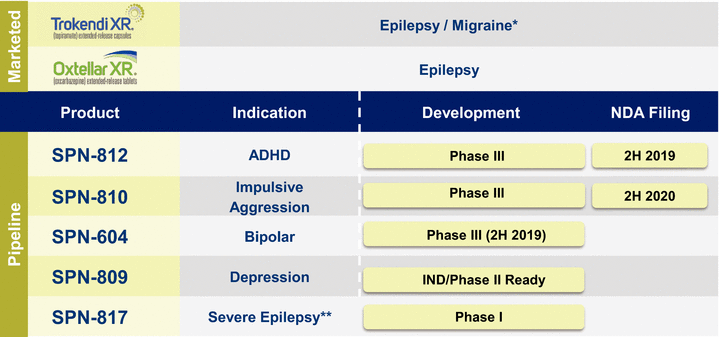
* Prophylaxis of migraine headache in adults and adolescents.
** Initial program is for Impulsive Aggression (IA) in patients with ADHD, with plans to add other indications, such as IA in patients with autism, PTSD, bipolar disorder, Alzheimer’s and other forms of dementia.
We expect to incur significant expenses as we: invest in research and development related to the continued development of each of our product candidates through FDA approval or until the program terminates; expand product indications for approved products; invest in sales and marketing resources for existing and new products; enter into agreements to purchase products or other companies and invest in support for our business, technology, regulatory and legal matters.
Our Neurology Portfolio
Our neurology portfolio includes the following two commercial products and one product candidate for the treatment of neurological diseases.
Commercial Products
Trokendi XR is a once-daily extended release topiramate product for the prophylaxis of migraine headache and for the treatment of epilepsy.
Oxtellar XR is a once-daily extended release oxcarbazepine product that was initially approved for the adjunctive treatment of partial onset seizures of epilepsy. During the first quarter of 2019, we launched Oxtellar XR for the recently approved monotherapy treatment of partial onset seizures of epilepsy in adults and in children 6 to 17 years of age.
These two commercial products differ from immediate release formulations by offering once-daily dosing and unique pharmacokinetic profiles, which we believe can have very positive clinical effects for many patients. We believe a once-daily dosing regimen improves adherence, making it more probable that patients maintain sufficient levels of medication in their bloodstreams to protect against seizures and migraines. In addition, we believe that the unique smooth and steady pharmacokinetic profiles of our once-daily formulations reduce the peak to trough blood level fluctuations, which are typically associated with immediate release products and which may result in increased adverse events (AEs), more side effects and decreased efficacy.
Product Prescriptions
We expect the number of prescriptions filled for Oxtellar XR and Trokendi XR to continue to increase through 2019 and in subsequent years. Data from IQVIA shows that 199,520 total prescriptions were filled for both of these drugs during the three month periods ended March 31, 2019, which is 11% higher than the 179,711 prescriptions reported for the same period in 2018.
Total prescriptions for Trokendi XR increased by 15,945 or 11% in the first quarter of 2019 as compared to the same quarter period in 2018. Total prescriptions for Oxtellar XR increased by 3,864 or 11% in the first quarter of 2019 as compared to the same quarter in 2018.
Product Candidate
SPN-817 (huperzine A)
SPN-817 will utilize a novel synthetic form of huperzine A, whose mechanism of action (MOA) includes potent acetyl cholinesterase inhibition with pharmacological activities in CNS conditions such as epilepsy.
SPN-817 Development Program
We plan on studying SPN-817 initially in severe pediatric epilepsy disorders. A Phase I proof-of-concept trial is currently underway outside of the U.S in adult patients with refractory complex partial seizures to study the efficacy, safety, and pharmacokinetic profile of a new extended release formulation of non-synthetic huperzine A. We will focus on completing and optimizing the synthesis process of the synthetic drug and developing a novel dosage form prior to conducting additional clinical trials. Given the potency of huperzine A, a novel extended release oral dosage form is critical to the success of this program because initial studies with immediate release formulations of nonsynthetic huperzine A have shown dose-limiting serious side effects.
Our Psychiatry Portfolio
Our psychiatry portfolio includes the following four product candidates for the treatment of psychiatric disorders.
Product Candidates
SPN-812 (extended release viloxazine hydrochloride)
SPN-812 is a structurally distinct, bicyclic, serotonin norepinephrine modulating agent with New Chemical Entity (NCE) status in the U.S. We are developing SPN-812 as a novel non-stimulant treatment for ADHD in pediatric and adolescent patients. We believe that SPN-812 could be a better alternative than other non-stimulant and stimulant therapies due to its unique pharmacological and pharmacokinetic profile. The active ingredient in SPN-812, viloxazine hydrochloride, has an extensive safety record in Europe, where it was previously marketed for many years as an antidepressant.
SPN-812 Development Program
Our Phase III program consists of four three-arm, placebo-controlled trials: P301 and P303 trials in patients 6 to 11 years old and P302 and P304 trials in patients 12-17 years old. The Phase III program for SPN-812 is complete. In December 2018, we announced positive topline results from the pediatric trials (P301 and P303) and the first adolescent trial (P302). In March 2019, we announced topline results from the second adolescent trial (P304), confirming the positive results seen in the previous three Phase III trials.
The P304 study is a randomized, double-blind, placebo controlled, multicenter, parallel group clinical trial in adolescents 12 to 17 years of age diagnosed with ADHD. Each treatment was administered orally once a day over seven weeks, including one week of titration for 400 mg dosing and two weeks of titration for 600 mg dosing. SPN-812 400 mg dose reached statistical significance compared to placebo, consistent with our previous Phase III studies. While SPN-812 600 mg dose narrowly missed statistical significance, it is not needed for the submission of the NDA for children and adolescents. The 600 mg dose was included to check for a potentially higher level of efficacy, to help in identifying the maximum effective dose, and to help in designing our trials for the adult population.
The Company continues to be focused on compiling the New Drug Application (NDA) for submission to the U.S. Food and Drug Administration (FDA) in the second half of this year. We expect to launch SPN-812, assuming FDA approval, in the second half of 2020.
Patients completing the Phase III trials were permitted to continue treatment under our open label extension trial. That trial is expected to continue through 2020.
Further, we are continuing to develop and expand our intellectual property (IP) portfolio covering the novel synthesis process for the active ingredient in SPN-812, its novel use in treatment of ADHD and its novel extended release delivery.
SPN-810 (molindone hydrochloride)
We are developing SPN-810 as a novel treatment for IA in patients who have ADHD, with the potential to be the first product available to address this serious, unmet medical need. Molindone hydrochloride was previously marketed in the United States for the treatment of schizophrenia under the trade name Moban at much higher strengths and different dosage forms than we are using in our development program. If we are successful in developing SPN-810 as a novel treatment for IA in patients who have ADHD, we may then develop the product as a candidate for treating other indications, e.g., patients with IA in autism, PTSD, bipolar disorder, Alzheimer’s and other forms of dementia.
SPN-810 Development Program
Our Phase III program consists of two clinical studies in patients 6 to 11 years old (P301 and P302) and one in patients 12 to 17 years old (P503). Data from the first Phase III trial (P301) and second trial (P302) are expected in second half of 2019. We expect patient enrollment in the adolescent trial (P503) to continue through 2020.
We expect to submit the NDA for SPN-810 in the second half of 2020, and to launch it, assuming FDA approval, in the second half of 2021.
Patients completing the Phase III trials can continue treatment under our open label extension trial. Enrollment from the P301 and P302 trials into the open label extension trial continues at 90% or higher. On average, a patient in the open label extension study stays on SPN-810 for approximately 10 months, which we believe is an encouraging sign of both tolerability and efficacy.
We continue to develop and expand our IP portfolio covering the novel synthesis process for the active ingredient in SPN-810, its novel use in IA and its novel extended release delivery.
SPN-809 (viloxazine hydrochloride)
SPN-809 is a novel once-daily product candidate for the treatment of depression. SPN-809 incorporates the same active ingredient as SPN-812.
Because SPN-809 contains the same active ingredient as SPN-812, we expect that many of our activities related to the development of SPN-812 will also benefit the development of SPN-809.
SPN-604 (extended release oxcarbazepine for treatment of bipolar disorder)
We continue to progress our plans to initiate pivotal Phase III studies for the treatment of bipolar disorder in the second half of 2019. If approved, this would represent the first approval for treatment of bipolar patients with oxcarbazepine in the U.S.
Patents
Our extended release oxcarbazepine patent portfolio currently includes twelve U.S. patents, nine of which cover Oxtellar XR. We own all of the issued patents and the pending patent applications. We have also obtained two patents each for extended release oxcarbazepine in Europe and Australia, and one patent each in Canada, Japan, China and Mexico. In addition, we have a pending U.S. patent application that covers various extended release formulations containing oxcarbazepine. The nine issued U.S. patents covering Oxtellar XR will expire no earlier than 2027.
We currently have nine U.S. patents that cover Trokendi XR. We own all of the issued patents and pending patent applications. We have one patent issued each in Mexico, Australia, Japan and Canada for extended release topiramate. We also have two patents issued in Europe for extended release topiramate. The nine issued U.S. patents covering Trokendi XR will expire no earlier than 2027. The Company has entered into settlement agreements with third parties permitting sale of a generic version of Trokendi XR on January 1, 2023 or earlier under certain circumstances.
Our patent portfolio also contains patent applications relating to our pipeline products. We continue to build our intellectual property portfolio to provide additional protection for our technologies, measurement scales, products and product candidates.
To protect our competitive position, it may be necessary to enforce our patent rights through litigation against infringing third parties. See Part II, Item 1 — Legal Proceedings for additional information.
Critical Accounting Policies and the Use of Estimates
The significant accounting policies and bases of presentation for our condensed consolidated financial statements are described in Note 2, Summary of Significant Accounting Policies, in the Notes to the Condensed Consolidated Financial Statements. Our condensed consolidated financial statements are prepared in accordance with U.S. generally accepted accounting principles (GAAP), requiring us to make estimates and assumptions that affect the reported amounts of assets, liabilities, revenues, and expenses, and to disclose contingent assets and liabilities. Actual results could differ materially from those estimates.
We believe the following accounting policies and estimates to be critical:
Revenue Recognition
Revenue from product sales is recognized when control of our products is transferred to our customers, who are pharmaceutical wholesalers and distributors. Product sales are recorded net of various forms of variable consideration, including estimated rebates, discounts, and allowances, and an estimated liability for product returns (collectively, “sales deductions”). We adjust our estimates at the earlier of when the most likely amount of consideration we expect to receive changes, or when the consideration becomes fixed. For a complete description of our revenue recognition policy, see Part I, Item 1, Financial Statements, Note 2, Revenue from Product Sales in the Notes to Condensed Consolidated Financial Statements.
Research and Development Expenses and Related Accrued Clinical Expenses
Research and development expenditures are expensed as incurred. Research and development costs primarily consist of: employee-related expenses, including salaries and benefits; share-based compensation expense; expenses incurred under agreements with clinical research organizations (CROs); fees paid to investigators who are participating in our clinical trials; consultants and other vendors that assist in the conduct of the Company’s clinical trials; the cost of acquiring and manufacturing clinical trial materials, including materials used in process validation (i.e., to the extent that those materials are manufactured prior to receiving regulatory approval for those products and are not expected to be sold commercially); facilities costs that do not have an alternative future use; related depreciation and other allocated expenses; license fees for and milestone payments related to in-licensed products and technologies; and costs associated with animal testing activities and regulatory approvals. Assets acquired that are used for research and development and that have no future alternative use are expensed as in-process research and development.
Clinical trials are inherently complex and often involve multiple service providers. Because billing for services often lags by a substantial period of time, we often are required to estimate and accrue a significant portion of our clinical expenses. This process involves reviewing open contracts and communicating with our subject matter expert personnel as well as the appropriate service provider personnel to identify services that have been performed on our behalf but for which no invoice has been received. We accrue for unbilled services performed, both partially and fully completed, and the associated cost incurred.
Payments to service providers can either be based on hourly rates for service or based on achievement of performance driven milestones. When accruing clinical expenses, we estimate the time period over which services will be performed during the life of the entire clinical program, the total cost of the program, and the level of effort to be expended in each intervening period. We work with each service provider to obtain an estimate for incurred but unbilled services as of the end of the calendar quarter, including estimates for payments to site investigators.
We work diligently to minimize, if not eliminate, estimates based solely on company generated calculations. If the service provider underestimates or overestimates the cost associated with a trial or service at any given point in time, adjustments to research and development expenses may be necessary in the following periods. Historically, our estimated accrued clinical expenses have closely approximated the actual expenses incurred.
Results of Operations
Comparison of the three month periods ended March 31, 2019 and 2018
Revenues
Revenues consist of net product sales of Trokendi XR and Oxtellar XR in the U.S., and royalty and licensing revenues from our collaborative licensing arrangements.
The following table provides information regarding our revenues during the periods indicated, including percent changes (dollar amount in thousands):
|
|
|
Three Months ended March 31, |
|
Increase |
|
Percent |
|
|||||
|
|
|
2019 |
|
2018 |
|
(Decrease) |
|
Change (%) |
|
|||
|
|
|
|
|
|
|
|
|
|
|
|||
|
Net product sales |
|
|
|
|
|
|
|
|
|
|||
|
Trokendi XR |
|
$ |
63,693 |
|
$ |
70,555 |
|
$ |
(6,862 |
) |
-10 |
% |
|
Oxtellar XR |
|
19,406 |
|
18,565 |
|
841 |
|
5 |
% |
|||
|
Total net product sales |
|
83,099 |
|
89,120 |
|
(6,021 |
) |
-7 |
% |
|||
|
Royalty revenues |
|
2,375 |
|
1,309 |
|
1,066 |
|
81 |
% |
|||
|
Total revenues |
|
$ |
85,474 |
|
$ |
90,429 |
|
$ |
(4,955 |
) |
-5 |
% |
Net product sales
Net product sales are based on gross revenue from product shipments to pharmaceutical wholesalers and distributors, less estimates for rebates, product returns and sales discounts.
In the fourth quarter of 2018 wholesalers, distributors, and pharmacies increased their inventory holdings, as compared to the prevailing inventory levels in the third quarter of 2018. We estimate that this caused net product sales to be approximately $10 million higher in the fourth quarter of 2018 than it would have been otherwise, had channel inventory levels remained consistent, quarter to quarter.
This process was effectively reversed in the first quarter of 2019. Specifically, based on analysis of sales and inventory data, inventory levels at wholesalers, distributors, and pharmacies declined to the prevailing levels of the third quarter of 2018. As a result, both gross sales and net product sales decreased in the first quarter of 2019, as compared both to the prior year as well as the prior quarter. The adverse impact on net product sales due to the reduction in channel inventory is estimated at approximately $10 million.
Partially offsetting the reduction in channel inventory was year over year growth in prescriptions of 11%, coupled with price increases. For the three month period ended March 31, net product sales decreased by $6.0 million, from 2018 to 2019.
Trokendi XR net product sales decreased $6.9 million, or 10% for the three month period ended March 31, 2019 versus 2018. The primary driver was the aforementioned channel inventory reduction, which was partially offset by growth in prescriptions and the net impact of an 8% price increase. Oxtellar XR net product sales grew by $0.8 million, or 5%, for the three month period ended March 31, 2019 as compared to 2018. Growth in prescription volumes and the net impact of an 8% price increase were modestly offset by the channel inventory reduction.
The Company records accrued rebates and accrued product returns in Accrued product returns and rebates as current liabilities and records sales discounts as an Accounts receivable valuation allowance.
The following table provides a summary of activities with respect to sales deductions and related accruals for the three month periods ended March 31, 2019 and 2018, in thousands of dollars:
|
|
|
Accrued Liabilities |
|
|
|
|
|
||||||
|
|
|
|
|
Product |
|
Allowance for |
|
|
|
||||
|
|
|
Rebates |
|
Returns |
|
Sales Discounts |
|
Total |
|
||||
|
|
|
|
|
|
|
|
|
|
|
||||
|
Balance at December 31, 2018 |
|
$ |
85,003 |
|
$ |
22,060 |
|
$ |
11,548 |
|
$ |
118,611 |
|
|
Provision |
|
|
|
|
|
|
|
|
|
||||
|
Provision for sales in current year |
|
63,941 |
|
1,724 |
|
11,214 |
|
76,879 |
|
||||
|
Adjustments relating to prior year sales |
|
(844 |
) |
(42 |
) |
(43 |
) |
(929 |
) |
||||
|
Total provision |
|
$ |
63,097 |
|
$ |
1,682 |
|
$ |
11,171 |
|
$ |
75,950 |
|
|
Less: Actual payments/credits |
|
(82,010 |
) |
(1,632 |
) |
(14,909 |
) |
(98,551 |
) |
||||
|
Balance at March 31, 2019 |
|
$ |
66,090 |
|
$ |
22,110 |
|
$ |
7,810 |
|
$ |
96,010 |
|
|
|
|
Accrued Liabilities |
|
|
|
|
|
||||||
|
|
|
|
|
Product |
|
Allowance for |
|
|
|
||||
|
|
|
Rebates |
|
Returns |
|
Sales Discounts |
|
Total |
|
||||
|
|
|
|
|
|
|
|
|
|
|
||||
|
Balance at December 31, 2017 |
|
$ |
49,460 |
|
$ |
18,883 |
|
$ |
8,892 |
|
$ |
77,235 |
|
|
Provision |
|
|
|
|
|
|
|
|
|
||||
|
Provision for sales in current year |
|
53,837 |
|
2,354 |
|
12,208 |
|
68,399 |
|
||||
|
Adjustments relating to prior year sales |
|
(1,681 |
) |
29 |
|
(3 |
) |
(1,655 |
) |
||||
|
Total provision |
|
$ |
52,156 |
|
$ |
2,383 |
|
$ |
12,205 |
|
$ |
66,744 |
|
|
Less: Actual payments/credits |
|
(49,086 |
) |
(762 |
) |
(11,739 |
) |
(61,587 |
) |
||||
|
Balance at March 31, 2018 |
|
$ |
52,530 |
|
$ |
20,504 |
|
$ |
9,358 |
|
$ |
82,392 |
|
The total provision for sales deductions from gross product sales was $76.0 million and $66.7 million for the three month periods ended March 31, 2019 and 2018, respectively. The overall increase in the provision was directly related to growth in prescriptions, the growth in Medicaid rebates consequent to taking price increases, and higher levels of patient co-pay assistance in response to the growth in high deductible health care plans. Adjustments related to prior year sales due to changes in estimate had a de minimis impact on product sales for the periods ended March 31, 2019 and 2018.
Royalty Revenues
Royalty revenues includes royalty revenue from net product sales of Mydayis, a product of Shire Plc (now a subsidiary of Takeda Pharmaceuticals Company Ltd.), and non-cash royalty revenue consequent to the Healthcare Royalty Partners III, L.P. (HC Royalty) arrangement. HC Royalty receives royalty payments from United Therapeutics Corporation, (United Therapeutics), based on net product sales of Orenitram.
Royalty revenues grew 81% in the three month period ended March 31, 2019, compared to the same period in 2018, primarily due to increased sales of Mydayis and Orenitram. Non-cash royalty revenue for the three month period ended March 31, 2019 was $1.6 million, compared to $1.3 million for same period in 2018.
Cost of Product Sales
The following table provides information regarding our cost of product sales during the periods indicated, including percent changes (dollar amounts in thousands):
|
|
|
Three Months ended March 31, |
|
|
|
Percent |
|
|||||
|
|
|
2019 |
|
2018 |
|
Increase |
|
Change (%) |
|
|||
|
|
|
|
|
|
|
|
|
|
|
|||
|
Cost of product sales |
|
$ |
3,684 |
|
$ |
3,278 |
|
$ |
406 |
|
12 |
% |
Cost of product sales during the three month period ended March 31, 2019 was $3.7 million, slightly higher than $3.3 million for the same period in 2018. The increase is primarily attributable to higher unit volume, partially offset by manufacturing efficiencies.
Research and Development Expenses
The following table provides information regarding our research and development expenses (R&D) during the periods indicated, including percent changes (dollar amounts in thousands):
|
|
|
Three Months ended March 31, |
|
|
|
Percent |
|
|||||
|
|
|
2019 |
|
2018 |
|
Decrease |
|
Change (%) |
|
|||
|
|
|
|
|
|
|
|
|
|
|
|||
|
Research and development |
|
$ |
15,394 |
|
$ |
18,908 |
|
$ |
(3,514 |
) |
-19 |
% |
R&D expenses decreased by $3.5 million, or 19%, in the three month period ended March 31, 2019 as compared to the same period in 2018. This decrease is primarily driven by the completion of the four Phase III clinical trials for SPN-812 in late 2018/early 2019, partially offset by the manufacture of validation and registration lots for SPN-812 to support our upcoming NDA filing.
Selling, General and Administrative Expenses
The following table provides information regarding our selling, general and administrative expenses (SG&A) during the periods indicated, including percent changes (dollar amounts in thousands):
|
|
|
Three Months ended March 31, |
|
|
|
Percent |
|
|||||
|
|
|
2019 |
|
2018 |
|
Increase |
|
Change (%) |
|
|||
|
|
|
|
|
|
|
|
|
|
|
|||
|
Selling and marketing |
|
$ |
30,749 |
|
$ |
26,676 |
|
$ |
4,073 |
|
15 |
% |
|
General and administrative |
|
10,219 |
|
10,173 |
|
46 |
|
0 |
% |
|||
|
Total |
|
$ |
40,968 |
|
$ |
36,849 |
|
$ |
4,119 |
|
11 |
% |
Selling and Marketing. Selling and marketing expenses increased by $4.1 million, or 15%, in the three month period ended March 31, 2019 as compared to the same period in 2018. Approximately $3.8 million of the total increase is due to increased expenses for promotional and marketing programs, speaker programs and consulting services to support our commercial products, particularly the migraine indication for Trokendi XR and the launch of monotherapy for partial seizures, in January 2019, for Oxtellar XR.
General and administrative. General and administrative expenses increased slightly by $46,000, in the three month period ended March 31, 2019, as compared to the same period in 2018, primarily due to increased cost of facilities and insurance offset by a decrease in patent amortization expense.
Other Expenses
The following table provides the components of other expenses during the periods indicated, including percent changes (dollar amounts in thousands):
|
|
|
Three Months ended March 31, |
|
|
|
Percent |
|
|||||
|
|
|
2019 |
|
2018 |
|
Increase |
|
Change (%) |
|
|||
|
|
|
|
|
|
|
|
|
|
|
|||
|
Interest income |
|
$ |
4,681 |
|
$ |
1,206 |
|
$ |
3,475 |
|
288 |
% |
|
Interest expense |
|
(4,710 |
) |
(717 |
) |
3,993 |
|
557 |
% |
|||
|
Interest expense-nonrecourse liability related to sale of future royalties |
|
(1,160 |
) |
(701 |
) |
459 |
|
65 |
% |
|||
|
Total |
|
$ |
(1,189 |
) |
$ |
(212 |
) |
|
|
|
|
|
Interest income increased by $3.5 million in the three month period ended March 31, 2019 as compared to the same period in 2018. This increase was primarily attributable to an increase in cash, cash equivalents and marketable security holdings resultant from the issuance of $402.5 million of 0.625% Convertible Senior Notes, due 2023 (2023 Notes) in March 2018.
Interest expense increased by approximately $4.0 million in the three month period ended March 31, 2019 as compared to the same period in 2018. The increase was primarily due to non-cash interest expense of $3.8 million related to the amortization of deferred financing costs and debt discount on the 2023 Notes recorded in the first quarter of 2019.
Non-cash interest expense related to our non-recourse royalty liability increased by $0.5 million in the three month period ended March 31, 2019 as compared to the same period in 2018, primarily due to changes in the projection of future royalties on sales of Orenitram, coupled with an increase in the liability amortization term as a result of a favorable settlement of patent litigation for United Therapeutics.
Income Tax Expense
The following table provides information regarding our income tax expense during the periods indicated, including percent changes (dollar amounts in thousands):
|
|
|
Three Months ended March 31, |
|
|
|
Percent |
|
|||||
|
|
|
2019 |
|
2018 |
|
Increase |
|
Change (%) |
|
|||
|
|
|
|
|
|
|
|
|
|
|
|||
|
Income tax expense |
|
$ |
5,899 |
|
$ |
4,830 |
|
$ |
1,069 |
|
22 |
% |
|
Effective tax rate |
|
24.34 |
% |
15.49 |
% |
|
|
|
|
|||
The increase in income tax expense and in the effective tax rate for the three month period ended March 31, 2019 as compared to the same periods in 2018 is primarily attributable to larger excess tax benefits consequent to exercises of employee stock options in 2018. The Company recorded income tax benefits related to exercise of employee stock options of approximately $0.3 million and $2.0 million for the three month periods ended March 31, 2019 and 2018, respectively.
Liquidity and Capital Resources
Since our inception in 2005, we have devoted most of our cash resources to manufacturing, research and development, and selling, general and administrative activities related to the development and commercialization of our commercial products, Trokendi XR and Oxtellar XR, and our product candidates. We are highly dependent on the commercial success of our two commercial products, which we launched in 2013. We have financed our operations primarily with cash generated from product sales, supplemented by proceeds from the sale of equity and debt securities, borrowings under debt facilities, royalty and licensing arrangements.
We believe our net product sales will be sufficient to finance operations in the current year and subsequent years, including R&D expenses for our clinical trials, increased expenses to support our commercial products and pre-launch activities in anticipation of launching our product candidates. We also expect to incur increased R&D expenses for 2019 to support the development of SPN-810, SPN-812, SPN-817, and SPN-604.
We expect our SG&A expenses to continue to increase for the foreseeable future, as we continue to invest in the commercialization of Trokendi XR and Oxtellar XR, and in supportive functions such as compliance, finance, management of our intellectual property portfolio, and information technology systems and personnel. In each case, spending is commensurate with the growth of our business. We are actively looking for business development opportunities.
Our working capital at March 31, 2019 was $268.3 million, a decrease of $63.8 million compared to $332.1 million at December 31, 2018. The decrease was primarily due to timing of receivable collections and increased investment in long term marketable securities. In addition, our long term marketable securities at March 31, 2019 were $522.6 million, an increase of $103.8 million, as compared to $418.8 million at December 31, 2018. This increase was primarily attributable to the net cash proceeds generated from operations.
Our stockholders’ equity increased by $27.0 million during the three month period ended March 31, 2019, primarily as a result of net earnings of $18.3 million, coupled with option exercises, share-based compensation and unrealized gains on marketable securities of $4.6 million. These changes were partially offset by the purchase of convertible note hedges, as described below.
We achieved positive cash flow and achieved profitability from operations in the three month periods ended March 31, 2019 and 2018. While we expect continued profitability in the current year and in subsequent years as we continue to increase sales, we anticipate there may be significant variability from quarter to quarter in our level of profitability.
Summary of Cash Flows
The following table sets forth the major sources and uses of cash for the periods set forth below (summarized, in thousands):
|
|
|
Three Months ended March 31, |
|
Increase |
|
|||||
|
|
|
2019 |
|
2018 |
|
(Decrease) |
|
|||
|
Net cash provided by (used in): |
|
|
|
|
|
|
|
|||
|
|
|
|
|
|
|
|
|
|||
|
Operating activities |
|
|
|
|
|
|
|
|||
|
Operating earnings |
|
$ |
27,071 |
|
$ |
29,676 |
|
$ |
(2,605 |
) |
|
Working capital |
|
5,922 |
|
(2,543 |
) |
8,465 |
|
|||
|
Total operating activities |
|
32,993 |
|
27,133 |
|
5,860 |
|
|||
|
|
|
|
|
|
|
|
|
|||
|
Investing activities |
|
(103,246 |
) |
(51,010 |
) |
(52,236 |
) |
|||
|
|
|
|
|
|
|
|
|
|||
|
Financing activities |
|
783 |
|
367,713 |
|
(366,930 |
) |
|||
|
|
|
|
|
|
|
|
|
|||
|
Net (decrease) increase in cash and cash equivalents |
|
$ |
(69,470 |
) |
$ |
343,836 |
|
$ |
(413,306 |
) |
Operating Activities
Net cash provided by operating activities is comprised of two components: cash provided by operating earnings and cash provided by changes in working capital. The decrease in net cash provided by operating activities is primarily driven by a period over period decrease in revenue generated from sales of our two commercial products, Trokendi XR and Oxtellar XR.
The changes in certain operating assets and liabilities are as follows, in thousands:
|
|
|
Three Months ended March 31, |
|
|
|
||||
|
|
|
2019 |
|
2018 |
|
Explanation of Change |
|
||
|
|
|
|
|
|
|
|
|
||
|
(Increase) Decrease in: |
|
|
|
|
|
|
|
||
|
Accounts receivable |
|
$ |
23,013 |
|
$ |
(798 |
) |
Timing of cash collections; decreased receivables due to higher fourth quarter of 2018 sales as a result of higher fourth quarter of 2018 channel inventory levels. |
|
|
Inventories |
|
(859 |
) |
(2,771 |
) |
Increased inventory volume to support increased product demand. |
|
||
|
Prepaid expenses, other current assets and other non-current assets |
|
(1,995 |
) |
(404 |
) |
Timing differences related to deposit for equipment purchase; progress of clinical trials. |
|
||
|
Increase (Decrease) in: |
|
|
|
|
|
|
|
||
|
Accounts payable and accrued other non-current liabilities |
|
868 |
|
(4,572 |
) |
Timing of vendor payments. |
|
||
|
Accrued product returns and rebates |
|
(18,863 |
) |
4,691 |
|
Increased provision directly related to growth in prescriptions, the growth in Medicaid rebates consequent taking price increases and higher levels of patient co-pay assistance. |
|
||
|
Income taxes payable |
|
4,856 |
|
327 |
|
Timing of income tax payments. |
|
||
|
Other |
|
(1,098 |
) |
984 |
|
Timing of compensation payments. |
|
||
|
|
|
$ |
5,922 |
|
$ |
(2,543 |
) |
|
|
Investing Activities
Net cash used in investing activities increased by $52.2 million for the three month period ended March 31, 2019, as compared to the same period 2018. The increase was primarily due to net purchases of marketable securities.
Financing Activities
Net cash provided by financing activities decreased to $0.8 million for the three month periods ended March 31, 2019 versus $367.7 million provided in the same period in 2018. The decrease was primarily related to issuance of the 2023 Notes and the related convertible note hedges and warrants, in March 2018.
Contractual Obligations and Commitments
Refer to the “ Contractual Obligations and Commitments” section within “Part II, Item 7 — Management’s Discussion and Analysis of Liquidity and Capital Resources” of our Annual Report on Form 10-K for the year ended December 31, 2018 for a discussion of our contractual obligations.
In addition, during the first quarter of 2019, we entered into a new lease agreement with Advent Key West, LLC for our new headquarters in Rockville, MD. Refer to Note 14 in the Notes to Condensed Consolidated Financial Statements in Part I, Item 1 of this Quarterly Report on Form 10-Q.
Off-Balance Sheet Arrangements
We do not currently have, nor have we ever had, any relationships with unconsolidated entities or financial partnerships, such entities often referred to as structured finance or special purpose entities. These would have been established for the purpose of facilitating off-balance sheet arrangements or for other contractually narrow or limited purposes.
In addition, we do not engage in trading activities involving non-exchange traded contracts.
Recently Issued Accounting Pronouncements
On January 1, 2019, we adopted Accounting Standards Codification (ASC) Topic 842, Leases , or ASC 842. For a discussion of new accounting pronouncements, see Note 2 in the Notes to Condensed Consolidated Financial Statements in Part I, Item 1 of this Quarterly Report on Form 10-Q.
Item 3. Quantitative and Qualitative Disclosures About Market Risk
The primary objective of our investment activities is to preserve our capital to fund operations and to facilitate business development activities. We also seek to maximize income from our investments without assuming significant interest rate or liquidity risk. Our exposure to market risk is confined to investments in cash, cash equivalents, marketable securities and long term marketable securities. As of March 31, 2019, we had unrestricted cash, cash equivalents, marketable securities and long term marketable securities of $815.5 million. In connection with the 2023 Notes, we have separately entered into Convertible Note Hedge Transactions and Warrant Transactions to reduce the potential dilution of the Company’s common stock upon conversion of the 2023 Notes and to partially offset the cost to purchase the Convertible Note Hedge Transactions, respectively. We do not engage in any hedging activities against changes in interest rates. Because of the short-term maturities of our cash, cash equivalents, marketable securities and long term marketable securities, and because we generally hold these securities to maturity, we do not believe that an increase in interest rates would have any significant impact on the realizable value of our investments. We do not have any currency or other derivative financial instruments other than the outstanding warrants to purchase common stock and the convertible note hedges.
We may contract with CROs and investigational sites globally. Currently, we have one ongoing trial, for SPN-817, outside the United States. We do not hedge our foreign currency exchange rate risk. Transactions denominated in currencies other than the U.S. dollar are recorded based on exchange rates at the time such transactions arise. As of March 31, 2019 and December 31, 2018, substantially all of our liabilities were denominated in the U.S. dollar.
Inflation generally affects us by increasing our cost of labor and clinical trial costs. We do not believe that inflation and changing prices over the three month periods ended March 31, 2019 and 2018 had a significant impact on our condensed consolidated results of operations.
Item 4. Controls and Procedures
Evaluation of Disclosure Controls and Procedures
We maintain disclosure controls and procedures as defined in Rule 13a-15(e) of the Securities Exchange Act of 1934, as amended, or the Exchange Act. Our disclosure controls and procedures are designed to provide reasonable assurance that the information required to be disclosed by us in the reports we file or submit under the Exchange Act has been appropriately recorded, processed, summarized and reported within the time periods specified in the Securities and Exchange Commission’s rules and forms, and that such information is accumulated and communicated to our management, including our CEO and CFO, to allow timely decisions regarding required disclosure.
We conducted an evaluation of the effectiveness of the design and operation of our disclosure controls and procedures as of March 31, 2019, the end of the period covered by this report. Based on that evaluation, under the supervision and with the participation of our management, including our CEO and CFO, we concluded that our disclosure controls and procedures were effective as of March 31, 2019.
Changes in Internal Control over Financial Reporting
There were no changes in our internal control over financial reporting that occurred during the quarter ended March 31, 2019 that have materially affected, or are reasonably likely to materially affect, our internal control over financial reporting.
From time to time and in the ordinary course of business, we may be subject to various claims, charges and litigation. We may be required to file infringement claims against third parties for the infringement of our patents. As of March 31, 2019, the Company has no outstanding litigation.
Any investment in our business involves a high degree of risk. Before making an investment decision, you should carefully consider the information we include in this Quarterly Report on Form 10-Q, including our condensed consolidated financial statements and related notes, and the additional information in the other reports we file with the Securities and Exchange Commission, along with the risks described in our Annual Report on Form 10-K for the year ended December 31, 2018. These risks may result in material harm to our business and our financial condition and results of operations. In such an eventuality, the market price of our common stock may decline and you could lose part or all of your investment.
Item 2. Unregistered Sales of Equity Securities and Use of Proceeds
(a) Sales of Unregistered Securities.
During the three month period ended March 31, 2019, the Company granted options to employees and directors to purchase an aggregate of 831,835 shares of common stock at a weighted-average exercise price of $36.75 per share. Once vested, the options are exercisable for a period of ten years from the grant date. These issuances were exempt from registration in reliance on Section 4(a)(2) of the Securities Act as transactions not involving a public offering.
Item 3. Defaults Upon Senior Securities
None
Item 4. Mine Safety Disclosures
None
None
The following exhibits are filed or furnished as part of this Quarterly Report on Form 10-Q:
|
31.1 |
|
Certification of Chief Executive Officer pursuant to Rule 13a-14(a). |
|
|
|
|
|
31.2 |
|
Certification of Chief Financial Officer pursuant to Rule 13a-14(a). |
|
|
|
|
|
32.1 |
|
Certification of Chief Executive Officer pursuant to 18 U.S.C. Section 1350, as adopted pursuant to Section 906 of the Sarbanes-Oxley Act of 2002. |
|
|
|
|
|
32.2 |
|
Certification of Chief Financial Officer pursuant to 18 U.S.C. Section 1350, as adopted pursuant to Section 906 of the Sarbanes-Oxley Act of 2002. |
|
|
|
|
|
101.INS |
|
XBRL Instance Document. |
|
|
|
|
|
101.SCH |
|
XBRL Taxonomy Extension Schema Document. |
|
101.CAL |
|
XBRL Taxonomy Extension Calculation Linkbase Document. |
|
|
|
|
|
101.DEF |
|
XBRL Taxonomy Extension Definition Linkbase Document. |
|
|
|
|
|
101.LAB |
|
XBRL Taxonomy Extension Label/Linkbase Document. |
|
|
|
|
|
101.PRE |
|
XBRL Taxonomy Extension Presentation Linkbase Document. |
EXHIBIT INDEX
|
Number |
|
Description |
|
|
|
|
|
|
Certification of Chief Executive Officer pursuant to Rule 13a-14(a). |
|
|
|
|
|
|
|
Certification of Chief Financial Officer pursuant to Rule 13a-14(a). |
|
|
|
|
|
|
|
||
|
|
|
|
|
|
||
|
|
|
|
|
101.INS |
|
XBRL Instance Document. |
|
|
|
|
|
101.SCH |
|
XBRL Taxonomy Extension Schema Document. |
|
|
|
|
|
101.CAL |
|
XBRL Taxonomy Extension Calculation Linkbase Document. |
|
|
|
|
|
101.DEF |
|
XBRL Taxonomy Extension Definition Linkbase Document. |
|
|
|
|
|
101.LAB |
|
XBRL Taxonomy Extension Label/Linkbase Document. |
|
|
|
|
|
101.PRE |
|
XBRL Taxonomy Extension Presentation Linkbase Document. |
Pursuant to the requirements of the Securities Exchange Act of 1934, the registrant has duly caused this report to be signed on its behalf by the undersigned thereunto duly authorized.
|
|
SUPERNUS PHARMACEUTICALS, INC. |
|
|
|
|
|
|
DATED: May 10, 2019 |
By: |
/s/ Jack A. Khattar |
|
|
|
Jack A. Khattar |
|
|
|
President, Secretary and Chief Executive Officer |
|
|
|
|
|
|
|
|
|
DATED: May 10, 2019 |
By: |
/s/ Gregory S. Patrick |
|
|
|
Gregory S. Patrick |
|
|
|
Senior Vice President and Chief Financial Officer |