Form 20-F
UNITED STATES SECURITIES AND EXCHANGE COMMISSION
WASHINGTON, D.C. 20549
FORM 20-F
|
|
|
|
|
o
|
|
REGISTRATION STATEMENT PURSUANT TO SECTION 12(b) OR (g) OF THE SECURITIES EXCHANGE ACT OF 1934
|
OR
|
|
|
|
|
þ
|
|
ANNUAL REPORT PURSUANT TO SECTION 13 or 15(d) OF THE SECURITIES EXCHANGE ACT OF 1934 FOR THE FISCAL YEAR ENDED DECEMBER 31, 2010
|
OR
|
|
|
|
|
o
|
|
TRANSITION REPORT PURSUANT TO SECTION 13 OR 15(d) OF THE SECURITIES EXCHANGE ACT OF 1934
|
OR
|
|
|
|
|
o
|
|
SHELL COMPANY REPORT PURSUANT TO SECTION 13 OR 15(d) OF THE SECURITIES EXCHANGE ACT OF 1934
|
|
|
|
|
|
|
|
Date of event requiring this shell company report
|
FOR THE TRANSITION PERIOD FROM
TO
COMMISSION FILE NUMBER 1-12610
Grupo Televisa, S.A.B.
(Exact name of Registrant as specified in its charter)
N/A
(Translation of Registrant’s name into English)
United Mexican States
(Jurisdiction of incorporation or organization)
Av. Vasco de Quiroga No. 2000
Colonia Santa Fe
01210 Mexico, D.F.
Mexico
(Address of principal executive offices)
Securities registered or to be registered pursuant to Section 12(b) of the Act:
|
|
|
|
|
Title of each class
|
|
Name of each exchange on which registered
|
|
|
|
|
|
A Shares, without par value (“A Shares”)
|
|
New York Stock Exchange (for listing purposes only)
|
|
B Shares, without par value (“B Shares”)
|
|
New York Stock Exchange (for listing purposes only)
|
|
L Shares, without par value (“L Shares”)
|
|
New York Stock Exchange (for listing purposes only)
|
|
Dividend Preferred Shares, without par value (“D Shares”)
|
|
New York Stock Exchange (for listing purposes only)
|
|
Global Depositary Shares (“GDSs”), each representing five Ordinary Participation Certificates
|
|
New York Stock Exchange
|
|
(Certificados de Participación Ordinarios)
(“CPOs”)
|
|
|
|
CPOs, each representing twenty-five A Shares, twenty-two
|
|
New York Stock Exchange (for listing purposes only)
|
|
B Shares thirty-five L Shares and thirty-five D Shares
|
|
|
Securities registered or to be registered pursuant to Section 12(g) of the Act:
None.
Securities for which there is a reporting obligation pursuant to Section 15(d) of the Act:
None.
The number of outstanding shares of each of the issuer’s classes of capital or common stock as of December 31, 2010 was:
111,058,270,615 A Shares
51,165,517,589 B Shares
81,399,628,851 L Shares
81,399,628,851 D Shares
Indicate by check mark if the registrant is a well-known seasoned issuer, as defined in Rule 405 of
the Securities Act.
Yes
þ
No
o
If this report is an annual or transition report, indicate by check mark if the registrant is not
required to file reports pursuant to Section 13 or 15(d) of the Securities Exchange Act of 1934.
Yes
o
No
þ
Indicate by check mark whether the registrant (1) has filed all reports required to be filed by
Section 13 or 15(d) of the Securities Exchange Act of 1934 during the preceding 12 months (or for
such shorter period that the registrant was required to file such reports), and (2) has been
subject to such filing requirements for the past 90 days.
Yes
þ
No
o
Indicate by check mark whether the registrant has submitted electronically and posted on its
corporate Web site, if any, every Interactive Data File required to be submitted and posted
pursuant to Rule 405 of Regulation S-T (§232.405 of this chapter) during the preceding 12 months
(or for such shorter period that the registrant was required to submit and post such files).
o
Yes
o
No
Indicate by check mark whether the registrant is a large accelerated filer, an accelerated filer,
or a non-accelerated filer. See definition of “accelerated filer and large accelerated filer” in
Rule 12b-2 of the Exchange Act. (Check one):
|
|
|
|
|
|
|
Large accelerated filer
þ
|
|
Accelerated filer
o
|
|
Non-accelerated filer
o
|
Indicate by check mark which basis of accounting the registrant has used to prepare the financial
statements included in this filing:
|
|
|
|
|
|
|
U.S. GAAP
o
|
|
International Financial Reporting Standards as issued by the International Accounting Standards Board
o
|
|
Other
þ
|
If “Other” has been checked in response to the previous question, indicate by check mark which
financial statement item the registrant has elected to follow. Item 17
o
Item 18
þ
If this is an annual report, indicate by check mark whether the registrant is a shell company (as
defined in Rule 12b-2 of the Exchange Act). Yes
o
No
þ
|
|
|
|
|
|
|
|
|
|
|
|
|
|
|
|
|
|
|
|
|
|
4
|
|
|
|
|
|
|
|
|
|
|
|
4
|
|
|
|
|
|
|
|
|
|
|
|
4
|
|
|
|
|
|
|
|
|
|
|
|
4
|
|
|
|
|
|
|
|
|
|
|
|
7
|
|
|
|
|
|
|
|
|
|
|
|
7
|
|
|
|
|
|
|
|
|
|
|
|
9
|
|
|
|
|
|
|
|
|
|
|
|
19
|
|
|
|
|
|
|
|
|
|
|
|
21
|
|
|
|
|
|
|
|
|
|
|
|
21
|
|
|
|
|
|
|
|
|
|
|
|
21
|
|
|
|
|
|
|
|
|
|
|
|
22
|
|
|
|
|
|
|
|
|
|
|
|
58
|
|
|
|
|
|
|
|
|
|
|
|
58
|
|
|
|
|
|
|
|
|
|
|
|
58
|
|
|
|
|
|
|
|
|
|
|
|
86
|
|
|
|
|
|
|
|
|
|
|
|
97
|
|
|
|
|
|
|
|
|
|
|
|
97
|
|
|
|
|
|
|
|
|
|
|
|
98
|
|
|
|
|
|
|
|
|
|
|
|
101
|
|
|
|
|
|
|
|
|
|
|
|
101
|
|
|
|
|
|
|
|
|
|
|
|
101
|
|
|
|
|
|
|
|
|
|
|
|
102
|
|
|
|
|
|
|
|
|
|
|
|
106
|
|
|
|
|
|
|
|
|
|
|
|
106
|
|
|
|
|
|
|
|
|
|
|
|
107
|
|
|
|
|
|
|
|
|
|
|
|
115
|
|
|
|
|
|
|
|
|
|
|
|
115
|
|
2
We publish our financial statements in accordance with Mexican Financial Reporting Standards
(
Normas de Información Financiera
), or Mexican FRS, which differ in some significant respects from
generally accepted accounting principles in the United States, or U.S. GAAP, and accounting
procedures adopted in other countries.
Unless otherwise indicated, (i) information included in this annual report is as of December
31, 2010 and (ii) references to “Ps.” or “Pesos” in this annual report are to Mexican Pesos and
references to “Dollars,” “U.S. Dollars,” “U.S. dollars,” “$,” or “U.S.$” are to United States
dollars.
In this annual report, “we,” “us,” “our” or “Company” refer to Grupo Televisa, S.A.B. and,
where the context requires, its consolidated entities. “Group” refers to Grupo Televisa, S.A.B. and
its consolidated entities.
3
|
|
|
|
|
Item 1.
|
|
Identity of Directors, Senior Management and Advisers
|
Not applicable.
|
|
|
|
|
Item 2.
|
|
Offer Statistics and Expected Timetable
|
Not applicable.
Selected Financial Data
The following tables present our selected consolidated financial information as of and for
each of the periods indicated. This information is qualified in its entirety by reference to, and
should be read together with, our audited consolidated year-end financial statements. The following
data for each of the years ended December 31, 2006, 2007, 2008, 2009 and 2010 has been derived from
our audited consolidated year-end financial statements, including the consolidated balance sheets
as of December 31, 2009 and 2010, the related consolidated statements of income, changes in
stockholders’ equity and cash flows for the years ended December 31, 2008, 2009 and 2010, and the
accompanying notes appearing elsewhere in this annual report. Beginning on January 1, 2008, we
discontinued recognizing the effects of inflation in our consolidated financial statements in
accordance with Mexican FRS. Accordingly, our financial information through December 31, 2007 is
stated in Mexican Pesos in purchasing power as of December 31, 2007. The financial information as
of and for the years ended December 31, 2008, 2009 and 2010 is not directly comparable to prior
periods due to the recognition of inflation effects in financial information in prior periods. Our
financial information for the years ended December 31, 2008, 2009 and 2010 maintained the inflation
adjustments recognized in prior years in our consolidated stockholders’ equity, and the
inflation-adjusted amounts for nonmonetary assets and liabilities at December 31, 2007 became the
accounting basis for those assets and liabilities beginning on January 1, 2008 and for subsequent
periods. This data should also be read together with “Operating and Financial Review and
Prospects”.
The exchange rate used in translating Pesos into U.S. Dollars for calculating the convenience
translations included in the following tables is determined by reference to the interbank free
market exchange rate, or the Interbank Rate, as reported by Banco Nacional de México, S.A., or
Banamex, as of December 31, 2010, which was Ps.12.3576 per U.S. Dollar. This annual report contains
translations of certain Peso amounts into U.S. Dollars at specified rates solely for the
convenience of the reader. The exchange rate translations contained in this annual report should
not be construed as representations that the Peso amounts actually represent the U.S. Dollar
amounts presented or that they could be converted into U.S. Dollars at the rate indicated.
Our consolidated year-end financial statements have been prepared in accordance with Mexican
FRS, which differ in some significant respects from U.S. GAAP. Note 23 to our consolidated year-end
financial statements provides a description of the relevant differences between Mexican FRS, the
accounting and reporting standards used in Mexico as of December 31, 2010, and U.S. GAAP as they
relate to us, and a reconciliation to U.S. GAAP of net income and other items for the years ended
December 31, 2008, 2009 and 2010 and stockholders’ equity at December 31, 2009 and 2010. Any
reconciliation to U.S. GAAP may reveal certain differences between our stockholders’ equity, net
income and other items as reported under Mexican FRS and U.S. GAAP.
|
|
|
|
|
|
|
|
|
|
|
|
|
|
|
|
|
|
|
|
|
|
|
|
|
|
|
|
|
Year Ended December 31,
|
|
|
|
|
2006
|
|
|
2007
|
|
|
2008
|
|
|
2009
|
|
|
2010
|
|
|
2010
|
|
|
|
|
(Millions of Pesos or millions of U.S. Dollars)(1)
|
|
|
(Mexican FRS)
|
|
|
|
|
|
|
|
|
|
|
|
|
|
|
|
|
|
|
|
|
|
|
|
|
|
Income Statement Data:
|
|
|
|
|
|
|
|
|
|
|
|
|
|
|
|
|
|
|
|
|
|
|
|
|
|
Net sales
|
|
Ps.
|
39,358
|
|
|
Ps.
|
41,562
|
|
|
Ps.
|
47,972
|
|
|
Ps.
|
52,353
|
|
|
Ps.
|
57,857
|
|
|
U.S.$
|
4,682
|
|
|
Operating income
|
|
|
14,266
|
|
|
|
14,481
|
|
|
|
15,128
|
|
|
|
15,157
|
|
|
|
15,583
|
|
|
|
1,261
|
|
|
Integral cost of financing, net(2)
|
|
|
1,141
|
|
|
|
410
|
|
|
|
831
|
|
|
|
2,973
|
|
|
|
3,029
|
|
|
|
245
|
|
|
Consolidated net income
|
|
|
9,519
|
|
|
|
9,018
|
|
|
|
8,731
|
|
|
|
6,583
|
|
|
|
8,516
|
|
|
|
689
|
|
|
Controlling interest net income
|
|
|
8,909
|
|
|
|
8,082
|
|
|
|
7,804
|
|
|
|
6,007
|
|
|
|
7,683
|
|
|
|
622
|
|
|
Controlling interest net income per CPO(3)
|
|
|
3.07
|
|
|
|
2.84
|
|
|
|
2.77
|
|
|
|
2.14
|
|
|
|
2.75
|
|
|
|
—
|
|
|
Weighted-average number of shares outstanding (in millions)(3)(4)
|
|
|
339,776
|
|
|
|
333,653
|
|
|
|
329,580
|
|
|
|
329,304
|
|
|
|
326,850
|
|
|
|
—
|
|
|
Cash dividend per CPO(3)
|
|
|
0.37
|
|
|
|
1.50
|
|
|
|
0.75
|
|
|
|
3.10
|
|
|
|
—
|
|
|
|
—
|
|
|
Shares outstanding (in millions, at year end)(4)
|
|
|
337,782
|
|
|
|
329,960
|
|
|
|
328,393
|
|
|
|
327,231
|
|
|
|
325,023
|
|
|
|
—
|
|
4
|
|
|
|
|
|
|
|
|
|
|
|
|
|
|
|
|
|
|
|
|
|
|
|
|
|
|
|
|
Year Ended December 31,
|
|
|
|
|
2006
|
|
|
2007
|
|
|
2008
|
|
|
2009
|
|
|
2010
|
|
|
2010
|
|
|
|
|
(Millions of Pesos or millions of U.S. Dollars)(1)
|
|
|
(U.S. GAAP)(5)
|
|
|
|
|
|
|
|
|
|
|
|
|
|
|
|
|
|
|
|
|
|
|
|
|
|
Income Statement Data:
|
|
|
|
|
|
|
|
|
|
|
|
|
|
|
|
|
|
|
|
|
|
|
|
|
|
Net sales
|
|
Ps.
|
39,358
|
|
|
Ps.
|
41,562
|
|
|
Ps.
|
47,972
|
|
|
Ps.
|
52,353
|
|
|
Ps.
|
57,857
|
|
|
U.S.$
|
4,682
|
|
|
Operating income
|
|
|
14,068
|
|
|
|
14,322
|
|
|
|
14,492
|
|
|
|
13,008
|
|
|
|
14,531
|
|
|
|
1,176
|
|
|
Consolidated net income
|
|
|
8,917
|
|
|
|
9,167
|
|
|
|
9,049
|
|
|
|
5,561
|
|
|
|
8,623
|
|
|
|
698
|
|
|
Net income attributable to the non-controlling interest
|
|
|
609
|
|
|
|
934
|
|
|
|
919
|
|
|
|
575
|
|
|
|
833
|
|
|
|
67
|
|
|
Net income attributable to the controlling interest
|
|
|
8,308
|
|
|
|
8,233
|
|
|
|
8,130
|
|
|
|
4,986
|
|
|
|
7,790
|
|
|
|
630
|
|
|
Net income attributable to the controlling interest per
CPO(3)
|
|
|
2.76
|
|
|
|
2.86
|
|
|
|
2.89
|
|
|
|
1.77
|
|
|
|
2.79
|
|
|
|
—
|
|
|
Weighted-average number of shares outstanding (in millions)(3)(4)
|
|
|
339,776
|
|
|
|
333,653
|
|
|
|
329,580
|
|
|
|
329,304
|
|
|
|
326,850
|
|
|
|
—
|
|
|
Shares outstanding (in millions, at year end)(4)
|
|
|
337,782
|
|
|
|
329,960
|
|
|
|
328,393
|
|
|
|
327,231
|
|
|
|
325,023
|
|
|
|
—
|
|
|
(Mexican FRS)
|
|
|
|
|
|
|
|
|
|
|
|
|
|
|
|
|
|
|
|
|
|
|
|
|
|
Balance Sheet Data (end of year):
|
|
|
|
|
|
|
|
|
|
|
|
|
|
|
|
|
|
|
|
|
|
|
|
|
|
Cash and temporary investments
|
|
Ps.
|
16,405
|
|
|
Ps.
|
—
|
|
|
Ps.
|
—
|
|
|
Ps.
|
—
|
|
|
Ps.
|
—
|
|
|
U.S.$
|
—
|
|
|
Cash and cash equivalents
|
|
|
—
|
|
|
|
25,480
|
|
|
|
33,583
|
|
|
|
29,941
|
|
|
|
20,943
|
|
|
|
1,695
|
|
|
Temporary investments
|
|
|
—
|
|
|
|
1,825
|
|
|
|
8,321
|
|
|
|
8,902
|
|
|
|
10,447
|
|
|
|
845
|
|
|
Total assets
|
|
|
86,186
|
|
|
|
98,703
|
|
|
|
122,852
|
|
|
|
126,568
|
|
|
|
136,471
|
|
|
|
11,043
|
|
|
Current portion of long-term debt and other notes
payable(6)
|
|
|
1,023
|
|
|
|
489
|
|
|
|
2,270
|
|
|
|
1,433
|
|
|
|
1,469
|
|
|
|
119
|
|
|
Long-term debt, net of current portion(7)
|
|
|
18,464
|
|
|
|
25,307
|
|
|
|
36,631
|
|
|
|
41,983
|
|
|
|
46,496
|
|
|
|
3,763
|
|
|
Customer deposits and advances
|
|
|
17,807
|
|
|
|
19,810
|
|
|
|
18,688
|
|
|
|
20,913
|
|
|
|
19,083
|
|
|
|
1,544
|
|
|
Capital stock issued
|
|
|
10,507
|
|
|
|
10,268
|
|
|
|
10,061
|
|
|
|
10,020
|
|
|
|
10,020
|
|
|
|
811
|
|
|
Total stockholders’ equity (including non-controlling interest)
|
|
|
38,015
|
|
|
|
40,650
|
|
|
|
47,252
|
|
|
|
44,472
|
|
|
|
51,858
|
|
|
|
4,196
|
|
|
(U.S. GAAP)(5)
|
|
|
|
|
|
|
|
|
|
|
|
|
|
|
|
|
|
|
|
|
|
|
|
|
|
Balance Sheet Data (end of year):
|
|
|
|
|
|
|
|
|
|
|
|
|
|
|
|
|
|
|
|
|
|
|
|
|
|
Cash and cash equivalents
|
|
Ps.
|
15,461
|
|
|
Ps.
|
25,480
|
|
|
Ps.
|
33,583
|
|
|
Ps.
|
29,941
|
|
|
Ps.
|
20,943
|
|
|
U.S.$
|
1,695
|
|
|
Total assets
|
|
|
91,806
|
|
|
|
103,728
|
|
|
|
127,966
|
|
|
|
131,344
|
|
|
|
142,725
|
|
|
|
11,550
|
|
|
Current portion of long-term debt and other notes
payable(6)
|
|
|
1,023
|
|
|
|
489
|
|
|
|
2,270
|
|
|
|
1,433
|
|
|
|
1,469
|
|
|
|
119
|
|
|
Long-term debt, net of current portion(7)
|
|
|
18,464
|
|
|
|
25,307
|
|
|
|
36,631
|
|
|
|
41,983
|
|
|
|
46,496
|
|
|
|
3,763
|
|
|
Controlling interest stockholders’ equity
|
|
|
35,799
|
|
|
|
36,580
|
|
|
|
41,539
|
|
|
|
37,357
|
|
|
|
44,283
|
|
|
|
3,583
|
|
|
Non-controlling interest stockholders’ equity
|
|
|
1,688
|
|
|
|
3,655
|
|
|
|
5,269
|
|
|
|
6,339
|
|
|
|
6,830
|
|
|
|
553
|
|
|
Total stockholders’ equity
|
|
|
37,487
|
|
|
|
40,235
|
|
|
|
46,808
|
|
|
|
43,696
|
|
|
|
51,112
|
|
|
|
4,136
|
|
|
(Mexican FRS)
|
|
|
|
|
|
|
|
|
|
|
|
|
|
|
|
|
|
|
|
|
|
|
|
|
|
Cash Flow Data(15):
|
|
|
|
|
|
|
|
|
|
|
|
|
|
|
|
|
|
|
|
|
|
|
|
|
|
Net cash provided by operating activities
|
|
Ps.
|
—
|
|
|
Ps.
|
—
|
|
|
Ps.
|
22,258
|
|
|
Ps.
|
15,136
|
|
|
Ps.
|
16,865
|
|
|
U.S.$
|
1,365
|
|
|
Net cash used in investing activities
|
|
|
—
|
|
|
|
—
|
|
|
|
(12,884
|
)
|
|
|
(11,052
|
)
|
|
|
(27,274
|
)
|
|
|
(2,207
|
)
|
|
Net cash (used in) provided by financing activities
|
|
|
—
|
|
|
|
—
|
|
|
|
(1,886
|
)
|
|
|
(7,641
|
)
|
|
|
1,435
|
|
|
|
116
|
|
|
Increase (decrease) in cash and cash equivalents
|
|
|
—
|
|
|
|
—
|
|
|
|
7,620
|
|
|
|
(3,663
|
)
|
|
|
(9,018
|
)
|
|
|
(730
|
)
|
|
(U.S. GAAP)(5)
|
|
|
|
|
|
|
|
|
|
|
|
|
|
|
|
|
|
|
|
|
|
|
|
|
|
Cash Flow Data:
|
|
|
|
|
|
|
|
|
|
|
|
|
|
|
|
|
|
|
|
|
|
|
|
|
|
Net cash provided by operating activities
|
|
|
11,542
|
|
|
|
12,107
|
|
|
|
19,851
|
|
|
|
12,328
|
|
|
|
13,862
|
|
|
|
1,122
|
|
|
Net cash (used in) provided by financing activities
|
|
|
(3,088
|
)
|
|
|
(1,395
|
)
|
|
|
522
|
|
|
|
(4,833
|
)
|
|
|
4,439
|
|
|
|
359
|
|
|
Net cash used in investing activities
|
|
|
(8,216
|
)
|
|
|
(294
|
)
|
|
|
(12,884
|
)
|
|
|
(11,052
|
)
|
|
|
(27,274
|
)
|
|
|
(2,207
|
)
|
|
Increase (decrease) in cash and cash equivalents
|
|
|
237
|
|
|
|
10,418
|
|
|
|
7,488
|
|
|
|
(3,558
|
)
|
|
|
(8,973
|
)
|
|
|
(726
|
)
|
|
(Mexican FRS)
|
|
|
|
|
|
|
|
|
|
|
|
|
|
|
|
|
|
|
|
|
|
|
|
|
|
Other Financial Information:
|
|
|
|
|
|
|
|
|
|
|
|
|
|
|
|
|
|
|
|
|
|
|
|
|
|
Capital expenditures(8)
|
|
Ps.
|
3,346
|
|
|
Ps.
|
3,878
|
|
|
Ps.
|
6,627
|
|
|
Ps.
|
6,531
|
|
|
Ps.
|
12,494
|
|
|
U.S.$
|
1,011
|
|
|
Other Data (unaudited):
|
|
|
|
|
|
|
|
|
|
|
|
|
|
|
|
|
|
|
|
|
|
|
|
|
|
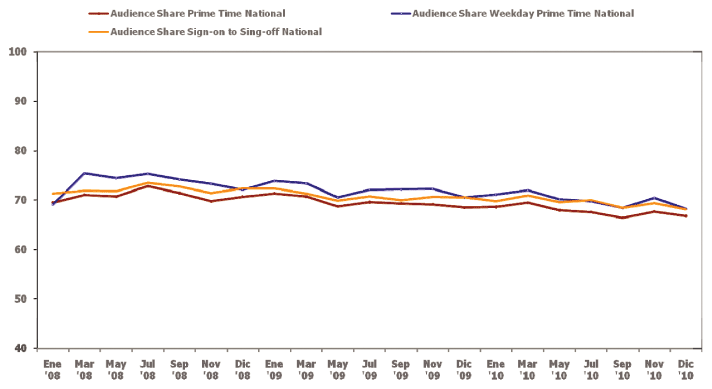
Average prime time audience share (TV broadcasting)(9)
|
|
|
69.5
|
%
|
|
|
69.0
|
%
|
|
|
71.2
|
%
|
|
|
69.8
|
%
|
|
|
68.0
|
%
|
|
|
—
|
|
|
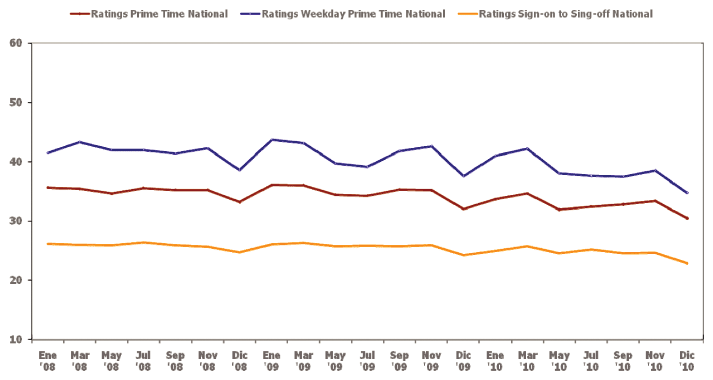
Average prime time rating (TV broadcasting)(9)
|
|
|
35.5
|
|
|
|
33.4
|
|
|
|
35.2
|
|
|
|
34.8
|
|
|
|
32.8
|
|
|
|
—
|
|
|
Magazine circulation (millions of copies)(10)
|
|
|
155
|
|
|
|
165
|
|
|
|
174
|
|
|
|
153
|
|
|
|
138
|
|
|
|
—
|
|
|
Number of employees (at year end)
|
|
|
16,200
|
|
|
|
17,800
|
|
|
|
22,500
|
|
|
|
24,300
|
|
|
|
24,700
|
|
|
|
—
|
|
|
Number of Sky subscribers (in thousands at year end)(11)
|
|
|
1,430
|
|
|
|
1,585
|
|
|
|
1,760
|
|
|
|
1,960
|
|
|
|
3,044
|
|
|
|
—
|
|
|
Number of Cablevisión RGUs (in thousands at year
end)(12)
|
|
|
583
|
|
|
|
695
|
|
|
|
844
|
|
|
|
1,016
|
|
|
|
1,159
|
|
|
|
—
|
|
|
Number of Cablemás RGUs (in thousands at year
end)(12)(13)
|
|
|
—
|
|
|
|
—
|
|
|
|
1,170
|
|
|
|
1,348
|
|
|
|
1,562
|
|
|
|
—
|
|
|
Number of TVI RGUs (in thousands at year end)(12)(14)
|
|
|
—
|
|
|
|
—
|
|
|
|
—
|
|
|
|
425
|
|
|
|
555
|
|
|
|
—
|
|
Notes to Selected Consolidated Financial Information:
|
|
|
|
|
(1)
|
|
Except per
Certificado de Participación Ordinario
, or CPO, average audience share, average rating, magazine circulation, employee, subscriber and Revenue Generating Units, or RGUs. Amounts in Mexican Pesos for the years ended
December 31, 2006 and 2007 are stated in Mexican Pesos in purchasing power as of December 31, 2007, in accordance with Mexican FRS. Beginning on January 1, 2008, we discontinued recognizing the effects of inflation in our financial
information in accordance with Mexican FRS.
|
|
|
|
(2)
|
|
Includes interest expense, interest income, foreign exchange gain or loss, net, and through December 31, 2007, gain or loss from monetary position. See Note 18 to our consolidated year-end financial statements.
|
|
|
|
(3)
|
|
For further analysis of net income per CPO (as well as corresponding amounts per A Share not traded as CPOs), see Note 20 (for the calculation under Mexican FRS) and Note 23 (for the calculation under U.S. GAAP) to our
consolidated year-end financial statements. In April and December 2009, our stockholders approved the payment of a dividend of Ps.1.75 and Ps.1.35 per CPO, respectively. No dividend payment was approved by our stockholders during
2010.
|
5
|
|
|
|
|
(4)
|
|
As of December 31, 2006, 2007, 2008, 2009 and 2010, we had four classes of common stock: A Shares, B Shares, D Shares and L Shares. Our shares are publicly traded in Mexico, primarily in the form of CPOs, each CPO representing 117
shares comprised of 25 A Shares, 22 B Shares, 35 D Shares and 35 L
Shares; and in the United States in the form of Global Depositary
Shares, or GDSs, each GDS representing 5 CPOs. Before March 22, 2006, each GDS represented 20 CPOs.
The number of CPOs and shares issued and outstanding for financial reporting purposes under Mexican FRS and U.S. GAAP is different than the number of CPOs issued and outstanding for legal purposes, because under Mexican FRS and
U.S. GAAP shares owned by subsidiaries and/or the trusts created to implement our Stock Purchase Plan and our Long-Term Retention Plan are not considered outstanding for financial reporting purposes.
As of December 31, 2010, for legal purposes, there were approximately 2,399.3 million CPOs issued and outstanding, each of which was represented by 25 A Shares, 22 B Shares, 35 D Shares and 35 L Shares, and an additional number
of approximately 58,926.6 million A Shares and 2,357.2 million B Shares (not in the form of CPO units). See Note 12 to our consolidated year-end financial statements.
|
|
|
|
(5)
|
|
See Note 23 to our consolidated year-end financial statements.
|
|
|
|
(6)
|
|
See Note 8 to our consolidated year-end financial statements.
|
|
|
|
(7)
|
|
See “Operating and Financial Review and Prospects — Results of Operations — Liquidity, Foreign Exchange and Capital Resources — Indebtedness” and Note 8 to our consolidated year-end financial statements.
|
|
|
|
(8)
|
|
Capital expenditures are those investments made by us in property, plant and equipment, which U.S. Dollar equivalent amounts set forth in “Information on the Company — Capital Expenditures” are translated into Mexican Pesos at
the year-end exchange rate for convenience purposes only. The aggregate amount of capital expenditures in Mexican Pesos does not indicate the actual amounts accounted for in our consolidated financial statements.
|
|
|
|
(9)
|
|
“Average prime time audience share” for a period refers to the average daily prime time audience share for all of our networks and stations during that period, and “average prime time rating” for a period refers to the average
daily rating for all of our networks and stations during that period, each rating point representing one percent of all television households. As used in this annual report, “prime time” in Mexico is 4:00 p.m. to 11:00 p.m., seven
days a week, and “weekday prime time” is 7:00 p.m. to 11:00 p.m., Monday through Friday. Data for all periods reflects the average prime time audience share and ratings nationwide as published by the Mexican subsidiary of the
Brazilian Institute of Statistics and Public Opinion, or
Instituto Brasileño de Opinión Pública y Estadística
, or IBOPE. The Mexican subsidiary of IBOPE is referred to as IBOPE AGB Mexico in this annual report. For further information
regarding audience share and ratings information and IBOPE AGB Mexico, see “Information on the Company — Business Overview — Television — Television Broadcasting”.
|
|
|
|
(10)
|
|
The figures set forth in this line item represent total circulation of magazines that we publish independently and through joint ventures and other arrangements and do not represent magazines distributed on behalf of third
parties.
|
|
|
|
(11)
|
|
Sky commenced operations in Mexico in 1996, and in Central America and the Dominican Republic in 2007. The figures set forth in this line item represent the total number of gross active residential and commercial subscribers for
Innova, S. de R.L. de C.V., or Innova, at the end of each year presented. For a description of Innova’s business and results of operations and financial condition, see “Information on the Company — Business Overview — DTH Ventures
— Mexico and Central America”.
|
|
|
|
(12)
|
|
An RGU is defined as an individual service subscriber who generates recurring revenue under each service provided by Empresas Cablevisión, S.A.B. de C.V., or Cablevisión, Cablemás, S.A. de C.V., or Cablemás, and Televisión
Internacional, S.A. de C.V., or TVI, (pay television, or pay-TV, broadband internet and digital telephony). For example, a single subscriber paying for cable television, broadband internet and digital telephony services represents
three RGUs. We believe it is appropriate to use the number of RGUs as a performance measure for Cablevisión, Cablemás and TVI given that these businesses provide other services in addition to pay-TV. See “Operating and Financial
Review and Prospects — Results of Operations — Total Segment Results — Cable and Telecom” and “Information on the Company — Business Overview — Cable and Telecom”.
|
|
|
|
(13)
|
|
Beginning June 2008, we started to consolidate Cablemás, a significant cable operator in Mexico, operating in 49 cities.
|
6
|
|
|
|
|
(14)
|
|
Beginning October 2009, we started to consolidate TVI, a leading provider of triple-play services in northern Mexico.
|
|
|
|
(15)
|
|
Through December 31, 2007, under Mexican FRS, the changes in financial position for operating, financing and investing activities, were presented through the statements of changes in financial position. On January 1, 2008,
Mexican FRS NIF B-2, “Statement of Cash Flows” became effective on a prospective basis. Therefore, we have included the statement of cash flows for the years ended December 31, 2008, 2009 and 2010. Due to the adoption of Mexican FRS
NIF B-2, “Statement of Cash Flows”, the 2008, 2009 and 2010 information is not directly comparable to 2007 and prior years. The criteria for determining net cash provided by, or used in, operating, investing and financing activities
under the new Mexican FRS NIF B-2, “Statement of Cash Flows” is different from that used in prior years.
|
Dividends
Decisions regarding the payment and amount of dividends are subject to approval by holders of
a majority of the A Shares and B Shares voting together, generally, but not necessarily, on the
recommendation of the Board of Directors, as well as a majority of the A Shares voting separately.
Emilio Azcárraga Jean indirectly controls the voting of the majority of the A Shares and, as a
result of such control, both the amount and the payment of dividends require his affirmative vote.
See “Major Stockholders and Related Party Transactions — The Major Stockholders”. The amounts in
this section are presented in nominal historical figures and therefore have not been restated in
constant currency units due to a change in Mexican FRS whereby beginning on January 1, 2008 we
discontinued recognizing the effects of inflation on our results. On March 25, 2004, our Board of
Directors approved a dividend policy under which we currently intend to pay an annual regular
dividend of Ps.0.35 per CPO. On April 28, 2006 at a general stockholders’ meeting, our stockholders
approved a cash distribution to stockholders for up to Ps.1,104 million, equivalent to
Ps.0.00299145 per share, or Ps.0.35 per CPO. On April 27, 2007, at a general stockholders’ meeting,
our stockholders approved a cash distribution to stockholders for up to Ps.4,401 million, which
includes the payment of an extraordinary dividend of Ps.1.10 per CPO, which is in addition to our
ordinary dividend of Ps.0.35 per CPO, for a total dividend of Ps.1.45 per CPO, equivalent to
Ps.0.01239316239 per share. On April 30, 2008, at a general stockholders’ meeting, our stockholders
approved a cash distribution to stockholders for up to Ps.2,276.3 million, which includes the
payment of an extraordinary dividend of Ps.0.40 per CPO, which is in addition to our ordinary
dividend of Ps.0.35 per CPO, for a total dividend
of Ps.0.75 per CPO, equivalent to Ps.0.00641025641 per share. On April 30, 2009, at a general
stockholders’ meeting, our stockholders approved a cash distribution to stockholders of up to
Ps.5,204.6 million, which includes the payment of an extraordinary dividend of Ps.1.40 per CPO,
which is in addition to our ordinary dividend of Ps.0.35 per CPO, for a total dividend of Ps.1.75
per CPO, equivalent to Ps.0.014957264957 per share. In addition to the dividend payment approved by
our stockholders on April 30, 2009, and based on a proposal by our Board of Directors, on December
10, 2009, at a general stockholders’ meeting, our stockholders approved a cash distribution to
stockholders for up to Ps.4.0 billion, which includes the payment of an extraordinary dividend of
Ps.1.0 per CPO, which is in addition to our ordinary dividend of Ps.0.35 per CPO, for a total
dividend of Ps.1.35 per CPO, equivalent to Ps.0.011538461538 per share. The dividend
payment approved on December 10, 2009 would have generally been paid in April 2010. We did not make
a payment of any additional dividends during 2010. On April 29, 2011, at a general stockholders’
meeting, our stockholders approved a cash distribution to stockholders for up to Ps.1,036.7
million, which represents the payment of our ordinary dividend of Ps.0.35 per CPO, equivalent to
Ps.0.002991452991 per share. All of the recommendations of the Board of Directors related to the
payment and amount of dividends were voted on and approved at the applicable general stockholders’
meetings. The agreements related to some of our outstanding indebtedness contain covenants that
restrict, among other things, the payment of dividends, under certain conditions.
Exchange Rate Information
Since 1991, Mexico has had a free market for foreign exchange and, since 1994, the Mexican
government has allowed the Peso to float freely against the U.S. Dollar. There can be no assurance
that the government will maintain its current policies with regard to the Peso or that the Peso
will not depreciate or appreciate significantly in the future.
7
The following table sets forth, for the periods indicated, the high, low, average and period
end Mexican Official FIX Rate, or FIX Rate, published by the Mexican Central Bank, expressed in
Pesos per U.S. Dollar. The rates have not been restated in constant currency units and therefore
represent nominal historical figures.
|
|
|
|
|
|
|
|
|
|
|
|
|
|
|
|
|
|
|
Period
|
|
High
|
|
|
Low
|
|
|
Average(1)
|
|
|
Period End
|
|
|
2006
|
|
|
11.4809
|
|
|
|
10.4303
|
|
|
|
10.9034
|
|
|
|
10.8116
|
|
|
2007
|
|
|
11.2676
|
|
|
|
10.6639
|
|
|
|
10.9274
|
|
|
|
10.9157
|
|
|
2008
|
|
|
13.9183
|
|
|
|
9.9180
|
|
|
|
11.1455
|
|
|
|
13.8325
|
|
|
2009
|
|
|
15.3650
|
|
|
|
12.5969
|
|
|
|
13.4983
|
|
|
|
13.0659
|
|
|
2010
|
|
|
13.1819
|
|
|
|
12.1575
|
|
|
|
12.6287
|
|
|
|
12.3496
|
|
|
2011
(through June 24, 2011)
|
|
|
12.2619
|
|
|
|
11.5023
|
|
|
|
11.8966
|
|
|
|
11.8822
|
|
|
January
|
|
|
12.2619
|
|
|
|
12.0239
|
|
|
|
12.1258
|
|
|
|
12.1519
|
|
|
February
|
|
|
12.1900
|
|
|
|
11.9937
|
|
|
|
12.0703
|
|
|
|
12.1062
|
|
|
March
|
|
|
12.0981
|
|
|
|
11.9084
|
|
|
|
11.9992
|
|
|
|
11.9084
|
|
|
April
|
|
|
11.8533
|
|
|
|
11.5278
|
|
|
|
11.7184
|
|
|
|
11.5278
|
|
|
May
|
|
|
11.7660
|
|
|
|
11.5023
|
|
|
|
11.6533
|
|
|
|
11.5780
|
|
|
June
(through June 24, 2011)
|
|
|
11.9591
|
|
|
|
11.6277
|
|
|
|
11.8057
|
|
|
|
11.8822
|
|
|
|
|
|
|
(1)
|
|
Annual average rates reflect the average of the daily exchange rate during the relevant period.
|
The above rates may differ from the actual rates used in the preparation of the financial
statements and the other financial information appearing in this Form 20-F.
In the past, the Mexican economy has had balance of payment deficits and decreases in foreign
exchange reserves. While the Mexican government does not currently restrict the ability of Mexican
or foreign persons or entities to convert Pesos to U.S. Dollars, we cannot assure you that the
Mexican government will not institute restrictive exchange control policies in the future, as has
occurred from time to time in the past. To the extent that the Mexican government institutes
restrictive exchange control policies in the future, our ability to transfer or to convert Pesos
into U.S. Dollars and other currencies for the purpose of making timely payments of interest and
principal of indebtedness, as well as to obtain foreign programming and other goods, would be
adversely affected. See “Key Information — Risk Factors — Risk Factors Related to Mexico —
Currency Fluctuations or the Devaluation and Depreciation of the Peso Could Limit the Ability of
Our Company and Others to Convert Pesos into U.S. Dollars or Other Currencies, Which Could
Adversely Affect Our Business, Financial Condition or Results of Operations”.
On June
24, 2011 the FIX Rate was Ps.11.8822 per U.S.$1.00.
8
Risk Factors
The following is a discussion of risks associated with our company and an investment in our
securities. Some of the risks of investing in our securities are general risks associated with
doing business in Mexico. Other risks are specific to our business. The discussion below contains
information, among other things, about the Mexican government and the Mexican economy obtained from
official statements of the Mexican government as well as other public sources. We have not
independently verified this information. Any of the following risks, if they actually occur, could
materially and adversely affect our business, financial condition, results of operations or the
price of our securities.
Risk Factors Related to Mexico
Economic and Political Developments in Mexico May Adversely Affect Our Business
Most of our operations and assets are located in Mexico. As a result, our financial condition,
results of operations and business may be affected by the general condition of the Mexican economy,
the devaluation or appreciation of the Peso as compared to the U.S. Dollar, Mexican inflation,
interest rates, regulation, taxation, social instability and other political, social and economic
developments in or affecting Mexico over which we have no control.
Mexico Has Experienced Adverse Economic Conditions, Which Could Have a Negative Impact on Our
Results of Operations and Financial Condition
Mexico has historically experienced uneven periods of economic growth. Mexican gross domestic
product, or GDP, increased 1.2% in 2008, decreased by 6.1% in 2009 and increased by an estimated
5.4% in 2010. Mexican GDP growth surpassed Mexican government forecasts in 2010 and, according to
Mexican government forecasts, Mexican GDP is expected to increase by approximately 3.8% in 2011. We
cannot assure you that these estimates and forecasts will prove to be accurate.
Mexico was adversely affected by the global economic crisis that started in the summer of
2007. The country’s main economic indicators were negatively affected, including a rise in
unemployment, decline of interest rates, higher inflation and a devaluation of the Peso against the
U.S. Dollar. This global economic downturn and/or any future economic downturn, including downturns
in the United States and Europe, could affect our financial condition and results of operations.
For example, demand for advertising may decrease both because consumers may reduce expenditures for
our advertisers’ products and because advertisers may reduce advertising expenditures and demand
for publications, cable television, direct-to-home, or DTH, satellite services, pay-per-view
programming, telecommunications services and other services and products may decrease because
consumers may find it difficult to pay for these services and products.
Developments in Other Emerging Market Countries or in the U.S. May Adversely Affect the Mexican
Economy, the Market Value of Our Securities and Our Results of Operations
The market value of securities of Mexican companies, the economic and political situation in
Mexico and our financial condition and results of operations are, to varying degrees, affected by
economic and market conditions in other emerging market countries and in the United States.
Although economic conditions in other emerging market countries and in the United States may differ
significantly from economic conditions in Mexico, investors’ reactions to developments in any of
these other countries may have an adverse effect on the market value or trading price of securities
of Mexican issuers, including our securities, or on our business.
Our operations, including the demand for our products or services, and the price of our
securities, have also historically been adversely affected by increases in interest rates in the
United States and elsewhere. Economic downturns in the United States often have a significant
adverse effect on the Mexican economy and other economies globally, which in turn, could affect our
financial condition and results of operations.
Our profitability is affected by numerous factors, including changes in viewing preferences,
priorities of advertisers and reductions in advertisers’ budgets. Historically, advertising in most
forms of media has correlated positively with the general condition of the economy and thus, is
subject to the risks that arise from adverse changes in domestic and global economic conditions,
consumer confidence and spending. The demand for our products and services in Mexico, the U.S. and
in the other countries in which we operate may be adversely affected by the tightening of credit
markets and economic downturns. As a global media company, we depend on the demand from customers
in Mexico, the U.S. and the other countries in which we operate, and reduced consumer spending that
falls short of our projections could adversely impact our revenues and profitability.
9
Uncertainty in Global Financial Markets Could Adversely Affect Our Financing Costs and Exposure to
Our Customers and Counterparties
The global financial markets continue to be uncertain, and many companies have limited access
to funding. This risk has been exacerbated by concerns over the higher levels of public debt, wider
fiscal deficit and recent credit rating downgrades on public debt of European countries such as the
Republic of Ireland, Greece, Portugal, and Spain and the risk of a potential downgrade and credit
deterioration of the U.S. economy. It is uncertain how long the effects of this global financial
stress in the markets will persist and what impact it will have on the global economy in general,
or the economies in which we operate, in particular, and whether slowing economic growth in any
such countries could result in decreased consumer spending affecting our products and services. If
access to credit tightens further and borrowing costs rise, our borrowing costs could be adversely
affected. Difficult financial markets may also adversely affect some of our customers. In addition,
we enter into derivative transactions with large financial institutions, including contracts to
hedge our exposure to interest rates and foreign exchange, and we could be affected by severe
financial difficulties faced by our counterparties.
Currency Fluctuations or the Devaluation and Depreciation of the Peso Could Limit the Ability of
Our Company and Others to Convert Pesos into U.S. Dollars or Other Currencies, Which Could
Adversely Affect Our Business, Financial Condition or Results of Operations
A significant portion of our indebtedness and a significant amount of our costs are U.S.
Dollar-denominated, while our revenues are primarily Peso-denominated. As a result, decreases in
the value of the Peso against the U.S. Dollar could cause us to incur foreign exchange losses,
which would reduce our net income.
Severe devaluation or depreciation of the Peso may also result in governmental intervention,
or disruption of international foreign exchange markets. This may limit our ability to transfer or
convert Pesos into U.S. Dollars and other currencies for the purpose of making timely payments of
interest and principal on our indebtedness and adversely affect our ability to obtain foreign
programming and other imported goods. The Mexican economy has suffered current account balance
payment of deficits and shortages in foreign exchange reserves in the past. While the Mexican
government does not currently restrict, and for more than 15 years has not restricted, the right or
ability of Mexican or foreign persons or entities to convert Pesos into U.S. Dollars or to transfer
other currencies outside of Mexico, there can be no assurance that the Mexican government will not
institute restrictive exchange control policies in the future. To the extent that the Mexican
government institutes restrictive exchange control policies in the future, our ability to transfer
or convert Pesos into U.S. Dollars or other currencies for the purpose of making timely payments of
interest and principal on indebtedness, including the notes, as well as to obtain imported goods
would be adversely affected. Devaluation or depreciation of the Peso against the U.S. Dollar or
other currencies may also adversely affect U.S. Dollar or other currency prices for our debt
securities or the cost of imported goods.
High Inflation Rates in Mexico May Decrease Demand for Our Services While Increasing Our Costs
Mexico historically has experienced high levels of inflation, although the rates have been
lower for more than 20 years. The annual rate of inflation, as measured by changes in the Mexican
National Consumer Price Index, or NCPI, was 6.5% in 2008, 3.6% in 2009, 4.4% in 2010 and is
projected to be 3.9% in 2011. An adverse change in the Mexican economy may have a negative impact
on price stability and result in higher inflation than its main trading partners, including the
United States. High inflation rates can adversely affect our business and results of operations in
the following ways:
|
|
•
|
|
inflation can adversely affect consumer purchasing power, thereby adversely affecting consumer and advertiser demand
for our services and products; and
|
|
|
|
|
•
|
|
to the extent inflation exceeds our price increases, our prices and revenues will be adversely affected in “real” terms.
|
High Interest Rates in Mexico Could Increase Our Financing Costs
Mexico historically has had, and may continue to have, high real and nominal interest rates.
The interest rates on 28-day Mexican government treasury securities averaged 7.7%, 5.5%, and 4.4%
for 2008, 2009, and 2010, respectively. High interest rates in Mexico could increase our financing
costs and thereby impair our financial condition, results of operations and cash flow.
10
Political Events in Mexico Could Affect Mexican Economic Policy and Our Business, Financial
Condition and Results of Operations
The Mexican Federal Congress is not controlled by any specific political party. Therefore,
Mexico’s President Felipe Calderón Hinojosa and his party, the
Partido Acción Nacional
, or the PAN,
have faced opposition in Congress during the first four and a half years of his term.
Changes in laws, public policies and government programs may occur in the future. Such changes
may have a material adverse effect on the Mexican economic and political situation, which in turn,
may adversely affect our business, financial condition and results of operations.
In July 2009, new members were elected to the
Cámara de Diputados
, or the Chamber of
Representatives, local Congress of some states, and Governors of six states, among other offices.
As a result of these elections, the
Partido Revolucionario Institucional
or PRI, acquired a
significant majority in the Chamber of Representatives. The lack of party alignment between the
Chamber of Representatives and the President could result in deadlock and prevent the timely
implementation of political and economic reforms, which in turn could have a material adverse
effect on Mexican economic policy. It is also possible that political uncertainty may adversely
affect Mexico’s economic situation. The new members of Congress have focused on important legal
reforms, which have not been and may not be approved, including labor reforms. See “— Existing
Mexican Laws and Regulations or Changes Thereto or the Imposition of New Ones May Negatively Affect
Our Operations and Revenue”. The effects on the social and political situation in Mexico could
adversely affect the Mexican economy, including the stability of its currency. We cannot ascertain,
at this time, how any material adverse effect on Mexican economic policy, Mexico’s economic
situation, the stability of Mexico’s currency or market conditions may affect our business or the
price of our securities.
Mexico
has Experienced a Period of Increased Criminal Activity and Such Activities Could Adversely
Affect Our Financing Costs and Exposure to Our Customers and Counterparties
Mexico
has experienced a period of increased criminal activity and violence,
primarily due to organized crime. These activities, their escalation and the violence
associated with them could in the future have a negative impact on the business environment in which we operate,
and therefore on our financial condition and results of operations.
Mexican Antitrust Laws May Limit Our Ability to Expand Through Acquisitions or Joint Ventures
Mexico’s
Ley Federal de Competencia Económica
, or Mexico’s Federal Antitrust Law, and related
regulations may affect some of our activities, including our ability to introduce new products and
services, enter into new or complementary businesses or joint ventures and complete acquisitions.
See “Information on the Company — Business Overview — Investments — Alvafig”.
In addition, Mexico’s Federal Antitrust Law and related regulations or conditions imposed by
the
Comisión Federal de Competencia
, CFC, or Mexican Antitrust Commission, may adversely affect our
ability to determine the rates we charge for our services and products or the manner in which we
provide our products or services. Approval of the Mexican Antitrust Commission is required for us
to acquire certain businesses or enter into certain joint ventures. There can be no assurance that
in the future the Mexican Antitrust Commission will authorize certain acquisitions or joint
ventures related to our businesses, the denial of which may adversely affect our business strategy,
financial condition and results of operations.
The Mexican Antitrust Commission may also impose conditions that
could adversely affect some of our activities, our business strategy,
our financial condition and results of operations.
See “Information on the Company — Business Overview — Regulation — Mexican Antitrust Law”.
Existing Mexican Laws and Regulations or Changes Thereto or the Imposition of New Ones May
Negatively Affect Our Operations and Revenue
Existing laws and regulations, including among others, tax laws, could be amended, the manner
in which laws and regulations are enforced or interpreted could change, and new laws or regulations
could be adopted. Such changes could materially adversely affect our operations and our revenue.
11
Certain amendments to the existing
Ley Federal de Radio y Televisión
, or Radio and Television
Law, and the
Ley Federal de Telecomunicaciones
, or Telecommunications Law, have been enacted. In
May 2006, several members of the Senate of the Mexican Federal Congress filed a complaint before
the Supreme Court of Justice of Mexico, seeking a declaration that such amendments were
unconstitutional and therefore null and void. This complaint was resolved by the Supreme Court of
Justice in June 2007, declaring several provisions of the amendments to the Radio and Television
Law and to the Telecommunications Law unconstitutional and therefore null and void. Among the
provisions declared as unconstitutional by the Supreme Court of Justice are the ones referred to in
former Article 28 of the Radio and Television Law, pursuant to which holders of concessions had the
ability to request authorization to provide additional telecommunications services within the same
spectrum covered by a current concession without having to participate in a public bid to offer
such services pursuant to a concession and Article 16 of the Radio and Television Law, pursuant to
which concessions were granted for a fixed term of 20 years with the possibility to renew such
concessions by obtaining from the
Secretaría de Comunicaciones y Transportes
, or SCT, a
certification of compliance with the obligations under the concession. As a result of the Supreme
Court of Justice’s ruling, once the transition to digital television and digital radio broadcasting
is completed, if we want to provide additional telecommunications services within the same spectrum
granted for digital television or digital radio broadcasting, respectively, we will have to follow
the provisions of Article 24 of the Telecommunications Law to obtain the concession therefor. Also,
there is uncertainty as to how radio and television concessions will be renewed in the future,
since the Supreme Court of Justice’s ruling has resulted in requiring the renewal of the
concessions to be subject to a public bid process, with a right of preference over other
participating bidders given to the incumbent concessionaire. Additionally, some members of the
Mexican Federal Congress have expressed their intent to propose a new Radio and Television Law,
which could affect, among other things, the framework for granting or renewing concessions.
In September 2010, Mexico’s President Felipe Calderon Hinojosa, published through the SCT in
the
Diario Oficial de la Federación
, or the Official Gazette of the Federation, a decree
establishing the actions to be taken to expedite the transition to digital television and digital
radio broadcasting, which intends to end analog broadcasting at some point between 2011 and 2015
(referred to in this annual report as the 2010 Decree).
The 2010 Decree modifies the release published by the SCT in July 2004 which established
procedures and set forth other applicable provisions for the transition to digital television. The
constitutionality of the 2010 Decree has been challenged before the Supreme Court of Justice of
Mexico by the Mexican Federal Congress, alleging that Mexico’s President Felipe Calderon Hinojosa,
pursuant to the Radio and Television Law, overstepped his authority when issuing the 2010 Decree,
and that the 2010 Decree therefore is unconstitutional. The dispute is
currently pending resolution by the Supreme Court of Justice of Mexico.
In 2007, the Mexican Federal Congress passed an amendment to the Political Constitution of the
United Mexican States, or Mexican Constitution, pursuant to which, among other things, the Federal
Electoral Institute (
Instituto Federal Electoral
, or IFE) has, during certain periods, the
exclusive right to manage and use the Official Television Broadcast Time and the Official Radio
Broadcast Time (jointly referred to in this annual report as Official Broadcast Time). For a
description of Official Television Broadcast Time and Official Radio Broadcast Time, see
“Information on the Company — Business Overview — Business Strategy — Maintaining our Leading
Position in the Mexican Television Market — Advertising Sales Plan” and “Information on the
Company — Business Overview — Other Businesses — Radio Stations”. The IFE has the exclusive
right to use the Official Broadcast Time for its own purposes and for the use of political parties
in Mexico (as provided in the Mexican Constitution) for self promotion and, when applicable, to
promote their electoral campaigns during election day, pre-campaign and campaign periods (referred
to in this annual report as the Constitutional Amendment).
The IFE and the political parties must comply with certain requirements included in the
Constitutional Amendment for the use of Official Broadcast Time. During federal electoral periods,
the IFE will be granted, per the Constitutional Amendment, 48 minutes per day in each radio station
and television channel, to be used during pre-campaign periods in two and up to three minutes per
broadcast hour in each radio station and television channel, of which all the political parties
will be jointly entitled to use one minute per broadcast hour. During campaign periods, at least
85% of the 48 minutes per day shall be allocated among the political parties, and the remaining 15%
may be used by the IFE for its own purposes. During non-electoral periods, the IFE will be assigned
with up to 12% of the Official Broadcast Time, half of which shall be allocated among the political
parties. In the event that local elections are held simultaneously with federal elections, the
broadcast time granted to the IFE shall be used for the federal and the local elections. During any
other local electoral periods, the allocation of broadcast time will be made pursuant to the
criteria established by the Constitutional Amendment and as such criteria are reflected in
applicable law.
In addition to the foregoing, pursuant to the Constitutional Amendment, political parties are
prohibited from purchasing or acquiring advertising time, directly or through third parties, from
radio or television stations; likewise, third parties shall not acquire advertising time from radio
or television stations for the broadcasting of advertisements which may influence the electoral
preferences of Mexican citizens, nor in favor or against political parties or candidates to offices
elected by popular vote.
We believe we have been operating our business in compliance with the provisions of the
Constitutional Amendment; however, we have filed legal actions contesting certain provisions of the
Constitutional Amendment.
12
At this time, the Constitutional Amendment has not had an impact on the results of our radio
and television businesses, however we are unable to predict what impact, if any, the Constitutional
Amendment may have on our operating results in the future. We cannot predict the outcome of the
legal actions brought by the Company against the Constitutional Amendment. A decrease in paid
advertising of the nature described above could lead to a decrease in our television or radio
revenues.
Article 15-A of the
Ley del Seguro Social
, or the Social Security Law, could materially
adversely affect our financial condition and results of operations. Such Article 15-A, amended in
July 2009, provides that a company that obtains third party personnel services from personnel
services providers and which receives such personnel services on any of the company’s premises is
jointly bound to comply with the obligations related to social security that have to be fulfilled
by such personnel services providers for the benefit of their respective employees. Such Article
15-A, as amended, also establishes the obligation that the Company sends a list to the
Instituto
Mexicano del Seguro Social
, or the Social Security Mexican Institute, of all agreements entered
into with personnel services providers.
In December 2009, the Mexican Government enacted certain amendments and changes to the Mexican
tax laws related to income tax, value added tax and excise tax that became effective as of January
1, 2010. The main provisions of these amendments and changes are as follows: (i) the corporate
income tax rate was increased from 28% to 30% for the years 2010 through 2012, and will be reduced
to 29% and 28% in 2013 and 2014, respectively; (ii) under certain circumstances, the deferred
income tax benefit derived from tax consolidation of a parent company and its subsidiaries is
limited to a period of five years; therefore, the
resulting deferred income tax has to be paid starting in the sixth year following the fiscal
year in which the deferred income tax benefit was received; (iii) the payment of this tax has to be
made in installments of 25% in the first and second year, 20% in the third year and 15% in the
fourth and fifth year; (iv) taxpayers paid in 2010 the first installment of the cumulative amount
of the deferred tax benefits determined as of December 31, 2004; (v) revenues from
telecommunications and pay-TV services (except access to Internet services, interconnection
services between public networks of telecommunications and public telephone services) became
subject to a 3% excise tax; (vi) the excise tax rate on gaming (including bets and drawings) was
increased from 20% to 30%; and (vii) the general value added tax rate was increased from 15% to
16%, and the rate on the border region was increased from 10% to 11%. We believe that the new
provisions for the tax consolidation regime have a retroactive application and we are therefore
challenging the constitutionality of these new provisions.
Risk Factors Related to Our Major Stockholders
Emilio Azcárraga Jean has Substantial Influence Over Our Management and the Interests of Mr.
Azcárraga Jean may Differ from Those of Other Stockholders
We have four classes of common stock: A Shares, B Shares, D Shares, and L Shares. Until June
17, 2009, approximately 45.6% of the outstanding A Shares, 2.7% of the outstanding B Shares, 2.8%
of the outstanding D Shares and 2.8% of the outstanding L Shares of the Company were held through a
trust, or the Stockholder Trust, including shares in the form of CPOs. On June 17, 2009, the
Stockholder Trust was terminated and the shares and CPOs which were formerly held through such
trust, were delivered to the corresponding beneficiaries. The largest beneficiary of the
Stockholder Trust was a trust for the benefit of Emilio Azcárraga Jean, or the Azcárraga Trust.
Such trust currently holds 44.3% of the outstanding A shares, 0.1% of the outstanding B shares,
0.1% of the outstanding D shares and 0.1% of the outstanding L shares of the Company. As a result,
Emilio Azcárraga Jean controlled until June 17, 2009, the voting of the shares held through the
Stockholder Trust, and currently controls the vote of such shares through the Azcárraga Trust. The
A Shares held through the Azcárraga Trust constitute a majority of the A Shares whose holders are
entitled to vote because non-Mexican holders of CPOs and GDSs are not permitted by law to vote the
underlying A Shares. Accordingly, and so long as non-Mexicans own more than a minimal number of A
Shares, Emilio Azcárraga Jean will have the ability to direct the election of 11 out of 20 members
of our Board of Directors, as well as prevent certain actions by the stockholders, including
dividend payments, mergers, spin-offs, changes in corporate purpose, changes of nationality and
amendments to the anti-takeover provisions of our bylaws. See “Major Stockholders and Related Party
Transactions — The Major Stockholders”.
As Controlling Stockholder, Emilio Azcárraga Jean Will Have the Ability to Limit Our Ability to
Raise Capital, Which Would Require Us to Seek Other Financing Arrangements
Emilio Azcárraga Jean has the voting power to prevent us from raising money through equity
offerings. Mr. Azcárraga Jean has informed us that if we conduct a primary sale of our equity, he
would consider exercising his pre-emptive rights to purchase a sufficient number of additional A
Shares in order to maintain such power. In the event that Mr. Azcárraga Jean is unwilling to
subscribe for additional shares and/or prevents us from raising money through equity offerings, we
would need to raise money through a combination of debt or other forms of financing, which we may
not obtain, or if so, possibly not on favorable terms.
13
Risk Factors Related to Our Business
The Operation of Our Business May Be Terminated or Interrupted if the Mexican Government Does Not
Renew or Revokes Our Broadcast or Other Concessions
Under Mexican law, we need concessions from the SCT to broadcast our programming over our
television and radio stations, cable and DTH satellite systems and to provide telephony services.
In July 2004, in connection with the adoption of a release issued by the SCT for the transition to
digital television, all of our television concessions were renewed until 2021. The expiration dates
for the concessions for our radio stations range from 2015 to 2016 except for the concessions of 3
radio stations, which renewal applications were timely filed before the SCT but are still pending
due to the Supreme Court’s ruling on the amendments to the Radio and Television Law. (See “— Risk
Factors Related to Mexico — Existing Mexican Laws and Regulations or Changes Thereto or the
Imposition of New Ones May Negatively Affect Our Operations and Revenue”). We are unable to predict
when we will obtain the renewal to such concessions. The expiration dates of our Cable and
Telecommunications concessions range from 2013 to 2038 and our DTH concessions expire in 2020 and
2026. The expiration dates for the concessions for our telephone services range from 2018 to 2026.
Cablevisión obtained a telecommunications concession, which expires in 2029, and its concession to
transmit an over-the-air UHF restricted television service through channel 46 which expired on
November 17, 2010 (the “Channel 46 Concession”). We filed for a renewal of the Channel 46
Concession and in February 2010 the SCT notified Cablevisión that it would not be renewed; however,
we are contesting the resolution of the SCT. In the past, the SCT has typically renewed the
concessions of those concessionaires that comply with the requisite procedures set forth for
renewal under Mexican law and on the respective concession title; however, in connection with
our television and radio concessions, there is uncertainty as to how radio and television
concessions will be renewed in the future, since the Supreme Court ruling has resulted in requiring
the renewal of the concessions to be subject to a public bid process, with a right of preference
over other participating bidders given to the incumbent concessionaire.
Under Mexican law, we need a permit, or Gaming Permit, from the
Secretaría de Gobernación
, or
Mexican Ministry of the Interior, to operate our gaming business. The operation of our gaming
business may be terminated or interrupted if the Mexican Government does not renew or revokes our
Gaming Permit. The Gaming Permit was granted to us on May 25, 2005 and the expiration date is May
24, 2030. We are unable to predict if we will obtain a renewal of the Gaming Permit.
See “— Risk Factors Related to Mexico — Existing Mexican Laws and Regulations or Changes
Thereto or the Imposition of New Ones May Negatively Affect Our Operations and Revenue”.
We Face Competition in Each of Our Markets That We Expect Will Intensify
We face competition in all of our businesses, including television advertising and other media
businesses, as well as our strategic investments and joint ventures. In particular, we face
substantial competition from TV Azteca, S.A. de C.V., or TV Azteca. See “Information on the Company
— Business Overview — Television — Television Industry in Mexico” and “Information on the
Company — Business Overview — Television — Television Broadcasting”. In addition, the
entertainment and communications industries in which we operate are changing rapidly because of
evolving distribution technologies, including online and digital networks. Our principal
competitors in the gaming industry are Corporación Interamericana de Entretenimiento, S.A.B. de
C.V., or CIE, and Grupo Caliente S.A. de C.V., or Grupo Caliente.
The telecommunications industry in Mexico has become highly competitive and we face
significant competition. Cable operators, who were already authorized to provide bidirectional data
and internet broadband services and who have been recently authorized by the Mexican government to
also provide voice services, including Voice over Internet Protocol, or VoIP, pose a risk to us. As
the cable operators’ telephony income may be seen as incremental revenue, the price reduction and
the vast coverage may prevent us from growing.
In October 2006, the Mexican federal government enacted a new set of regulations known as
Convergence Regulations, or
Acuerdo de Convergencia de Servicios Fijos de Telefonía Local y
Televisión y/o Audio Restringidos que se Proporcionan a Través de Redes Públicas Alámbricas e
Inalámbricas
. The Convergence Regulations allow certain concessionaires of telecommunications
services to provide other services not included in their original concessions. Cable television
providers may be allowed to provide internet and telephone services if certain requirements and
conditions are met. In addition, telephone operators, such as Teléfonos de México, S.A.B. de C.V.
or Telmex, may be allowed to provide cable television services if certain requirements and
conditions are met. We believe that we may face significant competition from new entrants providing
telephony services or cable television services, including cable television providers and telephone
operators. See “Information on the Company — Business Overview — Cable and Telecom”.
At the end of 2008, DISH, a competitor in the DTH market, launched its services in Mexico.
14
At the beginning of 2009, TV Azteca began offering HiTV, a television service which consists
of the transmission of digital television channels through the technology known as Digital
Terrestrial Television, or DTT, in Mexico City and its metropolitan area using the radioelectric
spectrum in the mirror concessions granted to them pursuant to the release issued by the SCT for
the transition to digital television. HiTV currently offers approximately 20 channels and charges
for the decoder box, a fact which we believe constitutes a pay-TV service. The Mexican Fiscal
Court, or the
Tribunal Federal de Justicia Fiscal y Administrativa
, is currently reviewing the
legality of this service since the mirror concessions should be used to replicate the analog
channel signals. We are uncertain as to how this service may affect our pay-TV business in the
event it is considered legal. In addition, the decoder box that TV Azteca is utilizing to allow
viewers to access its HiTV channels also allows the viewers access to our digital over-the-air
networks without our permission.
Our future success will be affected by these changes, which we cannot predict. Consolidation
in the entertainment, telecommunications and broadcast industries could further intensify
competitive pressures. As the pay-TV market in Mexico matures, we expect to face competition from
an increasing number of sources, including emerging technologies that provide new services to
pay-TV customers and require us to make significant capital expenditures in new technologies and
exclusive content. Developments may limit our access to new distribution channels and exclusive
content, may require us to make significant capital expenditures in order to have access to new
digital and other distribution channels or may create additional competitive pressures on some or
all of our businesses.
The Seasonal Nature of Our Business Affects Our Revenue and a Significant Reduction in Fourth
Quarter Net Sales Could Impact Our Results of Operations
Our business reflects seasonal patterns of advertising expenditures, which is common in the
television broadcast industry, as well as cyclical patterns in periodic events such as the World
Cup, the Olympic Games and political elections. We typically recognize a disproportionately large
percentage of our television broadcasting advertising net sales in the fourth quarter in connection
with the holiday shopping season. For example, in 2008, 2009 and 2010 we recognized 31.3%, 31.3%,
and 30.3% respectively, of our net sales in the fourth quarter of the year. Accordingly, a
significant reduction in fourth quarter advertising revenue could adversely affect our business,
financial condition and results of operations.
DIRECTV Has Certain Governance and Veto Rights Over Some Operations of Innova
We own a 58.7% interest in Innova, our DTH venture in Mexico, Central America and the
Dominican Republic. The balance of Innova’s equity is indirectly owned by The DIRECTV Group, Inc.,
or DIRECTV, through its subsidiaries DTH (Mexico) Investment, LTD, DIRECTV Latin America Holdings,
Inc., or DIRECTV Holdings, and DIRECTV Latin America LLC, or DTVLA. Although we hold a majority of
Innova’s equity and designate a majority of the members of Innova’s Board of Directors, DIRECTV has
certain governance and veto rights in Innova, including the right to block certain transactions
between us and Innova.
Loss of Transmission or Loss of the Use of Satellite Transponders Could Cause a Business
Interruption in Innova, Which Would Adversely Affect Our Net Income
Media and telecom companies, including Innova, rely on satellite transmissions to conduct
their day-to-day business. Any unforeseen and sudden loss of transmission or non-performance of the
satellite for Innova can cause huge losses to Innova’s business. The unforeseen loss of
transmission may be caused due to the satellite’s loss of the orbital slot or the reduction in the
satellite’s functional life.
The size of the business interruption impact for Innova in the case of a satellite loss
exceeds the insurance we have acquired to cover this risk. In order to reduce the possibility of
financial consequences resulting from an unforeseen loss of transmission, Innova entered into an
agreement to launch a backup satellite jointly with Sky Brasil Servicos Ltda., or Sky Brasil, which
was launched in the first quarter of 2010. We cannot predict the extent of losses to Innova in the
case of current or new satellite loss or the effectiveness of any alternative strategy.
15
The Results of Operations of Broadcasting Media Partners, Inc. and GSF Telecom Holdings, S.A.P.I.
de C.V., May Affect Our Results of Operations and the Value of Our Investments in Those Companies
In December 2010, we made a substantial investment in Broadcasting Media Partners, Inc., or
BMP, the parent company of Univision Communications, Inc., or Univision. However, we do not control
and do not consolidate the results of BMP. Most of our investment in BMP is currently held in the
form of convertible debentures. Our conversion of the debentures into shares of common stock of BMP
is subject to certain conditions, and any delay in such conversion could materially affect the
value of the debentures. After the conversion, we will remain a minority equity holder of BMP. The
results of operations of BMP and Univision may affect the value of our investment in BMP and our
results of operations. The business, financial condition and results of operations of Univision
could be materially and adversely affected by risks including, but not limited to: (i) failure to
service debt, (ii) cancellation, reductions or postponements of advertising, (iii) possible strikes
or other union job actions, (iv) changes in the rules and regulations of the U.S. Federal
Communications Commission, or FCC, (v) an increase in the cost of, and decrease in the supply or
quality of, programming, (vi) an increase in the preference among Hispanics for English-language
programming, (vii) competitive pressures from other broadcasters and other entertainment and news
media and (viii) the impact of new technologies.
In April 2011, we made a substantial investment for the acquisition of equity and convertible
debentures issued by GSF Telecom Holdings, S.A.P.I. de C.V., or GSF, which indirectly owns 100% of
the outstanding shares of Grupo Iusacell, S.A. de C.V., or Iusacell. However, we do not control and
do not consolidate the results of GSF. Most of our investment in GSF is currently held in the form
of debentures mandatorily convertible into shares of stock of GSF. The conversion of the GSF
convertible debentures is subject to regulatory approval, and any
delay in the issuance of such approval would give rise to increased conversion costs and a
prolonged conversion timeframe, which could materially affect the value of the debentures. After
the mandatory conversion, we will still not be a majority owner of GSF and will share governance
rights with the other owner. The results of operations of GSF and Iusacell may affect the value of
our investment in GSF and our results of operations. The business, financial condition and results
of operations of Iusacell could be materially and adversely affected by risks including, but not
limited to: (i) technology becoming obsolete, (ii) the inability to renew concessions and existing
arrangements for roaming and other services, (iii) litigation being resolved against Iusacell, (iv)
the dependence on revenues from subsidiaries to repay debt, (v) the loss of subscribers as a
result of changes in the telecommunications industry and (vi) changes in the regulatory
environment.
There can be no assurance that the results of operations of BMP, GSF and their respective
subsidiaries will be sufficient to maintain or increase the value of our investments in such
companies, or that such results will not materially and adversely affect our results of operations.
Risk Factors Related to Our Securities
Any Actions Stockholders May Wish to Bring Concerning Our Bylaws or the CPO Trust Must Be Brought
in a Mexican Court
Our bylaws provide that a stockholder must bring any legal actions concerning our bylaws in
courts located in Mexico City. The trust agreement governing the CPOs provides that a stockholder
must bring any legal actions concerning the trust agreement in courts located in Mexico City. All
parties to the trust agreement governing the CPOs, including the holders of CPOs, have agreed to
submit these disputes only to Mexican courts.
Non-Mexicans May Not Hold A Shares, B Shares or D Shares Directly and Must Have Them Held in a
Trust at All Times
Non-Mexicans may not directly own A Shares, B Shares or D Shares, but may hold them indirectly
through a CPO trust, which will control the voting of the A Shares and B Shares. Under the terms of
the CPO Trust, a non-Mexican holder of CPOs or GDSs may instruct the CPO Trustee to request that we
issue and deliver certificates representing each of the shares underlying its CPOs so that the CPO
Trustee may sell, to a third party entitled to hold the shares, all of these shares and deliver to
the holder any proceeds derived from the sale.
Non-Mexican Holders of Our Securities Forfeit Their Securities if They Invoke the Protection of
Their Government
Pursuant to Mexican law, our bylaws provide that non-Mexican holders of CPOs and GDSs may not
ask their government to interpose a claim against the Mexican government regarding their rights as
stockholders. If non-Mexican holders of CPOs and GDSs violate this provision of our bylaws, they
will automatically forfeit the A Shares, B Shares, L Shares and D Shares underlying their CPOs and
GDSs to the Mexican government.
Non-Mexican Holders of Our Securities Have Limited Voting Rights
Non-Mexican holders of GDSs are not entitled to vote the A Shares, B Shares and D Shares
underlying their securities. The L Shares underlying GDSs, the only series of our Shares that can
be voted by non-Mexican holders of GDSs, have limited voting rights. These limited voting rights
include the right to elect two directors and limited rights to vote on extraordinary corporate
actions, including the delisting of the L Shares and other actions which are adverse to the holders
of the L Shares. For a brief description of the circumstances under which holders of L Shares are
entitled to vote, see “Additional Information — Bylaws — Voting Rights and Stockholders’
Meetings”.
16
Our Antitakeover Protections May Deter Potential Acquirors and May Depress Our Stock Price
Certain provisions of our bylaws could make it substantially more difficult for a third party
to acquire control of us. These provisions in our bylaws may discourage certain types of
transactions involving the acquisition of our securities. These provisions may also limit our
stockholders’ ability to approve transactions that may be in their best interests and discourage
transactions in which our stockholders might otherwise receive a premium for their Shares over the
then current market price, and could possibly adversely affect the trading volume in our equity
securities. As a result, these provisions may adversely affect the market price of our securities.
Holders of our securities who acquire Shares in violation of these provisions will not be able to
vote, or receive dividends, distributions or other rights in respect of these securities and would
be obligated to pay us a penalty. For a description of these provisions, see “Additional
Information — Bylaws — Antitakeover Protections”.
GDS Holders May Face Disadvantages When Attempting to Exercise Voting Rights as Compared to Other
Holders of Our Securities
In situations where we request that The Bank of New York Mellon, the depositary for the
securities underlying the GDSs, ask GDS holders for voting instructions, the holders may instruct
the depositary to exercise their voting rights, if any, pertaining to the deposited securities. The
depositary will attempt, to the extent practical, to arrange to deliver voting materials to these
holders. We cannot assure holders of GDSs that they will receive the voting materials in time to
ensure that they can instruct the depositary how to vote the deposited securities underlying their
GDSs, or that the depositary will be able to forward those instructions and the appropriate proxy
request to the CPO Trustee in a timely manner. For stockholders’ meetings, if the depositary does
not receive voting instructions from holders of GDSs or does not forward such instructions and
appropriate proxy request in a timely manner, if requested in writing from us, it will provide a
proxy to a representative designated by us to exercise
these voting rights. If no such written request is made by us, the depositary will not
represent or vote, attempt to represent or vote any right that attaches to, or instruct the CPO
Trustee to represent or vote, the shares underlying the CPOs in the relevant meeting and, as a
result, the underlying shares will be voted in the manner described under “Additional Information
— Bylaws — Voting Rights and Stockholders’ Meetings — Holders of CPOs”. For CPO Holders’
meetings, if the depositary does not timely receive instructions from a Mexican or non-Mexican
holder of GDSs as to the exercise of voting rights relating to the underlying CPOs in the relevant
CPO holders’ meeting, the depositary and the custodian will take such actions as are necessary to
cause such CPOs to be counted for purposes of satisfying applicable quorum requirements and, unless
we in our sole discretion have given prior written notice to the depositary and the custodian to
the contrary, vote them in the same manner as the majority of the CPOs are voted at the relevant
CPOs holders’ meeting.
This means that holders of GDSs may not be able to exercise their right to vote and there may
be nothing they can do if the deposited securities underlying their GDSs are not voted as they
request.
The Interests of Our GDS Holders Will Be Diluted if We Issue New Shares and These Holders Are
Unable to Exercise Preemptive Rights for Cash
Under Mexican law and our bylaws, our stockholders have preemptive rights. This means that in
the event that we issue new Shares for cash, our stockholders will have a right to subscribe and
pay the number of Shares of the same series necessary to maintain their existing ownership
percentage in that series. U.S. holders of our GDSs cannot exercise their preemptive rights unless
we register any newly issued Shares under the U.S. Securities Act of 1933, as amended, or the
Securities Act, or qualify for an exemption from registration. If U.S. holders of GDSs cannot
exercise their preemptive rights, the interests of these holders will be diluted in the event that
we issue new Shares for cash. We intend to evaluate at the time of any offering of preemptive
rights the costs and potential liabilities associated with registering any additional Shares. We
cannot assure you that we will register under the Securities Act any new Shares that we issue for
cash. In addition, although the Deposit Agreement provides that the depositary may, after
consultation with us, sell preemptive rights in Mexico or elsewhere outside the U.S. and distribute
the proceeds to holders of GDSs, under current Mexican law these sales are not possible. See
“Directors, Senior Management and Employees — Long-Term Retention Plan” and “Additional
Information — Bylaws — Preemptive Rights”.
The Protections Afforded to Minority Stockholders in Mexico Are Different From Those in the U.S.
Under Mexican law, the protections afforded to minority stockholders are different from those
in the U.S. In particular, the law concerning fiduciary duties of directors is not well developed,
there is no procedure for class actions or stockholder derivative actions and there are different
procedural requirements for bringing stockholder lawsuits. As a result, in practice, it may be more
difficult for our minority stockholders to enforce their rights against us or our directors or
major stockholders than it would be for stockholders of a U.S. company.
17
The
Ley del Mercado de Valores
, or the Mexican Securities Market Law, provides additional
protection to minority stockholders, such as (i) providing stockholders of a public company
representing 5% or more of the capital stock of the public company, an action for liability against
the members and secretary of the Board and relevant management of the public company, and (ii)
establishing additional responsibilities on the audit committee in all issues that have or may have
an effect on minority stockholders and their interests in an issuer or its operations.
It May Be Difficult to Enforce Civil Liabilities Against Us or Our Directors, Executive Officers
and Controlling Persons
We are organized under the laws of Mexico. Substantially all of our directors, executive
officers and controlling persons reside outside the U.S., all or a significant portion of the
assets of our directors, executive officers and controlling persons, and substantially all of our
assets, are located outside of the U.S., and some of the parties named in this annual report also
reside outside of the U.S. As a result, it may be difficult for you to effect service of process
within the United States upon these persons or to enforce against them or us in U.S. courts
judgments predicated upon the civil liability provisions of the federal securities laws of the U.S.
We have been advised by our Mexican counsel, Mijares, Angoitia, Cortés y Fuentes, S.C., that there
is doubt as to the enforceability, in original actions in Mexican courts, of liabilities predicated
solely on U.S. federal securities laws and as to the enforceability in Mexican courts of judgments
of U.S. courts obtained in actions predicated upon the civil liability provisions of U.S. federal
securities laws.
18
Forward-Looking Statements
This annual report and the documents incorporated by reference into this annual report contain
forward-looking statements. We may from time to time make forward-looking statements in reports to
the Securities and Exchange Commission, or SEC, on Form 6-K, in annual reports to stockholders, in
prospectuses, press releases and other written materials and in oral statements made by our
officers, directors or employees to analysts, institutional investors, representatives of the media
and others. Examples of these forward-looking statements include, but are not limited to:
|
|
•
|
|
projections of operating revenues, net income (loss), net income (loss) per CPO/share,
capital expenditures, dividends, capital structure or other financial items or ratios;
|
|
|
•
|
|
statements of our plans, objectives or goals, including those relating to anticipated
trends, competition, regulation and rates;
|
|
|
•
|
|
our current and future plans regarding our online and wireless content division, Televisa
Interactive Media, or TIM;
|
|
|
•
|
|
statements concerning our current and future plans regarding our investment in the
Spanish television channel Gestora de Inversiones Audiovisuales La Sexta, S.A., or La Sexta;
|
|
|
•
|
|
statements concerning our current and future plans regarding our investment in Grupo de
Telecomunicaciones de Alta Capacidad, S.A.P.I. de C.V., or GTAC;
|
|
|
•
|
|
statements concerning our current and future plans regarding our gaming business;
|
|
|
•
|
|
statements concerning our current and future plans regarding the fixed telephony service
provided by Empresas Cablevisión, S.A.B. de C.V., or Cablevisión;
|
|
|
•
|
|
statements concerning our transactions with Univision and our current and future plans
regarding our investment in BMP, the parent company of Univision;
|
|
|
•
|
|
statements concerning our current and future plans regarding our investment in GSF, the
controlling company of Iusacell;
|
|
|
•
|
|
statements concerning our series of transactions with DIRECTV, and News Corporation, or
News Corp.;
|
|
|
•
|
|
statements concerning our transactions with NBC Universal’s Telemundo Communications
Group, or Telemundo;
|
|
|
•
|
|
statements concerning our plans to build and launch a new transponder satellite;
|
|
|
•
|
|
statements about our future economic performance or statements concerning general
economic, political or social conditions in the United Mexican States, or Mexico, or other
countries in which we operate or have investments; and
|
|
|
•
|
|
statements or assumptions underlying these statements.
|
19
Words such as “believe”, “anticipate”, “plan”, “expect”, “intend”, “target”, “estimate”,
“project”, “predict”, “forecast”, “guideline”, “may”, “should”, “will” and similar words and
expressions are intended to identify forward-looking statements, but are not the exclusive means of
identifying these statements.
Forward-looking statements involve inherent risks and uncertainties. We caution you that a
number of important factors could cause actual results to differ materially from the plans,
objectives, expectations, estimates and intentions expressed in these forward-looking statements.
These factors, some of which are discussed under “Key Information — Risk Factors”, include
economic and political conditions and government policies in Mexico or elsewhere, inflation rates,
exchange rates, regulatory developments, customer demand and competition. We caution you that the
foregoing list of factors is not exclusive and that other risks and uncertainties may cause actual
results to differ materially from those in forward-looking statements. You should evaluate any
statements made by us in light of these important factors.
Forward-looking statements speak only as of the date they are made, and we do not undertake
any obligation to update them in light of new information, future developments or other factors.
20
|
|
|
|
|
Item 4.
|
|
Information on the Company
|
History and Development of the Company
Grupo Televisa, S.A.B. is a
sociedad anónima bursátil,
or limited liability stock corporation,
which was organized under the laws of Mexico in accordance with the
Ley General de Sociedades
Mercantiles,
or Mexican Companies Law. Grupo Televisa was incorporated under Public Deed Number
30,200, dated December 19, 1990, granted before Notary Public Number 73 of Mexico City, and
registered with the Public Registry of Commerce in Mexico City on Commercial Page
(folio mercantil)
Number 142,164. Pursuant to the terms of our
estatutos sociales,
or bylaws, our corporate existence
continues through 2105. Our principal executive offices are located at Avenida Vasco de Quiroga,
No. 2000, Colonia Santa Fe, 01210 México, D.F., México. Our telephone number at that address is
(52) (55) 5261-2000.
Capital Expenditures
The table below sets forth our actual capital expenditures, permanent investments and
acquisitions for the years ended December 31, 2008, 2009 and 2010 and our projected capital
expenditures for the year ended December 31, 2011. For a discussion of how we intend to fund our
projected capital expenditures, investments and acquisitions for 2011, as well as a more detailed
description of our capital expenditures, investments and acquisitions in prior years, see
“Operating and Financial Review and Prospects — Results of Operations — Liquidity, Foreign
Exchange and Capital Resources — Liquidity” and “Operating and Financial Review and Prospects —
Results of Operations — Liquidity, Foreign Exchange and Capital Resources — Capital Expenditures,
Acquisitions and Investments, Distributions and Other Sources of Liquidity”.
|
|
|
|
|
|
|
|
|
|
|
|
|
|
|
|
|
|
|
|
|
Year Ended December 31,(1)
|
|
|
|
|
2008
|
|
|
2009
|
|
|
2010
|
|
|
2011
|
|
|
|
|
(Actual)
|
|
|
(Actual)
|
|
|
(Actual)
|
|
|
(Forecast)
|
|
|
|
|
(Millions of U.S. Dollars)
|
|
|
Capital expenditures(2)
|
|
U.S.$
|
478.8
|
|
|
U.S.$
|
499.3
|
|
|
U.S.$
|
1,011.0
|
|
|
U.S.$
|
850.0
|
|
|
La Sexta(3)
|
|
|
63.4
|
|
|
|
49.0
|
|
|
|
29.2
|
|
|
|
—
|
|
|
BMP(4)
|
|
|
—
|
|
|
|
—
|
|
|
|
1,255.0
|
|
|
|
—
|
|
|
GTAC(5)
|
|
|
—
|
|
|
|
—
|
|
|
|
33.3
|
|
|
|
38.3
|
|
|
Iusacell(6)
|
|
|
—
|
|
|
|
—
|
|
|
|
—
|
|
|
|
1,602.5
|
|
|
Other acquisitions and investments(7)
|
|
|
137.0
|
|
|
|
10.5
|
|
|
|
—
|
|
|
|
390.9
|
|
|
Total capital expenditures and investments
|
|
U.S.$
|
679.2
|
|
|
U.S.$
|
558.8
|
|
|
U.S.$
|
2,328.5
|
|
|
U.S.$
|
2,881.7
|
|
|
|
|
|
|
(1)
|
|
Amounts in respect of some of the capital expenditures,
investments and acquisitions we made in 2008, 2009 and 2010 were
paid for in Mexican Pesos. These Mexican Peso amounts were
translated into U.S. Dollars at the Interbank Rate in effect on
the dates on which a given capital expenditure, investment or
acquisition was made. As a result, U.S. Dollar amounts presented
in the table immediately above are not comparable to: (i) data
regarding capital expenditures set forth in “Key Information —
Selected Financial Data”, which is presented in Mexican Pesos
and, in the case of data presented in U.S. Dollars, is translated
at a rate of Ps.12.3576 to one U.S. Dollar, the Interbank Rate as
of December 31, 2010, and (ii) certain data regarding capital
expenditures set forth under “Operating and Financial Review and
Prospects — Results of Operations — Liquidity, Foreign Exchange
and Capital Resources — Capital Expenditures, Acquisitions and
Investments, Distributions and Other Sources of Liquidity”.
|
|
|
|
(2)
|
|
Reflects capital expenditures for property, plant and equipment,
in all periods presented. Includes U.S.$183.3 million in 2008,
U.S.$239.0 million in 2009 and U.S.$438.5 million in 2010 for the
expansion and improvement of our Cable and Telecom segment;
U.S.$114.0 million in 2008, U.S.$128.8 million in 2009 and
U.S.$436.6 million in 2010 for the expansion and improvement of
our Sky segment and, U.S.$39.6 million in 2008, U.S.$17.5 million
in 2009 and U.S.$12.5 million in 2010 for our Gaming business;
and U.S.$141.9 million in 2008, U.S.$114.0 million in 2009, and
U.S.$123.4 million in 2010 for our Broadcasting Television
segment and other businesses. The actual amount for 2010 includes
an accrual of U.S.$111.0 million related to our investment in a
new 24-transponder satellite that was launched in the first
quarter of 2010, which was paid in cash in the first quarter of
2011. The forecast amount for 2011 totalling U.S.$850 million
includes capital expenditures of U.S.$435 million and U.S.$270
million for the expansion and improvements of our Cable and
Telecom and Sky segments, respectively, and the remaining
U.S.$145 million is for our Television Broadcasting segment and
other segments.
|
21
|
|
|
|
|
(3)
|
|
In 2008 and 2009 we made capital contributions related to our
interest in La Sexta (40% in 2008 and 40.5% in 2009) in the
amount of U.S.$63.4 million (€44.4 million) and U.S.$49 million
(€35.7 million), respectively. In 2010, we made short-term loans
related to our 40.5% in La Sexta in the principal amount of
U.S.$29.2 million (€21.5 million). In the first quarter of 2011,
we made a capital contribution related to our interest in La
Sexta with the principal amount of the short-term loans made by
us in 2010, and our interest in La Sexta increased from 40.5% to
40.8%. Currently, we do not have commitments for additional
capital contributions in La Sexta.
|
|
|
|
(4)
|
|
In 2010, we made investments of U.S.$1,255.0 million in cash in
BMP, the parent company of Univision, in exchange for a 5% equity
stake of the outstanding common stock of BMP and U.S.$1,125
million aggregate principal amount of debentures due 2025 bearing
interest at an annual rate of 1.5%, that are initially
convertible at our option into additional shares currently
equivalent to a 30% equity stake in the common stock of BMP,
subject to certain conditions and regulations.
|
|
|
|
(5)
|
|
In 2010, we made a capital contribution related to our 33.3%
interest in GTAC in the amount of U.S.$4.3 million (Ps.54.7
million). Additionally, in 2010, we provided long-term financing
to GTAC in the principal amount of U.S.$29.0 million (Ps.372.1
million) under a credit facility related to our interest in GTAC.
In 2011, we have commitments to make additional capital
contributions related to our 33.3% interest in GTAC in the amount
of U.S.$13.4 million (Ps.159 million) and provide additional
long-term financing to GTAC in the principal amount of U.S.$24.9
million (Ps.296.1 million) under a credit facility related to our
interest in GTAC.
|
|
|
|
(6)
|
|
In the second quarter of 2011, we made an investment of U.S.$37.5
million in equity and U.S.$1,565 million in convertible debt of
Iusacell as described in the following sentences. Upon conversion
of the debt, which is subject to the approval of the Mexican
Antitrust Commission, our equity
participation in Iusacell will be 50%. The convertible debt of
Iusacell was divided into two tranches, the Series 1 Debentures
and the Series 2 Debentures. The Series 1 Debentures are the
364,996 registered unsecured debentures of GSF, par value
U.S.$1,000 each, representing in the aggregate U.S.$365.0 million,
issued against the payment we made in cash on April 7, 2011. The
Series 2 Debentures are the 1,200,000 registered unsecured
debentures of GSF, par value U.S.$1,000 each, representing in the
aggregate U.S.$1,200.0 million, payable in cash by us no later than
October 31, 2011 (in a single up-front installment or in multiple
installments). As of June 28, 2011, U.S.$600.0 million of the
amount payable in respect of the Series 2 Debentures had been
paid, and U.S.$600.0 million remains to be paid no later than
October 31, 2011.
|
|
|
|
(7)
|
|
In 2008, we invested U.S.$100.0 million in an additional issuance
of long-term notes of Alvafig, which proceeds were used by
Alvafig to acquire shares representing approximately 11% of
Cablemás’ aggregate capital stock, and
made additional capital contributions in Volaris, the low-cost
carrier airline in Mexico, in the amount of U.S.$12.0 million,
among others. In 2009, we made investments in Volaris, for an
aggregate amount of U.S.$5.0 million, and in other companies in
which we hold a non-controlling interest for an aggregate amount
of U.S.$5.5 million. In the first half of 2011, we agreed with
the other stockholders of Cablemás the terms for us to acquire
all of their equity interest in Cablemás for an aggregate amount
of U.S.$390.9 million (Ps.4,603.0 million), which was paid with
cash and 24.8 million CPOs issued by us on April 29, 2011.
|
In 2008, 2009 and 2010, we relied on a combination of operating revenues, borrowings and net
proceeds from dispositions to fund our capital expenditures, acquisitions and investments. We
expect to fund our capital expenditures in 2011 and potential
investments and/or acquisitions going forward through a combination of cash from operations, cash on hand and/or borrowings. The amount of
borrowings required to fund these cash needs in 2011 will depend upon the timing of cash payments
from advertisers under our advertising sales plan.
Business Overview
Grupo Televisa, S.A.B., is the largest media company in the Spanish-speaking world based on
its market capitalization and a major participant in the international entertainment business. We
operate broadcast channels in Mexico and complement our network coverage through affiliated
stations throughout the country. In 2010, our broadcast television channels had an average sign-on
to sign-off audience share of 69.6%. We produce pay-TV channels with national and international
feeds, which reach subscribers throughout Latin America, the United States, Canada, Europe and Asia
Pacific. We export our programs and formats to television networks around the world. In 2010, we
exported 74,209 hours of programming to approximately 58 countries, excluding the United States.
We believe we are the most important Spanish-language magazine publisher in the world, as
measured by circulation, with an annual circulation of approximately 138 million magazines
publishing 165 titles in approximately 20 countries.
22
We own 58.7% of Sky, a DTH satellite television provider in Mexico, Central America and the
Dominican Republic. We are also a shareholder in three Mexican cable companies, Cablevisión,
Cablemás and Televisión Internacional, S.A. de C.V. and its subsidiaries, collectively TVI. We own
51% of Cablevisión and 50% of TVI. We also owned 58.3% of Cablemás.
As of June 17, 2011, we own 100% of Cablemás. See “Business
Strategy — Continue Building Our Pay Television Platforms —
Cable”.
We
also own Esmas.com, one of the leading digital entertainment web
portals in Latin America, a gaming business which includes bingo parlors, a 50% stake in a radio company that as of December 31, 2010 reached 75% of the
Mexican population, a feature film production and distribution company, soccer teams and a stadium in Mexico.
We also own an unconsolidated equity stake in La Sexta, a free-to-air television channel in
Spain, and in OCESA, one of the leading live entertainment companies in Mexico.
In December 2010, we made a substantial investment in BMP, the parent company of Univision,
the leading Spanish-language media company in the United States.
In April 2011, we made a substantial investment for the acquisition of equity and convertible
debentures issued by GSF, which indirectly owns 100% of the outstanding shares of Iusacell.
Iusacell is a provider of telecommunications services primarily engaged in the provision of mobile
services throughout Mexico.
Business Strategy
We intend to leverage our position as the largest media company in the Spanish-speaking world
to continue expanding our business while maintaining profitability and financial discipline. We
intend to do so by maintaining our leading position in the Mexican television market, by continuing
to produce high quality programming and by improving our sales and marketing efforts while
maintaining high operating margins. We were able to withstand the economic downturn as well as the
depreciation of the Mexican Peso of 2008 as a result, in part, of our cost cutting plan, which we
put into effect in the last quarter of 2008. For more information on our cost cutting plan, see
“Operating and Financial Review and Prospects”.
By leveraging all our business segments and capitalizing on their synergies to extract maximum
value from our content, we also intend to continue expanding our pay-TV networks business,
increasing our international programming sales worldwide and strengthening our position in the
growing U.S.-Hispanic market. We also intend to continue developing and expanding Sky, our DTH
platform. We will continue to strengthen our position in the cable and telecommunications industry
in accordance with the consolidation of the cable market in Mexico, and we will also continue
developing our publishing business and become an important player in the gaming industry.
We intend to continue to expand our business by developing new business initiatives and/or
through business acquisitions and investments in Mexico, the United States and elsewhere.
Maintaining Our Leading Position in the Mexican Television Market
Continuing to Produce High Quality Programming.
We aim to continue producing the type of high
quality television programming that has propelled many of our programs to the top of the national
ratings and audience share in Mexico. In 2009 and 2010, our networks aired 68% and 67%,
respectively, of the 200 most-watched television programs in Mexico, according to IBOPE AGB Mexico.
We have launched a number of initiatives in creative development, program scheduling and on-air
promotion. These initiatives include improved production of our highly rated telenovelas, new
comedy and game show formats and the development of reality shows and new series. We have improved
our scheduling to be better aligned with viewer habits by demographic segment while improving
viewer retention through more dynamic on-air graphics and pacing. We have enhanced tune-in
promotion both in terms of creative content and strategic placement. In addition, we plan to
continue expanding and leveraging our exclusive Spanish-language video library, exclusive rights to
soccer games and other events, as well as cultural, musical and show business productions.
23
In April 2008, we began broadcasting more than 1,000 hours per year of NBC Universal’s
Telemundo’s original programming on Channel 9. We currently, and through December 2011, pay
Telemundo a fixed license fee for the broadcast of Telemundo’s programming on our Channel 9
Network. Beginning January 2012, we will pay Telemundo a license fee based on a percentage of all
revenues generated from sales related to Telemundo programming. In addition, since 2010 we
distribute, via Sky and Cablevisión, a new pay-TV channel in Mexico produced by Telemundo
principally featuring Telemundo branded content. See “— Television — Programming —
Foreign-Produced Programming”. As a result of the strategic alliance agreement entered into with
Telemundo, we distribute Telemundo content in Mexico on an exclusive basis across multiple
platforms including broadcast television, pay television and our emerging digital platforms. In
October 2008, we entered into license agreements to distribute Telemundo’s original content through
digital and wireless platforms in Mexico. As part of the agreements, Telemundo provides us with
Telemundo’s original content, including its highly popular telenovelas currently broadcast on our
Channel 9, on all of our digital platforms including Esmas.com. Moreover, we also offer mobile wall
papers, ring tones and text messaging services based on Telemundo branded content to mobile phone
subscribers in Mexico through our mobile business unit Esmas
Móvil, the leading mobile premium content provider in Mexico. The agreements complement and
are part of the strategic alliance to distribute Telemundo’s original content in Mexico across
multiple platforms, including broadcast television, pay-TV and emerging digital platforms.
Improving Our Sales and Marketing Efforts.
Over the past few years we have improved our
television broadcasting advertising sales strategy by: (i) introducing a cost per rating point
basis pricing system; (ii) implementing differentiated pricing by quarter, by channel and by time
of day; (iii) reorganizing our sales force into teams focusing on each of our divisions; (iv)
emphasizing a compensation policy for salespeople that is performance-based, with variable
commissions tied to year-end results for a larger portion of total compensation; and (v) continuing
to provide our customers with increased opportunities for product integration.
Maintaining High Operating Segment Income Margins.
Our television broadcasting operating
segment income margins for 2009 and 2010 were 47.9% and 47.1%, respectively. We intend to continue
maintaining high television broadcasting operating segment income margins by increasing revenues
and controlling costs and expenses.
Advertising Sales Plan.
Our sales force is organized into separate teams, each of which
focuses on a particular segment of our business. We sell commercial time in two ways: upfront and
scatter basis. Advertisers that elect the upfront option lock in prices for the upcoming year,
regardless of future price changes. Advertisers that choose the upfront option make annual
prepayments, with cash or short-term notes, and are charged the lowest rates for their commercial
time, given the highest priority in schedule placement, and given a first option in advertising
during special programs. Scatter advertisers, or advertisers who choose not to make upfront
payments but rather advertise from time to time, risk both higher prices and lack of access to
choice commercial time slots. We sell advertising to our customers on a cost per rating point
basis, whereby our television advertisers are billed for actual minutes used, and the amount billed
per minute is based on the price per rating point and actual ratings delivered. This pricing
alternative allows an advertiser to purchase advertising time based on the actual ratings of the
television programs during which its advertisements are aired. We do not have commitments with
advertisers to achieve a certain rating upon broadcast and therefore do not provide any future
price adjustments if a certain rating is not met. For a description of our advertising sales plan,
see “Operating and Financial Review and Prospects — Results of Operations — Total Segment Results
— Advertising Rates and Sales”.
We
currently sell a significant portion of our available television
advertising time. We use the remaining
portion of our television advertising time primarily to satisfy our legal obligation to the Mexican
government to provide up to 18 minutes per day of our broadcast time between 6:00 a.m. and midnight
for public service announcements and 30 minutes per day for public programming (referred to in this
annual report as Official Television Broadcast Time), and our remaining available television
advertising time to promote, among other things, our products. We sold approximately 62%, 57%, and
63% of total available national advertising time on our networks during prime time broadcasts in
2008, 2009 and 2010, respectively, and approximately 49%, 47%, and 50% of total available national
advertising time during all time periods in 2008, 2009 and 2010, respectively. See “Operating and
Financial Review and Prospects — Results of Operations — Total Segment Results — Television
Broadcasting”.
Continue Building Our Pay Television Platforms
DTH.
We believe that Ku-band DTH satellite services offer an enhanced opportunity for
expansion of pay television services into cable households seeking to upgrade reception of our
broadcasting and in areas not currently serviced by operators of cable or multi-channel,
multi-point distribution services. We own a 58.7% interest in Innova, or Sky, our venture with
DIRECTV. Innova is a DTH company with services in Mexico, Central America and the Dominican
Republic with approximately 3.04 million subscribers, of which 149,899 were commercial subscribers
as of December 31, 2010.
Intelsat, our primary satellite service provider, has reported that its satellite IS-9 is
estimated to have its end of life reduced to October 2012, and that it anticipates a replacement
satellite, IS-21, to start service in the third quarter of 2012.
In December 2007, Sky and Sky Brasil reached an agreement with Intelsat Corporation and
Intelsat LLC to build and launch a new 24-transponder satellite, IS-16, for which service will be
dedicated to Sky and Sky Brasil over the satellite’s estimated 15-year life. The satellite will
provide back-up for both platforms, and will also double Sky’s current capacity. Sky plans to use
this extra capacity for High Definition, or HD, and other value-added services. The satellite was
manufactured by Orbital Sciences Corporation and was launched in the first quarter of 2010. For a
description of our satellites, see “— Property, Plant and Equipment — Satellites”.
24
The key components of our DTH strategy include:
|
|
•
|
|
offering high quality programming, including rights to our four over-the-air broadcast channels,
exclusive broadcasts of sporting events, such as the World Cup, selected matches of the Mexican
Soccer League and the Spanish Soccer League, including La Liga and La Copa del Rey, the NFL Sunday
Ticket, NBA Pass, MLB Extra Innings, the NHL, WTA, bullfighting from Spain, world equestrian
games, marathons, diamond league, XFL, Carling Cup and Rolex World Cup Jumping;
|
|
|
|
|
•
|
|
capitalizing on our relationship with DIRECTV and local operators in terms of technology,
distribution networks, infrastructure and cross-promotional opportunities;
|
|
|
|
|
•
|
|
capitalizing on the low penetration of pay-TV services in Mexico;
|
|
|
|
|
•
|
|
expanding our DTH services in Central America and the Caribbean;
|
|
|
|
|
•
|
|
providing superior digital Ku-band DTH satellite services and emphasizing customer service quality;
|
|
|
|
|
•
|
|
providing competitive HD experience and expanding our programming offer; and
|
|
|
|
|
•
|
|
continuing to leverage our strengths and capabilities to develop new business opportunities and
expand through acquisitions.
|
Pay Television Networks.
Through our 16 pay-TV brands and 30 national and international feeds,
we reached more than 26 million subscribers throughout Latin America, the United States, Canada,
Europe and Asia Pacific in 2010. Our pay-TV channels include, among others, three music, four
movie, seven variety and entertainment channels, one 24-hour news channel, Foro TV, and one sports
channel, Televisa Deportes Network, or TDN, which offers 24-hour-a-day programming 365 days a year.
TDN features more than eight hours a day of proprietary content, including editorial content, story
coverage, commentary and transmission of national and international soccer tournaments, basketball,
golf, volleyball, wrestling, boxing and extreme sports. The content is available in standard
definition and includes the exclusive transmission and retransmission of certain matches of the
Mexican first division soccer tournament, as well as additional matches broadcast simultaneously;
the Spanish soccer cup, including exclusive transmission of two matches per week; Noticiero
Televisa Deportes; the 2010 soccer World Cup; the UFC Ultimate Fighting Championship; and much
more. This pay-TV sports channel resulted from a licensing agreement that Televisa has entered into
with Barra Deportiva, S.A. de C.V., the new independent producer formed from the association of
Televisa and Deportes y Medios Panamericana, S.A. de C.V. owned by Estadio W. We hold a 49% full
voting stake in Barra Deportiva, S.A. de C.V. In addition to our investment in BMP in December
2010, we sold to Univision our entire interest in TuTv, LLC, or TuTv, our former venture with
Univision through which we distributed pay-TV channels within the United States, which represented
50% of TuTv’s capital stock, for an aggregate cash amount of U.S.$55 million. See “— Univision”.
Cable.
We are a shareholder in two Mexican cable companies, Cablevisión and TVI, and we have
recently merged Cablemás into the Company. With a subscriber base of over 668,985 cable television,
or video subscribers (all of which were digital subscribers), as of
December 31, 2010 and over 2.21
million homes passed as of December 31, 2010, Cablevisión, the Mexico City cable system in which we
own a 51% interest, is one of the most important cable television operators in Mexico.
Cablevisión’s strategy aims to increase its subscriber base, average monthly revenues per
subscriber and penetration rate by:
|
|
•
|
|
continuing to offer high quality programming;
|
|
|
|
|
•
|
|
continuing to upgrade its existing cable network into a broadband bidirectional network;
|
|
|
|
|
•
|
|
maintaining its 100% digital service in order to stimulate new subscriptions,
substantially reduce piracy and offer new value-added services;
|
|
|
|
|
•
|
|
increasing the penetration of its high-speed and bidirectional internet access and
other multimedia services as well as providing a platform to offer internet protocol,
or IP, and telephony services;
|
|
|
|
|
•
|
|
continuing the roll out of advanced digital set-top boxes which allow the transmission
of high definition programming and recording capability; and
|
|
|
|
|
•
|
|
continuing to leverage our strengths and capabilities to develop new business
opportunities and expand through acquisitions.
|
25
Cablevisión has introduced a variety of new multimedia communications services over the past
few years, such as interactive television and other enhanced program services, including high-speed
internet access through cable modem as well as IP telephony. As of December 31, 2010, Cablevisión
had 299,157 cable modem, or broadband subscribers compared to 250,550 at December 31, 2009. The
growth we have experienced in Cablevisión has been driven primarily by the conversion of our system
from analog to digital format. Accordingly, Cablevisión has concluded its plan to switch its analog
subscriber base to the
digital service. In addition, Cablevisión introduced video on demand, or VOD, services and, in
May 2007, received governmental approval to introduce telephony services. In July 2007, Cablevisión
began to offer IP telephony services in certain areas of Mexico City, and as of December 31, 2010,
it had 190,441 IP telephone lines in service, or voice subscribers. As of December 31, 2010,
Cablevisión offers the service in every area in which its network is bidirectional.
Cablemás operates in 49 cities. As of December 31, 2010, the Cablemás cable network served
997,239 cable television, or video subscribers, 360,049 high-speed internet, or broadband
subscribers and 205,180 IP-telephony lines, or voice subscribers, with approximately 2.89 million
homes passed. In May 2008, we converted all of our convertible long-term notes into 99.99% of the
capital stock of Alvafig, the holding company of a 49% interest in the voting stock of Cablemás.
The conversion was authorized by the Mexican Antitrust Commission subject to compliance with
certain conditions. The initial two conditions that have already been met, and that going forward
must be complied with on a continuous basis, are: (1) to make available, subject to certain
conditions, our over-the-air channels to pay-TV operators on non-discriminatory terms (“must
offer”) and (2) that our pay-TV platforms carry, upon request and subject to certain conditions,
over-the-air channels operating in the same geographic zones where such pay-TV platforms provide
their services (“must carry”). There are other conditions
that have been met as confirmed by the
Mexican Antitrust Commission, including the termination of the Stockholder Trust which took place
on June 17, 2009.
On April 1, 2011, we announced an agreement reached with the minority stockholder of
Cablemás to obtain the 41.7% equity interest in Cablemás that we did not own. The acquisition
of that equity stake resulted from a series of capital distributions, the capitalization of certain
debt and receivables, and the subsequent merger of Cablemás into the Company in exchange for
24.8 million CPOs which were issued in connection with that transaction. The execution of the
merger agreement between Cablemás and the Company was authorized at our stockholders’
meeting held on April 29, 2011, and regulatory approvals for the
merger were obtained on February 24, 2011 and June 17, 2011.
In March 2006, our wholly-owned subsidiary, Corporativo Vasco de Quiroga, S.A. de C.V., or
CVQ, acquired a 50% interest in TVI. TVI is a telecommunications company offering pay-TV, data and
voice services in the metropolitan area of Monterrey and other areas in northern Mexico. As of
December 31, 2010, TVI had 1.40 million homes passed, served more than 301,698 cable television, or
video subscribers, 147,268 high-speed internet, or broadband subscribers and 106,129 telephone
lines, or voice subscribers.
CVQ notified the Mexican Antitrust Commission of its intent to acquire a 50% interest in TVI,
and after appealing the decision of such authority at the first stage of the process, in February
2007, the Mexican Antitrust Commission authorized the intended acquisition, subject to compliance
with certain conditions related to our ability to determine the rates we charge for our services
and products, and the manner in which we provide these services and products. We believe that as of
this date, CVQ has complied on a regular basis with all of such conditions. See “Key Information —
Risk Factors — Risk Factors Related to Mexico — Mexican Antitrust Laws May Limit Our Ability to
Expand Through Acquisitions or Joint Ventures”.
The
cable market in Mexico continues to consolidate. We have and will continue to be
interested in making further investments and/or acquisitions,
directly or indirectly of assets that will complement our
telecommunications strategy, either through debt or equity instruments.
Expanding Our Publishing Business
With a total approximate circulation of 138 million magazines during 2010, we believe our
subsidiary, Editorial Televisa, S.A. de C.V., or Editorial Televisa, is the most important
Spanish-speaking publishing company in the world in number of magazines distributed. Editorial
Televisa publishes 165 titles; 104 are wholly-owned and produced in-house and the 61 remaining
titles are licensed from world renowned publishing houses, including Spanish language editions of
some of the most prestigious brands in the world. Editorial Televisa distributes its titles to
approximately 20 countries, including Mexico, the United States and countries throughout Latin
America.
We believe that Editorial Televisa leads at least 18 of the 20 markets in which we compete in
terms of readership.
26
Increasing Our International Programming Sales Worldwide and Strengthening Our Position in the
Growing U.S.-Hispanic Market
We license our programs to television broadcasters and pay-TV providers in the United States,
Latin America, Asia, Europe and Africa. Excluding the United States, in 2010, we licensed 74,209
hours of programming in approximately 58 countries throughout the world. We intend to continue
exploring ways of expanding our international programming sales.
In November 2005, the government of Spain granted a concession for a nationwide free-to-air
analog television channel and two nationwide free-to-air digital television channels to La Sexta, a
consortium that includes Televisa, which holds a 40.7680% equity interest therein; Grupo Globomedia
and the Mediapro Group, which control a 51.978% equity interest, indirectly, through their interest
in GAMP Audiovisual, S.A., or GAMP; and since November 2006, Gala Desarrollos Comerciales, S.L. or
Gala, which holds a 7.254% equity interest which it acquired from GAMP. La Sexta began broadcasting
in March 2006. Through our investment in La Sexta, we believe we are able to capitalize on the size
of Spain’s advertising market, as well as the potential synergies between the country’s
entertainment market and our current markets. For a description of our arrangements with La Sexta,
see “— Investments — La Sexta”.
The U.S.-Hispanic population, estimated to be 50.5 million, or approximately 16% of the U.S.
population, according to U.S. Census estimates published in March 2011, is currently one of the
fastest growing segments in the U.S. population, with the growth among Hispanics responsible for
over half of the U.S. population gains between 2000 and 2010. The U.S. Census Bureau projects that
the Hispanic population will be approximately 21% of the U.S. population by the year 2025.
Hispanics are expected to account for U.S.$1.5 trillion of U.S. consumer spending, or 10.5% of the
U.S. total disposable income, by 2015, outpacing the expected growth in total U.S. consumer
expenditures.
We intend to leverage our unique and exclusive content, media assets and long-term
associations with others to benefit from the growing demand for entertainment among the
U.S.-Hispanic population.
We supply television programming for the U.S.-Hispanic market through Univision, the leading
Spanish-language media company in the United States. In exchange for this programming, during 2008,
2009 and 2010, Univision paid us U.S.$146.5 million, U.S.$143.0 million and U.S.$156.1 million,
respectively, in royalties. In December 2010, we completed a net cash investment of U.S.$1.2
billion in Univision and certain other transactions related to that investment and to the Program
License Agreement, or PLA, between Televisa Internacional, S.A. de C.V. and Univision. For a
description of our arrangements with Univision, see “— Univision”.
Until December 2010, we maintained a joint venture, TuTv, with Univision through which we
operated and distributed a suite of Spanish-language television channels for digital cable and
satellite delivery in the United States. In addition to our investment in BMP in December 2010, we
sold to Univision our entire interest in TuTv, our former venture with Univision, which represented
50% of TuTv’s capital stock, for an aggregate cash amount of U.S.$55 million. See “— Univision”.
Developing New Businesses and Expanding through Acquisitions
We plan to continue growing our gaming business which consists of bingo and sports books
halls, and a national lottery. As of December 31, 2010, we had 23 bingo and sports books halls in
operation, under the brand name “Play City”. In accordance with our permit, we plan to continue
opening bingo and sports books halls over the course of the next three years. In addition, during
2007 we launched Multijuegos, an online lottery with access to a nationwide network of
approximately 4,700 electronic terminals. The bingo and sports books halls and Multijuegos are
operated under the Gaming Permit obtained from the Mexican Ministry of the Interior, to establish,
among other things, up to 65 bingo and sports books halls and number draws throughout Mexico.
On August 30, 2009, we entered into a strategic alliance agreement with Genomma Lab
Internacional, S.A.B. de C.V., or Genomma Lab, to sell and distribute personal care and over the
counter pharmaceuticals in the United States and Puerto Rico. The strategic alliance operates
through Televisa Consumer Products USA, or TCP, a company owned 51% by Televisa and 49% by Genomma
Lab. The sale and distribution of Genomma Lab’s products is an integral part of the activities of
TCP. As part of this alliance, on October 8, 2009, TCP entered into, among others, a commercial
supply agreement with Genomma Lab. We make available our different media platforms in the United
States and Puerto Rico to TCP, which provides Genomma Lab’s brands with significant advertising in
the targeted markets corresponding to Genomma Lab’s business model. This will enable Genomma Lab to
expand the extensive success of its brands beyond Mexico and Latin America by accessing a Hispanic
market of approximately 50 million consumers with an estimated purchasing power of over $870
billion annually while leveraging Televisa’s reach and name recognition in the Hispanic market. The
transaction closed on October 8, 2009 and we launched operations in March 2010. During 2010, TCP
sold and distributed Genomma Lab’s products such as over-the-counter, pharmaceutical and cosmetic
products, and certain commemorative coins of Mexico’s 200 years as an independent nation.
On February 15, 2010, we entered into an Investment and Securities Subscription Agreement, or
Investment Agreement, with NII pursuant to which we agreed to invest U.S.$1.44 billion in cash for
a 30% equity interest in Comunicaciones Nextel de Mexico, S.A. de C.V., or Nextel Mexico. Our
investment and other transactions contemplated by the Investment Agreement were conditioned upon
the consortium formed by Nextel Mexico and the Group being awarded licenses to use specified
amounts of spectrum in the spectrum auctions held in Mexico during 2010, and other customary
closing conditions. In October 2010, we and NII announced that we had mutually agreed to terminate
the Investment Agreement and other related agreements.
27
On March 18, 2010, Grupo de Telecomunicaciones Mexicanas, S.A. de C.V., or Telefónica, Editora
Factum, S.A. de C.V., a wholly-owned subsidiary of the Company, and Mega Cable, S.A. de C.V., or
Megacable, agreed to jointly participate, through a consortium, in the public bid for a pair of
dark fiber wires held by the Mexican Federal Electricity Commission, or CFE (
Comisión Federal de
Electricidad
). On June 9, 2010, the SCT granted the consortium a favorable award in the bidding
process for a 20 year contract for the lease of approximately 19,457 kilometers of dark fiber-optic
capacity, along with a corresponding concession, granted on July 5, 2010, to operate a public
telecommunications network using dense wavelength division multiplexing, or DWDM, technology. The
consortium, through GTAC, in which each of Telefónica, Editora Factum and Megacable has an equal
equity participation, paid Ps.883.8 million as consideration for the concession. GTAC plans to have
the network ready to offer commercial services around the end of 2011. The total investment in GTAC
made by the consortium in
2010 was Ps.1.3 billion and there will be further investments in 2011, in an approximate
amount of Ps.700 million. This new fiber optic network will represent for us a new alternative to
access data transportation services, increasing competition in the Mexican telecommunications
market and therefore improving the quality of the services offered. The fiber optic network will
aim to increase broadband internet access for businesses as well as households in Mexico.
On April 7, 2011, we entered into a transaction pursuant to which CVQ, our wholly-owned
subsidiary, acquired (i) the trust beneficiary rights to 1.093875% of the outstanding shares of
GSF, which indirectly owns 100% of the outstanding shares of Iusacell for an aggregate purchase
price of approximately U.S.$37.5 million; and (ii) Unsecured Convertible Debentures 2010 issued
by GSF, or the GSF convertible debentures, which are mandatorily convertible into shares of
stock of GSF, in an aggregate principal amount of approximately U.S.$365 million of the Series 1
tranche thereof and U.S.$1,200 million of the Series 2 tranche thereof, for an aggregate
investment in the GSF convertible debentures of approximately U.S.$1,565 million. The trust
beneficiary rights and the Series 1 Debentures were paid in cash on April 7, 2011. The Series 2
Debentures are payable in cash by us no later than October 31, 2011 (in a single up-front
installment or in multiple installments). As of June 28, 2011,
U.S.$600.0 million of the amount
payable in respect of the Series 2 Debentures had been paid, and U.S.$600.0 million remains to be
paid no later than October 31, 2011. The trust beneficiary rights and the GSF convertible
debentures were transferred to CVQ by México Media Investments S.L., or MMI, a
single-stockholder corporation (sociedad unipersonal) organized in Spain.
We also agreed to make an additional payment of U.S.$400 million to Iusacell if cumulative
earnings before interest, taxes, depreciation and amortization, or EBITDA, of Iusacell reaches
U.S.$3,472 million any time from January 1, 2011 and up to December 31, 2015. Upon conversion of
the GSF convertible debentures, CVQ will own 50% of the outstanding shares of stock of GSF and,
indirectly, 50% of the outstanding shares of Iusacell, and we and Grupo Salinas Telecom, S.A. de
C.V., or GSTelecom, the beneficial owner of the remaining 50% of the GSF stock, will have equal
corporate governance rights. The mandatory conversion of the GSF convertible debentures is only
subject to the approval of the Mexican Antitrust Commission.
Iusacell is a provider of telecommunications services primarily engaged in the provision of
mobile services throughout Mexico. As of December 5, 2010, Iusacell had just over 3.95 million
mobile wireless subscribers. In addition, Iusacell holds and operates concessions for the 800
MHz band, which allow it to provide wireless cellular services in five adjacent regions in
Central and Southern Mexico, and for the 1900 MHz band, which allow it to provide PCS wireless
services nationwide. Iusacell also provides other telecommunications services, such as
fixed-line telephony, broadband services and links leasing to corporate customers.
Iusacell offers mobile telephony services using the CDMA technology, which is the highest
capacity digital technology available for the 800 MHz and 1900 MHz frequency bands. In 2007 and
2008, Iusacell upgraded its network in certain regions through the implementation of the EVDO-3G
Rev A technology, which enables users to transfer data signals at high speeds of up to 3.1
megabits per second. In addition to its basic wireless mobile services, Iusacell also offers a
broad range of other telecommunications services, including long distance telephony, wireless
local telephony, and data transmission. In 2010, Iusacell completed the installation of a
GSM/HSDPA+ network, which enables it to provide mobile telephony and high-speed data
transmission services in Mexico’s nine cellular/PCS regions. As a result, Iusacell became the
only mobile provider in Mexico to operate both CDMA2000 and GSM/HSPA+ technology networks.
Within its primary line of business, which is the provision of mobile telephony services,
Iusacell competes with other cellular telephony and personal communication service providers in
each of the markets in which it operates. Iusacell competes nationwide with Radiomóvil Dipsa,
S.A. de C.V., a subsidiary of América Móvil, S.A.B. de C.V., which operates under the brand name
“Telcel”. Telcel holds spectrum concessions and provides services throughout Mexico, and is the
largest wireless operator in the country. Iusacell also competes nationwide with Telefónica
Móviles de México, S.A. de C.V., which is the second largest wireless operator in Mexico and
offers wireless services under the brand name “Movistar”, and with Comunicaciones Nextel de
Mexico, S.A. de C.V., which offers wireless services under the “Nextel” brand name.
28
We plan to continue leveraging our strengths and capabilities to develop new business
opportunities and expand through acquisitions in Mexico, the United States and elsewhere. Any
such acquisition or investment could be funded using cash on hand,
our equity securities and/or
the incurrence of debt, and could be substantial in size. We are constantly seeking
investment opportunities that complement our telecommunications strategy. We may identify and
evaluate opportunities for strategic acquisitions of complementary businesses, technologies or
companies. We may also consider joint ventures and other collaborative projects and investments.
Television
Television Industry in Mexico
General.
There are ten television stations operating in Mexico City and approximately 468
other television stations elsewhere in Mexico. Most of the stations outside of Mexico City
retransmit programming originating from the Mexico City stations. We own and operate four of the
ten television stations in Mexico City, Channels 2, 4, 5 and 9. These stations are affiliated with
220 repeater stations and 33 local stations outside of Mexico City. See “— Television
Broadcasting”. We also own an English-language television station in Mexico on the California
border. Our major competitor, TV Azteca, owns and operates Channels 7 and 13 in Mexico City, which
we believe are affiliated with 84 and 92 stations, respectively, outside of Mexico City. Televisora
del Valle de Mexico, S.A. de C.V., or Televisora del Valle de Mexico, owns the concession for CNI
Channel 40, a UHF channel that broadcasts throughout the Mexico City metropolitan area. The Mexican
government currently operates two stations in Mexico City, Channel 11, which has 18 repeater
stations, and Channel 22. There are three local television stations affiliated with Channel 28,
outside of Mexico City. There are also 17 independent stations outside of Mexico City which are
unaffiliated with any other stations. See “— Television Broadcasting”.
We estimate that approximately 23.5 million Mexican households have television sets,
representing approximately 91.2% of the total households in Mexico as of December 31, 2010. We
believe that approximately 97.5% of all households in Mexico City and the surrounding area have
television sets.
Ratings and Audience Share.
All television ratings and audience share information included in
this annual report relate to data supplied by IBOPE AGB Mexico, a privately owned market research
firm based in Mexico City. IBOPE AGB Mexico is one of the 15 global branch offices of IBOPE. IBOPE
AGB Mexico conducts operations in Mexico City, Guadalajara, Monterrey and 25 other Mexican cities
with a population over 500,000, and the survey data provided in this annual report covers data
collected from national surveys. IBOPE AGB Mexico reports that its television surveys have a margin
of error of plus or minus 5%.
As used in this annual report, “audience share” for a period means the number of television
sets tuned into a particular program as a percentage of the number of households watching
over-the-air television during that period without regard to the number of viewers. “Rating” for a
period refers to the number of television sets tuned into a particular program as a percentage of
the total number of all television households. “Average audience share” for a period refers to the
average daily audience share during that period, and “average rating” for a period refers to the
average daily rating during that period with each rating point representing one percent of all
television households. “Prime time” is 4:00 p.m. to 11:00 p.m., seven days a week, “weekday prime
time” is 7:00 p.m. to 11:00 p.m., Monday through Friday, and “sign-on to sign-off” is 6:00 a.m. to
midnight, seven days a week. The average ratings and average audience share for our television
networks and local affiliates and programs relate to conventional over-the-air television stations
only; cable services, multi-channel, multi-point distribution system and DTH satellite services,
videocassettes and video games are excluded.
Programming
Programming We Produce.
We produce a significant part of the Spanish-language television
programming in the world. In 2008, 2009 and 2010, we produced approximately 72,900 hours, 71,300,
and 74,900 hours, respectively, of programming for broadcast on our network stations and through
our cable operations and DTH satellite ventures, including programming produced by our local
stations.
We produce a variety of programs, including telenovelas, newscasts, situation comedies, game
shows, reality shows, children’s programs, comedy and variety programs, musical and cultural
events, movies and educational programming. Our telenovelas are broadcast either dubbed or
subtitled in a variety of languages throughout the world.
29
Our programming also includes broadcasts of special events and sports events in
Mexico promoted by us and others. Among the sports events that we broadcast are
soccer games and professional wrestling matches. See “— Other Businesses — Sports
and Show Business Promotions”. In 2008, we broadcast the 2008 Olympic Games held
in Beijing, China, and the 2008 FIFA Beach Soccer World Cup. In 2009, we broadcast
the 2009 Confederations Cup, the 2009 FIFA Beach Soccer World Cup, the 2009
CONCACAF Gold Cup, the 2009 FIFA Under-17 World Cup and the 2009 FIFA
Under-20 World Cup. In 2010, we broadcast the UEFA Champions League, the 2010
FIFA World Cup South Africa, the 2010 FIFA Under-17 Women World Cup, the 2010
FIFA Under-20 Women World Cup and the 2010 UEFA Super Cup. We acquired the
rights to broadcast the 2014 FIFA World Cup Brasil for the territory of Mexico and the
rights to broadcast the 2018 FIFA World Cup Russia and the 2022 FIFA World Cup Qatar for Mexico and other territories in Latin America.
Our programming is produced primarily at our 30 studios in Mexico City. We also operate 18
fully equipped remote control units. Some of our local television stations also produce their own
programming. These local stations operate 43 studios and 35 fully equipped remote control units.
See “— Television Broadcasting — Local Affiliates”.
Foreign-Produced Programming.
We license and broadcast television programs produced by third
parties outside Mexico. Most of this foreign programming is from the United States and includes
television series, movies and sports events, including coverage of Major League Baseball games and
National Football League games. Foreign-produced programming represented approximately 45%, 44%,
and 37% of the programming broadcast on our four television networks in 2008, 2009 and 2010,
respectively. A substantial majority of the foreign-produced programming aired on our networks was
dubbed into Spanish and was aired on Channels 4 and 5, with the remainder aired on Channel 9.
Talent Promotion.
We operate Centro de Educación Artística, a school in Mexico City, to
develop and train actors and technicians. We provide instruction free of charge, and a substantial
number of the actors appearing on our programs have attended the school. We also promote writers
and directors through a writers’ school as well as various contests and scholarships.
Television Broadcasting
We operate four television networks that can be viewed throughout Mexico on our affiliated
television stations through Channels 2, 4, 5 and 9 in Mexico City. The following table indicates
the total number of operating television stations in Mexico affiliated with each of our four
networks, as well as the total number of local affiliates, as of December 31, 2010.
|
|
|
|
|
|
|
|
|
|
|
|
|
|
|
|
|
|
|
|
|
|
|
|
|
|
|
|
|
Wholly
|
|
|
|
|
|
|
|
|
|
|
|
|
|
|
|
|
|
|
|
Owned
|
|
|
|
|
|
|
|
|
|
|
|
|
|
|
|
|
|
|
|
Mexico City
|
|
|
Wholly
|
|
|
Majority
|
|
|
Minority
|
|
|
|
|
|
|
|
|
|
|
Anchor
|
|
|
Owned
|
|
|
Owned
|
|
|
Owned
|
|
|
Independent
|
|
|
Total
|
|
|
|
|
Stations
|
|
|
Affiliates
|
|
|
Affiliates
|
|
|
Affiliates
|
|
|
Affiliates
|
|
|
Stations
|
|
|
Channel 2
|
|
|
1
|
|
|
|
123
|
|
|
|
2
|
|
|
|
—
|
|
|
|
1
|
|
|
|
127
|
|
|
Channel 4
|
|
|
1
|
|
|
|
—
|
|
|
|
—
|
|
|
|
—
|
|
|
|
—
|
|
|
|
1
|
|
|
Channel 5
|
|
|
1
|
|
|
|
62
|
|
|
|
—
|
|
|
|
—
|
|
|
|
4
|
|
|
|
67
|
|
|
Channel 9
|
|
|
1
|
|
|
|
15
|
|
|
|
—
|
|
|
|
—
|
|
|
|
13
|
|
|
|
29
|
|
|
Subtotal
|
|
|
4
|
|
|
|
200
|
|
|
|
2
|
|
|
|
—
|
|
|
|
18
|
|
|
|
224
|
|
|
Border Stations
|
|
|
—
|
|
|
|
1
|
|
|
|
—
|
|
|
|
—
|
|
|
|
—
|
|
|
|
1
|
|
|
Local (Stations) Affiliates
|
|
|
—
|
|
|
|
18
|
|
|
|
—
|
|
|
|
1
|
|
|
|
14
|
|
|
|
33
|
|
|
|
|
|
|
|
|
|
|
|
|
|
|
|
|
|
|
|
|
|
|
Total
|
|
|
4
|
|
|
|
219
|
|
|
|
2
|
|
|
|
1
|
|
|
|
32
|
|
|
|
258
|
|
|
|
|
|
|
|
|
|
|
|
|
|
|
|
|
|
|
|
|
|
The programs shown on our networks are among the most watched television programs in
Mexico. Based on IBOPE AGB Mexico surveys during 2008, 2009 and 2010, our networks aired 137, 136,
and 134, respectively, of the 200 most watched television programs throughout Mexico and produced
17, 16, and 17, respectively, of the 25 most watched television programs in Mexico. Most of the
remaining top 25 programs in those periods were soccer games and special feature films that were
not aired on our networks.
The following charts compare the average audience share and average ratings during prime time
hours, weekday prime time hours and from sign-on to sign-off hours, of our television networks as
measured by the national audience, from January 2008 through December 2010, shown on a bimonthly
basis.
30
Average Audience Share
January 2008 — December 2010(1)
|
|
|
|
|
(1)
|
|
Source: IBOPE AGB Mexico.
|
31
Average Ratings
January 2008 — December 2010(1)
|
|
|
|
|
(1)
|
|
Source: IBOPE AGB Mexico.
|
Channel 2 Network.
Channel 2, which is known as “
El Canal de las Estrellas
”, or “The Channel
of the Stars”, together with its affiliated stations, is the leading television network in Mexico
and the leading Spanish-language television network in the world, as measured by the size of the
audience capable of receiving its signal. Channel 2’s programming is broadcast 24 hours a day,
seven days a week, on 127 television stations located throughout Mexico. The affiliate stations
generally retransmit the programming and advertising transmitted to them by Channel 2 without
interruption. Such stations are referred to as “repeater” stations. We estimate that the Channel 2
Network reaches approximately 23.1 million households, representing 98.5% of the households with
television sets in Mexico. The Channel 2 Network accounted for a majority of our national
television advertising sales in each of 2008, 2009 and 2010.
According to the
Política Nacional para la Introducción de los Servicios de Televisión Digital
Terrestre
or the National Policy for the Introduction of Terrestrial Digital Television Services in
Mexico dictated by the SCT, in May 2005, Mexico City’s Channel 2 obtained a license to transmit DTV
services on Channel 48 as its second channel throughout the transition period from analog to
digital television, which is estimated to end by the year 2021. Also, 11 repeaters of the Channel 2
Network located outside of Mexico City and along the border with the United States have obtained
similar licenses. Since December 2005, these DTV stations have been in place and fully operational.
The following table shows the average audience share of the Channel 2 Network during prime
time hours, weekday prime time hours and sign-on to sign-off hours for the periods indicated:
|
|
|
|
|
|
|
|
|
|
|
|
|
|
|
|
|
Year Ended December 31,
|
|
|
|
|
2008(1)
|
|
|
2009(1)
|
|
|
2010(1)
|
|
|
Prime time hours
|
|
|
34.1
|
%
|
|
|
33.9
|
%
|
|
|
33.3
|
%
|
|
Weekday prime time hours
|
|
|
38.3
|
%
|
|
|
36.6
|
%
|
|
|
37.9
|
%
|
|
Sign-on to sign-off hours
|
|
|
32.1
|
%
|
|
|
31.7
|
%
|
|
|
30.8
|
%
|
|
|
|
|
|
(1)
|
|
Source: IBOPE AGB Mexico.
|
32
The Channel 2 Network targets the average Spanish-speaking family as its audience. Its
programs include soap operas (telenovelas), news, entertainment, comedy and variety programs,
movies, game shows, reality shows and sports. The telenovelas make up the bulk of the prime time
lineup and consist of romantic dramas that unfold over the course of 120 to 200 half-hour episodes.
Substantially all of Channel 2’s programming is aired on a first-run basis and virtually all of it,
other than Spanish-language movies, is produced by us.
Channel 5 Network.
In addition to its anchor station, Channel 5 is affiliated with 66 repeater
stations located throughout Mexico. We estimate that the Channel 5 Network reaches approximately
21.5 million households, representing approximately 91.7% of households with television sets in
Mexico. We believe that Channel 5 offers the best option to reach the 18-34 year old demographic,
and we have extended its reach into this key group by offering new content.
According to the National Policy for the Introduction of Terrestrial Digital Television
Services in Mexico dictated by the SCT, in September 2005, Mexico City’s Channel 5 obtained a
license to transmit DTV services in Channel 50 as its second channel during the transition period
estimated to end by the year 2021. Also, seven repeaters of the Channel 5 Network have obtained a
similar license. Since December 2005, these DTV stations have been in place and fully operational.
The following table shows the average audience share of the Channel 5 Network during prime
time hours, weekday prime time hours and sign-on to sign-off hours during the periods indicated:
|
|
|
|
|
|
|
|
|
|
|
|
|
|
|
|
|
Year Ended December 31,
|
|
|
|
|
2008(1)
|
|
|
2009(1)
|
|
|
2010(1)
|
|
|
Prime time hours
|
|
|
18.1
|
%
|
|
|
18.6
|
%
|
|
|
16.9
|
%
|
|
Weekday prime time hours
|
|
|
16.1
|
%
|
|
|
17.1
|
%
|
|
|
13.8
|
%
|
|
Sign-on to sign-off hours
|
|
|
19.6
|
%
|
|
|
20.3
|
%
|
|
|
19.4
|
%
|
|
|
|
|
|
(1)
|
|
Source: IBOPE AGB Mexico.
|
We believe that Channel 5 has positioned itself as the most innovative television channel in
Mexico with a combination of reality shows, sitcoms, dramas, movies, cartoons and other children’s
programming. The majority of Channel 5’s programs are produced outside of Mexico, primarily in the
United States. Most of these programs are produced in English. In 2010, we aired 29 of the 50
top-rated movies.
Channel 4 Network.
Channel 4 broadcasts in the Mexico City metropolitan area and, according to
our estimates, reaches over 5.3 million households, representing approximately 22.5% of television
households in Mexico in 2010. As described above, as part of our plan to attract medium-sized and
local Mexico City advertisers, we focused the reach of this network throughout Mexico and revised
the format of Channel 4 to create 4TV in an effort to target viewers in the Mexico City
metropolitan area. We currently sell local advertising time on 4TV to medium-sized and local
advertisers at rates comparable to those charged for advertising on local, non-television media,
such as radio, newspapers and billboards. However, by purchasing local advertising time on 4TV,
medium-sized and local advertisers are able to reach a wider audience than they would reach through
local, non-television media.
According to the National Policy for the Introduction of Terrestrial Digital Television
Services in Mexico dictated by the SCT, in September 2005, Mexico City’s Channel 4 obtained a
license to transmit DTV services in Channel 49 as its second channel during the analog to digital
transition period estimated to end by the year 2021. Since December 2005, this DTV station has been
fully operational.
The following table shows the average audience share of the Channel 4 Network during prime
time hours, weekday prime time hours and sign-on to sign-off hours during the periods indicated,
including audience share for local stations:
|
|
|
|
|
|
|
|
|
|
|
|
|
|
|
|
|
Year Ended December 31,
|
|
|
|
|
2008(1)
|
|
|
2009(1)
|
|
|
2010(1)
|
|
|
Prime time hours
|
|
|
7.2
|
%
|
|
|
6.2
|
%
|
|
|
5.8
|
%
|
|
Weekday prime time hours
|
|
|
8.4
|
%
|
|
|
7.5
|
%
|
|
|
6.5
|
%
|
|
Sign-on to sign-off hours
|
|
|
9.0
|
%
|
|
|
8.3
|
%
|
|
|
8.0
|
%
|
|
|
|
|
|
(1)
|
|
Source: IBOPE AGB Mexico.
|
33
4TV targets young adults and stay-at-home parents. Its programs consist primarily of
news, comedy, sports, and entertainment shows produced by us, as well as a late night home shopping
program, foreign-produced series, mini-series and movies, which are dubbed or subtitled in Spanish.
4TV has succeeded in attracting a larger share of the Mexico City television audience by
broadcasting two local newscasts relating to the Mexico City metropolitan area.
Channel 9 Network.
In addition to its anchor station, Channel 9 is affiliated with 28 repeater
stations, approximately 38% of which are located in central Mexico. We estimate that Channel 9
reaches approximately 17.1 million households, representing approximately 72.8% of households with
television sets in Mexico. Channel 9 broadcasts in 26 of the 27 cities other than Mexico City that
are covered by national surveys.
According to the National Policy for the Introduction of Terrestrial Digital Television
Services in Mexico dictated by the SCT, in October 2006, Mexico City’s Channel 9 obtained a license
to transmit DTV services in Channel 44 as its second channel during the transition period estimated
to end by the year 2021. In addition, four repeaters of the Channel 9 Network have obtained a
similar license. Since January 2007, this DTV station has been operational. Also, as disclosed
above, in April 2008, we began broadcasting Telemundo’s original programming on Channel 9.
The following table shows the average audience share of the Channel 9 Network during prime
time hours, weekday prime time hours and sign-on to sign-off hours during the periods indicated:
|
|
|
|
|
|
|
|
|
|
|
|
|
|
|
|
|
Year Ended December 31,
|
|
|
|
|
2008(1)
|
|
|
2009(1)
|
|
|
2010(1)
|
|
|
Prime time hours
|
|
|
11.8
|
%
|
|
|
11.2
|
%
|
|
|
12.0
|
%
|
|
Weekday prime time hours
|
|
|
11.1
|
%
|
|
|
11.1
|
%
|
|
|
12.3
|
%
|
|
Sign-on to sign-off hours
|
|
|
11.7
|
%
|
|
|
10.6
|
%
|
|
|
11.3
|
%
|
|
|
|
|
|
(1)
|
|
Source: IBOPE AGB Mexico.
|
The Channel 9 Network targets families as its audience. Its programs principally consist of
movies, sports, sitcoms, game shows, telenovelas produced by third parties, news and re-runs of
popular programs from Channel 2. In April 2008, we began broadcasting more than 1,000 hours per
year of Telemundo’s original programming on Channel 9. See “Business Strategy — Maintaining Our
Leading Position in the Mexican Television Market — Continuing to Produce High Quality
Programming”.
Local Affiliates.
There are currently 33 local television stations affiliated with our
networks, of which 18 stations are wholly owned, one station is minority owned and 14 stations are
independent affiliated stations. These stations receive part of their programming from Channels 4
and 9. See “— Channel 4 Network”. The remaining programs aired consist primarily of programs
licensed from our program library and locally produced programs. The locally produced programs
include news, game shows, musicals and other cultural programs and programs offering professional
advice. In 2008, 2009 and 2010, the local television stations owned by us produced 49,500 hours,
48,600 hours, and 48,900 hours, respectively, of programming. Each of the local affiliates
maintains its own sales department and sells advertising time during broadcasts of programs that it
produces and/or licenses. Generally, we pay the affiliate stations that we do not wholly own a
fixed percentage of advertising sales for network affiliation.
According to the National Policy for the Introduction of Terrestrial Digital Television
Services in Mexico dictated by the SCT, nine of the 18 local stations wholly owned and the
television station on the California border have obtained licenses to transmit DTV services in
their service area during the transition period estimated to end by year 2021. These ten DTV
stations are in place and fully operational.
Border Stations.
We currently own XETV, or the Border Station, a Tijuana based television
station which operates under a concession from the SCT from Mexico on the Mexico/U.S. border and
broadcasts English-language programs pursuant to a permit granted by The Ministry of the Interior,
which is renewed annually. The Border Station is affiliated with the Tijuana/San Diego market,
under an affiliation agreement with The CW Network LLC, or CW Network. CW Network was formed as a
joint venture between Warner Bros. Entertainment and CBS Corporation. The Border Station broadcasts
under renewable permits issued by the FCC to the station and to CW Network, which authorize
electronic cross-border programming transmissions. The Border Station is operated through a station
operating agreement with Bay City Television, a U.S. corporation indirectly owned by us. The Border
Station’s FCC cross-border permit was renewed on June 30, 2008 for a five-year term expiring on
June 30, 2013. CW Network’s cross-border FCC permit became effective on August 8, 2008 for a
five-year term and will expire on August 8, 2013.
34
Pay Television Networks.
We produce or license a suite of Spanish and English-language
television channels for pay-TV systems in Mexico, Latin America, the Caribbean, Asia, Europe, the
United States, Canada and Australia. These channels include programming such as general
entertainment, telenovelas, movies and music-related shows, interviews and videos. Some of the
programming included in these channels is produced by us while other programming is acquired
or commissioned from third parties. As of December 2010, we had over 26 million subscribers
worldwide.
In 2008, 2009 and 2010, we produced approximately 13,200 hours, 13,300 hours, and 15,700
hours, respectively, of programming and videos, for broadcast on our pay-TV channels. The names and
brands of our channels include:
Telehit
,
Ritmoson Latino
,
Bandamax
,
De Película
,
De Película
Clásico
,
Unicable
,
Cinema Golden Choice 1 & 2, Cinema Golden Choice Latinoamérica, Canal de
Telenovelas
,
American Network
,
Canal de las Estrellas Latinoamérica, Canal de las Estrellas Europa
,
Canal 2 Delay-2hrs, Clasico TV
,
TDN
and
Foro TV
.
TuTv operates and distributes a suite of Spanish-language television channels in the United
States. See “— Univision”. In addition to our investment in BMP in December 2010, we sold to
Univision our entire interest in TuTv, our former venture with Univision, which represented 50% of
TuTv’s capital stock, for an aggregate cash amount of U.S.$55 million. See “— Univision”.
Programming Exports.
We license our programs and our rights to programs produced by other
television broadcasters and pay-TV providers in the United States, Canada, Latin America, Asia,
Europe and Africa. We collect licensing fees based on the size of the market for which the license
is granted or on a percentage of the advertising sales generated from the programming. In addition
to the programming licensed to Univision, we licensed approximately 64,803 hours, 65,449 hours, and
74,209 hours of programming in 2008, 2009 and 2010, respectively. See “— Univision” and “Operating
and Financial Review and Prospects — Results of Operations — Total Segment Results — Programming
Exports”. As of December 31, 2010, we had 232,233 half-hours of television programming in our
library available for licensing.
Expansion of Programming Reach.
Our programs can be seen in the United States, Canada, Latin
America, Asia, Europe and Africa. We intend to continue to expand our sales of Spanish-language
programming internationally through pay-TV services.
Publishing
We believe we are the most important publisher and distributor of magazines in Mexico, and of
Spanish-language magazines in the world, as measured by circulation.
With a total circulation of approximately 138 million copies in 2010, we publish 165 titles
that are distributed in approximately 20 countries, including the United States, Mexico, Colombia,
Chile, Venezuela, Puerto Rico, Argentina, Ecuador, Peru and Panama, among others. See “— Other
Businesses — Publishing Distribution”. Our main publications in Mexico include a weekly
entertainment and telenovelas magazine,
TV y Novelas
,
Vanidades
, a popular bi-weekly magazine for
women;
Caras
, a monthly leading lifestyle and socialite magazine;
Eres
, a bi-weekly magazine for
teenagers;
Conozca Más
, a monthly science and culture magazine; and
Furia Musical
, a bi-weekly
musical magazine that promotes principally
Banda
and
Onda Grupera
music performers. Our other main
publications in Latin America and the United States include
Vanidades, TV y Novelas U.S.A.
and
Caras.
We publish the Spanish-language edition of several magazines, including
Cosmopolitan
,
Good
Housekeeping
,
Harper’s Bazaar, Seventeen
, and
Popular Mechanics
through a joint venture with Hearst
Communications, Inc.;
PC Magazine
, pursuant to a license agreement with Ziff-Davis Media, Inc.;
Maxim
, pursuant to a license agreement with Alpha Media Group, Inc.;
Marie Claire
, pursuant to a
license agreement with Marie Claire Album;
Men’s Health and Prevention, Women’s Health, Runner’s
World
, pursuant to a license agreement with Rodale Press, Inc.;
Sport Life
and
Automóvil
Panamericano
, as well as other special editions of popular automotive magazines, through a joint
venture with Motorpress Iberica, S.A.;
Muy Interesante
and
Padres e Hijos
pursuant to a joint
venture with GyJ España Ediciones, S.L.C. en C.; and
Disney Princesas
,
Disney Winnie Pooh, Disney
Hadas, Power Rangers
and
Playhouse Disney
, pursuant to a license agreement with Disney Consumer
Products Latin America, Inc. We also publish a Spanish-language edition of
National Geographic
,
National Geographic Traveler
and of
National Geographic Kids
in Latin America and in the United
States through a licensing agreement with National Geographic Society. In addition, we publish a
Spanish-language edition of
OK!
pursuant to a license agreement with Northern & Shell Luxembourg
Branch as well as several comics pursuant to a license agreement with Marvel Characters, B.V.
During 2007, we acquired Editorial Atlántida, a leading publishing company in Argentina.
Editorial Atlántida publishes a total of 11 magazines and operates a book publishing business,
interactive websites, and numerous brand-extension projects.
During 2009, we launched three new titles, Atrévete a Soñar, a telenovela-themed licensed
magazine,
Poder y Negocios Venezuela
and
Poder y Negocios Perú
, which are wholly owned business
titles.
35
Cable and Telecom
Cablevisión
The Cable Television Industry in Mexico.
Cable television offers multiple channels of
entertainment, news and informational programs to subscribers who pay a monthly fee. These fees are
based on the package of channels they receive. See “— Digital Cable
Television Services”. According to the SCT and Cofetel, there were approximately 1,467 cable
concessions in Mexico as of December 31, 2010, serving approximately 5.3 million subscribers.
Mexico City Cable System.
We own a 51% interest in Cablevisión, one of the most important
cable television operators in Mexico, which provides cable television services to subscribers in
Mexico City and surrounding areas. As of December 31, 2010, Cablevisión had 668,985 cable
television, or video subscribers all of which were digital subscribers. On March 27, 2009, the
shareholders of Cablevisión approved the issuance of an additional 657,467,502 common shares and an
increase in its capital stock for an amount of Ps.328,733,751.00 for which Ps.3,371,266,237.00 was
paid as premium for the subscription of such capital increase. As of November 29, 2010 the shareholders of Cablevisión approved the issuance of an additional 573,132,441 common shares and an increase in its capital stock for an amount of Ps.286,566,220.50 for which Ps.2,713,433,779.50 was paid as premium for the subscription of such capital increase. These capital increases
did not change
our percentage ownership in Cablevisión. CPOs, each representing two series A shares and one series
B share of Cablevisión, are traded on the Mexican Stock Exchange under the ticker symbol “CABLE”.
Digital Cable Television Services.
Cablevisión was the first multi-system operator in Mexico
to offer an on-screen interactive programming guide, video on demand, high definition channels as
well as Motorola and TiVo
®
DVR services throughout Mexico City. Along with
its digital cable service, Cablevisión also offers high speed internet and a competitive digital
telephone service in a 100% bundled portfolio. Through its world class network, Cablevisión is able
to distribute high quality video content, unique video services, last generation interactivity with
“Cablevisión On Demand”, 1080i high definition, impulse and order pay-per-view, a-la-carte
programming, among other products and services, with added value features and premium solutions for
consumers. Cablevisión’s 100% digital cable service offers six main programming packages which as
of March 31, 2011 ranged in price from Ps.189.00 to Ps.679.00 (VAT included), and included up to
290 linear channels: 215 video channels (including 10 over-the-air channels, Fox, ESPN, CNN
International, HBO, Disney Channel, TNT, and others), 56 audio channels and 21 pay-per-view
channels.
Video-on-Demand and Pay-Per-View Channels.
Cablevisión currently offers its Video-On-Demand
platform as well as 21 pay-per-view cable television channels in each of its digital service
packages. The Video-On-Demand Service and the pay-per-view channels show films and special events
programs, including sports and musical events among other content.
Cablevisión Television Revenues.
Cablevisión’s revenues are generated from subscriptions for
its cable services and from sales of advertising to local and national advertisers. Subscriber
revenues come from monthly service and rental fees and, to a lesser extent, one-time installation
fees. As of March 31, 2011, its current monthly service fees range in price from Ps.189.00 to
Ps.679.00. See “— Digital Cable Television Services”. The Mexican government does not currently
regulate the rates Cablevisión charges for its basic and digital premium service packages, although
we cannot assure you that the Mexican government will not regulate Cablevisión’s rates in the
future. If the SCT were to determine that the size and nature of Cablevisión’s market presence was
significant enough so as to have an anti-competitive effect, then the SCT could regulate the rates
Cablevisión charges for its various services.
Cablevisión Television Initiatives.
Cablevisión plans to continue offering the following
multimedia communications services to its subscribers:
|
|
•
|
|
enhanced programming services, including video games, video on demand, high definition, impulse pay per view;
|
|
|
|
|
•
|
|
Broadband internet services; and
|
|
|
|
|
•
|
|
IP telephony services.
|
In May 2007, Cablevisión received a concession to offer fixed telephony services through its
network. In July 2007, Cablevisión began to offer IP telephony services in certain areas of Mexico
City and by the end of 2010 offered the service in every area in which its network is
bidirectional, which represents 90.3% of its total network.
36
In order to provide these multimedia communications services, Cablevisión requires a cable
network with bi-directional capability operating at a speed of at least 750 MHz and a digital
set-top box. In order to provide these new services, Cablevisión is in the process of upgrading its
existing cable network. Cablevisión’s cable network currently consists of more than 17,100
kilometers with over 2.2 million homes passed. In 2010, Cablevisión expanded its network by over
3,644 kilometers. As of December 31, 2010, 8.98% of Cablevisión’s network runs at 450 MHz,
approximately 0.81% of Cablevisión’s network runs at 550 MHz, approximately 5.46% of Cablevisión’s
network runs at 750 MHz, approximately 22.5% runs at 870 MHz, approximately 62.34% of Cablevisión’s
network runs at 1 GHz, and approximately 90.34% of Cablevisión’s network has bidirectional
capability.
Cablemás.
Cablemás Cable System.
Cablemás operates in 49 cities. As of December 31, 2010, the Cablemás
cable network served 997,239 cable television, or video subscribers, 360,049 high-speed
internet, or broadband subscribers and 205,180 IP-telephony lines, or voice subscribers, with
approximately 2.89 million homes passed.
As of December 31, 2010, Cablemás’ cable network consisted of 17,302 kilometers of cable.
Cablemás is in the final stage of converting its existing cable network into a broadband
bidirectional network, operating from 550MHz to 860MHz with the ability to
transmit video, data and voice at high-speeds. Currently, 93% of Cablemás’ cable network has
bidirectional capability, of which 94.7% was operating at or greater than 550 MHz and 87% was
operating at or greater than 750 MHz.
Cablemás Revenues.
Cablemás has experienced strong organic growth due to successful
implementation of its business strategy, introduction of new products and services and wide
acceptance of its bundling offerings.
Cablemás’ overall strategy is to increase its penetration levels in each of its markets,
through greater value-added services in pay TV, in its active participation in the consolidation of
the industry, and through the continued and successful roll-out of Triple-Play services. Cablemás
considers itself one of the fastest growing cable television companies in Mexico. Its installed
network and its access to subscribers’ homes provide opportunities to achieve sales of
inter-related services, including video, data (internet) and telephony, as demand for value-added
packages develops.
Cablemás’ investments to increase its networks’ bandwidth and make them bidirectional have
allowed it to provide additional products which have enhanced its product offerings. These include:
|
|
•
|
|
Digital signal, Video-on-Demand, and high-definition programming among others, for cable television;
|
|
|
|
|
•
|
|
Broadband internet services; and
|
|
|
|
|
•
|
|
IP telephony services.
|
These additional products have allowed Cablemás to increase the average revenue generated per
subscriber at no substantial incremental cost and at an economic advantage to consumers.
Cablemás Services.
Since its beginning as a cable system concessionaire Cablemás has grown to
offer cable television services, high-speed internet access and telephony services. As of March
2011, Cablemás offers three types of video packages to its customers, which include: “Minibasic”
(U.S.$14), “Basic” (U.S.$27) and “Premium” (basic rate plus up to U.S.$25). Cablemás packages
include up to 80 video channels. In addition, Cablemás offers high speed internet services ranging
from 1.1 Mbps (U.S.$26) to 4 Mbps (U.S.$36) and telephony services, which are offered in 100 minute
packages (U.S.$14) up to 800 minute packages (U.S.$29).
TVI.
In March 2006, our subsidiary CVQ acquired a 50% interest in TVI, a telecommunications
company offering pay-TV, data and voice services in the metropolitan area of Monterrey and other
areas in northern Mexico.
As
of December 31, 2010, TVI had 1.40 million homes passed, served more than 301,698 cable
television, or video subscribers, 147,268 high-speed internet, or broadband subscribers and 106,129
telephone lines, or voice subscribers.
Bestel.
In December 2007, our indirect majority-owned subsidiary, Cablestar, completed the
acquisition of shares of companies owning the majority of the assets of Letseb, S.A. de C.V. and
its subsidiaries and Bestel USA, Inc., collectively Bestel, a privately held, facilities-based
telecommunications company in Mexico, for U.S.$256.0 million in cash plus an additional capital
contribution of U.S.$69.0 million. In connection with the financing of the acquisition of the
majority of the assets of Bestel, Cablevisión, Cablemás and TVI, which as of December 2007, held
69.2%, 15.4% and 15.4% of the equity stock of Cablestar, respectively, each entered into five year
term loan facilities for U.S.$225.0 million, U.S.$50.0 million and U.S.$50.0 million, respectively.
In June 2009, the Company acquired TVI’s indebtedness under the above mentioned term loan facility.
In July 2009, the Company exchanged its loan balance in connection with such credit facility for
the 15.4% interest TVI held in Cablestar. In November 2010 and March 2011, Cablemás and Cablevisión
prepaid in full the oustanding balance of the U.S.$50.0 million and U.S.$225.0 million term loan
facilities, respectively. Bestel focuses on providing voice, data, and managed services to domestic
and international carriers and to the enterprise, corporate, and government segments in both Mexico
and the United States. Bestel owns a fiber-optic network of approximately 8,000 kilometers that
covers several important cities and economic regions in Mexico and has direct crossing of its
network into Dallas, Texas, Nogales, Arizona, and San Diego, California in the United States. This
enables the company to provide high capacity connectivity between the United States and Mexico.
37
Other Businesses
Publishing
Distribution
.
We estimate that we distribute
approximately 45%, in terms of volume,
of the magazines circulated in Mexico through our subsidiary, Distribuidora Intermex, S.A. de C.V.,
or Intermex. We believe that our distribution network reaches over 300 million Spanish-speaking
people in approximately 20 countries, including Mexico, Colombia, Chile, Argentina, Ecuador, Peru
and Panama. We also estimate that our distribution network reaches
over 30,000 points of sale in
Mexico and over 75,000 points of sale outside of Mexico. We also own publishing distribution
operations in six countries. Our publications are also sold in the United States, the Caribbean and
elsewhere through independent distributors. In 2008, 2009 and 2010, 63.9%, 62.2%, and 63.3%,
respectively, of the publications distributed by our company were published by our Publishing
division. In addition, our distribution network sells a number of publications published by joint
ventures and independent publishers, as well as DVD’s, calling cards, sticker albums, novelties and
other consumer products.
Televisa Interactive Media.
TIM is the Company’s online and wireless content division. This
venture includes Esmas, our Spanish-language horizontal internet portal; Esmas Móvil, our mobile
value added service unit; and Tvolucion.com, our online video on demand streaming service. TIM
leverages the Company’s and third party premium and extensive Spanish-language content, including
news, sports, business, music and entertainment, editorials, life and style, technology, health,
kids and an opinion survey channel, and offers a variety of services, including search engines,
chat forums, and news bulletins.
With a wide range of content channels, online and mobile services, and more than 400 million
page views per month and more than 27.8 million monthly unique users in 2010, we believe that TIM
has positioned itself as one of the leading digital entertainment portals in Mexico and Hispanic
territories. Currently, 72% of TIM’s page views come from Mexico and the rest comes from the U.S.
and Latin America.
In October 2008, we entered into license agreements to distribute Telemundo’s original content
through digital and wireless platforms in Mexico. As part of the agreements, Telemundo provides us
with original content, including its highly popular telenovelas currently broadcast on our Channel
9, on all of our digital platforms including Esmas.com. Moreover, Televisa also offers mobile wall
papers, ring tones and text messaging services based on Telemundo branded content to mobile phone
subscribers in Mexico through our mobile business unit Esmas Móvil, the leading mobile premium
content cell phone provider in Mexico. The agreements complement and are part of the strategic
alliance to distribute Telemundo’s original content in Mexico across multiple platforms, including
broadcast television, pay-TV and emerging digital platforms.
Since April 2004, Esmas.com has been offering premium content service to mobile phones while
leveraging the cell phone networks in Mexico, the U.S. and Latin America. In 2010, Esmas Móvil sent
more than 18 million premium messages to approximately 5 million mobile subscribers. Most of the
content demanded by users consists of news and sports text alerts, interactive TV promotions,
lotteries, wallpapers games and music. We believe that due to the Mexican public’s affinity for the
high quality and wide range of our programming content, TIM has become one of the leading premium
content mobile service providers in Mexico and in Latin America.
Sports and Show Business Promotions.
We actively promote a wide variety of sports events and
cultural, musical and other entertainment productions in Mexico. Most of these events and
productions are broadcast on our television stations, cable television system, radio stations and
DTH satellite services. See “— Television — Programming”, “— Cable and Telecom — Digital Cable
Television Services”, “— Cable and Telecom — Pay-Per-View Channels”, “— Radio Stations”, and “—
DTH Ventures — Mexico and Central America”.
Soccer.
We have title to some of Mexico’s professional soccer teams. These teams currently
play in the Mexican First Division and are among the most popular and successful teams in Mexico.
Each team plays two 17 game regular seasons per year. The best teams of each regular season engage
in post-season championship play.
38
We own the Azteca Stadium which has a seating capacity of approximately 105,000 people. Azteca
Stadium has hosted two World Cup Soccer Championships. In addition,
América
and the Mexican
National Soccer team generally play their home games at this stadium. We have exclusive rights to
broadcast the home games of certain Mexican First Division soccer teams.
Promotions.
We promote a wide variety of concerts and other shows, including beauty pageants,
song festivals and nightclub shows of popular Mexican and international artists.
Feature Film Production and Distribution.
We produce first-run Spanish-language feature films,
some of which are among Mexico’s top films based on box office receipts. We co-produced four
feature films in 2008, one in 2009, and none in 2010. We have previously established co-production
arrangements with Mexican film production companies, as well as with major international companies
such as Miravista, Warner Bros., Plural Entertainment and Lions Gate Films. We will continue to
consider entering into co-production arrangements with third parties in the future, although no
assurance can be given in this regard.
We distribute our films to Mexican movie theaters and later release them on video for
broadcast on cable and network television. In 2008 we released two feature films through movie
theaters, in 2009 we released
Cabeza de Buda
, one of our coproduced feature films, through movie
theaters, and in 2010 we did not release any feature films. We also distribute our feature films
outside of Mexico.
We distribute feature films produced by non-Mexican producers in Mexico. Under an agreement
with Warner Bros., we were the exclusive distributor in Mexico of their feature films from January
1, 1999, until December 31, 2009. As of January 1, 2010, Warner Bros decided to grant the
distribution rights of its films in Mexico to Universal Pictures. In 2008, 2009, 2010 and up to
April
2011 we distributed 43, 40, 19 and 7 feature films, respectively, including several U.S. box
office hits. We also distribute independently produced non-Mexican and Mexican films in Mexico, the
United States and Latin America.
At December 31, 2010, we owned or had rights to approximately 25 Spanish-language films and
110 movies on video titles. Many of these films and titles have been shown on our television
networks, cable system and DTH services.
Gaming Business.
In 2006, we launched our gaming business which consists of bingo and sports
books halls, and a national lottery. As of December 31, 2010, we had 23 bingo and sports books
halls in operation, under the brand name “Play City”. In accordance with our Gaming Permit, we plan
to continue opening bingo and sports books halls over the course of the next three years. In
addition, during 2007 we launched Multijuegos, an online lottery with access to a nationwide
network of approximately 4,700 electronic terminals. The bingo and sports books halls and
Multijuegos are operated under the Gaming Permit obtained from the Mexican Ministry of the
Interior, to establish, among other things, up to 65 bingo and sports books halls and number draws
throughout Mexico.
Radio Stations.
Our radio business, Sistema Radiópolis, S.A. de C.V., or Radiópolis, is
operated under a joint venture with Grupo Prisa, S.A., a leading Spanish communications group.
Under this joint venture, we hold a controlling 50% full voting stake in this subsidiary and we
have the right to appoint the majority of the members of the joint venture’s board of directors.
Except in the case of matters that require unanimous board and/or stockholder approval, such as
extraordinary corporate transactions, the removal of directors and the amendment of the joint
venture’s organizational documents, among others, we control the outcome of most matters that
require board of directors and/or stockholder approval. We also have the right to appoint
Radiópolis’ Chief Financial Officer. The election of Radiópolis’ Chief Executive Officer requires a
unanimous vote from the joint venture’s board of directors.
Radiópolis owns and operates 17 radio stations in Mexico, including three AM and three FM
radio stations in Mexico City, five AM and two FM radio stations in Guadalajara, one AM station in
Monterrey, one FM radio station in Mexicali, one AM station in San Luis Potosí and one AM station
in Veracruz. Some Radiópolis stations transmit powerful signals which reach beyond the market areas
they serve. For example, XEW-AM and XEWA-AM transmit signals that under certain conditions may
reach the southern part of the United States. XEW-AM may also reach most of southern Mexico. In
June 2004, Radiópolis entered into an agreement with Radiorama, S.A. de C.V., or Radiorama, one of
Mexico’s leading radio networks, which added 50 affiliate stations (27 AM, 17 FM and 6 combination
stations) to Radiópolis’ existing network, expanding its total network, including owned and
operated and affiliate stations, to 117 stations (including 13 combination stations). After giving
effect to the transaction with Radiorama, we estimate that Radiópolis’ radio stations reach 16
states in Mexico. Our programs aired through our radio stations network reach approximately 75
percent of Mexico’s population. We plan to continue to explore ways to expand the reach of our
radio programming and advertising through affiliations with third parties and through acquisitions.
According to Investigadores Internacionales Asociados, S.C., or INRA, in 2008, 2009 and 2010,
XEW-AM ranked, on average, thirteenth, thirteenth, and thirteenth, respectively, among the 31
stations in the Mexico City metropolitan area AM market, XEQ-FM, ranked, on average, sixth,
seventh, and third, respectively, among the 28 stations in the Mexico City metropolitan area FM
market, and XEBA ranked, on average, second, second, and second, respectively, among 24 stations in
the Guadalajara City metropolitan FM market. INRA conducts daily door-to-door and automobiles
interviews in the Mexico City metropolitan area to determine radio listeners’ preferences. Outside
Mexico City, INRA conducts periodic surveys. We believe that no other independent surveys of this
nature are routinely conducted in Mexico.
39
Our radio stations use various program formats, which target specific audiences and
advertisers, and cross-promote the talent, content and programming of many of our other businesses,
including television, sports and news. We produce some of Mexico’s top-rated radio formats,
including W Radio (News-talk), Estadio W (Sports), Ke Buena (Mexican music), 40 Principales (Pop
music) and Besame Radio (Spanish ballads). W Radio, Ke Buena and 40 Principales formats are also
broadcast through the internet.
The successful exclusive radio broadcasting of the 2010 Soccer World Cup and 2008 Olympic
Games placed Radiópolis among the highest rating sports-broadcasting radio stations in Mexico.
During the last five years, Radiópolis has organized 20 massive live musical events with
leading artists in both musical formats, gathering a record attendance of approximately 130,000
people during the last two events, which were performed at the Zocalo and the Angel de la
Independencia, both in Mexico City. The events organized by Radiópolis have become among the most
popular music-related events among the musical radio stations in Mexico.
We sell both national and local advertising on our radio stations. Our radio advertising sales
force sells advertising time primarily on a scatter basis. See “— Television — Television
Broadcasting — Advertising Sales Plan”. In addition, we use some of our available radio
advertising time to satisfy our legal obligation to the Mexican government to provide up to 35
minutes per day of our broadcast time, between 6:00 a.m. and midnight for public service
announcements, and 30 minutes per day for official programming (referred to in this annual report
as “Official Radio Broadcast Time”).
Investments
OCEN.
We own a 40% stake in Ocesa Entretenimiento, S.A. de C.V., or OCEN, a subsidiary of CIE,
which owns all of the assets related to CIE’s live entertainment business unit in Mexico. OCEN’s
business includes the production and promotion of concerts, theatrical, family and cultural events,
as well as the operation of entertainment venues, the sale of entrance tickets (under an agreement
with Ticketmaster Corporation), food, beverages and merchandising, and the booking and management
of Latin artists. In June 2010, OCEN sold its 51% interest in As Deporte, S.A. de C.V. (the
principal triathlon and athletic competition producer in Mexico, and promoter of other sporting
events in Mexico, such as the Ironman competition).
During 2008, 2009 and 2010, OCEN promoted more than 3,721, 4,497 and 3,891 events,
respectively, and managed 15 entertainment venues in Mexico City, Guadalajara and Monterrey,
providing an entertainment platform that established OCEN as a principal live entertainment company
in Mexico.
Additionally, during 2010, OCEN continued the promotion of shows in Central America and
Colombia, including a successful run of Cirque Du Soleil, Quidam in Bogotá, looking to expand its
regional participation in live entertainment over new territories. An important component of OCEN’s
business strategy for the last three years has been the increased on-line presence through the
internet site www.ocesa.com.mx, pursuing a reduction of marketing costs, better understanding of
the consumer and direct communication with OCEN’s user base through social networks and digital
contents.
Mutual Fund Venture.
On June 22, 2010, we sold our 40.84% interest in Más Fondos to Profie
Mexicana, S.A. de C.V., our former partner in this venture. On March 24, 2011, the Mexican Bank and
Securities Commission, or
Comisión Nacional Bancaria y de Valores
, or CNBV, authorized that sale.
Volaris.
In October 2005, we acquired a 25% interest in Controladora Vuela Compañía de
Aviación, S.A. de C.V. and in Concesionaria Vuela Compañía de Aviación, S.A. de C.V., (jointly,
“Vuela”). In July 2010, we sold our equity stake in Vuela, which in the aggregate represented a
participation interest of 25% in Volaris, the company that operates
the airline “Volaris”.
La Sexta.
In November 2005, the government of Spain granted a concession for a nationwide
free-to-air analog television channel and two nationwide free-to-air digital television channels to
La Sexta, a consortium that includes the Company, which holds a 40.7680% equity interest therein;
Grupo Globomedia and the Mediapro Group, which control a 51.978% equity interest, indirectly,
through their interest in GAMP; and as of November 2006, Gala, which holds a 7.254% equity interest
which it acquired from GAMP. La Sexta began broadcasting in March 2006.
40
With the investment in La Sexta, we expect to capitalize on the size and growth trends in
Spain’s advertising market, as well as the potential synergies between the country’s entertainment
market and our current markets.
During 2008, we made additional capital contributions of €44.4 million. During 2009, we made
additional capital contributions of €35.7 million. During 2010, we made loans to La Sexta of €21.5
million which were capitalized on January 31, 2011.
There is no commitment to make additional capital contributions to La
Sexta and we do not expect to do so, we cannot assure that La Sexta
will be able to continue operations without additional third party
financing or capital contributions by its shareholders.
Alvafig.
In November 2006, we invested U.S.$258.0 million in long-term notes convertible, at
our option and subject to regulatory approval, into 99.99% of the equity of Alvafig, the holding
company of a 49% interest in the voting stock of Cablemás. In February 2008, we invested U.S.$100.0
million in an additional issuance of long-term notes convertible into 99.99% of the equity of
Alvafig, which proceeds were used by Alvafig to increase its interest in Cablemás. In May 2008, we
converted all of the convertible long-term notes into 99.99% of the capital stock of Alvafig. The
conversion was authorized by the Mexican Antitrust Commission subject to compliance with certain
conditions. The initial two conditions imposed by the Mexican Antitrust Commission that have
already been met, and that going forward must be complied with on a continuous basis, are: (1) to
make available, subject to certain conditions, our over-the-air channels to pay-TV operators on
non-discriminatory terms (“must offer”) and (2) that our pay-TV platforms carry upon request and
subject to certain conditions, over-the-air channels operating in the same geographic zones where
such pay-TV platforms provide their services (“must carry”). There are other conditions that have
been met as confirmed by the Mexican Antitrust Commission, including the termination of the
Stockholder Trust which took place on June 17, 2009.
On April 1, 2011, we announced an agreement reached with the minority stockholder of Cablemás
to obtain the 41.7% equity interest that we did not own in Cablemás. The acquisition of such equity stake
resulted from a series of capital distributions, the capitalization of certain debt and receivables, and the
subsequent merger of Cablemás into the Company. On April 29, 2011, our stockholders approved the
merger of Cablemás into the Company, as surviving company. As a result of this merger, a capital
increase was approved by our stockholders, and consequently 24.8 million CPOs were issued in favor of
Cablemás non-controlling stockholders. Regulatory approvals for
the transaction were obtained on February 24, 2011 and
June 17, 2011. Cablemás operates in 49 cities.
Grupo de Telecomunicaciones de Alta Capacidad, S.A.P.I. de C.V.
On March 18, 2010, Telefónica,
Editora Factum, S.A. de C.V., a wholly-owned subsidiary of the Company, and Megacable agreed to
jointly participate, through a consortium, in the public bid
for a pair of dark fiber wires held by the CFE (
Comisión Federal de Electricidad
). On June 9,
2010, the SCT granted the consortium a favorable award in the bidding process for a 20 year
contract for the lease of approximately 19,457 kilometers of dark fiber-optic capacity, along with
a corresponding concession, granted on July 5, 2010, to operate a public telecommunications network
using DWDM technology. The consortium, through GTAC, in which each of Telefónica, Editora Factum
and Megacable has an equal equity participation, paid Ps.883.8 million as consideration for the
concession. GTAC plans to have the network ready to offer commercial services around the end of
2011. The total investment in GTAC made by the consortium in 2010 was Ps.1.3 billion and there will
be further investments in 2011, in an approximate amount of Ps.700 million. This new fiber optic
network will represent for us a new alternative to access data transportation services, increasing
competition in the Mexican telecommunications market and therefore improving the quality of the
services offered. The fiber optic network will aim to increase broadband internet access for
businesses as well as households in Mexico.
We have investments in several other businesses. See Notes 2 and 5 to our consolidated
year-end financial statements.
DTH Ventures
Background.
We own a 58.7% interest in Innova, a DTH company with services in Mexico, Central
America, and the Dominican Republic. The remaining 41.3% of Innova is owned by DIRECTV.
For a description of capital contributions and loans we have made to Innova, see “Operating
and Financial Review and Prospects — Results of Operations — Liquidity, Foreign Exchange and
Capital Resources — Capital Expenditures, Acquisitions and Investments, Distributions and Other
Sources of Liquidity” and “Major Stockholders and Related Party Transactions — Related Party
Transactions — Capital Contributions and Loans”.
We have also been developing channels exclusively for pay-TV broadcast. Through our
relationship with DIRECTV, we expect that our DTH satellite service will continue to negotiate
favorable terms for programming rights with both third parties in Mexico and with international
suppliers from the United States, Europe and Latin America and elsewhere.
Innova’s Social Part Holders Agreement provides that neither we nor News Corp. nor DIRECTV may
directly or indirectly operate or acquire an interest in any business that operates a DTH satellite
system in Mexico, Central America and the Dominican Republic (subject to limited exceptions).
41
In connection with our investment in Innova, we guarantee a share of Innova’s transponder
lease obligations to Intelsat Corporation equal to our percentage ownership of Innova.
Sky.
We operate “Sky”, our DTH satellite venture in Mexico, Central America and the Dominican
Republic, through Innova. We indirectly own 58.7% of this venture. As of December 31, 2008, 2009
and 2010, Innova’s DTH satellite pay-TV service had approximately 1,759,801, 1,959,700, and
3,044,000 gross active subscribers, respectively. Innova primarily attributes its successful growth
to its superior programming content, its exclusive transmission of sporting events such as soccer
tournaments and special events such as reality shows, its high quality customer service and its
nationwide distribution network with approximately 1,500 points of sale. In addition to the above,
Innova also experienced growth during 2008, due to continuing growth in Central America and the
Dominican Republic, and during 2009 and 2010 due to the success of VeTV, our low-end package in
Mexico. Sky continues to offer the highest quality and exclusive content in the Mexican pay-TV
industry. Its programming packages combine our over-the-air channels with other DTH exclusive
channels produced by News Corp.
During 2010, Sky offered exclusive content such as one out of every five soccer matches from
the Mexican First Division 2010 Tournament, the widest coverage of the Spanish soccer league, the
NFL Sunday Ticket, Major League Baseball, the National Hockey League and NBA PASS. Sky also added
new channels to its lineup, such as NTN 24, Foto TV, Baby First, TRUTV, ISAT, enlace, management TV
and Fox sports. In addition to new programming contracts, Sky continues to operate under
arrangements with a number of third party programming providers to provide additional channels to
its subscribers. Sky also has arrangements with the major studios.
Starting in 2010, Sky added to its lineup an HD Package comprised of 19 channels, we
transmitted all the World Cup matches, the Spanish League, Carling Cup, Berlin Marathon, Bullfights
from Spain, NHL, XFL and some WTA games among other HD transmissions. We expect to continue
broadening our HD offering in the coming years.
Until 2008, Sky offered 238 digital channels through five programming packages: Basic (87
video channels, 50 audio channels and 29 pay-per-view); Fun (133 video channels, 50 audio channels
and 29 pay-per-view); Movie City (142 video channels, 50 audio channels and 29 pay-per-view);
HBO/Max (146 video channels, 50 audio channels and 29 pay-per-view); and Universe (159 video
channels, 50 audio channels and 29 pay-per-view) for a monthly fee of Ps.228.00, Ps.302.00,
Ps.428.00, Ps.478.00 and Ps.618.00, respectively. The subscriber receives a “prompt payment”
discount if the monthly subscription payment is made within 12 days after the billing date.
As of 2009, Sky also broadened its product offering by launching MiSky and VeTV, two new,
lower-priced packages that are highly attractive to customers with lower budgets. MiSky is the
first modular offering in Mexico that enables our clients to add thematic packages to a base
package that includes 25 of the most watched channels. VeTV, a prepaid basis product, offers a
low-cost package that includes the free-to-air channels as well as other pay-TV channels that
appeal to the whole family.
As of March 2011, programming package monthly fees for residential subscribers, net of a
prompt payment discount if the subscriber pays within 12 days of the billing date, are the
following: Basic Ps.151.00, Fun Ps.267.00, Movie City Ps.381.00, HBO/Max Ps.431.00 and Universe
Ps.571.00. Monthly fees for each programming package do not reflect a monthly rental fee in the
amount of Ps.161.00 for the decoder necessary to receive the service (or Ps.148.00 if the
subscriber pays within 12 days of the billing date) and a one-time installation fee which depends
on the package and payment method.
Sky devotes 21 pay-per-view channels to family entertainment and movies and eight channels are
devoted to adult entertainment. In addition, Sky assigns five extra channels exclusively for
special events, known as Sky Events, which include concerts and sports. Sky provides some Sky
Events at no additional cost while it sells others on a pay-per-view basis.
In order to more effectively compete against cable operators in the Mexican pay-TV market, in
September 2005, Sky launched the “Multiple Set-Top Box” concept, which allows its current and new
subscribers to have up to four set-top boxes in their homes with independent programming on each
TV. Sky also launched SKY+, a PVR set-top box, which enables its subscribers to record up to 120
hours of their favorite programs by programming dates and hours or selecting the program directly
from the program guide. In 2010, SKY launched two new set-top box for HD programming, SKY+ HD, a
personal video recorder, or PVR, set-top box that allows up to 400 hours of standard definition, or
SD, programming or 100 hours of HD programming recorded on its 500 GB drive, and SKY HD, a set-top
box designed to view HD and SD programming. Both set-top boxes come with our new and enhanced
programming guide and new functionalities.
The installation fee is based on the number of set up boxes and the method of payment chosen
by the subscriber. The monthly cost consists of a programming fee plus a rental fee for each
additional box.
42
Programming.
We are a major source of programming content for our DTH venture and have granted
our DTH venture DTH satellite service broadcast rights to all of our existing and future program
services (including pay-per-view services on DTH), subject to some pre-existing third party
agreements and other exceptions and conditions. Through its relationships with us and DIRECTV, we
expect that the DTH satellite service in Mexico will be able to continue to negotiate favorable
terms for programming both with third parties in Mexico and with international suppliers from the
United States, Europe and Latin America. At the end of 2008, DISH, a new competitor in the DTH
market, launched its services in Mexico. At the beginning of 2009, HiTV, a television service which
consists of the transmission of digital television channels through the technology known as DTT,
started operating in Mexico City and its metropolitan area. HiTV currently offers approximately 20
channels, including Televisa’s digital over-the-air networks. The Mexican Fiscal Court is currently
reviewing the legality of this service. We are uncertain as to how this service may affect our
pay-TV business. Since 2010, there is a fiber to the home, or FTTH, pay-TV service
called Total Play, which offers 220 channels, Video on Demand, HD and other applications. This
service also includes bundle discounts for their internet and voice services.
Univision
We have a number of arrangements with Univision, the leading Spanish-language media company in
the United States, which owns and operates the Univision Network, the most-watched Spanish-language
television network in the United States, the TeleFutura broadcast and Galavision satellite/cable
television networks, and the Univision.com website and other Univision-branded online experiences.
Historical information regarding Univision’s business which appears in this annual report has been derived
primarily from public filings made by Univision with the SEC and the FCC.
Prior to March 29, 2007, we owned shares and warrants representing an approximate 11.3% equity
interest, on a fully diluted basis, in Univision. On that date, Univision was acquired by a group
of investors, and, as a result, all of our shares and warrants in Univision were converted
into cash in an aggregate amount of approximately U.S.$1,094.4 million.
On December 20, 2010, Univision, we, Univision’s parent company, and other parties affiliated
with the investor groups that own Univision’s parent company entered into various agreements and
completed certain transactions previously announced in October 2010. As a result, in December 2010,
we (1) made a cash investment of U.S.$1,255 million in BMP, the parent company of Univision, in
exchange for an initial 5% equity stake in BMP, and U.S.$1,125 million aggregate principal amount
of 1.5% Convertible Debentures of BMP due 2025 which are convertible at our option into additional
shares currently equivalent to a 30% equity stake of BMP, subject to existing laws and regulations
in the United States and other conditions, (2) acquired an option to purchase at fair value an
additional 5% equity stake in BMP, subject to existing laws and regulations in the United States,
and other terms and conditions, and (3) sold to Univision our 50% equity interest in TuTv,
previously our joint venture with Univision engaged in satellite and cable pay-TV programming
distribution in the United States, for an aggregate cash amount of U.S.$55 million. In connection
with
this investment, (1) we entered into an amended program license agreement, or PLA, with
Univision, pursuant to which Univision has the right to broadcast certain Televisa content in the
United States for a term that commenced on January 1, 2011 and ends on the later of 2025 or seven
and one-half years after we have sold two-thirds of our initial investment in BMP, (2) we
entered into a new program license agreement with Univision, the Mexico License Agreement, or MLA,
under which we have the right to broadcast certain Univision content in Mexico for the same term as
that of the PLA and (3) three representatives of the Company joined Univision’s Board of Directors,
which was increased to 20 members.
In connection with this transaction, we and Univision terminated the prior program license
agreement as of December 31, 2010.
Under the new PLA, we have granted Univision exclusive Spanish-language broadcast and digital
rights to our audiovisual programming (subject to certain exceptions) in the United States and all
territories and possessions of the United States, including Puerto Rico, which includes the right
to use our online, network and pay-television programming in all Spanish-language media (with
certain exceptions), including Univision’s three current Spanish television networks (the
Univision, Telefutura and Galavision television networks), future Spanish- language networks owned
or controlled by Univision and current and future Univision Spanish-language online and interactive
platforms (such as Univision.com). Univision also has rights under the new PLA to broadcast in the
United States Mexican soccer games for which we own or control the United States rights, beginning
with select teams in 2011 and expanding in 2012 to all teams to which we own or control United
States rights.
Under the terms of the new PLA, Univision’s royalty payments to us increased, effective as of
January 1, 2011, from 9.36% of television revenue, excluding certain major soccer events, to 11.91%
of substantially all of Univision’s audiovisual and online revenues through December 2017, at which
time royalty payments to us will increase to 16.22%. Additionally, we will receive an incremental
2% in royalty payments on any Univision audiovisual revenues above U.S.$1.65 billion. The royalty
base generally includes all Univision revenues from the exploitation or operation of its
Spanish-language audiovisual platforms, sublicensing arrangements, licenses of content to network
affiliates or multichannel video programming distributors, and Univision-branded online platforms,
whether those revenues are derived on an advertising, subscription, distribution, interactive
media, or transactional basis. We have agreed to provide Univision with at least 8,531 hours of
programming per year for the term of the PLA.
43
In connection with the December 20, 2010 transactions with Univision, we and Univision entered
into the MLA, under which we have received the exclusive Spanish-language broadcast and digital
rights to Univision’s audiovisual programming (subject to certain exceptions) in Mexico during the
term of the new PLA.
We
have an international program right agreement, or IPRA, with
Univision that previously
required Univision to grant us and Venevision International Corporation, or Venevision, the right
to broadcast outside the United States programs produced by Univision for broadcast on the
Univision Network or the Galavision Network under this agreement. On December 20, 2010, we and
Univision entered into an amendment to the IPRA pursuant to which, subject to the MLA, our
broadcast rights over Univision programs reverted back to Univision without affecting Venevision’s
rights under the IPRA. We also entered into an international sales agency agreement with Univision,
pursuant to which Univision grants us the right to act as Univision’s sales agent during the term
of the MLA to sell or license worldwide outside the United States and Mexico (and with respect to
certain programming, outside of Venezuela and certain other territories) Univision’s
Spanish-language programming, to the extent Univision makes such programming available in other
territories and Univision owns or controls rights in these territories, and subject to limited
exceptions.
Competition
We compete with various forms of media and entertainment companies in Mexico, both Mexican and
non-Mexican.
Television Broadcasting
Our television stations compete for advertising revenues and for the services of recognized
talent and qualified personnel with other television stations (including the stations owned by TV
Azteca) in their markets, as well as with other advertising media, such as radio, newspapers,
outdoor advertising, cable television and a multi-channel, multi-point distribution system, or
MMDS, and DTH satellite services. We generally compete with 199 channels throughout Mexico,
including the channels of our major competitor, TV Azteca, which owns and operates Channels 7 and
13 in Mexico City, which we believe are affiliated with 178 stations outside of Mexico City.
Televisora del Valle de Mexico owns the concession for Channel 40, a UHF channel that broadcasts in
the Mexico City metropolitan area. Based upon IBOPE AGB Mexico surveys, during 2008, 2009 and 2010
the combined average audience share throughout Mexico of both the Channel 7 and 13 networks was
28.8%, 30.2%, and 32.0%, respectively, during prime time, and 27.7%, 29.2%, and 30.4%,
respectively, during sign-on to sign-off hours. See “— Television — Television Industry in
Mexico”.
In addition to the foregoing channels, there are additional operating channels in Mexico with
which we also compete, including Channel 11, which has 9 repeater stations, and Channel 22 in
Mexico City, which are operated by the Mexican government. Our television stations are the leading
television stations in their respective markets. See “— Television — Television Broadcasting”.
Our English and Spanish-language border stations compete with English and Spanish-language
television stations in the United States, and our Spanish-language productions compete with other
English and Spanish-language programs broadcast in the United States.
We are a major supplier of Spanish-language programming in the United States and throughout
the world. We face competition from other international producers of Spanish-language programming
and other types of programming.
Publishing
Each of our magazine publications competes for readership and advertising revenues with other
magazines of a general character and with other forms of print and non-print media. Competition for
advertising is based on circulation levels, reader demographics and advertising rates.
Cable and Telecom
According to the most recent information from the SCT and Cofetel, there were approximately
1,467 cable concessions in Mexico as of December 31, 2010 serving approximately 5.3 million
subscribers. Cablevisión, Cablemás and TVI compete with Innova, our DTH venture. See “— DTH
Satellite Services”. Cablevisión also faces competition from Dish Mexico, a joint venture between
MVS Comunicaciones and set-top provider EchoStar. Dish Mexico is a new DTH operator and competes in
some segments against Cablevisión in Mexico City and the surrounding areas mainly driven by its
Ps.149 basic package. Dish Mexico has been in operation for more than two years and offers 37
channels to its subscribers. Furthermore, since Cablevisión, Cablemás and TVI operate under
non-exclusive franchises, other companies may obtain permission to build cable television systems,
DTH, IPTV and MMDS systems in areas where they presently operate. In addition, pursuant to the
Telecommunications Law, Cablevisión, Cablemás and TVI are required to provide access to their cable
network to the extent they have available capacity on their respective networks.
44
In addition, in connection with internet access services and other new products and multimedia
communications services, cable operators, who were already authorized to provide bidirectional data
and internet broadband services, have been authorized by the Mexican government to also provide
voice services, including VoIP services.
In October 2006, the Mexican federal government enacted a new set of regulations known as the
Convergence Regulations. The Convergence Regulations allow certain concessionaires of
telecommunications services to provide other services not included in their original concessions.
Cable television providers may be allowed to provide internet and telephone services. In addition,
telephone operators, such as Telmex, may be allowed to provide cable television services if certain
requirements and conditions are met. We believe that we may face significant competition from new
entrants providing telephony services, including cable television providers. See “Key Information
— Risk Factors — Risk Factors Related to our Business — We Face Competition in Each of Our
Markets That We Expect Will Intensify”.
As a result of the aforementioned, Cablevisión, Cablemás and TVI will face competition from
several media and telecommunications companies throughout Mexico, including internet service
providers, DTH services and other personal communications and telephone companies, including us and
our affiliates.
Radio
The radio broadcast business is highly competitive in Mexico. Our radio stations compete with
other radio stations in their respective markets, as well as with other advertising media, such as
television, newspapers, magazines and outdoor advertising. Among our principal competitors in the
radio broadcast business are Grupo Radio Centro, S.A. de C.V., which owns or operates approximately
135 radio stations throughout Mexico, 11 of which are located in Mexico City, and Grupo Acir, which
owns or operates approximately 175 radio stations in Mexico, six of which are located in Mexico
City.
Competition for audience share in the radio broadcasting industry in Mexico occurs primarily
in individual geographic markets. Our radio stations are located in highly competitive areas.
However, the strength of the signals broadcast by a number of our stations enables them to reach a
larger percentage of the radio audience outside the market areas served by their competitors.
Feature Film Production and Distribution
Production and distribution of feature films is a highly competitive business in Mexico. The
various producers compete for the services of recognized talent and for film rights to scripts and
other literary property. We compete with other feature film producers,
Mexican and non-Mexican, and distributors in the distribution of films in Mexico. See “—
Other Businesses — Feature Film Production and Distribution”. Our films also compete with other
forms of entertainment and leisure time activities.
DTH Satellite Services
Innova presently competes with, or expects to compete with, among others, cable systems
(including Cablevisión), MMDS systems, national broadcast networks (including our four networks),
regional and local broadcast stations, other DTH concessions, unauthorized C-band and Ku-band
television signals obtained by Mexican viewers on the gray market, radio, movie theaters, video
rental stores, internet and other entertainment.
Consolidation in the entertainment and broadcast industries could further intensify
competitive pressures. As the pay-TV market in Mexico matures, and as the offering of bundled
services that include internet, data and telephony increases, Innova expects to face competition
from an increasing number of sources. Emerging technologies that provide new services to pay-TV
customers as well as new competitors in the DTH field or telecommunication players entering into
video services would require us to make significant capital expenditures in new technologies.
In October 2008, DISH Mexico, a joint venture between MVS and DISH, a U.S. based DTH company
operating with certain arrangements with Telmex, started operations in Mexico through a DTH
concession. DISH currently operates nationwide.
At the beginning of 2009, HiTV, a television service which consists of the transmission of
digital television channels through the technology known as DTT, started operating in Mexico City
and its metropolitan area. HiTV currently offers approximately 20 channels, including Televisa’s
digital over-the-air networks. The Mexican Fiscal Court is currently reviewing the legality of this
service. We are uncertain as to how this service may affect our pay-TV business.
45
As
of 2010, there is a FTTH pay-TV service called Total Play, which offers
220 channels, Video on Demand, HD and other applets. This service also includes bundle discounts
for their internet and voice services.
Gaming Business
Our principal competitors in the gaming industry are, with respect to bingo and sports halls,
CIE and Grupo Caliente, and, with respect to Multijuegos, the governmental lotteries of Pronósticos
and Lotería Nacional.
Regulation
Our business, activities and investments are subject to various Mexican federal, state and
local statutes, rules, regulations, policies and procedures, which are constantly subject to
change, and are affected by the actions of various Mexican federal, state and local governmental
authorities. The material Mexican federal, state and local statutes, rules, regulations, policies
and procedures to which our business, activities and investments are subject are summarized below.
Station XETV, Tijuana, which broadcasts CW Network television programming in the San Diego
television market, is also subject to certain regulatory requirements of the FCC, including the
obligation to obtain permits for cross-border transmission of programming broadcast to the United
States and to obtain licenses to operate microwave and/or satellite earth station transmitting
equipment within the U.S. These summaries do not purport to be complete and should be read together
with the full texts of the relevant statutes, rules, regulations, policies and procedures described
therein.
Television
Mexican Television Regulations
Concessions.
Certain amendments to the existing Radio and Television Law and the Telecommunications Law
have been enacted. In May 2006, several members of the Senate of the Mexican Federal Congress filed
a complaint before the Supreme Court of Justice of Mexico, seeking a declaration that such
amendments were unconstitutional and therefore null and void. This complaint was resolved
by the Supreme Court of Justice in June 2007, declaring several provisions of the amendments
to the Radio and Television Law and to the Telecommunications Law unconstitutional and therefore
null and void. Among the provisions declared as unconstitutional by the Supreme Court of Justice
are the ones referred to in former Article 28 of the Radio and Television Law, pursuant to which
holders of concessions had the ability to request authorization to provide additional
telecommunications services within the same spectrum covered by a current concession without having
to participate in a public bid therefor and Article 16 of the Radio and Television Law, pursuant to
which concessions were granted for a fixed term of 20 years with the possibility to renew such
concessions by obtaining from the SCT a certification of compliance with the obligations of the
concessionaire under the concession. As a result of the Supreme Court of Justice’s ruling, once the
transition to digital television and digital radio broadcasting is completed, if we want to provide
additional telecommunications services within the same spectrum granted for digital television or
digital radio broadcasting, respectively, we will have to follow the provisions of Article 24 of
the Telecommunications Law to obtain the concession therefor. Also, there is uncertainty as to how
radio and television concessions will be renewed in the future, since the Supreme Court of Justice
ruling has resulted in requiring the renewal of the concessions to be subject to a public bid
process, with a right of preference over other participating bidders given to the incumbent
concessionaire. Additionally, some members of the Mexican Federal Congress have expressed their
intent to propose a new Radio and Television Law, which could affect, among other things, the
framework for granting or renewing concessions. See “Key Information — Risk Factors — Risk
Factors Related to Our Business — The Operation of Our Business May Be Terminated or Interrupted
if the Mexican Government Does Not Renew or Revokes Our Broadcast or Other Concessions”. Also,
either the SCT or the
Comision Federal de Telecomunicaciones
,
or Federal Telecommunications Commission, shall provide notice in the
Diario
Oficial de la Federación
, or the Official Gazette of the Federation, of the call for bids and the
available television frequencies, and make available the prerequisites for bids from interested
parties for a maximum of 30 days.
46
The bidders shall comply with the following requirements:
|
|
•
|
|
proof of Mexican nationality;
|
|
|
|
|
•
|
|
submission of a business plan;
|
|
|
|
|
•
|
|
submission of technical specifications and descriptions;
|
|
|
|
|
•
|
|
submission of a plan for coverage;
|
|
|
|
|
•
|
|
submission of an investment program;
|
|
|
|
|
•
|
|
submission of a financial program;
|
|
|
|
|
•
|
|
submission of plans for technical development and actualization;
|
|
|
|
|
•
|
|
submission of plans for production and programming;
|
|
|
|
|
•
|
|
receipt of a guaranty to ensure the continuation of the process until the concession is granted or denied; and
|
|
|
|
|
•
|
|
a request for a favorable opinion from the Mexican Antitrust Commission.
|
Before granting the concession, the Federal Telecommunications Commission shall review the
plans and programs submitted and the goals expressed by the bidder for consistency, as well as the
results of the call for bids through the public auction. Within 30 days of the determination of a
winning bid, such bidder has to provide proof of the required payment.
Television concessions may be granted for a term of up to 20 years.
If the SCT determines (i) that the bidders’ applications do not guarantee the best conditions
for the rendering of radio and television services, or (ii) that the offered payment proposals are
not sufficient, or (iii) that the submitted applications do not fulfill the requirements
established under the bidding call or the bidding bases, it may terminate the bidding process and
not grant the concession to any of the applicants.
The SCT may void the grant of any television concession or terminate or revoke the concession
at any time, upon the occurrence of, among others, the following events:
|
|
•
|
|
failure to construct broadcasting facilities within a specified time period;
|
|
|
|
|
•
|
|
changes in the location of the broadcasting facilities or changes in the frequency assigned without
prior governmental authorization;
|
|
|
|
|
•
|
|
direct or indirect transfer of the concession, the rights arising therefrom or ownership of the
broadcasting facilities without prior governmental authorization;
|
|
|
|
|
•
|
|
transfer or encumbrance, in whole or in part, of the concession, the rights arising therefrom, the
broadcasting equipment or any assets dedicated to the concessionaire’s activities, to a foreign
government, company or individual, or the admission of any such person as a partner in the
concessionaire’s business;
|
|
|
|
|
•
|
|
failure to broadcast for more than 60 days without reasonable justification;
|
|
|
|
|
•
|
|
any amendment to the bylaws of the concessionaire that is in violation of applicable Mexican law; and
|
|
|
|
|
•
|
|
any breach to the terms of the concession title.
|
None of our concessions has ever been revoked or otherwise terminated.
We believe that we have operated our television concessions substantially in compliance with
their terms and applicable Mexican law. If a concession is revoked or terminated, the
concessionaire could be required to forfeit to the Mexican government all of its assets or the
Mexican government could have the right to purchase all the concessionaire’s assets. In our case,
the assets of our licensee subsidiaries generally consist of transmitting facilities and antennas.
See “Key Information — Risk Factors — Risk Factors Related to Our Business — The Operation of
Our Business May Be Terminated or Interrupted if the Mexican Government Does Not Renew or Revokes
Our Broadcast or Other Concessions”.
47
In July 2004, in connection with the adoption of a release issued by the SCT for the
transition to digital television, all of our television concessions were renewed until 2021. DTH
concessions expire in 2020 and 2026. The expiration dates for the concessions for our telephone
services range from 2018 to 2026. See “Key Information — Risk Factors — Risk Factors Related to
Mexico — Existing Mexican Laws and Regulations or Changes Thereto or the Imposition of New Ones
May Negatively Affect Our Operations and Revenue”. We are unable to predict when we will obtain the
renewal to such concessions. See “Key Information — Risk Factors — Risk Factors Related to Our
Business — The Operation of Our Business May Be Terminated or Interrupted if the Mexican
Government Does Not Renew or Revokes Our Broadcast or Other Concessions”.
Supervision of Operations.
The SCT regularly inspects the television stations and the
companies to which concessions have been granted must file annual reports with the SCT.
Television programming is subject to various regulations, including prohibitions on foul
language and programming which is offensive or is against the national security or against public
order. Under Mexican regulations, the Mexican Ministry of the Interior reviews most television
programming and classifies the age group for which the programming is acceptable for viewing.
Programs classified for adults may be broadcast only after 10:00 p.m.; programs classified for
adults and teenagers over 15 years old may be broadcast only after 9:00 p.m.; programs classified
for adults and teenagers under 15 years old may be broadcast only after 8:00 p.m.; and programs
classified for all age groups may be shown at any time.
Television programming is required to promote Mexico’s cultural, social and ideological
identity. Each concessionaire is also required to transmit each day, free of charge, up to 30
minutes of programming regarding cultural, educational, family counseling and other social matters
using programming provided by the Mexican government. Historically, the Mexican government has not
used a significant portion of this time.
Networks.
There are no Mexican regulations regarding the ownership and operation of a
television network, such as the Channel 2, 4, 5 and 9 networks, apart from the regulations
applicable to operating a television station as described above.
Restrictions on Advertising.
Mexican law regulates the type and content of advertising
broadcast on television. Concessionaires may not broadcast misleading advertisements. Under current
law, advertisements of alcoholic beverages (other than beer and wine) may be broadcast only after
10:00 p.m. and advertisements for tobacco products are prohibited. Advertising for alcoholic
beverages must not be excessive and must be combined with general promotions of nutrition and
general hygiene. The advertisements of some products and services, such as medicine and alcohol,
require approval of the Mexican government prior to their broadcast. Moreover, the Mexican
government must approve any advertisement of lotteries and other games.
No more than 18% of broadcast time may be used for advertisements on any day. The SCT approves
the minimum advertising rates. There are no restrictions on maximum rates. See “Key Information —
Risk Factors — Risk Factors Related to Mexico — Existing Mexican Laws and Regulations or Changes
Thereto or the Imposition of New Ones May Negatively Affect Our Operations and Revenue”.
Broadcast Tax.
Since 1969, radio and television stations have been subject to a tax which may
be paid by granting the Mexican government the right to use 12.5% of all daily broadcast time. In
October 2002, the 12.5% tax was replaced by the obligation to the Mexican government to provide up
to 18 minutes per day of our television broadcast time and 35 minutes per day of our radio
broadcast time between 6:00 a.m. and midnight, in each case distributed in an equitable and
proportionate manner. Any time not used by the Mexican government on any day is forfeited.
Generally, the Mexican government uses all or substantially all of the broadcast time available
under this tax.
Foreign Ownership.
Non-Mexican ownership of shares of Mexican enterprises is restricted in
some economic sectors, including broadcast television, cable television, radio and DTH satellite
services and certain telecommunications services. Under Mexico’s
Ley de Inversión Extranjera
, or
Foreign Investment Law, the Radio and Television Law, and the
Reglamento de la Ley de Inversión
Extranjera
, or the Foreign Investment Law Regulations, foreign investors may not vote the capital
stock of Mexican broadcasting companies (other than through “neutral investment” mechanisms, such
as through the CPOs held by certain of our stockholders). See “— Satellite Communications —
Mexican Regulation of DTH Satellite Services”.
48
Radio
The regulations applicable to the operation of radio stations in Mexico are identical in all
material respects to those applicable to television stations. The expiration dates of our radio
concessions range from 2015 to 2016 except for the concessions of 3 radio stations, which renewal
applications were timely filed before the SCT but are still pending due to the Supreme Court’s
ruling on the amendments to the Radio and Television Law. (See “Key Information — Risk Factors —
Risk Factors Related to Mexico — Existing Mexican Laws and Regulations or Changes Thereto or the
Imposition of New Ones May Negatively Affect Our Operations and Revenue”). We are unable to predict
when we will obtain the renewal to such concessions. See “— Television”, “— Other Businesses —
Radio Stations” and “Key Information — Risk Factors — Risk Factors Related to Our Business — The
Operation of Our Business May Be Terminated or Interrupted if the Mexican Government Does Not Renew
or Revokes Our Broadcast or Other Concessions”.
Cable Television
Concessions.
Cable television operators now apply for a public telecommunications network
concession from the SCT in order to operate their networks and provide cable television services
and other multimedia communications services. Applications are submitted to the SCT and, after a
formal review process, a public telecommunications network concession is granted for an initial
term of up to 30 years. Cablevisión obtained a telecommunications concession, which expires in
2029, and its Channel 46 Concession, which expired on November 17, 2010. We have filed for a
renewal of the Channel 46 Concession and in February 2010, the SCT notified Cablevisión that the
Channel 46 Concession will not be renewed. We have initiated legal actions against SCT’s notice
seeking to obtain the renewal of such concession. Pursuant to its public telecommunications
concession, Cablevisión can provide cable television, limited audio transmission services,
specifically music programming, bidirectional internet access and unlimited data transmission
services in Mexico City and surrounding areas in the State of Mexico (
Estado de México
), and on
October 21, 2010 the SCT granted Cablevisión authorization to provide the aforementioned services
in 13 additional municipalities of the State of Mexico. In addition, in May 2007 the SCT granted
Cablevisión a concession allowing Cablevisión to provide local telephony services using the
telephony public network. The scope of Cablevisión’s public telecommunications concession is much
broader than the scope of its former cable television concession, which covered only cable
television services and audio programming.
Cablemás operates under 49 concessions which cover 14 Mexican states. Through these
concessions, Cablemás provides cable television services, internet access and bidirectional data
transmission. Each concession granted by the SCT allows Cablemás to install and operate a public
telecommunications network. The expiration dates for Cablemás’ concessions range from 2013 to 2039.
TVI operates under 7 concessions, which cover four Mexican states. Through these concessions,
TVI provides cable television services, bidirectional data transmission and internet and telephony
services. Each concession granted by the SCT allows TVI to install and operate a public
telecommunications network. The expiration dates for TVI’s concessions range from 2015 to 2028.
A public telecommunications concession may be renewed upon its expiration, or revoked or
terminated prior to its expiration in a variety of circumstances including:
|
|
•
|
|
unauthorized interruption or termination of service;
|
|
|
|
|
•
|
|
interference by the concessionaire with services provided by other operators;
|
|
|
|
|
•
|
|
noncompliance with the terms and conditions of the public telecommunications concession;
|
|
|
|
|
•
|
|
the concessionaire’s refusal to interconnect with other operators;
|
|
|
|
|
•
|
|
loss of the concessionaire’s Mexican nationality;
|
|
|
|
|
•
|
|
unauthorized assignment, transfer or encumbrance, in whole or in part, of the concession or any rights or assets;
|
|
|
|
|
•
|
|
the liquidation or bankruptcy of the concessionaire; and
|
|
|
|
|
•
|
|
ownership or control of the capital stock of the concessionaire by a foreign government.
|
In addition, the SCT may establish under any public telecommunications concession further
events which could result in revocation of the concession. Under current Mexican laws and
regulations, upon the expiration or termination of a public telecommunications concession, the
Mexican government has the right to purchase those assets of the concessionaire that are directly
related to the concession, at market value.
Cable television operators, including Cablevisión and Cablemás, are subject to the
Telecommunications Law and, since February 2000, have been subject to the
Reglamento del Servicio
de Televisión y Audio Restringidos
, or the Restricted Television and Audio Services Regulations.
Under current Mexican law, cable television operators are classified as public telecommunications
networks, and must conduct their business in accordance with Mexican laws and regulations
applicable to public telecommunications networks which, in addition to the Telecommunications Law
and the Restricted Television and Audio Services Regulations, includes the Radio and Television Law
and the
Reglamento de la Ley Federal de Radio y Televisión.
49
Under the applicable Mexican law, the Mexican government, through the SCT, may also
temporarily seize or even expropriate all of a public telecommunications concessionaire’s assets in
the event of a natural disaster, war, significant public disturbance or threats to internal peace
and for other reasons related to preserving public order or for economic reasons. The Mexican
government is obligated by Mexican law to compensate the concessionaire, both for the value of the
assets seized and related profits.
Supervision of Operations.
The SCT regularly inspects the operations of cable systems and
cable television operators must file annual reports with the SCT.
Under Mexican law, programming broadcast on Cablevisión and Cablemás networks is not subject
to judicial or administrative censorship. However, this programming is subject to various
regulations, including prohibitions on foul language, programming which is against good manners and
customs or programming which is against the national safety or against public order.
Mexican law also requires cable television operators, including Cablevisión and Cablemás, to
broadcast programming that promotes Mexican culture, although cable television operators are not
required to broadcast a specified amount of this type of programming.
In addition to broadcasting programming that promotes Mexican culture, cable television
operators must also set aside a specified number of their channels, which number is based on the
total number of channels they transmit, to transmit programming provided by the Mexican government.
Restrictions on Advertising.
Mexican law restricts the type of advertising which may be
broadcast on cable television. These restrictions are similar to those applicable to advertising
broadcast on over-the-air Channels 2, 4, 5 and 9. See “— Regulation — Television — Mexican
Television Regulations — Restrictions on Advertising”.
Government Participation.
Pursuant to the terms of cable concessions, cable television
operators through September 23, 1999, were required to pay, on a monthly basis, absent a waiver
from the Mexican government, up to 15% of revenues derived from subscriber revenues and
substantially all other revenues, including advertising revenues, to the Mexican government in
exchange for use of the cable concession. Most cable concessionaires, including Cablevisión,
obtained a waiver on an annual basis to pay 9% of their revenues as participation to the Mexican
government, as opposed to 15%. Under the Federal Telecommunications Law and accompanying
regulations, cable television operators with public telecommunications network concessions,
including Cablevisión, no longer have to pay the Mexican government any percentage of their
revenues.
Forfeiture of Assets.
Under Mexican regulations, at the end of the term of a public
telecommunications concession, assets of concessionaires may be purchased by the Mexican government
at market value.
Non-Mexican Ownership of Public Telecommunications Networks
Under current Mexican law, non-Mexicans may currently own up to 49% of the outstanding voting
stock of Mexican companies with a public telecommunications concession. However, non-Mexicans may
currently own up to all of the outstanding voting stock of Mexican companies with a public
telecommunications concession to provide cellular telephone services, provided, that the requisite
approvals are obtained from the
Comisión Nacional de Inversiones Extranjeras
, or the Foreign
Investment Commission.
Application of Existing Regulatory Framework to Internet Access and IP Telephony Services
Cablevisión, TVI and Cablemás may be required, under Mexican law, to permit other
concessionaires to connect their network to its network in a manner that enables its customers to
choose the network by which the services are carried.
To the extent that a cable television operator has any available capacity on its network, as a
public telecommunications network, Mexican law requires the operator to offer third party providers
access to its network. Cablevisión and Cablemás currently do not have any capacity available on
their networks to offer to third party providers and do not expect that they will have capacity
available in the future given the broad range of services they plan to provide over their networks.
Satellite Communications
Mexican Regulation of DTH Satellite Services.
Concessions to broadcast DTH satellite services
are for an initial term of up to 30 years, and are renewable for up to 30 years. We received a
30-year concession to operate DTH satellite services in Mexico utilizing SatMex satellites on May
24, 1996. On November 27, 2000, we received an additional 20-year concession to operate our DTH
satellite service in Mexico using the PAS-9 satellite system, a foreign-owned satellite system.
50
Like a public telecommunications network concession, a DTH concession may be revoked or
terminated by the SCT prior to the end of its term in certain circumstances, which for a DTH
concession include:
|
|
•
|
|
the failure to use the concession within 180 days after it was granted;
|
|
|
|
|
•
|
|
a declaration of bankruptcy of the concessionaire;
|
|
|
|
|
•
|
|
failure to comply with the obligations or conditions specified in the concession;
|
|
|
|
|
•
|
|
unlawful assignments of, or encumbrances on, the concession; or
|
|
|
|
|
•
|
|
failure to pay to the government the required fees.
|
At the termination of a concession, the Mexican government has the preemptive right to acquire
the assets of a DTH satellite service concessionaire. In the event of a natural disaster, war,
significant public disturbance or for reasons of public need or interest, the Mexican government
may temporarily seize and expropriate all assets related to a concession, but must compensate the
concessionaire for such seizure. The Mexican government may collect fees based on DTH satellite
service revenues of a satellite concessionaire.
Under the Telecommunications Law, DTH satellite service concessionaires may freely set
customer fees but must notify the SCT of the amount, except that if a concessionaire has
substantial market power, the SCT may determine fees that may be charged by such concessionaire.
The Telecommunications Law specifically prohibits cross-subsidies.
Non-Mexican investors may currently own up to 49% of full voting equity of DTH satellite
system concessionaires; provided that Mexican investors maintain control of the operation. Foreign
investors may increase their economic participation in the equity of a concessionaire through
neutral investment mechanisms such as the CPO trust.
Regulation of DTH Satellite Services in Other Countries.
Our current and proposed DTH ventures
in other countries are and will be governed by laws, regulations and other restrictions of such
countries, as well as treaties that such countries have entered into, regulating the delivery of
communications signals to, or the uplink of signals from, such countries. In addition, the laws of
some other countries establish restrictions on our ownership interest in some of these DTH ventures
as well as restrictions on programming that may be broadcast by these DTH ventures.
Mexican Gaming Regulations
Pursuant to Mexico’s Federal Law of Games and Draws, or
Ley Federal de Juegos y Sorteos
, or
Gaming Law, and its accompanying regulations, the
Reglamento de la Ley Federal de Juegos y Sorteos
,
or Gaming Regulations, the Mexican Ministry of the Interior has the authority to permit the
operation of all manner of games and lotteries that involve betting. This administrative
authorization is defined as a permit under the Gaming Regulations. Under the Gaming Regulations,
each permit establishes the terms for the operation of the respective activities authorized under
the permit and the specific periods for operation of those activities. Permits for games and
lotteries that involve betting have a maximum term of 25 years. The holder of the relevant permit
must comply with all the terms provided in the permit, the Gaming Law and the Gaming Regulations.
We were granted a Gaming Permit on May 25, 2005, which expires on May 24, 2030.
Mexican Antitrust Law
Mexico’s Federal Antitrust Law and the accompanying regulations, the
Reglamento de la Ley
Federal de Competencia Económica
, may affect some of our activities, including our ability to
introduce new products and services, enter into new or complementary businesses and complete
acquisitions or joint ventures. In addition, Mexico’s Federal Antitrust Law and the accompanying
regulations may adversely affect our ability to determine the rates we charge for our services and
products. In addition, approval of the Mexican Antitrust Commission is required for us to acquire
certain businesses or enter into certain joint ventures. See “Key Information — Risk Factors —
Risk Factors Related to Mexico — Mexican Antitrust Laws May Limit Our Ability to Expand Through
Acquisitions or Joint Ventures” and “— Existing Mexican Laws and Regulations or Changes Thereto or
the Imposition of New Ones May Negatively Affect Our Operations and Revenue”.
The most recent amendments to Mexico’s Federal Antitrust Law are in full force since May 11,
2011.
51
Under these recent amendments, the review process of mergers and acquisitions by the Mexican
Antitrust Commission has been modified to allow reporting parties to request a “fast track” review
for a specific transaction when it is evident that the transaction
does not restrain competition. It is considered evident that a transaction does
not restrain competition when:
|
|
(i)
|
|
the acquirer does not have any participation in any market related to the relevant market;
and
|
|
|
|
|
(ii)
|
|
the acquirer is not an actual or potential competitor of target; and
|
|
|
|
|
(iii)
|
|
any of the following circumstances are met:
|
|
|
(x)
|
|
the acquirer is a new participant in the relevant market;
|
|
|
|
|
(y)
|
|
the acquirer does not have control over target before or
after the transaction; or
|
|
|
|
|
(z)
|
|
the acquirer has control over target before the transaction.
|
The Mexican Antitrust Commission must resolve within 5 business days from the date of filing
if the fast track review process is available. Once admitted, it must resolve within 15 business
days whether it is evident that the transaction does not restrain competition.
In addition, pursuant to these last amendments, the following reportable transactions, among
others, are exempt from being reviewed by the Mexican Antitrust Commission:
|
|
(i)
|
|
Corporate restructurings.
|
|
|
|
|
(ii)
|
|
Transactions where the acquirer has control over target from its incorporation or
from the date the last reported transaction was approved by the Mexican Antitrust
Commission.
|
|
|
|
|
(iii)
|
|
Transactions that have effect in Mexico involving non-Mexican participants, if the
participants will not take control of Mexican legal entities, or acquire assets in
Mexico, in addition to those previously controlled or owned by such participants.
|
|
|
|
|
(iv)
|
|
Acquisitions of equity securities (or convertible securities) through stock markets
that represent less than 10% of such securities, and the acquirer is not entitled to (w)
appoint board members; (x) control a shareholders meeting decision; (y) vote more than
10% of voting rights of the issuer; or (z) direct or influence the management, operation,
strategy or principal policies of the issuer.
|
Additionally, the amendments also provide for a significant enhancement of the Mexican
Antitrust Commission’s authority:
(a) The Mexican Antitrust Commission has been granted authority to request
written evidence, request testimonies, and perform verification visits in any
premises of the party being investigated where it is presumed that evidence
related to the commission of violations of the law may exist, without the need
of a judicial subpoena.
(b) If, after an investigation is terminated, the Mexican Antitrust Commission
resolves that there is evidence to presume the existence of a monopolistic
practice or illegal merger, it must summon the defendant. In connection with or
after such summon, if it believes that the presumed illegal conduct could
irreversibly restrain competition, it could issue a temporary suspension order
of such conduct until a final resolution is issued.
(c) The Mexican Antitrust Commission has also been empowered to file with the
Mexican Federal Attorney General a criminal complaint against any individual
that participates, orders or executes any per se practice (price fixing, output
restriction, market allocation and bid rigging) and only when a non-appealable
decision is issued confirming such conduct. All the criminal investigation and
process will be handled by the Mexican Federal Attorney General.
The amendments have also increased monetary fines significantly and provide for changes in the
actions to be taken by the Mexican Antitrust Commission with respect to illegal conduct.
52
Mexican Electoral Amendment
In 2007, the Mexican Federal Congress published an amendment to the Mexican Constitution,
pursuant to which, among other things, the IFE has the exclusive right to manage and use the
Official Broadcast Time. For a description of Official Television Broadcast Time and Official Radio
Broadcast Time, see “Information of the Company — Business Overview — Business Strategy —
Maintaining Our Leading Position in the Mexican Television Market — Advertising Sales Plan” and
“Information of the Company — Business Overview — Other Businesses — Radio Stations”. The IFE
has the exclusive right to use the Official Broadcast Time for its own purposes and for the use of
political parties in Mexico (as provided in the Mexican Constitution) for self promotion and, when
applicable, to promote their electoral campaigns during election day, pre-campaign and campaign
periods.
The IFE and the political parties must comply with certain requirements included in the
Constitutional Amendment for the use of Official Broadcast Time. During federal electoral periods,
the IFE will be granted, per the Constitutional Amendment, 48 minutes per day in each radio station
and television channel, to be used during pre-campaign periods in two and up to three minutes per
broadcast hour in each radio station and television channel, of which all the political parties
will be jointly entitled, to use one minute per broadcast hour. During campaign periods, at least
85% of the 48 minutes per day, shall be allocated among the political parties, and the remaining
15% may be used by the IFE for its own purposes. During non-electoral periods, the IFE will be
assigned with up to 12% of the Official Broadcast Time, half of which shall be allocated among the
political parties. In the event that local elections are held simultaneously with federal
elections, the broadcast time granted to the IFE shall be used for the federal and the local
elections. During any other local electoral periods, the allocation of broadcast time will be made
pursuant to the criteria established by the Constitutional Amendment and as such criteria is
reflected in applicable law.
In addition to the foregoing, pursuant to the Constitutional Amendment political parties are
forbidden to purchase or acquire advertising time directly or through third parties, from radio or
television stations; likewise, third parties shall not acquire advertising time from radio or
television stations for the broadcasting of advertisements which may influence the electoral
preferences of Mexican citizens, nor in favor or against political parties or candidates to offices
elected by popular vote.
We believe we have been operating our business in compliance with the provisions of the
Constitutional Amendment; however, we have filed legal actions contesting certain provisions of
such Constitutional Amendment. We cannot predict the outcome of the legal actions brought by the
Company against the Constitutional Amendment.
The IFE ruled that some of our subsidiaries infringed the Federal Code of Electoral
Institutions and Procedures (
Código Federal de Instituciones y Procedimientos Electorales
). As a
consequence thereof, the IFE imposed fines to such subsidiaries in an approximate amount of Ps.21
million. The relevant subsidiaries challenged the resolutions and the fines before the Federal
Electoral Court (
Tribunal Federal Electoral
). The Federal Electoral Court confirmed the rulings and
the fines. Although we continue to disagree with the determination of the IFE and the Federal
Electoral Court and have challenged the constitutionality of the Electoral Law, our subsidiaries
paid such fines.
At this time, the Constitutional Amendment has not had an impact upon the results of our radio
and television businesses, however we cannot predict what impact, if any, the Constitutional
Amendment may have on our operating results in the future. A decrease in paid advertising of the
nature described above could lead to a decrease in our television or radio revenues.
53
Significant Subsidiaries
The table below sets forth our significant subsidiaries and Innova, a consolidated variable
interest entity, as of December 31, 2010.
|
|
|
|
|
|
|
|
|
|
|
Jurisdiction of
|
|
|
|
|
|
|
Organization or
|
|
Percentage
|
|
|
Name of Significant Subsidiary
|
|
Incorporation
|
|
Ownership(1)
|
|
|
Corporativo Vasco de Quiroga, S.A. de C.V.(2)(3)(4)
|
|
Mexico
|
|
|
100.0
|
%
|
|
CVQ Espectáculos, S.A. de C.V.(2)(3)
|
|
Mexico
|
|
|
100.0
|
%
|
|
Editora Factum, S.A. de C.V.(3)(4)
|
|
Mexico
|
|
|
100.0
|
%
|
|
Empresas Cablevisión, S.A.B de C.V.(3)(5)
|
|
Mexico
|
|
|
51.0
|
%
|
|
Editorial Televisa, S.A. de C.V.(3)(6)
|
|
Mexico
|
|
|
100.0
|
%
|
|
Factum Más, S.A. de C.V.(7)(8)
|
|
Mexico
|
|
|
100.0
|
%
|
|
Sky DTH, S. de R.L. de C.V.(7)
|
|
Mexico
|
|
|
100.0
|
%
|
|
Innova Holdings, S. de R.L. de C.V.(7)
|
|
Mexico
|
|
|
58.7
|
%
|
|
Innova, S. de R.L. de C.V. (Innova)(9)
|
|
Mexico
|
|
|
58.7
|
%
|
|
Grupo Distribuidoras Intermex, S.A. de C.V.(2)(3)(10)
|
|
Mexico
|
|
|
100.0
|
%
|
|
Grupo Telesistema, S.A. de C.V.(11)
|
|
Mexico
|
|
|
100.0
|
%
|
|
G-Televisa-D, S.A. de C.V.(12)
|
|
Mexico
|
|
|
100.0
|
%
|
|
Televisa, S.A. de C.V.(13)
|
|
Mexico
|
|
|
100.0
|
%
|
|
Televisión Independiente de México, S.A. de C.V.(3)
|
|
Mexico
|
|
|
100.0
|
%
|
|
Multimedia Telecom, S.A. de C.V.(14)
|
|
Mexico
|
|
|
100.0
|
%
|
|
Sistema Radiópolis, S.A. de C.V.(2)(3)(15)
|
|
Mexico
|
|
|
50.0
|
%
|
|
Televisa Juegos, S.A. de C.V.(2)(3)(16)
|
|
Mexico
|
|
|
100.0
|
%
|
|
|
|
|
|
(1)
|
|
Percentage of equity owned by us directly or indirectly through subsidiaries or affiliates.
|
|
|
|
(2)
|
|
One of five direct subsidiaries through which we conduct the operations of our Other Businesses segment,
excluding Internet operations.
|
|
|
|
(3)
|
|
While this subsidiary is not a significant subsidiary within the meaning of Rule 1-02(w) of Regulation
S-X under the Securities Act, we have included this subsidiary in the table above to provide a more
complete description of our operations.
|
|
|
|
(4)
|
|
One of two direct subsidiaries through which we own equity interests in and conduct the operations of our
Cable and Telecom segment.
|
|
|
|
(5)
|
|
One of the indirect subsidiaries through which we conduct the operations of our Cable and Telecom segment.
|
|
|
|
(6)
|
|
Direct subsidiary through which we conduct the operations of our Publishing segment.
|
|
|
|
(7)
|
|
One of three subsidiaries through which we own our equity interest in Innova.
|
|
|
|
(8)
|
|
Direct subsidiary through which we own equity interests in and conduct our Internet business.
|
|
|
|
(9)
|
|
Consolidated variable interest entity through which we conduct the operations of our Sky segment. We
currently own a 58.7% interest in Innova.
|
|
|
|
(10)
|
|
Direct subsidiary through which we conduct the operations of our Publishing Distribution segment.
|
|
|
|
(11)
|
|
Direct subsidiary through which we conduct the operations of our Television Broadcasting, Pay Television
Networks and Programming Exports segments.
|
|
|
|
(12)
|
|
Indirect subsidiary through which we conduct certain operations of our Television Broadcasting segment.
|
|
|
|
(13)
|
|
Indirect subsidiary through which we conduct the operations of our Television Broadcasting, Pay
Television Networks and Programming Exports segments.
|
|
|
|
(14)
|
|
Direct subsidiary through which we maintain 5% of the capital stock of BMP and our investment in 1.5%
Convertible Debentures issued by BMP.
|
|
|
|
(15)
|
|
Direct subsidiary through which we conduct the operations of our Radio business.
|
|
|
|
(16)
|
|
Direct subsidiary through which we conduct the operations of our Gaming business.
|
54
Property, Plant and Equipment
Broadcasting, Office and Production Facilities.
Our properties consist primarily of
broadcasting, production facilities, television and reporter stations, technical operations
facilities, workshops, studios and office facilities, most of which are located in Mexico. We own
most of our properties or lease offices and facilities through indirect wholly owned and majority
owned subsidiaries. There are no major encumbrances on any of our properties, and we currently do
not have any significant plans to construct any new properties or expand or improve our existing
properties. Our principal offices, which we own, are located in Santa Fe, a suburb of Mexico City.
Each of our television stations has individual transmission facilities located in Mexico,
substantially all of which we own. Our television production operations are concentrated in four
locations in Mexico City, 14 studios in San Angel, 12 studios located in Chapultepec, 3 studios in
Santa Fe and 1 studio in Rojo Gomez. We own substantially all of these studios. The local
television stations wholly or majority owned by us have in the aggregate 43 production studios. We
own other properties used in connection with our operations, including a training center, technical
operations facilities, studios, workshops, television and repeater stations, and office facilities.
We beneficially own Azteca Stadium, which seats approximately 105,000 people, through a trust
arrangement that was renewed in 1993 for a term of 30 years and that may be extended for additional
periods. In the aggregate, these properties, excluding Azteca Stadium, currently represent
approximately 5.2 million square feet of space, of which over 3.7 million square feet are located
in Mexico City and the surrounding areas, and approximately 1.5 million square feet are located
outside of Mexico City and the surrounding areas.
Our cable television, radio, publishing and Mexican DTH satellite service businesses are
located in Mexico City. We also own the transmission and production equipment and facilities of our
radio stations located outside Mexico City.
We also own or lease over a total of 546,510 square feet in properties in the United States,
Latin America, Spain and Switzerland in connection with our operations there. We own or lease all
of these properties through indirect wholly owned and majority owned subsidiaries. The following
table summarizes our real estate and lease agreements in the United States, Latin America, Spain
and Switzerland.
|
|
|
|
|
|
|
|
|
|
|
Number of
|
|
|
|
|
Operations
|
|
Properties
|
|
|
Location
|
|
Television and news activities
|
|
|
|
|
|
|
|
Owned properties
|
|
|
2
|
|
|
Buenos Aires, Argentina(1)
|
|
|
|
|
|
|
|
San Diego, California(1)
|
|
Leased properties
|
|
|
4
|
|
|
Madrid, Spain(2)
|
|
|
|
|
|
|
|
San Diego, California(1)
|
|
|
|
|
|
|
|
Zug, Switzerland(1)
|
|
Publishing activities
|
|
|
|
|
|
|
|
Owned properties
|
|
|
8
|
|
|
Miami, Florida(1)
|
|
|
|
|
|
|
|
Santiago, Chile(1)
|
|
|
|
|
|
|
|
Quito, Ecuador(1)
|
|
|
|
|
|
|
|
Guayaguil, Ecuador(1)
|
|
|
|
|
|
|
|
Caracas Venezuela (1)
|
|
|
|
|
|
|
|
Buenos Aires, Argentina(2)
|
|
|
|
|
|
|
|
Bogota, Colombia(1)
|
|
Leased properties
|
|
|
8
|
|
|
Beverly Hills, California(1)
|
|
|
|
|
|
|
|
Miami, Florida(1)
|
|
|
|
|
|
|
|
New York, New York(1)
|
|
|
|
|
|
|
|
Medellín, Colombia(1)
|
|
|
|
|
|
|
|
Bogota, Colombia(2)
|
|
|
|
|
|
|
|
Quito, Ecuador(1)
|
|
|
|
|
|
|
|
San Juan, Puerto Rico(1)
|
55
|
|
|
|
|
|
|
|
|
|
|
Number of
|
|
|
|
|
Operations
|
|
Properties
|
|
|
Location
|
|
Publishing distribution and other activities
|
|
|
|
|
|
|
|
Owned properties
|
|
|
2
|
|
|
Lima, Peru(1)
|
|
|
|
|
|
|
|
Guayaquil, Ecuador(1)
|
|
Leased properties
|
|
|
79
|
|
|
Quito, Ecuador(2)
|
|
|
|
|
|
|
|
Guayaquil, Ecuador(1)
|
|
|
|
|
|
|
|
Buenos Aires, Argentina(2)
|
|
|
|
|
|
|
|
Panamá, Panamá(2)
|
|
|
|
|
|
|
|
Santiago, Chile (44)
|
|
|
|
|
|
|
|
Barranquilla, Colombia(2)
|
|
|
|
|
|
|
|
Bogota, Colombia(5)
|
|
|
|
|
|
|
|
Bucaramanga, Colombia(1)
|
|
|
|
|
|
|
|
Cali, Colombia(5)
|
|
|
|
|
|
|
|
Cartagena, Colombia(1)
|
|
|
|
|
|
|
|
Colombia, Colombia(2)
|
|
|
|
|
|
|
|
Ibage, Colombia(1)
|
|
|
|
|
|
|
|
Manizales, Colombia(1)
|
|
|
|
|
|
|
|
Medellín, Colombia(3)
|
|
|
|
|
|
|
|
Pasto, Colombia(1)
|
|
|
|
|
|
|
|
Pompayan, Colombia(1)
|
|
|
|
|
|
|
|
Pereira, Colombia(1)
|
|
|
|
|
|
|
|
Santa Martha, Colombia(1)
|
|
|
|
|
|
|
|
Sincelejo, Colombia,(1)
|
|
|
|
|
|
|
|
Villavicencio, Colombia(1)
|
|
|
|
|
|
|
|
Lima, Peru(1)
|
|
DTH
|
|
|
|
|
|
|
|
Leased properties
|
|
|
7
|
|
|
San José Costa Rica(1)
|
|
|
|
|
|
|
|
Guatemala (1)
|
|
|
|
|
|
|
|
Nicaragua (1)
|
|
|
|
|
|
|
|
Panama (1)
|
|
|
|
|
|
|
|
Salvador (1)
|
|
|
|
|
|
|
|
Honduras (1)
|
|
|
|
|
|
|
|
Dominicana (1)
|
|
Telephony
|
|
|
|
|
|
|
|
Leased properties
|
|
|
8
|
|
|
San Antonio, Texas(3)
|
|
|
|
|
|
|
|
Dallas, Texas (2)
|
|
|
|
|
|
|
|
Laredo, Texas (1)
|
|
|
|
|
|
|
|
McAllen, Texas (1)
|
|
|
|
|
|
|
|
Mission, Texas (1)
|
Satellites.
We currently use transponder capacity on seven satellites: Satmex V, which reaches
Mexico, the United States, Latin America, except Brazil, and the Caribbean; Solidaridad II, which
reaches only Mexico; Intelsat IS-11, replacement of PAS 3-R (renamed in February 2007 IS-3R)
started operations in July 2009, Intelsat IS-11 reaches North America, Western Europe, Latin
America and the Caribbean; Galaxy 16 (formerly Galaxy IVR), which reaches Mexico, the U.S. and
Canada; IS-905 which reaches Western and Eastern Europe; IS-9 which reaches Central America,
Mexico, the Southern United States and the Caribbean and IS-16 which reaches Central America,
Mexico, the Southern United States and the Caribbean. The Intelsat IS-9 (formerly PAS-9) satellite
is currently in operation. Intelsat reported that IS-9’s estimated end of life has been reduced to
October 2012. In March 2010, Sky reached an agreement with a subsidiary of Intelsat to lease 24
transponders on Intelsat IS-21 satellite which will be mainly used for signal reception and
retransmission services over the satellite’s estimated 15-year service life. IS-21 satellite
intends to replace Intelsat IS-9 as Sky’s primary transmission satellite and is currently expected
to start service in the third quarter of 2012. On April 1, 2010 Intelsat released IS-16 satellite,
where Sky has additional twelve transponders to deliver new DTH-HD channels and more DTH SD
channels; also this satellite is a back-up satellite for our DTH venture operations. For a
description of guarantees related to our DTH venture transponder obligations, see Note 11 to our
consolidated year-end financial statements.
In 1996, PanAmSat (now Intelsat), our primary satellite service provider, agreed to provide
U.S. transponder service on three to five PAS-3R Ku-band transponders, at least three of which were
intended to be for the delivery of DTH satellite services to Spain. Under the PAS-3R transponder
contract, as amended, we were required to pay for five transponders at an annual fee for each
transponder of U.S.$3.1 million. We currently have available transponder capacity on two 36 MHz
C-band transponders on Galaxy 16 (formerly, Galaxy IVR), which reaches Mexico, the United States
and Canada, due to an exchange with three of the five 54 MHz Ku-band transponders on PAS-3R
described above. Until April 2010, for each of the 36 MHz C-band transponders we paid an annual fee
of approximately U.S.$3.7 million. Subsequent to April 2010, the annual fee for the 36 MHz C-band
transponders is approximately U.S.$1.3 million.
56
In December 2005, we signed an extension with PanAmSat, for the use of three transponders on
PAS-3R satellite until 2009 and 2012 and two transponders in Galaxy IVR (replaced by Galaxy 16)
satellite until 2016.
On February 1, 2007, Intelsat renamed some of its satellite fleet recently acquired with its
2006 merger with PanAmSat: current names for PAS-9 and PAS-3R are IS-9 and IS-3R, respectively.
Intelsat kept the name of Galaxy 16. In December 2007, Sky and Sky
Brasil reached an agreement with Intelsat Corporation and Intelsat LLC to build and launch a
new 24-transponder satellite, IS-16, for which service will be dedicated to Sky and Sky Brasil over
the satellite’s estimated 15-year life. The satellite was manufactured by Orbital Sciences
Corporation and was successfully launched in February 2010 and started operations in April 2010.
On August 3, 2009, the contract on two remaining transponders of the IS-3R satellite expired
(end of life of the satellite). Televisa negotiated a new contract for a new transponder on the
IS-905 satellite until August 31, 2012, for the distribution of our content in Europe.
With several new domestic and international satellites having been launched recently, and with
several others scheduled for launch in the next few years, including those scheduled for launch by
the new Intelsat company, we believe that we will be able to secure satellite capacity to meet our
needs in the future, although no assurance can be given in this regard.
Insurance.
We maintain comprehensive insurance coverage for our offices, equipment and other
property, subject to some limitations, that result from a business interruption due to natural
disasters or other similar events, however, we do not maintain business interruption insurance for
our DTH business in case of loss of satellite transmission.
57
|
|
|
|
|
Item 5.
|
|
Operating and Financial Review and Prospects
.
|
You should read the following discussion together with our consolidated year-end financial
statements and the accompanying notes, which appear elsewhere in this annual report. This annual
report contains forward-looking statements that reflect our plans, estimates and beliefs. Our
actual results could differ materially from those discussed in these forward-looking statements.
Factors that could cause or contribute to these differences include, but are not limited to, those
discussed below and elsewhere in this annual report, particularly in “Key Information — Risk
Factors”. In addition to the other information in this annual report, investors should consider
carefully the following discussion and the information set forth under “Key Information — Risk
Factors” before evaluating us and our business.
Preparation of Financial Statements
Our consolidated year-end financial statements have been prepared in accordance with Mexican
FRS, which differ in some significant respects from U.S. GAAP. Note 23 to our consolidated year-end
financial statements describes certain differences between Mexican FRS and U.S. GAAP as they relate
to us through December 31, 2010 and provides a reconciliation to U.S. GAAP of net income and total
stockholders’ equity. Note 23 to our consolidated year-end financial statements also presents all
other disclosures required by U.S. GAAP, as well as condensed financial statement data.
As required by Mexican FRS, beginning on January 1, 2008, we discontinued recognizing the
effects of inflation in our financial information. Accordingly, our financial statements as of and
for the years ended December 31, 2008, 2009 and 2010 are comparable in this respect. Our financial
information for the years ended December 31, 2008, 2009 and 2010 maintained the inflation
adjustments recognized in prior years in our consolidated stockholders’ equity, and the
inflation-adjusted amounts for nonmonetary assets and liabilities at December 31, 2007 became the
accounting basis for those assets and liabilities beginning on January 1, 2008 and for subsequent
periods.
Results of Operations
The following tables set forth our results of operations data for the indicated periods as a
percentage of net sales:
|
|
|
|
|
|
|
|
|
|
|
|
|
|
|
|
|
Year Ended December 31,(1)
|
|
|
|
|
2008
|
|
|
2009
|
|
|
2010
|
|
|
Segment Net Sales
|
|
|
|
|
|
|
|
|
|
|
|
|
|
Television Broadcasting
|
|
|
43.7
|
%
|
|
|
40.3
|
%
|
|
|
38.5
|
%
|
|
Pay Television Networks
|
|
|
4.5
|
|
|
|
5.1
|
|
|
|
5.3
|
|
|
Programming Exports
|
|
|
5.0
|
|
|
|
5.3
|
|
|
|
5.2
|
|
|
Publishing
|
|
|
7.5
|
|
|
|
6.3
|
|
|
|
5.5
|
|
|
Sky
|
|
|
18.7
|
|
|
|
18.7
|
|
|
|
19.0
|
|
|
Cable and Telecom
|
|
|
13.5
|
|
|
|
17.3
|
|
|
|
20.0
|
|
|
Other Businesses
|
|
|
7.1
|
|
|
|
7.0
|
|
|
|
6.5
|
|
|
|
|
|
|
|
|
|
|
|
|
|
Total Segment Net Sales
|
|
|
100.0
|
%
|
|
|
100.0
|
%
|
|
|
100.0
|
%
|
|
Intersegment Operations
|
|
|
(2.3
|
)
|
|
|
(2.2
|
)
|
|
|
(2.1
|
)
|
|
|
|
|
|
|
|
|
|
|
|
|
Total Consolidated Net Sales
|
|
|
97.7
|
%
|
|
|
97.8
|
%
|
|
|
97.9
|
%
|
|
|
|
|
|
|
|
|
|
|
|
|
Net Sales
|
|
|
|
|
|
|
|
|
|
|
|
|
|
Cost of Sales(2)
|
|
|
44.9
|
%
|
|
|
45.4
|
%
|
|
|
45.4
|
%
|
|
Selling Expenses(2)
|
|
|
8.2
|
|
|
|
8.9
|
|
|
|
8.3
|
|
|
Administrative Expenses(2)
|
|
|
6.4
|
|
|
|
7.3
|
|
|
|
8.0
|
|
|
Depreciation and Amortization
|
|
|
9.0
|
|
|
|
9.4
|
|
|
|
11.4
|
|
|
Consolidated Operating Income
|
|
|
31.5
|
|
|
|
29.0
|
|
|
|
26.9
|
|
|
|
|
|
|
|
|
|
|
|
|
|
Total Net Sales
|
|
|
100.0
|
%
|
|
|
100.0
|
%
|
|
|
100.0
|
%
|
|
|
|
|
|
|
|
|
|
|
|
|
|
|
|
|
(1)
|
|
Certain segment data set forth in these tables may vary from
certain data set forth in our consolidated year-end financial
statements due to differences in rounding. The segment net sales
and total segment net sales data set forth in this annual report
reflect sales from intersegment operations in all periods
presented. See Note 22 to our consolidated year-end financial
statements.
|
|
|
|
(2)
|
|
Excluding depreciation and amortization.
|
58
Summary of Business Segment Results
The following table sets forth the net sales and operating segment income (loss) of each of
our business segments and intersegment sales, corporate expenses and depreciation and amortization
for the years ended December 31, 2008, 2009 and 2010. In 2003, we adopted the provisions of
Bulletin B-5, “Financial Information by Segments” issued by the Mexican Institute of Public
Accountants, or MIPA. This standard requires us to look to our internal organizational structure
and reporting system to identify our business segments. In accordance with this standard, we
currently classify our operations into seven business segments: Television Broadcasting, Pay
Television Networks, Programming Exports, Publishing, Sky, Cable and Telecom, and Other Businesses.
See “— Recently Issued Mexican Financial Reporting Standards” and Note 1(s) to our consolidated
year-end financial statements. Our results for 2008, 2009 and 2010, include Cablemás, a significant
cable operator in Mexico, in the “Cable and Telecom” segment. Effective June 1, 2008 and October 1,
2009, we began consolidating the assets, liabilities and results of operations of Cablemás and TVI,
respectively, in our consolidated financial statements. See Note 2 to our consolidated year-end
financial statements.
|
|
|
|
|
|
|
|
|
|
|
|
|
|
|
|
|
Year Ended December 31,(1)
|
|
|
|
|
2008
|
|
|
2009
|
|
|
2010
|
|
|
|
|
(Millions of Pesos)
|
|
|
Segment Net Sales
|
|
|
|
|
|
|
|
|
|
|
|
|
|
Television Broadcasting
|
|
Ps.
|
21,460.7
|
|
|
Ps.
|
21,561.6
|
|
|
Ps.
|
22,750.1
|
|
|
Pay Television Networks
|
|
|
2,212.5
|
|
|
|
2,736.6
|
|
|
|
3,146.2
|
|
|
Programming Exports
|
|
|
2,437.2
|
|
|
|
2,845.9
|
|
|
|
3,074.8
|
|
|
Publishing
|
|
|
3,700.4
|
|
|
|
3,356.1
|
|
|
|
3,229.6
|
|
|
Sky
|
|
|
9,162.2
|
|
|
|
10,005.2
|
|
|
|
11,248.2
|
|
|
Cable and Telecom
|
|
|
6,623.4
|
|
|
|
9,241.8
|
|
|
|
11,814.2
|
|
|
Other Businesses
|
|
|
3,498.5
|
|
|
|
3,771.4
|
|
|
|
3,812.3
|
|
|
|
|
|
|
|
|
|
|
|
|
|
Total Segment Net Sales
|
|
|
49,094.9
|
|
|
|
53,518.6
|
|
|
|
59,075.4
|
|
|
Intersegment Operations
|
|
|
(1,122.6
|
)
|
|
|
(1,166.1
|
)
|
|
|
(1,218.6
|
)
|
|
|
|
|
|
|
|
|
|
|
|
|
Total Consolidated Net Sales
|
|
Ps.
|
47,972.3
|
|
|
Ps.
|
52,352.5
|
|
|
Ps.
|
57,856.8
|
|
|
|
|
|
|
|
|
|
|
|
|
|
Operating Segment Income (Loss)
|
|
|
|
|
|
|
|
|
|
|
|
|
|
Television Broadcasting
|
|
Ps.
|
10,504.9
|
|
|
Ps.
|
10,323.9
|
|
|
Ps.
|
10,714.3
|
|
|
Pay Television Networks
|
|
|
1,378.2
|
|
|
|
1,660.4
|
|
|
|
1,622.0
|
|
|
Programming Exports
|
|
|
1,076.8
|
|
|
|
1,437.2
|
|
|
|
1,503.6
|
|
|
Publishing
|
|
|
648.6
|
|
|
|
190.7
|
|
|
|
425.3
|
|
|
Sky
|
|
|
4,416.8
|
|
|
|
4,478.8
|
|
|
|
5,074.5
|
|
|
Cable and Telecom
|
|
|
2,134.8
|
|
|
|
2,971.9
|
|
|
|
3,907.2
|
|
|
Other Businesses
|
|
|
(242.9
|
)
|
|
|
(318.2
|
)
|
|
|
(184.0
|
)
|
|
|
|
|
|
|
|
|
|
|
|
|
Total Operating Segment Income(2)
|
|
|
19,917.2
|
|
|
|
20,744.7
|
|
|
|
23,062.9
|
|
|
Corporate Expenses(2)
|
|
|
(478.3
|
)
|
|
|
(658.2
|
)
|
|
|
(901.0
|
)
|
|
Depreciation and Amortization
|
|
|
(4,311.1
|
)
|
|
|
(4,929.6
|
)
|
|
|
(6,579.3
|
)
|
|
|
|
|
|
|
|
|
|
|
|
|
Total Consolidated Operating Income(3)
|
|
Ps.
|
15,127.8
|
|
|
Ps.
|
15,156.9
|
|
|
Ps.
|
15,582.6
|
|
|
|
|
|
|
|
|
|
|
|
|
|
|
|
|
|
(1)
|
|
Certain segment data set forth in these tables may vary from
certain data set forth in our consolidated year-end financial
statements due to differences in rounding. The segment net sales
and total segment net sales data set forth in this annual report
reflect sales from intersegment operations in all periods
presented. See Note 22 to our consolidated year-end financial
statements.
|
|
|
|
(2)
|
|
The total operating segment income data set forth in this annual
report do not reflect corporate expenses and depreciation and
amortization in any period presented, but are presented herein to
facilitate the discussion of segment results.
|
|
|
|
(3)
|
|
Total consolidated operating income reflects corporate expenses
and depreciation and amortization in all periods presented. See
Note 22 to our consolidated year-end financial statements.
|
Seasonality
Our results of operations are seasonal. We typically recognize a disproportionately large
percentage of our overall advertising net sales in the fourth quarter in connection with the
holiday shopping season. For example, in 2008, 2009 and 2010, we recognized 30.2%, 29.0% and 28.5%,
respectively, of our net sales in the fourth quarter of the year. Our costs, in contrast to our
revenues, are more evenly incurred throughout the year and generally do not correlate to the amount
of advertising sales.
59
Results of Operations for the Year Ended December 31, 2010
Compared to the Year Ended December 31, 2009
Total Segment Results
Net Sales
Our net sales increased by Ps.5,504.3 million, or 10.5%, to Ps.57,856.8 million for the year
ended December 31, 2010 from Ps.52,352.5 million for the year ended December 31, 2009. This
increase was attributable to revenue growth across all our business segments with the exception of
Publishing which underwent a restructuring process. Growth was especially strong in our Cable and
Telecom and Sky segments.
Cost of Sales
Cost of sales increased by Ps.2,526.4 million, or 10.6%, to Ps.26,294.8 million for the year
ended December 31, 2010 from Ps.23,768.4 million for the year ended December 31, 2009. This
increase was due to higher costs in our Cable and Telecom, Television Broadcasting, Sky, Pay
Television Networks and Programming Exports segments. These increases were partially offset by a
decrease in the costs of our Publishing and Other Businesses segments.
Selling Expenses
Selling expenses increased by Ps.125.6 million, or 2.7%, to Ps.4,797.7 million for the year
ended December 31, 2010 from Ps.4,672.1 million for the year ended December 31, 2009. This increase
was attributable to higher selling expenses in our Cable and Telecom, Pay Television Networks,
Programming Exports and Television Broadcasting segments. These increases were partially offset by
a decrease in selling expenses in our Publishing, Sky and Other Businesses segments.
Administrative Expenses
Administrative expenses increased by Ps.776.9 million, or 20.3%, to Ps.4,602.4 million for the
year ended December 31, 2010 from Ps.3,825.5 million for the year ended December 31, 2009. This
increase reflects increased administrative expenses in all our segments, especially in our Cable
and Telecom and Sky segments, as well as an increase in corporate expenses due to higher
share-based compensation expense, which amounted to approximately Ps.560.6 million in 2010,
compared with Ps.375.7 million in 2009.
Television Broadcasting
Television Broadcasting net sales are derived primarily from the sale of advertising time on
our national television networks, Channels 2, 4, 5 and 9, and local stations, including our English
language station on the Mexico/U.S. border. The contribution of local stations net sales to
Television Broadcasting net sales was 12.8% in 2009 and 11.8% in 2010. No Television Broadcasting
advertiser accounted for more than 10% of Television Broadcasting advertising sales in any of these
years.
Television Broadcasting net sales, representing 40.3% and 38.5% of our total segment net sales
for the years ended December 31, 2009 and 2010, respectively, increased by Ps.1,188.5 million, or
5.5%, to Ps.22,750.1 million for the year ended December 31, 2010 from Ps.21,561.6 million for the
year ended December 31, 2009. Our content continued to perform well. For example the final episode
of the telenovela “Soy tu Dueña” was the highest rated program transmitted in Mexico through
broadcast television during the year, and nine of the top-ten rated shows on over-the-air
television in Mexico were transmitted by us. The sales of the broadcast and transmission of the
2010 Soccer World Cup in South Africa also contributed to the increase in net sales.
Television Broadcasting operating segment income increased by Ps.390.4 million, or 3.8%, to
Ps.10,714.3 million for the year ended December 31, 2010 from Ps.10,323.9 million for the year
ended December 31, 2009. This increase was due to the increase in net sales and was partially
offset by an increase in cost of sales related to the transmission during the year of programs
produced in connection with the 2010 Soccer World Cup, including the soccer matches, and an
increase in operating expenses, primarily in personnel expenses.
60
Advertising Rates and Sales
We sell commercial time in two ways: upfront and scatter basis. Advertisers that elect the
upfront option lock in prices for the upcoming year, regardless of future price changes.
Advertisers that choose the upfront option make annual prepayments, with cash or short-term notes,
are charged the lowest rates for their commercial time, are given the highest priority in schedule
placement, and are
given a first option in advertising during special programs. Scatter advertisers, or
advertisers who choose not to make upfront payments but rather advertise from time to time, risk
both higher prices and lack of access to choice commercial time slots. We sell advertising to our
customers on a cost per rating point basis. Under cost per rating point pricing, we are not
committed with advertisers to achieve a certain rating upon broadcast, and therefore, we do not
have to provide any future price adjustments if the rating is not met.
The Mexican government does not restrict our ability to set our advertising rates. In setting
advertising rates and terms, we consider, among other factors, the likely effect of rate increases
on the volume of advertising sales. We have historically been flexible in setting rates and terms
for our television advertising. Nominal rate increases have traditionally varied across daytime
hours, and the same price increases have not been implemented for all programs, with higher
increases in certain programs as a result of high demand for advertising during certain hours.
During 2009 and 2010, we increased our nominal advertising rates. During prime time
broadcasts, we sold an aggregate of 1,368 hours of advertising time in 2009 and 1,512 hours in
2010. During sign-on to sign-off hours, we sold 2,867 hours of advertising time in 2009 and 3,071
hours in 2010. Television Broadcasting advertising time that is not sold to the public is primarily
used to satisfy our legal obligation to the Mexican government to provide Official Television
Broadcast Time and to promote, among other things, our products.
Pay Television Networks
Pay Television Networks net sales are derived primarily from revenues received in exchange for
providing television channels to pay-TV providers servicing the United States, Europe, the
Caribbean, Australia, Latin America and Canada, including other cable systems in Mexico and the DTH
satellite venture in which we have an interest. Pay Television Networks net sales also include the
revenues from TuTv, our former pay-TV venture in the United States with Univision. Beginning
December 2010, we do not consolidate TuTv in our financial statements, because we sold to Univision
our entire interest in TuTv which represented 50% of its capital stock, pursuant to the investment
agreement with this company and the purchase and assignment and assumption agreement entered into
in connection therewith. Revenues from advertising time sold with respect to programs provided to
cable systems in Mexico and internationally are also reflected in this segment. Pay Television
Networks sell advertising on a scatter basis, independently from our other media-related segments.
Pay Television Networks net sales, representing 5.1% and 5.3% of our total segment net sales
for the years ended December 31, 2009 and 2010, respectively, increased by Ps.409.6 million, or
15.0%, to Ps.3,146.2 million for the year ended December 31, 2010 from Ps.2,736.6 million for the
year ended December 31, 2009. This increase was achieved in spite of a negative translation effect
of foreign-currency-denominated sales, and was driven by higher revenues from channels sold in
Mexico as well as higher advertising sales, which represented 22.7% of segment revenue in 2010.
Some of the most successful channels during the year included Clásico TV and the 2-hour delayed
broadcast of Channel 2. Additionally, during the year, we successfully added to our portfolio of
high-definition channels Golden and American Network, and launched the TL Novela channel in Brazil.
Pay Television Networks operating segment income decreased by Ps.38.4 million, or 2.3%, to
Ps.1,622.0 million for the year ended December 31, 2010, from Ps.1,660.4 million for the year ended
December 31, 2009. This decrease reflects an increase in cost of sales and operating expenses,
driven mainly by investments made in the production and launch of two new channels. In August 2009,
we launched our sports pay-TV channel, Televisa Deportes Network (TDN), which carried on an
exclusive basis ten of the 64 games of the 2010 Soccer World Cup. Additionally, in February 2010,
we launched Foro TV, our 24-hour news channel, which since September 2010 is broadcast on our
free-to-air Channel 4.
Programming Exports
Programming Exports net sales consist primarily of revenues from program license agreements
and principally relate to our telenovelas and our variety programs. In 2009 and 2010, 66.8% and
64.0%, respectively, of net sales for this segment were attributable to programming licensed under
our Program License Agreement with Univision. In 2009 and 2010, we received U.S.$143.0 million and
U.S.$156.1 million, respectively, in program royalties from Univision, related to the Univision
Network and Galavision Network.
61
Programming Exports net sales, representing 5.3% and 5.2% of our total segment net sales for
the years ended December 31, 2009 and 2010, respectively, increased by Ps.228.9 million, or 8.0%,
to Ps.3,074.8 million for the year ended December 31, 2010 from Ps.2,845.9 million for the year
ended December 31, 2009. This increase was primarily due to an increase in royalties from
Univision, from U.S.$143.0 million in 2009 to U.S.$156.1 million in 2010, as well as higher
programming sales, mainly in Europe, and higher revenue from co-productions abroad. This increase
was partially offset by a negative translation effect on foreign-currency-denominated sales.
Programming Exports operating segment income increased by Ps.66.4 million, or 4.6%, to
Ps.1,503.6 million for the year ended December 31, 2010 from Ps.1,437.2 million for the year ended
December 31, 2009. This increase was primarily due to the increase in net sales, which was
partially offset by an increase in cost of sales due to higher programming and co-production costs
and operating expenses, primarily due to an increase in personnel expenses and an increase in the
provision for doubtful trade accounts.
Publishing
Publishing net sales are primarily derived from the sale of advertising pages in our various
magazines, as well as magazine sales to distributors. Our Publishing segment sells advertising
independently from our other media-related segments. Advertising rates are based on the publication
and the assigned space of the advertisement.
Publishing net sales, representing 6.3% and 5.5% of our total segment net sales for the years
ended December 31, 2009 and 2010, respectively, decreased by Ps.126.5 million, or 3.8%, to
Ps.3,229.6 million for the year ended December 31, 2010 from Ps.3,356.1 million for the year ended
December 31, 2009. The annual decrease was driven by the negative impact of the translation effect
on foreign-currency-denominated sales and by a restructuring of the business, which included taking
some magazines off the market, resulting in a decrease in magazine circulation in Mexico and
consequently a decrease in advertising revenue. This decrease was partially offset by an increase
in advertising sales abroad.
Publishing operating segment income increased by Ps.234.6 million, or 123.0%, to Ps.425.3
million for the year ended December 31, 2010 from Ps.190.7 million for the year ended December 31,
2009. This increase reflects primarily lower paper and printing costs in connection with the
restructuring process and to a lesser extent lower operating expenses due to non-recurrent charges
such as decreases in expense allocations and the provision for doubtful trade accounts. This
increase in the operating segment income was partially offset by the decrease in net sales.
Sky
Sky net sales are primarily derived from program services, installation fees and equipment
rental to subscribers, and national advertising sales.
Sky net sales, representing 18.7% and 19.0% of our total segment net sales for the years ended
December 31, 2009 and 2010, respectively, increased by Ps.1,243.0 million, or 12.4%, to Ps.11,248.2
million for the year ended December 31, 2010 from Ps.10,005.2 million for the year ended December
31, 2009. The annual increase was driven by solid growth in the subscriber base in Mexico, mainly
attributable to the success of Sky’s new low-cost offerings. Additionally, Sky transmitted 24
matches of the 2010 Soccer World Cup on an exclusive basis and in some packages sold it as a
pay-per-view event. The number of gross active subscribers increased to 3,044,000 (including
149,900 commercial subscribers) as of December 31, 2010 from 1,959,700 (including 144,300
commercial subscribers) as of December 31, 2009.
Sky operating segment income increased by Ps.595.7 million or 13.3% to Ps.5,074.5 million for
the year ended December 31, 2010 from Ps.4,478.8 million for the year ended December 31, 2009. This
increase was due to the increase in net sales as well as a reduction in the amount of costs
amortized related to the exclusive transmission of certain 2010 Soccer World Cup matches. This
increase was partially offset by an increase in programming costs associated with the increase in
our subscriber base, and operating expenses due to commissions paid and increase in the provision
for doubtful trade accounts.
Cable and Telecom
Cable and Telecom net sales are derived from cable television and telecommunication services,
as well as advertising sales. Net sales for cable television services generally consist of monthly
subscription fees for basic and premium service packages, fees charged for pay-per-view programming
and, to a significantly lesser extent, monthly rental and one-time installation fees, broadband
internet and telephone services subscription. Beginning June 2008, we began to consolidate the
financials of Cablemás, a significant cable operator in Mexico operating in 49 cities, into our
financial statements. Beginning October 2009, we began to consolidate the financials of TVI. The
telecommunications business derives revenues from providing data and long-distance services
solutions to carriers and other telecommunications service providers through its fiber-optic
network. Net sales for cable television advertising consist of revenues from the sale of
advertising on Cablevisión, Cablemás and TVI. Rates are based on the day and time the advertising
is aired, as well as the type of programming in which the advertising is aired. Cable subscription
and advertising rates are adjusted periodically in response to inflation and in accordance with
market conditions.
62
Cable and Telecom net sales, representing 17.3% and 20.0% of our total segment net sales for
the years ended December 31, 2009 and 2010, respectively, increased by Ps.2,572.4 million, or
27.8%, to Ps.11,814.2 million for the year ended December 31, 2010 from Ps.9,241.8 million for the
year ended December 31, 2009. This increase was primarily due to the consolidation of TVI effective
October 1, 2009, which represented incremental sales of Ps.1,463.5 million, as well as the
addition of more than 356,000 revenue generating units (RGUs) in Cablevisión and Cablemás.
Cable and Telecom operating segment income increased by Ps.935.3 million, or 31.5%, to
Ps.3,907.2 million for the year ended December 31, 2010 from Ps.2,971.9 million for the year ended
December 31, 2009. This increase was due to the continued growth in the cable platforms as well as
a positive translation effect on foreign-currency-denominated costs, and was partially offset by
the increase in costs resulting from the growth in the subscriber base and higher costs and
expenses resulting from the consolidation of TVI.
The following table sets forth the breakdown of RGUs as of December 31, 2010:
|
|
|
|
|
|
|
|
|
|
|
|
|
|
|
|
|
Cablevisión
|
|
|
Cablemás
|
|
|
TVI
|
|
|
Video
|
|
|
668,985
|
|
|
|
997,239
|
|
|
|
301,698
|
|
|
Broadband
|
|
|
299,157
|
|
|
|
360,049
|
|
|
|
147,268
|
|
|
Voice
|
|
|
190,441
|
|
|
|
205,180
|
|
|
|
106,129
|
|
|
RGUs
|
|
|
1,158,583
|
|
|
|
1,562,468
|
|
|
|
555,095
|
|
Other Businesses
Other Businesses net sales are primarily derived from the promotion of sports and special
events in Mexico, the distribution of feature films, revenues from our internet businesses, which
includes revenues from advertisers for advertising space on Esmas.com, and revenues related to our
PSMS messaging service, gaming, radio and publishing distribution (beginning in the third quarter
of 2008).
Other Businesses net sales, representing 7.0% and 6.5% of our total segment net sales for the
years ended December 31, 2009 and 2010, respectively, increased by Ps.40.9 million, or 1.1%, to
Ps.3,812.3 million for the year ended December 31, 2010 from Ps.3,771.4 million for the year ended
December 31, 2009. This increase was primarily due to higher sales related to our gaming, sporting
events production, radio and publishing distribution businesses. This increase was partially offset
by lower sales in our feature-film distribution and internet businesses.
Other Businesses operating segment loss decreased by Ps.134.2 million, or 42.2%, to Ps.184.0
million for the year ended December 31, 2010 from Ps.318.2 million for the year ended December 31,
2009. This decrease reflects a decrease in the losses attributable to our sporting events
production, gaming and publishing distribution businesses as well as an increase in the operating
segment income of our radio business. These favorable effects were partially offset by an increase
in the losses attributable to our internet business and the losses attributable to our feature-film
distribution business in 2010, as compared to 2009 when this business produced income.
Depreciation and Amortization
Depreciation and amortization expense increased by Ps.1,649.7 million, or 33.5%, to Ps.6,579.3
million for the year ended December 31, 2010 from Ps.4,929.6 million for the year ended December
31, 2009. This change primarily reflects an increase in such expense in our Cable and Telecom (due
to the consolidation of TVI), Sky and Television Broadcasting segments. This increase was partially
offset by a decrease in such expense in our Publishing segment.
63
Non-operating Results
Other Expense, Net
Other expense, net, decreased by Ps.1,197.7 million, or 67.9%, to Ps.567.2 million for the
year ended December 31, 2010, compared with Ps.1,764.9 million for the year ended December 31,
2009. This decrease reflected primarily i) a reduction in non-cash impairment adjustments to the
carrying value of goodwill in our Cable and Telecom, Television Broadcasting and Publishing
segments and ii) the gain on disposition of investments in shares. These favorable variances were
partially offset by i) non-recurring expenses related to the refinancing of debt of Cablemás, and
ii) increases in other expenses related to financial advisory and professional services and the
disposition of equipment.
Integral Cost of Financing, Net
Integral cost of financing, net, significantly impacts our consolidated financial statements
in periods of high inflation or currency fluctuations. Under Mexican FRS, integral cost of
financing reflects:
|
|
•
|
|
interest expense, including gains or losses from derivative instruments;
|
|
|
|
|
•
|
|
interest income; and
|
|
|
|
|
•
|
|
foreign exchange gain or loss attributable to monetary assets and
liabilities denominated in foreign currencies, including gains or
losses from derivative instruments.
|
Our foreign exchange position is affected by our assets or liabilities denominated in foreign
currencies, primarily U.S. dollars. We record a foreign exchange gain or loss if the exchange rate
of the Peso to the other currencies in which our monetary assets or liabilities are denominated
varies.
The net expense attributable to integral cost of financing increased by Ps.55.3 million, or
1.9%, to Ps.3,028.6 million for the year ended December 31, 2010 from Ps.2,973.3 million for the
year ended December 31, 2009. This increase primarily reflected i) a Ps.478.9 million increase in
interest expense, due mainly to a higher average principal amount of long-term debt in 2010, and
ii) a Ps.5.9 million decrease in interest income explained primarily by a reduction of interest
rates applicable to cash equivalents and temporary investments in 2010. These unfavorable variances
were partially offset by a Ps.429.5 million decrease in foreign exchange loss resulting primarily
from the favorable effect of a 5.5% appreciation of the Mexican peso against the U.S. dollar in
2010 on our average net U.S. dollar liability position in 2010, which changed from a net U.S.
dollar asset position in 2009.
Equity in Losses of Affiliates, Net
This line item reflects our equity participation in the operating results and net assets of
unconsolidated businesses in which we maintain an interest, but over which we have no control. We
recognize equity in losses of affiliates up to the amount of our initial investment and subsequent
capital contributions, or beyond that amount when guaranteed commitments have been made by us in
respect of obligations incurred by affiliates.
Equity in losses of affiliates, net, decreased by Ps.503.4 million, or 70.4%, to Ps.211.9
million in 2010 compared with Ps.715.3 million in 2009. This decrease mainly reflected a reduction
in equity in loss of La Sexta, our 40.5% interest in a free-to-air television channel in Spain.
This decrease was partially offset by the absence of equity in earnings of i) Volaris, as we
disposed of this investment in the third quarter of 2010, and ii) TVI, as we began consolidating
its assets, liabilities and results of operations in our consolidated financial statements
effective in the fourth quarter of 2009. Equity in losses of affiliates, net, for the year ended
December 31, 2010, is mainly comprised of the equity in loss of La Sexta, which was partially
offset by the equity in earnings of other associates.
Income Taxes
Income taxes increased by Ps.138.3 million, or 4.4%, to Ps.3,259.0 million in 2010 from
Ps.3,120.7 million in 2009. This increase primarily reflected a higher income tax base, which was
partially offset by a lower effective income tax rate.
We are authorized by the Mexican tax authorities to compute our income tax on a consolidated
basis. Mexican controlling companies are allowed to consolidate, for income tax purposes, income or
losses of their Mexican subsidiaries up to 100% of their share ownership in such subsidiaries.
The Mexican corporate income tax rates in 2008, 2009 and 2010 were 28%, 28% and 30%,
respectively.
64
The Flat Rate Business Tax (“Impuesto Empresarial a Tasa Única” or “IETU”) became effective in
Mexico as of January 1, 2008. This flat tax replaced Mexico’s asset tax and is applied along with
Mexico’s regular income tax. In general, Mexican companies are subject to paying the greater of the
flat tax or the income tax. The IETU is calculated by applying a tax rate of 16.5% in 2008, 17% in
2009, and 17.5% in 2010 and thereafter. Although the IETU is defined as a minimum tax it has a
wider taxable base as some of the tax deductions allowed for income tax purposes are not allowed
for the flat tax. As of December 31, 2008, 2009 and 2010, this tax did not have an effect on the
Group’s deferred tax position, and the Group does not expect to have to pay the IETU in the near
future.
In December 2009, the Mexican government enacted certain amendments and changes to the Mexican
Income Tax Law that became effective as of January 1, 2010. The main provisions of these amendments
and changes are as follows: i) the corporate income tax rate is increased from 28% to 30% for the
years 2010 through 2012, and will be reduced to 29% and 28% in 2013 and 2014, respectively; ii) the
deferred income tax benefit derived from tax consolidation of a parent company and its subsidiaries
is limited to a period of five years; therefore, the resulting deferred income tax has to be paid
starting in the sixth year following the fiscal year in which the deferred income tax benefit was
received; iii) the payment of this income tax has to be made in installments: 25% in the first and
second year, 20% in the third year, and 15% in the fourth and fifth year; and iv) this procedure
applies for the deferred income tax
resulting from the tax consolidation regime prior to and from 2010, so taxpayers paid in 2010
the first installment of the cumulative amount of the deferred tax benefits determined as of
December 31, 2004. See “Risk Factors — Existing Mexican Laws and Regulations or Changes Thereto or
the Imposition of New Ones May Negatively Affect Our Operations and Revenue”.
Non-controlling Interest Net Income
Non-controlling interest reflects that portion of operating results attributable to the
interests held by third parties in the businesses which are not wholly-owned by us, including our
Cable and Telecom and Sky segments, as well as our Radio businesses.
Non-controlling interest net income increased by Ps.256.9 million, or 44.6%, to Ps.832.5
million in 2010, from Ps.575.6 million in 2009. This increase primarily reflected a higher portion
of consolidated net income attributable to interests held by non-controlling stockholders in our
Cable and Telecom and Sky segments.
Controlling Interest Net Income
We generated controlling interest net income in the amount of Ps.7,683.4 million in 2010, as
compared to Ps.6,007.1 million in 2009. The net increase of Ps.1,676.3 million reflected:
|
|
•
|
|
a Ps.425.7 million increase in operating income, net;
|
|
|
•
|
|
a Ps.1,197.7 million decrease in other expense, net; and
|
|
|
•
|
|
a Ps.503.4 million decrease in equity in losses of affiliates, net.
|
These changes were partially offset by:
|
|
•
|
|
a Ps.55.3 million increase in integral cost of financing, net;
|
|
|
•
|
|
a Ps.138.3 million increase in income taxes; and
|
|
|
•
|
|
a Ps.256.9 million increase in non-controlling interest net income.
|
Results of Operations for the Year Ended December 31, 2009
Compared to the Year Ended December 31, 2008
Total Segment Results
Net Sales
Our net sales increased by Ps.4,380.2 million, or 9.1%, to Ps.52,352.5 million for the year
ended December 31, 2009 from Ps.47,972.3 million for the year ended December 31, 2008. This
increase reflects a revenue growth in our Cable and Telecom, Sky, Pay Television Networks,
Programming Exports, Television Broadcasting and Other Businesses segments. These increases were
partially offset by a decrease in the sales of our Publishing segment.
65
Cost of Sales
Cost of sales increased by Ps.2,212.4 million, or 10.3%, to Ps.23,768.4 million for the year
ended December 31, 2009 from Ps.21,556.0 million for the year ended December 31, 2008. This
increase was due to higher costs in our Cable and Telecom, Sky, Television Broadcasting, Pay
Television Networks, Programming Exports and Other Businesses segments. These increases were
partially offset by a decrease in costs in our Publishing segment.
Selling Expenses
Selling expenses increased by Ps.752.9 million, or 19.2%, to Ps.4,672.1 million for the year
ended December 31, 2009 from Ps.3,919.2 million for the year ended December 31, 2008. This increase
was attributable to higher selling expenses in our Sky, Cable and Telecom, Publishing, Pay
Television Networks, Television Broadcasting, Programming Exports and Other Businesses segments, as
a result of increases in promotional and advertising expenses, commissions paid and provision for
doubtful trade accounts.
Administrative Expenses
Administrative expenses increased by Ps.767.3 million, or 25.1%, to Ps.3,825.5 million for the
year ended December 31, 2009 from Ps.3,058.2 million for the year ended December 31, 2008. This
increase reflects the administrative expense growth in our Cable and Telecom, Publishing,
Television Broadcasting, Sky, Pay Television Networks and Other Businesses segments, as well as an
increase in corporate expenses due to higher share-based compensation expense, which amounted to
approximately Ps.375.7 million in 2009, compared with Ps.222.0 million in 2008. These increases
were partially offset by lower administrative expenses in our Programming Exports segment.
Television Broadcasting
Television Broadcasting net sales increased by Ps.100.9 million, or 0.5%, to Ps.21,561.6
million for the year ended December 31, 2009 from Ps.21,460.7 million for the year ended December
31, 2008. This marginal increase was achieved in spite of the difficult economic environment and
the inclusion of the broadcast of the 2008 Olympic Games in Television Broadcasting net sales for
the year ended December 31, 2008. Ratings remained strong due to successful telenovelas such as
“
Hasta que el Dinero nos Separe
” and “
Mañana es Para Siempre
”.
Television Broadcasting operating segment income decreased by Ps.181.0 million, or 1.7%, to
Ps.10,323.9 million for the year ended December 31, 2009 from Ps.10,504.9 million for the year
ended December 31, 2008. This decrease was due to the increase in cost of sales due primarily to
the negative translation effect of foreign-currency-denominated programming and satellite costs and
an increase in operating expenses driven by an increase in advertising and promotional expenses,
commissions paid and personnel expenses, which was partially offset by an increase in net sales.
Pay Television Networks
Pay Television Networks net sales increased by Ps.524.1 million, or 23.7%, to Ps.2,736.6
million for the year ended December 31, 2009 from Ps.2,212.5 million for the year ended December
31, 2008. This increase reflects higher revenues from signals sold in Mexico and Latin America and
an increase in advertising sales, as well as a positive translation effect of
foreign-currency-denominated sales.
Pay Television Networks operating segment income increased by Ps.282.2 million, or 20.5%, to
Ps.1,660.4 million for the year ended December 31, 2009, from Ps.1,378.2 million for the year ended
December 31, 2008, primarily due to higher sales that were partially offset by an increase in cost
of sales mainly resulting from costs associated with the production and launch of new channels and
programs, as well as the negative translation effect of foreign-currency-denominated costs, and an
increase in operating expenses due to higher promotional and advertising expenses and commissions
paid.
Programming Exports
Programming Exports net sales increased by Ps.408.7 million, or 16.8%, to Ps.2,845.9 million
for the year ended December 31, 2009 from Ps.2,437.2 million for the year ended December 31, 2008.
This increase was primarily due to a positive translation effect on foreign-currency-denominated
sales and higher programming sales to Latin America, Europe, Asia and Africa. This increase was
partially offset by a decrease in royalties paid to us under the Program License Agreement entered
into with Univision in the amount of U.S.$143.0 million for the year ended December 31, 2009 as
compared to U.S.$146.5 million, for the year ended December 31, 2008.
66
Programming Exports operating segment income increased by Ps.360.4 million, or 33.5%, to
Ps.1,437.2 million for the year ended December 31, 2009 from Ps.1,076.8 million for the year ended
December 31, 2008. This increase was primarily due to the increase in net sales, and was partially
offset by an increase in cost of sales due to higher programming and co-production costs and
operating expenses, primarily due to an increase in personnel, advertising and promotional
expenses.
Publishing
Publishing net sales decreased by Ps.344.3 million, or 9.3%, to Ps.3,356.1 million for the
year ended December 31, 2009 from Ps.3,700.4 million for the year ended December 31, 2008. The
annual decrease was driven by lower revenues from magazine circulation and advertising pages sold
abroad as well as in Mexico. This negative impact was partially offset by a positive translation
effect on foreign-currency-denominated sales.
Publishing operating segment income decreased by Ps.457.9 million, or 70.6%, to Ps.190.7
million for the year ended December 31, 2009 from Ps.648.6 million for the year ended December 31,
2008. This decrease reflects lower sales and an increase in operating expenses due to nonrecurrent
charges such as an increase in provision for doubtful-trade-accounts and certain restructuring
costs, as well as a negative translation effect on foreign-currency-denominated costs and expenses.
These effects were partially offset by a decrease in cost of sales, mainly in cost of paper and
printing.
Sky
Sky net sales increased by Ps.843.0 million or 9.2% to Ps.10,005.2 million for the year ended
December 31, 2009 from Ps.9,162.2 million for the year ended December 31, 2008. This increase was
primarily due to an increase in Sky’s subscriber base in Mexico, a growth of Sky operations in
Central America and higher advertising revenues. As of December 31, 2009 the number of gross active
subscribers increased to 1,959,700 (including 144,300 commercial subscribers) compared with
1,759,800 (including 128,900 commercial subscribers) as of December 31, 2008.
Sky operating segment income increased by Ps.62.0 million or 1.4% to Ps.4,478.8 million for
the year ended December 31, 2009 from Ps.4,416.8 million for the year ended December 31, 2008. This
increase was due to the increase in net sales and was partially offset by higher programming costs
associated with the increase of Sky’s subscriber base, as well as the amortization of costs related
to the exclusive transmission of 24 matches of the 2010 Soccer World Cup, an increase in
promotional expenses and a negative translation effect on foreign-currency-denominated costs and
expenses.
Cable and Telecom
Cable and Telecom net sales increased by Ps.2,618.4 million, or 39.5%, to Ps.9,241.8 million
for the year ended December 31, 2009 from Ps.6,623.4 million for the year ended December 31, 2008.
This increase was primarily due to the addition of more than 350,000 revenue generation units
(RGUs) in Cablevisión and Cablemás during the year driven mainly by the success of our competitive
triple-play bundles, as well as the consolidation of Cablemás beginning June 1, 2008 and of TVI
beginning October 1, 2009.
Cable and Telecom operating segment income increased by Ps.837.1 million, or 39.2%, to
Ps.2,971.9 million for the year ended December 31, 2009 from Ps.2,134.8 million for the year ended
December 31, 2008. These results reflect higher sales that were partially offset by an increase in
advertising campaigns around triple play packages, a negative translation effect on
foreign-currency-denominated costs; the costs inherent to growth in the subscriber base and higher
costs and expenses resulting from Cablemás and TVI’s consolidation.
The following table sets forth the breakdown of RGUs as of December 31, 2009:
|
|
|
|
|
|
|
|
|
|
|
|
|
|
|
|
|
Cablevisión
|
|
|
Cablemás
|
|
|
TVI
|
|
|
Video
|
|
|
632,061
|
|
|
|
912,825
|
|
|
|
237,062
|
|
|
Broadband
|
|
|
250,550
|
|
|
|
289,006
|
|
|
|
112,105
|
|
|
Voice
|
|
|
133,829
|
|
|
|
146,406
|
|
|
|
75,779
|
|
|
RGUs
|
|
|
1,016,440
|
|
|
|
1,348,237
|
|
|
|
424,946
|
|
Other Businesses
Other Businesses net sales increased by Ps.272.9 million, or 7.8%, to Ps.3,771.4 million for
the year ended December 31, 2009 from Ps.3,498.5 million for the year ended December 31, 2008. This
increase was primarily due to increased sales in our gaming, sport events production and internet
businesses. This increase was partially offset by lower sales in our feature-film distribution,
radio and publishing distribution businesses.
67
Other Businesses operating segment loss increased by Ps.75.3 million, or 31.0%, to Ps.318.2
million for the year ended December 31, 2009 from Ps.242.9 million for the year ended December 31,
2008. This increase reflects higher costs of sales and operating expenses related to our sport
events production and publishing distribution businesses and decreased sales in our feature-film
distribution, radio and publishing distribution businesses. These effects were partially offset by
higher total segment sales and a decrease in the cost of sales and operating expenses of our
feature-film distribution business.
Depreciation and Amortization
Depreciation and amortization expense increased by Ps.618.5 million, or 14.3%, to Ps.4,929.6
million for the year ended December 31, 2009 from Ps.4,311.1 million for the year ended December
31, 2008. This change primarily reflects an increase in our Cable and Telecom (due to the
consolidation of Cablemás and TVI), Publishing and Other Businesses segments. This increase was
partially offset by a decrease in our Sky and Television Broadcasting segments.
Non-operating Results
Other Expense, Net
Other expense, net, increased by Ps.812.8 million, or 85.4%, to Ps.1,764.9 million for the
year ended December 31, 2009, compared to Ps.952.1 million for the year ended December 31, 2008.
This increase reflected primarily i) higher non-cash impairment
adjustments made to the carrying value of goodwill of certain businesses in our Cable and
Telecom, Television Broadcasting and Publishing segments, and trademarks in our Publishing segment,
as further described in Note 23(f) to our consolidated year-end financial statements; ii) the
absence of other income recognized in 2008, derived from a litigation settlement in January 2009;
and iii) an increase in loss on disposition of property and equipment. These unfavorable variances
were partially offset by a decrease in professional services in connection with certain litigation.
Integral Cost of Financing, Net
Integral cost of financing, net, significantly impacts our financial statements in periods of
high inflation or currency fluctuations. Under Mexican FRS, integral cost of financing reflects:
|
|
•
|
|
interest expense, including gains or losses from derivative
instruments and the restatement of our UDI denominated notes through
2007;
|
|
|
|
|
•
|
|
interest income;
|
|
|
|
|
•
|
|
foreign exchange gain or loss attributable to monetary assets and
liabilities denominated in foreign currencies, including gains or
losses from derivative instruments; and
|
|
|
|
|
•
|
|
gain or loss attributable to holding monetary assets and liabilities
exposed to inflation through 2007, as we discontinued recognizing the
effects of inflation in financial information effective January 1,
2008.
|
Our foreign exchange position is affected by our assets or liabilities denominated in foreign
currencies, primarily U.S. dollar. We record a foreign exchange gain or loss if the exchange rate
of the Peso to the other currencies in which our monetary assets or liabilities are denominated
varies.
The net expense attributable to integral cost of financing increased by Ps.2,142.4 million, to
Ps.2,973.3 million for the year ended December 31, 2009 from Ps.830.9 million for the year ended
December 31, 2008. This increase reflected i) a Ps.1,576 million increase in foreign exchange loss
resulting from the unfavorable effect of a 5.5% appreciation of the Mexican peso against the U.S.
dollar in 2009 versus a 26.7% depreciation of the Mexican peso against the U.S. dollar in 2008,
primarily on foreign-currency hedge contracts; ii) a Ps.320 million increase in interest expense,
due primarily to a higher average principal amount of long-term debt in 2009; and iii) a Ps.246.4
million decrease in interest income explained primarily by a reduction of interest rates applicable
to cash equivalents and temporary investments in 2009.
Equity in Losses of Affiliates, Net
This line item reflects our equity participation in the operating results and net assets of
unconsolidated businesses in which we maintain an interest, but over which we have no control. We
recognized equity in losses of affiliates up to the amount of our initial investment and subsequent
capital contributions, or beyond that amount when guaranteed commitments have been made by us in
respect of obligations incurred by affiliates.
68
Equity in losses of affiliates, net, decreased by Ps.334.6 million, or 31.9%, to Ps.715.3
million in 2009 compared to Ps.1,049.9 million in 2008. This decrease reflected mainly a reduction
in equity in losses of i) Volaris, our 25% interest in a low-cost carrier airline with a concession
to operate in Mexico; and ii) La Sexta, our 40.5% interest in a free-to-air television channel in
Spain. Equity in losses of affiliates, net, for the year ended December 31, 2009, is comprised for
the most part of the equity in loss of La Sexta, which was partially offset by the equity in
earnings of other companies in which we hold a non-controlling interest.
Income Taxes
Income taxes decreased by Ps.443.5 million, or 12.4%, to Ps.3,120.7 million in 2009 from
Ps.3,564.2 million in 2008. This decrease reflected a lower corporate income tax base.
We are authorized by the Mexican tax authorities to compute our income tax on a consolidated
basis. Mexican controlling companies are allowed to consolidate, for income tax purposes, income or
losses of their Mexican subsidiaries up to 100% of their share ownership in such subsidiaries.
Through December 31, 2007, we were also subject to an asset tax, applicable to our Mexican
subsidiaries and computed on a fully consolidated basis at a tax rate of 1.25% on the adjusted
gross value of some of our assets.
The Mexican corporate income tax rate in 2007, 2008 and 2009 was 28%.
In October 2007, the Mexican government enacted the new Flat Rate Business Tax (“
Impuesto
Empresarial a Tasa Única
” or “
IETU
”). This law became effective as of January 1, 2008. The law
introduced a flat tax, which replaced Mexican asset tax and is applied along with Mexican regular
income tax. In general, Mexican companies are subject to paying the greater of the flat tax or the
income tax. The IETU is calculated by applying a tax rate of 16.5% in 2008, 17% in 2009, and 17.5%
in 2010 and thereafter. Although the IETU is defined as a minimum tax, it has a wider taxable base
as many of the tax deductions allowed for income tax purposes are not allowed for the flat tax. The
IETU is calculated on a cash flow basis. As of December 31, 2007, 2008 and 2009 this tax law change
did not have an effect on the Company’s deferred tax position, and the Company does not expect to
have to pay the IETU in the near future.
In December 2009, the Mexican government enacted certain amendments and changes to the Mexican
Income Tax Law that became effective as of January 1, 2010. The main provisions of these amendments
and changes are as follows: i) the corporate income tax rate was increased from 28% to 30% for the
years 2010 through 2012, and will be reduced to 29% and 28% in 2013 and 2014, respectively; ii) the
deferred income tax benefit derived from tax consolidation of a parent company and its subsidiaries
is limited to a period of five years; therefore, the resulting deferred income tax has to be paid
starting in the sixth year following the fiscal year in which the deferred income tax benefit was
received; iii) the payment of this income tax has to be made in installments: 25% in the first and
second year, 20% in the third year, and 15% in the fourth and fifth year; and iv) this procedure
applies for the deferred income tax resulting from the tax consolidation regime prior to and from
2010, so taxpayers will have to pay in 2010 the first installment of the cumulative amount of the
deferred tax benefits determined as of December 31, 2004. See “Risk Factors — Existing Mexican
Laws and Regulations or Changes Thereto or the Imposition of New Ones May Negatively Affect Our
Operations and Revenue”.
Non-controlling Interest Net Income
Non-controlling interest reflects that portion of operating results attributable to the
interests held by third parties in the businesses which are not wholly-owned by us, including our
Sky, Cable and Telecom, and Radio businesses.
Non-controlling interest net income decreased by Ps.351.4 million, or 37.9%, to Ps.575.6
million in 2009, from Ps.927.0 million in 2008. This decrease primarily reflected a lower portion
of consolidated net income attributable to interests held by non-controlling equity owners in our
Sky segment, as well as a higher portion of consolidated net loss attributable to interests held by
non-controlling stockholders in our Cable and Telecom segment.
Controlling Interest Net Income
We generated net income in the amount of Ps.6,007.1 million in 2009, as compared to net income
of Ps.7,803.7 million in 2008. The net decrease of Ps.1,796.6 million reflected:
|
|
•
|
|
a Ps.812.8 million increase in other expense, net; and
|
|
|
|
|
•
|
|
a Ps.2,142.4 million increase in integral cost of financing, net.
|
69
These changes were partially offset by:
|
|
•
|
|
a Ps.29.1 million increase in operating income;
|
|
|
|
|
•
|
|
a Ps.334.6 million decrease in equity in earnings of affiliates, net;
|
|
|
|
|
•
|
|
a Ps.443.5 million decrease in income taxes; and
|
|
|
|
|
•
|
|
a Ps.351.4 million decrease in non-controlling interest net income.
|
Effects of Devaluation and Inflation
The following table sets forth, for the periods indicated:
|
|
•
|
|
the percentage that the Peso devalued or appreciated against the U.S. Dollar;
|
|
|
|
|
•
|
|
the Mexican inflation rate;
|
|
|
|
|
•
|
|
the U.S. inflation rate; and
|
|
|
|
|
•
|
|
the percentage change in Mexican GDP compared to the prior period.
|
|
|
|
|
|
|
|
|
|
|
|
|
|
|
|
|
|
Year Ended December 31,
|
|
|
|
|
2008
|
|
|
2009
|
|
|
2010
|
|
|
Devaluation (appreciation) of the Peso as compared to the U.S. Dollar(1)
|
|
|
26.7
|
%
|
|
|
(5.5
|
%)
|
|
|
(5.5
|
%)
|
|
Mexican inflation rate(2)
|
|
|
6.5
|
|
|
|
3.6
|
|
|
|
4.4
|
|
|
U.S. inflation rate
|
|
|
0.1
|
|
|
|
2.7
|
|
|
|
1.5
|
|
|
Increase (decrease) in Mexican GDP(3)
|
|
|
1.2
|
|
|
|
(6.1
|
)
|
|
|
5.4
|
|
|
|
|
|
|
(1)
|
|
Based on changes in the Interbank Rates, as reported by Banamex, at
the end of each period, which were as follows: Ps.10.9222 per U.S.
Dollar as of December 31, 2007; Ps.13.84 per U.S. Dollar as of
December 31, 2008; Ps.13.08 per U.S. Dollar as of December 31, 2009;
and Ps.12.3576 per U.S. Dollar as of December 31, 2010.
|
|
|
|
(2)
|
|
Based on changes in the NCPI from the previous period, as reported by
the Mexican Central Bank, which were as follows: 86.6 in 2007; 92.2 in
2008; 95.5 in 2009; and 99.7 in 2010.
|
|
|
|
(3)
|
|
As reported by the
Instituto Nacional de Estadística, Geografía e
Informática
, or INEGI, and, in the case of GDP information for 2010 as
estimated by INEGI.
|
The general condition of the Mexican economy, the devaluation of the Peso as compared to the
U.S. Dollar, inflation and high interest rates have in the past adversely affected, and may in the
future adversely affect, our:
|
|
•
|
|
Advertising and Other Revenues.
Inflation in Mexico adversely affects
consumers. As a result, our advertising customers may purchase less
advertising, which would reduce our advertising revenues, and consumers may
reduce expenditures for our other products and services, including pay-TV
services.
|
|
|
|
|
•
|
|
Foreign Currency-Denominated Revenues and Operating Costs and Expenses.
We
have substantial operating costs and expenses denominated in foreign
currencies, primarily in U.S. Dollars. These costs are principally due to
our activities in the United States, the costs of foreign-produced
programming and publishing supplies and the leasing of satellite
transponders. The following table sets forth our foreign
currency-denominated revenues and operating costs and expenses stated in
millions of U.S. Dollars for 2008, 2009 and 2010:
|
|
|
|
|
|
|
|
|
|
|
|
|
|
|
|
|
|
Year Ended December 31,
|
|
|
|
|
2008
|
|
|
2009
|
|
|
2010
|
|
|
|
|
(Millions of U.S. Dollars)
|
|
|
Revenues
|
|
U.S.$
|
683
|
|
|
U.S.$
|
716
|
|
|
U.S.$
|
743
|
|
|
Operating costs and expenses
|
|
|
685
|
|
|
|
659
|
|
|
|
623
|
|
On a consolidated basis, in 2008, our foreign currency-denominated costs and expenses
exceeded, and they could continue to exceed in the future, our foreign currency-denominated
revenues. As a result we will continue to remain vulnerable to future devaluation of the Peso,
which would increase the Peso equivalent of our foreign currency-denominated costs and expenses.
|
|
•
|
|
Depreciation and Amortization Expense.
Prior to January 1, 2008, we
restated our non-monetary Mexican and foreign assets to give effect to
inflation. The restatement of these assets in periods of high
inflation, as well as the devaluation of the Peso as compared to the
U.S. Dollar, increased the carrying value of these assets, which in
turn, increased the related depreciation expense.
|
70
|
|
•
|
|
Integral Cost of Financing.
The devaluation of the Peso as compared to
the U.S. Dollar generated foreign exchange losses relating to our net
U.S. Dollar-denominated liabilities and increases the Peso equivalent
of our interest expense on our U.S. Dollar-denominated indebtedness.
Foreign exchange losses, derivatives used to hedge foreign exchange
risk and increased interest expense increased our integral cost of
financing.
|
We have also entered into and will continue to consider entering into additional financial
instruments to hedge against Peso devaluations and reduce our overall exposure to the devaluation
of the Peso as compared to the U.S. Dollar, inflation and high interest rates. We cannot assure you
that we will be able to enter into financial instruments to protect ourselves from the effects of
the devaluation of the Peso as compared to the U.S. Dollar, inflation and increases in interest
rates, or if so, on favorable terms. In the past, we have designated, and from time to time in the
future we may designate, certain of our investments or other assets as effective hedges against
Peso devaluations. See “Key Information — Risk Factors — Risk Factors Related to Mexico”,
“Quantitative and Qualitative Disclosures About Market Risk — Market Risk Disclosures” and Note 9
to our consolidated year-end financial statements.
U.S. GAAP Reconciliation
For a discussion of the principal quantitative and disclosure differences between Mexican FRS
and U.S. GAAP as they relate to us through December 31, 2010, see Note 23 to our consolidated
year-end financial statements.
Recently Issued U.S. Accounting Standards
In September 2009, the Financial Accounting Standards Board (“FASB”) issued Accounting
Standard Update (“ASU” or “Update”) 2009-13 “Revenue Recognition: Multiple-Deliverable Revenue
Arrangements — a consensus of the FASB Emerging Issues Task Force”, which provides for a new
methodology for establishing the fair value for a deliverable in a multiple-element arrangement.
When vendor specific objective or third-party evidence for deliverables in a multiple-element
arrangement cannot be determined, the Group will be required to develop a best estimate of the
selling price of separate deliverables and to allocate the arrangement consideration using the
relative selling price method. This guidance will be effective for fiscal years beginning on or
after June 15, 2010. We do not expect the adoption of this Update to materially impact our
consolidated financial statements.
In September 2009, the FASB issued ASU 2009-14 “Software: Certain Revenue Arrangements That
Include Software Elements — a consensus of the FASB Emerging Issues Task Force”, which provides
for a new methodology for recognizing revenue for tangible products that are bundled with software
products. Under the new guidance, tangible products that are bundled together with software
components that are essential to the functionality of the tangible product will no longer be
accounted for under the software revenue recognition accounting
guidance. This guidance has been
effective for fiscal years beginning on or after June 15, 2010. We do not expect the adoption of
this Update will materially impact our consolidated financial statements.
In January 2010, the FASB issued ASU 2010-06 “Improving Disclosures about Fair Value
Measurements”, ASC 820, Fair Value Measurements and Disclosures. This Update requires the
disclosure of transfers between the observable input categories and activity in the unobservable
input category for fair value measurements. The guidance also requires disclosures about the inputs
and valuation techniques used to measure fair value and became effective for interim and annual
reporting periods beginning January 1, 2010. The new disclosures and clarifications of existing
disclosures are effective for interim and annual reporting periods beginning after December 15,
2009, except for the disclosures about purchases, sales, issuances, and settlements in the roll
forward of activity in Level 3 fair value measurements. Those disclosures are effective for fiscal
years beginning after December 15, 2010, and for interim periods within those fiscal years. We are
currently evaluating the impact this Update will have on our consolidated financial statements.
In April 2010, the FASB issued ASU 2010-13 “Compensation — Stock Compensation (Topic 718):
Effects of Denominating the Exercise Price of a Share-Based Payment Awards in the Currency of the
Market in Which the Underlying Equity Security Trades”. This Update provides amendments to Topic
718 to clarify that an employee share-based payment award with an exercise price denominated in the
currency of a market in which a substantial portion of the entity’s equity securities trades should
not be considered to contain a condition that is not a market, performance, or service condition.
Therefore, an entity would not classify such an award as a liability if it otherwise qualifies as
equity. The amendments in this Update are effective for fiscal years, and interim periods within
those fiscal years, beginning on or after December 15, 2010. We do not expect the adoption of this
Update will materially impact our consolidated financial statements.
In April 2010, the FASB issued ASU 2010-16 “Entertainment — Casinos (Topic 924): Accruals for
Casino Jackpot Liabilities”. This ASU clarifies that an entity should not accrue a casino jackpot
liability (or portions thereof) before the jackpot is won if the entity can avoid paying that
jackpot. Jackpots should be accrued and charged to revenue when an entity has the obligation to pay
the jackpot. ASU 2010-16 is effective for fiscal years and interim periods within those fiscal
years, beginning on or after December 15, 2010. We do not expect the adoption of this Update will
materially impact our consolidated financial statements.
71
In September 2010, the FASB issued ASU 2010-25 “Defined Contribution Pension Plans (Topic
962)”. ASU 2010-25 clarifies how loans to participants should be classified and measured by defined
contribution pension benefits. The amendments in ASU 2010-25 affect any defined contribution
pension plan that allows participant loans. The amendments in ASU 2010-25 require that participant
loans be classified as notes receivable from participants, which are segregated from plan
investments and measured at their unpaid principal balance plus any accrued but unpaid interest.
ASU 2010-25 is effective for fiscal years ending after December 15, 2010 and should be applied
retrospectively to all prior periods presented. Early adoption is permitted. We do not expect the
adoption of this Update will materially impact our consolidated financial statements.
In December 2010, the FASB issued ASU 2010-28 “Intangible — Goodwill and Other (Topic 350):
When to Perform Step 2 of the Goodwill Impairment Test for Reporting Units with Zero or Negative
Carrying Amounts,” which provides additional guidance on when to perform the second step of the
goodwill impairment test for reporting units with zero or negative carrying amounts. Under this
guidance, an entity is required to perform the second step of the goodwill impairment test for
reporting units with zero or negative carrying amounts if qualitative factors indicate that it is
more likely than not that a goodwill impairment exists. The qualitative factors are consistent with
the existing guidance, which requires that goodwill of a reporting unit be tested for impairment
between annual tests if an event occurs or circumstances change that would more likely than not
reduce the fair value of a reporting unit below its carrying amount. This guidance will be
effective for fiscal years beginning after December 15, 2010. We are currently evaluating the
impact this Update will have on our consolidated financial statements.
In December 2010, the FASB issued ASU 2010-29 “Business Combination (Topic 805): Disclosures
of Supplementary Pro Forma Information for Business Combinations,” which updates existing
disclosure requirements related to supplementary pro forma information for business combinations.
Under the updated guidance, a public entity that presents comparative financial statements should
disclose revenue and earnings of the combined entity as though the business combination that
occurred during the current year had occurred as of the beginning of the comparable prior annual
reporting period only. The guidance also expands the supplemental pro forma disclosures to include
a description of the nature and amount of material, nonrecurring pro forma adjustments directly
attributable to the business combination included in the reported pro forma revenue and earnings.
This guidance will be effective for business combinations with an acquisition date on or after the
beginning of the first annual reporting period beginning on or after December 15, 2010. We are
currently evaluating the impact this Update will have on our consolidated financial statements.
In May 2011, the FASB issued ASU 2011-04 “Amendments to Achieve Common Fair Value Measurement
and Disclosure Requirements in U.S. GAAP and International Financial Reporting Standards (IFRS)
(Topic 820)—Fair Value Measurement”, to provide a consistent definition of fair value and ensure
that the fair value measurement and disclosure requirements are similar between U.S. GAAP and IFRS.
This Update changes certain fair value measurement principles and enhances the disclosure
requirements particularly for level 3 fair value measurements. This guidance will be effective
prospectively for the year ending December 31, 2012. We do not expect the adoption of this Update
will materially impact our consolidated financial statements.
Recently Issued Mexican Financial Reporting Standards
The financial statements of the Group are presented on a consolidated basis in accordance with
Mexican Financial Reporting Standards, or Mexican FRS, issued by the Mexican Financial Reporting
Standards Board (
Consejo Mexicano de Normas de Información Financiera
, or CINIF).
In December 2009, the CINIF issued Mexican FRS that became effective on January 1, 2011 as
follows:
Financial Reporting Standard (
Norma de Información Financiera
, or NIF) B-5,
Financial
Information by Segments
, replaces the previous Mexican FRS Bulletin B-5,
Financial Information by
Segments
, and sets out requirements for disclosure of information about an entity’s operating
segments and also about the entity’s products and services, the geographical areas in which it
operates, and its major customers. NIF B-5 confirms that reportable operating segments are those
that are based on the group’s method of internal reporting to senior management for making
operating decisions and evaluating performance of operating segments, and identified by certain
qualitative, grouping and quantitative criteria. NIF B-5 also requires additional disclosure of
interest income and expense, and certain liabilities, by segments. The adoption of NIF B-5 in 2011
is not expected to have a material impact on our financial position, results of operations and
disclosures.
NIF B-9,
Financial Information at Interim Dates
, replaces the previous Mexican FRS Bulletin
B-9,
Financial Information at Interim Dates
, and provides guidelines for entities that are required
to prepare and present financial information at interim dates. NIF B-9 requires minimum financial
information at interim dates, including comparative condensed balance sheets and related
comparative condensed statements of income, changes in stockholders’ equity and cash flows, as well
as selected notes to these condensed financial statements. The adoption of NIF B-9 in 2011 is not
expected to have a material impact on our interim financial position, results of operations and
disclosures.
72
In the third quarter of 2010, the CINIF issued new guidelines under Mexican FRS, as follows:
Improvements to Mexican FRS 2011
include two groups of improvements to Mexican FRS already
issued: (i) improvements to certain NIF, resulting in accounting changes in valuation, presentation
or disclosure in a company’s financial statements, which became effective on January 1, 2011; and
(ii) improvements to precise wording in certain NIF for clarification purposes, which do not
require accounting changes. Improvements generating accounting changes in valuation, presentation
or disclosure of a company’s financial statements include: (i) initial balance sheet presentation
when retrospective adjustments are made; (ii) optional presentation of available cash to be used in
financing activities in a statement of cash flows; (iii) doubtful accrued interest receivable; (iv)
derivative financial instruments and hedge transactions: effects to be excluded from hedge
effectiveness, intra-group forecast transactions, hedge of a portfolio portion, margin accounts,
and impossibility of establishing a hedge relation for a life portion of a hedge instrument; (v)
definition of members of a family of a person as related parties; (vi) leases: discount rate to be
used in financial leases, disclosures in financial leases, and gain or loss in sale and leaseback
transactions. We believe that these improvements to Mexican FRS will not have a significant impact
on our consolidated financial statements.
In the fourth quarter of 2010, the CINIF issued new guidelines under Mexican FRS, as follows:
NIF C-4,
Inventories
, replaces previous Mexican FRS Bulletin C-4,
Inventories
, and became
effective on January 1, 2011. This new standard sets up the valuation, presentation and disclosure
guidelines for initial and subsequent recognition of inventories in an entity’s balance sheet. The
adoption of NIF C-4 in 2011 is not expected to have a material impact on our financial position,
results of operations and disclosures.
NIF C-5,
Prepayments
, replaces previous Mexican FRS Bulletin C-5,
Prepayments
, and became
effective on January 1, 2011. This new standard sets up the guidelines for valuation, presentation
and disclosure related to prepayments in an entity’s balance sheet. NIF C-5 requires that
prepayments made by an entity for the purchase of inventories, property, plant and equipment, and
other similar assets should be presented in a separate line in the balance sheet. The adoption of
NIF C-5 in 2011 is not expected to have a material impact on our financial position and
disclosures.
NIF C-6,
Property, Plant and Equipment
, replaces previous Mexican FRS Bulletin, C-6,
Property,
Machinery and Equipment
. This new standard sets up the valuation, presentation and disclosure
guidelines for initial and subsequent recognition of property, plant and equipment in an entity’s
balance sheet. It also establishes the mandatory depreciation of representative components of
property, plant and equipment, as opposed to depreciating the remaining asset as a single
component. This Mexican FRS became effective as of January 1, 2011, with exception of the changes
arising from the segregation of its components, which have a useful life clearly different to the
main asset. In this case, and for entities which have not performed such segregation, the
applicable disposition will become effective for periods beginning on January 1, 2012. We are
currently evaluating the impact this standard will have on our consolidated financial statements.
NIF C-18,
Obligations Associated With the Retirement of Property, Plant and Equipment
, sets up
the guidelines for initial and subsequent recognition of a provision related to an entity’s
obligations associated with the retirement of components of property, plant and equipment, and
became effective on January 1, 2011. The adoption of NIF C-18 in 2011 is not expected to have a
material impact on our financial position, results of operations and disclosures.
International Financial Reporting Standards
In the first quarter of 2009, the Mexican Bank and Securities Commission (
Comisión Nacional
Bancaria y de Valores
, or CNBV), issued regulations for listed companies in Mexico requiring the
adoption of International Financial Reporting Standards (“IFRS”) issued by the International
Accounting Standards Board (“IASB”) to report comparative financial information for periods
beginning no later than January 1, 2012. We have already implemented a plan to comply with these
regulations and start reporting our consolidated financial statements in accordance with IFRS in
the first quarter of 2012. At the current implementation stage, we are in the process of
determining estimated figures for those impacts resulting from the initial adoption of IFRS.
Critical Accounting Policies
We have identified certain key accounting policies upon which our consolidated financial
condition and results of operations are dependent. The application of these key accounting policies
often involves complex considerations and assumptions and the making of subjective judgments or
decisions on the part of our management. In the opinion of our management, our most critical
accounting policies under both Mexican FRS and U.S. GAAP are those related to the accounting for
programming, equity investments, the evaluation of definite lived and indefinite lived long-lived
assets, deferred income taxes, and fair value measurements. For a full description of these and
other accounting policies, see Note 1 and Note 23 to our consolidated year-end financial
statements.
73
Accounting for Programming.
We produce a significant portion of programming for initial
broadcast over our television networks in Mexico, our primary market. Following the initial
broadcast of this programming, we then license some of this programming for broadcast in secondary
markets, such as Mexico, the United States, Latin America, Asia and Europe. Under Mexican FRS, in
order to properly capitalize and subsequently amortize production costs related to this
programming, we must estimate the
expected future benefit period over which a given program will generate revenues (generally,
over a five-year period). We then amortize the production costs related to a given program over the
expected future benefit period. Under this policy, we generally expense approximately 70% of the
production costs related to a given program in its initial broadcast run and defer and expense the
remaining production costs over the remainder of the expected future benefit period. See Note 1(e)
to our consolidated year-end financial statements.
We estimate the expected future benefit periods based on past historical revenue patterns for
similar types of programming and any potential future events, such as new outlets through which we
can exploit or distribute our programming, including our consolidated subsidiaries and equity
investees. To the extent that a given future expected benefit period is shorter than we estimate,
we may have to write-off capitalized production costs sooner than anticipated. Conversely, to the
extent that a given future expected benefit period is longer than we estimate, we may have to
extend the amortization schedule for the remaining capitalized production costs.
We also purchase programming from, and enter into license arrangements with, various third
party programming producers and providers, pursuant to which we receive the rights to broadcast
programming produced by third parties over our television networks in Mexico. In the case of
programming acquired from third parties, we estimate the expected future benefit period based on
the anticipated number of showings in Mexico. In the case of programming licensed from third
parties, we estimate the expected future benefit period based upon the term of the license. To the
extent that a given future expected benefit period is shorter than we estimate, we may have to
write off the purchase price or the license fee sooner than anticipated. Conversely, to the extent
that a given future expected benefit period is longer than we estimate, we may have to extend the
amortization schedule for the remaining portion of the purchase price or the license fee.
Equity Investments.
Some of our investments are structured as equity investments. See Notes
1(g) and 5 to our consolidated year-end financial statements. As a result, under both Mexican FRS
and U.S. GAAP, the results of operations attributable to these investments are not consolidated
with the results of our various segments for financial reporting purposes, but are reported as
equity in income (losses) of affiliates in our consolidated income statement. See Note 5 to our
consolidated year-end financial statements.
In the past we have made significant capital contributions and loans to our joint ventures,
and we may in the future make additional capital contributions and loans to at least some of our
joint ventures. In the past, these ventures have generated, and they may continue to generate
operating losses and negative cash flows as they continue to build and expand their respective
businesses.
We periodically evaluate our investments in these joint ventures for impairment, taking into
consideration the performance of these ventures as compared to projections related to net sales,
expenditures, strategic plans and future required cash contributions, among other factors. In doing
so, we evaluate whether any declines in value are other than temporary. We have taken impairment
charges in the past for some of these investments. Given the dynamic environments in which these
businesses operate, as well as changing macroeconomic conditions, we cannot assure you that our
future evaluations would not result in our recognizing additional impairment charges for these
investments.
Once the carrying balance of a given investment is reduced to zero, we evaluate whether we
should suspend the equity method of accounting, taking into consideration both quantitative and
qualitative factors, such as guarantees we have provided to these ventures, future funding
commitments and expectations as to the viability of the business. These conditions may change from
year to year, and accordingly, we periodically evaluate whether to continue to account for our
various investments under the equity method.
Goodwill and Other Indefinite-lived Intangible Assets.
We assess our goodwill and other
indefinite-lived intangible assets for impairment on an annual basis using fair value measurement
techniques.
The measurement of impairment to goodwill and intangible assets with indefinite lives involves
the estimation of fair values. These estimates and assumptions could have a significant impact on
whether or not an impairment charge is recognized and also the magnitude of any such charge. The
impairment test for goodwill involves a comparison of the estimated fair value of each of our
reporting units to its carrying amount, including goodwill. We determine the fair value of a
reporting unit using a combination of a discounted cash flow analysis and a market-based approach,
which utilizes significant unobservable inputs (Level 3) within the fair value hierarchy. The
impairment test for intangible assets not subject to amortization involves a comparison of the
estimated fair value of the intangible asset with its carrying value. We determine the fair value
of the intangible asset using a discounted cash flow analysis, which utilizes significant
unobservable inputs (Level 3) within the fair value hierarchy. Determining fair value requires the
exercise of significant judgment, including judgment about appropriate discount rates, perpetual
growth rates, the amount and timing of expected future cash flows, as well as relevant comparable
company earnings multiples for the market-based approach and the consideration of whether a
discount premium should be applied to comparable companies.
74
Inherent in these estimates and assumptions is a certain level of risk, which we believe we
have considered in our fair value determinations. Nevertheless, if future actual results differ
from estimates, a possible impairment charge may be recognized in future
periods related to the write-down of the carrying value of goodwill and other intangibles in
addition to the amounts recognized previously.
Once an asset has been impaired, it is not remeasured at fair value on a recurring basis;
however, it is still subject to fair value measurements to test for recoverability of the carrying
amount.
The asset balances shown in the consolidated balance sheets that were measured at fair value
on a non-recurring basis as of December 31, 2010 amounted to Ps.971 million of goodwill. Related
impairments are discussed in Note 23(e) to our consolidated year-end financial statements.
In order to evaluate the sensitivity of the fair value estimates, the Group applied a
hypothetical 10% decrease to the fair value of each of the reporting units as well as the
indefinite-lived intangibles which were tested separately. Such a hypothetical 10% decrease would
not have had a significant effect with respect to the estimated recoverable value of goodwill and
other indefinite-lived intangible assets with the exception of (i) the Telecom reporting unit,
where such a hypothetical decrease would have resulted in the recognition of an impairment charge
of approximately Ps.373 million as of December 31, 2010, and (ii) the Publishing reporting unit
where such a hypothetical decrease in the fair value of such reporting unit would have resulted in
an additional goodwill impairment charge of approximately Ps.97 million as of December 31, 2010.
Long-lived Assets.
Under both Mexican FRS and U.S. GAAP, we present certain long-lived assets
other than goodwill and indefinite-lived intangible assets in our consolidated balance sheet.
Long-lived assets are tested for impairment whenever events or changes in circumstances indicate
that the carrying value of an asset may no longer be recoverable. Recoverability is analyzed based
on projected cash flows. Estimates of future cash flows involve considerable management judgment.
These estimates are based on historical data, future revenue growth, anticipated market conditions,
management plans, assumptions regarding projected rates of inflation and currency fluctuations,
among other factors. If these assumptions are not correct, we would have to recognize a write-off
or write-down or accelerate the amortization schedule related to the carrying value of these
assets. See Notes 1(j), 7 and 17 to our consolidated year-end financial statements. We have not
recorded any significant impairment charges over the past few years. Unlike U.S. GAAP, Mexican FRS
allows the reversal in subsequent periods of previously taken impairment charges.
Deferred Income Taxes.
Under both Mexican FRS and U.S. GAAP, we record a valuation allowance
to reduce our deferred tax assets to the amount that is more likely than not to be realized. While
we have considered future taxable income and ongoing prudent and feasible tax planning strategies
in assessing the need for the valuation allowance, in the event we were to determine that we would
be able to realize our deferred tax assets in the future in excess of the net recorded amount, an
adjustment to the deferred tax asset would increase income in the period such determination was
made. Should we determine that we would not be able to realize all or part of our net deferred tax
asset in the future, an adjustment to the deferred tax asset would be charged to income in the
period such determination was made.
Financial Assets and Liabilities Measured at Fair Value.
We have a significant amount of
financial assets and liabilities which are measured at fair value on a recurring basis. The degree
of management’s judgment involved in determining the fair value of a financial asset and liability
varies depending upon the availability of quoted market prices. When observable quoted market
prices exist, that is the fair value estimate we use. To the extent such quoted market prices do
not exist, management uses other means to determine fair value. The following provides a summary of
the financial assets and liabilities and a discussion of the fair value estimates inherent therein.
75
Financial assets and liabilities measured at fair value as of December 31, 2010 (in thousands of
Mexican Pesos):
|
|
|
|
|
|
|
|
|
|
|
|
|
|
|
|
|
|
|
|
|
|
|
|
|
Quoted Prices in
|
|
|
Internal Models
|
|
|
Internal Models
|
|
|
|
|
|
|
|
|
Active Markets for
|
|
|
with Significant
|
|
|
with Significant
|
|
|
|
|
Balance
|
|
|
Identical
|
|
|
Observable
|
|
|
Unobservable
|
|
|
|
|
as of December 31,
|
|
|
Assets
|
|
|
Inputs
|
|
|
Inputs
|
|
|
|
|
2010
|
|
|
(Level 1)
|
|
|
(Level 2)
|
|
|
(Level 3)
|
|
|
Assets:
|
|
|
|
|
|
|
|
|
|
|
|
|
|
|
|
|
|
Temporary investments
|
|
Ps.
|
10,446,840
|
|
|
Ps.
|
3,238,333
|
|
|
Ps.
|
7,208,507
|
|
|
Ps.
|
—
|
|
|
Available-for-sale investments:
|
|
|
|
|
|
|
|
|
|
|
|
|
|
|
|
|
|
Open ended fund
|
|
|
2,922,625
|
|
|
|
—
|
|
|
|
2,922,625
|
|
|
|
—
|
|
|
Convertible Debentures due 2025
|
|
|
13,904,222
|
|
|
|
—
|
|
|
|
—
|
|
|
|
13,904,222
|
|
|
Derivative financial instruments
|
|
|
189,400
|
|
|
|
—
|
|
|
|
189,400
|
|
|
|
—
|
|
|
|
|
|
|
|
|
|
|
|
|
|
|
|
|
Total
|
|
Ps.
|
27,463,087
|
|
|
Ps.
|
3,238,333
|
|
|
Ps.
|
10,320,532
|
|
|
Ps.
|
13,904,222
|
|
|
|
|
|
|
|
|
|
|
|
|
|
|
|
|
Liabilities:
|
|
|
|
|
|
|
|
|
|
|
|
|
|
|
|
|
|
Derivative financial instruments
|
|
Ps.
|
177,857
|
|
|
Ps.
|
—
|
|
|
Ps.
|
177,857
|
|
|
Ps.
|
—
|
|
|
|
|
|
|
|
|
|
|
|
|
|
|
|
|
Total
|
|
Ps.
|
177,857
|
|
|
Ps.
|
—
|
|
|
Ps.
|
177,857
|
|
|
Ps.
|
—
|
|
|
|
|
|
|
|
|
|
|
|
|
|
|
|
The table below presents the reconciliation for all assets and liabilities measured at fair value
using internal models with significant unobservable inputs (Level 3) during the year ended December
31, 2010.
|
|
|
|
|
|
|
|
|
Convertible Debentures
|
|
|
|
|
due 2025
|
|
|
Balance at beginning of year
|
|
Ps.
|
—
|
|
|
Total gain or losses (realized/unrealized):
|
|
|
—
|
|
|
Included in earnings
|
|
|
—
|
|
|
Included in other comprehensive income
|
|
|
—
|
|
|
Purchase, issuance and settlements
|
|
|
13,904,222
|
|
|
|
|
|
|
|
Balance as the end of year
|
|
Ps.
|
13,904,222
|
|
|
|
|
|
|
Temporary Investments.
Temporary investments include highly liquid securities, including
without limitation debt with a maturity of three months, or over, and up to one year at the balance
sheet date, stock and other financial instruments denominated
principally in U.S. dollars and Mexican Pesos.
Temporary investments are generally valued using quoted market prices or alternative pricing
sources with reasonable levels of price transparency. The types of instruments valued based on
quoted market prices in active markets include mostly fixed short-term deposits, equities and
corporate fixed income securities denominated in U.S. dollars and Mexican Pesos. Such instruments
are classified in Level 1 or Level 2 depending on the observability of the significant inputs.
For positions that are not traded in active markets or are subject to transfer restrictions,
valuations are adjusted to reflect illiquidity and/or non-transferability. Such adjustments are
generally based on available market evidence. Such instruments are classified in Level 2.
Available-for-Sale Investments
.
Investments in debt securities or with readily determinable fair values, not classified as
held-to-maturity are classified as “available-for-sale,” and are recorded at fair value with
unrealized gains and losses included in consolidated stockholders’ equity as accumulated other
comprehensive result.
Available-for-sale investments are generally valued using quoted market prices or alternative
pricing sources with reasonable levels of price transparency. Such instruments are classified in
Level 1, Level 2, and Level 3 depending on the observability of the significant inputs.
76
Open ended fund
In the second half of 2009, we invested U.S.$180 million in an open ended fund (the “Fund”)
that has as a primary objective to achieve capital appreciation by using a broad range of
strategies through investments and transactions in telecom, media and other sectors across global
markets, including Latin America and other emerging markets. Pursuant to the offering circular of
the Fund, a shareholder may not redeem any shares until at least 180 days after their issuance.
Subsequent to this, shares may be redeemed on a quarterly basis at the Net Asset Value (“NAV”) per
share as of such redemption date.
We determined the fair value of the Fund using the NAV per share. The NAV per share is
calculated by determining the value of the fund assets and subtracting all of the funds liabilities
and dividing the result by the total number of issued shares.
Convertible Debentures due 2025
On December 20, 2010, we made cash investments in the form of 1.5% Convertible Debentures of
Broadcasting Media Partners, Inc. (“BMP”) due 2025, the parent company of Univision, in the
principal amount of U.S.$1,125 million (Ps.13,904 million), which are convertible at our option
into additional shares currently equivalent to a 30% equity stake of BMP, subject to existing laws
and regulations in the United States, and other conditions. (See Notes 2, 5 and 9 to our
consolidated year-end financial statements).
We
determined the fair value of the Convertible Debentures using the
income approach based on post-tax
discounted cash flows. The income approach requires management to make judgments and involves the
use of significant estimates and assumptions. These
estimates and assumptions include long-term growth rates and operating margins used to
calculate projected future cash flows, risk-adjusted discount rates based on weighted average cost
of capital, among others. Our estimates for market growth are based on historical data, various
internal estimates and observable external sources when available, and are based on assumptions
that are consistent with the strategic plans and estimates used to manage the underlying business.
Since the described methodology is an internal model with significant unobservable inputs, the
Convertible Debentures are classified in Level 3.
We determined projected future cash flows for a 5-year period and applied an annuity for the
following periods. In order to evaluate the sensitivity of the fair value estimates of the
Convertible Debentures, we applied a hypothetical 10% increase and decrease in the projected future
cash flows. The hypothetical analysis would have resulted in an increase in the fair value of the
Convertible Debentures of approximately U.S.$378 million (Ps. 4,672 million) and a decrease in the
fair value of the Convertible Debentures of approximately U.S.$378 million (Ps.4,672 million) as of
December 31, 2010. The result of this analysis does not purport to represent actual changes in the
fair value of the Convertible Debentures.
Derivative Financial Instruments.
Derivative Financial Instruments include swaps, forwards and options. (See Notes 1(p) and 9 to
our consolidated year-end financial statements).
Our derivative portfolio is entirely over-the-counter (“OTC”). Our derivatives are valued
using industry standard valuation models; projecting the our future cash flows discounted to
present value, using market-based observable inputs including interest rate curves, foreign
exchange rates, and forward and spot prices for currencies.
When appropriate, valuations are adjusted for various factors such as liquidity, bid/offer
spreads and credit spreads considerations. Such adjustments are generally based on available market
evidence. In the absence of such evidence, management’s best estimate is used. All derivatives are
classified in Level 2.
Pension and Seniority Premiums Plan Assets
.
The pension and seniority premiums plan assets
consist primarily of common stock, mutual funds of fixed rate instruments and money market
securities (see Note 23(g) to our consolidated year-end financial statements).
Common stocks are valued at the closing price reported on the active market on which the
individual securities are traded.
Mutual funds consist of fixed rate instruments. These are valued at the net asset value
provided by the administrator of the fund.
Money market securities consist of government debt securities, which are valued based on
observable prices from the new issue market, benchmark quotes, secondary trading and dealer quotes.
77
Assets and Liabilities Measured at Fair Value on a Non-Recurring Basis.
The majority of the our non-financial instruments, which include goodwill, intangible assets,
inventories, transmission rights and programming and property, plant and equipment, are not
required to be carried at fair value on a recurring basis. However, if certain triggering events
occur (or at least annually in the fourth quarter for goodwill and indefinite-lived intangible
assets) such that a non-financial instrument is required to be evaluated for impairment, a
resulting asset impairment would require that the non-financial instrument be recorded at the lower
of carrying amount or its fair value.
The impairment test for goodwill involves a comparison of the estimated fair value of each of
our reporting units to its carrying amount, including goodwill. We determine the fair value of a
reporting unit using a combination of a discounted cash flow analysis and a market-based approach,
which utilize significant unobservable inputs (Level 3) within the fair value hierarchy. The
impairment test for intangible assets not subject to amortization involves a comparison of the
estimated fair value of the intangible asset with its carrying value. We determine the fair value
of the intangible asset using a discounted cash flow analysis, which utilizes significant
unobservable inputs (Level 3) within the fair value hierarchy. Determining fair value requires the
exercise of significant judgment, including judgment about appropriate discount rates, perpetual
growth rates, the amount and timing of expected future cash flows, as well as relevant comparable
company earnings multiples for the market-based approach.
Once an asset has been impaired, it is not remeasured at fair value on a recurring basis;
however, it is still subject to fair value measurements to test for recoverability of the carrying
amount.
The asset balances shown in the consolidated balance sheets that were measured at fair value
on a non-recurring basis amounted to Ps.971 million of goodwill as of December 31, 2010. Related
impairments are discussed in Note 23(e) to our consolidated year-end financial statements.
Liquidity, Foreign Exchange and Capital Resources
Liquidity.
We generally rely on a combination of operating revenues, borrowings and net
proceeds from dispositions to fund our working capital needs, capital expenditures, acquisitions
and investments. Historically, we have received, and continue to receive, most of our advertising
revenues in the form of upfront advertising deposits in the fourth quarter of a given year, which
we in turn used, and continue to use, to fund our cash requirements during the rest of the quarter
in which the deposits were received and for the first nine months of the following year. As of
December 31, 2010, December 31, 2009, and December 31, 2008, we had received Ps.16,556.2 million
(nominal), Ps.17,810.4 million (nominal) and Ps.16,881.6 million (nominal), respectively, of
advertising deposits for television advertising during 2011, 2010 and 2009, respectively,
representing U.S.$1.3 billion, U.S.$1.4 billion, and U.S.$1.2 billion, respectively, at the
applicable year-end exchange rates. The deposits as of December 31, 2010, represented a 7.0%
decrease, as compared to year-end 2009, and deposits as of December 31, 2009, represented a 5.5%
increase, as compared to year-end 2008. Approximately 66.0%, 64.2% and 67.8% of the advanced
payment deposits as of each of December 31, 2010, December 31, 2009, and December 31, 2008,
respectively, were in the form of short-term, non-interest bearing notes, with the remainder in
each of those years consisting of cash deposits. The weighted average maturity of these notes at
December 31, 2010 was 4.6 months, at December 31, 2009 was 4.5 months, and at December 31, 2008 was
4.0 months.
During the year ended December 31, 2010, we had a net decrease in cash and cash equivalents of
Ps.8,998.9 million, which included cash and cash equivalents of Ps.18.7 million of certain
businesses of TVI upon consolidation of these businesses into our financial reports as of January 1
and June 1, 2010, as compared to a net decrease in cash and cash equivalents of Ps.3,641.6 million
during the year ended December 31, 2009 which included cash and cash equivalents of Ps.21.5 million
of TVI upon consolidation of this subsidiary into our financial reports as of October 1, 2009.
Net cash provided by operating activities for the year ended December 31, 2010, amounted to
Ps.16,864.9 million. Adjustments to reconcile income before income taxes to net cash provided by
operating activities primarily included: depreciation and amortization of Ps.6,579.3 million; net
unrealized foreign exchange gain of Ps.1,460.3 million; interest expense of Ps.3,289.2 million;
impairment of long-lived assets and other amortization of Ps.354.7 million; gain on disposition of
investments of Ps.1,113.3 million; and equity in losses of affiliates of Ps.211.9 million. Income
taxes paid for the year ended December 31, 2010 amounted to Ps.4,403.4 million.
Net cash used for investing activities for the year ended December 31, 2010, amounted to
Ps.27,273.9 million, and was primarily used for investments in property, plant and equipment of
Ps.11,306.0 million; temporary investments of Ps.1,351.5 million; held-to-maturity and
available-for-sale investments of Ps.373.1 million; equity method and other investments of
Ps.2,418.5 million; investment convertible debentures of Ps.13,966.4 million; and investments in
goodwill and other intangible assets of Ps.712.1 million; which effect was partially offset by cash
provided by a disposition of equity method and other investments of Ps.1,807.4 million.
78
Net cash provided by financing activities for the year ended December 31, 2010, amounted to
Ps.1,435.5 million, and was primarily used for repurchase of capital stock of Ps.1,274.0 million;
interest paid of Ps.3,003.1 million; prepayment and repayment of debt and lease payments of
Ps.4,221.3 million; and derivative financial instruments of Ps.52.5 million; which effect was
partially offset by cash provided by the issuance of 7.38% Notes due 2020 in the amount of
Ps.10,000.0 million.
We expect to fund our operating cash needs during 2011, other than cash needs in connection
with any potential investments and acquisitions, through a combination of cash from operations and
cash on hand. We intend to finance our potential investments or acquisitions in 2011 through
available cash from operations, cash on hand and/or borrowings. The amount of borrowings required
to fund these cash needs in 2011 will depend upon the timing of cash payments from advertisers
under our advertising sales plan.
During the year ended December 31, 2009, we had a net decrease in cash and cash equivalents of
Ps.3,641.6 million, which included cash and cash equivalents of Ps.21.5 million of TVI upon
consolidation of this subsidiary into our financial reports as of October 2009, as compared to a
net increase in cash and cash equivalents of Ps.8,103.5 million during the year ended December 31,
2008 which included cash and cash equivalents of Ps.483.9 million of Cablemás upon consolidation of
this subsidiary in June 2008.
Net cash provided by operating activities for the year ended December 31, 2009, amounted to
Ps.15,135.6 million. Adjustments to reconcile income before income taxes to net cash provided by
operating activities primarily included: depreciation and amortization of Ps.4,929.6 million; net
unrealized foreign exchange gain of Ps.1,003.5 million; interest expense of Ps.2,832.7 million;
impairment of long-lived assets and other amortization of Ps.1,224.5 million; and equity in losses
of affiliates of Ps.715.3 million. Income taxes paid for the year ended December 31, 2009 amounted
to Ps.4,282.0 million.
Net cash used for investing activities for the year ended December 31, 2009, amounted to
Ps.11,052.2 million, and was primarily used for investments in property, plant and equipment of
Ps.6,410.9 million; temporary investments of Ps.524.2 million; held-to maturity and
available-for-sale investments of Ps.3,051.6 million; equity method and other investments of
Ps.809.6 million; and investments in goodwill and other intangible assets of Ps.569.6 million.
Net cash used for financing activities for the year ended December 31, 2009, amounted to
Ps.7,640.9 million, and was primarily used for dividends and repurchase of capital stock of
Ps.9,841.0 million; interest paid of Ps.2,807.8 million; prepayment and repayment of debt and lease
payments of Ps.2,520.2 million; and derivative financial instruments of Ps.206.8 million; which
effect was partially offset by cash provided by the issuance of 6.625% Senior Notes due 2040 in the
amount of Ps.7,612.1 million.
Net cash provided by operating activities for the year ended December 31, 2008, amounted to
Ps.22,257.8 million. Adjustments to reconcile income before income taxes to net cash provided by
operating activities primarily included: depreciation and amortization of Ps.4,311.1 million; net
unrealized foreign exchange loss of Ps.4,982.0 million; interest expense of Ps.2,529.2 million; and
equity in losses of affiliates of Ps.1,049.9 million. Income taxes paid for the year ended December
31, 2008 amounted to Ps.2,657.5 million.
Net cash used for investing activities for the year ended December 31, 2008, amounted to
Ps.12,884.5 million, and was primarily used for investments in property, plant and equipment of
Ps.5,191.4 million; temporary investments of Ps.5,420.1 million; equity-method and other
investments of Ps.1,982.1 million; and investments in goodwill and other intangible assets of
Ps.1,489.2 million; which effect was partially offset by cash provided by a disposition of
held-to-maturity and available-for-sale investments of Ps.1,269.9 million.
Net cash used for financing activities for the year ended December 31, 2008, amounted to
Ps.1,885.5 million, and was primarily used for dividends and repurchase of capital stock of
Ps.3,342.5 million; interest paid of Ps.2,407.2 million; prepayment and repayment of debt and lease
payments of Ps.700.1 million; derivative financial instruments of Ps.346.1 million; and dividends
to minority interests of Ps.332.0 million; which effect was partially offset by cash provided by
the issuance of 6.0% Senior Notes due 2018 of Ps.5,241.6 million.
Capital Expenditures, Acquisitions and Investments, Distributions and Other Sources of Liquidity.
During 2011, we expect to:
|
|
•
|
|
make aggregate capital expenditures for property, plant and equipment
totaling U.S.$850 million, of which U.S.$435 million and U.S.$270
million are for the expansion and improvements of our Cable and
Telecom and Sky segments, respectively, and the remaining U.S.$145
million is for our Television Broadcasting segment and other segments;
|
|
|
|
|
•
|
|
make additional capital contributions related to our 33.3% interest in
Grupo de Telecomunicaciones de Alta Capacidad, S.A.P.I. de C.V.
(“GTAC”) in the amount of U.S.$13.4 million (Ps.159 million) and
provide additional long-term financing to GTAC in the principal amount
of U.S.$24.9 million (Ps.296.1 million) under a credit facility
related to our interest in GTAC;
|
79
|
|
•
|
|
make an investment of U.S.$37.5 million in equity and U.S.$1,565
million in convertible debt of Iusacell. Upon conversion of the debt,
our equity participation in Iusacell will be 50%; and
|
|
|
|
|
•
|
|
in the first half of 2011, we agreed with the non-controlling
stockholders of Cablemás the terms for us to acquire their 41.7%
equity interest in Cablemás for an aggregate amount of U.S.$390.9
million (Ps.4,603.0 million), payable in cash and 24.8 million CPOs
issued by us on April 29, 2011.
|
During 2010, we:
|
|
•
|
|
made aggregate capital expenditures for property, plant and equipment
totaling U.S.$1,011 million, of which U.S.$438.5 million, U.S.$436.6
million and U.S.$12.5 million are for the expansion and improvements
of our Cable and Telecom and Sky segments and Gaming businesses,
respectively, and U.S.$123.4 million for our Broadcasting Television
segment and other businesses. The actual amount for 2010 includes an
accrual of U.S.$111.0 million related to our investment in a new
24-transponder satellite that was launched in the first quarter of
2010, which was paid in cash in the first quarter of 2011;
|
|
|
|
|
•
|
|
made short-term loans related to our 40.5% interest in La Sexta in the
principal amount of
€
21.5 million (U.S.$29.2 million). In the first
quarter of 2011, we made a capital contribution related to our
interest in La Sexta with the principal amount of the short-term loans
made by us in 2010, and our interest in La Sexta increased from 40.5%
to 40.8%. Currently, we do not have commitments for additional capital
contributions in La Sexta;
|
|
|
|
|
•
|
|
made investments of U.S.$1,255.0 million in cash in Broadcasting Media
Partners, Inc. (“BMP”), the parent company of Univision, in exchange
for a 5% equity stake of the outstanding common stock of BMP and
U.S.$1,125 million principal amount of debentures due 2025 bearing
interest at an annual rate of 1.5%, that are initially convertible at
our option into additional shares currently equivalent to a 30% equity
stake of BMP, subject to certain conditions and regulations; and
|
|
|
|
|
•
|
|
made a capital contribution related to our 33.3% interest in GTAC in
the amount of U.S.$4.3 million (Ps.54.7 million). Additionally, in
2010, we provided long-term financing to GTAC in the principal amount
of U.S.$29.0 million (Ps.372.1 million) under a credit facility
related to our interest in GTAC.
|
During 2009, we:
|
|
•
|
|
made aggregate capital expenditures totaling U.S.$499.3 million, of
which U.S.$239 million, U.S.$128.8 million and U.S.$17.5 million
correspond to our Cable and Telecom, Sky and Gaming businesses,
respectively, and U.S.$114 million to our Television Broadcasting and
other businesses;
|
|
|
|
|
•
|
|
made investments related to our 40.5% interest in La Sexta for an
aggregate amount of
€
35.7 million (U.S.$49 million); and
|
|
|
|
|
•
|
|
made investments in Volaris, for an aggregate amount of U.S.$5
million, and in other companies in which we hold a non-controlling
interest for an aggregate amount of U.S.$5.5 million.
|
Refinancings.
In May 2004, we entered into a five-year credit agreement with a Mexican bank
for an aggregate principal amount of Ps.1,162.5 million, which net proceeds were used by us to
repay any outstanding amounts under the U.S.$100.0 million syndicated term loan. For a description
of the terms of the Ps.1,162.5 million long-term credit agreement, see “— Indebtedness” below. In
May 2009, the Company repaid this loan at its original maturity in the principal amount of
Ps.1,162.5 million.
In October 2004, we entered into a seven and one-half-year credit agreement with a Mexican
bank for an aggregate principal amount of Ps.2,000.0 million. Net proceeds of this loan were used
principally to prefund a portion of our U.S.$200.0 million aggregate principal amount of 8.625%
Senior Notes due in August 2005.
In March 2005, we issued U.S.$400.0 million aggregate principal amount of 6.625% Senior Notes
due 2025. We applied the net proceeds from this issuance, as well as cash on hand, to fund our
tender offers for any or all or our U.S.$300.0 million aggregate principal amount outstanding of
our 8.00% Senior Notes due 2011 and our Ps.3,839 million (equivalent to approximately U.S.$336.9
million) aggregate principal amount of 8.15% UDI-denominated Notes due 2007. For a description of
our 6.625% Senior Notes due 2025, see “— Indebtedness” below.
80
In May 2005, we reopened our 6.625% Senior Notes due 2025 for an additional U.S.$200.0 million
for an aggregate principal amount of U.S.$600.0 million of 6.625% Senior Notes due 2025
outstanding.
In April 2006, Innova successfully completed a cash tender offer to purchase its U.S.$300.0
million 9.375% Senior Notes due 2013 tendering 96.25% of the notes. This tender offer was funded by
entering into two bank loans due in 2016 denominated in Pesos for a notional amount of Ps.3,500.0
million at an average fixed interest rate for the first three years of 8.84%.
In May 2007, we issued Ps.4,500 million aggregate principal amount of 8.49% Senior Notes due
2037. We used the net proceeds from the issuance to replenish our cash position following the
payment, with cash on hand, of Ps.992.9 million of our 8.15% UDI-denominated notes that matured in
April 2007 and for the repurchase of our shares. We used the remaining net proceeds from this
issuance for general corporate purposes, including the repayment of other outstanding indebtedness
and the continued repurchase of our shares, subject to market conditions and other factors. See
Note 8 to our consolidated year-end financial statements.
In May 2008, we issued U.S.$500.0 million Senior Notes due 2018. We used the net proceeds from
the issuance for general corporate purposes, including to repay outstanding indebtedness and
repurchase our shares, among other uses, in each case, subject to market conditions and other
factors.
In November 2009, we issued U.S.$600.0 million Senior Notes due 2040. We used the net proceeds
from the issuance for general corporate purposes, including to repay outstanding indebtedness and
repurchase our shares, among other uses, in each case, subject to market conditions and other
factors.
In October 2010, we issued Ps.10,000 million Notes (
Certificados Bursátiles
) due 2020. We used
the net proceeds to strengthen our financial position.
In March 2011, we entered into long-term credit agreements with four Mexican Banks for an
aggregate principal amount of Ps.8,600 million, with maturities between 2016 and 2021. The proceeds
of these loans will be used for general corporate purposes.
Indebtedness.
As of December 31, 2010, our consolidated long-term portion of debt amounted to
Ps.46,495.7 million, and our consolidated current portion of debt was Ps.1,469.1 million. As of
December 31, 2009, our consolidated long-term portion of debt
amounted to Ps.41,983.2 million, and our consolidated current portion of debt was Ps.1,433.0
million. As of December 31, 2008, our consolidated long-term portion of debt amounted to
Ps.36,630.6 million, and our consolidated current portion of debt was Ps.2,270.4 million. The
following table sets forth a description of our outstanding indebtedness as of December 31, 2010,
on a historical, actual basis. Information in the following table is presented in millions of Pesos
as of December 31, 2010:
|
|
|
|
|
|
|
|
|
|
|
|
|
|
|
|
|
|
|
|
|
Debt Outstanding(1)
|
|
|
|
|
December 31,
|
|
|
|
|
|
|
|
|
|
|
|
|
|
|
2010
|
|
|
Interest
|
|
|
|
|
|
|
Maturity
|
|
|
Description of Debt
|
|
Actual
|
|
|
Rate(2)
|
|
|
Denomination
|
|
|
of Debt
|
|
|
Long-term debt
|
|
|
|
|
|
|
|
|
|
|
|
|
|
|
|
|
|
8% Senior Notes(2)
|
|
|
889.1
|
|
|
|
8.0
|
%
|
|
U.S. Dollars
|
|
|
2011
|
|
|
6% Senior Notes(2)
|
|
|
6,178.8
|
|
|
|
6.0
|
%
|
|
U.S. Dollars
|
|
|
2018
|
|
|
8.5% Senior Notes(2)
|
|
|
3,707.3
|
|
|
|
8.5
|
%
|
|
U.S. Dollars
|
|
|
2032
|
|
|
6.625% Senior Notes(2)
|
|
|
7,414.6
|
|
|
|
6.625
|
%
|
|
U.S. Dollars
|
|
|
2025
|
|
|
8.49% Senior Notes(2)
|
|
|
4,500.0
|
|
|
|
8.49
|
%
|
|
Pesos
|
|
|
2037
|
|
|
6.625% Senior Notes(2)
|
|
|
7,414.6
|
|
|
|
6.625
|
%
|
|
U.S. Dollars
|
|
|
2040
|
|
|
7.38% Notes(3)
|
|
|
10,000.0
|
|
|
|
7.38
|
%
|
|
Pesos
|
|
|
2020
|
|
|
JPMorgan Chase Bank, N.A. loan(4)
|
|
|
2,780.4
|
|
|
|
0.8375
|
%
|
|
U.S. Dollars
|
|
|
2012
|
|
|
Inbursa, S.A. loan (5)
|
|
|
1,000.0
|
|
|
|
10.35
|
%
|
|
Pesos
|
|
|
2012
|
|
|
Santander Serfin loan (6)
|
|
|
1,400.0
|
|
|
|
5.11
|
%
|
|
Pesos
|
|
|
2016
|
|
|
Banamex loan (6)
|
|
|
2,100.0
|
|
|
|
8.74
|
%
|
|
Pesos
|
|
|
2016
|
|
|
Banco Mercantil del Norte loan (7)
|
|
|
350.0
|
|
|
|
7.10
|
%
|
|
Pesos
|
|
|
2011
|
|
|
Banamex loan (7)
|
|
|
60.0
|
|
|
|
7.08
|
%
|
|
Pesos
|
|
|
2011
|
|
|
Other debt (7)
|
|
|
170.0
|
|
|
|
8.32
|
%
|
|
Pesos
|
|
|
2011
|
|
|
|
|
|
|
|
|
|
|
|
|
|
|
|
|
|
|
|
Total debt (including current maturities)
|
|
|
47,964.8
|
|
|
|
—
|
|
|
|
—
|
|
|
|
14.3
|
(8)
|
|
Less: current maturities
|
|
|
1,469.1
|
|
|
|
—
|
|
|
Various
|
|
December 2011
|
|
|
|
|
|
|
|
|
|
|
|
|
|
|
|
|
|
|
|
Total long-term debt
|
|
|
46,495.7
|
|
|
|
|
|
|
|
|
|
|
|
|
|
|
|
|
|
|
|
|
|
|
|
|
|
|
|
|
|
|
81
|
|
|
|
|
(1)
|
|
U.S. Dollar-denominated debt is translated into Pesos at an exchange rate of Ps.12.3576 per U.S. Dollar, the Interbank Rate, as reported by Banamex, as of December
31, 2010.
|
|
|
|
(2)
|
|
These Senior Notes due 2011, 2018, 2025, 2032, 2037 and 2040, in the outstanding principal amount of U.S.$72 million, U.S.$500 million, U.S.$600 million, U.S.$300
million, Ps.4,500 million and U.S.$600 million, respectively, are unsecured obligations of the Company, rank equally in right of payment with all existing and
future unsecured and unsubordinated indebtedness of the Company, and are junior in right of payment to all of the existing and future liabilities of the Company’s
subsidiaries. Interest on the Senior Notes due 2011, 2018, 2025, 2032, 2037 and 2040, including additional amounts payable in respect of certain Mexican
withholding taxes, is 8.41%, 6.31%, 6.97%, 8.94%, 8.93% and 6.97% per annum, respectively, and is payable semi-annually. These Senior Notes may not be redeemed
prior to maturity, except (i) in the event of certain changes in law affecting the Mexican withholding tax treatment of certain payments on the securities, in
which case the securities will be redeemable, as a whole but not in part, at the option of the Company; and (ii) in the event of a change of control, in which case
the Company may be required to redeem the securities at 101% of their principal amount. Also, the Company may, at its own option, redeem the Senior Notes due 2018,
2025, 2037 and 2040, in whole or in part, at any time at a redemption price equal to the greater of the principal amount of these Senior Notes or the present value
of future cash flows, at the redemption date, of principal and interest amounts of the Senior Notes discounted at a fixed rate of comparable U.S. or Mexican
sovereign bonds. The Senior Notes due 2011, 2018, 2032 and 2040 were priced at 98.793%, 99.280%, 99.431% and 98.319%, respectively, for a yield to maturity of
8.179%, 6.097%, 8.553% and 6.755%, respectively. The Senior Notes due 2025 were issued in two aggregate principal amounts of U.S.$400 million and U.S.$200 million,
and were priced at 98.081% and 98.632%, respectively, for a yield to maturity of 6.802% and 6.787%, respectively. The agreement of these Senior Notes contains
covenants that limit the ability of the Company and certain restricted subsidiaries engaged in Television Broadcasting, Pay Television Networks and Programming
Exports, to incur or assume liens, perform sale and leaseback transactions, and consummate certain mergers, consolidations and similar transactions. The Senior
Notes due 2011, 2018, 2025, 2032, 2037 and 2040 are registered with the U.S. Securities and Exchange Commission.
|
|
|
|
(3)
|
|
In October 2010, the Company issued 7.38% Notes (
Certificados Bursátiles
) due 2020 through the Mexican Stock Exchange in the aggregate
principal amount of Ps.10,000 million. Interest on these Notes is payable semi-annually. The Company may, at its own option, redeem these
Notes, in whole or in part, at any semi-annual interest payment date at a redemption price equal to the greater of the principal amount of the
outstanding Notes and the present value of future cash flows, at the redemption date, of principal and interest amounts of the Notes discounted
at a fixed rate of comparable Mexican sovereign bonds. The agreement of these Notes contains covenants that limit the ability of the Company
and certain restricted subsidiaries appointed by the Company’s Board of Directors, and engaged in Television Broadcasting, Pay Television
Networks and Programming Exports, to incur or assume liens, perform sale and leaseback transactions, and consummate certain mergers,
consolidations and similar transactions.
|
|
|
|
(4)
|
|
In December 2007, Empresas Cablevisión entered into a 5-year term loan facility with a U.S. bank in the aggregate principal amount of U.S.$225
million, in connection with the financing for the acquisition of Letseb and Bestel USA (See Note 2 to our consolidated year-end financial
statements). Annual interest on this loan facility is payable on a quarterly basis at LIBOR plus an applicable margin that may range from
0.475% to 0.725% depending on a leverage ratio. At December 31, 2010, the applicable leverage ratio was 0.525%. Under the terms of this loan
facility, Empresas Cablevisión and its subsidiaries are required to (a) maintain certain financial coverage ratios related to indebtedness and
interest expense, and (b) comply with certain restrictive covenants, primarily on debt, liens, investments and acquisitions, capital
expenditures, asset sales, consolidations, mergers and similar transactions. In March 2011, Empresas Cablevisión prepaid this loan facility in
full.
|
|
|
|
(5)
|
|
Includes a loan under a certain credit agreement entered into by the Company with a Mexican bank, with maturities through 2012. Interest on
this loan is 10.350% per annum, and is payable on a monthly basis. Under the terms of this credit agreement, the Company and certain restricted
subsidiaries engaged in television broadcasting, pay television networks and programming exports are required to (a) maintain certain financial
coverage ratios related to indebtedness and interest expense; and (b) comply with certain restrictive covenants on indebtedness, dividend
payments, issuance and sale of capital stock, and liens.
|
82
|
|
|
|
|
(6)
|
|
Includes two long-term loans entered into by Sky with Mexican banks in the aggregate principal amount of Ps.3,500 million with a maturity in
2016. This Sky long-term indebtedness is guaranteed by the Company. Annual interest on these two long-term loans was in the range of 8.74% and
8.98% through the first quarter of 2009, and the Mexican Interbank Interest Rate, or TIIE, plus 24 basis points for the remaining period
through maturity, with interest payable on a monthly basis. Under the terms of these loan agreements, Sky is required to (a) maintain certain
financial coverage ratios related to indebtedness and interest expense; and (b) comply with certain restrictive covenants on indebtedness,
liens, asset sales, and certain mergers and consolidations.
|
|
|
|
(7)
|
|
Includes current-term loans of TVI, bearing different annual interest rates in the range of 7.10% and 8.35% and in the range TIIE plus 2.20%
and TIIE plus 3.50%, with interest payable on a monthly basis.
|
|
|
|
(8)
|
|
Actual weighted average maturity of long-term debt as of December 31, 2010.
|
In March 2011, the Company entered into long-term credit agreements with four Mexican banks in
the aggregate principal amount of Ps.8,600 million, with an annual interest rate between 8.09% and
9.40%, payable on a monthly basis, and principal maturities between 2016 and 2021. The proceeds of
these loans will be used for general corporate purposes. Under the terms of these loan agreements,
the Company is required to (a) maintain certain financial coverage ratios related to indebtedness and
interest expense; and (b) comply with the restrictive covenant on spin-offs, mergers and similar transactions.
Interest Expense.
Interest expense for the years ended December 31, 2008, 2009 and 2010 was
Ps.2,816.4 million, Ps.3,136.4 million and Ps.3,615.3 million, respectively.
The following table sets forth our interest expense for the years indicated (in millions of
U.S. Dollars and millions of Mexican Pesos):
|
|
|
|
|
|
|
|
|
|
|
|
|
|
|
|
|
Year Ended December 31,(1)(2)
|
|
|
|
|
2008
|
|
|
2009
|
|
|
2010
|
|
|
Interest payable in U.S. Dollars
|
|
U.S.$
|
124.4
|
|
|
U.S.$
|
125.8
|
|
|
U.S.$
|
165.5
|
|
|
Amounts currently payable under Mexican withholding
taxes(3)
|
|
|
4.6
|
|
|
|
5.5
|
|
|
|
8.6
|
|
|
|
|
|
|
|
|
|
|
|
|
|
Total interest payable in U.S. Dollars
|
|
U.S.$
|
129.0
|
|
|
U.S.$
|
131.3
|
|
|
U.S.$
|
174.1
|
|
|
|
|
|
|
|
|
|
|
|
|
|
Peso equivalent of interest payable in U.S. Dollars
|
|
Ps.
|
1,432.7
|
|
|
Ps.
|
1,788.7
|
|
|
Ps.
|
2,210.9
|
|
|
Interest payable in Pesos
|
|
|
1,383.7
|
|
|
|
1,347.7
|
|
|
|
1,404.4
|
|
|
|
|
|
|
|
|
|
|
|
|
|
Total interest expense
|
|
Ps.
|
2,816.4
|
|
|
Ps.
|
3,136.4
|
|
|
Ps.
|
3,615.3
|
|
|
|
|
|
|
|
|
|
|
|
|
|
|
|
|
|
(1)
|
|
U.S. Dollars are translated into Pesos at the rate prevailing when
interest was recognized as an expense for each period. Beginning on
January 1, 2008, we discontinued recognizing the effects of inflation
in financial information in accordance with Mexican FRS.
|
|
|
|
(2)
|
|
Interest expense in these periods includes amounts effectively payable
in U.S. Dollars as a result of U.S. Dollar-Peso swaps. Interest
expense in these periods also includes gains or losses from related
derivative instruments.
|
|
|
|
(3)
|
|
See “Additional Information — Taxation — Federal Mexican Taxation”.
|
Guarantees.
We guarantee our proportionate share of our DTH ventures’ minimum commitments for
use on PanAmSat (now Intelsat Corporation) IS-9 satellite’s transponders for periods of up to 15
years. The amount of these guaranteed commitments is estimated to be an aggregate of U.S.$56.9
million as of December 31, 2010, related to Innova.
In February 2006, in connection with the transactions with DIRECTV, we entered into an amended
and restated guarantee with PanAmSat, pursuant to which the proportionate share of Innova’s
transponder lease obligation on satellite IS-9 (formerly PAS-9) guaranteed by us was adjusted from
51.0% to 52.8%. In April 2006, we acquired additional equity interests in Innova from DIRECTV (as
described below), and the guarantee was readjusted from 52.8% to 58.7% to cover a percentage of the
transponder lease obligations equal to our percentage ownership of Innova at that time. See “Major
Stockholders and Related Party Transactions — Related Party Transactions”, “Information on the
Company — Business Overview — DTH Ventures” and Note 11 to our consolidated year-end financial
statements.
83
Contractual Obligations and Commercial Commitments
Our contractual obligations and commercial commitments consist primarily of long-term debt, as
described above, satellite transponder obligations and transmission rights obligations.
Contractual Obligations on the Balance Sheet
The following table summarizes our contractual obligations on the balance sheet as of December
31, 2010 (these amounts do not include future interest payments):
|
|
|
|
|
|
|
|
|
|
|
|
|
|
|
|
|
|
|
|
|
|
|
|
|
Payments Due by Period
|
|
|
|
|
|
|
|
|
Less Than
|
|
|
|
|
|
|
|
|
|
|
|
|
|
|
|
|
|
12 Months
|
|
|
12-36 Months
|
|
|
36-60 Months
|
|
|
After
|
|
|
|
|
|
|
|
|
January 1,
|
|
|
January 1,
|
|
|
January 1,
|
|
|
60 Months
|
|
|
|
|
|
|
|
|
2011 to
|
|
|
2012 to
|
|
|
2014 to
|
|
|
Subsequent to
|
|
|
|
|
|
|
|
|
December 31,
|
|
|
December 31,
|
|
|
December 31,
|
|
|
December 31,
|
|
|
|
|
Total
|
|
|
2011
|
|
|
2013
|
|
|
2015
|
|
|
2015
|
|
|
|
|
(Thousands of U.S. Dollars)
|
|
|
8% Senior Notes due 2011
|
|
U.S.$
|
71,951
|
|
|
U.S.$
|
71,951
|
|
|
U.S.$
|
—
|
|
|
U.S.$
|
—
|
|
|
U.S.$
|
—
|
|
|
6.0% Senior Notes due 2018
|
|
|
500,000
|
|
|
|
|
|
|
|
|
|
|
|
|
|
|
|
500,000
|
|
|
6.625% Senior Notes due 2025
|
|
|
600,000
|
|
|
|
|
|
|
|
|
|
|
|
|
|
|
|
600,000
|
|
|
8.5% Senior Notes due 2032
|
|
|
300,000
|
|
|
|
|
|
|
|
|
|
|
|
|
|
|
|
300,000
|
|
|
8.49% Senior Notes due 2037
|
|
|
364,148
|
|
|
|
|
|
|
|
|
|
|
|
|
|
|
|
364,148
|
|
|
6.625% Senior Notes due 2040
|
|
|
600,000
|
|
|
|
|
|
|
|
|
|
|
|
|
|
|
|
600,000
|
|
|
7.38% Notes due 2020
|
|
|
809,220
|
|
|
|
|
|
|
|
|
|
|
|
|
|
|
|
809,220
|
|
|
Inbursa loan due 2012
|
|
|
80,922
|
|
|
|
|
|
|
|
80,922
|
|
|
|
|
|
|
|
|
|
|
JPMorgan Chase Bank, N.A. loan
facility due 2012(1)
|
|
|
225,000
|
|
|
|
225,000
|
|
|
|
|
|
|
|
|
|
|
|
|
|
|
Santander Serfin loan due 2016
|
|
|
113,290
|
|
|
|
|
|
|
|
|
|
|
|
|
|
|
|
113,290
|
|
|
Banamex loan due 2016
|
|
|
169,936
|
|
|
|
|
|
|
|
|
|
|
|
|
|
|
|
169,936
|
|
|
Banco Mercantil del Norte loan
due 2011
|
|
|
28,323
|
|
|
|
28,323
|
|
|
|
|
|
|
|
|
|
|
|
|
|
|
Banamex loan due 2011
|
|
|
4,855
|
|
|
|
4,855
|
|
|
|
|
|
|
|
|
|
|
|
|
|
|
Acacia Fund loan due 2011
|
|
|
12,138
|
|
|
|
12,138
|
|
|
|
|
|
|
|
|
|
|
|
|
|
|
Other debt
|
|
|
1,618
|
|
|
|
1,618
|
|
|
|
|
|
|
|
|
|
|
|
|
|
|
|
|
|
|
|
|
|
|
|
|
|
|
|
|
|
|
|
Long-term debt
|
|
|
3,881,401
|
|
|
|
343,885
|
|
|
|
80,922
|
|
|
|
|
|
|
|
3,456,594
|
|
|
Accrued Interest
|
|
|
60,752
|
|
|
|
60,752
|
|
|
|
|
|
|
|
|
|
|
|
|
|
|
Satellite transponder obligation
|
|
|
33,576
|
|
|
|
17,439
|
|
|
|
16,137
|
|
|
|
|
|
|
|
|
|
|
Other capital lease obligations
|
|
|
17,389
|
|
|
|
5,230
|
|
|
|
6,981
|
|
|
|
2,633
|
|
|
|
2,545
|
|
|
Transmission rights(2)
|
|
|
329,844
|
|
|
|
117,282
|
|
|
|
135,689
|
|
|
|
63,844
|
|
|
|
13,029
|
|
|
|
|
|
|
|
|
|
|
|
|
|
|
|
|
|
|
|
Total contractual obligations
|
|
U.S.$
|
4,322,962
|
|
|
U.S.$
|
544,588
|
|
|
U.S.$
|
239,729
|
|
|
U.S.$
|
66,477
|
|
|
U.S.$
|
3,472,168
|
|
|
|
|
|
|
|
|
|
|
|
|
|
|
|
|
|
|
|
|
|
|
|
(1)
|
|
This loan was prepaid in March 2011.
|
|
|
|
(2)
|
|
This liability reflects our transmission rights obligations related to
programming acquired or licensed from third party producers and
suppliers, and special events, which are reflected for in our
consolidated balance sheet within trade accounts payable (current
liabilities) and other long-term liabilities.
|
84
Contractual Obligations off the Balance Sheet
The following table summarizes our contractual obligations off the balance sheet as of
December 31, 2010:
|
|
|
|
|
|
|
|
|
|
|
|
|
|
|
|
|
|
|
|
|
|
|
|
|
Payments Due by Period
|
|
|
|
|
|
|
|
|
Less Than
|
|
|
|
|
|
|
|
|
|
|
|
|
|
|
|
|
|
12 Months
|
|
|
12-36 Months
|
|
|
36-60 Months
|
|
|
After 60
|
|
|
|
|
|
|
|
|
January 1,
|
|
|
January 1,
|
|
|
January 1,
|
|
|
Months
|
|
|
|
|
|
|
|
|
2011 to
|
|
|
2012 to
|
|
|
2014 to
|
|
|
Subsequent to
|
|
|
|
|
|
|
|
|
December 31,
|
|
|
December 31,
|
|
|
December 31,
|
|
|
December 31,
|
|
|
|
|
Total
|
|
|
2011
|
|
|
2013
|
|
|
2015
|
|
|
2015
|
|
|
|
|
(Thousands of U.S. Dollars)
|
|
|
Satellite transponder commitments(1)
|
|
U.S.$
|
24,826
|
|
|
U.S.$
|
9,373
|
|
|
U.S.$
|
9,227
|
|
|
U.S.$
|
5,520
|
|
|
U.S.$
|
706
|
|
|
Agreements with Intelsat Corporation(2)
|
|
|
548,400
|
|
|
|
1,800
|
|
|
|
51,600
|
|
|
|
75,000
|
|
|
|
420,000
|
|
|
Capital expenditures commitments
|
|
|
11,411
|
|
|
|
11,411
|
|
|
|
—
|
|
|
|
—
|
|
|
|
—
|
|
|
Lease commitments(3)
|
|
|
190,910
|
|
|
|
30,070
|
|
|
|
45,327
|
|
|
|
30,841
|
|
|
|
84,672
|
|
|
Interest on debt(4)
|
|
|
3,943,979
|
|
|
|
198,973
|
|
|
|
495,185
|
|
|
|
492,556
|
|
|
|
2,757,265
|
|
|
Interest on capital lease obligations
|
|
|
7,721
|
|
|
|
3,850
|
|
|
|
2,109
|
|
|
|
469
|
|
|
|
1,293
|
|
|
Programming obligations
|
|
|
145,312
|
|
|
|
39,911
|
|
|
|
54,813
|
|
|
|
48,692
|
|
|
|
1,896
|
|
|
Committed capital contributions to GTAC(5)
|
|
|
12,867
|
|
|
|
12,867
|
|
|
|
—
|
|
|
|
—
|
|
|
|
—
|
|
|
|
|
|
|
|
|
|
|
|
|
|
|
|
|
|
|
|
Total contractual obligations
|
|
U.S.$
|
4,885,426
|
|
|
U.S.$
|
308,255
|
|
|
U.S.$
|
658,261
|
|
|
U.S.$
|
653,078
|
|
|
U.S.$
|
3,265,832
|
|
|
|
|
|
|
|
|
|
|
|
|
|
|
|
|
|
|
|
|
|
|
|
(1)
|
|
Our minimum commitments for the use of satellite transponders under operating lease contracts.
|
|
|
|
(2)
|
|
The 15-year service agreement for transponders on IS-16 contemplates a monthly service fee of
U.S.$150,000 to be paid by Sky through September 2015. The 15-year service agreement for
transponders on IS-21 contemplates a monthly service fee of U.S.$3.0 million to be paid by
Sky from September of 2012 through August of 2027. See Note 11 to our consolidated year-end
financial statements.
|
|
|
|
(3)
|
|
Our minimum non-cancellable lease commitments for facilities under operating lease contracts,
which are primarily related to our gaming business, under operating leases expiring through
2047. See Note 11 to our consolidated year-end financial statements.
|
|
|
|
(4)
|
|
Interest to be paid in future years on outstanding debt as of December 31, 2010, was
estimated based on contractual interest rates and exchange rates as of that date.
|
|
|
|
(5)
|
|
We have commitments of capital contributions in 2011, subject to certain conditions, related
to our 33.3% equity interest in GTAC in the aggregate amount of Ps.159.0 million (U.S.$12.9
million). See Note 11 to our consolidated year-end financial statements.
|
85
Item 6. Directors, Senior Management and Employees
Board of Directors
The following table sets forth the names of our current directors and their alternates, their
dates of birth, their principal occupation, their business experience, including other
directorships, and their years of service as directors or alternate directors. Each of the
following directors and alternate directors were elected or ratified for a one-year term by our
stockholders at our April 29, 2011 annual stockholders’ meeting.
|
|
|
|
|
|
|
|
|
Name and Date of Birth
|
|
Principal Occupation
|
|
Business Experience
|
|
First Elected
|
|
Emilio Fernando Azcárraga Jean
(02/21/68)
|
|
Chairman of the Board,
President and Chief
Executive Officer and
Chairman of the
Executive Committee of
Grupo Televisa
|
|
Member of the Boards
of Banco Nacional
de México and Univision
|
|
December 1990
|
|
|
|
|
|
|
|
|
|
In alphabetical order:
|
|
|
|
|
|
|
|
Alfonso de Angoitia Noriega
(01/17/62)
|
|
Executive Vice
President, Member of
the Executive Office
of the Chairman and
Member of the
Executive Committee of
Grupo Televisa
|
|
Member of the Boards
of Grupo Modelo and Univision
|
|
April 1997
|
|
|
|
|
|
|
|
|
|
Pedro Carlos Aspe Armella
(07/07/50)
|
|
Co-Chairman of Evercore
|
|
Member of the Board
of The McGraw-Hill
Companies and
Chairman of the
Board of
Concesionaria Vuela
Compañía de
Aviación
|
|
April 2003
|
|
|
|
|
|
|
|
|
|
Alberto Bailléres González
(08/22/31)
|
|
Chairman of the Boards
of Grupo Bal,
Industrias Peñoles,
Fresnillo PLC, Grupo
Palacio de Hierro,
Grupo Nacional
Provincial and Grupo
Profuturo, Director of
Valores Mexicanos Casa
de Bolsa, Chairman of
the Government Board
of Instituto
Tecnológico Autonomo
de México and
Associate Founder
Fundación Alberto
Bailleres
|
|
Director of Grupo
Dine, Grupo Kuo,
Grupo Financiero
BBVA Bancomer and
Fomento Económico
Mexicano
|
|
April 2004
|
|
|
|
|
|
|
|
|
|
Julio Barba Hurtado
(05/20/33)
|
|
Legal Advisor to the
Company, Secretary of
the Audit & Corporate
Practices Committee
and Member of the
Executive Committee of
the Company
|
|
Former Legal
Advisor to the
Board of the
Company and Former
Assistant Secretary
of the Board of the
Company
|
|
December 1990
|
|
|
|
|
|
|
|
|
|
José Antonio Bastón Patiño
(04/13/68)
|
|
President of
Television and
Contents and Member of
the Executive
Committee of Grupo
Televisa
|
|
Former Corporate
Vice President of
Television and Vice
President of
Operations of Grupo
Televisa
|
|
April 1998
|
86
|
|
|
|
|
|
|
|
|
Name and Date of Birth
|
|
Principal Occupation
|
|
Business Experience
|
|
First Elected
|
|
Francisco José Chévez Robelo
(07/03/29)
|
|
Chairman of
the Audit and
Corporate Practices
Committee of Grupo
Televisa, Member
of the Board of
Diretors and
Chairman of the
Audit and Corporate
Practices Committee
of Empresas
Cablevisión
|
|
Retired Partner of
Chévez, Ruíz,
Zamarripa y Cía.,
S.C. and Member of
the Board of
Directors and
Chairman of the
Audit and Corporate
Practices Committee
of Empresas
Cablevisión
|
|
April 2003
|
|
|
|
|
|
|
|
|
|
Manuel Jorge Cutillas Covani
(03/01/32)
|
|
Private Investor
|
|
Member of the Board
of Directors of
Lyford Cay
Foundation, Inc.
|
|
April 1992
|
|
|
|
|
|
|
|
|
|
José Antonio Fernández
Carbajal
(02/15/54)
|
|
Chairman of the
Board and Chief
Executive Officer
of Fomento
Económico Mexicano
and Chairman of the
Board of Coca-Cola
FEMSA
|
|
Vice-Chairman of
the Board of
Directors of ITESM,
Vice-Chairman of
the Supervisory
Board and Chairman of Americas Committee of Heineken
N.V., Vice Chairman of the Board of Heineken Holding, Chairman of
the Advisory Board
of the Woodrow
Wilson Center,
México Institute
Co. and Member of
the Board of
Directors of Grupo
Financiero BBVA
Bancomer,
Industrias Peñoles,
Grupo Industrial
Bimbo,
Concesionaria Vuela
Compañía de
Aviación, Grupo
Xignux, CEMEX and
Heineken Holding
N.V.
|
|
April 2007
|
|
|
|
|
|
|
|
|
|
Carlos Fernández González
(09/29/66)
|
|
Chief Executive
Officer and
Chairman of the
Board of Grupo
Modelo, Member of
the Board and
Partner of
Finaccess México,
Partner and Chief
Executive Officer
of Tendora San
Carlos
|
|
Member of the
Boards of Emerson
Electric Co, Grupo
Financiero
Santander and Crown
Imports, LLC
|
|
July 2000
|
|
|
|
|
|
|
|
|
|
Bernardo Gómez Martínez
(07/24/67)
|
|
Executive Vice
President, Member
of the Executive
Office of the
Chairman and Member
of the Executive
Committee of Grupo
Televisa
|
|
Former Deputy Director of the
Chairman of Grupo Televisa and former President of
the Mexican Chamber
of Television and
Radio Broadcasters
|
|
April 1999
|
|
|
|
|
|
|
|
|
|
Claudio X. González Laporte
(05/22/34)
|
|
Chairman of the
Board of
Kimberly-Clark de
México and Chairman of the Strategic Commitee of the Mexican
Business Council
|
|
Member of the
Boards of Grupo
Alfa, Grupo Carso, Grupo México, Grupo Financiero Inbursa and
Mexico Fund, Director Emeritus of General Electric,
Investment Company
of America and
Mexico Fund
|
|
April 1997
|
|
|
|
|
|
|
|
|
|
Roberto Hernández Ramírez
(03/24/42)
|
|
Chairman of the
Board of Banco
Nacional de México
|
|
Member of the Board
of Grupo Financiero
Banamex
|
|
April 1992
|
87
|
|
|
|
|
|
|
|
|
Name and Date of Birth
|
|
Principal Occupation
|
|
Business Experience
|
|
First Elected
|
|
Enrique Krauze Kleinbort
(09/17/47)
|
|
Director and Member
of the Boards of
Editorial Clío
Libros, y Videos
and of Editorial
Vuelta
|
|
Member and Chairman of the Boards
of Quadrant and President of the
Board of Directors of Productora
Contadero
|
|
April 1996
|
|
|
|
|
|
|
|
|
|
Germán Larrea Mota Velasco
(10/26/53)
|
|
Chairman of the
Board and Chief
Executive Officer
of Grupo México
|
|
Member of the Board of Financiero
Banamex
|
|
April 1999
|
|
|
|
|
|
|
|
|
|
Michael Larson (10/07/59)
|
|
Chief Investment
Officer of William
H. Gates III
|
|
Chairman of Western Asset Claymore
Inflation Linked Securities &
Income Fund and Western
Asset/Claymore Inflation Linked
Opportunities Fund and Director of
Hamilton Lane Advisors, LLC, former Member of the Board of Pan
American Silver Corp.
|
|
April 2009
|
|
|
|
|
|
|
|
|
|
Lorenzo Alejandro Mendoza
Giménez (10/05/65)
|
|
Chief Executive
Officer, Member of
the Board and
President of the
Executive Committee
of Empresas Polar
|
|
Former Member of the Boards of AES
La Electricidad de Caracas,
CANTV-Verizon and BBVA Banco
Provincial
|
|
April 2009
|
|
|
|
|
|
|
|
|
|
Alejandro Jesús Quintero
Iñiguez (02/11/50)
|
|
Corporate Vice
President of Sales
and Marketing and
Member of the
Executive Committee
of Grupo Televisa
|
|
Shareholder of Grupo TV Promo,
S.A. de C.V.
|
|
April 1998
|
|
|
|
|
|
|
|
|
|
Fernando Senderos Mestre
(03/03/50)
|
|
Chairman of the
Board and President
of the Executive
Committee of Desc,
Dine and Grupo Kuo
|
|
Member of the Boards of
Grupo Carso, Kimberly-Clark de
México, Industrias Peñoles and
Grupo Nacional Provincial, former Member of the Board of Grupo Alfa
|
|
April 1992
|
|
|
|
|
|
|
|
|
|
Enrique Francisco José Senior
Hernández (08/03/43)
|
|
Managing Director
of Allen & Company,
LLC
|
|
Member of the Boards of Univision,
Coca-Cola FEMSA, Cinemark and FEMSA
|
|
April 2001
|
|
|
|
|
|
|
|
|
|
Alternate Directors:
|
|
|
|
|
|
|
|
|
|
|
|
|
|
|
|
In alphabetical order:
|
|
|
|
|
|
|
|
Herbert A. Allen III (06/08/67)
|
|
President of Allen
& Company LLC
|
|
Former Executive Vice President and
Managing Director of Allen &
Company Incorporated, Member of the
Board of Convera Corporation
|
|
April 2002
|
|
|
|
|
|
|
|
|
|
Félix José Araujo Ramírez
(03/20/51)
|
|
Vice President of
Digital Television and Broadcasting
|
|
Former Vice President of Televisa Regional and Chief Executive
Officer of Telesistema Mexicano,
President of the Board of Directors
of Televisora de Navojoa and
Televisora Peninsular, Member of
the Board of Directors and Chief
Executive Officer of several subsidiaries of Grupo
Televisa
|
|
April 2002
|
88
|
|
|
|
|
|
|
|
|
Name and Date of Birth
|
|
Principal Occupation
|
|
Business Experience
|
|
First Elected
|
|
Joaquín Balcárcel Santa Cruz
(01/04/69)
|
|
Vice President —
Legal and General
Counsel of Grupo
Televisa
|
|
Former Vice President and
General Counsel of Television
Division, former Legal
Director of Grupo Televisa
|
|
April 2000
|
|
|
|
|
|
|
|
|
|
Rafael Carabias Príncipe
(11/13/44)
|
|
Finance Director of Gestora
de Inversiones
Audiovisuales La
Sexta
|
|
Former Vice President of
Corporate Management of
Televisa Corporación and
former Vice President of
Supervision of Foreign
Subsidiaries of Grupo Televisa
|
|
April 1999
|
|
|
|
|
|
|
|
|
|
José Luis Fernández Fernández
(05/18/59)
|
|
Managing Partner of
Chévez, Ruíz,
Zamarripa y Cia.,
S.C.; Member of the
Audit and Corporate
Practices Committee
of Grupo Televisa
|
|
Commisioner of Sport City
Universidad, Club de Golf Los
Encinos and Member of the
Board of Directors of Grupo
Pochteca Mexichem, Banco Bx+ and Grupo Financiero Bx+
|
|
April 2002
|
|
|
|
|
|
|
|
|
|
Salvi Rafael Folch Viadero
(08/16/67)
|
|
Chief Financial
Officer of Grupo
Televisa
|
|
Former Vice President of
Financial Planning of Grupo
Televisa, former Chief
Executive Officer and Chief
Financial Officer of Comercio
Más, S.A. de C.V. and former
Vice Chairman of Banking
Supervision of the National
Banking and Securities
Commission
|
|
April 2002
|
|
|
|
|
|
|
|
|
|
Leopoldo Gómez González
Blanco (04/06/59)
|
|
News Vice President of Grupo
Televisa
|
|
Former Director of Information
to the President of Grupo
Televisa
|
|
April 2003
|
|
|
|
|
|
|
|
|
|
Jorge Agustín Lutteroth
Echegoyen (01/24/53)
|
|
Vice President and
Corporate
Controller of Grupo
Televisa
|
|
Former Senior Partner of
Coopers & Lybrand Despacho
Roberto Casas Alatriste, S.C.
and former Controller of
Televisa Corporación
|
|
July 1998
|
|
|
|
|
|
|
|
|
|
Alberto Javier Montiel
Castellanos (11/22/45)
|
|
Member of
the Audit and
Corporate Practices
Committees of Grupo
Televisa and
Empresas
Cablevisión
|
|
Former Tax Vice President of
Grupo Televisa, former Tax
Director of Wal-Mart de México
and Member of the Board of
Directors of Operadora Dos Mil
and Dosfiscal Editores, Member of the Editorial Commitee of Dosfiscal
Editores, S.A. de C.V. and Director of Montiel Font y Associados, S.C.
|
|
April 2002
|
|
|
|
|
|
|
|
|
|
Raúl Morales Medrano
(05/12/70)
|
|
Partner of Chévez,
Ruiz, Zamarripa y
Cia., S.C.
|
|
Former Senior Manager of
Chévez, Ruiz, Zamarripa y
Cia., S.C. and Member of the
Audit and Corporate Practices
Committee of Empresas
Cablevisión
|
|
April 2002
|
89
Our Board of Directors
General.
The management of our business is vested in our Board of Directors. Our bylaws
currently provide for a Board of Directors of 20 members, at least 25% of which must be
“independent directors” under Mexican law (as described below), with the same number of alternate
directors. The Mexican Securities Market Law provides that the following persons, among others, do
not qualify as independent:
|
|
•
|
|
our principals, employees or managers, as well as the statutory auditors, or
comisarios
, of our subsidiaries, including
those individuals who have occupied any of the described positions within a period of 12 months preceding the appointment;
|
|
|
|
|
•
|
|
individuals who have significant influence over our decision making processes;
|
|
|
|
|
•
|
|
controlling stockholders, in our case, the beneficiary of the Azcárraga Trust;
|
|
|
|
|
•
|
|
partners or employees of any company which provides advisory services to us or any company that is part of the same
economic group as we are and that receives 10% or more of its income from us;
|
|
|
|
|
•
|
|
significant clients, suppliers, debtors or creditors, or members of the Board or executive officers of any such entities; or
|
|
|
|
|
•
|
|
spouses, family relatives up to the fourth degree, or cohabitants of any of the aforementioned individuals.
|
Our bylaws prohibit the appointment of individuals to our Board of Directors who: (i) are
members of the board of directors or other management boards of a company (other than the Company
or its subsidiaries) that has one or more concessions to operate telecommunication networks in
Mexico; or (ii) directly or indirectly, are shareholders or partners of companies (other than the
Company or its subsidiaries), that have one or more concessions to operate telecommunication
networks in Mexico, with the exception of ownership stakes that do not allow such individuals to
appoint one or more members of the management board or any other operation or decision making
board.
Election of Directors.
A majority of the members of our Board of Directors must be Mexican
nationals and must be elected by Mexican stockholders. At our annual stockholders’ meeting on April
29, 2011 and at our annual meetings thereafter, a majority of the holders of the A Shares voting
together elected, or will have the right to elect, eleven of our directors and corresponding
alternates and a majority of the holders of the B Shares voting together elected, or will have the
right to elect, five of our directors and corresponding alternates. At our special stockholders’
meetings, a majority of the holders of the L Shares and D Shares will each continue to have the
right to elect two of our directors and alternate directors, each of which must be an independent
director. Ten percent holders of A Shares, B Shares, L Shares or D Shares will be entitled to
nominate, a director and corresponding alternates. Each alternate director may vote in the absence
of a corresponding director. Directors and alternate directors are elected for one-year terms by
our stockholders at each annual stockholders’ meeting, and each serves for up to a 30-day term once
the one-year appointment has expired or upon resignation; in this case, the Board of Directors is
entitled to appoint provisional directors without the approval of the stockholders meeting. All of
the current and alternate members of the Board of Directors were elected by our stockholders at our
2011 annual stockholders’ special and general meetings, which were held on April 29, 2011.
Quorum; Voting.
In order to have a quorum for a meeting of the Board of Directors, generally
at least 50% of the directors or their corresponding alternates must be present. However, in the
case of a meeting of the Board of Directors to consider certain proposed acquisitions of our
capital stock, at least 75% of the directors or their corresponding alternates must be present. In
the event of a deadlock of our Board, our Chairman will have the deciding vote.
Meetings; Actions Requiring Board Approval.
Our bylaws provide that our Board must meet at
least once a quarter, and that our Chairman, 25% of the Board, our Secretary or alternate Secretary
or the Chairman of the Audit and Corporate Practices Committee may call for a Board meeting.
Pursuant to the Mexican Securities Market Law and our bylaws, our Board of Directors must
approve, among other matters:
|
|
•
|
|
our general strategy;
|
|
|
|
|
•
|
|
with input from the Audit and Corporate Practices Committee, on an individual
basis: (i) any transactions with related parties, subject to certain limited
exceptions; (ii) the appointment of our Chief Executive Officer, his
compensation and removal for justified causes; (iii) our financial statements;
(iv) unusual or non-recurrent transactions and any transactions or series of
related transactions during any calendar year that involve (a) the acquisition
or sale of assets with a value equal to or exceeding 5% of our consolidated
assets, or (b) the giving of collateral or guarantees or the assumption of
liabilities, equal to or exceeding 5% of our consolidated assets; (v) agreements
with our external auditors; and (vi) accounting policies within Mexican FRS;
|
|
|
|
|
•
|
|
creation of special committees and granting them the power and authority,
provided that the committees will not have the authority, which by law or under
our bylaws is expressly reserved for the stockholders or the Board;
|
90
|
|
•
|
|
matters related to antitakeover provisions provided for in our bylaws; and
|
|
|
|
|
•
|
|
the exercise of our general powers in order to comply with our corporate purpose.
|
Duty of Care and Duty of Loyalty.
The Mexican Securities Market Law imposes a duty of care and
a duty of loyalty on directors. The duty of care requires our directors to act in good faith and in
the best interests of the company. In carrying out this duty, our directors are required to obtain
the necessary information from the Chief Executive Officer, the executive officers, the external
auditors or any other person to act in the best interests of the company. Our directors are
liable for damages and losses caused to us and our subsidiaries as a result of violating their duty
of care.
The duty of loyalty requires our directors to preserve the confidentiality of information
received in connection with the performance of their duties and to abstain from discussing or
voting on matters in which they have a conflict of interest. In addition, the duty of loyalty is
breached if a stockholder or group of stockholders is knowingly favored or if, without the express
approval of the Board of Directors, a director takes advantage of a corporate opportunity. The duty
of loyalty is also breached, among other things, by (i) failing to disclose to the Audit and
Corporate Practices Committee or the external auditors any irregularities that the director
encounters in the performance of his or her duties; or (ii) disclosing information that is false or
misleading or omitting to record any transaction in our records that could affect our financial
statements. Directors are liable for damages and losses caused to us and our subsidiaries for
violations of this duty of loyalty. This liability also extends to damages and losses caused as a
result of benefits obtained by the director or directors or third parties, as a result of actions
of such directors.
Our directors may be subject to criminal penalties of up to 12 years’ imprisonment for certain
illegal acts involving willful misconduct that result in losses to us. Such acts include the
alteration of financial statements and records.
Liability actions for damages and losses resulting from the violation of the duty of care or
the duty of loyalty may be exercised solely for our benefit and may be brought by us, or by
stockholders representing 5% or more of our capital stock, and criminal actions only may be brought
by the Mexican Ministry of Finance, after consulting with the Mexican National Banking and
Securities Commission. As a safe harbor for directors, the liabilities specified above (including
criminal liability) will not be applicable if the director acting in good faith (i) complied with
applicable law, (ii) made the decision based upon information provided by our executive officers or
third-party experts, the capacity and credibility of which could not be subject to reasonable
doubt, (iii) selected the most adequate alternative in good faith or if the negative effects of
such decision could not have been foreseeable, and (iv) complied with stockholders’ resolutions
provided the resolutions do not violate applicable law.
The members of the board are liable to our stockholders only for the loss of net worth
suffered as a consequence of disloyal acts carried out in excess of their authority or in violation
of our bylaws.
In accordance with the Mexican Securities Market Law, supervision of our management is
entrusted to our Board of Directors, which shall act through an Audit and Corporate Practices
Committee for such purposes, and to our external auditor. The Audit and Corporate Practices
Committee (together with the Board of Directors) replaces the statutory auditor (
comisario
) that
previously had been required by the Mexican Companies Law.
Audit and Corporate Practices Committee.
The Audit and Corporate Practices Committee is
currently composed of three independent members: Francisco José Chévez Robelo, the Chairman,
Alberto Montiel Castellanos and José Luís Fernández Fernández. The Chairman of this Committee was
elected at our ordinary stockholders’ meetings held in April 2009 and 2010, and in our latest
annual stockholders’ meeting held on April 29, 2011. The other members were elected at our Board of
Directors meetings held on October 27, 2006 and April 30, 2009. The Chairman of the Audit and
Corporate Practices Committee is appointed at our stockholders’ meeting, and our Board of Directors
appoints the remaining members.
The Audit and Corporate Practices Committee is responsible for, among other things: (i)
supervising our external auditors and analyzing their reports, (ii) analyzing and supervising the
preparation of our financial statements, (iii) informing the Board of Directors of our internal
controls and their adequacy, (iv) requesting reports of our Board of Directors and executive
officers whenever it deems appropriate, (v) informing the Board of any irregularities that it may
encounter, (vi) receiving and analyzing recommendations and observations made by the stockholders,
directors, executive officers, our external auditors or any third party and taking the necessary
actions, (vii) calling stockholders’ meetings, (viii) supervising the activities of our Chief
Executive Officer, (ix) providing an annual report to the Board of Directors, (x) providing
opinions to our Board of Directors, (xi) requesting and obtaining opinions from independent third
parties and (xii) assisting the Board in the preparation of annual reports and other reporting
obligations.
91
The Chairman of the Audit and Corporate Practices Committee, shall prepare an annual report to
our Board of Directors with respect to the findings of the Audit and Corporate Practices Committee,
which shall include, among other things (i) the status of the internal controls and internal audits
and any deviations and deficiencies thereof, taking into consideration the reports of external
auditors and independent experts, (ii) the results of any preventive and corrective measures taken
based on results of investigations in respect of non-compliance of operating and accounting
policies, (iii) the evaluation of external auditors, (iv) the main results from the review of our
financial statements and those of our subsidiaries, (v) the description and effects of changes to
accounting policies, (vi) the measures adopted as result of observations of stockholders,
directors, executive officers and third parties relating to accounting, internal controls, and
internal or external audits, (vii) compliance with stockholders’ and directors’ resolutions, (viii)
observations with respect to relevant directors and officers, (ix) the transactions entered into
with related parties and (x) the remunerations paid to directors and officers.
Committees of Our Board of Directors.
Our Board of Directors has an Executive Committee. Each
member is appointed for a one-year term at each annual general stockholders’ meeting. Our bylaws
provide that the Executive Committee may generally exercise the powers of the Board of Directors,
except those expressly reserved for the Board in our bylaws or by applicable law. The Executive
Committee currently consists of Emilio Azcárraga Jean, Alfonso de Angoitia Noriega, Bernardo Gómez
Martínez, José Antonio Bastón Patiño, Julio Barba Hurtado and Alejandro Quintero Iñiguez.
Executive Officers
The following table sets forth the names of our executive officers, their dates of birth,
their current position, their prior business experience and the years in which they were appointed
to their current positions:
|
|
|
|
|
|
|
|
|
Name and Date of Birth
|
|
Principal Position
|
|
Business Experience
|
|
First Appointed
|
|
Emilio Fernando Azcárraga Jean
(02/21/68)
|
|
Chairman of the
Board, President
and Chief Executive
Officer and
Chairman of the
Executive Committee
of Grupo Televisa
|
|
Member of the Boards
of Banco Nacional
de México and Univision
|
|
March 1997
|
|
|
|
|
|
|
|
|
|
In alphabetical order:
|
|
|
|
|
|
|
|
Alfonso de Angoitia Noriega
(01/17/62)
|
|
Executive Vice
President, Member
of the Executive
Office of the
Chairman and Member
of the Executive
Committee of Grupo
Televisa
|
|
Member of the Boards
of Grupo Modelo and Univision
|
|
January 2004
|
|
|
|
|
|
|
|
|
|
Félix José Araujo Ramírez
(03/20/51)
|
|
Vice President of
Digital Television and Broadcasting
|
|
Former Vice President of Televisa Regional and Chief Executive
Officer of Telesistema Mexicano,
President of the
Board of Directors
of Televisora de
Navojoa and
Televisora
Peninsular,
Member of the Board
of Directors and
Chief Executive
Officer of several subsidiaries of
Grupo Televisa
|
|
January 1993
|
|
|
|
|
|
|
|
|
|
Maximiliano Arteaga Carlebach
(12/06/42)
|
|
Vice President of
Technical
Operations
&
Television
Production Services of Grupo
Televisa
|
|
Former Vice
President of
Operations of
Televisa
Chapultepec, former
Vice President of
Administration of
Televisa San Ángel
and Chapultepec and
former Vice
President of
Administration and
Finance of Univisa,
Inc.
|
|
March 2002
|
|
|
|
|
|
|
|
|
|
José Antonio Bastón Patiño
(04/13/68)
|
|
President of
Television and
Contents and Member
of the Executive
Committee of Grupo
Televisa
|
|
Former Corporate
Vice President of
Television and Vice
President of
Operations
|
|
November 2008
April
1999
|
92
|
|
|
|
|
|
|
|
|
Name and Date of Birth
|
|
Principal Position
|
|
Business Experience
|
|
First Appointed
|
|
Jean Paul Broc Haro (08/08/62)
|
|
Chief Executive
Officer of
Cablevisión, and
General Manager of
Grupo Mexicano de
Cable,
Integravisión de
Occidente, Milar,
Servicios
Cablevisión,
Telestar del
Pacifico and
Tecnicable
|
|
Former Chief
Executive Officer
of Pay Television
Networks of Grupo
Televisa, former
Technical and
Operations Director
of Pay Television
Networks of Grupo
Televisa, Chairman
of the Board and
Chief Executive
Officer of several
Grupo Televisa
subsidiaries.
|
|
February 2003
|
|
|
|
|
|
|
|
|
|
Salvi Rafael Folch Viadero
(08/16/67)
|
|
Chief Financial
Officer of Grupo
Televisa
|
|
Former Vice
President of
Financial Planning
of Grupo Televisa,
former Chief
Executive Officer
and Chief Financial
Officer of Comercio
Más, S.A. de C.V.
and former Vice
Chairman of Banking
Supervision of the
National Banking
and Securities
Commission
|
|
January 2004
|
|
|
|
|
|
|
|
|
|
Bernardo Gómez Martínez
(07/24/67)
|
|
Executive Vice
President, Member
of the Executive
Office of the
Chairman and Member
of the Executive
Committee of Grupo
Televisa
|
|
Former Deputy Director of
the Chairman of
Grupo Televisa and
former President of
the Mexican Chamber
of Television and
Radio Broadcasters
|
|
January 2004
|
|
|
|
|
|
|
|
|
|
Alexandre Moreira Penna
(12/25/54)
|
|
Chief Executive
Officer and
Chairman of the
Board of Managers
of Corporación
Novavisión and
Chairman of the
Board and Chief
Executive Officer
of several subsidiaries of Grupo
Televisa
|
|
Former Vice
President of
Corporate Finance
of Grupo Televisa,
former Managing
Director of
JPMorgan Chase
Bank, N.A.
|
|
February 2004
|
|
|
|
|
|
|
|
|
|
Jorge Eduardo Murguía Orozco
(01/25/50)
|
|
Vice President of
Production of Grupo
Televisa
|
|
Former
Administrative Vice
President and
former Director of
Human Resources of
Grupo Televisa
|
|
March 1992
|
|
|
|
|
|
|
|
|
|
Alejandro Jesús Quintero
Iñiguez (02/11/50)
|
|
Corporate Vice
President of Sales
and Marketing and
Member of the
Executive Committee
of Grupo Televisa
|
|
Shareholder of
Grupo TV Promo,
S.A. de C.V.
|
|
April 1998
|
Compensation of Directors and Officers
For the year ended December 31, 2010, we paid our directors, alternate directors and executive
officers for services in all capacities aggregate compensation of approximately Ps.909.3 million
(U.S.$73.6 million using the Interbank Rate, as reported by Banamex, as of December 31, 2010). This
aggregate compensation included the payment of an extraordinary
bonus, approved by our Board of Directors, to certain executive officers
in connection with the Univision/BMP transactions.
This compensation also included certain amounts related to the use of
assets and services of the Company, as well as travel expenses
reimbursed to directors and officers. See “— Use of Certain
Assets and Services” below.
We made Ps.96.4 million in contributions to our pension and seniority premium plans on behalf
of our directors, alternate directors and executive officers in 2010. Projected benefit obligations
as of December 31, 2010 were approximately Ps.117.3 million.
In addition, we have granted our executive officers and directors rights to purchase CPOs
under the Stock Purchase Plan and the Long-Term Retention Plan. See “— Stock Purchase Plan” and
“— Long-Term Retention Plan” below.
93
Use of Certain Assets and Services
We maintain an overall security program for Mr. Azcárraga, other top executives, their
families, in some cases, and for other specific employees and service providers, as permitted under
our “Política de Seguridad” policy, due to business-related security concerns. We refer to the
individuals described above as Key Personnel. Our security program includes the use of our
personnel, assets and services to accomplish security objectives.
According to this program, we require, under certain circumstances, that certain authorized
Key Personnel use aircrafts, either owned or leased by us, for non-business, as well as business
travel for our benefit rather than as a personal benefit. The use of such aircrafts is carried out
in accordance with, among others, our “Política de Seguridad” policy, which establishes guidelines
under which authorized Key Personnel may use such aircrafts for personal purposes. If the use of
such aircrafts for personal purposes exceeds the specified number of hours, the relevant Key
Personnel must reimburse us for the cost of operating the aircrafts during the excess time of use.
The aggregate amount of compensation set forth in “— Compensation of Directors and Officers” does
include the cost to us of providing this service.
In addition, certain Key Personnel is provided with security systems and equipment for their
residences and/or automobiles and with security advice and personal protection services at their
residences. The use of these security services is provided in accordance with our “Política de
Seguridad” policy. The cost of these systems and services are incurred as a result of
business-related concerns and are not considered for their personal benefit. As a result, the
Company has not included such cost in “— Compensation of Directors and Officers”.
Stock Purchase Plan
Pursuant to the terms of our stock purchase plan, as amended, we may grant eligible
participants, who consist of key executives and other personnel, rights to purchase CPOs and/or CPO
equivalents or we may conditionally sell CPOs and/or CPO equivalents to these participants. See “—
Long-Term Retention Plan”. Pursuant to the stock purchase plan, the exercise or sale prices of the
CPOs and/or CPO equivalents range from Ps.11.21 to Ps.26.16. We have implemented the stock purchase
plan by means of a special purpose trust. The CPOs, CPO equivalents and underlying shares that are
part of the stock purchase plan will be held by the special purpose trust and will be voted with
the majority of the CPOs, CPO equivalents and underlying shares represented at the relevant meeting
until these securities are transferred to plan participants or otherwise sold in the open market.
In accordance with the stock purchase plan, our President and the technical committee of the
special purpose trust have broad discretion to make decisions related to the stock purchase plan,
including the ability to accelerate vesting terms, to release or transfer CPOs and/or CPO
equivalents, subject to conditional sale agreements, to plan participants in connection with sales
for purposes of making the payment of the related purchase price, and to implement amendments to
the stock purchase plan, among others.
The stock purchase plan has been implemented in several stages since 1999, through a series of
conditional sales to plan participants of CPOs. The conditional sale agreements entered into by
plan participants since the implementation of the stock purchase plan through the fourth quarter of
2001 were terminated for several reasons, including the failure of plan participants to pay the
purchase price and the fact that the average closing price per CPO on the Mexican Stock Exchange
fell below certain thresholds for a 15 trading day period.
Pursuant
to the related conditional sale agreements, rights to approximately
0.7 million CPOs
vested in March 2007, 7.1 million vested in July 2007, 0.1 million vested in February 2008, 0.7
million vested in March 2008, 1.3 million vested in July 2008 and 0.04 million vested in January
2009. No CPOs vested in 2010. Unless the technical committee of the special purpose trust or our
President determines otherwise, these CPOs will be held in the special purpose trust until they are
transferred to plan participants or otherwise sold in the open market, subject to the conditions
set forth in the related conditional sale agreements. As of May 2009, CPOs and shares not assigned
to plan participants were transferred to the Long-Term Retention Plan special purpose trust. See
Notes 12 and 23 to our consolidated year-end financial statements.
In
December 2002 and July 2005, we registered for sale CPOs by the special purpose trust to plan
participants pursuant to registration statements on Form S-8 under the Securities Act. The
registration of these CPOs permits plan participants who are not affiliates and/or the special
purpose trust on behalf of these plan participants to sell their CPOs that have vested through ordinary brokerage transactions without any volume or other
limitations or restrictions. Those plan participants who are affiliates may only sell their vested
CPOs either pursuant to an effective registration statement under the Securities Act or in reliance
on an exemption from registration. All or a portion of the net proceeds from any such sales would
be used to satisfy the purchase price obligations of these plan participants pursuant to their
conditional sale agreements. As of December 31, 2010, approximately 86.9 million stock purchase
plan CPOs transferred to employee plan participants, have been sold in open market transactions.
Additional sales took place on March 13, 2011, the date when the rights to purchase a total of 87.4
million CPOs transferred expired. During the first quarter of 2011, the rights to approximately 2.7
million CPOs vested.
94
As of October 2010, our stock purchase plan and our Long-Term Retention Plan were consolidated
under a single special purpose trust. In the fourth quarter of 2010, approximately 14.3 million
CPOs or CPO equivalents were designated for the stock purchase plan through that special purpose
trust.
Long-Term Retention Plan
At our general extraordinary and ordinary stockholders’ meeting held on April 30, 2002, our
stockholders authorized the creation and implementation of a Long-Term Retention Plan, as well as
the creation of one or more special purpose trusts to implement the Long-Term Retention Plan.
Pursuant to our Long-Term Retention Plan, we have granted eligible participants, who consist of
unionized and non-unionized employees, including key personnel, awards as stock options,
conditional sales, restricted stock or other similar arrangements. As approved by our stockholders,
the exercise or sale price, as the case may be, is based (i) on the average trading price of the
CPOs during the first six months of 2003, or (ii) on the price determined by the Board, the
technical committee of the special purpose trust or the President of Televisa, in either case,
adjusted by any applicable discount, including discounts attributable to limitations on the
disposition of the Shares or CPOs that are subject to the Long-Term Retention Plan. The CPOs and
their underlying shares as well as A, B, D and L Shares that are part of the Long-Term Retention
Plan will be held by the special purpose trust and will be voted (y) with the majority of those
securities, as the case may be, represented at the relevant meeting
or (z) as determined by the technical committee of the special purpose trust, until these
securities are transferred to plan participants or otherwise sold in the open market.
In April 2007, the Board of Directors, with the input from the Audit and Corporate Practices
Committee, reviewed the compensation of our Chief Executive Officer and determined to include our
Chief Executive Officer in the Long-Term Retention Plan of the Company as well as in any other plan
to be granted by the Company to its employees in the future. See “— Compensation of Directors and
Officers”. As a consequence thereof, as of May 2007, the Chief Executive Officer was awarded, under
the Long-Term Retention Plan, approximately 5.5 million CPOs or CPO equivalents, either in the form
of CPOs or shares, to be exercised at a price of approximately Ps.60.65 per CPO (subject to
adjustments depending on dividends and the result of operations of the Company). The CPOs granted
to the Chief Executive Officer may be exercised in 2010, 2011 and 2012. Pursuant to the resolutions
adopted by our stockholders, we have not, and do not intend to, register shares under the
Securities Act that are allocated to the Long-Term Retention Plan.
At our annual general ordinary stockholders’ meeting held on April 30, 2008, our stockholders
approved a second stage of the Long-Term Retention Plan and approved grants of up to 25 million
CPOs per year, or CPO equivalents, under the Long-Term Retention Plan. The price at which the CPOs
will be transferred to beneficiaries is based on the lowest of (i) the closing price on March 31 of
the year in which the CPOs are awarded, and (ii) the average price of the CPOs during the first
three months of the year in which the CPOs are awarded. The resulting price shall be reduced by
dividends, the growth of Operating Income Before Depreciation and Amortization, or OIBDA,
(including OIBDA affected by acquisitions) between the date of award and the vesting date, and a
liquidity discount, among others.
The special purpose trust created to implement the Long-Term Retention Plan currently owns
approximately 106.8 million CPOs or CPO equivalents. This figure is net of approximately 9.7
million CPOs early vested in 2006 and approximately 12.1, 11.7, 13.7 and 26.0 million CPOs vested
respectively in January 2008, 2009, 2010 and 2011. Of such 106.8 million CPOs or CPO equivalents
approximately 37% are in the form of CPOs and the remaining 63% are in the form of A, B, D and L
Shares. As of April 2011, approximately 51.5 million CPOs or CPO equivalents have been reserved and
will become vested between 2012 and 2013 at prices ranging from Ps.13.45 to Ps.60.65 pesos per CPO
which may be reduced by dividends, the growth of OIBDA (including OIBDA affected by acquisitions)
between the date of award and the vesting date, and a liquidity discount, among others.
At our annual general ordinary stockholders’ meeting held on April 29, 2011, our stockholders
approved the issuance of 150 million CPOs, subject to the preemptive rights of existing
stockholders. We intend to fund the special purpose trust to purchase
the CPOs.
As of December 31, 2010 approximately 32.9 million CPOs that were transferred to employee plan
participants were sold in the open market. Additional sales will continue to take place during or
after 2011.
Share Ownership of Directors and Officers
Share ownership of our directors, alternate directors and executive officers is set forth in
the table under “Major Stockholders and Related Party Transactions”. Except as set forth in such
table, none of our directors, alternate directors or executive officers is currently the beneficial
owner of more than 1% of any class of our capital stock or conditional sale agreements or options
representing the right to purchase more than 1% of any class of our capital stock.
95
Employees and Labor Relations
The following table sets forth the number of employees and a breakdown of employees by main
category of activity and geographic location as of the end of each year in the three-year period
ended December 31, 2010:
|
|
|
|
|
|
|
|
|
|
|
|
|
|
|
|
|
Year Ended December 31,
|
|
|
|
|
2008
|
|
|
2009
|
|
|
2010
|
|
|
Total number of employees
|
|
|
22,548
|
|
|
|
24,362
|
|
|
|
24,739
|
|
|
Category of activity:
|
|
|
|
|
|
|
|
|
|
|
|
|
|
Employees
|
|
|
22,488
|
|
|
|
24,323
|
|
|
|
24,698
|
|
|
Executives
|
|
|
40
|
|
|
|
39
|
|
|
|
41
|
|
|
Geographic location:
|
|
|
|
|
|
|
|
|
|
|
|
|
|
Mexico
|
|
|
20,571
|
|
|
|
22,506
|
|
|
|
23,032
|
|
|
Latin America (other than Mexico)
|
|
|
1,529
|
|
|
|
1,508
|
|
|
|
1,399
|
|
|
U.S.
|
|
|
428
|
|
|
|
348
|
|
|
|
308
|
|
As of December 31, 2008, 2009 and 2010, approximately 35%, 39%, and 37% of our employees,
respectively, were represented by unions. We believe that our relations with our employees are
good. Under Mexican law, the agreements between us and most of
our television, radio and cable television union employees are subject to renegotiation on an
annual basis in January of each year. We also have union contracts with artists, musicians and
other employees, which are also renegotiated on an annual basis.
96
Item 7. Major Stockholders and Related Party Transactions
The following table sets forth information about the beneficial ownership of our capital stock
by our directors, alternate directors, executive officers and each person who is known by us to own
more than 5% of the currently outstanding A Shares, B Shares, L Shares or D Shares as of May 31,
2011. Except as set forth below, we are not aware of any holder of more than 5% of any class of our
Shares.
|
|
|
|
|
|
|
|
|
|
|
|
|
|
|
|
|
|
|
|
|
|
|
|
|
|
|
|
|
|
|
|
|
|
|
|
|
|
|
|
|
|
|
|
|
|
|
|
|
|
|
|
|
|
|
|
|
|
|
|
|
|
|
|
|
|
|
|
|
|
|
|
|
Aggregate
|
|
|
|
|
|
|
|
|
|
|
|
|
|
|
|
|
|
|
|
|
|
|
|
|
|
|
|
|
|
|
|
|
|
|
|
|
Percentage of
|
|
|
|
|
Shares Beneficially Owned(1)(2)
|
|
|
Outstanding
|
|
|
|
|
A Shares
|
|
|
B Shares
|
|
|
D Shares
|
|
|
L Shares
|
|
|
Shares
|
|
|
|
|
|
|
|
|
Percentage
|
|
|
|
|
|
|
Percentage
|
|
|
|
|
|
|
Percentage
|
|
|
|
|
|
|
Percentage
|
|
|
Beneficially
|
|
|
Identity of Owner
|
|
Number
|
|
|
of Class
|
|
|
Number
|
|
|
of Class
|
|
|
Number
|
|
|
of Class
|
|
|
Number
|
|
|
of Class
|
|
|
Owned
|
|
|
Azcárraga Trust(3)
|
|
|
52,991,825,693
|
|
|
|
44.3
|
%
|
|
|
67,814,604
|
|
|
|
0.1
|
%
|
|
|
107,886,870
|
|
|
|
0.1
|
%
|
|
|
107,886,870
|
|
|
|
0.1
|
%
|
|
|
15.45
|
%
|
|
William H.Gates III(4)
|
|
|
5,759,537,500
|
|
|
|
4.8
|
%
|
|
|
5,068,393,000
|
|
|
|
9.1
|
%
|
|
|
8,063,352,500
|
|
|
|
9.5
|
%
|
|
|
8,063,352,500
|
|
|
|
9.5
|
%
|
|
|
7.8
|
%
|
|
Dodge & Cox, Inc.(5)
|
|
|
3,350,174,000
|
|
|
|
2.8
|
%
|
|
|
2,948,153,120
|
|
|
|
5.3
|
%
|
|
|
4,690,243,600
|
|
|
|
5.5
|
%
|
|
|
4,690,243,600
|
|
|
|
5.5
|
%
|
|
|
4.5
|
%
|
|
|
|
|
|
(1)
|
|
Unless otherwise indicated, the information presented in this section is based on the number of shares authorized,
issued and outstanding as of May 31, 2011. The number of shares issued and outstanding for legal purposes as of May
31, 2011 was 60,597,348,050 series A Shares, 53,325,666,284 series B Shares, 84,836,287,270 series D Shares and
84,836,287,270 series L Shares, in the form of CPOs, and an additional 58,926,613,375 series A Shares,
2,357,207,692 series B Shares, 238,595 series D Shares and 238,595 series L Shares not in the form of CPOs. For
financial reporting purposes under Mexican FRS only, the number of shares authorized, issued and outstanding as of
May 31, 2011 was 59,344,206,075 series A Shares, 52,222,901,346 series B Shares, 83,081,888,505 series D Shares and
83,081,888,505 series L Shares in the form of CPOs, and an additional 53,301,948,965 series A Shares, 186,537
series B Shares, 238,541 series D Shares and 238,541 series L Shares not in the form of CPOs. The number of shares
authorized, issued and outstanding for financial reporting purposes under Mexican FRS as of May 31, 2011 does not
include: (i) 10,245,746 CPOs and an additional 136,493,950 series A Shares, 20,675,534 series B Shares, 25 series D
Shares and 25 series L Shares not in the form of CPOs acquired by one of our subsidiaries, Televisa, S.A. de
C.V.,substantially all of which are currently held by the trust created to implement our stock purchase plan; and
(ii) 39,879,933 CPOs and an additional 5,488,170,460 series A Shares, 2,336,345,621 series B Shares, 29 series D
Shares and 29 series L Shares not in the form of CPOs acquired by the trust we created to implement our long-term
retention plan. See Note 12 to our consolidated year-end financial statements.
|
|
|
|
(2)
|
|
Except through the Azcárraga Trust, none of our directors and executive officers currently beneficially owns more
than 1% of our outstanding A Shares, B Shares, D Shares or L Shares. See “Directors, Senior Management and Employees — Share
Ownership of Directors and Officers”. This information is based on information provided by directors and executive
officers.
|
|
|
|
(3)
|
|
For a description of the Azcárraga Trust, see “— The Major Stockholders” below.
|
|
|
|
(4)
|
|
Based solely on information included in the report on Schedule 13D filed on March 19, 2010 by Cascade
Investment, L.L.C. Includes 3,644,562,500 A Shares, 3,207,215,000 B Shares, 5,102,387,500 D Shares and 5,102,387,500
L Shares beneficially owned by Cascade Investment, L.L.C., over which William H. Gates III has sole voting and dispositive
power, and 2,114,975,000 A Shares, 1,861,178,000 B Shares, 2,960,965,000 D Shares and 2,960,965,000 L Shares beneficially
owned by the Bill and Melinda Gates Foundation Trust, over which William H. Gates III and Melinda French Gates have shared
voting and dispositive power.
|
|
|
|
(5)
|
|
Based solely on information included in the report on Form 13F filed on March 31, 2011 by Dodge & Cox.
|
The Major Stockholders
Approximately 45.6% of the outstanding A Shares, 2.7% of the outstanding B Shares, 2.8% of the
outstanding D Shares and 2.8% of the outstanding L Shares of the Company were held through the
Stockholder Trust, including shares in the form of CPOs. On June 17, 2009, the Stockholder Trust
was terminated and the shares and CPOs which were formerly held through such trust, were delivered
to the corresponding beneficiaries. The largest beneficiary of the Stockholder Trust was a trust
for the benefit of Emilio Azcárraga Jean. Such trust currently holds 44.3% of the outstanding A
shares, 0.1% of the outstanding B shares, 0.1% of the outstanding D shares and 0.1% of the
outstanding L shares of the Company. As a result, Emilio Azcárraga Jean controlled until June 17,
2009, the voting of the shares held through the Stockholder Trust, and currently controls the vote
of such shares through the Azcárraga Trust. The A Shares held through the Azcárraga Trust
constitute a majority of the A Shares whose holders are entitled to vote because non-Mexican
holders of CPOs and GDSs are not permitted by law to vote the underlying A Shares. Accordingly, and
so long as non-Mexicans own more than a minimal number of A Shares, Emilio Azcárraga Jean will have
the ability to direct the election of 11 out of 20 members of our Board of Directors, as well as
prevent certain actions by the stockholders, including dividend payments, mergers, spin-offs,
changes in corporate purpose, changes of nationality and amendments to the anti-takeover provisions
of our bylaws.
97
Pursuant to our bylaws, holders of Series B shares are entitled to elect five out of 20
members of our Board of Directors.
Because the Azcárraga Trust only holds a limited number of B Shares, there can be no assurance
that individuals nominated by the Azcárraga Trust appointees will be elected to our Board.
Related Party Transactions
Transactions and Arrangements With Innova.
In 2010, we engaged in, and we expect that we will
continue to engage in, transactions with Innova, including, without limitation, the transaction
described below. We hold a 58.7% equity interest in Innova through a consolidated venture with
DIRECTV. Beginning April 1, 2004, we began including the assets, liabilities and results of
operations of Innova in our consolidated financial statements (see Note 1(b) to our consolidated
year-end financial statements). Although we hold a majority of Innova’s equity and designate a
majority of the members of Innova’s board of directors, DIRECTV has certain governance and veto
rights, including the right to block some transactions between us and Innova.
Capital Contributions and Loans
Programming.
Pursuant to an agreement between us and Innova, we have granted Innova exclusive
DTH rights to some program services in Mexico. Innova paid us Ps.1,061.4 million for these rights
in 2010. Innova currently pays the rates paid by third party providers of cable television, subject
to certain exceptions, and MMDS services in Mexico for our various programming services. In
addition, pursuant to the agreement and subject to certain exceptions, we cannot charge Innova
higher rates than the rates that we charge third party providers of cable television and MMDS
services in Mexico for our various programming services.
Advertising Services.
Innova purchased magazine advertising space and television and radio
advertising time from us in connection with the promotion of its DTH satellite services in 2010,
and we expect that Innova will continue to do so in the future. For television, radio and magazine
advertising, Innova paid and will continue to pay the rates applicable to third party advertisers.
Innova paid Ps.218.6 million for advertising services in 2010.
Guarantees.
We have guaranteed a portion of Innova’s payments to Intelsat Corporation
(formerly PanAmSat Corporation) for transponder services on satellite IS-9 (formerly PAS-9). Our
guarantee is currently limited to 58.7% of Innova’s obligations under the transponder lease. Innova
is obligated to pay a monthly service fee of U.S.$1.7 million to PanAmSat for satellite signal
reception and retransmission service from transponders on the IS-9 satellite through September
2015. As of December 31, 2010, we had guaranteed payments in the amount of U.S.$56.9 million, which
represented 58.7% of Innova’s obligations to Intelsat Corporation at the end of 2010. See
“Information on the Company — Business Overview — DTH Ventures”. See Note 11 to our consolidated
year-end financial statements. If Innova does not pay these fees in a timely manner, we will be
required to pay our proportionate share of its obligations to Intelsat. We have also guaranteed
100% of Corporación Novavisión, S. de R.L. de C.V.’s payment obligation under both the Ps.2.1
billion, 8.3-year bank loan with Banamex, as well as the Ps.1.4 billion, 8.3-year bank loan with
Banco Santander, S.A.
Tax Sharing Agreement.
We have a tax sharing agreement with Innova, which sets forth certain
of our rights and obligations, as well as those of Innova, with respect to Innova’s liability for
federal income and asset taxes imposed under Mexican tax laws. We received an authorization from
Mexican tax authorities to include Innova’s results in our consolidated tax return for purposes of
determining our income. Tax profits or losses obtained by Innova are consolidated with our tax
profits or losses up to 100% of our percentage ownership of Innova, which is currently 58.7%.
Pursuant to the tax sharing agreement, in no event shall Innova be required to remit to us an
amount in respect of its federal income that is in excess of the product of (x) the amount that
Innova would be required to pay on an individual basis, as if Innova had filed a separate tax
return, and (y) with respect to income taxes, our direct or indirect percentage ownership of
Innova’s capital stock.
For additional information concerning transactions with Innova, as well as amounts paid to us
by Innova pursuant to these transactions in 2010, see Note 16 to our consolidated year-end
financial statements. See also “Information on the Company — Business Overview — DTH Ventures —
Mexico and Central America”.
Transactions and Arrangements With Vuela.
In 2007, Editorial Televisa, our subsidiary, entered
into an agreement with Vuela pursuant to which Vuela distributed five different magazines edited
and produced by Editorial Televisa. Under this agreement, Vuela
distributed these magazines at no
cost to its clients, in boarding terminals at airports located in the Mexican territory and on its
airplanes. Televisa paid Vuela 10% of the net advertising sales generated by these magazines. We
believe that such percentage is comparable to the amounts paid to third parties in similar types of
transactions. This agreement was terminated in 2010.
98
Pursuant to a license agreement between Televisa and Vuela, we granted Vuela the right to
broadcast some of our television programs in the audio and video systems installed in Vuela’s
aircrafts, facilities, and vehicles. Under this license agreement, Vuela paid Televisa a monthly
royalty in the amount of Ps.100,000 for Televisa content. In addition, Televisa entered into an
agreement with Vuela pursuant to which Televisa sold airplane screen advertising aired in the audio
and video systems installed in Vuela’s aircrafts. Televisa paid Vuela a monthly fixed consideration
of Ps.100,000 and a variable consideration of 15% of the revenues obtained by Televisa from such
airplane screen sales. During 2010, Televisa paid Vuela the amount of Ps.1,014,053 as variable
consideration
under such agreement. We believe that such amount is comparable to those paid to third parties
in these types of transactions. These arrangements were terminated in 2010.
Transactions and Arrangements with TVI.
In December 2007, TVI entered into a loan facility in
connection with the financing of the acquisition of the majority of the assets of Bestel by our
indirect majority-owned subsidiary, Cablestar. In connection with such loan facility, TVI issued an
interest bearing promissory note in the principal amount of U.S.$50 million with a maturity date of
December 2012, in favor of JPMorgan Chase Bank, N.A. The interest rate on the promissory note is
LIBOR plus the applicable margin, which is determined by the leverage ratio. On June 2, 2009,
JPMorgan Chase Bank, N.A. and the Company entered into an Assignment and Assumption Agreement,
whereby Grupo Televisa, S.A.B prepaid the loan facility and assumed from JPMorgan Chase Bank, N.A.
the entire $50.0 million loan facility with TVI. In July 2009, TVI prepaid the loan facility
through an exchange with the Company of such loan receivable for the 15.4% interest TVI held in
Cablestar and for Ps.85.58 million in cash.
Transactions and Arrangements with Letseb.
In December 2007, in connection with the
acquisition of Bestel, Letseb issued a non-interest bearing promissory note in the principal amount
of U.S.$80 million with a maturity date of August 2009, in favor of Consultoría Empresarial Segura,
S.A. de C.V. or CES, which was guaranteed by the Company. In 2008, CES sold such promissory note to
Credit Suisse acting through its Cayman Islands Branch or Credit Suisse, and as a result, the
promissory note was replaced by a U.S.$80 million non-interest bearing promissory note payable to
Credit Suisse with the same maturity date, which was also guaranteed by the Company. In March 2009,
the Company entered into a purchase agreement with Credit Suisse, pursuant to which it acquired the
U.S.$80 million non-interest bearing promissory note.
Transactions and Arrangements with Iusacell.
Iusacell purchased advertising services from us
in connection with the promotion of its products and services in 2011, and we expect that Iusacell
will continue to do so in the future. Iusacell paid and will continue to pay rates applicable to
third party advertisers for these advertising services.
Transactions and Arrangements With Our Directors and Officers.
In 2007, we invested Ps.55
million (approximately U.S.$5 million) in the equity of Centros de Conocimiento Tecnológico, or
CCT, a company that builds, owns and operates technological schools in Mexico and in which Claudio
X. Gonzalez Laporte and Carlos Fernandez Gonzalez, two of our directors, own a minority interest.
We currently hold 15% of the equity of CCT.
Certain of our executive officers have in the past, and from time to time in the future may,
purchase debt securities issued by us and/or our subsidiaries from third parties in negotiated transactions.
Certain of our executive officers and directors participate in our stock purchase plan and
Long-Term Retention Plan. See “Directors, Senior Management and Employees — Stock Purchase Plan”
and “— Long-Term Retention Plan”.
Transactions and Arrangements With Affiliates and Related Parties of Our Directors, Officers
and Major Stockholders
Consulting Services.
Instituto de Investigaciones Sociales, S.C., a consulting firm which is
controlled by Ariana Azcárraga De Surmont, the sister of Emilio Azcárraga Jean, has, from time to
time during 2010 provided consulting services and research in connection with the effects of our
programming, especially telenovelas, on our viewing audience. Instituto de Investigaciones
Sociales, S.C. provided us with such services in 2010, and we expect to continue these arrangements
through 2011.
Loans from Banamex.
In 2006, Banamex and Innova entered into a loan agreement with a maturity
date of 2016 and in 2010 Banamex and TVI entered into a revolving credit facility which was paid by
TVI in March 2011. In March 2011, the Company entered into long-term credit arrangements with
Banamex, with maturities between 2018 and 2021. These loans were made on terms substantially
similar to those offered by Banamex to third parties. Emilio Azcárraga Jean, our Chief Executive
Officer, President and Chairman of the Board, is a member of the Board of Banamex. One of our
directors, Roberto Hernández Ramírez, is the Chairman of the Board of Banamex. Mr. Hernández was
also a member of the Board of, and the beneficial owner of less than 1% of the outstanding capital
stock of, Citigroup, Inc., the entity that indirectly controls Banamex. Lorenzo H. Zambrano
Treviño, a former director, is also a member of the Board of Banamex. For a description of amounts
outstanding under, and the terms of, our existing credit facilities with Banamex, see “Operating
and Financial Review and Prospects — Results of Operations — Liquidity, Foreign Exchange and
Capital Resources — Indebtedness”.
99
Advertising Services.
Two of our directors, Alfonso de Angoitia Noriega and Carlos Fernández
González, are members of the Board of, as well as in the case of Mr. Fernández, stockholder of,
Grupo Modelo, S.A.B. de C.V., or Grupo Modelo, the leading producer, distributor and exporter of
beer in Mexico. Carlos Fernández González also serves as the Chief Executive Officer and Chairman
of the board of directors of Grupo Modelo. Alfonso de Angoitia Noriega also serves as the Chairman
of the Finance Committee of the board of directors of Grupo Modelo. Grupo Modelo purchased
advertising services from us in connection with the promotion of its products from time to time in
2010, and we expect that this will continue to be the case in the future. Grupo Modelo paid and
will continue to pay rates applicable to third party advertisers for these advertising services.
During 2010, Editorial Televisa, our subsidiary, entered into advertising agreements with
Comercializadora IMU, S.A. de C.V., or IMU, a company controlled by the brother-in-law of Emilio
Azcárraga Jean, whereby IMU provides advertising services to Editorial Televisa by promoting
magazines published by Editorial Televisa, at billboards installed at bus stops and Editorial
Televisa promotes IMU’s products and/or services in the magazines it publishes. Under such
agreement, Editorial Televisa paid IMU Ps.433,354 for such services in 2010, and IMU paid Televisa
Ps.433,354 for such services in 2010. In addition, Editorial Televisa and IMU entered into separate
advertising services agreements in 2007, 2008, 2009 and 2010, whereby IMU provided advertising
services to Editorial Televisa by promoting magazines published by Editorial Televisa at billboards
installed at bus stops. Editorial Televisa paid Ps.3.9 million for such services in 2010. We
believe that the terms and conditions of these advertising agreements are on arm’s length basis.
Several other members of our current Board serve as members of the Boards and/or are
stockholders of other companies. See “Directors, Senior Management and Employees”. Some of these
companies, including Banamex, Kimberly-Clark de México, S.A.B. de C.V., Grupo Financiero Santander,
S.A.B. de C.V., and FEMSA, among others, purchased advertising services from us in connection with
the promotion of their respective products and services from time to time in 2009 and 2010, and we
expect that this will continue to be the case in the future. Similarly, Alejandro Quintero Iñiguez,
a member of our Board and our Executive Committee and our Corporate Vice President of Sales and
Marketing, is a stockholder and member of the Board of Grupo TV Promo, S.A. de C.V. and TV Promo,
S.A. de C.V., or TV Promo. Grupo TV Promo, S.A. de C.V. and TV Promo are Mexican companies which
render services of publicity, promotion and advertisement to third parties; these entities act as
licensees of the Company for the use and exploitation of certain images and/or trademarks of shows
and novelas produced by the Company; and produce promotional campaigns and events for the Company
and for some of the Company’s clients. Grupo TV Promo, S.A. de C.V. and TV Promo jointly with other
entities in which Mr. Alejandro Quintero has a direct and/or indirect participation, such as
Producción y Creatividad Musical, S.A. de C.V., Radar Servicios Especializados de Mercadotecnia,
S.A. de C.V. and TV Promo International, Inc. (jointly, Grupo TV Promo) have purchased and will
continue to purchase advertising services from us, some of which are referred to the aforementioned
promotional campaigns. The companies described above pay rates applicable to third party
advertisers that purchase unsold advertising services, which are lower than the rates paid by
advertisers that purchase advertising in advance or at regular rates. Alejandro Quintero does not
currently receive any form of compensation from Grupo TV Promo, S.A. de C.V. and/or TV Promo, other
than dividends to which he may be entitled to receive as stockholder, as the case may be. During
2010, Grupo TV Promo purchased unsold advertising from Televisa for a total of Ps.301.3 million.
Agency Services.
From July 2005 to October 2007, Maximedios Alternativos, S.A. de C.V., or
Maximedios, a Mexican company, was Televisa’s sales agent for the sale of in-store television
advertising, airplane screen advertising, sponsorship of our soccer teams, as well as pay-TV
advertising sales (which includes Innova, Televisa Networks, and Cablevisión). Televisa, Innova,
Televisa Networks and Cablevisión, respectively paid Maximedios 15% of the revenues from
advertising sales made on their behalf and Televisa paid Maximedios 15% of the revenues from
airplane screen sales and in-store advertising and 5% of the revenues from sponsorships. Alejandro
Quintero Iñiguez, a member of our Board and our Executive Committee and our Corporate Vice
President of Sales and Marketing jointly with other members of his family, are majority
stockholders and members of the Board of Grupo TV Promo, S.A. de C.V. and Producción y Creatividad
Musical, S.A. de C.V., companies that have a majority interest in Maximedios.
Alejandro Quintero does not currently receive any form of compensation from Maximedios, other
than dividends to which he may be entitled to receive as an indirect stockholder. During 2009,
Televisa and the aforementioned affiliates, paid Maximedios the amount of Ps.0.7 million, as sales
commissions. We believe that such amount is comparable to those paid to third parties for these
types of services.
Legal and Advisory Services.
During 2010, Mijares, Angoitia, Cortés y Fuentes, S.C., a Mexican
law firm, provided us with legal and advisory services, and we expect that this will continue to be
the case in the future. Alfonso de Angoitia Noriega, a partner on leave of absence from the law
firm of Mijares, Angoitia, Cortés y Fuentes, S.C., is one of our directors, a member of our
Executive Committee, an Executive Vice President and was a member of our Related Party Transactions
Committee. Alfonso de Angoitia Noriega does not currently receive any form of compensation from, or
participates in any way in the profits of, Mijares, Angoitia, Cortés y Fuentes, S.C. Ricardo
Maldonado Yáñez, a partner from the law firm of Mijares, Angoitia, Cortés y Fuentes, S.C., serves
also as Secretary of our Board of Directors and Secretary to the Executive Committee of our Board
of Directors. We believe that the fees we paid for these services were comparable to those that we
would have paid another law firm for similar services.
100
In August 2009, we entered into an agreement with Allen & Company to provide the Company with
advisory services related to investment opportunities outside of Mexico. In February 2010, we
entered into an agreement with Allen & Company to provide the Company with advisory services
related to an investment opportunity in the wireless telecommunications segment in Mexico. Two of
our directors are directors of Allen & Company as well. These agreements were entered into on an
arm’s length basis. We believe that the amounts paid and to be paid under these agreements to Allen
& Company are comparable to those paid to third parties for these types of services. See Note 16 to
our consolidated year-end financial statements.
Sale of Property.
In April 2010, we sold to Desarrolladora El Cenote, S.A. de C.V., or Cenote,
a portion of the land located in front of our principal headquarters in Santa Fe. A stockholder of
Cenote is Mr. Adolfo Fastlicht Kurian, the brother-in-law of Mr. Emilio Azcarraga Jean, our Chief
Executive Officer and Chairman of the Board.
Item 8. Financial Information
See
“Financial Statements” and pages F-1 through F-59, which are incorporated herein by
reference.
Item 9. The Offer and Listing
Trading History of CPOs and GDSs
Since December 1993, the GDSs have been traded on the NYSE and the CPOs have been traded on
the Mexican Stock Exchange. In September 2007, we removed JPMorgan Chase Bank, N.A. as the
depository for the GDSs and appointed The Bank of New York Mellon pursuant to a new deposit
agreement.
The table below shows, for the periods indicated, the high and low market prices in nominal
Pesos for the CPOs on the Mexican Stock Exchange, giving effect to the March 1, 2000 10-for-1 stock
split in all cases.
|
|
|
|
|
|
|
|
|
|
|
|
|
Nominal Pesos per CPO(1)
|
|
|
|
|
High
|
|
|
Low
|
|
|
2006
|
|
|
60.88
|
|
|
|
37.67
|
|
|
2007
|
|
|
68.10
|
|
|
|
48.29
|
|
|
2008
|
|
|
57.35
|
|
|
|
36.19
|
|
|
2009
|
|
|
56.67
|
|
|
|
33.91
|
|
|
First Quarter
|
|
|
44.31
|
|
|
|
33.91
|
|
|
Second Quarter
|
|
|
48.17
|
|
|
|
39.39
|
|
|
Third Quarter
|
|
|
50.64
|
|
|
|
43.59
|
|
|
Fourth Quarter
|
|
|
56.67
|
|
|
|
48.45
|
|
|
December
|
|
|
54.52
|
|
|
|
52.74
|
|
|
2010
|
|
|
65.09
|
|
|
|
45.19
|
|
|
First Quarter
|
|
|
54.46
|
|
|
|
47.29
|
|
|
Second Quarter
|
|
|
53.33
|
|
|
|
45.19
|
|
|
Third Quarter
|
|
|
50.20
|
|
|
|
45.91
|
|
|
Fourth Quarter
|
|
|
65.09
|
|
|
|
47.72
|
|
|
December
|
|
|
65.09
|
|
|
|
59.79
|
|
|
2011
(through June 24, 2011)
|
|
|
65.01
|
|
|
|
52.45
|
|
|
First Quarter
|
|
|
65.01
|
|
|
|
55.16
|
|
|
January
|
|
|
65.01
|
|
|
|
57.28
|
|
|
February
|
|
|
59.55
|
|
|
|
57.15
|
|
|
March
|
|
|
58.85
|
|
|
|
55.16
|
|
|
Second
Quarter (through June 24, 2011)
|
|
|
59.98
|
|
|
|
52.45
|
|
|
April
|
|
|
59.98
|
|
|
|
52.45
|
|
|
May
|
|
|
54.98
|
|
|
|
53.37
|
|
|
June
(through June 24, 2011)
|
|
|
57.18
|
|
|
|
52.95
|
|
|
|
|
|
|
(1)
|
|
Source: Mexican Stock Exchange.
|
101
The table below shows, for the periods indicated, the high and low market prices in U.S.
Dollars for the GDSs on the NYSE, giving effect to the March 22, 2006 1:4 GDS ratio change in all
cases.
|
|
|
|
|
|
|
|
|
|
|
|
|
U.S. Dollars per GDS(1)
|
|
|
|
|
High
|
|
|
Low
|
|
|
2006
|
|
|
28.20
|
|
|
|
16.38
|
|
|
2007
|
|
|
31.14
|
|
|
|
22.04
|
|
|
2008
|
|
|
27.68
|
|
|
|
13.21
|
|
|
2009
|
|
|
22.13
|
|
|
|
10.92
|
|
|
First Quarter
|
|
|
16.66
|
|
|
|
10.92
|
|
|
Second Quarter
|
|
|
18.20
|
|
|
|
14.16
|
|
|
Third Quarter
|
|
|
18.99
|
|
|
|
16.30
|
|
|
Fourth Quarter
|
|
|
22.13
|
|
|
|
17.74
|
|
|
December
|
|
|
21.39
|
|
|
|
20.53
|
|
|
2010
|
|
|
26.51
|
|
|
|
17.41
|
|
|
First Quarter
|
|
|
21.15
|
|
|
|
18.30
|
|
|
Second Quarter
|
|
|
21.66
|
|
|
|
17.41
|
|
|
Third Quarter
|
|
|
19.81
|
|
|
|
17.58
|
|
|
Fourth Quarter
|
|
|
26.51
|
|
|
|
18.91
|
|
|
December
|
|
|
26.51
|
|
|
|
24.05
|
|
|
2011
(through June 24, 2011)
|
|
|
26.50
|
|
|
|
22.25
|
|
|
First Quarter
|
|
|
26.50
|
|
|
|
22.78
|
|
|
January
|
|
|
26.50
|
|
|
|
23.46
|
|
|
February
|
|
|
24.70
|
|
|
|
23.49
|
|
|
March
|
|
|
24.62
|
|
|
|
22.78
|
|
|
Second
Quarter (through June 24, 2011)
|
|
|
25.31
|
|
|
|
22.25
|
|
|
April
|
|
|
25.31
|
|
|
|
22.40
|
|
|
May
|
|
|
23.72
|
|
|
|
22.91
|
|
|
June
(through June 24, 2011)
|
|
|
24.17
|
|
|
|
22.25
|
|
Trading prices of the CPOs and the GDSs will be influenced by our results of operations,
financial condition, cash requirements, future prospects and by economic, financial and other
factors and market conditions. See “Key Information — Risk Factors — Risk Factors Related to
Mexico — Economic and Political Developments in Mexico May Adversely Affect Our Business”. There
can be no assurance that prices of the CPOs and the GDSs will, in future, be within the ranges set
forth above. We believe that as of May 31, 2011, approximately 302,558,087 GDSs were held of record
by 107 persons with U.S. addresses. Before giving effect to the 2004 recapitalization,
substantially all of the outstanding A Shares not held through CPOs were owned by Televicentro and
a special purpose trust created for our Long-Term Retention Plan, as described under “Major
Stockholders and Related Party Transactions” and “Directors, Senior Management and Employees —
Long-Term Retention Plan”. For more information regarding our 2004 recapitalization, please refer
to our Form 6-K filed with the SEC on March 25, 2004.
Trading on the Mexican Stock Exchange
Overview
The Mexican Stock Exchange, located in Mexico City, is the only stock exchange in Mexico.
Operating continuously since 1907, the Mexican Stock Exchange is organized as a publicly-traded
corporation with variable capital, or
sociedad anónima bursatil
de
capital variable
. Securities
trading on the Mexican Stock Exchange occurs from 8:30 a.m. to 3:00 p.m., Mexico City time, each
business day. Since January 1999, all trading on the Mexican Stock Exchange has been effected
electronically. The Mexican Stock Exchange may impose a number of measures to promote an orderly
and transparent trading price of securities, including the operation of a system of automatic
suspension of trading in shares of a particular issuer when price fluctuation exceeds certain
limits. The Mexican Stock Exchange may also suspend trading in shares of a particular issuer as a
result of the disclosure of a material event, or when the changes in the volume traded or share
price are not consistent with either the historic performance or information publicly available.
The Mexican Stock Exchange may resume trading in the shares when it deems that the material events
have been adequately disclosed to public investors or when it deems that the issuer has adequately
explained the reasons for the changes in the volume traded or prevailing share price. Under current
regulations, in certain cases when the relevant securities are simultaneously traded on a stock
exchange outside of Mexico, the Mexican Stock Exchange may consider the measures adopted by the
other stock exchange in order to suspend and/or resume trading in the issuer’s shares.
102
Settlement is effected two business days after a share transaction on the Mexican Stock
Exchange. Deferred settlement, even by mutual agreement, is not permitted without the approval of
the CNBV. Most securities traded on the Mexican Stock Exchange, including the CPOs, are on deposit
with S.D. Indeval, Institución para el Depósito de Valores, S.A. de C.V., or Indeval, a privately
owned securities depositary that acts as a clearinghouse, depositary and custodian, as well as a
settlement, transfer and registration agent for Mexican Stock Exchange transactions, eliminating
the need for physical transfer of securities.
Although the Mexican Securities Market Law provides for the existence of an over-the-counter
market, no such market for securities in Mexico has been developed.
Market Regulation and Registration Standards
In 1946, the
Comisión Nacional de Valores
, or the National Securities Commission, commonly
known as the CNV, was established to regulate stock market activity. In 1995, the CNV and the
Comisión Nacional Bancaria
, or the National Banking Commission, were merged to form the CNBV. The
Mexican Securities Market Law, which took effect in 1975, introduced important structural changes
to the Mexican financial system, including the organization of brokerage firms as corporations with
variable capital, or
sociedades anónimas de capital variable
. The Mexican Securities Market Law
sets standards for authorizing companies to operate as brokerage firms, which authorization is
granted at the discretion of the Ministry of Finance upon the recommendation of the CNBV. In
addition to setting standards for brokerage firms, the Mexican Securities Market Law empowers the
CNBV, among other things, to regulate the public offering and trading of securities and to impose
sanctions for the illegal use of insider information. The CNBV regulates the Mexican securities
market, the Mexican Stock Exchange and brokerage firms through a board of governors composed of
thirteen members, five of which are appointed by the Ministry of Finance.
In June 2001, the Mexican Securities Market Law required issuers to increase the protections
offered to minority stockholders and to impose corporate governance controls on Mexican listed
companies in line with international standards. The Mexican Securities Market Law then in effect
expressly permitted Mexican listed companies, with prior authorization from the CNBV, to include in
their bylaws anti-takeover defenses such as stockholder rights plans, or poison pills. We amended
our bylaws to include certain of these protections at our general extraordinary stockholders’
meeting, which was held on April 30, 2002. See “Additional Information — Bylaws — Other
Provisions — Appraisal Rights and Other Minority Protections” and “Additional Information —
Bylaws — Antitakeover Protections”.
To offer securities to the public in Mexico, an issuer must meet specific qualitative and
quantitative requirements, and generally only securities for which an application for registration
in the National Registry of Securities, or NRS, maintained by the CNBV has been approved by the
CNBV may be listed on the Mexican Stock Exchange. This approval does not imply any kind of
certification or assurance related to the merits or the quality of the securities or the solvency
of the issuer.
In March 2003, the CNBV issued general rules, or General CNBV Rules, applicable to issuers and
other securities market participants. The General CNBV Rules, which repealed several previously
enacted rules, or
circulares
, of the CNBV, now provide a single set of rules governing issuers and
issuer activity, among other things.
The General CNBV Rules have mandated that the Mexican Stock Exchange adopt minimum
requirements for issuers to be registered with the CNBV and have their securities listed on the
Mexican Stock Exchange. To be registered, issuers will be required to have, among other things:
|
|
•
|
|
a minimum number of years of operating history;
|
|
|
|
|
•
|
|
a minimum financial condition;
|
|
|
|
|
•
|
|
a minimum number of shares or CPOs to be publicly offered to public investors;
|
|
|
|
|
•
|
|
a minimum price for the securities to be offered;
|
|
|
|
|
•
|
|
a minimum of 15% of the capital stock placed among public investors;
|
|
|
|
|
•
|
|
a minimum of 200 holders of shares or of shares represented by CPOs, who are deemed to be
public investors under the General CNBV Rules, upon the completion of the offering;
|
103
|
|
•
|
|
the following distribution of the securities offered pursuant to an offering in Mexico:
(i) at least 50% of the total number of securities offered must be placed among investors
who acquire less than 5% of the total number of securities offered; and (ii) no investor may
acquire more than 40% of the total number of securities offered; and
|
|
|
|
|
•
|
|
complied with certain corporate governance requirements.
|
|
|
|
|
|
|
To maintain its registration, an issuer will be required to have, among other things:
|
|
|
|
|
•
|
|
a minimum financial condition;
|
|
|
|
|
•
|
|
minimum operating conditions, including a minimum number of trades;
|
|
|
|
|
•
|
|
a minimum trading price of its securities;
|
|
|
|
|
•
|
|
a minimum of 12% of the capital stock held by public investors;
|
|
|
|
|
•
|
|
a minimum of 100 holders of shares or of shares represented by CPOs who are deemed to be
public investors under the General CNBV Rules; and
|
|
|
|
|
•
|
|
complied with certain corporate governance requirements.
|
The CNBV has the authority to waive some of these requirements in some circumstances. Also,
some of these requirements are applicable for each series of shares of the relevant issuer.
The Mexican Stock Exchange will review annually compliance with the foregoing and other
requirements, some of which may be further reviewed on a quarterly or semi-annual basis. The
Mexican Stock Exchange must inform the CNBV of the results of its review and this information must,
in turn, be disclosed to investors. If an issuer fails to comply with any of the foregoing
requirements, the Mexican Stock Exchange will request that the issuer propose a plan to cure the
violation. If the issuer fails to propose such plan, if the plan is not satisfactory to the Mexican
Stock Exchange or if the issuer does not make substantial progress with respect to the corrective
measures, trading of the relevant series of shares on the Mexican Stock Exchange will be
temporarily suspended until the situation is corrected. In addition, if the issuer fails to propose
the plan or ceases to follow such plan once proposed, the CNBV may suspend or cancel the
registration of the shares. In such event, the issuer must evidence the mechanisms to protect the
rights of public investors and market in general.
Issuers of listed securities are required to file unaudited quarterly financial statements and
audited annual financial statements as well as various periodic reports with the CNBV and the
Mexican Stock Exchange. Issuers of listed securities must prepare and disclose their financial
information by a Mexican Stock Exchange-approved system known as EMISNET and to the CNBV through
the
Sistema de Transferencia de Información sobre Valores,
or STIV-2. Immediately upon its receipt,
the Mexican Stock Exchange makes that information available to the public.
The General CNBV Rules and the internal regulations of the Mexican Stock Exchange require
issuers of listed securities to file through EMISNET and STIV-2 information on the occurrence of
material events affecting the relevant issuer. Material events include, but are not limited to:
|
|
•
|
|
the entering into or termination of joint venture agreements or agreements with key suppliers;
|
|
|
|
|
•
|
|
the creation of new lines of businesses or services;
|
|
|
|
|
•
|
|
significant deviations in expected or projected operating performance;
|
|
|
|
|
•
|
|
the restructuring or payment of significant indebtedness;
|
|
|
|
|
•
|
|
material litigation or labor conflicts;
|
|
|
|
|
•
|
|
changes in dividend policy;
|
|
|
|
|
•
|
|
the commencement of any insolvency, suspension or bankruptcy proceedings;
|
|
|
|
|
•
|
|
changes in the directors; and
|
104
|
|
•
|
|
any other event that may have a material adverse effect on the results, financial condition
or operations of the relevant issuer.
|
If there is unusual price volatility of the securities listed, the Mexican Stock Exchange must
immediately request that the issuer inform the public as to the causes of such volatility or, if
the issuer is unaware of such causes, make a statement to that effect. In addition, the Mexican
Stock Exchange must immediately request that issuers disclose any information relating to relevant
material events, when it deems the information currently disclosed to be insufficient, as well as
instruct issuers to clarify such information when it deems the information to be confusing. The
Mexican Stock Exchange may request issuers to confirm or deny any material events that have been
disclosed to the public by third parties when it deems that the material event may affect or
influence the securities being traded. The Mexican Stock Exchange must immediately inform the CNBV
of any requests made to issuers. The CNBV may also make any of these requests directly to issuers.
An issuer may delay the disclosure of material events under some circumstances, including where the
information being offered is not related to transactions that have been completed.
The CNBV and the Mexican Stock Exchange may suspend the dealing in securities of an issuer:
|
|
•
|
|
if the issuer does not adequately disclose a material event; or
|
|
|
|
|
•
|
|
upon price or volume volatility or changes in the offer or demand in
respect of the relevant securities, which are not consistent with the
historic performance of the securities and could not be explained
solely by the information made publicly available under the General
CNBV Rules.
|
The Mexican Stock Exchange must immediately inform the CNBV and the general public of any such
suspension. An issuer may request that the CNBV or the Mexican Stock Exchange resume trading,
provided it demonstrates that the causes triggering the suspension have been resolved and that it
is in full compliance with the periodic reporting requirements under the applicable law. If its
request has been granted, the Mexican Stock Exchange will determine the appropriate mechanism to
resume trading in its securities. If trading of an issuer is suspended for more than 20 business
days and the issuer is authorized to resume trading without conducting a public offering, the
issuer must disclose through EMISNET and STIV-2, before trading resumes, a description of the
causes that resulted in the suspension and reasons why it is now authorized to resume trading.
Likewise, if the securities of an issuer are traded on both the Mexican Stock Exchange and a
foreign securities market, that issuer must file with the CNBV and the Mexican Stock Exchange on a
simultaneous basis the information that it is required to file pursuant to the laws and regulations
of the relevant other jurisdiction.
Pursuant to the Mexican Securities Market Law, stockholders of issuers listed on the Mexican
Stock Exchange must disclose any transactions through or outside of the Mexican Stock Exchange that
result in exceeding 10% ownership stake of an issuer’s capital stock. These stockholders must also
inform the CNBV of the results of these transactions the day after their completion. See
“Additional Information — Mexican Securities Market Law”.
Additionally, related parties of an issuer who increase or decrease their ownership stake, in
one or more transactions, by 5% or more, shall disclose such transactions. The Mexican Securities
Market Law also requires stockholders holding 10% or more of the capital stock of companies listed
in the registry to notify the CNBV of any ownership changes in shares of the company. Moreover,
recent amendments to the CNBV regulations for issuers, require issuers to disclose to the CNBV on
an annual basis on or before June 30 of each year: (i) the name and ownership percentage of any
Board members and relevant officers that maintain 1% or more of the capital stock of an issuer,
(ii) the names and ownership percentage of any other individual or entity that maintains 5% or more
of the capital stock of an issuer (regardless of whether such stockholder is an officer or
director) and (iii) the names and ownership percentage of the 10 (ten) stockholders with the
largest direct ownership stake in an issuer (regardless of the ownership percentage or whether such
stockholder is an officer, director, related party or private investor with no relationship to the
issuer). Based on the foregoing, Mexican Securities Regulations require that (i) Board members and
relevant officers that maintain 1% or more of the capital stock of an issuer and (ii) any other
individual or entity that maintains 5% or more of the capital stock of an entity, provide this
information to the relevant issuer on or before May 15 of each year.
105
Item 10. Additional Information
Mexican Securities Market Law
On April 25, 2002, the CNBV issued general rules to regulate public tender offers and the
obligation to disclose share acquisitions above certain thresholds, as well as share acquisitions
of the capital stock of public companies by related parties. Subject to certain exceptions, any
acquisition of shares of a public company which increases the acquiror’s ownership to 10% or more,
but not more than 30%, of the company’s outstanding capital stock must be disclosed to the CNBV and
the Mexican Stock Exchange by no later than the day following the acquisition. Any acquisition of
shares by a related party that increases such party’s ownership interest in a public company by 5%
or more of the company’s outstanding capital stock must also be disclosed to the CNBV and the
Mexican Stock Exchange by no later than the day following the acquisition. In addition, any
intended acquisition of shares of a public company which increases the potential acquiror’s
ownership to 30% or more, but not more than 50%, of the company’s voting shares requires the
potential acquiror to make a tender offer for the greater of (i) the percentage of the capital
stock intended to be acquired or (ii) 10% of the outstanding capital stock. Finally, any intended
acquisition of shares of a public company which increases the potential acquiror’s ownership to
more than 50% of the company’s voting shares requires the potential acquiror to make a tender offer
for 100% of the outstanding capital stock. Bylaw provisions regarding mandatory tender offers in
the case of these acquisitions may differ from the requirements summarized above, provided that
they are more protective to minority stockholders than those afforded by law. See “— Bylaws —
Antitakeover Protections”.
On December 30, 2005, a new Mexican Securities Market Law was enacted and published in the
Official Gazette. The new Securities Market Law became effective on June 28, 2006 and in some cases
allowed an additional period of 180 days (late December 2006) for issuers to incorporate in their
by-laws the new corporate governance and other requirements derived from the new law. The new
Mexican Securities Market Law changed the Mexican securities laws in various material respects. In
particular the new law (i) clarifies the rules for tender offers, dividing them in voluntary and
mandatory, (ii) clarifies standards for disclosure of holdings applicable to stockholders of public
companies, (iii) expands and strengthens the role of the board of directors of public companies,
(iv) determines with precision the standards applicable to the board of directors and the duties of
the board, each director, its secretary, the general director and executive officers (introducing
concepts such as the duty of care, duty of loyalty and safe harbors), (v) replaces the statutory
auditor (comisario) and its duties with the audit committee, the corporate practices committee and
the external auditors, (vi) clearly defines the role of the general director and executive officers
and their responsibilities, (vii) improves rights of minorities, and (viii) improves the definition
of applicable sanctions for violations to the Mexican Securities Market Law, including the payment
of punitive damages and criminal penalties.
The new Mexican Securities Market Law does not substantially modify the reporting obligations
of issuers of equity securities listed in the Mexican Stock Exchange. The new Mexican Securities
Market Law reinforces insider trading restrictions and specifically includes, within such
restrictions, trading in options and derivatives the underlying security of which is issued by such
entity. Among other changes, the new Mexican Securities Market Law provides for a course of action
available to anyone who traded (as a counterparty) with someone in possession of privileged
information to seek the appropriate indemnification.
Pursuant to the new Mexican Securities Market Law:
|
|
•
|
|
members of a listed issuer’s board of directors,
|
|
|
|
|
•
|
|
stockholders controlling 10% or more of a listed issuer’s outstanding share capital,
|
|
|
|
|
•
|
|
advisors,
|
|
|
|
|
•
|
|
groups controlling 25% or more of a listed issuer’s outstanding share capital and
|
|
|
|
|
•
|
|
other insiders
|
must inform the CNBV of any transactions undertaken with securities of a listed issuer.
In addition, under the new Mexican Securities Market Law insiders must abstain from purchasing
or selling securities of the issuer within 90 days from the last sale or purchase, respectively.
The new Mexican Securities Market Law has, in some respects, modified the rules governing
tender offers conducted in Mexico. Under the new law, tender offers may be voluntary or mandatory.
All tender offers must be open for at least 20 business days and purchases thereunder are required
to be made pro-rata to all tendering stockholders. Any intended purchase resulting in a 30% or
greater holding requires the tender to be made for the greater of 10% of the company’s capital
stock or the share capital intended to be acquired; if the purchase is aimed at obtaining control,
the tender must be made for 100% of the outstanding shares. In calculating the
106
intended purchase
amount, convertible securities, warrants and derivatives the underlying security of which are such
shares must be considered. The new law also permits the payment of certain amounts to controlling
stockholders over and above the offering price if these amounts are fully disclosed, approved by
the board of directors and paid in connection with non-compete or similar obligations. The new law
also introduces exceptions
to the mandatory tender offer requirements and specifically provides for the consequences, to
a purchaser, of not complying with these tender offer rules (lack of voting rights, possible
annulment of purchases, etc.) and other rights available to prior stockholders of the issuer.
The new Mexican Securities Market Law ratifies that public companies may insert provisions in
their by-laws pursuant to which the acquisition of control of the company, by the company’s
stockholders or third parties, may be prevented, if such provisions (i) are approved by
stockholders without the negative vote of stockholders representing 5% or more of the outstanding
shares, (ii) do not exclude any stockholder or group of stockholders, and (iii) do not restrict, in
an absolute manner, the change of control.
Bylaws
Set forth below is a brief summary of some significant provisions of our bylaws and Mexican
law. This description does not purport to be complete, and is qualified by reference in its
entirety to our bylaws, which have been filed as an exhibit to this annual report and Mexican law.
For a description of the provisions of our bylaws relating to our Board of Directors, Executive
Committee, and Audit and Corporate Practices Committee, see “Directors, Senior Management and
Employees”.
Organization and Register
Televisa is a
sociedad anónima bursátil
, or limited liability stock corporation, organized
under the laws of Mexico in accordance with the Mexican Companies Law. Televisa was incorporated
under Public Deed Number 30,200, dated December 19, 1990, granted before Notary Public Number 73 of
Mexico City, D.F., and registered with the Public Registry of Commerce of Mexico City, under
Commercial Page (
folio mercantil
) Number 142,164. We have a general corporate purpose, the
specifics of which can be found in Article Four of our bylaws.
We maintain a stock registry, and in accordance with Mexican law, we only recognize those
holders listed in our stock registry as our stockholders. Our stockholders may hold their share in
the form of physical certificates or through book-entries with institutions that have accounts with
Indeval. The CPO Trustee is the holder of record for Shares represented by CPOs. Accounts may be
maintained at Indeval by brokers, banks and other entities approved by the CNBV.
Voting Rights and Stockholders’ Meetings
Holders of A Shares
. Holders of A Shares have the right to vote on all matters subject to
stockholder approval at any general stockholders’ meeting and have the right, voting as a class, to
appoint eleven members of our Board of Directors and the corresponding alternate directors. In
addition to requiring approval by a majority of all Shares entitled to vote together on a
particular corporate matter, certain corporate matters must be approved by a majority of the
holders of A Shares voting separately. These matters include mergers, dividend payments, spin-offs,
changes in corporate purpose, changes of nationality and amendments to the anti-takeover provisions
of our bylaws.
Holders of B Shares
. Holders of B Shares have the right to vote on all matters subject to
stockholder approval at any general stockholders’ meeting and have the right, voting as a class, to
appoint five members of our Board of Directors and the corresponding alternate directors. The five
directors and corresponding alternate directors elected by the holders of the B Shares will be
elected at a stockholders’ meeting that must be held within the first four months after the end of
each year.
Holders of D Shares and L Shares
. Holders of D Shares, voting as a class, are entitled to vote
at special meetings to elect two of the members of our Board of Directors and the corresponding
alternate directors, each of which must be an independent director. In addition, holders of D
Shares are entitled to vote on the following matters at extraordinary general meetings:
|
|
•
|
|
our transformation from one type of company to another;
|
|
|
|
|
•
|
|
any merger (even if we are the surviving entity);
|
|
|
|
|
•
|
|
extension of our existence beyond our prescribed duration;
|
|
|
|
|
•
|
|
our dissolution before our prescribed duration (which is currently 99 years from January
30, 2007);
|
|
|
|
|
•
|
|
a change in our corporate purpose;
|
107
|
|
•
|
|
a change in our nationality; and
|
|
|
|
|
•
|
|
the cancellation from registration of the D Shares or the securities which represent the
D Shares with the securities or special section of the NRS and with any other Mexican or
foreign stock exchange in which such shares or securities are registered.
|
Holders of L Shares, voting as a class, are entitled to vote at special meetings to elect two
of the members of our Board of Directors and the corresponding alternate directors, each of which
must be an independent director. Holders of L Shares are also entitled to vote at extraordinary
general meetings on the following matters:
|
|
•
|
|
our transformation from one type of company to another;
|
|
|
|
|
•
|
|
any merger in which we are not the surviving entity; and
|
|
|
|
|
•
|
|
the cancellation from registration of the L Shares or the securities that represent the L
Shares with the special section of the NRS.
|
The two directors and corresponding alternate directors elected by each of the holders of the
D Shares and the L Shares are elected annually at a special meeting of those holders. Special
meetings of holders of D Shares and L Shares must also be held to approve the cancellation from
registration of the D Shares or L Shares or the securities representing any of such shares with the
NRS, as the case may be, and in the case of D Shares, with any other Mexican or foreign stock
exchange in which such shares or securities are registered. All other matters on which holders of L
Shares or D Shares are entitled to vote must be considered at an extraordinary general meeting.
Holders of L Shares and D Shares are not entitled to attend or to address meetings of stockholders
at which they are not entitled to vote. Under Mexican law, holders of L Shares and D Shares are
entitled to exercise certain minority protections. See “— Other Provisions — Appraisal Rights and
Other Minority Protections”.
Other Rights of Stockholders
. Under Mexican law, holders of shares of any series are also
entitled to vote as a class in a special meeting governed by the same rules that apply to
extraordinary general meetings, as described below, on any action that would prejudice the rights
of holders of shares of such series, but not rights of holders of shares of other series, and a
holder of shares of such series would be entitled to judicial relief against any such action taken
without such a vote. Generally, the determination of whether a particular stockholder action
requires a class vote on these grounds could initially be made by the Board of Directors or other
party calling for stockholder action. In some cases, under the Mexican Securities Market Law and
the Mexican Companies Law, the Board of Directors, the Audit Committee, the Corporate Practices
Committee, or a Mexican court on behalf of those stockholders representing 10% of our capital stock
could call a special meeting. A negative determination would be subject to judicial challenge by an
affected stockholder, and the necessity for a class vote would ultimately be determined by a court.
There are no other procedures for determining whether a particular proposed stockholder action
requires a class vote, and Mexican law does not provide extensive guidance on the criteria to be
applied in making such a determination.
General stockholders’ meetings may be ordinary general meetings or extraordinary general
meetings. Extraordinary general meetings are those called to consider specific matters specified in
Article 182 of the Mexican Companies Law and our bylaws, including, among others, amendments to our
bylaws, our dissolution, liquidation or split-up, our merger and transformation from one form of
company to another, increases and reductions in our capital stock, the approval of certain
acquisitions of shares, including a change of control, as set forth in the antitakeover provisions
in our bylaws and any action for civil liabilities against the members of our Board of Directors,
its Secretary, or members of our Audit and Corporate Practices Committee. In addition, our bylaws
require an extraordinary general meeting to consider the cancellation of registration of the D
Shares or L Shares or the securities representing these Shares with the NRS, as the case may be,
and in the case of D Shares, with any other Mexican or foreign stock exchange in which such Shares
or securities are registered. General meetings called to consider all other matters are ordinary
meetings which are held at least once each year within four months following the end of each fiscal
year. Stockholders may be represented at any stockholders’ meeting by completing a form of proxy
provided by us, which proxy is available within fifteen days prior to such meeting, and designating
a representative to vote on their behalf. The form of proxy must comply with certain content
requirements as set forth in the Mexican Securities Market Law and in our bylaws.
Holders of CPOs
. Holders of CPOs who are Mexican nationals or Mexican corporations whose
bylaws exclude foreign ownership of their shares are entitled to exercise voting rights with
respect to the A Shares, B Shares, D Shares and L Shares underlying their CPOs. The CPO Trustee
will vote such shares as directed by Mexican holders of CPOs, which must provide evidence of
Mexican nationality. Non-Mexican holders of CPOs may only vote the L Shares held in the CPO Trust
and are not entitled to exercise any voting rights with respect to the A Shares, B Shares and D
Shares held in the CPO Trust. Voting rights in respect of these A Shares, B Shares and D Shares may
only be exercised by the CPO Trustee. A Shares, B Shares and D Shares underlying the CPOs of
non-Mexican holders or holders that do not give timely instructions as to voting of such Shares,
(a) will be voted at special meetings of A Shares, B Shares or D Shares, as the case may be, as
instructed by the CPO Trust’s Technical Committee (which
108
consists of members of the Board of
Directors and/or Executive Committee, who must be Mexican nationals), and (b) will be voted at any
general meeting where such series has the right to vote in the same manner as the majority of the
outstanding A Shares held by Mexican nationals or Mexican corporations (directly, or through the
CPO Trust, as the case may be) are voted at the relevant meeting. L Shares underlying the CPOs of
any holders that do not give timely instructions as to the voting of such Shares will be voted, at
special meetings of L Shares and at general extraordinary meetings where L Shares have voting
rights, as instructed by the Technical Committee of the CPO Trust. The CPO Trustee must receive
voting instructions five business days prior to the stockholders’ meeting. Holders of CPOs that are
Mexican nationals or Mexican corporations whose bylaws exclude foreign ownership of their Shares
also must provide evidence of nationality, such as a copy of a valid Mexican passport or birth
certificate, for individuals, or a copy of the bylaws, for corporations.
As described in “Major Stockholders and Related Party Transactions,” A Shares held through the
Azcárraga Trust constitute a majority of the A Shares whose holders are entitled to vote them,
because non-Mexican holders of CPOs and GDSs are not permitted to vote the underlying A Shares.
Accordingly, the vote of A Shares held through the Azcárraga Trust generally will determine how the
A Shares underlying our CPOs are voted.
Holders of GDRs
. Global Depositary Receipts, or GDRs evidencing GDSs are issued by The Bank of
New York Mellon, the Depositary, pursuant to the Deposit Agreement we entered into with the
Depositary and all holders from time to time of GDSs. Each GDR evidences a specified number of
GDSs. A GDR may represent any number of GDSs. Only persons in whose names GDRs are registered on
the books of the Depositary will be treated by us and the Depositary as owners and holders of GDRs.
Each GDS represents the right to receive five CPOs which will be credited to the account of Banco
Inbursa, S.A., the Custodian, maintained with Indeval for such purpose. Each CPO represents
financial interests in, and limited voting rights with respect to, 25 A Shares, 22 B Shares, 35 L
Shares and 35 D Shares held pursuant to the CPO Trust.
The Depositary will mail information on stockholders’ meetings to all holders of GDRs. At
least six business days prior to the relevant stockholders’ meeting, GDR holders may instruct the
Depositary as to the exercise of the voting rights, if any, pertaining to the CPOs represented by
their GDSs, and the underlying Shares. Since the CPO Trustee must also receive voting instructions
five business days prior to the stockholders’ meeting, the Depositary may be unable to vote the
CPOs and underlying Shares in accordance with any written instructions. Holders that are Mexican
nationals or Mexican corporations whose bylaws exclude foreign ownership of their Shares are
entitled to exercise voting rights with respect to the A Shares, B Shares, D Shares and L Shares
underlying the CPOs represented by their GDSs. Such Mexican holders also must provide evidence of
nationality, such as a copy of a valid Mexican passport or birth certificate, for individuals, or a
copy of the bylaws, for corporations.
Non-Mexican holders may exercise voting rights only with respect to L Shares underlying the
CPOs represented by their GDSs. They may not direct the CPO Trustee as to how to vote the A Shares,
B Shares or D Shares represented by CPOs or attend stockholders’ meetings. Under the terms of the
CPO Trust Agreement, the CPO Trustee will vote the A Shares, B Shares, D Shares and L Shares
represented by CPOs held by non-Mexican holders (including holders of GDRs) as described under “—
Holders of CPOs”. If the Depositary does not timely receive instructions from a Mexican or
Non-Mexican holder of GDRs as to the exercise of voting rights relating to the A Shares, B Shares,
D Shares or L Shares underlying the CPOs, as the case may be, in the relevant stockholders’ meeting
then, if requested in writing by us, the Depositary will give a discretionary proxy to a person
designated by us to vote the Shares. If no such written request is made by us, the Depositary will
not represent or vote, attempt to represent or vote any right that attaches to, or instruct the CPO
Trustee to represent or vote, the Shares underlying the CPOs in the relevant stockholders’ meeting
and, as a result, the underlying shares will be voted in the same manner described under “—
Holders of CPOs” with respect to shares for which timely instructions as to voting are not given.
If the Depositary does not timely receive instructions from a Mexican or non-Mexican holder of
GDRs as to the exercise of voting rights relating to the underlying CPOs in the relevant CPO
holders’ meeting, the Depositary and the Custodian will take such actions as are necessary to cause
such CPOs to be counted for purposes of satisfying applicable quorum requirements and, unless we in
our sole discretion have given prior written notice to the Depositary and the Custodian to the
contrary, vote them in the same manner as the majority of the CPOs are voted at the relevant CPOs
holders’ meeting.
Under the terms of the CPO Trust, beginning in December 2008, a non-Mexican holder of CPOs or
GDSs may instruct the CPO Trustee to request that we issue and deliver certificates representing
each of the Shares underlying its CPOs so that the CPO Trustee may sell, to a third party entitled
to hold the Shares, all of those Shares and deliver to the holder any proceeds derived from the
sale.
Limitation on Appointment of Directors.
Our bylaws prohibit the appointment of individuals to
our Board of Directors: who (i) are members of the board of directors or other management boards of
a company (other than the Company or its subsidiaries) that has one or more concessions to operate
telecommunication networks in Mexico; or (ii) directly or indirectly, are shareholders or partners
of companies (other than the Company or its subsidiaries), that have one or more concessions to
operate telecommunication networks in Mexico, with the exception of ownership stakes that do not
allow such individuals to appoint one or more members of the management board or any other
operation or decision making board.
109
Dividend Rights
At our annual ordinary general stockholders’ meeting, our Board of Directors is required to
submit our financial statements from the previous fiscal year to the holders of our A Shares and B
Shares voting together and a majority of the A Shares voting separately. Once our stockholders
approve these financial statements, they must then allocate our net profits for the previous fiscal
year. Under Mexican law, at least 5% of our net profits must be allocated to a legal reserve, until
the amount of this reserve equals 20% of our paid-in capital stock. Thereafter, our stockholders
may allocate our net profits to any special reserve, including a reserve for share repurchases.
After this allocation, the remainder of our net profits will be available for distribution as
dividends. The vote of the majority of the A Shares and B Shares voting together, and a majority of
the A Shares voting separately, is necessary to approve dividend payments. As described below, in
the event that dividends are declared, holders of D Shares will have preferential rights to
dividends as compared to holders of A Shares, B
Shares and L Shares. Holders of A Shares, B Shares and L Shares have the same financial or
economic rights, including the participation in any of our profits.
Preferential Rights of D Shares
Holders of D Shares are entitled to receive a cumulative fixed preferred annual dividend in
the amount of Ps.0.00034177575 per D Share before any dividends are payable in respect of A Shares,
B Shares and L Shares. If we pay any dividends in addition to the D Share fixed preferred dividend,
then such dividends shall be allocated as follows:
|
|
•
|
|
first, to the payment of dividends with respect to the A Shares, the B
Shares and the L Shares, in an equal amount per share, up to the
amount of the D Share fixed preferred dividend; and
|
|
|
|
|
•
|
|
second, to the payment of dividends with respect to the A Shares, B
Shares, D Shares and L Shares, such that the dividend per share is
equal.
|
Upon any dissolution or liquidation of our company, holders of D Shares are entitled to a
liquidation preference equal to:
|
|
•
|
|
accrued but unpaid dividends in respect of their D Shares; plus
|
|
|
|
|
•
|
|
the theoretical value of their D Shares as set forth in our bylaws. See “— Other Provisions — Dissolution or Liquidation”.
|
Limitation on Capital Increases
Our bylaws provide that, in the event shares of a given series are issued as a result of a
capital increase (in respect of a cash capital contribution), each holder of shares of that series
will have a preferential right to subscribe to new shares of that series, in proportion to the
number of such holder’s existing Shares of that series. In addition, primary issuances of A Shares,
B Shares, D Shares and L Shares in the form of CPOs may be limited under the Mexican Securities
Market Law. As a result of grandfathering provisions, our existing CPO structure will not be
affected by the amendments to the law. However, in the case of primary issuances of additional A
Shares, B Shares, L Shares and D Shares in the form of CPOs, any new L Shares and D Shares may be
required to be converted into A Shares or other voting stock within a term specified by the CNBV,
which in no event shall exceed five years. Moreover, under the Mexican Securities Market Law, the
aggregate amount of shares of an issuer with limited or non-voting rights may not exceed 25% of the
total shares held by public investors. The vote of the holders of a majority of the A Shares is
necessary to approve capital increases.
Preemptive Rights
In the event of a capital increase, a holder of existing shares of a given series has a
preferential right to subscribe to a sufficient number of shares of the same series in order to
maintain the holder’s existing proportionate holdings of shares of that series. Stockholders must
exercise their preemptive rights within the time period fixed by our stockholders at the meeting
approving the issuance of additional shares. This period must continue for at least fifteen days
following the publication of notice of the issuance in the
Diario Oficial de la Federación
and in a
newspaper of general circulation in Mexico City. Under Mexican law, stockholders cannot waive their
preemptive rights in advance or be represented by an instrument that is negotiable separately from
the corresponding share.
U.S. holders of GDSs may exercise preemptive rights only if we register any newly issued
shares under the Securities Act, as amended, or qualify for an exemption from registration. We
intend to evaluate at the time of any offering of preemptive rights the costs and potential
liabilities associated with registering additional shares. In addition, if our stockholders’
meeting approves the issuance of shares of a particular series, holders of shares of other series
may be offered shares of that particular series.
110
Limitations on Share Ownership
Ownership by non-Mexicans of shares of Mexican enterprises is regulated by the Foreign
Investment Law and the accompanying Foreign Investment Law Regulations. The Economics Ministry and
the Foreign Investment Commission are responsible for the administration of the Foreign Investment
Law and the Foreign Investment Law Regulations. The Foreign Investment Law reserves certain
economic activities exclusively for the Mexican State, certain other activities exclusively for
Mexican individuals or Mexican corporations and limits the participation of non-Mexican investors
to certain percentages in regard to other enterprises engaged in activities specified therein.
Foreign investors may freely participate in up to 100% of the capital stock of Mexican companies or
entities except for those existing companies engaged in specific activities, as described below and
those with assets exceeding specified amounts established annually by the Foreign Investment
Commission, in which case an approval from the Foreign Investment Commission will be necessary in
order for foreign investment to exceed 49% of the capital stock. The Foreign Investment Law
reserves certain economic activities exclusively for the Mexican state and reserves certain other
activities (including television and radio broadcasting) exclusively for Mexican nationals,
consisting of Mexican individuals and Mexican corporations the charters of which contain a
prohibition on ownership by non-Mexicans of the corporation’s capital stock (a “foreign exclusion
clause”). However, the Foreign Investment Law grants broad authority to the Foreign Investment
Commission to allow foreign investors to own specified interests in the capital of certain Mexican
enterprises. In particular, the
Foreign Investment Law provides that certain investments, which comply with certain
conditions, are considered “neutral investments” and are not included in the calculation of the
foreign investment percentage for the relevant Mexican entity.
In order to comply with these restrictions, we have limited the ownership of our A Shares and
B Shares to Mexican individuals, Mexican companies the charters of which contain a foreign
exclusion clause, credit institutions acting as trustees (such as the CPO Trustee) in accordance
with the Foreign Investment Law and the Foreign Investment Law Regulations, and trusts or stock
purchase, investment and retirement plans for Mexican employees. The criteria for an investor to
qualify as Mexican under our bylaws are stricter than those generally applicable under the Foreign
Investment Law and Foreign Investment Law Regulations. A holder that acquires A Shares or B Shares
in violation of the restrictions on non-Mexican ownership will have none of the rights of a
stockholder with respect to those A Shares or B Shares and could also be subject to monetary
sanctions. The D Shares are subject to the same restrictions on ownership as the A Shares and B
Shares. However, the foregoing limitations do not affect the ability of non-Mexican investors to
hold A Shares, B Shares, D Shares and L Shares through CPOs, or L Shares directly, because such
instruments constitute a “neutral investment” and do not affect control of the issuing company,
pursuant to the exceptions contained in the Foreign Investment Law. The sum of the total
outstanding number of A Shares and B Shares is required to exceed at all times the sum of the total
outstanding L Shares and D Shares.
The Foreign Investment Law and Foreign Investment Law Regulations also require that we and the
CPO Trust register with the National Registry of Foreign Investments. In addition to the
limitations established by the Foreign Investment Law, the Radio and Television Law provides
restrictions on ownership by non-Mexicans of shares of Mexican enterprises holding concessions for
radio and television such as those held indirectly by us. Non-Mexican states and governments are
prohibited under our bylaws and the Radio and Television Law from owning Shares of Televisa and
are, therefore, prohibited from being the beneficial or record owners of the A Shares, B Shares, D
Shares, L Shares, CPOs and GDSs. We have been advised by our Mexican counsel, Mijares, Angoitia,
Cortés y Fuentes, S.C., that ownership of the A Shares, B Shares, D Shares, L Shares, CPOs and GDSs
by pension or retirement funds organized for the benefit of employees of non-Mexican state,
municipal or other governmental agencies will not be considered as ownership by non-Mexican states
or governments for the purpose of our bylaws or the Radio and Television Law.
We may restrict transfers or, to the extent permitted under applicable law, cause the
mandatory sale or disposition of CPOs and GDRs where such transfer or ownership, as the case may
be, might result in ownership of CPOs or GDRs exceeding the limits under applicable law or our
bylaws, the CPO Trust Agreement or the CPO Deed. Non-Mexican states and governments are prohibited
under our bylaws and Radio and Television Law from owning our Shares and are, therefore, prohibited
from being beneficial or record owners of GDRs.
Other Provisions
Forfeiture of Shares
. As required by Mexican law, our bylaws provide that for L Shares and
CPOs, our non-Mexican stockholders formally agree with the Foreign Affairs Ministry:
|
|
•
|
|
to be considered as Mexicans with respect to the L Shares and CPOs that they acquire or hold, as well as
to the property, rights, concessions, participations or interests owned by us or to the rights and
obligations derived from any agreements we have with the Mexican government; and
|
|
|
|
|
•
|
|
not to invoke the protection of their own governments with respect to their ownership of L Shares and CPOs.
|
111
Failure to comply is subject to a penalty of forfeiture of such a stockholders’ capital
interests in favor of Mexico. In the opinion of Mijares, Angoitia, Cortés y Fuentes, S.C., our
Mexican counsel, under this provision a non-Mexican stockholder is deemed to have agreed not to
invoke the protection of its own government by asking such government to interpose a diplomatic
claim against the Mexican government with respect to the stockholders’ rights as a stockholder, but
is not deemed to have waived any other rights it may have, including any rights under the U.S.
securities laws, with respect to its investment in Televisa. If the stockholder should invoke
governmental protection in violation of this agreement, its shares could be forfeited to the
Mexican government.
Exclusive Jurisdiction
. Our bylaws provide that legal action relating to the execution,
interpretation or performance of the bylaws shall be brought only in federal courts located in
Mexico City.
Duration
. Our corporate existence under our bylaws continues until 2106.
Dissolution or Liquidation
. Upon any dissolution or liquidation of our company, our
stockholders will appoint one or more liquidators at an extraordinary general stockholders’ meeting
to wind up our affairs. The approval of holders of the majority of the A Shares is necessary to
appoint or remove any liquidator. Upon a dissolution or liquidation, holders of D Shares will be
entitled to both accrued but unpaid dividends in respect of their D Shares, plus the theoretical
value of their D Shares (as set forth in our bylaws). The theoretical value of our D Shares is
Ps.0.00683551495 per share. Thereafter, a payment per share will be made to each of the holders of
A Shares, B Shares and L Shares equivalent to the payment received by each of the holders of D
Shares. The remainder will be distributed equally among all stockholders in proportion to their
number of Shares and amount paid.
Redemption
. Our bylaws provide that we may redeem our Shares with distributable profits
without reducing our capital stock by way of a stockholder resolution at an extraordinary
stockholders’ meeting. In accordance with Mexican law and our bylaws:
|
|
•
|
|
any redemption shall be made on a pro-rata basis among all of our stockholders;
|
|
|
|
|
•
|
|
to the extent that a redemption is effected through a public tender offer on
the Mexican Stock Exchange, the stockholders’ resolution approving the
redemption may empower our Board to specify the number of shares to be
redeemed and appoint the related intermediary or purchase agent; and
|
|
|
|
|
•
|
|
any redeemed shares must be cancelled.
|
Share Repurchases
. As required by Mexican law, our bylaws provide that we may repurchase our
Shares on the Mexican Stock Exchange at then prevailing market prices. The amount of capital stock
allocated to share repurchases and the amount of the corresponding reserve created for this purpose
is determined annually by our stockholders at a ordinary general stockholders’ meeting. The
aggregate amount of resources allocated to share repurchases in any given year cannot exceed the
total amount of our net profits in any given year, including retained earnings. Share repurchases
must be charged to either our net worth if the repurchased Shares remain in our possession or our
capital stock if the repurchased Shares are converted into treasury shares, in which case our
capital stock is reduced automatically in an amount equal to the theoretical value of any
repurchased Shares, if any. Any surplus is charged to the reserve for share repurchases. If the
purchase price of the Shares is less than the theoretical value of the repurchased Shares, our
capital stock account will be affected by an amount equal to the theoretical value of the
repurchased Shares. Under Mexican law, we are not required to create a special reserve for the
repurchase of shares, nor do we need the approval of our Board to effect share repurchases. In
addition, any repurchased Shares cannot be represented at any stockholders’ meeting.
Conflicts of Interest
. Under Mexican Law, any stockholder that votes on a transaction in which
his, her or its interests conflict with our interests may be liable for damages, but only if the
transaction would not have been approved without his, her or its vote. In addition, any member of
the Board of Directors that votes on a transaction in which his, her or its interests conflict,
with our interests may be liable for damages. The Securities Market Law also imposes a duty of care
and a duty of loyalty on directors as has been described in Item 6. In addition, pursuant to the
Mexican Securities Market Law, the Board of Directors, with input from the Audit and Corporate
Practices Committee, must review and approve transactions and arrangements with related parties.
See “Directors, Senior Management and Employees — Our Board of Directors — Meetings; Actions
Requiring Board Approval”.
Appraisal Rights and Other Minority Protections
. Whenever our stockholders approve a change in
our corporate purpose or jurisdiction of organization or our transformation from one type of
company to another, any stockholder entitled to vote that did not vote in favor of these matters
has the right to receive payment for its A Shares, B Shares, D Shares or L Shares in an amount
calculated in accordance with Mexican law. However, stockholders must exercise their appraisal
rights within fifteen days after the stockholders’ meeting at which the matter was approved.
Because the holders of L Shares and D Shares may only vote in limited circumstances, appraisal
rights are generally not available to them. See “— Voting Rights and Stockholders’ Meetings”.
112
Because the CPO Trustee must vote at a general stockholders’ meeting, the A Shares, B Shares
and D Shares held by non-Mexicans in the CPO Trust in the same manner as the majority of the A
Shares held by Mexican nationals (directly, or through the CPO Trust, as the case may be), the A
Shares, B Shares and D Shares underlying CPOs held by non-Mexicans will not be voted against any
change that triggers the appraisal rights of the holders of these Shares. Therefore, these
appraisal rights will not be available to holders of CPOs (or GDRs) with respect to A Shares, B
Shares or D Shares. The CPO Trustee will exercise such other corporate rights at special
stockholders’ meetings with respect to the underlying A Shares, B Shares and D Shares as may be
directed by the Technical Committee of the CPO trust.
The Mexican Securities Market Law and our bylaws include provisions that permit:
|
|
•
|
|
holders of at least 10% of our outstanding capital stock to request
our Chairman of the Board or of the Audit and Corporate Practices
Committee to call a stockholders’ meeting in which they are entitled
to vote;
|
|
|
|
|
•
|
|
subject to the satisfaction of certain requirements under Mexican law,
holders of at least 5% of our outstanding capital stock to bring an
action for civil liabilities against our directors;
|
|
|
|
|
•
|
|
holders of at least 10% of our Shares that are entitled to vote and
are represented at a stockholders’ meeting to request postponement of
resolutions with respect to any matter on which they were not
sufficiently informed; and
|
|
|
|
|
•
|
|
subject to the satisfaction of certain requirements under Mexican law,
holders of at least 20% of our outstanding capital stock to contest
and suspend any stockholder resolution.
|
See “Key Information — Risk Factors — Risk Factors Related to Our Securities — The
Protections Afforded to Minority Stockholders in Mexico Are Different From Those in the U.S.”. In
addition, in accordance with the Mexican Securities Market Law, we are also subject to
certain corporate governance requirements, including the requirement to maintain an audit
committee, a corporate practices committee, and to elect independent directors. The protections
afforded to minority stockholders under Mexican law are generally different from those in the U.S.
and many other jurisdictions. Substantive Mexican law concerning fiduciary duties of directors has
not been the subject of extensive judicial interpretation in Mexico, unlike many states in the U.S.
where duties of care and loyalty elaborated by judicial decisions help to shape the rights of
minority stockholders. Mexican civil procedure does not contemplate class actions or stockholder
derivative actions, which permit stockholders in U.S. courts to bring actions on behalf of other
stockholders or to enforce rights of the corporation itself. Stockholders in Mexico also cannot
challenge corporate actions taken at stockholders’ meetings unless they meet stringent procedural
requirements. See “— Voting Rights and Stockholders’ Meetings”. As a result of these factors, it
is generally more difficult for our minority stockholders to enforce rights against us or our
directors or Major Stockholders than it is for stockholders of a corporation established under the
laws of a state of the U.S. In addition, under U.S. securities laws, as a foreign private issuer we
are exempt from certain rules that apply to domestic U.S. issuers with equity securities registered
under the Securities Exchange Act of 1934, as amended, or the Exchange Act, including the proxy
solicitation rules. We are also exempt from many of the corporate governance requirements of the
New York Stock Exchange.
Antitakeover Protections
General
. Our bylaws provide that, subject to certain exceptions, (i) any person, entity or
group of persons and/or entities that wishes to acquire beneficial ownership of common Shares (as
defined below) which, when coupled with common Shares previously beneficially owned by such persons
or their affiliates, represent 10% or more of our outstanding common Shares, (ii) any competitor or
group of competitors that wishes to acquire beneficial ownership of Shares which, when coupled with
Shares previously beneficially owned by such competitor, group of competitors or their affiliates,
represent 5% or more of our outstanding capital stock, (iii) any person, entity or group of persons
and/or entities that wishes to acquire beneficial ownership of Shares representing 10% or more of
our outstanding Shares, and (iv) any competitor or group of competitors that wishes to acquire
beneficial ownership of Shares representing 5% or more of our capital stock, must obtain the prior
approval of our Board of Directors and/or of our stockholders, as the case may be, subject to
certain exceptions summarized below. Holders that acquire Shares in violation of these requirements
will not be considered the beneficial owners of such Shares under our bylaws and will not be
registered in our stock registry. Accordingly, these holders will not be able to vote such Shares
or receive any dividends, distributions or other rights in respect of these Shares. In addition,
pursuant to our bylaws, these holders will be obligated to pay us a penalty in an amount equal to
the market value of the Shares so acquired. Pursuant to our bylaws, “Shares” are defined as the
shares (of any class or series) representing our capital stock, and any instruments or securities
that represent such shares or that grant any right with respect to or are convertible into those
shares, expressly including CPOs.
Pursuant to our bylaws, a “competitor” is generally defined as any person or entity who,
directly or indirectly, is engaged in any of the following businesses or activities: television
production and broadcasting, pay-TV production, program licensing, direct-to-home satellite
services, publishing (newspaper and/or magazine), publishing distribution, music recording, cable
television, the transmission of programming and/or other content by any other means known or to be
known, radio broadcasting and production, the promotion of professional sports and other
entertainment events, paging services, production, feature film/motion picture production and
distribution, dubbing and/or the operation of an Internet portal. A “competitor” is also defined to
include any person, entity and/or group that is engaged in any type of business or activity in
which we may be engaged from time to time and from which we derive 5% or more of our consolidated
income.
113
Board Notices, Meetings, Quorum Requirements and Approvals
. To obtain the prior approval of
our Board, a potential acquiror must properly deliver a written notice that states, among other
things: (i) the number and class/type of our Shares it beneficially owns, (ii) the percentage of
Shares it beneficially owns with respect to both our outstanding capital stock and the respective
class/type of our Shares, (iii) the number and class/type of Shares it intends to acquire, (iv) the
number and class/type of Shares it intends to grant or share a common interest or right, (v) its
identity, or in the case of an acquiror which is a corporation, trust or legal entity, its
stockholders or beneficiaries as well as the identity and nationality of each person effectively
controlling such corporation, trust or legal entity, (vi) its ability to acquire our Shares in
accordance with our bylaws and Mexican law, (vii) its source of financing the intended acquisition,
(viii) if it has obtained any financing from one of its related parties for the payment of the
Shares, (ix) the purpose of the intended acquisition, (x) if it intends to acquire additional
common Shares in the future, which coupled with the current intended acquisition of common Shares
and the common Shares previously beneficially owned by the potential acquiror, would result in
ownership of 20% or more of our common Shares, (xi) if it intends to acquire control of us in the
future, (xii) if the acquiror is our competitor or if it has any direct or indirect economic
interest in or family relationship with one of our competitors and (xiii) the identity of the
financial institution, if any, that will act as the underwriter or broker in connection with any
tender offer.
Either the Chairman, the Secretary or the Alternate Secretary of our Board of Directors must
call a Board meeting within 10 calendar days following the receipt of the written notice and the
Board meeting must be held within 45 calendar days following the call. Action by written consent is
not permitted. With the exception of acquisitions that must be approved by the general
extraordinary stockholders’ meeting as described below in “Stockholder Notices, Meetings, Quorum
Requirements and Approvals,” in order to proceed with any acquisition of Shares that require Board
authorization as set forth in our bylaws, such acquisition must be approved by at least the
majority of the members of our Board present at a meeting at which at least 75% of the members of
our Board are present. Such acquisitions must be acted upon by our Board within 60 calendar days
following the receipt of the written notice described above, unless the Board determines that it
does not
have sufficient information upon which to base its decision. In such case, the Board shall
deliver a written request to the potential acquiror for any additional information that it deems
necessary to make its determination. The 60 calendar days referred to above will commence following
the receipt of the additional information from the potential acquiror to render its decision.
Stockholder Notices, Meetings, Quorum Requirements and Approvals
. In the event (i) of a
proposed acquisition of Shares that would result in a “change of control,” (ii) that our Board
cannot hold a Board meeting for any reason, (iii) of a proposed acquisition by a competitor and
having certain characteristics, or (iv) that the Board determines that the proposed acquisition
must be approved by our stockholders at a general extraordinary stockholders’ meeting, among
others, then the proposed acquisition must be approved by the holders of at least 75% of our
outstanding common Shares at a general extraordinary stockholders’ meeting (both in the case of
first and subsequent calls) at which the holders of at least 85% of our outstanding common Shares
are present. In addition, any proposed merger, spin-off, or capital increase or decrease which
results in a change of control must also be approved by the holders of at least 75% of our
outstanding common Shares at a general extraordinary stockholders’ meeting (both in the case of
first and subsequent calls) at which the holders of at least 85% of our outstanding common Shares
are present. Pursuant to our bylaws, a “change of control” is defined as the occurrence of any of
the following: (i) the acquisition or transfer of ownership of a majority of our outstanding common
Shares, (ii) the ability of a person, entity or group, other than the person who currently has the
ability to, directly or indirectly, elect a majority of the members of our Board of Directors, to
elect a majority of the members of our Board of Directors or (iii) the ability of a person, entity
or group, other than the person who currently has the ability to, directly or indirectly, determine
our administrative decisions or policies, to determine our administrative decisions or policies. In
the event that the general extraordinary stockholders’ meeting must approve the proposed
acquisition, either the Chairman, the Secretary or the Alternate Secretary of our Board of
Directors must publish a call for a general extraordinary stockholders’ meeting in the Official
Gazette of the Federation and two other newspapers of general circulation in Mexico City at least
30 calendar days prior to such meeting (both in the case of first and subsequent calls). Once the
call for the general extraordinary stockholders’ meeting has been published, all information
related to the agenda for the meeting must be available for review by the holders of common Shares
at the offices of our Secretary.
Mandatory Tender Offers in the Case of Certain Acquisitions
. If either our Board of Directors
or our stockholders at a general extraordinary stockholders’ meeting, as the case may be, authorize
an acquisition of common Shares which increases the acquiror’s ownership to 20% or more, but not
more than 50%, of our outstanding common Shares, without such acquisition resulting in a change of
control, then the acquiror must effect its acquisition by way of a cash tender offer for a
specified number of Shares equal to the greater of (x) the percentage of common Shares intended to
be acquired or (y) 10% of our outstanding capital stock. In the event that
114
our stockholders approve
an acquisition that would result in a change of control, the acquiror must effect its acquisition
by way of a cash tender offer for 100% of our total outstanding capital stock at a price which
cannot be lower than the highest of the following: (i) the book value of the common Shares and CPOs
as reported on the last quarterly income statement approved by the Board of Directors, (ii) the
highest closing price of the common Shares, on any stock exchange during any of the three
hundred-sixty-five (365) days preceding the date of the stockholders’ resolution approving the
acquisition; or (iii) the highest price paid for any Shares, at any time by the acquiror. All
tender offers must be made in Mexico and the U.S. within 60 days following the date on which the
acquisition was approved by our Board of Directors or stockholders’ meeting, as the case may be.
All holders must be paid the same price for their common Shares. The provisions of our bylaws
summarized above regarding mandatory tender offers in the case of certain acquisitions are
generally more stringent than those provided for under the Mexican Securities Market Law. In
accordance with the Mexican Securities Market Law, bylaw provisions regarding mandatory tender
offers in the case of certain acquisitions may differ from the requirements set forth in such law,
provided that those provisions are more protective to minority stockholders than those afforded by
law. In these cases, the relevant bylaw provisions, and not the relevant provisions of the Mexican
Securities Market Law, will apply to certain acquisitions specified therein.
Exceptions
. The provisions of our bylaws summarized above will not apply to (i) transfers of
common Shares and/or CPOs by operation of the laws of inheritance, (ii) acquisitions of common
Shares and/or CPOs by any person who, directly or indirectly, is entitled to appoint the greatest
number of members to our Board of Directors, as well as by (A) entities controlled by such person,
(B) affiliates of such person, (C) the estate of such person, (D) certain family members of such
person, and (E) such person, when such person acquires any common Shares and/or CPOs from any
entity, affiliate, person or family member referred to in (A), (B) and (D) above, and (iii)
acquisitions or transfers of common Shares and/or CPOs by us, our subsidiaries or affiliates, or
any trust created by us or any of our subsidiaries.
Amendments to the Antitakeover Provisions
. Any amendments to these antitakeover provisions
must be authorized by the CNBV and registered before the Public Registry of Commerce at our
corporate domicile.
Enforceability of Civil Liabilities
We are organized under the laws of Mexico. Substantially all of our directors, executive
officers and controlling persons reside outside of the U.S., all or a significant portion of the
assets of our directors, executive officers and controlling persons, and substantially all of our
assets, are located outside of the U.S. and some of the experts named in this annual report also
reside outside of the U.S. As a result, it may not be possible for you to effect service of process
within the U.S. upon these persons or to enforce against them or us in U.S. courts judgments
predicated upon the civil liability provisions of the federal securities laws of the U.S. We have
been advised by our Mexican counsel, Mijares, Angoitia, Cortés y Fuentes, S.C., that there is doubt
as to the enforceability, in original actions in Mexican courts, of liabilities predicated solely
on U.S. federal securities laws and as to the enforceability in Mexican courts of judgments of U.S.
courts obtained in actions predicated upon the civil liability provisions of U.S. federal
securities laws. See “Key Information — Risk Factors — Risks Factors
Related to Our Securities — It May Be Difficult to Enforce Civil Liabilities Against Us or
Our Directors, Executive Officers and Controlling Persons”.
Material Contracts
We have been granted a number of concessions by the Mexican government that authorize us to
broadcast our programming over our television and radio stations and our cable and DTH systems.
These concessions are described under “Information on the Company — Business Overview —
Regulation”. If we are unable to renew, or if the Mexican government revokes, any of the
concessions for our significant television stations, our business would be materially adversely
affected. See “Key Information — Risk Factors — Risk Factors Related to Our Business — The
Operation of Our Business May Be Terminated or Interrupted if the Mexican Government Does Not Renew
or Revokes Our Broadcast or Other Concessions”.
We operate our DTH satellite service in Mexico and Central America through a partnership with
DIRECTV. See “Information on the Company — Business Overview — DTH Ventures”.
In May 2007, we issued Ps.4,500.00 million aggregate principal amount of 8.49% Senior Notes
due 2037. In May 2008, we issued U.S.$500.0 million aggregate principal amount of 6.0% Senior Notes
due 2018. In November 2009, we issued U.S.$600.0 million aggregate principal amount of 6.625%
Senior Notes due 2040. In October 2010, we issued Ps.10,000 million aggregate principal amount of
7.38% Senior Notes due 2020. In March 2011, we entered into long-term credit agreements with four
Mexican banks in the aggregate principal amount of Ps.8,600 million. For a description of the
material terms of the amended indentures related to our 8% Senior Notes due 2011, our 8.5% Senior
Notes due 2032, our 6 5/8% Senior Notes due 2025, our 8.49% Senior Notes due 2037, our 6.0% Senior
Notes due 2018, our 6.625% Senior Notes due 2040, our 7.38% Senior Notes due 2020, our facilities
with a Mexican bank, our Ps.8,600 million long-term credit agreements with four Mexican banks, with
annual interest rate between 8.09% and 9.4% and principal maturities between 2016 and 2021 and our
Ps.1,000 million long-term credit agreement, see “Operating and Financial Review and Prospects —
Results of Operations — Liquidity, Foreign Exchange and Capital Resources — Refinancings” and
“Operating and Financial Review and Prospects — Results of Operations — Liquidity, Foreign
Exchange and Capital Resources — Indebtedness”.
115
In December 2007, our subsidiary, Sky, and Sky Brasil reached an agreement with Intelsat
Corporation and Intelsat LLC, to build and launch a new 24-transponder satellite, IS-16. The
agreement contemplates payment of a one-time fixed fee in the aggregate amount of U.S.$138.6
million that was paid in two installments, the first in the first quarter of 2010, and the second
in the first quarter of 2011, as well as a monthly service fee of U.S.$150,000 commencing on the
service start date. In March 2010, Sky reached an agreement with a subsidiary of Intelsat to lease
24 transponders on Intelsat IS-21 satellite which will be mainly used for signal reception and
retransmission services over the satellite’s estimated 15-years service life. IS-21 satellite
intends to replace Intelsat IS-9 as Sky’s primary transmission satellite and is currently expected
to start service in the third quarter of 2012.
In December 2007, our indirect majority-owned subsidiary, Cablestar, completed the acquisition
of shares of companies owning the majority of the assets of Bestel, a privately held,
facilities-based telecommunications company in Mexico, for U.S.$256.0 million in cash plus an
additional capital contribution of U.S.$69.0 million. In connection with the financing of the
acquisition of the majority of the assets of Bestel, Cablevisión, Cablemás and TVI, which as of
December 2007, held 69.2%, 15.4% and 15.4% of the equity stock of Cablestar, respectively, each
entered into five year term loan facilities for U.S.$225.0 million, U.S.$50.0 million and U.S.$50.0
million, respectively. Bestel focuses on providing voice, data and managed services to domestic and
international carriers and to the enterprise, corporate and government segments in both Mexico and
the United States. In July 2009, TVI prepaid the loan facility through an exchange with the Company
of such loan receivable for the 15.4% interest TVI held in Cablestar and for Ps.85.58 million in
cash. In November 2010 and March 2011, Cablemás and Cablevisión prepaid in full the oustanding
balance of the U.S.$50.0 million and U.S.$225.0 million loan facilities, respectively. Bestel owns
a fiber-optic network of approximately 8,000 kilometers that covers several important cities and
economic regions in Mexico and has direct crossing of its network into Dallas, Texas, Nogales,
Arizona and San Diego, California in the United States. This enables the company to provide high
capacity connectivity between the United States and Mexico.
On February 15, 2010, we entered into an Investment and Securities Subscription Agreement, or
Investment Agreement, with NII pursuant to which we agreed to invest U.S.$1.44 billion in cash for
a 30% equity interest in Nextel Mexico. Our investment and other transactions contemplated by the
Investment Agreement were conditioned upon the consortium formed by Nextel Mexico and the Group
being awarded licenses to use specified amounts of spectrum in the spectrum auctions held in Mexico
during 2010, and other customary closing conditions. In October 2010, we and NII announced that we
had mutually agreed to terminate the Investment Agreement and other related agreements.
On March 18, 2010, Telefónica, Editora Factum, S.A. de C.V., a wholly-owned subsidiary of the
Company, and Megacable agreed to jointly participate, through a consortium, in the public bid for a
pair of dark fiber wires held by the CFE (
Comisión Federal de Electricidad
). On June 9, 2010, the
SCT granted the consortium a favorable award in the bidding process for a 20 year contract for the
lease of approximately 19,457 kilometers of dark fiber-optic capacity, along with a corresponding
concession, granted on July 5, 2010, to operate a public telecommunications network using DWDM
technology. The consortium, through GTAC, in which each of Telefónica, Editora Factum and Megacable
has an equal equity participation, paid Ps.883.8 million as consideration for the concession. GTAC
plans to have the network
ready to offer commercial services around the end of 2011. The total investment in GTAC made
by the consortium in 2010 was Ps.1.3 billion and there will be further investments in 2011, in an
approximate amount of Ps.700 million.
On April 7, 2011, we entered into a transaction pursuant to which CVQ, our wholly-owned
subsidiary, acquired from MMI (i) the trust beneficiary rights to 1.093875% of the outstanding
shares of stock of GSF, which indirectly owns 100% of the outstanding shares of Iusacell, for an
aggregate purchase price of approximately U.S.$37.5 million; and (ii) the GSF convertible
debentures, issued by GSF and mandatorily convertible into shares of stock of GSF, in an aggregate
principal amount of approximately U.S.$365 million of the Series 1 tranche thereof and U.S.$1,200
million of the Series 2 tranche thereof, for an aggregate investment in the GSF convertible
debentures of approximately U.S.$1,565 million. The trust beneficiary rights and the Series 1
Debentures were paid in cash on April 7, 2011. The Series 2 Debentures are payable in cash by us no
later than October 31, 2011 (in a single up-front installment or in multiple installments). As of
June 28, 2011, U.S.$600.0 million of the amount payable in respect of the Series 2 Debentures had
been paid, and U.S.$600.0 million remains to be paid no later than October 31, 2011.
We also agreed to make an additional payment of U.S.$400 million to Iusacell if Iusacell’s
EBITDA reaches U.S.$3,472 million at any time from January 1, 2011 to December 31, 2015. Upon
conversion of the GSF convertible debentures, CVQ will own 50% of the outstanding shares of stock
of GSF and, indirectly, 50% of the outstanding shares of Iusacell, and we and GSTelecom, the owner
of the remaining 50% of the GSF stock, will have equal corporate governance rights. The conversion
of the GSF convertible debentures is only subject to the approval of the Mexican Antitrust Commission.
116
Our transactions and arrangements with related parties are described under “Major Stockholders
and Related Party Transactions — Related Party Transactions”.
For a description of our material transactions and arrangements with Univision, see
“Information on the Company — Business Overview — Univision”.
Legal Proceedings
In October 2001, a claim for damages was filed in connection with an alleged copyright
infringement on a technical written work titled
La Lupa
, or
Catch the Clue
. In November 2002, a
final judgment was entered against us whereby we were declared liable for an amount equal to 40% of
the income generated from such work. In January 2005, a motion to enforce the final judgment, or
the Final Motion, was filed. The Final Motion was resolved and the amount of liability set by the
Court was Ps.138.1 million.
After several appeals, on March 4, 2010 the Seventh Court of Appeals of the “Tribunal Superior
de Justicia del DF” (Supreme Court of the Federal District) revoked the amount of liability set by
the court and as a result the judge determined the amount of liability set by the court rises to
the amount of Ps.901.2 thousand. The plaintiff appealed such decision. On March 17, 2011, the First
Federal Collegiate Court in Civil Matters issued a final judgment denying such appeal and
reaffirming the Seventh Court of Appeals decision.
The executor of the estate of Mr. Ernesto Alonso (“Executor”) filed a lawsuit in Mexico
seeking to invalidate an agreement pursuant to which Mr. Alonso assigned to us all the rights to
more than 170 scripts written by him. The Executor alleges, among other things, that the term of
such agreement exceeds the term permitted under the Mexican Federal Copyright Law. We believe the
Executor’s claims are without merit and will defend our position vigorously.
On January 22, 2009, the Company and Univision announced an amendment to the Program License
Agreement (the “PLA”), between Televisa, S.A. de C.V. (“Televisa”), a subsidiary of the Company,
and Univision.
In connection with this amendment and in return for certain other consideration, Televisa and
Univision agreed to dismiss certain claims that were pending in the U.S. District Court for the
Central District of California, with the exception of a counterclaim filed by Univision in October
2006, whereby it sought a judicial declaration that on or after December 19, 2006, pursuant to the
PLA, Televisa may not transmit or permit others to transmit any television programming into the
United States by means of the Internet. This counterclaim was subsequently dismissed in connection
with a further amendment to the PLA and other transactions between Univision and the Company
completed in December 2010. For a description of the transactions entered into between Univision
and the Company and completed in December 2010, see “Information on the Company — Business Overview — Univision.”
Exchange Controls
For a description of exchange controls and exchange rate information, see “Key Information —
Exchange Rate Information”.
Taxation
U.S. Taxes
General.
The following is a summary of the anticipated material U.S. federal income tax
consequences of the purchase, ownership and disposition of GDSs, CPOs and the A Shares, B Shares, L
Shares and D Shares underlying the CPOs (referred to herein as the “Underlying Shares”), in each
case, except as otherwise noted, by U.S. Holders (as defined below). This discussion does not
address all aspects of U.S. federal income taxation that may be relevant to a particular beneficial
owner of GDSs, CPOs or Underlying Shares based on the beneficial owner’s particular circumstances.
For example, with respect to U.S. Holders, the following discussion does not address the U.S.
federal income tax consequences to a U.S. Holder:
|
|
•
|
|
that owns, directly, indirectly or through attribution, 2% or more of
the total voting power or value of our outstanding Underlying Shares
(including through ownership of GDSs);
|
|
|
|
|
•
|
|
that is a dealer in securities, insurance company, financial
institution, tax-exempt organization, U.S. expatriate, broker-dealer
or trader in securities; or
|
|
|
|
|
•
|
|
whose functional currency is not the U.S. Dollar.
|
117
Also, this discussion does not consider:
|
|
•
|
|
the tax consequences to the stockholders, partners or beneficiaries of a U.S. Holder; or
|
|
|
|
|
•
|
|
special tax rules that may apply to a U.S. Holder that holds GDSs, CPOs or Underlying
Shares as part of a “straddle,” “hedge,” “conversion transaction,” “synthetic security”
or other integrated investment.
|
In addition, the following discussion does not address any aspect of state, local or non-U.S.
tax laws other than Mexican tax laws, and does not address any tax consequences of the newly
enacted Medicare tax on certain investment income. Further, this discussion generally applies only
to U.S. Holders that hold the CPOs, GDSs or Underlying Shares as capital assets within the meaning
of Section 1221 of the U.S. Internal Revenue Code of 1986, as amended (referred to herein as the
“Code”).
The discussion set forth below is based on the U.S. federal income tax laws as in force on the
date of this annual report, including:
|
|
•
|
|
the Code, applicable U.S. Treasury regulations and judicial and administrative interpretations, and
|
|
|
|
|
•
|
|
the convention between the Government of the United States of America and the Government of the
United Mexican States for the Avoidance of Double Taxation and the Prevention of Fiscal Evasion
with respect to Taxes on Income, including the applicable protocols, collectively referred to
herein as the “U.S.-Mexico Tax Treaty,” and
|
|
|
|
|
•
|
|
is subject to changes to those laws and the U.S.-Mexico Tax Treaty subsequent to the date of this
annual report, which changes could be made on a retroactive basis, and
|
|
|
|
|
•
|
|
is also based, in part, on the representations of the Depositary with respect to the GDSs and on
the assumption that each obligation in the Deposit Agreement relating to the GDSs and any related
agreements will be performed in accordance with their terms.
|
As used in this section, the term “U.S. Holder” means a beneficial owner of CPOs, GDSs or
Underlying Shares that is, for U.S. federal income tax purposes:
|
|
•
|
|
a citizen or individual resident of the United States;
|
|
|
|
|
•
|
|
a corporation (or entity treated as a corporation for such purposes) created or organized in or under the laws of the
United States, or any State thereof or the District of Columbia;
|
|
|
|
|
•
|
|
an estate the income of which is included in gross income for U.S. federal income tax purposes regardless of source; or
|
|
|
|
|
•
|
|
a trust, if either (x) it is subject to the primary supervision of a court within the United States and one or more
“United States persons” has the authority to control all substantial decisions of the trust or (y) it has a valid
election in effect under applicable U.S. Treasury regulations to be treated as a “United States person”.
|
If a partnership (or an entity or arrangement classified as a partnership for U.S. federal
income tax purposes) holds CPOs, GDSs or Underlying Shares, the U.S. federal income tax treatment
of a partner in the partnership generally will depend on the status of the partner and the
activities of the partnership, and partnerships holding CPOs, GDSs or Underlying Shares should
consult their own tax advisors regarding the U.S. federal income tax consequences of purchasing,
owning and disposing of CPOs, GDSs or Underlying Shares.
An individual may be treated as a resident of the United States in any calendar year for U.S.
federal income tax purposes by being present in the United States on at least 31 days in that
calendar year and for an aggregate of at least 183 days during a three-year period ending at the
close of that year. For purposes of this calculation, all of the days present in the current year,
one-third of the days present in the immediately preceding year and one-sixth of the days present
in the second preceding year would be counted. Residents are taxed for U.S. federal income purposes
as if they were U.S. citizens.
The application of the U.S.-Mexico Tax Treaty to U.S. Holders is conditioned upon, among other
things, the assumptions that the U.S. Holder:
|
•
|
|
is not a resident of Mexico for purposes of the U.S.-Mexico Tax Treaty;
|
|
|
|
•
|
|
is an individual who has a substantial presence in the United States;
|
118
|
•
|
|
is entitled to the benefits of the U.S.-Mexico Tax Treaty under the limitation on benefits
provision contained in Article 17 of the U.S.-Mexico Tax Treaty; and
|
|
|
|
•
|
|
does not have a fixed place of business or a permanent establishment in Mexico with which its
ownership of CPOs, GDSs or Underlying Shares is effectively connected.
|
For U.S. federal income tax purposes, U.S. Holders of GDSs and CPOs will be treated as the
beneficial owners of the Underlying Shares represented by the GDSs and CPOs.
Dividends.
Any distribution paid by us, including the amount of any Mexican taxes withheld,
will be included in the gross income of a U.S. Holder as a dividend, treated as ordinary income, to
the extent that the distribution is paid out of our current and/or accumulated earnings and
profits, as determined under U.S. federal income tax principles. U.S. Holders will not be entitled
to claim a dividends received deduction for dividends received from us. Distributions that are
treated as dividends received from us in taxable years beginning before January 1, 2013 by a
non-corporate U.S. Holder who meets certain eligibility requirements will qualify for U.S. federal
income taxation at a reduced rate of 15% or lower if we are a “qualified foreign corporation”. We
generally will be a “qualified foreign corporation” if either (i) we are eligible for benefits
under the U.S.-Mexico Tax Treaty or (ii) the Underlying Shares or GDSs are listed on an established
securities market in the United States. As we are eligible for benefits under the U.S.-Mexico Tax
Treaty and the GDSs are listed on the New York Stock Exchange, we presently are a “qualified
foreign corporation,” and we generally expect to be a “qualified foreign corporation” during such
taxable years, but no assurance can be given that a change in circumstances will not affect our
treatment as a “qualified foreign corporation” in any of such taxable years. A non-corporate U.S.
Holder will not be eligible for the reduced rate (a) if the U.S. Holder has not held the Underlying
Shares, CPOs or GDSs for at least 61 days of the 121-day period beginning on the date which is 60
days before the ex-dividend date, (b) to the extent the U.S. Holder is under an obligation to make
related payments on substantially similar or related property or (c) with respect to any portion of
a dividend that is taken into account as investment income under Section 163(d)(4)(B) of the Code.
Any days during which a U.S. Holder has diminished the U.S. Holder’s risk of loss with respect to
the Underlying Shares, CPOs or GDSs (for example, by holding an option to sell such Underlying
Shares, CPOs or GDSs) are not counted towards meeting the 61-day holding period. Special rules
apply in determining the foreign tax credit limitation with respect to dividends subject to U.S.
federal income taxation at the reduced rate. U.S. Holders should consult their own tax advisors
concerning whether dividends received by them qualify for the reduced rate.
To the extent, if any, that the amount of a distribution exceeds our current and/or
accumulated earnings and profits, the distribution will first reduce the U.S. Holder’s adjusted tax
basis in its Underlying Shares, CPOs or GDSs and, to the extent the distribution exceeds the U.S.
Holder’s adjusted tax basis, it will be treated as gain from the sale of the U.S. Holder’s
Underlying Shares, CPOs or GDSs.
The U.S. Dollar value of any dividends paid in Pesos, including the amount of any Mexican
taxes withheld, will be calculated by reference to the interbank exchange rate in effect on the
date of receipt by the U.S. Holder or, with respect to the GDSs, The Bank of New York Mellon, in
its capacity as Depositary, regardless of whether the payment is in fact converted into U.S.
Dollars. U.S. Holders should consult their own tax advisors regarding the treatment of any foreign
currency gain or loss on any dividends paid in Pesos that are not converted into U.S. Dollars on
the day the Pesos are received. For U.S. foreign tax credit purposes, dividends distributed by us
on CPOs, GDSs or Underlying Shares generally will constitute foreign source “passive income” or, in
the case of some U.S. Holders, foreign source “general category income”.
In general, pro rata distributions of additional shares with respect to the Underlying Shares
that are part of a pro rata distribution to all of our stockholders generally (including U.S.
Holders of GDSs) will not be subject to U.S. federal income tax.
A beneficial owner of CPOs, GDSs or Underlying Shares that is not a U.S. Holder and is not a
partnership (or an entity or arrangement classified as a partnership for U.S. federal income tax
purposes) will not be subject to U.S. federal income or withholding tax on a dividend paid with
respect to the CPOs, GDSs or the Underlying Shares, unless the dividend is effectively connected
with the conduct by the beneficial owner of a trade or business in the United States.
Capital Gains.
Gain or loss recognized by a U.S. Holder on a taxable sale or exchange of CPOs,
GDSs or Underlying Shares will be subject to U.S. federal income taxation as capital gain or loss
in an amount equal to the difference between the amount realized on the sale or exchange and the
U.S. Holder’s adjusted tax basis in the CPOs, GDSs or Underlying Shares. Such capital gain or loss
generally will be long-term capital gain or loss if the CPOs, GDSs or Underlying Shares have been
held for more than one year at the time of disposition.
119
Such capital gains generally will be U.S. source income, unless the gains are subject to
Mexican taxation, in which case such gains generally will be treated as arising in Mexico under the
U.S.-Mexico Tax Treaty. If capital gains are subject to Mexican taxation under the U.S.-Mexico Tax
Treaty, a U.S. Holder generally may elect to treat such gains as foreign source income for U.S.
foreign tax credit limitation purposes. However, any such Mexican taxes may not be used to offset
U.S. federal income tax on any other item of income, and foreign taxes on any other item of income
cannot be used to offset U.S. federal income tax on such gains. U.S. Holders should consult their
tax advisors.
Capital losses recognized on the sale or exchange of CPOs, GDSs or Underlying Shares generally
will offset U.S. source income. Deposits and withdrawals of CPOs for GDSs and of Underlying Shares
for CPOs by U.S. Holders will not be subject to U.S. federal income tax.
A beneficial owner of CPOs, GDSs or Underlying Shares that is not a U.S. Holder and is not a
partnership (or an entity or arrangement classified as a partnership for U.S. federal income tax
purposes) generally will not be subject to U.S. federal income tax on gain recognized on a sale or
exchange of CPOs, GDSs or Underlying Shares unless:
|
|
•
|
|
the gain is effectively connected with the beneficial owner’s conduct of a trade or business in the United States; or
|
|
|
|
|
•
|
|
the beneficial owner is an individual who holds CPOs, GDSs or Underlying Shares as a capital asset, is present in
the United States for 183 days or more in the taxable year of the sale or exchange and meets other requirements.
|
U.S. Backup Withholding.
A U.S. Holder may be subject to U.S. information reporting and U.S.
backup withholding on dividends paid on Underlying Shares, and on proceeds from the sale or other
disposition of CPOs, GDSs or Underlying Shares, unless the U.S. Holder:
|
|
•
|
|
comes within an exempt category; or
|
|
|
|
|
•
|
|
provides a taxpayer identification number, certifies as to no loss of
exemption from backup withholding tax and otherwise complies with the
applicable requirements of the backup withholding rules.
|
The amount of any backup withholding will be allowed as a credit against the U.S. Holder’s
U.S. federal income tax liability and may entitle such holder to a refund, provided, however, that
certain required information is timely furnished to the U.S. Internal Revenue Service. A beneficial
owner of CPOs, GDSs or Underlying Shares that is not a U.S. Holder may be required to comply with
certification and identification procedures in order to establish its exemption from backup
withholding.
Pursuant to recently enacted legislation, individuals who are U.S. Holders, and who hold
“specified foreign financial assets” (as defined), including GDSs, CPOs and Underlying Shares, that
are not held in an account maintained by a U.S. “financial institution” (as defined) and whose
aggregate value exceeds $50,000 during the tax year, may be required to attach to their tax returns
for the year certain specified information. An individual who fails to timely furnish the required
information may be subject to a penalty. Additionally, in the event a U.S. Holder does not file the
required information, the statute of limitations on the assessment and collection of U.S. federal
income taxes of such U.S. Holder for the related tax year may not close before such information is
filed. Under certain circumstances, an entity may be treated as an individual for purposes of the
foregoing rules. U.S. Holders should consult their own tax advisors regarding their reporting
obligations under this legislation.
Federal Mexican Taxation
General.
The following is a general summary of the principal tax consequences under the
Mexican Income Tax Law, Flat Rate Business Tax Law, Federal Tax Code and rules as currently in
effect (the “Mexican Tax Legislation”), all of which are subject to change or interpretation, and
under the U.S.-Mexico Tax Treaty, of the purchase, ownership and disposition of CPOs, GDSs or
underlying A Shares, B Shares, L Shares and D Shares by a person that is not a resident of Mexico
for tax purposes, as defined below.
U.S. Holders should consult with their own tax advisors as to their entitlement to benefits
afforded by the U.S.-Mexico Tax Treaty. Mexico has also entered into and is negotiating with
various countries regarding other tax treaties that may have an effect on the tax treatment of
CPOs, GDSs or underlying shares. Holders should consult with their tax advisors as to their
entitlement to the benefits afforded by these treaties.
This discussion does not constitute, and shall not be considered as, legal or tax advice to
holders.
According to the Mexican Tax Legislation:
|
|
•
|
|
an individual is a Mexican tax resident if the individual has
established his permanent home in Mexico. When an individual, in
addition to his permanent home in Mexico, has a permanent home in
another country, the individual will be a Mexican tax resident if his
center of vital interests is located in Mexico. This will be deemed to
occur if, among other circumstances, either (i) more than 50% of the
total income obtained by the individual in the calendar year is
Mexican source or (ii) when the individual’s center of professional
activities is located in Mexico. Mexican nationals who filed a change
of tax residence to a country or jurisdiction that does not have a
comprehensive exchange of information agreement with Mexico in which
her/his income is subject to a preferred tax regime pursuant to the
provisions of the Mexican Income Tax Law, will be considered Mexican
residents for tax purposes during the year of filing of the notice of
such residence change and during the following three years. Unless
otherwise proven, a Mexican national is considered a Mexican tax
resident;
|
120
|
|
•
|
|
a legal entity is considered a Mexican tax resident if it maintains
the main administration of its head office, business, or the effective
location of its management in Mexico.
|
|
|
|
|
•
|
|
a foreign person with a permanent establishment in Mexico will be
required to pay taxes in Mexico in accordance with the Mexican Tax
Legislation for income attributable to such permanent establishment;
and
|
|
|
|
|
•
|
|
a foreign person without a permanent establishment in Mexico will be
required to pay taxes in Mexico in respect of revenues proceeding from
sources of wealth located in national territory.
|
Dividends.
Dividends, either in cash or in any other form, paid with respect to the shares
underlying the CPOs, including those CPOs represented by GDSs, will not be subject to Mexican
withholding tax.
When dividends are paid from our “previously taxed net earnings account,” or “
cuenta de
utilidad fiscal neta
,” we will not be required to pay any Mexican corporate income tax on the
dividends. During 2011, if dividends are not paid from our “previously taxed net earnings account,”
we will be required to pay a 30% Mexican corporate income tax (“CIT”) on the dividends multiplied
by 1.4286.
Sales or Other Dispositions.
Deposits and withdrawals of CPOs for GDSs and of underlying A
Shares, B Shares, L Shares and D Shares for CPOs will not give rise to Mexican tax or transfer
duties.
Generally, the sale or other disposition of CPOs, GDSs or underlying A Shares, L Shares and D
Shares will not be subject to any Mexican income tax if the sale is carried out through the Mexican
Stock Exchange (or a recognized securities market located in a country with which Mexico has
entered into a tax treaty) fulfilling the requirements established in the Mexican Tax Legislation.
Sales or other dispositions of CPOs, GDSs or underlying A Shares, B Shares, L Shares and D
Shares made in other circumstances would be subject to Mexican income tax. However, under the
U.S.-Mexico Tax Treaty, any U.S. Holder that is eligible to claim the benefits of the U.S.-Mexico
Tax Treaty may be exempt from Mexican tax on gains realized on a sale or other disposition of CPOs
and shares underlying the CPOs in a transaction that is not carried out through the Mexican Stock
Exchange or such other approved securities markets. The U.S. Holder will be exempt under the
U.S.-Mexico Tax Treaty if the U.S. Holder did not own directly or indirectly 25% or more of the our
outstanding shares within the 12-month period preceding such sale or disposition. Gains realized by
other Holders that are eligible to receive benefits pursuant to other income tax treaties to which
Mexico is a party may be exempt from Mexican income tax in whole or in part. Non-U.S. Holders
should consult their own tax advisors as to their possible eligibility under such other income tax
treaties. Appropriate tax residence certifications must be obtained by Holders eligible for tax
treaty benefits.
Other Mexican Taxes.
There are no estate, gift, or succession taxes applicable to the
ownership, transfer or disposition of CPOs, GDSs or underlying A Shares, B Shares, L Shares and D
Shares. However, a gratuitous transfer of CPOs, GDSs or underlying A Shares, B Shares, L Shares and
D Shares may, in some circumstances, result in the imposition of a Mexican federal tax upon the
recipient. There are no Mexican stamp, issuer, registration or similar taxes or duties payable by
holders of GDSs, CPOs, or underlying A Shares, B Shares, L Shares and D Shares.
Documents on Display
For further information with respect to us and our CPOs and GDSs, we refer you to the filings
we have made with the SEC. Statements contained in this annual report concerning the contents of
any contract or any other document are not necessarily complete. If a contract or document has been
filed as an exhibit to any filing we have made with the SEC, we refer you to the copy of the
contract or document that has been filed. Each statement in this annual report relating to a
contract or document filed as an exhibit to any filing we have made with the SEC is qualified in
its entirety by the filed exhibit.
The Company is subject to the informational requirements of the Exchange Act and in accordance
therewith files reports and other information with the SEC. Reports and other information filed by
the Company with the SEC can be inspected and copied at the public reference facilities maintained by
the SEC at its Public Reference Room at 100 F Street, N.E., Room 1580, Washington, D.C. 20549.
121
You
may obtain information on the operation of the Public Reference Room by calling the SEC at
1-800-SEC-0330. Such materials can also be inspected at
the offices of the New York Stock Exchange, Inc., 20 Broad Street, New York, New York 10005.
Any filings we make electronically will be available to the public over the Internet at the SEC’s
website at www.sec.gov.
We furnish The Bank of New York Mellon, the depositary for our GDSs, with annual reports in
English. These reports contain audited consolidated financial statements that have been prepared in
accordance with Mexican FRS, and include reconciliations of net income and stockholders’ equity to
U.S. GAAP. The historical financial statements included in these reports have been examined and
reported on, with an opinion expressed by, an independent auditor. The depositary is required to
mail our annual reports to all holders of record of our GDSs. The Deposit Agreement for the GDSs
also requires us to furnish the depositary with English translations of all notices of
stockholders’ meetings and other reports and communications that we send to holders of our CPOs.
The depositary is required to mail these notices, reports and communications to holders of record
of our GDSs.
As a foreign private issuer, we are not required to furnish proxy statements to holders of our
CPOs or GDSs in the U.S.
Item 11. Quantitative and Qualitative Disclosures About Market Risk
Market Risk Disclosures
Market risk is the exposure to an adverse change in the value of financial instruments caused
by market factors including changes in equity prices, interest rates, foreign currency exchange
rates, commodity prices and inflation rates. The following information includes “forward-looking
statements” that involve risks and uncertainties. Actual results could differ from those presented.
Unless otherwise indicated, all information below is presented on a Mexican FRS basis in constant
Pesos in purchasing power as of December 31, 2010.
Risk Management.
We are exposed to market risks arising from changes in equity prices,
interest rates, foreign currency exchange rates and inflation rates, in both the Mexican and U.S.
markets. Our risk management activities are monitored by our Risk Management Committee and reported
to our Executive Committee.
We monitor our exposure to interest rate risk by: (i) evaluating differences between interest
rates on our outstanding debt and short-term investments and market interest rates on similar
financial instruments; (ii) reviewing our cash flow needs and financial ratios (interest coverage);
(iii) assessing current and forecasted trends in the relevant markets; and (iv) evaluating peer
group and industry practices. This approach allows us to establish the optimal interest rate “mix”
between variable and fixed rate debt.
Foreign currency exchange risk is monitored by assessing our net monetary liability position
in U.S. Dollars and our forecasted cash flow needs for anticipated U.S. Dollar investments and
servicing our U.S. Dollar-denominated debt. Equity price risk is assessed by evaluating the
long-term value of our investment in both domestic and foreign affiliates, versus comparable
investments in the marketplace. We classify our equity investments in affiliates, both domestic and
foreign, as long-term assets.
In compliance with the procedures and controls established by our Risk Management Committee,
in 2008, 2009, and 2010, we entered into certain derivative transactions with certain financial
institutions in order to manage our exposure to market risks resulting from changes in interest
rates, foreign currency exchange rates, inflation rates and the price of our common stock. Our
objective in managing foreign currency and inflation fluctuations is to reduce earnings and cash
flow volatility. See Notes 1(p) and 9 to our consolidated year-end financial statements.
122
Foreign Currency Exchange Rate Risk and Interest Rate Risk
In connection with the Senior Notes due 2011, 2025 and 2032 and Sky’s Senior Notes due 2013,
in 2004 we entered into cross-currency interest rate swap agreements, or “coupon swaps”, that allow
us to hedge against Peso depreciation on the interest payments for a period of five years. As a
result of the tender of the Senior Notes due 2011, we reclassified part of the “coupon swap”
agreements to the Senior Notes due 2025. During the second quarter of 2005, we entered into
additional “coupon swaps” with a notional amount of U.S.$242.0 million. In November 2005, we
entered into option contracts that allow our counterparty to extend the maturity of such “coupon
swaps” for an additional year on a notional amount of U.S.$890.0 million. In January 2008, we
terminated part of these option contracts early with respect to a notional amount of U.S.$200.0
million and with no material additional gain or loss. The remaining option contracts on a notional
amount of U.S.$690.0 million expired unexercised by the financial institution in March 2009, and we
recognized the benefit of unamortized premiums. In March 2009 and March 2010 all the “coupon swaps”
entered into in 2004 and 2005 expired and we recorded the change in fair value and all the cash
flows related to these transactions in the integral cost of financing (foreign exchange gain or
loss) during the life of the instruments.
In August 2009, we entered into “coupon swaps” agreements to hedge in its entirety the
interest payments for the Senior Notes due 2018, 2025 and 2032 from the second semester of 2009 to
the first semester of 2011. Also, in December 2009 and January 2010, in connection with the Senior
Notes due 2040 we entered into “coupon swaps” agreements on a notional amount of U.S.$600.0 million
with an expiration date of July 2011.
Finally, in January and February 2011, we entered into “coupon swaps” agreements to hedge in
its entirety the interest payments for the Senior Notes due 2018, 2025, 2032 and 2040 from the
second semester of 2011 to the first semester of 2012. As of May 31, 2011, the outstanding
cross-currency interest rate swap agreements have a notional amount corresponding to U.S.$2,000.0
million of the principal amount of the Notes.
As of May 31, 2011, the net fair value of the cross-currency interest rate swap agreements
including the option contracts was a (liability) asset of U.S.$(9.9) million, U.S.$(6.0) million as
of December 31, 2010 and U.S.$2.4 million as of December 31, 2009. As of May 31, 2011, the increase
in the potential loss in fair value for such instruments from a hypothetical 10% adverse change in
quoted Mexican Peso exchange rate would be approximately U.S.$14.5 million, U.S.$9.3 million as of
December 31, 2010 and U.S.$18.7 million as of December 31, 2009.
During May 2007, November 2007 and October 2010 in connection with and ahead of the issuance
of the Senior Notes due 2037, the Senior Notes due 2018 and the “Certificados Bursátiles” (CEBURES)
due 2020 we entered into agreements that allow us to hedge against increases in the U.S. Treasury
interest rates, and to hedge against increases on the M Bono interest rates on the pricing date of
the Notes and CEBURES for a notional amount of Ps.2,000.0 million, U.S.$150.0 million and Ps.4,500
million, respectively. These hedges resulted in an accumulated net loss of U.S.$1.8 million, a net
gain of Ps.45.1 million and a net loss of Ps.39.9 million.
During March 2011, in connection with the amortizable variable rate loan with HSBC due 2018,
we entered into interest rate swap agreements on a notional amount of Ps.2,500.0 million. These
agreements involve the exchange of interest payments based on a variable interest rate for amounts
based on fixed rates. These agreements allowed us to fix the coupon payments for a period of seven
years at an interest rate of 8.6075%.
As of May 31, 2011, the net fair value of the interest rate swap was a (liability) asset of
Ps.(96.1) million. The potential loss in fair value for such instruments from a hypothetical 50 bps
adverse change in market interest rates would be approximately Ps.65.0 million. This sensitivity
analysis assumes a downward parallel shift in the Mexican Interest Rate Swaps Yield Curve.
In connection with Sky’s variable rate bank loans guaranteed by Televisa, in December 2006, we
entered into forward starting interest rate swap agreements on a notional amount of Ps.1,400.0
million. These agreements involve the exchange of amounts based on a variable interest rate for an
amount based on fixed rates, without exchange of the notional amount upon which the payments are
based. These agreements allowed us to fix the coupon payments for a period of seven years at an
interest rate of 8.415% starting in April 2009.
As of May 31, 2011, the net fair value of the interest rate swap was a (liability) asset of
Ps.(109.4) million and Ps.(102.5) million as of December 31, 2010. As of May 31, 2011, the
potential loss in fair value for such instruments from a hypothetical 50 bps adverse change in
market interest rates would be approximately Ps.31.3 million and Ps.33.4 million as of December 31,
2010. This sensitivity analysis assumes a downward parallel shift in the Mexican Interest Rate
Swaps Yield Curve.
In December 2007, in connection with the Empresas Cablevisión variable rate loan denominated
in U.S. Dollars and due 2012, we entered into a cross-currency swap agreement on a nominal amount
of U.S.$225.0 million. This agreement involves the exchange of variable rate coupon payments in
U.S. Dollars for fixed rate coupon payments in Pesos, and the principal amount in U.S. Dollars for
a principal amount in Pesos. The principal amount for the final exchange is Ps.2,435.0 million with
an interest rate of 8.365% for the coupon payments. In March 2011, the variable rate loan was
prepaid and this agreement was early terminated.
123
As of December 31, 2010, the net fair value of the cross-currency swap was an asset of
U.S.$15.3 million. As of December 31, 2010, the potential loss in fair value for such instruments
from a hypothetical 10% adverse change in quoted Mexican Peso exchange rate would be approximately
U.S.$21.2 million.
In connection with the Senior Notes due 2015 in 2005, 2006 and 2007, Cablemás entered into a
forward and a cross-currency interest rate swap agreement on a notional amount of U.S.$175.0
million, as amended, with a U.S. financial institution to hedge against Peso depreciation on the
interest payments and the nominal final exchange. In 2005, Cablemás entered into a swaption
agreement that allows its counterparty in December 2010 to float the coupon payments in the
cross-currency interest rate swap through 2015. In February 2010, Cablemás cancelled the forward
and cross-currency interest rate swap agreements, which were replaced with a cross-currency swap
agreement and an interest rate swap agreement to cover the same exchange rate exposure involving
the coupon and principal payments for the same notional amount of U.S.$175.0 million with the same
due date of 2015. Cablemás recorded the change in fair value of these transactions in the integral
cost of financing (foreign exchange gain or loss). In November 2010, the Senior Notes were called
and these swap agreements were early terminated.
In December 2007, in connection with the Cablemás variable rate loan denominated in U.S.
Dollars and due 2012, we entered into a cross-currency swap agreement on a nominal amount of
U.S.$50.0 million. This agreement involves the exchange of variable rate coupon payments in U.S.
Dollars for fixed rate coupon payments in Pesos, and the principal amount in U.S. Dollars for a
principal amount in Pesos. The principal amount for the final exchange is Ps.541.3 million with an
interest rate of 8.51% for the coupon payments. In November 2010, the variable rate loan was
prepaid and this agreement was early terminated.
Sensitivity and Fair Value Analyses
The sensitivity analyses that follow are intended to present the hypothetical change in fair
value or loss in earnings due to changes in interest rates, inflation rates, foreign currency
exchange rates and debt and equity market prices as they affect our financial instruments at
December 31, 2009 and 2010. These analyses address market risk only and do not present other risks
that we face in the ordinary course of business, including country risk and credit risk. The
hypothetical changes reflect our view of changes that are reasonably possible over a one-year
period. For purposes of the following sensitivity analyses, we have made conservative assumptions
of expected near-term future changes in U.S. interest rates, Mexican interest rates, inflation
rates and Peso to U.S. Dollar exchange rates of 10%. The results of the analyses do not purport to
represent actual changes in fair value or losses in earnings that we will incur.
|
|
|
|
|
|
|
|
|
|
|
|
|
|
|
|
|
Fair Value at December 31,
|
|
|
|
|
2009
|
|
|
2010
|
|
|
2010
|
|
|
|
|
(Millions of Pesos or millions of U.S. Dollars)(1)
|
|
|
Assets:
|
|
|
|
|
|
|
|
|
|
|
|
|
|
Temporary investments(2)
|
|
Ps.
|
8,902.3
|
|
|
Ps.
|
10,446.8
|
|
|
U.S.$
|
845.4
|
|
|
Convertible debentures(3)
|
|
|
—
|
|
|
|
13,904.2
|
|
|
|
1,125.2
|
|
|
Long-term loan receivable GTAC(4)
|
|
|
—
|
|
|
|
442.8
|
|
|
|
35.8
|
|
|
Held-to-maturity debt securities(5)
|
|
|
1,196.1
|
|
|
|
933.6
|
|
|
|
75.5
|
|
|
Other available-for-sale-investments(6)
|
|
|
2,826.5
|
|
|
|
2,922.6
|
|
|
|
236.5
|
|
|
|
|
|
|
|
|
|
|
|
|
|
|
|
|
Derivative financial instruments(16)
|
|
|
1,545.4
|
|
|
|
189.4
|
|
|
|
15.3
|
|
|
Liabilities:
|
|
|
|
|
|
|
|
|
|
|
|
|
|
U.S. Dollar-denominated debt:
|
|
|
|
|
|
|
|
|
|
|
|
|
|
Senior Notes due 2011(7)
|
|
|
1,015.4
|
|
|
|
926.9
|
|
|
|
75.0
|
|
|
Senior Notes due 2018(8)
|
|
|
6,587.7
|
|
|
|
6,807.5
|
|
|
|
550.9
|
|
|
Senior Notes due 2032(9)
|
|
|
4,688.4
|
|
|
|
4,765.0
|
|
|
|
385.6
|
|
|
Senior Notes due 2025(10)
|
|
|
7,851.1
|
|
|
|
8,348.9
|
|
|
|
675.6
|
|
|
Senior Notes due 2040(11)
|
|
|
7,698.6
|
|
|
|
7,953.7
|
|
|
|
643.6
|
|
|
JPMorgan Chase Bank, N.A. loan due 2012(12)
|
|
|
3,173.4
|
|
|
|
2,575.6
|
|
|
|
208.4
|
|
|
Senior Notes due 2015
|
|
|
2,494.5
|
|
|
|
—
|
|
|
|
—
|
|
124
|
|
|
|
|
|
|
|
|
|
|
|
|
|
|
|
|
Fair Value at December 31,
|
|
|
|
|
2009
|
|
|
2010
|
|
|
2010
|
|
|
|
|
(Millions of Pesos or millions of U.S. Dollars)(1)
|
|
|
Peso-denominated debt:
|
|
|
|
|
|
|
|
|
|
|
|
|
|
Senior Notes due 2037(13)
|
|
|
4,055.6
|
|
|
|
4,207.3
|
|
|
|
340.5
|
|
|
Notes due 2020(14)
|
|
|
—
|
|
|
|
9,474.3
|
|
|
|
766.7
|
|
|
Short-term and long-term notes payable to
Mexican banks(15)
|
|
|
6,135.4
|
|
|
|
5,442.6
|
|
|
|
440.4
|
|
|
Derivative financial instruments(16)
|
|
|
523.6
|
|
|
|
177.9
|
|
|
|
14.4
|
|
|
|
|
|
|
(1)
|
|
Peso amounts have been converted to U.S. Dollars solely for the
convenience of the reader at a nominal exchange rate of Ps.12.3576
per U.S. Dollar, the Interbank Rate as of December 31, 2010.
Beginning on January 1, 2008, we discontinued recognizing the effects
of inflation in our financial information in accordance with Mexican
FRS.
|
|
|
|
(2)
|
|
At December 31, 2010, our temporary investments consisted of highly
liquid securities, including without limitation debt securities
(primarily Peso and U.S. Dollar-denominated in 2009 and 2010). Given
the short-term nature of these investments, an increase in U.S.
and/or Mexican interest rates would not significantly decrease the
fair value of these investments.
|
|
|
|
(3)
|
|
At December 31, 2010, fair value did not exceed the carrying value of
these notes. Assuming an increase in the fair value of these notes of
a hypothetical 10% increase in the quoted market price of these
notes, the fair value would exceed the carrying value by
approximately Ps.1,390.4 million (U.S.$112.5 million) at December 31,
2010.
|
|
|
|
(4)
|
|
At December 31, 2010, fair value exceeded the carrying value of these
notes by Ps.58.8 million (U.S.$4.8 million). The increase in the fair
value of these notes of a hypothetical 10% increase in the quoted
market price of these notes would amount to approximately Ps.103.1
million (U.S.$8.3 million) at December 31, 2010.
|
|
|
|
(5)
|
|
At December 31, 2010, carrying value exceeded the fair value of these
notes by Ps.1.9 million (U.S.$0.2 million). Assuming an increase in
the fair value of these notes of a hypothetical 10% increase in the
quoted market price of these notes, the fair value would exceed the
carrying value by approximately Ps.91.5 million (U.S.$7.4 million) at
December 31, 2010.
|
|
|
|
(6)
|
|
At December 31, 2010, fair value did not exceed the carrying value of
these notes. Assuming an increase in the fair value of these notes of
a hypothetical 10% increase in the quoted market price of these
notes, the fair value would exceed the carrying value by
approximately Ps.292.3 million (U.S.$23.7 million) at December 31,
2010.
|
|
|
|
(7)
|
|
At December 31, 2010, fair value exceeded the carrying value of these
notes by Ps.37.8 million (U.S.$3.1 million). The increase in the fair
value of these notes of a hypothetical 10% increase in the quoted
market price of these notes would amount to approximately Ps.130.5
million (U.S.$10.6 million) at December 31, 2010.
|
|
|
|
(8)
|
|
At December 31, 2010, fair value exceeded the carrying value of these
notes by Ps.628.7 million (U.S.$50.9 million). The increase in the
fair value of these notes of a hypothetical 10% increase in the
quoted market price of these notes would amount to approximately
Ps.1,309.4 million (U.S.$106.0 million) at December 31, 2010.
|
|
|
|
(9)
|
|
At December 31, 2010, fair value exceeded the carrying value of these
notes by Ps.1,057.7 million (U.S.$85.6 million). The increase in the
fair value of these notes of a hypothetical 10% increase in the
quoted market price of these notes would amount to approximately
Ps.1,534.2 million (U.S.$124.1 million) at December 31, 2010.
|
|
|
|
(10)
|
|
At December 31, 2010, fair value exceeded the carrying value of these
notes by Ps.934.3 million (U.S.$75.6 million). The increase in the
fair value of these notes of a hypothetical 10% increase in the
quoted market price of these notes would amount to approximately
Ps.1,769.2 million (U.S.$143.2 million) at December 31, 2010.
|
|
|
|
(11)
|
|
At December 31, 2010, fair value exceeded the carrying value of these
notes by Ps.539.1 million (U.S.$43.6 million). The increase in the
fair value of these notes of a hypothetical 10% increase in the
quoted market price of these notes, the fair value would amount to
approximately Ps.1,334.5 million (U.S.$108.0 million) at December 31,
2010.
|
|
|
|
(12)
|
|
At December 31, 2010, carrying value exceeded the fair value of these
notes by Ps.204.9 million (U.S.$16.6 million). Assuming an increase
in the fair value of these notes of a hypothetical 10% increase in
the quoted market price of these notes, the fair value would exceed
the carrying value by approximately Ps.52.7 million (U.S.$4.3
million) at December 31, 2010.
|
|
|
|
(13)
|
|
At December 31, 2010, carrying value exceeded the fair value of these
notes by Ps.292.7 million (U.S.$23.7 million). Assuming an increase
in the fair value of these notes of a hypothetical 10% increase in
the quoted market price of these notes, the fair value would exceed
the carrying value by approximately Ps.128.1 million (U.S.$10.4
million) at December 31, 2010.
|
125
|
|
|
|
|
(14)
|
|
At December 31, 2010, carrying value exceeded the fair value of these
notes by Ps.525.7 million (U.S.$42.5 million). Assuming an increase
in the fair value of these notes of a hypothetical 10% increase in
the quoted market price of these notes, the fair value would exceed
the carrying value by approximately Ps.421.7 million (U.S.$34.1
million) at December 31, 2010.
|
|
|
|
(15)
|
|
At December 31, 2010, fair value exceeded the carrying value of these
notes by Ps.362.6 million (U.S.$29.3 million). At December 31, 2010,
a hypothetical 10% increase in Mexican interest rates would increase
the fair value of these notes by approximately Ps.904.9 million
(U.S.$73.1 million) at December 31, 2010.
|
|
|
|
(16)
|
|
Given the nature of these derivative instruments, an increase of 10%
in the interest and or exchange rates would not have a significant
impact on the fair value of these financial instruments.
|
We are also subject to the risk of foreign currency exchange rate fluctuations, resulting from
the net monetary position in U.S. Dollars of our Mexican operations, as follows:
|
|
|
|
|
|
|
|
|
|
|
|
|
Year Ended December 31,
|
|
|
|
|
2009
|
|
|
2010
|
|
|
|
|
(In millions of U.S. Dollars)
|
|
|
U.S. Dollar-denominated monetary assets, primarily cash and cash
equivalents, temporary
investments and held-to-maturity debt
securities, includes in 2010, convertible debentures(1)
|
|
U.S.$
|
2,436.4
|
|
|
U.S.$
|
2,729.2
|
|
|
U.S. Dollar-denominated monetary liabilities, primarily
trade accounts payable, senior debt securities and other
notes payable(2)
|
|
|
3,044.5
|
|
|
|
2,884.1
|
|
|
|
|
|
|
|
|
|
|
Net liability position
|
|
U.S.$
|
(608.1
|
)
|
|
U.S.$
|
(154.9
|
)
|
|
|
|
|
|
|
|
|
|
|
|
|
|
(1)
|
|
In 2009 and 2010, include U.S. Dollar equivalent amounts of U.S.$110.2
million and U.S.$117.5 million, respectively, related to other foreign
currencies, primarily Euros.
|
|
|
|
(2)
|
|
In 2009 and 2010, include U.S. Dollar equivalent amounts of U.S.$54.2
million and U.S.$9.5 million, respectively, related to other foreign
currencies, primarily Euros.
|
At December 31, 2010, a hypothetical 10.0% depreciation in the U.S. Dollar to Peso exchange
rate would result in a loss in earnings of Ps.191.4 million. This depreciation rate is based on the
December 31, 2010 forecast of the U.S. Dollar to Peso exchange rate for 2011 by the Mexican
government for such year.
Item 12. Description of Securities Other than Equity Securities
Not applicable.
126
Item 13. Defaults, Dividend Arrearages and Delinquencies
Not applicable.
Item 14. Material Modifications to the Rights of Security Holders and Use of Proceeds
Not applicable.
Item 15. Controls and Procedures
Evaluation of Disclosure Controls and Procedures
Based on the evaluation as of December 31, 2010, the Chief Executive Officer and the Chief
Financial Officer of the Company have concluded that the Company’s disclosure controls and
procedures (as defined in the Exchange Act Rules 13a-15(e) and 15d-15(e)) are effective to ensure
that the information required to be disclosed by the Company in the reports that it files or
submits under the Securities Exchange Act of 1934 is recorded, processed, summarized and reported
within the time periods specified in the SEC rules and forms and that such information is
accumulated and communicated to management, including our Chief Executive Officer and the Chief
Financial Officer, as appropriate to allow timely decisions regarding required disclosure.
Management’s Annual Report on Internal Control Over Financial Reporting
The Company’s management, including our Chief Executive Officer and Chief Financial Officer,
is responsible for establishing and maintaining adequate internal control over financial reporting
and for the assessment of the effectiveness of internal control over financial reporting as defined
in Rule 13a-15(f) of the Exchange Act.
Management assessed the effectiveness of the Company’s internal control over financial
reporting as of December 31, 2010. In making this assessment, management used the criteria
established in
Internal Control — Integrated Framework
issued by the Committee of Sponsoring
Organizations of the Treadway Commission (COSO).
Based on this assessment, management has concluded that the Company’s internal control over
financial reporting was effective as of December 31, 2010.
Because of its inherent limitations, internal control over financial reporting may not prevent
or detect misstatements. Also, projections of any evaluation of effectiveness to future periods are
subject to the risk that controls may become inadequate because of changes in conditions, or that
the degree of compliance with the policies or procedures may deteriorate.
PricewaterhouseCoopers, S.C., an independent registered public accounting firm, has audited
the effectiveness of the Company’s internal control over financial reporting as of December 31,
2010, as stated in their report which is included herein.
Changes in Internal Control Over Financial Reporting
There has been no change in the Company’s internal control over financial reporting (as such
term is defined in Rules 13a-15(f) and 15d-15(f) under the Securities Exchange Act of 1934, as
amended) that occurred during the year ended December 31, 2010 that has materially affected, or is
reasonably likely to materially affect, the Company’s internal controls over financial reporting.
Item 16. A. Audit Committee Financial Expert
Our board of directors has determined that Mr. Francisco José Chévez Robelo is our audit
committee financial expert. Mr. Francisco José Chévez Robelo is “independent” and meets the
requisite qualifications as defined in Item 16A of Form 20-F.
Item 16.B. Code of Ethics
We have adopted a written code of ethics that applies to all of our employees, including our
principal executive officer, principal financial officer and principal accounting officer.
127
You may request a copy of our code of ethics, at no cost, by writing to or telephoning us as
follows:
Grupo Televisa, S.A.B.
Avenida Vasco de Quiroga, No. 2000
Colonia Santa Fe, 01210 México, D.F., México.
Telephone: (52) (55) 5261-2000.
Item 16.C. Principal Accountant Fees and Services
PricewaterhouseCoopers, S.C. acted as our independent auditor for the fiscal years ended
December 31, 2009 and 2010.
The chart below sets forth the total amount billed by our independent auditors for services
performed in the years 2009 and 2010, and breaks down these amounts by category of service:
|
|
|
|
|
|
|
|
|
|
|
|
|
2009
|
|
|
2010
|
|
|
|
|
(in millions of Pesos)
|
|
|
Audit Fees
|
|
Ps.
|
68.4
|
|
|
Ps.
|
78.6
|
|
|
Audit-Related Fees
|
|
|
7.9
|
|
|
|
2.8
|
|
|
Tax Fees
|
|
|
5.7
|
|
|
|
6.5
|
|
|
Other Fees
|
|
|
0.2
|
|
|
|
0.5
|
|
|
|
|
|
|
|
|
|
|
Total
|
|
Ps.
|
82.2
|
|
|
Ps.
|
88.4
|
|
|
|
|
|
|
|
|
|
“Audit Fees” are the aggregate fees billed by our independent auditor for the audit of our
consolidated annual financial statements, services related to regulatory financial filings with the
SEC and attestation services that are provided in connection with statutory and regulatory filings
or engagements.
“Audit-Related Fees” are fees charged by our independent auditor for assurance and related
services that are reasonably related to the performance of the audit or review of our financial
statements and are not reported under “Audit Fees”. This category comprises fees billed for
independent accountant review of our interim financial statements in connection with the offering
of our debt securities, advisory services associated with our financial reporting, and due
diligence reviews in connection with potential acquisitions and business combinations.
“Tax Fees” are fees for professional services rendered by the Company’s independent auditor
for tax compliance in connection with our subsidiaries and interests in the United States, as well
as tax advice on actual or contemplated transactions.
“Other Fees” are fees charged by our independent auditor in connection with services rendered
other than audit, audit-related and tax services.
We have procedures for the review and pre-approval of any services performed by
PricewaterhouseCoopers, S.C. The procedures require that all proposed engagements of
PricewaterhouseCoopers, S.C. for audit and non-audit services are submitted to the audit committee
for approval prior to the beginning of any such services.
Audit Committee Pre-approval Policies and Procedures
Our audit committee is responsible, among other things, for the appointment, compensation and
oversight of our external auditors. To assure the independence of our independent auditors, our
audit committee pre-approves annually a catalog of specific audit and non-audit services in the
categories Audit Services, Audit-Related Services, Tax-Related Services, and Other Services that
may be performed by our auditors, as well as the budgeted fee levels for each of these categories.
All other permitted services must receive a specific approval from our audit committee. Our
external auditor periodically provides a report to our audit committee in order for our audit
committee to review the services that our external auditor is providing, as well as the status and
cost of those services.
During 2009 and 2010, none of the services provided to us by our external auditors were
approved by our audit committee pursuant to the de minimis exception to the pre-approval
requirement provided by paragraph (c)(7)(i)(C) of Rule 2-01 of Regulation S-X.
Item 16.D. Exemptions from the Listing Standards for Audit Committees
Not applicable.
128
Item 16.E. Purchases of Equity Securities by the Issuer and Affiliated Purchasers
The following table sets forth, for the periods indicated, information regarding purchases of
any of our equity securities registered pursuant to Section 12 of the Exchange Act made by us or on
our behalf or by or on behalf of any affiliated purchaser (as that term is defined in Rule
10b-18(a)(3) under the Exchange Act):
Purchases of Equity Securities by Televisa(3)
|
|
|
|
|
|
|
|
|
|
|
|
|
|
|
|
|
|
|
|
|
|
|
|
|
|
|
|
|
|
|
|
|
Maximum Number (or
|
|
|
|
|
|
|
|
|
|
|
|
|
Total Number of
|
|
|
Appropriate Mexican Peso
|
|
|
|
|
|
|
|
|
|
|
|
|
CPOs
|
|
|
Value) of CPOs
|
|
|
|
|
Total Number
|
|
|
|
|
|
|
Purchased as part of
|
|
|
that May Yet Be
|
|
|
|
|
of CPOs
|
|
|
Average Price
|
|
|
Publicly Announced
|
|
|
Purchased Under the
|
|
|
Purchase Date
|
|
Purchased
|
|
|
Paid per CPO(1)
|
|
|
Plans or Programs
|
|
|
Plans or Programs(2)
|
|
|
January 1 to January 31
|
|
Ps.
|
—
|
|
|
Ps.
|
0.0000
|
|
|
|
239,164,600
|
|
|
Ps.
|
17,294,931,850
|
|
|
February
1 to February 28
|
|
|
250,000
|
|
|
|
46.9644
|
|
|
|
239,414,600
|
|
|
|
17,283,190,750
|
|
|
March 1 to March 31
|
|
|
900,000
|
|
|
|
49.8017
|
|
|
|
240,314,600
|
|
|
|
17,238,369,227
|
|
|
April 1 to April 30
|
|
|
200,000
|
|
|
|
51.6568
|
|
|
|
240,514,600
|
|
|
|
18,000,000,000
|
|
|
May 1 to May 31
|
|
|
5,277,600
|
|
|
|
47.8880
|
|
|
|
245,792,200
|
|
|
|
17,747,266,404
|
|
|
June 1 to June 30
|
|
|
3,500,000
|
|
|
|
47.3002
|
|
|
|
249,292,200
|
|
|
|
17,581,715,604
|
|
|
July 1 to July 31
|
|
|
3,000,000
|
|
|
|
47.7887
|
|
|
|
252,292,200
|
|
|
|
17,438,349,417
|
|
|
August 1 to August 31
|
|
|
4,100,000
|
|
|
|
48.9507
|
|
|
|
256,392,200
|
|
|
|
17,237,651,533
|
|
|
September 1 to September 30
|
|
|
3,612,000
|
|
|
|
48.4847
|
|
|
|
260,004,200
|
|
|
|
17,062,524,726
|
|
|
October 1 to October 31
|
|
|
621,800
|
|
|
|
54.8365
|
|
|
|
260,626,000
|
|
|
|
17,028,427,395
|
|
|
November 1 to November 30
|
|
|
2,648,100
|
|
|
|
56.3800
|
|
|
|
263,274,100
|
|
|
|
16,879,127,565
|
|
|
December 1 to December 31
|
|
|
1,417,300
|
|
|
|
60.8589
|
|
|
|
264,691,400
|
|
|
|
16,792,872,217
|
|
|
|
|
|
|
|
|
|
|
|
|
|
|
|
|
Total
|
|
Ps.
|
25,526,800
|
|
|
Ps.
|
49.9092
|
|
|
|
264,691,400
|
|
|
Ps.
|
16,792,872,217
|
|
|
|
|
|
|
|
|
|
|
|
|
|
|
|
|
|
|
|
|
(1)
|
|
The values have not been restated in constant Mexican Pesos and therefore represent nominal historical figures.
|
|
|
|
(2)
|
|
The total amount of our share repurchase program was updated in accordance with the resolution that our stockholders approved
in a general meeting of the stockholders of Grupo Televisa, S.A.B.
held on April 30, 2010.
|
|
|
|
(3)
|
|
Table does not include repurchases or purchases by the special purpose trust formed in connection with our stock purchase plan.
|
129
Purchases of Equity Securities by Special Purpose Trust
formed in connection with Long-Term Retention Plan(1)
CPOs
|
|
|
|
|
|
|
|
|
|
|
|
|
|
|
|
|
|
|
|
|
|
|
|
|
|
|
|
|
|
|
|
|
Maximum Number (or
|
|
|
|
|
|
|
|
|
|
|
|
|
|
|
|
|
Appropriate Mexican
|
|
|
|
|
|
|
|
|
|
|
|
|
|
|
|
|
Peso Value)
|
|
|
|
|
|
|
|
|
|
|
|
|
|
|
|
|
of CPOs
|
|
|
|
|
|
|
|
|
|
|
|
|
Total Number of
|
|
|
that May Yet Be
|
|
|
|
|
Total Number
|
|
|
|
|
|
|
CPOs
|
|
|
Purchased Under the
|
|
|
|
|
of CPOs
|
|
|
Average Price
|
|
|
Purchased as part of
|
|
|
Long-Term Retention
|
|
|
Purchase Date
|
|
Purchased
|
|
|
Paid per CPO(2)
|
|
|
the
Long-Term Retention Plan
|
|
|
Plan(3)
|
|
|
January 1 to January 31
|
|
|
3,087,300
|
|
|
Ps.
|
51.4874
|
|
|
|
14,764,600
|
|
|
|
|
|
|
February
1 to February 28
|
|
|
1,405,600
|
|
|
|
49.1177
|
|
|
|
16,170,200
|
|
|
|
|
|
|
March 1 to March 31
|
|
|
1,620,000
|
|
|
|
49.6292
|
|
|
|
17,790,200
|
|
|
|
|
|
|
April 1 to April 30
|
|
|
50,000
|
|
|
|
51.5000
|
|
|
|
17,840,200
|
|
|
|
|
|
|
May 1 to May 31
|
|
|
793,000
|
|
|
|
48.2124
|
|
|
|
18,633,200
|
|
|
|
|
|
|
June 1 to June 30
|
|
|
—
|
|
|
|
|
|
|
|
18,633,200
|
|
|
|
|
|
|
July 1 to July 31
|
|
|
—
|
|
|
|
|
|
|
|
18,633,200
|
|
|
|
|
|
|
August 1 to August 31
|
|
|
—
|
|
|
|
|
|
|
|
18,633,200
|
|
|
|
|
|
|
September 1 to September 30
|
|
|
130,000
|
|
|
|
47.3366
|
|
|
|
18,763,200
|
|
|
|
|
|
|
October 1 to October 31
|
|
|
—
|
|
|
|
|
|
|
|
18,763,200
|
|
|
|
|
|
|
November 1 to November 30
|
|
|
—
|
|
|
|
|
|
|
|
18,763,200
|
|
|
|
|
|
|
December 1 to December 31
|
|
|
—
|
|
|
|
|
|
|
|
18,763,200
|
|
|
|
|
|
|
|
|
|
|
|
|
|
|
|
|
|
|
|
|
|
Total
|
|
|
7,085,900
|
|
|
Ps.
|
50.1499
|
|
|
|
18,763,200
|
|
|
|
|
|
|
|
|
|
|
|
|
|
|
|
|
|
|
|
|
|
|
|
|
|
(1)
|
|
See “Directors, Senior Management and Employees — Long-Term Retention Plan” for a description of the
implementation, limits and other terms of our Long-Term Retention Plan.
|
|
|
|
(2)
|
|
The values have not been restated in constant Mexican Pesos and therefore represent nominal historical figures.
|
|
|
|
(3)
|
|
Since the number of additional shares that may be issued pursuant to our Long-Term Retention Plan is affected
by, among other things, the number of shares held by the special equity trust, periodic grants made to certain
executives, the performance of those executives and the number of shares subject to other employee benefit
plans, it would be misleading to imply that there is a defined maximum number of shares that remain to be
purchased pursuant to our Long-Term Retention Plan.
|
130
Purchases of Equity Securities by Special Purpose Trust
formed in connection with Stock Purchase Plan(1)
CPOs
|
|
|
|
|
|
|
|
|
|
|
|
|
|
|
|
|
|
|
|
|
|
|
|
|
|
|
|
|
|
|
|
|
Maximum Number (or
|
|
|
|
|
|
|
|
|
|
|
|
|
|
|
|
|
Appropriate Mexican
|
|
|
|
|
|
|
|
|
|
|
|
|
|
|
|
|
Peso Value)
|
|
|
|
|
|
|
|
|
|
|
|
|
|
|
|
|
of CPOs
|
|
|
|
|
|
|
|
|
|
|
|
|
Total Number of
|
|
|
that May Yet Be
|
|
|
|
|
Total Number
|
|
|
|
|
|
|
CPOs
|
|
|
Purchased Under the
|
|
|
|
|
of CPOs
|
|
|
Average Price
|
|
|
Purchased as part of
|
|
|
Stock Purchase
|
|
|
Purchase Date
|
|
Purchased
|
|
|
Paid per CPO(2)
|
|
|
the Stock Purchase Plan
|
|
|
Plan(3)
|
|
|
January 1 to January 31
|
|
|
—
|
|
|
Ps.
|
—
|
|
|
|
68,564,900
|
|
|
|
|
|
|
February
1 to February 28
|
|
|
—
|
|
|
|
—
|
|
|
|
68,564,900
|
|
|
|
|
|
|
March 1 to March 31
|
|
|
—
|
|
|
|
—
|
|
|
|
68,564,900
|
|
|
|
|
|
|
April 1 to April 30
|
|
|
—
|
|
|
|
—
|
|
|
|
68,564,900
|
|
|
|
|
|
|
May 1 to May 31
|
|
|
—
|
|
|
|
—
|
|
|
|
68,564,900
|
|
|
|
|
|
|
June 1 to June 30
|
|
|
—
|
|
|
|
—
|
|
|
|
68,564,900
|
|
|
|
|
|
|
July 1 to July 31
|
|
|
—
|
|
|
|
—
|
|
|
|
68,564,900
|
|
|
|
|
|
|
August 1 to August 31
|
|
|
—
|
|
|
|
—
|
|
|
|
68,564,900
|
|
|
|
|
|
|
September 1 to September 30
|
|
|
—
|
|
|
|
—
|
|
|
|
68,564,900
|
|
|
|
|
|
|
October 1 to October 31
|
|
|
—
|
|
|
|
—
|
|
|
|
68,564,900
|
|
|
|
|
|
|
November 1 to November 30
|
|
|
—
|
|
|
|
—
|
|
|
|
68,564,900
|
|
|
|
|
|
|
December 1 to December 31
|
|
|
—
|
|
|
|
—
|
|
|
|
68,564,900
|
|
|
|
|
|
|
|
|
|
|
|
|
|
|
|
|
|
|
|
|
|
Total
|
|
|
—
|
|
|
Ps.
|
—
|
|
|
|
68,564,900
|
|
|
|
|
|
|
|
|
|
|
|
|
|
|
|
|
|
|
|
|
|
|
|
|
|
(1)
|
|
See “Directors, Senior Management and Employees — Stock Purchase Plan” for a description of the
implementation, limits and other terms of our Stock Purchase Plan.
|
|
|
|
(2)
|
|
The values have not been restated in constant Mexican Pesos and therefore represent nominal historical figures.
|
|
|
|
(3)
|
|
Since the number of additional shares that may be issued pursuant to our Stock Purchase Plan is affected by,
among other things, the number of shares held by the special equity trust, periodic grants made to certain
executives, the performance of those executives and the number of shares subject to other employee benefit
plans, it would be misleading to imply that there is a defined maximum number of shares that remain to be
purchased pursuant to our Stock Purchase Plan.
|
Item 16.F. Change in Registrant’s Certifying Accountant
Not applicable.
Item 16.G. Corporate Governance
As a foreign private issuer with shares listed on the NYSE, we are subject to different
corporate governance requirements than a U.S. company under the NYSE listing standards. With
certain exceptions, foreign private issuers are permitted to follow home country practice
standards. Pursuant to Rule 303.A11 of the NYSE listed company manual, we are required to provide a
summary of the significant ways in which our corporate governance practices differ from those
required for U.S. companies under the NYSE listing standards.
We are a Mexican corporation with shares, in the form of CPOs listed on the
Bolsa Mexicana de
Valores
, or Mexican Stock Exchange. Our corporate governance practices are governed by our bylaws,
the Mexican Securities Market Law, and the regulations issued by the CNBV and the Mexican Stock
Exchange. Although compliance is not mandatory, we also substantially comply with the Mexican Code
of Best Corporate Practices (
Código de Mejores Prácticas Corporativas
), which was created in
January 1999 by a group of Mexican business leaders and was endorsed by the CNBV. See “Additional Information — Bylaws”
for a more detailed description of our corporate governance practices.
131
The table below sets forth a description of the significant differences between corporate
governance practices required for U.S. companies under the NYSE listing standards and the Mexican
corporate governance standards that govern our practices.
|
|
|
|
|
NYSE rules
|
|
Mexican rules
|
|
Listed companies
must have a majority
of independent
directors.
|
|
The Mexican Securities Market Law requires that listed companies have
at least 25% of independent directors. Our stockholder’s meeting is
required to make a determination as to the independence of the
directors. The definition of independence under the Mexican
Securities Market Law differs in some aspects from the one applicable
to U.S. issuers under the NYSE standard and prohibits, among other
relationships, an independent director from being an employee or
officer of the company or a stockholder that may have influence over
our officers, relevant clients and contractors, as well as certain
relationships between the independent director and family members of
the independent director. In addition, our bylaws broaden the
definition of independent director. Our bylaws provide for an
executive committee of our board of directors. The executive
committee is currently composed of six members, and there are no
applicable Mexican rules that require any of the members to be
independent. The executive committee may generally exercise the
powers of our board of directors, subject to certain exceptions. Our
Chief Executive Officer is a member of our board of directors and the
executive committee.
|
|
|
|
|
|
Listed companies
must have a
nominating/corporate
governance committee
composed entirely of
independent
directors.
|
|
Listed companies are required to have a corporate practices committee.
|
|
|
|
|
|
Listed companies
must have a
compensation
committee composed
entirely of
independent
directors.
|
|
The Mexican Code of Best Corporate Practices recommends listed
companies to have a compensation committee. While these rules are not
legally binding, companies failing to comply with the Mexican Code of
Best Business Practices’ recommendation must disclose publicly why
their practices differ from those recommended by the Mexican Code of
Best Business Practices.
|
|
|
|
|
|
Listed companies
must have an audit
committee with a
minimum of three
members and must be
independent.
|
|
The Mexican Securities Market Law requires that listed companies must
have an audit committee. The Chairman and the majority of the members
must be independent.
|
|
|
|
|
|
Non-management
directors must meet
at regularly
scheduled executive
sessions without
management.
|
|
Our non-management directors are not required to meet at executive
sessions. The Mexican Code of Best Corporate Practices does not
expressly recommend executive sessions.
|
|
|
|
|
|
Listed companies
must require
shareholder approval
for equity
compensation plans,
subject to limited
exemptions.
|
|
Companies listed on the Mexican Stock Exchange are required to obtain
shareholder approval for equity compensation plans, provided that
such plans are subject to certain conditions.
|
|
|
|
|
|
Listed companies
must adopt and
disclose a code of
business conduct and
ethics for
directors, officers
and employees, and
promptly disclose
any waivers of the
code for directors
or executive
officers.
|
|
Companies listed on the Mexican Stock Exchange are not required to
adopt a code of ethics. However, we have adopted a code of ethics
which is available free of charge through our offices. See “— Code
of Ethics” for directions on how to obtain a copy of our code of
ethics. Waivers involving any of our executive officers or directors
will be made only by our Board of Directors or a designated committee
of the Board.
|
132
Item 17. Financial Statements
We have responded to Item 18 in lieu of Item 17.
Item 18. Financial Statements
See
pages F-1 through F-59, which are incorporated herein by reference.
Documents filed as exhibits to this annual report appear on the following
(a) Exhibits.
133
EXHIBIT INDEX
|
|
|
|
|
|
|
Exhibit
|
|
|
|
|
|
Number
|
|
|
|
Description of Exhibits
|
|
1.1
|
|
—
|
|
English translation of Amended and Restated Bylaws
(
Estatutos Sociales
) of the Registrant, dated as
of April 30, 2009 (previously filed with the
Securities and Exchange Commission as Exhibit 1.1
to the Registrant’s Annual Report on Form 20-F for
the year ended December 31, 2008, and incorporated herein by reference).
|
|
|
|
|
|
|
|
2.1
|
|
—
|
|
Indenture relating to Senior Debt Securities,
dated as of August 8, 2000, between the
Registrant, as Issuer, and The Bank of New York,
as Trustee (previously filed with the Securities
and Exchange Commission as Exhibit 4.1 to the
Registrant’s Registration Statement on Form F-4
(File number 333-12738), as amended, and incorporated herein by reference).
|
|
|
|
|
|
|
|
2.2
|
|
—
|
|
Third Supplemental Indenture relating to the 8%
Senior Notes due 2011, dated as of September 13,
2001, between the Registrant, as Issuer, and The
Bank of New York and Banque Internationale à
Luxembourg, S.A. (previously filed with the
Securities and Exchange Commission as Exhibit 4.4
to the Registrant’s Registration Statement on Form
F-4 (File number 333-14200) (the “2001 Form F-4”)
and incorporated herein by reference).
|
|
|
|
|
|
|
|
2.3
|
|
—
|
|
Fourth Supplemental Indenture relating to the 8.5%
Senior Exchange Notes due 2032 between the
Registrant, as Issuer, and The Bank of New York
and Dexia Banque Internationale à Luxembourg
(previously filed with the Securities Exchange
Commission as Exhibit 4.5 to the Registrant’s
Registration Statement on Form F-4 (the “2002 Form
F-4”) and incorporated herein by reference).
|
|
|
|
|
|
|
|
2.4
|
|
—
|
|
Fifth Supplemental Indenture relating to the 8%
Senior Notes due 2011 between Registrant, as
Issuer, and The Bank of New York and Dexia Banque
Internationale à Luxembourg (previously filed with
the Securities and Exchange Commission as Exhibit
4.5 to the 2001 Form F-4 and incorporated herein
by reference).
|
|
|
|
|
|
|
|
2.5
|
|
—
|
|
Sixth Supplemental Indenture relating to the 8.5%
Senior Notes due 2032 between Registrant, as
Issuer, and The Bank of New York and Dexia Banque
Internationale à Luxembourg (previously filed with
the Securities and Exchange Commission as Exhibit
4.7 to the 2002 Form F-4 and incorporated herein
by reference).
|
|
|
|
|
|
|
|
2.6
|
|
—
|
|
Seventh Supplemental Indenture relating to the 6
5/8% Senior Notes due 2025 between Registrant, as
Issuer, and The Bank of New York and Dexia Banque
Internationale à Luxembourg, dated March 18, 2005
(previously filed with the Securities and Exchange
Commission as Exhibit 2.8 to the Registrant’s
Annual Report on Form 20-F for the year ended
December 31, 2004 (the “2004 Form 20-F”) and
incorporated herein by reference).
|
|
|
|
|
|
|
|
2.7
|
|
—
|
|
Eighth Supplemental Indenture relating to the 6
5/8% Senior Notes due 2025 between Registrant, as
Issuer, and The Bank of New York and Dexia Banque
Internationale à Luxembourg, dated May 26, 2005
(previously filed with the Securities and Exchange
Commission as Exhibit 2.9 to the 2004 Form 20-F
and incorporated herein by reference).
|
|
|
|
|
|
|
|
2.8
|
|
—
|
|
Ninth Supplemental Indenture relating to the 6
5/8% Senior Notes due 2025 between Registrant, as
Issuer, The Bank of New York and Dexia Banque
Internationale à Luxembourg, dated September 6,
2005 (previously filed with the Securities and
Exchange Commission as Exhibit 2.8 to the
Registrant’s Annual Report on Form 20-F for the
year ended December 31, 2005 (the “2005 Form
20-F”) and incorporated herein by reference).
|
|
|
|
|
|
|
|
2.9
|
|
—
|
|
Tenth Supplemental Indenture related to the 8.49%
Senior Notes due 2037 between Registrant, as
Issuer, The Bank of New York and The Bank of New
York (Luxembourg) S.A., dated as of May 9, 2007
(previously filed with the Securities and Exchange
Commission as Exhibit 2.9 to the Registrant’s Annual Report on Form 20-F for the year ended December 31, 2006,
and incorporated herein by reference).
|
134
|
|
|
|
|
|
|
Exhibit
|
|
|
|
|
|
Number
|
|
|
|
Description of Exhibits
|
|
2.10
|
|
—
|
|
Eleventh Supplemental Indenture relating to the 8.49% Senior
Exchange Notes due 2037 between Registrant, as Issuer, The
Bank of New York and The Bank of New York (Luxembourg) S.A.,
dated as August 24, 2007 (previously filed with the
Securities and Exchange Commission as Exhibit 4.12 to the
Registrant’s Registration Statement on Form F-4 (File number
333-144460), as amended, and
incorporated herein by reference).
|
|
|
|
|
|
|
|
2.11
|
|
—
|
|
Twelfth Supplemental Indenture related to the 6.0% Senior
Notes due 2018 between Registrant, as Issuer, The Bank of
New York and The Bank of New York (Luxembourg) S.A., dated
as of May 12, 2008 (previously filed with the Securities and
Exchange Commission as Exhibit 2.11 to the Form 20-F for the
year ended December 31, 2007 (the “2007 Form 20-F”) and
incorporated herein by reference).
|
|
|
|
|
|
|
|
2.12
|
|
—
|
|
Form of Deposit Agreement between the Registrant, The Bank
of New York, as depositary and all holders and beneficial
owners of the Global Depositary Shares, evidenced by Global
Depositary Receipts (previously filed with the Securities
and Exchange Commission as an Exhibit to the Registrant’s
Registration Statement on Form F-6 (File number 333-146130)
and incorporated herein by reference).
|
|
|
|
|
|
|
|
2.13
|
|
—
|
|
Thirteenth Supplemental Indenture relating to the 6.0%
Senior Exchange Notes due 2018 between Registrant, as
Issuer, The Bank of New York Mellon and The Bank of New York
(Luxembourg) S.A., dated as of August 21, 2008 (previously
filed with the Securities and Exchange Commission as Exhibit
4.14 to the Registrant’s Registration Statement on Form F-4
(File number 333-144460), as amended,
and incorporated herein by reference).
|
|
|
|
|
|
|
|
2.14
|
|
—
|
|
Fourteenth Supplemental Indenture relating to the 6.625%
Senior Notes due 2040 between Registrant, as Issuer, The
Bank of New York Mellon and The Bank of New York
(Luxembourg) S.A., dated as of November 30, 2009 (previously
filed with the Securities and Exchange Commission as Exhibit
4.15 to the Registrant’s Registration Statement on Form F-4
(File number 333-164595), as amended,
and incorporated herein by reference).
|
|
|
|
|
|
|
|
2.15
|
|
—
|
|
Fifteenth Supplemental Indenture relating to the 6.625%
Senior Exchange Notes due 2040 between Registrant, as
Issuer, The Bank of New York Mellon and The Bank of New York
(Luxembourg) S.A., dated as of March 22, 2010 (previously
filed with the Securities and Exchange Commission as Exhibit
2.15 to the Registrant’s Annual Report on Form 20-F for the
year ended December 31, 2009 and incorporated herein by
reference).
|
|
|
|
|
|
|
|
4.1
|
|
—
|
|
Form of Indemnity Agreement between the Registrant and its
directors and executive officers (previously filed with the
Securities and Exchange Commission as Exhibit 10.1 to the
Registrant’s Registration Statement on Form F-4 (File number
33-69636), as amended, and
incorporated herein by reference).
|
|
|
|
|
|
|
|
4.2
|
|
—
|
|
Amended and Restated Collateral Trust Agreement, dated as of
June 13, 1997, as amended, among PanAmSat Corporation,
Hughes Communications, Inc., Satellite Company, LLC, the
Registrant and IBJ Schroder Bank and Trust Company
(previously filed with the Securities and Exchange
Commission as an Exhibit to the Registrant’s Annual Report
on Form 20-F for the year ended December 31, 2001 and incorporated herein by reference).
|
|
|
|
|
|
|
|
4.3
|
|
—
|
|
Amended and Restated Program License Agreement, dated as of
December 19, 2001, by and between Productora de
Teleprogramas, S.A. de C.V. and Univision Communications
Inc. (“Univision”) (previously filed with the Securities and
Exchange Commission as Exhibit 10.7 to the 2001 Form F-4 and
incorporated herein by reference).
|
|
|
|
|
|
|
|
4.4
|
|
—
|
|
Participation Agreement, dated as of October 2, 1996, by and
among Univision, Perenchio, the Registrant, Venevision and
certain of their respective affiliates (previously filed
with the Securities and Exchange Commission as Exhibit 10.8
to Univision’s Registration Statement on Form S-1 (File
number 333-6309) and incorporated
herein by reference).
|
135
|
|
|
|
|
|
|
Exhibit
|
|
|
|
|
|
Number
|
|
|
|
Description of Exhibits
|
|
4.5
|
|
—
|
|
Amended and Restated International Program Rights
Agreement, dated as of December 19, 2001, by and
among Univision, Venevision and the Registrant
(previously filed with the Securities and Exchange
Commission as Exhibit 10.9 to the 2001 Form F-4 and
incorporated herein by reference).
|
|
|
|
|
|
|
|
4.6
|
|
—
|
|
Co-Production Agreement, dated as of March 27,
1998, between the Registrant and Univision Network
Limited Partnership (previously filed with the
Securities and Exchange Commission as an Exhibit to
Univision’s Annual Report on Form 10-K for the year
ended December 31, 1997 and incorporated herein by
reference).
|
|
|
|
|
|
|
|
4.7
|
|
—
|
|
Program License Agreement, dated as of May 31,
2005, between Registrant and Univision (previously
filed with the Securities and Exchange Commission
as Exhibit 4.7 to the 2005 Form 20-F and
incorporated herein by reference).
|
|
|
|
|
|
|
|
4.8
|
|
—
|
|
Amended and Restated Bylaws (
Estatutos Sociales
) of
Innova, S. de R.L. de C.V. (“Innova”) dated as of
December 22, 1998 (previously filed with the
Securities and Exchange Commission as an Exhibit to
Innova’s Annual Report on Form 20-F for the year
ended December 31, 2004 and incorporated herein by
reference).
|
|
|
|
|
|
|
|
4.9
|
|
—
|
|
English translation of investment agreement, dated
as of March 26, 2006, between Registrant and M/A
and Gestora de Inversiones Audiovisuales La Sexta,
S.A. (previously filed with the Securities and
Exchange Commission as Exhibit 4.7 to the 2005 Form
20-F and incorporated herein by reference).
|
|
|
|
|
|
|
|
4.10
|
|
—
|
|
English summary of Ps.1,162.5 million credit
agreement, dated as of May 17, 2004, between the
Registrant and Banamex (the “May 2004 Credit
Agreement”) and the May 2004 Credit Agreement (in
Spanish) (previously filed with the Securities and
Exchange Commission as Exhibit 4.9 to the 2004 Form
20-F and incorporated herein by reference).
|
|
|
|
|
|
|
|
4.11
|
|
—
|
|
English summary of amendment to the May Credit
Agreement and the amendment to the May 2004 Credit
Agreement (in Spanish) (previously filed with the
Securities and Exchange Commission as Exhibit 4.10
to the 2004 Form 20-F and incorporated herein by
reference).
|
|
|
|
|
|
|
|
4.12
|
|
—
|
|
English summary of Ps.2,000.0 million credit
agreement, dated as of October 22, 2004, between
the Registrant and Banamex (the “October 2004
Credit Agreement”) and the October 2004 Credit
Agreement (in Spanish) (previously filed with the
Securities and Exchange Commission as Exhibit 4.11
to the 2004 Form 20-F and incorporated herein by
reference).
|
|
|
|
|
|
|
|
4.13
|
|
—
|
|
English translation of Ps.2,100.0 million credit
agreement, dated as of March 10, 2006, by and among
Innova, the Registrant and Banamex (previously
filed with the Securities and Exchange Commission
as Exhibit 4.7 to the 2005 Form 20-F and
incorporated herein by reference).
|
|
|
|
|
|
|
|
4.14
|
|
—
|
|
English summary of Ps.1,400.0 million credit
agreement, dated as of April 7, 2006, by and among
Innova, the Registrant and Banco Santander Serfin,
S.A. (the “April 2006 Credit Agreement”) and the
April 2006 Credit Agreement (in Spanish)
(previously filed with the Securities and Exchange
Commission as Exhibit 4.7 to the 2005 Form 20-F and
incorporated herein by reference).
|
|
|
|
|
|
|
|
4.15
|
|
—
|
|
Administration Trust Agreement relating to Trust
No. 80375, dated as of March 23, 2004, by and among
Nacional Financiera, S.N.C., as trustee of Trust
No. 80370, Banco Inbursa, S.A., as trustee of Trust
No. F/0553, Banco Nacional de México, S.A., as
trustee of Trust No. 14520-1, Nacional Financiera,
S.N.C., as trustee of Trust No. 80375, Emilio
Azcárraga Jean, Promotora Inbursa, S.A. de C.V.,
the Registrant and Grupo Televicentro, S.A. de C.V.
(as previously filed with the Securities and
Exchange Commission as an Exhibit to Schedules 13D
or 13D/A in respect of various parties’ to the
Trust Agreement (File number 005-60431) and
incorporated herein by reference).
|
|
|
|
|
|
|
|
4.16
|
|
—
|
|
Full-Time Transponder Service Agreement, dated as
of November
_____, 2007, by and among Intelsat
Corporation, Intelsat LLC, Corporación de Radio y
Televisión del Norte de México, S. de R. L. de C.V.
and SKY Brasil Serviços Ltda (previously filed with
the Securities and Exchange Commission as Exhibit
4.16 to the 2007 Form 20-F and incorporated herein
by reference).
|
136
|
|
|
|
|
|
|
Exhibit
|
|
|
|
|
|
Number
|
|
|
|
Description of Exhibits
|
|
4.17
|
|
—
|
|
Third Amended and Restated Program License Agreement, dated as of January 22, 2009, by and between Televisa,
S.A. de C.V., as successor in interest to Televisa Internacional, S.A. de C.V. and Univision Communications
Inc. (previously filed with the Securities and Exchange Commission on February 2, 2009 (File number
001-12610) and incorporated herein by reference).
|
|
|
|
|
|
|
|
4.18*
|
|
—
|
|
Investment and Securities Subscription Agreement, dated as of February 15, 2010, by and among NII Holdings,
Inc., Comunicaciones Nextel de Mexico, S.A. de C.V., Nextel International (Uruguay), LLC and the Registrant
(previously filed with the Securities and Exchange Commission as Exhibit 4.19 to the Registrant’s Annual
Report on Form 20-F for the year ended December 31, 2009 and incorporated herein by reference).
|
|
|
|
|
|
|
|
4.19*
|
|
—
|
|
Investment Agreement, dated as of December 20, 2010 (the “Investment Agreement”), by and among the
Registrant, Televisa, S.A. de C.V., Univision Communications Inc., Broadcasting Media Partners, Inc., and
UCI’s direct and indirect licensee subsidiaries named therein.
|
|
|
|
|
|
|
|
4.20
|
|
—
|
|
Amendment, dated as of February 28, 2011, to the Investment Agreement, dated as of December 20, 2010, by and
among Broadcasting Media Partners, Inc., BMPI Services II, LLC, Univision Communications Inc., the Registrant
and Pay-TV Venture, Inc.
|
|
|
|
|
|
|
|
4.21
|
|
—
|
|
$1,125 million aggregate principal amount of 1.5% Convertible Debentures due 2025 issued by Broadcasting
Media Partners, Inc. pursuant to the Investment Agreement, dated as of December 20, 2010.
|
|
|
|
|
|
|
|
4.22
|
|
—
|
|
Amended and Restated Certificate of Incorporation of Broadcasting Media Partners, Inc.
|
|
|
|
|
|
|
|
4.23
|
|
—
|
|
Amended and Restated Bylaws of Broadcasting Media Partners, Inc. dated as of December 20, 2010.
|
|
|
|
|
|
|
|
4.24*
|
|
—
|
|
Amended and Restated Stockholders Agreement, dated as of December 20, 2010, by and among Broadcasting Media
Partners, Inc., Broadcast Media Partners Holdings, Inc., Univision Communications Inc., and certain
stockholders of Broadcasting Media Partners, Inc.
|
|
|
|
|
|
|
|
4.25
|
|
—
|
|
Amendment, dated as of February 28, 2011, to the Amended and Restated Stockholders Agreement, dated as of
December 20, 2010, by and among Broadcasting Media Partners, Inc., Broadcast Media Partners Holdings, Inc.,
Univision Communications Inc., and certain stockholders of Broadcasting Media Partners, Inc.
|
|
|
|
|
|
|
|
4.26*
|
|
—
|
|
Amended and Restated Principal Investor Agreement, dated as of December 20, 2010, by and among Broadcasting
Media Partners, Inc., Broadcast Media Partners Holdings, Inc., Univision Communications Inc., the Registrant
and certain investors.
|
|
|
|
|
|
|
|
4.27*
|
|
—
|
|
Amended and Restated 2011 Program License Agreement, dated as of February 28, 2011, by and among Televisa,
S.A. de C.V. and Univision Communications Inc.
|
|
|
|
|
|
|
|
4.28
|
|
—
|
|
Amendment to International Program Rights Agreement, dated as of December 20, 2010, by and among Univision
Communications Inc. and the Registrant.
|
|
|
|
|
|
|
|
4.29*
|
|
—
|
|
Amended and Restated 2011 Mexico License Agreement, dated as of February 28, 2011, by and among Univision
Communications Inc. and Videoserpel, Ltd.
|
|
|
|
|
|
|
|
4.30
|
|
—
|
|
Letter Agreement, dated as of February 28, 2011, by and among Televisa, S.A. de C.V., the Registrant and
Univision Communications Inc.
|
|
|
|
|
|
|
|
4.31*
|
|
—
|
|
Purchase and Assignment and Assumption Agreement, dated as of December 20, 2010, by and among Pay-TV Venture,
Inc., TuTv LLC and Univision Communications Inc., solely for purposes of Section 1.4, Televisa, S.A. de C.V.,
as successor to Visat, S.A. de C.V. and Televisa Internacional, S.A. de C.V., and, solely for purposes of
Section 1.5, the Registrant.
|
137
|
|
|
|
|
|
|
Exhibit
|
|
|
|
|
|
Number
|
|
|
|
Description of Exhibits
|
|
4.32
|
|
—
|
|
English summary of Shareholders’ and Share Purchase Agreement, dated as of December 16, 2010
(and amended on April 7, 2011), by and among Grupo Salinas Telecom, S.A. de C.V., Mexico Media
Investments, S.L., Sociedad Unipersonal, GSF Telecom Holdings, S.A.P.I. de C.V., Orilizo
Holding B.V. and Grupo Iusacell, S.A. de C.V. and Assignment Agreement with respect to the
Shareholders’ and Share Purchase Agreement, dated as of April 7, 2011, by and among Mexico
Media Investments S.L., Sociedad Unipersonal, as assignor and Corporativo Vasco de Quiroga,
S.A. de C.V., as assignee, with the consent of Grupo Salinas Telecom, S.A. de C.V., GSF
Telecom Holdings, S.A.P.I. de C.V., Orilizo Holding B.V. and and Grupo Iusacell, S.A. de C.V.
|
|
|
|
|
|
|
|
4.33
|
|
—
|
|
English summary of Irrevocable Guaranty Trust Agreement, dated as of December 16, 2010 (and
amended on December 16, 2010 and April 7, 2011), by and among Grupo Salinas Telecom, S.A. de C.V., México Media
Investments, S.L., GSF Telecom Holdings, S.A.P.I. de C.V. and Banco Invex, S.A., Institución
de Banca Múltiple, Invex Grupo Financiero and Assignment Agreement with respect to the
Irrevocable Guaranty Trust Agreement, dated as of April 7, 2011, by and among Mexico Media
Investments S.L., Sociedad Unipersonal, as assignor and Corporativo Vasco de Quiroga, S.A. de
C.V., as assignee, with the consent of Grupo Salinas Telecom, S.A. de C.V., GSF Telecom
Holdings, S.A.P.I. de C.V. and Banco Invex, S.A., Institución de Banca Múltiple, Invex Grupo
Financiero.
|
|
|
|
|
|
|
|
4.34
|
|
—
|
|
English Summary of Amendment and Restatement of the Indenture, dated April 7, 2011, relating
to the issuance of the Series 1 and Series 2 Debentures by GSF Telecom Holdings, Sociedad
Anónima Promotora de Inversión de Capital Variable with the consent of Deutsche Bank México,
Sociedad Anónima, Institución de Banca Múltiple, División Fiduciaria and Assignment Agreement
with respect to the Series 1 and Series 2 Debentures, dated April 7, 2011, by and among Mexico
Media Investments S.L., Sociedad Unipersonal, as assignor and Corporativo Vasco de Quiroga,
S.A. de C.V., as assignee, with the consent of GSF Telecom Holdings, S.A.P.I. de C.V. and
Deutsche Bank México, S.A., Institución de Banca Múltiple, División Fiduciaria.
|
|
|
|
|
|
|
|
4.35
|
|
—
|
|
English summary of Ps.400 million credit agreement, dated as of March 23, 2011, between the
Registrant and Banco Nacional de Mexico, S.A. integrante del Grupo Financiero Banamex.
|
|
|
|
|
|
|
|
4.36
|
|
—
|
|
English summary of Ps.800 million credit agreement, dated as of March 23, 2011, between the
Registrant and Banco Nacional de Mexico, S.A. integrante del Grupo Financiero Banamex.
|
|
|
|
|
|
|
|
4.37
|
|
—
|
|
English summary of Ps.400 million credit agreement, dated as of March 23, 2011, between the
Registrant and Banco Nacional de Mexico, S.A. integrante del Grupo Financiero Banamex.
|
|
|
|
|
|
|
|
4.38
|
|
—
|
|
English summary of Ps.2,500 million credit agreement, dated as of March 30, 2011, between the
Registrant and BBVA Bancomer, S.A., Institución de Banca Múltiple, Grupo Financiero BBVA
Bancomer.
|
|
|
|
|
|
|
|
4.39
|
|
—
|
|
English summary of Ps.2,500 million credit agreement, dated as of March 28, 2011, between the
Registrant and HSBC México, S.A., Institución de Banca Múltiple, Grupo Financiero HSBC.
|
|
|
|
|
|
|
|
4.40
|
|
—
|
|
English summary of Ps.2,000 million credit agreement, dated as of March 30, 2011, between the
Registrant and Banco Santander (México), S.A., Institución de Banca Múltiple, Grupo Financiero
Santander.
|
|
|
|
|
|
|
|
8.1
|
|
—
|
|
List of Subsidiaries of Registrant.
|
|
|
|
|
|
|
|
12.1
|
|
—
|
|
CEO Certification pursuant to Section 302 of the Sarbanes-Oxley Act of 2002, dated June 28, 2011.
|
|
|
|
|
|
|
|
12.2
|
|
—
|
|
CFO Certification pursuant to Section 302 of the Sarbanes-Oxley Act of 2002, dated June 28, 2011.
|
|
|
|
|
|
|
|
13.1
|
|
—
|
|
CEO Certification pursuant to Section 906 of the Sarbanes-Oxley Act of 2002, dated June 28, 2011.
|
|
|
|
|
|
|
|
13.2
|
|
—
|
|
CFO Certification pursuant to Section 906 of the Sarbanes-Oxley Act of 2002, dated June 28, 2011.
|
|
|
|
|
|
|
|
23.1
|
|
—
|
|
Consent of PricewaterhouseCoopers S.C.
|
|
|
|
|
|
*
|
|
Portions of this exhibit have been omitted and filed separately with the Securities and Exchange Commission pursuant to a request for confidential
treatment.
|
(b) Financial Statement Schedules
All financial statement schedules relating to the Registrant are omitted because they are not
required or because the required information, if material, is contained in the audited year-end
financial statements or notes thereto.
138
SIGNATURE
The registrant hereby certifies that it meets all of the requirements for filing on Form 20-F
and that it has duly caused and authorized the undersigned to sign this annual report on its
behalf.
|
|
|
|
|
|
|
|
|
|
|
|
|
GRUPO TELEVISA, S.A.B.
|
|
|
|
|
|
|
|
|
|
|
|
|
|
|
|
By:
|
|
/s/ Salvi Rafael Folch Viadero
|
|
|
|
|
|
|
|
|
|
|
|
|
|
|
|
Name:
|
|
Salvi Rafael Folch Viadero
|
|
|
|
|
|
|
|
Title:
|
|
Chief Financial Officer
|
|
|
|
|
|
|
|
|
|
|
|
|
|
|
|
By:
|
|
/s/ Jorge Lutteroth Echegoyen
|
|
|
|
|
|
|
|
|
|
|
|
|
|
|
|
Name:
|
|
Jorge Lutteroth Echegoyen
|
|
|
|
|
|
|
|
Title:
|
|
Vice President — Corporate Controller
|
|
|
Date: June 28, 2011
139
INDEX TO CONSOLIDATED FINANCIAL STATEMENTS OF
GRUPO TELEVISA, S.A.B.
|
|
|
|
|
|
|
|
|
Page
|
|
|
|
|
|
|
|
|
|
|
|
F-2
|
|
|
|
|
|
|
|
|
|
|
|
F-3
|
|
|
|
|
|
|
|
|
|
|
|
F-5
|
|
|
|
|
|
|
|
|
|
|
|
F-6
|
|
|
|
|
|
|
|
|
|
|
|
F-7
|
|
|
|
|
|
|
|
|
|
|
|
F-9
|
|
|
|
|
|
|
|
F-1
REPORT OF INDEPENDENT REGISTERED PUBLIC ACCOUNTING FIRM
To the Board of Directors and Stockholders of Grupo Televisa, S.A.B.:
In our opinion, the accompanying consolidated balance sheets and the related consolidated
statements of income, of changes in stockholders’ equity and of cash flows, present fairly, in all
material respects, the financial position of Grupo Televisa, S.A.B. (the “Company”) and its
subsidiaries at December 31, 2009 and 2010, and the results of
their operations, changes in their stockholders’ equity and their cash
flows for each of the three years in the period ended December 31, 2010, in conformity with
Mexican Financial Reporting Standards. Also in our opinion, the Company maintained, in all material
respects, effective internal control over financial reporting as of December 31, 2010, based on the
criteria established in Internal Control — Integrated Framework issued by the Committee of
Sponsoring Organizations of the Treadway Commission (COSO). The Company’s management is responsible
for these financial statements, for maintaining effective internal control over financial reporting
and for its assessment of the effectiveness of internal control over financial reporting, included
in “Management’s Annual Report on Internal Control Over Financial Reporting” appearing in Item 15. Our
responsibility is to express opinions on these financial statements and on the Company’s internal
control over financial reporting based on our integrated audits. We conducted our audits in
accordance with the standards of the Public Company Accounting Oversight Board (United States) and
with generally accepted auditing standards in Mexico. Those standards require that we plan and
perform the audits to obtain reasonable assurance about whether the financial statements are free
of material misstatement and whether effective internal control over financial reporting was
maintained in all material respects. Our audits of the financial statements included examining, on
a test basis, evidence supporting the amounts and disclosures in the financial statements,
assessing the accounting principles used and significant estimates made by management, and
evaluating the overall financial statement presentation. Our audit of internal control over
financial reporting included obtaining an understanding of internal control over financial
reporting, assessing the risk that a material weakness exists, and testing and evaluating the
design and operating effectiveness of internal control based on the assessed risk. Our audits also
included performing such other procedures as we consider necessary in the circumstances. We believe
that our audits provide a reasonable basis for our opinions.
Mexican Financial Reporting Standards vary in certain significant respects from accounting
principles generally accepted in the United States of America. Information relating to the nature
and effect of such differences is presented in Note 23 to the consolidated financial statements.
A company’s internal control over financial reporting is a process designed to provide
reasonable assurance regarding the reliability of financial reporting and the preparation of
financial statements for external purposes in accordance with generally accepted accounting
principles. A company’s internal control over financial reporting includes those policies and
procedures that (i) pertain to the maintenance of records that, in reasonable detail, accurately
and fairly reflect the transactions and dispositions of the assets of the company; (ii) provide
reasonable assurance that transactions are recorded as necessary to permit preparation of financial
statements in accordance with generally accepted accounting principles, and that receipts and
expenditures of the company are being made only in accordance with authorization of management and
directors of the company; and (iii) provide reasonable assurance regarding prevention or timely
detection of unauthorized acquisition, use, or disposition of the company’s assets that could have
a material effect on the financial statements.
Because of its inherent limitations, internal control over financial reporting may not prevent
or detect misstatements. Also, projections of any evaluation of effectiveness to future periods are
subject to the risk that controls may become inadequate because of changes in conditions, or that
the degree of compliance with the policies or procedures may deteriorate.
PricewaterhouseCoopers, S.C.
C. P. C. Miguel Ángel Álvarez Flores
Audit Partner
México, D. F.,
June 28, 2011
F-2
Grupo Televisa, S.A.B.
Consolidated Balance Sheets
As of December 31, 2009 and 2010
(In thousands of Mexican Pesos) (Notes 1 and 2)
|
|
|
|
|
|
|
|
|
|
|
|
|
|
|
Notes
|
|
2009
|
|
|
2010
|
|
|
ASSETS
|
|
|
|
|
|
|
|
|
|
|
|
Current:
|
|
|
|
|
|
|
|
|
|
|
|
Cash and cash equivalents
|
|
|
|
Ps.
|
29,941,488
|
|
|
Ps.
|
20,942,531
|
|
|
Temporary investments
|
|
|
|
|
8,902,346
|
|
|
|
10,446,840
|
|
|
|
|
|
|
|
|
|
|
|
|
|
|
|
|
|
38,843,834
|
|
|
|
31,389,371
|
|
|
|
|
|
|
|
|
|
|
|
|
|
|
Trade notes and accounts receivable, net
|
|
3
|
|
|
18,399,183
|
|
|
|
17,701,125
|
|
|
Other accounts and notes receivable, net
|
|
|
|
|
3,530,546
|
|
|
|
4,180,233
|
|
|
Due from affiliated companies
|
|
|
|
|
135,723
|
|
|
|
196,310
|
|
|
Transmission rights and programming
|
|
4
|
|
|
4,372,988
|
|
|
|
4,004,415
|
|
|
Inventories, net
|
|
|
|
|
1,665,102
|
|
|
|
1,254,536
|
|
|
Other current assets
|
|
|
|
|
1,435,081
|
|
|
|
1,117,740
|
|
|
|
|
|
|
|
|
|
|
|
|
Total current assets
|
|
|
|
|
68,382,457
|
|
|
|
59,843,730
|
|
|
Derivative financial instruments
|
|
9
|
|
|
1,538,678
|
|
|
|
189,400
|
|
|
Transmission rights and programming
|
|
4
|
|
|
5,915,459
|
|
|
|
5,627,602
|
|
|
Investments
|
|
5
|
|
|
6,720,636
|
|
|
|
21,837,453
|
|
|
Property, plant and equipment, net
|
|
6
|
|
|
33,071,464
|
|
|
|
38,651,847
|
|
|
Intangible assets and deferred charges, net
|
|
7
|
|
|
10,859,251
|
|
|
|
10,241,007
|
|
|
Other assets
|
|
|
|
|
80,431
|
|
|
|
79,588
|
|
|
|
|
|
|
|
|
|
|
|
|
Total assets
|
|
|
|
Ps.
|
126,568,376
|
|
|
Ps.
|
136,470,627
|
|
|
|
|
|
|
|
|
|
|
|
The accompanying notes are an integral part of these consolidated financial statements.
F-3
Grupo Televisa, S.A.B.
Consolidated Balance Sheets
As of December 31, 2009 and 2010
(In thousands of Mexican Pesos) (Notes 1 and 2)
|
|
|
|
|
|
|
|
|
|
|
|
|
|
|
Notes
|
|
2009
|
|
|
2010
|
|
|
LIABILITIES
|
|
|
|
|
|
|
|
|
|
|
|
|
|
Current:
|
|
|
|
|
|
|
|
|
|
|
|
Short-term debt and current portion of long-term debt
|
|
8
|
|
Ps.
|
1,433,015
|
|
|
Ps.
|
1,469,142
|
|
|
Current portion of capital lease obligations
|
|
8
|
|
|
235,271
|
|
|
|
280,137
|
|
|
Trade accounts payable
|
|
|
|
|
6,432,906
|
|
|
|
7,472,253
|
|
|
Customer deposits and advances
|
|
|
|
|
19,858,290
|
|
|
|
18,587,871
|
|
|
Taxes payable
|
|
|
|
|
940,975
|
|
|
|
1,443,887
|
|
|
Accrued interest
|
|
|
|
|
464,621
|
|
|
|
750,743
|
|
|
Employee benefits
|
|
|
|
|
200,215
|
|
|
|
199,638
|
|
|
Due to affiliated companies
|
|
|
|
|
34,202
|
|
|
|
48,753
|
|
|
Derivative financial instruments
|
|
9
|
|
|
—
|
|
|
|
74,329
|
|
|
Other accrued liabilities
|
|
|
|
|
2,577,835
|
|
|
|
2,982,309
|
|
|
|
|
|
|
|
|
|
|
|
|
Total current liabilities
|
|
|
|
|
32,177,330
|
|
|
|
33,309,062
|
|
|
Long-term debt, net of current portion
|
|
8
|
|
|
41,983,195
|
|
|
|
46,495,660
|
|
|
Capital lease obligations, net of current portion
|
|
8
|
|
|
1,166,462
|
|
|
|
349,674
|
|
|
Derivative financial instruments
|
|
9
|
|
|
523,628
|
|
|
|
103,528
|
|
|
Customer deposits and advances
|
|
|
|
|
1,054,832
|
|
|
|
495,508
|
|
|
Other long-term liabilities
|
|
|
|
|
3,078,411
|
|
|
|
2,747,494
|
|
|
Deferred income taxes
|
|
19
|
|
|
1,765,381
|
|
|
|
681,797
|
|
|
Retirement and termination benefits
|
|
10
|
|
|
346,990
|
|
|
|
430,143
|
|
|
|
|
|
|
|
|
|
|
|
|
Total liabilities
|
|
|
|
|
82,096,229
|
|
|
|
84,612,866
|
|
|
|
|
|
|
|
|
|
|
|
|
Commitments and contingencies
|
|
11
|
|
|
|
|
|
|
|
|
|
|
|
STOCKHOLDERS’ EQUITY
|
|
|
|
|
|
|
|
|
|
|
|
Capital stock issued, no par value
|
|
12
|
|
|
10,019,859
|
|
|
|
10,019,859
|
|
|
Additional paid-in capital
|
|
|
|
|
4,547,944
|
|
|
|
4,547,944
|
|
|
|
|
|
|
|
|
|
|
|
|
|
|
|
|
|
14,567,803
|
|
|
|
14,567,803
|
|
|
|
|
|
|
|
|
|
|
|
|
Retained earnings:
|
|
13
|
|
|
|
|
|
|
|
|
|
Legal reserve
|
|
|
|
|
2,135,423
|
|
|
|
2,135,423
|
|
|
Unappropriated earnings
|
|
|
|
|
17,244,674
|
|
|
|
23,583,384
|
|
|
Net income for the year
|
|
|
|
|
6,007,143
|
|
|
|
7,683,389
|
|
|
|
|
|
|
|
|
|
|
|
|
|
|
|
|
|
25,387,240
|
|
|
|
33,402,196
|
|
|
Accumulated other comprehensive income, net
|
|
14
|
|
|
3,401,825
|
|
|
|
3,251,109
|
|
|
Shares repurchased
|
|
12
|
|
|
(5,187,073
|
)
|
|
|
(6,156,625
|
)
|
|
|
|
|
|
|
|
|
|
|
|
|
|
|
|
|
23,601,992
|
|
|
|
30,496,680
|
|
|
|
|
|
|
|
|
|
|
|
|
Total controlling interest
|
|
|
|
|
38,169,795
|
|
|
|
45,064,483
|
|
|
Non-controlling interest
|
|
15
|
|
|
6,302,352
|
|
|
|
6,793,278
|
|
|
|
|
|
|
|
|
|
|
|
|
Total stockholders’ equity
|
|
|
|
|
44,472,147
|
|
|
|
51,857,761
|
|
|
|
|
|
|
|
|
|
|
|
|
Total liabilities and stockholders’ equity
|
|
|
|
Ps.
|
126,568,376
|
|
|
Ps.
|
136,470,627
|
|
|
|
|
|
|
|
|
|
|
|
The accompanying notes are an integral part of these consolidated financial statements.
F-4
Grupo Televisa, S.A.B.
Consolidated Statements of Income
For the Years Ended December 31, 2008, 2009 and 2010
(In thousands of Mexican Pesos, except per CPO amounts) (Notes 1 and 2)
|
|
|
|
|
|
|
|
|
|
|
|
|
|
|
|
|
|
|
Notes
|
|
2008
|
|
|
2009
|
|
|
2010
|
|
|
Net sales
|
|
22
|
|
Ps.
|
47,972,278
|
|
|
Ps.
|
52,352,501
|
|
|
Ps.
|
57,856,828
|
|
|
Cost of sales (excluding depreciation
and amortization)
|
|
|
|
|
21,556,025
|
|
|
|
23,768,369
|
|
|
|
26,294,779
|
|
|
Selling expenses (excluding depreciation
and amortization)
|
|
|
|
|
3,919,163
|
|
|
|
4,672,168
|
|
|
|
4,797,700
|
|
|
Administrative expenses (excluding
depreciation and amortization)
|
|
|
|
|
3,058,168
|
|
|
|
3,825,507
|
|
|
|
4,602,415
|
|
|
Depreciation and amortization
|
|
6 and 7
|
|
|
4,311,115
|
|
|
|
4,929,589
|
|
|
|
6,579,325
|
|
|
|
|
|
|
|
|
|
|
|
|
|
|
|
Operating income
|
|
22
|
|
|
15,127,807
|
|
|
|
15,156,868
|
|
|
|
15,582,609
|
|
|
Other expense, net
|
|
17
|
|
|
952,139
|
|
|
|
1,764,846
|
|
|
|
567,121
|
|
|
Integral cost of financing, net
|
|
18
|
|
|
830,882
|
|
|
|
2,973,254
|
|
|
|
3,028,645
|
|
|
Equity in losses of affiliates, net
|
|
5
|
|
|
1,049,934
|
|
|
|
715,327
|
|
|
|
211,930
|
|
|
|
|
|
|
|
|
|
|
|
|
|
|
|
Income before income taxes
|
|
|
|
|
12,294,852
|
|
|
|
9,703,441
|
|
|
|
11,774,913
|
|
|
Income taxes
|
|
19
|
|
|
3,564,195
|
|
|
|
3,120,744
|
|
|
|
3,258,986
|
|
|
|
|
|
|
|
|
|
|
|
|
|
|
|
Consolidated net income
|
|
|
|
|
8,730,657
|
|
|
|
6,582,697
|
|
|
|
8,515,927
|
|
|
Non-controlling interest net income
|
|
15
|
|
|
927,005
|
|
|
|
575,554
|
|
|
|
832,538
|
|
|
|
|
|
|
|
|
|
|
|
|
|
|
|
Controlling interest net income
|
|
13 and 14
|
|
Ps.
|
7,803,652
|
|
|
Ps.
|
6,007,143
|
|
|
Ps.
|
7,683,389
|
|
|
|
|
|
|
|
|
|
|
|
|
|
|
|
Controlling interest net income per CPO
|
|
20
|
|
Ps.
|
2.77
|
|
|
Ps.
|
2.14
|
|
|
Ps.
|
2.75
|
|
|
|
|
|
|
|
|
|
|
|
|
|
|
The accompanying notes are an integral part of these consolidated financial statements.
F-5
Grupo Televisa, S.A.B.
Consolidated Statements of Changes in Stockholders’ Equity
For the Years Ended December 31, 2008, 2009 and 2010
(In thousands of Mexican Pesos) (Notes 1 and 2)
|
|
|
|
|
|
|
|
|
|
|
|
|
|
|
|
|
|
|
|
|
|
|
|
|
|
|
|
|
|
|
|
|
|
|
|
|
|
|
|
|
|
|
|
|
|
|
|
|
Accumulated
|
|
|
|
|
|
|
|
|
|
|
|
|
|
|
|
|
Capital
|
|
|
|
|
|
|
|
|
|
|
Other
|
|
|
|
|
|
|
|
|
|
|
|
|
|
|
|
|
Stock
|
|
|
Additional
|
|
|
Retained
|
|
|
Comprehensive
|
|
|
Shares
|
|
|
Total
|
|
|
Non-controlling
|
|
|
Total
|
|
|
|
|
Issued
|
|
|
Paid-In
|
|
|
Earnings
|
|
|
(Loss) Income
|
|
|
Repurchased
|
|
|
Controlling
|
|
|
Interest
|
|
|
Stockholders’
|
|
|
|
|
(Note 12)
|
|
|
Capital
|
|
|
(Note 13)
|
|
|
(Note 14)
|
|
|
(Note 12)
|
|
|
Interest
|
|
|
(Note 15)
|
|
|
Equity
|
|
|
Balance at January 1, 2008
|
|
Ps.
|
10,267,570
|
|
|
Ps.
|
4,547,944
|
|
|
Ps.
|
33,172,133
|
|
|
Ps.
|
(3,009,468
|
)
|
|
Ps.
|
(7,939,066
|
)
|
|
Ps.
|
37,039,113
|
|
|
Ps.
|
3,611,187
|
|
|
Ps.
|
40,650,300
|
|
|
Reclassification of cumulative
balances
to retained earnings (see Note 14)
|
|
|
—
|
|
|
|
—
|
|
|
|
(5,896,939
|
)
|
|
|
5,896,939
|
|
|
|
—
|
|
|
|
—
|
|
|
|
—
|
|
|
|
—
|
|
|
Dividends
|
|
|
—
|
|
|
|
—
|
|
|
|
(2,229,973
|
)
|
|
|
—
|
|
|
|
—
|
|
|
|
(2,229,973
|
)
|
|
|
—
|
|
|
|
(2,229,973
|
)
|
|
Share cancellation
|
|
|
(206,620
|
)
|
|
|
—
|
|
|
|
(3,275,032
|
)
|
|
|
—
|
|
|
|
3,481,652
|
|
|
|
—
|
|
|
|
—
|
|
|
|
—
|
|
|
Repurchase of capital stock
|
|
|
—
|
|
|
|
—
|
|
|
|
—
|
|
|
|
—
|
|
|
|
(1,251,148
|
)
|
|
|
(1,251,148
|
)
|
|
|
—
|
|
|
|
(1,251,148
|
)
|
|
Sale of repurchase shares
|
|
|
—
|
|
|
|
—
|
|
|
|
(261,553
|
)
|
|
|
—
|
|
|
|
400,133
|
|
|
|
138,580
|
|
|
|
—
|
|
|
|
138,580
|
|
|
Increase in non-controlling interest
|
|
|
—
|
|
|
|
—
|
|
|
|
—
|
|
|
|
—
|
|
|
|
—
|
|
|
|
—
|
|
|
|
1,621,647
|
|
|
|
1,621,647
|
|
|
Stock-based compensation
|
|
|
—
|
|
|
|
—
|
|
|
|
222,046
|
|
|
|
—
|
|
|
|
—
|
|
|
|
222,046
|
|
|
|
—
|
|
|
|
222,046
|
|
|
Comprehensive income
|
|
|
—
|
|
|
|
—
|
|
|
|
7,803,652
|
|
|
|
296,572
|
|
|
|
—
|
|
|
|
8,100,224
|
|
|
|
—
|
|
|
|
8,100,224
|
|
|
|
|
|
|
|
|
|
|
|
|
|
|
|
|
|
|
|
|
|
|
|
|
|
|
|
|
Balance at December 31, 2008
|
|
|
10,060,950
|
|
|
|
4,547,944
|
|
|
|
29,534,334
|
|
|
|
3,184,043
|
|
|
|
(5,308,429
|
)
|
|
|
42,018,842
|
|
|
|
5,232,834
|
|
|
|
47,251,676
|
|
|
Dividends
|
|
|
—
|
|
|
|
—
|
|
|
|
(9,163,857
|
)
|
|
|
—
|
|
|
|
—
|
|
|
|
(9,163,857
|
)
|
|
|
—
|
|
|
|
(9,163,857
|
)
|
|
Share cancellation
|
|
|
(41,091
|
)
|
|
|
—
|
|
|
|
(541,466
|
)
|
|
|
—
|
|
|
|
582,557
|
|
|
|
—
|
|
|
|
—
|
|
|
|
—
|
|
|
Repurchase of capital stock
|
|
|
—
|
|
|
|
—
|
|
|
|
—
|
|
|
|
—
|
|
|
|
(759,003
|
)
|
|
|
(759,003
|
)
|
|
|
—
|
|
|
|
(759,003
|
)
|
|
Sale of repurchase shares
|
|
|
—
|
|
|
|
—
|
|
|
|
(215,984
|
)
|
|
|
—
|
|
|
|
297,802
|
|
|
|
81,818
|
|
|
|
—
|
|
|
|
81,818
|
|
|
Increase in non-controlling interest
|
|
|
—
|
|
|
|
—
|
|
|
|
—
|
|
|
|
—
|
|
|
|
—
|
|
|
|
—
|
|
|
|
1,069,518
|
|
|
|
1,069,518
|
|
|
Net loss on acquisition of non-controlling interest in Cablemás and Cablestar
|
|
|
—
|
|
|
|
—
|
|
|
|
(56,210
|
)
|
|
|
—
|
|
|
|
—
|
|
|
|
(56,210
|
)
|
|
|
—
|
|
|
|
(56,210
|
)
|
|
Stock-based compensation
|
|
|
—
|
|
|
|
—
|
|
|
|
371,783
|
|
|
|
—
|
|
|
|
—
|
|
|
|
371,783
|
|
|
|
—
|
|
|
|
371,783
|
|
|
Adjustment to retained earnings for changes in tax consolidation (see Note 19)
|
|
|
—
|
|
|
|
—
|
|
|
|
(548,503
|
)
|
|
|
—
|
|
|
|
—
|
|
|
|
(548,503
|
)
|
|
|
—
|
|
|
|
(548,503
|
)
|
|
Comprehensive income
|
|
|
—
|
|
|
|
—
|
|
|
|
6,007,143
|
|
|
|
217,782
|
|
|
|
—
|
|
|
|
6,224,925
|
|
|
|
—
|
|
|
|
6,224,925
|
|
|
|
|
|
|
|
|
|
|
|
|
|
|
|
|
|
|
|
|
|
|
|
|
|
|
|
|
Balance at December 31, 2009
|
|
|
10,019,859
|
|
|
|
4,547,944
|
|
|
|
25,387,240
|
|
|
|
3,401,825
|
|
|
|
(5,187,073
|
)
|
|
|
38,169,795
|
|
|
|
6,302,352
|
|
|
|
44,472,147
|
|
|
Repurchase of capital stock
|
|
|
—
|
|
|
|
—
|
|
|
|
—
|
|
|
|
—
|
|
|
|
(1,357,072
|
)
|
|
|
(1,357,072
|
)
|
|
|
—
|
|
|
|
(1,357,072
|
)
|
|
Sale of repurchase shares
|
|
|
—
|
|
|
|
—
|
|
|
|
(304,470
|
)
|
|
|
—
|
|
|
|
387,520
|
|
|
|
83,050
|
|
|
|
—
|
|
|
|
83,050
|
|
|
Increase in non-controlling interest
|
|
|
—
|
|
|
|
—
|
|
|
|
—
|
|
|
|
—
|
|
|
|
—
|
|
|
|
—
|
|
|
|
490,926
|
|
|
|
490,926
|
|
|
Gain on acquisition of non-controlling interest in a subsidiary of Sky
|
|
|
—
|
|
|
|
—
|
|
|
|
79,326
|
|
|
|
—
|
|
|
|
—
|
|
|
|
79,326
|
|
|
|
—
|
|
|
|
79,326
|
|
|
Stock-based compensation
|
|
|
—
|
|
|
|
—
|
|
|
|
556,711
|
|
|
|
—
|
|
|
|
—
|
|
|
|
556,711
|
|
|
|
—
|
|
|
|
556,711
|
|
|
Comprehensive income
|
|
|
—
|
|
|
|
—
|
|
|
|
7,683,389
|
|
|
|
(150,716
|
)
|
|
|
—
|
|
|
|
7,532,673
|
|
|
|
—
|
|
|
|
7,532,673
|
|
|
|
|
|
|
|
|
|
|
|
|
|
|
|
|
|
|
|
|
|
|
|
|
|
|
|
|
Balance at December 31, 2010
|
|
Ps.
|
10,019,859
|
|
|
Ps.
|
4,547,944
|
|
|
Ps.
|
33,402,196
|
|
|
Ps.
|
3,251,109
|
|
|
Ps.
|
(6,156,625
|
)
|
|
Ps.
|
45,064,483
|
|
|
Ps.
|
6,793,278
|
|
|
Ps.
|
51,857,761
|
|
|
|
|
|
|
|
|
|
|
|
|
|
|
|
|
|
|
|
|
|
|
|
|
|
|
|
The accompanying notes are an integral part of these consolidated financial statements.
F-6
Grupo Televisa, S.A.B.
Consolidated Statements of Cash Flows
For the Years Ended December 31, 2008, 2009 and 2010
(In thousands of Mexican Pesos) (Notes 1 and 2)
|
|
|
|
|
|
|
|
|
|
|
|
|
|
|
|
|
2008
|
|
|
2009
|
|
|
2010
|
|
|
Operating activities:
|
|
|
|
|
|
|
|
|
|
|
|
|
|
Income before income taxes
|
|
Ps.
|
12,294,852
|
|
|
Ps.
|
9,703,441
|
|
|
Ps.
|
11,774,913
|
|
|
Adjustments to reconcile income before income taxes
to net cash provided by operating activities:
|
|
|
|
|
|
|
|
|
|
|
|
|
|
Equity in losses of affiliates
|
|
|
1,049,934
|
|
|
|
715,327
|
|
|
|
211,930
|
|
|
Depreciation and amortization
|
|
|
4,311,115
|
|
|
|
4,929,589
|
|
|
|
6,579,325
|
|
|
Impairment of long-lived assets and other amortization
|
|
|
669,222
|
|
|
|
1,224,450
|
|
|
|
354,725
|
|
|
Provision for doubtful accounts and write-off
of receivables
|
|
|
337,478
|
|
|
|
897,162
|
|
|
|
675,929
|
|
|
Retirement and termination benefits
|
|
|
5,467
|
|
|
|
58,196
|
|
|
|
98,397
|
|
|
Gain on disposition of investments
|
|
|
—
|
|
|
|
(90,565
|
)
|
|
|
(1,113,294
|
)
|
|
Interest income
|
|
|
—
|
|
|
|
(19,531
|
)
|
|
|
—
|
|
|
Write-down of investments
|
|
|
405,111
|
|
|
|
—
|
|
|
|
—
|
|
|
Premium paid by early retirement of Guaranteed
Senior Notes
|
|
|
—
|
|
|
|
—
|
|
|
|
100,982
|
|
|
Stock-based compensation
|
|
|
222,046
|
|
|
|
371,783
|
|
|
|
556,711
|
|
|
Derivative financial instruments
|
|
|
(895,734
|
)
|
|
|
644,956
|
|
|
|
804,971
|
|
|
Interest expense
|
|
|
2,529,221
|
|
|
|
2,832,675
|
|
|
|
3,289,198
|
|
|
Unrealized foreign exchange loss (gain), net
|
|
|
4,981,960
|
|
|
|
(1,003,537
|
)
|
|
|
(1,460,284
|
)
|
|
|
|
|
|
|
|
|
|
|
|
|
|
|
|
25,910,672
|
|
|
|
20,263,946
|
|
|
|
21,873,503
|
|
|
|
|
|
|
|
|
|
|
|
|
|
(Increase) decrease in trade notes and accounts
receivable, net
|
|
|
(1,094,389
|
)
|
|
|
(1,082,292
|
)
|
|
|
54,958
|
|
|
(Increase) decrease in transmission rights
and programming
|
|
|
(1,186,991
|
)
|
|
|
(674,645
|
)
|
|
|
654,843
|
|
|
(Increase) decrease in inventories
|
|
|
(375,153
|
)
|
|
|
(45,148
|
)
|
|
|
402,874
|
|
|
Increase in other accounts and notes receivable and other
current assets
|
|
|
(391,399
|
)
|
|
|
(1,347,376
|
)
|
|
|
(308,295
|
)
|
|
Increase (decrease) in trade accounts payable
|
|
|
1,577,231
|
|
|
|
(80,920
|
)
|
|
|
(230,648
|
)
|
|
(Decrease) increase in customer deposits and advances
|
|
|
(1,187,734
|
)
|
|
|
2,242,021
|
|
|
|
(1,822,956
|
)
|
|
Increase in other liabilities, taxes payable and deferred taxes
|
|
|
1,744,395
|
|
|
|
158,066
|
|
|
|
661,198
|
|
|
Decrease in retirement and termination benefits
|
|
|
(81,314
|
)
|
|
|
(16,035
|
)
|
|
|
(17,176
|
)
|
|
Income taxes paid
|
|
|
(2,657,525
|
)
|
|
|
(4,282,042
|
)
|
|
|
(4,403,393
|
)
|
|
|
|
|
|
|
|
|
|
|
|
|
|
|
|
(3,652,879
|
)
|
|
|
(5,128,371
|
)
|
|
|
(5,008,595
|
)
|
|
|
|
|
|
|
|
|
|
|
|
|
Net cash provided by operating activities
|
|
|
22,257,793
|
|
|
|
15,135,575
|
|
|
|
16,864,908
|
|
|
|
|
|
|
|
|
|
|
|
|
|
Investing activities:
|
|
|
|
|
|
|
|
|
|
|
|
|
|
Temporary investments, net
|
|
|
(5,420,106
|
)
|
|
|
(524,158
|
)
|
|
|
(1,351,497
|
)
|
|
Due from affiliated companies, net
|
|
|
(89,826
|
)
|
|
|
(2,309
|
)
|
|
|
(103,295
|
)
|
|
Held-to-maturity and available-for-sale investments
|
|
|
(183,057
|
)
|
|
|
(3,051,614
|
)
|
|
|
(373,063
|
)
|
|
Disposition of held-to-maturity and available-for-sale investments
|
|
|
1,269,875
|
|
|
|
10,000
|
|
|
|
234,158
|
|
|
Investment in Convertible Debentures
|
|
|
—
|
|
|
|
—
|
|
|
|
(13,966,369
|
)
|
|
Equity method and other investments
|
|
|
(1,982,100
|
)
|
|
|
(809,625
|
)
|
|
|
(2,418,502
|
)
|
|
Disposition of equity method and other investments
|
|
|
109,529
|
|
|
|
57,800
|
|
|
|
1,807,419
|
|
|
Investments in property, plant and equipment
|
|
|
(5,191,446
|
)
|
|
|
(6,410,869
|
)
|
|
|
(11,306,013
|
)
|
|
Disposition of property, plant and equipment
|
|
|
91,815
|
|
|
|
248,148
|
|
|
|
915,364
|
|
|
Investments in goodwill and other intangible assets
|
|
|
(1,489,174
|
)
|
|
|
(569,601
|
)
|
|
|
(712,070
|
)
|
|
|
|
|
|
|
|
|
|
|
|
|
Net cash used in investing activities
|
|
|
(12,884,490
|
)
|
|
|
(11,052,228
|
)
|
|
|
(27,273,868
|
)
|
|
|
|
|
|
|
|
|
|
|
|
|
Financing activities:
|
|
|
|
|
|
|
|
|
|
|
|
|
|
Issuance of Senior Notes due 2018
|
|
|
5,241,650
|
|
|
|
—
|
|
|
|
—
|
|
|
Issuance of Notes due 2020
|
|
|
—
|
|
|
|
—
|
|
|
|
10,000,000
|
|
|
Issuance of Senior Notes due 2040
|
|
|
—
|
|
|
|
7,612,055
|
|
|
|
—
|
|
|
Prepayment of Senior Notes due 2013 (Sky)
|
|
|
(122,886
|
)
|
|
|
—
|
|
|
|
—
|
|
|
Prepayment of Senior Guaranteed Notes due 2015
and bank loan facility (Cablemás)
|
|
|
—
|
|
|
|
—
|
|
|
|
(2,876,798
|
)
|
|
Repayment of Mexican Peso debt
|
|
|
(480,000
|
)
|
|
|
(1,162,460
|
)
|
|
|
(1,050,000
|
)
|
|
Repayment of foreign currency debt
|
|
|
—
|
|
|
|
(1,206,210
|
)
|
|
|
(32,534
|
)
|
|
Capital lease payments
|
|
|
(97,263
|
)
|
|
|
(151,506
|
)
|
|
|
(262,013
|
)
|
|
Other increase in debt
|
|
|
798
|
|
|
|
46,555
|
|
|
|
230,000
|
|
|
Interest paid
|
|
|
(2,407,185
|
)
|
|
|
(2,807,843
|
)
|
|
|
(3,003,076
|
)
|
|
Repurchase and sale of capital stock
|
|
|
(1,112,568
|
)
|
|
|
(677,185
|
)
|
|
|
(1,274,022
|
)
|
|
Dividends paid
|
|
|
(2,229,973
|
)
|
|
|
(9,163,857
|
)
|
|
|
—
|
|
|
Non-controlling interest
|
|
|
(332,029
|
)
|
|
|
76,344
|
|
|
|
(243,558
|
)
|
|
Derivative financial instruments
|
|
|
(346,065
|
)
|
|
|
(206,776
|
)
|
|
|
(52,535
|
)
|
|
|
|
|
|
|
|
|
|
|
|
|
Net cash (used in) provided by financing activities
|
|
|
(1,885,521
|
)
|
|
|
(7,640,883
|
)
|
|
|
1,435,464
|
|
|
|
|
|
|
|
|
|
|
|
|
|
Effect of exchange rate changes on cash and cash equivalents
|
|
|
131,854
|
|
|
|
(105,530
|
)
|
|
|
(44,115
|
)
|
|
|
|
|
|
|
|
|
|
|
|
|
Net increase (decrease) in cash and cash equivalents
|
|
|
7,619,636
|
|
|
|
(3,663,066
|
)
|
|
|
(9,017,611
|
)
|
|
Cash and cash equivalents of Cablemás, TVI and certain
businesses of TVI upon consolidation in 2008, 2009
and 2010, respectively
|
|
|
483,868
|
|
|
|
21,509
|
|
|
|
18,654
|
|
|
Cash and cash equivalents at beginning of year
|
|
|
25,479,541
|
|
|
|
33,583,045
|
|
|
|
29,941,488
|
|
|
|
|
|
|
|
|
|
|
|
|
|
Cash and cash equivalents at end of year
|
|
Ps.
|
33,583,045
|
|
|
Ps.
|
29,941,488
|
|
|
Ps.
|
20,942,531
|
|
|
|
|
|
|
|
|
|
|
|
|
The accompanying notes are an integral part of these consolidated financial statements.
F-7
Grupo Televisa, S.A.B.
Notes to Consolidated Financial Statements
For the Years Ended December 31, 2008, 2009 and 2010
(In thousands of Mexican Pesos, except per CPO, per share and exchange rate amounts)
1. Accounting Policies
The principal accounting policies followed by Grupo Televisa, S.A.B. (the “Company”) and its
consolidated entities (collectively, the “Group”) and observed in the preparation of these
consolidated financial statements are summarized below.
(a) Basis of Presentation
The financial statements of the Group are presented on a consolidated basis in accordance with
Mexican Financial Reporting Standards (“Mexican FRS”) issued by the Mexican Financial Reporting
Standards Board (“Consejo Mexicano de Normas de Información Financiera” or “CINIF”).
The consolidated financial statements include the assets, liabilities and results of operations of
all companies in which the Company has a controlling interest (subsidiaries). The consolidated
financial statements also include the accounts of variable interest entities, in which the Group is
deemed the primary beneficiary. The primary beneficiary of a variable interest entity is the party
that absorbs a majority of the entity’s expected losses, receives a majority of the entity’s
expected residual returns, or both, as a result of ownership, contractual or other financial
interest in the entity. See Note 1(b) for further discussion of all variable interest entities. All
significant intercompany balances and transactions have been eliminated from the financial
statements.
Through December 31, 2007, the Group recognized the effects of inflation in its consolidated
financial statements in accordance with Mexican FRS. Effective January 1, 2008, Mexican FRS
requires that an entity discontinue recognizing the effects of inflation in financial statements
when general inflation applicable to a specific entity is less than 26% in a cumulative three-year
period. The cumulative inflation in Mexico measured by the National Consumer Price Index (“NCPI”)
for the three-year period ended December 31, 2007, 2008 and 2009 was 11.6%, 15% and 14.5%,
respectively. Accordingly, the consolidated financial statements of the Group for the years ended
December 31, 2008, 2009 and 2010, do not include any adjustments to recognize the effects of
inflation during those years. The cumulative inflation in Mexico measured by the NCPI for the
three-year period ended December 31, 2010, was 15.2%.
The preparation of financial statements in conformity with Mexican FRS requires management to make
estimates and assumptions that affect the reported amounts of assets and liabilities and disclosure
of contingent assets and liabilities at the dates of the financial statements and the reported
amounts of revenues and expenses during the reporting periods. Actual results could differ from
those estimates.
Certain reclassifications have been made to prior years’ financial information to conform to the
December 31, 2010 presentation.
These
consolidated financial statements were authorized for issuance on June 17, 2011, by the
Group’s Chief Financial Officer.
(b) Members of the Group
At December 31, 2010, the Group consisted of the Company and its consolidated entities, including the following:
|
|
|
|
|
|
|
|
|
|
|
Company’s
|
|
|
|
Consolidated Entities
|
|
Ownership
(1)
|
|
Business Segment
(2)
|
|
Grupo Telesistema, S.A. de C.V. and subsidiaries, including Televisa,
S.A. de C.V. (“Televisa”)
|
|
|
100
|
%
|
|
Television Broadcasting
|
|
|
|
|
|
|
|
Pay Television Networks
|
|
|
|
|
|
|
|
Programming Exports
|
|
Editorial Televisa, S.A. de C.V. and subsidiaries
|
|
|
100
|
%
|
|
Publishing
|
|
Innova, S. de R. L. de C.V. and subsidiaries (collectively, “Sky”)
(3)
|
|
|
58.7
|
%
|
|
Sky
|
|
Empresas Cablevisión, S.A.B. de C.V. and subsidiaries
(collectively, “Empresas Cablevisión”)
|
|
|
51
|
%
|
|
Cable and Telecom
|
|
Cablemás, S.A. de C.V. and subsidiaries (collectively, “Cablemás”)
|
|
|
58.3
|
%
|
|
Cable and Telecom
|
|
Televisión Internacional, S.A. de C.V. and subsidiaries (collectively, “TVI”)
|
|
|
50
|
%
|
|
Cable and Telecom
|
|
Corporativo Vasco de Quiroga, S.A. de C.V. and subsidiaries
|
|
|
100
|
%
|
|
Cable and Telecom
|
|
|
|
|
|
|
|
Other Businesses
|
|
Grupo Distribuidoras Intermex, S.A. de C.V. and subsidiaries
|
|
|
100
|
%
|
|
Other Businesses
|
|
Sistema Radiópolis, S.A. de C.V. and subsidiaries
|
|
|
50
|
%
|
|
Other Businesses
|
|
Televisa Juegos, S.A. de C.V. and subsidiaries
|
|
|
100
|
%
|
|
Other Businesses
|
|
|
|
|
|
(1)
|
|
Percentage of equity interest directly or indirectly held by the Company in the
consolidated entity.
|
|
|
|
(2)
|
|
See Note 22 for a description of each of the Group’s business segments.
|
|
|
|
(3)
|
|
At December 31, 2010, the Group had identified Sky as a variable interest entity and
the Group as the primary beneficiary of the investment in this entity. The Group has a 58.7%
interest in Sky, a satellite television provider in Mexico, Central America and the Dominican
Republic.
|
F-8
The Group’s Television Broadcasting, Sky, Cable and Telecom segments, as well as the Group’s Radio
business, which is reported in the Other Businesses segment, require concessions (licenses) granted
by the Mexican Federal Government for a fixed term, subject to renewal in accordance with Mexican
law. Also, the Group’s Gaming business, which is reported in the Other Businesses segment, requires
a permit granted by the Mexican Federal Government for a fixed term, subject to renewal in
accordance with Mexican law. Additionally, the Group’s Sky businesses in Central America and the
Dominican Republic require concessions (licenses) or permits granted by local regulatory
authorities for a fixed term, subject to renewal in accordance with local laws. At December 31,
2010, the expiration dates of the Group’s concessions and permits were as follows:
|
|
|
|
|
Segments
|
|
Expiration Dates
|
|
|
|
|
|
Television Broadcasting
|
|
In 2021
|
|
Sky
|
|
Various from 2015 to 2027
|
|
Cable and Telecom
|
|
Various from 2013 to 2039
|
|
Other Businesses:
|
|
|
|
Radio
|
|
Various from 2015 to 2016
(1)
|
|
Gaming
|
|
In 2030
|
|
|
|
|
|
(1)
|
|
Concessions for three Radio stations in Guadalajara and Mexicali expired in 2008 and
2009, and renewal applications were timely filed before the Mexican regulatory authorities but
are still pending as certain related regulations of the applicable law are being reviewed by
the Mexican Federal Government. The Group’s management expects that concessions for these
three stations will be renewed or granted by the Mexican Federal Government.
|
|
|
|
(c)
|
|
Foreign Currency Translation
|
Monetary assets and liabilities of Mexican companies denominated in foreign currencies are
translated at the prevailing exchange rate at the balance sheet date. Resulting exchange rate
differences are recognized in income for the year, within integral cost of financing.
Assets, liabilities and results of operations of non-Mexican subsidiaries and affiliates are first
converted to Mexican FRS and then translated to Mexican pesos. Assets and liabilities of
non-Mexican subsidiaries and affiliates operating in a local currency environment are translated
into Mexican Pesos at year-end exchange rates, and results of operations and cash flows are
translated at average exchange rates prevailing during the year. Resulting translation adjustments
are accumulated as a separate component of accumulated other comprehensive income or loss in
consolidated stockholders’ equity. Assets and liabilities of non-Mexican subsidiaries that use the
Mexican Peso as a functional currency are translated into Mexican Pesos by utilizing the exchange
rate of the balance sheet date for monetary assets and liabilities, and historical exchange rates
for nonmonetary items, with the related adjustment included in the consolidated statement of income
as integral result of financing.
(d) Cash and Cash Equivalents and Temporary Investments
Cash and cash equivalents consist of cash on hand and all highly liquid investments with an
original maturity of three months or less at the date of acquisition.
Temporary investments consist of short-term investments, including without limitation fixed
short-term deposits and corporate fixed income securities with a maturity of over three months and
up to one year at the date of acquisition, stock and/or other financial instruments, as well as
current maturities of noncurrent held-to-maturity securities. Temporary investments are valued at
fair value.
As of December 31, 2009 and 2010, cash equivalents and temporary investments were primarily
denominated in U.S. Dollars and Mexican Pesos, with an average yield of approximately 1.0% for U.S.
Dollar deposits and 5.9% for Mexican Peso deposits in 2009, and approximately 0.58% for U.S. Dollar
deposits and 4.67% for Mexican Peso deposits in 2010.
(e) Transmission Rights and Programming
Programming is comprised of programs, literary works, production talent advances and films.
Transmission rights and literary works are valued at the lesser of acquisition cost and net
realizable value. Programs and films are valued at the lesser of production cost, which consists of
direct production costs and production overhead, and net realizable value. Payments for production
talent advances are initially capitalized and subsequently included as direct or indirect costs of
program production.
The Group’s policy is to capitalize the production costs of programs which benefit more than one
annual period and amortize them over the expected period of future program revenues based on the
Company’s historical revenue patterns for similar productions.
F-9
Transmission rights, programs, literary works, production talent advances and films are recorded at
acquisition or production cost, and through December 31, 2007, were restated by using the NCPI
factors, and specific costs for some of these assets, which were determined by the Group on the
basis of the last purchase price or production cost, or replacement cost whichever was more
representative. Cost of sales is calculated for the month in which such transmission rights, programs, literary works, production talent advances
and films are matched with related revenues, and through December 31, 2007, was determined based on
restated costs.
Transmission rights are amortized over the lives of the contracts. Transmission rights in
perpetuity are amortized on a straight-line basis over the period of the expected benefit as
determined by past experience, but not exceeding 25 years.
(f) Inventories
Inventories of paper, magazines, materials and supplies are valued at the lesser of acquisition
cost and net realizable value.
(g) Investments
Investments in companies in which the Group exercises significant influence (associates) or joint
control (jointly controlled entities) are accounted for by the equity method. The Group recognizes
equity in losses of affiliates up to the amount of its initial investment and subsequent capital
contributions, or beyond that when guaranteed commitments have been made by the Group in respect of
obligations incurred by investees, but not in excess of such guarantees. If an affiliated company
for which the Group had recognized equity losses up to the amount of its guarantees generates net
income in the future, the Group would not recognize its proportionate share of this net income
until the Group first recognizes its proportionate share of previously unrecognized losses.
Investments in debt securities that the Group has the ability and intent to hold to maturity are
classified as investments “held-to-maturity,” and reported at amortized cost. Investments in debt
securities or with readily determinable fair values that are not classified as held-to-maturity are
classified as “available-for-sale,” and are recorded at fair value with unrealized gains and losses
included in consolidated stockholders’ equity as accumulated other comprehensive result (see Notes
5 and 14).
The Group assesses at each balance sheet date whether there is objective evidence that a financial
asset or group of financial assets is impaired. A financial asset or a group of financial assets is
impaired and impairment losses are incurred only if there is objective and other-than-temporary
evidence of impairment as a result of one or more events that occurred after the initial
recognition of the asset. If it is determined that a financial asset or group of financial assets
have sustained an other-than-temporary decline in their value a charge is recognized in income in
the related period.
For financial assets classified as held-to-maturity the amount of the loss is measured as the
difference between the asset’s carrying amount and the present value of estimated future cash flows
(excluding future credit losses that have not been incurred) discounted at the financial asset’s
original effective interest rate.
Other investments are accounted for at cost.
(h) Property, Plant and Equipment
Property, plant and equipment are recorded at acquisition cost and were restated through December
31, 2007 to constant Mexican Pesos using the NCPI, except for equipment of non-Mexican origin,
which was restated through that date by using an index which reflected the inflation in the
respective country of origin and the exchange rate of the Mexican Peso against the currency of such
country at the balance sheet date (“Specific Index”).
Depreciation of property, plant and equipment is based upon the restated carrying value of the
assets in use and is computed using the straight-line method over the estimated useful lives of the
assets ranging principally from 20 to 65 years for buildings, from five to 20 years for building
improvements, from three to 20 years for technical equipment and from three to 10 years for other
property and equipment.
(i) Intangible Assets and Deferred Financing Costs
Intangible assets and deferred financing costs are recognized at cost and were restated through
December 31, 2007 by using the NCPI.
Intangible assets are composed of goodwill, publishing trademarks, television network concessions,
licenses and software, subscriber lists and other items. Goodwill, publishing trademarks and
television network concessions are intangible assets with indefinite lives and are not amortized.
Licenses and software, subscriber lists and other items are intangible assets with finite lives and
are amortized, on a straight-line basis, over their estimated useful lives, which range principally
from 3 to 20 years.
Deferred financing costs consist of fees and expenses incurred in connection with the issuance of
long-term debt. These financing costs are amortized over the period of the related debt (see Note
7).
F-10
(j) Impairment of Long-lived Assets
The Group reviews for impairment the carrying amounts of its long-lived assets, tangible and
intangible, including goodwill (see Note 7), at least once a year, or whenever events or changes in
business circumstances indicate that these carrying amounts may not be recoverable. To determine
whether an impairment exists, the carrying value of the reporting unit is compared with its fair
value. Fair value estimates are based on quoted market values in active markets, if available. If
quoted market prices are not available, the estimate of fair value is based on various valuation
techniques, including discounted value of estimated future cash flows, market multiples or
third-party appraisal valuations.
(k) Customer Deposits and Advances
Customer deposit and advance agreements for television advertising services provide that customers
receive preferential prices that are fixed for
the contract period for television broadcast advertising time based on rates established by the
Group. Such rates vary depending on when the advertisement is aired, including the season, hour,
day, rating and type of programming.
(l) Stockholders’ Equity
The capital stock and other stockholders’ equity accounts include the effect of restatement through
December 31, 2007, determined by applying the change in the NCPI between the dates capital was
contributed or net results were generated and the balance sheet date. The restatement represented
the amount required to maintain the contributions, share repurchases and accumulated results in
Mexican Pesos in purchasing power as of December 31, 2007.
(m) Revenue Recognition
The Group derives the majority of its revenues from media and entertainment-related business
activities both in Mexico and internationally. Revenues are recognized when the service is provided
and collection is probable. A summary of revenue recognition policies by significant activity is as
follows:
|
•
|
|
Advertising revenues, including deposits and advances from customers for future advertising,
are recognized at the time the advertising services are rendered.
|
|
•
|
|
Revenues from program services for pay television and licensed television programs are
recognized when the programs are sold and become available for broadcast.
|
|
•
|
|
Revenues from magazine subscriptions are initially deferred and recognized proportionately
as products are delivered to subscribers. Revenues from the sales of magazines are
recognized on the date of circulation of delivered merchandise, net of a provision for
estimated returns.
|
|
•
|
|
The revenue from publishing distribution is recognized upon distribution of the products.
|
|
•
|
|
Sky program service revenues, including advances from customers for future direct-to-home
(“DTH”) program services, activation and installation fees, are recognized at the time the
service is provided.
|
|
•
|
|
Cable television, internet and telephone subscription, and pay-per-view and installation fees
are recognized in the period in which the services are rendered.
|
|
•
|
|
Revenues from telecommunications and data services are recognized in the period in which
these services are provided. Telecommunications services include long distance and local
telephony, as well as leasing and maintenance of telecommunications facilities.
|
|
•
|
|
Revenues from attendance to soccer games, including revenues from advance ticket sales for
soccer games and other promotional events, are recognized on the date of the relevant event.
|
|
•
|
|
Motion picture production and distribution revenues are recognized as the films are
exhibited.
|
|
•
|
|
Gaming revenues consist of the net win from gaming activities, which is the difference
between amounts wagered and amounts paid to winning patrons.
|
In respect to sales of multiple products or services, the Group evaluates whether it has fair value
evidence for each deliverable in the transaction. For example, the Group sells cable television,
internet and telephone subscription to subscribers in a bundled package at a rate lower than if the
subscriber purchases each product on an individual basis. Subscription revenues received from such
subscribers are allocated to each product in a pro-rata manner based on the fair value of each of
the respective services.
(n) Retirement and Termination Benefits
Plans exist for pension and other retirement benefits for most of the Group’s employees (retirement
benefits), funded through irrevocable trusts. Contributions to the trusts are determined in
accordance with actuarial computations of funding requirements. Pension and other retirement
payments are made by the trust administrators. Increases or decreases in the liability for
retirement benefits are based upon actuarial calculations.
Seniority premiums and severance indemnities to dismissed personnel (termination benefits), other
than those arising from restructurings, are recognized based upon actuarial calculations. The
termination benefit costs are directly recognized in income as a provision, with no deferral of any
unrecognized prior service cost or related actuarial gain or loss.
F-11
The employees’ profit sharing required to be paid under certain circumstances in Mexico, is
recognized in the consolidated statements of income as a direct benefit to employees.
(o) Income Taxes
The income taxes are recognized in income as they are incurred.
The recognition of deferred income taxes is made by using the comprehensive asset and liability
method. Under this method, deferred income taxes are calculated by applying the respective income
tax rate to the temporary differences between the accounting and tax values of assets and
liabilities at the date of the financial statements.
A valuation allowance is provided for those deferred income tax assets for which it is more likely
than not that the related benefits will not be realized.
Effective January 1, 2008, the Group classified in retained earnings the outstanding balance of
initial cumulative loss effect of deferred income taxes in the amount of Ps.3,224,437, as required
by Mexican FRS (see Note 14).
(p) Derivative Financial Instruments
The Group recognizes derivative financial instruments as either assets or liabilities in the
consolidated balance sheet and measures such instruments at fair value. The accounting for changes
in the fair value of a derivative financial instrument depends on the intended use of the
derivative financial instrument and the resulting designation. For a derivative financial
instrument designated as a cash flow hedge, the effective portion of such derivative’s gain or loss
is initially reported as a component of accumulated other comprehensive income and subsequently
reclassified into income when the hedged exposure affects income. The ineffective portion of the
gain or loss is reported in income immediately. For a derivative financial instrument designated as
a fair value hedge, the gain or loss is recognized in income in the period of change together with
the offsetting loss or gain on the hedged item attributed to the risk being hedged. For derivative
financial instruments that are not designated as accounting hedges, changes in fair value are
recognized in income in the period of change. During the years ended December 31, 2008, 2009 and
2010, certain derivative financial instruments qualified for hedge accounting (see Note 9).
(q) Comprehensive Income
Comprehensive income includes the net income for the period presented in the income statement plus
other results for the period reflected in the stockholders’ equity which are from non-owner sources
(see Note 14).
(r) Stock-based Compensation
Effective January 1, 2009, the Group adopted the guidelines of Mexican FRS NIF D-8,
Share-based
Payments,
which substituted the guidelines provided by IFRS 2,
Share-based Payment,
issued by the
International Accounting Standards Board, which were applied by the Group on a supplementary basis
through December 31, 2008, as required by Mexican FRS. The adoption of the guidelines provided by
NIF D-8 did not have a significant effect on the Group’s consolidated financial statements. The
provisions of NIF D-8 require, as well as those of IFRS 2, accruing in stockholders’ equity for
share-based compensation expense as measured at fair value at the date of grant, and applies to
those equity benefits granted to officers and employees (see Note 12). The Group accrued in
controlling stockholders’ equity a stock-based compensation expense (consolidated administrative
expense) of Ps.222,046, Ps.371,783 and Ps.556,711 for the years ended December 31, 2008, 2009 and
2010, respectively.
(s) Recently Issued Mexican FRS
In the first quarter of 2009, the Mexican Bank and Securities Commission (“Comisión Nacional
Bancaria y de Valores” or “CNBV”), issued regulations for listed companies in Mexico requiring the
adoption of International Financial Reporting Standards (“IFRS”) issued by the International
Accounting Standards Board (“IASB”) to report comparative financial information for periods
beginning no later than January 1, 2012. The Group has already implemented a plan to comply with
these regulations and start reporting its financial statements in accordance with IFRS in the first
quarter of 2012. At the current implementation stage, the Group is in the process of determining
estimated figures for those impacts resulting from the initial adoption of IFRS.
In December 2009, the CINIF issued Mexican FRS that became effective on January 1, 2011 as
follows:
Financial Reporting Standard (“Norma de Información Financiera” or “NIF”) B-5,
Financial
Information by Segments,
replaces the previous Mexican FRS Bulletin B-5,
Financial Information by
Segments,
and sets out requirements for disclosure of information about an entity’s operating
segments and also about the entity’s products and services, the geographical areas in which it
operates, and its major customers. NIF B-5 confirms that reportable operating segments are those
that are based on the Group’s method of internal reporting to senior management for making
operating decisions and evaluating performance of operating segments, and identified by certain
qualitative, grouping and quantitative criteria. NIF B-5 also requires additional disclosure of
interest income and expense, and certain liabilities, by segments. The adoption of NIF B-5 in 2011
is not expected to have a material impact on the Group’s financial position, results of operations
and disclosures.
F-12
NIF B-9,
Financial Information at Interim Dates,
replaces the previous Mexican FRS Bulletin B-9,
Financial Information at Interim Dates,
and provides guidelines for entities that are required to
prepare and present financial information at interim dates. NIF B-9 requires minimum financial
information at interim dates, including comparative condensed balance sheets and related
comparative condensed statements of income, changes in stockholders’ equity and cash flows, as well
as selected notes to these condensed financial statements. The adoption of NIF B-9 in 2011 is not
expected to have a material impact on the Group’s interim financial position, results of operations
and disclosures.
In the third quarter of 2010, the CINIF issued new guidelines under Mexican FRS, as follows:
Improvements to Mexican FRS 2011
include two groups of improvements to Mexican FRS already issued:
(i) improvements to certain NIF, resulting in accounting changes in valuation, presentation or
disclosure in a company’s financial statements, which became effective on January 1, 2011; and (ii)
improvements to precise wording in certain NIF for clarification purposes, which do not require
accounting changes. Improvements generating accounting changes in valuation, presentation or
disclosure of a company’s financial statements include: (i) initial
balance sheet presentation when retrospective adjustments are made; (ii) optional presentation of
available cash to be used in financing activities in a statement of cash flows; (iii) doubtful
accrued interest receivable; (iv) derivative financial instruments and hedge transactions: effects
to be excluded from hedge effectiveness, intra-group forecast transactions, hedge of a portfolio
portion, margin accounts, and impossibility of establishing a hedge relation for a life portion of
a hedge instrument; (v) definition of members of a family of a person as related parties; (vi)
leases: discount rate to be used in financial leases, disclosures in financial leases, and gain or
loss in sale and leaseback transactions. The Company’s management believes that these improvements
to Mexican FRS will not have a significant impact in the Group’s consolidated financial statements.
In the fourth quarter of 2010, the CINIF issued new guidelines under Mexican FRS, as follows:
NIF C-4,
Inventories,
replaces previous Mexican FRS Bulletin C-4,
Inventories,
and became effective
on January 1, 2011. This new standard sets up the valuation, presentation and disclosure guidelines
for initial and subsequent recognition of inventories in an entity’s balance sheet. The adoption of
NIF C-4 in 2011 is not expected to have a material impact on the Group’s financial position,
results of operations and disclosures.
NIF C-5,
Prepayments,
replaces previous Mexican FRS Bulletin C-5,
Prepayments,
and became effective
on January 1, 2011. This new standard sets up the guidelines for valuation, presentation and
disclosure related to prepayments in an entity’s balance sheet. NIF C-5 requires that prepayments
made by an entity for the purchase of inventories, property, plant and equipment, and other similar
assets should be presented in a separate line in the balance sheet. The adoption of NIF C-5 in 2011
is not expected to have a material impact on the Group’s financial position and disclosures.
NIF C-6,
Property, Plant and Equipment,
replaces previous Mexican FRS Bulletin, C-6,
Property,
Machinery and Equipment
. This new standard sets up the valuation, presentation and disclosure
guidelines for initial and subsequent recognition of property, plant and equipment in an entity’s
balance sheet. It also establishes the mandatory depreciation of representative components of
property, plant and equipment, as opposed to depreciating the remaining asset as a single
component. This Mexican FRS became effective as of January 1, 2011, with exception of the changes
arising from the segregation of its components, which have a useful life clearly different to the
main asset. In this case, and for entities which have not performed such segregation, the
applicable disposition will become effective for periods beginning on January 1, 2012. The Group is
currently evaluating the impact this standard will have on its consolidated financial statements.
NIF C-18,
Obligations Associated With the Retirement of Property, Plant and Equipment,
sets up the
guidelines for initial and subsequent recognition of a provision related to an entity’s obligations
associated with the retirement of components of property, plant and equipment, and became effective
on January 1, 2011. The adoption of NIF C-18 in 2011 is not expected to have a material impact on
the Group’s financial position, results of operations and disclosures.
2. Acquisitions, Investments and Dispositions
In 2006, the Group acquired a 50% interest in Televisión Internacional, S.A. de C.V. (“TVI”), a
telecommunications company offering pay television, data and voice services in the metropolitan
area of Monterrey and other areas in northern Mexico. Effective October 1, 2009, the Company has a
controlling interest in TVI as a result of a corporate governance amendment (the legal right to
designate the majority of TVI’s board of directors), and began consolidating the assets,
liabilities and results of operations of TVI in its consolidated financial statements. Through
September 30, 2009, the Group’s investment in TVI was accounted for by using the equity method (see
Note 7).
In August 2007, the Group announced an agreement signed by Cablestar, S.A. de C.V. (“Cablestar”),
an indirect subsidiary of the Company and Empresas Cablevisión, to acquire the majority of the
assets of Bestel, S.A. de C.V. (“Bestel”), a Mexican facilities-based telecommunications company
engaged in providing data and long-distance services solutions to carriers and other
telecommunications service providers through a fiber-optic network of approximately 8,000
kilometers that covers the most important cities and economic regions of Mexico and the cities of
San Antonio and San Diego in the United States. In December 2007, after obtaining the approval from
the Mexican regulatory authorities, Cablestar completed this transaction by acquiring, at an
aggregate purchase price of U.S.$256 million (Ps.2,772,352), all of the outstanding equity of
Letseb, S.A. de C.V. (“Letseb”) and Bestel USA, Inc. (“Bestel USA”), the companies that owned the
majority of assets of Bestel. In connection with this acquisition: (i) Cablestar made an additional
capital contribution to Letseb in the amount of U.S.$69 million (Ps.747,236), which was used by
Letseb to pay certain pre-acquisition liabilities; (ii) the Company granted a guarantee to a
third-party creditor for any amounts payable in connection with Letseb’s long-term liability in the
amount of U.S.$80 million; (iii) Empresas Cablevisión issued long-term debt to finance this
acquisition in the amount of U.S.$225 million (Ps.2,457,495); and (iv) Cablemás and TVI made
capital contributions for an aggregate amount of U.S.$100 million related to their aggregate 30.8%
noncontrolling interest in Cablestar. In March 2008, the parties agreed a purchase price adjustment
in accordance with the terms of the related acquisition agreement, and accordingly, the Group made
an additional payment in April 2008 in the aggregate amount of U.S$18.7 million (Ps.199,216).
F-13
In February 2008, the Group made an additional investment of U.S.$100 million (Ps.1,082,560) to
increase its interest in the outstanding equity of Cablemás to 54.6%, and retained a 49% of the
voting equity of Cablemás. In May 2008, the Mexican regulatory authorities announced that the Group
complied with all of the required regulatory conditions in connection with its investment in the
outstanding equity of Cablemás. Effective June 1, 2008, the Company has a controlling interest in
Cablemás as a result of a corporate governance contractual amendment (the legal right to designate
the majority of Cablemas’ board of directors), and the Group began consolidating the assets,
liabilities and results of operations of Cablemás in its consolidated financial statements. Through
May 31, 2008, the Group’s investment in Cablemás was accounted for by using the equity method. In
February 2009, the Group’s controlling interest in the outstanding equity of Cablemás increased
from 54.5% to 58.3%, as a result of a capital contribution made by a Company’s subsidiary and the
dilution of the non-controlling interest in Cablemás. The
Company retained 49% of the voting stock of Cablemás. This transaction between stockholders of the
Group resulted in a non-cash reduction of retained earnings attributable to the controlling
interest of Ps.118,353, with a corresponding increase in stockholders’ equity attributable to the
non-controlling interest. In December 2009, the Group completed a final valuation and purchase
price allocation of the assets and liabilities of Cablemás in connection with the consolidation of
this Company’s subsidiary in 2008, and recognized Ps.1,052,190 of concessions, Ps.636,436 of
trademarks, Ps.792,276 of a subscriber list, Ps.374,887 of interconnection contracts, and an
aggregate write-down of Ps.1,036,933 relating to technical equipment and other intangibles (see
Notes 1(b) and 7). On March 31, 2011, the stockholders of Cablemás approved, among other matters, a
capital increase in Cablemás, by which a wholly-owned subsidiary of the Company increased its
equity interest in Cablemás from 58.3% to 90.8%.
In June 2009, the Company entered into an agreement with a U.S. financial institution to acquire
for U.S.$41.8 million (Ps.552,735) an outstanding loan facility of TVI in the principal amount of
U.S.$50 million with a maturity in 2012, which was entered into by TVI in December 2007, in
connection with the acquisition of the majority of the assets of Bestel described above. In July
2009, TVI prepaid this loan facility through an exchange with the Company of such loan receivable
with a carrying value, of U.S.$42.1 million (Ps.578,284), for a 15.4% non-controlling interest held
by TVI in Cablestar and Ps.85,580 in cash. This transaction between stockholders resulted in a net
gain of Ps.62,143, which increased retained earnings attributable to the controlling interest in
consolidated stockholders’ equity.
In June 2010, the Mexican Communications and Transportation Ministry (“Secretaría de Comunicaciones
y Transportes”) granted to the consortium formed by Telefónica Móviles de México, S.A. de C.V.
(“Telefónica”), the Group and Megacable Holdings, S.A.B. de C.V. (“Megacable”), a favorable award
in the bidding process for a 20-year contract for the lease of a pair of dark fiber wires held by
the Mexican Federal Electricity Commission (“Comisión Federal de Electricidad” or “CFE”). The
consortium, through the company Grupo de Telecomunicaciones de Alta Capacidad, S.A.P.I. de C.V.
(“GTAC”), in which a subsidiary of Telefónica, a subsidiary of the Company and a subsidiary of
Megacable have an equal equity participation, was granted a contract to lease 19,457 kilometers of
dark fiber optic capacity from the CFE, along with the corresponding concession to operate a public
telecommunications network. In June 2010, the Group made a capital contribution of Ps.54,667 in
connection with its 33.3% interest in GTAC. GTAC plans to have the network ready to offer
commercial services in the second half of 2011 (see Note 5).
In July 2010, the Group sold its 25% interest in Controladora Vuela Compañía de Aviación, S.A. de
C.V. and subsidiaries (collectively “Volaris”) for a total consideration of U.S.$80.6 million
(Ps.1,042,836) in cash. The Group’s total capital contributions made in Volaris since October 2005
amounted to U.S.$49.5 million (Ps.574,884). As a result of this disposition, the Group recognized a
net pretax gain of Ps.783,981, which was accounted for in consolidated income for the year ended
December 31, 2010, as other expense, net (see Note 17).
On December 20, 2010, the Company, Univision, Univision’s parent company, and other parties
affiliated with the investor groups that own Univision’s parent company entered into various
agreements and completed certain transactions previously announced in October 2010. As a result, in
December 2010, the Group: (i) made a cash investment of U.S.$1,255 million in Broadcasting Media
Partners, Inc. (“BMP”), the parent company of Univision, in the form of a capital contribution in
the amount of U.S.$130 million (Ps.1,613,892), representing 5% of the outstanding common stock of
BMP, and U.S.$1,125 million (Ps.13,904,222) aggregate principal amount of 1.5% Convertible
Debentures of BMP due 2025, which are convertible at the Company’s option into additional shares
currently equivalent to a 30% equity stake of BMP, subject to existing laws and regulations in the
United States, and other conditions; (ii) acquired an option to purchase at fair value an
additional 5% equity stake in BMP, subject to existing laws and regulations in the United States,
and other terms and conditions and (iii) sold to Univision its entire interest in TuTv, LLC
(“TuTv”), which represented 50% of TuTv’s capital stock, for an aggregate cash amount of U.S.$55
million (Ps.681,725). In connection with this investment, (i) the Company entered into an amended
Program License Agreement (“PLA”) with Univision, pursuant to which Univision has the right to
broadcast certain Televisa content in the United States for a term that commenced on January 1,
2011 and ends on the later of 2025 or seven and one-half years after Televisa has sold two-thirds
of its initial investment in BMP, and which includes an increased percentage of royalties from
Univision and (ii) the Group entered into a new program license agreement with Univision, the
Mexico License Agreement, or MLA, under which the Group has the right to broadcast certain
Univision’s content in Mexico for the same term as that of the PLA (see Notes 5 and 11).
F-14
3. Trade Notes and Accounts Receivable, Net
Trade notes and accounts receivable as of December 31, consisted of:
|
|
|
|
|
|
|
|
|
|
|
|
|
2009
|
|
|
2010
|
|
|
Non-interest bearing notes received from customers as deposits and advances
|
|
Ps.
|
14,515,450
|
|
|
Ps.
|
13,313,673
|
|
|
Accounts receivable, including value-added tax receivables related to advertising services
|
|
|
5,430,943
|
|
|
|
5,966,189
|
|
|
Allowance for doubtful accounts
|
|
|
(1,547,210
|
)
|
|
|
(1,578,737
|
)
|
|
|
|
|
|
|
|
|
|
|
|
Ps.
|
18,399,183
|
|
|
Ps.
|
17,701,125
|
|
|
|
|
|
|
|
|
|
4. Transmission Rights and Programming
At December 31, transmission rights and programming consisted of:
|
|
|
|
|
|
|
|
|
|
|
|
|
2009
|
|
|
2010
|
|
|
Transmission rights
|
|
Ps.
|
6,133,176
|
|
|
Ps.
|
5,792,029
|
|
|
Programming
|
|
|
4,155,271
|
|
|
|
3,839,988
|
|
|
|
|
|
|
|
|
|
|
|
|
|
10,288,447
|
|
|
|
9,632,017
|
|
|
|
|
|
|
|
|
|
|
|
|
|
|
|
|
|
|
|
|
Non-current portion of:
|
|
|
|
|
|
|
|
|
|
Transmission rights
|
|
|
3,790,714
|
|
|
|
3,724,547
|
|
|
Programming
|
|
|
2,124,745
|
|
|
|
1,903,055
|
|
|
|
|
|
|
|
|
|
|
|
|
|
5,915,459
|
|
|
|
5,627,602
|
|
|
|
|
|
|
|
|
|
|
Current portion of transmission rights and programming
|
|
Ps.
|
4,372,988
|
|
|
Ps.
|
4,004,415
|
|
|
|
|
|
|
|
|
|
5. Investments
At December 31, the Group had the following investments:
|
|
|
|
|
|
|
|
|
|
|
|
|
|
|
|
|
|
|
|
|
|
|
|
|
Ownership %
|
|
|
|
|
|
|
|
|
|
|
|
|
as of December 31,
|
|
|
|
|
2009
|
|
|
2010
|
|
|
2010
|
|
|
Accounted for by the equity method:
|
|
|
|
|
|
|
|
|
|
|
|
|
|
BMP
(a)
|
|
Ps.
|
—
|
|
|
Ps.
|
1,613,892
|
|
|
|
5
|
%
|
|
Gestora de Inversiones Audiovisuales La Sexta, S.A. and subsidiaries
(collectively, “La Sexta”)
(b)
|
|
|
1,043,752
|
|
|
|
722,752
|
|
|
|
40.5
|
%
|
|
GTAC
(c)
|
|
|
—
|
|
|
|
34,645
|
|
|
|
33.3
|
%
|
|
Ocesa Entretenimiento, S.A. de C.V. and subsidiaries
(collectively, “OCEN”)
(d)
|
|
|
789,001
|
|
|
|
819,913
|
|
|
|
40
|
%
|
|
Volaris
(e)
|
|
|
248,162
|
|
|
|
—
|
|
|
|
|
|
|
Other
|
|
|
301,324
|
|
|
|
141,435
|
|
|
|
|
|
|
|
|
|
|
|
|
|
|
|
|
|
|
|
|
2,382,239
|
|
|
|
3,332,637
|
|
|
|
|
|
|
|
|
|
|
|
|
|
|
|
|
|
|
|
|
|
|
|
|
|
|
|
|
|
|
|
Other long—term investments:
|
|
|
|
|
|
|
|
|
|
|
|
|
|
Convertible Debentures due 2025
(a)
|
|
|
—
|
|
|
|
13,904,222
|
|
|
|
|
|
|
Loan and interest receivable from La Sexta
(b)
|
|
|
—
|
|
|
|
354,942
|
|
|
|
|
|
|
Loan and interest receivable from GTAC
(c)
|
|
|
—
|
|
|
|
384,063
|
|
|
|
|
|
|
Held—to—maturity debt securities
(f)
|
|
|
1,169,611
|
|
|
|
935,494
|
|
|
|
|
|
|
Other available—for—sale investments
(g)
|
|
|
2,826,457
|
|
|
|
2,922,625
|
|
|
|
|
|
|
Other
|
|
|
342,329
|
|
|
|
3,470
|
|
|
|
|
|
|
|
|
|
|
|
|
|
|
|
|
|
|
|
|
4,338,397
|
|
|
|
18,504,816
|
|
|
|
|
|
|
|
|
|
|
|
|
|
|
|
|
|
|
|
Ps.
|
6,720,636
|
|
|
Ps.
|
21,837,453
|
|
|
|
|
|
|
|
|
|
|
|
|
|
|
|
|
|
|
|
|
|
(a)
|
|
The Group accounts for its 5% investment in common stock of BMP, the parent company
of Univision, under the equity method due to the Group’s ability to exercise significant
influence over BMP’s operations in accordance with Mexican FRS. Since December 20, 2010, the
Group: (i) owned 526,336 Class “C” shares of common stock of BMP, representing 5% of the
outstanding total shares of BMP as of that date, (ii) held 1.5% Convertible Debentures due
2025 issued by BMP, which can be converted into additional shares currently equivalent to a
30% equity stake of BMP, at the option of the Group, subject to certain conditions and
regulations; (iii) owned an option to acquire at fair value an additional 5% of common stock
of BMP, at a future date, subject to certain conditions and regulations; (iv) had three of 20
designated members of the Board of Directors of BMP; and (v) had entered in program license
agreements with Univision, an indirect wholly-owned subsidiary of BMP, through the later of
2025 or seven and one-half years after Televisa has sold two-thirds of its initial investment
in BMP. As of December 31, 2010, the 1.5% Convertible Debentures due 2025 are classified as
available-for-sale investments (see Note 2).
|
F-15
|
|
|
|
|
(b)
|
|
La Sexta is a free-to-air television channel in Spain. During 2008 and 2009, the
Group made additional capital contributions related to its interest in La Sexta in the amount
of €44.4 million (Ps.740,495) and €35.7 million (Ps.663,082), respectively. During the first
half of 2010, the Group made short-term loans in connection with its 40.5% interest in La
Sexta in the principal amount of €21.5 million (Ps.354,942). In February 2011, these loans
were capitalized by the Company as investment in La Sexta and the Company’s percentage
ownership in La Sexta increased from 40.5% to 40.8%.
|
|
|
|
(c)
|
|
GTAC is a company with a concession to operate a public telecommunications network
in Mexico with an expiration date in 2020. In June 2010, a subsidiary of the Company entered
into a long-term credit facility agreement to provide financing to GTAC for up to Ps.668,217,
with an annual interest rate of the Mexican Interbank Interest Rate (“Tasa de Interés
Interbancaria de Equilibrio” or “TIIE”) plus 200 basis points, and maturity in December 2021.
Interest under this credit facility is payable at dates agreed by the parties between 2013 and
2021. As of December 31, 2010, GTAC had used a principal amount of Ps.372,083 under this
credit facility, with a related accrued interest
receivable of Ps.11,980 as of that date (see Note 2).
|
|
|
|
(d)
|
|
OCEN is a majority-owned subsidiary of Corporación Interamericana de
Entretenimiento, S.A. de C.V., and is engaged in the live entertainment business in Mexico. In
2008 and 2009, OCEN paid dividends to the Group in the aggregate amount of Ps.56,000 and
Ps.56,000, respectively. The investment in OCEN includes a goodwill of Ps.359,613 as of
December 31, 2009 and 2010 (see Note 16).
|
|
|
|
(e)
|
|
Volaris is a low-cost carrier airline with a concession to operate in Mexico and
abroad. In 2009, the Group made additional capital contributions related to its 25% interest
in Volaris in the amount of U.S.$5 million (Ps.69,000). The Group disposed of its investment
in Volaris in the third quarter of 2010 (see Notes 2, 16 and 17).
|
|
|
|
(f)
|
|
Held-to-maturity securities represent corporate fixed income securities with
long-term maturities. These investments are stated at amortized cost. During 2008, the Group
recognized a write-down of Ps.405,111 on a held-to-maturity debt security reducing the
carrying amount of this security to zero (see Note 1 (g)). Maturities of these investments
subsequent to December 31, 2010 are as follows: Ps.626,797 in 2012, Ps.106,517 in 2013,
Ps.56,900 in 2014 and Ps.145,280 thereafter.
|
|
|
|
(g)
|
|
In the second half of 2009, the Group invested an aggregate amount of U.S.$180
million in a telecom and media open-ended fund (see Note 1 (g)).
|
The Group recognized equity in comprehensive loss of affiliates for the years ended December 31,
2008, 2009 and 2010, as follows:
|
|
|
|
|
|
|
|
|
|
|
|
|
|
|
|
|
2008
|
|
|
2009
|
|
|
2010
|
|
|
Equity in losses of affiliates, net
|
|
Ps.
|
(1,049,934
|
)
|
|
Ps.
|
(715,327
|
)
|
|
Ps.
|
(211,930
|
)
|
|
Equity in other comprehensive income (loss) of affiliates:
|
|
|
|
|
|
|
|
|
|
|
|
|
|
Foreign currency translation adjustments, net
|
|
|
244,122
|
|
|
|
(29,319
|
)
|
|
|
(116,879
|
)
|
|
(Loss) gain on equity accounts, net
|
|
|
(58,109
|
)
|
|
|
39,525
|
|
|
|
4,598
|
|
|
|
|
|
|
|
|
|
|
|
|
|
|
|
Ps.
|
(863,921
|
)
|
|
Ps.
|
(705,121
|
)
|
|
Ps.
|
(324,211
|
)
|
|
|
|
|
|
|
|
|
|
|
|
6. Property, Plant and Equipment, Net
Property, plant and equipment as of December 31, consisted of:
|
|
|
|
|
|
|
|
|
|
|
|
|
2009
|
|
|
2010
|
|
|
Buildings
|
|
Ps.
|
9,424,738
|
|
|
Ps.
|
9,466,384
|
|
|
Buildings improvements
|
|
|
1,670,084
|
|
|
|
1,698,781
|
|
|
Technical equipment
|
|
|
38,838,481
|
|
|
|
45,520,020
|
|
|
Satellite transponders
|
|
|
1,789,890
|
|
|
|
3,593,873
|
|
|
Furniture and fixtures
|
|
|
836,038
|
|
|
|
826,076
|
|
|
Transportation equipment
|
|
|
1,559,816
|
|
|
|
2,525,029
|
|
|
Computer equipment
|
|
|
3,089,962
|
|
|
|
3,671,449
|
|
|
Leasehold improvements
|
|
|
1,383,541
|
|
|
|
1,303,689
|
|
|
|
|
|
|
|
|
|
|
|
|
|
58,592,550
|
|
|
|
68,605,301
|
|
|
Accumulated depreciation
|
|
|
(32,145,471
|
)
|
|
|
(36,900,013
|
)
|
|
|
|
|
|
|
|
|
|
|
|
|
26,447,079
|
|
|
|
31,705,288
|
|
|
Land
|
|
|
4,648,171
|
|
|
|
4,085,914
|
|
|
Construction in progress
|
|
|
1,976,214
|
|
|
|
2,860,645
|
|
|
|
|
|
|
|
|
|
|
|
|
Ps.
|
33,071,464
|
|
|
Ps.
|
38,651,847
|
|
|
|
|
|
|
|
|
|
F-16
Depreciation charged to income in 2008, 2009 and 2010 was Ps.3,867,182, Ps.4,390,339 and
Ps.5,697,642, respectively.
Satellite transponders are recorded as an asset equal to the net present value of committed
payments under a 15-year service agreement entered into with Intelsat Corporation (“Intelsat”) for
12 KU-band transponders on Intelsat’s satellite IS-9 (see Note 8). Additionally, in connection with
a 15-year service agreement for 24 transponders on Intelsat’s satellite IS-16 among Sky, Sky
Brasil Servicos Ltda., Intelsat and an affiliate, the Group recorded in 2010 a one-time fixed fee
in the aggregate amount of U.S.$138.6 million (Ps.1,697,711), of which U.S.$27.7 million and
U.S.$110.9 million were paid in the first quarter of 2010 and 2011, respectively (see Note 11). As
of December 31, 2009 and 2010, satellite transponders, net of accumulated depreciation, amounted to
Ps.676,180 and Ps.1,808,647, respectively.
7. Intangible Assets and Deferred Charges, Net
The balances of intangible assets and deferred charges as of December 31, were as follows (see Note 1(i)):
|
|
|
|
|
|
|
|
|
|
|
|
|
|
|
|
|
|
|
|
|
|
|
|
|
|
|
|
|
2009
|
|
|
2010
|
|
|
|
|
Gross
|
|
|
|
|
|
|
|
|
|
|
Gross
|
|
|
|
|
|
|
|
|
|
|
Carrying
|
|
|
Accumulated
|
|
|
Net Carrying
|
|
|
Carrying
|
|
|
Accumulated
|
|
|
Net Carrying
|
|
|
|
|
Amount
|
|
|
Amortization
|
|
|
Amount
|
|
|
Amount
|
|
|
Amortization
|
|
|
Amount
|
|
|
Intangible assets with
indefinite lives:
|
|
|
|
|
|
|
|
|
|
|
|
|
|
|
|
|
|
|
|
|
|
|
|
|
|
Goodwill
|
|
|
|
|
|
|
|
|
|
Ps.
|
2,774,189
|
|
|
|
|
|
|
|
|
|
|
Ps.
|
2,529,594
|
|
|
Publishing, TVI and other
trademarks
|
|
|
|
|
|
|
|
|
|
|
1,264,555
|
|
|
|
|
|
|
|
|
|
|
|
1,396,880
|
|
|
Television network concession
|
|
|
|
|
|
|
|
|
|
|
650,603
|
|
|
|
|
|
|
|
|
|
|
|
650,603
|
|
|
Cablemás concession
(see Note 2)
|
|
|
|
|
|
|
|
|
|
|
1,052,190
|
|
|
|
|
|
|
|
|
|
|
|
1,052,190
|
|
|
TVI concession (see Note 2)
|
|
|
|
|
|
|
|
|
|
|
262,925
|
|
|
|
|
|
|
|
|
|
|
|
262,925
|
|
|
Telecom concession (see Note 2)
|
|
|
|
|
|
|
|
|
|
|
778,970
|
|
|
|
|
|
|
|
|
|
|
|
767,682
|
|
|
Sky concession
|
|
|
|
|
|
|
|
|
|
|
96,042
|
|
|
|
|
|
|
|
|
|
|
|
96,042
|
|
|
Intangible assets with finite
lives
and deferred charges:
|
|
|
|
|
|
|
|
|
|
|
|
|
|
|
|
|
|
|
|
|
|
|
|
|
|
Licenses and software
|
|
Ps.
|
1,601,562
|
|
|
Ps.
|
(755,706
|
)
|
|
|
845,856
|
|
|
Ps.
|
1,881,493
|
|
|
Ps.
|
(1,097,123
|
)
|
|
|
784,370
|
|
|
Subscriber lists
(see Note 2)
|
|
|
2,351,177
|
|
|
|
(884,900
|
)
|
|
|
1,466,277
|
|
|
|
2,403,535
|
|
|
|
(1,231,941
|
)
|
|
|
1,171,594
|
|
|
Other intangible assets
|
|
|
760,021
|
|
|
|
(108,092
|
)
|
|
|
651,929
|
|
|
|
707,806
|
|
|
|
(160,782
|
)
|
|
|
547,024
|
|
|
Deferred financing costs
(see Note 8)
|
|
|
1,403,430
|
|
|
|
(387,715
|
)
|
|
|
1,015,715
|
|
|
|
1,472,281
|
|
|
|
(490,178
|
)
|
|
|
982,103
|
|
|
|
|
|
|
|
|
|
|
|
|
|
|
|
|
|
|
|
|
|
|
|
|
Ps.
|
6,116,190
|
|
|
Ps.
|
(2,136,413
|
)
|
|
Ps.
|
10,859,251
|
|
|
Ps.
|
6,465,115
|
|
|
Ps.
|
(2,980,024
|
)
|
|
Ps.
|
10,241,007
|
|
|
|
|
|
|
|
|
|
|
|
|
|
|
|
|
|
|
|
|
|
Amortization of intangible assets with finite lives and deferred financing costs charged to income
in 2008, 2009 and 2010, was Ps.503,560, Ps.603,606 and Ps.985,827, respectively, of which
Ps.58,724, Ps.64,356 and Ps.70,668 in 2008, 2009 and 2010, respectively, was recorded as interest
expense (see Note 18) and Ps.903 and Ps.33,476 in 2008 and 2010,respectively, was recorded as other
expense in connection with the extinguishment of long-term debt (see Note 17).
F-17
The changes in the net carrying amount of goodwill and trademarks for the year ended December 31,
2010, were as follows:
|
|
|
|
|
|
|
|
|
|
|
|
|
|
|
|
|
|
|
|
|
|
|
|
|
|
|
|
|
|
|
|
|
|
|
|
|
Foreign
|
|
|
|
|
|
|
|
|
|
|
|
|
|
|
Balance as of
|
|
|
|
|
|
|
Currency
|
|
|
|
|
|
|
Impairment
|
|
|
Balance as of
|
|
|
|
|
December 31,
|
|
|
|
|
|
|
Translation
|
|
|
Adjustments/
|
|
|
Adjustments
|
|
|
December 31,
|
|
|
|
|
2009
|
|
|
Acquisitions
|
|
|
Adjustments
|
|
|
Reclassifications
|
|
|
(see Note 17)
|
|
|
2010
|
|
|
Goodwill:
|
|
|
|
|
|
|
|
|
|
|
|
|
|
|
|
|
|
|
|
|
|
|
|
|
|
Television Broadcasting
|
|
Ps.
|
298,676
|
|
|
Ps.
|
86,813
|
|
|
Ps.
|
—
|
|
|
Ps.
|
—
|
|
|
Ps.
|
—
|
|
|
Ps.
|
385,489
|
|
|
Cable and Telecom
|
|
|
1,745,839
|
|
|
|
—
|
|
|
|
—
|
|
|
|
(34,746
|
)
|
|
|
—
|
|
|
|
1,711,093
|
|
|
Publishing
|
|
|
617,167
|
|
|
|
—
|
|
|
|
—
|
|
|
|
—
|
|
|
|
(223,561
|
)
|
|
|
393,606
|
|
|
Other Businesses
|
|
|
63,483
|
|
|
|
—
|
|
|
|
—
|
|
|
|
(24,077
|
)
|
|
|
—
|
|
|
|
39,406
|
|
|
Equity—method investees
(see Note 5)
|
|
|
49,024
|
|
|
|
—
|
|
|
|
—
|
|
|
|
(22,004
|
)
|
|
|
(27,020
|
)
|
|
|
—
|
|
|
|
|
|
|
|
|
|
|
|
|
|
|
|
|
|
|
|
|
|
|
|
|
Ps.
|
2,774,189
|
|
|
Ps.
|
86,813
|
|
|
Ps.
|
—
|
|
|
Ps.
|
(80,827
|
)
|
|
Ps.
|
(250,581
|
)
|
|
Ps.
|
2,529,594
|
|
|
|
|
|
|
|
|
|
|
|
|
|
|
|
|
|
|
|
|
|
|
|
|
|
|
|
|
|
|
|
|
|
|
|
|
|
|
|
|
|
|
|
|
|
|
|
|
Trademarks (see Note 2):
|
|
|
|
|
|
|
|
|
|
|
|
|
|
|
|
|
|
|
|
|
|
|
|
|
|
Publishing
|
|
Ps.
|
505,708
|
|
|
Ps.
|
—
|
|
|
Ps.
|
(283
|
)
|
|
Ps.
|
3,667
|
|
|
Ps.
|
—
|
|
|
Ps.
|
509,092
|
|
|
Telecom
|
|
|
669,495
|
|
|
|
—
|
|
|
|
—
|
|
|
|
—
|
|
|
|
—
|
|
|
|
669,495
|
|
|
TVI
|
|
|
89,352
|
|
|
|
—
|
|
|
|
—
|
|
|
|
—
|
|
|
|
—
|
|
|
|
89,352
|
|
|
Other
|
|
|
—
|
|
|
|
128,941
|
|
|
|
—
|
|
|
|
—
|
|
|
|
—
|
|
|
|
128,941
|
|
|
|
|
|
|
|
|
|
|
|
|
|
|
|
|
|
|
|
|
|
|
|
|
Ps.
|
1,264,555
|
|
|
Ps.
|
128,941
|
|
|
Ps.
|
(283
|
)
|
|
Ps.
|
3,667
|
|
|
Ps.
|
—
|
|
|
Ps.
|
1,396,880
|
|
|
|
|
|
|
|
|
|
|
|
|
|
|
|
|
|
|
|
|
|
8. Long-term Debt and Capital Lease Obligations
Long-term debt and capital lease obligations outstanding as of December 31, were as follows:
|
|
|
|
|
|
|
|
|
|
|
|
|
2009
|
|
|
2010
|
|
|
U.S. Dollar debt:
|
|
|
|
|
|
|
|
|
|
8% Senior Notes due 2011
(1)
|
|
Ps.
|
941,119
|
|
|
Ps.
|
889,142
|
|
|
6% Senior Notes due 2018
(1)
|
|
|
6,540,000
|
|
|
|
6,178,800
|
|
|
6.625% Senior Notes due 2025
(1)
|
|
|
7,848,000
|
|
|
|
7,414,560
|
|
|
8.50% Senior Notes due 2032
(1)
|
|
|
3,924,000
|
|
|
|
3,707,280
|
|
|
6.625% Senior Notes due 2040
(1)
|
|
|
7,848,000
|
|
|
|
7,414,560
|
|
|
9.375% Senior Guaranteed Notes due 2015 (Cablemás)
(2)
|
|
|
2,285,076
|
|
|
|
—
|
|
|
Bank loan facility (Empresas Cablevisión)
(3)
|
|
|
2,943,000
|
|
|
|
2,780,460
|
|
|
Bank loan facility (Cablemás)
(2) (3)
|
|
|
654,000
|
|
|
|
—
|
|
|
Other
|
|
|
33,015
|
|
|
|
—
|
|
|
|
|
|
|
|
|
|
|
Total U.S. Dollar debt
|
|
|
33,016,210
|
|
|
|
28,384,802
|
|
|
|
|
|
|
|
|
|
|
Mexican Peso debt:
|
|
|
|
|
|
|
|
|
|
7.38% Notes due 2020
(4)
|
|
|
—
|
|
|
|
10,000,000
|
|
|
8.49% Senior Notes due 2037
(1)
|
|
|
4,500,000
|
|
|
|
4,500,000
|
|
|
Bank loans
(5)
|
|
|
2,400,000
|
|
|
|
1,580,000
|
|
|
Bank loans (Sky)
(6)
|
|
|
3,500,000
|
|
|
|
3,500,000
|
|
|
|
|
|
|
|
|
|
|
Total Mexican Peso debt
|
|
|
10,400,000
|
|
|
|
19,580,000
|
|
|
|
|
|
|
|
|
|
|
Total long-term debt
|
|
|
43,416,210
|
|
|
|
47,964,802
|
|
|
Less: Current portion
|
|
|
1,433,015
|
|
|
|
1,469,142
|
|
|
|
|
|
|
|
|
|
|
Long-term debt, net of current portion
|
|
Ps.
|
41,983,195
|
|
|
Ps.
|
46,495,660
|
|
|
|
|
|
|
|
|
|
|
|
|
|
|
|
|
|
|
|
|
Capital lease obligations:
|
|
|
|
|
|
|
|
|
|
Satellite transponder lease obligation
(7)
|
|
Ps.
|
1,108,451
|
|
|
Ps.
|
414,921
|
|
|
Other
(8)
|
|
|
293,282
|
|
|
|
214,890
|
|
|
|
|
|
|
|
|
|
|
Total capital lease obligations
|
|
|
1,401,733
|
|
|
|
629,811
|
|
|
Less: Current portion
|
|
|
235,271
|
|
|
|
280,137
|
|
|
|
|
|
|
|
|
|
|
Capital lease obligations, net of current portion
|
|
Ps.
|
1,166,462
|
|
|
Ps.
|
349,674
|
|
|
|
|
|
|
|
|
|
|
|
|
|
|
(1)
|
|
The Senior Notes due 2011, 2018, 2025, 2032, 2037 and 2040, in the outstanding
principal amount of U.S.$72 million, U.S.$500 million, U.S.$600 million, U.S.$300 million,
Ps.4,500,000 and U.S.$600 million, respectively, are unsecured obligations of the Company,
rank equally in right of payment with all existing and future unsecured and unsubordinated
indebtedness of the Company, and are junior in right of payment to all of the existing and
future liabilities of the Company’s subsidiaries. Interest on the Senior Notes due 2011, 2018,
2025, 2032, 2037 and 2040, including additional amounts payable in respect of certain Mexican
withholding taxes, is 8.41%, 6.31%, 6.97%, 8.94%, 8.93% and 6.97% per annum, respectively, and
is payable semi-annually. These Senior Notes may not be redeemed prior to maturity, except (i)
in the event of certain changes in law affecting the Mexican withholding tax treatment of
certain payments on the securities, in which case the securities will be redeemable, as a
whole but not in part, at the option of the Company; and (ii) in the event of a change of
control, in which case the Company may be required to redeem the securities at 101% of their
principal amount. Also, the Company may, at its own
|
F-18
|
|
|
|
|
|
|
option, redeem the Senior Notes due 2018,
2025, 2037 and 2040, in whole or in part, at any time at a redemption price equal to the
greater of the principal amount of these Senior Notes or the present value of future cash
flows, at the redemption date, of principal and interest amounts of the Senior Notes
discounted at a fixed rate of comparable U.S. or Mexican sovereign bonds. The Senior Notes due
2011, 2018, 2032 and 2040 were priced at 98.793%, 99.280%, 99.431% and 98.319%, respectively,
for a yield to maturity of 8.179%, 6.097%, 8.553% and 6.755%, respectively. The Senior Notes
due 2025 were issued in two aggregate principal amounts of U.S.$400 million and U.S.$200
million, and were priced at 98.081% and 98.632%, respectively, for a yield to maturity of
6.802% and 6.787%, respectively. The agreement of these Senior Notes contains covenants that
limit the ability of the Company and certain restricted subsidiaries engaged in Television
Broadcasting, Pay Television Networks and Programming Exports, to incur or assume liens,
perform sale and leaseback transactions, and consummate certain mergers, consolidations and
similar transactions. The Senior Notes due 2011, 2018, 2025, 2032, 2037 and 2040 are
registered with the U.S. Securities and Exchange Commission.
|
|
|
|
|
|
(2)
|
|
The Senior Guaranteed Notes due 2015 in the outstanding principal amount of
U.S.$174.7 million at December 31, 2009 were unsecured obligations of Cablemás and its
restricted subsidiaries and were guaranteed by such restricted subsidiaries. Interest on these
Senior Notes, including additional amounts payable in respect of certain Mexican withholding
taxes, was 9.858%, and was payable semi-annually. In November 2010, Cablemás prepaid all of
its outstanding Guaranteed Senior Notes for an aggregate amount of U.S.$183 million
(Ps.2,256,716), including accrued interest and a premium, as well as all of its outstanding loan
facility for an aggregate amount of U.S.$50 million (Ps.622,118), including accrued interest.
This refinancing of debt was carried out through a Ps.2,500,000 loan facility provided to
Cablemás by a subsidiary of the Company, with an annual interest rate of 9.30%, which is due in
November 2020 (see Notes 9 and 17).
|
|
|
|
(3)
|
|
In December 2007, Empresas Cablevisión and Cablemás entered into a 5-year term bank
loan facilities in the aggregate principal amount of U.S.$225 million and U.S.$50 million,
respectively, in connection with the financing for the acquisition of Letseb and Bestel USA
(see Note 2). Annual interest on these loan facilities was payable on a quarterly basis at
LIBOR plus an applicable margin that ranged from 0.475% to 0.800% depending on a leverage
ratio. As discussed in the paragraph above, in November 2010, Cablemás prepaid all of its
outstanding loan facility. In March 2011, Empresas Cablevisión prepaid all of its outstanding
loan facility (see Note 9).
|
|
|
|
(4)
|
|
In October 2010, the Company issued 7.38% Notes (“Certificados Bursátiles”) due 2020
through the Mexican Stock Exchange (“Bolsa Mexicana de Valores”) in the aggregate principal
amount of Ps.10,000,000. Interest on these Notes is payable semi-annually. The Company may, at
its own option, redeem these Notes, in whole or in part, at any semi-annual interest payment
date at a redemption price equal to the greater of the principal amount of the outstanding
Notes and the present value of future cash flows, at the redemption date, of principal and
interest amounts of the Notes discounted at a fixed rate of comparable Mexican sovereign
bonds. The agreement of these Notes contains covenants that limit the ability of the Company
and certain restricted subsidiaries appointed by the Company’s Board of Directors, and engaged
in Television Broadcasting, Pay Television Networks and Programming Exports, to incur or
assume liens, perform sale and leaseback transactions, and consummate certain mergers,
consolidations and similar transactions.
|
|
|
|
(5)
|
|
Includes for 2009 and 2010, outstanding balances in the principal amount of
Ps.2,000,000 and Ps.1,000,000, respectively, in connection with certain credit agreement
entered into by the Company with a Mexican bank, with maturities in 2010 and 2012. Interest on
this loan is 10.35% per annum, and is payable on a monthly basis. Under the terms of this
credit agreement, the Company and certain restricted subsidiaries engaged in Television
Broadcasting, Pay Television Networks and Programming Exports are required to maintain (a)
certain financial coverage ratios related to indebtedness and interest expense; and (b)
certain restrictive covenants on indebtedness, dividend payments, issuance and sale of capital
stock, and liens. This line also includes in 2009 and 2010 outstanding balances in the
principal amount of Ps.400,000 and Ps.580,000, respectively, of current-term loans of TVI,
bearing different annual interest rates in the range of 7.10% and 8.35% and in the range of
TIIE plus 1.50% and TIIE plus 3.50%, with interest payable on a monthly basis.
|
|
|
|
(6)
|
|
The balance in 2009 and 2010 includes two long-term loans entered into by Sky with
Mexican banks in the aggregate principal amount of Ps.3,500,000 with a maturity in 2016. This
Sky long-term indebtedness is guaranteed by the Company. Annual interest on these two
long-term loans was in the range of 8.74% and 8.98% through the first quarter of 2009, and
TIIE plus 24 basis points for the remaining period through maturity, with interest payable on
a monthly basis. Under the terms of these loan agreements, Sky is required to maintain (a)
certain financial coverage ratios related to indebtedness and interest expense; and (b)
certain restrictive covenants on indebtedness, liens, asset sales, and certain mergers and
consolidations.
|
|
|
|
(7)
|
|
Sky is obligated to pay a monthly fee of U.S.$1.7 million under a capital lease
agreement entered into with Intelsat (formerly PanAmSat Corporation) in February 1999 for
satellite signal reception and retransmission service from 12 KU-band transponders on
satellite IS-9, which became operational in September 2000. The service term for IS-9 will end
at the earlier of (a) the end of 15 years or (b) the date IS-9 is taken out of service. In the
first half of 2010, Intelsat confirmed to Sky that IS-9 experienced certain technical
anomalies in its primary propulsion system, resulting in a shortened satellite life through
2012 instead of its original estimated life through 2015. Accordingly, Sky reduced the
carrying value of the corresponding asset and the present value of the minimum payments in
accordance with the related agreement and based on the remaining useful life of IS-9. The
obligations of Sky under the IS-9 agreement are proportionately guaranteed by the Company and
the other Sky equity owners in relation to their respective ownership interests (see Notes 6
and 11).
|
|
|
|
(8)
|
|
Includes minimum lease payments of property and equipment under leases that qualify
as capital leases. The capital leases have terms which expire at various dates between 2011
and 2022.
|
F-19
In March 2011, the Company entered into long-term credit agreements with four Mexican banks in the
aggregate principal amount of Ps.8,600,000, with an annual interest rate between 8.09% and 9.4%,
payable on a monthly basis, and principal maturities between 2016 and 2021. The proceeds of these
loans will be used for general corporate purposes. Under the terms of these loan agreements, the
Company is required to (a) maintain certain financial coverage ratios related to indebtedness and
interest expense; and (b) comply with the restrictive covenant on spin-offs, mergers and similar transactions.
Maturities of Debt and Capital Lease Obligations
Debt maturities for the years subsequent to December 31, 2010, are as follows:
|
|
|
|
|
|
|
2011
|
|
Ps.
|
1,469,142
|
|
|
2012
|
|
|
3,780,460
|
|
|
2016 and thereafter
|
|
|
42,715,200
|
|
|
|
|
|
|
|
|
|
Ps.
|
47,964,802
|
|
|
|
|
|
|
Future minimum payments under capital lease obligations for the years subsequent to December 31, 2010, are as follows:
|
|
|
|
|
|
|
2011
|
|
Ps.
|
330,717
|
|
|
2012
|
|
|
318,206
|
|
|
2013
|
|
|
38,519
|
|
|
2014
|
|
|
20,166
|
|
|
2015
|
|
|
17,077
|
|
|
Thereafter
|
|
|
37,359
|
|
|
|
|
|
|
|
|
|
|
762,044
|
|
|
Less: amount representing interest
|
|
|
132,233
|
|
|
|
|
|
|
|
|
|
Ps.
|
629,811
|
|
|
|
|
|
|
9. Financial Instruments
The Group’s financial instruments recorded in the balance sheet include cash and cash equivalents,
temporary investments, accounts and notes receivable, long-term loan receivable from GTAC,
convertible debentures issued by BMP with an option to convert these debentures, debt securities
classified as held-to-maturity investments, investments in securities in the form of an open-ended
fund classified as available-for-sale investments, accounts payable, debt and derivative financial
instruments. For cash and cash equivalents, temporary investments, accounts receivable, accounts
payable, and short-term notes payable due to banks and other financial institutions, the carrying
amounts approximate fair value due to the short maturity of these instruments. The fair value of
the Group’s long-term debt securities are based on quoted market prices.
The fair value of the long-term loans that the Group borrowed from leading Mexican banks (see Note
8) was estimated using the borrowing rates currently available to the Group for bank loans with
similar terms and average maturities. The fair value of held-to-maturity securities,
available-for-sale investments, and currency option, interest rate swap and share put option
agreements was based on quotes obtained from financial institutions.
The carrying and estimated fair values of the Group’s non-derivative financial instruments at
December 31, were as follows:
|
|
|
|
|
|
|
|
|
|
|
|
|
|
|
|
|
|
|
|
|
2009
|
|
|
2010
|
|
|
|
|
Carrying
|
|
|
|
|
|
|
Carrying
|
|
|
|
|
|
|
|
Value
|
|
|
Fair Value
|
|
|
Value
|
|
|
Fair Value
|
|
|
Assets:
|
|
|
|
|
|
|
|
|
|
|
|
|
|
|
|
|
|
Temporary investments
|
|
Ps.
|
8,902,346
|
|
|
Ps.
|
8,902,346
|
|
|
Ps.
|
10,446,840
|
|
|
Ps.
|
10,446,840
|
|
|
Convertible Debentures (see Note 5)
|
|
|
—
|
|
|
|
—
|
|
|
|
13,904,222
|
|
|
|
13,904,222
|
|
|
Long-term loan and interest receivable from GTAC
(see Note 5)
|
|
|
—
|
|
|
|
—
|
|
|
|
384,063
|
|
|
|
442,840
|
|
|
Held-to-maturity debt securities (see Note 5)
|
|
|
1,169,611
|
|
|
|
1,196,146
|
|
|
|
935,494
|
|
|
|
933,606
|
|
|
Other available-for-sale investments (see Note 5)
|
|
|
2,826,457
|
|
|
|
2,826,457
|
|
|
|
2,922,625
|
|
|
|
2,922,625
|
|
|
|
|
|
|
|
|
|
|
|
|
|
|
|
|
|
|
|
|
Liabilities:
|
|
|
|
|
|
|
|
|
|
|
|
|
|
|
|
|
|
Senior Notes due 2011, 2018, 2025, 2032 and 2040
|
|
Ps.
|
27,101,119
|
|
|
Ps.
|
27,841,242
|
|
|
Ps.
|
25,604,342
|
|
|
Ps.
|
28,801,931
|
|
|
Senior Notes due 2037
|
|
|
4,500,000
|
|
|
|
4,055,580
|
|
|
|
4,500,000
|
|
|
|
4,207,320
|
|
|
Notes due 2020
|
|
|
—
|
|
|
|
—
|
|
|
|
10,000,000
|
|
|
|
9,474,300
|
|
|
Senior Guaranteed Notes due 2015 (Cablemás)
|
|
|
2,285,076
|
|
|
|
2,494,549
|
|
|
|
—
|
|
|
|
—
|
|
|
Long-term notes payable to Mexican banks
|
|
|
5,900,000
|
|
|
|
6,135,443
|
|
|
|
5,080,000
|
|
|
|
5,442,615
|
|
|
Bank loan facility (Empresas Cablevisión)
|
|
|
2,943,000
|
|
|
|
2,601,257
|
|
|
|
2,780,460
|
|
|
|
2,575,555
|
|
|
Bank loan facility (Cablemás)
|
|
|
654,000
|
|
|
|
572,123
|
|
|
|
—
|
|
|
|
—
|
|
F-20
The carrying values (based on estimated fair values), notional amounts, and maturity dates of the
Group’s derivative financial instruments at December 31, were as follows:
2009:
|
|
|
|
|
|
|
|
|
|
|
|
|
|
|
|
|
Notional Amount
|
|
|
|
Derivative Financial Instruments
|
|
Carrying Value
|
|
|
(U.S. Dollars in Thousands)
|
|
Maturity Date
|
|
Assets:
|
|
|
|
|
|
|
|
|
|
Derivatives not recorded as accounting hedges:
|
|
|
|
|
|
|
|
|
|
Cablemás forward
(g)
|
|
Ps.
|
1,577
|
|
|
U.S.$13,000/ Ps.170,908
|
|
January, February and March 2010
|
|
Cablemás forward and cross-currency swaps
(a)
|
|
|
1,001,055
|
|
|
U.S.$175,000/ Ps.1,880,375 and
|
|
|
|
|
|
|
|
|
|
U.S.$175,000/ Ps.1,914,850
|
|
November 2015
|
|
Cross-currency interest rate swaps
(b)
|
|
|
5,141
|
|
|
U.S.$200,000/ Ps.2,165,550
|
|
March 2010
|
|
Derivatives recorded as accounting hedges
(cash flow hedges):
|
|
|
|
|
|
|
|
|
|
Empresas Cablevisión’s cross-currency swaps
(c)
|
|
|
419,974
|
|
|
U.S.$225,000/ Ps.2,435,040
|
|
December 2012
|
|
Cablemás cross-currency swap
(d)
|
|
|
91,804
|
|
|
U.S.$50,000/ Ps.541,275
|
|
December 2012
|
|
Cross-currency interest rate swaps
(b)
|
|
|
25,845
|
|
|
U.S.$1,650,000/ Ps.21,240,300
|
|
March and May 2011
|
|
|
|
|
|
|
|
|
|
|
Total assets
|
|
Ps.
|
1,545,396
|
(1)
|
|
|
|
|
|
|
|
|
|
|
|
|
|
|
|
|
|
|
|
|
|
|
|
|
Liabilities:
|
|
|
|
|
|
|
|
|
|
Derivatives not recorded as accounting hedges:
|
|
|
|
|
|
|
|
|
|
Cablemás forward and swaption
(a)
|
|
Ps.
|
486,228
|
|
|
U.S.$175,000/ Ps.1,914,850
|
|
November 2015
|
|
Sky’s interest rate swaps
(e)
|
|
|
26,410
|
|
|
Ps.1,400,000
|
|
April 2016
|
|
Cablemás embedded derivatives
(f)
|
|
|
10,990
|
|
|
U.S.$7,176
|
|
December 2010 to February 2018
|
|
|
|
|
|
|
|
|
|
|
Total liabilities
|
|
Ps.
|
523,628
|
|
|
|
|
|
|
|
|
|
|
|
|
|
|
|
|
|
(1)
|
|
Includes short-term derivative financial instruments of Ps.6,718 in 2009, which were
included in other accounts and notes receivables, net in the consolidated balance sheet.
|
2010:
|
|
|
|
|
|
|
|
|
|
|
|
|
|
|
|
|
Notional Amount
|
|
|
|
Derivative Financial Instruments
|
|
Carrying Value
|
|
|
(U.S. Dollars in Thousands)
|
|
Maturity Date
|
|
|
|
|
|
|
|
|
|
|
|
Assets:
|
|
|
|
|
|
|
|
|
|
Derivatives recorded as accounting hedges
(cash flow hedges):
|
|
|
|
|
|
|
|
|
|
Empresas Cablevisión’s cross-currency
swaps
(c)
|
|
Ps.
|
189,400
|
|
|
U.S.$225,000/ Ps.2,435,040
|
|
December 2012
|
|
|
|
|
|
|
|
|
|
|
Total assets
|
|
Ps.
|
189,400
|
|
|
|
|
|
|
|
|
|
|
|
|
|
|
|
|
|
|
|
|
|
|
|
|
|
Liabilities:
|
|
|
|
|
|
|
|
|
|
Derivatives recorded as accounting hedges:
|
|
|
|
|
|
|
|
|
|
Cross-currency interest rate swaps
(b)
|
|
Ps.
|
74,329
|
|
|
U.S.$2,000,000/ Ps.25,727,550
|
|
March and July 2011
|
|
Derivatives not recorded as accounting hedges:
|
|
|
|
|
|
|
|
|
|
Sky’s interest rate swaps
(e)
|
|
|
102,485
|
|
|
Ps.1,400,000
|
|
April 2016
|
|
Cablemás embedded derivatives
(f)
|
|
|
1,043
|
|
|
U.S.$3,852
|
|
July 2011 to February 2018
|
|
|
|
|
|
|
|
|
|
|
Total liabilities
|
|
Ps.
|
177,857
|
|
|
|
|
|
|
|
|
|
|
|
|
|
|
F-21
|
|
|
|
|
(a)
|
|
In 2005, 2006 and 2007, Cablemás entered into forward, interest-only cross-currency
swaps and swaption agreements, as amended, with a U.S. financial institution to hedge U.S.$175
million of its U.S. Dollar foreign exchange and interest rate exposure related to its Senior
Guaranteed Notes due 2015. Under these transactions, (i) in 2015, Cablemás would have received
and made payments in the aggregate notional amounts of U.S.$175 million and Ps.1,880,375,
respectively; (ii) Cablemás made semi-annual payments calculated based on a notional amount of
U.S.$175 million at an annual rate of 2.88%; (iii) Cablemás received semi-annual payments
calculated based on the aggregate notional amount of U.S.$175 million at an annual rate of
9.375%, and Cablemás made monthly payments calculated based on an aggregate notional amount of
Ps.1,914,850 at an annual rate of 9.07%; and (iv) if the counterparty had exercised an option
under a related swaption agreement, Cablemás would have received monthly payments based on the
aggregate notional amount of Ps.1,914,850 at an annual rate of 7.57%, and Cablemás would have
made monthly payments calculated based on the same notional amount at an annual interest rate
of a 28-day TIIE . The Group recorded the change in fair value of these transactions in the
integral cost of financing (foreign exchange gain or loss). In February 2010, Cablemás
cancelled these forward and interest-only cross-currency swaps agreements and entered into
full cross currency swap and interest rate swap agreements with a foreign financial
institution to hedge U.S.$175 million of its U.S. Dollar foreign exchange and interest rate
exposure related to its Senior Guaranteed Notes due 2015. Under these transactions, (i) in
2015, Cablemás would have received and made payments in the aggregate notional amounts of
U.S.$175 million and Ps.1,880,375, respectively; (ii) Cablemás made monthly payments
calculated based on an aggregate notional amount of Ps.1,880,375 at an annual rate of TIIE
plus 182.3 basis points, and Cablemás received semi-annual payments calculated based on an
aggregate notional amount of U.S.$175 million at an annual rate of 6.445%; (iii) Cablemás
received monthly payments calculated based on the aggregate notional amount of Ps.1,880,375 at
an annual rate of TIIE plus 182.3 basis points, and Cablemás made monthly payments calculated
based on an aggregate notional amount of Ps.1,914,850 at an annual rate of 9.172%; and (iv) if
the counterparty had exercised an option under a related swaption agreement, Cablemás would
have received monthly payments based on the aggregate notional amount of Ps.1,914,850 at an
annual rate of 7.57%, and Cablemás would have made monthly payments calculated based on the
same notional amount at an annual interest rate of a 28-day TIIE. In November 2010, Cablemás
liquidated these derivative contracts and received a net cash amount of U.S.$30.2 million
(Ps.372,697) in connection with a prepayment of its Senior Guaranteed Notes with maturity in
2015 (see Note 8).
|
|
|
|
(b)
|
|
In order to reduce the adverse effects of exchange rates on the Senior Notes due
2018, 2025, 2032 and 2040, during 2005, 2009 and 2010, the Company entered into interest rate
swap agreements with various financial institutions that allow the Company to hedge against
Mexican Peso depreciation on interest payments to be made in 2009, 2010 and 2011. Under these
transactions, the Company receives semi-annual payments based on the aggregate notional amount
U.S.$1,850 million and U.S.$2,000 million as of December 31, 2009 and 2010, respectively, at
an average annual rate of 6.76% and 6.75%, respectively, and the Company makes semi-annual
payments based on an aggregate notional amount of Ps.23,405,850 and Ps.25,727,550 as of
December 31, 2009 and 2010, respectively, at an average annual rate of 7.03% and 6.95%,
respectively, without an exchange of the notional amount upon which the payments are based. As
a result of the change in fair value of these transactions, in the years ended December 31,
2008, 2009 and 2010, the Company recorded a gain (loss) of Ps.96,878, Ps.(25,280) and
Ps.(93,321), respectively, relating to the interest rate swaps not recorded as accounting
hedges, in the integral cost of financing (foreign exchange gain or loss), and as of December
31, 2009 and 2010, the Company has recorded in consolidated stockholders’ equity, as
accumulated other comprehensive income or loss attributable to the controlling interest, a
cumulative gain (loss) for changes in fair value of Ps.25,845 and Ps.(74,329), respectively,
relating to interest rate swaps recorded as accounting hedges.
|
F-22
|
|
|
|
|
(c)
|
|
In December 2007, in connection with the issuance of its U.S.$225 million long-term
debt, Empresas Cablevisión entered into a cross-currency swap agreement to hedge interest rate
risk and foreign currency exchange risk on such long-term debt. Under this agreement, Empresas
Cablevisión receives variable rate coupon payments in U.S. dollars at an annual interest rate
of LIBOR to 90 days plus 42.5 basis points, and principal amount payments in U.S. dollars, in
exchange for fixed rate coupon payments in Mexican Pesos at an annual interest
rate of 8.3650%, and principal amount payments in Mexican Pesos. At the final exchange, Empresas
Cablevisión will receive a principal amount of U.S.$225 million, in exchange for Ps.2,435,040. At
December 31, 2009 and 2010, this derivative contract qualified as a cash flow hedge, and
therefore, the Group has recorded in consolidated stockholders’ equity, as accumulated other
comprehensive income or loss, a cumulative gain for changes in fair value of Ps.400,577 and
Ps.170,003, respectively, together with a cumulative unrealized foreign exchange loss of
Ps.485,505 and Ps.322,965, respectively, related to the long-term debt. In March 2011, Empresas
Cablevisión liquidated this derivative contract and received a cash amount of U.S.$7.6 million
(Ps.91,200) in connection with a prepayment of its U.S.$225 million debt (see Note 8).
|
|
|
|
(d)
|
|
In December 2007, in connection with the issuance of its U.S.$50 million long-term
debt, Cablemás entered into a cross-currency swap agreement to hedge interest rate risk and
foreign currency exchange risk on such long-term debt. Under this agreement, Cablemás received
variable rate coupon payments in U.S. dollars at an annual interest rate of LIBOR to 90 days
plus 52.5 basis points, and principal amount payments in U.S. dollars, in exchange for fixed
rate coupon payments in Mexican Pesos at an annual interest rate of 8.51%, and principal
amount payments in Mexican Pesos. At the final exchange, Cablemás would have received a
principal amount of U.S.$50 million, in exchange for Ps.541,275. At December 31, 2008 and
2009, this derivative contract qualified as a cash flow hedge, and therefore, the Group
recorded in stockholders’ equity, as accumulated other comprehensive income or loss, a
cumulative gain for changes in fair value of Ps.169,893 and Ps.122,421, respectively, together
with a cumulative unrealized foreign exchange loss of Ps.173,360 and Ps.138,670, respectively,
related to the long-term debt. In November 2010, Cablemás liquidated this agreement and
received a cash amount of U.S.$2.4 million (Ps.30,055) in connection with a prepayment of its
U.S.$50 million bank loan facility (see Note 8).
|
|
|
|
(e)
|
|
In December 2006, Sky entered into a derivative transaction agreement from April
2009 through April 2016 to hedge the variable interest rate exposure resulting from a Mexican
Peso loan of a total principal amount of Ps.1,400,000. Under this transaction, Sky receives
28-day payments based on an aggregate notional amount of Ps.1,400,000 at an annual variable
rate of TIIE+24 basis points and makes 28-day payments based on the same notional amount at an
annual fixed rate of 8.415%. The Group recorded the change in fair value of this transaction
in the consolidated integral cost of financing (interest expense).
|
|
|
|
(f)
|
|
Certain Cablemás office lease agreements include embedded derivatives identified as
forwards for obligations denominated in U.S. Dollars. The Group recognizes changes in related
fair value as foreign exchange gain or loss in the consolidated integral cost of financing.
|
|
|
|
(g)
|
|
As of December 31, 2009, Cablemás had foreign currency contracts with an aggregate
notional amount of U.S.$13 million to exchange U.S. Dollars for Mexican Pesos at an average
rate of Ps.13.15 per U.S. Dollar in connection with 2010 cash flow requirements.
|
10. Retirement and Termination Benefits
Certain companies in the Group have collective bargaining contracts which include defined benefit
pension plans and other retirement benefits for substantially all of their employees. Additionally,
the Group has a defined benefit pension plan for executives. All pension benefits are based on
salary and years of service rendered.
Under the provisions of the Mexican labor law, seniority premiums are payable based on salary and
years of service to employees who resign or are terminated prior to reaching retirement age. Some
companies in the Group have seniority premium benefits which are greater than the legal
requirement. After retirement age employees are no longer eligible for seniority premiums.
Retirement and termination benefits are actuarially determined by using real assumptions (net of
inflation) and attributing the present value of all future expected benefits proportionately over
each year from date of hire to age 65. The Group used a 4% discount rate and 2% salary scale for
each of 2008, 2009 and 2010. The Group used a 20.4%, 14.2% and 8.6% return on assets rate for 2008,
2009 and 2010, respectively. The Group makes voluntary contributions from time to time to trusts
for the pension and seniority premium plans which are generally deductible for tax purposes. As of
December 31, 2009 and 2010, plan assets were invested in a portfolio that primarily consisted of
debt and equity securities, including shares of the Company. Pension and seniority premium benefits
are paid when they become due.
F-23
The reconciliation between defined benefit obligations and net projected (liability) asset as of
December 31, as follows:
|
|
|
|
|
|
|
|
|
|
|
|
|
|
|
|
|
|
|
|
|
|
|
|
|
2009
|
|
|
|
|
|
|
Seniority
|
|
|
Severance
|
|
|
2010
|
|
|
|
|
Total
|
|
|
Pensions
|
|
|
Premiums
|
|
|
Indemnities
|
|
|
Total
|
|
|
|
|
|
|
|
|
|
|
|
|
|
|
|
|
|
|
|
|
|
|
|
|
Vested benefit obligations
|
|
Ps.
|
115,047
|
|
|
Ps.
|
156,244
|
|
|
Ps.
|
7,161
|
|
|
Ps.
|
—
|
|
|
Ps.
|
163,405
|
|
|
Unvested benefit obligations
|
|
|
1,869,682
|
|
|
|
1,195,501
|
|
|
|
276,290
|
|
|
|
574,930
|
|
|
|
2,046,721
|
|
|
|
|
|
|
|
|
|
|
|
|
|
|
|
|
|
|
|
Defined benefit obligations
|
|
|
1,984,729
|
|
|
|
1,351,745
|
|
|
|
283,451
|
|
|
|
574,930
|
|
|
|
2,210,126
|
|
|
Fair value of plan assets
|
|
|
1,749,629
|
|
|
|
1,270,905
|
|
|
|
512,832
|
|
|
|
—
|
|
|
|
1,783,737
|
|
|
|
|
|
|
|
|
|
|
|
|
|
|
|
|
|
|
|
Status of the plans
|
|
|
(235,100
|
)
|
|
|
(80,840
|
)
|
|
|
229,381
|
|
|
|
(574,930
|
)
|
|
|
(426,389
|
)
|
|
Unrecognized prior service cost
for transition liability
|
|
|
113,598
|
|
|
|
47,434
|
|
|
|
14,336
|
|
|
|
3,729
|
|
|
|
65,499
|
|
|
Unrecognized prior service cost
for plan amendments
|
|
|
62,045
|
|
|
|
117,552
|
|
|
|
(41,850
|
)
|
|
|
392
|
|
|
|
76,094
|
|
|
Net actuarial (gain) loss
|
|
|
(287,533
|
)
|
|
|
(170,715
|
)
|
|
|
12,813
|
|
|
|
12,555
|
|
|
|
(145,347
|
)
|
|
|
|
|
|
|
|
|
|
|
|
|
|
|
|
|
|
|
Net projected (liability) asset in the
consolidated balance sheet
|
|
Ps.
|
(346,990
|
)
|
|
Ps.
|
(86,569
|
)
|
|
Ps.
|
214,680
|
|
|
Ps.
|
(558,254
|
)
|
|
Ps.
|
(430,143
|
)
|
|
|
|
|
|
|
|
|
|
|
|
|
|
|
|
|
|
As of December 31, 2009 and 2010, items subject to amortization for retirement and termination
benefits are to be amortized over periods of 2 to 3 years and 2 to 1 years, respectively.
The components of net periodic pension, seniority premium and severance indemnities cost for the
years ended December 31, consist of the following:
|
|
|
|
|
|
|
|
|
|
|
|
|
|
|
|
|
2008
|
|
|
2009
|
|
|
2010
|
|
|
|
|
|
|
|
|
|
|
|
|
|
|
|
|
Service cost
|
|
Ps.
|
115,598
|
|
|
Ps.
|
125,269
|
|
|
Ps.
|
141,414
|
|
|
Interest cost
|
|
|
124,719
|
|
|
|
139,505
|
|
|
|
149,644
|
|
|
Prior service cost
|
|
|
3,947
|
|
|
|
1,583
|
|
|
|
229
|
|
|
Expected return on plan assets
|
|
|
(321,805
|
)
|
|
|
(192,372
|
)
|
|
|
(144,062
|
)
|
|
Net amortization and deferral
|
|
|
83,008
|
|
|
|
(15,789
|
)
|
|
|
(48,828
|
)
|
|
|
|
|
|
|
|
|
|
|
|
|
Net cost
|
|
Ps.
|
5,467
|
|
|
Ps.
|
58,196
|
|
|
Ps.
|
98,397
|
|
|
|
|
|
|
|
|
|
|
|
|
The Group’s defined benefit obligations, plan assets, funded status and balance sheet balances as
of December 31, associated with retirement and termination benefits, are presented as follows:
|
|
|
|
|
|
|
|
|
|
|
|
|
|
|
|
|
|
|
|
|
|
|
|
|
2009
|
|
|
|
|
|
|
Seniority
|
|
|
Severance
|
|
|
2010
|
|
|
|
|
Total
|
|
|
Pensions
|
|
|
Premiums
|
|
|
Indemnities
|
|
|
Total
|
|
|
|
|
|
|
|
|
|
|
|
|
|
|
|
|
|
|
|
|
|
|
|
|
Defined benefit obligations
|
|
|
|
|
|
|
|
|
|
|
|
|
|
|
|
|
|
|
|
|
|
Beginning of year
|
|
Ps.
|
1,842,468
|
|
|
Ps.
|
1,160,368
|
|
|
Ps.
|
267,110
|
|
|
Ps.
|
557,251
|
|
|
Ps.
|
1,984,729
|
|
|
Service cost
|
|
|
125,269
|
|
|
|
64,540
|
|
|
|
25,443
|
|
|
|
51,431
|
|
|
|
141,414
|
|
|
Interest cost
|
|
|
139,505
|
|
|
|
88,777
|
|
|
|
20,022
|
|
|
|
40,845
|
|
|
|
149,644
|
|
|
Actuarial (gain) loss
|
|
|
(90,856
|
)
|
|
|
75,581
|
|
|
|
(7,525
|
)
|
|
|
(64,194
|
)
|
|
|
3,862
|
|
|
Benefit paid
|
|
|
(50,278
|
)
|
|
|
(37,521
|
)
|
|
|
(21,599
|
)
|
|
|
(10,403
|
)
|
|
|
(69,523
|
)
|
|
Acquisition of companies
|
|
|
18,621
|
|
|
|
—
|
|
|
|
—
|
|
|
|
—
|
|
|
|
—
|
|
|
|
|
|
|
|
|
|
|
|
|
|
|
|
|
|
|
|
End of year
|
|
|
1,984,729
|
|
|
|
1,351,745
|
|
|
|
283,451
|
|
|
|
574,930
|
|
|
|
2,210,126
|
|
|
|
|
|
|
|
|
|
|
|
|
|
|
|
|
|
|
|
|
|
|
|
|
|
|
|
|
|
|
|
|
|
|
|
|
|
|
|
|
|
Fair value of plan assets
|
|
|
|
|
|
|
|
|
|
|
|
|
|
|
|
|
|
|
|
|
|
Beginning of year
|
|
|
1,404,589
|
|
|
|
1,249,707
|
|
|
|
499,922
|
|
|
|
—
|
|
|
|
1,749,629
|
|
|
Actuarial return on plan assets
|
|
|
192,372
|
|
|
|
102,169
|
|
|
|
41,893
|
|
|
|
—
|
|
|
|
144,062
|
|
|
Actuarial loss (gain)
|
|
|
179,156
|
|
|
|
(43,449
|
)
|
|
|
(13,021
|
)
|
|
|
—
|
|
|
|
(56,470
|
)
|
|
Contributions
|
|
|
7,499
|
|
|
|
—
|
|
|
|
1,414
|
|
|
|
—
|
|
|
|
1,414
|
|
|
Benefits paid
|
|
|
(33,987
|
)
|
|
|
(37,522
|
)
|
|
|
(17,376
|
)
|
|
|
—
|
|
|
|
(54,898
|
)
|
|
|
|
|
|
|
|
|
|
|
|
|
|
|
|
|
|
|
End of year
|
|
|
1,749,629
|
|
|
|
1,270,905
|
|
|
|
512,832
|
|
|
|
—
|
|
|
|
1,783,737
|
|
|
|
|
|
|
|
|
|
|
|
|
|
|
|
|
|
|
|
(Over) under funded status of the plans
|
|
Ps.
|
(235,100
|
)
|
|
Ps.
|
(80,840
|
)
|
|
Ps.
|
229,381
|
|
|
Ps.
|
(574,930
|
)
|
|
Ps.
|
(426,389
|
)
|
|
|
|
|
|
|
|
|
|
|
|
|
|
|
|
|
|
F-24
The weighted average asset allocation by asset category as of December 31, was as follows:
|
|
|
|
|
|
|
|
|
|
|
|
|
2009
|
|
|
2010
|
|
|
|
|
|
|
|
|
|
|
|
|
Equity Securities
(1)
|
|
|
46.0
|
%
|
|
|
17.1
|
%
|
|
Fixed rate instruments
|
|
|
54.0
|
%
|
|
|
82.9
|
%
|
|
|
|
|
|
|
|
|
|
Total
|
|
|
100.0
|
%
|
|
|
100.0
|
%
|
|
|
|
|
|
|
|
|
|
|
|
|
|
(1)
|
|
Included within plan assets at December 31, 2009 and 2010 are shares of the Group
held by the trust with a fair value of Ps.779,920 and Ps.284,623, respectively.
|
The changes in the net projected liability (asset) as of December 31, are as follows:
|
|
|
|
|
|
|
|
|
|
|
|
|
|
|
|
|
|
|
|
|
|
|
|
|
2009
|
|
|
|
|
|
|
Seniority
|
|
|
Severance
|
|
|
2010
|
|
|
|
|
Total
|
|
|
Pensions
|
|
|
Premiums
|
|
|
Indemnities
|
|
|
Total
|
|
|
|
|
|
|
|
|
|
|
|
|
|
|
|
|
|
|
|
|
|
|
|
|
Beginning net projected liability (asset)
|
|
Ps.
|
352,390
|
|
|
Ps.
|
18,943
|
|
|
Ps.
|
(214,556
|
)
|
|
Ps.
|
542,603
|
|
|
Ps.
|
346,990
|
|
|
Net periodic cost
|
|
|
58,196
|
|
|
|
67,626
|
|
|
|
3,767
|
|
|
|
27,004
|
|
|
|
98,397
|
|
|
Net actuarial gain
|
|
|
(49,765
|
)
|
|
|
—
|
|
|
|
—
|
|
|
|
—
|
|
|
|
—
|
|
|
Contributions
|
|
|
(7,499
|
)
|
|
|
—
|
|
|
|
(1,414
|
)
|
|
|
—
|
|
|
|
(1,414
|
)
|
|
Benefits paid
|
|
|
(16,292
|
)
|
|
|
—
|
|
|
|
(2,477
|
)
|
|
|
(11,353
|
)
|
|
|
(13,830
|
)
|
|
Acquisition of companies
|
|
|
9,960
|
|
|
|
—
|
|
|
|
—
|
|
|
|
—
|
|
|
|
—
|
|
|
|
|
|
|
|
|
|
|
|
|
|
|
|
|
|
|
|
End net projected liability (asset)
|
|
Ps.
|
346,990
|
|
|
Ps.
|
86,569
|
|
|
Ps.
|
(214,680
|
)
|
|
Ps.
|
558,254
|
|
|
Ps.
|
430,143
|
|
|
|
|
|
|
|
|
|
|
|
|
|
|
|
|
|
|
The retirement and termination benefits at December 31, and actuarial adjustments for the year
ended December 31, are summarized as follows:
|
|
|
|
|
|
|
|
|
|
|
|
|
|
|
|
|
|
|
|
|
|
|
|
|
2006
|
|
|
2007
|
|
|
2008
|
|
|
2009
|
|
|
2010
|
|
|
|
|
|
|
|
|
|
|
|
|
|
|
|
|
|
|
|
|
|
|
|
|
Pensions
|
|
|
|
|
|
|
|
|
|
|
|
|
|
|
|
|
|
|
|
|
|
Defined benefit obligations
|
|
Ps.
|
834,123
|
|
|
Ps.
|
872,167
|
|
|
Ps.
|
1,098,111
|
|
|
Ps.
|
1,160,368
|
|
|
Ps.
|
1,351,745
|
|
|
Plan assets
|
|
|
1,254,603
|
|
|
|
1,153,205
|
|
|
|
1,024,239
|
|
|
|
1,249,707
|
|
|
|
1,270,905
|
|
|
Status of the plans
|
|
|
420,480
|
|
|
|
281,038
|
|
|
|
(73,872
|
)
|
|
|
89,339
|
|
|
|
(80,840
|
)
|
|
Actuarial adjustments
(1)
|
|
|
(644,624
|
)
|
|
|
(435,665
|
)
|
|
|
(134,388
|
)
|
|
|
(304,281
|
)
|
|
|
(170,715
|
)
|
|
Seniority Premiums
|
|
|
|
|
|
|
|
|
|
|
|
|
|
|
|
|
|
|
|
|
|
Defined benefit obligations
|
|
Ps.
|
270,088
|
|
|
Ps.
|
261,941
|
|
|
Ps.
|
274,043
|
|
|
Ps.
|
267,110
|
|
|
Ps.
|
283,451
|
|
|
Plan assets
|
|
|
548,355
|
|
|
|
475,525
|
|
|
|
380,350
|
|
|
|
499,922
|
|
|
|
512,832
|
|
|
Status of the plans
|
|
|
278,267
|
|
|
|
213,584
|
|
|
|
106,307
|
|
|
|
232,812
|
|
|
|
229,381
|
|
|
Actuarial adjustments
(1)
|
|
|
(92,444
|
)
|
|
|
(7,569
|
)
|
|
|
9,533
|
|
|
|
8,517
|
|
|
|
12,813
|
|
|
Severance Indemnities
|
|
|
|
|
|
|
|
|
|
|
|
|
|
|
|
|
|
|
|
|
|
Defined benefit obligations
|
|
Ps.
|
370,379
|
|
|
Ps.
|
413,701
|
|
|
Ps.
|
470,314
|
|
|
Ps.
|
557,251
|
|
|
Ps.
|
574,930
|
|
|
Plan assets
|
|
|
—
|
|
|
|
—
|
|
|
|
—
|
|
|
|
—
|
|
|
|
—
|
|
|
Status of the plans
|
|
|
(370,379
|
)
|
|
|
(413,701
|
)
|
|
|
(470,314
|
)
|
|
|
(557,251
|
)
|
|
|
(574,930
|
)
|
|
Actuarial adjustments
(1)
|
|
|
14,129
|
|
|
|
(25,682
|
)
|
|
|
5,152
|
|
|
|
8,231
|
|
|
|
12,555
|
|
|
|
|
|
|
(1)
|
|
On defined benefit obligations and plan assets.
|
11. Commitments and Contingencies
As of
December 31, 2010, the Group had commitments for programming obligations in the aggregate amount of U.S.$145.3 million (Ps.1,795,708).
At December 31, 2010, the Group had commitments in an aggregate amount of Ps.141,014, of which
Ps.15,706 were commitments related to gaming operations, Ps.31,428 were commitments to acquire
television technical equipment, Ps.85,769 were commitments for the acquisition of software and
related services, and Ps.8,111 were construction commitments for building improvements and
technical facilities.
As of December 31, 2010, the Group has commitments of capital contributions to be made in 2011
related to its 33.3% equity interest in GTAC in the amount of Ps.159,000 (see Note 5).
F-25
At December 31, 2010, the Group had the following aggregate minimum annual commitments for the use
of satellite transponders (other than transponders for Sky described below):
|
|
|
|
|
|
|
|
|
Thousands of
|
|
|
|
|
U.S. Dollars
|
|
|
2011
|
|
U.S.$
|
9,373
|
|
|
2012
|
|
|
6,467
|
|
|
2013
|
|
|
2,760
|
|
|
2014
|
|
|
5,520
|
|
|
2015 and thereafter
|
|
|
706
|
|
|
|
|
|
|
|
|
|
U.S.$
|
24,826
|
|
|
|
|
|
|
The Group has guaranteed 58.7% of Sky’s minimum commitments for use of satellite transponders over
a period ending in 2015. This guarantee is estimated to be in the aggregate amount of approximately
U.S.$56.9 million (undiscounted) as of December 31, 2010 (see Notes 8 and 9).
The Company has guaranteed the obligation of Sky for direct loans in an aggregate principal amount
of Ps.3,500,000, which are reflected in the December 31, 2010 balance sheet as long-term debt (see
Note 8).
The 15-year service agreement for transponders on IS-16 contemplates a monthly service fee of
U.S.$150,000 to be paid by Sky through September 2015 (see Note 6).
In March 2010, Sky reached an agreement with a subsidiary of Intelsat to lease 24 transponders on
Intelsat IS-21 satellite, which will be mainly used for signal reception and retransmission
services over the satellite’s estimated 15-year service life. IS-21 intends to replace Intelsat
IS-9 as Sky’s primary transmission satellite and is currently expected to start service in the
third quarter of 2012. The lease agreement for 24 transponders on IS-21 contemplates a monthly
payment of U.S.$3.0 million to be paid by Sky beginning in September 2012.
The Group leases facilities, primarily for its Gaming business, under operating leases expiring
through 2047. As of December 31, 2010, non-cancellable annual lease commitments (undiscounted) are
as follows:
|
|
|
|
|
|
|
2011
|
|
Ps.
|
371,591
|
|
|
2012
|
|
|
305,785
|
|
|
2013
|
|
|
254,347
|
|
|
2014
|
|
|
230,497
|
|
|
2015
|
|
|
150,623
|
|
|
Thereafter
|
|
|
1,046,344
|
|
|
|
|
|
|
|
|
|
Ps.
|
2,359,187
|
|
|
|
|
|
|
Univision
In January 2009, the Company and Univision announced an amendment to the Program License Agreement
(the “PLA”), between Televisa and Univision. The amended PLA includes a simplified royalty
calculation, as well as a provision for certain yearly minimum guaranteed advertising, with a value
of U.S.$66.5 million, U.S.$68.1 million and U.S.$69.6 million for the fiscal years 2009, 2010 and
2011, respectively, to be provided by Univision, at no cost, for the promotion of the Group’s
businesses commencing in 2009. In connection with this amendment and in return for certain other
consideration, Televisa and Univision agreed to dismiss certain claims that were pending in a
District Court Action for the Central District of California, with the exception of a counterclaim
filed by Univision in October 2006, whereby it sought a judicial declaration that on or after
December 19, 2006, pursuant to the PLA, Televisa may not transmit or permit others to transmit any
television programming into the United States by means of the Internet. The counterclaim was
subsequently dismissed in connection with a further amendment to the PLA and other transactions
between BMP, Univision and the Company entered into and completed in December 2010.
In December 2010, the Company and Univision announced the completion of certain agreements among
related parties by which, among other transactions, the Company made an investment in BMP, the
parent company of Univision, and the PLA between Televisa and Univision was amended and extended
through the later of 2025 or seven and one-half years after Televisa has sold two-thirds of its
initial investment in BMP.
There are various other legal actions and claims pending against the Group which are filed in the
ordinary course of businesses. In the opinion of the Group’s management, none of these actions and
claims are expected to have a material adverse effect on the Group’s financial statements as a
whole; however, the Group’s management is unable to predict the outcome of any of these legal
actions and claims.
12. Capital Stock, Stock Purchase Plan and Long-term Retention Plan
Capital Stock
The Company has four classes of capital stock: Series “A” Shares, Series “B” Shares, Series “D”
Shares and Series “L” Shares, with no par value. The Series “A” Shares and Series “B” Shares are
common shares. The Series “D” Shares are limited-voting and preferred dividend shares, with a
preference upon liquidation. The Series “L” Shares are limited-voting shares.
The Company’s shares are publicly traded in Mexico, primarily in the form of Ordinary Participation
Certificates (“CPOs”), each CPO representing 117 shares comprised of 25 Series “A” Shares, 22
Series “B” Shares, 35 Series “D” Shares and 35 Series “L” Shares; and in the United States in the
form of Global Depositary Shares (“GDS”), each GDS representing five CPOs. Non-Mexican holders of
CPOs do not have voting rights with respect to the Series “A”, Series “B” and Series “D” Shares.
F-26
At December 31, 2010, shares of capital stock and CPOs consisted of (in millions):
|
|
|
|
|
|
|
|
|
|
|
|
|
|
|
|
|
|
|
|
|
|
|
|
|
Authorized
|
|
|
Repurchased
|
|
|
Held by a
|
|
|
Held by a
|
|
|
|
|
|
|
|
and
|
|
|
by the
|
|
|
Company’s
|
|
|
Company’s
|
|
|
|
|
|
|
|
Issued
(1)
|
|
|
Company
(2)
|
|
|
Trust
(3)
|
|
|
Subsidiary
(3)
|
|
|
Outstanding
|
|
|
Series “A” Shares
|
|
|
119,879.1
|
|
|
|
(970.1
|
)
|
|
|
(6,677.3
|
)
|
|
|
(1,173.4
|
)
|
|
|
111,058.3
|
|
|
Series “B” Shares
|
|
|
55,995.3
|
|
|
|
(853.7
|
)
|
|
|
(3,377.7
|
)
|
|
|
(598.4
|
)
|
|
|
51,165.5
|
|
|
Series “D” Shares
|
|
|
85,333.7
|
|
|
|
(1,358.2
|
)
|
|
|
(1,656.7
|
)
|
|
|
(919.2
|
)
|
|
|
81,399.6
|
|
|
Series “L” Shares
|
|
|
85,333.7
|
|
|
|
(1,358.2
|
)
|
|
|
(1,656.7
|
)
|
|
|
(919.2
|
)
|
|
|
81,399.6
|
|
|
|
|
|
|
|
|
|
|
|
|
|
|
|
|
|
|
|
Total shares
|
|
|
346,541.8
|
|
|
|
(4,540.2
|
)
|
|
|
(13,368.4
|
)
|
|
|
(3,610.2
|
)
|
|
|
325,023.0
|
|
|
|
|
|
|
|
|
|
|
|
|
|
|
|
|
|
|
|
Shares in the form of CPOs
|
|
|
285,257.5
|
|
|
|
(4,540.2
|
)
|
|
|
(5,538.2
|
)
|
|
|
(3,072.6
|
)
|
|
|
272,106.5
|
|
|
|
|
|
|
|
|
|
|
|
|
|
|
|
|
|
|
|
CPOs
|
|
|
2,438.1
|
|
|
|
(38.8
|
)
|
|
|
(47.3
|
)
|
|
|
(26.3
|
)
|
|
|
2,325.7
|
|
|
|
|
|
|
|
|
|
|
|
|
|
|
|
|
|
|
|
|
|
|
|
(1)
|
|
As of December 31, 2010, the authorized and issued capital stock amounted to
Ps.10,019,859 (nominal Ps.2,368,792).
|
|
|
|
(2)
|
|
In 2008, 2009 and 2010, the Company repurchased 2,698.2 million, 1,553.4 million and
2,986.6 million shares, respectively, in the form of 23.1 million, 13.3 million and 25.5
million CPOs, respectively, in the amount of Ps.1,112,568, Ps.705,068 and Ps.1,274,022,
respectively, in connection with a share repurchase program that was approved by the Company’s
stockholders and is exercised at the discretion of management. In April 2008 and 2009, the
Company’s stockholders approved the cancellation of 7,146.1 million and 1,421.2 million shares
of capital stock, respectively, in the form of 61.1 million and 12.1 million CPOs,
respectively, which were repurchased by the Company
under this program.
|
|
|
|
(3)
|
|
In connection with the Company’s Long-Term Retention Plan described below.
|
Under the Company’s bylaws, the Company’s Board of Directors consists of 20 members, of which the
holders of Series “A” Shares, Series “B” Shares, Series “D” Shares and Series “L” Shares, each
voting as a class, are entitled to elect eleven members, five members, two members and two members,
respectively.
Holders of Series “D” Shares are entitled to receive an annual, cumulative and preferred dividend
equal to 5% of the nominal capital attributable to those Shares (nominal Ps.0.00034177575 per
share) before any dividends are payable in respect of Series “A” Shares, Series “B” Shares or
Series “L” Shares. Holders of Series “A” Shares, Series “B” Shares and Series “L” Shares are
entitled to receive the same dividends as holders of Series “D” Shares if stockholders declare
dividends in addition to the preferred dividend that holders of Series “D” Shares are entitled to.
If the Company is liquidated, Series “D” Shares are entitled to a liquidation preference equal to
the nominal capital attributable to those Shares (nominal Ps.0.00683551495 per share) before any
distribution is made in respect of Series “A” Shares, Series “B” Shares and Series “L” Shares.
At December 31, 2010, the restated tax value of the Company’s common stock was Ps.26,190,958. In
the event of any capital reduction in excess of the tax value of the Company’s common stock, such
excess will be treated as dividends for income tax purposes (see Note 13).
Stock Purchase Plan
The Company adopted a Stock Purchase Plan (the “Plan”) that provides, in conjunction with the
Long-term Retention Plan described below, for the grant of options to sell up to 8% of the
Company’s capital stock to key Group employees. Pursuant to this Plan, as of December 31, 2009 and
2010, the Company had assigned approximately 117.4 million CPOs and 125.7 million CPOs,
respectively, at exercise prices that range from Ps.11.21 to Ps.26.16 per CPO, subject to certain
conditions, including vesting periods within five years from the time the awards are granted. The
shares sold pursuant to the Plan, some of which have been registered pursuant to a registration
statement on Form S-8 under the Securities Act of 1933 of the United States, as amended, can only
be transferred to the plan participants when the conditions set forth in the Plan and the related
agreements are satisfied.
During 2008 and 2009 approximately 2.0 million CPOs and 0.1 million CPOs, respectively, were vested
and transferred to participants to be exercised pursuant to this Plan in the amount of Ps.24,306
and Ps.371, respectively. No CPOs were vested and transferred to participants during 2010.
Long-Term Retention Plan
The Company adopted a Long-term Retention Plan (the “Retention Plan”) which supplements the
Company’s existing Stock Purchase Plan described above, and provides for the grant and sale of the
Company’s capital stock to key Group employees. Pursuant to the Retention Plan, as of December 31,
2009 and 2010, the Company had assigned approximately 100.5 million CPOs and 125.6 million CPOs or
CPOs equivalent, respectively, at exercise prices that range from Ps.13.45 per CPO to Ps.60.65 per
CPO, subject to certain conditions, including adjustments based on the Group’s consolidated
operating income and exercise periods between 2008 and 2013. In 2009, 2010 and January 2011,
approximately 11.7 million CPOs, 13.7 million CPOs and 2.0 million CPOs, respectively, were vested
and transferred to participants to be exercised pursuant to this Retention Plan in the amounts of
Ps.112,009, Ps.88,652 and Ps.19,097, respectively.
F-27
As of December 31, 2010, the designated Retention Plan trust owned approximately 4.7 million CPOs
or CPOs equivalents, which have been reserved to a group of employees, and may be granted at a
price of approximately Ps.28.05 per CPO, subject to certain conditions, in vesting periods between
2013 and 2023.
In connection with the Company’s Plan and Retention Plan, the Group has determined the stock-based
compensation expense (see Note 1(r)) by using the Black-Scholes pricing model at the date on which
the stock was granted to personnel under the Group’s stock-based compensation plans, on the
following arrangements and weighted-average assumptions:
|
|
|
|
|
|
|
|
|
|
|
|
|
|
|
|
|
|
|
|
|
|
|
|
|
|
|
|
|
|
|
|
|
Stock Purchase Plan
|
|
|
Long-Term Retention Plan
|
|
|
|
|
|
|
|
|
|
|
|
|
|
|
|
|
|
|
|
|
|
|
|
|
|
|
|
|
|
|
|
|
Arrangements:
|
|
|
|
|
|
|
|
|
|
|
|
|
|
|
|
|
|
|
|
|
|
|
|
|
|
|
|
|
|
Year of grant
|
|
|
2003
|
|
|
|
2004
|
|
|
|
2010
|
|
|
|
2007
|
|
|
|
2008
|
|
|
|
2009
|
|
|
|
2010
|
|
|
Number of CPOs or CPOs
equivalent granted
|
|
|
2,360
|
|
|
|
32,918
|
|
|
|
8,300
|
|
|
|
5,971
|
|
|
|
24,760
|
|
|
|
24,857
|
|
|
|
24,869
|
|
|
Contractual life
|
|
3-5 years
|
|
|
1-3 years
|
|
|
1-3 years
|
|
|
3-5 years
|
|
|
3 years
|
|
|
3 years
|
|
|
3 years
|
|
|
Assumptions:
|
|
|
|
|
|
|
|
|
|
|
|
|
|
|
|
|
|
|
|
|
|
|
|
|
|
|
|
|
|
Dividend yield
|
|
|
3.00
|
%
|
|
|
3.00
|
%
|
|
|
0.64
|
%
|
|
|
3.00
|
%
|
|
|
0.73
|
%
|
|
|
0.82
|
%
|
|
|
0.48
|
%
|
|
Expected volatility
(1)
|
|
|
31.88
|
%
|
|
|
21.81
|
%
|
|
|
35.00
|
%
|
|
|
21.98
|
%
|
|
|
33.00
|
%
|
|
|
31.00
|
%
|
|
|
35.00
|
%
|
|
Risk-free interest rate
|
|
|
9.35
|
%
|
|
|
6.52
|
%
|
|
|
4.96
|
%
|
|
|
7.54
|
%
|
|
|
8.87
|
%
|
|
|
5.00
|
%
|
|
|
5.00
|
%
|
|
Expected average life of awards
|
|
4.01 years
|
|
|
2.62 years
|
|
|
1.22 years
|
|
|
3.68 years
|
|
|
2.84 years
|
|
|
2.89 years
|
|
|
2.85 years
|
|
|
|
|
|
|
(1)
|
|
Volatility was determined by reference to historically observed prices of the
Group’s CPOs.
|
A summary of the stock awards for employees as of December 31, is presented below (in constant
Pesos and thousands of CPOs):
|
|
|
|
|
|
|
|
|
|
|
|
|
|
|
|
|
|
|
|
|
2009
|
|
|
2010
|
|
|
|
|
CPOs or
|
|
|
Weighted-
|
|
|
CPOs or
|
|
|
Weighted-
|
|
|
|
|
CPOs
|
|
|
Average
|
|
|
CPOs
|
|
|
Average
|
|
|
|
|
equivalent
|
|
|
Exercise Price
|
|
|
equivalent
|
|
|
Exercise Price
|
|
|
|
|
|
|
|
|
|
|
|
|
|
|
|
|
|
|
|
|
Stock Purchase Plan:
|
|
|
|
|
|
|
|
|
|
|
|
|
|
|
|
|
|
Outstanding at beginning of year
|
|
|
10,211
|
|
|
|
13.96
|
|
|
|
2,279
|
|
|
|
11.82
|
|
|
Granted
|
|
|
—
|
|
|
|
—
|
|
|
|
8,300
|
|
|
|
13.45
|
|
|
Exercised
|
|
|
(7,932
|
)
|
|
|
13.16
|
|
|
|
(1,727
|
)
|
|
|
10.54
|
|
|
Forfeited
|
|
|
—
|
|
|
|
—
|
|
|
|
—
|
|
|
|
—
|
|
|
|
|
|
|
|
|
|
|
|
|
|
|
|
|
Outstanding at end of year
|
|
|
2,279
|
|
|
|
11.82
|
|
|
|
8,852
|
|
|
|
12.95
|
|
|
|
|
|
|
|
|
|
|
|
|
|
|
|
|
Exercisable at end of year
|
|
|
2,279
|
|
|
|
11.82
|
|
|
|
552
|
|
|
|
5.36
|
|
|
|
|
|
|
|
|
|
|
|
|
|
|
|
|
|
|
|
|
|
|
|
|
|
|
|
|
|
|
|
|
|
|
Long-Term Retention Plan:
|
|
|
|
|
|
|
|
|
|
|
|
|
|
|
|
|
|
Outstanding at beginning of year
|
|
|
64,443
|
|
|
|
25.04
|
|
|
|
79,839
|
|
|
|
29.75
|
|
|
Granted
|
|
|
24,857
|
|
|
|
34.88
|
|
|
|
24,869
|
|
|
|
38.48
|
|
|
Exercised
|
|
|
(8,735
|
)
|
|
|
8.56
|
|
|
|
(12,278
|
)
|
|
|
6.45
|
|
|
Forfeited
|
|
|
(726
|
)
|
|
|
30.02
|
|
|
|
(541
|
)
|
|
|
38.91
|
|
|
|
|
|
|
|
|
|
|
|
|
|
|
|
|
Outstanding at end of year
|
|
|
79,839
|
|
|
|
29.75
|
|
|
|
91,889
|
|
|
|
36.60
|
|
|
|
|
|
|
|
|
|
|
|
|
|
|
|
|
Exercisable at end of year
|
|
|
12,897
|
|
|
|
6.45
|
|
|
|
14,364
|
|
|
|
11.44
|
|
|
|
|
|
|
|
|
|
|
|
|
|
|
|
As of December 31, 2010, the weighted-average remaining contractual life of the awards under the
Long-term Retention Plan is 1.20 years.
13. Retained Earnings
In accordance with Mexican law, the legal reserve must be increased by 5% of annual net profits
until it reaches 20% of the capital stock amount. As the legal reserve reached 20% of the capital
stock amount, no additional increases were required in 2008, 2009 and 2010. This reserve is not
available for dividends, but may be used to reduce a deficit or may be transferred to stated
capital. Other appropriations of profits require the vote of the stockholders.
In April 2008, the Company’s stockholders approved the payment of a dividend in the aggregate
amount of Ps.2,229,973, which consisted of Ps.0.75 per CPO and Ps.0.00641025641 per share of series
“A”, “B”, “D” and “L”, not in the form of a CPO, and was paid in cash in May 2008.
F-28
In April 2009, the Company’s stockholders approved the payment of a dividend in the aggregate
amount of Ps.5,183,020, which consisted of a Ps.1.75 per CPO and Ps.0.014957264957 per share of
series “A”, “B”, “D” and “L”, not in the form of a CPO, and was paid in cash in May 2009.
In December 2009, the Company’s stockholders approved the payment of a dividend in the aggregate
amount of Ps.3,980,837, which consisted of a Ps.1.35 per CPO and Ps.0.011538461538 per share of
series “A”, “B”, “D” and “L”, not in the form of a CPO, and was paid in cash in December 2009.
No dividend payment was approved by our stockholders during 2010.
Dividends, either in cash or in other forms, paid by the Mexican companies in the Group will be
subject to income tax if the dividends are paid from earnings that have not been subject to Mexican
income taxes computed on an individual company basis under the provisions of the Mexican Income Tax
Law. In this case, dividends will be taxable by multiplying such dividends by a 1.4286 factor and
applying to the resulting amount the income tax rate of 30%.
As of December 31, 2010, cumulative earnings that have been subject to income tax and can be
distributed by the Company free of Mexican withholding tax were approximately Ps.7,399,436. In
addition, the payment of dividends is restricted under certain circumstances by the terms of
certain Mexican Peso loan agreements (see Note 8).
14. Comprehensive Income
Comprehensive income related to the controlling interest for the years ended December 31, 2008,
2009 and 2010, was as follows:
|
|
|
|
|
|
|
|
|
|
|
|
|
|
|
|
|
2008
|
|
|
2009
|
|
|
2010
|
|
|
|
|
|
|
|
|
|
|
|
|
|
|
|
|
Net income
|
|
Ps.
|
7,803,652
|
|
|
Ps.
|
6,007,143
|
|
|
Ps.
|
7,683,389
|
|
|
|
|
|
|
|
|
|
|
|
|
|
Other comprehensive income (loss), net:
|
|
|
|
|
|
|
|
|
|
|
|
|
|
Foreign currency translation adjustments, net
(1)
|
|
|
352,726
|
|
|
|
(154,482
|
)
|
|
|
(219,846
|
)
|
|
Unrealized gain on available-for-sale investments, net of income tax
|
|
|
—
|
|
|
|
339,881
|
|
|
|
162,864
|
|
|
(Loss) gain on equity accounts of investees, net
(2)
|
|
|
(58,109
|
)
|
|
|
39,525
|
|
|
|
4,598
|
|
|
Result from hedge derivative contracts, net of income taxes
|
|
|
1,955
|
|
|
|
(7,142
|
)
|
|
|
(98,332
|
)
|
|
|
|
|
|
|
|
|
|
|
|
|
Total other comprehensive income (loss), net
|
|
|
296,572
|
|
|
|
217,782
|
|
|
|
(150,716
|
)
|
|
|
|
|
|
|
|
|
|
|
|
|
Comprehensive income
|
|
Ps.
|
8,100,224
|
|
|
Ps.
|
6,224,925
|
|
|
Ps.
|
7,532,673
|
|
|
|
|
|
|
|
|
|
|
|
|
|
|
|
|
|
(1)
|
|
The amounts for 2008, 2009 and 2010 are presented net of income tax provision
(benefit) of Ps.148,010, Ps.(70,914) and Ps.(85,496), respectively.
|
|
|
|
(2)
|
|
Represents losses or gains in other stockholders’ equity accounts of equity
investees, as well as other comprehensive income recognized by equity investees.
|
The changes in components of accumulated other comprehensive (loss) income for the years ended
December 31, 2008, 2009 and 2010, were as follows:
|
|
|
|
|
|
|
|
|
|
|
|
|
|
|
|
|
|
|
|
|
|
|
|
|
|
|
|
|
|
|
|
|
|
|
|
|
Gain
|
|
|
Cumulative
|
|
|
|
|
|
|
|
|
|
|
Cumulative
|
|
|
Cumulative
|
|
|
Cumulative
|
|
|
|
|
|
|
|
(Loss) on
|
|
|
Result
|
|
|
|
|
|
|
Result from
|
|
|
Result from
|
|
|
Result from
|
|
|
Effect of
|
|
|
Accumulated
|
|
|
|
|
Equity
|
|
|
from Hedge
|
|
|
Accumulated
|
|
|
Available-
|
|
|
Holding
|
|
|
Foreign
|
|
|
Deferred
|
|
|
Other
|
|
|
|
|
Accounts of
|
|
|
Derivative
|
|
|
Monetary
|
|
|
For-Sale
|
|
|
Non-Monetary
|
|
|
Currency
|
|
|
Income
|
|
|
Comprehensive
|
|
|
|
|
Investees
|
|
|
Contracts
|
|
|
Result
|
|
|
Investments
|
|
|
Assets
|
|
|
Translation
|
|
|
Taxes
|
|
|
(Loss) Income
|
|
|
|
|
|
|
|
|
|
|
|
|
|
|
|
|
|
|
|
|
|
|
|
|
|
|
|
|
|
|
|
|
|
|
|
|
Balance at
January 1, 2008
|
|
Ps.
|
4,236,050
|
|
|
Ps.
|
—
|
|
|
Ps.
|
(35,186
|
)
|
|
Ps.
|
—
|
|
|
Ps.
|
(2,637,316
|
)
|
|
Ps.
|
(1,348,579
|
)
|
|
Ps.
|
(3,224,437
|
)
|
|
Ps.
|
(3,009,468
|
)
|
|
Reclassifications to
retained earnings
|
|
|
—
|
|
|
|
—
|
|
|
|
35,186
|
|
|
|
—
|
|
|
|
2,637,316
|
|
|
|
—
|
|
|
|
3,224,437
|
|
|
|
5,896,939
|
|
|
Current year change
|
|
|
(58,109
|
)
|
|
|
1,955
|
|
|
|
—
|
|
|
|
—
|
|
|
|
—
|
|
|
|
352,726
|
|
|
|
—
|
|
|
|
296,572
|
|
|
|
|
|
|
|
|
|
|
|
|
|
|
|
|
|
|
|
|
|
|
|
|
|
|
|
|
Balance at
December 31, 2008
|
|
|
4,177,941
|
|
|
|
1,955
|
|
|
|
—
|
|
|
|
—
|
|
|
|
—
|
|
|
|
(995,853
|
)
|
|
|
—
|
|
|
|
3,184,043
|
|
|
Current year change
|
|
|
39,525
|
|
|
|
(7,142
|
)
|
|
|
—
|
|
|
|
339,881
|
|
|
|
—
|
|
|
|
(154,482
|
)
|
|
|
—
|
|
|
|
217,782
|
|
|
|
|
|
|
|
|
|
|
|
|
|
|
|
|
|
|
|
|
|
|
|
|
|
|
|
|
Balance at
December 31, 2009
|
|
|
4,217,466
|
|
|
|
(5,187
|
)
|
|
|
—
|
|
|
|
339,881
|
|
|
|
—
|
|
|
|
(1,150,335
|
)
|
|
|
—
|
|
|
|
3,401,825
|
|
|
Current year change
|
|
|
4,598
|
|
|
|
(98,332
|
)
|
|
|
—
|
|
|
|
162,864
|
|
|
|
—
|
|
|
|
(219,846
|
)
|
|
|
—
|
|
|
|
(150,716
|
)
|
|
|
|
|
|
|
|
|
|
|
|
|
|
|
|
|
|
|
|
|
|
|
|
|
|
|
|
Balance at
December 31, 2010
|
|
Ps.
|
4,222,064
|
|
|
Ps.
|
(103,519
|
)
|
|
Ps.
|
—
|
|
|
Ps.
|
502,745
|
|
|
Ps.
|
—
|
|
|
Ps.
|
(1,370,181
|
)
|
|
Ps.
|
—
|
|
|
Ps.
|
3,251,109
|
|
|
|
|
|
|
|
|
|
|
|
|
|
|
|
|
|
|
|
|
|
|
|
|
|
|
|
F-29
In conjunction with certain provisions of Mexican FRS that became effective on January 1, 2008,
related to reclassifying to retained earnings certain outstanding balances that were recognized in
accumulated other comprehensive result in accordance with previous accounting guidelines, the Group
reclassified to retained earnings the outstanding balances of cumulative loss from holding
non-monetary assets, accumulated monetary loss and cumulative effect of deferred income taxes in
the aggregate amount of Ps.5,896,939.
15. Non-controlling Interest
Non-controlling interest at December 31, consisted of:
|
|
|
|
|
|
|
|
|
|
|
|
|
2009
|
|
|
2010
|
|
|
|
|
|
|
|
|
|
|
|
|
Capital stock
(1)
|
|
Ps.
|
2,235,945
|
|
|
Ps.
|
2,186,745
|
|
|
Additional paid-in capital
(1)
|
|
|
2,767,260
|
|
|
|
2,770,593
|
|
|
Legal reserve
|
|
|
140,259
|
|
|
|
141,756
|
|
|
Retained earnings from prior years
(2)
|
|
|
571,959
|
|
|
|
876,877
|
|
|
Net income for the year
(2)
|
|
|
575,554
|
|
|
|
832,538
|
|
|
Accumulated other comprehensive income:
|
|
|
|
|
|
|
|
|
|
Cumulative result from hedge derivative contracts, net of income taxes
|
|
|
(23,546
|
)
|
|
|
(49,419
|
)
|
|
Cumulative result from foreign currency translation
|
|
|
4,926
|
|
|
|
2,082
|
|
|
Other
|
|
|
29,995
|
|
|
|
32,106
|
|
|
|
|
|
|
|
|
|
|
|
|
Ps.
|
6,302,352
|
|
|
Ps.
|
6,793,278
|
|
|
|
|
|
|
|
|
|
|
|
|
|
|
(1)
|
|
In June 2009 and March 2011, the stockholders of Empresas Cablevisión made capital
contributions in cash to increase the capital stock of this Company’s subsidiary in the
aggregate amount of Ps.3,699,652 and Ps.3,000,000, respectively, of which Ps.1,811,800 and
Ps.1,469,165, respectively, was contributed by the non-controlling interest.
|
|
|
|
(2)
|
|
In 2009, 2010 and March 2011, the holding companies of the Sky segment paid a
dividend to its equity owners in the aggregate amount of Ps.2,750,000, Ps.500,000, and
Ps.1,250,000, respectively, of which Ps.1,136,669, Ps.206,667 and Ps.516,667 were paid to its
non-controlling equity owners.
|
16. Transactions with Related Parties
The principal transactions carried out by the Group with affiliated companies, including equity
investees, stockholders and entities in which stockholders have an equity interest, for the years
ended December 31, were as follows:
|
|
|
|
|
|
|
|
|
|
|
|
|
|
|
|
|
2008
|
|
|
2009
|
|
|
2010
|
|
|
|
|
|
|
|
|
|
|
|
|
|
|
|
|
Revenues:
|
|
|
|
|
|
|
|
|
|
|
|
|
|
Programming production and transmission rights
(a)
|
|
Ps.
|
69,911
|
|
|
Ps.
|
14,482
|
|
|
Ps.
|
6,665
|
|
|
Administrative services
(b)
|
|
|
80,297
|
|
|
|
37,320
|
|
|
|
34,232
|
|
|
Advertising
(c)
|
|
|
60,647
|
|
|
|
54,026
|
|
|
|
15,435
|
|
|
Interest income
|
|
|
—
|
|
|
|
2,105
|
|
|
|
18,613
|
|
|
|
|
|
|
|
|
|
|
|
|
|
|
|
Ps.
|
210,855
|
|
|
Ps.
|
107,933
|
|
|
Ps.
|
74,945
|
|
|
|
|
|
|
|
|
|
|
|
|
|
|
|
|
|
|
|
|
|
|
|
|
|
|
|
Costs:
|
|
|
|
|
|
|
|
|
|
|
|
|
|
Donations
|
|
Ps.
|
72,617
|
|
|
Ps.
|
107,842
|
|
|
Ps.
|
104,256
|
|
|
Administrative services
(b)
|
|
|
16,577
|
|
|
|
27,750
|
|
|
|
17,457
|
|
|
Technical services
(d)
|
|
|
93,321
|
|
|
|
103,909
|
|
|
|
119,394
|
|
|
Other
|
|
|
13,478
|
|
|
|
47,897
|
|
|
|
130,966
|
|
|
|
|
|
|
|
|
|
|
|
|
|
|
|
Ps.
|
195,993
|
|
|
Ps.
|
287,398
|
|
|
Ps.
|
372,073
|
|
|
|
|
|
|
|
|
|
|
|
|
|
|
|
|
|
(a)
|
|
Services rendered to OCEN and Volaris in 2008 and La Sexta in 2009 and 2010.
|
|
|
|
(b)
|
|
The Group receives revenue from and is charged by affiliates for various services,
such as equipment rental, security and other services, at rates which are negotiated. The
Group provides management services to affiliates, which reimburse the Group for the incurred
payroll and related expenses.
|
|
|
|
(c)
|
|
Advertising services rendered to OCEN and Volaris in 2008 and 2009, and OCEN and
Editorial Clío, Libros y Videos, S.A. de C.V. (“Editorial Clío”) in 2010.
|
|
|
|
(d)
|
|
In 2008, 2009 and 2010, Sky received services from a subsidiary of DirecTV Latin
America for play-out, uplink and downlink of signals.
|
F-30
Other transactions with related parties carried out by the Group in the normal course of business
include the following:
|
(1)
|
|
A consulting firm owned by a relative of one of the Group’s directors, which has provided
consulting services and research in connection with the effects of the Group’s programming on
its viewing audience. Total fees for such services during 2008 and 2009 amounted to Ps.20,811
and Ps.21,215, respectively.
|
|
(2)
|
|
From time to time, a Mexican bank made loans to the Group, on terms substantially similar to
those offered by the bank to third parties. Some members of the Group’s Board serve as board
members of this bank.
|
|
(3)
|
|
Two of the Group’s directors are members of the board as well as stockholders of a Mexican
company, which is a producer, distributor and exporter of beer in Mexico. Such company
purchases advertising services from the Group in connection with the promotion of its products
from time to time, paying rates applicable to third-party advertisers for these advertising
services.
|
|
(4)
|
|
Several other members of the Company’s current board serve as members of the boards and/or
are stockholders of other companies, some of which purchased advertising services from the
Group in connection with the promotion of their respective products and services, paying rates
applicable to third-party advertisers for these advertising services.
|
|
(5)
|
|
During 2008, 2009 and 2010, a professional services firm in which a current director of the
Company is a partner on leave of absence and does not currently
receive any form of compensation from, or participates in any way in,
the profits of such firm, provided legal advisory services to the Group in connection with
various corporate matters. Total fees for such services amounted to Ps.15,550, Ps.13,459 and
Ps.19,669, respectively.
|
|
(6)
|
|
A television production company, indirectly controlled by a company where a member of the
board and executive of the Company is a stockholder, provided production services to the Group
in 2008, in the amount of Ps.973.
|
|
(7)
|
|
During 2008 and 2009 the Group paid sale commissions to a company where a member of the board
and executive of the Company is a stockholder, in the amount of Ps.8,731 and Ps.723,
respectively.
|
|
(8)
|
|
During 2008, 2009 and 2010, a company in which a current director and executive of the
Company is a stockholder, purchased unsold advertising from the Group for a total of
Ps.234,296, Ps.233,707 and Ps.301,259, respectively.
|
|
(9)
|
|
During 2009 and 2010, a professional services firm in which two current directors of the
Company maintain an interest provided finance advisory services to the Group in connection
with various corporate matters. Total fees for such services amounted to Ps.13,854 and
Ps.347,005, respectively.
|
All significant account balances included in amounts due from affiliates bear interest. In 2008,
2009 and 2010, average interest rates of 8.2%, 6.0% and 4.9% were charged, respectively. Advances
and receivables are short-term in nature; however, these accounts do not have specific due dates.
Customer deposits and advances as of December 31, 2009 and 2010, included deposits and advances
from affiliates and other related parties, in an aggregate amount of Ps.29,666 and Ps.4,990,
respectively, which were primarily made by Volaris in 2009 and Editorial Clío in 2009 and 2010.
F-31
17. Other Expense, Net
Other expense for the years ended December 31, is analyzed as follows:
|
|
|
|
|
|
|
|
|
|
|
|
|
|
|
|
|
2008
|
|
|
2009
|
|
|
2010
|
|
|
|
|
|
|
|
|
|
|
|
|
|
|
|
|
Loss (gain) on disposition of investments, net
(1)
|
|
Ps.
|
12,931
|
|
|
Ps.
|
(90,565
|
)
|
|
Ps.
|
(1,200,794
|
)
|
|
Donations (see Note 16)
|
|
|
78,856
|
|
|
|
133,325
|
|
|
|
124,100
|
|
|
Financial advisory and professional services
(2)
|
|
|
21,532
|
|
|
|
188,825
|
|
|
|
606,922
|
|
|
Employees’ profit sharing
(3)
|
|
|
27,345
|
|
|
|
37,033
|
|
|
|
25,548
|
|
|
Loss on disposition of property and equipment
|
|
|
45,394
|
|
|
|
233,540
|
|
|
|
394,319
|
|
|
Impairment adjustments
(4)
|
|
|
609,595
|
|
|
|
1,160,094
|
|
|
|
250,581
|
|
|
Loss on early retirement of Senior Guaranteed Notes
(5)
|
|
|
—
|
|
|
|
—
|
|
|
|
134,458
|
|
|
Other, net
|
|
|
156,486
|
|
|
|
102,594
|
|
|
|
231,987
|
|
|
|
|
|
|
|
|
|
|
|
|
|
|
|
Ps.
|
952,139
|
|
|
Ps.
|
1,764,846
|
|
|
Ps.
|
567,121
|
|
|
|
|
|
|
|
|
|
|
|
|
|
|
|
|
|
(1)
|
|
In 2010 includes a net gain on disposition of a 25% stake in common stock of
Volaris, and a 50% stake in the equity of TuTv in the amount of Ps.783,981 and Ps.679,651,
respectively (see Note 2).
|
|
|
|
(2)
|
|
Includes financial advisory services in connection with contemplated dispositions
and strategic planning projects and professional services in connection with certain
litigation and other matters, net in 2008 of other income for Ps.284,472 related to certain
payments from Univision that had previously been recorded by the Group as customer deposits
and advances (Ps.236,032) as well as a settlement amount of U.S.$3.5 million (Ps.48,440) paid
by Univision to the Company (see Notes 2, 11 and 16).
|
|
|
|
(3)
|
|
The Mexican companies in the Group are required by law to pay employees, in addition
to their agreed compensation and benefits, employees’ profit sharing at the statutory rate of
10% based on their respective taxable incomes (calculated without reference to inflation
adjustments and tax loss carryforwards).
|
|
|
|
(4)
|
|
During 2008, 2009 and 2010, the Group tested for impairment the carrying value of
certain trademarks of its Publishing segment, as well as goodwill of certain businesses of its
Television Broadcasting, Cable and Telecom and Publishing segments. As a result of such
testing, impairment adjustments were made to trademarks and goodwill in 2008, 2009 and 2010
(see Note 7).
|
|
|
|
(5)
|
|
Includes in 2010 a premium paid in the amount of U.S.$8.2 million (Ps.100,982) and
unamortized financing costs of Ps.33,476 in connection with the prepayment of the Guaranteed
Senior Notes of Cablemás (see Note 8).
|
18. Integral Cost of Financing, Net
Integral cost of financing for the years ended December 31, consisted of:
|
|
|
|
|
|
|
|
|
|
|
|
|
|
|
|
|
2008
|
|
|
2009
|
|
|
2010
|
|
|
|
|
|
|
|
|
|
|
|
|
|
|
|
|
Interest expense
(1)
|
|
Ps.
|
2,816,369
|
|
|
Ps.
|
3,136,411
|
|
|
Ps.
|
3,615,276
|
|
|
Interest income
|
|
|
(1,299,789
|
)
|
|
|
(1,053,411
|
)
|
|
|
(1,047,505
|
)
|
|
Foreign exchange (gain) loss, net
(2)
|
|
|
(685,698
|
)
|
|
|
890,254
|
|
|
|
460,874
|
|
|
|
|
|
|
|
|
|
|
|
|
|
|
|
Ps.
|
830,882
|
|
|
Ps.
|
2,973,254
|
|
|
Ps.
|
3,028,645
|
|
|
|
|
|
|
|
|
|
|
|
|
|
|
|
|
|
(1)
|
|
Interest expense includes a net loss from related derivative contracts of Ps.1,741,
Ps.123,242 and Ps.255,420 in 2008, 2009, and 2010, respectively (see Notes 8 and 9).
|
|
|
|
(2)
|
|
Includes in 2008, 2009 and 2010, a net (gain) loss from foreign currency derivative
contracts of Ps.(889,562), Ps.529,621 and Ps.516,381, respectively.
|
19. Income Taxes
The Company is authorized by the Mexican tax authorities to compute its income tax on a
consolidated basis. Mexican controlling companies are allowed to consolidate, for income tax
purposes, income or losses of their Mexican subsidiaries up to 100% of their share ownership in
such subsidiaries.
The Mexican corporate income tax rate in 2008, 2009 and 2010 was 28%, 28% and 30%, respectively. In
accordance with current Mexican Income Tax Law, the corporate income tax rate will be 30% in 2011
and 2012, 29% in 2013, and 28% in 2014.
F-32
The Flat Rate Business Tax (“Impuesto Empresarial a Tasa Única” or “IETU”) became effective as of
January 1, 2008. This flat tax replaces Mexico’s asset tax and is applied along with Mexico’s
regular income tax. In general, Mexican companies are subject to paying the greater of the IETU or
the income tax. The flat tax is calculated by applying a tax rate of 16.5% in 2008, 17% in 2009,
and 17.5% in 2010 and thereafter. Although the IETU is defined as a minimum tax, it has a wider
taxable base as some of the tax deductions allowed for income tax purposes are not allowed for the
IETU. As of December 31, 2008, 2009 and 2010, this tax did not have an effect on the Group’s
deferred tax position, and the Group does not expect to have to pay this tax in the near future on
a tax consolidated basis.
In December 2009, the Mexican government enacted certain amendments and changes to the Mexican
Income Tax Law that became effective as of January 1, 2010. The main provisions of these amendments
and changes are as follows: (i) the corporate income tax rate is increased from 28% to 30% for the
years 2010 through 2012, and will be reduced to 29% and 28% in 2013 and 2014, respectively; and
(ii) under certain circumstances, the deferred income tax benefit derived from tax consolidation of
a parent company and its subsidiaries is limited to a period of five years; therefore, the
resulting deferred income tax has to be paid starting in the sixth year following the fiscal year
in which the deferred income tax benefit was received; (iii) the payment of this tax has to be made
in installments of 25% in the first and second year, 20% in the third year and 15% in the fourth
and fifth year; and (iv) taxpayers paid in 2010 the first installment of the cumulative amount of
the deferred tax benefits determined as of December 31, 2004.
The income tax provision for the years ended December 31, 2008, 2009 and 2010 was comprised as follows:
|
|
|
|
|
|
|
|
|
|
|
|
|
|
|
|
|
2008
|
|
|
2009
|
|
|
2010
|
|
|
|
|
|
|
|
|
|
|
|
|
|
|
|
|
Income taxes, current
|
|
Ps.
|
3,146,339
|
|
|
Ps.
|
4,040,332
|
|
|
Ps.
|
3,967,007
|
|
|
Income taxes, deferred
|
|
|
417,856
|
|
|
|
(919,588
|
)
|
|
|
(708,021
|
)
|
|
|
|
|
|
|
|
|
|
|
|
|
|
|
Ps.
|
3,564,195
|
|
|
Ps.
|
3,120,744
|
|
|
Ps.
|
3,258,986
|
|
|
|
|
|
|
|
|
|
|
|
|
The following items represent the principal differences between income taxes computed at the
statutory rate and the Group’s provision for income taxes.
|
|
|
|
|
|
|
|
|
|
|
|
|
|
|
|
|
%
|
|
|
%
|
|
|
%
|
|
|
|
|
2008
|
|
|
2009
|
|
|
2010
|
|
|
|
|
|
|
|
|
|
|
|
|
|
|
|
|
Statutory income tax rate
|
|
|
28
|
|
|
|
28
|
|
|
|
30
|
|
|
Differences in inflation adjustments for tax and book purposes
|
|
|
1
|
|
|
|
—
|
|
|
|
2
|
|
|
Unconsolidated income tax
|
|
|
1
|
|
|
|
1
|
|
|
|
—
|
|
|
Non-controlling interest
|
|
|
—
|
|
|
|
1
|
|
|
|
—
|
|
|
Special tax consolidation items
|
|
|
—
|
|
|
|
—
|
|
|
|
(9
|
)
|
|
Changes in valuation allowances:
|
|
|
|
|
|
|
|
|
|
|
|
|
|
Asset tax
|
|
|
(3
|
)
|
|
|
—
|
|
|
|
—
|
|
|
Tax loss carryforwards
|
|
|
—
|
|
|
|
1
|
|
|
|
4
|
|
|
Goodwill
|
|
|
—
|
|
|
|
2
|
|
|
|
—
|
|
|
Foreign operations
|
|
|
4
|
|
|
|
(1
|
)
|
|
|
(3
|
)
|
|
Equity in losses of affiliates, net
|
|
|
2
|
|
|
|
2
|
|
|
|
1
|
|
|
Tax losses of subsidiaries, net
|
|
|
—
|
|
|
|
(4
|
)
|
|
|
—
|
|
|
Flat rate business tax
|
|
|
(4
|
)
|
|
|
2
|
|
|
|
3
|
|
|
|
|
|
|
|
|
|
|
|
|
|
Effective income tax rate
|
|
|
29
|
|
|
|
32
|
|
|
|
28
|
|
|
|
|
|
|
|
|
|
|
|
|
The Group has tax loss carryforwards at December 31, 2010, as follows:
|
|
|
|
|
|
|
|
|
|
|
|
|
Amount
|
|
|
Expiration
|
|
Operating tax loss carryforwards:
|
|
|
|
|
|
|
|
|
|
Unconsolidated:
|
|
|
|
|
|
|
|
|
|
Mexican subsidiaries
(1)
|
|
Ps.
|
3,148,020
|
|
|
From 2011 to 2020
|
|
Non-Mexican subsidiaries
(2)
|
|
|
4,256,489
|
|
|
From 2011 to 2029
|
|
|
|
|
|
|
|
|
|
|
|
Ps.
|
7,404,509
|
|
|
|
|
|
|
|
|
|
|
|
|
|
|
|
|
|
|
(1)
|
|
During 2008, 2009 and 2010, certain Mexican subsidiaries utilized unconsolidated
operating tax loss carryforwards of Ps.699,845, Ps.1,254,029 and Ps.2,467,930, respectively.
In 2008, 2009 and 2010, the carryforwards amounts include the operating tax loss carryforwards
related to the noncontrolling interest of Sky.
|
|
|
|
(2)
|
|
Approximately for the equivalent of U.S.$344.4 million related to losses from
subsidiaries in Europe, South America and the United States.
|
F-33
The deferred taxes as of December 31, 2009 and 2010, were principally derived from the following
temporary differences:
|
|
|
|
|
|
|
|
|
|
|
|
|
2009
|
|
|
2010
|
|
|
|
|
|
|
|
|
|
|
|
|
Assets:
|
|
|
|
|
|
|
|
|
|
Accrued liabilities
|
|
Ps.
|
884,255
|
|
|
Ps.
|
1,369,786
|
|
|
Goodwill
|
|
|
1,396,040
|
|
|
|
1,468,497
|
|
|
Tax loss carryforwards
|
|
|
897,152
|
|
|
|
944,406
|
|
|
Allowance for doubtful accounts
|
|
|
428,605
|
|
|
|
456,326
|
|
|
Customer advances
|
|
|
839,012
|
|
|
|
834,743
|
|
|
Other items
|
|
|
447,936
|
|
|
|
542,337
|
|
|
Liabilities:
|
|
|
|
|
|
|
|
|
|
Inventories
|
|
|
(379,286
|
)
|
|
|
(400,173
|
)
|
|
Property, plant and equipment, net
|
|
|
(1,365,307
|
)
|
|
|
(1,389,794
|
)
|
|
Prepaid expenses
|
|
|
(1,619,263
|
)
|
|
|
(1,503,034
|
)
|
|
Tax losses of subsidiaries, net
(a)
|
|
|
(161,686
|
)
|
|
|
(49,911
|
)
|
|
|
|
|
|
|
|
|
|
Deferred income taxes of Mexican companies
|
|
|
1,367,458
|
|
|
|
2,273,183
|
|
|
Deferred income taxes of foreign subsidiaries
|
|
|
160,462
|
|
|
|
640,184
|
|
|
Asset tax
|
|
|
925,496
|
|
|
|
1,444,041
|
|
|
Flat rate business tax
|
|
|
23,097
|
|
|
|
28,735
|
|
|
Valuation allowances
(b)
|
|
|
(3,826,622
|
)
|
|
|
(4,837,579
|
)
|
|
Dividends distributed among Group’s entities
(a) (c)
|
|
|
(548,503
|
)
|
|
|
(413,454
|
)
|
|
|
|
|
|
|
|
|
|
Deferred income tax liability, net
|
|
Ps.
|
(1,898,612
|
)
|
|
Ps.
|
(864,890
|
)
|
|
|
|
|
|
|
|
|
|
|
|
|
|
|
|
|
|
|
|
Deferred tax liability current portion
(d)
|
|
Ps.
|
(133,231
|
)
|
|
Ps.
|
(183,093
|
)
|
|
Deferred tax liability long-term
|
|
|
(1,765,381
|
)
|
|
|
(681,797
|
)
|
|
|
|
|
|
|
|
|
|
|
|
Ps.
|
(1,898,612
|
)
|
|
Ps.
|
(864,890
|
)
|
|
|
|
|
|
|
|
|
|
|
|
|
|
(a)
|
|
In 2009, reflects the effects of income tax payable in connection with the 2010
Mexican Tax reform.
|
|
|
|
(b)
|
|
Reflects valuation allowances of foreign subsidiaries of Ps.607,934 and Ps.1,050,442
as of December 31, 2009 and 2010, respectively.
|
|
|
|
(c)
|
|
Income tax provision recorded in December 2009 as an adjustment to retained
earnings.
|
|
|
|
(d)
|
|
Income tax provision accounted for as taxes payable in the consolidated balance
sheet as of December 31, 2009 and 2010.
|
A roll forward of the Group’s valuation allowance for 2010 is as follows:
|
|
|
|
|
|
|
|
|
|
|
|
|
|
|
|
|
|
|
|
|
Tax Loss
|
|
|
|
|
|
|
|
|
|
|
|
|
|
Carryforwards
|
|
|
Asset Tax
|
|
|
Goodwill
|
|
|
Total
|
|
|
|
|
|
|
|
|
|
|
|
|
|
|
|
|
|
|
|
|
Balance at beginning of year
|
|
Ps.
|
(1,505,086
|
)
|
|
Ps.
|
(925,496
|
)
|
|
Ps.
|
(1,396,040
|
)
|
|
Ps.
|
(3,826,622
|
)
|
|
Increases
|
|
|
(423,412
|
)
|
|
|
(520,477
|
)
|
|
|
(67,068
|
)
|
|
|
(1,010,957
|
)
|
|
|
|
|
|
|
|
|
|
|
|
|
|
|
|
Balance at end of year
|
|
Ps.
|
(1,928,498
|
)
|
|
Ps.
|
(1,445,973
|
)
|
|
Ps.
|
(1,463,108
|
)
|
|
Ps.
|
(4,837,579
|
)
|
|
|
|
|
|
|
|
|
|
|
|
|
|
|
The change in the deferred income tax liability for the year ended December 31, 2010, representing
a credit of Ps.1,033,722 was recognized as follows:
|
|
|
|
|
|
|
Credit to stockholders’ equity
|
|
Ps.
|
(73,020
|
)
|
|
Credit to the provision for deferred income tax
|
|
|
(708,021
|
)
|
|
Credit to other expense, net
|
|
|
(5,857
|
)
|
|
Credit to cash and cash equivalents
|
|
|
(246,824
|
)
|
|
|
|
|
|
|
|
|
Ps.
|
(1,033,722
|
)
|
|
|
|
|
|
F-34
20. Earnings per CPO/Share
During the years ended December 31, 2008, 2009 and 2010, the weighted average of outstanding total
shares, CPOs and Series “A”, Series “B”, Series “D” and Series “L” Shares (not in the form of CPO
units), was as follows (in thousands):
|
|
|
|
|
|
|
|
|
|
|
|
|
|
|
|
|
2008
|
|
|
2009
|
|
|
2010
|
|
|
|
|
|
|
|
|
|
|
|
|
|
|
|
|
Total Shares
|
|
|
329,579,613
|
|
|
|
329,304,371
|
|
|
|
326,849,555
|
|
|
CPOs
|
|
|
2,364,642
|
|
|
|
2,362,289
|
|
|
|
2,341,308
|
|
|
Shares not in the form of CPO units:
|
|
|
|
|
|
|
|
|
|
|
|
|
|
Series “A” Shares
|
|
|
52,915,849
|
|
|
|
52,915,849
|
|
|
|
52,915,849
|
|
|
Series “B” Shares
|
|
|
187
|
|
|
|
187
|
|
|
|
187
|
|
|
Series “D” Shares
|
|
|
239
|
|
|
|
239
|
|
|
|
239
|
|
|
Series “L” Shares
|
|
|
239
|
|
|
|
239
|
|
|
|
239
|
|
Earnings per CPO and per each Series “A”, Series “B”, Series “D” and Series “L” Share (not in the
form of a CPO unit) for the years ended December 31, 2008, 2009 and 2010, are presented as follows:
|
|
|
|
|
|
|
|
|
|
|
|
|
|
|
|
|
|
|
|
|
|
|
|
|
|
|
|
|
2008
|
|
|
2009
|
|
|
2010
|
|
|
|
|
|
|
|
|
Per Each
|
|
|
|
|
|
|
Per Each
|
|
|
|
|
|
|
Per Each
|
|
|
|
|
|
|
|
|
Series “A”, “B”,
|
|
|
|
|
|
|
Series “A”, “B”,
|
|
|
|
|
|
|
Series “A”, “B”,
|
|
|
|
|
Per
|
|
|
“D” and “L”
|
|
|
Per
|
|
|
“D” and “L”
|
|
|
Per
|
|
|
“D” and “L”
|
|
|
|
|
CPO
|
|
|
Share
|
|
|
CPO
|
|
|
Share
|
|
|
CPO
|
|
|
Share
|
|
|
Controlling interest net income
|
|
Ps.
|
2.77
|
|
|
Ps.
|
0.02
|
|
|
Ps.
|
2.14
|
|
|
Ps.
|
0.02
|
|
|
Ps.
|
2.75
|
|
|
Ps.
|
0.02
|
|
|
|
|
|
|
|
|
|
|
|
|
|
|
|
|
|
|
|
|
|
21. Foreign Currency Position
The foreign currency position of monetary items of the Group at December 31, 2010, was as follows:
|
|
|
|
|
|
|
|
|
|
|
|
|
|
|
|
|
Foreign
|
|
|
|
|
|
|
|
|
|
|
Currency
|
|
|
|
|
|
|
|
|
|
|
Amounts
|
|
|
Year-End
|
|
|
Mexican
|
|
|
|
|
(Thousands)
|
|
|
Exchange Rate
|
|
|
Pesos
|
|
|
|
|
|
|
|
|
|
|
|
|
|
|
|
|
Assets:
|
|
|
|
|
|
|
|
|
|
|
|
|
|
U.S. Dollars
|
|
|
2,705,002
|
|
|
Ps.
|
12.3576
|
|
|
Ps.
|
33,427,333
|
|
|
Euros
|
|
|
84,495
|
|
|
|
16.4838
|
|
|
|
1,392,799
|
|
|
Argentinean Pesos
|
|
|
158,839
|
|
|
|
3.1080
|
|
|
|
493,672
|
|
|
Chilean Pesos
|
|
|
9,159,848
|
|
|
|
0.0264
|
|
|
|
241,820
|
|
|
Colombian Pesos
|
|
|
18,995,329
|
|
|
|
0.0064
|
|
|
|
121,570
|
|
|
Other currencies
|
|
|
—
|
|
|
|
—
|
|
|
|
200,478
|
|
|
Liabilities:
|
|
|
|
|
|
|
|
|
|
|
|
|
|
U.S. Dollars
|
|
|
2,934,741
|
|
|
Ps.
|
12.3576
|
|
|
Ps.
|
36,266,355
|
|
|
Euros
|
|
|
6,809
|
|
|
|
16.4838
|
|
|
|
112,238
|
|
|
Argentinean Pesos
|
|
|
77,175
|
|
|
|
3.1080
|
|
|
|
239,860
|
|
|
Chilean Pesos
|
|
|
15,917,841
|
|
|
|
0.0264
|
|
|
|
420,231
|
|
|
Colombian Pesos
|
|
|
21,193,475
|
|
|
|
0.0064
|
|
|
|
135,638
|
|
|
Other currencies
|
|
|
—
|
|
|
|
—
|
|
|
|
82,384
|
|
As of
June 17, 2011, the exchange rate was Ps.11.9143 per U.S. Dollar, which represents the
interbank free market exchange rate on that date as reported by Banco Nacional de México, S.A.
F-35
22. Segment Information
Reportable segments are those that are based on the Group’s method of internal reporting.
The Group is organized on the basis of services and products. The Group’s segments are strategic
business units that offer different entertainment services and products. The Group’s reportable
segments are as follows:
Television Broadcasting
The Television Broadcasting segment includes the production of television programming and
nationwide broadcasting of Channels 2, 4, 5 and 9 (“television networks”), and the production of
television programming and broadcasting for local television stations in Mexico and the United
States. The broadcasting of television networks is performed by television repeater stations in
Mexico which are wholly-owned, majority-owned or minority-owned by the Group or otherwise
affiliated with the Group’s networks. Revenues are derived primarily from the sale of advertising
time on the Group’s television network and local television station broadcasts.
Pay Television Networks
The Pay Television Networks segment includes programming services for cable and pay-per-view
television companies in Mexico, other countries in Latin America, the United States and Europe. The
programming services consist of both programming produced by the Group and programming produced by
others. Pay television network revenues are derived from domestic and international programming
services provided to independent cable television systems in Mexico and the Group’s DTH satellite
and cable television businesses, and from the sale of advertising time on programs provided to pay
television companies in Mexico.
Programming Exports
The Programming Exports segment consists of the international licensing of television programming.
Programming exports revenues are derived from international program licensing fees.
Publishing
The Publishing segment primarily consists of publishing Spanish-language magazines in Mexico, the
United States and Latin America. Publishing revenues include subscriptions, sales of advertising
space and magazine sales to distributors.
Sky
The Sky segment includes direct-to-home (“DTH”) broadcast satellite pay television services in
Mexico, Central America and the Dominican Republic. Sky revenues are primarily derived from program
services, installation fees and equipment rental to subscribers, and national advertising sales.
Cable and Telecom
The Cable and Telecom segment includes the operation of a cable and telecommunication system in the
Mexico City metropolitan area (Cablevisión); the operation of telecommunication facilities through
a fiber-optic network that covers the most important cities and economic regions of Mexico and the
cities of San Antonio and San Diego in the United States (Bestel); beginning in June 2008, the
operation of cable and telecommunication networks covering 49 cities of Mexico (Cablemás); and
beginning in October 2009, the operation of cable and telecommunications networks covering
Monterrey and suburban areas (TVI). The cable and telecommunication businesses derive revenues from
cable subscribers, principally from basic and premium television services subscription,
pay-per-view fees, installation fees, Internet services subscription and telephone services
subscription as well as from local and national advertising sales. The telecommunication facilities
business derives revenues from providing data and long-distance services solutions to carriers and
other telecommunications service providers through its fiber-optic network.
Other Businesses
The Other Businesses segment includes the Group’s domestic operations in sports and show business
promotion, soccer, feature film production and distribution, internet, gaming, radio, and
publishing distribution.
F-36
The table below presents information by segment and a reconciliation to consolidated total for the
years ended December 31:
|
|
|
|
|
|
|
|
|
|
|
|
|
|
|
|
|
|
|
|
|
Total
|
|
|
Intersegment
|
|
|
Consolidated
|
|
|
Segment
|
|
|
|
|
Revenues
|
|
|
Revenues
|
|
|
Revenues
|
|
|
Income (Loss)
|
|
|
|
|
|
|
|
|
|
|
|
|
|
|
|
|
|
|
|
|
2008:
|
|
|
|
|
|
|
|
|
|
|
|
|
|
|
|
|
|
Television Broadcasting
|
|
Ps.
|
21,460,653
|
|
|
Ps.
|
296,012
|
|
|
Ps.
|
21,164,641
|
|
|
Ps.
|
10,504,876
|
|
|
Pay Television Networks
|
|
|
2,212,502
|
|
|
|
692,388
|
|
|
|
1,520,114
|
|
|
|
1,378,152
|
|
|
Programming Exports
|
|
|
2,437,237
|
|
|
|
26,410
|
|
|
|
2,410,827
|
|
|
|
1,076,769
|
|
|
Publishing
|
|
|
3,700,361
|
|
|
|
14,436
|
|
|
|
3,685,925
|
|
|
|
648,626
|
|
|
Sky
|
|
|
9,162,172
|
|
|
|
8,010
|
|
|
|
9,154,162
|
|
|
|
4,416,783
|
|
|
Cable and Telecom
|
|
|
6,623,367
|
|
|
|
6,271
|
|
|
|
6,617,096
|
|
|
|
2,134,813
|
|
|
Other Businesses
|
|
|
3,498,615
|
|
|
|
79,102
|
|
|
|
3,419,513
|
|
|
|
(242,812
|
)
|
|
|
|
|
|
|
|
|
|
|
|
|
|
|
|
Segment totals
|
|
|
49,094,907
|
|
|
|
1,122,629
|
|
|
|
47,972,278
|
|
|
|
19,917,207
|
|
|
Reconciliation to consolidated
amounts:
|
|
|
|
|
|
|
|
|
|
|
|
|
|
|
|
|
|
Eliminations and corporate expenses
|
|
|
(1,122,629
|
)
|
|
|
(1,122,629
|
)
|
|
|
—
|
|
|
|
(478,285
|
)
|
|
Depreciation and amortization expense
|
|
|
—
|
|
|
|
—
|
|
|
|
—
|
|
|
|
(4,311,115
|
)
|
|
|
|
|
|
|
|
|
|
|
|
|
|
|
|
Consolidated total
|
|
Ps.
|
47,972,278
|
|
|
Ps.
|
—
|
|
|
Ps.
|
47,972,278
|
|
|
Ps.
|
15,127,807
|
(1)
|
|
|
|
|
|
|
|
|
|
|
|
|
|
|
|
|
|
|
|
|
|
|
|
|
|
|
|
|
|
|
|
|
|
2009:
|
|
|
|
|
|
|
|
|
|
|
|
|
|
|
|
|
|
Television Broadcasting
|
|
Ps.
|
21,561,636
|
|
|
Ps.
|
163,054
|
|
|
Ps.
|
21,398,582
|
|
|
Ps.
|
10,323,899
|
|
|
Pay Television Networks
|
|
|
2,736,579
|
|
|
|
795,139
|
|
|
|
1,941,440
|
|
|
|
1,660,364
|
|
|
Programming Exports
|
|
|
2,845,918
|
|
|
|
16,915
|
|
|
|
2,829,003
|
|
|
|
1,437,220
|
|
|
Publishing
|
|
|
3,356,056
|
|
|
|
15,510
|
|
|
|
3,340,546
|
|
|
|
190,709
|
|
|
Sky
|
|
|
10,005,216
|
|
|
|
15,227
|
|
|
|
9,989,989
|
|
|
|
4,478,847
|
|
|
Cable and Telecom
|
|
|
9,241,787
|
|
|
|
65,174
|
|
|
|
9,176,613
|
|
|
|
2,971,868
|
|
|
Other Businesses
|
|
|
3,771,444
|
|
|
|
95,116
|
|
|
|
3,676,328
|
|
|
|
(318,201
|
)
|
|
|
|
|
|
|
|
|
|
|
|
|
|
|
|
Segment totals
|
|
|
53,518,636
|
|
|
|
1,166,135
|
|
|
|
52,352,501
|
|
|
|
20,744,706
|
|
|
Reconciliation to consolidated
amounts:
|
|
|
|
|
|
|
|
|
|
|
|
|
|
|
|
|
|
Eliminations and corporate expenses
|
|
|
(1,166,135
|
)
|
|
|
(1,166,135
|
)
|
|
|
—
|
|
|
|
(658,249
|
)
|
|
Depreciation and amortization expense
|
|
|
—
|
|
|
|
—
|
|
|
|
—
|
|
|
|
(4,929,589
|
)
|
|
|
|
|
|
|
|
|
|
|
|
|
|
|
|
Consolidated total
|
|
Ps.
|
52,352,501
|
|
|
Ps.
|
—
|
|
|
Ps.
|
52,352,501
|
|
|
Ps.
|
15,156,868
|
(1)
|
|
|
|
|
|
|
|
|
|
|
|
|
|
|
|
|
|
|
|
|
|
|
|
|
|
|
|
|
|
|
|
|
|
2010:
|
|
|
|
|
|
|
|
|
|
|
|
|
|
|
|
|
|
Television Broadcasting
|
|
Ps.
|
22,750,082
|
|
|
Ps.
|
396,300
|
|
|
Ps.
|
22,353,782
|
|
|
Ps.
|
10,714,296
|
|
|
Pay Television Networks
|
|
|
3,146,172
|
|
|
|
504,360
|
|
|
|
2,641,812
|
|
|
|
1,622,022
|
|
|
Programming Exports
|
|
|
3,074,766
|
|
|
|
6,639
|
|
|
|
3,068,127
|
|
|
|
1,503,640
|
|
|
Publishing
|
|
|
3,229,588
|
|
|
|
66,795
|
|
|
|
3,162,793
|
|
|
|
425,296
|
|
|
Sky
|
|
|
11,248,160
|
|
|
|
50,116
|
|
|
|
11,198,044
|
|
|
|
5,074,517
|
|
|
Cable and Telecom
|
|
|
11,814,196
|
|
|
|
61,654
|
|
|
|
11,752,542
|
|
|
|
3,907,172
|
|
|
Other Businesses
|
|
|
3,812,476
|
|
|
|
132,748
|
|
|
|
3,679,728
|
|
|
|
(184,038
|
)
|
|
|
|
|
|
|
|
|
|
|
|
|
|
|
|
Segment totals
|
|
|
59,075,440
|
|
|
|
1,218,612
|
|
|
|
57,856,828
|
|
|
|
23,062,905
|
|
|
Reconciliation to consolidated
amounts:
|
|
|
|
|
|
|
|
|
|
|
|
|
|
|
|
|
|
Eliminations and corporate expenses
|
|
|
(1,218,612
|
)
|
|
|
(1,218,612
|
)
|
|
|
—
|
|
|
|
(900,971
|
)
|
|
Depreciation and amortization expense
|
|
|
—
|
|
|
|
—
|
|
|
|
—
|
|
|
|
(6,579,325
|
)
|
|
|
|
|
|
|
|
|
|
|
|
|
|
|
|
Consolidated total
|
|
Ps.
|
57,856,828
|
|
|
Ps.
|
—
|
|
|
Ps.
|
57,856,828
|
|
|
Ps.
|
15,582,609
|
(1)
|
|
|
|
|
|
|
|
|
|
|
|
|
|
|
|
|
|
|
|
(1)
|
|
Consolidated totals represent consolidated operating income.
|
Accounting Policies
The accounting policies of the segments are the same as those described in the Group’s summary of
significant accounting policies (see Note 1). The Group evaluates the performance of its segments
and allocates resources to them based on operating income before depreciation and amortization.
F-37
Intersegment Revenue
Intersegment revenue consists of revenues derived from each of the segments principal activities as
provided to other segments.
The Group accounts for intersegment revenues as if the revenues were from third parties, that is,
at current market prices.
Allocation of General and Administrative Expenses
Non-allocated corporate expenses include payroll for certain executives, related employee benefits
and other general than are not subject to be allocated within the Group’s business segments.
The table below presents segment information about assets, liabilities, and additions to property,
plant and equipment as of and for the years ended December 31:
|
|
|
|
|
|
|
|
|
|
|
|
|
|
|
|
|
|
|
|
|
|
|
|
|
Additions to
|
|
|
|
|
Segment
|
|
|
Segment
|
|
|
Property,
|
|
|
|
|
Assets
|
|
|
Liabilities
|
|
|
Plant and
|
|
|
|
|
at Year-End
|
|
|
at Year-End
|
|
|
Equipment
|
|
|
|
|
|
|
|
|
|
|
|
|
|
|
|
|
2008:
|
|
|
|
|
|
|
|
|
|
|
|
|
|
Continuing operations:
|
|
|
|
|
|
|
|
|
|
|
|
|
|
Television operations
(1)
|
|
Ps.
|
74,632,445
|
|
|
Ps.
|
27,221,506
|
|
|
Ps.
|
1,126,784
|
|
|
Publishing
|
|
|
3,571,663
|
|
|
|
875,531
|
|
|
|
82,747
|
|
|
Sky
|
|
|
10,692,386
|
|
|
|
6,814,814
|
|
|
|
1,273,819
|
|
|
Cable and Telecom
|
|
|
19,024,327
|
|
|
|
11,037,061
|
|
|
|
2,144,334
|
|
|
Other Businesses
|
|
|
5,272,716
|
|
|
|
1,616,955
|
|
|
|
563,762
|
|
|
|
|
|
|
|
|
|
|
|
|
|
Total
|
|
Ps.
|
113,193,537
|
|
|
Ps.
|
47,565,867
|
|
|
Ps.
|
5,191,446
|
|
|
|
|
|
|
|
|
|
|
|
|
|
|
|
|
|
|
|
|
|
|
|
|
|
|
|
2009:
|
|
|
|
|
|
|
|
|
|
|
|
|
|
Continuing operations:
|
|
|
|
|
|
|
|
|
|
|
|
|
|
Television operations
(1)
|
|
Ps.
|
74,038,118
|
|
|
Ps.
|
29,299,493
|
|
|
Ps.
|
1,430,521
|
|
|
Publishing
|
|
|
3,096,383
|
|
|
|
765,645
|
|
|
|
19,788
|
|
|
Sky
|
|
|
9,705,015
|
|
|
|
6,852,274
|
|
|
|
1,727,163
|
|
|
Cable and Telecom
|
|
|
24,338,625
|
|
|
|
9,769,453
|
|
|
|
3,205,784
|
|
|
Other Businesses
|
|
|
5,895,410
|
|
|
|
1,808,245
|
|
|
|
271,656
|
|
|
|
|
|
|
|
|
|
|
|
|
|
Total
|
|
Ps.
|
117,073,551
|
|
|
Ps.
|
48,495,110
|
|
|
Ps.
|
6,654,912
|
|
|
|
|
|
|
|
|
|
|
|
|
|
|
|
|
|
|
|
|
|
|
|
|
|
|
|
2010:
|
|
|
|
|
|
|
|
|
|
|
|
|
|
Continuing operations:
|
|
|
|
|
|
|
|
|
|
|
|
|
|
Television operations
(1)
|
|
Ps.
|
66,808,602
|
|
|
Ps.
|
27,100,859
|
|
|
Ps.
|
1,581,920
|
|
|
Publishing
|
|
|
2,760,671
|
|
|
|
600,898
|
|
|
|
8,910
|
|
|
Sky
|
|
|
11,772,696
|
|
|
|
7,280,103
|
|
|
|
5,454,219
|
|
|
Cable and Telecom
|
|
|
25,177,882
|
|
|
|
6,765,277
|
|
|
|
5,508,618
|
|
|
Other Businesses
|
|
|
5,583,729
|
|
|
|
1,761,387
|
|
|
|
207,979
|
|
|
|
|
|
|
|
|
|
|
|
|
|
Total
|
|
Ps.
|
112,103,580
|
|
|
Ps.
|
43,508,524
|
|
|
Ps.
|
12,761,646
|
|
|
|
|
|
|
|
|
|
|
|
|
|
|
|
|
|
(1)
|
|
Segment assets and liabilities information is not maintained by the Group for each
of the Television Broadcasting, Pay Television Networks and Programming Exports segments. In
management’s opinion, there is no reasonable or practical basis to make allocations due to the
interdependence of these segments. Consequently, management has presented such information on
a combined basis as television operations.
|
F-38
Segment assets reconcile to total assets as follows:
|
|
|
|
|
|
|
|
|
|
|
|
|
2009
|
|
|
2010
|
|
|
Segment assets
|
|
Ps.
|
117,073,551
|
|
|
Ps.
|
112,103,580
|
|
|
Investments attributable to:
|
|
|
|
|
|
|
|
|
|
Television operations
(1)
|
|
|
5,171,016
|
|
|
|
20,160,554
|
|
|
Cable and Telecom
|
|
|
211,965
|
|
|
|
500,635
|
|
|
Other Businesses
(2)
|
|
|
1,386,679
|
|
|
|
1,176,264
|
|
|
Goodwill attributable to:
|
|
|
|
|
|
|
|
|
|
Television operations
|
|
|
322,719
|
|
|
|
385,455
|
|
|
Publishing
|
|
|
617,203
|
|
|
|
393,642
|
|
|
Cable and Telecom
|
|
|
1,339,542
|
|
|
|
1,304,796
|
|
|
Other Businesses
|
|
|
445,701
|
|
|
|
445,701
|
|
|
|
|
|
|
|
|
|
|
Total assets
|
|
Ps.
|
126,568,376
|
|
|
Ps.
|
136,470,627
|
|
|
|
|
|
|
|
|
|
|
|
|
|
|
(1)
|
|
Includes goodwill attributable to equity investments of Ps.49,024 in 2009 (see Note
7).
|
|
|
|
(2)
|
|
Includes goodwill attributable to equity investments of Ps.359,613 in 2009 and 2010
(see Note 5).
|
Equity method loss for the years ended December 31, 2008, 2009 and 2010 attributable to equity
investment in television operations, approximated Ps.952,347, Ps.847,339 and Ps.223,929,
respectively.
Segment liabilities reconcile to total liabilities as follows:
|
|
|
|
|
|
|
|
|
|
|
|
|
2009
|
|
|
2010
|
|
|
|
|
|
|
|
|
|
|
|
|
Segment liabilities
|
|
Ps.
|
48,495,110
|
|
|
Ps.
|
43,508,524
|
|
|
Debt not attributable to segments
|
|
|
33,601,119
|
|
|
|
41,104,342
|
|
|
|
|
|
|
|
|
|
|
Total liabilities
|
|
Ps.
|
82,096,229
|
|
|
Ps.
|
84,612,866
|
|
|
|
|
|
|
|
|
|
Geographical segment information:
|
|
|
|
|
|
|
|
|
|
|
|
|
|
|
|
|
|
|
|
|
|
|
|
|
Additions to
|
|
|
|
|
Total
|
|
|
Segment Assets
|
|
|
Property, Plant
|
|
|
|
|
Net Sales
|
|
|
at Year-End
|
|
|
and Equipment
|
|
|
|
|
|
|
|
|
|
|
|
|
|
|
|
|
2008:
|
|
|
|
|
|
|
|
|
|
|
|
|
|
Mexico
|
|
Ps.
|
41,176,318
|
|
|
Ps.
|
91,024,558
|
|
|
Ps.
|
5,029,480
|
|
|
Other countries
|
|
|
6,795,960
|
|
|
|
22,168,979
|
|
|
|
161,966
|
|
|
|
|
|
|
|
|
|
|
|
|
|
|
|
Ps.
|
47,972,278
|
|
|
Ps.
|
113,193,537
|
|
|
Ps.
|
5,191,446
|
|
|
|
|
|
|
|
|
|
|
|
|
|
|
|
|
|
|
|
|
|
|
|
|
|
|
|
2009:
|
|
|
|
|
|
|
|
|
|
|
|
|
|
Mexico
|
|
Ps.
|
44,574,144
|
|
|
Ps.
|
96,678,472
|
|
|
Ps.
|
6,606,342
|
|
|
Other countries
|
|
|
7,778,357
|
|
|
|
20,395,079
|
|
|
|
48,570
|
|
|
|
|
|
|
|
|
|
|
|
|
|
|
|
Ps.
|
52,352,501
|
|
|
Ps.
|
117,073,551
|
|
|
Ps.
|
6,654,912
|
|
|
|
|
|
|
|
|
|
|
|
|
|
|
|
|
|
|
|
|
|
|
|
|
|
|
|
2010:
|
|
|
|
|
|
|
|
|
|
|
|
|
|
Mexico
|
|
Ps.
|
50,203,485
|
|
|
Ps.
|
107,398,140
|
|
|
Ps.
|
12,727,312
|
|
|
Other countries
|
|
|
7,653,343
|
|
|
|
4,705,440
|
|
|
|
34,334
|
|
|
|
|
|
|
|
|
|
|
|
|
|
|
|
Ps.
|
57,856,828
|
|
|
Ps.
|
112,103,580
|
|
|
Ps.
|
12,761,646
|
|
|
|
|
|
|
|
|
|
|
|
|
Net sales are attributed to geographical segment based on the location of customers.
F-39
23. Differences between Mexican FRS and U.S. GAAP
The Group’s consolidated financial statements are prepared in accordance with Mexican FRS (see
Note 1 (a)), which differs in certain significant respects from accounting principles generally
accepted in the United States (“U.S. GAAP”). The principal differences between Mexican FRS and U.S.
GAAP as they relate to the Group, are presented below, together with explanations of the
adjustments that affect net income and stockholders’ equity as of December 31, 2009 and 2010, and
for the years ended December 31, 2008, 2009 and 2010.
Reconciliation of Net Income
|
|
|
|
|
|
|
|
|
|
|
|
|
|
|
|
|
2008
|
|
|
2009
|
|
|
2010
|
|
|
Controlling interest net income as reported under Mexican FRS
|
|
Ps.
|
7,803,652
|
|
|
Ps.
|
6,007,143
|
|
|
Ps.
|
7,683,389
|
|
|
|
|
|
|
|
|
|
|
|
|
|
U.S. GAAP adjustments:
|
|
|
|
|
|
|
|
|
|
|
|
|
|
(a) Capitalization of financing costs, net of accumulated depreciation
|
|
|
105,205
|
|
|
|
19,622
|
|
|
|
62,560
|
|
|
(b) Deferred costs, net of amortization
|
|
|
15,818
|
|
|
|
—
|
|
|
|
—
|
|
|
(c) Deferred debt refinancing costs, net of amortization
|
|
|
31,574
|
|
|
|
31,317
|
|
|
|
31,573
|
|
|
(d) Purchase accounting adjustments:
|
|
|
|
|
|
|
|
|
|
|
|
|
|
Amortization of network affiliation agreements
|
|
|
(4,176
|
)
|
|
|
—
|
|
|
|
—
|
|
|
Depreciation of fixed assets
|
|
|
(12,118
|
)
|
|
|
(12,118
|
)
|
|
|
(12,118
|
)
|
|
Amortization of other assets
|
|
|
(5,006
|
)
|
|
|
(5,006
|
)
|
|
|
(5,006
|
)
|
|
Impairment of goodwill for Bay City Television
|
|
|
427,095
|
|
|
|
184,055
|
|
|
|
—
|
|
|
Impairment of goodwill for Editorial Televisa
|
|
|
—
|
|
|
|
(611,977
|
)
|
|
|
—
|
|
|
Amortization of subscribers list
|
|
|
(156,268
|
)
|
|
|
(156,268
|
)
|
|
|
(52,090
|
)
|
|
(h) Production and film costs
|
|
|
(133,983
|
)
|
|
|
(21,338
|
)
|
|
|
172,282
|
|
|
(i) Deferred income taxes and employees’ profit sharing:
|
|
|
|
|
|
|
|
|
|
|
|
|
|
Deferred income taxes
|
|
|
49,565
|
|
|
|
91,356
|
|
|
|
(59,159
|
)
|
|
Impact of 2010 Mexican tax reform
|
|
|
—
|
|
|
|
(548,503
|
)
|
|
|
—
|
|
|
Deferred employees’ profit sharing
|
|
|
19,065
|
|
|
|
7,357
|
|
|
|
(31,399
|
)
|
|
(j) Maintenance reserve
|
|
|
(18,062
|
)
|
|
|
—
|
|
|
|
—
|
|
|
(k) Non-controlling interest on U.S. GAAP adjustments
|
|
|
7,465
|
|
|
|
—
|
|
|
|
—
|
|
|
|
|
|
|
|
|
|
|
|
|
|
Total U.S. GAAP adjustments, net
|
|
|
326,174
|
|
|
|
(1,021,503
|
)
|
|
|
106,643
|
|
|
|
|
|
|
|
|
|
|
|
|
|
Net income attributable to the controlling interest under U.S. GAAP
|
|
|
8,129,826
|
|
|
|
4,985,640
|
|
|
|
7,790,032
|
|
|
Net income attributable to the non-controlling interest under U.S. GAAP
|
|
|
919,540
|
|
|
|
575,554
|
|
|
|
832,538
|
|
|
|
|
|
|
|
|
|
|
|
|
|
Consolidated net income under U.S. GAAP
|
|
Ps.
|
9,049,366
|
|
|
Ps.
|
5,561,194
|
|
|
Ps.
|
8,622,570
|
|
|
|
|
|
|
|
|
|
|
|
|
F-40
Reconciliation of Stockholders’ Equity
|
|
|
|
|
|
|
|
|
|
|
|
|
2009
|
|
|
2010
|
|
|
Total stockholders’ equity under Mexican FRS
|
|
Ps.
|
44,472,147
|
|
|
Ps.
|
51,857,761
|
|
|
|
|
|
|
|
|
|
|
U.S. GAAP adjustments:
|
|
|
|
|
|
|
|
|
|
(a) Capitalization of financing costs, net of accumulated depreciation
|
|
|
(631,266
|
)
|
|
|
(568,706
|
)
|
|
(c) Deferred debt refinancing costs, net of amortization
|
|
|
(478,941
|
)
|
|
|
(447,368
|
)
|
|
(d) Purchase accounting adjustments:
|
|
|
|
|
|
|
|
|
|
Broadcast license
|
|
|
119,913
|
|
|
|
119,913
|
|
|
Fixed assets
|
|
|
18,171
|
|
|
|
6,053
|
|
|
Other assets
|
|
|
35,451
|
|
|
|
30,445
|
|
|
Goodwill on acquisition of non-controlling interest in Editorial Televisa
|
|
|
746,451
|
|
|
|
746,451
|
|
|
Subscribers list
|
|
|
52,090
|
|
|
|
—
|
|
|
Goodwill on acquisition of non-controlling interest in Sky
|
|
|
86,236
|
|
|
|
86,236
|
|
|
(e) Goodwill and other intangible assets:
|
|
|
|
|
|
|
|
|
|
Reversal of Mexican FRS goodwill amortization
|
|
|
140,380
|
|
|
|
140,380
|
|
|
Reversal of Mexican FRS amortization of intangible assets with indefinite lives
|
|
|
109,988
|
|
|
|
109,988
|
|
|
(f) Equity method investees:
|
|
|
|
|
|
|
|
|
|
OCEN
|
|
|
(2,446
|
)
|
|
|
(2,446
|
)
|
|
Cablemás
|
|
|
(25,057
|
)
|
|
|
(25,057
|
)
|
|
(g) Pension plan and seniority premiums
|
|
|
111,890
|
|
|
|
3,754
|
|
|
(h) Production and film costs
|
|
|
(1,670,093
|
)
|
|
|
(1,497,811
|
)
|
|
(i) Deferred income taxes and employees’ profit sharing:
|
|
|
|
|
|
|
|
|
|
Deferred income taxes
|
|
|
732,836
|
|
|
|
706,118
|
|
|
Deferred employees’ profit sharing
|
|
|
(121,857
|
)
|
|
|
(153,256
|
)
|
|
(k) Non-controlling interest
|
|
|
(6,338,862
|
)
|
|
|
(6,829,788
|
)
|
|
|
|
|
|
|
|
|
|
Total U.S. GAAP adjustments, net
|
|
|
(7,115,116
|
)
|
|
|
(7,575,094
|
)
|
|
|
|
|
|
|
|
|
|
Controlling interest under U.S. GAAP
|
|
|
37,357,031
|
|
|
|
44,282,667
|
|
|
Non-controlling interest under U.S. GAAP
|
|
|
6,338,862
|
|
|
|
6,829,788
|
|
|
|
|
|
|
|
|
|
|
Total stockholders’ equity under U.S. GAAP
|
|
Ps.
|
43,695,893
|
|
|
Ps.
|
51,112,455
|
|
|
|
|
|
|
|
|
|
A summary of the Group’s statement of changes in stockholders’ equity with balances determined
under U.S. GAAP is as follows:
|
|
|
|
|
|
|
|
|
|
|
Changes in U.S. GAAP stockholders’ equity
|
|
2009
|
|
|
2010
|
|
|
Balance at January 1,
|
|
Ps.
|
46,808,548
|
|
|
Ps.
|
43,695,893
|
|
|
Net income for the year attributable to the controlling interest
|
|
|
4,985,640
|
|
|
|
7,790,032
|
|
|
Repurchase of capital stock
|
|
|
(759,003
|
)
|
|
|
(1,357,072
|
)
|
|
Dividends paid to the controlling interest
|
|
|
(9,163,857
|
)
|
|
|
—
|
|
|
Sale of capital stock under stock-based compensation plan
|
|
|
81,818
|
|
|
|
83,050
|
|
|
Stock based compensation
|
|
|
371,783
|
|
|
|
556,711
|
|
|
Net loss on acquisition of non-controlling interest in Cablemás and Cablestar
|
|
|
(56,210
|
)
|
|
|
—
|
|
|
Gain on acquisition of non-controlling interest in a subsidiary of Sky
|
|
|
—
|
|
|
|
79,326
|
|
|
Other comprehensive income:
|
|
|
|
|
|
|
|
|
|
Changes in other comprehensive income of equity investees
|
|
|
39,525
|
|
|
|
4,598
|
|
|
Cumulative result from hedge derivative contracts, net of income tax
|
|
|
(7,142
|
)
|
|
|
(98,332
|
)
|
|
Change in fair value of available-for-sale financial assets, net of income tax
|
|
|
339,881
|
|
|
|
162,864
|
|
|
Foreign currency translation, net of income tax
|
|
|
(154,482
|
)
|
|
|
(219,846
|
)
|
|
Pension and post retirement, net of income tax
|
|
|
139,874
|
|
|
|
(75,695
|
)
|
|
Non-controlling interest
|
|
|
1,069,518
|
|
|
|
490,926
|
|
|
|
|
|
|
|
|
|
|
Balance at December 31,
|
|
Ps.
|
43,695,893
|
|
|
Ps.
|
51,112,455
|
|
|
|
|
|
|
|
|
|
F-41
(a) Capitalization of Financing Costs, Net of Accumulated Depreciation
Prior to 2007, Mexican FRS allowed, but did not require, capitalization of financing costs as
part of the cost of assets under construction. Financing costs capitalized included interest costs,
gains from monetary position and foreign exchange losses. Since January 1, 2007, the Group has been applying NIF D-6, “Capitalization of financing costs,” which is
similar to the provisions set forth under U.S. GAAP.
U.S. GAAP requires the capitalization of interest during construction of qualifying assets. In
an inflationary economy, such as Mexico, acceptable practice is to capitalize interest net of the
monetary gain on the related Mexican Peso debt, but not on U.S. dollar or other stable currency
debt. In both instances U.S. GAAP does not allow the capitalization of foreign exchange losses. No
amounts were subject to capitalization under either U.S. GAAP or Mexican FRS for any of the periods
presented. Rather, the U.S. GAAP net income adjustments reflect the difference in depreciation
expense related to amounts capitalized prior to 2003. There have been no significant projects
subject to capitalization since then. During 2008, a significant amount of technical equipment was
fully amortized and as a result a lower depreciation expense was recognized in 2009. During 2010,
the Group reduced the estimated useful lives of certain technical equipment resulting in a higher
depreciation expense for Mexican FRS purposes.
(b) Deferred Costs, Net of Amortization
Under Mexican FRS, certain entity preoperating and development costs (including those related
to web site development) and other deferred costs are capitalized and subsequently amortized on a
straight-line basis once the related venture commences operations, defined as the period when
revenues are generated. In addition, other expenditures which are expected to generate significant
and identifiable future benefits are also capitalized and amortized over the expected future
benefit period.
Under U.S. GAAP, development and other deferred costs are generally expensed as incurred given
that the assessment of future economic benefits is uncertain. In the case of web site development
costs, certain costs are capitalized and others expensed in accordance with ASC 350-50, “Accounting
for Web Site Development Costs” (formerly EITF Issue No. 00-2). Consequently, the U.S. GAAP net
income reconciliation reflects the write-off, for U.S. GAAP purposes, of the preoperating and other
deferred costs (including certain web site development costs) capitalized under Mexican FRS, net of
the reversal of any amortization which is reflected under Mexican FRS. Such costs were fully
amortized on December 31, 2008.
(c) Deferred Debt Refinancing Costs, Net of Amortization
In 2005, the Group issued Senior Notes due 2025 to fund the Group’s tender offers made for any
or all of the Senior Notes due 2011, and the Mexican Peso equivalent of UDI-denominated Notes due
2007. In conjunction therewith, under Mexican FRS, premiums paid to the old noteholders were
capitalized and are being amortized as an adjustment of interest expense over the remaining term of
the Senior Notes due 2025.
For U.S. GAAP purposes, premiums paid by the debtor to the old creditors are to be associated
with the extinguishment of the old debt instrument and included in determining the debt
extinguishment gain or loss to be recognized. The adjustment to U.S. GAAP net income reflects the
reversal of amortization expense recorded under Mexican FRS in such periods.
(d) Purchase Accounting Adjustments
In 1996, the Group acquired Bay City Television, Inc. (“Bay City”) and Radio Televisión, S.A.
de C.V. and under Mexican FRS, recognized the difference between the purchase price and net book
value as goodwill. For U.S. GAAP purposes, the purchase price was allocated, based on fair values,
primarily to the broadcast license, network affiliation agreements, programming and advertising
contracts, fixed assets and other assets. Such purchase price adjustments were being amortized over
the remaining estimated useful lives of the respective assets. The U.S. GAAP net income adjustment
for each of the periods presented herein represents the amortization of the various definite lived
intangibles mentioned above for U.S. GAAP purposes. In addition, in 2008 and 2009 for Mexican FRS
purposes, the Group recorded an impairment of goodwill for an amount of Ps.427,095 and Ps.184,055
respectively. Therefore, the 2008 and 2009 U.S. GAAP net income reconciliation reflects the
reversal of such impairment. The goodwill recognized for Mexican FRS purposes was allocated to
intangible assets for U.S. GAAP and where applicable are being amortized; therefore, the related
goodwill impairments for Mexican FRS purposes were reversed for U.S. GAAP purposes.
In 2000, the Group acquired all of the interest owned by a minority shareholder in Editorial
Televisa by issuing treasury shares of capital stock. Under Mexican FRS, this acquisition was
accounted for as a purchase, with the purchase price equal to the carrying value of the Group’s
treasury shares at the acquisition date, with related goodwill of Ps.87,771 being recognized. Under
U.S. GAAP, this acquisition was also accounted for by the purchase method, with the purchase price
being equal to the fair value of the shares issued by the Group, which was greater than the
carrying value of the treasury stock. The incremental purchase price under U.S. GAAP of
Ps.1,358,428 was allocated to goodwill. There is no net income adjustment as goodwill is no longer
amortized for either Mexican FRS or U.S. GAAP purposes. The U.S. GAAP stockholders’ equity
adjustment for each of the periods presented reflects the difference in the goodwill carrying value
under U.S. GAAP versus Mexican FRS. During the fourth quarter of 2009, the Group recognized an
impairment charge of Ps.611,977 for U.S. GAAP purposes (see Note 23 (e)).
F-42
In April 2006, the Group exercised its right to acquire two-thirds of the equity interest in
Sky that DIRECTV acquired from Liberty Media. This non-controlling interest acquisition amounted to
approximately U.S.$58.7 million (Ps.699,891). After this transaction, the Group (i) increased its
equity stake in Sky from 52.7% to 58.7%; and (ii) under Mexican FRS, recognized the excess of the
purchase price over the carrying value of this non-controlling interest totaling Ps.711,311 within
stockholders’ equity. Under U.S. GAAP, for acquisitions prior to January 1, 2009, where there is no
change in control, the acquisition of non-controlling interest should be accounted for using the
purchase method of accounting. The Group has recognized an intangible asset related to the
subscribers’ list that should be amortized on a straight-line basis over its estimated subscriber
period. In addition, the difference between the purchase price and the fair value of the net assets
acquired, including identifiable intangible assets, was recorded as goodwill in the amount of
Ps.86,236. The U.S. GAAP net income adjustment reflects only the amortization of the subscribers’
list recognized for U.S. GAAP purposes. As of December 31, 2010, related subscribers’ list were
fully amortized.
(e) Goodwill and Other Intangible Assets
While both Mexican FRS and U.S. GAAP require that impairment tests of goodwill and indefinite
lived intangibles be performed at least annually, there could be several potential differences
between Mexican FRS and U.S. GAAP in the timing and amounts of impairments recognized. Differences
could include: (i) the level at which the goodwill impairment test should be performed; that is at
the cash generating unit level for Mexican FRS and at the reporting unit for U.S. GAAP, (ii) for
long-lived assets other than goodwill, a difference in the recoverable amount for Mexican FRS and
the fair value for U.S. GAAP, and (iii) difference in the computation methodology for goodwill;
that is a “one-step” impairment test for Mexican FRS and a “two-step” impairment test for U.S. GAAP
purposes. Further, Mexican FRS permits the reversal of previously recognized impairments while
under U.S. GAAP, it is prohibited.
In addition to the above mentioned aspects, a potential difference between the carrying amount
of goodwill and other long-lived intangible assets can exist between Mexican FRS and U.S. GAAP
because of differences in past purchase price allocations and cumulative impairments recognized.
The carrying amount of goodwill by segment under U.S. GAAP as of December 31, 2009 and 2010,
is as follows:
|
|
|
|
|
|
|
|
|
|
|
|
|
2009
|
|
|
2010
|
|
|
Consolidated subsidiaries:
|
|
|
|
|
|
|
|
|
|
Television Broadcasting
(1)
|
|
Ps.
|
337,094
|
|
|
Ps.
|
423,907
|
|
|
Cable and
Telecom
(2)
|
|
|
1,339,543
|
|
|
|
1,304,797
|
|
|
Publishing
(3)
|
|
|
1,370,184
|
|
|
|
1,146,623
|
|
|
Other
segments
(2)
|
|
|
179,301
|
|
|
|
155,224
|
|
|
Equity
method investees
(3)
|
|
|
521,134
|
|
|
|
472,110
|
|
|
|
|
|
|
|
|
|
|
|
|
Ps.
|
3,747,256
|
|
|
Ps.
|
3,502,661
|
|
|
|
|
|
|
|
|
|
|
|
|
|
|
(1)
|
|
Increase relates to a minor acquisition in the Television Broadcasting segment (see Note 7).
|
|
|
|
(2)
|
|
Decreases relate to minor adjustments/reclassifications (see Note 7).
|
|
|
|
(3)
|
|
Decreases relate to impairments as described below.
|
F-43
The changes in the net carrying amount of goodwill and trademarks for the Cable and Telecom
segment, Publishing segment and Equity method investee for the years ended December 31, 2009 and
2010, for U.S. GAAP purposes were as follows:
Cable and Telecom — Goodwill
|
|
|
|
|
|
|
|
|
|
|
|
|
2009
|
|
|
2010
|
|
|
Balance at beginning of year
|
|
Ps.
|
4,259,514
|
|
|
Ps.
|
1,339,543
|
|
|
Adjustments/Reclassifications
(1)
|
|
|
(2,167,533
|
)
|
|
|
(34,746
|
)
|
|
Impairments
|
|
|
(752,438
|
)
|
|
|
—
|
|
|
|
|
|
|
|
|
|
|
Balance at end of year
|
|
Ps.
|
1,339,543
|
|
|
Ps.
|
1,304,797
|
|
|
|
|
|
|
|
|
|
|
|
|
|
|
(1)
|
|
Reflects the final valuation and purchase price allocation of Cablemás in December 2009 (see Note 2).
|
During the fourth quarter of 2009, as a result of a reduction in revenues related to
long-distance telephone services, management revised its future cash flow expectations, which
lowered the fair value estimates of this business. As a result of the lower fair value estimates,
the Group concluded that the carrying amount of its telecom reporting unit within the Cable and
Telecom segment exceeded its fair value. Therefore, the Group recognized a pre-tax goodwill
impairment charge of Ps.752,438, representing the entire carrying value of goodwill. There is no
difference in the related pre-tax goodwill impairment charge for Mexican FRS purposes. For the year
ended December 31, 2010, no related goodwill impairment charge was recognized for either Mexican
FRS or U.S. GAAP purposes.
The changes in the net carrying amount of goodwill for the Publishing segment and Equity method
investees for the year ended December 31, 2010, for U.S. GAAP purposes were as follows:
Publishing — Goodwill
|
|
|
|
|
|
|
|
|
|
|
|
|
2009
|
|
|
2010
|
|
|
Balance at beginning of year
|
|
Ps.
|
2,058,548
|
|
|
Ps.
|
1,370,184
|
|
|
Foreign currency translation adjustments
|
|
|
(1,517
|
)
|
|
|
—
|
|
|
Adjustments/Reclassifications
|
|
|
(48,757
|
)
|
|
|
—
|
|
|
Impairments
|
|
|
(638,090
|
)
|
|
|
(223,561
|
)
|
|
|
|
|
|
|
|
|
|
Balance at end of year
|
|
Ps.
|
1,370,184
|
|
|
Ps.
|
1,146,623
|
|
|
|
|
|
|
|
|
|
During the fourth quarter of 2009, as a result of a reduction in demand for certain magazines,
along with lower-than-projected profits, management revised its future cash flow expectations,
which lowered the fair value estimates of this business principally as it relates to the Mexican
operations. As a result of the lower fair value estimates, the Group concluded that the carrying
amount of its Publishing segment, which is the reporting unit, exceeded its fair value. As a
result, the Group compared the implied fair value of the goodwill in the reporting unit with the
carrying value and recorded a Ps.611,977 pre-tax impairment charge for U.S. GAAP purposes (see Note
23 (d)). Furthermore, the Group recognized an additional pre-tax goodwill impairment of Ps.26,113
in its Publishing segment as of December 31, 2009 for both Mexican FRS and U.S. GAAP purposes.
During 2010, the Group continued monitoring the market associated with its Publishing segment,
which has experienced a general slow-down in Latin America. Accordingly, the Group reduced its cash
flow expectations for some of its foreign operations. As a result, the Group compared the implied
fair value of the goodwill in the reporting unit with the carrying value and recorded a Ps.223,561
pre-tax impairment charge. There is no difference in the related pre-tax goodwill impairment charge
for Mexican FRS purposes (see Note 7).
Publishing — Trademarks
|
|
|
|
|
|
|
|
|
|
|
|
|
2009
|
|
|
2010
|
|
|
Balance at beginning of year
|
|
Ps.
|
681,041
|
|
|
Ps.
|
523,692
|
|
|
Acquisitions
|
|
|
48,232
|
|
|
|
—
|
|
|
Foreign currency translation adjustments
|
|
|
(8,093
|
)
|
|
|
(283
|
)
|
|
Adjustments/reclassifications
|
|
|
—
|
|
|
|
3,667
|
|
|
Impairments
|
|
|
(197,488
|
)
|
|
|
—
|
|
|
|
|
|
|
|
|
|
|
Balance at end of year
|
|
Ps.
|
523,692
|
|
|
Ps.
|
527,076
|
|
|
|
|
|
|
|
|
|
F-44
During the annual impairment test, the Group analyzed the valuation of its other
indefinite-lived intangibles, consisting exclusively of trademarks. The Group estimated the fair
value of trademarks by performing a discounted cash flow analysis based on the relief-from-royalty
approach. This approach treats the trade name as if it were licensed by the Group rather than owned
and calculates its value based on the discounted cash flow of the projected license payments. The
analysis resulted in a pre-tax trademark impairment charge of Ps.197,488 in the fourth quarter of
2009, as a result of a reduction in demand for certain magazines. There is no difference in the
related pre-tax trademark impairment charge for Mexican FRS purposes. FRS purposes. For the year
ended December 31, 2010, no related trademark impairment charge was recognized for either Mexican
FRS or U.S. GAAP purposes.
Furthermore, the Group recognized an additional pre-tax goodwill impairment of Ps.27,020 in
its equity method investees as of December 31, 2010 for both Mexican FRS and U.S. GAAP purposes
(see Note 7).
A summary of the changes in the carrying value of the Group’s goodwill on a U.S. GAAP basis
for the years ended December 31, 2009 and 2010, is as follows:
|
|
|
|
|
|
|
|
|
|
|
|
|
|
|
|
|
|
|
|
|
|
|
|
|
|
|
|
|
December 31, 2009
|
|
|
December 31, 2010
|
|
|
|
|
|
|
|
|
Accumulated
|
|
|
|
|
|
|
|
|
|
|
Accumulated
|
|
|
|
|
|
|
|
|
|
|
|
Impairment
|
|
|
Carrying
|
|
|
|
|
|
|
Impairment
|
|
|
Carrying
|
|
|
|
|
Gross
|
|
|
Charges
|
|
|
Value
|
|
|
Gross
|
|
|
Charges
|
|
|
Value
|
|
|
|
|
|
|
|
|
|
|
|
|
|
|
|
|
|
|
|
|
|
|
|
|
|
|
|
|
Balance at beginning of year
|
|
Ps.
|
7,867,461
|
|
|
Ps.
|
(537,427
|
)
|
|
Ps.
|
7,330,034
|
|
|
Ps.
|
5,675,211
|
|
|
Ps.
|
(1,927,955
|
)
|
|
Ps.
|
3,747,256
|
|
|
Adjustments and other changes
|
|
|
(2,192,250
|
)
|
|
|
(1,390,528
|
)
|
|
|
(3,582,778
|
)
|
|
|
5,986
|
|
|
|
(250,581
|
)
|
|
|
(244,595
|
)
|
|
|
|
|
|
|
|
|
|
|
|
|
|
|
|
|
|
|
|
|
|
Balance at end of year
|
|
Ps.
|
5,675,211
|
|
|
Ps.
|
(1,927,955
|
)
|
|
Ps.
|
3,747,256
|
|
|
Ps.
|
5,681,197
|
|
|
Ps.
|
(2,178,536
|
)
|
|
Ps.
|
3,502,661
|
|
|
|
|
|
|
|
|
|
|
|
|
|
|
|
|
|
|
|
|
|
The U.S. GAAP net carrying value of intangible assets as of December 31, 2009 and 2010,
amounted to:
|
|
|
|
|
|
|
|
|
|
|
|
|
2009
|
|
|
2010
|
|
|
Trademarks
(1)(2)
|
|
Ps.
|
1,282,539
|
|
|
Ps.
|
1,414,864
|
|
|
Television
network concession
(1)
|
|
|
742,607
|
|
|
|
742,607
|
|
|
Cablemás concessions
(1)
|
|
|
1,052,190
|
|
|
|
1,052,190
|
|
|
TVI concession
(1)
|
|
|
262,925
|
|
|
|
262,925
|
|
|
Telecom concession
(1)
|
|
|
778,970
|
|
|
|
767,682
|
|
|
Sky concession
(1)
|
|
|
96,042
|
|
|
|
96,042
|
|
|
Network affiliation agreements
(1)
|
|
|
119,913
|
|
|
|
119,913
|
|
|
Licenses and software
|
|
|
845,856
|
|
|
|
784,370
|
|
|
Subscriber list
|
|
|
1,531,085
|
|
|
|
1,184,312
|
|
|
Deferred financing costs
|
|
|
536,774
|
|
|
|
534,735
|
|
|
Other
|
|
|
639,211
|
|
|
|
534,306
|
|
|
|
|
|
|
|
|
|
|
|
|
Ps.
|
7,888,112
|
|
|
Ps.
|
7,493,946
|
|
|
|
|
|
|
|
|
|
|
|
|
|
|
(1)
|
|
Indefinite-lived.
|
|
|
|
(2)
|
|
Increase relates to the net effect of a minor acquisition and
adjustments/reclassifications recognized for both Mexican FRS and U.S.
GAAP purposes (see Note 7).
|
The aggregate amortization expense for intangible assets subject to amortization under U.S. GAAP,
is estimated at Ps.852,335 for each of the next five fiscal years.
(f) Equity Method Investees
Cablemás
Through May 31, 2008, the Group’s investment in Cablemás was accounted for by using the equity
method. For Mexican FRS purposes in 2007, Cablemás recorded a reversal of a goodwill impairment
loss previously recognized, as a result of changes in economic conditions affecting its investment.
Under U.S. GAAP, reversal of goodwill impairment losses is not allowed. Effective June 1, 2008, the
Company has a controlling interest in Cablemás as a result of a corporate governance contractual
amendment (the legal right to designate the majority of Cablemas’ board of directors), and the
Group began consolidating the assets, liabilities and results of operations of Cablemás in its
consolidated financial statements (see Note 2).
F-45
BMP
On December 20, 2010, the Group (i) made a cash investment of U.S.$1,255 million in
Broadcasting Media Partners, Inc. (“BMP”), the parent company of Univision, in the form of a
capital contribution in the amount of U.S.$130 million (Ps.1,613,892), representing 5% of the
outstanding common stock of BMP, and U.S.$1,125 million (Ps.13,904,222) aggregate principal amount
of 1.5% Convertible Debentures of BMP due 2025, which are convertible at the option of the Company
into additional shares currently equivalent to a 30% equity stake of BMP, subject to existing laws
and regulations in the United States, and other conditions, (ii) acquired an option to purchase at
fair value an additional 5% of the common stock of BMP at a future date, subject to existing laws
and regulations in the United States, and other terms and conditions.
In connection with this investment, (i) the Company entered into an amended Program License
Agreement (“PLA”) with Univision, pursuant to which Univision has the right to broadcast certain
Televisa content in the United States for a term that commenced on January 1, 2011 and ends on the
later of 2025 or seven and one-half years after Televisa has sold two-thirds of its initial
investment in BMP, and which includes an increased percentage of royalties from Univision; (ii) the
Company entered into a new program license agreement with Univision under which the Group has the right to broadcast certain Univision’s content in Mexico for the
same term as that of the PLA; and (iii) three representatives of Televisa joined Univision’s Board
of Directors, which was increased to 20 members.
As a result of this transaction, the Group determined it exercises significant influence over
the operating and financial policies of BMP for purposes of Mexican FRS and U.S. GAAP; therefore,
the Group accounts for its 5% investment in BMP under the equity method for both Mexican FRS and
U.S. GAAP purposes (see Notes 2, 5 and 11).
(g) Pension Plan and Seniority Premiums
There are no differences between Mexican FRS and U.S. GAAP in respect to the components of net
periodic pension and seniority premium plan cost (see Note 10).
Plan Assets or Liability at December 31
The pension and seniority premium plan liability and the severance indemnities as of December
31, 2009 and 2010, under ASC 715 “Compensation-Retirement Benefits” (formerly SFAS No. 158), is as
follows:
|
|
|
|
|
|
|
|
|
|
|
|
|
2009
|
|
|
2010
|
|
|
Projected benefit obligation
|
|
Ps.
|
1,427,478
|
|
|
Ps.
|
1,635,196
|
|
|
Plan assets (see Note 10)
|
|
|
(1,749,629
|
)
|
|
|
(1,783,737
|
)
|
|
|
|
|
|
|
|
|
|
Funded status
|
|
|
(322,151
|
)
|
|
|
(148,541
|
)
|
|
|
|
|
|
|
|
|
|
Prepaid pension asset
|
|
|
(322,151
|
)
|
|
|
(148,541
|
)
|
|
Severance indemnities — projected benefit obligation
|
|
|
557,251
|
|
|
|
574,930
|
|
|
|
|
|
|
|
|
|
|
Balance sheet liability
|
|
Ps.
|
235,100
|
|
|
Ps.
|
426,389
|
|
|
|
|
|
|
|
|
|
|
|
|
|
|
|
|
|
|
|
|
Change in benefit obligation:
|
|
|
|
|
|
|
|
|
|
Projected benefit obligation at beginning of year
|
|
Ps.
|
1,372,154
|
|
|
Ps.
|
1,427,478
|
|
|
Service cost
|
|
|
87,417
|
|
|
|
89,983
|
|
|
Interest cost
|
|
|
107,207
|
|
|
|
108,799
|
|
|
Actuarial gain
|
|
|
(105,091
|
)
|
|
|
68,056
|
|
|
Acquisition
|
|
|
2,933
|
|
|
|
—
|
|
|
Benefits paid
|
|
|
(37,142
|
)
|
|
|
(59,120
|
)
|
|
|
|
|
|
|
|
|
|
Projected benefit obligation at end of year
|
|
Ps.
|
1,427,478
|
|
|
Ps.
|
1,635,196
|
|
|
|
|
|
|
|
|
|
F-46
Pension and Seniority Premiums Plan Assets
As of December 31, 2010, the pension plan and seniority premiums obligations were overfunded,
and the assets of the pension plan and seniority premiums (collectively referred as the “Plan
Assets”) are held in separate trusts.
The Plan Assets are invested according to specific investment guidelines determined by the
technical committees of the pension plan and seniority premiums trusts and in accordance with
actuarial computations of funding requirements. These investment guidelines require a minimum
investment of 30% of the Plan Assets in fixed rate instruments, or mutual funds comprised of fixed
rate instruments. The Plan Assets that are invested in mutual funds are all rated “AA” or “AAA” by
at least one of the main rating agencies. These mutual funds vary in liquidity characteristics
ranging from one day to one month. The investment goals of the Plan Assets are to preserve
principal, diversify the portfolio, maintain a high degree of liquidity and credit quality, and
deliver competitive returns subject to prevailing market conditions. Currently, the Plan Assets do
not engage in the use of financial derivative instruments.
As of December 31, 2010, the Group has undertaken a more conservative approach of investing
its Plan Assets by mainly investing in fixed rate instruments. The Group’s target allocation in the
foreseeable future is approximately 20% in equity securities and 80% in fixed rate instruments.
The Group’s pension and seniority premiums plans actual asset allocation as of December 31,
2009 and 2010, and the expected weighted average long-term rate of return by asset category were as
follows:
|
|
|
|
|
|
|
|
|
|
|
|
|
Percentage of Plan
|
|
|
|
|
Assets as of December 31,
|
|
|
|
|
2009
|
|
|
2010
|
|
|
Equity securities
|
|
|
46.0
|
%
|
|
|
17.1
|
%
|
|
Fixed rate instruments
|
|
|
54.0
|
%
|
|
|
82.9
|
%
|
|
|
|
|
|
|
|
|
|
Total
|
|
|
100.0
|
%
|
|
|
100.0
|
%
|
|
|
|
|
|
|
|
|
The weighted average expected long-term rate of return of Plan Assets of 20.4%, 14.2% and 8.6%
were used in determining net periodic pension cost in 2008, 2009 and 2010, respectively. This rate
reflects an estimate of long-term future returns for the Plan Assets. This estimate is primarily a
function of the asset classes (equities versus fixed income) in which the Plan Assets are invested
and the analysis of past performance of these asset classes over a long period of time. This
analysis includes expected long-term inflation and the risk premiums associated with equity
investments and fixed income investments.
The following table summarizes the Group’s Plan Assets measured at fair value on a recurring
basis as of December 31, 2009 and 2010:
|
|
|
|
|
|
|
|
|
|
|
|
|
|
|
|
|
|
|
|
|
|
|
|
|
Quoted Prices in
|
|
|
Internal
|
|
|
Internal Models
|
|
|
|
|
Balance
|
|
|
Active Markets
|
|
|
Models with
|
|
|
with Significant
|
|
|
|
|
as of
|
|
|
for Identical
|
|
|
Significant
|
|
|
Unobservable
|
|
|
|
|
December 31,
|
|
|
Assets
|
|
|
Observable Inputs
|
|
|
Inputs
|
|
|
|
|
2009
|
|
|
(Level 1)
|
|
|
(Level 2)
|
|
|
(Level 3)
|
|
|
Common stocks
(1)
|
|
Ps.
|
779,920
|
|
|
Ps.
|
779,920
|
|
|
Ps.
|
—
|
|
|
Ps.
|
—
|
|
|
Mutual funds
(fixed rate instruments)
(2)
|
|
|
497,736
|
|
|
|
497,736
|
|
|
|
—
|
|
|
|
—
|
|
|
Money market
securities
(3)
|
|
|
446,973
|
|
|
|
446,973
|
|
|
|
—
|
|
|
|
—
|
|
|
Other equity securities
|
|
|
25,000
|
|
|
|
—
|
|
|
|
25,000
|
|
|
|
—
|
|
|
|
|
|
|
|
|
|
|
|
|
|
|
|
|
Total investment assets
|
|
Ps.
|
1,749,629
|
|
|
Ps.
|
1,724,629
|
|
|
Ps.
|
25,000
|
|
|
Ps.
|
—
|
|
|
|
|
|
|
|
|
|
|
|
|
|
|
|
|
|
|
|
|
|
|
|
|
Quoted Prices in
|
|
|
Internal
|
|
|
Internal Models
|
|
|
|
|
Balance
|
|
|
Active Markets
|
|
|
Models with
|
|
|
with Significant
|
|
|
|
|
as of
|
|
|
for Identical
|
|
|
Significant
|
|
|
Unobservable
|
|
|
|
|
December 31,
|
|
|
Assets
|
|
|
Observable Inputs
|
|
|
Inputs
|
|
|
|
|
2010
|
|
|
(Level 1)
|
|
|
(Level 2)
|
|
|
(Level 3)
|
|
|
|
|
Common stocks
(1)
|
|
Ps.
|
284,623
|
|
|
Ps.
|
284,623
|
|
|
Ps.
|
—
|
|
|
Ps.
|
—
|
|
|
Mutual funds
(fixed rate instruments)
(2)
|
|
|
718,017
|
|
|
|
718,017
|
|
|
|
—
|
|
|
|
—
|
|
|
Money market
securities
(3)
|
|
|
756,097
|
|
|
|
756,097
|
|
|
|
—
|
|
|
|
—
|
|
|
Other equity securities
|
|
|
25,000
|
|
|
|
—
|
|
|
|
25,000
|
|
|
|
—
|
|
|
|
|
|
|
|
|
|
|
|
|
|
|
|
|
Total investment assets
|
|
Ps.
|
1,783,737
|
|
|
Ps.
|
1,758,737
|
|
|
Ps.
|
25,000
|
|
|
Ps.
|
—
|
|
|
|
|
|
|
|
|
|
|
|
|
|
|
|
|
|
|
|
|
(1)
|
|
Common stocks are valued at the closing price reported on the active market on which the individual securities are traded. All
common stock included in this line item relate to the Group’s CPOs.
|
|
|
|
(2)
|
|
Mutual funds consist of fixed rate instruments. These are valued at the net asset value provided by the administrator of the fund.
|
|
|
|
(3)
|
|
Money market securities consist of government debt securities, which are valued based on observable prices from the new issue
market, benchmark quotes, secondary trading and dealer quotes.
|
The Group does not expect to make significant contributions to its Plan Assets in 2011.
F-47
The following table summarizes the changes in accumulated other comprehensive income for the
year ended December 31, related to pension and post-retirement plans (net of income tax):
|
|
|
|
|
|
|
|
|
|
|
|
|
2009
|
|
|
2010
|
|
|
Accumulated other comprehensive (loss) income as of beginning of year (net of income tax)
|
|
Ps.
|
(61,552
|
)
|
|
Ps.
|
78,323
|
|
|
Net gain (loss)
|
|
|
128,823
|
|
|
|
(109,875
|
)
|
|
Amortization of net gain
|
|
|
24,156
|
|
|
|
48,904
|
|
|
Amortization of prior service cost
|
|
|
(13,104
|
)
|
|
|
(14,724
|
)
|
|
|
|
|
|
|
|
|
|
Accumulated other comprehensive income as of end of year (net of income tax)
|
|
Ps.
|
78,323
|
|
|
Ps.
|
2,628
|
|
|
|
|
|
|
|
|
|
The amounts recognized in accumulated other comprehensive income as of December 31, are as
follows:
|
|
|
|
|
|
|
|
|
|
|
|
|
2009
|
|
|
2010
|
|
|
Prior service costs, net of income tax
|
|
Ps.
|
(122,950
|
)
|
|
Ps.
|
(99,115
|
)
|
|
Net actuarial gains, net of income tax
|
|
|
201,273
|
|
|
|
101,743
|
|
|
|
|
|
|
|
|
|
|
Accumulated other comprehensive income as of end of year (net of income tax)
|
|
Ps.
|
78,323
|
|
|
Ps.
|
2,628
|
|
|
|
|
|
|
|
|
|
(h) Production and Film Costs
Under Mexican FRS, the Group capitalizes production costs related to programs, which benefit
more than one period, and amortizes them proportionately over the projected program revenues that
are based on the Group’s historic revenue patterns for similar types of production. For Mexican FRS
purposes, royalty agreements that are not film-specific are considered in projecting program
revenues to capitalize related production costs.
Under U.S. GAAP, the Group follows the provisions of the ASC 926, “Entertainment-Films”
(formerly SoP 00-2). Pursuant to ASC 926, production costs related to programs are also capitalized
and amortized over the period in which revenues are expected to be generated (ultimate revenues).
In evaluating ultimate revenues, the Group uses projected program revenue on a program-by-program
basis, taking into consideration secondary market revenue only for those programs where a firm
commitment or licensing arrangement exists related to specific individual programs. For U.S. GAAP
purposes, royalty agreements that are not film-specific are not considered in the ultimate
revenues. Exploitation costs are expensed as incurred. In addition, Mexican FRS allows the
capitalization of artist exclusivity contracts and literary works subject to impairment
assessments, whereas U.S. GAAP is generally more restrictive as to their initial capitalization and
subsequent write-offs. The 2010 U.S. GAAP net income adjustment is mainly to remove the
amortization of artist exclusivity and literary works capitalized under Mexican FRS that do not
meet the capitalization criteria under U.S. GAAP.
(i) Deferred Income Taxes and Employees’ Profit Sharing
Under Mexican FRS, the Group applies the provisions of NIF D-4, “Income Taxes”, which uses the
comprehensive asset and liability method for the recognition of deferred income taxes for existing
temporary differences.
U.S. GAAP, ASC 740 “Income Taxes” (formerly SFAS No. 109) requires recognition of deferred tax
liabilities and assets for the expected future tax consequences of events that have been included
in the financial statements or tax returns. Under this method, deferred tax liabilities and assets
are determined based on the difference between the financial statement and tax bases of assets and
liabilities using tax rates in effect for the year in which the differences are expected to
reverse.
F-48
The components of the net deferred tax liability applying ASC 740 consist of the following:
|
|
|
|
|
|
|
|
|
|
|
|
|
December 31,
|
|
|
December 31,
|
|
|
|
|
2009
|
|
|
2010
|
|
|
Net deferred income tax liability recorded under Mexican FRS on Mexican FRS
balances (see Note 19)
|
|
Ps.
|
(1,898,612
|
)
|
|
Ps.
|
(864,890
|
)
|
|
Reclassification of income tax payable related to subsidiaries
|
|
|
161,686
|
|
|
|
49,911
|
|
|
|
|
|
|
|
|
|
|
Net deferred income tax amount under ASC 740 applied to Mexican FRS balances
|
|
|
(1,736,926
|
)
|
|
|
(814,979
|
)
|
|
|
|
|
|
|
|
|
|
Impact of U.S. GAAP adjustments:
|
|
|
|
|
|
|
|
|
|
Capitalization of financing costs
|
|
|
189,380
|
|
|
|
170,612
|
|
|
Purchase accounting adjustments
|
|
|
(67,688
|
)
|
|
|
(46,923
|
)
|
|
Pension plan and seniority premiums
|
|
|
(33,567
|
)
|
|
|
(1,126
|
)
|
|
Production and film costs
|
|
|
501,028
|
|
|
|
449,344
|
|
|
Deferred debt refinancing costs
|
|
|
143,683
|
|
|
|
134,211
|
|
|
|
|
|
|
|
|
|
|
|
|
|
732,836
|
|
|
|
706,118
|
|
|
|
|
|
|
|
|
|
|
Net deferred income tax liability under U.S. GAAP
|
|
|
(1,004,090
|
)
|
|
|
(108,861
|
)
|
|
Less:
|
|
|
|
|
|
|
|
|
|
Deferred income tax amount under ASC 740 applied to Mexican FRS balances
|
|
|
(1,736,926
|
)
|
|
|
(814,979
|
)
|
|
|
|
|
|
|
|
|
|
Net deferred income tax liability adjustment required under U.S. GAAP
|
|
Ps.
|
732,836
|
|
|
Ps.
|
706,118
|
|
|
|
|
|
|
|
|
|
The components of net deferred employees’ profit sharing (“EPS”) liability applying ASC 740
consist of the following:
|
|
|
|
|
|
|
|
|
|
|
|
|
December 31,
|
|
|
December 31,
|
|
|
|
|
2009
|
|
|
2010
|
|
|
Deferred EPS liability:
|
|
|
|
|
|
|
|
|
|
Current:
|
|
|
|
|
|
|
|
|
|
Inventories
|
|
Ps.
|
2,047
|
|
|
Ps.
|
2,879
|
|
|
Noncurrent:
|
|
|
|
|
|
|
|
|
|
Property, plant and equipment
|
|
|
(91,175
|
)
|
|
|
(106,051
|
)
|
|
Deferred costs
|
|
|
(56,294
|
)
|
|
|
(58,648
|
)
|
|
Pension plan and seniority premiums
|
|
|
39,915
|
|
|
|
35,646
|
|
|
Other
|
|
|
(16,350
|
)
|
|
|
(27,082
|
)
|
|
|
|
|
|
|
|
|
|
Total deferred EPS liability
|
|
Ps.
|
(121,857
|
)
|
|
Ps.
|
(153,256
|
)
|
|
|
|
|
|
|
|
|
The provisions (benefits) for income taxes from continuing operations, on a U.S. GAAP basis,
by jurisdiction as of December 31, are as follows:
|
|
|
|
|
|
|
|
|
|
|
|
|
|
|
|
|
2008
|
|
|
2009
|
|
|
2010
|
|
|
Current:
|
|
|
|
|
|
|
|
|
|
|
|
|
|
Mexican
|
|
Ps.
|
2,917,021
|
|
|
Ps.
|
3,489,807
|
|
|
Ps.
|
3,389,900
|
|
|
Foreign
|
|
|
169,448
|
|
|
|
246,917
|
|
|
|
577,107
|
|
|
|
|
|
|
|
|
|
|
|
|
|
|
|
|
3,086,469
|
|
|
|
3,736,724
|
|
|
|
3,967,007
|
|
|
|
|
|
|
|
|
|
|
|
|
|
|
|
|
|
|
|
|
|
|
|
|
|
|
|
Deferred:
|
|
|
|
|
|
|
|
|
|
|
|
|
|
Mexican
|
|
|
428,161
|
|
|
|
(158,833
|
)
|
|
|
(648,862
|
)
|
|
Foreign
|
|
|
—
|
|
|
|
—
|
|
|
|
—
|
|
|
|
|
|
|
|
|
|
|
|
|
|
|
|
|
428,161
|
|
|
|
(158,833
|
)
|
|
|
(648,862
|
)
|
|
|
|
|
|
|
|
|
|
|
|
|
|
|
Ps.
|
3,514,630
|
|
|
Ps.
|
3,577,891
|
|
|
Ps.
|
3,318,145
|
|
|
|
|
|
|
|
|
|
|
|
|
F-49
ASC 740 “Income Taxes” (formerly FIN No. 48) became effective for the Group on January 1, 2007
and prescribes a comprehensive model for the recognition, measurement, financial statement
presentation and disclosure of uncertain tax positions taken or expected to be taken in a tax
return. ASC 740 provides guidance on derecognition, classification, interest and penalties,
accounting in interim periods, disclosure and transition. The adoption of this pronouncement had no
effect on the Group’s overall financial position or results of operations.
The Group classifies income tax related interest and penalties as income taxes in the
consolidated financial statements.
The following tax years remain open to examination and adjustment by the Group’s six major tax
jurisdictions:
|
|
|
|
|
Mexico
|
|
2005 and all following years
|
|
United States of America
|
|
2007 and all following years for federal tax examinations, and 2005 and all following years for state tax examinations
|
|
Argentina
|
|
2004 and all following years
|
|
Chile
|
|
2008 and all following years
|
|
Colombia
|
|
2008 and all following years, and 2005 and all following years for companies having a tax loss
|
|
Switzerland
|
|
2009 and all following years
|
Impact of 2010 Mexican tax reform
The 2010 Mexican Tax Reform law was enacted on December 7, 2009 and became effective on
January 1, 2010. This law resulted in several changes to Mexican tax consolidation rules, as well
as increases to future tax rates. Among the Mexican tax consolidation changes is a modification to
the treatment of intercompany dividends declared. Certain intercompany dividends paid that were
previously not subject to income tax now become taxable under the new law. This change in law has
resulted in the Group recognizing an additional deferred tax liability equal to Ps.548,503. For
Mexican FRS purposes, pursuant to INIF 18 (see Note 1(t)), this additional deferred tax liability
was recorded as a direct reduction to retained earnings. For U.S. GAAP purposes, this amount should
be recognized as deferred income tax expense. The adjustment to U.S. GAAP net income for the year
ended December 31, 2009 reflects the recognition in earnings of this additional deferred tax
liability.
(j) Maintenance Reserve
Under Mexican FRS, it is acceptable to accrue for certain expenses which management believes
will be incurred in subsequent periods. Under U.S. GAAP, these costs are expensed as incurred. As
of December 31, 2008, the related accrual was completely utilized for Mexican FRS purposes;
therefore, no U.S. GAAP equity adjustment was recorded as of December 31, 2009 and 2010.
(k) Non-controlling Interest on U.S. GAAP Adjustments
This adjustment represents the allocation to the non-controlling interest of non-wholly owned
subsidiaries of certain U.S. GAAP adjustments related to such subsidiaries. For the years ended
December 31, 2009 and 2010, no U.S. GAAP adjustments had an effect on the non-controlling interest.
As of January 1, 2009, the Group adopted ASC 810 “Consolidation” (formerly SFAS No. 160) which
clarifies that a non-controlling interest in a subsidiary is an ownership interest in the
consolidated entity that should be reported as stockholders’ equity in the consolidated financial
statements. The presentation and disclosure requirements have been applied retrospectively for all
periods presented.
F-50
Additional Disclosure Requirements
Presentation in the Financial Statements — Operating Income
Under Mexican FRS, the Group recognizes various costs as non-operating expenses, which would
be considered operating expenses under U.S. GAAP. Such costs include primarily impairment charges,
certain financial advisory and professional fees, restructuring charges and employees’ profit
sharing expense (see Note 17). The differences relate primarily to the Television Broadcasting and
Sky segments. Operating income of the Television Broadcasting segment under U.S. GAAP would have
been Ps.12,680,515, Ps.13,017,192 and Ps.12,859,149 and operating income of the Sky segment under
U.S. GAAP would have been Ps.4,242,453, Ps.4,322,579 and Ps.5,022,427 for the years ended December
31, 2008, 2009 and 2010, respectively.
To provide a better understanding of the differences in accounting standards, the table below
presents the Group’s condensed consolidated statements of operations for the three years ended
December 31, 2008, 2009 and 2010, under U.S. GAAP in a format consistent with the presentation of
U.S. GAAP consolidated statements of operations, after reflecting the adjustments described in (a)
to (k) above:
|
|
|
|
|
|
|
|
|
|
|
|
|
|
|
|
|
Year Ended December 31,
|
|
|
|
|
2008
|
|
|
2009
|
|
|
2010
|
|
|
Net sales
|
|
Ps.
|
47,972,278
|
|
|
Ps.
|
52,352,501
|
|
|
Ps.
|
57,856,828
|
|
|
Cost of providing services (exclusive of depreciation and amortization)
|
|
|
21,708,070
|
|
|
|
23,789,707
|
|
|
|
26,122,497
|
|
|
Selling, administrative and other expenses
|
|
|
7,345,226
|
|
|
|
10,406,786
|
|
|
|
10,546,552
|
|
|
Depreciation and amortization
|
|
|
4,427,287
|
|
|
|
5,147,715
|
|
|
|
6,656,647
|
|
|
|
|
|
|
|
|
|
|
|
|
|
Income from operations
|
|
|
14,491,695
|
|
|
|
13,008,293
|
|
|
|
14,531,132
|
|
|
Integral result of financing, net
|
|
|
(740,584
|
)
|
|
|
(2,877,581
|
)
|
|
|
(2,926,404
|
)
|
|
Other (expense) income, net
|
|
|
(137,181
|
)
|
|
|
(276,300
|
)
|
|
|
547,917
|
|
|
|
|
|
|
|
|
|
|
|
|
|
Income before income taxes, non-controlling interest and equity in earnings
or losses of affiliates
|
|
|
13,613,930
|
|
|
|
9,854,412
|
|
|
|
12,152,645
|
|
|
Income tax and assets tax — current and deferred
|
|
|
(3,514,630
|
)
|
|
|
(3,577,891
|
)
|
|
|
(3,318,145
|
)
|
|
|
|
|
|
|
|
|
|
|
|
|
Income before non-controlling interest and equity in earnings or losses of
affiliates
|
|
|
10,099,300
|
|
|
|
6,276,521
|
|
|
|
8,834,500
|
|
|
Equity in losses of affiliates
|
|
|
(1,049,934
|
)
|
|
|
(715,327
|
)
|
|
|
(211,930
|
)
|
|
|
|
|
|
|
|
|
|
|
|
|
Consolidated net income
|
|
|
9,049,366
|
|
|
|
5,561,194
|
|
|
|
8,622,570
|
|
|
|
|
|
|
|
|
|
|
|
|
|
Less: Net income attributable to the non-controlling interest under U.S. GAAP
|
|
|
919,540
|
|
|
|
575,554
|
|
|
|
832,538
|
|
|
|
|
|
|
|
|
|
|
|
|
|
Net income attributable to the controlling interest
|
|
Ps.
|
8,129,826
|
|
|
Ps.
|
4,985,640
|
|
|
Ps.
|
7,790,032
|
|
|
|
|
|
|
|
|
|
|
|
|
|
Weighted average common shares outstanding (in millions)
|
|
|
329,580
|
|
|
|
329,304
|
|
|
|
326,850
|
|
|
|
|
|
|
|
|
|
|
|
|
Presentation in the financial statements — Earnings per CPO and per share
As disclosed in Note 12, the Group has four classes of capital stock, Series “A”, Series “B”,
Series “L” and Series “D”. Holders of the Series “D” shares, and therefore holders of the CPOs, are
entitled to an annual, cumulative and preferred dividend of approximately nominal Ps.0.00034177575
per Series “D” share before any dividends are payable on the Series “A”, Series “B” or Series “L”
shares. Series “A” and Series “B” shares, not in the form of a CPO, and CPOs all participate in
income available to common shareholders. Due to this, for purposes of U.S. GAAP, the “two-class”
method has been used to present both basic and diluted earnings per share.
F-51
Earnings per CPO and per share under U.S. GAAP are presented in constant Pesos for the years
ended December 31, 2008, 2009 and 2010, as follows:
|
|
|
|
|
|
|
|
|
|
|
|
|
|
|
|
|
|
|
|
|
|
|
|
|
|
|
|
|
2008
|
|
|
2009
|
|
|
2010
|
|
|
|
|
|
|
|
|
Series “A”
|
|
|
|
|
|
|
Series “A”
|
|
|
|
|
|
|
Series “A”
|
|
|
|
|
|
|
|
|
and “B”
|
|
|
|
|
|
|
and “B”
|
|
|
|
|
|
|
and “B”
|
|
|
|
|
CPO
|
|
|
Shares
|
|
|
CPO
|
|
|
Shares
|
|
|
CPO
|
|
|
Shares
|
|
|
Basic EPS
|
|
|
|
|
|
|
|
|
|
|
|
|
|
|
|
|
|
|
|
|
|
|
|
|
|
Income from continuing
operations available to
common shareholders
|
|
|
6,824,748
|
|
|
|
1,305,066
|
|
|
|
4,189,029
|
|
|
|
796,603
|
|
|
|
6,533,370
|
|
|
|
1,256,650
|
|
|
Net income available to
common shareholders
|
|
|
6,824,748
|
|
|
|
1,305,066
|
|
|
|
4,189,029
|
|
|
|
796,603
|
|
|
|
6,533,370
|
|
|
|
1,256,650
|
|
|
Weighted average number
of common shares
outstanding
|
|
|
2,364,642
|
|
|
|
52,916,036
|
|
|
|
2,362,289
|
|
|
|
52,916,036
|
|
|
|
2,341,308
|
|
|
|
52,916,036
|
|
|
Basic earnings per
CPO/share (net income
attributable to the
controlling interest)
|
|
Ps.
|
2.89
|
|
|
Ps.
|
0.02
|
|
|
Ps.
|
1.77
|
|
|
Ps.
|
0.02
|
|
|
Ps.
|
2.79
|
|
|
Ps.
|
0.02
|
|
|
|
|
|
|
|
|
|
|
|
|
|
|
|
|
|
|
|
|
|
|
Diluted EPS
|
|
|
|
|
|
|
|
|
|
|
|
|
|
|
|
|
|
|
|
|
|
|
|
|
|
Dilutive potential shares
|
|
|
41,675
|
|
|
|
—
|
|
|
|
53,613
|
|
|
|
—
|
|
|
|
51,384
|
|
|
|
—
|
|
|
Total diluted weighted
average common shares
outstanding
|
|
|
2,406,317
|
|
|
|
52,916,036
|
|
|
|
2,415,902
|
|
|
|
52,916,036
|
|
|
|
2,392,692
|
|
|
|
52,916,036
|
|
|
Diluted earnings per
CPO/share (net income
attributable to the
controlling interest)
|
|
Ps.
|
2.84
|
|
|
Ps.
|
0.02
|
|
|
Ps.
|
1.73
|
|
|
Ps.
|
0.02
|
|
|
Ps.
|
2.73
|
|
|
Ps.
|
0.02
|
|
|
|
|
|
|
|
|
|
|
|
|
|
|
|
|
|
|
|
|
|
Presentation in the Financial Statements — Consolidated Balance Sheets
To provide a better understanding of the differences in accounting standards, the table below
presents the condensed consolidated balance sheet as of December 31, 2009 and 2010, in a format
consistent with the presentation of condensed consolidated balance sheets under U.S. GAAP, and
after reflecting the adjustments described in (a) to (k) above:
|
|
|
|
|
|
|
|
|
|
|
|
|
December 31,
|
|
|
December 31,
|
|
|
|
|
2009
|
|
|
2010
|
|
|
ASSETS
|
|
|
|
|
|
|
|
|
|
Current assets:
|
|
|
|
|
|
|
|
|
|
Cash and cash equivalents
|
|
Ps.
|
29,941,488
|
|
|
Ps.
|
20,942,531
|
|
|
Temporary investments
|
|
|
8,902,346
|
|
|
|
10,446,840
|
|
|
Trade notes and accounts receivable, net
|
|
|
18,399,183
|
|
|
|
17,701,125
|
|
|
Other accounts and notes receivable, net
|
|
|
3,530,546
|
|
|
|
4,180,233
|
|
|
Due from affiliated companies
|
|
|
135,723
|
|
|
|
196,310
|
|
|
Transmission rights and programming
|
|
|
4,372,988
|
|
|
|
4,004,415
|
|
|
Inventories
|
|
|
1,665,102
|
|
|
|
1,254,536
|
|
|
Current deferred taxes
|
|
|
2,342,143
|
|
|
|
3,050,217
|
|
|
Other current assets
|
|
|
1,435,081
|
|
|
|
1,117,740
|
|
|
|
|
|
|
|
|
|
|
Total current assets
|
|
|
70,724,600
|
|
|
|
62,893,947
|
|
|
Non-current assets:
|
|
|
|
|
|
|
|
|
|
Derivative financial instruments
|
|
|
1,538,678
|
|
|
|
189,400
|
|
|
Transmission rights and programming
|
|
|
4,245,366
|
|
|
|
4,129,791
|
|
|
Investments
|
|
|
6,693,133
|
|
|
|
21,809,950
|
|
|
Property, plant and equipment, net
|
|
|
32,458,369
|
|
|
|
38,089,194
|
|
|
Goodwill, net
|
|
|
3,747,256
|
|
|
|
3,502,661
|
|
|
Intangible assets, net
|
|
|
7,888,112
|
|
|
|
7,493,946
|
|
|
Deferred taxes
|
|
|
3,932,193
|
|
|
|
4,505,635
|
|
|
Other assets
|
|
|
115,882
|
|
|
|
110,033
|
|
|
|
|
|
|
|
|
|
|
Total assets
|
|
Ps.
|
131,343,589
|
|
|
Ps.
|
142,724,557
|
|
|
|
|
|
|
|
|
|
F-52
|
|
|
|
|
|
|
|
|
|
|
|
|
December 31,
|
|
|
December 31,
|
|
|
|
|
2009
|
|
|
2010
|
|
|
LIABILITIES AND STOCKHOLDERS’ EQUITY
|
|
|
|
|
|
|
|
|
|
Current liabilities:
|
|
|
|
|
|
|
|
|
|
Current portion of long-term debt
|
|
Ps.
|
1,433,015
|
|
|
Ps.
|
1,469,142
|
|
|
Current portion of capital lease obligations
|
|
|
235,271
|
|
|
|
280,137
|
|
|
Trade accounts payable
|
|
|
6,432,906
|
|
|
|
7,472,253
|
|
|
Customer deposits and advances
|
|
|
19,858,290
|
|
|
|
18,587,871
|
|
|
Taxes payable
|
|
|
807,744
|
|
|
|
1,260,794
|
|
|
Current deferred taxes
|
|
|
1,741,122
|
|
|
|
1,656,290
|
|
|
Accrued interest
|
|
|
464,621
|
|
|
|
750,743
|
|
|
Employee benefits
|
|
|
200,215
|
|
|
|
199,638
|
|
|
Other accrued liabilities
|
|
|
2,577,835
|
|
|
|
2,982,309
|
|
|
Due from affiliated companies
|
|
|
34,202
|
|
|
|
48,753
|
|
|
|
|
|
|
|
|
|
|
Total current liabilities
|
|
|
33,785,221
|
|
|
|
34,707,930
|
|
|
Non-current liabilities:
|
|
|
|
|
|
|
|
|
|
Long-term debt
|
|
|
41,983,195
|
|
|
|
46,495,660
|
|
|
Derivative financial instruments
|
|
|
523,628
|
|
|
|
177,857
|
|
|
Capital lease obligations
|
|
|
1,166,462
|
|
|
|
349,674
|
|
|
Customer deposits and advances
|
|
|
1,054,832
|
|
|
|
495,508
|
|
|
Other long-term liabilities
|
|
|
3,240,097
|
|
|
|
2,797,405
|
|
|
Deferred taxes
|
|
|
5,659,161
|
|
|
|
6,161,679
|
|
|
Pension and seniority premiums
|
|
|
235,100
|
|
|
|
426,389
|
|
|
|
|
|
|
|
|
|
|
Total liabilities
|
|
|
87,647,696
|
|
|
|
91,612,102
|
|
|
|
|
|
|
|
|
|
|
Commitments and contingencies
|
|
|
|
|
|
|
|
|
|
Controlling interest
|
|
|
37,357,031
|
|
|
|
44,282,667
|
|
|
Non-controlling interest
|
|
|
6,338,862
|
|
|
|
6,829,788
|
|
|
|
|
|
|
|
|
|
|
Total stockholders’ equity
|
|
|
43,695,893
|
|
|
|
51,112 455
|
|
|
|
|
|
|
|
|
|
|
Total liabilities and stockholders’ equity
|
|
Ps.
|
131,343,589
|
|
|
Ps.
|
142,724,557
|
|
|
|
|
|
|
|
|
|
Cash flow information
Effective January 1, 2008, Mexican FRS NIF B-2, “Statement of Cash Flows” requires a statement
of cash flows as a part of a full set of financial statements in place of a statement of changes in
financial position. Under NIF B-2, restatement of financial statements for years provided before
2008 is not required. Under U.S. GAAP, ASC 230 “Statement of Cash Flows” (formerly SFAS 95), a
statement of cash flows is required, which presents only cash movements and excludes non-cash
items.
The statement of cash flows prepared in accordance with Mexican FRS for the years ending
December 31, 2008, 2009, and 2010 present substantially the same information as that required under
U.S. GAAP as interpreted by ASC 230
“Statement of Cash Flows”
, except for the following
differences: (i) interest paid under Mexican FRS is presented under financing activities, while for
U.S. GAAP purposes is presented under operating activities and (ii) the recognition in operating
activities of the U.S. GAAP adjustments.
F-53
The following table set forth the condensed statements of cash flows prepared in accordance
with U.S. GAAP:
|
|
|
|
|
|
|
|
|
|
|
|
|
|
|
|
|
2008
|
|
|
2009
|
|
|
2010
|
|
|
Net cash provided by operating activities
|
|
Ps.
|
19,850,608
|
|
|
Ps.
|
12,327,732
|
|
|
Ps.
|
13,861,832
|
|
|
Net cash used in investing activities
|
|
|
(12,884,490
|
)
|
|
|
(11,052,228
|
)
|
|
|
(27,273,868
|
)
|
|
Net cash provided by (used in) financing activities
|
|
|
521,664
|
|
|
|
(4,833,040
|
)
|
|
|
4,438,540
|
|
|
Interest paid
|
|
|
(2,407,185
|
)
|
|
|
(2,807,843
|
)
|
|
|
(3,003,076
|
)
|
Supplemental disclosures about non-cash activities:
|
|
|
|
|
|
|
|
|
|
|
|
|
|
|
|
|
2008
|
|
|
2009
|
|
|
2010
|
|
|
Note receivable related to customer deposits
|
|
Ps.
|
14,383,384
|
|
|
Ps.
|
14,515,450
|
|
|
Ps.
|
13,313,673
|
|
Derivative Financial Instruments
The Group is primarily exposed to foreign exchange risk and interest-rate risk. Accordingly,
the Group enters into certain derivative instruments in order to manage its exposure to these
risks. As a matter of policy, the Group uses derivatives for risk management purposes, and does not
use derivatives for speculative purposes (see Note 9).
Fair Value Measurements
Assets and Liabilities Measured at Fair Value on a Recurring Basis
All fair value adjustments as of December 31, 2009 and 2010 represent assets or liabilities
measured at fair value on a recurring basis. In determining fair value, the Group’s financial
instruments are separated into three categories: temporary investments, available-for sale
investments and derivative financial instruments. Fair values as of December 31, 2009 and 2010,
were calculated as follows:
|
|
|
|
|
|
|
|
|
|
|
|
|
|
|
|
|
|
|
|
|
|
|
|
|
Quoted Prices in
|
|
|
Internal Models
|
|
|
Internal Models
|
|
|
|
|
|
|
|
|
Active Markets for
|
|
|
with Significant
|
|
|
with Significant
|
|
|
|
|
Balance
|
|
|
Identical
|
|
|
Observable
|
|
|
Unobservable
|
|
|
|
|
as of December 31,
|
|
|
Assets
|
|
|
Inputs
|
|
|
Inputs
|
|
|
|
|
2009
|
|
|
(Level 1)
|
|
|
(Level 2)
|
|
|
(Level 3)
|
|
|
Assets:
|
|
|
|
|
|
|
|
|
|
|
|
|
|
|
|
|
|
Temporary investments
|
|
Ps.
|
8,902,346
|
|
|
Ps.
|
5,394,502
|
|
|
Ps.
|
3,507,844
|
|
|
Ps.
|
—
|
|
|
Available-for-sale investments:
|
|
|
|
|
|
|
|
|
|
|
|
|
|
|
|
|
|
Open ended fund
|
|
|
2,826,457
|
|
|
|
—
|
|
|
|
2,826,457
|
|
|
|
—
|
|
|
Derivative financial instruments
|
|
|
1,545,396
|
|
|
|
—
|
|
|
|
1,545,396
|
|
|
|
—
|
|
|
|
|
|
|
|
|
|
|
|
|
|
|
|
|
Total
|
|
Ps.
|
13,274,199
|
|
|
Ps.
|
5,394,502
|
|
|
Ps.
|
7,879,697
|
|
|
Ps.
|
—
|
|
|
|
|
|
|
|
|
|
|
|
|
|
|
|
|
Liabilities:
|
|
|
|
|
|
|
|
|
|
|
|
|
|
|
|
|
|
Derivative financial instruments
|
|
Ps.
|
523,628
|
|
|
Ps.
|
—
|
|
|
Ps.
|
523,628
|
|
|
Ps.
|
—
|
|
|
|
|
|
|
|
|
|
|
|
|
|
|
|
|
Total
|
|
Ps.
|
523,628
|
|
|
Ps.
|
—
|
|
|
Ps.
|
523,628
|
|
|
Ps.
|
—
|
|
|
|
|
|
|
|
|
|
|
|
|
|
|
|
|
|
|
|
|
|
|
|
|
|
|
|
|
|
|
|
|
|
|
|
|
|
|
|
|
Quoted Prices in
|
|
|
Internal Models
|
|
|
Internal Models
|
|
|
|
|
|
|
|
|
Active Markets for
|
|
|
with Significant
|
|
|
with Significant
|
|
|
|
|
Balance
|
|
|
Identical
|
|
|
Observable
|
|
|
Unobservable
|
|
|
|
|
as of December 31,
|
|
|
Assets
|
|
|
Inputs
|
|
|
Inputs
|
|
|
|
|
2010
|
|
|
(Level 1)
|
|
|
(Level 2)
|
|
|
(Level 3)
|
|
|
Assets:
|
|
|
|
|
|
|
|
|
|
|
|
|
|
|
|
|
|
Temporary investments
|
|
Ps.
|
10,446,840
|
|
|
Ps.
|
3,238,333
|
|
|
Ps.
|
7,208,507
|
|
|
Ps.
|
—
|
|
|
Available-for-sale investments:
|
|
|
|
|
|
|
|
|
|
|
|
|
|
|
|
|
|
Open ended fund
|
|
|
2,922,625
|
|
|
|
—
|
|
|
|
2,922,625
|
|
|
|
—
|
|
|
Convertible Debentures due 2025
|
|
|
13,904,222
|
|
|
|
—
|
|
|
|
—
|
|
|
|
13,904,222
|
|
|
Derivative financial instruments
|
|
|
189,400
|
|
|
|
—
|
|
|
|
189,400
|
|
|
|
—
|
|
|
|
|
|
|
|
|
|
|
|
|
|
|
|
|
Total
|
|
Ps.
|
27,463,087
|
|
|
Ps.
|
3,238,333
|
|
|
Ps.
|
10,320,532
|
|
|
Ps.
|
13,904,222
|
|
|
|
|
|
|
|
|
|
|
|
|
|
|
|
|
Liabilities:
|
|
|
|
|
|
|
|
|
|
|
|
|
|
|
|
|
|
Derivative financial instruments
|
|
Ps.
|
177,857
|
|
|
Ps.
|
—
|
|
|
Ps.
|
177,857
|
|
|
Ps.
|
—
|
|
|
|
|
|
|
|
|
|
|
|
|
|
|
|
|
Total
|
|
Ps.
|
177,857
|
|
|
Ps.
|
—
|
|
|
Ps.
|
177,857
|
|
|
Ps.
|
—
|
|
|
|
|
|
|
|
|
|
|
|
|
|
|
|
F-54
The table below presents the reconciliation for all assets and liabilities measured at fair
value using internal models with significant unobservable inputs (Level 3) during the year ended
December 31, 2010.
|
|
|
|
|
|
|
|
|
Convertible
Debentures
|
|
|
|
|
due 2025
|
|
|
Balance at beginning of year
|
|
Ps.
|
—
|
|
|
Total gain or losses (realized/unrealized)
|
|
|
—
|
|
|
Included in earnings
|
|
|
—
|
|
|
Included in other comprehensive income
|
|
|
—
|
|
|
Purchase, issuance and settlements
|
|
|
13,904,222
|
|
|
|
|
|
|
|
Balance at end of year
|
|
Ps.
|
13,904,222
|
|
|
|
|
|
|
Temporary Investments
. Temporary investments include highly liquid securities, including
without limitation debt with a maturity of three months, or over, and up to one year at the balance
sheet date, stock and other financial instruments denominated
principally in U.S. dollars and Mexican Pesos
(see Note 1(d)).
Temporary investments are generally valued using quoted market prices or alternative pricing
sources with reasonable levels of price transparency. The types of instruments valued based on
quoted market prices in active markets include mostly fixed short-term deposits, equities and
corporate fixed income securities denominated in U.S. dollars and Mexican Pesos. Such instruments
are classified in Level 1 or Level 2 depending on the observability of the significant inputs.
For positions that are not traded in active markets or are subject to transfer restrictions,
valuations are adjusted to reflect illiquidity and/or non-transferability. Such adjustments are
generally based on available market evidence. Such instruments are classified in Level 2.
Available-for-sale Investments.
Investments in debt securities or with readily determinable
fair values, not classified as held-to-maturity are classified as “available-for-sale,” and are
recorded at fair value with unrealized gains and losses included in consolidated stockholders’
equity as accumulated other comprehensive result (see Note 1(g)).
Available-for-sale investments are generally valued using quoted market prices or alternative
pricing sources with reasonable levels of price transparency. Such instruments are classified in
Level 1, Level 2, and Level 3 depending on the observability of the significant inputs.
Open ended fund
In the second half of 2009, the Group invested U.S.$180 million in an open ended fund (the
“Fund”) that has as a primary objective to achieve capital appreciation by using a broad range of
strategies through investments and transactions in telecom, media and other sectors across global
markets, including Latin America and other emerging markets. Pursuant to the offering circular of
the Fund, a shareholder may not redeem any shares until at least 180 days after their issuance.
Subsequent to this, shares may be redeemed on a quarterly basis at the Net Asset Value (“NAV”) per
share as of such redemption date (see Notes 5 and 9).
The Group determined the fair value of the Fund using the NAV per share. The NAV per share is
calculated by determining the value of the fund assets and subtracting all of the funds liabilities
and dividing the result by the total number of issued shares.
Convertible Debentures due 2025
As described in Note 23 (f), on December 20, 2010, the Company made a cash investment in the
form of 1.5% Convertible Debentures due 2025 issued by BMP, the parent company of Univision, in the
principal amount of U.S.$1,125 million (Ps.13,904,222), which are convertible at the option of the
Company into additional shares currently equivalent to a 30% equity stake of BMP, subject to
existing laws and regulations in the United States, and other conditions (see Notes 2, 5 and 9).
The Group determined the fair value of the Convertible Debentures using the income approach
based on post-tax discounted cash flows. The income approach requires management to make judgments and
involves the use of significant estimates and assumptions. These estimates and assumptions include
long-term growth rates and operating margins used to calculate projected future cash flows,
risk-adjusted discount rates based on weighted average cost of capital, among others. The Group’s
estimates for market growth are based on historical data, various internal estimates and observable
external sources when available, and are based on assumptions that are consistent with the
strategic plans and estimates use to manage the underlying business. Since the described
methodology is an internal models with significant unobservable inputs, the Convertible Debentures
are classified in Level 3.
F-55
Derivative Financial Instruments.
Derivative Financial Instruments include swaps, forwards and
options (see Notes 1(p)
and 9).
The Group’s derivative portfolio is entirely over-the-counter (“OTC”). The Group’s derivatives
are valued using industry standard valuation models; projecting the Group’s future cash flows
discounted to present value, using market-based observable inputs including interest rate curves,
foreign exchange rates, and forward and spot prices for currencies.
When appropriate, valuations are adjusted for various factors such as liquidity, bid/offer
spreads and credit spreads considerations. Such adjustments are generally based on available market
evidence. In the absence of such evidence, management’s best estimate is used. All derivatives are
classified in Level 2.
Assets and Liabilities Measured at Fair Value on a Non-Recurring Basis
The majority of the Group’s non-financial instruments, which include goodwill, intangible
assets, inventories, transmission rights and programming and property, plant and equipment, are not
required to be carried at fair value on a recurring basis. However, if certain triggering events
occur (or at least annually in the 4
th
quarter for goodwill and indefinite-lived
intangible assets) such that a non-financial instrument is required to be evaluated for impairment,
a resulting asset impairment would require that the non-financial instrument be recorded at the
lower of carrying amount or its fair value.
The impairment test for goodwill involves a comparison of the estimated fair value of each of
the Group’s reporting units to its carrying amount, including goodwill. The Group determines the
fair value of a reporting unit using a combination of a discounted cash flow analysis and a
market-based approach, which utilize significant unobservable inputs (Level 3) within the fair
value hierarchy. The impairment test for intangible assets not subject to amortization involves a
comparison of the estimated fair value of the intangible asset with its carrying value. The Group
determines the fair value of the intangible asset using a discounted cash flow analysis, which
utilizes significant unobservable inputs (Level 3) within the fair value hierarchy. Determining
fair value requires the exercise of significant judgment, including judgment about appropriate
discount rates, perpetual growth rates, the amount and timing of expected future cash flows, as
well as relevant comparable company earnings multiples for the market-based approach.
Once an asset has been impaired, it is not remeasured at fair value on a recurring basis;
however, it is still subject to fair value measurements to test for recoverability of the carrying
amount.
The asset balances shown in the consolidated balance sheets that were measured at fair value
on a non-recurring basis amounted to Ps.971 of goodwill as of December 31, 2010. Related
impairments are discussed in Note 23 (e) to these consolidated financial statements.
ASC 810 “Consolidation” (formerly FIN 46(R)-8)
On December 31, 2008, the Group adopted for U.S. GAAP purposes, ASC 810 which requires
additional disclosures about its involvement with consolidated VIEs (see Note 1(b)).
The table below presents the assets and liabilities of VIEs which have been consolidated on
the Group’s balance sheet as of December 31, 2009 and 2010, and the Group’s maximum exposure to
loss resulting from its involvement with consolidated VIEs as of December 31, 2009 and 2010.
|
|
|
|
|
|
|
|
|
|
|
(In thousands of Mexican Pesos)
|
|
Sky
|
|
|
TuTv
(1)
|
|
|
As of December 31, 2009
|
|
|
|
|
|
|
|
|
|
Current assets
|
|
Ps.
|
5,681,802
|
|
|
Ps.
|
96,897
|
|
|
Non-current assets
|
|
|
4,275,419
|
|
|
|
1,072
|
|
|
|
|
|
|
|
|
|
|
Total Assets
|
|
Ps.
|
9,957,221
|
|
|
Ps.
|
97,969
|
|
|
|
|
|
|
|
|
|
|
Current liabilities
|
|
Ps.
|
1,908,001
|
|
|
Ps.
|
44,812
|
|
|
Non-current liabilities
|
|
|
5,027,248
|
|
|
|
—
|
|
|
|
|
|
|
|
|
|
|
Total Liabilities
|
|
Ps.
|
6,935,249
|
|
|
Ps.
|
44,812
|
|
|
|
|
|
|
|
|
|
|
Maximum loss exposure
|
|
Ps.
|
5,844,889
|
|
|
Ps.
|
48,985
|
|
|
|
|
|
|
|
|
|
|
|
|
|
|
|
|
|
|
Sky
|
|
|
As of December 31, 2010
|
|
|
|
|
|
Current assets
|
|
Ps.
|
4,637,870
|
|
|
Non-current assets
|
|
|
7,369,503
|
|
|
|
|
|
|
|
Total Assets
|
|
Ps.
|
12,007,373
|
|
|
|
|
|
|
|
Current liabilities
|
|
Ps.
|
3,945,096
|
|
|
Non-current liabilities
|
|
|
3,714,652
|
|
|
|
|
|
|
|
Total Liabilities
|
|
Ps.
|
7,659,748
|
|
|
|
|
|
|
|
Maximum loss exposure
|
|
Ps.
|
7,048,328
|
|
|
|
|
|
|
|
|
|
|
|
(1)
|
|
On December 20, 2010, the Company, Univision and other related parties completed certain
transactions. In addition to these transactions, the Company sold its 50% interest in TuTv and as a
result the Company had no interest in TuTv as of December 31, 2010 (see Notes 2 and 17).
|
F-56
The Group’s maximum exposure to loss is based on the unlikely event that all of the assets in
the VIEs become worthless and incorporates not only potential losses associated with assets
recorded on the Group’s balance sheet but also potential losses associated with off-balance sheet
commitments such as unfunded liquidity commitments and other contractual arrangements.
The Group did not provide any additional financial support to these VIEs during 2009 and 2010.
Further, the Group does not have any contractual commitments or obligations to provide additional
financial support to Sky.
Recently issued accounting standards
Accounting for Revenue Arrangements with Multiple Deliverables (ASU 2009-13)
In September 2009, the FASB issued ASU 2009-13 “Revenue Recognition: Multiple-Deliverable
Revenue Arrangements — a consensus of the FASB Emerging Issues Task Force”, which provides for a
new methodology for establishing the fair value for a deliverable in a multiple-element
arrangement. When vendor specific objective or third-party evidence for deliverables in a
multiple-element arrangement cannot be determined, the Group will be required to develop a best
estimate of the selling price of separate deliverables and to allocate the arrangement
consideration using the relative selling price method. This guidance will be effective for fiscal
years beginning on or after June 15, 2010. The Group does not expect the adoption of this Update to
materially impact its consolidated financial statements.
Software Revenue Recognition (ASU 2009-14)
In September 2009, the FASB issued ASU 2009-14 “Software: Certain Revenue Arrangements That
Include Software Elements — a consensus of the FASB Emerging Issues Task Force”, which provides
for a new methodology for recognizing revenue for tangible products that are bundled with software
products. Under the new guidance, tangible products that are bundled together with software
components that are essential to the functionality of the tangible product will no longer be
accounted for under the software revenue recognition accounting guidance. This guidance will be
effective for fiscal years beginning on or after June 15, 2010. The Group does not expect the
adoption of this Update to materially impact its consolidated financial statements.
Improving Disclosures about Fair Value Measurements (ASU 2010-6)
In January 2010, the FASB issued ASU 2010-06 “Improving Disclosures about Fair Value
Measurements”, ASC 820, Fair Value Measurements and Disclosures. This Update requires the
disclosure of transfers between the observable input categories and activity in the unobservable
input category for fair value measurements. The guidance also requires disclosures about the inputs
and valuation techniques used to measure fair value and became effective for interim and annual
reporting periods beginning January 1, 2010. The new disclosures and clarifications of existing
disclosures are effective for interim and annual reporting periods beginning after December 15,
2009, except for the disclosures about purchases, sales, issuances, and settlements in the roll
forward of activity in Level 3 fair value measurements. Those disclosures are effective for fiscal
years beginning after December 15, 2010, and for interim periods within those fiscal years. The
Group is currently evaluating the impact this Update will have on its consolidated financial
statements.
Compensation — Stock Compensation (Topic 718): Effects of Denominating the Exercise Price of a
Share-Based Payment Awards in the Currency of the Market in Which the Underlying Equity
Security Trades (ASU 2010-13)
In April 2010, the FASB issued ASU 2010-13 “Compensation — Stock Compensation (Topic 718):
Effects of Denominating the Exercise Price of a Share-Based Payment Awards in the Currency of the
Market in Which the Underlying Equity Security Trades”. This Update provides amendments to Topic
718 to clarify that an employee share-based payment award with an exercise price denominated in the
currency of a market in which a substantial portion of the entity’s equity securities trades should
not be considered to contain a condition that is not a market, performance, or service condition.
Therefore, an entity would not classify such an award as a liability if it otherwise qualifies as
equity. The amendments in this Update are effective for fiscal years, and interim periods within
those fiscal years, beginning on or after December 15, 2010. The Group does not expect the adoption
of this Update will materially impact its consolidated financial statements.
F-57
Entertainment — Casinos (Topic 924): Accruals for Casino Jackpot Liabilities (ASU 2010-16)
In April 2010, the FASB issued ASU 2010-16 “Entertainment — Casinos (Topic 924): Accruals for
Casino Jackpot Liabilities”. This ASU clarifies that an entity should not accrue a casino jackpot
liability (or portions thereof) before the jackpot is won if the entity can avoid paying that
jackpot. Jackpots should be accrued and charged to revenue when an entity has the obligation to pay
the jackpot. ASU 2010-16 is effective for fiscal years and interim periods within those fiscal
years, beginning on or after December 15, 2010. The Group does not expect the adoption of this
Update will materially impact its consolidated financial statements.
Defined Contribution Pension Plans (Topic 962) (ASU 2010-25)
In September 2010, the FASB issued ASU 2010-25 “Defined Contribution Pension Plans (Topic
962)”. ASU 2010-25 clarifies how loans to participants should be classified and measured by
defined contribution pension benefits. The amendments in ASU 2010-25 affect any defined
contribution pension plan that allows participant loans. The amendments in ASU 2010-25 require
that participant loans be classified as notes receivable from participants, which are segregated
from plan investments and measured at their unpaid principal balance plus any accrued but unpaid
interest. ASU 2010-25 is effective for fiscal years ending after December 15, 2010 and should be
applied retrospectively to all prior periods presented. Early adoption is permitted. The Group
does not expect the adoption of this Update will materially impact its consolidated financial
statements.
Intangible — Goodwill and Other (Topic 350): When to Perform Step 2 of the Goodwill Impairment
Test for Reporting Units with Zero or Negative Carrying Amounts (ASU 2010-28)
In December 2010, the FASB issued ASU 2010-28 “Intangible — Goodwill and Other (Topic 350):
When to Perform Step 2 of the Goodwill Impairment Test for Reporting Units with Zero or Negative
Carrying Amounts,” which provides additional guidance on when to perform the second step of the
goodwill impairment test for reporting units with zero or negative carrying amounts. Under this
guidance, an entity is required to perform the second step of the goodwill impairment test for
reporting units with zero or negative carrying amounts if qualitative factors indicate that it is
more likely than not that a goodwill impairment exists. The qualitative factors are consistent with
the existing guidance, which requires that goodwill of a reporting unit be tested for impairment
between annual tests if an event occurs or circumstances change that would more likely than not
reduce the fair value of a reporting unit below its carrying amount. This guidance will be
effective for fiscal years beginning after December 15, 2010. The Group is currently evaluating the
impact this Update will have on its consolidated financial statements.
Business Combination (Topic 805): Disclosures of Supplementary Pro Forma Information for
Business Combinations
(ASU 2010-29)
In December 2010, the FASB issued ASU 2010-29 “Business Combination (Topic 805): Disclosures
of Supplementary Pro Forma Information for Business Combinations,” which updates existing
disclosure requirements related to supplementary pro forma information for business combinations.
Under the updated guidance, a public entity that presents comparative financial statements should
disclose revenue and earnings of the combined entity as though the business combination that
occurred during the current year had occurred as of the beginning of the comparable prior annual
reporting period only. The guidance also expands the supplemental pro forma disclosures to include
a description of the nature and amount of material, nonrecurring pro forma adjustments directly
attributable to the business combination included in the reported pro forma revenue and earnings.
This guidance will be effective for business combinations with an acquisition date on or after the
beginning of the first annual reporting period beginning on or after December 15, 2010. The Group
is currently evaluating the impact this Update will have on its consolidated financial statements.
Amendments to Achieve Common Fair Value Measurement and Disclosure Requirements in U.S. GAAP
and International Financial Reporting Standards(IFRS) (Topic 820)—Fair Value Measurement (ASU
2011-04)
In May 2011, the FASB issued ASU 2011-04 “Amendments to Achieve Common Fair Value Measurement
and Disclosure Requirements in U.S. GAAP and International Financial Reporting Standards(IFRS)
(Topic 820)—Fair Value Measurement”, to provide a consistent definition of fair value and ensure
that the fair value measurement and disclosure requirements are similar between U.S. GAAP and IFRS.
This Update changes certain fair value measurement principles and enhances the disclosure
requirements particularly for level 3 fair value measurements. This guidance will be effective
prospectively for the year ending December 31, 2012. The Group does not expect the adoption of this
Update will materially impact its consolidated financial statements.
F-58
Consolidated valuation and qualifying accounts
|
|
|
|
|
|
|
|
|
|
|
|
|
|
|
|
|
|
|
|
|
Balance at
|
|
|
|
|
|
|
|
|
|
|
Balance at
|
|
|
|
|
Beginning
|
|
|
|
|
|
|
|
|
|
|
End
|
|
|
Description
|
|
of Year
|
|
|
Additions
|
|
|
Deductions
|
|
|
of Year
|
|
|
Continuing operations:
|
|
|
|
|
|
|
|
|
|
|
|
|
|
|
|
|
|
Reserve for damage, obsolescence or deterioration of
inventories:
|
|
|
|
|
|
|
|
|
|
|
|
|
|
|
|
|
|
Year ended December 31, 2008
|
|
Ps.
|
19,381
|
|
|
Ps.
|
35,678
|
|
|
Ps.
|
(9,519
|
)
|
|
Ps.
|
45,540
|
|
|
Year ended December 31, 2009
|
|
|
45,540
|
|
|
|
45,198
|
|
|
|
(9,438
|
)
|
|
|
81,300
|
|
|
Year ended December 31, 2010
|
|
|
81,300
|
|
|
|
19,257
|
|
|
|
(12,269
|
)
|
|
|
88,288
|
|
|
Allowances for doubtful accounts
(1)
:
|
|
|
|
|
|
|
|
|
|
|
|
|
|
|
|
|
|
Year ended December 31, 2008
|
|
Ps.
|
1,102,866
|
|
|
Ps.
|
637,476
|
|
|
Ps.
|
(427,242
|
)
|
|
Ps.
|
1,313,100
|
|
|
Year ended December 31, 2009
|
|
|
1,313,100
|
|
|
|
1,047,445
|
|
|
|
(397,811
|
)
|
|
|
1,962,734
|
|
|
Year ended December 31, 2010
|
|
|
1,962,734
|
|
|
|
676,835
|
|
|
|
(596,969
|
)
|
|
|
2,042,600
|
|
|
Valuation allowances deferred income tax:
|
|
|
|
|
|
|
|
|
|
|
|
|
|
|
|
|
|
Year ended December 31, 2008
|
|
Ps.
|
3,832,186
|
|
|
Ps.
|
140,618
|
|
|
Ps.
|
(585,943
|
)
|
|
Ps.
|
3,386,861
|
|
|
Year ended December 31, 2009
|
|
|
3,386,861
|
|
|
|
439,761
|
|
|
|
—
|
|
|
|
3,826,622
|
|
|
Year ended December 31, 2010
|
|
|
3,826,622
|
|
|
|
1,010,957
|
|
|
|
—
|
|
|
|
4,837,579
|
|
|
|
|
|
|
(1)
|
|
Includes allowances for trade and non-trade doubtful accounts.
|
24. Subsequent Events
On April 7, 2011, the Company and Grupo Iusacell, S.A. de C.V. (“Iusacell”) announced that
they reached an agreement under which the Company will make an investment of U.S.$37.5 million in
equity representing 1.093875% of the outstanding shares and U.S.$1,565 million in mandatory
convertible debt of Iusacell as described in the following sentences. Upon conversion of the debt,
which is subject to regulatory approval and other customary closing conditions, the equity
participation of the Company in Iusacell would be 50%. The convertible debt of Iusacell was divided
into two tranches, the Series 1 Debentures and the Series 2 Debentures. The Series 1 Debentures are
the 364,996 registered unsecured debentures of GSF, par value U.S.$1,000 each, representing in the
aggregate U.S.$365 million, issued against the payment we made in cash on April 7, 2011. The Series
2 Debentures are the 1,200,000 registered unsecured debentures of GSF, par value U.S.$1,000 each,
representing in the aggregate U.S.$1,200 million, payable in cash by us no later than October 31,
2011 (in a single up-front installment or in multiple installments).
As of June 17, 2011,
U.S.$600 million of the amount payable in respect of the Series
2 Debentures had been paid, and U.S.$600 million remains to be paid no later than October 31,
2011. In addition, the Company agreed to make an additional payment of U.S.$400 million to Iusacell
if cumulative earnings before interest, taxes, depreciation and amortization, or EBITDA, of
Iusacell reaches U.S.$3,742 million at any time from January 1, 2011 and up to December 31, 2015.
Under the terms of this transaction, the Company and Iusacell would have equal corporate governance
rights. Iusacell is a provider of telecommunication services, primarily engaged in providing mobile
services throughout Mexico.
On April 29, 2011, the Company’s stockholders approved (i) the payment of a dividend for an
aggregate amount of up to Ps.1,036,664, which consisted of Ps.0.35 per CPO and Ps.0.00299145299 per
share, not in the form of a CPO, which was paid in cash in May 2011; (ii) the merger of Cablemás
into the Company on April 29, 2011, for which regulatory
approvals were obtained on February 24, 2011 and June 17, 2011; (iii) an increase in
the capital stock of the Company, which consisted of 2,901.6 million shares in the form of 24.8
million CPOs, in connection with the merger of Cablemás into the Company, by which the Company
increased its interest in the Cablemás business from 90.8% to
100%; and (iv) an additional issuance of 17,550 million
shares of the capital stock of the Company in the form of 150
million CPOs, subject to the preemptive rights of existing
stockholders, which are expected to be paid in
cash by the special purpose trust of the Company’s Retention
Plan in the second half of 2011.
F-59